Rione Regola: What to See
In short. Rione Regola, the seventh of Rome's historic rioni, is toured on foot and without a ticket: streets, squares and facades are public space, from the southern stretch of Via Giulia to Piazza Farnese.
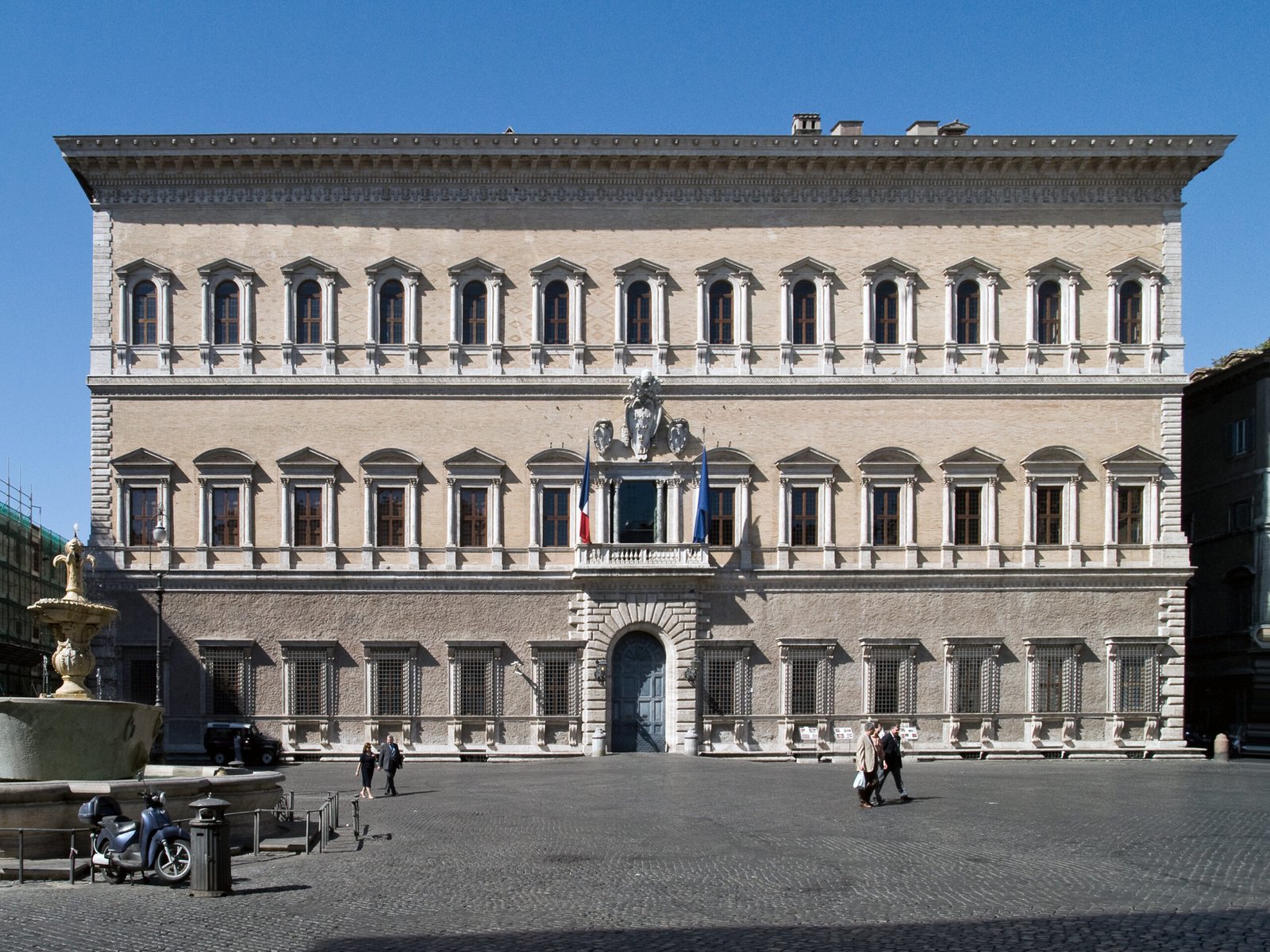
Rione Regola, the seventh of Rome's historic rioni, is toured on foot and without a ticket: streets, squares and facades are public space, from the southern stretch of Via Giulia to Piazza Farnese. You pay to enter the Galleria Spada, at Piazza Capo di Ferro 13, €6 for the full fare, closed on Tuesday, and Palazzo Farnese, which can only be visited on a guided tour booked on the official website. The Museo Criminologico at Via del Gonfalone 29 is listed as temporarily closed.
The name comes from arenula, the fine sand the Tiber left on its banks during floods, according to the Roma Capitale tourism portal, and the coat of arms is a golden rampant stag on an azure field. The rione occupies the bend of the river that runs from the Carceri Nuove on Via Giulia to the border with the Ghetto, closed off on the inland side by Via dei Banchi Vecchi, Via del Pellegrino, Via dei Cappellari, Campo de' Fiori and Via dei Giubbonari.
Data checked on September 29, 2026 on the official website of the Galleria Spada, on the Roma Capitale tourism portal, on the Capitoline Superintendency page dedicated to the Fontana del Mascherone, on the website of the church of San Paolo alla Regola and on that of the Hungarian Academy. The Palazzo Farnese tours follow a calendar that changes from week to week, and the price is shown at the time of purchase. For general information on the historic center the reference remains 060608, the Roma Capitale contact center.
At a glance: address, hours, ticket
- Where: rione VII of the historic center, between Via Giulia, Piazza Farnese, Via dei Giubbonari, Via Arenula and the Lungotevere dei Tebaldi, dei Vallati and de' Cenci.
- Access to the rione: streets and squares open at all hours, no ticket.
- Galleria Spada: Piazza Capo di Ferro 13, full fare €6, reduced €2 for EU citizens between 18 and 25, open from 8:30 to 19:30, closed on Tuesday.
- Palazzo Farnese: Piazza Farnese 67, home of the Embassy of France, guided tours only, in Italian, French and English, booked online.
- San Paolo alla Regola: Via di San Paolo alla Regola 6, open every day from 9:00 to 12:30 and from 15:00 to 20:00, Mass at 19:30.
- Museo Criminologico: Via del Gonfalone 29, temporarily closed, information at 06 6889941.
- How to get there: buses 70, 81 and 492 to the Rinascimento stop, or 46, 62, 64 and 916 on Corso Vittorio Emanuele, according to the Galleria Spada.
Where it is and what you really see
Regola is the part of the historic center that faces the Tiber between Via Giulia and the Ghetto. The boundaries described by the Roma Capitale tourism portal are precise: Vicolo della Scimia and Via delle Carceri toward Rione Ponte, Via dei Banchi Vecchi, Via del Pellegrino, Via dei Cappellari, Campo de' Fiori and Via dei Giubbonari toward Parione, Via di Santa Maria del Pianto toward Sant'Eustachio, Piazza delle Cinque Scole and Via del Progresso toward Sant'Angelo. On the river side run the Lungotevere roads.
Inside this perimeter you can read two axes. The first is the southern stretch of Via Giulia, straight and parallel to the river. The second is the commercial line of Via dei Giubbonari that runs down toward Via Arenula. Between the two opens a network of squares of very different sizes: Piazza Farnese, Piazza Capo di Ferro, Piazza del Monte di Pietà, Piazza Benedetto Cairoli, Piazza Cenci, Piazza de' Ricci, each with its own reference palazzo.
The palazzi are the main reason to come. Palazzo Farnese dominates the square of the same name. Palazzo Spada, with the Galleria Spada, has one of the richest stucco facades of 16th-century Rome. On Via Giulia you find Palazzo Falconieri, home of the Hungarian Academy. Then Palazzo Ricci, Carlo Maderno's Palazzo Santacroce, Palazzo Varese, Palazzo Cenci, the Monte di Pietà and, on Via Arenula, the large building of the Ministry of Justice.
There are many churches for such a small rione: about 20 still consecrated. Among those with a page on the site you'll find San Paolo alla Regola, Santa Maria dell'Orazione e Morte, Sant'Eligio degli Orefici, Santa Maria in Monticelli and Santo Spirito dei Napoletani. There are also the Trinità dei Pellegrini, Santa Brigida, San Girolamo della Carità, San Tommaso di Canterbury and Santa Maria in Monserrato.
Palazzo Spada deserves a stop even for those who don't like museums. Cardinal Girolamo Recanati Capodiferro had it built in 1540 to a design by Bartolomeo Baronino da Casale Monferrato, with the stuccoes coordinated by Giulio Mazzoni. In 1632 Cardinal Bernardino Spada bought it and called in Borromini to update it to Baroque taste. Today the palazzo houses the Council of State, and in the rooms of the Galleria you see paintings of the 16th and 17th centuries, with works by Titian, Guercino and Artemisia Gentileschi.
What don't you see? A museum rione. Regola is lived in and full of public offices: the Council of State in Palazzo Spada, the Embassy of France in Palazzo Farnese, the Ministry of Justice on Via Arenula, the National Anti-Mafia Directorate in the former Carceri Nuove. Many doorways stay closed, and in front of some buildings there are security posts. You look at the facades from the street, the courtyards only when they are open to the public.
A curiosity about Rione Regola
The name of the rione is a piece of geology. Arenula, then Renula and finally Regola, indicates the soft sand that the Tiber deposited on its banks during floods. For centuries the rione lived in direct contact with the water and its floods. The construction of the Tiber embankment walls, begun in 1875, cut off this relationship and raised a wall between the streets and the river.
The Fontana del Mascherone tells that change well. According to the Capitoline Superintendency, it originally stood isolated in a small open space, where in 1660 an open-air theater was even set up. The wall behind it, which today separates Via Giulia from the Lungotevere, dates from the late 19th century. Anyone looking at it now sees a fountain set against a wall, but for more than two centuries it had an open space around it.
Second curiosity, the most often cited: in 1720 the same fountain poured wine. The Roma Capitale tourism portal tells that for three consecutive days, during the celebrations for the appointment of Marco Antonio Zondadori as Grand Master of the Order of Malta, wine came out of the Mascherone instead of water. It is a documented episode, not a neighborhood legend. Under normal conditions the fountain was fed by the Acqua Paola, brought to the city in 1612.
Third curiosity, at Palazzo Spada. Francesco Borromini's perspective gallery measures about eight meters, but the columns of decreasing height and the rising floor create the illusion of a gallery 37 meters long. The statue at the end looks life-size and is about 60 centimeters tall. Borromini worked with the mathematician Giovanni Maria da Bitonto. It is the most famous optical trick in the rione, and you see it in a few minutes.
Something nobody tells you about Rione Regola
Palazzo Farnese does not belong to France. The Italian State bought it back in 1936 and, at the same time, leased it to France for 99 years at a symbolic sum. Inside work the Embassy of France and the École française de Rome, whose library has been in the palazzo since 1875. The most representative palazzo of the rione is therefore a building of the Italian State inhabited by an embassy.
The opposing view, in our judgment, concerns Campo de' Fiori. Many present it as the center of Regola, and many itineraries of the neighborhood start from there. But the square sits on the boundary line, and the descriptions of the neighboring rione count it among the squares of Parione. Whoever spends the visit among the tables of the Campo sees little of Regola. The real Regola is Via Giulia, Via di Monserrato, Piazza Capo di Ferro and Piazza de' Ricci.
Second thing rarely said: Via Giulia is not all in Regola. The street opened by Julius II crosses two rioni, and the boundary passes at the height of Via delle Carceri and Vicolo della Scimia. The northern part, with San Giovanni dei Fiorentini, belongs to Rione Ponte. That's why the page on the neighboring rione, Rione Ponte: What to See, tells the other half of the same street.
Third thing: the Carceri Nuove on Via Giulia, the large prison built between 1652 and 1655 under Innocent X, cannot be visited. Today the building houses the National Anti-Mafia Directorate. The Museo Criminologico, which from 1931 told the history of prisons and in 1975 moved to the nearby Palazzo del Gonfalone, is temporarily closed according to the Roma Capitale tourism portal. Anyone who comes for the prison theme finds only facades and plaques today.
Is Campo de' Fiori in Regola or in Parione?
The short answer: on the boundary. The description of the boundaries published by the Roma Capitale tourism portal makes the line between Regola and Parione pass right through Campo de' Fiori, between Via dei Cappellari and Via dei Giubbonari. The same portal places the Campo, with the market and the statue of Giordano Bruno, among the representative places of Regola. The descriptions of Parione, on the other hand, list it among the squares of that rione.
The reason for the double belonging is concrete. The square took its current shape after 1858, when the houses on the north side between Via dei Baullari and Vicolo del Gallo were demolished. The boundaries of the rioni, fixed on an older network of streets, cut across a space that has meanwhile widened. The result is a square that each rione claims, with the palazzi on the north side facing toward Parione.
For visitors the difference matters little in practice, but it helps to organize the route. If you want to stay in Regola, from the Campo go down toward Piazza Farnese by Via dei Baullari or by Vicolo del Gallo, or take Via dei Balestrari toward Piazza Capo di Ferro, as the Galleria Spada website indicates. If you want to stay in Parione, go up toward the Palazzo della Cancelleria and toward Navona.
The site's page dedicated to the square, Campo de' Fiori, tells the story of the market and the statue. Here it's enough to remember the dates: the name goes back to when the place, until the 15th century, was a flowering meadow with a few vegetable gardens, the market has been held here since 1869, and the Fontana della Terrina you see today is a copy moved to the part recovered after the 19th-century demolitions.
How has Regola changed from antiquity to today?
In antiquity the area belonged to the Campus Martius. Here stood the Trigarium, the space where charioteers trained, and under Augustus the zone entered the ninth region, called Circus Flaminius. It was low ground, near the river, exposed to floods. In the Middle Ages it was part of the fourth ecclesiastical region, with marshy areas that were reclaimed only toward the end of the period, opening the way to the building sites of the following centuries.
The Renaissance changed everything. In 1508 Julius II had Via Giulia opened under Bramante's direction, about one kilometer long, and planned to place the Palazzo dei Tribunali there, left unfinished in 1511. A few years later, in 1514, Cardinal Alessandro Farnese started work on his palazzo. In 1540 Cardinal Girolamo Capodiferro began what is now called Palazzo Spada. The rione became the zone of the great cardinals' palazzi.
In 1586, when Rione Borgo was created, Regola took the number seven that it still keeps today. In the following centuries the rione hosted confraternities, hospices for pilgrims, national churches and the papal prisons. Next to the noble palazzi worked artisans and merchants, as the names of the streets recall: Via dei Giubbonari, Via dei Cappellari, Via dei Pettinari, Via dei Balestrari, Via dei Baullari.
The 19th and 20th centuries brought the strongest changes. From 1875 the Tiber embankment walls separated the rione from the river and erased the old bank. The opening of Via Arenula and the construction of the Palazzo di via Arenula, designed by Pio Piacentini between 1914 and 1932 for the Ministry of Justice, redrew the eastern side. The heart of the rione, between Via Giulia and Piazza Farnese, keeps instead the 16th-century layout.
The eastern side of the rione keeps a lesser-known square, Piazza Benedetto Cairoli, with Palazzo Santacroce, built between 1598 and 1602 to a design by Carlo Maderno, and the monument to Federico Seismit-Doda, a bronze by Eugenio Maccagnani from 1905 and 1906, placed in 1919. A little further on opens Piazza del Monte di Pietà, with the building of the old credit institution and Palazzo Barberini ai Giubbonari.
My advice for visiting Rione Regola
Enter from Ponte Sisto, not from Campo de' Fiori. The pedestrian bridge takes you straight to the southern end of Via Giulia, and from there the rione reads in order: the Fontana del Mascherone, the Farnese Arch, the back of Palazzo Farnese, Palazzo Falconieri. Then you turn toward Piazza Farnese, pass through Piazza Capo di Ferro and the Galleria Spada, and arrive at the Trinità dei Pellegrini and San Paolo alla Regola.
Campo de' Fiori should be left for the end, or for early morning if the market interests you. The afternoon is the good moment for the churches: San Paolo alla Regola reopens at 15:00 and stays open until 20:00, according to the church's website. The Galleria Spada closes on Tuesday, and on Thursday the entrance moves to Vicolo del Polverone 15, as the official website indicates. Adjust your day around these two details.
Palazzo Farnese must be booked before you leave. You enter only with a guided tour, in the time slots and languages published on the official tours website, and the available dates change from week to week. Whoever arrives without a booking sees the facade, the fountains of the square and, from Via Giulia, the back of the palazzo with the Farnese Arch. It is still a lot, but the Carracci Gallery stays out of reach.
Allow at least half a day. The rione is small, but the things to see are dense and the Galleria Spada alone takes an hour. Wear comfortable shoes, because the cobblestones are irregular and the streets narrow. Bring an ID document if you have booked Palazzo Farnese: the Roma Capitale tourism portal reports reinforced security checks, and whoever refuses them may be denied entry.
Where do you pay and how do you book in the rione?
In the rione you pay only in a few places. The Galleria Spada, a Ministry of Culture museum at Piazza Capo di Ferro 13, has an ordinary ticket, and every first Sunday of the month admission is free without booking. Palazzo Farnese is visited with a ticket for the guided tour. The churches, the squares, Via Giulia and the fountains are free. The fares of the Galleria Spada, according to the official website, are these.
| Galleria Spada | Fare |
|---|---|
| Full fare | €6 |
| Reduced, EU citizens between 18 and 25 | €2 |
| Free, under 18 and categories indicated by the museum | €0 |
| First Sunday of the month | free, without booking |
| Booking for more than six people | €1 per participant |
The official channel for the Galleria Spada is the museum's website, galleriaspada.cultura.gov.it, which refers to museiitaliani.it for online tickets. Booking is mandatory for groups of more than six people, for schools and for guided tours. For information the museum gives 06 6832409 and the address galleriaspada@artem.org. There are no resellers to recommend: the museum's channel remains the reference.
For Palazzo Farnese the Roma Capitale tourism portal gives as the only channel the official tours website, visite-palazzofarnese.it, with tours in Italian, French and English and advance purchase online, with the open dates that the site publishes from time to time. The price is shown on the site at the time of booking. The phone number given by the same portal is 06 686011. Since May 2024 the route also includes the underground areas with two mosaic floors from the Roman era.
The other visits in the rione have no ticket office. The Hungarian Academy at Via Giulia 1 opens for exhibitions, concerts and meetings published on its website, culture.hu/it/roma, and for autumn 2026 it announces the Imre Makovecz exhibition from September 17 to October 8. The Museo Criminologico is closed: the Ministry of Justice gives 06 6889941 and the email museo.criminologico@giustizia.it to find out when it will reopen.
Another well-known fact, yet rarely cited
Almost everyone knows that Giordano Bruno was burned at Campo de' Fiori. Less often cited is the distance between the two moments that the square recalls. The burning took place on Thursday, February 17, 1600. Ettore Ferrari's statue was unveiled on June 9, 1889, almost three centuries later, in a Rome that had become the capital of the Kingdom of Italy. The monument speaks more about the city of the late 19th century than about the trial of 1600.
The two fountains of Piazza Farnese are known to anyone who has crossed the square. Few know that they reuse large granite basins from the Baths of Caracalla. The Fontana del Mascherone too, according to the Capitoline Superintendency, uses an ancient granite bath basin. The Farnese, who put the family lily on the Mascherone, brought pieces of the imperial baths back to the city to decorate their own neighborhood.
Third fact: Palazzo Farnese is the work of four architects in sequence. The original design is by Antonio da Sangallo the Younger. From 1546 Michelangelo stepped in, to whom we owe the great cornice and the balcony above the central portal. Between 1565 and 1575 Vignola directed the works, and in 1589 Giacomo Della Porta completed the facade toward the Tiber. Michelangelo's work is also told on the page Michelangelo in Rome.
Finally the Carracci Gallery. Annibale Carracci frescoed it with mythological subjects, at first together with his brother Agostino. The sources do not agree on the date the work was finished: the Roma Capitale tourism portal gives the years between 1597 and 1604, other reconstructions go as far as 1607. In any case it is one of the decisive cycles for Roman Baroque painting, and it is seen only with the visit of the palazzo.
One last fact, rarely cited outside scholarly circles: the library of the Hungarian Academy was born in 1892, even before the institute settled in Palazzo Falconieri in 1927. According to the Roma Capitale tourism portal it is dedicated to Hungarian history and to the cultural relations between Italy and Hungary, and the Academy is run by the Hungarian Ministry of Foreign Affairs and Trade. In Borromini's palazzo there are today a reading room, an exhibition space and a conference room.
The right photo to take in Rione Regola
The photo that sums up the rione is the Farnese Arch shot from Via Giulia, with the street running straight under the suspended bridge. The arch was built in 1603 to connect Palazzo Farnese to the buildings across the street, and it also served as a grandstand during carnival. It works vertically, with the perspective of the street stretching out. In the hours of full light the narrow street creates strong contrasts, and an overcast day gives softer results.
The second is the facade of Palazzo Farnese seen from the opposite corner of the square, with one of the two fountains in the foreground. You need a wide lens, because the facade is long and the square is not large. Michelangelo's cornice reads better in raking light, so it is worth trying at different hours of the day. In front of the embassy there are security posts: photograph the facade, not the people at work and not the surveillance equipment.
The third is the Fontana del Mascherone, with the marble face with wide-open eyes pouring water into a shell and then into the granite basin. It should be shot head-on, close enough to fill the frame. A cloudy day helps to read the marble. Inside the Galleria Spada, before photographing Borromini's perspective, ask at the ticket office which shots are allowed: the museum's website does not say.
If you are looking for a less common image, you can climb onto Ponte Sisto at sunset and turn back toward the rione, with the Lungotevere and the roofs of the historic center. Or stop in front of the travertine facade of the Trinità dei Pellegrini, designed by Francesco De Sanctis and built in 1722 and 1723, with the four statues of the Evangelists by Bernardino Ludovisi. It is an elegant facade, ignored by most passersby.
How do you get there from the center and from Termini station?
The Galleria Spada website indicates the most convenient lines. With buses 70, 81 and 492 you get off at the Rinascimento stop. With the 46, the 62, the 64 and the 916 you arrive on Corso Vittorio Emanuele. From there you walk about 200 or 300 meters along Via dei Baullari to Campo de' Fiori, then take Via dei Balestrari toward Piazza Capo di Ferro. Lines change with roadworks: it is worth checking them on the ATAC website.
From Termini station there is no metro line that reaches the rione. The same Galleria Spada website suggests taking bus 70 or 64 at Termini to Corso Vittorio Emanuele and continuing on foot. For the stretch of Via Giulia toward the Gonfalone, the Roma Capitale tourism portal gives lines 23, 116, 116T, 280 and 870. Before leaving, check the route of the day with the ATAC planner or by calling 060608.
On foot the rione is easily reached from Trastevere by crossing Ponte Sisto, from Piazza Navona by going down toward Campo de' Fiori, from the Ghetto by Via di Santa Maria del Pianto or by Piazza delle Cinque Scole. The car is not convenient: the streets are narrow, parking is almost absent, and access to the historic center is regulated by Roma Capitale. By bicycle, watch out for the cobblestones and the many pedestrians on Via dei Giubbonari.
For those who walk with difficulty the rione is demanding. The streets are paved with cobblestones, often irregular, the sidewalks are narrow or missing, and many churches have steps at the entrance. The Galleria Spada refers to a section of its website dedicated to accessibility, which is worth reading before the visit, or you can ask at 06 6832409. For Palazzo Farnese the access conditions must be asked about at the time of booking. The flattest route is the one along Via Giulia, straight and without climbs.
Some important events that happened here in history
In 1508 Julius II had Via Giulia opened with Bramante, and in 1511 work on the Palazzo dei Tribunali stopped, leaving only fragments of the perimeter walls between Vicolo del Cefalo and Via del Gonfalone. In 1514 the works on Palazzo Farnese began, interrupted by the Sack of Rome in 1527 and resumed in 1541. In 1540 the confraternity that would found the Trinità dei Pellegrini was born, on the initiative of Filippo Neri.
During the Jubilee of 1575 the confraternity of the Trinità hosted over 180,000 pilgrims. In 1600 Giordano Bruno was burned alive at Campo de' Fiori. In 1603 the Farnese Arch was built. In 1632 Cardinal Bernardino Spada bought the palazzo on Piazza Capo di Ferro and called in Borromini, who from 1638 also worked on Palazzo Falconieri. Between 1652 and 1655 Antonio Del Grande built the Carceri Nuove for Innocent X.
In 1720 the Fontana del Mascherone poured wine for three days. Between 1825 and 1827 Giuseppe Valadier built the Gonfalone juvenile prison for Leo XII. In 1849, during the French siege of the Roman Republic, the Pellegrini hospital treated over 1,500 wounded, among them Goffredo Mameli. In 1875 the Tiber embankment walls began, and in the same year the library of the École française settled in Palazzo Farnese.
In 1883, with the opening of Regina Coeli, the Carceri Nuove ceased to be the main prison and housed minors until 1931. In 1927 the Hungarian Academy settled in Palazzo Falconieri. In 1931 the Museo Criminologico was born, moved in 1975 to the Gonfalone. In 1936 the State bought Palazzo Farnese back. In 2008 the Trinità dei Pellegrini became a personal parish. In July 2026 the restoration of Palazzo Farnese was completed.
Who passed through Rione Regola
The patrons first. Julius II, who wanted Via Giulia. Cardinal Alessandro Farnese, later Pope Paul III, who started the family palazzo. Cardinal Girolamo Capodiferro and then Cardinal Bernardino Spada. Orazio Falconieri, who in 1638 bought the palazzo on Via Giulia. Innocent X, who had the Carceri Nuove built, and Leo XII, who entrusted the Gonfalone juvenile prison to Valadier.
Then the artists. Bramante, Antonio da Sangallo the Younger, Michelangelo, Vignola and Giacomo Della Porta for the palazzi and the streets. Annibale and Agostino Carracci for the Gallery of Palazzo Farnese. Francesco Borromini for Palazzo Spada and Palazzo Falconieri, with the herms with a female bust and falcon's head on the facade. Guido Reni, who painted the altarpiece of the Trinità for the church of the Pellegrini in 27 days. The full route is on the page Borromini in Rome.
And the names of civil history. Filippo Neri, founder of the confraternity of the Pellegrini. Giordano Bruno, burned at Campo de' Fiori. Maria Letizia Ramolino, Napoleon's mother, who lived in Palazzo Falconieri between 1815 and 1818. Goffredo Mameli, who died of gangrene in the first days of July 1849 after the wound of June 3. The Roma Capitale tourism portal adds Cola di Rienzo and Benedetto Cairoli among the figures of the rione.
There is also a name that belongs to the crime news of papal Rome. In the Museo Criminologico, according to the Roma Capitale tourism portal, the red cloak of Mastro Titta, the city's executioner, is kept, together with instruments of torture and execution and the weapons of famous crimes. The collection, arranged in a route across three eras, remains inaccessible for now, awaiting the reopening of the museum.
What is on the stretch of Via Giulia that belongs to Regola?
The southern part of Via Giulia begins near Ponte Sisto, where the street starts from the Lungotevere. The first encounter is the Fontana del Mascherone, set against the wall toward the river, attributed by the Capitoline Superintendency to Girolamo Rainaldi and datable to the second quarter of the 17th century. A few steps later, the Farnese Arch spans the street. From here you see the back of Palazzo Farnese, with the facade completed by Giacomo Della Porta in 1589.
Right after the arch, at number 1, stands Palazzo Falconieri. Built starting in 1515 for the Ceci family, it passed to the Odescalchi and the Farnese before reaching Orazio Falconieri. Borromini enlarged it from eight to 11 window bays and built on the river side a loggia with three arches from 1646. Since 1927 it has been the seat of the Hungarian Academy, with a library of over 20,000 volumes.
Next to it is Santa Maria dell'Orazione e Morte, built between 1575 and 1576 and rebuilt in 1737 by Ferdinando Fuga. A little further, in the street that bears its name, Sant'Eligio degli Orefici, linked to Raphael. Then Santo Spirito dei Napoletani, rebuilt between 1619 and 1650. Further on the Carceri Nuove, with the facade by Antonio Del Grande. A little further north, between Via del Gonfalone and Vicolo del Cefalo, remain the fragments of the walls of Bramante's Palazzo dei Tribunali.
A short detour leads to Piazza de' Ricci, between Via Giulia and Via di Monserrato. Palazzo Ricci was born from the union of different buildings, joined between 1634 and 1683, and on the facade toward the square you can still read, faded, the graffiti attributed to Polidoro da Caravaggio. It is one of the rare painted facades of 16th-century Rome that survived, even if worn by time. Along Via Giulia there is also Palazzo Varese, built between 1616 and 1618 by Carlo Maderno.
The stretch closes toward the Gonfalone, where the rione touches Ponte. Here are Valadier's Palazzo del Gonfalone, home of the Museo Criminologico, and the Oratorio del Gonfalone, with its cycle of frescoes and wooden ceiling. For the full story of the street, from the Mascherone to San Giovanni dei Fiorentini, we refer you to Via Giulia page, which covers both rioni.
Facts, tradition and legend: what is true?
The house of St. Paul is the most interesting case. What the documents say: the church of San Paolo alla Regola is attested in the 13th century and was rebuilt at the end of the 17th century to a design by Giovanni Battista Bergonzoni, with a Greek cross plan. On the high altar is kept a tablet from 1096 dedicated to San Cesareo. These are architectural and documentary data, verifiable on site and in the historical sources.
What tradition says: the church would stand on the place where the apostle Paul lived during his stay in Rome. Again according to tradition, the place would have become an oratory in the 4th century, under Pope Sylvester I. Inside, the apostle's room is still pointed out, turned into a chapel. The Jubilee 2025 portal reports the same tradition of the foundation on the site of Paul's lodging.
What is legend: that in those very rooms Paul wrote some of his letters, to the Colossians, to Philemon, to the Ephesians and to the Philippians. There is no document that proves it. The case of the Mascherone and the wine of 1720 is different: here the source tells of a specific celebration, with a date and a name, and the episode should be read as a chronicle of a public event, not as a neighborhood legend.
When is it closed and what not to expect?
The rione never closes, but its sites do. The Galleria Spada is closed on Tuesday, January 1 and December 25, and the last ticket is sold at 19:00. The last access to the secret garden with Borromini's colonnade is at 18:30, according to the museum's website. Palazzo Farnese opens only in the booked tour slots. The Museo Criminologico is temporarily closed, with no reopening date announced.
The Hungarian Academy opens for exhibitions and events, not as a museum with fixed hours: before going check the calendar on the site, where for autumn 2026 the music evenings of the Giovedì in via Giulia are also announced. The Carceri Nuove and the Palazzo di via Arenula are public offices, and the Council of State occupies the part of Palazzo Spada that does not belong to the Galleria. None of these buildings has visiting hours.
Among the churches, San Paolo alla Regola is the most reliable. The church's website indicates daily opening, from 9:00 to 12:30 and from 15:00 to 20:00, with daily Mass at 19:30. It is officiated by the friars of the Third Order Regular of St. Francis, present since 1619 according to the Jubilee 2025 portal. Since 2014 the church also hosts the Sunday liturgy of the Bulgarian Orthodox community, by concession of the Vicariate of Rome.
The Santissima Trinità dei Pellegrini, in the square of the same name, has been since March 23, 2008 a personal parish entrusted to the Priestly Fraternity of St. Peter, which celebrates according to the Tridentine rite, with Mass in Latin. Inside is kept Guido Reni's altarpiece of the Trinity, which arrived in Rome in the summer of 1625 on commission from Cardinal Ludovico Ludovisi. Opening hours should be checked with the parish before the visit.
The other churches have very variable hours, often tied to services. Santa Maria dell'Orazione e Morte, Sant'Eligio degli Orefici, Santa Maria in Monticelli and Santo Spirito dei Napoletani each have a page on the site, with the information collected for each. The practical rule: morning and late afternoon are the most likely moments, the lunch break the one when it is easiest to find the door closed.
What not to expect? A large, quiet pedestrian area: Via dei Giubbonari and Campo de' Fiori are crowded for a large part of the day. A museum of the rione with a single ticket: it doesn't exist. Palazzo Farnese visitable without booking: free openings, like European Heritage Day on September 26, 2026, are exceptions announced by the embassy. A direct relationship with the river: the embankment walls interrupted it more than a century ago.
Eating in the area
Regola has two faces at the table too. Around Campo de' Fiori and Piazza Farnese the tourist pressure is very high, with places that live off passing trade. In the inner streets, Via di Monserrato, Via dei Pettinari, the side streets of Via Giulia, the clientele is made in large part of people who live and work in the rione, among ministries, embassy and professional offices, and the cooking follows different rhythms.
The signs of the traps are always the same. The barker on the sidewalk who stops passersby. The menu with photographs of the dishes in five languages. The lady rolling out fresh pasta in the window as a lure. Items without prices, a menu that differs between outside and inside, a kitchen open nonstop from morning to night. In front of the best-known monuments the price tends to adapt to the customer.
Romans avoid these places without snobbery: they know that where the public changes every day, quality doesn't need to be constant. The practical rule is to look for a short menu, handwritten or printed the same day, readable prices, people from the neighborhood at the tables at lunch break. For carefully selected addresses, useful in the rest of the historic center too, there is the list of addresses on Google Maps.
Hours matter more than usual. Between 13:00 and 14:00 the places in the inner streets fill up with employees of the ministries and the offices in the area, and it's best to have lunch earlier or later. In the evening the clientele changes, and around Campo de' Fiori the crowding grows until late. For drinking, public drinking fountains are common in the historic center too: for their history there is the page on the drinking fountains of Rome.
What to combine in a day
To the east Regola borders the Ghetto, told in the page on the Jewish Ghetto of Rome. In a few minutes you reach the Portico d'Ottavia, the Turtle Fountain in Piazza Mattei, the Synagogue and the Jewish Museum. The page on the neighboring rione, Rione Sant'Angelo: What to See, completes the route.
To the north you pass into Parione. The Palazzo della Cancelleria, with the basilica of San Lorenzo in Damaso, is a few steps from Campo de' Fiori. Further up you reach Piazza Navona and the Museo di Roma at Palazzo Braschi. To the east, beyond Via Arenula, you reach Largo Argentina, the Teatro Argentina and the Crypta Balbi.
Crossing Ponte Sisto you enter Trastevere, told in the page Trastevere: What to See. On the other bank are Villa Farnesina, Palazzo Corsini and Porta Settimiana, from which you climb to the Janiculum and the Acqua Paola Fountain, the display fountain of the aqueduct that feeds the Mascherone.
Whoever prefers to continue along Via Giulia to the north enters Rione Ponte, as far as the Basilica of San Giovanni dei Fiorentini and Castel Sant'Angelo. For other neighborhoods of the center there are the guides Rione Trevi: What to See, Rione Ripa: What to See and Rione Monti: What to See, as well as the overview of the 22 rioni of Rome.
Frequently asked questions
What is there to see in Rione Regola in half a day?
The most linear route starts from Ponte Sisto and follows Via Giulia to Palazzo Falconieri, with the Fontana del Mascherone and the Farnese Arch. Then Piazza Farnese with the palazzo and the fountains, Piazza Capo di Ferro with the Galleria Spada, the Trinità dei Pellegrini and San Paolo alla Regola. You end with Via dei Giubbonari and Campo de' Fiori. Palazzo Farnese must be booked first, the Galleria Spada avoided on Tuesday.
Is Campo de' Fiori part of Rione Regola?
It sits on the boundary. The Roma Capitale tourism portal makes the line between Regola and Parione pass right through Campo de' Fiori and includes it among the representative places of Regola, while the descriptions of Parione list it among the squares of that rione. Piazza Farnese, on the other hand, is fully inside Regola. To stay in the rione it's best to go down from the Campo toward Piazza Farnese and Piazza Capo di Ferro.
How much does it cost to enter the Galleria Spada?
According to the official website the full ticket costs €6 and the reduced €2 for citizens of the European Union between 18 and 25. Under-18s enter free, as do some categories indicated by the museum. On the first Sunday of the month admission is free for everyone, without booking. The museum opens from 8:30 to 19:30 and is closed on Tuesday. On Thursday you enter from Vicolo del Polverone 15.
Can you visit Palazzo Farnese without a booking?
No, except for extraordinary openings announced by the Embassy of France, such as European Heritage Day on September 26, 2026. On ordinary days you enter only with a guided tour purchased on the official tours website, with tours in Italian, French and English according to the Roma Capitale tourism portal. It's best to bring an ID document, because at the entrance you go through a security check. The price appears on the site at the time of purchase.
Is the Museo Criminologico open?
No. The Roma Capitale tourism portal lists it as temporarily closed, with no reopening date. The museum is at Via del Gonfalone 29, in the Palazzo del Gonfalone built by Valadier as a juvenile prison, and depends on the Ministry of Justice. To find out when it will reopen you can use the contacts published by the portal: 06 6889941 and the address museo.criminologico@giustizia.it. The page on the Criminology Museum tells the story of its collection.
Which churches in Rione Regola are open every day?
San Paolo alla Regola, at Via di San Paolo alla Regola 6, indicates on its website daily opening from 9:00 to 12:30 and from 15:00 to 20:00, with Mass at 19:30. For the Trinità dei Pellegrini, a parish of the Priestly Fraternity of St. Peter, it's best to check the hours with the parish. The other churches in the rione have variable openings, often limited to services, and must be checked case by case.
Is Via Giulia all in Rione Regola?
No. Via Giulia, opened in 1508 by Julius II with Bramante and about one kilometer long, crosses two rioni. The southern part, from the Mascherone to the Carceri Nuove, belongs to Regola. Beyond Via delle Carceri and Vicolo della Scimia the street enters Rione Ponte, with San Giovanni dei Fiorentini. The page dedicated to Via Giulia tells the street in full, in both rioni.
How do you get to Rione Regola by public transport?
The Galleria Spada website indicates buses 70, 81 and 492 to the Rinascimento stop and lines 46, 62, 64 and 916 on Corso Vittorio Emanuele. From Termini station you can take the 70 or the 64. For the Gonfalone area the Roma Capitale tourism portal reports lines 23, 116, 116T, 280 and 870. Lines should be checked the same day on the ATAC website or at 060608.
Who wrote this and from which sources
The text comes from the editorial team of Tour Leader Pro, the Rome-based outfit that designs itineraries, tours and cultural events between Rome and Lazio. Fares, hours and booking procedures reported here come from the official sources cited in the text as of the date given at the opening: for the rione, the authorities are the website of the Galleria Spada, the Roma Capitale tourism portal and the website of the church of San Paolo alla Regola. Tell us what you find changed.
Organizing a day in Regola means working on the fit of the pieces: the Palazzo Farnese slot booked in advance, the Tuesday closing of the Galleria Spada, the Thursday entrance from Vicolo del Polverone, the churches closed in the middle of the day, the security checks in front of the embassy. For those who plan outings of this kind, a useful resource for people who organize group trips is Tour Leader Pro, with tools designed to coordinate tours and itineraries.
Regola is also a starting point for the rest of the historic city: the Ghetto, Trastevere beyond Ponte Sisto, the Janiculum, the rioni Ponte and Parione. Putting together the rioni of the center with the museums, the villas and perhaps a few days outside Rome, among the Castelli and the Tuscia, takes a bit of planning, and a useful resource for putting together a multi-day itinerary is Italy Planner.