Rione Trevi: What to See
In short. Rione Trevi, rione II of Rome, can be walked freely and for free, but since February 2, 2026 non-residents pay €2 to go down into the inner perimeter of the Trevi Fountain.
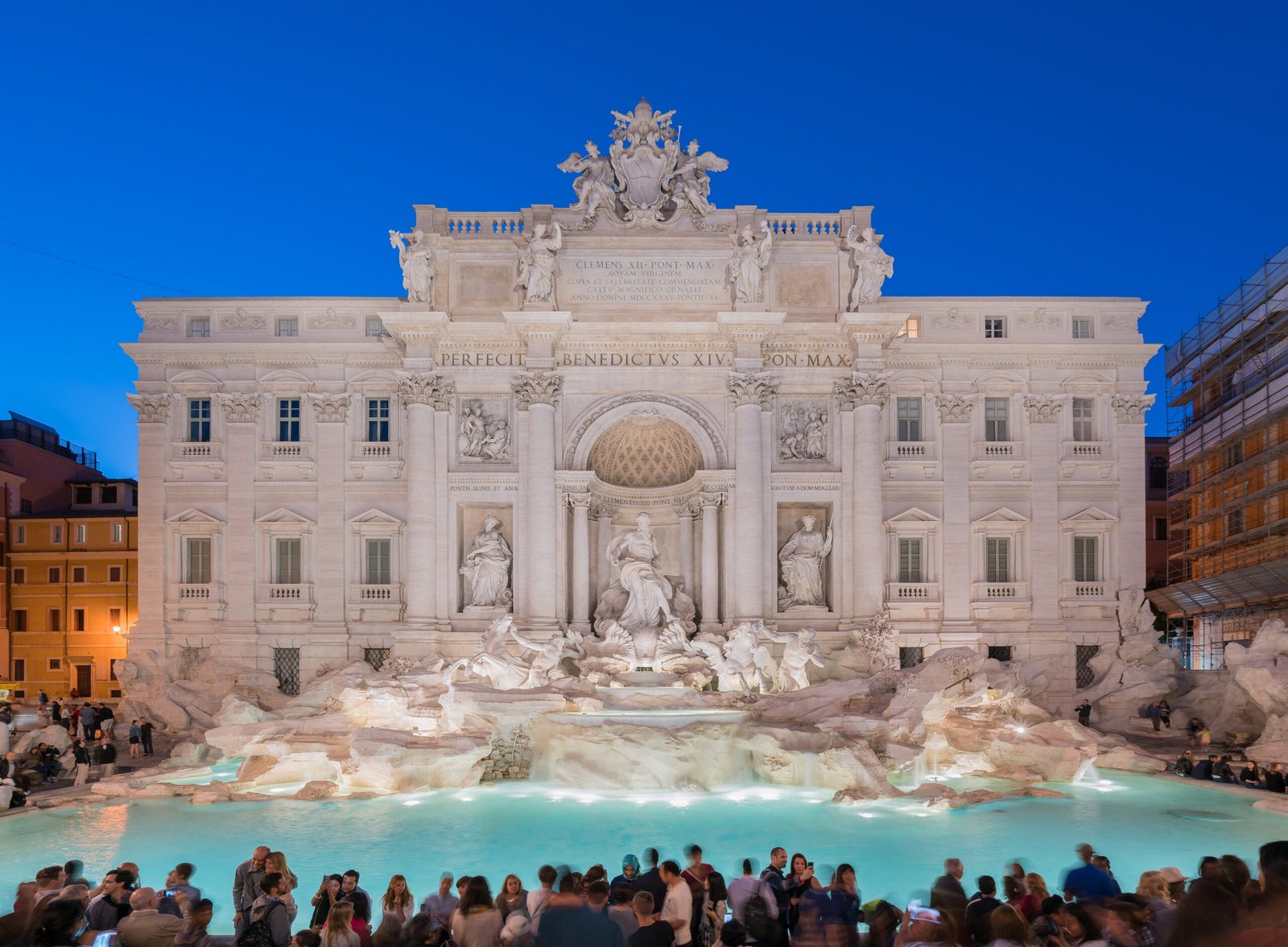
Rione Trevi, rione II of Rome, can be walked freely and for free, but since February 2, 2026 non-residents pay €2 to go down into the inner perimeter of the Trevi Fountain. According to the fountain's official site, run by Zètema for Roma Capitale, you enter from Via della Stamperia and exit onto Via dei Crociferi, from 9 to 22, on Monday and Friday from 11:30, with last entry at 21. From the piazza the fountain stays visible without a ticket.
The rione is much more than the fountain. It runs down from Piazza Barberini and the Quirinal Hill to Via del Corso and Piazza Venezia, and within its boundaries are the Quirinal Palace, the Galleria Colonna, the Accademia Nazionale di San Luca, the underground archaeological area of the Vicus Caprarius, Palazzo Barberini and the Triton Fountain. The coat of arms, according to the Roma Capitale tourism portal, is made of three diagonal swords on a red background. Each of these places has its own entry rules.
Data checked on September 29, 2026 on the official Trevi Fountain site, on the Roma Capitale tourism portal, on the site of the Presidency of the Republic for visits to the Quirinale, on the sites of the Galleria Colonna, the Accademia di San Luca and the Vicus Caprarius. Hours and rates can change for maintenance or public order, as the tourism portal itself warns. Before heading out it's always worth checking the official page of the individual place, especially for the Mondays with reduced hours at the fountain.
In brief: address, hours, ticket
- Where: rione II Trevi, between Piazza Barberini, Via XX Settembre, Via del Quirinale, Via Ventiquattro Maggio, Piazza Venezia, Via del Corso and Via del Tritone.
- Trevi Fountain: €2 for non-residents of Rome and the Metropolitan City, entrance from Via della Stamperia, exit onto Via dei Crociferi.
- Fountain hours: Monday and Friday 11:30-22, other days 9-22, last entry at 21, according to the official site.
- Free at the fountain: residents with ID, small children, people with disabilities and those who assist them, licensed tour guides, holders of the Roma MIC Card.
- Quirinale: free visit with mandatory reservation at €2.50 on the Palace's site.
- Museums of the rione: Galleria Colonna on Saturday morning, Accademia di San Luca Tuesday to Saturday, Vicus Caprarius Tuesday to Sunday with a guided visit.
- Accessibility: the inner perimeter of the fountain has stairs and is not wheelchair accessible, according to the operator.
Where it is and what you actually see
The boundaries of the rione, according to the Roma Capitale tourism portal, follow Piazza Madonna di Loreto, Via Magnanapoli, Via Ventiquattro Maggio, Via del Quirinale, Via XX Settembre, Piazza San Bernardo, Via di Santa Susanna, Via Bissolati, Via di San Basilio, Piazza Barberini, Via del Tritone, Via del Nazareno, Via del Bufalo, Via di Santa Maria in Via, Via delle Muratte, Via del Corso and Piazza Venezia. It's an irregular triangle that climbs from the Corso to the top of the Quirinal.
Inside this triangle two cities live together. Below is the tight grid of alleys around the fountain, where almost all the visitors concentrate. Above is the Rome of power, with the Quirinal Palace, Piazza del Quirinale with the obelisk and the Scuderie del Quirinale. Between the two, the Salita della Dataria and the staircases that connect the valley floor to the hill.
On the eastern side the rione reaches Piazza Barberini, with Bernini's Triton Fountain at the center and Palazzo Barberini just above, which the tourism portal lists among the palaces of the rione. Toward the south the boundary touches Piazza Venezia, and here you find Palazzo Colonna with its gallery, Piazza dei Santi Apostoli and, according to encyclopedic sources, Palazzo Chigi Odescalchi.
The name has a simple origin. The most accredited hypothesis, reported both by the Roma Capitale tourism portal and by the free encyclopedia, derives it from the Latin trivium, the confluence of three roads in the little piazza of the Crociferi, a few meters from the fountain. The street from which you now leave the paid perimeter, Via dei Crociferi, leads precisely to that crossroads that gave its name to the whole rione and its fountain.
Whoever walks the rione with attention also finds the places that quick guides skip: the Accademia Nazionale di San Luca with Borromini's helical ramp, the underground area of the Vicus Caprarius a few steps from the basin, the church of Santi Vincenzo e Anastasio across from the fountain, the Galleria Sciarra toward the Corso. They are all within 10 minutes' walk of one another.
A curiosity about Rione Trevi
Across from the fountain there's a church that keeps popes' organs. According to the Roma Capitale tourism portal, from Sixtus V to Leo XIII, who died in 1903, the praecordia of the pontiffs were kept in sealed vases in the church of Santi Vincenzo e Anastasio, meaning the internal organs removed during embalming. In a chapel under the high altar there are 22 of these vases, and for this reason Romans ironically call it the church of the frattaje.
The proximity to the Quirinale, residence of the popes until 1870 and a few minutes' walk away, helps explain the choice. The tourism portal doesn't go into the details of the rite, but it reports the number of vases and the time span. Whoever goes into the church doesn't see the underground chapel, and the operator points to the competent directorate of the Ministry of the Interior for visiting hours, at the number 06 6783098.
The second curiosity concerns the facade of the same church. Martino Longhi the Younger redesigned it in the mid 1600s with the support of Cardinal Giulio Mazzarino, and the free-standing columns number 18, 10 in the lower order and eight in the upper one, according to the tourism portal. Above the entrance there's a female head that tradition identifies with one of Mazzarino's nieces, Maria or Ortensia Mancini. The identification remains disputed, and the sources do not agree on the name.
Third curiosity, of a civic kind. The Roma Capitale tourism portal recalls that Michelangelo died in this rione, in a house on Via Macel de' Corvi near Piazza Venezia. The memory is entrusted to a plaque on the Assicurazioni Generali building, according to the same source, on a stretch of the rione that almost nobody walks looking for Michelangelo. Whoever has followed the itinerary of Michelangelo in Rome ends his Roman story here.
Something nobody tells you about Rione Trevi
In our judgment the Trevi Fountain in the middle hours of the day is the most overrated experience in Rome. You don't see an 18th-century masterpiece, you see a crowd. People push for a spot on the steps, photograph the backs of other visitors, throw a coin without even looking at Oceanus. Whoever arrives at 11 on a summer day and thinks they have seen the fountain has mostly seen a line.
The €2 ticket doesn't change this point. It regulates access to the inner perimeter, meaning the steps and the edge of the basin, while the piazza stays public and open. The official site specifies that the fountain is always visible from outside, even without a ticket, and that tickets bought in advance are open, with no date and no time. The operator does not publish a maximum number of people present at the same time or a maximum length of stay.
The practical consequence is simple. The right moment for the fountain doesn't depend on the ticket but on the hour. Before 9 and after 22 the inner perimeter is closed, but from the piazza the fountain can be seen all the same, and the difference from early afternoon is enormous. Whoever just wants to look at it properly has more to gain from an early alarm than from any reservation or skip-the-line ticket.
Second thing rarely said: the rest of the rione is almost empty compared to the piazza. Five minutes from the crush, the Galleria Colonna, the Accademia di San Luca and Piazza del Quirinale are visited by a much sparser public. Whoever devotes half a day to the rione and spends only 10 minutes at the fountain, at the beginning or the end, comes away with a more accurate idea of Trevi than whoever stays an hour squeezed on the steps.
What should you really look at in the Trevi Fountain?
The fountain is the terminal display of the Acqua Vergine, the aqueduct built by Marcus Vipsanius Agrippa, son-in-law of Augustus, to bring the water of the Salone springs into the city. It's the oldest aqueduct of Rome still in operation. Pope Clement XII called a competition in 1731, won by Nicola Salvi, and work began in 1732. The fountain was completed only on May 22, 1762, under Clement XIII, after Salvi's death.
At the center is Oceanus on a shell-shaped chariot, the work of Pietro Bracci between 1759 and 1762 from an earlier design by Giovanni Battista Maini. The two winged horses are different: the one on the left is the restless horse, the one on the right the placid horse, indicating the two faces of the sea. In the side niches are Abundance and Salubrity by Filippo Della Valle. Above, four allegorical statues dedicated to the seasons and the fruits of the earth.
Up on the attic there's an inscription worth deciphering: CLEMENS XII PONT MAX AQVAM VIRGINEM COPIA ET SALVBRITATE COMMENDATAM CVLTV MAGNIFICO ORNAVIT ANNO DOMINI MDCCXXXV PONTIF VI. Clement XII, in 1735, the sixth year of his pontificate, adorned with a magnificent work the Acqua Vergine, celebrated for abundance and salubrity. The date of the inscription is 1735, 27 years before the actual completion of the fountain.
The fountain is set against the short side of Palazzo Poli, which the Roma Capitale tourism portal recalls precisely as the palace that houses the fountain. The palace's front and the fountain form a single scenic facade, and whoever looks from the piazza struggles to understand where the architecture ends and the travertine cliff begins. It's this fusion, more than the individual statues, that is Salvi's real design.
What the documents say: the 2014-2015 restoration, which lasted 17 months and was sponsored by a fashion house, closed with the reopening on November 3, 2015. What tradition says: whoever throws a coin will return to Rome, and the official site confirms that throwing a coin is the only exception to the ban on throwing objects. What is legend: the large travertine vase on the left, called Asso di coppe, was supposedly placed to block the view of a barber who criticized Salvi.
The advice I give you for visiting Rione Trevi
Start from above and go down. Start from Piazza del Quirinale, with the view over the roofs toward St. Peter's, then go down along the Salita della Dataria and the narrow streets toward the fountain. Arrive at Trevi early, before 9 if you just want to look at it from the piazza, or as soon as the perimeter opens if you want to go down to the steps with the ticket. Devote the rest of the morning to the museums of the rione, away from the crush.
Saturday is the richest day. The Galleria Colonna opens to the public without a guided visit only on Saturday morning, with last access at 13:15 from Via della Pilotta 17, according to the gallery's site. The Accademia di San Luca on Saturday opens from 10 to 19. The Vicus Caprarius can be visited Tuesday to Sunday. Whoever has only one Saturday in Rome can put together gallery, academy and underground site in a single well-organized day.
Keep the evening for a second visit to the fountain. After 22 the perimeter closes, but the lit fountain is seen well from the piazza, and the crowd drops noticeably in the later hours. The artistic lighting was renewed in the summer of 2019 with underwater LED projectors. It's the quietest way to see it, and it costs nothing. In August, though, even the evening can stay crowded.
Respect the rules of the fountain, which are strict. The official site bans food, drinks, smoking and sitting on the edge of the basin. The penalties range from €40 to €240 for generic violations, reach €450 for those who bathe or draw water, and for those who damage the monument the law provides arrest of up to one year or a fine of not less than €2,065. The Ekberg bath remains a memory of cinema.
How much does it cost to enter and what needs to be booked?
For the Trevi Fountain the official channel is the Trevi Fountain site, which links to online sales on Vivaticket. The ticket costs €2 and can also be bought at the Civic Museums, at the Tourist Info Points and at affiliated sales points, or at the entrance with card only. The Roma Capitale tourism portal explains that the contribution serves the protection and better maintenance of the fountain. For a €2 ticket, unofficial resellers are not needed.
| Place | Openings | Price |
|---|---|---|
| Trevi Fountain, inner perimeter | Monday and Friday 11:30-22, other days 9-22, last entry 21 | €2 for non-residents |
| Quirinal Palace | calendar published on the Palace's site | free visit, mandatory reservation €2.50 |
| Galleria Colonna | Saturday 9:15-13:15 last access, Friday morning guided visits only | Saturday €15 or €25, Friday €35 |
| Accademia Nazionale di San Luca | Tuesday-Friday 15-19, Saturday 10-19 | ticket on Vivaticket |
| Vicus Caprarius | Tuesday-Sunday 11-17, closed Monday | guided visit €8 |
The exemptions at the fountain, according to the official site, cover residents of Rome and the Metropolitan City with ID, people with disabilities and those who assist them, tour guides with a valid license and holders of the Roma MIC Card. For children the sources do not agree: the fountain's site indicates children under six, the Roma Capitale tourism portal children under five. It's best to treat the lower limit as valid until the operator aligns the two pages.
The Quirinale is visited for free, but the reservation is mandatory and costs €2.50, according to the Quirinal Palace site. You book online, at the call center 06 42012191, open every day from 9 to 17, or at the Infopoint at Salita di Montecavallo 15. A valid ID is required, you must show up 15 minutes early and minors under 12 must enter with an adult. Appropriate clothing is required.
The Galleria Colonna, according to the gallery's site, costs €15 on Saturday morning for the short route and €25 for the complete one, which includes the apartment of Princess Isabelle. On Friday morning you enter only with a guided visit from Piazza Santi Apostoli 66, at €35. On Saturday children up to 12 enter free. The gallery warns that it is not responsible for tickets sold at inflated prices by other intermediaries.
The Accademia di San Luca sells tickets online on Vivaticket, according to the Academy's visit page, which does not state the rate on the same page. Guided visits are held on Tuesday, Thursday and Saturday, at €10 plus the ticket. The Vicus Caprarius can be visited only with a guided visit at €8, booking at the number 339 7786192 from Tuesday to Sunday from 10 to 16, according to the archaeological area's site.
Another well-known fact, yet rarely mentioned
That the Trevi Fountain is fed by a Roman aqueduct is something many people know. Few know that a piece of that aqueduct can be seen a few meters from the basin. In the Vicus Caprarius, the underground archaeological area at Vicolo del Puttarello 25, the official site describes the structures of an imperial-age domus and the castellum aquae of the Acqua Vergine, meaning a distribution reservoir of the aqueduct. The remains emerged during the renovation of a former cinema in the alley.
The stratification covers centuries. The Vicus Caprarius site speaks of a sequence that goes from the construction of the Acqua Vergine to Nero's fire, from the sack of Alaric to the siege of the Goths. The free encyclopedia places the excavations in the 1990s and describes an insula of the Neronian age transformed up to the 4th century. Among the exhibited finds the operator mentions a head called Alexander Helios. It's the most concrete reading of the fountain's history, below street level.
The second known and rarely told fact concerns the Accademia di San Luca. The Academy's historic seat, according to the Roma Capitale tourism portal, was demolished to open Via dei Fori Imperiali. The institution then moved to Palazzo Carpegna, restored between 1933 and 1934 under the direction of Gustavo Giovannoni and Arnaldo Foschini. The Academy of Roman painters arrived in the rione of Trevi as a result of the 20th-century gutting of the old city.
Third fact: the ancient rione did not exist as a unit. According to the free encyclopedia, in imperial Rome this area was divided between the sixth Augustan region, called Alta Semita, and the seventh, called Via Lata. The boundary ran more or less along the slopes of the Quirinal. The division into rioni is much later, and today's Trevi puts together the aristocratic hill and the valley of the water in a single administrative district.
The right photo to take at Rione Trevi
The photo of the fountain that tells the place is not the frontal one from the center of the piazza, identical to millions of others. It's the one taken from the side, from the corner toward Via della Stamperia or toward Via dei Crociferi, which shows the relationship between the fountain and the facade of Palazzo Poli, with the horses in the foreground. It works early in the morning, with the piazza almost empty and the light coming in at an angle.
The second image to take home is the view from Piazza del Quirinale. From the balustrade you see the roofs of the historic center and, on clear days, the dome of St. Peter's in the background. It's a wide, horizontal photo, which works well in the late afternoon. In the foreground you can keep the obelisk and the Dioscuri of the piazza's fountain, with the warm light coming down from the west.
Third choice: Borromini's helical ramp at Palazzo Carpegna, which according to the Roma Capitale tourism portal connects the first and second piano nobile. At the ramp's entrance portal there are overturned cornucopias framing a head of Medusa, with garlands of laurel and flowers. It's a vertical subject, to shoot from below toward the spiral. Before shooting, ask the staff about the photography rules in force in the gallery.
One rule holds for the whole rione: no tripods and no prolonged waiting in the narrow passages. Around the fountain the flow is continuous, and stopping in the middle of the staircase for a photo blocks dozens of people. Don't photograph people throwing a coin up close without their consent. Whoever wants a photo without crowds has to choose the hour, not push. After 22, with the fountain lit, the shot from the piazza is the easiest of the day.
How do you get there and get around the rione?
The rione is walked. From Via del Corso you enter Piazza di Trevi along Via delle Muratte, the most direct and most crowded street. From Piazza Barberini you go down Via del Tritone and bear left into the inner streets. From Piazza Venezia you climb up Via dei Santi Apostoli and Via della Pilotta. Whoever arrives from Piazza di Spagna goes down Via del Nazareno and Via della Stamperia, and arrives directly at the entrance to the perimeter.
The open official sources don't indicate bus or subway lines for the fountain. The day's route is calculated with the tool on the ATAC site, giving Piazza di Trevi or Piazza del Quirinale as the destination. The Historic Center is in a limited traffic zone, and a private car makes no sense here. The streets around the fountain are pedestrian in practice, narrow and full of people at almost all hours.
The change in elevation matters. The fountain is on the valley floor, the Quirinale at the top of the hill, and between the two there are steep climbs and staircases. Whoever has difficulty walking does better to reach Piazza del Quirinale by vehicle and then walk down, rather than climb up from Trevi. The inner perimeter of the fountain, the operator warns, has stairs and is not wheelchair accessible. Strollers can be left at the access control.
For the Accademia di San Luca the address is Piazza dell'Accademia di San Luca 77, at Palazzo Carpegna, a few minutes from the fountain. The Academy provides a stair lift free of charge and accepts personal wheelchairs and walkers, but asks that you reserve access by contacting the facility before the visit, at the numbers 06 6798848 or 06 6798850. The Galleria Colonna has its Saturday entrance at Via della Pilotta 17, on the opposite side of the palace from Piazza Santi Apostoli.
Some important events that happened here in history
In 1417 Pope Martin V, Oddone Colonna, made the family palace at Santi Apostoli the papal residence until 1431. In 1527, during the Sack of Rome, the palace hosted Isabella d'Este and was spared from the looting. In 1583 Pope Gregory XIII had Ottaviano Mascherino enlarge Cardinal Carafa's villa on the hill, and the Quirinal Palace was born, which hosted 30 popes from Gregory XIII to Pius IX.
The 1600s change the face of the rione. Between 1643 and 1650 Borromini transforms Palazzo Carpegna, according to the Roma Capitale tourism portal. In the middle of the century Martino Longhi the Younger redesigns the facade of Santi Vincenzo e Anastasio for Mazzarino. From 1654 to 1703 the Galleria Colonna is built. In 1731 Clement XII calls the competition for the fountain, completed on May 22, 1762. In a little over a century the rione takes the shape we see.
In 1811, according to encyclopedic sources, Napoleon planned to make the Quirinale the center of an imperial Rome. In 1849, during the Roman Republic, a cannonball fired by French troops from the Janiculum reached the Galleria Colonna, where it is still preserved on the short ramp that goes down toward the Great Hall. On October 1, 1870, after the breach of Porta Pia, General Raffaele Cadorna removed the Swiss Guards from the Quirinale, which became the king's residence.
After the referendum of June 2, 1946 the Quirinale became the seat of the President of the Republic. In the 1930s the Accademia di San Luca arrived at Palazzo Carpegna. In the 1990s the Vicus Caprarius emerged. In 2014-2015 the fountain was restored and reopened on November 3, 2015. The latest step is from February 2, 2026, when Roma Capitale introduced the ticket for the inner perimeter, planned through December 31, 2027 according to the tourism portal.
Who has passed through Rione Trevi
The first names are those of the popes. Martin V Colonna in the family palace, then the 30 pontiffs who lived in the Quirinale between Gregory XIII and Pius IX. Sixtus V, who in 1587 formally acquired the land as a summer residence. Paul V, who completed the main works in the 1600s. Clement XII and Clement XIII, who signed the beginning and the end of the fountain. Their praecordia, from Sixtus V to Leo XIII, have remained in the church across from the basin.
Then the architects and sculptors. Nicola Salvi, who designed the fountain and died in 1751 without seeing it finished. Giovanni Battista Maini, who died the following year. Pietro Bracci, who sculpted Oceanus, and Filippo Della Valle, author of the statues in the niches. Francesco Borromini at Palazzo Carpegna, Martino Longhi the Younger at Santi Vincenzo e Anastasio, Ottaviano Mascherino at the Quirinale. And Gian Lorenzo Bernini, with the Triton Fountain on the eastern edge of the rione.
The illustrious guests. Isabella d'Este, who took refuge in Palazzo Colonna in 1527. Michelangelo, who died in the house on Via Macel de' Corvi. In the church of Santi Vincenzo e Anastasio, according to the tourism portal, are buried the Russian princess Zenaide Wolkonsky and the painter Bartolomeo Pinelli. Cardinal Giulio Mazzarino, who supported the church's facade, and his Mancini nieces, evoked by tradition in the female head above the entrance.
The 20th century brings kings and presidents. Victor Emmanuel II at the Quirinale from 1870, his successors until 1946, then the Presidents of the Republic. And cinema: in 1960 Federico Fellini shot at the fountain one of the most famous scenes of La dolce vita, with Anita Ekberg in the basin. Whoever likes the theme finds more locations on the page Rome in the Movies. Today, for anyone who imitates that scene, the operator provides a €450 penalty.
How do you visit the Quirinal Hill?
The Quirinal Palace is visited along three routes, according to the official site: the institutional artistic route, with the Cortile d'Onore, the ground floor, the piano nobile and the imperial apartments, the thematic route dedicated to tableware, gardens and carriages, and the Quirinale Contemporaneo route, dedicated to the collection of contemporary art and design. Each route lasts about an hour and 20 minutes. The visit is free, the mandatory reservation costs €2.50.
The palace is enormous. According to the page dedicated to the Quirinal Palace among our listings it counts about 1,200 rooms on 110,500 square meters, with four hectares of gardens. The gardens open to the public on June 2, Republic Day, with a large turnout. The calendar of ordinary visit days is published on the Palace's site in the section dedicated to hours and calendar. The operator asks you to show up a quarter hour early with a valid ID.
Even without going in, the hill is worth the climb. Piazza del Quirinale is public, with the obelisk at the center between the statues of the Dioscuri and the view over the roofs of the center. On the side opposite the palace are the Scuderie del Quirinale, today a space for major temporary exhibitions with its own ticket office. Farther on, along Via del Quirinale and at the border with Rione Monti, you reach the Quattro Fontane.
At the Quattro Fontane intersection, on the border of the rione, is San Carlo alle Quattro Fontane, Borromini's little church that makes an ideal pair with the ramp of Palazzo Carpegna. Whoever follows the itinerary Borromini in Rome finds two stops in the rione. The intersection takes its name from the four fountains at the corners, and from here Via XX Settembre leads toward Porta Pia, outside the rione.
Which museums and underground sites of the rione can you visit?
The Galleria Colonna is the most spectacular. The Great Hall, built between 1654 and 1703, hosts paintings by Bronzino, Tintoretto, Veronese and Guercino, and Annibale Carracci's Mangiafagioli, a 16th-century peasant's meal. The Saturday ticket includes the gallery's apartments, the Padiglione Pio and the gardens, and the complete route also the apartment of Princess Isabelle. In the good season, weather permitting, the terrace over the garden opens.
The Accademia Nazionale di San Luca is the quiet alternative. It is at Palazzo Carpegna, open Tuesday to Friday from 15 to 19 and Saturday from 10 to 19, according to the Academy's site. Besides the gallery, the highlight for those who love architecture is Borromini's helical ramp, which climbs between the piani nobili. Guided visits at fixed times and private ones on request are booked at the Academy's email address given on the visit page.
The Vicus Caprarius, called the City of Water, is the underground site of the rione. You go down below street level with a guided visit, in Italian or English, Tuesday to Sunday between 11 and 17. For the theme you'll also find on the site the page on Underground Rome. Toward Piazza Venezia, at the southern edge of the rione, the Roman domus of Palazzo Valentini offer another route under the city.
On Piazza Barberini side is the National Gallery of Ancient Art at Palazzo Barberini, which requires at least two hours. Under the palace area is the Barberini Mithraeum, with limited openings. Whoever is looking for the pasta museum should know that the free encyclopedia lists it as closed in 2016. The tourism portal instead lists in the rione the Italian Institute of Numismatics.
Which churches of the rione deserve a stop?
The first is the one across from the fountain, Santi Vincenzo e Anastasio, with the facade of 18 columns and the chapel of the praecordia. Many visitors don't even notice it, because they're looking the other way. The Roma Capitale tourism portal says it explicitly: the church is often ignored by tourists despite its artistic value. For opening hours the operator refers to the competent directorate of the Ministry of the Interior, at the number 06 6783098.
The free encyclopedia lists other important churches in the rione: San Marcello al Corso, on Via del Corso, the basilica of Santi XII Apostoli next to Palazzo Colonna, Santa Maria in Trivio a few steps from the fountain and San Nicola da Tolentino toward Piazza Barberini. The hours data is not published in the open sources for these churches. It's best to check Mass times on the site of the Vicariate of Rome or directly on the door.
Just past the northern border, on Via di Sant'Andrea delle Fratte, is Sant'Andrea delle Fratte, with Borromini's dome and bell tower and Bernini's angels. Technically it belongs to the neighboring rione, but whoever arrives from Piazza di Spagna along Via del Nazareno walks past it. It's a good first stop for those entering the rione from the north who want to start with the Baroque before reaching the fountain.
A practical tip for all the churches of the rione: they are active places of worship, not museums. You enter in appropriate clothing, you avoid visiting during services, you speak in a low voice. The churches near the fountain receive a continuous flow of visitors, often passing through. Whoever has time finds the worst moment in the early afternoon hours, when many are closed, and the best in the late afternoon.
When is it closed and what shouldn't you expect?
The inner perimeter of the fountain opens at 11:30 on Monday and Friday. The official site also flags some Mondays with entry only from 14: October 12 and 26, November 9 and 23, December 7 and 21. The Roma Capitale tourism portal instead indicates hours of 9-22 every day. The sources don't agree, and the operator's page is the one that counts. Hours can vary for maintenance or public order.
What shouldn't you expect at the fountain? Services: the operator specifies that there are no restrooms or coat check. Full accessibility: the perimeter has stairs. A place to eat or drink: food and drinks are banned. A timed ticket: those bought in advance are open, with no date, and are non-refundable. Dogs are admitted only in a carrier, or on a leash and muzzled, according to the official site.
The other places in the rione have their own closures. The Vicus Caprarius is closed on Monday. The Accademia di San Luca doesn't open the gallery on Sunday and Monday. The Galleria Colonna opens to the free public only on Saturday morning, on Friday morning with guided visits, on the other days only for private visits by reservation. The Quirinale follows its own calendar, and the gardens open to the public only on June 2.
Don't expect silence. Even away from the fountain the rione is crossed by a continuous flow of people, especially between Via del Tritone and Via del Corso. Don't expect a single ticket office either: each place has its own operator, its own channels and its own rules, and a single pass for the rione doesn't exist. The exemption with the Roma MIC Card indicated by the operator applies to the fountain, while the private museums of the rione apply their own rates and exemptions.
Eating in the area
The streets around the fountain are among the areas of Rome with the highest concentration of tourist traps. The signals are always the same: the barker on the sidewalk, the menu with photographs of the dishes in five languages, items without a price, a different menu outside and inside, the kitchen open nonstop from morning to midnight. Places in front of monuments tend to adapt the price to the customer who won't come back.
Another signal to recognize is fresh pasta made in the window, with the lady at work in front of passersby. It's a scene built for those passing through, not for those who live in the neighborhood. Romans don't eat around the fountain for a simple reason: the quality of a place that lives off passing trade doesn't depend on regular customers, and nobody is forced to come back. It isn't snobbery, it's a market rule.
The practical rule is to move away. 10 minutes' walk toward the Quirinale, toward Monti or toward the less trodden streets below Piazza Barberini is enough to change the clientele and the prices. Look for a short menu, handwritten or printed every day, with clear prices, and tables occupied by people speaking Roman dialect on their lunch break. For a reasoned selection there is the list of addresses on Google Maps.
For water there's no need to buy bottles at monument prices. The rione is served by the Acqua Vergine, and the public drinking fountains, the nasoni, are found here too. Near the fountain is the lovers' fountain, tied to a tradition for couples. To get to know the city's minor fountains you'll also find on the site the neighborhood drinking fountains of Rome. Remember that drawing water from the basin of the fountain is penalized.
What to combine in a day
Toward the west the rione opens onto Via del Corso. In a few minutes you reach Piazza Colonna with the Column of Marcus Aurelius and then the Pantheon. It's the most classic combination, and also the most crowded. Whoever chooses it should do it early in the morning, starting from the fountain before 9 and arriving at the Pantheon at opening, before the two flows of visitors add up along the narrow streets between the two monuments.
Toward the south is Piazza Venezia, with Palazzo Venezia and the National Museum of Palazzo Venezia. A little farther, along Via dei Fori Imperiali, Trajan's Column and the Forums. It's the right direction for those who want to go from Baroque Rome to ancient Rome in a single day. Whoever prefers the Baroque finds a common thread on the page Baroque Rome.
Toward the east, beyond Piazza Barberini, you climb toward Via Veneto, or continue along the hill toward Monti. Whoever wants to compare the historic rioni finds on the site the page on the 22 rioni of Rome and the guides to Rione Ponte, Rione Sant'Angelo and Rione Regola, three rioni on the bank of the Tiber, less trodden than Trevi. The comparison helps you understand how much the fountain has changed the rione around it.
In the evening the rione offers theater. The Teatro Quirino has a season of plays, and after the show the lit fountain is a few minutes away. For a day at zero cost, on the other hand, the rione is ideal: the fountain seen from the piazza, Piazza del Quirinale, the churches and the Triton Fountain cost nothing. More ideas are collected on the page Free Rome.
Frequently asked questions
How much does it cost to enter the Trevi Fountain?
Since February 2, 2026 access to the inner perimeter costs €2 for those who don't live in Rome or the Metropolitan City, according to the official site and the Roma Capitale tourism portal. The ticket is bought online on Vivaticket, at the Civic Museums, at the Tourist Info Points and at affiliated points, or at the entrance by card. The fountain remains visible for free from the piazza, even outside hours.
Who enters the Trevi Fountain for free?
According to the official site, residents of Rome and the Metropolitan City with ID, people with disabilities and those who assist them, tour guides with a valid license and holders of the Roma MIC Card enter free. For the age of children the sources do not agree: the fountain's site indicates children under six, the Roma Capitale tourism portal children under five.
What time does the fountain's perimeter open and close?
The official site indicates Monday and Friday from 11:30 to 22, other days from 9 to 22, with last entry at 21. On some Mondays in October, November and December entry is planned only from 14. Hours can change for maintenance or for public order needs, so it's best to check the official page on the same day.
Can you throw a coin into the Trevi Fountain?
Yes. The official site bans throwing objects into the fountain, but makes an explicit exception for the traditional coin toss. Food, drinks, smoking, sitting on the edge and bathing are banned. The penalties range from €40 to €240, rise to €450 for those who enter the water or draw water and are much heavier for those who damage the monument.
What are the boundaries of Rione Trevi?
Rione II Trevi runs from Piazza Barberini and Via del Tritone in the north to Piazza Venezia in the south, and from Via del Corso in the west to the Quirinale and Via XX Settembre in the east. The Roma Capitale tourism portal lists among the boundary streets Via del Nazareno, Via delle Muratte, Via Magnanapoli, Via Ventiquattro Maggio and Via del Quirinale.
How do you book the visit to the Quirinal Palace?
The visit is free, but the reservation is mandatory and costs €2.50. You book online on the Palace's site, at the call center 06 42012191 open every day from 9 to 17, or at the Infopoint at Salita di Montecavallo 15. You must arrive 15 minutes early with a valid ID and appropriate clothing. The routes last about an hour and 20 minutes.
When is the Galleria Colonna open?
According to the gallery's site, free opening is on Saturday morning, with entrance from Via della Pilotta 17 and last access at 13:15, at €15 for the short route and €25 for the complete one. On Friday morning you enter only with a guided visit from Piazza Santi Apostoli 66, at €35. On other days only private visits by reservation are offered.
What is the Vicus Caprarius and how do you visit it?
It's the underground archaeological area called the City of Water, at Vicolo del Puttarello 25, a few meters from the fountain. It preserves structures of an imperial domus and the castellum aquae of the Acqua Vergine. You visit with a guided visit at €8, Tuesday to Sunday between 11 and 17, booking at 339 7786192 according to the official site. It is closed on Monday.
Who wrote this and from which sources
The text comes from the editorial team of Tour Leader Pro, the Rome-based outfit that designs itineraries, visits and cultural events across Rome and Lazio. The rates, hours and access arrangements reported here come from the official sources cited in the text as of the date given at the opening: for the fountain, the site run by Zètema and the Roma Capitale tourism portal are the authority, for the other places the sites of the individual operators. Let us know what you find has changed.
Organizing a day in Rione Trevi for a group means working on fitting things together: Saturday for the Galleria Colonna, the Quirinale reservation, the shift at the Vicus Caprarius, the right hour for the fountain and the exemptions to verify for each participant. For those who plan outings of this kind, a useful resource for those who organize group trips is Tour Leader Pro, with tools designed to coordinate visits and itineraries.
Rione Trevi is also a starting point for the rest of the Historic Center, from the Forums to Campo Marzio, from the Quirinale to Monti. Putting together the historic rioni, the museums by reservation and maybe a few days outside Rome, among the Castelli Romani, Tivoli and Tuscia, takes a bit of planning, and a useful resource for putting together a multi-day itinerary is Italy Planner.