Rione Sant’Angelo: What to See
In short. Rione Sant'Angelo, Rome's Rione XI, is public, open space: the streets, the Portico d'Ottavia at Via del Portico d'Ottavia 29 and the Turtle Fountain in Piazza Mattei can be seen for free, with no reservation.
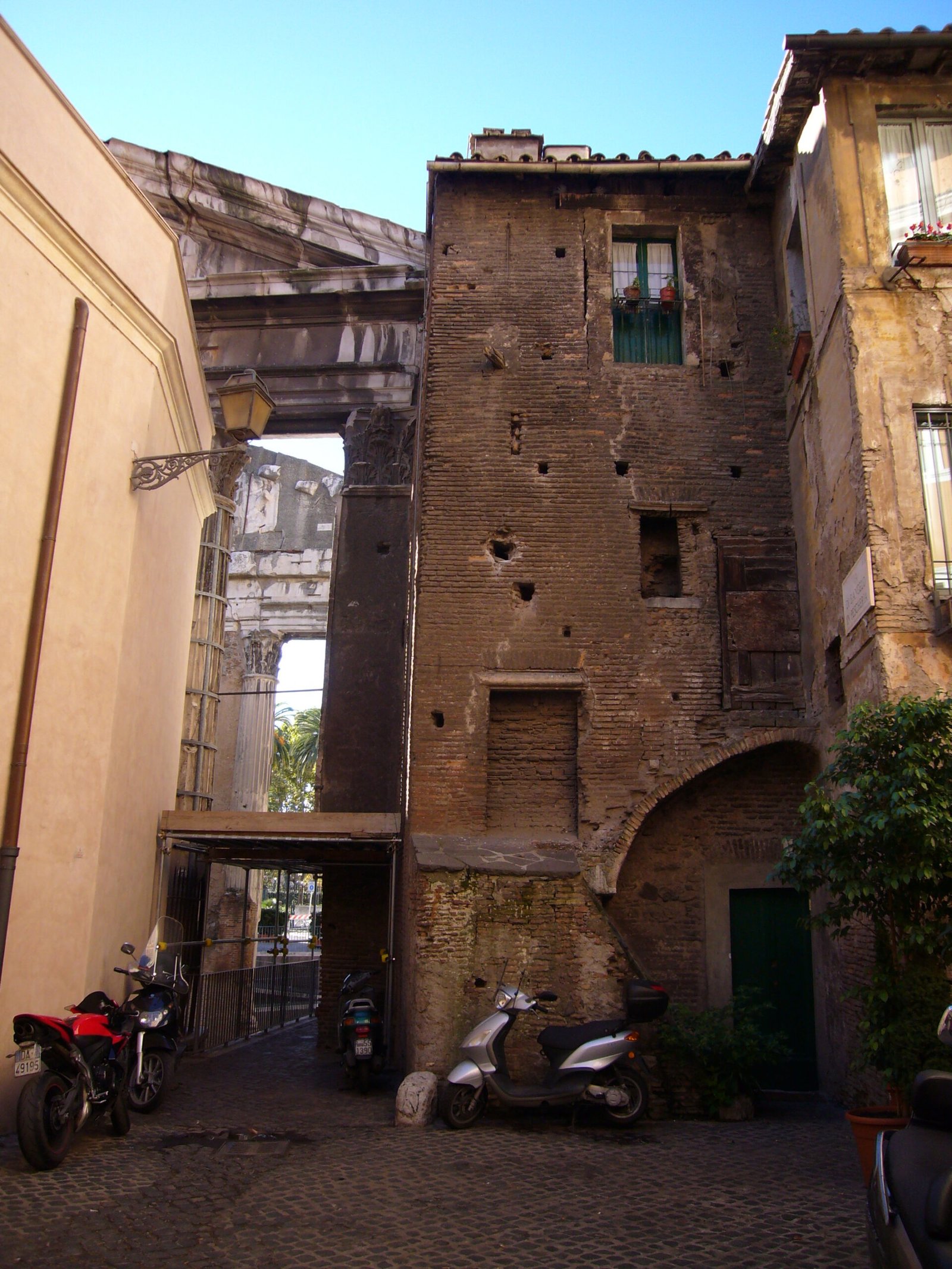
Rione Sant'Angelo, Rome's Rione XI, is public, open space: the streets, the Portico d'Ottavia at Via del Portico d'Ottavia 29 and the Turtle Fountain in Piazza Mattei can be seen for free, with no reservation. The archaeological area of the Theater of Marcellus, on the street of the same name, is free from 9:00 to 19:00 during daylight saving time and from 9:00 to 18:00 during standard time, according to the Sovrintendenza Capitolina. You pay for the Jewish Museum of Rome, which includes the visit to the Great Synagogue: €12 full price.
It is the city's smallest rione, according to the Rome city tourism portal, on the left bank of the Tiber opposite Tiber Island. The name comes from the church of Sant'Angelo in Pescheria, built inside the ruins of the Portico d'Ottavia, next to the fish market that stayed active here for centuries. Within its boundaries lies the district of the old Ghetto, established in 1555 by Pope Paul IV and closed in 1870, with the Synagogue inaugurated in 1904.
Data checked on September 29, 2026 on the Rome city tourism portal, on the Sovrintendenza Capitolina pages dedicated to the Portico d'Ottavia, the Theater of Marcellus and the Turtle Fountain, on the website of the Jewish Museum of Rome and on the materials of the CDEC Foundation and the Community of Sant'Egidio about October 16, 1943. The church of Sant'Angelo in Pescheria doesn't publish hours: the tourism portal says to contact it at 06 68801819. For everything else the reference is 060608.
At a glance: address, hours, ticket
- Where: Rione XI of Rome, on the left bank of the Tiber opposite Tiber Island, between Largo Arenula, Lungotevere de' Cenci and the Theater of Marcellus.
- Operator: streets and monuments of Roma Capitale, with the Sovrintendenza Capitolina for the Portico d'Ottavia, the Theater of Marcellus and the Turtle Fountain, information at 060608.
- How to get in: the rione is public space, the Portico d'Ottavia is always open, and the Theater of Marcellus is viewed from the outside from the archaeological area during the Sovrintendenza's hours.
- Price: streets, portico, fountain and theater area are free. Jewish Museum with Great Synagogue €12 full price, €10 reduced, €6 students up to 25 years, free under 10.
- Hours: Theater of Marcellus area 9:00-19:00 during daylight saving time and 9:00-18:00 during standard time, closed May 1. Jewish Museum closed on Saturdays and Jewish holidays.
- Getting there: on foot from Piazza Venezia, from Campo de' Fiori or from Tiber Island, bus and tram lines to be checked on the ATAC planner or at 060608.
- Accessibility: ramp passable by wheelchair along Via del Portico d'Ottavia according to the tourism portal, other accessible routes not published.
Where it is and what you actually see
The rione occupies the stretch of riverbank facing Tiber Island, between the Capitoline Hill and Largo Arenula. The Rome city tourism portal starts its perimeter from Largo Arenula and cites among its streets Via del Portico d'Ottavia and Lungotevere de' Cenci. The Sovrintendenza Capitolina assigns to Rione XI both the Theater of Marcellus and the Portico d'Ottavia. You cross it on foot in a short time, and it's the density itself that surprises.
What do you see? The arches of the Theater of Marcellus with the sixteenth-century palace built on top. The great monumental entrance of the Portico d'Ottavia, with four Corinthian columns, and the church of Sant'Angelo in Pescheria hidden behind. The Great Synagogue on the Lungotevere, with the dome you recognize from afar. The Turtle Fountain in Piazza Mattei. And the house of Lorenzo Manilio, from 1468, with Latin inscriptions in praise of Rome.
Between one stop and the next are the streets the tourism portal lists for the Jewish quarter: Via della Reginella, Via di Sant'Ambrogio, Via del Tempio, Piazza delle Cinque Scole, Piazza dei Cenci. The same list includes the church of San Gregorio della Divina Pietà, the Ponte dei Quattro Capi toward Tiber Island and the church of Santa Maria in Campitelli. On the paving, in front of some doors, are the stumbling stones with the names of the deported.
The Great Synagogue deserves a discussion of its own. According to the Jewish Museum of Rome it was built after 1870, when the temporal power of the popes ended, and inaugurated in 1904. The tourism portal describes its style as Assyrian-Babylonian. During the Ghetto the community's five synagogues, the Cinque Scole, were gathered in a single building inside the enclosure, the museum recalls. Today their name survives in Piazza delle Cinque Scole, a few steps from the Lungotevere.
The rione and the Ghetto don't entirely coincide, and it's worth keeping that in mind. The Ghetto is the fenced district from 1555 to 1870 where the Jews of Rome were forced to live, told in the page on the Jewish Ghetto of Rome. The rione is the larger administrative unit, which also contains the ancient Circus Flaminius, the Theater of Marcellus, Piazza Mattei and the noble palaces around them. Here we talk about the whole rione, with its layers of history.
The rione is lived in and has a neighborhood life of its own, tied to the Jewish Community of Rome, the Great Synagogue, the museum and the shops on the main streets. Anyone arriving for the first time finds a place of memory and worship as well as of sightseeing. The right tone is that of someone entering a neighborhood where people live, pray and work, paying attention to the doorways, the synagogues and the plaques that recall the deportation.
A curiosity about Rione Sant'Angelo
The name has a story about fish. According to the Rome city tourism portal the rione takes its name from the church of Sant'Angelo in Pescheria, once called Sant'Agnolo Pescivendolo, near the old fish market under the columns of the Portico d'Ottavia. The coat of arms shows an angel with a palm in its left hand. There are variants with the angel holding a sword and scales, and others with a fish, in memory of the demolished Forum Piscarium.
The second curiosity is on the portico itself. The tourism portal describes a stone slab with a Latin inscription on the right side of the great arch. It set a market rule: fish longer than the slab had to be handed over to the city magistrates, from the head to the first fin. It was, in practice, a tax in kind. The slab is still in its place, and it reads easily if you know where to look.
Third curiosity: the marble plaques with the words RIONE, the number, the name and the coat of arms, which you see on the corners of buildings. The tourism portal attributes them to Pope Benedict XIV Lambertini, who had them placed in 1748 to identify the rioni. Rome has 22, and Sant'Angelo is the 11th. Looking for the plaque with the angel is a small game that helps you work out where the rione ends and the next one begins.
The last curiosity concerns a motto. On the Casina dei Vallati, at Via del Portico d'Ottavia 29, a Renaissance marble doorway bears the inscription Id velis quod possis, that is, want what you can have. The tourism portal explains that the building, from the thirteenth century with sixteenth-century additions, was rediscovered in the late 1920s during the excavations around the Theater of Marcellus. The name comes from the Vallati, a family of the new medieval merchant nobility who owned many buildings in the area.
Something nobody tells you about Rione Sant'Angelo
The Turtle Fountain is not by Bernini, even though you often read it, even on some tourist pages. According to the Sovrintendenza Capitolina it was made between 1581 and 1588 to a design by Giacomo della Porta, with the bronze sculptures by Taddeo Landini. The four turtles on the rim of the upper basin came later, in the restoration of 1658 and 1659 under Alexander VII, and are attributed to Bernini only by tradition. That's the contrarian position worth keeping.
Second thing rarely said: the fish market inside the portico is not a distant medieval memory. The Sovrintendenza writes that the Pescheria, the city's main market for selling fish, stayed active until the end of the nineteenth century. For many generations of Romans the Portico d'Ottavia was a place of stalls, shouting and water on the ground, before it became a monument to look at. The ancient columns were, in practice, the roof of a market.
Third thing: you don't visit the Theater of Marcellus on the inside. The Sovrintendenza states that the building is visible exclusively from the outside. The archaeological area around it is open and free, but the palace built over the arches by Baldassarre Peruzzi for the Savelli, later passing to the Orsini, is not part of the public route. Anyone who imagines climbing the tiers of a Roman theater is disappointed. You walk at the foot of the arches, and from there you can read everything.
Fourth thing, in our opinion: Via del Portico d'Ottavia at lunch and dinner time is the worst moment to understand the rione. The street fills with tables and passersby, and the ruins become a backdrop. The rione is better understood in the morning, when the theater area opens at 9:00 and the portico is almost empty. It's in those hours that the fish slab, the columns and the inscriptions can be read without hurry.
What remains of the Portico d'Ottavia and the Pescheria?
The portico dates from the Augustan age, built over an older structure, the Portico of Metellus. According to the Sovrintendenza Capitolina Augustus built it between 27 and 23 BC and dedicated it to his sister Octavia. It was a great quadrilateral of about 119 by 132 meters, with the temples of Juno Regina and Jupiter Stator and two libraries, one Greek and one Latin. It worked like an open-air museum, full of works of art.
The most famous, again according to the Sovrintendenza, was a bronze equestrian group by Lysippus with Alexander the Great and his horsemen. The tourism portal adds that the temple of Jupiter Stator was the first temple in Rome built entirely of marble. After a fire in AD 191, Septimius Severus restored and partly rebuilt the complex in 203. Much of what you see belongs to that phase.
Today what remains is the southeast corner and the great monumental entrance, the vestibule, with four Corinthian columns and pillars on the south side, facing the Circus Flaminius. In late antiquity and the Middle Ages the portico's spaces housed the Pescheria, and in the last quarter of the eighth century a part was incorporated into the church of Sant'Angelo in Pescheria, the Sovrintendenza writes. The church's facade, in plain brick, is inside the rear colonnade.
The tourism portal describes the church interior: three aisles, frescoes, polychrome marbles, a sixteenth-century crucifix, gilded stuccoes. In the floor is the marble coat of arms of the fishmongers, who in 1571 had the chapel of Sant'Andrea built as the seat of their company. Among the works cited are a Madonna and Child with Angels by Benozzo Gozzoli, from 1450, and the fresco of the Glory of Saint Andrew by Innocenzo Sacconi.
How do you visit the portico today? According to the Rome city tourism portal access is always open, with a ramp passable by wheelchair along Via del Portico d'Ottavia and some stairs connecting the monument to the church of Sant'Angelo in Pescheria and the nearby buildings. The passage under the great arch is free. The columns and the excavations around are viewed from the walkways, without going down into the fenced areas and without sitting on the ancient remains.
My advice for visiting Rione Sant'Angelo
Arrive from Via del Teatro di Marcello shortly after 9:00, when the archaeological area opens. Look at the theater's arches and the palace above, then continue toward the Portico d'Ottavia. Look for the fish slab on the right side of the arch, go into Via del Portico d'Ottavia and look at the house of Lorenzo Manilio. From there go up toward Piazza Mattei for the fountain and down to the Lungotevere for the Great Synagogue and the museum.
Choose the day carefully. The Jewish Museum, which includes the visit to the Great Synagogue, is closed on Saturdays and Jewish holidays, according to the museum's website. On Fridays it closes earlier: until September 30 at 16:00, from October 1 at 14:00. Anyone who wants to see the Synagogue inside should therefore aim for a day from Sunday to Thursday, checking first the calendar of holidays published by the museum.
Read the history first, because on site the panels are few. It's worth knowing three dates: 1555, when Paul IV established the Ghetto, 1870, when the Ghetto was closed after the capture of Porta Pia, and October 16, 1943, the day of the Nazi roundup. With these reference points the plaques, the stumbling stones and the name of the square in front of the portico take on their meaning.
Behave in a way suited to a place of worship and memory. The Great Synagogue and the synagogues are places of prayer, and entry follows the museum's rules. In front of the stumbling stones, stop to read the names, without stepping on them for a photo. On residential streets lower your voice and keep doorways clear. They are small courtesies, but in a rione this small they make a difference for the people who live there.
What do you pay and how do you book?
Almost everything is free. The streets, the Portico d'Ottavia, the Turtle Fountain and the archaeological area of the Theater of Marcellus have no ticket. The church of Sant'Angelo in Pescheria doesn't publish hours or visiting conditions, and the tourism portal says to contact it directly. The only paid entry in the rione is the Jewish Museum of Rome, on Via Catalana, with the visit to the Great Synagogue included in the ticket.
The ticket is bought at the museum's desk or on the Jewish Museum booking site, which adds one euro of service to each online booking. According to the museum the ticket includes entry to the Great Synagogue with a guided visit and access to the rooms, with audio guides downloadable in six languages. Tickets are non-refundable. There is no third-party reseller product to point to in place of the official channel.
| Jewish Museum ticket | Price at the desk |
|---|---|
| Full price | €12 |
| Reduced with agreements | €10 |
| Students up to age 25 | €6 |
| Children under 10, people with certified disability above 74 percent, ICOM and ICOMOS members | Free |
The museum also offers its own tours of the Jewish quarter, with published rates: €100 for one to four people, €150 for five to 15, €10 per person for 16 to 35. For schools the prices are reduced. These are museum services, to be booked with the museum itself at 06 68400661 or on the booking site. The museum also lists an augmented and virtual reality route in the Ghetto, of about 60 minutes.
The Sovrintendenza Capitolina occasionally organizes free visits to the area of the Theater of Marcellus and the Portico d'Ottavia, in the Archeologia in Comune program. In the events published in 2023 and 2024 booking was mandatory at 060608, from 9:00 to 19:00, with a maximum of 15 participants and meeting at Via del Teatro di Marcello. The calendar changes every year, so it's worth checking the Sovrintendenza's website.
Another well-known fact, yet rarely cited
Everyone knows the Theater of Marcellus is a Roman theater. Less well known is that Julius Caesar began it. According to the Sovrintendenza Capitolina Caesar started the work with extensive expropriations, demolishing existing buildings including the temple of Pietas, and drawing a lot of criticism. Augustus resumed the project with further expropriations. The building was probably completed in 17 BC, used for the Secular Games, and dedicated in 13 or 11 BC.
The name recalls Marcellus, Augustus's nephew destined to succeed him and who died young at Baiae, according to the Sovrintendenza. The numbers explain its importance: 130 meters in diameter and 15,000 seats, up to 20,000 if needed. The facade had three orders, Doric, Ionic and Corinthian, and for acoustics there were 36 bronze vases. The theater probably stayed in use until the fourth century, after the restorations by Vespasian and Alexander Severus.
Then came the second life. Thanks to its elevated position near the river, the theater became a fortress of the Pierleoni and the Fabi, the Sovrintendenza writes. In the sixteenth century Baldassarre Peruzzi built the Savelli palace over the arches, which two centuries later passed to the Orsini. In the 1930s the City of Rome bought the lower part, the one with the Roman structures, and excavated and restored it after a radical clearing of the area.
One last fact known to historians and rarely cited concerns Sant'Angelo in Pescheria. According to the Rome city tourism portal, on the night of Pentecost in 1347 Cola di Rienzo set out from this church to climb the Capitoline Hill and restore the Roman Republic. A small church built inside a Roman portico, next to a fish market, is thus the starting point of one of the best-known political episodes of medieval Rome.
The right photo to take at Rione Sant'Angelo
The photo that tells the story of the rione is the one of the Portico d'Ottavia vestibule, with the four Corinthian columns and the bricks of the church of Sant'Angelo behind. It should be taken from Via del Portico d'Ottavia, early in the morning, when the light comes from the side and the street is still clear. In a single frame there are the Augustan age, Septimius Severus's restoration, the eighth-century church and the neighborhood that grew up around them.
The second image is the arches of the Theater of Marcellus with the palace above. It works from the archaeological area or from the sidewalk of Via del Teatro di Marcello, with a lens wide enough to hold the ancient arches and the palace windows together. It's the image that best explains the history of Rome in layers: Augustus's theater, the medieval fortress and the Renaissance residence one on top of the other.
Third choice: a detail. The fish slab on the right side of the great arch, the rione plaque with the angel on the corner of a building, the inscription on Lorenzo Manilio's house, the motto on the Casina dei Vallati. These are small photos, to be taken up close, that tell more than a panorama. The Turtle Fountain photographs well on a cloudy day, which doesn't flatten the bronzes and makes the turtles on the rim stand out.
Some rules of respect matter more than any framing. Stumbling stones are photographed without stepping on them and without turning them into a backdrop for portraits. In front of the Great Synagogue and the synagogues it's best to follow the staff's instructions and ask before filming entrances and people. On residential streets avoid photographing into doorways and windows. The rione is lived in, and the people who live there are not part of the scenery.
How do you get there from central Rome?
The Rome city tourism portal pages on the rione, the Portico d'Ottavia and the Turtle Fountain don't list bus or tram lines. The bus and tram lines serving Largo Arenula, Piazza Venezia and the Lungotevere change with roadworks and seasonal schedules. For the route of the day it's best to use the planner on the ATAC website or call 060608.
On foot is the simplest way. From Piazza Venezia you go down Via del Teatro di Marcello, keeping the Capitoline Hill on your left, and in a few minutes you reach the theater's arches. From Campo de' Fiori you cross Largo Arenula and enter the rione from the streets behind Piazza Mattei. From Largo Argentina you go down toward the Crypta Balbi and the Portico d'Ottavia.
From Trastevere the loveliest way in is from Tiber Island. You cross the river onto the island and pass over the Ponte dei Quattro Capi, which the tourism portal lists among the monuments of the Jewish quarter, coming out on the Lungotevere in front of the Great Synagogue. It's a short route that connects three places of the ancient and medieval city and lets you reach the rione from the river side, with the Synagogue as the first building in view.
It's best not to arrive by car. The historic center has access and parking rules for private vehicles, to be checked on the Roma Capitale website before leaving, and around the rione street parking is scarce. The tourism portal mentions a ramp passable by wheelchair along Via del Portico d'Ottavia, but many inner streets have uneven paving. Anyone who walks with difficulty can ask 060608 for the easiest routes.
Some important events that took place here in history
Between 27 and 23 BC Augustus built the Portico d'Ottavia over the Portico of Metellus, according to the Sovrintendenza Capitolina. The theater started by Caesar was probably completed in 17 BC, for the Secular Games, and dedicated to Marcellus in 13 or 11. After the fire of AD 191, Septimius Severus restored the portico in 203. In the last quarter of the eighth century the church of Sant'Angelo in Pescheria arose inside its ruins.
In the 12th century the church was renovated and received its Romanesque bell tower, according to the Rome city tourism portal. On the night of Pentecost in 1347 Cola di Rienzo set out from here toward the Capitoline Hill. In 1450 Benozzo Gozzoli painted the Madonna and Child with Angels now in the church. In 1468 Lorenzo Manilio had the house with the Latin inscriptions built on Via del Portico d'Ottavia.
In 1555 Pope Paul IV established the Ghetto, the second in the world after Venice's of 1516, according to the tourism portal. The Jews of Rome were forced to live in it, to wear distinguishing marks and to endure limits on trade and on owning real estate. In 1571 the fishmongers built their chapel in Sant'Angelo. Between 1581 and 1588 the Turtle Fountain was made, and in 1658 and 1659 it received its turtles.
In 1748 Benedict XIV had the rione plaques placed. In 1870, after the breach at Porta Pia, the Ghetto was closed for good. In 1904 the Great Synagogue was inaugurated. In the 1930s the City cleared and restored the Theater of Marcellus. On October 16, 1943 the Nazis rounded up the Jews of Rome. Since 1994 a silent march has been held every October 16, and since 2015 the Casina dei Vallati has hosted the exhibitions of the Fondazione Museo della Shoah.
Who passed through Rione Sant'Angelo
The first names are those of Augustus's Rome. The emperor himself, who built the portico and completed the theater. His sister Octavia, to whom the portico was dedicated. Marcellus, the nephew destined to succeed him, who gave the theater its name. And before them Julius Caesar, who started the theater's construction amid criticism. Later Septimius Severus, who rebuilt the portico after the fire, and Vespasian and Alexander Severus, who restored the theater.
The Middle Ages bring baronial families and a tribune. The Pierleoni and the Fabi made the theater a fortress, according to the Sovrintendenza Capitolina. The Vallati, enriched merchants, owned many houses in the area between the thirteenth and fourteenth centuries. Cola di Rienzo set out from Sant'Angelo in Pescheria in 1347. In the fifteenth century came Benozzo Gozzoli, with his Madonna, and Lorenzo Manilio, who in 1468 wanted a house with inscriptions in praise of Rome.
The sixteenth and seventeenth centuries are the time of popes and artists. Paul IV, who established the Ghetto in 1555. Baldassarre Peruzzi, architect of the palace over the theater for the Savelli, later passing to the Orsini. Giacomo della Porta and Taddeo Landini, authors of the Turtle Fountain. Muzio Mattei, who got the fountain in front of his house. Alexander VII and, according to tradition, Gian Lorenzo Bernini, with the turtles of 1658.
Then Benedict XIV, with the rione plaques of 1748, and in 1877 the organ builder Pietro Pantanella, whom the fishmongers' community commissioned to build a new organ for Sant'Angelo, according to the tourism portal. Above all, for centuries, the Jews of Rome, who lived here during the Ghetto and returned here to pray in the Great Synagogue. Among them Settimia Spizzichino, the only woman among the 16 survivors of the deportation of October 16, 1943, according to the Community of Sant'Egidio.
What happened in the rione on October 16, 1943?
At dawn on October 16, 1943 the Nazis arrested more than 1,000 Jews in Rome, according to the CDEC Foundation, the Center for Contemporary Jewish Documentation. The heart of the roundup was the Ghetto, around the Portico d'Ottavia. The Community of Sant'Egidio gives the figures of 1,259 people arrested, including 689 women, 363 men and 207 children. After a portion of them were released, 1,023 people were deported to Auschwitz.
Those arrested were taken to the Military College. On October 18 the train left from Tiburtina station and on the 23rd it arrived at Auschwitz, according to the CDEC Foundation. The survivors numbered 16, 15 men and one woman, Settimia Spizzichino, who died in 2000. The CDEC has also presented a find: audio recordings from 1955 with the voices of some survivors, collected during a commemoration on the anniversary of the roundup.
The remembrance is written into the street names and the paving. The space in front of the Portico d'Ottavia bears the name Largo October 16, 1943, according to the Community of Sant'Egidio. On the neighborhood's streets, the Rome city tourism portal points out the stumbling stones with the names of the deported, in front of the houses where they lived. Passersby stop to read them. It's the most direct way to understand that the deportation concerned specific families, door by door.
Since 1994, every October 16 the Community of Sant'Egidio and the Jewish Community of Rome organize a silent march, which retraces the deportees' path in reverse. At the Casina dei Vallati the Museo della Shoah Foundation offers exhibitions and an interactive map reconstructing the arrests and deportations of October 16, according to the tourism portal. Among our pages you'll also find the places of memory in Rome.
Turtle Fountain: what is documented and what is legend?
What the documents say, according to the Sovrintendenza Capitolina: in 1570 the fountain was planned for Piazza Giudea, but the nobleman Muzio Mattei obtained its relocation in front of his residence, also committing to take care of the square's upkeep. It was made between 1581 and 1588 to a design by Giacomo della Porta, with the four bronze youths playing with dolphins sculpted by Taddeo Landini, in polychrome marbles and bronze.
What tradition says: the four turtles on the rim of the upper basin are said to be by Gian Lorenzo Bernini. The Sovrintendenza writes that they were added in the restoration of 1658 and 1659, under Alexander VII, and that the attribution to Bernini comes from tradition. The Rome city tourism portal, more decisive, assigns them to Bernini from 1658. The sources don't agree on the degree of certainty, and for this reason it's best to speak of attribution.
What is legend: according to the story reported by the tourism portal, a Duke Mattei, who had lost the family fortune gambling, was rejected by his future father-in-law. To prove his worth he is said to have had the fountain built in a single night, showing it the next day from the palace window. Then he is said to have had that window walled up as a memento. It's a nice story with no documentary footing: the work, as we have seen, lasted years.
The fountain has been restored several times, including recently. The Sovrintendenza recalls the work of 2005 and 2006, with a water treatment system, and that of 2025, in the Caput Mundi program funded by the PNRR. Anyone arriving in Piazza Mattei therefore finds clean bronzes and running water. For a comparison with the city's other fountains, the site has pages on Bernini in Rome and on the rione fountains of Rome.
How do you read Sant'Angelo next to the neighboring rioni?
Rome has 22 rioni, and the page on the 22 rioni of Rome tells their origin: the ancient regiones, the 12 rioni of the 12th century, the 14 of Sixtus V, up to the 22nd, Prati, added in 1921 according to the tourism portal. Sant'Angelo is the smallest, but it borders very different areas. Reading it together with its neighbors helps you understand how the medieval city overlaid the ancient one.
To the south, beyond the Theater of Marcellus, begins Rione Ripa, with Tiber Island, the church of San Nicola in Carcere built on the temples of the Forum Holitorium and the Forum Boarium with the Temple of Hercules Victor. The river and the ancient ports hold the two rioni together, which for centuries lived off the same trade.
It's precisely the border with Ripa that explains the shape of the rione. The Theater of Marcellus and the Portico d'Ottavia lay at the edges of the Circus Flaminius, the open space the tourism portal describes as surrounded by large porticoes, of which the Portico d'Ottavia is the only one preserved. In the Middle Ages the ruins were reused: the theater became a fortress, the portico a market and church. In our opinion it's this overlap that makes the rione so small and so dense.
To the west, beyond Largo Arenula, you enter Rione Regola, with Piazza Farnese, the church of San Paolo alla Regola and Via Giulia. Further north Rione Ponte leads toward Piazza Navona and the Tiber. These are rioni of palaces and workshops, different from the dense, narrow fabric the Ghetto left in Sant'Angelo.
To the north and east the rione borders the Largo Argentina area and the Capitoline Hill. The Crypta Balbi, which the tourism portal lists among the rione's monuments, tells the transformation of an ancient theater into a medieval neighborhood, the same process visible at the Theater of Marcellus. For those who want to continue comparing rioni, the site also has Rione Monti and Rione Trevi.
When is it closed and what shouldn't you expect?
The streets and the Portico d'Ottavia never close. The archaeological area of the Theater of Marcellus follows the Sovrintendenza Capitolina's hours: 9:00 to 19:00 during daylight saving time, 9:00 to 18:00 during standard time, and closed May 1. The Jewish Museum is closed on Saturdays and Jewish holidays. In 2026 the museum lists closures for Purim, Pesach, Shavuot, Rosh Hashanah, Yom Kippur and Sukkot, with some partial closures.
The museum's hours change several times in autumn and winter. Until September 30 it is open Sunday to Thursday from 10:00 to 18:00, with last entry at 17:15, and on Fridays from 10:00 to 16:00. From October 1 to 26 the hours become 10:00-17:00 Sunday to Thursday and 9:00-14:00 on Fridays. Three more periods with different hours follow until March 31, published on the museum's website.
What shouldn't you expect? A Roman theater to walk through the inside: the Theater of Marcellus is viewed from the outside. A church of Sant'Angelo that is always open: the hours aren't published, and it's best to phone first. A museum of the rione: the historical information is scattered among the Jewish Museum, the plaques and the exhibitions at the Casina dei Vallati, whose hours the tourism portal doesn't publish. For those exhibitions the reference is the Foundation's website or 060608.
Don't expect a quiet neighborhood at mealtimes either. Via del Portico d'Ottavia is very busy at lunch and dinner, and on holidays the foot traffic increases. Anyone looking for quiet finds it early in the morning, on side streets like Via della Reginella and Via di Sant'Ambrogio, or around Piazza Mattei. On October 16 and on the community's anniversaries it's best to move with discretion and respect ceremonies and processions.
Eating nearby
The Rome city tourism portal recalls that the rione is appreciated for a cuisine that joins Roman and Jewish tradition. It is a real heritage, with dishes the community's families have prepared for centuries. For this very reason Via del Portico d'Ottavia has become one of the streets with the most tables in the center, and the quality is not uniform. The neighborhood's name, on its own, guarantees nothing.
The signs of traps are those of the whole historic center. The touter on the sidewalk who stops passersby. The menu with photographs of the dishes, translated into many languages. Items with no price or with the price given verbally. A different menu outside and inside. The kitchen open nonstop, with no break between lunch and dinner. Romans avoid these places because they live off passing trade, not regular customers.
The practical rule is to look at who is sitting at the tables and what is on the menu. Few dishes, written daily, clear prices and neighborhood customers are good clues. Anyone who observes religious dietary rules must verify certification and opening days directly with the establishment. To find carefully chosen addresses there is the list of addresses on Google Maps, also useful for organizing the day between the rione and its surroundings.
Anyone who prefers a quick meal outdoors won't find gardens or lawns in the rione: it is a dense fabric of streets and small squares. Sitting on the steps of monuments or on the bases of the portico's columns is not a good way to eat, out of respect for the places and for the people who live here. Better to walk on to the Lungotevere or, for an open green space, to the Circus Maximus.
What to combine in a day
The most natural pairing is the Jewish Museum of Rome, which according to the official site tells, in seven rooms and 700 square meters, Roman Jewish life from the second century BC, with liturgical furnishings, manuscripts, documents and marbles mostly from the Ghetto period. In the Great Synagogue complex there is also the Spanish Temple, the oratory of the Spanish rite. The visit takes at least an hour and a half.
Anyone who wants to broaden their view of Rome's Jewish history has other places outside the rione. On Via Appia Antica are the Jewish catacombs of Vigna Randanini, on the Nomentana the Jewish catacombs of Villa Torlonia. For twentieth-century memory there are the Ardeatine Caves Mausoleum and the Casa della Memoria e della Storia.
Toward the Capitoline Hill, in a few minutes, you reach the Capitoline Museums and the Palazzo dei Conservatori. Along Via del Teatro di Marcello, toward the Capitoline Hill, is the Monastery of Tor de' Specchi, with limited public opening. Toward the river, Santa Maria in Cosmedin with the Mouth of Truth and San Giorgio in Velabro complete a morning in the oldest Rome.
In the afternoon you can cross the Tiber. From Tiber Island you enter Trastevere, or from Ponte Sisto you go back toward Campo de' Fiori. To the north, the Teatro Argentina and the sacred area of Largo Argentina close the loop. Anyone who loves the Baroque will find ideas on the page about Baroque Rome, which starts precisely from fountains and squares like Piazza Mattei.
For more zero-cost ideas there is the page on Free Rome, where the Portico d'Ottavia, the Theater of Marcellus area and the Turtle Fountain belong by right. Putting together the rione, the Capitoline Hill and Tiber Island in a morning, and the museum and Trastevere in the afternoon, makes a full day with almost no expense, with the Jewish Museum's single ticket to book in advance.
Frequently asked questions
Why is it called Rione Sant'Angelo?
The name comes from the church of Sant'Angelo in Pescheria, built in the eighth century inside the ruins of the Portico d'Ottavia, according to the Sovrintendenza Capitolina. The Rome city tourism portal recalls that it was once called Sant'Agnolo Pescivendolo, because of the fish market that occupied the portico. The rione's coat of arms shows an angel with a palm in its left hand, and some variants include a fish.
Are Rione Sant'Angelo and the Ghetto the same thing?
No. The Ghetto is the district in which the Jews of Rome were forced to live from 1555 to 1870, established by Pope Paul IV. Rione Sant'Angelo is a larger administrative unit, which contains it and also includes the Theater of Marcellus, the Portico d'Ottavia, Piazza Mattei and the palaces around them. For the history of the Ghetto the site has the page dedicated to the Jewish Ghetto of Rome.
Do you pay to visit Rione Sant'Angelo?
No, the rione is public space. The Portico d'Ottavia, the Turtle Fountain and the archaeological area of the Theater of Marcellus are free. You pay only for the Jewish Museum of Rome, which includes the visit to the Great Synagogue: €12 full price, €10 reduced with agreements, €6 for students up to 25 years, free under 10. Online, one euro of service is added.
Can you go inside the Theater of Marcellus?
No. The Sovrintendenza Capitolina states that the building is visible exclusively from the outside. The archaeological area around it is open free from 9:00 to 19:00 during daylight saving time and from 9:00 to 18:00 during standard time, closed May 1. Occasionally the Sovrintendenza organizes free visits to the area, with mandatory booking at 060608 and limited places, published on its website.
When is the Jewish Museum closed?
The museum is closed on Saturdays and Jewish holidays, according to the official site. In 2026 the closures concern Purim, Pesach, Shavuot, Rosh Hashanah, Yom Kippur and Sukkot, with some partial closures. On Fridays it closes earlier than on other days. From October 1 to 26 the hours are 10:00 to 17:00 Sunday to Thursday and 9:00 to 14:00 on Fridays. Information at 06 68400661.
Is the Turtle Fountain by Bernini?
No. According to the Sovrintendenza Capitolina the fountain was made between 1581 and 1588 to a design by Giacomo della Porta, with the bronzes by Taddeo Landini. The four turtles were added in the restoration of 1658 and 1659, under Alexander VII, and tradition attributes them to Bernini. The story of Duke Mattei who supposedly had it built in one night is a legend.
Where is October 16, 1943 remembered?
In the rione the remembrance is in several places. The space in front of the Portico d'Ottavia is called Largo October 16, 1943. On the neighborhood's streets are the stumbling stones with the names of the deported. At the Casina dei Vallati, at Via del Portico d'Ottavia 29, the Museo della Shoah Foundation offers exhibitions and an interactive map of the arrests. Every October 16, since 1994, a silent march takes place.
How do you get to the Portico d'Ottavia?
The Rome city tourism portal doesn't list public transport for the rione. On foot you arrive from Piazza Venezia going down Via del Teatro di Marcello, from Campo de' Fiori crossing Largo Arenula, from Trastevere passing through Tiber Island and the Ponte dei Quattro Capi. For the day's buses and trams it's best to use the route planner on the ATAC website or call 060608.
Who wrote this and from which sources
The text comes from the editorial team of Tour Leader Pro, the Rome-based outfit that designs itineraries, visits and cultural events across Rome and Lazio. Rates, hours and booking arrangements given here come from the official sources cited in the text on the date given at the start: for the rione the reference is the pages of the Sovrintendenza Capitolina and the website of the Jewish Museum of Rome. Let us know what you find changed.
Organizing a visit to the rione for a group means working on calendars more than on tickets: avoid Saturdays and Jewish holidays, book the Jewish Museum and the Great Synagogue in advance, rely on the museum's official tours for the neighborhood and respect the places of worship and memory. For those who plan outings of this kind, a useful resource for people who organize group trips is Tour Leader Pro.
Rione Sant'Angelo is also a door onto a Rome made of layers: Augustus's theater, the early medieval church, the Ghetto of the popes, the twentieth-century city and its memory. Putting together the rioni of the center, the Appian Way with the Jewish catacombs and perhaps the Castelli Romani takes a few days and a bit of planning, and a useful resource for putting together a multi-day itinerary is Italy Planner.