Evangelical Baptist Church on Via del Teatro Valle
In short. The Evangelical Baptist Church on Via del Teatro Valle is open for worship: the congregation meets every Sunday at 11:00 in the worship hall at Via del Teatro Valle 27, in the Sant'Eustachio district, near Largo di Torre Argentina,…
The Evangelical Baptist Church on Via del Teatro Valle is open for worship: the congregation meets every Sunday at 11:00 in the worship hall at Via del Teatro Valle 27, in the Sant'Eustachio district, near Largo di Torre Argentina, according to the church's official website. The site lists no tickets or reservations for taking part. Outside Sunday morning no opening hours for visits are published, and the channel to ask is the pastor's office, at 06 68804046.
The congregation is part of the Unione cristiana evangelica battista d'Italia, the UCEBI, and today is led by Pastor Simone Caccamo. The church presents itself as the first building constructed in Rome for Evangelical worship, inaugurated with a solemn ceremony on Sunday, November 2, 1878. The building was purchased that year by the Foreign Mission Board of the Southern Baptist Convention, the mission of the Southern Baptists of the United States. In 1911 the interior was decorated by Paolo Paschetto, the future author of the emblem of the Italian Republic.
Data verified on September 29, 2026 on the website of the Chiesa cristiana evangelica battista Teatro Valle, on the tourism portal of Roma Capitale, on the page of the Associazione delle chiese evangeliche battiste del Lazio and on the other sources cited later in the text. The operator doesn't publish information on accessibility, on visits outside worship or on a concert calendar. The Lord's Supper is celebrated every first Sunday of the month. For everything else it's best to write from the site's contact page or call the pastor's office.
In brief: address, hours, ticket
- Address: Via del Teatro Valle 27, Sant'Eustachio district, between Via dei Redentoristi and Piazza Sant'Eustachio.
- Operator: the local Baptist congregation, a member of the Unione cristiana evangelica battista d'Italia (UCEBI), Pastor Simone Caccamo.
- How to get in: during the Sunday worship, outside that time only after contacting the pastor's office.
- Price: the church's website lists no tickets for worship.
- Hours: worship every Sunday at 11:00, Lord's Supper on the first Sunday of the month, Bible study on Saturday according to the Baptist association of Lazio.
- How to get there: buses stopping at Largo Argentina or nearby, lines listed by the church 70, 81, 87, 186, 492, 628, 46 and 64.
- Accessibility: not published by the operator, it's best to ask at 06 68804046.
Where it is and what you really see
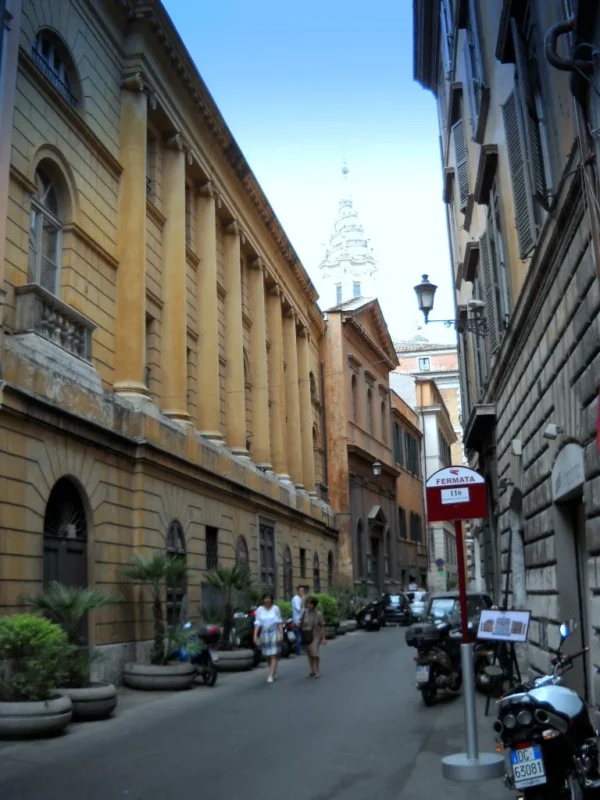
Via del Teatro Valle is a narrow, one-way street that connects Via dei Redentoristi to Piazza Sant'Eustachio, as the church itself describes it. It takes its name from the Teatro Valle, which is on the same street. The church occupies a building adjoining the theater, according to the tourism portal of Roma Capitale. In one direction you reach Largo di Torre Argentina in a few minutes, in the other the Basilica of Sant'Eustachio and then the Pantheon.
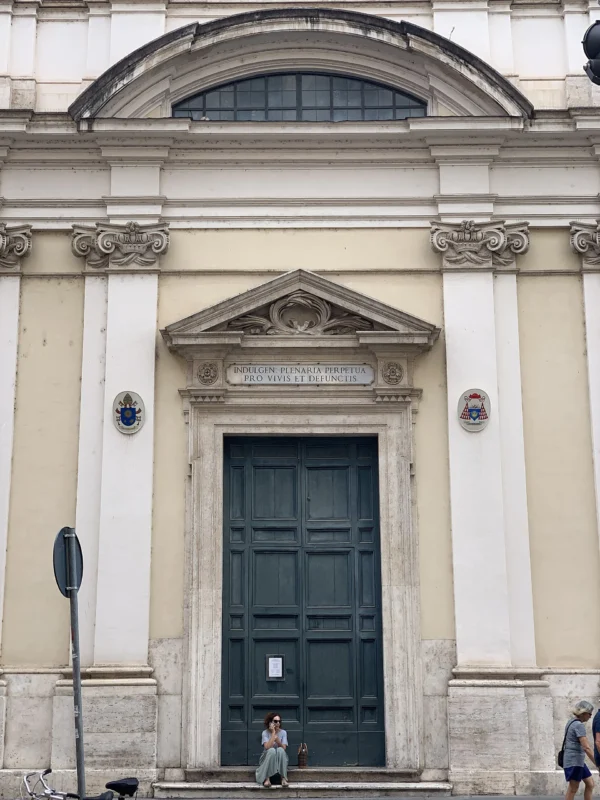
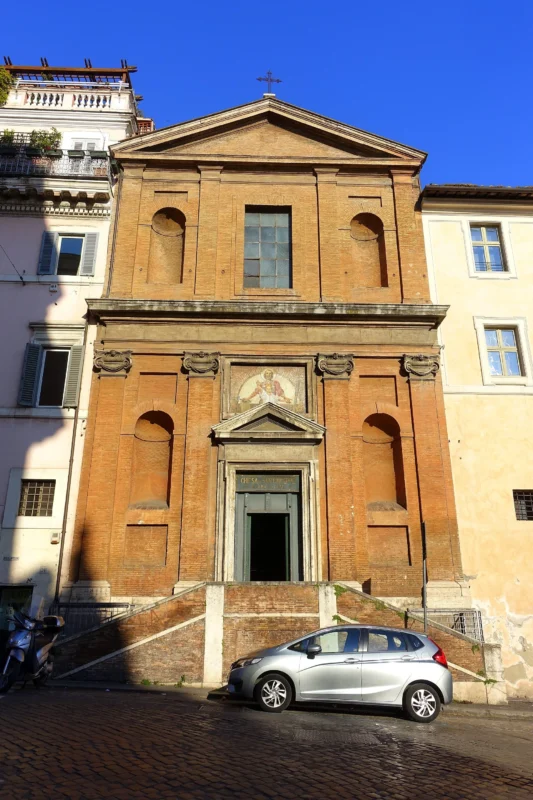
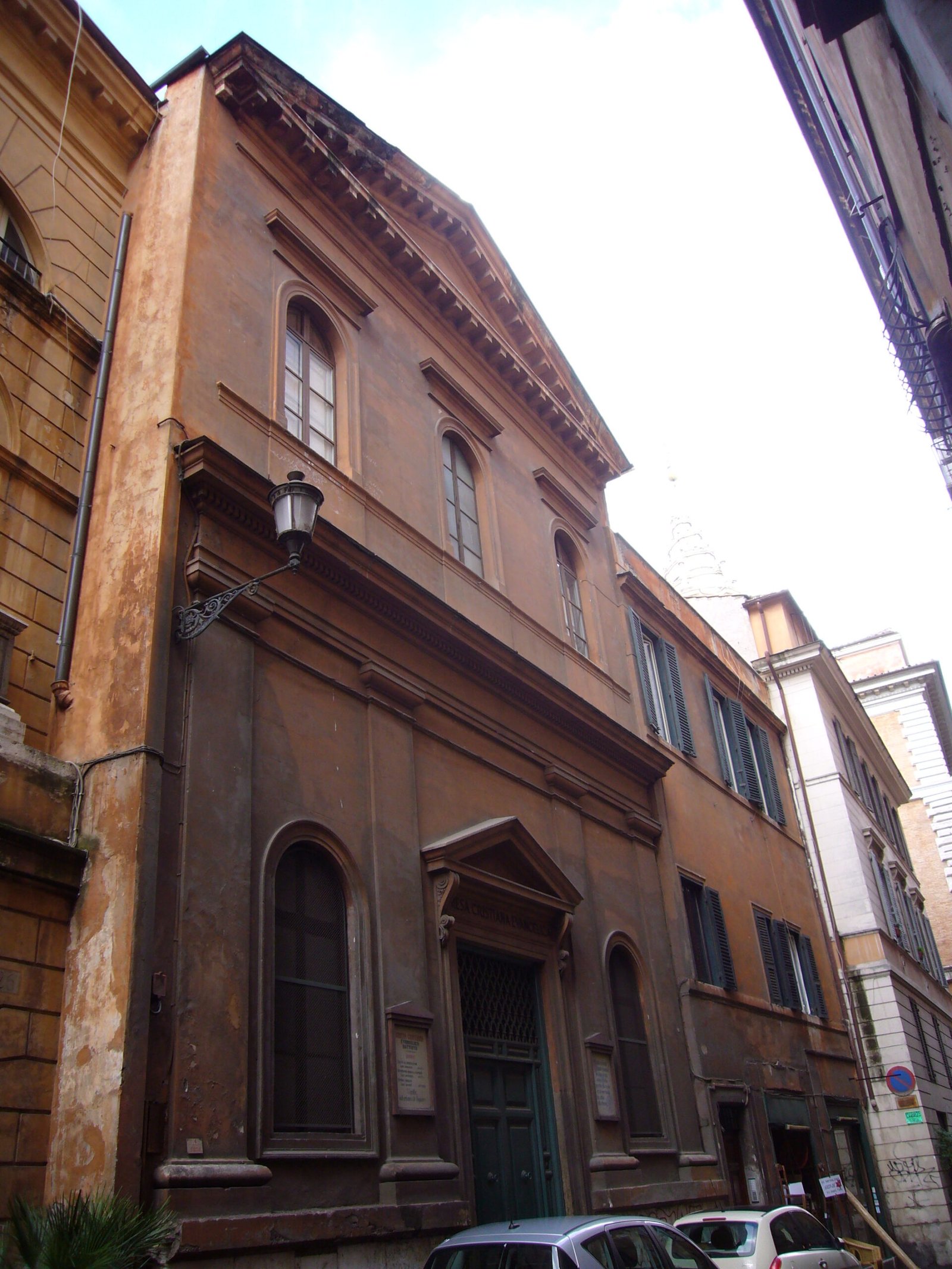
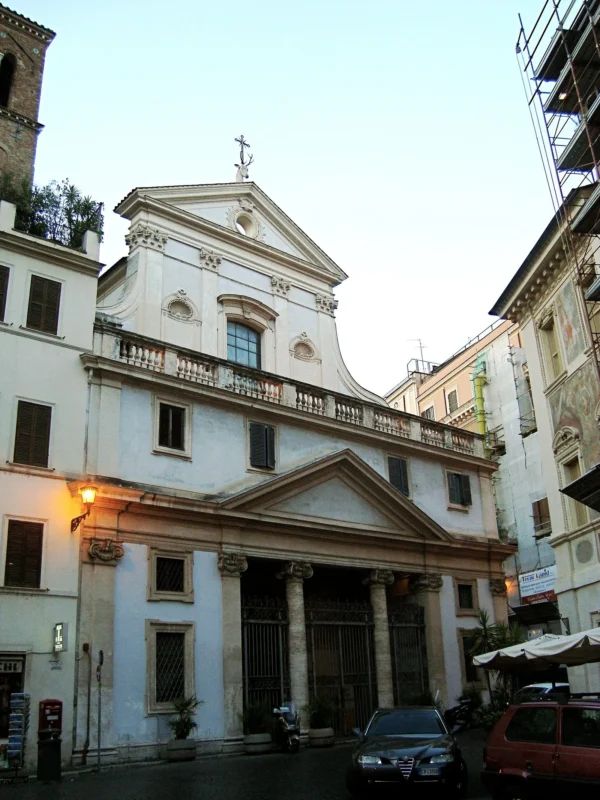
The facade is recognizable without difficulty, even though it has none of the look of a Baroque church. It is divided into two horizontal orders and closed at the top by a pediment, with Tuscan-style pilasters. Below is a portal flanked by two arched windows, above it three more arched windows. Above the portal runs the inscription CHIESA CRISTIANA EVANGELICA, according to the congregation's website. No dome, no bell tower, no statues of saints: the language is that of a 1800s Roman palazzo.
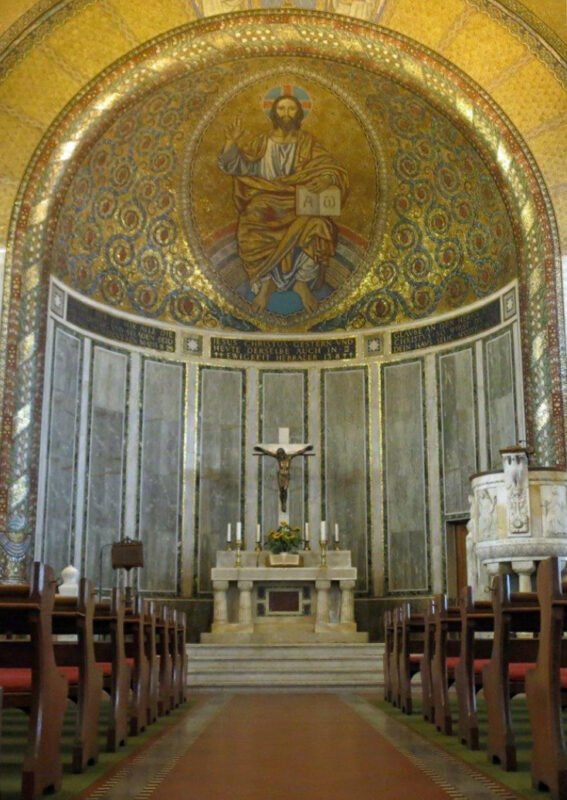
Inside is a rectangular hall with an apse, covered by a barrel vault, and a small choir loft above the entrance, according to the tourism portal of Roma Capitale. In front of the apse, in the floor, is the baptismal pool. It's the element that says more than any other about what this church is: Baptists practice baptism by immersion of those who profess their faith, often as adults, and the pool takes the place that the high altar would have in a Catholic church.
The walls carry Paolo Paschetto's 1911 decoration, with symbols of early Christian inspiration: the lily, the alpha and omega, the burning bush, the peacock, the vine, an altar with bread and wine. A band bears the words of the Lord's Prayer, according to the entry devoted to the church on Wikipedia. The apse has floral decorations in relief, according to the Centro Astalli. The sources describe no images of saints or altarpieces. Anyone who enters expecting a museum is surprised by the sobriety.
The context explains a lot. A few steps away are the Basilica of Sant'Eustachio, the Basilica of Sant'Andrea della Valle, the Sapienza complex with Sant'Ivo, the Senate at Palazzo Madama. According to the Wikipedia entry on the Sant'Eustachio district, the Baptist church is the only non-Catholic place of worship listed among the district's churches, alongside 12 Catholic churches. A minority in the midst of papal Rome, even in the geography of the streets.
A curiosity about the Evangelical Baptist Church on Via del Teatro Valle
The church stands in what in Roman times was a depression in the plain of the Campus Martius. The tourism portal of Roma Capitale and the Centro Astalli recall that here, near the Pantheon and the baths of Agrippa, the pond of Agrippa extended, a large artificial lake. In the Middle Ages and the Renaissance the area took the name Valle and became a center of workshops and artisan activities. The name of the street, of the theater and of nearby Sant'Andrea della Valle comes from that history.
Second curiosity: the church has a much more famous neighbor. Teatro Valle was inaugurated on January 7, 1727, according to Roma Segreta, and was rebuilt in masonry in 1822 by Giuseppe Valadier and Gaspare Salvi. Closed since 2011, it has been restored with a €10 million intervention, and Artribune, in an article of September 29, 2026, announces the reopening on October 16, 2026 under the management of Teatro di Roma. Evangelical worship and the curtain have coexisted on the same street for almost a century and a half.
Third curiosity: the author of the interior decoration, Paolo Paschetto, was the son of a Waldensian pastor. The Wikipedia entry devoted to him says he was born in 1885 in Torre Pellice, in the Waldensian valleys of Piedmont, the third son of Enrico, a Waldensian pastor, and Luigia Oggioni. For the Baptist church he designed in 1911 stained-glass windows with Christian symbols, made by the master glassmaker Cesare Picchiarini. It's a typical interweaving of Evangelical Rome in the early 1900s, where Protestant congregations were small and all knew one another.
Last curiosity, a linguistic one. On the congregation's website Baptists are defined as congregationalists and separatists. Congregationalists because each local congregation is autonomous and believers gathered in assembly decide on all aspects of community life. Separatists because the church must not be subservient to the State, with a clear separation between the two spheres. Given that the building is a short distance from the Senate at Palazzo Madama, the second definition also has a geographical flavor.
One thing nobody tells you about the Evangelical Baptist Church on Via del Teatro Valle
The claim to being first should be taken with caution. The church, the Centro Astalli and the tourism portal repeat that this is the first building constructed in Rome for Evangelical worship. But the same sources tell us that in 1878 the Foreign Mission Board bought an already existing building in the Sant'Eustachio district. And the English Wikipedia entry on St. Paul's Within the Walls, the Episcopal church on Via Napoli, lists that as the first Protestant church built in Rome, consecrated on March 25, 1876.
The sources therefore don't agree, and in our judgment it's best to say so. It's the opposing position that is worth keeping in mind: the claim of Via del Teatro Valle is a tradition of the congregation, repeated by many pages, not an undisputed fact. What can be said with certainty is that it is one of the first permanent seats of Protestantism in the Rome that had become the capital of Italy, and the first of the Baptists. The rest depends on what is meant by building and by Evangelical.
Second thing rarely said: before arriving here, the Baptists of Rome changed location several times. The Wikipedia entry on the church tells of the suspicion and hostility of landlords, which made it hard to find a stable place for worship. In 1871 the first regular Baptist church opened at Via della Croce 39, in 1874 a large hall in the former Caffè Cesano, at Piazza Montecitorio 17. The purchase of the building in the Sant'Eustachio district, with funds raised among American Baptist congregations, closed the season of precarious rentals.
Third thing: the congregation is small. The Centro Astalli, which presents it in its route on the religious communities of Rome, speaks of about 40 faithful. Anyone who arrives on Sunday does not enter a basilica crowded with tourists but a meeting of people who know one another. The worship lasts the time of the liturgy and the preaching, and afterward, according to the Baptist association of Lazio, a communal agape follows. It's best to enter discreetly, as you do in someone else's home.
How did the Baptists arrive in Rome after 1870?
The Baptist presence in Italy predates the arrival in Rome. According to CESNUR, the first mission was born in Bologna in 1863 as the Gospel Mission to the Italians, and a more lasting one, the Spezia Mission for Italy and the Levant, was founded in 1866 by the English pastor Edward Clarke. Rome however remained outside: until 1870 the city was under papal rule, and public Protestant worship for Italians was not allowed.
Everything changes with the capture of Porta Pia on September 20, 1870. CESNUR writes that after the conquest of Rome Anglo-Saxon Baptist interest grew greatly, with three organized missions in the capital. The Foreign Mission Board of the Southern Baptist Convention sent to Italy the missionary William Nelson Cote, who in 1871, according to Wikipedia, managed to open a Baptist church at Via della Croce 39, between the Corso and Piazza di Spagna.
The next phase bears the name of George Boardman Taylor. With him, in 1874, the movement opened a large hall in the former Caffè Cesano at Piazza Montecitorio 17, in front of the building that today houses the Chamber of Deputies. From there began the fundraising for a church of its own. In 1878 the Foreign Mission Board bought the building on Via del Teatro Valle, which was inaugurated on Sunday, November 2 with a solemn service, according to the church's website.
In 1905, on the first and second floors of the same building, a theological school was opened. Wikipedia explains the reason: the foreign missionaries felt the time had come to train an Italian pastoral body and leadership group, to reach complete autonomy from the foreign missions. The organizational path went through the Unione cristiana apostolica battista of 1884 and arrived, according to CESNUR, at the founding of the UCEBI in 1956. Today the Union is headquartered in Rome at Viale della Bella Villa 31.
What is the Union to which the church belongs today? According to CESNUR, the UCEBI brings together more than 100 churches present in all the Italian regions, with about 5,000 adult members and a total population of about 25,000 people. The national headquarters is in Rome, at Viale della Bella Villa 31, and among the related works the Union lists the nursing home named after Taylor on Via delle Spighe and a center at Rocca di Papa, in the Castelli Romani. Via del Teatro Valle remains the oldest Roman seat.
My advice for visiting the Evangelical Baptist Church on Via del Teatro Valle
My advice is to go on Sunday at 11:00, for the worship. It's the only published time, and it's also the most honest way to see the church: the hall was born for the congregation's meetings, not for visits. Arrive a few minutes early, enter without hurry, sit where there's room. Anyone who isn't part of the congregation can simply listen, respecting the moments of prayer and the preaching, with no phones on.
Anyone who wants to see the interior on another day must ask first. The operator doesn't publish opening hours during the week, and the tourism portal of Roma Capitale refers you to direct contact. The number listed by the church is that of the pastor's office, 06 68804046, and from the site you can write to the church council. A short, clear request, with date, time and number of people, has a better chance of an answer than a surprise visit in front of a closed door.
Before going in, read two things on the congregation's website: the page on worship and the one with frequently asked questions. The first explains the sequence of the Protestant liturgy, from welcome to blessing. The second clarifies what it means to be Baptist, why baptism takes place by immersion and why each congregation is autonomous. With this information the sobriety of the hall becomes readable: the baptismal pool in front of the apse, preaching as the center of worship, the symbols painted by Paschetto.
Put the church inside a walking route, not as an isolated destination. Via del Teatro Valle lies between the Pantheon, Piazza Navona and Largo Argentina, and in a few minutes you pass from an Evangelical service to a Baroque basilica, from an 1700s theater to a sacred area of the Republican age. In our judgment the value of the visit is all in the contrast: a bare late-1800s hall, surrounded by some of the most decorated churches in Rome.
Do you pay anything and do you need to book?
For the Sunday worship the church's website lists no tickets or reservations. It is a religious congregation, not a museum, and there is no ticket office. There is also no paid tourist product devoted to this church, and for this reason we don't recommend any tour here. Visits on other days must be arranged directly with the congregation: the operator doesn't publish rates, and a request should go to the pastor's office, 06 68804046, or through the site's contact page.
Anyone organizing an outing with a class, an association or a group of friends must give advance notice. The hall isn't large, the street is narrow and the portal opens onto a very small sidewalk. The Centro Astalli includes this church in its route on the religious communities of Rome aimed at schools, and for educational activities the reference is its secretariat, at Via degli Astalli 14/a, phone 06 69700306. For everything else the Baptist congregation decides.
During worship the common-sense rules of every place of prayer apply. No flash photos, no filming without asking, no conversations while someone is preaching. The operator doesn't publish rules on offerings or donations from visitors. If you want to support the congregation, the site presents the social projects under way, including aid for Ukraine, activities tied to disability and the Mediterranean Hope program of the Italian Evangelical churches.
Anyone who uses a wheelchair or has mobility difficulties must ask first. The operator doesn't publish information on the hall's accessibility, and the tourism portal of Roma Capitale refers to its own section devoted to accessible Rome, with no details on this building. The portal opens directly onto the street, with narrow sidewalks and a one-way roadway. A phone call to the pastor's office, at 06 68804046, lets you find out if there are steps at the entrance and how to organize your arrival.
Another well-known fact, yet rarely cited
That the emblem of the Italian Republic is the work of Paolo Paschetto is known by many. Few know that the artist had worked for a long time for the Evangelical churches of Rome, and that the Baptist church on Via del Teatro Valle is one of his earliest works. The Wikipedia entry on Paschetto recalls that he won the competition for the emblem, approved by the Constituent Assembly in a vote of January 31, 1948, even though the original design was later modified significantly.
Paschetto taught Ornamental Design at the Institute of Fine Arts of Rome from 1914 to 1949, according to the same source. He had studied at the classical high school Terenzio Mamiani and at the Institute of Fine Arts on Via di Ripetta, following the courses of Giuseppe Cellini and collaborating with Adolfo De Carolis. He also designed postage stamps, including a 1929 series with images from the history of Rome. The decoration of Via del Teatro Valle, from 1911, precedes all this by many years.
The sources don't agree on the detail of the 1911 work. Wikipedia, in the entry on the church, speaks of three false windows per side with Christian symbols, painted by Paschetto. In the entry on the artist, on the other hand, we read that he designed the stained glass for four windows and a rose window, made by the master glassmaker Cesare Picchiarini. The Centro Astalli speaks generically of decoration. Anyone who enters can check for themselves, looking at the walls and the inner facade, and get a direct idea of what is painted and what is glass.
Third known and rarely cited fact: since 1990 Baptists, Methodists and Waldensians in Italy have recognized one another. CESNUR speaks of a Document on mutual recognition signed that year, and the website of the church on Via del Teatro Valle recalls the four great joint assemblies of 1990. For the visitor it means that the Waldensian Evangelical Church and the Evangelical Methodist Church of Rome belong to the same extended family, though with different histories and forms of governance.
The right photo to take at the Evangelical Baptist Church on Via del Teatro Valle
The photo that tells the church is the one of the facade taken at an angle, from the narrow street, with the inscription CHIESA CRISTIANA EVANGELICA readable above the portal. The street doesn't allow you to step back much, and a wide-angle lens helps. The best light comes when the sun doesn't hit the facade directly and the shadows don't cut the inscription in two. After sunset, with the street lighting, the street changes look and the inscription remains readable anyway if you choose the angle well.
The second useful image is the one that puts the church and the theater together, one beside the other on the same street. From the corner with Piazza Sant'Eustachio, or from the side of Via dei Redentoristi, you can include both facades in the same frame. After the reopening of Teatro Valle announced for October 16, 2026 the street will be busier in the evening, and it's best to choose morning hours to have the street free of people and cars.
Inside, photographs are taken only with the congregation's permission, and never during worship unless authorized. Anyone who gets permission finds two subjects: the symbols painted by Paschetto on the walls, to be shot one by one, and the baptismal pool in front of the apse, which explains the Baptist identity better than any caption. The faithful should be left out of the frame or photographed only with their consent. A small congregation recognizes itself at once in photos published online.
How do you get there from the center and the stations?
The church lists as a reference the bus stops at Largo Argentina or in nearby areas, served by lines 70, 81, 87, 186, 492, 628, 46 and 64. Lines and stops change with roadworks and new timetables, so on the same day it's best to check the route on the ATAC journey planner or call 060608. On Sunday morning the holiday service may be less frequent than the weekday one, and it's worth leaving with some margin.
For the metro the church lists line A, Spagna or Barberini stops. From there you continue on foot toward the Pantheon and then toward Piazza Sant'Eustachio, crossing Via del Corso. It's a walk through the historic center, pleasant but not very short, especially for those who walk with difficulty. From Termini the most direct alternative is one of the buses headed to Largo Argentina, checking the line on the ATAC site before leaving.
By car the historic center is inside the limited traffic zone, and Via del Teatro Valle is a narrow one-way street. The operator lists no dedicated parking. For those coming from outside Rome the simplest solution remains public transport to Largo Argentina. By bicycle the area is reachable, but the sidewalks are narrow and the street offers no space to leave the bike in front of the portal.
On foot the church is easy to find starting from two reference points. The first is Largo di Torre Argentina, with the sacred area of the Campus Martius: from there you go up toward Via dei Redentoristi and enter Via del Teatro Valle. The second is Piazza Sant'Eustachio, with the basilica and the historic seat of the University of Rome: the street starts from the square toward the south. Among our pages you'll also find the neighboring Campo Marzio district.
Some important events that happened here in history
On September 20, 1870 Italian troops enter Rome through Porta Pia and the city passes to the Kingdom of Italy. In 1871 the missionary William Nelson Cote opens a Baptist church at Via della Croce 39. In 1874, with George Boardman Taylor, the congregation moves to a hall in the former Caffè Cesano at Piazza Montecitorio 17. These are the years when the Baptists change location several times, because of the suspicion and hostility of landlords, according to Wikipedia.
In 1878 the Foreign Mission Board of the Southern Baptist Convention buys the building in the Sant'Eustachio district adjoining Teatro Valle, with funds from American Baptist congregations, according to the tourism portal of Roma Capitale. On Sunday, November 2, 1878 the church is inaugurated with a solemn ceremony. In 1884, according to CESNUR, the three Italian Baptist branches federate in the Unione cristiana apostolica battista. Via del Teatro Valle becomes the Baptists' point of reference in the capital.
In 1905 a theological school is established on the first and second floors of the building, designed to train Italian pastors. In 1911 Paolo Paschetto creates the interior decoration with the early Christian symbols and the band with the Lord's Prayer. In 1956 the Unione cristiana evangelica battista d'Italia is born. Since 1977, according to CESNUR, the UCEBI has belonged to the World Council of Churches, and in 1990 the document on mutual recognition with the Methodists and Waldensians is signed.
On March 29, 1993 the UCEBI signs the Intesa with the Italian State, made enforceable by Law No. 116 of April 12, 1995, according to CESNUR. Among other things the Intesa regulates participation in the otto per mille and spiritual assistance in prisons and hospitals. On September 18, 2016, according to the Baptist association of Lazio, Pastor Simone Caccamo takes office. In 2026 the congregation still holds worship every Sunday at 11:00, while the theater next door prepares to reopen.
Who has passed through the Evangelical Baptist Church on Via del Teatro Valle
The first name is William Nelson Cote, the missionary sent by the Foreign Mission Board after 1870, who opened the first regular Baptist church in Rome. The second is George Boardman Taylor, who led the congregation in the years of Piazza Montecitorio and of the fundraising for the permanent seat. His name remains tied to the Roman Baptists even today: the UCEBI lists among its social works the G. B. Taylor nursing home, at Via delle Spighe 8.
Then the artist. Paolo Paschetto, born in Torre Pellice in 1885 and died in the same town in 1963, the son of a Waldensian pastor, decorated the hall in 1911. Working with him was the master glassmaker Cesare Picchiarini, who according to Wikipedia made the stained glass designed by the artist. Almost 40 years later Paschetto would become the author of the winning design for the emblem of the Italian Republic, the one that still appears today on the State's official documents.
Then the students of the theological school opened in 1905 on the upper floors. Their task was to become the first generation of Italian Baptist pastors and leaders, to make the churches autonomous from the foreign missions, according to Wikipedia. Open sources don't report the names of individual students, and we don't invent them. It is enough to know that for a few decades this building was both a place of worship and a place of training, a double role that explains its importance for Italian Baptists.
Finally, today's congregation. Pastor Simone Caccamo, in service since 2016, the secretariat entrusted to Daniela Uncini, the church council chaired by Federico Scaramuccia, according to the site's contact page. And then the faithful, about 40 according to the Centro Astalli, who keep the hall open every Sunday. Alongside them pass the school students who follow the Centro Astalli's interreligious routes, to discover what a Protestant church is a few meters from the Pantheon.
What distinguishes a Baptist service from a Mass?
The church's website describes worship as the care owed to God and as the place where believers find comfort for the week. The liturgy follows a precise sequence: welcome, invocation, confession of sin, announcement of grace, preaching, communal prayer and blessing. The center is the preaching on the Bible. There is no Mass in the Catholic sense, there are no elaborate vestments or incense, and the Lord's Supper is celebrated on the first Sunday of the month.
The most visible difference concerns baptism. In the site's frequently asked questions Baptists are defined as Protestant Christians who practice believers' baptism, by immersion, of those who profess their faith. This is why the hall has a pool in the floor in front of the apse, instead of the baptismal font for infants seen in Catholic churches. Members of the congregation are believers who have been baptized or come from other Evangelical churches that accept the Baptist rules.
The second difference concerns authority. The same frequently asked questions explain that for Protestants the source of revelation is just one, the Bible, while Catholics consider the tradition of the Church a source of truth as well. Each Baptist congregation is autonomous and decides in assembly. Baptists nonetheless share with Catholics and Orthodox the Bible, the 10 Commandments, the Lord's Prayer and the Creed, and that is why the band painted by Paschetto bears precisely the common prayer.
Anyone coming from a different tradition can take part in the worship as a guest. No particular gesture is required, and nobody expects a visitor to know the hymns or the responses. In our judgment it is the best occasion to understand Protestant Rome, better than any reading: the Sunday worship, in a hall the congregation has used for over a century, with the preaching at the center and the baptismal pool before your eyes.
The life of the congregation doesn't end with Sunday. According to the association of Evangelical Baptist churches of Lazio, Bible study is held on Saturday, and during the week there are counseling, pastoral care, prayer and Bible study in homes. The church's website also lists a praise and prayer group and a section devoted to historical memory. The association also recalls the congregation's support for an association that deals with disability, called Lampada dei desideri.
Where are the other Protestant churches in the center of Rome?
After 1870 the center of Rome filled with Evangelical churches, born from foreign missions or from Italian congregations. Among our pages you'll find St. Paul's Within the Walls, the American Episcopal church on Via Napoli, consecrated in 1876 according to Wikipedia, and the Anglican church of All Saints, historic reference of the English community. These are churches with neo-Gothic buildings designed for foreigners, far in style from the sober hall of Via del Teatro Valle.
The Italian family closest to the Baptists is the Waldensian and Methodist one. The Chiesa Evangelica Valdese and the Chiesa Evangelica Metodista of Rome are tied to the Baptists by the mutual recognition of 1990. In Evangelical Rome there is also the Christuskirche, the German-language Evangelical Lutheran church. Anyone who wants to understand the Protestant presence in the history of the city can end the route at the Non-Catholic Cemetery, where for centuries non-Catholics were buried.
Alongside the Protestant churches, the center and the neighborhoods host other faith communities that the Centro Astalli includes in its interreligious route. On the site you'll also find the Synagogue of Rome, in the Jewish Ghetto, the Great Mosque of Rome, the Russian Orthodox church of Santa Caterina, the Romanian Orthodox church and the Soka Gakkai Buddhist Institute.
Combining several places of worship in a single day is possible, but it requires respecting each congregation's hours. The synagogue and the mosque have their own access rules, and Evangelical churches open mainly for Sunday worship. In our judgment it's best to choose a theme, for example Protestant Rome after 1870, and devote a Sunday to it: worship at 11:00 on Via del Teatro Valle, then the other Evangelical churches and the Non-Catholic Cemetery in the afternoon.
What changes with the reopening of Teatro Valle?
The church's bulkiest neighbor is the Teatro Valle, closed since 2011. According to an Artribune article of September 29, 2026, the reopening is set for October 16, 2026, under the management of Teatro di Roma and with a show by Francesco Piccolo devoted to Six Characters in Search of an Author, running from October 16 to 18. The works, begun in 2023, cost about €10 million, according to the same source.
The intervention, Artribune writes, covered the electrical, technological and fire-safety systems, the removal of architectural barriers and the restoration of the hall and the facade. The theater has been municipally owned since 2016 and in 2021 was named after Franca Valeri. Between 2011 and 2014 it was occupied by collectives of performing arts workers, an affair that for years brought assemblies, shows and news coverage to this narrow street, a few meters from the Baptist church's portal.
For those going to worship on Sunday morning the reopening changes little. Performances are held mostly in the evening, and the congregation's hall keeps its hours. What changes is the look of the street: with the theater active again, the audience at the entrance, the service vehicles for the sets and the lines before the shows return. Anyone who wants to photograph the two facades or see the quiet street would do well to choose weekday mornings.
The coexistence of theater and church has a long history. Roma Segreta recalls that the theater was inaugurated on January 7, 1727, and Artribune presents it as one of the oldest modern theaters in Europe, where in 1811 the Roman premiere of Mozart's Don Giovanni was held. When the Baptists arrived, in 1878, the theater already had a century and a half of life. Evangelical worship thus slotted into a street already marked by the stage, and not the other way around.
When is it closed and what not to expect?
The church is open on Sunday morning for the 11:00 worship. On other days the operator doesn't publish opening hours for visitors, and you shouldn't count on finding the portal open. According to the Baptist association of Lazio, Bible study is held on Saturday, and during the week there are prayer meetings, pastoral care and Bible study in homes. These are congregation activities, not tourist openings. For a visit on a different day you have to ask the pastor's office.
The operator doesn't publish summer changes, holiday closures or suspensions of worship. In the August period and on holidays it is therefore best to phone before leaving. The same goes for any concerts or cultural initiatives: the site doesn't publish a calendar of events open to the public, and the congregation's activities must be checked case by case with the secretariat or the pastor's office.
What not to expect? A Baroque church: the hall is sober, with no side altars or paintings. A museum with panels and audio guides: there are none. Continuous hours: they don't exist. A ticket office: it isn't needed. A free visit during worship, walking among the pews: worship is a prayer meeting and is to be followed seated. Nor a big crowd, because the congregation is small and the hall intimate. It's a living church, not an attraction.
Eating in the area
Via del Teatro Valle is in one of the most touristy areas of Rome, between the Pantheon, Piazza Navona and Largo Argentina. Here the traps for those eating out are frequent, especially in the squares in front of monuments. The signs are always the same: the tout on the sidewalk, the menu with photographs of the dishes, items without prices, a different menu outside and inside, fresh pasta made in the window as a show, the kitchen open continuously with no break.
Romans avoid these places for a practical reason, not out of snobbery. Where the public changes every day, quality depends on foot traffic and not on regular customers, and prices in front of monuments adapt to whoever sits at the table. In the side streets, away from the main squares, the situation improves. The rule is to look for a short menu, written or printed every day, with clear prices, and people from the neighborhood or nearby offices at the tables.
On Sunday, after the 11:00 worship, the center fills up early and many places work on reservation. It's best to decide beforehand where to go, or to move lunch earlier or later to avoid peak hours. To find addresses chosen with care among the Pantheon, Sant'Eustachio and Campo de' Fiori there is the list of addresses on Google Maps, also useful for organizing the rest of the day in the historic center.
What to combine in the same day
The most natural pairing is the surrounding neighborhood, on a walking route. From Piazza Sant'Eustachio you reach the Pantheon, and from there the Basilica of Santa Maria sopra Minerva with the Minerva obelisk. On the other side are Palazzo Madama, seat of the Senate, and Sant'Ivo alla Sapienza, in the courtyard of the old University of Rome.
To the north you reach the church of San Luigi dei Francesi, with the Contarelli Chapel and the Caravaggio paintings, and the Basilica of Sant'Agostino. To the west opens Piazza Navona, with Sant'Agnese in Agone and the Museo di Roma at Palazzo Braschi. The contrast with the Baptist hall is strong, and that is exactly the point of the pairing.
To the south, a few minutes away, is the Basilica of Sant'Andrea della Valle, with the great dome that dominates Corso Vittorio Emanuele. From there you continue to Largo Argentina, with the Teatro Argentina and the sacred area, and then toward San Carlo ai Catinari and Campo de' Fiori. Those who prefer archaeology will find the Crypta Balbi of Museo Nazionale Romano just beyond.
Anyone who wants to retrace the history of the Baptists in Rome can follow the congregation's stages. Via della Croce, where Cote opened the first church in 1871, lies between Via del Corso and Piazza di Spagna. Piazza Montecitorio, site of the 1874 hall, is a few minutes from Via del Teatro Valle, with the Montecitorio obelisk. For the places of the Risorgimento there is the Central Museum of the Risorgimento, and for other zero-cost ideas the page on free Rome.
Frequently asked questions
Is the Evangelical Baptist Church on Via del Teatro Valle open to visitors?
The church is open for Sunday worship at 11:00, according to the congregation's official website. The site lists no tickets or reservations for taking part. On other days the operator doesn't publish opening hours, and to see the interior you have to ask the pastor's office, at 06 68804046, or write from the site's contact page. Visits outside worship depend on the congregation's availability.
What is the exact address of the Baptist church near the Pantheon?
The address is Via del Teatro Valle 27, in the Sant'Eustachio district. The street is narrow, one-way, and connects Via dei Redentoristi to Piazza Sant'Eustachio. The church stands next to Teatro Valle, near Largo di Torre Argentina, and the facade bears the inscription CHIESA CRISTIANA EVANGELICA above the portal. The Pantheon is reached on foot by passing through Piazza Sant'Eustachio.
Is it really the first Protestant church built in Rome?
The sources don't agree. The congregation, the Centro Astalli and the tourism portal of Roma Capitale call it the first building constructed in Rome for Evangelical worship, inaugurated on November 2, 1878. The same sources however speak of a building that was purchased, and the English Wikipedia entry lists St. Paul's Within the Walls, consecrated in 1876, as the first Protestant church built in the city. It is certainly the first permanent seat of the Baptists.
Who can take part in Baptist worship?
Worship is a meeting of the congregation, and the site sets no limits on guests taking part. Anyone coming for the first time can sit and listen, without having to join in the gestures of the liturgy. The Lord's Supper is celebrated on the first Sunday of the month. It's best to arrive a few minutes before 11:00, keep your phone off and not photograph without permission. After worship, according to the Baptist association of Lazio, the congregation gathers for an agape.
Who decorated the interior of the church?
The 1911 decoration is by Paolo Paschetto, the artist who in 1948 won the competition for the emblem of the Italian Republic. On the walls appear symbols of early Christian inspiration, such as the lily, the alpha and omega, the burning bush, the peacock, the vine and an altar with bread and wine, together with a band with the Lord's Prayer. The stained-glass windows he designed were made by the master glassmaker Cesare Picchiarini, according to Wikipedia.
How do you get to the church by public transport?
The church lists buses stopping at Largo Argentina or in nearby areas, lines 70, 81, 87, 186, 492, 628, 46 and 64, and for the metro line A, Spagna or Barberini stops, with a stretch on foot. Lines change with roadworks and holiday schedules, so on the same day it's best to check the route on the ATAC site or call 060608 before leaving.
Can you take photos inside the church?
Only with the congregation's permission. During worship it's better not to photograph or film, out of respect for the faithful and for prayer. Anyone who gets permission finds two interesting subjects: the symbols painted by Paschetto and the baptismal pool in front of the apse. People should be left out of the frame or filmed only with their consent. The facade, on the other hand, can be photographed freely from the street.
What is the difference between Baptists, Waldensians and Methodists?
They are all Evangelical churches, but with different histories. Waldensians and Methodists belong to the family born from the Reformation of the 1500s, while Baptists, according to the church's website, emerge in the early 1600s and practice believers' baptism by immersion. Since 1990 the three churches have recognized one another, after four great joint assemblies. In Rome each has its own seats and its own worship times.
Who wrote it and from what sources
The text comes from the editorial staff of Tour Leader Pro, the Rome-based organization that designs itineraries, tours and cultural events in Rome and Lazio. Hours and access arrangements reported here come from the official sources cited in the text as of the date given at the top: for worship, the authoritative references are the website of the Chiesa battista Teatro Valle and the page of the tourism portal of Roma Capitale, with the references of the Baptist Union. Tell us what you find changed.
Organizing a visit to an Evangelical church means working on the congregation's hours more than on tickets: fixing your arrival before the 11:00 worship, notifying the pastor's office if you're coming as a larger group, calculating walking times among the Pantheon, Largo Argentina and Piazza Navona. For those planning outings of this kind, a useful resource for those who organize group trips is Tour Leader Pro, with tools designed to coordinate visits and itineraries.
The church on Via del Teatro Valle is also a door onto a little-told Rome, that of the Evangelical congregations that arrived after 1870, of the national churches and of the places of worship of minorities. Putting together the historic center, Protestant Rome, the districts around the Pantheon and maybe a few days outside the city takes a bit of planning, and a useful resource for putting together a multi-day itinerary is Italy Planner.
Contact Information
Nearby
 Teatro Valle100 m
- Borromini in Rome: a route through his architecture100 m
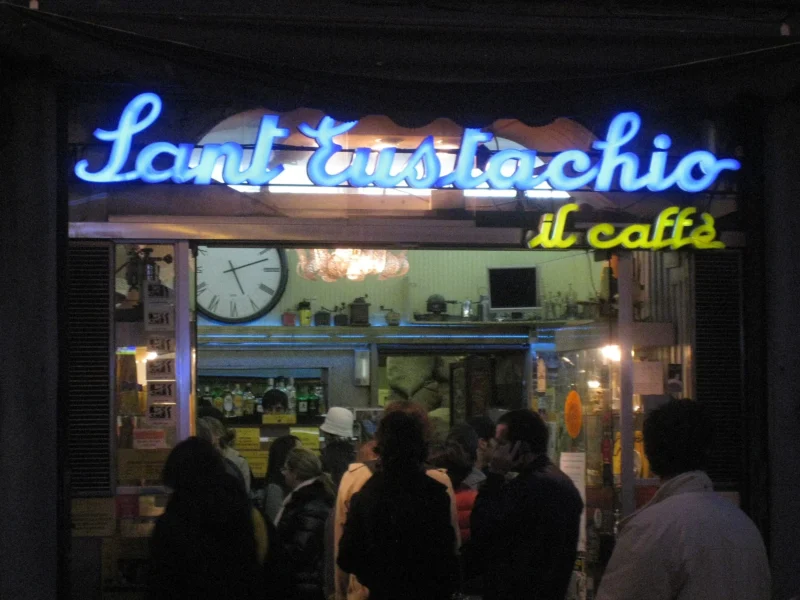
- Caffè Sant’Eustachio100 m
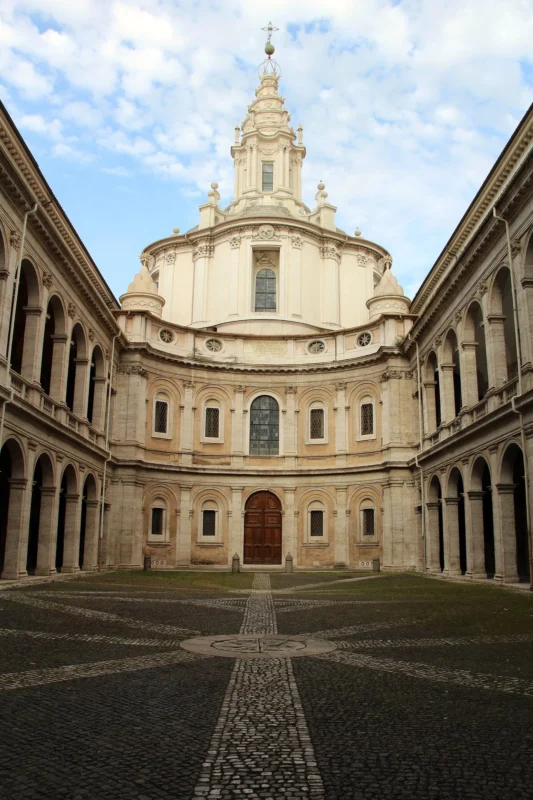
- Church of Sant’Ivo alla Sapienza100 m
- Basilica of Sant’Eustachio100 m
- Basilica of Neptune100 m
Upcoming events nearby
- Memoria di ragazza at Teatro Valle, November 10 to 22, 2026100 m
- Laika, The Collapse of Democracy at the Rosso20sette gallery, from October 10 to November 14, 2026200 m
- Keith Haring at Museo di Roma in Palazzo Braschi, from October 6, 2026 to April 11, 2027200 m
- Primarosa Cesarini Sforza, Ines Fontenla, Thorsten Kirchhoff, Daniela Monaci, Luana Perilli at Galleria Emmeotto, from October 3 to November 27, 2026200 m