Teatro Valle
In short. The Teatro Valle Franca Valeri is at Via del Teatro Valle 21, in the Sant’Eustachio district, is run by the Fondazione Teatro di Roma and reopens to the public on October 16, 2026 after more than 15 years without a regular season.
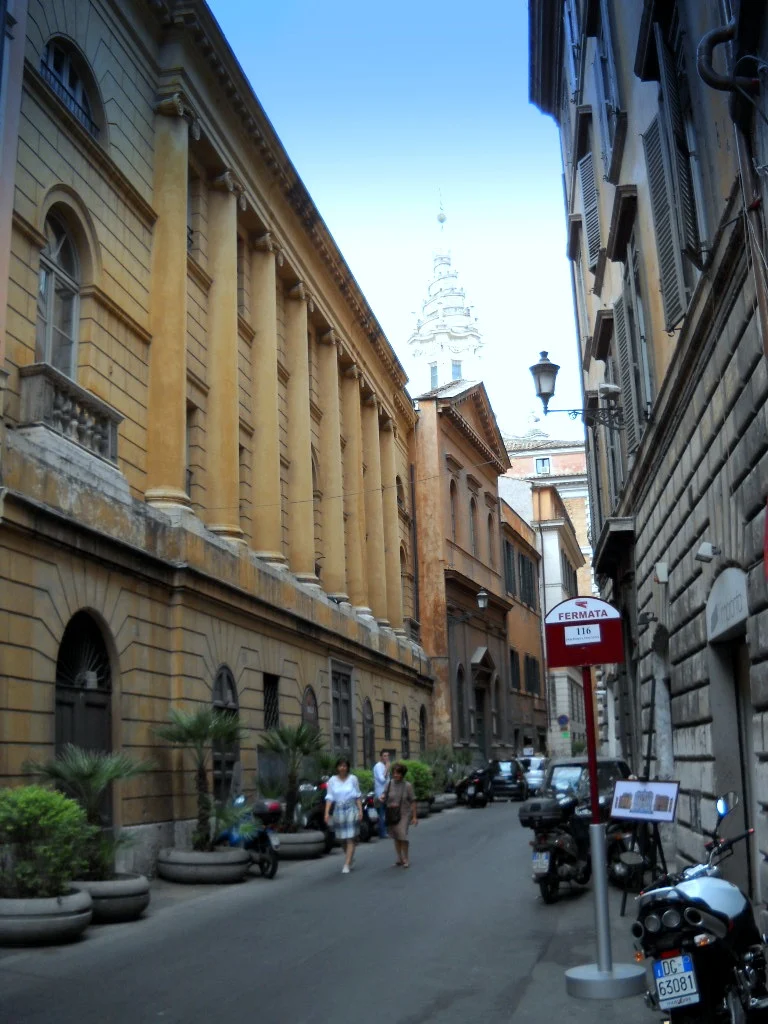
The Teatro Valle Franca Valeri is at Via del Teatro Valle 21, in the Sant’Eustachio district, is run by the Fondazione Teatro di Roma and reopens to the public on October 16, 2026 after more than 15 years without a regular season. You can't walk in freely: you enter with a ticket for a show, bought online on the Teatro di Roma channel or at the box office of the Teatro Argentina, at Largo di Torre Argentina 52.
It is one of the oldest theaters in Rome, and has stood on the same site since the 18th century. Here Rossini's La Cenerentola premiered in 1817, here on May 9, 1921 the Roman audience greeted Pirandello's Six Characters in Search of an Author with boos, and here between 2011 and 2014 took place the most debated cultural occupation in Italy. Three different stories that meet in the same horseshoe-shaped hall.
The practical information matches what was published by the Teatro di Roma and by the Roma Capitale tourist portal as of September 28, 2026. The theater is about to reopen after a long construction project, and in the first weeks box office hours, prices of individual shows and entrances may change: before setting out, phone the Foundation's box office or write to the email address given below.
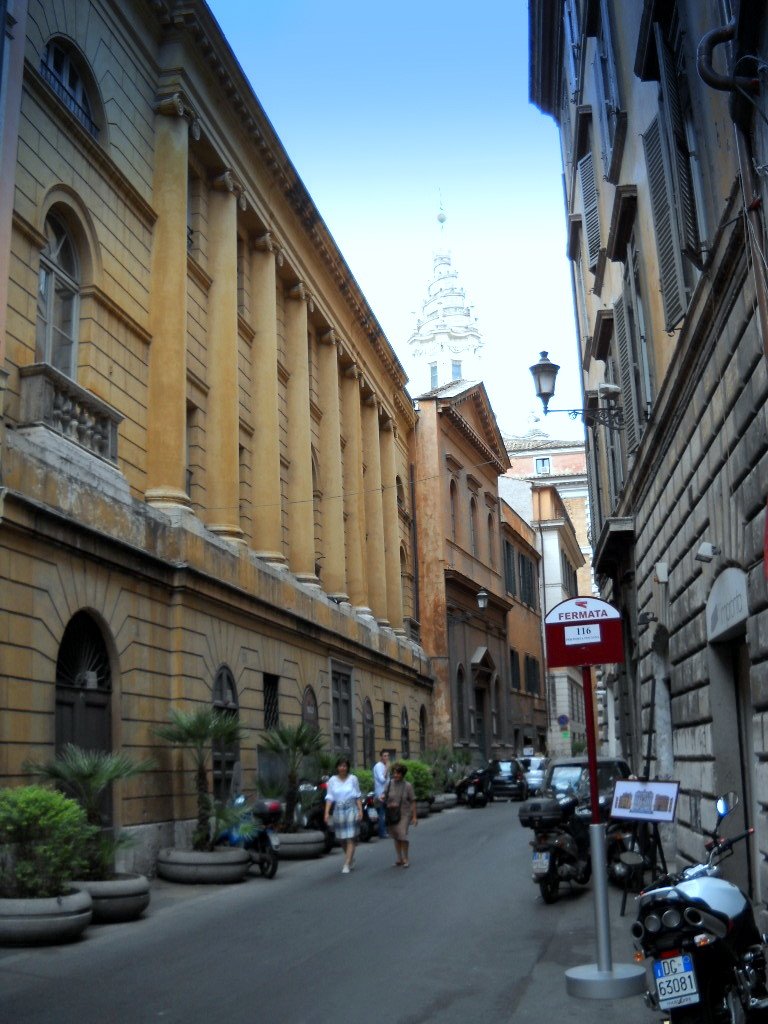
Where it is and what it's like today
Via del Teatro Valle is a short, narrow street between Corso del Rinascimento and Piazza di Sant’Eustachio, a few minutes' walk from Piazza Navona and the Pantheon. Anyone arriving for the first time walks past it without noticing, because the facade has no square in front of it and is seen only at an angle. The city's tourist portal gives the address as Via del Teatro Valle 21.
The building was born inside the block of the Capranica palaces, and that is why from the outside it looks more like a noble palace than a theater. Behind it is Sant’Andrea della Valle, to the side opens the flank of Palazzo Madama, and a block away rises the lantern of Sant’Ivo alla Sapienza. It's the piece of Rome where political power, the church and show business have always rubbed shoulders.
Inside, the hall is the classic Italian-style one: orchestra seats, superimposed tiers of boxes, upper gallery, painted ceiling. The dimensions are compact, much more intimate than those of the Teatro dell’Opera or of the Teatro Argentina itself. From any seat you see the actor's face, and that is why the Valle became a theater for plays in the 20th century even though it was born for melodrama.
The official name today is Teatro Valle Franca Valeri. The naming after the actress dates to September 2021, when the theater was still closed to performances and was used for rehearsals and recordings. In the language of Romans it will remain the Valle, as it has always been, and no program will change the habit. The full name you will find, though, on the operator's website and on tickets, so it's worth recognizing it.
The district is Sant’Eustachio, one of the smallest in the center, squeezed between Navona, the Pantheon and Largo Argentina. By day it's an area of offices, ministries, university bookshops and cafés full of civil servants. In the evening it changes face and empties quickly, apart from the streets with bars and restaurants. With the theater reopened, that stretch of the city has a reason again to stay lit after eight.
The current state: the reopening of October 16, 2026
The date is official and was announced on May 21, 2026 at a press conference at the Teatro Argentina, with Mayor Roberto Gualtieri, the president of the Lazio Region Francesco Rocca, the president of the Foundation Francesco Siciliano and the artistic director Luca De Fusco. The first title on the bill is La sera della prima, by and with Francesco Piccolo, from October 16 to 18, produced by the Teatro di Roma.
The opening show was not chosen at random. The operator's website presents it as the reconstruction of the world premiere of Six Characters in Search of an Author, staged right here on May 9, 1921. It is a way to put the theater back inside its best-known history, and at the same time to symbolically close the long period in which the Valle was a political case before being a stage.
The operator is the Fondazione Teatro di Roma, which in the 2026-2027 season runs four halls: Argentina, Valle, India and Torlonia. The Foundation's registered office is at Via de’ Barbieri 21, behind the Argentina. The Valle thus enters an already well-oiled system, with a single box office, shared subscriptions and online sales on the same platform used for the other halls.
The theater has been owned by Roma Capitale since 2016, when the State transferred it to the Municipality. The restoration, announced in 2023 with a reopening planned for 2025, slipped several times. At the season presentation the Municipality spoke of a total investment of around 11 million euros. After so many delays, the writer prefers to believe the date when the curtain rises.
There is also an announcement concerning opera. At the presentation of the Teatro dell’Opera season the return of Rossini's La Cenerentola to the Valle was announced, in the same theater as the world premiere. The Teatro di Roma website, as of the date given at the opening, still lists no dates for that production, so for now it should be considered an announced project, not a title on sale.
A curiosity about the Teatro Valle
For almost a century the Valle was a wooden theater. The nobleman Camillo Capranica had it built in 1726 as a large shed in the courtyard of his own palace, and the first structure, designed by the architect Tommaso Morelli, was entirely of wood, with five tiers of boxes and the upper gallery. It didn't even have a real foyer: from the street you entered almost directly into the hall.
A wooden theater lit by candles was a trap, and everyone knew it. In 1818 the Papal State ordered reconstruction in masonry for safety reasons. Giuseppe Valadier presented an ambitious project, which provided for demolishing the neighboring buildings to enlarge the theater, and the project was rejected. It was rebuilt in a more modest form, and the hall lost a tier of boxes.
During the works a wall collapsed, and the site passed to the architect Gaspare Salvi, who finished it in 1822. The Teatro di Roma sources nonetheless tie to Valadier the idea of a cheerful and bright theater, a 19th-century formula that the operator also used as the title of the exhibition on the building's history. The authorship of the current hall is therefore divided, and the sources don't agree on how much belongs to each.
There is a detail that makes those who know Roman theaters smile. The Valle was born as the Capranica family's second theater, since they already owned the Teatro Capranica a few streets away. A noble family with two halls competing with each other in the same district: in 18th-century Rome show business was a family affair, and boxes were property that was bought and inherited.
One thing nobody tells you about the Teatro Valle
The evening for which the Valle is famous worldwide was a flop. On May 9, 1921 the Compagnia di Dario Niccodemi staged Six Characters in Search of an Author, with Vera Vergani as the Stepdaughter and Luigi Almirante as the Father. The Roman audience didn't understand or didn't want to understand: shouts of madhouse and clown rose from the hall, and in the third act the protest degenerated into a tumult.
The triumph came elsewhere. On September 27, 1921 the same company staged the text again at the Teatro Manzoni in Milan, with Pirandello in the audience, and it was a complete success. From there the play set off for Europe. Those who celebrate the Valle as the theater of Six Characters say something half true: the text was born here, but it was Milan that decided it was a masterpiece.
On Pirandello's flight from the theater it's best to separate the levels. Documented by the press accounts are the uproar in the hall and the protest. Belonging to the memory of the protagonists, above all to that of Vera Vergani, is the story of the actress shielding the author in front of the besieged dressing room door. Details of tradition, not confirmed by the newspapers of the time, are the exit through the service door and the presence of his daughter Lietta.
And then there is the legend, which should be called by its name. In the most romanticized versions there is talk of coins thrown on stage, of brawls continuing in the street late into the night, of Pirandello chased through the streets of the district. These are stories that have circulated for a century and that no chronicle of the time confirms in the details. Nice to tell, but they must be presented for what they are.
The position here is clear and goes against the grain of the reopening narrative. The Valle is not overrated, but badly told: it is sold as the place of Pirandellian triumph, when it is the place of scandal. And it's much more interesting that way. A theater where the audience booed the new is a theater where the audience mattered, and that is the real heritage of the hall.
Hours and tickets: how to get in
At the Valle you enter only with a ticket for a show. The Teatro di Roma's program of theatrical guided visits, called Visite spettacolo, as of the date given at the opening concerns the Argentina, the India and the Torlonia, not the Valle. To see the hall without attending a performance there is today no published channel: the operator lists no visits to the Valle, and it's best to ask the box office if any will be scheduled.
The official channel is only one. Tickets are bought on the online box office of the Teatro di Roma, on the platform indicated by the operator, or in person at the Argentina box office, open Monday to Saturday from 11 to 19 and on Sunday three hours before the show. Updated information is on the box office page of the official website. Be wary of resellers not indicated by the operator.
The prices of individual Valle shows are not yet published in the price list pages, which report the rates of the Argentina, India and Torlonia. For the Argentina the price list runs from €10 to €44 depending on section and discount, with discounts for under 35, over 65, teachers and people with disabilities. For the Valle the figure is not published: ask the box office before buying.
There is instead a dedicated formula. The TdR Card Teatro Valle costs €75 and gives five shows of your choice, that is €15 per evening. The standard TdR Card costs €145 and is worth 12 credits, which correspond to six entries between the Argentina and the Valle. The cards are bought at the box office or online, where the operator applies a 10 percent fee.
The official contacts are the phone 06 684000311 and 06 684000314 and the email biglietteria@teatrodiroma.net. A rule to know: reserved tickets are picked up until one hour before the start, after which the system automatically cancels the reservation. The operator doesn't yet list the hours of an open counter at the Valle venue, so for pickup count on the Argentina.
My advice for visiting the Teatro Valle
Don't chase the reopening night. The three October dates will be full of officials, invited guests and photographers, and you'll see the hall between heads and raised phones. Take instead a show in November or January, on a weekday. The theater will be the same, freshly restored, and you'll enjoy it with the real audience, the one that comes to listen.
Arrive at least 40 minutes early and use that time to look at the empty hall. The painted ceiling, repainted over time by Silvio Galimberti according to the sources on the building's history, the gilded stuccoes and the horseshoe of boxes can be read only with the house lights on. Once the show starts you'll see the stage and nothing else, and that's a pity after 15 years of waiting.
If you live in Rome or pass through often, do the math on the card dedicated to the Valle. With five shows of your choice the cost per evening drops to a figure that no single play ticket in the center reaches, and the card can be used with company until used up. It's the most convenient formula for anyone who wants to see how the hall works in its first year.
Last practical thing: pickup. Whoever reserves and doesn't pay online must pick up within one hour of the start, otherwise they lose the seat. With the box office at the Argentina and the theater on Via del Teatro Valle, count the minutes on foot between the two venues, few but enough to make you late if you leave home at the last moment.
For groups the picture changes. The operator publishes no group rate for the Valle, and the conditions must be asked of the box office in advance, especially in the first year when curiosity will fill the hall. With large parties you need to move with at least three or four weeks of margin and accept the performance they offer you, not the one you would have chosen.
The 2026-2027 season at the Valle
In the 2026-2027 season the bill announces, after La sera della prima from October 16 to 18, Escaped Alone by Caryl Churchill from October 23 to November 1, directed by Lisa Ferlazzo Natoli and Alessandro Ferroni, and Memoria di ragazza from November 10 to 22, co-produced with the Romaeuropa Festival 2026. The official website presents 15 productions at the Valle between October and May.
Between November and December the published program lists Che dolore terribile è l'amore from November 26 to December 6, Casanova from December 9 to 13 and Equus by Peter Shaffer from December 15 to 20, directed by Carlo Sciaccaluga. They are very different titles, and the choice says that the Valle wants to be a contemporary play hall, not a museum of itself.
In 2027 the bill announces Stato contro Nolan from January 14 to 24, Il male oscuro from January 26 to 31, Dopo la prova from February 4 to 14, La governante from February 23 to 28 and La Reginetta di Leenane by Martin McDonagh from March 11 to 21. For companies, performers and times of each performance, refer to the page of the individual show on the operator's website.
The operator also reports the 2026-2027 subscription campaign and the credit cards, usable in the Foundation's four halls. Anyone who follows plays in Rome regularly can therefore mix the Valle with the Argentina and the India in a single purchase. For those who come from out of town and stay a few days, instead, the single ticket remains the simplest choice.
A warning from someone in this trade: in a first season after a long construction project, a few dates move. Don't buy tickets for a title announced months earlier without looking at the show's page a few days before the performance. And don't trust calendars copied onto third-party portals, which often stay frozen at the first version of the bill.
Another well-known fact, yet rarely cited
For decades the Valle was an opera house, and a leading one. On January 25, 1817 the world premiere of Gioachino Rossini's La Cenerentola was staged here. Earlier still, on May 18, 1812, Rossini had debuted here with Demetrio e Polibio, and on December 26, 1815 with Torvaldo e Dorliska. The Roman audience got to know here a composer who would then dominate Europe.
The list of premieres doesn't end with Rossini. Gaetano Donizetti brought to the Valle L'ajo nell'imbarazzo in February 1824, Olivo e Pasquale in January 1827, Il furioso all'isola di San Domingo in January 1833 and Torquato Tasso in September of the same year. And on June 10, 1811 the hall had hosted the Roman premiere of Mozart's Don Giovanni, that is the first time Rome heard it.
Everyone cites Pirandello, very few remember that the same hall christened four operas by Donizetti and three by Rossini. Not by chance, at the handover in 2014, among the works claimed by the occupants was the fixing of the orchestra pit, with an explicit reference to that operatic past. The Valle was born for music, and plays came later.
Those who want to understand what was played in those years will find period instruments at the National Museum of Musical Instruments, and those who want today's opera go to the Costanzi. The Valle, by size and acoustics, was a hall for opera buffa and mezzo carattere, and La Cenerentola is the perfect example: a comic mechanism that requires closeness between singers and audience.
The right photo to take at the Teatro Valle
The photo to take home is from the inside, before the show, with the house lights on. Go up to the highest level your ticket gives you access to and frame the hall from the central axis toward the stage, with the curtain closed: in a single shot you capture the horseshoe of boxes, the gilded stuccoes and the proscenium. The rules on photographs and filming are given by the house staff, respect them.
The second shot is upward. The painted ceiling photographs well by almost laying the phone vertical from the center of the orchestra seats, with the wide-angle, when the hall is still empty. Wait until the audience is not yet seated and don't use flash: it ruins the image and disturbs those who work. Once the show starts the phone goes off, no exceptions.
Outside the photo is hard, and it's worth knowing. Via del Teatro Valle is narrow and the facade has no room to breathe, so with a normal focal length you get a cropped wall. Stand at the corner of the street and look for a diagonal view, or wait for the evening, when the lit entrance and the people waiting tell the theater better than the architecture.
If you're interested in the city more than the single building, widen the field. From the corner with Piazza di Sant’Eustachio you can compose an image with the stag's head on the facade of the church and, in the background, the street leading to the theater. It's a Rome of narrow streets and signs, far from postcards, and it's the one in which the Valle was born and grew.
Avoid the head-on photo of the sign taken in a rush. The Valle is one of those places where the right image is that of people: the foyer full at intermission, the line at the door, the wait under the facade. After 15 years of closed doors, a photo with the audience in front of the entrance is the most honest document of this reopening.
The occupation of 2011-2014, told in full
On May 31, 2010 the Valle closed following the abolition of the Ente Teatrale Italiano, which had run it since the postwar period. The future of the hall was uncertain and there was talk of a possible handover to private parties. On June 14, 2011 a group of entertainment workers, activists and citizens occupied the theater in protest, asking that it remain public through a participatory process. The occupation lasted more than three years.
The occupants scheduled shows, workshops, meetings and activities with schools, and wrote a statute for a Fondazione Teatro Valle Bene Comune. Those who support that experience recall the quality of several productions, awarded with the Ubu Prize in Italy and the Princess Margriet Award in Europe, and the ability to bring into the hall a young audience that institutional theaters struggled to reach.
The criticisms were just as sharp. For many, starting with part of the theater world, an occupied public theater remained an illegality, whatever the quality of the shows. Established artists and critics objected that merit-based selection paths and public tenders were being bypassed. Others doubted that the model was sustainable over time, in economic terms as well as in terms of safety and systems.
On August 11, 2014 the occupation ended without forced evictions, with the handover of the theater to Roma Capitale and the assignment to the Teatro di Roma to relaunch it. The transition was not painless: during the handover the electricity was cut off and the occupants protested over the risks to the fire safety systems. They asked to be recognized as interlocutors in future management, which in fact did not happen.
A 2014 report suggested forms of co-programming between the Teatro di Roma and independent artists, and the Fondazione Teatro Valle Bene Comune was later dissolved in 2022. The sources don't even agree on the dates of the theater's closure, which some recent articles place in 2013. The fact that matters for those who enter today is that the Valle has remained public.
Here we don't take sides, and it should be said openly. The occupation kept alive a hall that risked going dark, and at the same time put off by years the work the building needed. Both things are true. Anyone who tells you only the first or only the second is giving you half the story, and at the Valle the missing half weighs.
The restoration: what was done
The transfer of ownership from the State to the Municipality was completed in 2016, with an enhancement plan of 3 million euros split between the Ministry and the Municipality. In April 2018 the theater was partly reopened and entrusted to the Teatro di Roma for cultural activities other than performances. During the pandemic the spaces served as a recording studio and as a rehearsal hall for companies.
The restoration project presented in March 2023 was worth over 6.7 million euros, co-financed by Roma Capitale and the Ministry of Culture. The design was entrusted to Studio Berlucchi, winner of a public tender, the execution to a group of firms made up of CCC Costruzioni Civili Cerasi and Aurea Sectio. The declared timeline was 18 months, and it has been far exceeded.
The works program included the conservative restoration of the hall and the facade, the removal of architectural barriers, the refunctioning of the stage, new dressing rooms served by stairs and an elevator, the upgrading of the electrical and air-conditioning systems and a fire-fighting tank under the back of the stage. After the demolition phase an additional funding of about 3.7 million euros was added.
The delays should be put in a row, because they explain the skepticism of many Romans. In 2023 the mayor announced the reopening for early 2025, then the date slipped to 2026, and only in May 2026 did the exact day arrive. In construction sites on historic buildings delays are the rule, but in this case they were added to four years of closure and three of occupation.
What to expect, then. A historic hall with today's systems and with access finally designed for people with mobility difficulties, as the project provided. The operator has not yet published a detailed description of the accessibility of the individual sections: wheelchair users should ask the box office which seats are reachable before buying.
Some important events that happened here in history
On January 7, 1727 the theater was inaugurated with a tragedy titled Matilde. On the author the sources don't agree: one names him as Simone Falconio Prato, the Teatro di Roma gives the name Farnabio Annutini. The patron was Camillo Capranica, the architect Tommaso Morelli. Between 1764 and 1765 came the first modernizations, entrusted to Giovanni Francesco Fiori and Mauro Fontana.
In the papal Rome of the 18th century public theater lived by fits and starts. Seasons were concentrated in Carnival, holy years and mourning of the papal court could suspend shows for months, and for a long time women were forbidden to appear on the city's stages. The Valle was born inside these rules, and its survival for three centuries was by no means a given.
In 1791 the Capranica family called the brothers Francesco and Giandomenico Navona for new works, still without touching the wooden structure. Between 1811 and 1817 the Valle lived its golden operatic season, from the Roman premiere of Mozart's Don Giovanni to Rossini's La Cenerentola. In 1818 the Papal State imposed reconstruction in masonry, completed in 1822 by Gaspare Salvi.
Between 1824 and 1833 Donizetti presented four operas here as world premieres. In the 19th century the hall received the stucco decorations with plant scrolls in gilded wood paste attributed to Giulio Podesti, and later the repainted ceiling and the royal box. On May 9, 1921 the Compagnia Niccodemi staged here the world premiere of Six Characters in Search of an Author.
In the second postwar period management passed to the Ente Teatrale Italiano. In the 1954-1955 season the Compagnia del Nuovo Teatro directed by Gianfranco De Bosio, Diego Fabbri and Eugenio Saccenti worked here, and the Teatro di Roma recalls that the Valle also hosted the newborn Teatro Stabile of the city. In the 20th century Studio Setacci signed other interventions on the hall.
May 31, 2010 the closure after the abolition of the ETI, June 14, 2011 the occupation, August 11, 2014 the handover to the Municipality. In 2016 the property passed to Roma Capitale, in 2018 the partial reopening for cultural activities, on September 13, 2021 the naming after Franca Valeri. In 2023 the start of the restoration, on October 16, 2026 the return of performances.
Who has passed through the Teatro Valle
Camillo Capranica, the patron, a Roman nobleman with a taste for enterprise. He built the Valle when the family already had a theater, because in 18th-century Rome show business paid and boxes were sold like apartments. The family palace, with its courtyard, is the physical origin of the hall: without that wooden shed there would be nothing of what you will see.
Gioachino Rossini and Gaetano Donizetti, the two composers who gave the Valle its most important premieres. Rossini brought three titles, including La Cenerentola, and with him the singer Ester Mombelli, protagonist of Demetrio e Polibio in 1812. Donizetti brought four between 1824 and 1833. For a period, in Rome, a debut at the Valle was worth as much as a debut in the largest halls.
Wolfgang Amadeus Mozart never passed through the Valle, and it's right to say so, because someone writes it. In 1811, when the hall hosted the Roman premiere of Don Giovanni, the composer had been dead for 20 years. His music passed through, and with that title the city's audience discovered an opera that elsewhere in Europe had already been heard for some time.
Luigi Pirandello, with Dario Niccodemi and his company. Vera Vergani and Luigi Almirante were the two lead performers of that evening in 1921. Those who want to follow the writer beyond the theater will find in Rome the studio and house museum of Luigi Pirandello, where he lived and worked in his last years. It's the natural complement to an evening at the Valle.
Diego Fabbri, playwright, and Gianfranco De Bosio, director, who in the 1950s led the Compagnia del Nuovo Teatro here with Eugenio Saccenti. And then generations of actors who came through the ETI seasons, which for half a century made the Valle one of the main stages of Italian plays. The operator itself today presents it as the theater of dramaturgy, and it's not a stretch.
Franca Valeri, a Milanese actress and author, who died in Rome in 2020 at 100. It's not a token dedication: her career crossed theater, radio, cinema and television, with characters who told bourgeois Italy better than many essays. Giving her name to the Valle means tying it to plays and irony, more than to opera.
How to get there
On foot, which is the right way. The Valle is in the pedestrian or nearly pedestrian historic center, and from Largo di Torre Argentina, where the box office is, it's a few minutes passing in front of the Sacred Area of Largo Argentina and the cat sanctuary. From Piazza Navona you get there by crossing Corso del Rinascimento, from the Pantheon via Sant’Eustachio.
By public transport the reference is Largo di Torre Argentina, a hub of several surface lines, and Corso del Rinascimento. The metro doesn't directly serve this part of the center. Lines and hours change, especially in the evening and on holidays: check them on the Roman public transport company's website on the same day, keeping in mind that evening shows often end late.
Don't come by car. The theater is inside the center's limited traffic zone, and the nearest paid parking costs money and fills up early on show nights. Those coming from outside Rome should leave the car far away and continue by public transport or taxi, asking to be dropped off on Corso del Rinascimento: the last stretch is on foot anyway.
For the evening exit, plan the return. At the end of the show, especially on weekday evenings, taxis are easier to find on Corso del Rinascimento and at Largo Argentina than in front of the theater, where the street is narrow. Anyone staying outside the center should check the last useful run of public transport beforehand, because after 11 the frequencies drop a lot.
The Valle in Rome's theater system
With the reopening the Teatro di Roma again has two historic halls in the center, a few minutes from each other. The Argentina remains the main hall and the seat of the Foundation, the Valle becomes the more intimate hall for plays. The India, on Lungotevere Gassman, works on the contemporary, and the Torlonia, inside Villa Torlonia, completes the system with a small hall.
Alongside the public circuit, Rome has a network of private halls with long histories. The Teatro Quirino and the Teatro Eliseo are the names of traditional drama, the Sistina is the home of musical comedy, the Ambra Jovinelli that of comedy, and in summer the Villa Borghese Globe Theatre brings Shakespeare outdoors.
For music the reference is the Auditorium Parco della Musica, for dance and big shows the Teatro Olimpico. The Valle doesn't compete with any of these halls: it has a scale of its own, made for the spoken word a few meters from the audience, and its value is precisely that scale.
For visitors from out of town the question is simple: if you have only one evening for theater in Rome, where do you go? The answer, in the first year of reopening, is the Valle. Not because the shows are necessarily better than those at the Argentina, but because seeing a historic hall come back to life after 15 years is an experience that doesn't repeat, and in a few seasons it will be normal.
Anyone who loves show business and wants to stay on the theme on the screen too will find on the other bank of the Tiber two cinemas with a history of their own, the Cinema Troisi and the Nuovo Cinema Sacher. A Roman weekend built on an evening of theater at the Valle and one of cinema in Trastevere is a good alternative to the usual rounds.
When is it closed and what should you not expect
The Valle has no opening hours like a museum. On days without a show it is closed, and showing up at the door hoping to take a look at the hall means finding a barred entrance. The performance calendar is the only schedule that matters, and you'll find it on the Teatro di Roma season page, with the dates show by show.
Don't expect a summer season. The published bill runs from October to spring, as in the tradition of play theaters, and the hot months are usually devoted to maintenance and festivals. Anyone arriving in Rome in July or August to see the Valle risks finding it closed: check the calendar before building a trip around one evening.
Don't expect a perfect theater in the first weeks either. A freshly restored hall always has some settling in, from staff learning the new routes to systems that need adjusting. Anyone who has worked in theater knows it: the first season is a break-in. Allow for it with patience, it's part of the pleasure of being there at the start of a new cycle.
On accessibility the restoration project provided for the removal of architectural barriers, but the operator has not yet published a description of the reserved seats and the routes for wheelchair users. Ask the box office when you buy, and have them tell you which entrance to use, because in historic theaters it isn't always the main one.
Where to eat nearby
The area between the Pantheon, Navona and Sant’Eustachio is one of the hardest in Rome for eating well at an honest price. There is no shortage of serious places, but they are surrounded by establishments built for people who pass through once and don't come back. Before or after a show, with little time and hunger, it's easy to fall into the trap. The signs for avoiding it are always the same.
The first is the menu with photos of the dishes, maybe translated into five languages and displayed outside. The second is the person at the door who stops you in the street and invites you in. The third is the lady rolling out pasta in the window or on the sidewalk: it's scenery for the passerby, and good fresh pasta is made in the kitchen, in the morning, away from the dust.
Then there are the places open nonstop from morning to night, which have no kitchen break and so reheat more than they cook. And those placed in front of monuments, where the price adapts to the customer: items with no price, fish by an undeclared weight, a price list for the outdoor tables different from the one inside. Always ask the price before ordering.
Romans don't avoid these places out of snobbery. They avoid them because they know that a place that doesn't need regular customers has no reason to treat them well. The rule is simple: look at who is sitting and what language they speak. If at two on a weekday there are Senate employees and people from the district, you're in the right place.
If you want to eat before the show, do it early and light. A dish at the counter in a tavola calda or a bakery in the district takes away your hunger without making you fall asleep in the second act. On performance nights the area fills up around a quarter to eight, and anyone who walks into a restaurant at half past seven risks leaving in a rush.
For a theater night, book dinner after the show, not before, and choose a place that keeps its kitchen open late, asking by phone. To avoid trial and error, here is our list of the places where we eat ourselves, which we update when places change and which contains no sponsorships.
What to pair with it in a day
An evening at the Valle is well prepared with an afternoon in the district. San Luigi dei Francesi with its Caravaggios is a few steps away, Palazzo Altemps just beyond Navona, and the Museo di Roma at Palazzo Braschi tells the story of the city in the centuries when the Valle was young. Next to Braschi is Pasquino, the most famous talking statue in Rome.
Anyone who prefers historic libraries has the Biblioteca Angelica and the Casanatense, next to Santa Maria sopra Minerva and Bernini's little elephant. Under Piazza Navona you can visit the Stadium of Domitian, which explains why the square has that elongated shape.
Anyone with time for a longer walk goes down toward Campo de’ Fiori and the Palazzo della Cancelleria, or heads back up toward the Chiostro del Bramante and Santa Maria della Pace. These are all walks of a few minutes, and they end at the theater in time for the curtain.
For those who love ancient theaters the most instructive comparison is with the Theater of Marcellus, a 15-minute walk toward the Ghetto. 2,000 years of Roman show business in one walk: the stone cavea of the Augustan age and the 18th-century hall with boxes tell the same passion with two different architectures.
Frequently asked questions
Is the Teatro Valle open?
The Teatro Valle Franca Valeri reopens to the public on October 16, 2026 with La sera della prima, by and with Francesco Piccolo, after a long restoration. It is run by the Fondazione Teatro di Roma and you enter with a ticket for one of the shows on the bill. Before that date the hall stays closed to spectators.
Where is the Teatro Valle?
The theater is at Via del Teatro Valle 21, in the Sant’Eustachio district, between Corso del Rinascimento and Piazza di Sant’Eustachio. It is a few minutes' walk from Piazza Navona, the Pantheon and Largo di Torre Argentina, where the Teatro di Roma's main box office is.
How do you buy tickets?
Tickets are bought on the Teatro di Roma online box office or at the Teatro Argentina box office, open Monday to Saturday from 11 to 19 and on Sunday three hours before the show. The phones are 06 684000311 and 06 684000314, the email biglietteria@teatrodiroma.net. Reservations are picked up within one hour of the start.
How much does a ticket for the Valle cost?
The prices of individual shows at the Valle do not yet appear to be published in the operator's price list. The TdR Card Teatro Valle is on sale at €75 for five shows of your choice, while the standard card at €145 gives six entries between the Argentina and the Valle. For single rates ask the box office.
Can you visit the Teatro Valle without seeing a show?
As of the verification date given at the opening, the Teatro di Roma's guided visits, called Visite spettacolo, concern the Argentina, the India and the Torlonia, not the Valle. The operator lists no visits to the hall. To find out if any will be scheduled after the reopening, it's best to write to visiteguidate@teatrodiroma.net, published by the Foundation.
Why is the Valle tied to Pirandello?
On May 9, 1921 the Compagnia di Dario Niccodemi staged here the world premiere of Six Characters in Search of an Author. The Roman audience protested the show with shouts and boos, and success came only in September in Milan. The reopening show reconstructs precisely that evening.
What happened during the occupation?
From June 14, 2011 to August 11, 2014 the theater was occupied by entertainment workers and activists who asked for public and participatory management. Supporters recall award-winning shows and a new audience, critics the illegality of the occupation and the bypassing of public procedures. It ended with the handover to the Municipality, without evictions.
Who was Franca Valeri and why does the theater bear her name?
Franca Valeri was a Milanese actress and author, active for decades in theater, cinema, radio and television, who died in Rome in 2020. The theater was named after her on September 13, 2021, during the years of closure, to tie the hall to the tradition of Italian plays and comedy.
Is opera still staged at the Teatro Valle?
In the 2026-2027 season the Teatro di Roma bill at the Valle is devoted to plays. The Teatro dell’Opera has announced the return of Rossini's La Cenerentola to the hall of its 1817 world premiere, but no dates yet appear on the Valle operator's website. For opera the reference remains the Teatro Costanzi.
Who wrote this page
This page comes from the editorial team of Tour Leader Pro, the Roman organization that designs itineraries, visits and cultural events between Rome and Lazio. Dates, prices and contact details reported here come from the official sources of the Teatro di Roma and Roma Capitale as of the date indicated at the opening: with a theater just reopened, recheck them before buying. Let us know what you find changed.
Putting together an evening at the theater in central Rome means fitting together a box office in one venue and a hall in another, the limited traffic zone, dinners after 11 and transport that thins out in the evening, for yourself or for a group of 40 people. Those facing this kind of puzzle will find on Tour Leader Pro working materials designed for those who guide and for those who organize on their own.
For the wide picture, that is regional trains and seasonal schedules, airports, trips between one province and another and destinations in Lazio outside central Rome, from the Castelli to the volcanic lakes of the north down to the Tyrrhenian coast and the villages of the interior, a useful resource for building a multi-day itinerary is Italy Planner.