Teatro Olimpico
In short. Teatro Olimpico is at Piazza Gentile da Fabriano 17, 00196 Rome, on the Lungotevere Flaminio, exactly opposite the end of the Ponte della Musica - Armando Trovajoli.
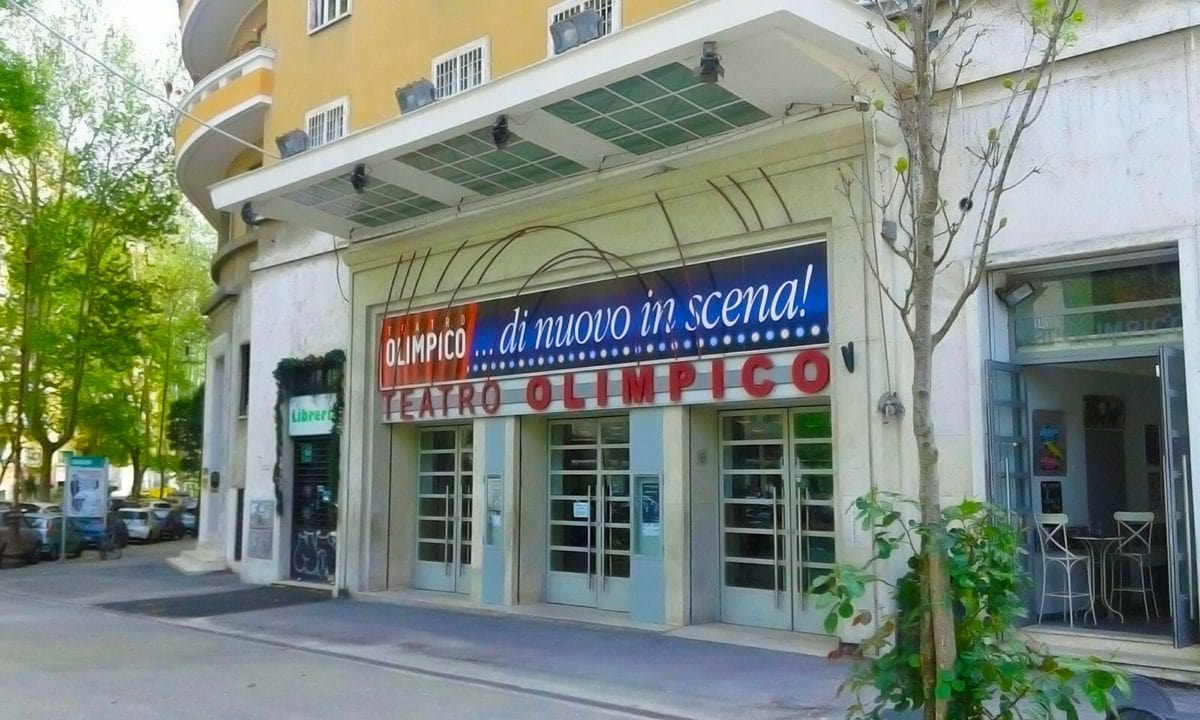
Teatro Olimpico is at Piazza Gentile da Fabriano 17, 00196 Rome, on the Lungotevere Flaminio, exactly opposite the end of the Ponte della Musica - Armando Trovajoli. The hall seats 1410: 966 in the stalls and 444 in the gallery. The stage is about 10 meters deep by 12 wide, with a removable wooden floor and an orchestra pit. It is not a museum and you don't visit it during the day: you get in with a ticket for a show. The box office is in the building itself, at Piazza Gentile da Fabriano 17. The official website lists opening hours Monday to Friday from 9.30 to 13 and from 14 to 18.30, with a summer closure between the end of July and the end of August, and the phone number 349 2378200, email biglietti@teatroolimpico.it. Tickets are bought in person at the box office, by phone or by email with a credit card (Visa and MasterCard, with a one-euro surcharge per ticket) or through the online ticket office indicated on the theater's website. The 2026/2027 season runs from September 24, 2026 to May 24, 2027. You get there by metro line A to Flaminio and then tram 2 up Via Flaminia, getting off near Via Guido Reni and turning toward the river. On foot from the Auditorium it is a few minutes along the lungotevere, and just as many from the MAXXI. Prices and times of the shows change title by title: check the official website before heading out.

Where Teatro Olimpico is and how to get there
Whoever comes to Teatro Olimpico for the first time expects a monumental building and instead finds a sober, almost silent front on a square that the traffic of the lungotevere crosses without stopping. Piazza Gentile da Fabriano is one of those Roman squares that don't look like a square: an orderly widening between the Lungotevere Flaminio and the first houses of the neighborhood, with trees along the river and the head of the Ponte della Musica on the other side of the roadway. The street number to look for is 17. The postal code is 00196, the same as Auditorium Parco della Musica a few hundred meters further north.
The exact address of Teatro Olimpico
Piazza Gentile da Fabriano 17, 00196 Rome. It sounds like a detail from an address book, but it is the piece of information that saves the evening: the theater has its facade on the square, but whoever sets the navigation only to Lungotevere Flaminio ends up on the wrong side of the lane and has to look for a pedestrian crossing with the show about to start. The name of the square recalls Gentile da Fabriano, the painter from the Marche of the International Gothic who died in Rome around 1427 while working on the frescoes of San Giovanni in Laterano: a cultured dedication, in a neighborhood that has made art its identity. The ticket office faces the same square, and the foyer usually opens an hour before the start.
Tram 2 and metro line A to get to Teatro Olimpico
The most reliable combination remains metro line A to Flaminio station, exit on Piazzale Flaminio, and then tram 2 up Via Flaminia toward Piazza Mancini. You get off in the area of Via Guido Reni, cross toward the Tiber and in a few minutes of walking you reach Piazza Gentile da Fabriano. In the evening it is a route that works well because the tram has a reserved lane and doesn't get bogged down in the traffic of the lungotevere, which at rush hour is a serious matter. Anyone coming from Termini or the historic center has a straight route: line A toward Battistini, change at Flaminio, tram. Anyone coming from the north, from Ponte Milvio or the Villaggio Olimpico, makes the same trip in reverse, getting off earlier.
The advice: don't gamble your evening on the last minute. Teatro Olimpico is well served, but the junction of Piazzale Flaminio and the Aurelian Wall is one of the points where Rome clogs up with the most creativity. Half an hour of margin turns a dash into a walk along the river.
Getting there by car, taxi or bicycle
By car you arrive from the Lungotevere Flaminio or from Via Flaminia. The problem is not arriving, it's parking: the area fills up on show nights, especially when there is a concert at the same time at Auditorium Parco della Musica, and it happens often. Taxis have a convenient stand near the Auditorium and easily find the square. The bicycle is the solution that few consider and that actually works best of all: the Tiber cycle path passes underneath, the Ponte della Musica is for pedestrians and cyclists, and from Trastevere or the Foro Italico you arrive without touching a car.
On foot from the Ponte della Musica and the Auditorium
The Ponte della Musica - Armando Trovajoli drops pedestrians right in front of the square: whoever comes from the Foro Italico, Stadio Olimpico or the neighborhoods of Monte Mario has their natural entrance here, without vehicles and without traffic. From the Auditorium Parco della Musica, at Viale Pietro de Coubertin 30, you go down through the neighborhood and reach the theater in about 10 minutes. The MAXXI is at a similar distance. It is one of the few areas of Rome where three cultural institutions of this weight are within walking distance of each other, and where you can build an afternoon at a museum and an evening at the theater without ever taking a vehicle.
Tickets, box office and subscriptions of Teatro Olimpico
Teatro Olimpico doesn't have an entrance ticket like a museum: you pay for the show. The price changes noticeably between an evening of contemporary dance, a nationally popular one-man show and a chamber concert, and it also changes by section of the hall: the central stalls cost more than the high gallery, as in all Italian-style theaters rethought in a modern key. Whoever wants the exact figure for a specific date will find it on the show's page on the theater's official website.
The box office of Teatro Olimpico in Piazza Gentile da Fabriano
The box office is in the theater building, at Piazza Gentile da Fabriano 17. The official website lists the hours Monday to Friday, from 9.30 to 13 and from 14 to 18.30, with the usual summer break between the end of July and the second half of August. The phone number is 349 2378200 and the email address is biglietti@teatroolimpico.it. On show nights the cash desk opens ahead of the start. Buying at the counter has an advantage that no online interface gives back: you see the seating plan, you ask for advice on the section, and you avoid discovering once the show has started that the seat you chose is squeezed against the wall of the gallery.
Buying Teatro Olimpico tickets remotely
The theater accepts orders by phone and by email with payment by Visa or MasterCard credit card, with a surcharge of one euro per ticket stated on the official website. There is also an online ticket office of the theater, reachable from the show's page. For popular evenings the theater also authorizes a reseller listed on its official website: the starting point remains teatroolimpico.it anyway, because it is the only place where the map of the sections, the prices and any discounts are updated at the source.
Subscriptions and season packages of Teatro Olimpico
Teatro Olimpico offers season subscriptions and promotional packages, presented each year together with the program. For those who live in Rome and follow dance or chamber music, the subscription is by far the economically sensible choice: it locks in the seat in the best sections, which for the top evenings disappear weeks in advance, and costs less per evening than the single ticket. The theater also reserves special conditions for groups, with a dedicated contact for schools, associations and parties: it is the best route for anyone organizing an evening for 20 or 30 people, because it avoids piecemeal buying and the lottery of scattered seats.

The hall of Teatro Olimpico: 1410 seats between stalls and gallery
The hall of Teatro Olimpico is wide, low, enveloping. It doesn't have the stacked boxes of the Italian-style theater, it doesn't have the stucco and red velvet of the 19th-century tradition: it has the geometry of the great cinema of the 1930s, the kind that was built so that more than a thousand people together could see a screen well. Then the theater made it its own, and this unusual shape became its character. Anyone used to Teatro Argentina or the Rome Opera House feels the difference right away: here you don't look at the hall, you look at the stage, and the hall disappears.
The stalls of Teatro Olimpico
There are 966 seats in the stalls, arranged in the sloping cavea on lines of constant height, following an amphitheater scheme. The practical consequence is that visibility is good almost everywhere, even in the back rows, because each row gains height over the previous one. That is why Teatro Olimpico holds up well for dance shows, where the perception of the dancer's whole figure, from head to toe, is everything: in a flat hall the front rows lose the feet, here they don't. The central rows, roughly from the fifth to the 12th, are where image and sound come together best.
A warning that no online plan gives: the stalls are very wide. The seats at the far left and far right of the front rows look at the stage from the side, and in a show with perspective scenery you lose part of the frame. If I'm paying full price, I prefer a row further back in the center to a side front row. This is an opinion, and I stand by it without hesitation.
The horseshoe gallery of Teatro Olimpico
The gallery has a wide horseshoe shape, with the tiers of seats arranged on curved lines: 444 seats. It is the part of the hall that more than any other tells the cinematic origin of the building, with that curve that embraces the stalls instead of piling up in orders of boxes. From the top of the gallery you get the best overall view of the whole theater: in group choreographies, where the overall design matters more than the detail of the single performer, it is the section I recommend without reservation. It costs less and in certain shows it is worth more. On drama nights, where the face and the word matter, the high gallery instead penalizes those with poor eyesight.
The stage and the orchestra pit
The stage measures about 10 meters deep by 12 wide. The floor is made of removable wood and under the proscenium there is an orchestra pit. These are two technical facts that explain the amphibious vocation of the house: the removable wood serves dance companies, who demand a springy floor and can lay their own mat. The pit serves music, and allows live accompaniment of a ballet or a chamber opera without sacrificing the front rows. 12 meters of proscenium opening is a generous width for a hall of this size, and it is the reason why at Teatro Olimpico large corps de ballet manage to line up without being squeezed.
The round foyer and the corridors of Teatro Olimpico
The building has a circular round foyer, wide corridors and interior spaces both on the ground floor and in the gallery, on the mezzanine. The circular foyer is the part of the building that surprises whoever enters for the first time: it is a real rotunda, with its clean geometry, and at intermission it becomes the place where the Roman audience recognizes and greets each other. The wide corridors are not an aesthetic detail: they are the reason why a hall of 1,400 people empties in a few minutes without a crush, something that in many historic theaters of the center doesn't happen at all.

Where to sit at Teatro Olimpico: the seat map
Classical and contemporary dance: central stalls from the fifth row up, or the first row of the central gallery. Comedy and one-man shows: stalls, as close as possible, because comedy lives on eye contact and timing and the detail of the face matters. Chamber music and concerts: central stalls, avoiding the positions under the overhang of the gallery, where the sound loses air. Musicals with heavy amplification: gallery, always. Children's shows: side stalls near an aisle, because sooner or later someone has to leave and come back, and it is better to be able to do it without disturbing 12 people.
The historic stage sets kept at Teatro Olimpico
In the interior spaces of Teatro Olimpico, between corridors and public service areas, a few stage set creations from past shows are kept. It is a small heritage that goes unnoticed by whoever rushes in and that deserves the 10 minutes of early arrival I mentioned before. It is not a collection arranged with museum labels: they are pieces left in the house, witnesses of seasons when this hall was one of the venues of contemporary European music.
Corrado Cagli's gilded scene-forms for Stravinsky's Mass
The gilded scene-forms made by Corrado Cagli for Igor Stravinsky's Mass were seen at Teatro Olimpico on October 29, 30 and 31, 1975. Cagli, born in Ancona in 1910 and died in Rome in 1976, was one of the most restless Italian painters of the 20th century: a protagonist of the Scuola romana in the 1930s, forced into exile by the racial laws, a soldier of the American army that entered Buchenwald in 1945 and drew its horror, then back in Rome a tireless experimenter between figuration and abstraction. The work for Stravinsky belongs to his last season, and it is the last full year of his life. In front of these gilded forms it is worth remembering who made them: not a stage decorator, but a painter who was closing a journey.
Giacomo Manzù's backdrop for the Histoire du Soldat
The backdrop for Igor Stravinsky's Histoire du Soldat was made by Giacomo Manzù and appeared at Teatro Olimpico on October 11, 12, 13 and 14, 1966. Manzù, from Bergamo, born in 1908, is one of the great Italian sculptors of the century, the man of the seated cardinals and of the Door of Death of St. Peter's. That an artist of that caliber designed a backdrop for a neighborhood hall says everything about the prestige the musical programming of this theater had reached in the 1960s. The main collection of his work is in Ardea, in the museum house overlooking the Lazio coast, and it is worth the trip for anyone who has seen his backdrop here and wants to understand where that hand came from.
Alfred Silbermann and the 2001 Mass
The stage design made by Alfred Silbermann for Igor Stravinsky's Mass dates from the evening of December 6, 2001. A quarter of a century after Cagli, the same score, the same hall, another hand: it is proof that the Olimpico never treated contemporary music as a parenthesis but as a house line, taken up and reread across generations.
Mirko's sculpture for Chordination
Mirko's sculpture for Chordination, from Niccolò Castiglioni's Tre misteri, was at Teatro Olimpico on October 2, 3 and 4, 1968. Mirko Basaldella, brother of Afro and Dino, a Friulian sculptor trained between Venice, Florence and Milan, is the author of the Gate of the Fosse Ardeatine: a name that carries weight in Rome. Castiglioni, from Milan, was one of the most radical and solitary composers of his generation. Putting them together on an evening in October 1968, in a theater in the Flaminio district, means having had a very precise idea of what a music season should be.
History of Teatro Olimpico: from the 1936 cinema to the 1981 theater
The building that houses Teatro Olimpico was built in 1935 and 1936 in Piazza Gentile da Fabriano, on the Lungotevere Flaminio. These are the years when the neighborhood takes the shape it still keeps, between middle-class villas, representative offices and the first sports facilities along the river. The hall was born with a double set of equipment, and this is the fact that explains everything else: from the beginning there were together the dressing rooms and the theatrical equipment and the machinery needed for film projection. Nobody, in 1936, yet knew which of the two vocations would win.
The Cine-Teatro Olimpico and the season of avanspettacolo
From the late 1930s to the 1950s, with the interruption due to the war, the Olimpico worked mainly as a cinema, hosting avanspettacolo performances in the intervals. Whoever didn't live through that season struggles to imagine it: the audience came in for the film and between one screening and the next a small company climbed onto the stage, with a few caricature turns, a song, a dancer. It was the apprenticeship of half of Italian theater, the hard school from which comedians who would become enormous came out. The Cine-Teatro Olimpico belongs to that Rome, and its wide, low hall keeps the physical memory of it.
The postwar period and the arrival of Accademia Filarmonica Romana
From the second postwar period Accademia Filarmonica Romana took the theater on lease to hold its music season there. It is the graft that changes the nature of the house: a neighborhood hall born for cinema becomes the permanent home of one of the oldest music institutions in Italy, and with it the first performances, the great international soloists and the contemporary repertoire come to Rome. The coexistence of cinema and concert lasted years, and for a stretch of the 20th century the audience of the Olimpico was double: that of the Sunday film and that of chamber music.
Adriana Panni and the postwar Filarmonica
The Accademia went through a period of great momentum in the postwar period under the presidency of Adriana Panni, an enterprising woman of refined culture, able to build personal relationships with the greatest Italian and foreign musicians of the time. Her presidency lasted from 1973 to 1994, and under her the Accademia obtained public support and managed, in 1980, to secure Teatro Olimpico as the permanent home of its concerts. It is not an administrative detail: it is the moment when a concert society stops being a guest and becomes the master of the house. Few figures have had such an impact on Roman musical life in the second half of the 20th century, and the public recognition that followed has been, as often happens, less than the merit.
1980: Teatro Olimpico s.p.a. is born
In 1980 Teatro Olimpico s.p.a. was established, with the participation of Accademia Filarmonica Romana as well, on a base of widespread shareholding: professionals, entrepreneurs, intellectuals and music lovers who gravitated around the Filarmonica. Adriana Panni was its first president. The company bought the property from the Società Generale Immobiliare, and still holds it. It is a rare and successful Italian story: an audience of enthusiasts that buys its own theater instead of just attending it, and in this way guarantees its survival in a decade when in Rome many halls closed or were converted.
From 1981 the program of Teatro Olimpico changes skin
From 1981 there was an intensification of the programming of purely theatrical, dance and comedy shows, with wide appeal, by choice of the management of Teatro Olimpico s.p.a. The seasons began to be characterized by eclecticism, variety and courage to innovate, with programs dominated by the leading figures of national and international culture and entertainment: from the comedy headliners such as Gigi Proietti, Enrico Brignano, Aldo, Giovanni e Giacomo, Vincenzo Salemme, to the international dance of Momix, Mikhail Baryshnikov, Joaquin Cortes, Lindsay Kemp, Maurice Bejart, the Bolshoi Ballet, Antonio Gades, up to more auteur projects such as those of Giorgio Gaber and Dario Fo. In the 2009/2010 season Teatro Olimpico ranked as the second theater in Rome and the seventh in Italy for attendance according to the A.G.I.S. rankings.
Accademia Filarmonica Romana, the musical soul of Teatro Olimpico
To understand Teatro Olimpico you have to know the institution that made it its home. Accademia Filarmonica Romana is one of the oldest Italian music institutions: it was founded in 1821 on the initiative of wealthy Roman nobles and bourgeois, led by Marquis Raffaele Muti Papazzurri, and obtained official papal recognition in 1824. Today it is based at Via Flaminia 118, in the same urban quadrant, and spreads its activity among Sala Casella, Teatro Olimpico and other spaces in the city.
1821-1860: the Accademia of the amateurs
The first half century is the season of cultivated amateurism: young people from well-off families who made music for pleasure, in private salons, with a competence that today we would call professional. It was an activity anything but frivolous. In a papal Rome where censorship blocked public performances, the Accademia managed to have works by Rossini, Donizetti and other composers heard for the first time, getting around through private channels a ban that elsewhere could not be overcome. It is a chapter of civil history as well as musical: the private hall as a place of freedom.
1870-1919: from amateur society to professional chorus
After the unification of Italy and the end of temporal power the Accademia reorganized and changed nature, going from a society of amateurs to a choral organization of professional level. In these decades it hosted in Rome the great European symphonic-choral works and promoted a singular initiative: the commissioning of 23 requiem masses from composers of note. 23. It is the kind of project that no contemporary institution would dare to start anymore, and which instead tells of an ambitious idea of its own role.
1920-1943: the great concert season
Under the guidance of the secretary Romolo Giraldi the Filarmonica lived a phase of splendor as a concert society, bringing to Rome famous soloists such as Jascha Heifetz and discovering young talents, among them the violinist Gioconda De Vito. In 1936 the demolition of the historic seat on Via di Ripetta forced the institution to look for other spaces, in a wandering that would last decades. In 1943 the Nazi occupation of Rome stopped everything.
1945-1980: Casella, Petrassi and contemporary music
The postwar period brought a deep restructuring and a clear choice of side: contemporary music. Alfredo Casella first, Goffredo Petrassi later, oriented the Accademia toward the repertoire of its own time, making it one of the Italian outposts of new music. It is in this stream that the presidency of Adriana Panni matures, from 1973 to 1994, and the definitive landing at Teatro Olimpico in 1980. Whoever today enters this hall for a concert of the Filarmonica enters 200 years of history, even if it isn't written on the ticket.
Sala Casella on Via Flaminia
The Accademia's headquarters is at Via Flaminia 118, a few minutes from the theater. Sala Casella is there, a cozy space dedicated to the chamber repertoire and small-ensemble productions, and the Accademia's library and its educational activities for schools are based there too. The distinction is simple and useful to keep in mind: Sala Casella for the intimate format, Teatro Olimpico for the big events and the large audience. Anyone who follows chamber music in Rome should know both.
What you can see at Teatro Olimpico: the genres of the program
Within its own seasons Teatro Olimpico hosts dance, drama, comedy, musical, cabaret and one-man shows, and it is also the venue of most of the shows organized by Accademia Filarmonica Romana. It is a deliberately mixed program, and this is its strength: in the same week you can go from a string quartet to a comedian who fills 1,400 seats, without either of the two feeling out of place.
Dance at Teatro Olimpico
Dance is the house specialty, and particular attention has been given to it over the years. In the classical repertoire it is worth recalling the Bolshoi Ballet performances from September 23 to 26, 1996 and the productions branded Baryshnikov, with the White Oak Dance Project from October 10 to 15, 1995. On the contemporary side, the shows of the Bejart Ballet Lausanne in October 2004 and the Lindsay Kemp Company, which performed in February 1989 in Sogno di una notte di mezza estate and in February 1993 in Dream and the big parade, besides other occasions as well.
But the company that is truly at home at Teatro Olimpico is Momix, the creation of Moses Pendleton, a recurring guest with titles such as Dance Theatre in April 1982 and Baseball in November 1996. Whoever has never seen them live should prepare for something that is neither classical dance nor circus: it is figure theater made with bodies, with optical illusions built on stage in plain sight. The Olimpico is the Roman theater that adopted them, and not by chance: the width of the proscenium opening and the removable floor are exactly what that kind of show requires.
Comedy and one-man shows at Teatro Olimpico
The wide hall, the dry acoustics and the closeness between stalls and stage make Teatro Olimpico one of the Roman homes of comedy. Gigi Proietti worked here, with A me gli occhi in May 1996, and Enrico Brignano, Vincenzo Salemme, Maurizio Battista, Aldo Giovanni e Giacomo, Neri Marcore, Ale e Franz, Gioele Dix. The one-man-show format, which elsewhere seems out of scale, finds the right measure here: 1,400 people are enough to build the wave of collective laughter and still few enough that the performer can see the faces.
Chamber music and concerts at Teatro Olimpico
Since 1980 classical music has been a fixed guest, with the concerts of Accademia Filarmonica Romana. Among the performers and composers who appeared at Teatro Olimpico, one can recall Arturo Benedetti Michelangeli, Jessye Norman, Zubin Mehta, Bernard Thomas, Giuseppe Sinopoli and Luigi Dallapiccola. It is a list that in any other European city would be written on a plaque at the entrance. Here it is simply the ordinary story of a hall that has been doing its job for 70 years.
Musicals, drama and cabaret
The musical finds at Teatro Olimpico a roomy hall and an equipped stage, and recent seasons confirm it with popular productions. Drama coexists with everything else, often in the form of a monologue or an author's comedy. Cabaret closes the circle, and brings the hall back to its avanspettacolo origins: a century later, with the costumes changed, the mechanism is the same.
The 2026/2027 season of Teatro Olimpico
The 2026/2027 season of Teatro Olimpico opens on September 24, 2026 and closes on May 24, 2027. The program presented by the theater holds together comedy, drama, ballet and music tributes: among the announced names are Fabio De Luigi, Angelo Pintus, Paolo Cevoli, Maurizio Battista and Gianluca Gotto, alongside drama titles such as Coppia aperta quasi spalancata and Prima Facie, ballet evenings with the Balletto di Roma and other companies, and musical productions such as Queen at the Opera and The Queen of Rock, a tribute to Tina Turner. The program also includes the Roma Film Festival 2026 and a New Year's show. The complete calendar, with dates and prices for each title, is on the theater's official website, which remains the source to consult before buying.
A note on method for those planning their own season: at Teatro Olimpico the popular comedy titles sell out the best sections very early, while dance and music evenings leave availability for longer. If you are aiming at a big name, buy in September. If you are interested in dance, you can afford to decide at your leisure.
Teatro Olimpico - Buy your ticket online HERE for the show - Piazza Gentile da Fabriano - Ponte della Musica
A curiosity about Teatro Olimpico
The curiosity that almost nobody knows concerns the double technical soul of the building. When the hall was built, in 1935 and 1936, it was equipped at the same time with the dressing rooms and stage machinery proper to a theater and with the machinery needed for film projection. It was not an afterthought: it was the plan. In the 1930s the Roman entertainment industry didn't yet know if the future belonged to film or to the stage, and whoever was building invested in both horses. The very name, Cine-Teatro Olimpico, declared the ambiguity without embarrassment.
The result is a building that has crossed 90 years changing trade without having to change skin. When the cinema stopped holding up, in the 1950s, the hall already had everything to become a concert theater. When chamber music alone was no longer enough, in the 1980s, there were the stage and the orchestra pit to welcome international dance and comedy. Very few Roman halls have had this structural luck, and many of those that haven't are today supermarkets or bingo halls.
There is also a curiosity of perception. Teatro Olimpico of Rome carries the same name as Palladio's masterpiece in Vicenza, built between 1580 and 1585 and inaugurated on March 3, 1585, which is something else entirely: wood, painted perspectives, 400 spectators at most for conservation reasons. Some of the online searches confuse the two, and it happens that foreign tourists arrive at Piazza Gentile da Fabriano convinced they will find Palladio. They find instead a hall of Roman rationalism, and in our view they lose nothing: they are two different stories, both of the first rank.
Something nobody tells you about Teatro Olimpico
That Teatro Olimpico, unlike almost all Roman theaters of equal importance, is not publicly owned or owned by a banking foundation: it belongs to a joint-stock company born in 1980 with widespread shareholding, Teatro Olimpico s.p.a., with the participation of Accademia Filarmonica Romana and set up thanks to professionals, entrepreneurs, intellectuals and music lovers who revolved around the Filarmonica. The property was bought from the Società Generale Immobiliare, and the company still holds it today.
Put like that it sounds like a notary's note. In reality it is the explanation of how this theater works. A public body programs by mandate and answers to a political authority. A company of enthusiasts answers to its own audience and its own balance sheet. Two consequences follow that anyone who frequents the hall recognizes right away: the program is much freer, and puts side by side without inhibition contemporary music and the comedian of 300,000 tickets. And the theater has never been able to afford long empty seasons, because nobody would have covered them.
The second thing nobody tells you is that the bar next to the theater is not run by the theater. The theater itself states it on its website: the Bar Olimpico has been independently managed since 2013 and has nothing in common with the hall. It sounds like a detail to dispose of in two lines, and yet it resolves the most frequent misunderstanding among the public, who at intermission take for granted that it is the theater's buffet and then complain to the wrong usher. Knowing whom to turn to is part of the trade of being a spectator.
The advice I give you for visiting Teatro Olimpico
Arrive an hour early, and not because of the line. Teatro Olimpico is one of the few Roman theaters where the wait is a piece of the evening instead of an annoyance: the circular round foyer is a space to be looked at, the corridors keep the historic stage sets written about above, and outside the door there is one of the best urban walks in the city. A cigarette's worth of extra time means seeing Manzù's backdrop instead of rushing through it looking at the row number.
Second piece of advice, and it counts as much as the first: choose the section according to the genre, not the price. It happens that someone pays for the central stalls for an amplified musical, where the sound is calibrated to fill the whole hall and the gallery offers a better view of the whole, and that others save on the high gallery for a drama monologue, losing exactly what they came for, the actor's face. The practical rule is simple: if the whole body and the group design matter, go up. If the gaze and the word matter, go down.
Third: buy at the box office if you can, at least the first time. Piazza Gentile da Fabriano 17, Monday to Friday at the hours indicated by the theater. Seeing the plan on paper, having them show you where the overhang of the gallery falls and where the side seats look at the stage from the side is worth much more than any interactive map. And if you are organizing an evening for a group, ask for the dedicated contact: the theater has a promotion office that works with schools and parties, and the difference between 20 tickets bought one by one and 20 tickets negotiated together shows fully in the hall.
Fourth, and here I am categorical: don't have dinner after the show thinking you will find the neighborhood open. The Flaminio is not Trastevere. At 11 at night, as you come out, many shutters are already down. If you want to end the evening at the table, book ahead or move toward Piazza del Popolo, which by tram or on foot along the river is within reach.
Another well-known fact, yet rarely cited
That in the 2009/2010 season Teatro Olimpico ranked as the second theater in Rome and the seventh in Italy for attendance, according to the rankings compiled by the A.G.I.S. The figure circulates, is cited in presentations, and then nobody stops to consider what it really means. It means that a private hall in the Flaminio, without the symbolic weight of the Opera and without the geographic centrality of the theaters of the historic center, drew more audience than almost all the others.
How had it managed? Not with a stroke of luck. With a programming policy that for 30 years has refused specialization. Theaters that choose a single audience keep it as long as that audience exists, and then grow old with it. Teatro Olimpico did the opposite: it has held together the lady with a subscription to the Filarmonica concerts, the family that brings the kids to Momix and the group of 30-somethings who come for the TV comedian. They are audiences that don't talk to each other and would never meet, and that in this hall alternate within the same week.
There is a second well-known and little-cited fact, and it is the comparison with Broadway. The Olimpico's hall is often compared to New York theaters, and the reason is not rhetorical: it is geometric. The wide stalls arranged as an amphitheater, the horseshoe gallery, the absence of stacked boxes and a proscenium opening 12 meters wide produce a relationship between audience and stage that is rare in Italy and that is instead the norm in the great Anglo-Saxon theaters, from Covent Garden to Leicester Square. Add that the theater faces a neighborhood of cultural institutions, as happens in foreign theater districts, and the comparison stops being a courtesy compliment.
The right photo to take at Teatro Olimpico
The right photo is not the facade, and it is not the selfie in the seat with the curtain closed, which on many evenings can't be done anyway because filming in the hall is forbidden. The right photo at Teatro Olimpico is taken from the Ponte della Musica, in the evening, looking toward the square. From there you capture in a single frame the lit front of the theater, the row of trees of the Lungotevere Flaminio and the reflection on the water, with the white deck of the bridge as the foreground. It is the image that tells exactly what this place is: a theater that looks at the river, in a neighborhood that has given the river back a function.
The technical directions, for those who want to bring it home done well: position yourself at about a third of the deck, on the upstream side. The good hour is the one right after sunset, when the sky is still blue and the theater's lights are already on, and it lasts barely 20 minutes. The bridge is pedestrian, so you can use a stable rest on the parapet and keep long exposure times without risking anything. With a cell phone, night mode works. Without a rest, blur is guaranteed.
The second photo, less obvious, is inside: the circular round foyer, shot from below toward the curve of the ceiling. It is a space nobody photographs because everyone crosses it thinking of their seat, and it is instead the most characteristic piece of architecture of the building. Take it at intermission, when the foyer is full: the circular geometry with people moving inside it comes out much better than the empty room. Third option for the patient: the gallery seen from the stalls with the house lights still on, before the lights go down. That curvilinear horseshoe is the signature of the hall.
A rule that holds everywhere and here more than elsewhere: during the show the phone stays in your pocket. At Teatro Olimpico the house staff is attentive and filming is normally forbidden. If you paid for a ticket to see Momix, watch them.

Some important events that took place here in history
On March 4, 1965 Teatro Olimpico hosted a concert conducted by Pierre Boulez that brought to Italy for the first time Igor Stravinsky's Abraham and Isaac and, for the first time in Europe, the Elegy for Kennedy by the same composer. It is worth pausing on what that means. Boulez was 40 and was the sharpest name in new European music. Stravinsky was alive, was 83 and was writing the last part of his oeuvre, the serial one, which many of his admirers did not forgive him. That two first performances of that weight landed in a hall in the Flaminio instead of in a state theater says how much the Filarmonica's programming counted in those years.
From October 11 to 14, 1966, Stravinsky's Histoire du Soldat was staged with the backdrop by Giacomo Manzù: an encounter between the most angular score of 20th-century music theater and the most lyrical of the Italian sculptors of the century. On October 2, 3 and 4, 1968 it was the turn of Chordination, from Niccolò Castiglioni's Tre misteri, with Mirko's sculpture on stage. On October 29, 30 and 31, 1975 Stravinsky's Mass had the gilded scene-forms by Corrado Cagli. The same Mass returned on December 6, 2001 with the stage design by Alfred Silbermann. Five dates, five encounters between music and the visual arts: it is the signature of this hall in the years when it was one of the laboratories of the contemporary in Rome.
Then there are the events that changed the life of the building. 1936, with the opening as Cine-Teatro Olimpico and the beginning of the long cinema season. The second postwar period, with the arrival of Accademia Filarmonica Romana as tenant. 1980, with the establishment of Teatro Olimpico s.p.a. and the purchase of the property from the Società Generale Immobiliare. 1981, with the turn toward dance, drama and comedy that shaped the theater as we know it.
On the front of big-audience shows, some evenings have remained in the annals of the city: from October 25 to 30, 1994 the Pooh with Musica dentro on tour. From April 5 to 7, 1994 Lucio Dalla with Henna. In May 1996 Gigi Proietti with A me gli occhi. On January 28, 1998 Giorgio Gaber with Un'idiozia conquistata a fatica. From September 23 to 26, 1996 the Bolshoi Ballet. From October 10 to 15, 1995 Baryshnikov's White Oak Dance Project. In October 2004 the Bejart Ballet Lausanne. In February 1989 the Lindsay Kemp Company with Sogno di una notte di mezza estate and in February 1993 with Dream and the big parade. In April 1982 the first Dance Theatre by Momix, in November 1996 Baseball.
If I had to name the evening that defines Teatro Olimpico more than any other, I wouldn't choose the most famous one but that of March 4, 1965. A theater that in the mid-1960s takes the risk of two first performances of Stravinsky conducted by Boulez has decided once and for all what it wants to be, and since then it hasn't changed its mind, not even when it put TV comedians on the program.
Who has passed through Teatro Olimpico
The list of those who have stepped onto this stage makes up, by itself, a history of Italian and European entertainment in the second half of the 20th century. On the side of art music: Arturo Benedetti Michelangeli, the most reclusive and most legendary pianist of the Italian century. Jessye Norman, the American soprano with the monumental voice. Zubin Mehta, one of the longest-lived conductors and best loved by the Italian public. Giuseppe Sinopoli, a Venetian conductor and composer who also had medical training, who died on the podium in Berlin in 2001. Luigi Dallapiccola, the master of Italian dodecaphony. The violinist and conductor Bernard Thomas. And Pierre Boulez on the podium in 1965.
On the side of dance: Mikhail Baryshnikov, the greatest classical dancer to have moved to the contemporary, here with the White Oak Dance Project in October 1995. The Bolshoi Ballet in September 1996. Maurice Bejart, with his Ballet Lausanne in October 2004. Joaquin Cortes, who in the 1990s took flamenco beyond its borders. Antonio Gades, the Spanish dancer and choreographer who with Carlos Saura made the flamenco film trilogy. Lindsay Kemp, the English mime and choreographer who was a teacher of David Bowie and Kate Bush, present here in 1989 and 1993. Moses Pendleton with Momix, from 1982 onward.
On the side of theater and comedy: Gigi Proietti, who in Rome needs no introduction and who brought A me gli occhi here in May 1996. Dario Fo, Nobel Prize in Literature in 1997. Giorgio Gaber, the inventor of teatro canzone, here on January 28, 1998 with Un'idiozia conquistata a fatica. Enrico Brignano, Vincenzo Salemme, Maurizio Battista, Aldo, Giovanni e Giacomo, Neri Marcore, Ale e Franz, Gioele Dix. On the side of singer-songwriter and pop music: the Nomadi, the Pooh in October 1994, Lucio Dalla in April of the same year.
We should add the crowd of those who passed through here without going on stage: Adriana Panni, who presided over Accademia Filarmonica Romana from 1973 to 1994 and made it the permanent home at Teatro Olimpico. Alfredo Casella and Goffredo Petrassi, who steered the Filarmonica toward the contemporary. Corrado Cagli, Giacomo Manzù, Mirko Basaldella and Alfred Silbermann, who worked with their hands for this stage. The Roman audience, meanwhile, has kept filling 1,400 seats for 90 years, and that is the part of the story that appears in no list.

The Flaminio neighborhood around Teatro Olimpico
Teatro Olimpico can't be understood outside its neighborhood. The Flaminio is the stretch of Rome that runs between the Aurelian Wall at Porta del Popolo and the Tiber at the height of Ponte Milvio, and over the course of 20 years it has become the most coherent cultural hub of the modern city. It didn't happen by chance: it is the result of a series of urban operations that placed, a few hundred meters from each other, a concert hall, a contemporary art museum, a pedestrian bridge and a historic theater.
The Ponte della Musica in front of Teatro Olimpico
The Ponte della Musica - Armando Trovajoli rises right in front of Piazza Gentile da Fabriano and connects the Flaminio to the Foro Italico. It is for pedestrians and cyclists, and this changes everything: a footbridge that lets you cross the Tiber without cars turns two neighborhoods separated by the river into a single district that can be covered on foot. For Teatro Olimpico it is the natural entrance for those coming from the right bank, and on show nights you can see it very well from the flow of audience crossing it. The dedication to Armando Trovajoli, the Roman composer of the soundtracks of the commedia all'italiana and of Rugantino, closes the circle in an almost didactic way.
Auditorium Parco della Musica
The Auditorium Parco della Musica Ennio Morricone is at Viale Pietro de Coubertin 30, a few minutes' walk away. Designed by Renzo Piano, it brings together Sala Santa Cecilia with 2744 seats, Sala Sinopoli with 1133, Sala Petrassi with 673, Teatro Studio Borgna with 300 seats and the open-air Cavea, which depending on the setup holds from 3,000 to 5,000 people, as well as the Claudio Abbado hanging gardens, 38,000 square meters of park. The common areas are open to the public every day from 11 to 20 in the winter period, from October to March, and at the same hours from April to September with an earlier opening at 10 on weekends. It is the bulkiest neighbor of Teatro Olimpico, and at the same time its best ally: two halls of this scale a few hundred meters apart create an audience that otherwise wouldn't exist.
MAXXI and the contemporary arts
The MAXXI, national museum of the arts of the 21st century, closes the triangle of the cultural Flaminio with its architecture of winding ribbons. For whoever plans a full day the sequence is natural: museum in the afternoon, a walk along the river, a show in the evening at Teatro Olimpico. It is the recommended combination, because it doesn't require a single trip on public transport and gives back an image of Rome that the classic tourist circuits never touch.
Piazza del Popolo, Villa Borghese and Villa Giulia
Toward the south, beyond the Aurelian Wall, opens Piazza del Popolo, and from there you climb to Villa Borghese, with its system of museums and gardens. Along Via Flaminia, halfway, you meet the Museo Etrusco di Villa Giulia, the most important Etruscan collection in the world, housed in the villa of Pope Julius III. Whoever has time before the show finds the perfect afternoon here: the Sarcophagus of the Spouses and then dance, 20 minutes away.
Toward the north: Ponte Milvio and Stadio Olimpico
Going up the river you arrive at Milvian Bridge, the bridge of the 312 battle between Constantine and Maxentius, today a nightlife district. On the opposite bank the Foro Italico complex and the Stadio Olimpico. An operational tip worth its weight in gold: on match days at Stadio Olimpico the traffic across the whole quadrant changes nature, and getting to the theater by car becomes an exercise in patience. Check the sports calendar before booking the car, or use the tram.
Other theaters in Rome, for comparison
Whoever builds a Roman theater season thinks in comparisons. The Teatro Sistina, on Via Sistina, is the historic home of Italian musicals. The Teatro Brancaccio, on the Esquilino, alternates musicals and concerts. The Rome Opera House holds the ground for melodrama and traditional ballet. The Teatro Sala Umberto, near Piazza Colonna, hosts drama and singer-songwriter music in a cozy hall. Teatro Olimpico stands apart from all of them in size and position: it is the only large Roman theater outside the historic center that manages to fill the hall with a city audience, without counting on tourist foot traffic.
Teatro Olimpico with children
Teatro Olimpico is one of the Roman theaters that work best with children, and the reason is technical before artistic. The sloping stalls with rows at constant height allow even a seven-year-old to see the stage without being hoisted onto someone's knees. The wide corridors allow you to leave and come back without disrupting half a row. The circular foyer offers a space to let off steam at intermission instead of standing in a narrow corridor. These are three details that anyone who has taken a child to the theater recognizes as decisive.
As for the program, the titles I recommend without hesitation are the visual dance ones, Momix first of all: they don't require following a plot, they have no text to understand, and they work on an eight-year-old exactly as they do on an adult. The second suitable group is the large-format music tributes, where the sets and lights do the pulling. I advise against author-driven drama and the adult comic monologue, which are incomprehensible to the little ones and ruin the evening for the parents.
Practical advice: for an evening with children choose the side stalls near an aisle, not the central row. The best seat in absolute terms is not the best seat when you have to leave 10 minutes before the end because someone has fallen asleep. And remember that Accademia Filarmonica Romana has for years organized music programs dedicated to young people and activities for schools: the way to bring a child closer to live music passes more easily through a concert designed for them than through a masterpiece designed for you.
Accessibility of Teatro Olimpico
The layout of the hall, with sloping stalls and the gallery on the mezzanine, raises the classic accessibility questions of a building from the 1930s later adapted. Whoever uses a wheelchair or has difficulty walking must report it when buying, by calling the box office at 349 2378200 or writing to biglietti@teatroolimpico.it: it is the only way to get the correct placement and assistance at the entrance. The detailed data, seat by seat, must be asked of the theater directly, which is the only reliable source on the state of the access.
Two practical notes that hold in any case. The first: the gallery, by its nature, is the least comfortable part for those who struggle with stairs, and in a hall of this capacity the ramps are not short. Whoever has knee problems should choose the stalls, even if paying more. The second: Piazza Gentile da Fabriano has regular sidewalks and the descent from the tram on Via Guido Reni is flat, but the stretch of lungotevere has busy crossings, and for whoever is accompanying an elderly person the best solution remains a taxi to the square.
Frequently asked questions about Teatro Olimpico
Where is Teatro Olimpico in Rome?
Teatro Olimpico in Rome is at Piazza Gentile da Fabriano 17, on the Lungotevere Flaminio, opposite the end of the Ponte della Musica, Armando Trovajoli, in the Flaminio neighborhood. The front of the building is sober and unassuming compared with the importance of the hall it hides.
How many seats does Teatro Olimpico have?
Teatro Olimpico has 1410 seats in all: 966 in the stalls, arranged as an amphitheater on lines of constant height, and 444 in the gallery, on the curved horseshoe tiers. The shape of the hall recalls the great cinemas of the 1930s more than the traditional Italian-style theater.
How much does a ticket for Teatro Olimpico cost?
The price changes noticeably depending on the show, from contemporary dance to a nationally popular one-man show, and it also changes by section of the hall, with the central stalls more expensive than the high gallery. The exact figure for a specific date should be checked on the website or at the box office of Teatro Olimpico.
What can you see at Teatro Olimpico?
Teatro Olimpico hosts, in its seasons, dance, drama, comedy, musical, cabaret and one-man shows, and it is also the venue of most of the shows organized by Accademia Filarmonica Romana. It is a deliberately mixed program, where in the same week you go from a string quartet to a comedian who fills 1,400 seats.
Is Teatro Olimpico suitable for children?
Yes, Teatro Olimpico is one of the Roman theaters that work best with children, because the sloping stalls with rows at constant height allow even a seven-year-old to see the stage without being lifted into someone's arms. The wide corridors and the circular foyer also help manage the intermission.
Is Teatro Olimpico wheelchair accessible?
Whoever uses a wheelchair or has difficulty walking must report it when buying the ticket for Teatro Olimpico, by calling the box office or writing to the theater's dedicated email, because it is the only way to get the suitable placement in the hall.
When is the best time to go to Teatro Olimpico to avoid the crowd?
The best time for Teatro Olimpico is midweek, Tuesday or Wednesday, when the neighborhood is empty and parking is easy to find. On Friday and Saturday the hall fills all 1,400 seats for the popular titles, and with a full house entry and exit take more time.
When to go to Teatro Olimpico and when to avoid it
The best time is midweek, Tuesday or Wednesday. The hall is the same, the performers are the same, the neighborhood is empty, you can park, and at intermission you can breathe. On Friday and Saturday Teatro Olimpico fills all 1,400 seats for the popular titles, and with a full house entry, coat check and exit take their time. Whoever chooses the weekend should allow 40 minutes of margin, not 20.
To avoid, or at least to approach with a different plan, are the evenings when a headline match is played at Stadio Olimpico or a big-draw concert is on at Auditorium Parco della Musica: the quadrant clogs up and parking disappears. In those cases there is only one answer, and it admits no reply: public transport. Metro line A to Flaminio, tram 2, on foot toward the river.
On the season calendar: the programming runs from the end of September to the end of May. In summer the theater has no season, and the box office observes a closure between the end of July and the second half of August. Whoever looks for a show in Rome in the hot months should look elsewhere, toward the city's open-air festivals, and come back to the Olimpico in autumn. To build an entire stay around an evening at the theater, it is worth reading also the English guide to the best things to do in Rome and the 3-day itinerary in Rome by ItalyPlanner, which help fit museums and evenings together without losing half days in transfers.
Organizing a group evening at Teatro Olimpico
Whoever brings a group to Teatro Olimpico has three problems to solve, always the same: adjacent tickets, transfer and time. Adjacent tickets are obtained by dealing with the theater's promotion office, not by buying online one by one: the difference between 20 seats together and 20 seats scattered across four sections is the difference between a successful evening and one to forget. The transfer must be thought out in advance, because in Piazza Gentile da Fabriano a coach can't park comfortably and it is better to drop off further upstream, along the lungotevere, and do the last meters on foot. Time, finally, must be calculated on the exit and not on the entry: 1,400 people leaving together fill the square for a quarter of an hour.
For corporate groups, for parties and for those organizing private experiences in Rome, the coordination work between theater, transfer and dinner is exactly the trade of the network of professional tourist services in Rome of TourLeaderPro, which works on these fits every day. Whoever looks for more exclusive formulas for small numbers will instead find their measure among the personalized luxury experiences for small groups, where the evening at the theater becomes one piece of a custom-built itinerary.
Quick questions about Teatro Olimpico
Where is Teatro Olimpico in Rome?
At Piazza Gentile da Fabriano 17, 00196 Rome, on the Lungotevere Flaminio, opposite the end of the Ponte della Musica - Armando Trovajoli, in the Flaminio neighborhood.
How many seats does Teatro Olimpico have?
1410 in all: 966 in the stalls, arranged as an amphitheater on lines of constant height, and 444 in the gallery, on the curved horseshoe tiers.
How much does a ticket for Teatro Olimpico cost?
There is no single price: you pay for the show, and the price changes by title and by section of the hall. The exact figure for each date is on the show's page of the theater's official website.
How do you buy tickets for Teatro Olimpico?
At the box office at Piazza Gentile da Fabriano 17, by phone at 349 2378200 or by email at biglietti@teatroolimpico.it with a Visa or MasterCard credit card and a one-euro surcharge per ticket, or through the online ticket office reachable from the official website.
What are the box office hours of Teatro Olimpico?
The official website lists Monday to Friday from 9.30 to 13 and from 14 to 18.30, with a summer closure between the end of July and the second half of August. On show nights the cash desk opens before the start. It is always best to check the website before going.
Can Teatro Olimpico be visited during the day?
No: it is not a museum, and it doesn't offer ordinary visits. You get in with a ticket for a show. The historic stage sets kept in the interior spaces can therefore be seen only by arriving early, before the start, or at intermission.
How do you get to Teatro Olimpico by public transport?
Metro line A to Flaminio station, then tram 2 along Via Flaminia, get off in the area of Via Guido Reni and take a short walk toward the Tiber. It is a few minutes on foot from Auditorium Parco della Musica and MAXXI, and the Ponte della Musica connects directly to the Foro Italico bank.
Is it easy to park near Teatro Olimpico?
Not on show nights, especially when the Auditorium has a concurrent program or there is a match at Stadio Olimpico. The advice is public transport, a taxi or a bicycle along the Tiber cycle path.
What is the best section of Teatro Olimpico?
It depends on the genre. Central stalls from the fifth row up for drama, comedy and concerts. Gallery for group dance and for amplified musicals, where the overall view matters more than the detail. The seats at the far left and right of the front rows look at the stage from the side and are to be avoided.
Is Teatro Olimpico suitable for children?
Yes, and more than other Roman theaters: the sloping stalls guarantee visibility even for the smallest, the wide corridors allow you to leave and come back, the circular foyer offers space at intermission. The most suitable titles are the visual dance ones, Momix first of all.
Can you take photos at Teatro Olimpico?
During the show normally not, and the house staff is attentive. Photos are taken before, in the foyer and in the lit hall, or outside. The best one is taken from the Ponte della Musica shortly after sunset.
Is Teatro Olimpico wheelchair accessible?
You need to report it when buying, by calling the box office or writing by email, to get the suitable placement and assistance. Precise information on access should be asked of the theater directly.
What is the relationship between Teatro Olimpico and Accademia Filarmonica Romana?
The Accademia, founded in 1821, took the theater on lease from the second postwar period for its season and in 1980 made it the permanent home of its concerts, taking a share in the owning company. Since 1980 classical music has been a fixed guest of the program.
Where is Accademia Filarmonica Romana based?
At Via Flaminia 118, 00196 Rome, where Sala Casella, dedicated to the chamber repertoire, the library and the educational activities are located.
When was Teatro Olimpico built?
The building dates from 1935 and 1936. It opened as the Cine-Teatro Olimpico in 1936 and for a long time worked mainly as a cinema with avanspettacolo in the intervals. From 1981 the programming became predominantly theater, dance and comedy.
Who owns Teatro Olimpico?
Teatro Olimpico s.p.a., established in 1980 with widespread shareholding and with the participation of Accademia Filarmonica Romana, which bought the property from the Società Generale Immobiliare and still holds it.
How long does a show at Teatro Olimpico last?
It varies with the title: an evening of dance or a one-man show runs around two hours with an intermission, a chamber concert can be shorter. The exact length is given on the show's page.
Is there a coat check at Teatro Olimpico?
The theater has wide service areas on the ground floor and in the gallery. For how the coat check works on a given evening it is best to ask the box office, because it depends on the setup and the period.
Is the bar next to Teatro Olimpico run by the theater?
No. The theater states on its website that the Bar Olimpico has been independently managed since 2013 and has nothing in common with the hall, which is not responsible for the service.
When does Teatro Olimpico season begin and end?
The 2026/2027 season runs from September 24, 2026 to May 24, 2027. In summer there is no ordinary programming.
What shows are at Teatro Olimpico in the 2026/2027 season?
Comedy with Fabio De Luigi, Angelo Pintus, Paolo Cevoli, Maurizio Battista and Gianluca Gotto. Drama with titles such as Coppia aperta quasi spalancata and Prima Facie. Ballet with the Balletto di Roma and other companies. Musical productions such as Queen at the Opera and The Queen of Rock, a tribute to Tina Turner. The program also includes the Roma Film Festival 2026 and a New Year's evening.
What is the difference between Teatro Olimpico in Rome and the one in Vicenza?
They are two buildings with no relation. The one in Vicenza is the Renaissance theater designed by Andrea Palladio, built between 1580 and 1585 and inaugurated on March 3, 1585, with its famous wooden perspectives and an audience limited to 400 people for conservation reasons. The one in Rome is a 20th-century hall with 1410 seats in Piazza Gentile da Fabriano.
Does Teatro Olimpico have arrangements for groups and schools?
Yes, the theater has a contact for promotion and groups. For schools, associations and parties it is the right route: it makes it possible to get adjacent seats and dedicated conditions.
What can you see near Teatro Olimpico?
Within a few minutes' walk, the Ponte della Musica, Auditorium Parco della Musica at Viale Pietro de Coubertin 30 and MAXXI. A bit further, Museo Etrusco di Villa Giulia, Piazza del Popolo, Villa Borghese, and going up the river, Ponte Milvio and the Foro Italico.
Is Teatro Olimpico far from the center of Rome?
It is outside the historic center but one metro stop and one tram stop from Piazza del Popolo. By Roman standards it is very close, and in exchange it is in an orderly, well-served neighborhood.
The verdict on Teatro Olimpico
Teatro Olimpico is, in our view, the most underrated hall in the city. It doesn't have the photogenic appeal of the Italian-style theaters, it doesn't appear in tourist guides, it doesn't even have a facade you remember. But it has the one thing that in Rome counts more than all the others: a program that doesn't treat the audience as a consumer to be segmented. In the same week it can host a contemporary dance company and a sold-out comedian, and hold together two worlds that elsewhere ignore each other. If I had to recommend a single evening to someone who has never been, I would choose a weeknight dance date, in the central stalls, arriving an hour early to look at the foyer and the sets by Cagli and Manzù. Then, on the way out, the Ponte della Musica and the river. There isn't much else in Rome that you can do this well for the price of a ticket.
Article written by the editorial team of TourLeaderPro, contact them for Private/Corporate/V.I.P. Tours and Experiences.
Planning a trip to Rome? The English guides to visiting the city are on ItalyPlanner.com.
Contact Information
Nearby
 Ponte della Musica – Armando Trovajoli200 m
- Flaminio400 m
- MAXXI – National Museum of 21st Century Arts500 m
- Alberto Moravia House Museum700 m
- Villa Mazzanti700 m
- Hotel Butterfly800 m
Upcoming events nearby
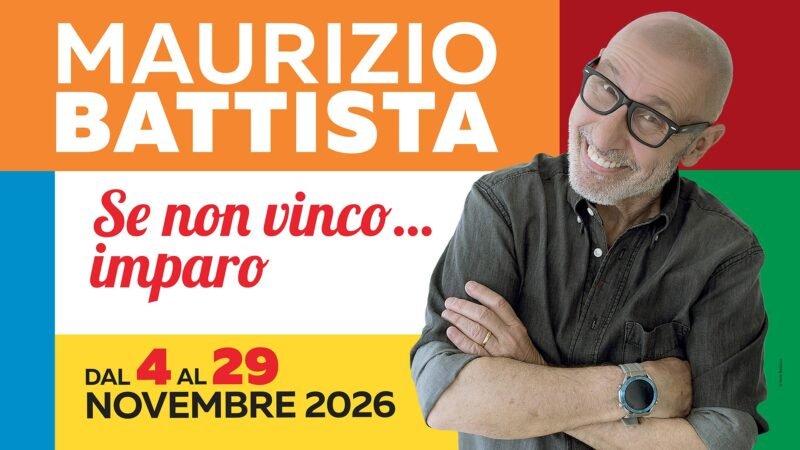
- Maurizio Battista at Teatro Olimpico, Se non vinco… imparo, November 4 to 29, 2026100 m
- Angelo Pintus at Teatro Olimpico, Loro non sanno niente, January 14 to February 14, 2027100 m
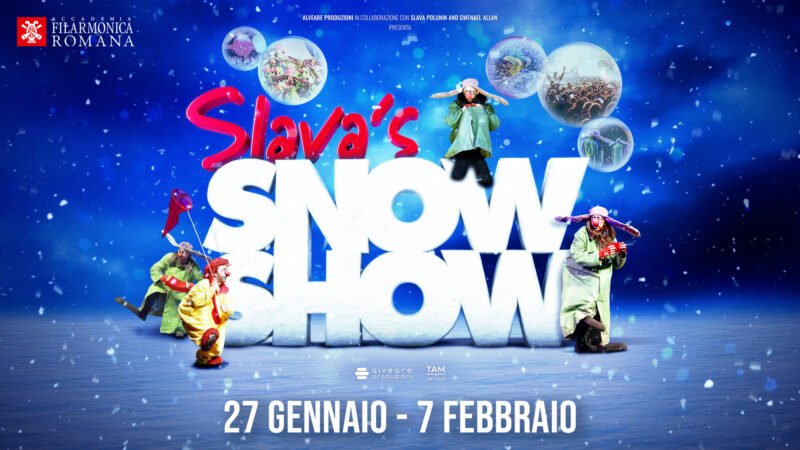
- Slava’s SnowShow at Teatro Olimpico, January 27 to February 7, 2027100 m
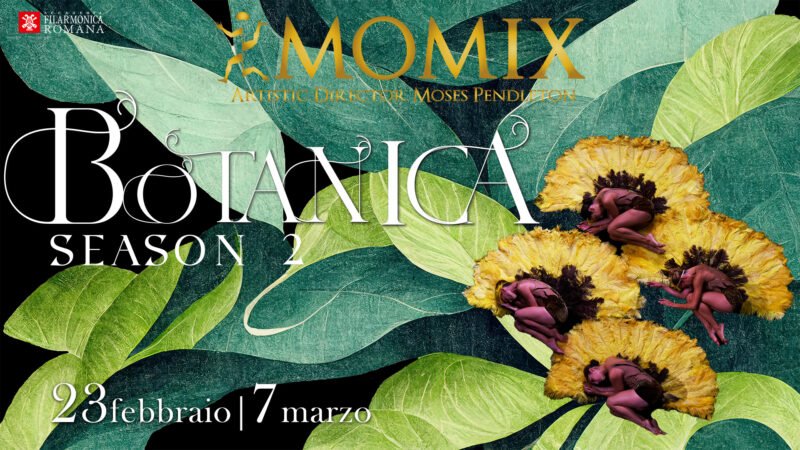
- MOMIX Botanica at Teatro Olimpico, February 23 to March 7, 2027100 m