Rione Campo Marzio: What to See
In short. Rione Campo Marzio, Rione IV of Rome, can be walked freely and without a ticket: Piazza del Popolo, Piazza di Spagna, the Trinità dei Monti Steps, the northern stretch of Via del Corso and the Pincio are public spaces open to everyone.
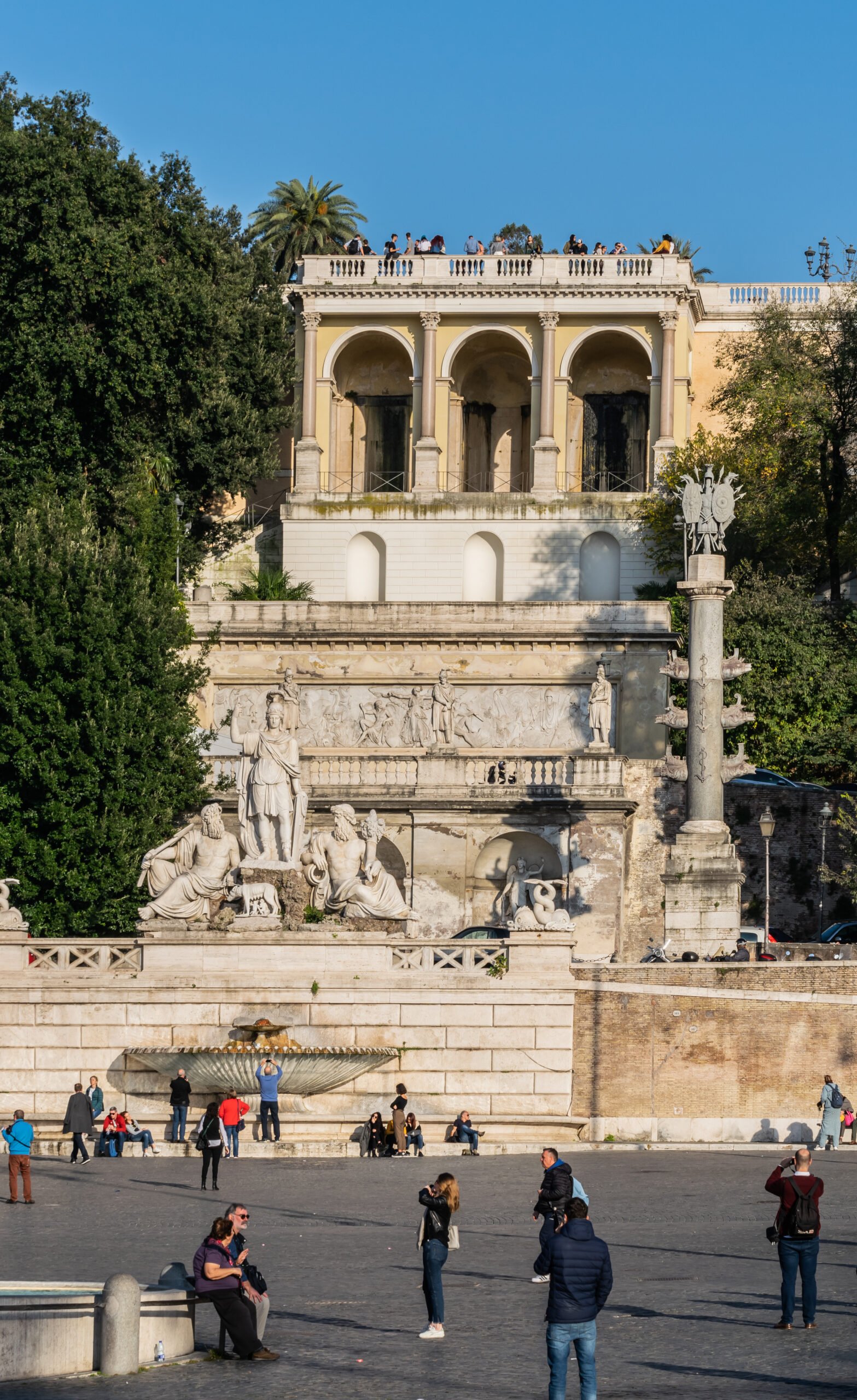
Rione Campo Marzio, Rione IV of Rome, can be walked freely and without a ticket: Piazza del Popolo, Piazza di Spagna, the Trinità dei Monti Steps, the northern stretch of Via del Corso and the Pincio are public spaces open to everyone. You pay to enter the museums, such as the Ara Pacis, €14 full price according to the museum's website, and the Casa di Goethe. The Mausoleum of Augustus, on the other hand, is closed: the Capitoline Superintendency writes that since June 6, 2022 entry and visits have been suspended.
The rione occupies the best-known triangle of the center, between the Tiber, the Aurelian Walls and the Pincio hill. According to the Rome Capital tourism portal the name recalls the plain consecrated to the god Mars and used for military exercises, and the coat of arms is a silver crescent on a blue field. Within the boundaries are the three streets of the Tridente, Via Margutta, Via dei Condotti, Villa Medici, Santa Maria del Popolo, Trinità dei Monti, the Ara Pacis and the Mausoleum.
Data verified on September 29, 2026 on the rione's page of the Rome Capital tourism portal, on the website of the Capitoline Superintendency for the Mausoleum of Augustus, on the website of the Ara Pacis Museum, and on those of Villa Medici, the Casa di Goethe and the church of Trinità dei Monti. Churches and museums have their own entry rules, which change with the seasons, exhibitions and celebrations. For extraordinary closures of the municipal sites the reference is 060608, the contact center of Roma Capitale.
At a glance: address, hours, ticket
- Where: Rione IV Campo Marzio, between Piazzale Flaminio, the lungotevere, Via del Cancello, Piazza San Lorenzo in Lucina, Via Frattina, Piazza Mignanelli, Via di Porta Pinciana and Viale del Muro Torto.
- Streets and squares: free and open access, including the Trinità dei Monti Steps, and the Pincio is a municipal public garden with no ticket.
- Ara Pacis: every day 9:30-19:30, last entry one hour before, €14 full price, free for residents of Rome and the Metropolitan City.
- Mausoleum of Augustus: closed since June 6, 2022 according to the Capitoline Superintendency, viewed from Piazza Augusto Imperatore.
- Villa Medici: guided visit only, closed on Tuesday, €18 full price, booking on the website of the Academy of France.
- Churches: free entry, visits suspended during celebrations, hours to be asked at each church.
- Information on municipal sites: 060608, every day from 9:00 to 19:00.
Where it is and what you really see
The official boundaries, according to the Rome Capital tourism portal, start from Piazzale Flaminio and follow Via Luisa di Savoia, Lungotevere Arnaldo da Brescia, Lungotevere in Augusta, Piazza del Porto di Ripetta and Lungotevere Marzio. Then the limit enters the center along Via del Cancello, Via dei Portoghesi, Via della Stelletta, Piazza Campo Marzio, Via degli Uffici del Vicario, Via di Campo Marzio and Piazza San Lorenzo in Lucina, and climbs back up Via Frattina to Piazza Mignanelli.
From Piazza Mignanelli the boundary follows Via dei Due Macelli, Via Capo le Case, Via Francesco Crispi, Via di Porta Pinciana and Viale del Muro Torto, until it closes again on Piazzale Flaminio. The rione thus touches the Aurelian Walls to the north, the Tiber to the west, the Pincio hill to the east. To the south it borders the rioni Colonna, Sant'Eustachio and Ponte, and across the river is Prati. It is a fan shape that opens from Piazza del Popolo toward the center.
Inside this fan are Piazza del Popolo with the Porta del Popolo and Santa Maria del Popolo, the Pincio, Villa Medici, Trinità dei Monti and Piazza di Spagna. On the river side are the Ara Pacis and the Mausoleum of Augustus. The tourism portal lists all these places on the page for Rione IV.
Some places that many attribute to the rione are instead on its edge. The Basilica of San Lorenzo in Lucina gives its name to the square through which the southern boundary passes, and the encyclopedic sources do not list it among the churches of the rione. The same goes for Santa Maria in Campo Marzio, which bears the name of the rione but stands on the side of Piazza Campo Marzio, and for Sant'Andrea delle Fratte, a little south of the boundary.
Via del Corso crosses the rione only in the northern part, from Piazza del Popolo to the height of Via Frattina and San Lorenzo in Lucina. Farther south the street serves as the boundary between Colonna and Trevi. Anyone arriving from Piazza Colonna going up the Corso therefore enters Campo Marzio only after a few hundred meters. The practical criterion is simple: everything you see from Piazza del Popolo, from the Steps and from the Pincio belongs to Rione IV.
A curiosity about Rione Campo Marzio
The name indicates a place that today would be unrecognizable. The Rome Capital tourism portal recalls that the plain was consecrated to Mars and used for military exercises, that is, an open space outside the city, between the Tiber and the hills. In the Antonine era, the same source writes, the area saw enormous building development, with temples, theaters, porticoes, stadiums and baths, documented by the Forma Urbis, the marble plan commissioned by Septimius Severus at the beginning of the 3rd century.
The ancient Campus Martius was much larger than today's rione. It also included the area of Largo Argentina, the Pantheon and Piazza Navona, which today belong to other rioni. Rione IV keeps its name but covers only the northern part of the plain, the one where Augustus built his tomb and the Senate had the Ara Pacis erected. Anyone looking for the archaeological Campus Martius finds it scattered across half the historic center.
Second curiosity: the crescent of the coat of arms. The tourism portal describes it as a silver crescent on a blue field, and does not explain where the symbol comes from. The sources consulted give no documented explanation, and the interpretations in circulation remain hypotheses. More useful, for those who walk, is to remember the old name of the rione, Campo Marzo, which the encyclopedic sources still record in the 19th century alongside the current form.
Then there is a detail about the river. The rione reaches the Tiber, but today's Tiber, enclosed between its embankment walls, is a different river from the one the Romans knew before 1870. The encyclopedic sources recall that the embankment walls were built after Unification, and that in 1902, with Ponte Cavour, the port of Ripetta disappeared. Piazza del Porto di Ripetta, cited among the official boundaries of the rione, preserves the name of a landing place that no longer exists.
One thing nobody tells you about Rione Campo Marzio
The contrary position, in our judgment, concerns Piazza di Spagna. It is the most photographed square in the rione, and among the most overrated as a place to stop. In the middle hours of the day the square is a crowded corridor, the Barcaccia is surrounded by people lining up for the photo and the Steps work more as a passage than as a place to rest. Anyone who gets there at noon sees mostly the crowd, and leaves convinced they have seen Piazza di Spagna.
The Steps should be treated for what they are: an 18th-century monument in travertine, restored twice in the last three decades, not a stadium bleacher. The Rome Capital tourism portal says the balustrades were conceived as places to pause and enjoy the landscape, and the value of the monument is the climb. The right spot to look at the square is up high, on the churchyard of Trinità dei Monti, at dawn or after sunset, when the crowd thins out and the perspective of Via dei Condotti opens up.
Second thing little said: the most interesting part of the rione is the least trodden. The Pincio, the climb of Viale della Trinità dei Monti toward Villa Medici, Via di Ripetta toward the Ara Pacis and Piazza Augusto Imperatore offer more history and less crowding than the stretch between the Barcaccia and Via dei Condotti. The rione is understood by crossing it from north to south or from the river to the hill, not by reducing it to a selfie at the foot of the Steps.
What can you do on the Steps and in Piazza di Spagna?
The rules of conduct in the historic center come from the Urban Police Regulation of Roma Capitale, which came into force on June 13, 2019 according to the city's tourism portal. The official notice summarizes the main points this way: a ban on bathing in the historic fountains and on misusing them, except for throwing coins into some fountains such as the Trevi, and special protection of decorum in the UNESCO site, the area of the city declared World Heritage, as well as near schools, museums and parks.
For those who violate the regulation, again according to the tourism portal, penalties are provided, including removal from certain areas for 48 hours and, in case of repeat offenses, the access ban known as Daspo urbano. The city's official summary does not list in detail the rules on sitting or eating on the Steps. Anyone who wants to know them in detail has to read the full text of the regulation on the institutional website of Roma Capitale, or ask at 060608.
Common sense helps more than fines. The Barcaccia is a historic fountain: you don't bathe in it, you don't sit on the edge with your feet in the water, you don't use it as a table. The Steps are a monument restored with private funds in 2015 and 2016, reopened on September 22, 2016 according to the tourism portal: no food set down on the steps, no bottles, no suitcases dragged over the travertine. For lunch there are benches and public gardens at the Pincio, a few minutes' climb away.
My advice for visiting Rione Campo Marzio
The advice is to enter from the north, from Piazzale Flaminio and the Porta del Popolo, and head south. You start with Santa Maria del Popolo, cross the square to the two twin churches, climb to the Pincio for the terrace and continue along the avenue to Villa Medici and Trinità dei Monti. From there you go down the Steps, instead of up them, and arrive in Piazza di Spagna with the right perspective in front of your eyes.
The second half of the walk heads toward the river. From Piazza di Spagna you take Via del Babuino or Via della Croce, cross Via del Corso and go down Via di Ripetta to the Ara Pacis and Piazza Augusto Imperatore. Here the rione changes face: fewer shops, more ancient stone, the museum's glass case and the great drum of the Mausoleum. Anyone with energy left can finish at the lungotevere, looking at the Tiber from the parapet.
On timing it's best to be blunt. Piazza di Spagna and the Steps should be seen before nine or after sunset. The Pincio looks best in late afternoon, with the sun setting behind St. Peter's. Churches are visited outside Mass times, and at Trinità dei Monti on Wednesday it opens only at noon. Museums are best booked in advance, especially the Ara Pacis on exhibition weekends and Villa Medici, which can be visited only with guided turns.
One last pointer concerns the churches with famous works. At Santa Maria del Popolo the two Caravaggio canvases are in the Cerasi Chapel, and they are the reason many visitors enter the church for only a few minutes. The tourism portal does not publish the basilica's hours and refers to the phone number 06 45675909 and the website of the Augustinians. It's best to call first, especially on Sundays and holidays, and to respect celebrations in progress without wandering among the pews.
How much does it cost and what needs to be booked?
The rione can be crossed for free, and most of what you see is outdoors or in churches with free entry. You pay for the museums. The table summarizes the hours and fees published by the operators of the main sites as of the verification date indicated at the top. Churches are not in the table because they have their own hours, often not published completely, and visits are suspended during celebrations. The Mausoleum of Augustus is closed.
| Place | Hours | Full ticket |
|---|---|---|
| Ara Pacis Museum | every day 9:30-19:30, last entry one hour before, closed May 1 and December 25 | €14, reduced €8.50, free for residents and MIC card |
| Casa di Goethe | Tuesday-Sunday 10:00-18:00, last entry 17:30, closed Monday | €6, reduced €5, free under 10 |
| Villa Medici | guided visits only, closed Tuesday, in Italian at 11:00, 15:30 and 17:30 | €18, reduced €15, free under 18 |
| Mausoleum of Augustus | closed since June 6, 2022 | no ticket on sale |
For the Ara Pacis the official channel is the page for tickets and video guides of the Ara Pacis Museum, which refers to the online sales of Musei in Comune, to 060608 and to the museum ticket office, with cash or card. Until October 4, 2026 the Robert Mapplethorpe exhibition is open, with a combined ticket at €23 for non-residents. Until December 31, 2026 there is also the multimedia experience L'Ara si rivela, at €15. Tickets bought in advance are not refundable.
For Villa Medici the channel is the page for visits of the Academy of France, with online booking. The visit lasts about an hour and a half and includes the gardens and historic apartments, with tours in Italian, French, English, Spanish and sign language. For the Casa di Goethe the reference is the museum's website, which also lists guided visits for groups, at €40, and the phone number 06 32650412.
For the museums of the rione the operator's channel remains the most reliable, and for the churches there is no ticket. Those with the MIC card enter the Ara Pacis free according to the museum's website. Residents of Rome and the Metropolitan City enter the museum free by showing an ID. For the other museums of the rione the reductions are those indicated by each operator on its own page.
Another well-known fact, yet rarely cited
That the Steps are called after Trinità dei Monti and not after Piazza di Spagna many people know. Few know that the number of steps is not settled. The Rome Capital tourism portal describes 11 flights of 12 steps each, that is, 132 steps, while our page on Piazza di Spagna gives 135. The sources do not agree, and the difference probably depends on how landings and thresholds are counted. Counting them on the way up remains a good exercise.
The origin of the money is also told in different ways. The tourism portal writes that the staircase was built between 1723 and 1726 by Francesco De Sanctis on commission from Cardinal Pierre Guérin de Tencin, and inaugurated by Pope Benedict XIII during the Jubilee of 1725. Our page on the church recalls that it was financed mainly by the bequest of the French diplomat Étienne Gueffier, and that the myth of a large French royal contribution is not documented.
The third fact concerns the Barcaccia. The tourism portal attributes it to Pietro Bernini and dates it between 1626 and 1629, with the two large coats of arms of Urban VIII with the three bees and the water coming out of fake cannon mouths. Our page on Piazza di Spagna assigns it to Pietro and Gian Lorenzo Bernini together. Both sources agree on the name: it recalls the boats that came down the Tiber to the nearby port of Ripetta.
The right photo to take in Rione Campo Marzio
The photo that tells the story of the rione is taken from the Pincio terrace, on Piazzale Napoleone I, looking down on Piazza del Popolo. You see the ellipse of the square designed by Valadier, the Flaminian Obelisk in the center, the two twin churches at the mouth of the Tridente and, in the background, the dome of St. Peter's. The right light is that of late afternoon, with the sun low toward the Vatican. A wide-angle lens helps keep the whole square in.
The second image is the Steps seen from above, from the churchyard of Trinità dei Monti, with the Barcaccia at the bottom and Via dei Condotti stretching toward the Corso. It works at dawn, when the steps are almost empty, and from mid-April to mid-May, when according to the tourism portal the staircase hosts the traditional azalea show, with about 450 azalea plants. From below, the frontal photo of the staircase full of people says little about the monument.
Third choice, less obvious: the Mausoleum of Augustus from Piazza Augusto Imperatore, with the ramps of the reopened square and the stone drum in the center. It is Augustan Rome in the middle of the buildings of the 1930s. For those who love details, instead, Meier's glass case reflected in the Tiber from Lungotevere in Augusta. In the streets of the Tridente people should be kept out of the frame or shot with their consent, and in churches photos follow the rules of the rector.
How do you get there and how do you get around the rione?
The metro serves the two ends of the rione. The Spagna stop on line A, also indicated by the Keats-Shelley House website, takes you directly to Piazza di Spagna. In the north the Flaminio station of the same line is on the square of the same name, outside the Porta del Popolo. Bus lines and the day's routes should be checked with the ATAC planner or by calling 060608, because detours and roadworks often change the stops in the historic center.
Within the rione you get around on foot. A large part of the Tridente streets is pedestrian or limited-traffic, and distances are short: from Piazza del Popolo to Piazza di Spagna you walk Via del Babuino in a few minutes, and from Piazza di Spagna to the Ara Pacis you go down Via dei Condotti, cross the Corso and continue toward the river. The most tiring stretch is the climb to the Pincio, with ramps and stairways from Piazza del Popolo.
By car the rione is not recommended. Street parking is scarce, and the rules for vehicle access to the historic center should be checked with Roma Capital or at 060608 before leaving. Anyone who has difficulty walking should know that the Steps are made only of steps, and that the Pincio from Piazza del Popolo is reached by ramps going uphill. The tourism portal refers to the Accessible Rome section for information on the accessibility of the Steps. For the Ara Pacis, access should be verified at 060608.
Some important events that happened here in history
In 28 BC, returning from Egypt after the victory at Actium, Augustus had his mausoleum built in the northern part of the Campus Martius, according to the Capitoline Superintendency. On July 4, 13 BC the Senate decided to erect the Ara Pacis, to celebrate the emperor's return from the campaigns in Spain and Gaul, and the altar was dedicated on January 30, 9 BC, the birthday of Livia, according to our page on the monument.
In the Middle Ages and the Renaissance the rione changed with the popes. In 1099 Paschal II had built the chapel from which Santa Maria del Popolo grew, rebuilt between 1472 and 1477. Paul II reorganized Via Lata, the present Via del Corso, and Leo X opened Via Leonina, today Via di Ripetta, according to the encyclopedic sources. In 1576 Cardinal Ferdinando de' Medici bought the villa on the Pincio, and in 1589 Sixtus V had the obelisk raised in Piazza del Popolo.
The 17th and 18th centuries gave the rione the form we know. The twin churches of Piazza del Popolo were completed in 1675 and 1678, the Steps between 1723 and 1726. In 1803 Napoleon bought Villa Medici and moved the Academy of France there. Between 1808 and 1824 the Pincio garden took shape, and in 1823 Valadier placed the new fountain with the lions in the center of the square. On December 8, 1857 the Column of the Immaculate Conception was inaugurated.
The 20th century worked on the river and on the ancient. In 1902, with Ponte Cavour, the port of Ripetta was demolished, according to the encyclopedic sources. Between 1937 and 1938 the Ara Pacis was reassembled and enclosed in the pavilion of Vittorio Ballio Morpurgo, replaced between 2000 and 2006 by Richard Meier's glass case. In June 2022 the Mausoleum of Augustus was closed to visits, and in June 2025, according to Artribune, the new Piazza Augusto Imperatore was reopened.
Who passed through Rione Campo Marzio
The first names are imperial. Augustus, who chose this part of the plain for his tomb. And with him, according to the Capitoline Superintendency, the members of the family buried in the Mausoleum, among them Marcus Agrippa, Livia and Tiberius. Then the popes who shaped the rione: Paschal II, Sixtus IV, Leo X, Sixtus V, Alexander VII. And the artists who worked at Santa Maria del Popolo, from Raphael for the Chigi Chapel to Caravaggio for the Cerasi Chapel, up to Bernini.
Then the travelers. Johann Wolfgang von Goethe arrived in Rome on November 1, 1786 and stayed at Via del Corso 18, with the painter Johann Heinrich Wilhelm Tischbein, where the Casa di Goethe is today, according to the museum's website. John Keats died in 1821, at the age of 25, in the house at number 26 Piazza di Spagna, now the Keats-Shelley House. The tourism portal recalls that the square was also the home of Percy Bysshe Shelley and the center of the Romantic Rome of the 19th century.
Villa Medici has hosted a long list of names. Galileo Galilei stayed there in 1633, during his trial, as a guest of Ferdinando II de' Medici. Among the Prix de Rome winners hosted by the Academy of France were Jean-Auguste-Dominique Ingres, Georges Bizet and Claude Debussy. At Palazzo Ruspoli, on the Corso, in 1859 Napoleone Carlo Bonaparte married Princess Cristina Ruspoli, according to our page on the palace. In the 20th century, finally, the architects Morpurgo and Meier at the Ara Pacis.
What should you really look at in Piazza del Popolo?
The square is the north gate of the rione and of the historic city. The Porta del Popolo was arranged on the outside between 1562 and 1565 by Nanni di Baccio Bigio for Pius IV, and Bernini redesigned its inner facade in 1655 for Alexander VII. In 1878 and 1879 the two side towers were torn down and two archways opened. These are data from our page on the square, which is worth reading before you arrive, because on site there are few panels.
In the center is the Flaminian Obelisk, 24 meters tall, from the era of the pharaohs Ramses II and Merneptah, raised in 1589 by Sixtus V. On the south side are the twin churches, Santa Maria in Montesanto and Santa Maria dei Miracoli, commissioned by Alexander VII, begun by Carlo Rainaldi and completed by Bernini with Carlo Fontana. They look alike but are not identical, and looking for the differences between the two domes is part of the visit.
The elliptical form, with the two exedras, is owed to Giuseppe Valadier, who presented the first design in 1793 and worked on the square after the Napoleonic occupation. In 1823 he replaced the old fountain by Giacomo Della Porta with the marble lions on the four sides of the obelisk. On the river side is the fountain of Neptune with the tritons, on the Pincio side the fountain of the goddess Roma, between the statues of the Tiber and the Aniene. From there start the ramps up the hill.
Santa Maria del Popolo is the main reason to enter a church in the rione. The Rome Capital tourism portal gives the address as Piazza del Popolo 12 and the phone 06 45675909, and notes no ticket. Inside are the Chigi Chapel, designed by Raphael from 1513 and completed by Bernini in the 1650s, and the Cerasi Chapel with the two Caravaggio canvases of about 1601, the Conversion of Saint Paul and the Crucifixion of Saint Peter.
Pincio and Villa Medici: how do you get up and what do you see?
The Pincio is the first public garden in Rome, according to our page on the hill. The project was born during the French occupation, between 1808 and 1814, based on the drawings of Louis-Martin Berthault, and was completed under papal government by Giuseppe Valadier around 1824. From the center you climb by the ramps that start from the fountain of the goddess Roma in Piazza del Popolo, or from Trinità dei Monti along the avenue that passes in front of Villa Medici.
Along the avenues are the busts of illustrious Italians, placed starting in 1851 under Pius IX and reaching about 228 in the 1960s. The women portrayed are only three: Vittoria Colonna, Saint Catherine of Siena and Grazia Deledda. On Viale dell'Orologio is the water clock, whose mechanism is attributed to the Dominican Giovanni Battista Embriago, placed in 1873 in the center of a little pond. On Viale dell'Obelisco is the obelisk of Antinous, brought here in 1822.
Villa Medici is at Viale della Trinità dei Monti 1. According to our page on the villa, the land, where the ancient Horti Luculliani extended, was bought in 1564 by the nephews of Cardinal Ricci, and in 1576 passed to Cardinal Ferdinando de' Medici, who had the works completed by Bartolomeo Ammannati. In 1803 Napoleon moved the Academy of France there, which still occupies it. The Prix de Rome was abolished in 1968 by André Malraux, and the villa now depends on the French Ministry of Culture.
The guided visit, according to the website of the Academy of France, takes you into the gardens and the historic apartments, and also into the more private spaces, such as the studiolo of Ferdinando de' Medici. From the street you see only the front toward the city, and the rest stays behind the perimeter wall. Without the guided tour the garden remains invisible. It is the clearest case, in the rione, of a place that tells very little about itself from the street, and that needs to be booked a few days ahead.
Ara Pacis and Mausoleum of Augustus: what can you really visit?
The Ara Pacis can be visited every day. The museum is on Lungotevere in Augusta, at the corner with Via Tomacelli, and is open from 9:30 to 19:30 with last entry one hour before, according to the official website. It closes on May 1 and December 25. On December 24 and 31 it closes at 14:00. For information the museum gives the call center 060608, active every day from 9:00 to 19:00, and the museum's email address published on the website.
The story of the discovery is long. The first fragments came to light in 1568 under Palazzo Peretti, on Via in Lucina, and ended up in different collections, among Florence, Paris and the Vatican. In 1879 the archaeologist Federico von Duhn recognized them as part of the altar of Augustus. The decisive excavation was that of 1937, with the freezing of the ground, and on September 23, 1938 the reassembly of the altar in Morpurgo's pavilion was completed, according to our page on the monument.
The Mausoleum of Augustus, on the other hand, cannot be visited. The Capitoline Superintendency writes that since June 6, 2022 it is closed and that entry and visits are suspended. According to the same source it had a diameter of about 87 meters, the largest circular mausoleum known, and on top a bronze statue of the emperor at about 30 meters in height. The tourism portal instead gives 89 meters in diameter and 44 in height: the sources do not agree on the measurements.
In June 2025, according to Artribune, Piazza Augusto Imperatore was reopened, pedestrian, with two large ramps connecting the street level to the level of the Mausoleum, under the artistic direction of the architect Francesco Cellini. The same magazine announced the completion of the musealization of the Mausoleum by the end of 2026, with about €7 million funded largely by private foundations. The reopening date is not confirmed by an official source: it's best to check the Superintendency's website.
Which churches of the rione can you visit?
Trinità dei Monti has been entrusted since 2016 to the Emmanuel Community, according to the church's website, at the address Piazza Trinità dei Monti 3. It is open Monday to Saturday from 10:15 to 19:45, on Wednesday from 12:00, on Sunday from 9:00 to 19:30, and visits are suspended during celebrations. The weekday Mass is at 18:30, the Sunday one at 9:30, in French except on Thursday, when it is celebrated in Italian. The website notes no ticket for the church.
Inside Trinità dei Monti our page recalls the Deposition by Daniele da Volterra of 1541, the anamorphoses painted in 1642 by Emmanuel Maignan and François Nicéron in the convent and Maignan's sundial. Outside, on the churchyard, is the Sallustiano obelisk, raised in 1788 for Pius VI. The tourism portal dates the founding of the church to 1495, our page to 1494, at the wish of Saint Francis of Paola: the sources differ by a year.
Along Via del Corso are two churches that the encyclopedic sources list in the rione: the Basilica of Saints Ambrose and Charles on the Corso, with its great dome over the Corso, and Gesù e Maria al Corso. Toward the river, near the Mausoleum, San Rocco all'Augusteo and San Girolamo dei Croati. The hours of these churches are not published in the official sources consulted, and must be asked of the individual communities.
On Via del Babuino are two churches tied to foreign communities, Sant'Atanasio dei Greci tied to the Greek community, and the Anglican church of All Saints, which the encyclopedic sources place in the rione. They are active places of worship, with their own services and hours. The rule holds for all the churches of Campo Marzio: no visiting during Mass, shoulders and knees covered, silence, and photos only where the rector allows them.
Corso, Babuino, Ripetta and Margutta: what changes from one street to the next?
The Tridente is the three streets that fan out from Piazza del Popolo. In the center Via del Corso, the ancient Via Lata reorganized by Paul II, which leads straight toward Piazza Venezia. On the left, looking from the north, Via di Ripetta, opened by Leo X under the name Via Leonina, which descends toward the river and the Ara Pacis. On the right Via del Babuino, which leads to Piazza di Spagna.
Each has a different character. The Corso is the street of the grand palaces and of the evening stroll, crowded on weekends and in late afternoon. Via di Ripetta is quieter, with the Academy of Fine Arts, which the encyclopedic sources place in the rione, and the Mausoleum at the end. Via del Babuino is the street of the two churches of the foreign communities, Greek and Anglican. The advice is to walk all three, one on the way out and one on the way back.
Among the cross streets, the tourism portal cites Via Margutta, Via Borgognona, Via della Croce and Via dei Condotti. Via Margutta runs parallel to the Babuino, under the Pincio hill, and is the most secluded. Via dei Condotti connects Piazza di Spagna to the Corso and is the most crowded. Uphill, beyond the Steps, is Via Sistina with the Casa dei Mostri at Palazzetto Zuccari, which the encyclopedic sources count among the palaces of the rione.
When is it closed and what not to expect?
The rione never closes: streets, squares and the Steps are public spaces. What closes are the museums and the gardens. The Ara Pacis is closed on May 1 and December 25, the Casa di Goethe on Monday, Villa Medici on Tuesday. The Pincio is part of the municipal public greenery, and like all parks with tall trees it can be closed in case of a weather alert for strong wind. Churches suspend visits during celebrations and on the main feast days.
What not to expect? The Mausoleum of Augustus open, before checking the Superintendency's page. The Steps as a picnic spot. Villa Medici visitable on your own: you get in only with the guided tours of the Academy of France. A single ticket for the rione: there isn't one, every museum has its own. And not calm either, in the middle hours of Saturday and Sunday, among Piazza di Spagna, Via dei Condotti and the Corso.
There are also days when the rione changes face for public events. On December 8, the feast of the Immaculate Conception, the Column in Piazza Mignanelli receives the pope's tribute, a tradition kept by the pontiffs since 1958 according to our page on Piazza di Spagna, and the area fills with the faithful and with security checks. Piazza del Popolo often hosts demonstrations, concerts and ceremonies, with barriers and limited access. For notices the reference is 060608.
Eating in the area
The Tridente is one of the areas with the highest tourist pressure in Rome, and the traps are concentrated around Piazza di Spagna, Via dei Condotti and Piazza del Popolo. The signs are always the same: the barker on the sidewalk, the laminated menu with photographs of the dishes in five languages, items with no price, a different menu outside and inside, the kitchen open nonstop from morning to night, tables in front of monuments with prices adjusted to the customer.
Romans avoid these places for a simple reason. A place that lives off passing trade has no need for regular customers, and the quality shows it. Even the lady making fresh pasta in the window, for the benefit of passersby, is more often scenery than kitchen. It's worth moving a few streets away, toward Via di Ripetta or the cross streets between the Corso and the river, where the clientele is made up of people who work in the area and the menu changes with the market.
The practical rule is to look at who is sitting at the tables during the weekday lunch break, look for a short menu with clear prices and be wary of cover charges that aren't stated. At peak hours the places frequented by people who work in the area fill up early, so it's best to go earlier or later. To find addresses chosen with care there is the list of addresses on Google Maps, also useful for organizing the day between the Tridente and the center.
What to combine in a day
The natural pairing is Villa Borghese, which begins where the Pincio ends. You pass from Valadier's garden to the great park without leaving the green, and with a booking made in time you reach the Galleria Borghese, which cannot be visited without a time slot. Anyone with children finds open spaces and shade in the park, and anyone who prefers to stay in the rione can stop on the benches of the Pincio before heading back down toward Piazza del Popolo.
Toward the north, beyond the Porta del Popolo and the Aurelian Walls, you enter the Flaminio district, with its museums and 20th-century architecture. To the south the rione borders Trevi, covered on the page Rione Trevi: What to See, and Ponte, on the page Rione Ponte: What to See. The general picture is on the page about the 22 rioni of Rome.
Anyone who prefers a themed route will find among our pages the itineraries on Caravaggio in Rome, which passes through the Cerasi Chapel, on Raphael in Rome, with the Chigi Chapel, and on the obelisks of Rome, three of which are in the rione. For the view from above there is the page on Rome's scenic viewpoints. Behind Palazzo Ruspoli, the Fondazione Memmo offers contemporary art with free entry.
Frequently asked questions
What are the boundaries of Rione Campo Marzio?
According to the Rome Capital tourism portal Rione IV runs from Piazzale Flaminio to the lungotevere, goes down along the river to Via del Cancello, passes through Piazza Campo Marzio and Piazza San Lorenzo in Lucina, climbs back up Via Frattina and Piazza Mignanelli and closes along Via dei Due Macelli, Via Francesco Crispi, Via di Porta Pinciana and Viale del Muro Torto. Inside are Piazza del Popolo, Piazza di Spagna, the Pincio and the Ara Pacis.
Are Piazza di Spagna and the Steps part of the rione?
Yes. The Rome Capital tourism portal lists Piazza di Spagna among the main squares of Rione IV, and with it the church of Trinità dei Monti at the top of the Steps. The Column of the Immaculate Conception and the Palazzo di Propaganda Fide are instead on the southern edge, toward Piazza Mignanelli and Via dei Due Macelli. Sant'Andrea delle Fratte, a little farther south, does not appear among the churches of the rione in the encyclopedic sources.
Can you sit on the Trinità dei Monti Steps?
Rome's Urban Police Regulation, in force since June 13, 2019, gives special protection to the decorum of the UNESCO site, according to the city's tourism portal, and provides for penalties up to removal from the area for 48 hours. The official summary doesn't list the specific rules for the Spanish Steps. To learn them, read the text of the regulation on the Roma Capitale website or call 060608. Either way, the advice is not to linger or eat on the steps.
Is the Mausoleum of Augustus open?
No. The Capitoline Superintendency writes that since June 6, 2022 the Mausoleum of Augustus has been closed and that entry and visits are suspended. The trade press announced the end of the museum-fitting works by the end of 2026, but the reopening date is not confirmed by an official source. The monument is seen from the outside, from Piazza Augusto Imperatore, reopened as a pedestrian square in June 2025.
How much does it cost to enter the Ara Pacis?
According to the museum's official website, the ticket for the museum alone costs €14 full price and €8.50 reduced, and it is free for residents of Rome and the Metropolitan City with ID and for MIC card holders. The exhibitions have their own rates: until October 4, 2026 the combined ticket with the Mapplethorpe exhibition costs €23 for non-residents. The museum is open every day from 9:30 to 19:30.
How do you visit Villa Medici?
Only with a guided tour, booked on the website of the French Academy. The tours last about an hour and a half, include the gardens and the historic apartments, and run every day except Tuesday, in Italian at 11:00, 15:30 and 17:30, with other turns in French, English and Spanish. Full price is €18, reduced is €15 for those under 25, and under 18 admission is free.
How do you get to the Campo Marzio district by metro?
Metro line A has one stop at Piazza di Spagna, the Spagna station, and one to the north of the district, the Flaminio station, on the square outside Porta del Popolo. You cross the district on foot from one to the other, along Via del Babuino or by climbing up to the Pincio. For the day's buses and any detours, use the ATAC route planner or call 060608.
How much time do you need to see the Campo Marzio district?
For an outdoor walk, from Piazza del Popolo to the Pincio, Trinità dei Monti, Piazza di Spagna and the Ara Pacis, three or four hours at an easy pace are enough. With a visit to the Ara Pacis museum, Santa Maria del Popolo and the Goethe House you need a full day. Villa Medici takes an hour and a half more, with a booked turn. If you're short on time, you can choose between climbing to the Pincio and going down toward the river.
Who wrote this and on which sources
The text comes from the editorial team of Tour Leader Pro, the Rome-based outfit that designs itineraries, tours and cultural events in Rome and Lazio. The fares, hours and access arrangements given here come from the official sources cited in the text, as of the date given at the start: for boundaries and monuments the reference is the page for rione IV on the Roma Capitale tourism portal, and for the Mausoleum the Capitoline Superintendency. Tell us what you find has changed.
Organizing a day in Campo Marzio for a group means working on the fit of the pieces: booking the Villa Medici and Ara Pacis turns, avoiding Mass times at Santa Maria del Popolo and Trinità dei Monti, and choosing the direction of the walk so you don't face the Spanish Steps uphill at rush hour. For anyone planning outings of this kind, a useful resource for people who organize group travel is Tour Leader Pro.
Campo Marzio is also the starting point for the rest of the city: from the Pincio you enter Villa Borghese, from the Tridente you go down toward the Pantheon and Piazza Navona, and from Piazza del Popolo Via Flaminia leads north. Putting together the central districts, the 20th-century neighborhoods and maybe a few day trips outside the city in Lazio takes a bit of planning, and a useful resource for building a multi-day itinerary is Italy Planner.