Monteverde
In short. Monteverde is walkable and almost everything that matters is free.
Monteverde is walkable and almost everything that matters is free. Villa Doria Pamphilj and Villa Sciarra, run by Roma Capitale, open from 07:00 until sunset. The Mausoleo Ossario Garibaldino is open Tuesday to Saturday, 09:30 to 13:30, with free admission. The Tempietto di San Pietro in Montorio can be visited free Tuesday to Sunday, 10:00 to 18:00. Two places remain closed to the public: the Villa del Vascello, seat of the Grande Oriente d'Italia, and the Casino del Bel Respiro, the official seat of the Presidency of the Council of Ministers.
The neighborhood has two halves that don't look much alike. Monteverde Vecchio, high on the ridge behind the Janiculum, is made of small villas with gardens and early 20th-century apartment buildings. Monteverde Nuovo descends toward the Portuense and the Circonvallazione Gianicolense, with the public housing of Donna Olimpia and the postwar buildings. In between runs the memory of the Roman Republic of 1849, which in Monteverde is not a chapter of history but a sequence of walls, plaques and street names.
Data checked on September 29, 2026 on the websites of the Sovrintendenza Capitolina, Roma Capitale, the Museo della Repubblica Romana, the Real Academia de España and the Teatro Vascello, and on the other sources cited further on in the text. The parks' hours depend on sunset and change with the seasons. For everything concerning municipal places the official channel is 060608, active every day from 9:00 to 19:00.
At a glance: address, hours, ticket
- Where: Gianicolense district, Rome, between Porta San Pancrazio, Villa Doria Pamphilj and the Circonvallazione Gianicolense.
- Operators: Roma Capitale and Sovrintendenza Capitolina for the villas, the Mausoleo and the Museo della Repubblica Romana, Real Academia de España for the Tempietto.
- Price: villas, Mausoleo and Tempietto free. Only the shows at the Teatro Vascello are paid.
- Villas: from 07:00 until sunset. Mausoleo: Tuesday to Saturday 09:30 to 13:30.
- Museo della Repubblica Romana: Tuesday to Friday 10:00 to 14:00, Saturday and Sunday 10:00 to 18:00, closed on Monday.
- How to get there: bus 75 from Termini, Colosseo and Piramide, FL3 train to the Quattro Venti stop.
- Information: 060608, every day from 9:00 to 19:00.
Where it is and what you actually see
Monteverde occupies the western slope of the Janiculum, beyond the walls that close off the hill. The practical boundary, for those coming up from Trastevere, is Porta San Pancrazio: before it is the historic city, after it the neighborhood begins. Wikipedia lists it as the Gianicolense district, code Q. XII, but in Rome almost nobody calls it that. People say Monteverde, and specify Vecchio or Nuovo depending on the part.
The first thing you really see is the greenery, and not in a figurative sense. Villa Doria Pamphilj measures about 181 hectares according to the Sovrintendenza Capitolina, and on its own takes up more space than whole neighboring districts. Villa Sciarra, on the opposite side of the ridge, measures 63,500 square meters. Between the two is a compact residential district, with uphill streets, tree-lined avenues and few real piazzas.
The second thing is the memory of 1849. The Villa del Vascello, the gate with the museum, the main entrance of Villa Pamphilj in Largo III Giugno 1849, the Mausoleo Ossario a little lower down on the Janiculum. They are all places of the defense of the Roman Republic against the French army, a few hundred meters from one another. Read in sequence, they explain the battle better than any map.
Then there is the architecture of the 20th century. Monteverde Vecchio is born, according to Wikipedia's reconstruction, with the 1909 master plan, which brings the first elegant small villas with gardens on Via Carini and in Piazza Rosolino Pilo. Monteverde Nuovo grows during Fascism with the public housing of Via di Donna Olimpia, which the neighborhood called the skyscrapers, and with the Littorio hospital, today San Camillo.
Finally there is what you don't see. The Villa del Vascello is private property and from the street you can only recognize the perimeter wall and the remains of the facade. The Casino del Bel Respiro, the most elegant building of Villa Pamphilj, is the official seat of the Presidency of the Council of Ministers and remains fenced off. Anyone arriving hoping to enter either one stays outside, and it is best to know that before climbing up.
The street names are part of the visit too. Via Giacinto Carini, Piazza Rosolino Pilo, Via Dandolo, Via Calandrelli, Via delle Mura Gianicolensi: the street naming of Monteverde Vecchio refers largely to the Risorgimento and the defense of the hill. Walking, you pass through a kind of index of national history, written on the plates at the corners. You don't need to know every name, it is enough to know that the choice is not random.
A curiosity about Monteverde
The villa that gives its name to the Teatro Vascello and to the battle of 1849 was built in 1663 for the abbot Elpidio Benedetti, agent of Louis XIV and adviser to Cardinal Mazarin. The designers were two siblings, Basilio and Plautilla Bricci. A woman among the designers of a Roman villa of the 17th century is already a rare fact in itself, and the palace the two designed had such a particular shape that it looked like a ship under sail. Hence the name, Vascello.
There is a second curiosity, more modern, under your feet. The railway stop of Quattro Venti, opened on October 15, 2006 on the Roma-Capranica-Viterbo line, has two overlapping through tracks. One platform serves the Trastevere direction, the other the San Pietro direction, and it was dug as a blind bore deep underground. Those who go down the stairs to take the train find themselves in a two-level station that you can't imagine from the street.
The stop's name has a longer history than the stop itself. Quattro Venti is also the name of the arch that serves as the monumental entrance to Villa Pamphilj, designed by Andrea Busiri Vici, and of the avenue on which the station opens. Those who get off the train and walk toward the villa find the same name carved in stone, a few minutes away, and understand where the name of the surrounding neighborhood comes from.
Something nobody tells you about Monteverde
Half the list of places associated with Monteverde, technically, is not Monteverde. The Fontana dell'Acqua Paola, San Pietro in Montorio, the Tempietto and the Mausoleo Ossario itself are inside the walls, on the Janiculum, and the Sovrintendenza places the Mausoleo in the Trastevere rione. The real neighborhood begins beyond Porta San Pancrazio. It isn't pedantry: it changes how you organize the day.
If you start from Trastevere, the climb up Via Garibaldi leads first to the monuments of the Janiculum, then to the gate, then to the Vascello and Villa Pamphilj. It is a route in one direction, which makes sense to do uphill in the morning. If instead you arrive with the 75 or the train at Quattro Venti, you start from the neighborhood and go down toward the historic city. The second way is more comfortable, and almost nobody uses it.
The contrary view, in our judgment, concerns Villa Pamphilj itself. Many go up to Monteverde only for the villa and end up disappointed: the monumental part, the Casino del Bel Respiro, can't be visited, and the rest is a big park where Romans run, walk their dogs and have picnics. Beautiful for walking, less so for those looking for a monument. The kilometer between Porta San Pancrazio and the Vascello is worth the climb much more.
There is another detail that tourist accounts tend to keep quiet. Villa Pamphilj is not a single park but two parks, separated by Via Olimpica, Via Leone XIII built in 1960. The sector reached from Largo III Giugno 1849 is the one with the historic places and the view of the Casino del Bel Respiro. Those who enter by the more outlying entrances risk spending the morning in the less interesting part without realizing it.
What remains of the Roman Republic of 1849?
In 1849 the Roman Republic defended the city from the French army on this very hill. The Sovrintendenza recalls the fighting in the Janiculum area and inside Villa Pamphilj during the final defense of the Second Roman Republic. The name of the villa's main entrance, Largo III Giugno 1849, fixes the date of one of the clashes. The Vascello, for a few days in June 1849, was the last bulwark of the defenders.
General Giacomo Medici was defending the Villa del Vascello. The damage was so heavy that the main casino had to be partly demolished. What you see today from Via di San Pancrazio are the remains of the facade and the perimeter wall. Medici himself, according to Wikipedia, bought the property in 1877, almost 30 years later. Since April 1983 the villa has been the seat of the Grande Oriente d'Italia.
At Porta San Pancrazio is the Museum of the Roman Republic and Garibaldian Memory, in Largo di Porta San Pancrazio. It is the place to start from to understand what happened on these streets. It opens Tuesday to Friday from 10:00 to 14:00, Saturday and Sunday from 10:00 to 18:00, with last entry one hour before closing. It is closed on Monday, May 1 and December 25.
Farther down, on the Janiculum, the Mausoleo Ossario Garibaldino holds the remains of those who fell in the battles for Rome as capital from 1849 to 1870. Designed by Giovanni Jacobucci, it was inaugurated on November 3, 1941 after two years of work. Inside are 36 niches with plaques recording the names of over 1,600 fallen, and the porphyry sarcophagus of Goffredo Mameli, mortally wounded on the Janiculum in 1849 at the age of 22.
Villa Sciarra too bears the mark of that summer. According to the Sovrintendenza, the villa's casino was damaged in the fighting between the Italian and French troops. And Villa Pamphilj preserves inside it a monument to the French fallen, erected after the purchase of the neighboring Villa Corsini. Two opposite memories of the same battle, a few hundred meters apart, and it is worth seeing both so as not to have a one-sided account.
The route of the battle is done on foot in an hour, without hurry. You start from the entrance of Villa Pamphilj in Largo III Giugno 1849, go down along Via di San Pancrazio to the remains of the Vascello, reach the gate with the museum and continue toward the Mausoleo Ossario on the Janiculum. It is less than two kilometers. Those who walk it after seeing the museum's rooms recognize every stretch.
Those who want to widen their view will also find on the site our page on the places of memory in Rome and the one on the Aurelian Walls, of which the Janiculum stretch is the continuation. In few neighborhoods of the city is the topography of a 19th-century battle still so readable, with the real distances between one villa and another walkable in a few minutes.
Villa Doria Pamphilj or Villa Sciarra: which to choose?
It depends on how much time you have. Villa Doria Pamphilj is an enormous park, divided into two sectors by Via Leone XIII, the so-called Via Olimpica built in 1960 for the Olympics. You enter from Largo III Giugno 1849 on Via di San Pancrazio, from Via Aurelia Antica, Via Leone XIII, Largo Martin Luther King, Via Vitellia and Via della Nocetta. To cross it at an unhurried pace you need at least two hours.
The villa began as a noble residence during the pontificate of Innocent X, Giovanni Battista Pamphilj, between 1644 and 1655. The cardinal nephew Camillo Pamphilj had the Casino del Bel Respiro built with its gardens, involving Alessandro Algardi, Giovan Francesco Grimaldi and Gian Lorenzo Bernini. In 1856 Prince Filippo Andrea V Doria Pamphilj bought Villa Corsini at Porta San Pancrazio, the last major enlargement of the property.
The passage to the public was slow. Expropriations began in 1939, the State bought the original core in 1957, the Comune completed the purchases in 1965 and 1971, and the opening was concluded on May 1, 1971. The Casino del Bel Respiro, acquired by the State Property Office in 1967, stayed outside this process. The rest belongs to Roma Capitale, with playgrounds, sports facilities and a riding stable.
Villa Sciarra is the opposite, an intimate garden of a little over six hectares. You enter from Via Calandrelli, Via Dandolo and Via delle Mura Gianicolensi, from 07:00 until sunset. It belonged to the Barberini from the mid-17th century, then to Maffeo Sciarra. In 1902 the American George Wurts and his wife Henrietta Tower bought it and transformed it in the neo-Baroque style. In 1930 Henrietta donated it to Mussolini, on condition that it become a public park.
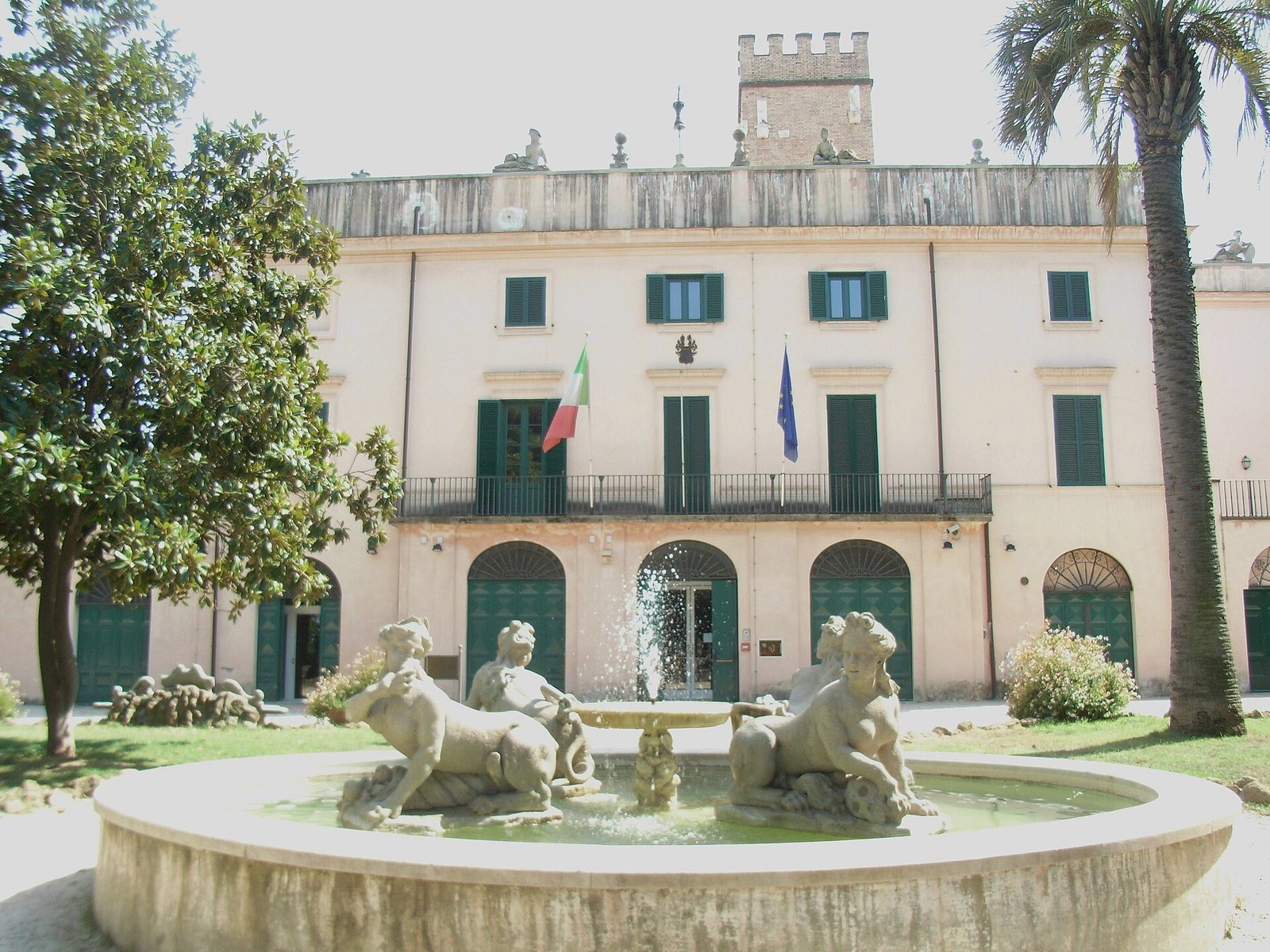
The reason to choose Villa Sciarra is the statues. The Wurts had 18th-century sandstone statues brought from the Castello Visconti di Brignano d'Adda, in the Bergamo area, and placed them among avenues, a tree-lined exedra, a nymphaeum, the Fountain of the Satyrs and the Fountain of Diana and Endymion. In July 2025, according to the Sovrintendenza, the first restorations of the artistic furnishings, financed by the PNRR Caput Mundi program, were completed.
The practical advice is simple. With an hour available, Villa Sciarra. With half a day and comfortable shoes, Villa Pamphilj, entering from Largo III Giugno 1849 to see the Arco dei Quattro Venti right away. With a whole day, both, with the walk along the walls in between. Those traveling with children will find ideas also in our page on Rome with children, where the two villas are among the first stops.
Neither villa has a ticket office or a mandatory route, and this is both their strength and their limit. There aren't panels everywhere, there is no order of visit. It is best to arrive with an idea of what to look for: at Villa Pamphilj the Arco dei Quattro Venti, the Casino seen from outside, the monument to the French fallen, the remains of the aqueduct, at Villa Sciarra the statues, the fountains and the exedra.
My advice for visiting Monteverde
My advice is to start from the top and go down. Take the 75 or the FL3 train to Quattro Venti, enter Villa Pamphilj from Via di San Pancrazio side, exit toward the Vascello and Porta San Pancrazio, visit the museum and then let yourself slide toward the Janiculum, San Pietro in Montorio and Trastevere. All the effort of the climb stays out of the day, and the historic city arrives at the end, as a reward.
Choose a day between Tuesday and Saturday, because it is the only window in which the Mausoleo Ossario, the Porta San Pancrazio museum and the Tempietto are all open together. On Saturday morning the Mausoleo, according to the Sovrintendenza, also offers a free guided tour at 11:00, without reservation. On Sunday the museum stays open until 18:00, but the Mausoleo is closed. On Monday, instead, you find almost all indoor places closed.
Bring water in summer and a bottle to refill. In the villas there are public drinking fountains, and on the site you will find a page devoted to the nasoni of Rome and one to the neighborhood fountains. The climbs of Monteverde are not long but they are steep, and in July the difference between an outing at eight and one at one in the afternoon is fully felt.
The season changes the visit more than the itinerary. In spring and autumn the villas give their best, with low light and full avenues. In high summer it is best to concentrate outdoor walks in the first hours and keep the museum, which on Saturday and Sunday opens until 18:00, for the afternoon. In winter sunset comes early and the villas' hours shorten accordingly.
One last note concerns places to stop. The neighborhood is residential and the places to take a break are few along the ridge, more plentiful going down toward the Circonvallazione Gianicolense or toward Trastevere. It is best to decide beforehand where to take the midday break, instead of looking for it when hunger strikes in the middle of Villa Pamphilj, 20 minutes' walk from the first useful gate.
How much does it cost to enter the places in the neighborhood?
Almost nothing. The two villas are public parks of Roma Capitale and admission is free, from 07:00 until sunset. The Mausoleo Ossario is free, according to the Sovrintendenza. The Tempietto and the exhibitions of the Real Academia de España, at Piazza di San Pietro in Montorio 3, have free admission Tuesday to Sunday, from 10:00 to 18:00, with last entry at 17:30. The only real expense of the day, if you like, is a theater ticket.
| Place | Days and hours | Admission |
|---|---|---|
| Villa Doria Pamphilj | Every day, from 07:00 until sunset | Free |
| Villa Sciarra | Every day, from 07:00 until sunset | Free |
| Mausoleo Ossario Garibaldino | Tuesday to Saturday 09:30 to 13:30 | Free |
| Museo della Repubblica Romana | Tuesday to Friday 10:00 to 14:00, Saturday and Sunday 10:00 to 18:00 | Information at 060608 |
| Tempietto, Real Academia de España | Tuesday to Sunday 10:00 to 18:00 | Free |
None of these places requires a reservation for individual visits. For the Porta San Pancrazio museum the reference for fares and free admission is the museum's official website, with the number 060608. For the Tempietto the contact is the Real Academia de España, by phone at 06 5812806 or on the Academy's website. No skip-the-line ticket makes sense here: there are no lines to skip.
The Teatro Vascello, at Via Giacinto Carini 78, is the only place in the neighborhood with a real ticket. It is a venue for experimental work, with contemporary drama and dance, and publishes on the theater's website the season, prices and directions for getting there. The theater points out free parking along Via delle Mura Gianicolensi, about 100 meters away. For the rest we refer to our dedicated page.
Another well-known fact, yet rarely mentioned
Everyone knows that the Acqua Paola Fountain, the Fontanone, was commissioned by Paul V Borghese. Less often mentioned is where its materials come from. According to the Sovrintendenza, the marbles come from the Roman Forum and from the Temple of Minerva in the Forum of Nerva, and the granite columns belonged to the ancient Constantinian basilica of St. Peter, demolished to make room for the new one.
The fountain, at Via Garibaldi 30, was built between 1610 and 1614 by Giovanni Fontana and Flaminio Ponzio, after the pope had promoted the restoration of the aqueduct in 1608. Between 1690 and 1693 Carlo Fontana modified the facade and replaced the five original basins with the large marble basin seen today. The last major conservation restoration was in 2002-2004.
And there is a mistake carved in the stone. The inscription at the top, the Sovrintendenza explains, cites the restoration of the Alsietino aqueduct, while the water actually came from the aqueduct of Trajan. Roma Capitale recalls that the Paolo aqueduct was built in the early 17th century precisely on the remains of the Trajanic one, and still follows its route inside Villa Pamphilj.
The right photo to take in Monteverde
The most obvious photo is that of the Fontanone, from the opposite sidewalk of Via Garibaldi, and it works better in the morning, when the light comes from the side on the facade. The less obvious one is the Arco dei Quattro Venti seen from inside Villa Pamphilj, with the avenue behind it. The arch, designed by Andrea Busiri Vici, was the monumental entrance of the villa and, framed from inside, shows the city that begins behind it.
At Villa Sciarra the right photo is the sandstone statues, better on a cloudy day than in full sun, because the pale stone burns out easily. At the Vascello, instead, you photograph only from Via di San Pancrazio, from the public sidewalk: the property is private and you can't go in. The remains of the facade, with the wounds of the battle, are enough on their own to tell the story of 1849.
For the panorama there is no need to look for private terraces. From the square of San Pietro in Montorio you see the historic city toward the east, and the Janiculum, a little higher up, offers the classic viewpoint with the domes. Those who want a different framing go down on the Monteverde side and look for the staircases among the small villas, where the neighborhood is seen from above with no famous monument in front.
Porta San Pancrazio also deserves a shot, especially from the outer side, with the road climbing toward Villa Pamphilj. It is the gate that marks the passage from the historic city to the neighborhood, and houses the museum devoted to 1849. For the Mausoleo Ossario, on the other hand, the best photo is head-on, from the street, with the facade and the inscription clearly legible. Inside the rule is respect: it is a shrine, not a set.
How do you get there from central Rome?
Bus 75, according to the Teatro Vascello, leaves from Termini, passes by the Colosseo and the Piramide and stops in front of the theater on Via Carini. It is the most convenient line for Monteverde Vecchio. The theater also lists lines 44, 710, 870 and 871. For up-to-date times and routes the reference is the ATAC website, because surface lines change with construction work. Those arriving from Termini with a suitcase find the 75 the direct solution.
The train is the alternative that few consider. The Quattro Venti stop is served by the regional line FL3 on the Roma-Capranica-Viterbo, between the Trastevere and San Pietro stops. The Teatro Vascello recommends taking it from Ostiense, that is, from the area of the Pyramid of Cestius and Porta San Paolo. From the stop, on Viale dei Quattro Venti, you climb on foot toward Villa Pamphilj and the theater.
For Monteverde Nuovo the traditional means is Tram 8, which according to Wikipedia has its terminus at Casaletto and crosses Trastevere along the avenue. Before counting on the tram, check on the ATAC website if the line is in service or replaced by buses, which happens during works. On foot, from Piazza Trilussa and Ponte Sisto, the climb up Via Garibaldi to Porta San Pancrazio takes about 20 minutes.
By car it is inadvisable to arrive at peak hours. The Teatro Vascello points out free parking along Via delle Mura Gianicolensi and some paid parking in the neighborhood, on Via Carini, Via Quadrio and Via Giovagnoli. On fine-weather weekends the streets around the entrances of Villa Pamphilj fill up early, and it is best to leave the car farther away and do the last stretch on foot.
Some important events that happened here in history
Between 1644 and 1655, during the pontificate of Innocent X, Villa Pamphilj is born. In 1663 the Bricci siblings build the Vascello. Between 1610 and 1614 the mostra of the Acqua Paola had already risen, after the restoration of the aqueduct ordered by Paul V in 1608. The 17th century is the century in which the ridge becomes a landscape of noble villas, with the Barberini at Villa Sciarra and the Pamphilj on the opposite side.
In 1849 the defense of the Roman Republic turns those villas into a battlefield. June 3, recalled in the name of the Villa Pamphilj entrance, and then the days in which the Vascello holds out as the last bulwark, under the command of Giacomo Medici. Mameli, wounded on the Janiculum, dies at 22. In 1856 the Doria Pamphilj buy Villa Corsini at Porta San Pancrazio and redesign the garden.
The 20th century brings the neighborhood. The 1909 master plan opens Monteverde Vecchio to small villas. In 1929 the Ponte Bianco is inaugurated, the railway structure over the Circonvallazione Gianicolense. In 1930 Henrietta Tower Wurts donates Villa Sciarra so that it becomes a public park. On November 3, 1941 the Mausoleo Ossario is inaugurated. In 1960 Via Olimpica cuts Villa Pamphilj in two, and it opens to the public on May 1, 1971.
The most recent decades are less epic but they count. In April 1983 the Grande Oriente d'Italia buys the Vascello. In 1989 an old cinema on Via Carini becomes the Teatro Vascello, home of the company of Manuela Kustermann and Giancarlo Nanni. On October 15, 2006 the Quattro Venti railway stop is activated. In July 2025, finally, the first PNRR restorations of the artistic furnishings of Villa Sciarra are completed.
There is also a technical chapter, almost forgotten. According to the Sovrintendenza, from 1901 to the 1930s the water that came down from the Janiculum through the Fontanone fed the first hydroelectric plant in Rome. The same water that Pope Paul V had brought back to the city in the early 17th century thus became, three centuries later, energy for the modern city. It is a passage that explains well how much this hill has mattered to Rome.
Who has passed through Monteverde
The first name is that of Camillo Pamphilj, the cardinal nephew of Innocent X, who wanted the Casino del Bel Respiro. Working with him were Alessandro Algardi, Giovan Francesco Grimaldi and, according to the Sovrintendenza, also Gian Lorenzo Bernini, who appears on the site in our page on Bernini in Rome. Not far away, a few years later, Plautilla Bricci was working with her brother on the Vascello for the abbot Benedetti.
In 1849 Giacomo Medici passes through here, defending the Vascello, and Goffredo Mameli, the young Genoese poet author of the Italian anthem, mortally wounded on the Janiculum. Their paths cross with those of the French soldiers, recalled by the monument inside Villa Pamphilj. Medici will return in 1877 as owner of the villa he had defended, a detail that is usually forgotten.
Among the names of the 20th century is also that of the architect Giovanni Jacobucci, who lived between 1895 and 1970 and designed the Mausoleo Ossario Garibaldino. The shrine was inaugurated on November 3, 1941, in the middle of the war, after two years of construction. Inside rest those who fell in the battles for Rome as capital from 1849 to 1870, and Goffredo Mameli's porphyry sarcophagus was brought there.
After 1849 comes Prince Filippo Andrea V Doria Pamphilj, who in 1856 buys Villa Corsini at Porta San Pancrazio and in the mid-19th century redesigns the garden. Tied to him are the Arco dei Quattro Venti, the work of Andrea Busiri Vici, and the monument to the French fallen. It is the phase in which the villa takes the form that you still walk through, with the monumental entrance facing the city.
In the 20th century come the Americans George Wurts and Henrietta Tower, who transform Villa Sciarra and then give it to the city. And literature arrives. On the open ground under the Ponte Bianco, according to Wikipedia, the first chapter of Pier Paolo Pasolini's Ragazzi di vita opens, the one titled Il Ferrobedò. Those who follow the city in novels and films will find other routes in our page on Rome in the movies.
Closer to us are Manuela Kustermann and Giancarlo Nanni, who in 1989 turn a neighborhood cinema into the Teatro Vascello and make it the home of the Fabbrica dell'Attore. From that stage, from the opening night onward, names of international experimental theater have passed. The neighborhood, which had a quiet residential life, thus finds itself with a hall that draws an audience from all over the city.
Facts, tradition and legend: what is true?
The name of the neighborhood is the first case. According to Wikipedia, the place name Monteverde could refer to the green and yellowish tuff extracted from the quarries that once dotted the area, like Mons Aureus, the golden mountain, for the Janiculum. It is a hypothesis, not a document. The color of the tuff exists, the quarries existed, the direct link with the name remains a reconstruction.
The second case is San Pietro in Montorio. According to tradition, the apostle Peter was crucified on the hill, and Bramante's Tempietto would mark the exact spot. It is an old and respectable tradition, but not a documented fact: other traditions place the martyrdom in the Vatican area. What is documented is the building, and the church with the Tempietto del Bramante remains one of the most important places of the Roman Renaissance.
Then there is the case of Villa Sciarra and its donation. The Sovrintendenza writes that in 1930 Henrietta Wurts donated the villa to Benito Mussolini, on the condition that it become a public park. About the reasons for the gift and the relations between the donor and the regime more colorful versions are told, which are not confirmed by an official source. The certain fact remains the condition set: the garden had to belong to everyone.
The last level is that of neighborhood legends, and here it is best to be cautious. About the Vascello and its ship shape, fanciful descriptions circulate, but the source describes only a palace that resembled a ship under sail. About the 1849 battle there are heroic episodes handed down with many details: for figures and names the rule is to rely on the plaques of the Mausoleo and on the Porta San Pancrazio museum.
What is there in Monteverde Nuovo, beyond the villas?
Monteverde Nuovo is the part that visitors skip, and not entirely rightly. It develops during Fascism around the valley of Via di Donna Olimpia, with the large public housing buildings, and around the Littorio hospital, today San Camillo. In the postwar period the Colli Portuensi are added. It is a lived-in neighborhood, of families and schools, and should be looked at from the street with respect, without going into the courtyards.
The most recognizable landmark is the Ponte Bianco, the railway structure inaugurated in 1929 over the Circonvallazione Gianicolense. Wikipedia also lists among the places of the area Piazza San Giovanni di Dio, Villa Flora on Via Portuense and the church of San Pancrazio, in the piazza of the same name, where Via di San Pancrazio stretches beyond the gate.
Those who have already seen the center and are looking for the Rome of the 20th-century neighborhoods will find on the site also the pages on Garbatella, on Corviale, farther west along the Portuense, and on Torpignattara and the Pigneto on the opposite side of the city. Monteverde Nuovo belongs to the same family: no famous monuments, a lot of social history.
To read Monteverde Nuovo without a specific destination, it is best to follow the Circonvallazione Gianicolense and then branch off from it. Along the avenue pass the tram and the traffic, in the side streets appear the courtyards of the public housing, the schools, the neighborhood markets. It is not a postcard walk, but those who want to understand how Rome grew between the wars find here a piece of the city that is entirely missing from the historic centers.
Those who arrive in Monteverde Nuovo by train get off at Quattro Venti, on the boundary between the two parts of the neighborhood. From there, in one direction you climb toward Villa Pamphilj and the theater, in the other you go down toward the Circonvallazione Gianicolense and the Ponte Bianco. It is the right spot to understand how the railway, between 1929 and 2006, marked the layout of the neighborhood.
When is it closed and what shouldn't you expect?
Monday is the wrong day. The Porta San Pancrazio museum, the Mausoleo Ossario and the Tempietto are closed, and only the villas remain open. On Sunday the Mausoleo is closed, the museum and the Tempietto are not. The museum is also closed on May 1 and December 25. The villas close at sunset, so in winter the useful time shortens a lot: check the sunset time before going in.
Don't expect equipped-park services everywhere either. The villas are big and the services are concentrated in a few spots, with playgrounds and sports facilities pointed out by Roma Capitale at Villa Pamphilj. Those who need a long break are better off planning it outside the gates, in the neighborhood's streets. Inside the villas you walk, you run, you read on a bench, and little else.
Don't expect to enter the Villa del Vascello, which is the private seat of the Grande Oriente d'Italia, nor the Casino del Bel Respiro. Don't expect a historic center with shops and lively piazzas either: Monteverde Vecchio is residential and quiet, and neighborhood life is concentrated in a few streets. Those looking for evening activity find it lower down, in Trastevere, 10 or 15 minutes on foot downhill.
For the churches it is always best to check first. The hours of San Pietro in Montorio are published on the church's website, and may change for celebrations and weddings, frequent in such a sought-after place. The villas too, in case of a weather alert for strong wind, can be closed by the Comune with little notice: on those days 060608 is the number to call before going out.
Eating in the area
Monteverde is not a tourist area, and that helps. The traps are concentrated lower down, on the Janiculum and toward Trastevere, where the visitors pass. The signs are always the same: the barker at the door, the menu with photographs of the dishes, the items without a price, the kitchen open continuously without a break, the menu that differs between the one displayed outside and the one handed to you at the table.
Another sign is the window with someone rolling out fresh pasta in plain view, put there for those who pass by more than for those who eat. Romans don't go for a simple reason: they know that the places in front of monuments adapt the price to whoever walks in, and they prefer the neighborhood trattorias, with regular customers and a menu that changes with the season. In residential neighborhoods like Monteverde you can still find them.
My advice is to walk down a few streets from the thoroughfares and look at who is at the tables. If at lunch there are office workers, families and people from the neighborhood, it is a good sign. If there are only visitors with a map in hand, less so. So you don't have to leave it to chance, there is the list of addresses on Google Maps kept by the editorial team, updated over time.
What to combine in a day
Monteverde, the Janiculum and Trastevere are a single system that reads vertically. At the bottom, along the Tiber, is the rione with Santa Maria in Trastevere and its Piazza. Halfway up are the Fontanone and San Pietro in Montorio. At the top, beyond the walls, the villas and the neighborhood begin. The water of the Paolo aqueduct came from above, through Villa Pamphilj, down to the Fontanone.
From Porta Settimiana Via della Lungara leads toward Villa Farnesina and the Galleria Corsini, while the climb up the Janiculum passes next to Sant'Onofrio. These are places that many visit without ever going up to Monteverde. In our judgment it is a mistake: the upper part completes the lower one, and without the villas the hill remains a postcard.
Those who want to cross the river find, to the south, the Aventine, Testaccio and Ostiense, connected to Monteverde by the 75 and the train. On the right bank, instead, the sequence continues with Santa Cecilia and the Museo di Roma in Trastevere. The general picture of the rioni is in our page on the 22 rioni of Rome.
The most natural combination is Monteverde plus Trastevere. Morning at the villas and the museum, lunch halfway up, afternoon at San Pietro in Montorio, at the Fontanone and then down toward the rione. In the evening, if there is a show, you go back up to the Teatro Vascello with the 75. Those who prefer cinema find in Trastevere the Cinema Troisi and the Nuovo Cinema Sacher.
An alternative is to pair the neighborhood with the Vatican. From the northern part of Villa Pamphilj and from the Janiculum the St. Peter’s Basilica is reachable on foot, going down toward Via della Conciliazione. It is a long day, suited to those who like to walk. The FL3 train, between Quattro Venti and the San Pietro stop, offers a shortcut for those with little time or little desire for climbs.
For those traveling on a tight budget, Monteverde is one of the cheapest days in Rome: villas, Mausoleo and Tempietto are free. More ideas can be found in our page on free Rome. Those who instead love experimental theater can pair the Vascello with the Teatro India, on the other bank of the river, near the Gasometer.
Frequently asked questions
Is Monteverde a safe neighborhood to walk around?
Monteverde Vecchio is a quiet residential neighborhood, frequented by families, students and people who exercise in the villas. The normal precautions of any city apply, especially at the parks' closing times, when the avenues empty out. The villas close at sunset, and it is best to leave before dark. The rest of the neighborhood can be walked without problems in the evening too, for example when going to the theater.
How much time do you need to see Monteverde?
Half a day is enough for the heart of the neighborhood: Villa Sciarra, the Vascello seen from outside, Porta San Pancrazio with the museum and a stretch of Villa Pamphilj. With a whole day you add the Janiculum, San Pietro in Montorio, the Tempietto and the Mausoleo Ossario, then going down to Trastevere. Monteverde Nuovo, with the Ponte Bianco and Donna Olimpia, requires another half day for those interested in the 20th century.
Can you enter the Villa del Vascello?
No, not as a rule. Since April 1983, Villa del Vascello has been the seat of the Grande Oriente d'Italia, a private property. From Via di San Pancrazio you can see the perimeter wall and the remains of the facade, damaged in the fighting of 1849. Any special openings depend on the owner and should be looked up on the official site of the Grande Oriente, without trusting unconfirmed announcements from third parties.
Is Villa Doria Pamphilj good for kids?
Yes, it's one of the parks most used by Roman families. Roma Capitale lists playgrounds, sports facilities and a riding stable with pony rentals. The spaces are huge and the distances between one entrance and another are measured in kilometers, so with small children it's best to pick just one sector of the villa. The entrance at Largo III Giugno 1849 is the most convenient for anyone coming from Monteverde Vecchio.
Is the Museo della Repubblica Romana paid?
The museum's hours page points to a dedicated section for fares. The official channel for prices, free admission and discounts is 060608, active every day from 9 to 19. The museum is in Largo di Porta San Pancrazio and opens Tuesday to Friday from 10 to 14 and Saturday and Sunday from 10 to 18. Last entry is one hour before closing.
What is the difference between Monteverde Vecchio and Monteverde Nuovo?
Monteverde Vecchio is the upper part, close to the Janiculum and the historic villas, born with the 1909 master plan and made of villini and small apartment buildings. Monteverde Nuovo is the lower and more recent part, grown during Fascism around Donna Olimpia and San Camillo, and then after the war with the Colli Portuensi. For visitors, the historic sites are almost all in the old part.
How do you get to Monteverde without a car?
Bus 75 connects Termini, the Colosseum and the Pyramid with Via Carini, in Monteverde Vecchio. The FL3 train stops at Quattro Venti, reachable from Ostiense. Tram 8 serves Monteverde Nuovo and ends at Casaletto. On foot, from Trastevere, the climb up Via Garibaldi takes you to Porta San Pancrazio in about 20 minutes, past the Fontanone and San Pietro in Montorio.
Do you pay for the Tempietto del Bramante?
No. According to the Real Academia de España, which looks after it, access to the Tempietto and to the Academy's exhibitions is free, Tuesday to Sunday from 10 to 18, with last entry at 17:30. The address is Piazza di San Pietro in Montorio 3. For information the Academy gives the phone number 06 5812806 and the address info@accademiaspagna.org. On Monday the Tempietto is closed, like almost all indoor sites in the area.
What is Quattro Venti station?
It's a railway stop on the Roma-Capranica-Viterbo line, served by FL3 regional trains, opened on October 15, 2006. It is on Viale dei Quattro Venti, in Monteverde, between the Trastevere and San Pietro stops. It has two through tracks stacked on two underground levels. For anyone visiting the neighborhood it's a convenient and little-known access, especially when arriving from Ostiense, as the Teatro Vascello also suggests.
Who wrote this and from which sources
The text comes from the editorial team of Tour Leader Pro, the Rome-based company that designs itineraries, visits and cultural events across Rome and Lazio. Fares, hours and booking procedures reported here come from the official sources cited in the text as of the date given at the top: Sovrintendenza Capitolina, Roma Capitale, Museo della Repubblica Romana, Real Academia de España and Teatro Vascello. Let us know what you find changed.
Organizing a day in Monteverde, for yourself or for a group, mostly means fitting hours together: the Mausoleum open only in the morning, the museum closed on Monday, the villas tied to sunset, public transport that changes with construction sites. For anyone organizing group trips in the city, a useful resource is Tour Leader Pro, with professional tools and contacts to build itineraries that hold up.
Monteverde is a stop, not a whole trip. Anyone staying in Rome several days can alternate the hill with the center, the Vatican Museums, the Appian Way and the Castelli Romani, keeping the villas for the hottest mornings and the museums for the afternoons. To line up stops, transfers and timing, a useful resource for putting together a multi-day itinerary is Italy Planner.