Corviale
In short. Corviale is not a museum and has no opening hours: it's an inhabited public housing complex in Municipio XI of Rome, with entrances on Via Ettore Ferrari, Via di Poggio Verde and Via Marino Mazzacurati.
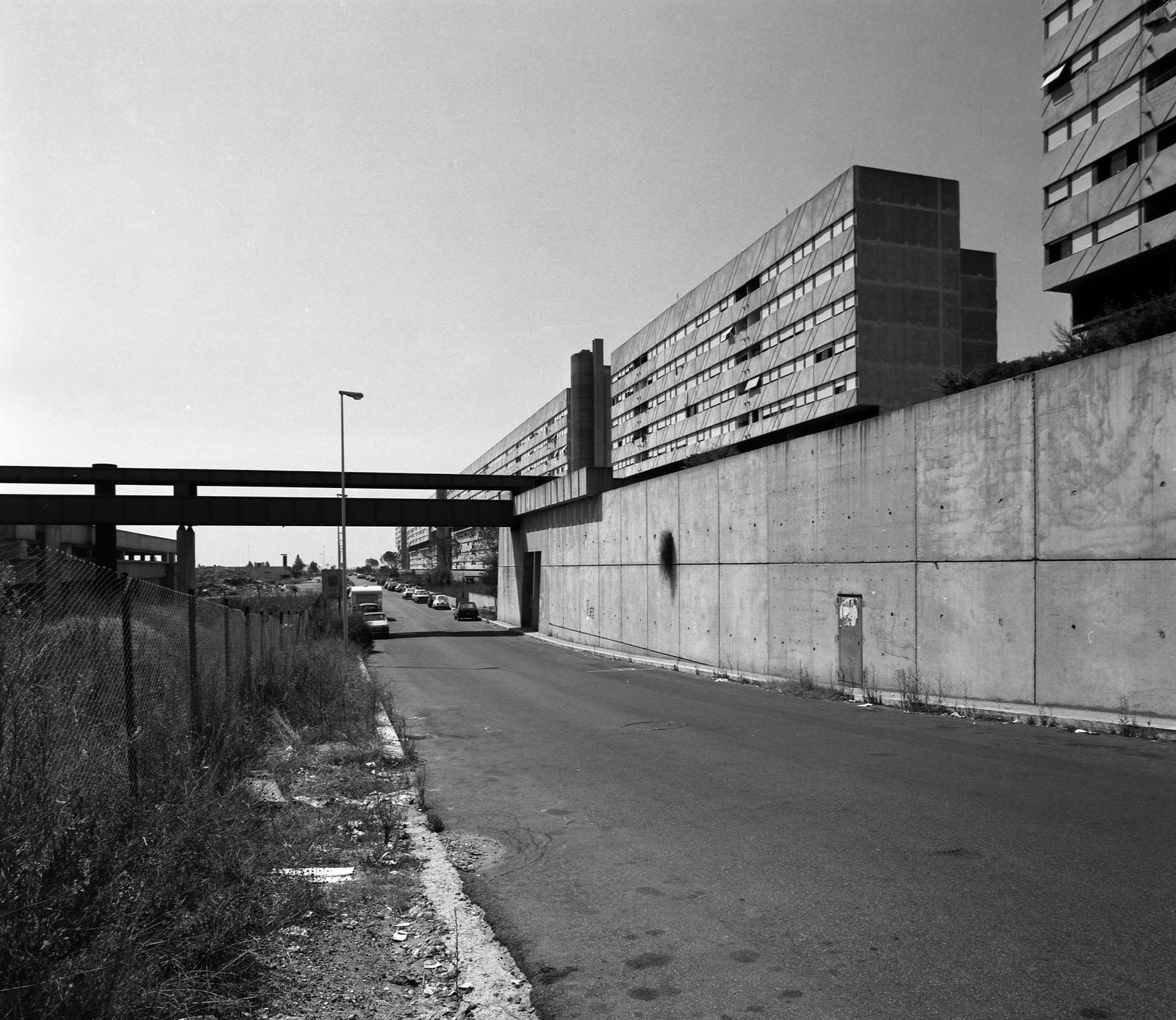
Corviale is not a museum and has no opening hours: it's an inhabited public housing complex in Municipio XI of Rome, with entrances on Via Ettore Ferrari, Via di Poggio Verde and Via Marino Mazzacurati. The apartments are managed by ATER Roma. You look at the "Serpentone" from the outside, for free and without a reservation, from the streets and public spaces around it. You don't go into the stairwells and onto the walkways, because they are people's homes. Open to everyone, instead, are the new plaza, the Renato Nicolini Library and the neighborhood's cultural events.
The main building is almost a kilometer long, 986 meters according to historical reconstructions, with nine floors above ground. A group of architects coordinated by Mario Fiorentino designed it: studies from 1972, construction from 1975, first residents in October 1982, completion in 1984. The fourth floor, meant for workshops and services, was occupied in the 1980s and has been housing ever since. The "green kilometer" project is turning it into 103 new apartments, and in April 2026 ATER Roma reported about 60 of them renovated and assigned.
Data checked on September 29, 2026 on the Roma Capitale portal dedicated to urban transformations, in the communications of the Lazio Region, on the city's cultural page that announced the reopening of the library, on the regional parks website and in the other sources listed further on in the text. ATER Roma does not publish a visiting procedure for the complex, and does not plan one: this is public residential housing, and anyone who comes as a visitor should behave as they would in front of any apartment building where families live.
At a glance: address, hours, ticket
- Address: Corviale complex, entrances on Via Ettore Ferrari, Via di Poggio Verde and Via Marino Mazzacurati, Municipio XI, southwest outskirts of Rome.
- Operator: ATER Roma for the apartments, Roma Capitale and Municipio XI for the plaza, the library and public services.
- How to get in: you can't go into the residential building. You look at it from the outside and from the public spaces.
- Price: free, no ticket and no reservation to see the complex from the street.
- Hours: no hours for the exterior. The Renato Nicolini Library at Via Marino Mazzacurati 76 is open Monday to Friday from 9:00 to 19:00.
- How to get there: ATAC buses, including line 786, which ends at Trastevere station. Check the route on the ATAC website.
- Accessibility: the library is listed as wheelchair accessible. For the outdoor spaces, the operator does not publish any information.
Where it is and what you really see
Corviale is in the southwest outskirts of Rome, near Via Portuense, about two kilometers from the Grande Raccordo Anulare according to historical reconstructions. Administratively it belongs to Municipio XI. To the east are the neighborhoods built between the 1960s and 1970s, and toward the center the Monteverde area. To the west opens the countryside of the Tenuta dei Massimi Nature Reserve. The building runs right along the edge between the built-up city and the Agro Romano, and that's the first thing you understand when you arrive.
What do you see? A blade of reinforced concrete almost a kilometer long and nine floors high, laid along the crest of the hill. Next to it runs a second, lower building in parallel, between three and five floors. A third building, about 250 meters long, is rotated 45 degrees from the other two. Between the blocks there is a strip of services. From a distance, from Via Portuense or from the countryside, the complex looks like a wall closing off the horizon.
Up close, the impression changes. The facades are marked by walkways, rows of windows, stair towers and cuts that run through the building from side to side. The fourth floor is recognizable because in the original project it was a set-back, open strip, meant for workshops and services with a view of the countryside. Today that strip is being transformed, with stretches already redone and stretches still under construction. If you look carefully, you notice the difference between the new modules and the old ones.
At the foot of the building, between Via di Poggio Verde and Via Eugenio Maccagnani, is the public plaza inaugurated in June 2025. It's the best spot for anyone coming from outside: open, with greenery, a basketball court, a dog area and a covered semicircular path about 200 meters long. From here you get a good view of the bulk of the building without entering courtyards or entrance halls. At Via Marino Mazzacurati 76 there is instead the city library, the other place open to everyone.
Then there is the countryside. The Tenuta dei Massimi Reserve covers 774 hectares between Corviale, Trullo and Pisana, with gentle hills cut by the Fosso della Magliana, according to RomaNatura, the agency that manages it. It's the real backdrop of the Serpentone, the one the architect had in mind when he oriented the fourth floor. Anyone who wants to understand the project has to look in both directions: the city behind, the meadows in front, and the big building acting as the boundary.
A curiosity about Corviale
Corviale's city library carries the name of Renato Nicolini, the culture councilor who created the Estate Romana at the end of the 1970s. When the library reopened on December 18, 2025, after the works, the city announced among the new features a large mural dedicated to him. Right in the years when Fiorentino was drawing the Serpentone, Nicolini was bringing cinema and shows to the squares and parks. The link between the two stories can now be seen on a wall.
The second curiosity is about measurements. Historical reconstructions give 986 meters for the main building, but in everyday speech people say "a kilometer," and the fourth-floor project is called, precisely, the green kilometer. The difference of a few meters means nothing to someone looking at it. What counts is the scale: to walk it from one end to the other, at a normal pace, takes more than 10 minutes, always alongside the same building.
Third curiosity: in the original project the complex was supposed to contain much more than homes. According to historical reconstructions, there were to be four open-air theaters, administrative offices, a library, schools, health services, a market and a meeting hall with 500 seats. The idea was a residential unit that would hold the complexity of a city. Many of those functions did not start as planned, and the neighborhood had to win them one piece at a time, often decades later.
The last curiosity is about film. Corviale appears in several films and series: Sfrattato cerca casa equo canone with Pippo Franco in 1983, Scusate se esisto! by Riccardo Milani with Paola Cortellesi in 2014, American Assassin in 2017, the series Christian in 2022. The Roman press linked the 2014 film to the story of the green kilometer, told in the same years in which the project was taking shape. On the site you'll also find the page on Rome in the movies.
Something nobody tells you about Corviale
The name green kilometer suggests a roof garden, a suspended promenade open to the public. It's not like that. The project approved by the Lazio Region and entrusted to ATER Roma consists of demolishing the unauthorized structures on the fourth floor and building 103 new apartments. The green is that of the loggias and the facades, not a public path. Anyone who arrives hoping to walk along the fourth floor will be disappointed: it's private housing, like the other floors.
Here is the opposing view worth keeping in mind. Corviale is often described as the ugliest building in Italy, or as the symbol of a failed suburb. In our opinion that story is lazy. The project had a precise idea, a building that was a city, and many of the problems came from the fact that services and common spaces were not completed when the residents arrived. Judging the architecture without looking at that history means aiming at the wrong target.
A second thing that is rarely said: Corviale is not a place for decay tourism. The people who live there have seen crews, photographers and curious onlookers arrive for years, take their shots and leave. The neighborhood has a social life of its own, with sports clubs, the library, the Municipio's initiatives and the parishes' activities. Anyone coming from outside is a guest, and the right way to visit is to use the public spaces, not to look for glimpses of entrance halls or inhabited courtyards to put on social media.
Third thing: the most famous construction site is not the only one. Alongside the works on the fourth floor, in 2024 Roma Capitale launched an Integrated Urban Plan worth 57.8 million euros in PNRR funds: a civic center, a business incubator, parks, a sports hall, spaces for crafts. ATER also has an energy efficiency project underway which, according to what was reported at the Region in April 2026, is past 90 percent completion. Corviale, today, is one big scattered construction site.
How did the Serpentone come about, and why is it almost a kilometer long?
Design begins in 1972, according to historical reconstructions, in the middle of the era of the big plans for affordable and public housing. The group is large, 23 architects coordinated by Mario Fiorentino, with names such as Federico Gorio, Piero Maria Lugli, Giulio Sterbini and Michele Valori. The underlying idea is that of large scale: a single building that holds homes and services, instead of many scattered apartment blocks that consume countryside and force you to build roads.
The length is not a whim. The complex follows the ridge of the hill and acts as the boundary between the city and the Agro Romano, like a dam stopping building expansion to the west. On the countryside side, the free fourth floor was supposed to offer workshops and services with a view over the meadows. On the city side, the entrances and the spine of services connected the building to the neighborhood. Everything was designed to work together, and everything depended on the completion of the shared parts.
Construction starts in 1975. In 1982 the construction company goes bankrupt and the works stop, according to historical reconstructions. In the same year, in October, the first residents move in, and Fiorentino dies before seeing the work finished. The residential building is completed in 1984, but many of the planned services remain on paper. In the 1980s and 1990s about 700 families occupy apartments and spaces, including the fourth floor, which goes from a common area to a row of homes.
Architects have always been divided. Franco Purini called it the most important work built in Rome in the 1970s, and one of the most significant architectures of that period internationally, distinguishing it from Le Corbusier's housing units for its link to the place. Others have branded it an urban planning mistake. Both readings start from the same fact: a building conceived as a city, left for a long time without a city around it.
My advice for visiting Corviale
Arrive during the day, take your time, and start from the plaza between Via di Poggio Verde and Via Eugenio Maccagnani. It's a public space designed to be crossed, and from it you see the whole bulk of the Serpentone. From there continue along the public streets that run beside the complex, without entering the courtyards, garages or entrance halls. A one-hour walk is enough to get an idea of the scale and of the different buildings.
Respect the people who live there. No photos of windows, balconies and people without their consent, no filming in the shared residential spaces, no loud comments about neighborhood life. Construction site fences must not be crossed for any reason, and the stretches of the fourth floor under work are looked at only from the ground. If someone asks what you are doing, the simplest answer is also the best one: you came to see the architecture and the new plaza.
Plan a stop at the Renato Nicolini Library, at Via Marino Mazzacurati 76, open Monday to Friday from 9:00 to 19:00. Inside there are study rooms, spaces for children and teenagers, a coworking area and about 20,000 volumes, according to the city. It's the most natural way to enter a place in the neighborhood as a guest, see the mural dedicated to Nicolini and understand what has changed with the works of recent years.
Pick the right moment. Weekday mornings are when the neighborhood is quietest and the library is open. Late afternoon in summer gives the best light on the facade facing the countryside. On July evenings, when the plaza hosts the free outdoor cinema of the Estate Romana, the neighborhood is full of life. That's when Corviale shows itself for what it wants to be, a meeting place.
If you're interested in architecture, bring a plan of the complex or a satellite image on your phone. Without a view from above, it's hard to understand the geometry of the three buildings and the position of the spine of services. If you like walking, you can add a stretch in the Tenuta dei Massimi Reserve, to look at the Serpentone from the countryside as its designer imagined it. For routes in the reserve, it's best to ask in advance at RomaNatura.
Do you pay anything, and do you need to book?
No. Looking at Corviale from the outside is free and needs no reservation. There is no ticket office, and ATER Roma does not organize visits to the residential spaces. The public plaza is freely accessible, the city library is open during the hours set by the city, and entry is free. Be wary of anyone offering paid entry into the buildings: the apartments are inhabited public housing, and no official source provides for interior visits open to the public.
The cultural events in the neighborhood are mostly free. In summer 2026 the plaza hosted the Vivi il cinema! arena, organized by the Fondazione Cinema per Roma with the culture department of Roma Capitale as part of the Estate Romana program, with free entry until seats run out. The library organizes readings, workshops and meetings. For the calendar, follow the cultural portal of Roma Capitale and the channels of the Biblioteche di Roma.
There are also architecture walks and themed visits offered by associations and cultural operators, paid or free depending on the case. It is not an official product of the operator, and there is no ticket dedicated to Corviale on the big booking platforms worth mentioning. If you want a tour with a specialist, look for events with a clear date, organizer and program, and check that they stay in public spaces.
For the Tenuta dei Massimi Reserve, according to the regional parks website, visits, routes and environmental education go through accredited organizations coordinated by RomaNatura. The agency is based at Villa Mazzanti, at Via Gomenizza 81, and can be reached at 06 35405310. To find out if excursions in the Corviale area are planned in a given period, it's best to call that number or check the agency's website, because the calendar changes from season to season.
Another well-known fact, yet rarely cited
Many people know the fourth floor was occupied. Few remember what it was supposed to be. In the original project, according to historical reconstructions, it was reserved exclusively for commercial and craft activities, facing the countryside. It was the floor of the city inside the building, the one that was supposed to give work and services to those living above and below. With the occupations of the 1980s that function disappeared, and the floor became a row of homes built without rules.
The green kilometer project comes out of this history. It is signed by the architect Guendalina Salimei, according to historical reconstructions, and started in January 2019. The choice was a realistic one: instead of returning the floor to commercial use, it is turned into 103 regular apartments, with quality criteria and with the possibility for those who already lived there to stay in the complex. The name evokes greenery, but the heart of the project is housing.
A second fact known to insiders and rarely cited concerns the 2015 Rigenerare Corviale competition. The winning group, led by Laura Peretti, proposed a new design for the areas around the building: from five to 27 access points, a central plaza, rethought pedestrian and vehicle routes, a more open relationship between city and countryside. The plaza inaugurated in 2025 and the parks under construction should also be read in that light.
Finally, an economic figure that explains the long timelines. In December 2020 the Lazio Region indicated 10.5 million euros for the fourth floor and over 20 million for the whole Corviale intervention. In June 2024 the Region spoke of about 11 million for the renovation of the fourth floor, nine from the Region and 1.5 from the ministry. In April 2026 ATER's general manager blamed the delays mostly on the unauthorized occupations, which slow down every lot.
The right photo to take at Corviale
The photo that tells the story of Corviale is the one that shows its length. You need distance, and a normal or slightly long lens, from the plaza or from the public streets at the edges of the complex. The building should be framed horizontally, with the line of floors running on until it disappears. The best hours are late afternoon, when the low light draws out the walkways and the recesses of the facade. At noon the concrete goes flat and the effect is lost.
The second useful image is the one from the countryside. From the paths of the Tenuta dei Massimi Reserve, where access is allowed, the Serpentone appears as a line on the ridge, with the meadows in the foreground. It's the view the building was designed for, and also the least photographed. You need a clear day, maybe in winter after rain or with the tramontana, when the air is clean and the concrete stands out well against the sky.
Third choice: a detail of the fourth floor, where you can see the contrast between the modules already redone and those still to be transformed. Photograph it from the ground, from public spaces, without insistent zooms on inhabited windows and loggias. The rule holds for the whole complex: people should be left out of the frame or shot only with their consent. No drones without the authorizations required by law, and no photos inside courtyards, garages or residential stairwells.
If you're photographing for a story on 20th-century Rome, you can pair Corviale with other public architecture in the city: the apartment buildings of Garbatella, the murals of Tor Marancia, the Gasometro in Ostiense. They are three different ways of building the city for the people who live and work in it. Put in a row, they show how the idea of public housing has changed over a century, and why the Serpentone remains a case apart.
How do you get there from central Rome?
Corviale is served by ATAC buses. The company's website lists for line 786 a terminus at Trastevere station, connected to the center by tram 8 and by regional trains. The operator does not publish visiting information, so for lines, stops and times on the day, use the route planner on the ATAC website or call 060608, the contact center of Roma Capitale. Allow for a long trip, as with any outlying neighborhood.
By car you reach the area from Via Portuense, or from the Grande Raccordo Anulare, which is about two kilometers away according to historical reconstructions. Parking is on the street, in the roads around the complex. The complex has internal garages, but they belong to the residents and visitors should not use them. At rush hour the traffic on Via Portuense and on the roads connecting to Monteverde can be heavy, and it's worth factoring that in for the return.
By bike the route is demanding: the area is hilly and the roads connecting to the center are busy. If you come from the Lungotevere you can climb toward Monteverde and continue along Via Portuense, with slopes to take into account. On foot from the center it's not a reasonable walk. It is, however, pleasant to get around on foot once you've arrived, between the plaza, the library and the streets running alongside the three parts of the building.
A practical tip for the return: check the last useful ride before you set out, especially in the evening after an event in the plaza. Suburban lines run less often than those in the center, and in summer the schedules can change. If you're coming for the July arena, you'll find the organizers' updated directions on the event website. For the rest of the year the reference remains the ATAC route planner, to be used with some time to spare.
Some important events that happened here in history
Before Corviale there was countryside, and in part there still is. The complex stands at the edge of an agricultural area that is now protected by the Tenuta dei Massimi Reserve, established by regional law on October 6, 1997 according to the regional parks website. In 1972 the design of the big building begins, in 1975 construction. In 1982 the company goes bankrupt, the works stop and the first residents arrive, in October. In the same year Mario Fiorentino dies.
The residential building is completed in 1984. Between the 1980s and the 1990s the occupations arrive, which also affect the fourth floor. In the following decades the spine of services fills up with public offices and social activities: Municipio offices, health services, a cultural center, a senior center, workshops and cooperatives, according to historical reconstructions. In 2015 the Rigenerare Corviale competition chooses the new design of the outdoor spaces. In January 2019 the works on the green kilometer start.
On December 14, 2020 the Lazio Region announces the handover of eight renovated apartments on the fourth floor, after the 10 already completed. In February 2022 the President of the Republic Sergio Mattarella inaugurates in Corviale the new 11-a-side soccer field of the Campo dei Miracoli, according to the Quirinale website. On April 9, 2024 the mayor presents the Integrated Urban Plan worth 57.8 million euros, with a deadline in 2026. On June 4, 2025 the neighborhood's first public plaza is inaugurated.
The latest steps are recent. At the end of July 2025 the Nicoletta Campanella civic center is handed over to the Municipio. On December 18, 2025 the Renato Nicolini Library reopens. On April 9, 2026, in a hearing at the Region, ATER Roma reports that about 60 of the 103 apartments on the fourth floor have been renovated and assigned, and that work has resumed on the last lot. In July 2026 the plaza hosts the Estate Romana outdoor cinema.
Who has passed through Corviale
The first name is that of Mario Fiorentino, a Roman architect, coordinator of the design group. He died in 1982, according to historical reconstructions, before seeing the work completed. With him worked 22 colleagues, among them Federico Gorio, Piero Maria Lugli, Giulio Sterbini and Michele Valori. Four decades later came the names of the second season: Laura Peretti with the winning group of Rigenerare Corviale, Guendalina Salimei with the green kilometer project.
Then the institutions. The presidents of the Region and the urban planning councilors who followed the works on the fourth floor, the executives of ATER Roma, the mayors and the presidents of Municipio XI who inaugurated the plaza, the civic center and the library. In February 2022 the President of the Republic Sergio Mattarella also came, to inaugurate the new field of the Campo dei Miracoli, inside the Valentina Venanzi Sports Center, according to the Quirinale website.
The Campo dei Miracoli is the home of Calciosociale, the project directed by Massimo Vallati. According to Vatican News, which reported on its activity in November 2024, the center has two soccer fields and a gym with stands, and offers training, psychological support, civic education and summer camps for kids. It's one of the places that has changed the image of the neighborhood, and one that visitors to Corviale meet while walking the streets around the Serpentone.
Finally, film and music. Pippo Franco shot here in the 1980s, Riccardo Milani and Paola Cortellesi in 2014, the production of American Assassin in 2017 and the series Christian in 2022, according to historical reconstructions. Max Gazzè mentioned Corviale in a 2001 song. But the real protagonists are the thousands of people who live here, about 4,500 according to the city, in a neighborhood of about 16,000 residents.
Where does the green kilometer on the fourth floor stand?
The project calls for turning the entire fourth floor into 103 new apartments, in place of the structures built during the occupations. Work began in January 2019. The Lazio Region funds it, ATER Roma carries it out. Handovers have come in lots: in December 2020 the Region announced 18 completed apartments and a target of 50 by April 2021. That target does not appear to have been reached on time, and the site went on through successive lots.
The most recent available figure dates from April 9, 2026. In a hearing before the Transparency committee of the Regional Council, the general manager of ATER Roma reported that about 60 of the 103 apartments have been renovated and assigned, and that work has resumed on the last lot. The operator does not publish an end date. For anyone looking from the outside, the fourth floor therefore appears as a two-speed strip, between finished modules and modules still being worked on.
The mechanism is delicate. Those who lived on the fourth floor are relocated, the stretch is demolished and rebuilt, then assigned. Every step depends on the availability of alternative housing and on clearing the spaces. That is why the timelines have stretched compared to forecasts, and why the unauthorized occupations weigh so much: they block a whole lot. It's the reason the project takes years, and why every handover was presented as a small milestone.
What should visitors expect, then? No access, no visits to the new apartments, no path along the floor. You see the result from outside, and you understand the logic of the project by looking at the difference between the redone stretches and the old ones. If you follow the story, you'll find official updates on the websites of the Lazio Region and ATER Roma, and detailed reports in the local press of Municipio XI.
What changes with the Integrated Urban Plan and the new plaza?
Corviale's Integrated Urban Plan, presented by Roma Capitale on April 9, 2024, is worth 57.8 million euros in PNRR funds, with a deadline in 2026. It includes the Nicoletta Campanella multipurpose center and the Incipit incubator for 12.9 million, the Piazzetta delle Arti with its cavea and the head of Trancia H for 5.3 million, the sports hall on Via Maroi with a sports park for 9.7 million, and the East and West parks for 9.3 million.
The biggest item, 20.5 million, concerns Trancia H and the shared residential rooms, entrusted to ATER. The Campanella center was handed over to the Municipio at the end of July 2025, with an investment of about 10 million, and hosts vocational training, spaces for young people and the library. According to the local press, at the end of summer 2026 the PalaCorviale site was still open past the deadlines announced for June and July. The city does not publish a new date.
The public plaza, inaugurated on June 4, 2025 by Mayor Roberto Gualtieri, is the first in the neighborhood. It covers more than 8,300 square meters, with open areas for events, a covered semicircular path of about 200 meters between Via Maccagnani and a nearby parking lot, green areas, a basketball court and a dog area. It was built by private developers as a public work of the Urban Recovery Plan, according to reports of the inauguration.
Not everything moves at the same pace. On September 17, 2026 the Environment committee of Municipio XI carried out an inspection of the interior spaces of the Serpentone, between Via Ettore Ferrari and Largo Reduzzi, reporting trash and improper barriers in courtyards and garages, and announcing a note to ATER and a request for evaluation to the ASL. It's a sign that the redevelopment of the large shared spaces remains open, alongside the construction sites that are closing.
Then there is the Incipit business incubator, the other half of the plan's most expensive lot. In summer 2025, when the Campanella center was handed over, the local press reported work in progress on systems and finishes, with completion expected in January 2026 and handover in April 2026. The city does not publish an opening date for the public. The idea is that of the original project, left on paper for 40 years: to bring work and activities into the neighborhood, not only services for those who live there.
How does Corviale fit among the neighborhoods of 20th-century Rome?
Rome built public housing throughout the 20th century, and each era left a different model. The Garbatella of the 1920s is made of lots with gardens and courtyards, on the scale of a village. Tor Marancia is known today for the murals on the facades of the public housing. Pigneto and Torpignattara tell of another historic suburb, grown up around the consular roads.
Corviale belongs to another phase, that of the big projects of the 1970s, when people thought a single building could hold a neighborhood. The comparison with Garbatella is instructive: there the city grows in small pieces, here with a single gesture. Anyone who visits both understands that the quality of a public housing neighborhood does not depend only on the shape of the buildings, but on the services, the transport and the shared spaces that arrive, or don't, together with the homes.
The west side also has its reference points. Monteverde, among villas and apartment buildings, is the middle-class neighborhood you meet climbing up from the Tiber. Villa Doria Pamphilj is the big historic park of the area, with its avenues and the 17th-century casino. Closer to Corviale, along Via Portuense and the Magliana, are the Catacombs of Generosa, a little-known Christian archaeological area.
For anyone following the transformations of the contemporary city, Corviale reads well next to the industrial Ostiense, with the Gasometro, the Centrale Montemartini and the former Porto Fluviale. They are places of work and living born from practical needs, and later reread by culture. On the site you'll also find the overview of the 22 rioni of Rome, useful for understanding where the historic city ends.
When is it closed, and what not to expect?
The exterior of the complex doesn't close, because it's made of public streets and urban spaces. The services do close: the Renato Nicolini Library is open Monday to Friday from 9:00 to 19:00, according to the city, so on Saturday and Sunday you can't visit it. The operator does not publish hours for the plaza, which is an open space. The Integrated Urban Plan construction sites can temporarily close streets and passages.
What should you not expect? A visiting route with signs and panels, because there isn't one. A panoramic terrace or access to the upper floors, because they are homes. A walk on the green kilometer, because it's a floor of apartments. A visitor center or an information point dedicated to the architecture of the complex: the operator doesn't list one. And no interior visits to the renovated apartments either, which have been assigned to families.
Factor in the weather too. The complex sits on an exposed ridge, and in summer the streets around offer little shade, apart from the covered path of the plaza and the trees of the new parks, still young or under construction. On July and August afternoons it's worth bringing water and a hat, and leaving the longer walks to the cool hours. In winter, with the tramontana, you feel the wind on the ridge much more than in the center.
Don't expect a neighborhood staged for visitors either. Corviale is a place of daily life, with shops, schools, offices, parked cars and open construction sites. Anyone coming looking for the ideal city designed in the 1970s finds it only in places. Anyone coming looking for the decay told by certain news reports finds instead a neighborhood on the move, with a new plaza, a renovated library and plenty of works in progress.
Eating in the area
Corviale is a residential neighborhood, without the tourist pressure of the center. The places in the area work with the people who live and work there, and the typical traps of the monumental streets are rare here. The advice is simple: choose where you see local people on their lunch break, with a short menu and clear prices. In summer, on arena evenings, it's best to eat before the screening starts, because the plaza fills up early.
The traps are found, if anything, along the way, if you pass through the historic center or Trastevere. The signs are always the same: the tout on the sidewalk, the menu with photos of the dishes, items without prices, a different menu inside and outside, a kitchen open nonstop with no break. Romans avoid these places because they count on passing tourists and not on regular customers, and the quality suffers.
If you prefer a packed lunch, you can take it to the parks in the area or on a day in the Tenuta dei Massimi Reserve, following the rules of the protected area and taking your trash away with you. To find addresses chosen with care, between the Monteverde area, Via Portuense and the center, there is the list of addresses on Google Maps, also useful for organizing the rest of the day after the visit to Corviale.
What to combine in a day
The first natural pairing is Villa Doria Pamphilj, the big historic park you meet on the way back toward the center. From there you climb to the Janiculum Hill, with the Acqua Paola Fountain and the view over the city, and go down toward San Pietro in Montorio with the Tempietto del Bramante. It's a route that goes from the 20th-century suburbs to the Renaissance in a few hours.
If you'd rather stay on the theme of the contemporary city, you can go down toward Trastevere and cross the Tiber toward Testaccio and Ostiense. Along the river are the Teatro India, carved out of a former industrial plant, and then the Gasometro and the Centrale Montemartini. Farther south, the Basilica of Saint Paul Outside the Walls and the Abbey of the Three Fountains.
For anyone who loves 20th-century architecture, EUR is the most logical complement. The Palazzo dei Congressi, the Palazzo dello Sport and the Basilica of Saints Peter and Paul tell of another idea of the public city, a few decades earlier. In the north quadrant, the MAXXI and Flaminio show instead the Rome of recent years.
If you're coming for film, you can put together Corviale and Cinecittà Studios, or an evening at the Casa del Cinema. If you prefer nature, besides the Tenuta dei Massimi there are the Aqueducts Park and the Valle dell'Aniene Nature Reserve. For more free ideas there is the page on free Rome, and for families the one on Rome with kids.
Frequently asked questions
Can you go inside the Serpentone of Corviale?
No, not as a visitor. Corviale is an inhabited public housing complex, with apartments managed by ATER Roma, and there are no interior visits open to the public. Stairwells, walkways, courtyards and garages are shared residential spaces. You can look at the building from the public streets and from the plaza inaugurated in 2025, and you can enter the neighborhood's public services, such as the Renato Nicolini Library at Via Marino Mazzacurati 76, open Monday to Friday from 9:00 to 19:00.
How long is Corviale?
The main building is almost a kilometer long, 986 meters according to historical reconstructions, nine floors high above ground with underground parking. Next to it runs a second, parallel and lower building, between three and five floors, and a third building about 250 meters long is rotated 45 degrees. The name green kilometer given to the fourth-floor project rounds the measurement. In everyday speech people simply talk about the kilometer of Corviale.
Who designed Corviale?
The project was drawn up by a group of 23 architects coordinated by Mario Fiorentino, with, among others, Federico Gorio, Piero Maria Lugli, Giulio Sterbini and Michele Valori, according to historical reconstructions. Design began in 1972, construction in 1975. Fiorentino died in 1982, before the residential building was completed in 1984. The project for the new fourth floor instead bears the signature of Guendalina Salimei, and the 2015 masterplan that of Laura Peretti's group.
What is the green kilometer?
It's the project that turns the fourth floor, born for workshops and services and occupied in the 1980s, into 103 new, regular apartments. It is funded by the Lazio Region and carried out by ATER Roma, with work begun in January 2019. On April 9, 2026 ATER reported at the Region that about 60 apartments have been renovated and assigned and that work has resumed on the last lot. It is not a roof garden and it is not a public path.
Is Corviale dangerous for visitors?
Corviale is an inhabited neighborhood like many others on the Roman outskirts, with a daily life made of schools, offices, associations and services. Anyone who stays in the public spaces, during the day, with the respect due to any residential area, has no particular reason to worry. The problems reported by the press and the Municipio mostly concern interior spaces such as courtyards and garages, where visitors should not enter anyway. The normal precautions of any city apply.
Where is the summer cinema arena held?
In summer 2026 the Vivi il cinema! arena was held in the public plaza between Via di Poggio Verde and Via Eugenio Maccagnani, organized by the Fondazione Cinema per Roma with the culture department of Roma Capitale in the Estate Romana program, with free entry until seats run out. The program changes every year. For future editions, follow the cultural portal of Roma Capitale and the channels of the Fondazione Cinema per Roma.
What is there to see around Corviale?
The first resource is the Tenuta dei Massimi Nature Reserve, 774 hectares of countryside between Corviale, Trullo and Pisana, managed by RomaNatura. Then the Calciosociale Campo dei Miracoli, the new plaza and the library. On the way back toward the center you meet Monteverde, Villa Doria Pamphilj and the Gianicolo. Along Via Portuense and the Magliana are the Catacombs of Generosa, and toward the Tiber Ostiense with the Gasometro.
Can you take photos at Corviale?
Yes, from the outside and from public spaces, with a few common-sense rules. People should be left out of the frame or shot only with their consent, and no insistent zooms on inhabited windows, balconies and loggias. No photos inside courtyards, stairwells and garages, which are shared residential spaces. For drones, the authorizations required by law apply. The best views are from the plaza and from the countryside of the Tenuta dei Massimi Reserve, in the late afternoon.
Who wrote this and from what sources
The text comes from the editorial team of Tour Leader Pro, the Rome-based organization that designs itineraries, visits and cultural events across Rome and Lazio. The data and dates reported here come from the sources cited in the text as of the date given at the opening. For Corviale, the authorities are the Roma si trasforma portal of Roma Capitale, the communications of the Lazio Region and the RomaNatura website. Tell us what you find changed.
Organizing a visit to Corviale, for yourself or for a group of people interested in architecture, means working mostly on respect: choosing the public spaces, avoiding the hours and places of residential life, linking the Serpentone to Garbatella, Ostiense or EUR to give the story of the 20th-century city a thread. A useful resource for anyone organizing group trips is Tour Leader Pro, with tools designed to coordinate visits and itineraries.
Corviale is also a door to a different way of seeing Rome, made of neighborhoods, countryside and recent architecture more than ancient monuments. Putting together the contemporary city, the Tiber, the Agro Romano, the Castelli and the Sabina takes a few days and some planning, and a useful resource for putting together a multi-day itinerary is Italy Planner.