Torpignattara
In short. You see Torpignattara on foot and without a ticket: streets, arches of the Alexandrine aqueduct and murals can all be seen from the public road.
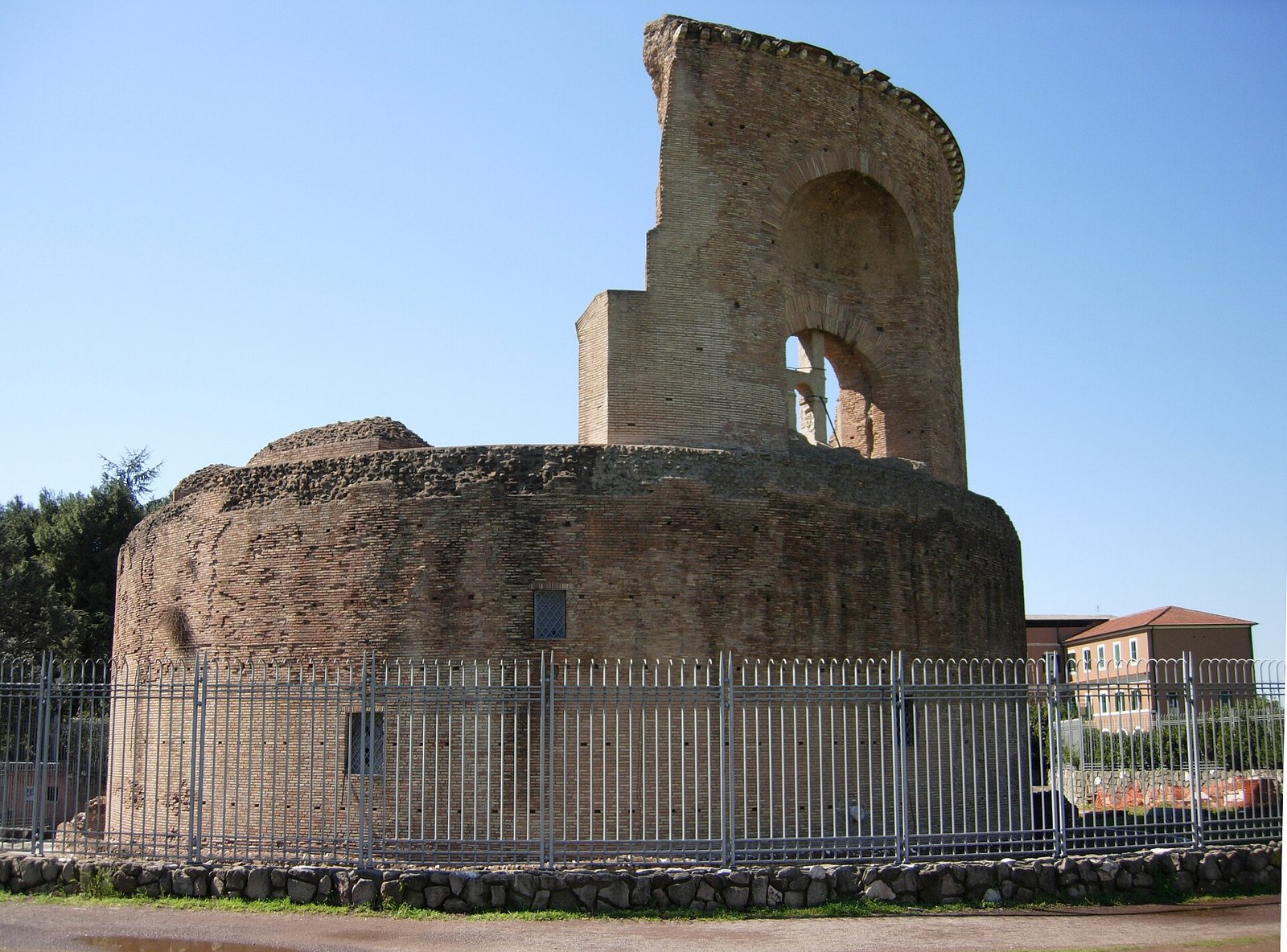
You see Torpignattara on foot and without a ticket: streets, arches of the Alexandrine aqueduct and murals can all be seen from the public road. The only paid site is the Mausoleum of Saint Helena, at Via Casilina 641, run by the Special Superintendency of Rome, with the catacombs of Saints Marcellinus and Peter under the Pontifical Commission for Sacred Archaeology. It is open every day except Thursday: €3 for the mausoleum and antiquarium, €13 full price with the catacombs, which can only be seen on a booked guided tour.
The neighborhood, also spelled Tor Pignattara, is in Municipio V, between Via Casilina and Via Prenestina, just east of Pigneto. It is not a monumental district and has no historic center to walk through in a line. It has one great Constantinian monument, a 3rd-century aqueduct that surfaces between the buildings, a season of murals that began in the mid-2010s, and one of the most varied communities in Rome, which shows in the shop signs and the places of prayer.
Data checked on September 29, 2026 on the Ministry of Culture portal, on the Special Superintendency of Rome's leaflet on the mausoleum and catacombs, on the Roma Capitale tourism portal, and on Roma Servizi per la Mobilità for transport. The Termini-Centocelle little train, which ran along Via Casilina, has been suspended since March 4, 2026 and will not return to service. For visits to the mausoleum and catacombs the official contacts are santimarcellinoepietro@gmail.com, 339 6528887 and 06 2419446.
In brief: address, hours, ticket
- Where: Torpignattara neighborhood, Municipio V, between Via Casilina and Via Prenestina. The Mausoleum of Saint Helena is at Via Casilina 641, 00177 Rome.
- Mausoleum operator: Special Superintendency of Rome. The catacombs of Saints Marcellinus and Peter are under the Pontifical Commission for Sacred Archaeology.
- How you get in: streets, aqueduct arches and murals are free, from the public road. Catacombs only with a guided tour and booking.
- Price: mausoleum and antiquarium €3. Ticket with the catacombs €13 full price, €10 reduced.
- Mausoleum hours: from April 1 to October 31 10-13 and 16-19, from November 1 to March 31 10-13 and 15-18. Closed on Thursday.
- How to get there: metro C, Malatesta stop, or bus 105 along Via Casilina. The Termini-Centocelle little train has been suspended since March 4, 2026.
- Accessibility: ramps and tactile panels at the mausoleum after the works completed in November 2025, according to the Roma Capitale tourism portal.
Where it is and what you really see
Torpignattara begins where Via Casilina, coming out of Porta Maggiore, crosses the railway and widens out toward the east. To the north it is closed off by Via Prenestina, to the west by Pigneto, to the east by the lawns of Villa De Sanctis and then Centocelle. The streets that matter for someone coming from outside are few: Via Casilina, Via della Marranella, Via di Tor Pignattara, Via dell'Acqua Bullicante and the side streets where the documented murals are.
What you really see, first of all, is a lived-in neighborhood. Apartment buildings of four or five floors, low houses with courtyards, local shops, schools, parishes, a few warehouses left over from the years when the area was a district of small industries. Anyone who arrives expecting an open-air museum is thrown off. Anyone who arrives knowing that the works are scattered among the houses and that the main attraction is ancient finds what they are looking for.
The main attraction is the Mausoleum of Saint Helena, on Via Casilina at number 641. It is a masonry rotunda more than 20 meters in diameter, built in the 4th century for Constantine's family and used as the tomb of his mother, Helena. Below and around it open the catacombs of Saints Marcellinus and Peter. The complex can also be seen from outside, but the interior, the antiquarium and the underground galleries require a ticket.
The second element is the Alexandrine aqueduct, ordered by the emperor Alexander Severus in 226 AD. According to the Ecomuseo Casilino ad Duas Lauros, its arches are still visible over the ditches of the area as far as Via di Tor Pignattara, and the widest arch, of about 15 meters, spans Viale Palmiro Togliatti. These are open-air remains, among public gardens, streets and buildings, and you look at them without a ticket and without hours.
The third element is the murals. From 2014 onward, Italian and foreign artists have painted blind facades, school walls and the sides of apartment buildings, often with projects promoted by the neighborhood committee and the Ecomuseo Casilino. The most discussed work is Hostia by Nicola Verlato, dedicated to Pier Paolo Pasolini, on Via Galeazzo Alessi. The others are scattered over a radius that you cover on foot in a couple of hours, with some stretches of Via Casilina that are not pleasant to walk.
The last element can't be photographed. Torpignattara is one of the Roman neighborhoods with the highest share of residents born abroad, and the Bangladeshi community is the largest. You can tell from the signs, the grocery stores, the prayer rooms set up in former garages, the languages you hear outside the schools. It is the part of the neighborhood that visitors notice most and that is best observed with discretion, without turning it into a spectacle.
A curiosity about Torpignattara
The neighborhood's name comes from a construction-site detail. To lighten the mausoleum's dome, the builders put empty amphorae into the concrete, popularly called pignatte, and for the Romans the monument became the tower of the pots. The Roma Capitale tourism portal specifies that the amphorae are still visible in the structure. From that nickname comes Tor Pignattara, which in everyday use has fused into a single word.
It's worth keeping the three levels of the story apart. Documented is the use of empty amphorae in the vault, a Roman technique for reducing the weight of roofs, still visible today in the monument. Tradition is the passage from the nickname of the ruin to the name of the area, reported consistently by local sources and by the Roma Capitale portal. As for legend, there is none: no tale with characters or miracles has attached itself to the name, which remains the ironic description of a ruin full of shards.
The two spellings coexist without problems. The Ecomuseo Casilino and many documents use Tor Pignattara as two words, while the press and the shop signs prefer Torpignattara as one. Even the metro C stop that serves the neighborhood carries another name, Malatesta, from the square under which it sits. Anyone searching for information online does well to try both spellings, because some street art projects and some associations appear with only one of the two.
Another curiosity concerns the ancient name of the area. The archaeological sources call the area ad duas lauros, at the two laurels, and the catacombs and the Ecomuseo Casilino ad Duas Lauros still go by this name, the latter having made the Latin place name its own emblem. The same Latin place name appears in the name of the catacombs' official website, which presents itself as Catacombe Santi Marcellino e Pietro ad duas lauros.
The mausoleum, finally, perhaps was not conceived for Helena. The Roma Capitale tourism portal describes it as probably conceived for the imperial family, before Constantine's mother was buried there. The porphyry sarcophagus that held her is no longer here: it was moved to the Lateran between the 11th and 12th centuries, according to the Superintendency, and is today kept in the Vatican Museums.
Something nobody tells you about Torpignattara
Many articles and travel blogs present Torpignattara as a street art neighborhood, an open-air museum to be walked the way you walk a gallery. In our view that is the wrong reading. The works are there and some are remarkable, but they are few compared to the fame, scattered over a wide area, and some age faster than the photos online lead you to think. Coming only for the murals often ends in a half disappointment.
The real reason to come is another one, and it is 17 centuries older. The Mausoleum of Saint Helena is one of the great imperial tombs of Rome, connected to a catacomb with dozens of painted rooms, and it stays off the routes of almost all visitors. Anyone who plans the day starting from the mausoleum and adding the murals as a side dish goes home with a sounder idea of the neighborhood than someone who does the opposite.
Then there is a practical mistake that keeps repeating. Many people think of arriving by the Casilina little train, the old Termini-Centocelle railway, because the older maps still show it. The service has been suspended since March 4, 2026 and Roma Capitale has decided not to reactivate it, pending the new tramway toward Tor Vergata. Anyone who doesn't know risks waiting at a closed stop.
Finally, Torpignattara should not be described as a difficult neighborhood to be visited with caution. It is a working-class neighborhood, lived in by families, students, Italian and foreign workers, with the problems and resources of all the established peripheries of Rome. The respect required is the same as in any residential area: no insistent photos of people, no entering private courtyards to frame a mural, no safari looks in front of places of prayer.
Another misunderstanding concerns the border with Pigneto. Many articles and many maps use the two names as if they were the same thing, and some Torpignattara murals appear online as works of Pigneto. Pigneto is the neighborhood right up against the railway, with the pedestrian zone and the evening life. Torpignattara begins farther east and farther south, toward Via Casilina, and is more residential, quieter in the evening, more varied in its population.
What remains of the mausoleum and the catacombs?
The mausoleum is a large rotunda made of two superimposed cylinders. In the lower cylinder, according to the Roma Capitale tourism portal, eight alternating niches opened, rectangular and semicircular, meant for the sarcophagi. The diameter exceeds 20 meters. In the upper part you can still recognize the amphorae that gave the neighborhood its name. It is the detail to look for during the visit, even before the niches, because it explains in one stroke the Roman construction technique and the origin of the modern place name.
Beside the mausoleum stood a basilica built in honor of Saints Marcellinus and Peter between 315 and 326, according to the Superintendency. Helena was buried there around 329. The two saints died during the persecution of Diocletian and gave their name to the underground cemetery. The Superintendency calls the area ad duas lauros, or inter duas lauros, and places it in an imperial estate: the tomb of Constantine's family therefore stood on land owned by the dynasty.
The Superintendency's leaflet counts about 87 frescoed rooms in the catacombs and estimates around 15,000 burials attributable to the 3rd century. These are numbers that place the complex among the important Christian cemeteries of the city. The galleries are visited only with a site operator, in booked turns, and it is not possible to go down alone. For a comparison with the other Christian cemeteries of the city there is the page on the catacombs of Rome.
In 1632 a church was carved out inside the mausoleum, enlarged in 1764. In 1769 an underground passage toward the catacombs was dug. According to the Roma Capitale tourism portal, the works completed in November 2025 reopened precisely that 18th-century passage, which connects the antiquarium to the galleries, and added ramps and tactile panels. The antiquarium displays reconstruction models and materials from the imperial funerary area, and is included in the basic ticket.
The complex is part of a family of Constantinian monuments scattered outside the walls. The closest in type is the Mausoleum of Santa Costanza on Via Nomentana, built for Constantine's daughter next to the Basilica of Sant'Agnese. Visiting both helps you understand how the Constantinian dynasty used great tombs next to the martyrs' shrines, along the consular roads just outside the city.
Next to the mausoleum lies Villa De Sanctis, a public park of Municipio V also known as Parco Casilino Labicano. The greenery around the monument helps you imagine the countryside where the basilica and the imperial tomb stood, before the neighborhood surrounded them. Anyone visiting the mausoleum with children or with people who need breaks finds in the park a place to stop before or after the visit, without going back onto Via Casilina.
My advice for visiting Torpignattara
My advice is to start from the mausoleum, in the morning, on any day except Thursday. Opening is at 10:00 all year. Anyone who wants to go down into the catacombs writes first to santimarcellinoepietro@gmail.com or calls 339 6528887, because the galleries are seen only with a guided tour and booking. Anyone content with the mausoleum and antiquarium can just show up, but it's still worth checking for extraordinary closures on the official website.
In the booking email it's worth stating right away the preferred date and an alternative, the number of people, the language you want and any presence of children or people with mobility difficulties. These are the details the site needs to assign a turn. Anyone traveling in an organized group or with a school does well to write further in advance, because the catacomb turns have a limited number of places and the most requested dates fill up early.
After the mausoleum, the natural route goes north, into the neighborhood, to the murals on Via Galeazzo Alessi, Via Ciro da Urbino and Via della Marranella, and then toward Via di Tor Pignattara, where the aqueduct arches surface. It is a loop of a few kilometers, flat, with no climbs, that you can do comfortably in three or four hours with a break. Comfortable shoes matter more than the camera.
The afternoon can end at Pigneto, on foot, with a screening at the Nuovo Cinema Aquila or a stroll in the pedestrian zone. Alternatively, take metro C at Malatesta and head back toward San Giovanni. Anyone with time for a second monument can stop at Porta Maggiore and the Underground Basilica, which has limited openings to check before leaving.
Two practical cautions. In summer the middle hours on Via Casilina are heavy, with little shelter and a lot of traffic, and it's best to move along the inner side streets. In winter the mausoleum closes at 18:00 and the light fades early, so the murals should be seen before. In every season it's better to avoid days of heavy rain for the catacombs, especially if the group includes people with difficulty walking on uneven floors.
How much does it cost and how do you book the mausoleum visit?
The Ministry of Culture portal lists two ticket levels. The first, at €3, includes the mausoleum and antiquarium. The second also includes the catacombs of Saints Marcellinus and Peter: €13 full price, €10 reduced. The portal doesn't list the categories entitled to the reduced rate or to free entry, and to find out the right channel is the site's email or the phone number 06 2419446.
| Item | Published data |
|---|---|
| Mausoleum and antiquarium | €3 |
| Mausoleum, antiquarium and catacombs, full price | €13 |
| Mausoleum, antiquarium and catacombs, reduced | €10 |
| Hours from April 1 to October 31 | 10-13 and 16-19 |
| Hours from November 1 to March 31 | 10-13 and 15-18 |
| Closing day | Thursday |
The ticket is bought on site or by booking through the channels of the santimarcellinoepietro.it website, which is the official reference given by the Superintendency and the Ministry. The Superintendency's leaflet describes booking as mandatory for guided tours of the catacombs, while the Ministry portal presents it as optional for the mausoleum. To be safe, booking by email is always worthwhile. The official channel is enough: there is no need to go through resellers or third-party platforms.
Other useful contacts: the mobile number 339 6528887, also given by the Roma Capitale tourism portal, and the Superintendency's institutional address, ss-abap-rm@cultura.gov.it, for matters concerning the monument more than the individual visit. The website of the Special Superintendency of Rome also publishes extraordinary openings, such as evening openings at the mausoleum, announced from time to time with dates and access arrangements.
Another well-known fact, yet rarely cited
Anyone who has visited the Vatican Museums may have seen Helena's sarcophagus, a large monumental chest of porphyry. Almost nobody connects that sarcophagus to a working-class neighborhood on Via Casilina. Yet it comes from here: it was taken from the mausoleum and brought to the Lateran between the 11th and 12th centuries, according to the Superintendency, and only later entered the papal collections, where it still is.
The connection with the Lateran is no surprise. In the Middle Ages the Basilica of Saint John Lateran and the palace beside it were the center of the Church of Rome, the natural destination for an object of that value. A short distance away is also Holy Cross in Jerusalem, which tradition links to Helena and the relics of the Passion. Putting the three places together helps you read Helena's presence in Rome off the usual routes.
A second fact known to archaeologists and almost never told to visitors concerns water. The Alexandrine aqueduct, which crosses the neighborhood, carried about 21,632 cubic meters of water a day, according to the Ecomuseo Casilino, to supply Nero's baths in Campo Marzio, renovated by the emperor and renamed the Alexandrine Baths. The water that passed over Torpignattara thus ended up in the area between the Pantheon and Piazza Navona.
Where can you see the arches of the Alexandrine aqueduct?
The aqueduct was built in 226 AD at the will of Alexander Severus, emperor from 222 to 235. It collected water at Pantano Borghese, along the ancient Via Prenestina, about 3 kilometers north of the town of Colonna, and ran for about 22 kilometers. On the stretch toward Rome it went underground as far as Torre Angela, where the Castelletto stands today, then re-emerged on arches to cross the ditches.
In Torpignattara the arches can be seen at several points, among the ditches of the area and Via di Tor Pignattara. The widest arch, about 15 meters, spans Viale Palmiro Togliatti, and it's also easy to see from a car or bus. Other stretches emerge among gardens and apartment buildings, and reading them takes a bit of attention: they are fragments, not a continuous row like the one you see in the parks along Via Tuscolana.
It's important not to confuse this aqueduct with those of the Aqueducts Park. There, on the side of Via Tuscolana, run the arches of other channels, ancient and 16th-century, in an open and continuous park. The Alexandrine follows another line, between Prenestina and Casilina, and is crossed in pieces, inside the built-up city. Anyone who wants to see an intact row of arches in the greenery goes to Via Tuscolana, anyone who wants to understand how the city was built around water comes here.
Around the aqueduct, in the 20th century, spontaneous settlements grew. The Ecomuseo Casilino recalls the Borghetto Alessandrino and a flood in 1942 that showed how fragile the area was. An article in Confronti from December 2022 recalls the shacks built against the arches by immigrants who came from the rest of Italy, demolished in the 1980s. Today the arches stand among streets and green areas, and are seen without a ticket.
To follow it on foot, start from Via di Tor Pignattara and head east, toward Viale Palmiro Togliatti, where the widest arch is. Beyond the avenue the arches continue over the ditches of the following neighborhoods, up to the area that took the name Alessandrino from the aqueduct. The full route is long and passes along busy streets: for a first visit the Torpignattara stretch and the arch on the avenue are enough, with a map on your phone.
The right photo to take in Torpignattara
The most successful photo is the mausoleum seen from its least obvious side. From Via Casilina the monument looks like a large circular ruin, but as you get closer during the visit you can read in the upper part the walled-in amphorae, the pignatte that give the neighborhood its name. A lens that tightens on that detail tells the story of the place better than a wide shot of the whole rotunda.
The second photo is Hostia by Nicola Verlato, on Via Galeazzo Alessi. The work is 10 meters high and almost 6 wide, according to the Ecomuseo Casilino, and should be photographed from the opposite sidewalk, with a wide-angle lens or in portrait orientation. It's best to avoid the middle hours of summer days, when the sun flattens the colors. The windows and balconies around are lived-in homes: frame the mural, not the people looking out.
The third is the aqueduct arch on Viale Palmiro Togliatti, with the traffic passing underneath. It is an image that brings together the 3rd century and the Rome of the great 20th-century avenues, and explains more than many words how the city has absorbed its ruins. You take it from the sidewalk, without stepping onto the roadway. At rush hour the avenue is very busy and safety comes before the shot.
Which murals are documented and where are they?
The best documented work is Hostia by Nicola Verlato, at Via Galeazzo Alessi 215, painted in April 2015 in acrylic on plaster. According to the Ecomuseo Casilino, it was curated by David Diavù Vecchiato and the project had the support of Sky Arte, Level 33 and I Love Torpignart, an initiative of the neighborhood committee and the Ecomuseo. It depicts the descent of Pier Paolo Pasolini's body at the moment of death, in an allegorical composition full of figures.
At the top appear Pelosi, the alleged murderer, and some journalists. Pasolini descends toward an allegorical island where he meets himself as a child in his mother's arms, and Petrarch. At the bottom right there is a nude figure of Ezra Pound, included, according to the Ecomuseo's entry, to indicate revolutionary ideals shared by the two poets despite opposite ideologies. Sky TG24, in March 2021, reported for the work the nickname "Sistine Chapel of Torpignattara."
The same Sky TG24 article points out in Torpignattara Okurimono by Fin Dac, on Via degli Ortenzi, a hyperrealist geisha portrait from 2014 that mixes Japanese culture, pop and punk. An article on Immobiliare.it from October 2024 adds other works with street numbers: a tribute to the group Assalti Frontali signed by Pepsy at Via della Marranella 110, and a cat, a bird and an elderly man's face by C215 at Via Ciro da Urbino 12-14.
The same article lists figures from Italian cinema by Diavù at Via dell'Acqua Bullicante 121, a fantastic creature half panda and half fox by Dulk at Via Antonio Tempesta 215, and a large mural by the collective Etam Cru at Via Ludovico Pavoni 118, presented as the tallest in Rome at about 32 meters. These are press data, not an official catalog: outdoor works fade and are sometimes covered over.
All these murals are seen from the street. Some are on apartment building facades, others on courtyard walls visible from the sidewalk, and none requires entering private spaces. Don't ring doorbells, don't climb over gates, don't enter school courtyards. Anyone who wants a complete and updated route can turn to the Ecomuseo Casilino ad Duas Lauros, which publishes on its website entries and routes dedicated to the neighborhood's works.
To organize the tour, it's worth marking all the street numbers on a map before leaving and arranging them in a loop, instead of chasing them one at a time. The distances are short, but the neighborhood's streets cross irregularly and without a map you easily retrace your steps. Some works are better seen in the morning, others in the afternoon, depending on how the facade catches the light: it's a detail you discover on the spot.
The I Love Torpignart project appears in the Ecomuseo Casilino's entry among the promoters of Hostia, as an initiative of the Tor Pignattara neighborhood committee and the Ecomuseo itself, alongside Sky Arte and Level 33. In our view it shows in the subjects chosen: Pasolini, Italian cinema, a Roman music group. These are local references, far from the big decorative murals that you find identical in any European city.
The nearby neighborhood with a higher concentration of works is Quadraro, on Via Tuscolana, where the M.U.Ro. project has gathered, according to Sky TG24, works by Diavù, Lucamaleonte, Ron English, Alice Pasquini and others. For a comparison with other Roman street art neighborhoods there are Tor Marancia, the ex Porto Fluviale in Ostiense and the streets of Ostiense.
How do you get there from central Rome?
The simplest solution is metro C. The Malatesta stop, under Piazza Roberto Malatesta, is inside the neighborhood, and from there the mural streets can be reached on foot. Anyone starting from line A changes at San Giovanni, and anyone starting from Termini station takes metro A to San Giovanni and then C heading east. Hours and evening closures of line C should be checked on the ATAC website.
For the mausoleum, on Via Casilina, the most direct line is bus 105, which runs along the consular road. Roma Servizi per la Mobilità, in April 2026, announced the strengthening of the 105 and a 105L shuttle at rush hour, to make up for the closure of the railway. The closest stop to number 641 should be checked on the day's ATAC route, because routes and stops can change because of works or temporary detours.
The Termini-Centocelle railway, the narrow-gauge little train that for decades connected Via Casilina to the center, has been suspended since March 4, 2026, after a collision between two trains on the single-track stretch between Ponte Casilino and Piazzale Labicano. On April 8, 2026 the mobility department announced that the line will not return to service and will be turned into a Termini-Tor Vergata tramway, with a €252 million tender published at the end of March.
On foot, from Porta Maggiore, you follow Via Casilina or, better, you pass through Pigneto and head south among the side streets. It is a flat walk, pleasant on the inner streets and noisy on the consular road. By car the neighborhood is reachable, but the streets are narrow and parking is difficult at almost any hour: for a cultural visit public transport remains the most sensible choice.
Some important events that happened here in history
In 226 AD Alexander Severus had the aqueduct that bears his name built, and the arches began to mark the countryside east of Rome. Between 315 and 326, according to the Superintendency, the basilica in honor of Saints Marcellinus and Peter rose, above an underground cemetery already very extensive in the previous century. Around 329 Helena, mother of Constantine, was buried in the mausoleum next to the basilica.
Between the 11th and 12th centuries the porphyry sarcophagus was moved to the Lateran. The mausoleum, stripped, remained a ruin in the countryside, recognizable by the amphorae of the vault. In 1632 a church was carved out inside it, enlarged in 1764, and in 1769 the underground passage toward the catacombs was opened, the same one that the works completed in November 2025 made passable again for visitors.
The 20th century changed everything. Between the 1920s and the post-war period, according to Confronti, Torpignattara became an industrial district that attracted immigrants from the rest of Italy, and shacks and small shantytowns grew around the aqueduct. In 1942 a flood hit the Alessandrino area, as the Ecomuseo Casilino recalls. In the 1980s the shacks were demolished, and the neighborhood took the shape of apartment buildings and public housing that you can still see.
From the 1990s the Bangladeshi community arrived, today the largest in Municipio V. In 2014 and 2015 the season of the big murals began, with Okurimono by Fin Dac and Hostia by Nicola Verlato. In November 2025 the accessibility works at the mausoleum were completed, and on March 4, 2026 the Termini-Centocelle railway stopped, with the April decision not to reactivate it.
Who has passed through Torpignattara
The first documented presence is that of Helena, mother of Constantine, buried here around 329. With her, ideally, is Constantine, who had the mausoleum built for his own family and the basilica for the two martyrs. Marcellinus and Peter, who died during the persecution of Diocletian, are the saints who give their name to the catacombs and to a Roman parish. Before them all, Alexander Severus had left his mark with the aqueduct.
In the 20th century many workers from the Italian regions passed through, who built the neighborhood with their own hands, often in a spontaneous way. From the 1990s families arrived from Bangladesh and from many other countries, who opened shops, associations and places of prayer. It is they, more than the monuments, who gave Torpignattara the look it has today.
Then came the artists. Nicola Verlato painted Hostia with the curatorship of David Diavù Vecchiato, Fin Dac left his geisha on Via degli Ortenzi. According to the press, C215, Pepsy, Dulk and the collective Etam Cru have also worked here. In their walls other names appear in turn: Pier Paolo Pasolini, Ezra Pound, Petrarch, the group Assalti Frontali, faces from Italian cinema.
Pasolini deserves a separate note. The link between the writer and the eastern borgate of Rome is well known, and Pigneto preserves many locations of his films. Hostia does not commemorate an episode that happened in Torpignattara, but the poet's death at the Idroscalo of Ostia in 1975, turned into allegory. For a route on the places of cinema in Rome there is the page on Rome in the movies.
Why is Torpignattara described as a multicultural neighborhood?
According to an article in Confronti from December 2022, about 22 percent of Torpignattara's residents are of foreign origin, and the Bangladeshi community, present since the 1990s, accounts for about 6 percent. For this reason the press has sometimes spoken of Banglatown. An article in Piuculture from September 2021 reported 9,661 Bangladeshi residents in Municipio V as of January 1, 2020, equal to 22.5 percent of the municipality's foreigners.
The same Confronti investigation lists the neighborhood's places of worship: three Catholic churches, including San Barnaba Apostolo alla Marranella, a parish established in 1932, five mosques set up in garages and shops with signs in Bengali or Arabic, three Pentecostal churches, two Hindu temples and a Buddhist temple. The mosques, the article recalls, are registered as cultural associations, because Islam in Italy has no agreement with the State.
For visitors, this means two things. The first: the neighborhood is better understood by walking in the commercial streets, Via della Marranella and the side streets off Via Casilina, observing shops, signs and the rhythms of the day. The second: the places of prayer are not attractions. You don't go in out of curiosity during services, you don't photograph people praying, you don't ask to visit as you would in a basilica in the center.
The most useful comparison, in Rome, is with Esquiline Hill, the other big multicultural neighborhood of the city, with the Nuovo Mercato Esquilino and Piazza Vittorio. Esquilino is central, monumental, crossed by tourists. Torpignattara is peripheral, residential, crossed mostly by those who live there. They are two different ways of being a plural city, and seeing both helps you avoid reducing either to a stereotype.
When is it closed and what not to expect?
The neighborhood never closes: streets, arches and murals are accessible at any hour. The mausoleum does close, every Thursday of the year. In 2026 the Ministry of Culture portal also indicated two closures for maintenance, from August 1 to 15 and from September 1 to 15. For closures in later years it's best to check the official website before leaving, especially in the summer months and on holiday long weekends.
Don't expect a signposted route. In Torpignattara there are no tourist signs connecting the murals, and some works are on streets that have no other reason of interest. Don't expect a street art museum with hours and a ticket office either: the map of the works is kept by neighborhood associations, not by a body with an office open to the public. Getting around needs to be prepared beforehand, with a map on your phone.
Finally, don't expect to see the catacombs without a booking. The basic €3 ticket opens the mausoleum and the antiquarium, but the underground galleries are visited only with a site operator and at fixed times. Anyone who arrives without having written first risks finding the turns full. Anyone traveling with small children does well to ask, at the time of booking, if there are particular indications for the visit to the galleries.
On accessibility, the Roma Capitale tourism portal reports that with the works completed in November 2025 the mausoleum received ramps and tactile panels. The operator does not, however, publish a detailed description of the accessible routes in the catacombs, which by nature have stairs and narrow passages. To find out what can be seen in a wheelchair or with a stroller, the way is to call 06 2419446 or 339 6528887 before booking.
Eating in the area
Torpignattara doesn't have the typical traps of the center. There are no touts in front of the monuments, no photo menus for tourists, no places that adapt the price to the customer, simply because tourists are few. There are neighborhood trattorias, pizza-by-the-slice shops, bakeries, grocery stores of the different communities and places where residents eat. The real risk is another: arriving at the wrong time and finding the kitchens closed between lunch and dinner.
The neighborhood also offers another experience, closer to daily life than to restaurants. In the commercial streets around Via della Marranella and Via Casilina you find grocery stores and shops of the different communities, with spices, vegetables, sweets and products that in the center of Rome are hard to find. You go in as a customer, you ask if you don't know a product, you pay what is written. None of these shops is designed for tourists, and that is exactly their value.
Common-sense rules apply anyway. It's wise to be wary of places without prices displayed, of menus that differ between inside and outside, of places open nonstop without a real kitchen break, and in Pigneto, in the evening, of the places in the pedestrian zone that bet more on the bar counter than on the table. Romans choose where there are neighborhood people at lunch on weekdays. For some selected addresses there is the list of addresses on Google Maps.
What to combine in a day
The most natural pairing is Pigneto, bordering to the west, with the Nuovo Cinema Aquila and the streets linked to Pasolini. You go from one neighborhood to the other on foot, without noticing the border. Anyone arriving from Porta Maggiore can begin with the gate and the Underground Basilica, then continue east. Closer to the walls are the Amphitheatrum Castrense and the Aurelian Walls of the Santa Croce stretch.
Anyone who built the day around the catacombs can add, on another day, the great Christian cemeteries of the Appia and Ardeatina area, such as the Catacombs of San Callisto or those of Domitilla, or the Catacombs of Priscilla on Via Salaria. The comparison with Marcellinus and Peter, less known to the general public, is instructive. An overview of the city beneath the city is on the page about underground Rome.
Anyone following the thread of the aqueducts can continue southeast to the Parco degli Acquedotti, or along Via Casilina to Torre Angela. Anyone who wants to stay on the ancient line of Via Prenestina finds, outside the city, the archaeological area of Gabii and, farther away, Palestrina. These are outings that require a car or suburban buses, and need to be planned with attention to the schedules.
Anyone who prefers to stay in the city finds in the nearby neighborhoods other walking routes: San Lorenzo, with the Verano and the Basilica of San Lorenzo, or Garbatella, another working-class neighborhood born in the 20th century. For those looking for outings at no cost, the page on free Rome collects free places like the streets and arches of Torpignattara.
Frequently asked questions
Is Torpignattara free to visit?
Almost all of it, yes. Streets, murals and the arches of the Alexandrine aqueduct can be seen from the public road, without a ticket and without hours. The only paid site is the Mausoleum of Saint Helena on Via Casilina 641: €3 for the mausoleum and antiquarium, €13 full price and €10 reduced for the ticket that also includes the catacombs of Saints Marcellinus and Peter, according to the Ministry of Culture portal.
Is the Mausoleum of Saint Helena open?
Yes, every day except Thursday. From April 1 to October 31 the hours are 10-13 and 16-19, from November 1 to March 31 10-13 and 15-18. In 2026 there were two closures for maintenance, in August and September. Before leaving it's worth writing to santimarcellinoepietro@gmail.com or calling 339 6528887 for extraordinary openings and unplanned closures.
Can you visit the catacombs of Saints Marcellinus and Peter on your own?
No. The Special Superintendency of Rome's leaflet indicates guided tours with mandatory booking, by email to santimarcellinoepietro@gmail.com or at the numbers 339 6528887 and 06 2419446. The visit to the galleries is included in the €13 full-price ticket. The reference website is santimarcellinoepietro.it, which remains the channel to use for requests, turns and confirmations.
Why is it called Torpignattara?
The name comes from the Mausoleum of Saint Helena. To lighten the vault, the Roman builders put empty amphorae into the concrete, the pignatte, and the ruin took the name of the tower of the pots. The Roma Capitale tourism portal recalls that the amphorae are still visible in the monument. The place name is written in two ways, Tor Pignattara and Torpignattara, and both are correct.
What are the best-known murals in Torpignattara?
The best documented is Hostia by Nicola Verlato, at Via Galeazzo Alessi 215, painted in April 2015 and dedicated to Pier Paolo Pasolini. The press also points out Okurimono by Fin Dac on Via degli Ortenzi, works by C215 on Via Ciro da Urbino, by Pepsy on Via della Marranella, by Diavù on Via dell'Acqua Bullicante and by Dulk on Via Antonio Tempesta. All of them are seen from the street.
How do you get to Torpignattara by public transport?
By metro C, Malatesta stop, reachable from line A by changing at San Giovanni. Along Via Casilina runs bus 105, reinforced at rush hour by the 105L shuttle according to Roma Servizi per la Mobilità. The Termini-Centocelle railway has been suspended since March 4, 2026 and will not return to service: maps that still show it as active are out of date.
Is the Alexandrine aqueduct the same as the one in the Parco degli Acquedotti?
No. The Parco degli Acquedotti is on the side of Via Tuscolana and shows the arches of other channels. The Alexandrine was built in 226 AD by Alexander Severus, collected water near Colonna and ran for about 22 kilometers between Prenestina and Casilina. In Torpignattara it can be seen in stretches, as far as Via di Tor Pignattara, with a large arch on Viale Palmiro Togliatti.
How much time do you need to see Torpignattara?
A well-organized half day is enough for the mausoleum with the catacombs, the main murals and a stretch of aqueduct. Anyone who adds Pigneto and an evening screening at the Nuovo Cinema Aquila gets to a full day. Anyone who wants to see only the murals gets by in two hours on foot, but risks missing the most solid reason to come, namely the Constantinian complex.
Does the mausoleum open in the evening too?
In some periods yes, but only as an extraordinary opening. The Special Superintendency of Rome has organized evening openings at the Mausoleum of Saint Helena in recent years, and other extraordinary openings take place on the national days dedicated to heritage. Dates, hours and arrangements change each time and are published on the Superintendency's website and on that of the complex: outside these occasions the hours remain the ordinary ones, with closing at 18:00 or 19:00.
Who wrote this and on which sources
The text comes from the editorial team of Tour Leader Pro, the Rome-based outfit that designs itineraries, tours and cultural events in Rome and Lazio. The fares, hours and booking arrangements given here come from the official sources cited in the text, as of the date given at the start: the Ministry of Culture portal, the Special Superintendency of Rome, the Roma Capitale tourism portal and Roma Servizi per la Mobilità, with the Ecomuseo Casilino and the press for murals and neighborhood. Tell us what you find has changed.
Organizing a visit to Torpignattara, for yourself or for a group, means above all booking the catacombs in good time, avoiding Thursday, choosing a walking route among mausoleum, murals and aqueduct, and deciding if the day ends at Pigneto or at Porta Maggiore. For anyone who organizes group travel in Rome with itineraries on the lesser-trodden neighborhoods and their history, a useful resource is Tour Leader Pro.
The eastern quadrant of Rome, between Porta Maggiore, Pigneto, Torpignattara and Centocelle, is a part of the city that travelers discover late, often after seeing the historic center several times. Here you find imperial tombs, catacombs, aqueducts, public housing and murals, and from here the consular roads leave toward the Castelli and the Sacco Valley. To put together a multi-day trip between Rome and Lazio, a useful resource for building an itinerary is Italy Planner.