Gabii
In short. The Gabii Archaeological Park, on via Prenestina Nuova at kilometer 19.300, 00132 Rome, is ordinarily closed to the public and can be visited only during extraordinary openings or by reservation for groups and schools.
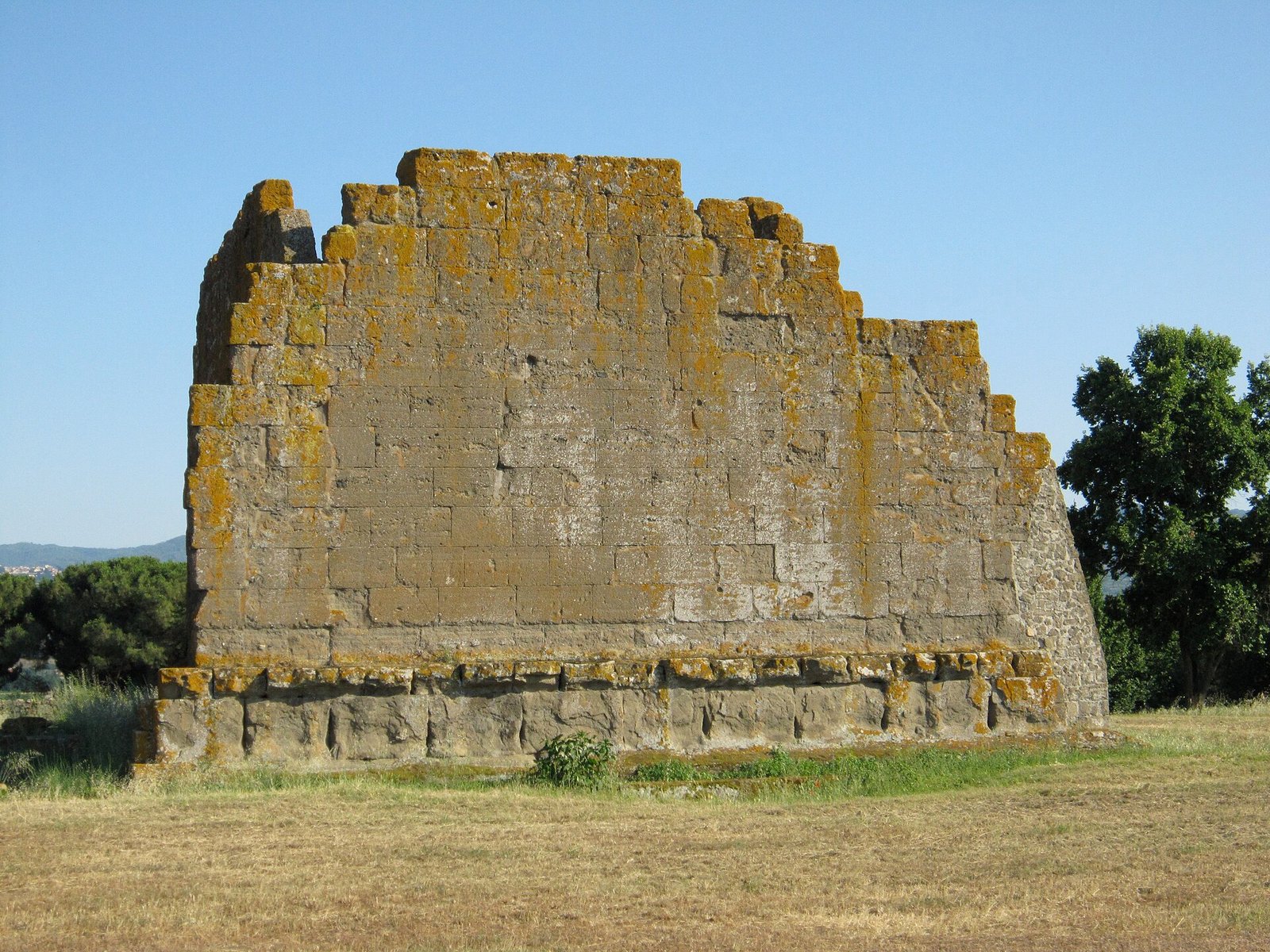
The Gabii Archaeological Park, on via Prenestina Nuova at kilometer 19.300, 00132 Rome, is ordinarily closed to the public and can be visited only during extraordinary openings or by reservation for groups and schools. Until Sunday, November 15, 2026 it opens on Saturday and Sunday from 9:30 to 13:00, with last entry at 12:00, and access is open and free. It is run by the autonomous institute Musei e Parchi archeologici di Praeneste e Gabii of the Ministry of Culture.
What you find, in concrete terms: the remains of one of the oldest Latin cities, on the southern edge of a volcanic crater where there was once Lake Castiglione, now dried up. You walk along the ancient route of via Prenestina, you reach the Sanctuary of Juno with its podium and steps, you see stretches of settlement, baths and the ruins of a medieval church. Almost all the rest of the city is still under the fields.
Data checked on September 29, 2026 on the website of the Musei e Parchi archeologici di Praeneste e Gabii, on the Ministry of Culture portal and on the Roma Servizi per la Mobilità notice dedicated to shuttle 052D. The calendar of openings changes from season to season and the manager publishes it in blocks. Before leaving it's best to check the official page the same week as the visit, because a Saturday without an opening means finding the gate closed in the middle of the countryside.
At a Glance: Address, Hours, Ticket
- Address: via Prenestina Nuova km 19.300, 00132 Rome, in the territory of Municipio VI of Roma Capitale.
- Manager: autonomous institute Musei e Parchi archeologici di Praeneste e Gabii, Ministry of Culture, contacts mupa-prae-gabi@cultura.gov.it and +39 06 9538100.
- How to get in: during the extraordinary openings with free admission, on other days only organized groups and schools with mandatory reservation at mupa-prae-gabi.prenotazionigabii@cultura.gov.it.
- Price: free during the 2026 extraordinary openings. Paid guided visit on GetYourGuide, the channel indicated by the manager.
- Hours: Saturday and Sunday from 9:30 to 13:00, last entry at 12:00, from September 19 to November 15, 2026, then Sunday, December 6.
- Getting there: ATAC shuttle 052D from the Pantano station of metro C on Sundays October 4, November 1 and December 6, 2026.
- Accessibility: the manager doesn't publish information on routes for those with mobility difficulties, to be asked by email.
Where It Is and What You Really See
Gabii is about 20 kilometers east of the center, at the 12th mile of the ancient via Prenestina, the road that led from Porta Maggiore to Praeneste, today's Palestrina. Administratively it is still Rome: the postal code is that of a peripheral neighborhood of the capital. Around it are fields, farmhouses, warehouses and the neighborhoods that have grown in recent decades along Prenestina Nuova and the Casilina.
The ancient city occupied the southern edge of an almost perfectly circular crater, about 1.3 kilometers wide according to the Istituto Nazionale di Geofisica e Vulcanologia. Inside the crater there was a lake, Lake Castiglione, which medieval and modern sources also call Lake Santa Prassede or lacus Buranus. Today the floor is flat and cultivated. Understanding this shape is the key to the visit: the city looked toward the water, and the road cut it in two.
The heart of the visit route is the ancient course of via Prenestina, recognizable in the stretches where the paving stones emerge. On both sides you can read the foundations of houses and shops of the settlement between the fourth and second centuries BC, a bath complex with mosaic floors and, farther west, the Sanctuary of Juno, the most readable monument of the whole site. They are low remains, often at foundation level, in an open and very exposed landscape.
On the eastern side are the remains of an extra-urban sanctuary, in use according to published reconstructions between the seventh and second centuries BC. On the acropolis, the citadel of the ancient city, the investigations of the University of Rome Tor Vergata have brought to light the oldest structures. Later, in the Middle Ages, a church dedicated to San Primitivo and a fortification rose on the ruins, of which broken walls remain that give an idea of the long life of the place.
The extent of the archaeological area is about 70 hectares, according to what the press reported on the occasion of the September 2026 concerts. It's a large surface, and the part excavated and made visitable represents a fraction of it. Anyone expecting a Pompeii of Lazio, with whole streets and houses standing, is disappointed. Anyone who arrives knowing they're walking over a city still buried, and looks at the ground with that key, finds a much more interesting visit.
The city walls, in tufa opus quadratum, are known over long stretches, and the Tor Vergata campaigns have investigated two sectors. They are not a monumental circuit to walk like the Aurelian Walls, but anyone who knows Rome's Servian Walls recognizes the same technique of large squared blocks. It's a useful comparison, because it reminds us that Gabii and Rome were growing at the same time and with the same techniques.
A Curiosity About Gabii
One of the most reproduced ancient statues in the world comes from these fields. It is the Artemis called the Diana of Gabii, a Roman copy of the first century AD of a Greek original, found in 1792 during the excavations of Gavin Hamilton. Today it is in the Louvre, in Paris, together with a bust of Marcus Vipsanius Agrippa of the Augustan age that came out of the same dig.
How they got to Paris is a Roman story. Prince Marcantonio Borghese, owner of the land, displayed the finds from Gabii in a small museum inside Villa Borghese, in the casino that was called the Casino di Gabii, also known as the Casina dell'Orologio. In 1807 that museum was dismantled and the works sold to Napoleon together with a good part of the family collection. It is the same transfer that emptied the Galleria Borghese of so many antiquities.
A second curiosity concerns the water. The lake that gave meaning to the city's position did not vanish from natural causes. According to the reconstruction published by the Istituto Nazionale di Geofisica e Vulcanologia it was drained a first time in the 1600s, to obtain farmland, and again at the beginning of the 1800s. The crater, on the other hand, is very ancient: it would have formed with an explosive eruption about 350,000 years ago, according to the most recent research cited by the same institute.
Something Nobody Tells You About Gabii
The park has no ordinary hours. Many tourist sites and many maps present it as an open archaeological area, and some pages still give generic hours valid all year. The manager's page says the opposite: the Gabii Archaeological Park is ordinarily closed and opens for blocks of extraordinary openings, events and booked visits. Anyone arriving on any ordinary day, even a weekend, risks finding the gate closed.
The second thing rarely said is that the openings also depend on transport. Shuttle 052D, which connects metro C to the site, doesn't run on all the weekends of opening but only on some Sundays set by Roma Servizi per la Mobilità. On the other Saturdays and Sundays the park is open but getting there without a car becomes much more complicated. The calendar to cross-check, then, is double: that of the park and that of the shuttle.
Our opinion, against the grain of how Gabii is often told, is that the Sanctuary of Juno is not the best reason to come. It is the most photographed monument, but by itself it doesn't justify the trip. What makes Gabii different from other sites in Lazio is the whole city: the relationship between road, crater, citadel and sanctuaries, and the fact that here you study how a Latin city comes to be before Rome, or alongside Rome.
Who Runs the Park Today and Why Does It Open So Rarely?
Today Gabii falls under the autonomous institute Musei e Parchi archeologici di Praeneste e Gabii, which brings together the National Archaeological Museum of Palestrina, the archaeological areas of Praeneste and the Gabii park. In June 2024 the local press announced the arrival at the head of the institute of the Ministry executive Martina Almonte, listed as director on the official website too. Before that, the area was the responsibility of the Soprintendenza Speciale Archeologia, Belle Arti e Paesaggio di Roma.
The reopening to the public is recent. On June 6, 2021 the Soprintendenza Speciale di Roma, then led by Daniela Porro, opened the site with the Gabiinsieme project, after four years of work, together with Municipio VI and the University of Rome Tor Vergata. The program included free guided visits, shows and workshops until October 10, 2021. Since then the model has remained that of seasonal openings, without a daily ticket service.
The manager doesn't explain the reasons, but in our judgment the reason is practical. The park is a vast area in open countryside, far from services, and daily opening requires custodial staff, security and upkeep of the greenery all year. The manager chose to concentrate its forces on spring and autumn weekends, on summer evenings with events and on the Ministry's free Sundays. Anyone organizing a visit for a group has instead the route of reservation, a few days in advance.
The 2026 calendar also shows another use of the park, that of the national and European days. On Sunday, September 27, for the European Heritage Days, the manager planned an afternoon and evening opening from 16:30 to 20:00, outside the morning hours. These are the occasions when the site is seen in a different light and with more people around, and it's worth keeping an eye on them in later years too on the institute's website.
In 2026 the park hosted a music series for the first time, within the institute's festival Fortuna in Musica. For the occasion the collective GRRIZ and the studio Cactus designed a temporary open-air country theater, built also with hay bales and designed not to leave permanent marks on the ground. The concerts of September 11 and 12, 2026 cost €1. It's a sign of how the manager wants to bring the site to life outside the classic visits.
The Sanctuary of Juno: What Remains of the Temple?
The sanctuary was built around the middle of the second century BC, and the most cited date is 150 BC. The temple stood on a high podium with the altar in front, surrounded by columns on the front and sides but not on the back, according to the type archaeologists call peripteral sine postico. The material is the local stone, lapis Gabinus, a compact dark gray tufa that you'll see everywhere on the site.
Around the temple ran a large three-armed portico, laid out in a horseshoe, with a series of rooms that perhaps were shops. In the space between the portico and the temple, the pits cut into the bedrock to plant the trees of the sacred grove have been identified. In front, toward the road, a flight of steps in the shape of a cavea received the faithful during ceremonies. Together, temple, portico, trees and steps made up a single scenographic project.
The excavations of the sanctuary were carried out between the 1960s and 1970s by the Spanish School in Rome. That's why the temple of Gabii is often cited in studies of sacred architecture of the Republican age: it is one of the best-documented cases of a sanctuary with a theatrical cavea, a model that, in our judgment, finds its most instructive comparison precisely at Palestrina, in the sanctuary of Fortuna Primigenia.
On site the sanctuary reads best from the top of the steps, where you understand the relationship between the podium and the space around it. The columns no longer stand, and whoever is looking for a reconstructed temple will not find it. The value of the place is in the plan, which you grasp with a little attention, and in the position, facing the city's main road. A guide, or reading done before leaving, helps a lot in putting things back in their place.
The Advice I Give You for Visiting Gabii
The advice is to choose one of the Sundays served by the shuttle, if you don't have a car, and arrive with the first run of the morning. In autumn the park opens only from 9:30 to 13:00, with last entry at 12:00, and time flies on a site this wide. A quiet visit takes at least an hour and a half, more if you follow a guide or stop a long time at the sanctuary.
Bring water, a hat and closed shoes. The park is in open countryside, with little shade, uneven ground and loose paving stones along the ancient road. After a day of rain the packed-earth paths become muddy. The manager doesn't list refreshment points inside the area, so it's better not to count on a bar on site. Anyone arriving with small children will do well to consider a baby carrier instead of a stroller.
Before leaving, in our judgment, it's worth stopping by the Roman Forum and taking a look at the Regia, or looking at pictures of the tripartite building discovered on the acropolis of Gabii. The comparison between the two constructions, very similar in plan, turns a walk among low walls into a lesson on how the cities of Lazio came to be. Without minimal preparation Gabii risks seeming just a field with a few ruins.
A practical alternative is the guided visit that the manager itself lists on its website, sold on GetYourGuide. It has the advantage of a fixed time and a continuous narration, which helps read a difficult site. If you prefer the free visit, check the institute's website first and note the main points: the ancient road, the Sanctuary of Juno, the baths, the acropolis and the medieval ruins.
How Much Does It Cost and How Do You Book?
During the 2026 extraordinary openings the park can be visited freely and for free, without reservation for the single visitor. The official site places these days within the Ministry's free Sundays and the European Archaeology Days. For organized groups and schools reservation is mandatory even outside the openings: you write to mupa-prae-gabi.prenotazionigabii@cultura.gov.it at least three days before the chosen date, for groups of up to 30 people.
The official channel is the website of the Musei e Parchi archeologici di Praeneste e Gabii, which publishes the dates and refers to the museiitaliani.it platform for tickets to the institute's paid sites. For those who want a guide, the same site lists the guided tour of the Gabii Archaeological Park on GetYourGuide, of about an hour and a half in Italian or English, the result of an agreement between the Ministry and the platform.
The 2026 calendar published by the manager, summarized below, shows the logic of the openings well: weekend blocks in spring and autumn, afternoons and evenings in early summer, some isolated Sundays. Dates already past remain useful for understanding what to expect in later years, when the manager publishes the new program. For future dates, always check the official page: events can cancel an opening, as happened on June 21, 2026.
| 2026 period | Days | Hours |
|---|---|---|
| April 11 - June 14 | Saturday and Sunday | 9:30-13:00, last entry 12:00 |
| June 20 - July 5 | Saturday and Sunday, except June 21 | 16:30-20:00, last entry 19:00 |
| September 19 - November 15 | Saturday and Sunday | 9:30-13:00, last entry 12:00 |
| September 27 | European Heritage Days | 16:30-20:00 |
| December 6 | Sunday | 9:30-13:00, last entry 12:00 |
For a group, the booking email must contain the date, the number of participants, the age if it is a school, and the name of the group leader. The manager doesn't publish rates for visits booked outside the extraordinary openings or a list of authorized guides. These are details to ask for in writing in the same email. The Ministry portal also lists the telephone +39 06 2261887 for the park, the institute's website the switchboard +39 06 9538100.
Another Well-Known Fact, Yet Rarely Cited
Part of the ancient Rome you still see today is made with the stone of Gabii. The lapis Gabinus, the dark gray tufa quarried around the crater, according to the Istituto Nazionale di Geofisica e Vulcanologia was used in the Tabularium, the state archive on the Capitoline that today you cross inside the Capitoline Museums, and in the great wall that separated the Forum of Augustus from the working-class neighborhood of the Suburra.
The same source lists among the works built with this stone the Fabricius Bridge, which leads to the Tiber Island, the Aemilian Bridge, the Milvian Bridge, the Theater of Pompey, whose remains are in the area of Largo Argentina, and the Cloaca Maxima. It's a list that changes the perspective: the quarries of Gabii were a strategic supplier of the capital.
That wall of the Forum of Augustus, according to the same source, was 33 meters high, a measure that gives an idea of the quantities of stone that left these quarries for the capital. When you walk among the paving stones of Gabii and see the gray rock emerging, you are looking at the same material that holds up some of the most visited monuments of the city, from the Capitoline to the bridges over the Tiber.
At Gabii you find the same stone in the Sanctuary of Juno, built in lapis Gabinus, a material that in the Republican age was also used in Rome. It's a detail that is little noticed and that, in our judgment, changes how the site is read: the temple was also the showcase of a resource that the city exported. Look at the color and grain of the podium blocks, then look for the same gray in the Tabularium, on the Forum side.
The Right Photo to Take at Gabii
The photograph that best tells Gabii holds together the site and the crater. Climb the steps of the Sanctuary of Juno and look for a frame that includes the temple podium in the foreground and, in the background, the flat, cultivated basin where the lake once was. It's the only way to show in a single shot why the city was born right here, on the edge of a body of water along a road.
The second photo to take is the ancient road. Stand in the middle of the paving, lower the lens almost to the ground and let the line of via Prenestina cut the image diagonally. The stones worn smooth by carts, with the countryside around, tell more than any ruin. Those using a smartphone can use the wide-angle mode, but watch for distortion at the edges, which makes the road more curved than it is.
Light matters. In autumn the park opens only in the morning, and in the early hours the sun is low and raking, ideal for bringing out the relief of the walls and the joints of the blocks. Toward noon the light becomes flat and photos lose depth. If the summer afternoon opening returns in the coming years, the last hours before 20:00 give the warmest colors on the gray stone.
A practical tip: don't climb over the barriers to find the best angle and don't climb on the ancient walls. The site is fragile and the surveillance, rightly, reminds you of it. The best images of Gabii don't require entering the excavation zones: the steps, the road and a little patience to wait for the group in front of you to move out of the frame are enough.
How Do You Get There Without a Car from the Center of Rome?
Without a car the only dedicated connection is ATAC shuttle 052D, which in autumn 2026 runs only on Sundays October 4, November 1 and December 6. According to the notice from Roma Servizi per la Mobilità the terminus is at the Pantano station of metro C and departures are at 9:00, 10:20, 11:30 and 12:45. The route goes along the Casilina, via di Rocca Cencia and Prenestina Nuova, then returns to Pantano.
From the center you reach metro C at San Giovanni or at the stations along the Casilina, and get off at the Pantano terminus. The metro ride is long, so allow generous time to catch the first or second shuttle. Since last entry to the park is at 12:00, the 12:45 run in practice serves for the return. The times of passage in front of the park are not published: it's best to ask the driver on the way out.
The shuttle's route is not fixed from one season to the next. In spring and early summer 2026, according to the Turismo Roma portal, the 052D was diverted on Saturday and Sunday to connect the park with the Finocchio station of metro C, until July 5. In autumn the terminus listed is instead Pantano. Before leaving the house check the most recent notice on the Roma Servizi per la Mobilità or ATAC website.
On the other opening weekends the shuttle is not planned, and the site becomes hard to reach by public transport. The manager doesn't list recommended ordinary lines. Anyone who wants to try must use the route planner of ATAC or Cotral the day before and allow for a stretch on foot along Prenestina Nuova, a busy road with few sidewalks. In our judgment it's not a good idea with children.
By car you leave the Grande Raccordo Anulare on the Prenestina and continue east along Prenestina Nuova to the kilometer marker indicated by the manager. It's the most convenient solution for those who don't live near metro C, but the manager doesn't publish information on parking. Anyone coming in a group with a coach must ask in the booking email where to stop, because the road doesn't offer many safe lay-bys.
Some Important Events That Happened Here in History
The use of the place begins very early. According to the University of Michigan the area was inhabited from the 10th century BC until the city's decline between the second and third centuries AD. Not far away, at Osteria dell'Osa, the necropolis excavated starting in the late 1970s yielded about 600 burials between the ninth and sixth centuries BC, and the finds are on display at the Baths of Diocletian, in the protohistory section.
Among the materials from Osteria dell'Osa is a fragment of a vase with an inscription in Greek of the eighth century BC, read as EULIN or EUOIN, considered among the oldest writings found in Italy. It's a fact that matters: it shows that writing circulated here already in the eighth century, the era in which tradition places the founding of Rome. And it gives a concrete basis, even if indirect, to the tradition that linked Gabii to the teaching of letters.
At the beginning of the sixth century BC a large tripartite building was built on the acropolis, decorated with refined architectural plaques and painted parts. According to the history department of Tor Vergata it closely recalls the Regia of Rome. In the fifth century it was carefully dismantled and buried under a mound of stones at least four meters high. That very mound protected the walls, preserved in some points up to almost two meters.
In the archaic period Gabii was for a long time a rival of Rome, until the conquest that tradition attributes to Tarquin the Proud and the treaty that followed. During Hannibal's march toward Rome, in the Second Punic War, the Carthaginian troops passed through the territory of Gabii without managing to surprise the capital. In 41 BC the city was chosen as the meeting place between Octavian and Lucius Antonius, a meeting that did not take place for fear of betrayal.
After the archaic age the city lost weight and shrank to a small town along the road. Sulla assigned land to his veterans, and Cicero remembered it as a simple municipium. A diocese of Gabii is documented until the ninth century, then from the 11th century the site was abandoned and left to the fields. In 1792 Gavin Hamilton's dig brought the forum to light with its statues. In June 2021, after four years of work, the park was opened to the public.
Who Passed Through Gabii
The first name that tradition links to Gabii is that of Sextus Tarquinius, son of King Tarquin the Proud. He presented himself to the city as an exile fleeing his father, gained trust and command, and handed it over to Rome. Years later, when the Tarquins were driven out, Sextus did not follow his father but took refuge right at Gabii, where according to the story the inhabitants, mindful of the deceit, killed him.
Among the names of the classical age is the elegiac poet Albius Tibullus, who according to one tradition was born at Gabii in 54 BC. Horace, in the Epistles, and Lucan, in the Pharsalia, cite the city among the ancient centers of Lazio reduced to ruins. Dionysius of Halicarnassus describes it as inhabited only along via Prenestina, with wide areas by then deserted. In the second century AD Christian tradition places here the birth of the martyr Saint Getulius.
In the modern age the excavators arrive. The Scottish antiquarian Gavin Hamilton obtained from Prince Marcantonio Borghese permission to dig and between 1791 and 1792 brought to light the forum, with a square porticoed on three sides open onto via Prenestina. The sources don't agree on the number of statues: the University of Michigan speaks of almost 40, other reconstructions of more than 200 pieces, of which only 49 restored.
In the 20th century the archaeologists of the Spanish School passed through Gabii, who excavated the sanctuary of Juno, and the teams of the University of Rome Tor Vergata, active between 2007 and 2012 and again from 2021. Since 2007 the Gabii Project of the University of Michigan, directed by Nicola Terrenato, has also worked on the site, and more recently a group from the University of Missouri led by Marcello Mogetta, which in 2025 announced the discovery of a large basin.
Tarquins, Romulus and Remus: Documents, Tradition, Legend
What the documents say is little but solid. Gabii was an important Latin city, inhabited from the 10th century BC, a rival and then ally of Rome, with writing already attested in the eighth century in its necropolis. The excavations confirm an organized city, with walls in opus quadratum and a public building of the archaic age that closely resembles the Roman Regia. Everything else, from the kings to the twins, belongs to the story.
What Roman historical tradition says is the war with Rome and the conquest by deceit. In the story handed down by Livy and taken up by modern reconstructions, after Rome had defeated Alba Longa, Gabii refused to recognize its role in the Latin League. Tarquin the Proud and his son Sextus devised the ruse of the exile. Peace was sealed by a treaty, the foedus Gabinum, which according to tradition granted equal rights to the citizens of the two cities.
The text of that treaty, again according to tradition, was written on the hide of an ox sacrificed for the occasion, stretched over a wooden shield and kept in Rome in the temple of Semo Sancus, on the Quirinal hill. Nobody today can verify it: the temple has vanished and the hide with it. What remains is a document told about, not a document found.
What is legend concerns Romulus and Remus. Plutarch reports that the twins were sent to Gabii to be educated and to learn letters. A minor tradition instead attributed the founding of the city to two Sicel brothers. The episode of the poppies belongs to the same sphere: asked by his son what to do at Gabii, according to the story Tarquin answered in silence by beheading the tallest poppies in the garden. Sextus understood, and eliminated the city's notables.
Who Digs at Gabii and What Have They Found?
The Gabii Project of the University of Michigan began in 2007 with a precise goal: to understand how an archaic city of central Italy developed and how it was organized, between public architecture and private houses. In few places is this possible, because many cities of ancient Lazio are buried under modern towns. Gabii, abandoned in the Middle Ages and left to the fields, offers instead an urban fabric free of later construction.
The American research has brought to light, among other things, a large terraced complex, known in studies as the Area F building, and has investigated the houses and public spaces of the settlement. In October 2025 the press reported a monumental basin discovered by a group from the University of Missouri near the city's main crossroads, perhaps in the area of the forum: built around 250 BC and ritually closed around AD 50.
In the abandonment layers of the basin were found vases, oil lamps, perfume containers and cups with inscriptions. The archaeologists read it as a prestigious public work, a demonstration of political power tied to the management of water. It remains to be understood what an anomaly identified with thermographic surveys nearby is, which could correspond to a temple. The site, in short, is still an open research dig.
Next to the city is the chapter of the necropolis of Osteria dell'Osa, explored from the late 1970s and published in 1992. The burial ground, tied to Gabii, was used for more than three centuries, from the ninth to the sixth century BC, with burials largely by inhumation and in smaller number by cremation. Besides the Greek inscription, it yielded a Latin inscription of the seventh century, probably read as a greeting addressed to a woman named Tita.
The University of Rome Tor Vergata worked mainly on the eastern sanctuary, on two stretches of the walls and on the acropolis. Here emerged a protohistoric hut among the largest known in ancient Lazio, a seventh-century residence with fragments of inscribed pottery and the sixth-century tripartite building. In 2026 the institute dedicated to the city the exhibition Gabii: The Origins, set up at the Forum of Praeneste, with a cycle of lectures between February and June.
When Is It Closed and What Not to Expect?
The park is closed on all weekdays and on weekends outside the blocks of extraordinary opening. After November 15, 2026 the only date already announced by the manager is Sunday, December 6, from 9:30 to 13:00. For 2027 the calendar is not yet published. Anyone who wants to go in winter must therefore book as a group or wait for the new dates, usually announced on the institute's website and on its social channels.
Don't expect a museum on site. The most important finds are scattered among the Louvre, the Baths of Diocletian and the storerooms, and in the park you mostly see wall structures. Don't expect public restrooms, bars or ticket offices as at the big sites of the city either: the manager lists no services of this kind. It's an archaeological park in the countryside, and the visit has to be organized like a short excursion.
A frequent mistake is to think the shuttle runs on all opening days. As we saw, in autumn 2026 it runs only on three Sundays. Another mistake is arriving mid-morning without counting the last entry at 12:00: the 11:30 run from Pantano leaves a tight margin, because the travel time is not published. In bad weather the manager may change the openings, and it's best to check the official channels the same morning.
Finally, don't expect to see digs in progress. The university campaigns usually take place in the summer months and the excavation areas stay fenced. On the occasion of events or special openings it happens that the archaeologists tell about the work in progress, but it's not a guaranteed service. Anyone interested in this aspect must follow the channels of the institute and of the research groups, which announce the initiatives open to the public.
Eating Nearby
In the park the manager lists no refreshment points, and around the site Prenestina Nuova offers mostly passing-trade businesses. The simplest solution is to plan lunch after the visit, since in autumn the park closes at 13:00. Anyone heading back to Rome finds the neighborhoods along the Prenestina and the Casilina, anyone going on east reaches the towns of the Prenestini mountains and Palestrina.
In Palestrina and the nearby historic centers the traps are the typical ones of squares frequented by visitors: photo menus displayed in several languages, touts at the door, items without a price and kitchens open at all hours without a break. Romans go there little for a simple reason: in those places you pay for the passing trade, not for the cooking. Better the side streets and the places that keep lunch and dinner hours.
Anyone thinking of bringing a packed lunch must ask the manager if the area allows stops to eat: the information is not published and in any case it is an archaeological area, with stricter rules than a public park. In any case take your trash back. For addresses in Rome and the surroundings a useful resource is the list of addresses on Google Maps, which collects selected places.
What to Combine in a Day
The most natural pairing is Palestrina, ancient Praeneste, which the same via Prenestina leads to. The National Archaeological Museum of Palestrina is part of the same institute that manages Gabii, which in 2026 set up in Palestrina the exhibition dedicated to the origins of the city. Comparing the sanctuary of Juno with that of Fortuna, along the same road, is the best way to understand the sacred architecture of Republican Lazio.
From Palestrina you climb in a few minutes to Castel San Pietro Romano, the town above the ancient city, with the citadel and the panorama over the valley. In the municipal territory are also the remains of Hadrian's Villa at Palestrina. Anyone with time left can push on to Castagneto Prenestino, among the chestnut trees of the mountains.
Heading back toward Rome, the Prenestina and nearby roads offer other stops tied to the territory. The Castle of Lunghezza, in the Aniene valley, is a stop for families. The Castelletto di Torre Angela is in the neighborhood of the same name, served by metro C. The Aniene Valley Nature Reserve completes the day with a walk along the river.
Anyone arriving or leaving from the center by metro can devote the afternoon to the urban via Prenestina. From Porta Maggiore, from where the ancient road started, you reach the Underground Basilica of Porta Maggiore, with openings to be checked in advance, and a little farther the Pigneto neighborhood. Toward the south, the Aqueduct Park offers the same Roman countryside, but reachable by metro.
For those following the thread of the Latin cities, a direct comparison is Tusculum, on the hills above Frascati, another ancient city left without a modern town. Those who prefer the great imperial villas can aim for Hadrian's Villa and Villa d'Este at Tivoli. They are different days, though: putting Gabii and Tivoli together means rushing, and sacrificing one of the two visits.
On the front of the archaeological Roman countryside, the Appian Way Park with the Villa of the Quintilii and, to the north, the Villa of Livia offer similar experiences: big open spaces, few crowds, remains readable with a little preparation. For more ideas on state sites there is our page on the state museums of Rome, and for free destinations the page Free Rome.
Frequently Asked Questions
How much does it cost to enter Gabii?
During the 2026 extraordinary openings admission is open and free, according to the website of the institute Musei e Parchi archeologici di Praeneste e Gabii. No reservation is needed for individual visitors. The only paid option is the guided visit listed by the manager on GetYourGuide. For organized groups and schools that book outside the openings, the manager doesn't publish rates: they must be asked for in the booking email.
When is the Gabii Archaeological Park open?
The park is ordinarily closed and opens in blocks of extraordinary openings. In autumn 2026 it is open on Saturday and Sunday from 9:30 to 13:00, with last entry at 12:00, from September 19 to November 15. After that date only Sunday, December 6 is announced, with the same hours. The 2027 calendar is not yet published on the manager's website.
Who manages Gabii?
The park is part of the autonomous institute Musei e Parchi archeologici di Praeneste e Gabii of the Ministry of Culture, which also manages the national archaeological museum of Palestrina. Previously the area was the responsibility of the Soprintendenza Speciale Archeologia, Belle Arti e Paesaggio di Roma, which in 2021 had opened it to the public with Municipio VI and the University of Rome Tor Vergata.
Can you get there by public transport?
Yes, but only on some Sundays. ATAC shuttle 052D leaves from the Pantano station of metro C at 9:00, 10:20, 11:30 and 12:45, in autumn 2026 on October 4, November 1 and December 6. On the other opening days there is no dedicated connection and the manager lists no ordinary lines. Always check the notices from Roma Servizi per la Mobilità.
How do you book a visit for a group or a school?
You write to mupa-prae-gabi.prenotazionigabii@cultura.gov.it at least three days before the chosen date. The Ministry portal indicates a maximum of 30 people per group. In the email it's best to give the number of participants, the age of the students, the means by which you are arriving, and ask where to park the coach. For general information there is also the address mupa-prae-gabi@cultura.gov.it.
What do you see in the park?
The ancient course of via Prenestina with its paving, the foundations of the Republican-age settlement, a bath complex with mosaics, the Sanctuary of Juno of the second century BC with podium, portico and steps, the eastern sanctuary and the medieval remains of the church of San Primitivo and of the citadel. The oldest structures are on the acropolis, investigated by the University of Rome Tor Vergata.
Is it true that Romulus and Remus were educated at Gabii?
It is a legend, reported by Plutarch, according to which the twins were sent to Gabii to learn letters. There is no document that confirms it. It is interesting, though, that in the nearby necropolis of Osteria dell'Osa a Greek inscription of the eighth century BC was found, among the oldest in Italy: writing, here, really did circulate very early.
Is the visit suitable for children?
Yes, if you prepare the story beforehand: the ancient road, the temple with its steps and the story of Sextus Tarquinius's deceit work well with kids. The site is outdoors, with little shade and uneven ground, so you need comfortable shoes, water and a hat. A stroller is not very practical. For more ideas there is our page on Rome with Children.
Who Wrote It and on What Sources
The text comes from the editorial team of Tour Leader Pro, the Roman organization that designs itineraries, visits and cultural events across Rome and Lazio. Rates, hours and booking arrangements reported here come from the official sources cited in the text, as of the date indicated at the top: the website of the Musei e Parchi archeologici di Praeneste e Gabii, the portal of the Ministry of Culture and the Roma Servizi per la Mobilità notice on shuttle 052D. Tell us what you find changed.
Organizing a visit to Gabii for a group means reckoning with a site that opens in blocks, a shuttle active only on some Sundays and a state road poorly suited to coach stops. It's best to fix the reservation with the manager first, then build the rest of the day, maybe with Palestrina in the afternoon. A useful resource for those who organize group trips in Lazio is Tour Leader Pro.
Gabii pays off more within an itinerary on ancient Lazio than as an isolated outing: the Latin cities, the Republican sanctuaries of Palestrina, the hills of Tusculum and the villas of Tivoli together tell how Rome grew up among powerful neighbors. Anyone with a few days can devote one to the Prenestina and one to the Castelli. A useful resource for putting together a multi-day itinerary is Italy Planner.