Colonna (RM)
In short. Colonna is a small town of the Castelli Romani, set on the northern slopes of the Colli Albani between the A1 highway and Via Casilina, and it can be visited freely: there is no ticket, no paid route.
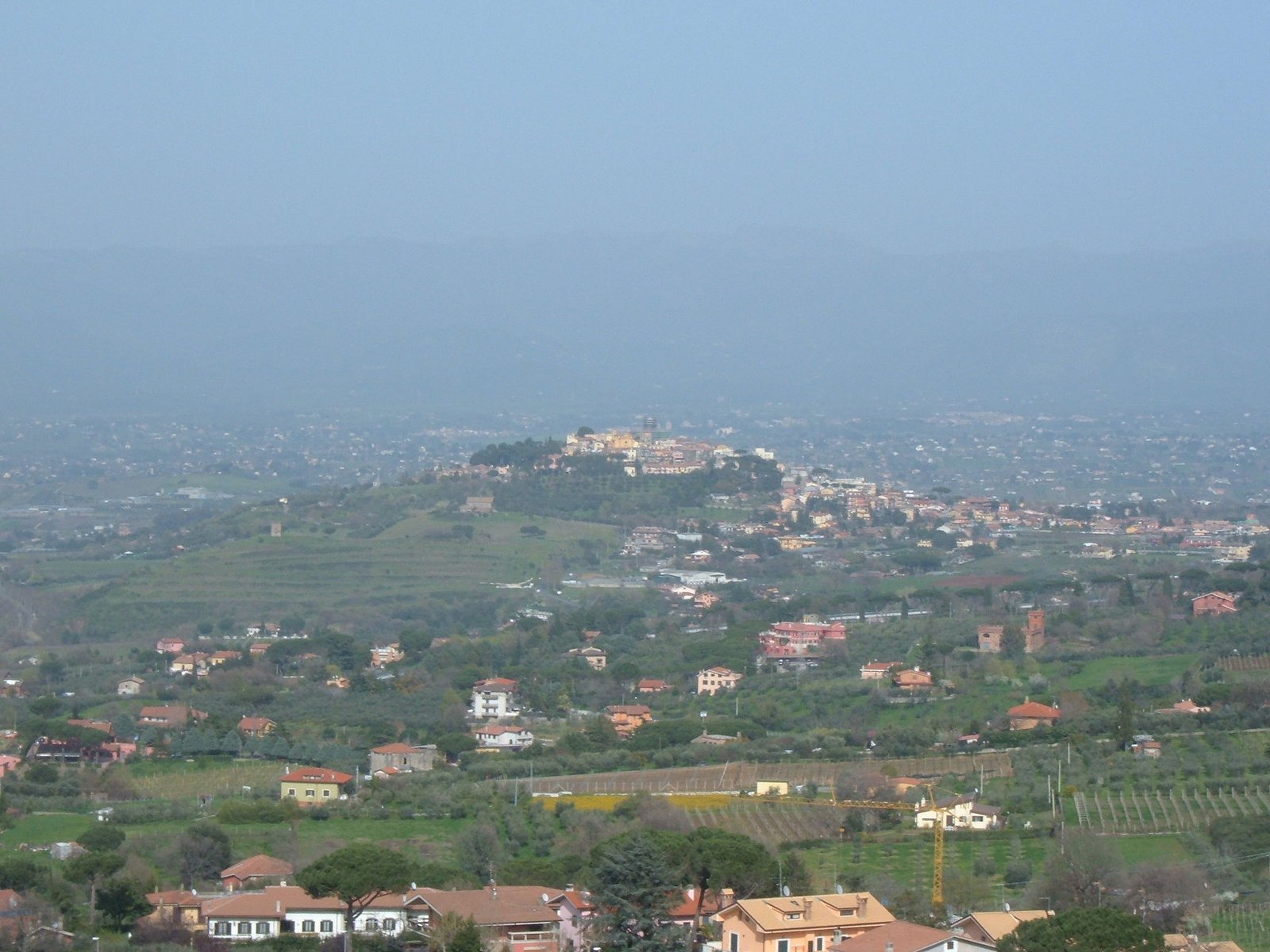
Colonna is a small town of the Castelli Romani, set on the northern slopes of the Colli Albani between the A1 highway and Via Casilina, and it can be visited freely: there is no ticket, no paid route. The Town Hall is in Piazza Vittorio Emanuele II, 00030 Colonna, phone 06 97859938. The church of San Nicola di Bari, at Piazza Duca di Gallese 3, according to the Town opens Monday to Saturday from 17:00 to 20:00 and Sunday from 9:00 to 19:00.
It is the smallest of the Castelli Romani by area, about 3.55 square kilometers according to the local press, with about 4,400 inhabitants. The name is the same as that of one of the great families of medieval Rome, and the link is real: it was Pietro dei Conti di Tuscolo, heir to this castle, who took the surname from the place. Anyone who arrives looking for the Colonna castle, however, won't find it. Pope Boniface VIII had it razed to the ground at the end of the 13th century.
Data checked on September 29, 2026 on the Town of Colonna website, on the Visit Castelli Romani portal, on the Lazio Region tourism portal, on the RFI page devoted to the Colonna Galleria stop and on the Ministry of Culture record for the Ferrovia-Museo della Stazione di Colonna. The program of the autumn 2026 festival comes from the local press. The church's hours depend on the parish and may change on feast days, so for a targeted visit it's best to write to the parish first.
At a glance: address, hours, ticket
- Town Hall address: Piazza Vittorio Emanuele II, 00030 Colonna (RM), phone 06 97859938, PEC info@pec.comunedicolonna.it.
- How to get in: the old town is public and free to enter. The Town does not publish visiting hours for the interiors of the Palazzo baronale.
- Price: no ticket for the town and for the church of San Nicola di Bari.
- Church of San Nicola di Bari: Piazza Duca di Gallese 3, Monday to Saturday 17-20, Sunday 9-19, contacts 06 62278336 and parrocchiacolonna@gmail.com.
- By train: Colonna Galleria stop on the Roma-Cassino line, served by FL6 regional trains, about 25 minutes from Roma Termini according to the Town.
- By bus: Cotral lines from the Anagnina station of Metro line A along the Casilina, stop about 800 meters from the center according to the Town.
- Accessibility: the church of San Nicola is listed as accessible. The railway stop has no elevators and only one track has a barrier-free route.
Where it is and what you really see
The Visit Castelli Romani portal places Colonna on the northern slopes of the Colli Albani, between the highway and Via Casilina, the road that marks the boundary between the Castelli Romani and the Latin Valley. It's a through position. Unlike Rocca di Papa or Nemi, there's no lake below the town here, and the landscape around is made of vineyards, orchards and houses scattered along the provincial roads.
The old town occupies the summit of a small hill of volcanic origin, as the Lazio Region tourism portal describes it. At the top is the Palazzo baronale, built by the Colonna on the site of an early Roman castrum, with a large rusticated portal. In the center also opens Piazza Duca di Gallese, with the church of San Nicola di Bari. The entire old core can be walked in under an hour, and even taken slowly it remains a short visit.
The presence you notice before any other, on arriving, is the dindarolo. That's what the people of Colonna call the water tank built between 1953 and 1956, shaped like a piggy bank, which according to the Visit Castelli Romani portal dominates the old town. It isn't an ancient monument and nobody passes it off as one. But it's the sign that identifies the town even from afar, more than the church and the palace, and the first silhouette that stays in your mind after the visit.
Besides the main church, the Town's history page lists other religious buildings tied to the history of the territory: the church of San Salvatore, Santa Maria in Oliveto, San Lorenzo in Mormorio and the church of San Rocco, from the 17th century. The Town does not publish opening hours for these churches. Anyone who wants to see them from the inside does well to ask the parish of San Nicola, which is the published reference for celebrations in the town.
In the streets of the center, for some years now, the murals of the Serrande d'autore project have been appearing. According to a local press article of December 2024, they are signed by the street artist Gofy, born David De Angelis, who since 2020 has been painting the town's old trades and traditions on shop shutters. It's a detail that changes the walk: the center of Colonna is also read through its roll-down shutters, and the view is different with the shops open or closed.
Around the town the land is agricultural, and it shows. The Lazio Region tourism portal lists among the local products the Uva Italia grape, the kiwi of the Latina denomination and peaches, as well as the wine of the Montecompatri-Colonna denomination. The Visit Castelli Romani portal adds that, alongside agriculture and crafts, the town's main economic resource today is tourism. Arriving by car from the Frascati provincial road, rows of vines and orchards line the road up to the first houses.
A curiosity about Colonna (RM)
People tend to think the town took its name from the family. It's the other way around. The Visit Castelli Romani portal says so explicitly: in 1101 Pietro dei Conti di Tuscolo inherited the territory of Colonna and became Petrus de Columna. The Town's history page adds that the place name Columna appears for the first time in a document of 1047. The place existed under that name before the family took it to Rome.
The second curiosity concerns the dindarolo. In household Romanesco, the dindarolo is the children's clay piggy bank, and the tank takes up its pot-bellied shape. The Lazio Region tourism portal presents it among the things to see, alongside the Palazzo baronale and the Ferrovia-Museo. It's rare for a hydraulic work of the 1950s to become the symbol of a medieval town, but at Colonna it happened, and the dialect name ended up counting for more than the technical one.
The railway stop too has a history of names. According to the reconstruction published by the online encyclopedia, when it was activated in 1941 it was called Colonna Littorio, a name that reflected the climate of the regime. In 1946, with the war over and the Republic newly born, it became Colonna Galleria. The name change is one of the many signs left by the passage from fascism to democracy in the minor place names of Lazio, often ignored by those who take the train every day.
Third curiosity, less known: according to the Town's history page, in 1871 almost 30 percent of Colonna's population came from the Marche, in particular from the province of Ancona. At the beginning of the 19th century the village counted about 160 inhabitants. It's a fact that explains a lot about the Castelli Romani of the 19th century, vineyard lands that drew families from other regions and kept them, changing the makeup of the towns.
One thing nobody tells you about Colonna (RM)
Colonna has two stations, and they aren't the same thing. The railway stop in use, Colonna Galleria, is on the Roma-Cassino line and is served by FL6 regional trains. The Ferrovia-Museo della Stazione di Colonna is another station: the one on the old Roma-Fiuggi-Frosinone line, now disused, which according to the Ministry of Culture record falls in the territory of San Cesareo, at Via Casilina 17. Anyone who confuses the two risks getting off the train in the wrong place.
Then there's the case of the Palazzo baronale. The tourism portals present it as the town's main monument, built by the Colonna on the site of a Roman castrum, and whoever reads that expects to be able to visit it. The Town, however, does not publish opening hours, tickets or booking arrangements for the interiors. What you can see with certainty is the exterior, with the large rusticated portal. To know if and when you can go in you have to ask the town offices.
Another thing rarely said is that the town is not on the Casilina. The state road passes below, and the Cotral stop indicated by the Town is about 800 meters from the center. The railway stop isn't in the piazza either: the Town does not publish the walking distance, but on the days of the autumn festival it organizes free shuttles also departing from the station, a sign that the climb isn't trivial for everyone.
Our opinion, contrarian to how Colonna is presented, is that the pull of the cradle of the Colonna is the most overrated reason to come. Of the castle that gave the family its name nothing legible remains: Boniface VIII had it destroyed and forbade its reconstruction. The Palazzo baronale you see is later. The real reasons to come up are others: the October festival, the wine, the short walk and the proximity to Frascati and Monte Compatri.
What does the Colonna family have to do with this town?
The Town's history page reconstructs the story like this. In the 11th century Pietro, son of Gregory II of Tusculum, inherited the castle of Colonna and took its name as his surname. The Counts of Tusculum were the family that dominated the hills southeast of Rome, with their city on the summit of present-day Tusculum. The Colonna thus began as a branch of that house, and the castle on the hill was their first possession with a name of its own.
The sources don't agree on the date of the inheritance. The Town speaks of the 11th century and cites 1047 as the first attestation of the name, the Visit Castelli Romani portal gives 1101. They agree, however, on what followed: in 1105, again according to the Town, Pietro della Colonna lost the castle during the Investiture Controversy against Pope Paschal II. It's the first of a long series of clashes between the family and the papacy, which at Colonna had very concrete consequences.
The Visit Castelli Romani portal reads those clashes in a political key: the Colonna were aligned with the Ghibellines, on the side of the empire, and for that reason came into conflict with papal authority. The castle of a small hill a few kilometers from Rome thus became a pawn in a much bigger game. Every time the family lost the pontiff's favor, the castle risked changing hands or vanishing, as happened in 1105 and then at the end of the 13th century.
The harshest clash was with Boniface VIII. The Town writes that the pope ordered the complete destruction of the castle, forcing the inhabitants to disperse and forbidding its reconstruction. The Visit Castelli Romani portal dates the destruction to 1298 and adds that about 10 years later Pope Clement V returned the fief to the family. Anyone who wants to follow the other face of that war can go to Anagni, to the Palazzo di Bonifacio VIII.
In Rome the family's name remains tied to the palace at Santi Apostoli and its picture gallery, now the Galleria Colonna. Not to be confused with Piazza Colonna, which takes its name from the Column of Marcus Aurelius and not from the house. It's an easy mix-up: the name is the same, the story isn't, and the town of the Castelli has to do only with the family.
The advice I give you for visiting Colonna (RM)
The advice is not to treat Colonna as a full-day destination. It's a small town, and the center is exhausted quickly. It works very well instead as a stop on a wider loop of the eastern Castelli: a morning at Frascati among the villas, then the climb to Colonna in the late afternoon, when the church of San Nicola is open and the light cuts across the facades of the center.
Anyone short on time can also do the reverse: lunch at Colonna, afternoon at Monte Compatri or Grottaferrata. The important thing is not to arrive in town in the middle hours of a weekday expecting to get into the church, because the church of San Nicola opens to the public in the afternoon. The morning leaves the outside of the town, with the palace, the dindarolo and the murals, which can be seen well anyway.
If the calendar allows, choose the weekend of the Sagra dell'Uva Italia e delle Pincinelle, which in 2026 runs from October 9 to 11. It's the moment when the town shows itself for what it is: an agricultural community celebrating its harvest. Outside those days Colonna is quiet, almost silent in the middle hours, with shops closed in the early afternoon as in most towns of the Castelli.
For those arriving by train, the practical advice is to check the return regional train on the Trenitalia website beforehand. The Colonna Galleria stop has no ticket office listed on the RFI page, and in the evening hours the runs thin out: according to a timetable published online, the last direct from Roma Termini leaves shortly before 21:30. Better to have the ticket already bought digitally and to know what time to walk down from the town.
How much does it cost and how do you get into the places in town?
The town is free in all its public parts: streets, piazzas, glimpses along the edge of the built-up area. The church of San Nicola di Bari has free entry during the hours published by the Town, Monday to Saturday from 17:00 to 20:00 and Sunday from 9:00 to 19:00. During services the visit must be suspended. For special requests, such as seeing Maratta's painting up close, the parish answers at 06 62278336 or parrocchiacolonna@gmail.com.
The Palazzo baronale is looked at from outside. The Town does not publish a visiting hour for the interiors or a booking method, and the information must be asked directly of the town offices in Piazza Vittorio Emanuele II, at 06 97859938. No combined ticket or official outlet for visits to Colonna published by the Town appears. For this reason no paid channel is pointed out here, and anyone offering a ticket for the town is actually selling a service of their own.
A different matter for the Ferrovia-Museo della Stazione di Colonna, run by the foundation of the same name. The Ministry of Culture record gives opening Friday to Sunday, from 9:00 to 13:00 and from 14:30 to 18:30, with booking mandatory. A local press article instead reports opening Friday and Saturday from 9:00 to 13:00. The sources don't agree, and the price is not published: the channel to use is the email info@ferroviamuseo.it.
Another well-known fact, yet rarely cited
Colonna lost its castle at the hands of one pope, and obtained municipal autonomy at the hands of another. The Town's history page recalls that with the Motu Proprio of Pius VII of 1816 Colonna became a municipality of the District of Frascati. The barons' power, however, stayed standing for decades more, and the real passage came only in the mid-19th century, with the princes' renunciation of feudal rights.
On December 12, 1849, according to the Comune, Prince Giulio Cesare Rospigliosi gave up his baronial rights over Colonna. The Visit Castelli Romani portal speaks of the Pallavicini princes giving up their rights the same year. It isn't a real contradiction: the same portal presents Giovanni Battista Rospigliosi as Prince Pallavicini, a sign that the two names by then indicated the same house. On November 24, 1870, two months after the capture of Rome, the first town council of united Italy elected Ercole Tofanelli mayor.
The well-known fact, then, is that Colonna is the cradle of the Colonna family. What is rarely mentioned is that for about two centuries, from the 1600s to the 1800s, the town did not belong to the Colonna at all. According to the Comune, Pier Francesco Colonna sold it to the Ludovisi, and the fief then passed to the Rospigliosi together with the Duchy of Zagarolo. The longest part of the town's modern history took place under other families.
There is a second fact that is known but rarely highlighted: during World War II Colonna became the seat of a German military command, according to the Visit Castelli Romani portal, and for that reason it was bombed several times. The portal doesn't specify the years or the extent of the damage, which have to be looked up in the local archives. The local press also links a vow made by the people of Colonna to those years, tied to the church of San Nicola.
The Right Photo to Take in Colonna (RM)
The photo to take home is the dindarolo seen from below, from the streets that climb to the center, with the outline of the tank looming over the rooftops. It is the image that says Colonna better than any other, because it is the one you recognize from far away. In the late afternoon the light comes from the side and gives volume to the rounded shape, while at noon the tank becomes a flat pale blur.
Second shot: the rusticated portal of the Palazzo baronale, from a distance that lets you include a piece of the uphill street too. The rustication looks good in raking light, in the morning or toward evening. Anyone looking for the Serrande d'autore murals, on the other hand, should remember a practical detail: the works are painted on the roll-down shutters, so you only see them when the shops are closed, for example during the early afternoon break or on Sunday.
During the autumn festival the best photos are the ones from Sunday afternoon. In 2026, according to the local press, the parade of flag-throwers and allegorical floats is scheduled for Sunday, October 11 at 15:00. It's worth finding a spot along the route with the church of San Nicola in the background and arriving early, because in small towns the sidewalks fill up fast. If you want to photograph people up close, always ask permission.
One last shot, for those who like details: the facade of the church of San Nicola di Bari in the square named after the Duca di Gallese, taken when the churchyard empties out, after a service or before the afternoon opening. The church dates from the 1700s, built between 1756 and 1771 according to the Comune, and its facade lends itself to a clean frontal photo. Avoid the flash inside, and during services leave the camera in your backpack.
How Do You Get There from Rome by Train or Car?
By train you get off at the Colonna Galleria stop, on the Rome-Cassino line. According to the account published by the online encyclopedia, the stop was opened on October 28, 1941 under the name Colonna Littorio, changed in 1946. It is served by FL6 regional trains, which connect Rome with Frosinone and Cassino. The Comune gives a travel time of about 25 minutes from Termini Station. Check the schedules on the Trenitalia site.
The RFI page on Colonna Galleria reports two platforms, only one with a barrier-free path, no elevator, no assistance service for people with disabilities and no raised platform. For anyone in a wheelchair or with reduced mobility, the train here is a complicated option. It's better to consider the car or to get dropped off in town, and in any case to ask the service operator for information before leaving.
Anyone who takes the train on the days of the festival has a concrete advantage: according to the local press, in 2026 one of the free shuttles leaves right from the railway station. It is the simplest combination for avoiding the parking problem and for having a glass of wine without worrying. Outside those days, on the other hand, the last stretch between the stop and the town has to be done by your own means or on foot, and the Comune doesn't indicate a recommended route.
By bus, the Comune indicates the Cotral intercity lines leaving from Anagnina station on metro line A, which run along Via Casilina. The useful stop is about 800 meters from the center. The Comune doesn't give the line numbers: look them up on the Cotral site with the route calculator, entering Colonna as the destination. Factor the last stretch on foot, uphill, into your timing.
By car the Comune suggests three routes. From the A1 motorway you exit at the Monte Porzio Catone toll booth when coming from Rome, or at San Cesareo when coming from the south. Alternatively you take Via Casilina, the SS6 state road, for about 26 kilometers from Rome. The third route is Via Tuscolana as far as Frascati, then about 7 kilometers on the Frascati-Colonna provincial road. It is the most convenient for anyone combining the two towns.
The Comune doesn't publish a list of parking areas and doesn't indicate any limited traffic zones in the historic center. The old core is small and gathered at the top, so it's best to leave the car outside the center and walk up. On festival days the most convenient choice is to go to the sports field, where the free shuttles announced by the local press for the 2026 edition leave from.
The Casilina deserves a few words. In its Roman stretch it follows, for long sections, the route of an older road, and the Comune recalls that the Labicani settled near the statio ad Quintanas, on Via Labicana. Leaving Rome you pass Porta Maggiore, Pigneto, Torpignattara and the Mausoleo di Sant'Elena: if you travel by car you can stop on the way out or on the way back.
Some Important Events That Happened Here in History
The origins are very ancient. The Comune and the Visit Castelli Romani portal mention Bronze Age finds. The first notable settlement, according to the portal, arose in Roman times with Labici Quintanense, after the Romans conquered the Latin city of Labicum in 414 BC. On the location of Labicum the ancient sources are not clear: the Comune, citing the historian Giuseppe Tomassetti, places it probably at Monte Compatri.
The Middle Ages are the century of the name. The place name Columna appears in a document from 1047, according to the Comune. Pietro dei Conti di Tuscolo inherits the castle, in 1101 according to Visit Castelli Romani, and becomes Petrus de Columna. In 1105 he loses the castle in the war against Paschal II. At the end of the 1200s Boniface VIII orders the total destruction of the castle, the portal gives 1298, and about 10 years later Clement V returns the fief to the family.
The modern age is the time of sales. Pier Francesco Colonna hands the fief over to the Ludovisi: the Comune writes 1622, the Visit Castelli Romani portal 1662, and the two dates can't be reconciled. The Rospigliosi follow, with the Duchy of Zagarolo, and the Pallavicini, who keep the baronial rights until the 1800s. Between 1756 and 1771, according to the Comune, the church of San Nicola is built, inaugurated in 1771.
The 1800s bring the municipality: the Motu Proprio of Pius VII in 1816, the renunciation of baronial rights by Giulio Cesare Rospigliosi on December 12, 1849, the first council of united Italy on November 24, 1870. The 1900s bring the railway, first with the station of the Rome-Fiuggi line, then in 1941 with the Colonna Galleria stop. And they bring the war: according to Visit Castelli Romani the town was the seat of a German military command and for that reason was bombed several times.
The postwar period is that of reconstruction and water. The dindarolo, the piggy-bank-shaped tank, was built between 1953 and 1956 according to the Lazio Region tourism portal. In 2026 the Uva Italia festival reaches its 64th edition. Since 2020, according to the local press, the shutters in the center have been filling up with murals. They are small events, but they tell of a town that has changed its skin without losing its measure.
Who Has Passed Through Colonna (RM)
The first name is Pietro, son of Gregorio II of Tuscolo, who according to the Comune inherited the castle and took his name from the place, becoming the founder of the house. From that moment the name of the town travels with the family: cardinals, condottieri, popes and princes who in the Rome of the following centuries bore the surname Colonna, far from this hill. It is a rare case of a village that lent its name to a dynasty.
Then the popes, who left their mark here more through decrees than through presence. Paschal II, against whom Pietro della Colonna lost the castle in 1105. Boniface VIII, who ordered its destruction. Clement V, who returned the fief. Pius VII, who with the Motu Proprio of 1816 made Colonna a municipality. And Cardinal Ludovico Ludovisi, who according to the Visit Castelli Romani portal bought the fief from the Colonna.
In the 1800s the Rospigliosi and the Pallavicini appear, with Prince Giulio Cesare Rospigliosi who in 1849 gave up his baronial rights, and Ercole Tofanelli, first mayor of united Italy. According to the Lazio Region tourism portal, Gabriele d'Annunzio also stayed in Colonna, after his marriage to the Duchess Maria Hardouin di Gallese. The portal doesn't indicate the length or the exact place of the stay, and no plaque in town is documented by an official source.
The hand of Carlo Maratta has passed through the church of San Nicola with his works: according to the Comune the church holds a painting by him depicting the Most Holy Savior. An article in the local press also attributes to Duilio Cambellotti frescoes with the Annunciation and scenes from the life of Saint Nicholas, tied to a vow made by the people of Colonna during World War II. The Comune's page doesn't mention Cambellotti. More recently, the street artist Gofy has passed over the shutters.
And above all, the people of Colonna who came from elsewhere have passed through. The Comune's history page recalls the families who came from the Marche in the 1800s, to the point of making up almost a third of the population in 1871. The Comune also cites the historian Giuseppe Tomassetti, according to whom the Labicani settled in this territory, near the statio ad Quintanas. They are less illustrious presences than the princes, but they made the town of today.
Which Festivals Are Held During the Year?
The best-known event is the Uva Italia festival, named for the table grape grown in the area. In 2026, according to the local press, it takes place from October 9 to 11 as the 64th edition, together with the 32nd Pincinelle festival, the fresh pasta of water and flour typical of the town. It is organized by the Comune di Colonna and the Associazione Pro Loco. The regional portal places the Pincinelle festival in September: in 2026 the two festivals have been combined.
| Day | What the 2026 program includes according to the local press |
|---|---|
| Friday, October 9 | Opening at 18:00, live music from 19:00 and a show in the square at 21:30 |
| Saturday, October 10 | Entertainment for adults and children from 16:00, concerts from 18:30, DJ night at 22:00 |
| Sunday, October 11 | Marching band gathering at 10:30, folk music, parade of flag-throwers and allegorical floats at 15:00, evening show at 20:30 |
On the days of the festival, according to the same article, a free shuttle service is running with departures from the sports field and the railway station, and a food and wine route at 25 euros is planned, with a fixed menu and tastings at three wineries in the area. The official program should be checked against the Comune di Colonna site in the week of the event, because times and guests can change up to the last minute.
The other date on the calendar is religious. The Lazio Region tourism portal gives December for the feast of San Nicola di Bari, patron saint of the town, to whom the main church is dedicated. The liturgy falls on December 6, but the program of the celebrations and of any processions isn't published in advance. Anyone who wants to attend has to ask the parish, by email at parrocchiacolonna@gmail.com, a few weeks before.
The Ferrovia-Museo della Stazione di Colonna: Where Is It Really?
The Ministry of Culture's listing places the Ferrovia-Museo at Via Casilina 17, 00030 San Cesareo. It preserves a stretch of track from the old Rome-Fiuggi-Frosinone line, the century-old buildings of the Colonna station, now in the territory of San Cesareo, some historic rolling stock and a collection of period tools and documents. It is run by the Fondazione Ferrovia-Museo della Stazione di Colonna. It is therefore a visit tied to the town by name and by history, not by municipal boundaries.
The Lazio Region tourism portal says the station was designed in 1907, on the line that connected Rome to Fiuggi and Frosinone. The local press speaks of about 500 meters of preserved track and a locomotive from 1916. If you're a train enthusiast you'll find here a piece of the transport history of the Castelli, tied to a secondary line that no longer exists today. For children, a real track with rolling stock often has more impact than a museum behind glass.
Practical information should be requested first from the foundation, by writing to info@ferroviamuseo.it, because the sources don't agree on the hours and the price isn't published. The official site given by the Ministry is ferroviamuseo-colonna.it. Booking, according to the Ministry, is mandatory. Showing up without having written means running the risk of finding the gate closed, especially outside weekends.
The Column Behind the Name: Documents, Tradition, Legend
What the documents say is little and precise. The place name Columna appears in 1047, according to the Comune's history page, and in 1101 a Pietro dei Conti di Tuscolo appears as Petrus de Columna, according to the Visit Castelli Romani portal. The name of the place, then, comes before the family. There is no document, however, that explains where that name comes from, or which column, if there ever was one, gave rise to it.
What tradition says is reported by the Lazio Region tourism portal: the name would probably derive from the only surviving column of an ancient settlement. It is a reasonable explanation, because Roman presences are documented in the area, from Labici Quintanense to the castrum on which the Palazzo baronale stands. But no official source indicates where that column was, or if it is still visible, and in town there is no find marked as having this role.
What is legend is the next leap: that the column in the coat of arms of the Colonna family would be the same as the town's. It is an association suggested by the name and by heraldry, not by a document. The column in the coat of arms is a canting arm, which recalls the surname, and the surname comes from the place. The rest is storytelling. Anyone visiting Colonna does well to keep the three levels separate, and to enjoy the history without expecting to see the column.
When Is It Closed and What Shouldn't You Expect?
The town doesn't close, but its sites do. The church of San Nicola, in the hours published by the Comune, opens on weekdays only in the afternoon, from 17:00 to 20:00: in the morning, Monday through Saturday, it is closed. The Palazzo baronale has no published visiting hours. The Ferrovia-Museo is closed Monday through Thursday according to the Ministry. Anyone who arrives on a Tuesday morning finds a lively town but no interiors to see.
The weather matters too. In summer the middle hours of the day are hot and the uphill streets of the center become tiring, while in winter the short days leave little margin after the church's afternoon opening. The best months are spring and autumn, with October at the top because of the festival and the grape harvest. A weekday in November, by contrast, can turn out to be far too quiet for someone who doesn't know the town and is looking for something to do.
Don't expect a castle you can visit, a civic museum with a ticket office or a viewpoint equipped with telescopes and panels. Colonna has none of this. Don't even expect the big lake views that Castel Gandolfo or Nemi offer: the town looks north, toward the countryside of the Casilina and the Valle Latina. The appeal, if you want to call it that, is that of a compact farming village, with its 18th-century church and its funny tank.
Even on festival days there are limits to take into account. The center is small and fills up quickly, parking has to be found outside the old core and traffic on the provincial roads slows down. The free shuttles announced by the press for 2026 leave from the sports field and the railway station: it's worth using them. Anyone who suffers in a crowd is better off choosing Friday afternoon, when the festival begins and there are still few people.
Eating in the Area
The cooking of Colonna has dishes of its own, and this helps you recognize the serious places. The Lazio Region tourism portal mentions pincinelle, fresh pasta of water and flour, artichoke hearts with marjoram and mostaccioli. The local press adds fettuccine alla papalina. The wine is that of the Montecompatri-Colonna denomination. A menu that offers none of this, and instead offers carbonara and amatriciana as in central Rome, already says a lot.
The traps in the Castelli are different from those in Rome, but they exist. Be wary of fixed menus with the price given only by word of mouth, of signs with photos of the dishes, of places along the state roads open at all hours with the kitchen always on. House wine with no indication of origin is also a signal. The people of Colonna eat where the menu changes with the season, where prices are written down and where pincinelle come to the table only when someone is making them.
On wine there is a simple rule. The Montecompatri-Colonna denomination exists and appears on labels: if a carafe arrives at the table with no indication at all, ask what you are drinking. On the days of the festival, according to the local press, three wineries in the area take part in the food and wine route with tastings. Outside the festival, an official list of wineries open to visitors isn't published by the Comune, and hours and conditions have to be asked directly of each business.
During the festival the choice gets simpler: the festival organized with the Pro Loco and the food and wine route at 25 euros announced by the press are the most direct way to taste the town's dishes. Outside festival days it's best to book, because places in small towns close early or take a midweek day off. To choose where to sit, between Colonna and the Castelli, there is the list of addresses on Google Maps.
What to Combine in a Day
The most natural pairing is Frascati, about 7 kilometers away on the provincial road. There the morning is well spent among Villa Aldobrandini, the park of Villa Torlonia and, for those who manage to match the dates, Villa Falconieri. Above Frascati is Tusculum, the city of the counts from whom the Colonna descend: going up there before arriving in the town gives meaning to the story of the name.
Monte Compatri is the closest neighbor. It shares with Colonna the wine denomination and, according to the historian cited by the Comune, also the memory of ancient Labicum. From there you continue toward Monte Porzio Catone, with the Museo dell'Osservatorio and Villa Mondragone, which can be visited only on the dates set by the university. It is a loop of a few kilometers that works well by car in a day.
Toward the east the direction is the Prenestina. Zagarolo, whose duchy was tied for centuries to the fate of Colonna, can be reached in a few minutes. Farther on is Palestrina, with the Museo Archeologico Nazionale, and Castel San Pietro Romano above the city. On the way back toward Rome, on opening dates, you can add Gabii, another Latin city.
If you want to stay in the Castelli you have many alternatives within reach by car: Grottaferrata with its abbey, Marino, Ariccia with Palazzo Chigi, the Lake Albano. To find your way among trails and reserves there is the Castelli Romani Park. On the site you will also find other towns in the province, from Palombara Sabina to Vicovaro.
Frequently Asked Questions
Is Colonna really the town of origin of the Colonna family?
Yes, according to the Comune's history page and the Visit Castelli Romani portal. Pietro dei Conti di Tuscolo inherited the castle of Colonna and took its name, becoming Petrus de Columna. The sources don't agree on the date, the 11th century for the Comune and 1101 for the portal. Nothing legible remains of the original castle, because Boniface VIII had it destroyed at the end of the 1200s.
Do you pay to visit Colonna?
No. The historic center is public and the church of San Nicola di Bari has free entry in the hours published by the Comune: Monday through Saturday from 17:00 to 20:00, Sunday from 9:00 to 19:00. The Palazzo baronale is viewed from the outside. The only site with an independent operator is the Ferrovia-Museo, in the territory of San Cesareo, whose price isn't published.
What is the railway station of Colonna?
It is the Colonna Galleria stop, on the Rome-Cassino line, served by FL6 regional trains. The Comune gives about 25 minutes from Roma Termini. It shouldn't be confused with the Colonna station of the old Rome-Fiuggi line, now the Ferrovia-Museo at Via Casilina 17 in San Cesareo. The stop in use has no elevators, and only one of the two platforms has a barrier-free path according to RFI.
Can you reach Colonna by public transport without the train?
Yes, with the Cotral intercity buses that leave from Anagnina station on metro line A and run along Via Casilina. The Comune says the useful stop is about 800 meters from the center of the town, with an uphill last stretch. The line numbers and schedules aren't published by the Comune: look them up on the Cotral site with the route calculator.
When is the grape festival held in Colonna?
In 2026 the 64th Uva Italia festival takes place from October 9 to 11, together with the 32nd Pincinelle festival, according to the local press. It is organized by the Comune and the Pro Loco. Free shuttles are announced from the sports field and the railway station. The final program should be checked on the Comune's site in the days before, because it can change.
What is the dindarolo?
It is the water tank built between 1953 and 1956, shaped like a piggy bank, which in Romanesco is called, precisely, a dindarolo. According to the Visit Castelli Romani portal it dominates the historic center, and the Lazio Region tourism portal lists it among the things to see. It isn't an ancient monument, but it is the sign that makes the town recognizable from far away.
What can you see in the church of San Nicola di Bari?
The church was built between 1756 and 1771 and inaugurated in 1771, according to the Comune, which points to a painting by Carlo Maratta depicting the Most Holy Savior and a complete recent restoration. The local press attributes interior frescoes to Duilio Cambellotti, a detail that the Comune's page doesn't report. It is at Piazza Duca di Gallese 3 and is listed as accessible.
Is Colonna good to visit with children?
Yes, with the right expectations. The center is small and easy to walk around, the piggy-bank-shaped dindarolo intrigues the little ones, the murals on the shutters turn into a treasure hunt. The Ferrovia-Museo, with real tracks and rolling stock, is the most suitable stop, but it has to be booked. For more ideas there is our page on Rome with Kids.
How far is Colonna from Rome?
The sources don't agree. The Comune gives about 25 kilometers on the history page and about 26 kilometers along Via Casilina on the page about how to get there, while the Lazio Region tourism portal speaks of about 35 kilometers. In practice the regional train from Roma Termini to Colonna Galleria takes about 25 minutes according to the Comune, and by car, outside rush hour, the trip takes a little longer.
Who Wrote This and on Which Sources
The text comes from the editorial team of Tour Leader Pro, the Rome-based business that designs itineraries, visits and cultural events across Rome and Lazio. The fares, hours and booking methods reported here come from the official sources cited in the text, as of the date given at the opening: the site of the Comune di Colonna, the tourism portals of the Castelli Romani and of the Lazio Region, the pages of RFI and of the Ministry of Culture. Let us know what you find changed.
Organizing a day in Colonna for a group means dealing with a compact center, no coach parking area indicated by the Comune, a railway stop without elevators and a church open only in the afternoon on weekdays. It's best to write first to the parish and to the Comune, and to build the rest of the day between Frascati and Monte Compatri. A useful resource for anyone organizing group trips in Lazio is Tour Leader Pro.
Colonna gives more within an itinerary on the eastern Castelli Romani and the Prenestina than as an isolated outing: the Counts of Tuscolo, the villas of Frascati, the Latin cities of Gabii and Palestrina together tell how the great Roman families were born in the towns around the capital. If you have a few days you can devote one to the Castelli and one to the Prenestina. A useful resource for putting together a multi-day itinerary is Italy Planner.