Villa Torlonia in Frascati
In short. Villa Torlonia in Frascati today is a municipal public park with free and open access, with entrances on Piazza Guglielmo Marconi and on Viale Annibal Caro, in the center of the town.
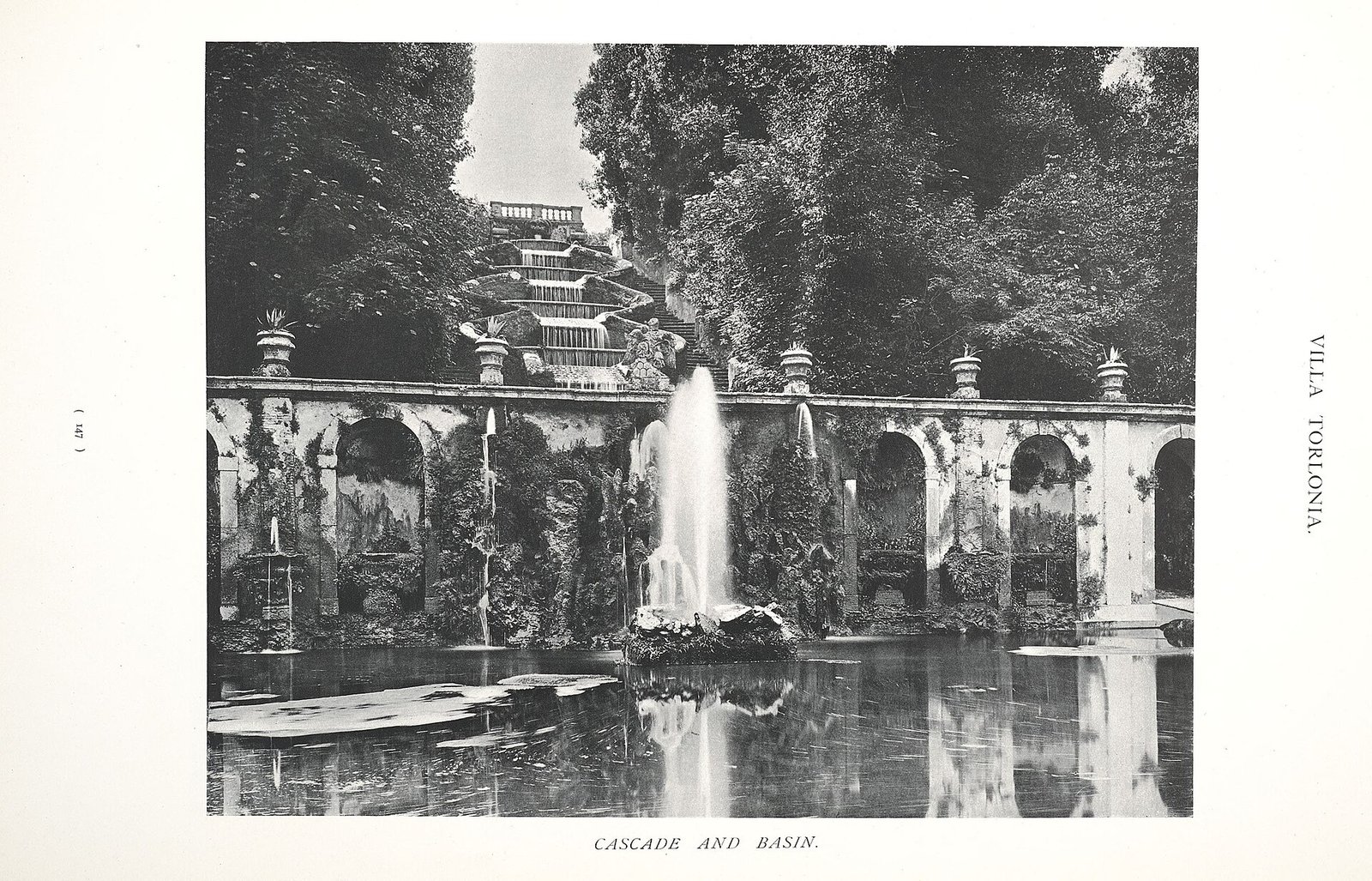
Villa Torlonia in Frascati today is a municipal public park with free and open access, with entrances on Piazza Guglielmo Marconi and on Viale Annibal Caro, in the center of the town. The villa proper no longer exists: the palace was razed to the ground by the bombing of September 8, 1943 and a modern building stands in its place. What remains is the garden, the stairways, the fountains and the Teatro delle Acque, which still awaits restoration.
The park belongs to the Comune di Frascati and has been public since 1954. There is no ticket office, no booking, and no marked visiting route: you enter as in any city garden, among families, athletes and people cutting through the park to climb toward the upper part of town. On the evenings of fairs, concerts and events, which the municipality often hosts on the avenues, the park changes face.
Data checked on September 29, 2026 on the transparency portal of the Comune di Frascati, on the entry of the Istituto Regionale per le Ville Tuscolane, on the entry of the Associazione Parchi e Giardini d'Italia and in the local press that followed the park works between 2021 and 2026. The gate hours are not confirmed by an official source: if you arrive early in the morning or after sunset, it is wise to ask first at the municipality's public relations office.
In Brief: Address, Hours, Ticket
- Address: Villa Torlonia park, entrances from Piazza Guglielmo Marconi and from Viale Annibal Caro, 00044 Frascati (RM), no street number published.
- Operator: Comune di Frascati, owner of the park since 1954, with protection by the Istituto Regionale per le Ville Tuscolane.
- How to enter: free access, no booking, except for temporary closures for works or events.
- Price: free, also during the fairs hosted on the avenues, where you pay only for food and drink.
- Hours: the municipality does not publish park hours. Information at the URP, phone 06 94184292 or 06 94184267, urp@comune.frascati.rm.it.
- How to get there: regional train from Roma Termini to Frascati, then on foot uphill to Piazza Marconi. Or Cotral bus from Anagnina.
- Accessibility: the operator does not publish guidance for people with mobility difficulties. The lower part is reached by monumental stairways.
Where It Is and What You Really See
The park occupies the slope that rises from Piazza Marconi, the main square of Frascati, where the town hall also stands. Opposite, beyond the square, is the front of Villa Aldobrandini. The two villas have looked at each other for centuries and are best understood together: one keeps its palace, the other lost it and became the city's public garden.
From below you climb the monumental stone stairways, restored between 2021 and 2026, with the two entrance fountains put back in order together with the balustrades and the terrace walls. The entry of the Associazione Parchi e Giardini d'Italia describes a staircase with four crossing flights as one of the most recognizable elements of the garden. It is the first thing you see from Piazza Marconi, and also the one that makes you grasp the scale of the 17th-century project.
The stairways are not a simple access. In the original design they served to turn the climb into a sequence of terraces, each with its own viewpoint over the square and the countryside. Put back into use after years of barriers, today they once again let you climb from the center without going by the road. Those who walk them slowly notice the changes of level and how the garden opens up at every landing.
As you climb, the park widens into an avenue of plane trees and a series of tree-lined clearings. Here is the belvedere terrace with the fountain called the Candeliere, attributed to Flaminio Ponzio, a multi-tiered fountain that rises above the basin. The Lazio historic residences network describes from the belvedere a wide view over Rome, the Roman countryside, as far as the sea and the Apennines, which on clear days can be read in full.
Higher up is the Teatro delle Acque, the great nymphaeum that is the real reason the park appears in the history books of gardens. It is a long wall with niches and masks, in front of which the water used to cascade down between basins and stairs to a pool. Above, a large fishpond served as a reservoir. The whole can still be read well, but the surfaces are worn and the hydraulic system awaits work.
At the sides of the cascade the entry of the Associazione Parchi e Giardini d'Italia points out groves and, in the flatter parts, Italian gardens with geometric flower beds. It is a lived-in urban park: there are benches, a children's play area that the municipality plans to renovate, dogs on leashes, kids who meet up in the evening. Those who arrive expecting the silence of a closed historic garden find instead a piece of the town.
The building you see where the palace stood is not the rebuilt villa. It is a modern construction, from after the war, that took the place of the palace destroyed in 1943. The rooms with the Triumph of Bacchus and the grotesques of the school of the Zuccari, described by the historical entries, are lost. The name Villa Torlonia today indicates the park, and this has to be said right away to anyone looking for a residence to visit.
Above the theater is the fishpond, the large basin that served as a reservoir for all the water features. The Istituto Regionale per le Ville Tuscolane recalls it among the works of the Borghese period, together with the Teatro delle Acque and the Candeliere fountain. From there the water came down by gravity along the cascade. Without the fishpond the theater would be just a decorated wall, and it is good to look for it with your eyes before going down.
The vegetation counts as much as the stones. The avenue of plane trees is the axis that holds the park together, while the high areas have denser trees and patches of shade that in summer make the garden much cooler than the square below. Those looking for flowering beds and precisely trimmed hedges are left disappointed: the maintenance is that of a public park, attentive to the safety of the trees more than to the shape of the borders.
A Curiosity About Villa Torlonia in Frascati
The villa was born from the house of a man of letters. In 1563 Annibal Caro, poet and translator, built on the spot a small building that ended up being called Caravilla, a play on words between his surname and the word villa. The Istituto Regionale per le Ville Tuscolane writes that Caro used the house to complete the translation of Virgil's Aeneid. All the later splendor, cardinals and princes included, starts from a modest country residence.
There is also a 17th-century image that shows the Teatro delle Acque in operation. It is an etching by Giovanni Battista Falda, datable between 1667 and 1669, titled Prospetto del teatro e cascata dell'acque della Villa Ludovisia a Frascati con varii giochi d'acque. It is part of the series Le fontane delle ville di Frascati and shows the rockwork flooded by the cascade, the side jets and some noblemen strolling in front of the nymphaeum.
That print today is a few minutes' walk from the park. The Catalogo generale dei beni culturali records it in the collections of the Museo Civico Tuscolano, at the Scuderie Aldobrandini in Frascati, with inventory number 117. It is the simplest way to understand how the theater must have looked with the water really flowing, before going up to look at it as it is now.
The name of the belvedere fountain is also a small curiosity. It is called the Candeliere for its form of several superimposed tiers, which recalls a candelabrum with water in place of the candles. The Lazio historic residences network attributes it to Flaminio Ponzio, like the other fountains of the Borghese period. Those who look at it closely notice that the design is meant to be seen against the light, with the city in the background.
Something Nobody Tells You About Villa Torlonia in Frascati
The most important part of the park is also the least cared for. The Teatro delle Acque is cited everywhere as a masterpiece, but in May 2026 the public works councilor told the local press that the administration is still looking for funds to restore it, as it is a costly and delicate job. The stairways have been redone, the avenues repaved, the nymphaeum waits. Those who climb all the way up find a readable but tired monument.
Our opinion, against the grain of many guides to the Castelli Romani, is that the most common mistake is to consider Villa Torlonia the poor relation of Villa Aldobrandini. Those who devote the whole morning to the villa across the way and pass through this one only to cross it miss the Tuscolo garden richest in architecture, plants and waters, according to the definition of the Istituto Regionale per le Ville Tuscolane, and on top of that a garden you enter without booking and without paying.
There is also a flip side, to know beforehand. The park is public and busy, and the daily maintenance is that of a municipal garden, not of a museum. In the periods of fairs and events the avenues fill with stands, platforms and sound systems, and reading the historic garden becomes difficult. To see the 17th-century design it is best to choose a weekday outside events, preferably in the morning.
One last thing that few guides say: the garden you see is not frozen at a single date. It is the result of overlapping interventions, from the Borghese building site to the new front of the nymphaeum commissioned by the Ludovisi, up to the municipal restorations of recent years with materials approved by the Soprintendenza. Reading it as a palimpsest, and not as a work that came out whole in 1607, helps you not to look for a purity that never existed.
From Caravilla to Villa Torlonia: Four Centuries of Owners
After Annibal Caro the property changed hands many times, and the sources do not agree on some passages. The Associazione Parchi e Giardini d'Italia indicates, after Caro's heirs, the Cenci family and then Cardinal Tolomeo Gallio. The Istituto Regionale per le Ville Tuscolane has Cardinal Galli arrive in 1579, when he was secretary of state to Pope Gregory XIII, and attributes to him a great enlargement of the complex.
The leap in quality came in 1607, the year given by several sources for the purchase by Cardinal Scipione Borghese, nephew of Pope Paul V. Working with him were Flaminio Ponzio, who designed the fountains, and Carlo Maderno with Giovanni Fontana, an expert in hydraulics, who oversaw their execution. The Teatro delle Acque, the fishpond and the Candeliere fountain were born then. In 1614 Borghese sold, to concentrate on the other family properties in the Tuscolo.
On the name of the 1614 buyer the reconstructions still part ways. Some indicate Duke Giovanni Angelo Altemps, at a price of 34,000 scudi, and the family also appears in the tourist guide to the Castelli Romani among the owners. Others skip straight to the Ludovisi. In Rome the family name is tied to Palazzo Altemps, today the seat of the Museo Nazionale Romano, where the same network of cardinals and collectors who frequented the hills passes through.
The next passage brought the villa to the Ludovisi, the family of Pope Gregory XV. The sources diverge here too on the owner's name: the Istituto Regionale per le Ville Tuscolane speaks of Alessandro Ludovisi in 1621, other reconstructions of Cardinal Ludovico Ludovisi, nephew of the pope. The fixed point is the building site: Maderno designed the new front of the nymphaeum, with the long wall of niches that has come down to us.
The 17th century of the Ludovisi is also the century in which Rome was building the great public fountains and the gardens of the papal families. Those who know Baroque Rome recognize in Frascati the same idea of water as spectacle, taken out of the city and put at the service of a single family. The nymphaeum was made to be seen by guests, in a studied sequence of surprises, jets and sounds of water along the climb.
In 1661 the villa passed to the Colonna and in 1680 to the Conti family, from which the name Villa Conti used for a long time. In 1732 Maffeo Mieli painted in the room next to the salon Strength Crowning Meekness. In 1820 the Sforza Cesarini arrived and in 1841 the Torlonia, the family of Roman bankers who left the park its definitive name. On the site you will also find the family villa in Rome, Villa Albani Torlonia.
The Advice I Give You for Visiting Villa Torlonia in Frascati
The advice is to enter from below, from Piazza Marconi, and climb. This way the entrance fountains, the stairways, the avenue and finally the Teatro delle Acque present themselves in the order intended in the 17th century, with the cascade appearing as the point of arrival. Those who enter from another entrance risk reading the park backward, as a garden descending toward the square, and missing the effect of the climb.
Before climbing, stop at the Scuderie Aldobrandini, across the square, and look in the collections of the Museo Civico Tuscolano for Falda's engraving with the theater in operation, if it is on display. The museum's hours and conditions should be checked on the municipality's website. With that image in mind, the comparison with the present state of the nymphaeum becomes the most interesting part of the visit, and also the most instructive.
Half an hour is enough to climb calmly, stop at the belvedere and reach the Teatro delle Acque. One hour, if you want to sit and look at the city from above. Choose a clear day, preferably in autumn or spring, when the plane trees give shade but do not close off the view. In summer the park is cool, but in the central hours the belvedere is exposed and the light flattens everything.
For those who have difficulty walking the advice reverses. The stairways from below are steep and long, and the operator does not publish a step-free route. The slope of the inner avenues should also be judged on the spot, because the park is built on a hillside. With a stroller or an elderly person it is best to ask the municipality's URP beforehand which entrance is more convenient and if any work sites are open.
How Much Does It Cost and When Can You Enter?
Entry is free and no booking is needed. The park is a municipal garden open to the public, with no ticket office and no guided visits at fixed times organized by the municipality. The Istituto Regionale per le Ville Tuscolane indicates the possibility of guided visits through its own channels, at the address info-irvit@regione.lazio.it. For a group or a school that wants to go into the details of the garden's history it is best to start there and ask about availability and conditions.
The gate hours are not published by the municipality or by the institutions that protect the villa. For reliable information the channel is the public relations office of the Comune di Frascati, Piazza Guglielmo Marconi 3, phone 06 94184292 or 06 94184267, email urp@comune.frascati.rm.it. The municipality's switchboard answers at 06 941841. No online ticket to buy in advance, so be wary of anyone offering one.
There are no specific visit products for the park on the big tour platforms, and it makes no sense to pay for a generic Castelli Romani package just to enter a free garden. If you want a visit with a guide, there are two sensible channels: the Istituto Regionale per le Ville Tuscolane, which follows the system of the villas, and the licensed guides of the area, to be contacted directly with a precise program.
During the fairs that the municipality hosts on the avenues, such as the Fiera dei Sapori d'Italia in late September, entry stays free and you pay only for tastings and drinks. The stands operate mostly in the evening and on weekends, with hours that the local press publishes edition by edition. Those who want the park quiet on those days do better to go in the morning, when the stands are closed and the avenues go back to being a garden.
Another Well-Known Fact, Yet Rarely Cited
Everyone in Frascati knows the park is public, but few remember how it became so. In 1954 the Comune di Frascati and Duke Andrea Torlonia made an exchange, and the garden passed to the town. Since then the villa that had belonged to cardinals has been the park below the town hall, the one of Sunday strolls and village festivals. It was not an expropriation, it was an exchange between owners.
The second forgotten fact concerns protection. The entry of the Associazione Parchi e Giardini d'Italia reports that the park is subject to a cultural heritage protection order, notified on April 19, 1993. It means that every intervention on the avenues, the stairways and the fountains goes through the Soprintendenza. This is why the light-colored material used to repave the avenues in 2024 was approved by the protection body, as the local press wrote.
The third little-remembered fact is that the villa has had as many names as owners. In Falda's engraving it is the Villa Ludovisia, with the Conti it became Villa Conti, since 1841 it is Villa Torlonia. Those who read old texts or look at period prints must keep this in mind, because the same garden appears under different names depending on the era. Today's name is that of the last family, neither the oldest nor the most important.
The Right Photo to Take at Villa Torlonia in Frascati
The photo that tells the story of the park is that of the staircase taken from below, from Piazza Marconi, with the freshly restored stone balustrades and the entrance fountains in the foreground. The sperone stone and the basalt used in the restoration have different colors, warm gray and dark gray, and with the raking light of late afternoon the design of the flights reads well. Avoid the central hours, when the stone goes flat.
The second photo is taken from the belvedere toward Rome, with the Candeliere fountain in the foreground and the city in the background. You need a day of tramontana wind, which cleans the air. With humidity or summer haze Rome disappears in a gray band and only the fountain remains. A light telephoto lens helps bring the city closer without losing the fountain.
At the Teatro delle Acque the most honest photograph is the frontal one, from some distance, showing the whole wall with the niches and the masks. The worn details tell the present state, and set beside Falda's engraving they show how much has been lost. Respect fences and barriers if there are any: in a monument awaiting restoration the closed parts are closed for safety reasons.
A different photo is taken in the evening, during events, with the avenue of plane trees lit up and full of people. It is not the image of the historic garden, it is that of the park as the town's living room, and it tells well what Villa Torlonia has become since 1954. Those who prefer the empty park choose instead the first morning of a weekday, with the low light coming in between the trunks.
How Do You Get There from Central Rome?
The simplest way is the train. Trenitalia runs regional trains to Frascati from Roma Termini, on the Castelli Romani line. Hours and frequencies should be checked on the Trenitalia site the day before. The Frascati station is at the foot of the historic center: from there you walk up toward Piazza Marconi, with one stretch on a slope.
Alternatively there are the Cotral intercity buses that leave from Anagnina, the terminus of metro line A, and climb to Frascati. Lines, stops and updated hours should be checked on the Cotral site before leaving, because on holidays the runs thin out. Metro line A takes you to Anagnina from Termini and from San Giovanni easily, and the change to the bus happens in the same interchange hub.
By car you arrive from Rome on Via Tuscolana, which climbs directly to Frascati. Parking in the center is limited and on weekends and on fair days it fills up early. Those who come by car do well to leave it in the outer car parks and climb on foot. The center is small and from Piazza Marconi the park is reached in a few steps.
With a group the choice changes. The regional train is convenient for those traveling light, but the climb from the station to the square has to be taken into account for those with difficulty walking. The coach solves the climb, but stops in the center of Frascati are regulated by the municipality and should be checked in advance with the local police. In any case the clearest meeting point for everyone is Piazza Marconi, in front of the park's stairways.
Some Important Events That Happened Here in History
1563 is the starting year, with the house of Annibal Caro. The second decisive moment is 1607, when Scipione Borghese starts the water building site with Ponzio, Maderno and Fontana. The third is 1621, with the new front of the nymphaeum for the Ludovisi. In a little over 50 years a country house became one of the most ambitious villas of the hills, with a water system that required a whole aqueduct.
The water came from far away. According to the archaeologist Alfredo Moraci, cited by the local press, the large fishpond that feeds the theater was served by the aqueduct called the Canalicchio. Without that water the garden would make no sense: cascades, jets and basins were the very reason for the villa. The water problem, moreover, comes back today too, because the restoration project presented to the FAI includes a recirculation system so as not to waste it.
On September 8, 1943, the day of the feast of the Madonna, Frascati was bombed by Allied aircraft. The target was the German command of Field Marshal Kesselring, which was based in the town. An article in Controluce speaks of more than a thousand bombs dropped in less than half an hour and of at least 497 confirmed deaths in the first attack alone. Villa Torlonia was among the most heavily hit buildings, together with the railway station.
The palace was razed to the ground and was not rebuilt in its original forms. The park instead survived, and in 1954 passed to the municipality. In recent years the events are those of the work sites: the first two stairways reopened in June 2023, the avenues reopened on November 1, 2024 after a month of closure, the third stairway returned in May 2026 after more than two decades of closure.
The restoration of the stairways was done with the original materials, sperone stone and basalt, recovering balustrades, terrace walls, fountain exedras and the entire system of flights. At the 2026 reopening the mayor Francesca Sbardella and the public works councilor Claudio Cerroni spoke. For those who knew the park with the stairs barricaded, the difference is visible as soon as you set foot in Piazza Marconi.
Who Has Passed Through Villa Torlonia in Frascati
The first name is that of Annibal Caro, poet and translator, who worked here on his translation of the Aeneid according to the Istituto Regionale per le Ville Tuscolane. After him came cardinals of the late 16th-century curia, such as Tolomeo Galli, secretary of state to Gregory XIII. Frascati was then one of the holiday destinations of the cardinals, and the villa followed its fate.
Then came the great patrons of the 17th century. Scipione Borghese, the same who created Villa Borghese in Rome and the collection now at the Galleria Borghese, brought his architects to Frascati. Carlo Maderno, the architect of the facade of Saint Peter's Basilica, worked here on several occasions. Flaminio Ponzio and Giovanni Fontana, protagonists of the water building sites of the Rome of Paul V, signed with him fountains and hydraulic system.
Among those who passed through here with a precise purpose is Giovanni Battista Falda, a 17th-century engraver, who between 1667 and 1669 drew the theater and the cascade for the series devoted to the fountains of the villas of Frascati. Thanks to him we know how the garden looked at the height of its operation. His plates were meant to circulate, and carried the image of the waters of Frascati well beyond the hills.
After the Ludovisi came the Colonna, the Conti, the Sforza Cesarini and finally the Torlonia. Among the least welcome guests of recent history is the German command of 1943, which made Frascati a military target. The memory of those days in the town is still alive, and in Rome it is found in the places of memory of the war. After the war the villa passed from princes to citizens.
Today the park is frequented by the town's inhabitants, by those who come up from the southern neighborhoods of Rome on weekends and by visitors to the Castelli, who often cross it without knowing they are walking in a cardinal's garden. Among the most recent passages are the crowds of the fairs and summer concerts, which use the avenue of plane trees as an open-air square. It is a new use, but at bottom consistent with a villa born to receive guests.
Where Does the Restoration of the Teatro delle Acque Stand?
The restoration of the park has gone forward in phases. The first two monumental stairways reopened in June 2023, after work begun in January 2021, for over 800,000 euros financed almost entirely by the Ministry of the Interior. The inner avenues were repaved and reopened on November 1, 2024 with regional funds. The third stairway, with the two entrance fountains, reopened in May 2026 with an investment of 210,000 euros.
The Teatro delle Acque was left out of all these phases. In the FAI census I Luoghi del Cuore, with voting closed on April 10, 2025, the nymphaeum was nominated by a committee of local associations, Uniti per il Teatro delle Acque di Villa Torlonia, supported by the FAI group of the Castelli Romani. In February 2025 the votes collected were about 2,320. An outcome that brought funds to the nymphaeum is not confirmed by an official source.
The project presented for the census included a thorough cleaning, new plantings, a water recirculation system and evening lighting of the cascades. The figures reported by the press for the possible contribution do not match from one article to another. In May 2026 the municipal administration repeated that the theater is the next goal and that new resources are needed. A start date for the work is not published.
Those who look at the theater today can still understand how it worked. The water from the upper fishpond came down along stairs and descending basins, collected and then burst out in a jet in the pool in front of the nymphaeum. The wall with niches and masks served as the backdrop, like the set of a real theater. The name is not a modern invention: already the 17th-century engraving speaks of a prospect of the theater, with the water features as actors.
Alongside the garden works there is another line of funding, tied to the National Recovery and Resilience Plan. In January 2022 the municipality announced 2.4 million euros from the Ministry of the Interior's urban regeneration call, linked to the PNRR, to recover the municipal swimming pools designed by Fausto Cecconi, indicated as the Villa Torlonia pool. The project does not concern the nymphaeum, and the state of the work site is not published.
Among the interventions announced by the municipality at the reopening of the avenues, in November 2024, were also the renovation of the children's play area, with new attractions and new paving, and the improvement of the fences in the upper part of the park. Timing and amounts of this work are not published. Those who return to the park months later may find new work sites, and it is worth keeping that in mind.
Lucullus, Caro and the Ludovisi: What Is Documented and What Is Not
What the documents say is the sequence of owners from 1563 on, the dates of the great building sites, the names of Ponzio, Maderno and Fontana, the destruction of the palace in 1943 and the passage to the municipality in 1954. On some changes of ownership, such as the exact year of the Borghese purchase and the branch of the Ludovisi family involved, the sources do not agree, and the differences should be left open.
What tradition says concerns antiquity. According to the Istituto Regionale per le Ville Tuscolane, Caro built his house where the villa of Lucullus was thought to have stood, the Roman general who became proverbial for the luxury of his table. The hill of Frascati is full of remains of Roman villas, and the name of Lucullus has been attributed to more than one place in the surroundings. It is an old attribution, not an archaeological proof.
The tradition is part of a precise taste of the 16th century. The families and men of letters who built on the hills tried to tie their houses to the great names of antiquity, from Cicero to Lucullus, and the Tuscolo above Frascati offered real ruins on which to lean those stories. Villa Torlonia is born inside this climate. The link with Lucullus says a lot about who built the villa, and little about the Roman villa that perhaps was there.
Then there is what is closer to legend. The official tourist guide to the Castelli Romani says the land was donated to Caro by the abbey of Grottaferrata, while other reconstructions speak of a purchase. The play on words Caravilla is also told in different ways. These are stories that are part of local memory and worth knowing, keeping them distinct from the documented facts.
Another story that circulates concerns the bombing, often told as if it had wiped out the entire villa. In reality the palace was destroyed, but the park survived, as the Lazio historic residences network recalls. The nymphaeum, the stairways and the avenue came down to the postwar period, worn but recognizable. It is a useful distinction, because it explains why today a 17th-century garden is being restored and a villa is not being rebuilt.
Villa Torlonia Within the System of the Ville Tuscolane
The Ville Tuscolane are the group of residences built between the 16th and 17th centuries by the families of the papal court on the slopes between Frascati, Monte Porzio Catone and Grottaferrata. Villa Torlonia is the one most inside the town, attached to the town hall square. Others are higher up or farther out, among olive groves and vineyards, and have kept a different relationship with the agricultural landscape.
The Lazio historic residences network recalls that the bombings of 1943 and 1944 destroyed three of the historic villas of Frascati. Villa Torlonia is the one where the loss weighs most on the reading of the place, because the palace was at the center of the garden. In the other villas the residence still dominates the landscape, here it is the garden that carries the story on its own, with water as the common thread.
Those who want to understand the system can build a route with Villa Aldobrandini, which also has a great water theater, with Villa Falconieri, on the hill above the town, and with Villa Mondragone, one of the Borghese properties in the Tuscolo. Three different ways of opening to the public, with different access rules to check case by case.
The most useful comparison is between the two water theaters of Frascati, that of Villa Aldobrandini and that of Villa Torlonia, built a few years apart and partly by the same technicians. For those who love water gardens the comparison widens to Villa d'Este in Tivoli, to Villa Lante at Bagnaia and to the Palazzo Farnese in Caprarola, the great models of Lazio.
Villa Torlonia in Frascati should not be confused with Villa Torlonia in Rome, on Via Nomentana, with the Casino Nobile, the obelisks and the Jewish catacombs. Same family, same name, two different places, one inside Rome and one in the Castelli Romani. In online searches the results often get mixed up, especially for hours and tickets, which exist in Rome and not in Frascati.
When Is It Closed and What Not to Expect?
The park can close for work, as happened from September 29 to November 1, 2024 for the redoing of the avenues, and for extraordinary maintenance decided by the municipality. These closures are announced with notices from the municipality and relayed by the local press. Before a dedicated trip a phone call to the URP is worth making, especially if you come from far away or with a group.
Don't expect a palace to visit, frescoed rooms or an indoor museum. Don't expect the cascades in operation as in Falda's engraving either: the state of the water in the Teatro delle Acque is not indicated by the operator, and the restoration has not started yet. Services such as a cafe and restrooms inside the park do not appear in the official information: sort yourself out in the square before entering.
During fairs and events part of the avenues is occupied by stands and stages. The evenings of the fairs bring music, stands and lots of people until late. It is the right moment to experience the park as the town's square, and the wrong one for those looking for the historic garden. For that, come back on weekdays, outside the events calendar.
After rain the stone of the stairways and the edges of the basins become slippery, and in autumn the plane tree leaves cover the steps. You need shoes with a suitable sole, especially for going down. In winter the park is still busy, but the belvedere is exposed to the wind and the tramontana. On the other hand, it is precisely the cold, clear days when the view over Rome is sharpest.
Eating in the Area
Piazza Marconi and the streets that go down toward the historic center are full of places aimed at those who come from Rome on weekends. The traps are the usual ones of passing-through places: the barker at the door, photo menus in four languages, items without a price, dishes presented as typical that come from a kitchen open all day without a break. Those who live in Frascati don't sit down in those places.
The tradition of the town is that of the fraschette, the osterie where once you brought food from home and bought the producer's house wine. Today the name is also used by places that have little to do with that history. Be wary of anyone offering you a fixed menu bloated with appetizers without telling you the price, and of tables in front of the monuments where the bill changes depending on the customer.
The rule is simple: menu with prices displayed outside, local wine declared, kitchen that closes in early afternoon. For addresses in Frascati and the Castelli Romani chosen away from the strolling circuits there is the list of addresses on Google Maps, updated by the editorial team and designed also for those traveling in a group.
During the fairs the problem moves inside the park. The stands offer specialties from several regions, with tastings paid for with tokens. It is an occasion for celebration, but it has little to do with the cooking of Frascati. Those who want to taste the local dishes and wine do better to go down into the streets of the center and choose with the rules just described, away from the square's promenade.
What to Combine in a Day
The most natural combination is with Villa Aldobrandini, across the square, and with the Scuderie Aldobrandini, where the Museo Civico Tuscolano is. In one morning you go from the public park to the garden of the twin villa and to the museum that holds the historic images of the villas. In the afternoon you can climb to the Tuscolo, the archaeological area above Frascati, with the Roman theater and the panorama over the hills.
Those with a car can do the circuit of the villas on the ridge, from Villa Falconieri to Villa Mondragone, and finish at the Osservatorio di Monte Porzio Catone. Another possible day goes down toward Marino and its mithraeum, or toward Lake Albano and Albano Laziale. All the routes pass inside the Castelli Romani Park.
For a longer day in the hills there are Ariccia with Palazzo Chigi, Nemi and its lake, Rocca di Papa and Monte Compatri. Those who return to the city in mid-afternoon can finish in Rome with another water garden, the Acqua Paola Fountain on the Janiculum, a work of the same season as Ponzio and Fontana.
In Rome the thread of villas and water gardens continues with Villa Doria Pamphilj, Villa Medici and the Vatican Gardens, where the 17th-century fountains are still working. The comparison with Frascati is instructive: where the water still flows you understand what the Teatro delle Acque is missing, and why its restoration matters for the whole city.
Frequently Asked Questions
Do you pay to enter Villa Torlonia in Frascati?
No. The Villa Torlonia park is a public garden owned by the Comune di Frascati and you enter free, without booking. Even the biggest events hosted on the avenues, like the Fiera dei Sapori d'Italia, normally have free entry, with food and drink paid for. Be wary of anyone offering you an online ticket for the park, because there is no official ticket office.
What are the park's hours?
The municipality does not publish park hours, and the entries of the institutions that protect the villa do not give them. For reliable information call the public relations office of the Comune di Frascati at 06 94184292 or 06 94184267, or write to urp@comune.frascati.rm.it. The municipality's general switchboard answers at 06 941841.
Can you visit the villa, that is, the palace?
No, because the historic palace no longer exists. It was destroyed by the bombing of September 8, 1943 and a modern building was built in its place. The decorated rooms, with the Triumph of Bacchus and the grotesques, are lost. Today Villa Torlonia means the park, with the stairways, the fountains, the avenue of plane trees and the Teatro delle Acque awaiting restoration.
Do the fountains work?
The two entrance fountains were restored together with the third stairway and reopened in May 2026. For the Teatro delle Acque the operator does not indicate if or when the water flows, and the restoration of the nymphaeum has not begun yet. If seeing the water in motion is the reason for the visit, it is best to ask the municipality before leaving, because the situation can change with maintenance.
What is the difference from Villa Torlonia in Rome?
They are two different places, linked only by the name of the Torlonia family. Villa Torlonia in Rome is on Via Nomentana, has ticketed museums like the Casino Nobile and has its own hours. Villa Torlonia in Frascati is a free municipal park in the Castelli Romani, with no interior museums. When you look for hours and tickets online, always check which of the two is being discussed.
Who built the Teatro delle Acque?
The sources attribute the design of the fountains to Flaminio Ponzio and the execution to Carlo Maderno and Giovanni Fontana, working for Cardinal Scipione Borghese from 1607. After 1621, for the Ludovisi, Maderno added the new front of the nymphaeum, with the long wall of niches. The result is a work by several hands, which in texts is often reduced to the name of Maderno alone.
Is the park suitable for children?
Yes, it is a town park with open spaces, shaded avenues and a play area that the municipality has announced it wants to renovate. Watch out for the monumental stairways and the basins, which are not meant as play spaces. In the park services such as restrooms and a cafe do not appear in the official information. For other ideas on the subject there is the page Rome with kids.
How do you get there without a car?
By regional train from Roma Termini to Frascati, on Trenitalia's Castelli Romani line, and then on foot uphill from the station to Piazza Marconi. Alternatively there are the Cotral intercity buses from Anagnina, the terminus of metro line A. Hours and lines should be checked on the Trenitalia and Cotral sites before leaving, especially on Sundays and holidays.
How much time do you need to see the park?
To climb calmly from Piazza Marconi to the Teatro delle Acque, stopping at the belvedere and the fountains, half an hour is enough. With a break on the benches and a few photos you get to an hour. The park pays off more if included in a day in Frascati with Villa Aldobrandini and the museum at the Scuderie, or with a climb to the Tuscolo in the afternoon.
Who Wrote This and On Which Sources
The text comes from the editorial team of Tour Leader Pro, the Rome-based company that designs itineraries, visits and cultural events across Rome and Lazio. Fares, hours and booking arrangements given here come from the official sources named in the text as of the date indicated at the start: the transparency portal of the Comune di Frascati, the Istituto Regionale per le Ville Tuscolane, the Catalogo generale dei beni culturali and the dated local press. Tell us what you find changed.
Organizing a visit to Villa Torlonia for a group is simple in terms of access, because the park is free and needs no booking, but it requires attention to the events calendar, to the stairways for those who walk with difficulty and to coach parking in the center. A useful resource for those who organize group trips between Rome and the Castelli Romani is Tour Leader Pro.
Frascati pays off more inside a multi-day itinerary in the hills, with the Ville Tuscolane, the Tuscolo, the lakes of Albano and Nemi and the wine towns, rather than on a half-day trip from Rome. Those with time can sleep in the Castelli and give one day to the villas and one to the lakes. A useful resource for putting together a multi-day itinerary is Italy Planner.