Vicovaro (RM)
In short. Vicovaro is a municipality of about 4,000 inhabitants in the Aniene valley, 45 kilometers from Rome, and you can walk around the village freely and without a ticket.
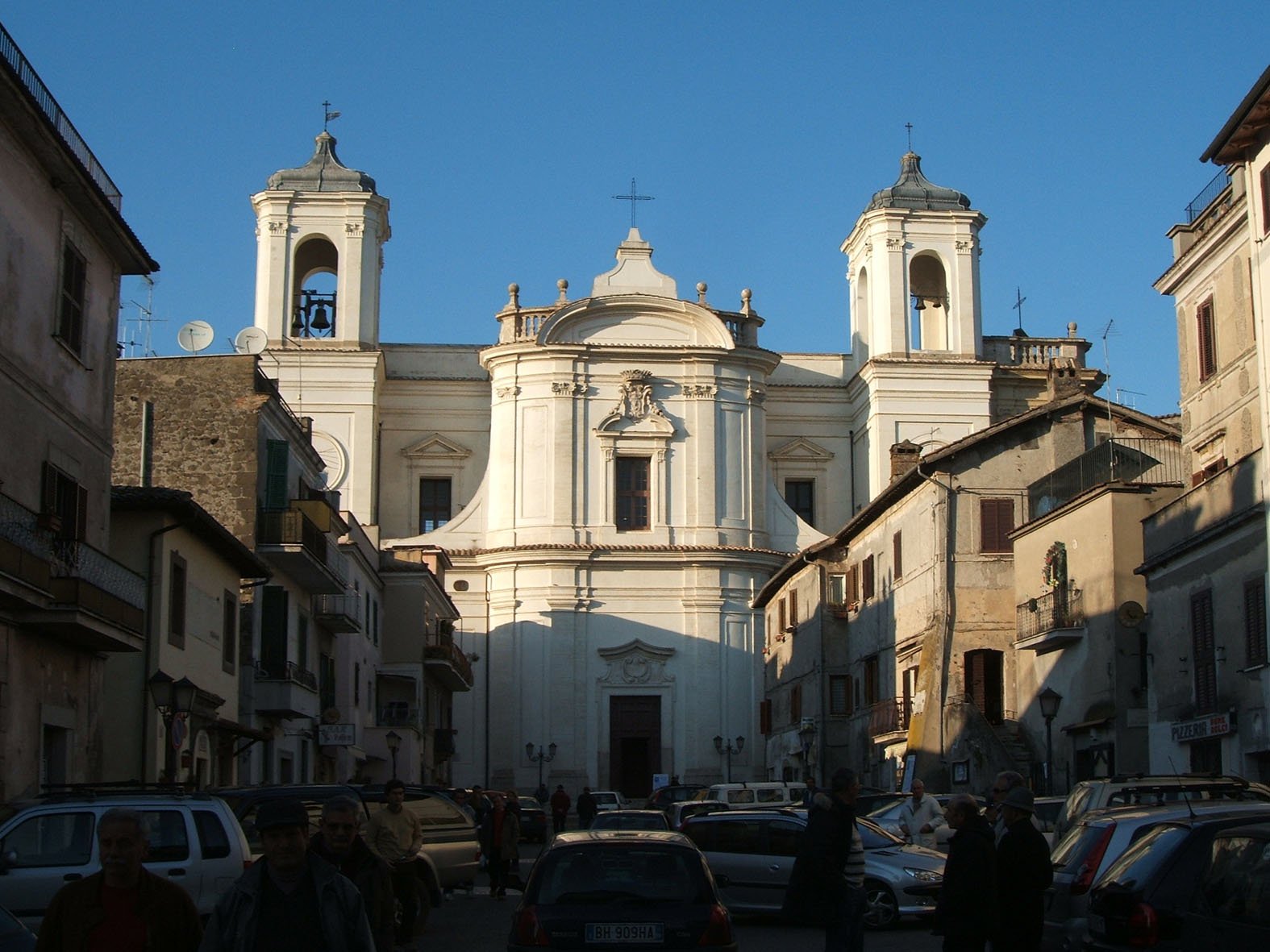
Vicovaro is a municipality of about 4,000 inhabitants in the Aniene valley, 45 kilometers from Rome, and you can walk around the village freely and without a ticket. The three places that made it known, however, follow different rules: the tempietto of San Giacomo has no published opening hours, the Orsini Cenci Bolognetti palace is privately owned, the convent of San Cosimato appears to be run as a holiday guesthouse by a social cooperative and its hermitages are seen on organized visits. The town hall is at Piazza Padre Pietro 9.
The town sits at about 300 meters of altitude along the Tiburtina Valeria, above the remains of ancient Varia, a fortified center of the Aequi later conquered by Rome. The historic core keeps its medieval layout around Piazza San Pietro. Inside the town are the parish church of San Pietro, the octagonal tempietto of the 15th century and the bulk of the palace that once belonged to the Orsini. Lower down, in the hamlet of San Cosimato, the convent, the hermits' caves and the remains of the Roman aqueducts coexist.
Data checked on September 29, 2026 on the Monti Lucretili Park page dedicated to Vicovaro, on the parks portal of the Lazio Region, on Visit Lazio and on the other sources cited below. For the churches and monuments of the center no body publishes an opening calendar: before leaving it's best to phone the town hall, at 0774 498002, or to look at the notices of the parish and the town's associations in the days before the visit.
In brief: address, hours, ticket
- Where: Vicovaro (RM), postal code 00029, in the Aniene valley along the Tiburtina Valeria. The town hall is at Piazza Padre Pietro 9, phone 0774 498002.
- Village: free and open access, the historic center is explored on foot.
- Tempietto of San Giacomo: opening hours not published, for information the channel is the town hall.
- Orsini Cenci Bolognetti palace: private property, accredited in the Lazio Historic Residences Network in April 2026, visit calendar not published.
- Convent of San Cosimato: Strada Statale 5 number 47, holiday guesthouse run by a social cooperative since 2005, hermitages visitable with the visits of the Sotterranei di Roma association reserved for members.
- Train: the Vicovaro station is closed to rail traffic, regional trains on the Rome-Pescara line stop at Valle dell'Aniene-Mandela-Sambuci. Timetables on Trenitalia.
- Bus and car: Cotral bus lines, with timetables on the company's website. By car the A24 highway, Vicovaro-Mandela exit.
Where it is and what you really see
Vicovaro occupies a spur above the Aniene, at the point where the valley rising from Tivoli begins to narrow toward the interior. Behind it rise the woods of the Monti Lucretili Park, of which the town is one of the access gates. The municipal territory runs from the 249 meters of the valley floor to the 989 of the ridges, while the historic center lies around 300 meters, high enough to overlook the road and the river.
In the historic center the first thing you notice is the Orsini Cenci Bolognetti palace, a building large for the size of the town. The sources describe it as a noble residence that incorporates 14th-century structures of the old Orsini fortress, with cylindrical towers and a Gothic marble arched entrance. In the center there are also the parish church of San Pietro, with a single nave, and the octagonal tempietto of San Giacomo, the monument that gave Vicovaro a place in the history of 15th-century architecture.
Around the monuments the town is a fabric of houses, alleys and stairs, with the medieval layout still readable around Piazza San Pietro and several buildings rebuilt between the 16th and 17th centuries. The Park points out a stretch of the ancient city wall visible near the Porta di Sotto. It is a few meters of stone, yet it explains better than any panel why there was always a fortified center here: you controlled the road and you controlled the valley.
The second half of the visit is down below, at San Cosimato. The convent stands on a spur of rock at the narrowest point of the valley, and beneath the complex open natural and artificial caves used for centuries as hermit cells. In the same stretch pass the remains of the Roman aqueducts that exploited the gorge. At the entrance to the complex is the church of San Cosimato, dedicated to the saints Cosmas and Damian, from which the whole hamlet takes its name.
Whoever arrives expecting a museum town is thrown off. Vicovaro is an inhabited town, with schools, shops, traffic on the state road and parking spaces taken by residents, and the monuments live alongside daily life. There are no ticket offices, audio guides or paid routes. The merit of the place is exactly this: you walk among 15th-century buildings without barriers, but you have to know what you are looking for, otherwise you cross the center in 10 minutes and leave again.
The road is the key to understanding the town. The Tiburtina Valeria follows the course of the ancient Via Valeria, which from Tivoli went up the Aniene valley toward the Apennines, and Vicovaro was born to watch over it. The regional parks portal recalls that this very position made it for centuries a natural meeting point for lords, pontiffs and clergy on the road. Whoever looks at the town from the state road still sees the same logic: tall houses on the ridge, road below, river even farther down.
The Aniene flowing beneath the town is the same river that in Rome crosses the Valle dell'Aniene Nature Reserve before flowing into the Tiber. Here, though, it has a different character: faster water, wooded banks, a valley that in places closes between rock walls. It is this landscape that explains why hermits, monks and Roman engineers chose the same stretch of valley, the former to isolate themselves, the latter to run the conduits bound for the city.
Behind the town the mountain begins. Visit Lazio presents Vicovaro as an access gate to the Monti Lucretili Regional Natural Park, with the watercourses that cut the slopes and descend toward the Aniene. For walkers this means trails toward the Park's peaks, to be planned with the maps and directions of the Park authority. For those who stay in town it means a frame of woods that changes color with the seasons and that, seen from the square, shows how Vicovaro hangs between valley and hills.
A curiosity about Vicovaro (RM)
The name of the town does not have a single ancient form. Historical reconstructions report variants such as Vicus Varronis, Vicus Vari and Vicus Valerius, while the Region's tourist portal recalls the form Vicus Varius documented in the early Middle Ages in connection with the Benedictine monastery. All point to a village, a vicus, that arose next to or on top of the ancient Varia of the Aequi. Which of the etymologies is the right one is not established: the sources do not agree and each pulls the name its own way.
The interesting detail is that the place name changed meaning along with the town. In Roman times it indicated a settlement on Via Valeria, that is a point of passage. In the Middle Ages it is found tied to a monastic community, and from the 13th century to a baronial castle. Whoever strolls today among the alleys crosses all three of these phases in a few meters, because none has completely erased the previous one, and the name carries them along like a layered inheritance.
A minor detail concerns the hamlet below. In administrative lists it also appears as Sancosimato, all one word, while the church and the convent keep the separate form. The name comes from the dedication to the saints Cosmas and Damian, contracted by local speech until it became a single imaginary saint, san Cosimato. It is the same process that in Rome gave its name to Piazza di San Cosimato in Trastevere, there too tied to an ancient monastery dedicated to the same pair of physician saints.
One thing nobody tells you about Vicovaro (RM)
Many travel sites and several mobility apps still indicate the Vicovaro station as a useful stop. The station, opened in 1888 with the Rome-Pescara line, is closed to rail traffic, with a single track active for transit and a replacement bus service limited to a few runs. The stop where you really get off the train is Valle dell'Aniene-Mandela-Sambuci, on the valley floor, and from there to the center of the town the last stretch has to be organized.
The practical consequence is simple. If you leave from Rome by train, check the timetable on the Trenitalia website searching for the Mandela-Sambuci stop and not Vicovaro, and verify how to cover the last stretch. For those traveling without a car the Cotral bus is almost always the better choice, with stops and times to check on the company's website. The train remains convenient for those who bring a bicycle or combine the visit with other towns on the line.
Then there is a second misunderstanding, less talked about. San Cosimato is often presented as a convent to visit like any church. Since 2005 the complex has been a holiday guesthouse run by a social cooperative, with the Franciscan friars keeping up the pastoral activity. This means there are guests sleeping and eating there. Showing up at the gate demanding a tour of the caves doesn't work: the hermitages are seen on organized visits, not on improvised request.
The third misunderstanding concerns distances. The historic center and San Cosimato are often described together, as if they were a single walk. They are instead two separate places, one on the ridge and the other down below along the Tiburtina Valeria, with an elevation difference and a stretch of state road in between. Whoever arrives by bus has to decide where to get off and how to move between the two. Whoever arrives by car does well to treat them as two distinct stops, each with its own parking.
Who built the tempietto of San Giacomo?
The tempietto of San Giacomo Maggiore is an octagonal building of the 15th century, and the Monti Lucretili Park presents it as the most important monument of the town. The work was started by Domenico da Capodistria in the second half of the century, with 1454 given by current reconstructions as the starting year. The decoration and the upper part of the building are the work of Giovanni Dalmata, a sculptor who brought the project to completion. The result is a building that the regional parks portal defines as Gothic-Renaissance architecture.
On the patron the sources do not agree. Some reconstructions indicate Francesco Orsini, others Giovanni Antonio Orsini. On one point, however, they all agree: the tempietto was born as a celebration of the prestige of the family that held Vicovaro, at a moment when the Orsini wanted to show in their fiefs the same up-to-date taste seen in Rome. A small centrally planned church, in a town of the valley, was a political message even before a devotional one.
Domenico da Capodistria came from Koper, then in the Republic of Venice, and biographies describe him as trained between Venice and Florence. Work at Santa Maria di Collemaggio in L'Aquila is also attributed to him. This explains the particular air of the tempietto: the plan and proportions look to the Renaissance, while certain decorative choices remain tied to the late Gothic. Whoever knows Bramante's Tempietto in Rome finds here an idea of a central building some decades older and much more ornate.
In our judgment the tempietto is the only reason why Vicovaro would deserve a detour even from those who have nothing else planned in the valley. The problem is that the information on the opening of the interior is not published, neither by the town hall nor by other bodies. Even staying outside, though, the octagon reads well: the faces, the roof and the sculpted parts can be observed from the street, and for many visitors the exterior is already the main piece of the trip.
From the outside it's best to look at the tempietto with a simple method. First the plan: eight equal sides enclosing a central space, without a nave to guide the eye toward the altar. Then the relationship between the faces and the roof, which gives the whole the look of a small celebratory building more than a village church. Finally the sculpted parts, which are the contribution of the second phase of the building work and the point where the decorative richness wanted by the Orsini is concentrated.
The central plan has a long history in sacred architecture. In Rome it appears in very different forms, from the early Christian circle of Santo Stefano Rotondo to Bramante's tempietto on the Janiculum. In the 15th century it came back into fashion because it expressed an idea of order and geometric perfection dear to Renaissance architects. Finding it in a fief of the Aniene valley, in the middle of the century, says how attentive the Orsini were to what was being discussed in the most up-to-date courts and building sites.
The dedication to Saint James the Greater, the apostle tied to the pilgrimage to Compostela, reads well in a town born on the road. No official source explains the choice, so it remains an observation and not a fact. Whoever walks the Cammino di San Benedetto today crosses Vicovaro with a backpack, and the small octagon dedicated to the saint of pilgrims becomes a natural stop along the stage, even just to catch your breath in the square.
Are the walls of Vicovaro really polygonal?
The question is not pedantic, because the official sources use two different words. The parks portal of the Lazio Region speaks of polygonal walls left by the Aequi. The page of the Monti Lucretili Park describes instead a wall circuit in ashlar masonry visible near the Porta di Sotto. The difference matters. Polygonal masonry uses large irregular blocks fitted together dry, ashlar masonry squared blocks laid in regular courses, and they are typical of different phases and builders.
It is likely that stretches from different epochs survive in Vicovaro, but on this point the sources do not agree and an official chronology of the individual stretches is not published. The advice is to look at the blocks with your own eyes near the Porta di Sotto and compare them with the famous ones of Palestrina and of Castel San Pietro Romano, or with the ashlar stretches of the Servian Walls in Rome. The difference, once seen, is never forgotten.
On the spot, a few clues help. In the polygonal stretches the joints between the blocks draw broken, oblique lines, and the stones fit together without mortar. In ashlar masonry the horizontal joints run straight, the blocks have regular edges and repeated sizes. Often the two systems coexist with medieval repairs in smaller stonework, added when the Orsini rebuilt the fortifications in the 13th century. Look at the base of the wall, where the oldest and largest blocks usually survive.
My advice for visiting Vicovaro (RM)
The advice is to split the day in two halves and start from below. The morning at San Cosimato, if you have an organized visit to the hermitages, when the light still enters low in the valley. Then the climb to the town, the tempietto, the walk between Piazza San Pietro and the Porta di Sotto, and the lunch break. Reversing the order means reaching the caves in the hottest hours, or finding yourself at the tempietto when everything in town is closed.
The most common mistake is to treat Vicovaro as a town you pass through on the road to Subiaco, to be looked at from the window. Stopping even for just an hour changes the perspective: the tempietto seen up close, the bulk of the palace above the roofs, the Porta di Sotto with its ancient blocks tell the story of the valley better than many museums. If time is short, choose the historic center and postpone San Cosimato to an organized visit, instead of seeing everything in a rush.
Before leaving, phone the town hall to find out if the tempietto is open on the day you chose or if any event is planned. Bring shoes with a good sole, because between the center and the caves stairs, paving and ramps alternate. Leave the car outside the oldest core, where the streets are designed for residents. And allow for the fact that Vicovaro is at its best paired with another stop in the valley, not as the only destination of a whole day.
A warning about who can do what. The historic center can be walked by anyone who walks without difficulty, but among alleys, stairs and paving not everything is easy for those with reduced mobility or pushing a stroller. The caves of San Cosimato are reached by stairs, and the operator publishes no accessibility information. Those traveling with small children find a short walk in the town and in the caves an experience to evaluate carefully, always within an organized visit.
Can you enter the monuments and how do you book?
For the village you book nothing: the historic center is open and free, like any inhabited town. The situation changes for the individual monuments. The tempietto of San Giacomo has no published hours and no booking channel appears to be active: the only institutional contact available is that of the town hall, at 0774 498002, or the certified email protocollo@pec.comunedivicovaro.it. For the parish church of San Pietro the hours of services set by the parish apply: the information is not published.
For the hermitages of San Cosimato the reference is the association Sotterranei di Roma, which organizes visits reserved for its members and gives as contacts the number 347 381 1874 and the address info@sotterraneidiroma.it. Prices and dates are communicated by the association case by case. An official online ticketing channel does not appear to be published, so be wary of anyone offering generic valley packages passed off as entry to the hermitages.
The Orsini Cenci Bolognetti palace is a private residence. In April 2026 Visit Lazio announced its entry into the Lazio Historic Residences Network, the regional network of accredited historic properties. Accreditation is not the same as opening hours: visits, when there are any, are decided by the owners. The calendar is not published, so it's best to follow the announcements of the regional network and the town hall's initiatives on the days dedicated to historic residences.
When you phone the town hall, ask precise questions. Ask if the tempietto will be open on the day you chose and in what time slot, if there are events planned for the weekend, where it's best to leave the car and if road closures for festivals or works are planned. Ask also if there are visits organized by the town hall or by the Pro Loco during the period of your trip. A two-minute phone call avoids finding closed doors after an hour on the road.
Another well-known fact, yet rarely cited
The Orsini did not lose Vicovaro in battle. After five centuries of rule, which began when Pope Celestine III granted them the territory in 1191, their properties were put up for auction in 1692 to pay debts. The one who won Vicovaro was Count Paolo Bolognetti. It is a passage that is known, but rarely told for what it was: a great baronial house leaving the valley through insolvency, not military defeat.
The consequences can still be seen in the town. Paolo's son, Ferdinando Bolognetti, married Flavia Theodoli, sister of Girolamo Theodoli, and the church of San Pietro was later restored by Girolamo Theodoli himself for his nephew Giacomo Bolognetti. The 18th-century face of the parish church comes from this web of families. The sources do not agree on the century of construction of the church, which some trace back to the 17th century, but the style you see is that of the 18th century.
Vicovaro, after all, was one of the many fiefs of a family that controlled castles, roads and passes in Lazio. Whoever has seen Bracciano Castle, which began as an Orsini fortress, recognizes here the same logic on a reduced scale: a fortress above the road, a town gathered around it, a prestigious work of art to remind everyone who was in charge. The difference is that at Vicovaro the fortress became a palace, and the most successful sign of power remained the small octagonal church.
The right photo to take at Vicovaro (RM)
The photo that tells the story of Vicovaro is the one of the tempietto taken at an angle, so as to get at least two faces of the octagon and the roof into the frame. A frontal shot flattens it and makes it look like any church, while the angle is what reveals the central plan. The light at the end of the day helps to read the sculpted parts. Avoid an extreme wide angle up close: it distorts the proportions that are the real merit of the building.
The second image is at San Cosimato, and can be had only during organized visits. From the stairs that go down to the caves of San Benedetto and the oratory of San Michele Arcangelo the view opens onto the Aniene valley, with the rock in the foreground and the river below. On the days of the June Infiorata, finally, the streets of the center covered with flowers offer the occasion when the town can be photographed full of color from the top of the steps.
The Orsini Cenci Bolognetti palace gives the third possible photo: the cylindrical towers and the Gothic entrance arch, best framed with a piece of street and a few windows of the neighboring houses, to convey the scale of the town. At the Porta di Sotto, instead, it is worth getting close and photographing the detail of the blocks of the ancient wall. Remember that the palace is private and the convent hosts people on vacation: no drones, no shots inside closed courtyards and no close-ups of the guests.
How do you get there from Rome without a car?
The most practical means is the bus. The Cotral bus lines run along the Tiburtina Valeria and serve Vicovaro with runs from Rome along the Aniene valley. Lines, terminals and times should be checked on the Cotral website before leaving, because the service changes between weekdays and holidays and because the afternoon return runs are what decide the length of the visit. Keep the return run as a fixed point of the day.
The train is an alternative, with a caveat. The Vicovaro station is closed to rail traffic, and the stop served by regional trains on the Rome-Pescara line is Valle dell'Aniene-Mandela-Sambuci, on the valley floor. Timetables are on the Trenitalia website. From the station to the center of the town the last stretch has to be organized, and it's best to know beforehand how to cover it, with a ride or with a connecting bus.
By car the most direct route is the A24 highway from Rome toward L'Aquila, with the Vicovaro-Mandela exit, and then the Tiburtina Valeria to the town. The convent of San Cosimato lies along the same state road, at number 47, and should be considered a separate stop from the center. It's best not to enter the historic core by car: better to look for a spot at the edges and walk the last stretch.
There is also a slow way to arrive. Vicovaro is on the Cammino di San Benedetto, and according to Visit Lazio the seventh stage goes from Orvinio to Mandela passing through the town. Walkers arrive from the hills to the north and descend into the Aniene valley, with the chance to stop at San Cosimato before setting off again toward Subiaco. For a day excursion you can combine the outbound bus and a stretch of the trail, checking the Cotral return runs beforehand, though.
What is true in the story of Saint Benedict at San Cosimato?
It's best to separate three levels. The documented one concerns the complex: according to the historical reconstruction published by the association that organizes the visits, after a Benedictine phase the place rose again as a Cluniac abbey under Alberico, passed to the Cistercians from 1241, to the Ambrosian friars from 1407 and in 1668 was entrusted by Pope Clement IX to the Franciscans, at the request of the prince of Vicovaro. The current convent dates to 1727, and in 1936 it returned permanently to the Franciscans of the Roman Province.
The second level is tradition. According to the Benedictine account, around 503 Benedict of Nursia took over the leadership of the monastic community of this valley, and the severity of his rule drove the monks to try to poison him. This is the same Benedict tied to Subiaco and the Sacro Speco. The Region's tourist portal places the saint's stay at San Cosimato and recalls the chapel of San Benedetto, built next to what devotion indicates as his cell.
The third level is that of popular memory, which tends to give a saint to every cave. The cavities under the convent are several: one preserves stalactites and stalagmites, another holds bone remains that the association attributes in all likelihood to victims of the plagues between the 16th and 18th centuries, then there are the hermitage of Blessed Bonaventura and the Friars' Staircase carved in the rock to go down to the river. That one of these cells is exactly Benedict's is devotion, not a proven fact.
Then there are the Roman aqueducts, which the Region's tourist portal places right at the narrowest point of the valley. Through this gorge ran the conduits that brought to Rome the water of the upper Aniene valley, and the arrival in the city of those same waters can still be seen at the Aqueducts Park and at Porta Maggiore. At San Cosimato the remains are far less monumental than the arcades on the plain, and for that very reason they help to understand the hidden labor behind those arcades.
The limit of the current account concerns the way San Cosimato is presented. The poison story is the one that draws people, and ends up overshadowing the rest. The value of the place is in the long sequence of communities that lived on the same crag for 15 centuries, and in the relationship between caves, river and Roman aqueducts. Whoever comes looking only for the saint's cell risks missing what the place really shows.
Some important events that happened here in history
The first fixed point is 304 BC, when Rome subdues the Aequi and turns Varia into a fortified center of the Republican age on Via Valeria. Then come the hard centuries. Between 589 and 593 the valley suffers Lombard raids, and around 877 a Saracen raid probably leads to the abandonment of the settlement. The recovery begins in the 12th century, and in 1191 Pope Celestine III grants the territory to the Orsini, who rebuild the fortifications in the 13th century.
The 13th century is the century in which Vicovaro becomes a real castrum, that is a fortified settlement with walls, a fortress and a lord who governs it. The Orsini turn it into an outpost on the road to Abruzzo, and will hold it until the 17th century. In the same period, down below, the complex of San Cosimato passes to the Cistercians, in 1241. The town thus takes the shape that can still be read: the castle up high, the religious community in the gorge, the road between the two.
The 15th century is the century of the tempietto, begun in the middle of the century. In the early 1530s Vicovaro finds itself inside the war between the Orsini and the papacy of the Medici: Ludovico Gonzaga, who had taken the town, dies struck by an arquebus shot, and reconstructions link his death to Napoleone Orsini. In 1692 the auction of the Orsini properties brings Vicovaro to the Bolognetti, whose name remains tied to the palace.
The modern age leaves quieter marks. In 1727 the current convent of San Cosimato is built, in 1888 the station of the new railway toward Pescara opens. In 1936 the Franciscan complex returns permanently to the friars, between the 1950s and 1970s it is restored, and a new intervention comes in view of the Jubilee of 2000. In 2005 management passes to a social cooperative, and in 2026 the palace enters the Lazio Historic Residences Network.
Who has passed through Vicovaro (RM)
The most famous passage is that of Benedict of Nursia, according to tradition abbot for a time of the community of San Cosimato. In the 15th century Domenico da Capodistria, an architect and sculptor trained between Venice and Florence, and Giovanni Dalmata, who completes and decorates the tempietto, work here. In the 16th century Ludovico Gonzaga passes through Vicovaro, and dies here. In the 18th century Girolamo Theodoli, tied by kinship to the Bolognetti, leaves his signature with the restoration of the church of San Pietro.
Other names have left a mark on the town without perhaps setting foot there for long. Pope Celestine III, with the grant of 1191, handed Vicovaro to the Orsini. Alberico, lord of Rome in the 10th century, is tied to the rebirth of San Cosimato as a Cluniac abbey. Pope Clement IX in 1668 entrusted the convent to the Franciscans. And Count Paolo Bolognetti, buying the Orsini properties at auction in 1692, opened the era of the family that left its name to the palace.
In recent times a television crew has also passed through San Cosimato: the convent was one of the sets of the third season of the series Suburra, where it serves as a hideout for one of the characters. Today the most frequent passages are those of the pilgrims and hikers of the Cammino di San Benedetto, who according to Visit Lazio cross Vicovaro on the seventh stage, from Orvinio to Mandela, then continue toward Subiaco.
Can you visit the Orsini Cenci Bolognetti palace?
From the inside, as a rule no. The palace is privately owned, and its entry into the regional network of historic residences announced in April 2026 did not bring with it a published opening calendar. From the outside, on the other hand, you can see it very well: the sources describe it as the former Orsini residence turned into a palace, with parts of the fortress, cylindrical towers and a 14th-century Gothic marble arched entrance. It is the building that dominates the scene of the center.
The building's double name tells the changes of ownership. Palazzo Orsini recalls the family that made it their fortress and held it for five centuries, Cenci Bolognetti points to the Bolognetti, who bought the fief at the auction of 1692, and to the double surname by which the family is later remembered. In April 2026 the Region's tourist portal listed it among the new properties of the Lazio Historic Residences Network, specifying that it is private property. If the owners announce openings, those will be the right occasions to see the interiors.
The contrary position, in our judgment, is this: the so-called castle of Vicovaro is overrated as a destination. Many arrive drawn by its image and leave disappointed because you can't go in. Whoever knows the great residences of the Orsini, like the Odescalchi Castle in Bracciano, knows that there is no comparable museum route here. The piece to start from remains the tempietto, and the palace is its frame.
When is the best time to go and what not to expect?
The town is always accessible, but it changes a lot depending on the day. Visit Lazio lists in May the asparagus festival and a cycling event of the Monti Lucretili, in June the Infiorata and the Corpus Domini procession, in October the frascarelli festival, the humble pasta of the farming tradition. These are the days when Vicovaro is most alive and when you are most likely to find open churches and spaces that are usually closed, but also the days with the most traffic and the least parking.
On weekdays out of season the center is quiet, and the monuments are looked at mostly from the outside. Don't expect continuous visits: the main monuments have no published hours. In summer the middle hours are hot even in the valley, and the stairs to the caves should be taken calmly. In winter the short days and the sparser bus runs suggest leaving early and keeping an eye on the return time.
The best season, in our judgment, is spring. The green of the Lucretili is full, the temperature allows walking between the town and San Cosimato without effort, and May brings the asparagus festival. Autumn has in its favor the softer light and the October frascarelli festival. Summer works if the visit is short and concentrated in the morning. In every season, whoever climbs to the Park's trails must bring water, because along the trails you may not find fountains.
Eating in the area
In a town like Vicovaro the classic traps of central Rome are rare, but a few warning signs apply here too. Be wary of photo menus and multilingual signs designed for people who pass through and don't come back. Be wary of items with no price, of fish of the day at a price given by word of mouth far from the sea, of places with the kitchen open continuously without a break, and of menus that differ inside and outside. People who live in the valley eat elsewhere for exactly this reason.
The good sign is the opposite: few dishes written down, tied to the season, and the presence of local products like asparagus in spring or frascarelli, the humble pasta celebrated by the October festival. On festival days it's best to book, because in town the seats fill up with local families. For those who want some reliable references between Rome and the surroundings there is the list of addresses on Google Maps, to consult before leaving.
One last note on the festivals. Town festivals are the best moment to taste local cooking, but the stalls are not all equal. It's best to prefer those run by the town's associations, with prices posted and dishes tied to the festival, over the vans that tour all the fairs of the region with the same menu. The criterion is the usual one: what is cooked only here, that week, is usually worth the trip.
What to combine in a day
The most natural pairing is with Tivoli, which is on the same road toward Rome. In a full day you can see Vicovaro in the morning and then Villa d'Este, the Villa Gregoriana Park or Hadrian's Villa in the afternoon. Those who prefer a slower outing can stop at the Acque Albule, on the way back, and end the day in the water instead of in traffic.
The second option follows the valley toward the interior and the Benedictine thread. From Vicovaro you continue toward Subiaco and the Sacro Speco, completing the story begun at San Cosimato. Whoever has time can climb into the Simbruini Mountains Park, reach Anticoli Corrado or Trajan's Villa at Arcinazzo Romano, and push on to Trevi nel Lazio, along the upper course of the Aniene.
The third option heads north, into the Licenza valley. Horace's Villa is visited by reservation, and in the surroundings there are Percile with its small lakes, San Polo dei Cavalieri and Palombara Sabina on the other side of the Lucretili. Those following the Cammino di San Benedetto can instead aim for Orvinio and, farther away, the Farfa Abbey.
Those following the thread of the ancient walls can move south toward Palestrina, where the National Archaeological Museum sits on the terraces of the sanctuary of Fortuna Primigenia, and climb to Castel San Pietro Romano, on the ancient acropolis. Those who prefer river scenery have instead the Sabina to the north, with the Farfa Gorges, Fara in Sabina and Torri in Sabina, reachable by car in a well-organized day.
Frequently asked questions
How much does it cost to visit Vicovaro?
The village is free and visited freely on foot. The tempietto of San Giacomo has no published hours or fares, and to find out if it is open it's best to call the town hall at 0774 498002. The Orsini Cenci Bolognetti palace is private. The hermitages of San Cosimato are seen with the visits that the Sotterranei di Roma association organizes for members, on terms communicated by the association itself each time.
Is the tempietto of San Giacomo open?
The information is not published by an official body. The building can be observed freely from the outside, and the octagon with its sculpted parts is already the most interesting part for those who come for the architecture. For the interior it's best to phone the town hall a few days before, or to choose the town's festival days, when the churches of the center have more chances of staying open.
Can you visit the caves of San Benedetto at San Cosimato?
Yes, but only with organized visits. The complex is a holiday guesthouse run by a social cooperative since 2005, and the caves with the hermitages, the chapel of San Michele Arcangelo and the Friars' Staircase are reached by routes with stairs. The Sotterranei di Roma association organizes visits for its members. Showing up at the gate without arrangements does not guarantee access, and the guests of the facility must be respected.
Can you sleep in Vicovaro?
Yes. According to the most recent sources the complex of San Cosimato has operated since 2005 as a holiday guesthouse run by a social cooperative, alongside the pastoral activity of the Franciscan friars. Rates and availability are communicated by the operator. Sleeping in the valley makes sense for those who want to combine several stops, like Tivoli, Subiaco and the Licenza valley, without returning to Rome every evening on the afternoon Cotral runs.
Does Vicovaro have a railway station?
The Vicovaro station exists but is closed to rail traffic, with a replacement bus service limited to a few runs. Regional trains on the Rome-Pescara line stop at Valle dell'Aniene-Mandela-Sambuci, on the valley floor. Timetables are checked on the Trenitalia website. From there to the center you need a vehicle for the last stretch, so for many visitors the Cotral bus remains the simplest solution from Rome.
Who designed the tempietto of San Giacomo?
The sources of the Monti Lucretili Park and of the Lazio Region attribute the start of the work to Domenico da Capodistria, in the second half of the 15th century, and the decoration to Giovanni Dalmata. On the patron the sources do not agree: some indicate Francesco Orsini, others Giovanni Antonio Orsini. It is in any case a work wanted by the Orsini to celebrate the family, and it shows a meeting between late Gothic and Renaissance.
How much time do you need to visit Vicovaro?
For the historic center, the tempietto seen from outside, the palace and the Porta di Sotto, a couple of hours at a relaxed pace are enough. An organized visit to the hermitages of San Cosimato adds at least half a day, between travel and the route on the stairs. For this reason Vicovaro works better as a stop in a broader day, paired with Tivoli, Subiaco or Horace's Villa in the nearby Licenza valley.
Is Vicovaro suitable for a trip with children?
For a short walk yes. The historic center is toured in a short time, and older children enjoy recognizing the shapes of the octagon and the blocks of the ancient walls. The caves of San Cosimato are reached by stairs in the rock and are suitable only for children who walk well, within an organized visit. For strollers the center has stairs and paving to take into account.
When are the main festivals of Vicovaro held?
According to Visit Lazio, in May there are the asparagus festival and a cycling event of the Monti Lucretili, in June the Infiorata with the Corpus Domini procession, in October the frascarelli festival. The exact dates change every year and should be checked on the channels of the town hall and of local associations. These are the days with the most life in town, but also with the most traffic on the state road.
Who wrote this and on what sources
The text comes from the editorial team of Tour Leader Pro, the Rome-based outfit that designs itineraries, visits and cultural events between Rome and Lazio. The practical information comes from the official sources cited in the text at the date indicated at the opening: the page of the Monti Lucretili Park, the parks portal of the Region, the Visit Lazio page on Vicovaro. Tell us what you find changed.
Organizing a visit to Vicovaro, for yourself or for a group, mostly means fitting together hours that nobody publishes: the opening of the tempietto, the dates of the visits to the hermitages, the Cotral return runs. For those who need to put together several stops in the valley with transport and reservations, a useful resource for those who organize group travel is Tour Leader Pro, with materials designed for those who plan cultural outings in Lazio.
Vicovaro makes sense within a trip that holds together Rome, Tivoli and the valleys of the Aniene and the Licenza, with the Lucretili and Simbruini parks behind. Those with more days can link the villas of Tivoli, the monasteries of Subiaco and the villages of the Sabina, sleeping outside the city at least one night. A useful resource for putting together a multi-day itinerary is Italy Planner.