Zagarolo (RM)
In short. Zagarolo can be visited freely: the historic center, stretched along a tuff ridge about 36 kilometers east of Rome, is open to everyone and has no ticket.
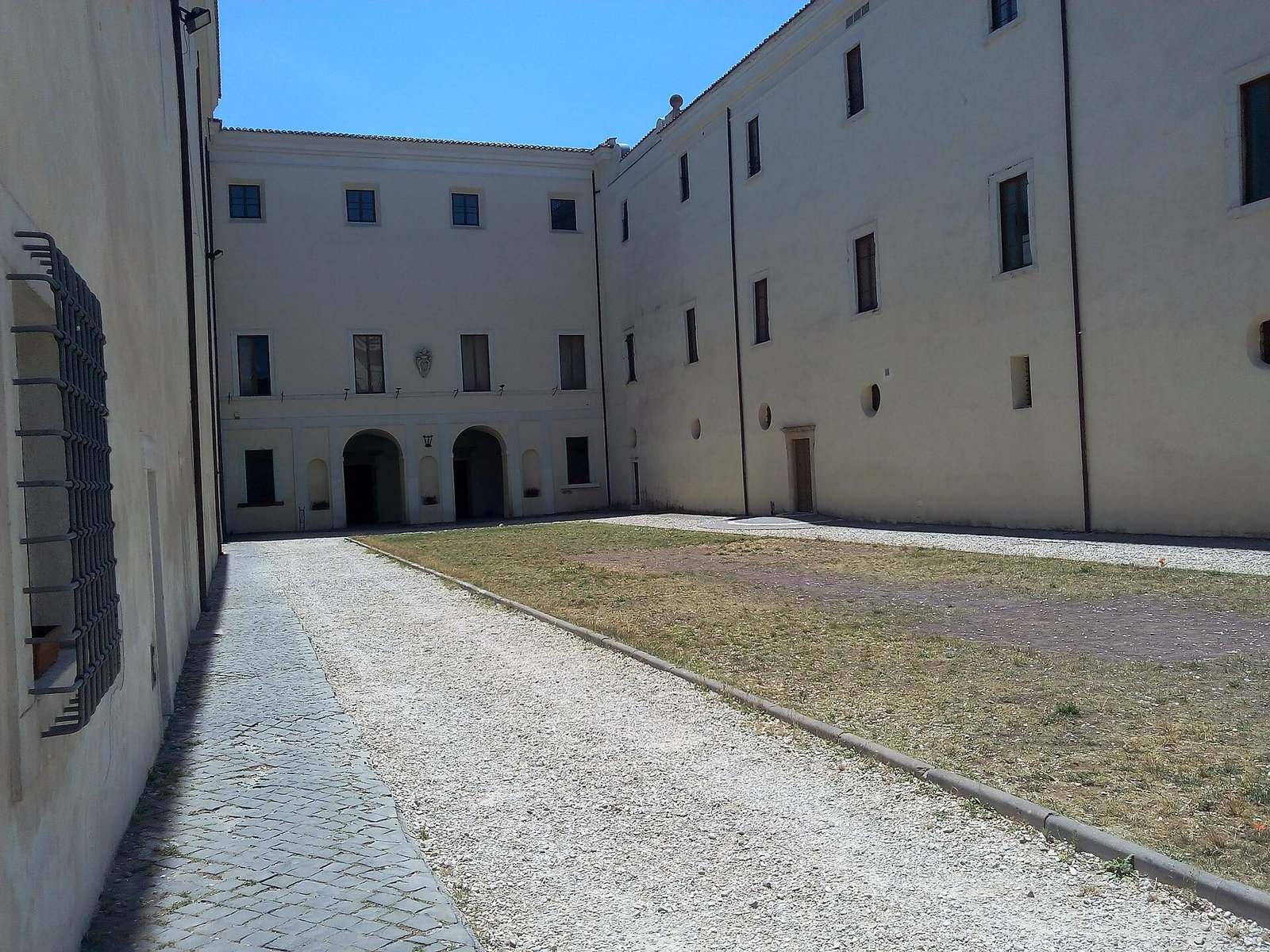
Zagarolo can be visited freely: the historic center, stretched along a tuff ridge about 36 kilometers east of Rome, is open to everyone and has no ticket. The fixed point is Palazzo Rospigliosi, at Piazza Indipendenza 6, owned by the Municipality of Zagarolo and home to the Museo del Giocattolo. For the museum the Ministry of Culture portal gives €5 full price, €2.50 reduced and €1 for residents. On opening days the official sources do not agree: before leaving, call 06 95769405.
What you find, concretely: a main street that runs along the ridge from one end to the other, a sequence of squares, two monumental gates, three major churches and a ducal palace born from a medieval fortress of the Colonna, then passed to the Ludovisi and the Rospigliosi. Inside the palace, 12 rooms of the museum tell the story of the toy from the 19th century onward. Around the village, the two ravines that isolate the hill explain better than any panel why a castle was built here.
Data checked on September 29, 2026 on the website of the Museo del Giocattolo di Zagarolo, on the museum's page on the Ministry of Culture portal, on the town's tourist portal and on the website of the Metropolitan City of Rome Capital. The ministry portal lists the museum as closed every day, while the 2026 tourist calendar reports openings and events. For this reason the advice is simple: a phone call to the museum in the week of your visit, before setting out.
At a glance: address, hours, ticket
- Address: Palazzo Rospigliosi, Piazza Indipendenza 6, 00039 Zagarolo (RM), home to the Museo del Giocattolo.
- Operator: Municipality of Zagarolo, museum contacts 06 95769405 and museodelgiocattolo@comunedizagarolo.it.
- How to get in: village, squares and gates with free access, museum with a ticket, churches open for services.
- Museum price: €5 full, €2.50 reduced, €1 residents according to the Ministry of Culture, free under six according to the tourist portal.
- Hours: the latest ordinary schedule published gives Friday, Saturday and Sunday from 9 to 13 and from 15 to 18, to be confirmed by phone.
- How to get there: FL6 regional train from Roma Termini to Zagarolo station, then a Cotral or Cilia bus toward the town.
- Accessibility: the operator does not publish information on barrier-free routes, to be requested by email.
Where it is and what you actually see
Zagarolo stands at about 310 meters of altitude, on a tuff hill about 2 kilometers long, flanked by two ravines, the Formale valley and the Foresta valley. The shape of the town depends entirely on this: a narrow tongue of rock, with houses lined up on the two edges and a single street running along it. Arriving from below you see the tuff walls first and only afterward the facades.
The village lies between the Casilina and the Prenestina, about 7 kilometers from Palestrina and about 20 from Tivoli. To the west the territory slopes down toward the countryside where the Latin city of Gabii once stood, to the south it looks toward the Castelli Romani. The municipality has just under 19,000 inhabitants, but a good part live outside the historic center, in the new areas and in the hamlet of Valle Martella.
The walking route is linear. You enter through the San Martino gate, on the northern tip of the town, and proceed along the ridge street touching the squares that also host the life of the town: Piazza Marconi, Piazza Santa Maria, Piazza Tre Cannelle, Piazza Paparelli and Piazza Indipendenza, where Palazzo Rospigliosi opens. In between are the churches of San Lorenzo Martire, San Pietro Apostolo and Santissima Annunziata, and the side alleys that descend toward the edges of the cliff.
Besides the San Martino gate, the sources mention a second monumental gate, the Rospigliosi gate, which bears the name of the last feudal family of the town. Together, the two gates mark the closed character of the old village: a single axis, few accesses, the flanks defended by rock. Those who walk the main street from one gate to the other cross, in practice, the whole history of the town, from the medieval houses to the 17th-century palaces.
The palace is the only interior that can be visited regularly. The museum occupies 12 exhibition rooms of about 1,000 square meters, according to the official website, and under the painted vaults displays toys ranging from the first half of the 19th century to the contemporary era. On the number of pieces the sources do not agree: the Ministry of Culture speaks of about 800 objects, the tourist portal of over 800 original pieces, the area's museum circuit of about 1,000. It remains a large collection, which takes at least an hour.
Outside the historic center there is a lesser-known chapter: encyclopedic sources report a ludus of the Roman age, that is, a structure for the training or shows of gladiators, in the locality of Colle del Pero, in the municipality's territory. There are no openings to the public or visiting route. Those who hear of it on site should know that there is no arena to visit and that the land should not be reached on your own.
The rest of the municipal territory deserves a couple of lines too. The main hamlet is Valle Martella, grown as a residential district far from the historic center, and the countryside around keeps vineyards, farmhouses and local roads that tell of the town's agricultural vocation. They are not places to visit with a precise program, but they explain why Zagarolo's best-known festival, besides that of the patron saint, is dedicated to grapes and wine.
A curiosity about Zagarolo (RM)
The San Martino gate, built in the early 17th century, bears the name of a pope. According to the description published by the FAI, the district was dedicated to Martin V, born Oddone Colonna, the pontiff of the family that held Zagarolo for centuries. The gate, in the same description, also celebrates the victors of the battle of Lepanto of 1571, with bas-reliefs of weapons, cuirasses and trophies and decorations that recall the defeated Ottoman world.
There is a detail that makes the gate more interesting than it seems at first sight. The two side columns, again according to the FAI, use archaeological material from Gabii and local tuff. That is, a Baroque monument built with pieces of an abandoned Latin city, a few kilometers away. It is a widespread practice in Lazio between the 16th and 17th centuries, but here you can touch it, at the entrance to the town.
The gate also has two different faces. From the north side it appears massive, flanked by two crenellated bastions, with an almost military look. From the south side, the one facing the town, it is topped by a tympanum with a marble bust. Above the keystone of the arch you see the coat of arms of the Rospigliosi family, who however arrived at Zagarolo only in 1670. The coat of arms therefore tells a story later than the construction, not that of the foundation.
Something nobody tells you about Zagarolo (RM)
The Marcantonio Colonna who appears in the 1591 meetings at Palazzo Rospigliosi, cited by the museum in connection with the revision of the Vulgate, cannot be the victor of Lepanto. The admiral of the papal fleet died in 1584, seven years earlier. The name repeats in the family, and the Marcantonio of those years is the cardinal of the same name. In reading the palace's story it's best to keep the two figures distinct, who in the more hurried accounts risk becoming one.
A second aspect almost always passes in silence: the palace you visit today is in large part the result of losses. The museum's website recalls that in 1773 an earthquake destroyed the medieval tower and that during the Second World War several frescoes were covered or destroyed. What remains is a lot, but it is a wounded palace later put back together, not an interior intact since the 16th century. Looking at the gaps is part of the visit.
Finally, the name of the museum on the Ministry of Culture portal is not the one you read on the door. There it appears as the Museo demoantropologico del giocattolo, a definition that explains the project well: the objects serve to tell about the society that produced them, trades, transport, leisure. Those who go in expecting only a display of dolls find instead a reading of 20th-century Italy through household objects.
The Museo del Giocattolo: what's in the 12 rooms?
The museum was born as a space dedicated to the world of the toy and its ties with social and cultural reality, according to the presentation on the official website, which describes it as a living container of cultural and educational initiatives. The route is organized by thematic areas, with rooms reserved for temporary exhibitions and activities with schools. The Ministry of Culture portal adds conferences, seminars and performances among the planned activities.
The objects on display cover a long span. The official website speaks of toys from the first half of the 19th century to the contemporary era, the tourist portal gives a core between the 1860s and the 1970s, with porcelain dolls, tin models and mechanical toys. The Ministry underlines the presence of European and American pieces of historical and aesthetic value. These are display-case objects, not to be touched, and the pace of the visit should be adjusted accordingly.
The area's museum circuit explains that the pieces come from important private collections and represent factories considered legendary in the history of the mechanical toy. The rooms follow themes of daily life such as transport, architecture and leisure. Those over 50 recognize something of their own childhood, those who are younger discover how grandparents and great-grandparents played. This exchange between generations is the museum's real strength.
Alongside the exhibition rooms the museum organizes workshops in which the techniques of building toys, puppets and marionettes are shown. These are activities designed mostly for schools and families, with dates and costs communicated from time to time. The advice is to choose a visit that coincides with a workshop: children go from looking to doing, and the palace becomes a place to remember instead of a row of display cases.
Palazzo Rospigliosi is owned by the Municipality of Zagarolo, which bought it in 1979 and manages it as the home of the museum and of cultural activities. The museum's website indicates a collaboration with the Pro Loco and with FAI volunteers for some initiatives, such as the special openings of the palace and the museum during the FAI Autumn Days, which in past years have included visits dedicated to the frescoes and to the history of the Rospigliosi family.
The San Martino gate has had particular attention from the FAI. The monument appears in the Luoghi del Cuore census in several editions, from 2012 to 2022, a sign of a strong bond between the town and its monumental entrance. The census does not automatically bring a restoration, but it has kept the question of the gate's state of conservation in the public eye, even beyond the municipality's borders.
The town's tourist portal, which publishes the calendar of events and museum openings, is run by a social promotion association in collaboration with a network of local businesses and with the Municipality. For general information on the town a tourist office also responds, reachable at the email turismozagarolo@gmail.com. For everything concerning the museum, instead, the reference remains the palace's secretariat, with the contacts given at the opening.
From Colonna fortress to ducal palace: how has the palace changed?
The first documentary attestation of the castle of Zagarolo dates to 1105, according to the current historical reconstruction. The museum's website recalls that the Colonna already held these territories around the year 1000. In 1252, with the division of the family's goods, Zagarolo passed to the branch of Oddone. The town then followed the fortunes and misfortunes of the Colonna, including the wars with the pontiffs that on several occasions struck their fiefs east of Rome.
In 1436 Zagarolo was besieged and conquered by papal troops led by Giovanni Maria Vitelleschi, as part of Pope Eugene IV's struggle against the Colonna. Recovery was slow. The leap in quality came in the late 16th century: in 1569 Pope Pius V raised Zagarolo to a duchy, and from 1571 Pompeo Colonna began the works that transformed the medieval fortress into a ducal residence, tying the house's new image to the victory of Lepanto.
In 1622 Cardinal Ludovico Ludovisi, nephew of Pope Gregory XV, bought the duchy from the Colonna and enlarged the palace with galleries meant for his collections. In 1670 the property passed to Giovan Battista Rospigliosi, and from then on the building has borne the family's name. From 1850 to 1900 it housed a convent, after 1915 it became the municipal seat and in 1979 Princess Elvina Pallavicini sold it to the Municipality, which has housed the museum there since 2005.
As for the decorations, the museum's website gives the vaults of the ground floor as 17th-century works, attributed to Orazio Zecca and Domenico Fetti. The frescoes with the battle of Lepanto have a debated attribution to Giovanni Bianchi called il Bertone, documented at Zagarolo between 1572 and 1573. In the 18th century Annibale Rotati painted the alcove. Three centuries of painting in a single building, often in rooms that today house toy display cases.
The link with Lepanto is the thread that holds palace and gate together. The victory of 1571 was celebrated by the Colonna because Marcantonio Colonna had led the papal galleys in the Christian fleet, and at Zagarolo that memory can be read twice: in the frescoes of the battle inside the palace and in the trophies carved on the San Martino gate. For a family that had lost and reconquered its fiefs, it was a way of writing its own glory on the walls of its home.
My advice for visiting Zagarolo (RM)
The advice is to start from the museum and only afterward walk the village. The palace gives the keys to reading everything else: the Colonna, Lepanto, the Ludovisi, the Rospigliosi, the earthquake. Coming out onto Piazza Indipendenza with these dates in your head, the San Martino gate, the coats of arms and the churches stop being stage backdrops and become chapters of a legible story. By contrast, done at the end of the day, the museum risks becoming just a pause.
It is then worth walking the ridge street in both directions, without hurry, and going down at least two or three side alleys to the edge of the cliff. It is there that you understand the geography of the town. The squares, instead, pay off more in the late afternoon, when the town fills up with those who live in it. For a complete visit, museum included, three or four hours are enough. The rest of the day can be spent in a nearby village.
Finally, in our judgment Zagarolo gives its best on ordinary weekends, away from the big festivals. The Sagra dell'Uva is the most crowded moment of the year, with music and osterie in all the squares, and for those who want to look at architecture and frescoes it is the worst date. Those looking for the festival go there on purpose. Those looking for the village pick any Saturday in spring or autumn, with the museum open and the streets free.
How much does it cost and how do you book the museum?
The village, the squares and the gates have free access at no cost. The ticket concerns only the Museo del Giocattolo inside Palazzo Rospigliosi. The fees published by the Ministry of Culture are €5 for full price, €2.50 for reduced and €1 for residents. The town's tourist portal reports free admission under six and discounts for groups, families and schools, without giving the precise amounts of the latter.
| Fee | Price | Source |
|---|---|---|
| Full | €5 | Ministry of Culture |
| Reduced | €2.50 | Ministry of Culture |
| Residents | €1 | Ministry of Culture |
| Children under six | free | Zagarolo tourist portal |
The operator does not publish online ticket sales: the official channel for information and bookings is the museum's secretariat, by phone at 06 95769405 or at the email museodelgiocattolo@comunedizagarolo.it given on the website of the Museo del Giocattolo. The Ministry portal also lists the address info@museogiocattolo.it. With a price so low, booking matters mostly for workshops, events and visits by schools and organized groups.
For workshops and events booking is often required. In March 2026 the museum offered a weekend titled Il Museo dei Ricordi, Saturday 21 and Sunday 22, with free admission from 16 to 19 and phone booking for the Saturday workshop. In the past the official website has announced themed evening visits for Halloween, paid and with booking. The calendar changes from month to month and should be checked on the museum's website and social page.
For schools and organized groups booking is the obligatory step, because the museum builds visits and workshops according to the age and number of participants. The amounts of the discounts are not published and should be asked of the secretariat, together with the available dates and the expected duration of the activities. In periods of special events it's best to move a few weeks in advance, because workshop places are limited.
Another well-known fact, yet rarely cited
It is known that Sixtus V had the Acqua Felice built, the aqueduct that brings water to Rome as far as the Moses Fountain. Less cited is the link with Zagarolo: the museum's website recalls that in 1585 the pope spent the night at Palazzo Rospigliosi during the aqueduct works. The springs are in the countryside between Colonna and Zagarolo, and the remains of the work can still be seen in Rome in the Aqueducts Park.
Those who in Rome pass under the arches of the Acqua Felice along Via Casilina, or in front of the monumental display on Via XX Settembre, rarely think of the hills to the east from which the water starts. Yet the route is a single one, and links the village with the urban heart of the late 16th-century city, from Porta Maggiore to the Quirinale. It is a useful thread for those who want to build a themed day on Rome's water.
The same holds for the Vulgate. The museum's website recalls that in 1591 the palace hosted the meetings of the theologians charged with overseeing the edition of the Latin text of the Bible, with the participation of Marcantonio Colonna and Robert Bellarmine, later proclaimed a saint. A revision destined to become the Catholic Church's reference text for centuries therefore passed, at least in part, through these rooms. It is a fact that general guides to Lazio tend to ignore.
The right photo to take at Zagarolo (RM)
The right photo is the San Martino gate seen from the north side, with the two crenellated bastions in the foreground and the arch in the center. It is the facade the town offers to those arriving, and it is the one that explains the character of the village: a fortress built on the edge of a ridge. The best light comes in the late afternoon, when the stone warms in color and the shadows draw the rustication of the two side arches.
A second framing is worth the effort, and it is the one from below, from the edges of the valley, where the tuff cliff supports the houses. From there you understand the shape of the town better than from any interior point. The advice is not to enter private property and to stay on public roads: the slopes are often cultivated or fenced, and the good view is found anyway along the roads that climb toward the center.
The squares also offer good images, especially in the hours when the town is lived in. Piazza Indipendenza, with the palace facade, does better in the raking light of the morning, while the ridge street gives its best when the perspective closes on a church facade. During the Sagra dell'Uva the allegorical floats and the costume parade are the most obvious subject, but the crowd makes any clean framing difficult.
Inside the museum photographs follow the rules posted at the ticket office, and it's best to ask before using the flash under the frescoed vaults. The most successful subject is often the contrast between the tin toys and the painted 17th-century walls: two worlds that were not supposed to meet. The moving train, listed by the area's museum circuit as one of the largest in Italy on rails, gives livelier shots than a still display case.
How do you get there from Rome by train and by car?
By train the simplest solution is the FL6 regional line, which leaves from Roma Termini and goes toward Frosinone and Cassino. Zagarolo station, opened in 1892 on the Rome-Naples line via Cassino, is a stopping point for almost all FL6 trains. The runs normally have an hourly frequency, with reduced service on Sundays and holidays. Updated times and prices can be found on Trenitalia.
Zagarolo station is not a minor stop. According to the encyclopedic reconstruction, 97 regional trains stop there in total, including two daily connections extended to Caserta. The stop is part of the variant between Ciampino and Segni activated in 1892, which gave these towns a direct link with Rome before motorization. Those arriving by train therefore follow the same route as the commuters who make the reverse trip every day.
Mind the fare. Zagarolo is outside the urban area of Rome, which for the integrated ticket ends at Capannelle, so the ordinary 100-minute ticket of Roman public transport is not valid. You need a regional ticket for the route, to be bought at the station, on the app or on the Trenitalia website. The station is not on the ridge of the historic center: to go up to the town there are the Cotral and Cilia bus lines, with times to be checked beforehand.
Bus times are consulted on the Cotral website, while for the Cilia lines it's best to check the company's website or ask at the station. On holidays the runs decrease, and the last useful bus to return to the train should be noted before starting the visit. Those thinking of walking up should calculate the distance and the climb on a map before leaving: with small children or in the hot hours of summer the bus remains the most convenient choice.
By car the distance from the center of Rome is about 36 kilometers. The fastest connection usually goes by the A1 motorway with exit at San Cesareo, while the historic roads are the Casilina and the Prenestina, slower at rush hour. The historic center has narrow streets and the tourist portal does not indicate a reference parking for visitors: it's best to leave the car at the edge of the town and walk up, asking the Municipality about any restrictions in force.
Some important events that happened here in history
The first event that marks Zagarolo is the siege of 1436, when the papal troops of Giovanni Maria Vitelleschi took the Colonna castle. It was one of the episodes of the long war between the popes and the great baronial families of Lazio, which redrew power in the countryside east of Rome. For Zagarolo it meant destruction and then a slow reconstruction, up to the season of the duchy in the late 16th century.
The second is the transformation into a duchy, ordered by Pius V in 1569, followed two years later by Pompeo Colonna's building site and the celebration of Lepanto in the new frescoes. In 1585 came Sixtus V, tied to the works on the Acqua Felice, and in 1591 the meetings on the Vulgate. In a few decades a family castle turned into a place where decisions were made that concerned Rome and the whole Church.
The third group of dates concerns the end of the feudal world. In 1773 the earthquake destroyed the medieval tower of the palace. In 1815 a papal order ended feudal rule, and in 1854 Pope Pius IX granted Zagarolo the title of city. In the 20th century the palace became the town hall, in the Second World War it lost part of its frescoes and in 1979 it passed definitively to the Municipality.
These are dates that can also be read while walking. The palace still shows the signs of the passage from fortress to residence, the San Martino gate carries together the emblems of Lepanto and the Rospigliosi coat of arms, the churches reflect the building campaigns of the 16th and 18th centuries. Zagarolo does not have a single great monument that sums up everything, and precisely for this reason it should be seen as a whole, where each century left a piece on the same tongue of tuff.
Who has passed through Zagarolo (RM)
According to the museum's website, in 1606 Michelangelo Merisi, Caravaggio, found refuge at Zagarolo with the Colonna and here painted the Supper at Emmaus and the Penitent Magdalene. It is the most famous passage in the town's history, and it should be read on three levels. The documents attest the painter's flight from Rome in 1606 and the Colonna's protection in their fiefs east of the city. Local tradition places the stay in this very palace.
What remains uncertain is the exact place and the sequence of the works: the reconstructions speak of the Colonna fiefs in general, and Zagarolo is not the only town that claims the guest. Those who want to follow the painter's traces will find in Rome the real paintings, in the churches and museums gathered on our page about Caravaggio in Rome. You come to Zagarolo for the context, not to see one of his canvases: there are none in the palace.
The other illustrious guests are less debated. The museum's website recalls Sixtus V's overnight stay in 1585, the presence of Robert Bellarmine in 1591 and, in the Rospigliosi period, the visits of Charles III of Bourbon and of the poet Vittorio Alfieri. These are brief passages, tied to the palace's role as a stop on the roads toward the south and the east, and they tell of a village less isolated than it appears today to those arriving from the Casilina.
Then there are the owners, who were also guests of rank: Pompeo Colonna, Cardinal Ludovico Ludovisi, Giovan Battista Rospigliosi and, until 1979, Princess Elvina Pallavicini. In Rome the same families left far better-known traces, like the Galleria Colonna, open on set dates. Seeing their country residence at Zagarolo helps understand how much the fiefs outside the city supported the prestige of the palaces of Rome.
The churches of the village: what do you see inside?
The church of San Lorenzo Martire, dedicated to the town's patron saint, was built in 1553 according to the area's museum circuit and has a Baroque facade. Inside it keeps the Triptych of the Most Holy Savior between Saints Peter and Paul, painted at the end of the 15th century by Antoniazzo Romano, the most sought-after painter in the Rome of those years. It is the oldest and most precious work of art in the village, and by itself justifies the stop.
The church of San Pietro Apostolo is the largest in the center, built at the end of the 18th century in Baroque style, with a broad elliptical dome. The church of Santissima Annunziata has a portal between two granite columns and keeps, according to current descriptions of the village, a fragment of a 12th-century fresco with the figure of Saint Albina. In the territory there is also the church of Madonna delle Grazie.
The opening hours of the churches are not published on the tourist pages. They generally open for services and, on some dates, for initiatives of the parish or local associations. The advice is to enter respectfully during Masses, without wandering among the pews, and to come back outside liturgical hours to look at the works. For information on the times of celebrations it's best to turn directly to the parish, reachable through the Municipality.
What happens at the Sagra dell'Uva?
The Sagra dell'Uva is Zagarolo's best-known festival and its 82nd edition is announced for October 2, 3 and 4, 2026, with events in the historic center from Piazza della Fontana Nuova to Viale Ungheria. The announcement speaks of a historical parade, grape harvest, allegorical floats, osterie and live music, with map and full program to come. The final program comes out on the channels of the Pro Loco and the Municipality in the days before the festival.
For the 2025 edition, the 81st, the Metropolitan City of Rome Capital described three days from Friday afternoon to Sunday evening, with events spread among Piazza Marconi, Piazza Indipendenza, Piazza Santa Maria, Piazza Tre Cannelle and Piazza Paparelli. The historical parade uses costumes from the Sartoria Storica di Zagarolo, and the shows in the square were free. The organization is up to the Pro Loco with the municipal administration, associations and volunteers.
In March 2024 the event received the recognition of Sagra di qualità, as the Metropolitan City reports, for its link with the cultural heritage and with the local economy. It is proof that it is not a simple food market. It remains true, though, that for three days the town becomes one big festival, and anyone who wants to see the palace and the churches in peace must choose another date.
Anyone who decides to go to the sagra anyway should plan as for a big event. The osterie set up in the squares have their own menus and prices, the evening shows draw crowds from all over the area, and getting around by car takes longer. If you arrive by train, check carefully the last bus available back to the station, because evening runs are few and the party goes on late into the night, especially on Saturday.
The other documented event is the patron saint's feast of San Lorenzo Martire, around August 10, with a program of religious celebrations and civic events published every year by the town hall. In those days the museum has also offered special evening openings in the past, along with a free outdoor event on science and astronomy, coinciding with the night of San Lorenzo. Dates and hours should always be checked on the calendar for the current year.
When is it closed and what should you not expect?
The museum follows a reduced and variable calendar. The latest regular schedule published by the tourist portal, in spring 2025, showed openings only on Friday, Saturday and Sunday, from 9 to 13 and from 15 to 18. An older page of the museum network instead lists openings from Tuesday to Sunday, with different hours. The Ministry's portal lists the museum as closed every day. Hence the rule: always make a phone call first.
On holidays the openings change again. For spring 2025 the tourist portal showed closures on Easter and Easter Monday and special hours on April 25 and May 1. In other years the official site has published closures on December 25 and January 1 and reduced openings on some dates of the holidays. None of this information automatically applies to 2026. The calendar is updated every year.
What not to expect: a postcard village, fully restored, with craft shops and signposted routes in every alley. Zagarolo is a living town, with traffic, construction sites, facades that need fixing and squares used by residents. Don't expect an art museum either. The palace has important frescoes, but the visit is built around the toys. If you arrive knowing this, you get an honest visit, far from the villages prepared for tourists.
Another limit concerns the churches. No tourist page publishes opening hours outside services, so the Triptych by Antoniazzo Romano in San Lorenzo Martire and the interior of San Pietro Apostolo may be closed right at the hour of your visit. To see them, it's best to pick a Sunday morning, before or after the Masses, or ask the parish in advance if any special openings are planned.
On accessibility the operator does not publish detailed information. The historic center is largely flat along the ridge, but the side alleys drop with steep slopes and steps. For the palace, which spreads over several levels, it's best to ask the office first if all the rooms can be reached without stairs. An email to museodelgiocattolo@comunedizagarolo.it is the surest way to get a written answer.
Eating in the area
Zagarolo is a town of wine and home cooking, and the osteria tradition returns to the square during the Sagra dell'Uva. On ordinary days the choice is that of a town in the province of Rome, with places mostly frequented by residents. The rule for choosing is the same as in the Castelli: be wary of places that rely only on first impressions and look for those where local people eat lunch.
Traps exist outside Rome too. Photo menus with dishes from every region, places open nonstop from morning to evening without a real kitchen break, items listed without a price, a different menu between the outside board and the sheet handed to you at the table: these are signs that apply everywhere. Romans avoid them not out of snobbery, but because they know there is almost always a kitchen behind them designed for people passing through just once.
During the festivals in the square, the sagra osterie have their own menus and prices that you should read before ordering. For anyone who wants to start with some safe reference points between Rome, the Castelli and the province, there is the list of addresses on Google Maps, to use as a starting point and always compare with the places' current hours, which in small towns often change from season to season.
What to combine in a day
Zagarolo is best understood together with its neighbors. Seven kilometers away is Palestrina, with the sanctuary of Fortuna Primigenia and the National Archaeological Museum inside Palazzo Colonna Barberini. A little further on is Castel San Pietro Romano, which looks down on the plain from above. In the same area, the Hadrian's villa at Palestrina completes the ancient picture.
Toward Rome, along Via Prenestina, the natural stop is Gabii, the Latin city the columns of the San Martino gate come from. The park's openings are limited and should be checked on the operator's website. If you travel with children, you can combine the museum with the Castello di Lunghezza, at the gates of Rome, or with the ideas collected on our page about Rome with children.
Toward the south the land rises to the Castelli Romani. Monte Compatri and Monte Porzio Catone are the closest, then come Frascati with Villa Aldobrandini and the archaeological area of Tusculum. The connection between these towns is easy by car, less so by public transport, which often forces you to go through Rome or through different stations.
If you use the FL6 line, you can instead continue southeast along the railway. Further on, in the province of Frosinone, the same line serves the station of Anagni, where you can visit the Palace of Boniface VIII. It's a combination that takes a full day and careful checking of train times, but it lets you build a route among the fiefs and papal cities of southern Lazio without driving.
For an unhurried day, the simplest formula remains Zagarolo in the morning and Palestrina in the afternoon, or the other way around. The two towns show two faces of the same power: the Colonna and the Barberini, the fief and the ancient sanctuary. Those with time for only one archaeological stop choose the museum in Palestrina, while those who prefer small discoveries stay in Zagarolo and add Colonna, the nearby village from which, according to tradition, the family takes its name.
A second combination looks north. Tivoli is about 20 kilometers away, with Villa d'Este and Hadrian's Villa, which however each need half a day. Further east, in the Aniene valley, you find Subiaco and villages like Vicovaro. For those who love hill towns, toward the Sabina there is also Palombara Sabina.
The third combination leads to the Castelli Romani, to the south. After Zagarolo, Frascati and Grottaferrata offer villas and abbeys, while Rocca di Papa and Marino close the day with views over the lakes. For those traveling with science-curious kids, the Monte Porzio Catone observatory is a good follow-up to the toy museum.
Frequently asked questions
How much does it cost to get into Zagarolo?
The village is free: streets, squares and gates are open to all. You only pay for the Toy Museum in Palazzo Rospigliosi, which according to the Ministry of Culture costs €5 full price, €2.50 reduced and €1 for residents. Children under six get in free according to the tourist portal. During events and special openings, admission can be free, as on the March 2026 weekend.
Is the Toy Museum open in 2026?
The museum organized events in 2026, such as the Il Museo dei Ricordi weekend of March 21 and 22, and so it is active. The sources, however, do not agree on the regular schedule: the ministry portal lists it as closed, while the tourist one showed openings from Friday to Sunday in 2025. The solution is to call 06 95769405 or write to museodelgiocattolo@comunedizagarolo.it before leaving, especially on holidays.
How do you get to Zagarolo by train from Rome?
From Roma Termini the regional FL6 line leaves toward Frosinone and Cassino, and almost all trains stop at Zagarolo station. You need a regional ticket, because the town is outside the urban area of Rome. The station is far from the historic center, reachable by Cotral and Cilia buses. It's best to check both train and bus times in advance, especially on Sunday.
How much time do you need to visit Zagarolo?
For the museum you need at least an hour and a half, more with children, and for the village another hour and a half at an easy pace, including the churches if open. In total, three or four hours are enough for a complete visit. With the rest of the day you can add Palestrina, seven kilometers away, or one of the towns of the Castelli Romani, preferably by car to avoid changing transport.
Is Zagarolo suitable for children?
Yes, especially for the Toy Museum, which offers workshops on making toys, puppets and marionettes and events for families at different times of the year. The moving little train is usually the piece that draws the most attention. The village, on the other hand, has streets with traffic and sloping alleys, so with strollers it's best to stay on the main street and the squares. For the workshops, booking is often required.
When is the Sagra dell'Uva in Zagarolo held?
The 82nd edition is announced for October 2, 3 and 4, 2026 in the historic center, between Piazza della Fontana Nuova and Viale Ungheria, with a historical parade, grape harvest, floats, osterie and music. The detailed program is published close to the dates by the Pro Loco and the town hall. In 2025 the festival ran from Friday afternoon to Sunday evening, with free shows in the town's main squares.
Did Caravaggio really live in Zagarolo?
The museum's website states that in 1606 Caravaggio found refuge in Palazzo Rospigliosi, then belonging to the Colonna, and painted the Supper at Emmaus and the Penitent Magdalene there. It is documented that the painter, having fled Rome that year, was protected by the Colonna in their fiefs. The exact place of his stay, however, remains a matter of tradition rather than certain proof. There are no works by him in the palace.
Where do you park in Zagarolo?
The tourist portal does not indicate a reference car park for visitors. The historic center has narrow streets, so the most sensible choice is to leave the car at the edge of town, along the roads that climb toward the center, and continue on foot. During the Sagra dell'Uva the central squares are taken over by the festival and nearby spots fill up early. Better to arrive in the early afternoon.
Who wrote this and from which sources
The text comes from the editorial team of Tour Leader Pro, the Rome-based company that designs itineraries, visits and cultural events across Rome and Lazio. The fares, hours and booking methods given here come from the official sources mentioned in the text, as of the date indicated at the start: the museum's website, the Ministry of Culture portal, the Zagarolo tourist portal and the Metropolitan City. Let us know what you find changed.
Organizing a visit to Zagarolo, for yourself or for a group, means above all fitting hours together: the reduced ones of the museum, those of the regional trains and those of the buses that climb up to the town. In the villages east of Rome, where public transport is sparse, every detail counts, and a useful resource for those organizing group trips is Tour Leader Pro.
Zagarolo works well as a stop on a wider trip through Lazio, among the Colonna fiefs, the Sacco valley, the Castelli Romani and the Aniene valley. If you have several days available, you can alternate villages, villas and archaeological sites, using Rome as a base or sleeping in the province. To put the stops together with realistic timing, a useful resource for building a multi-day itinerary is Italy Planner.