Basilica of Sant’Agnese fuori le Mura
In short. The Basilica of Sant'Agnese fuori le Mura is at Via Nomentana 349, in Rome, in a part of the city where the ancient consular road still runs straight toward the northeast between the buildings of the Trieste district and the first outskirts of Monte Sacro.
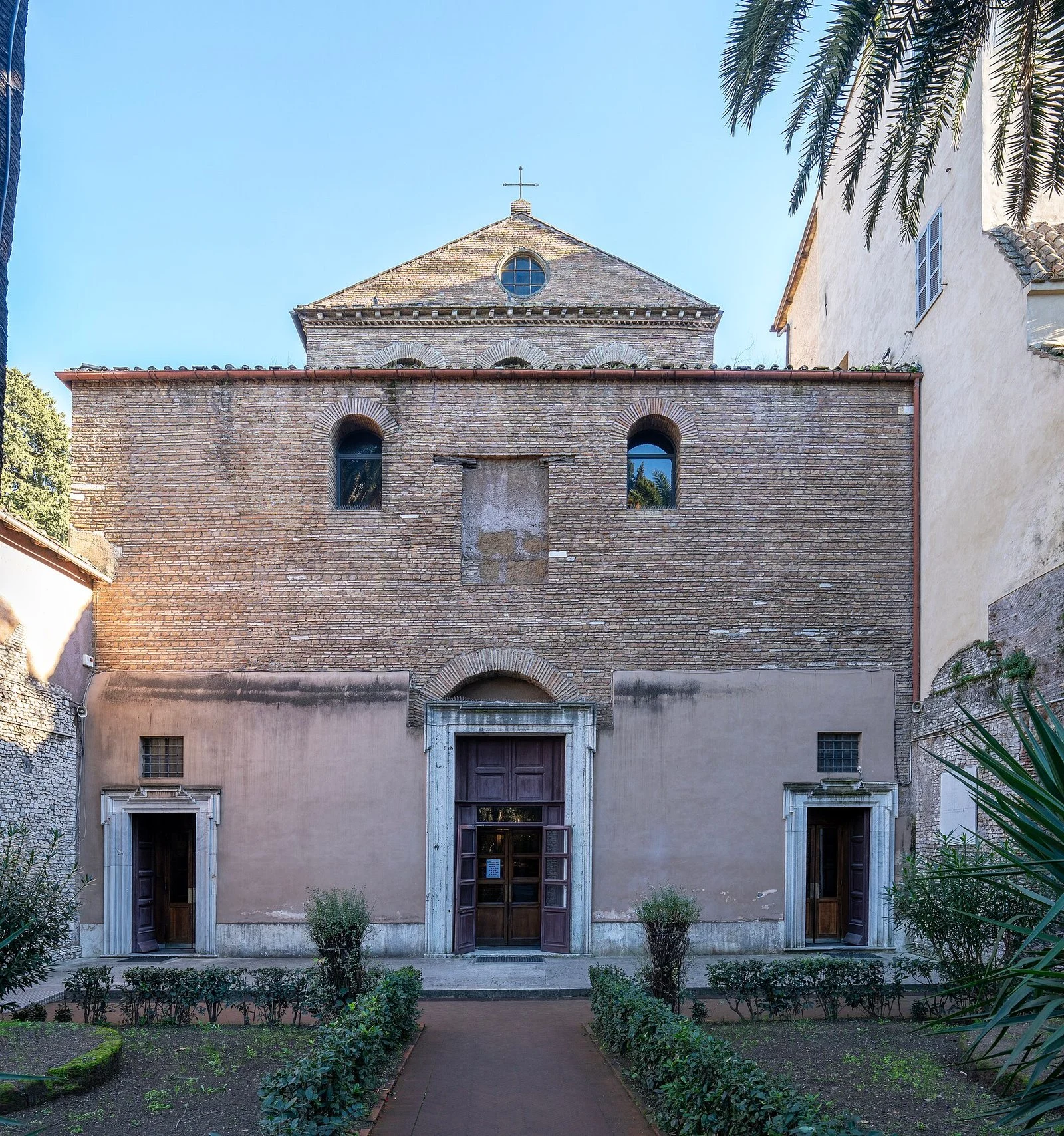
The Basilica of Sant'Agnese fuori le Mura is at Via Nomentana 349, in Rome, in a part of the city where the ancient consular road still runs straight toward the northeast between the buildings of the Trieste district and the first outskirts of Monte Sacro. The complex includes three distinct elements that are almost always visited together: the Christian basilica built in the 7th century over an older Constantinian structure, the catacombs that extend over several levels under and around the building, and the Mausoleum of Santa Costanza, a centrally planned building of the 4th century with one of the most important early Christian mosaic cycles in Rome. Anyone coming from the historic center can combine the visit with that of Villa Torlonia, a few hundred meters away on the same Via Nomentana, with its Casina delle Civette.
Few places in Rome allow you, in so compact a space, to retrace almost 1,700 years of history without moving: from the burial of a very young Christian martyr at the beginning of the 4th century, to the great basilica commissioned by the daughter of the emperor Constantine, to the church rebuilt in the 7th century that still welcomes worshippers and visitors along Via Nomentana today. It is a complex that requires time and attention, not a stop to be ticked off in a rush between two commitments, but precisely for this reason it gives back, to those who allow themselves the time, one of the densest experiences in all of early Christian Rome.
Where the Basilica of Sant'Agnese fuori le Mura is and how to get there
The very name of the monument tells its position: fuori le Mura means outside the perimeter of the Aurelian Walls, the defensive ring built at the end of the 3rd century around ancient Rome. Sant'Agnese, like San Lorenzo, like San Paolo, belongs to that family of cemetery basilicas that arose along the consular roads, at points where Roman law allowed burials, that is, outside the inhabited center. Via Nomentana left the city at Porta Nomentana, now absorbed into the Walls of Rome near Porta Pia, and continued toward the Sabina passing through the area where in the 4th century the first places of worship tied to the tomb of the young martyr arose.
By car, bus and metro
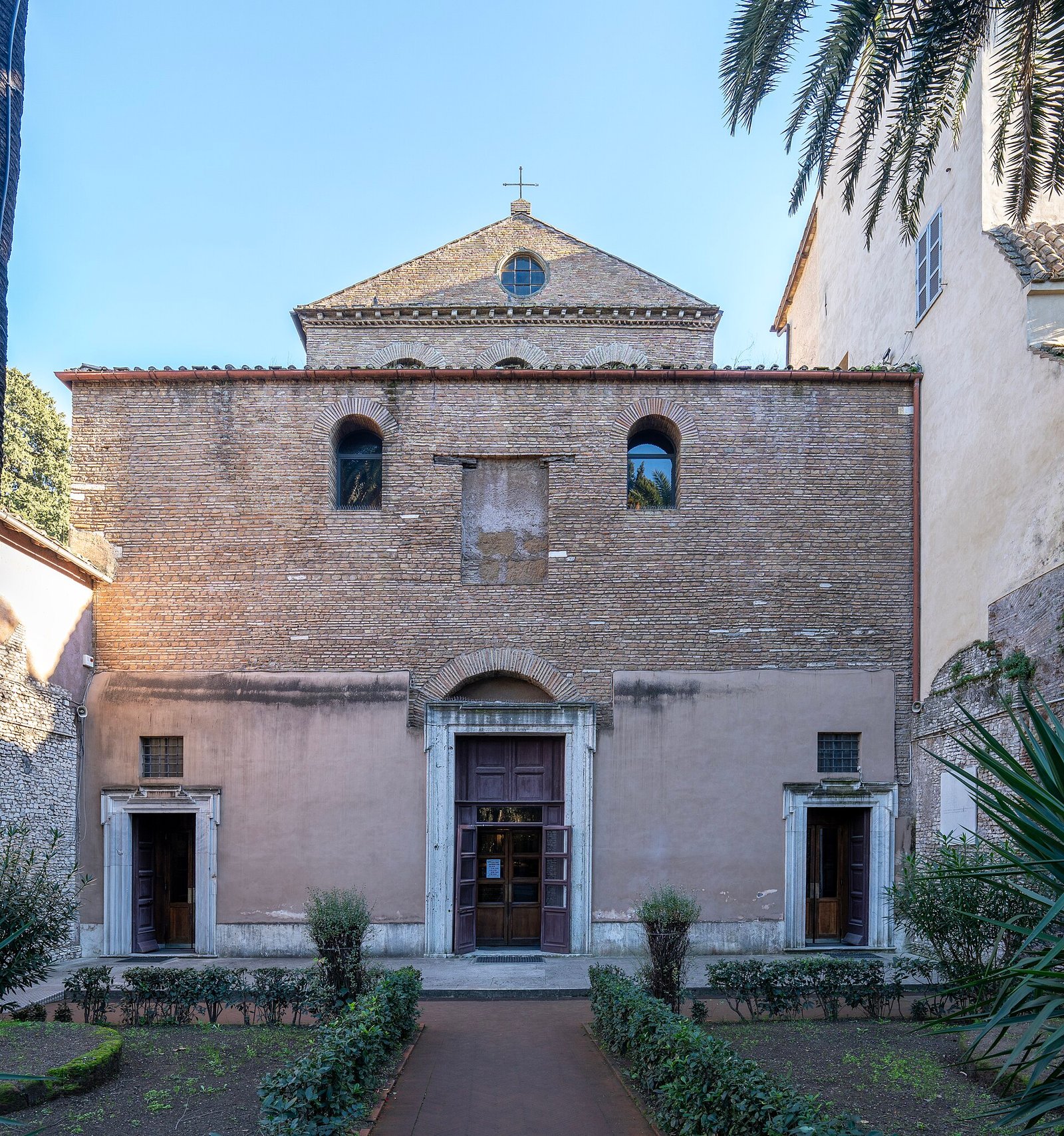
The Trieste district, where the basilica is located, is served by several bus lines that run along Via Nomentana starting from the Porta Pia area and from Termini station. The nearest stops are called Sant'Agnese or Nomentana and are a few steps from the entrance of the complex. The metro does not come this far: the nearest station is Bologna, on line B, from which you continue on foot along Viale Regina Margherita and then along Via Nomentana for about 20 minutes, or take a connecting bus. Those traveling by car find paid parking on the side streets of the Trieste district, an upscale residential area with little free parking available in the daytime hours of weekdays.
On foot from Villa Torlonia and the Trieste district
The most pleasant way to arrive, for those staying in this part of the city, is on foot along Via Nomentana itself, which from Porta Pia climbs along a tree-lined route until it passes Villa Torlonia on the right. The neighborhood surrounding the basilica takes its name from nearby Piazza Trieste, today better known as Piazza Quadrata, and was built between the end of the 19th century and the first decades of the 20th as a bourgeois expansion of the city beyond Porta Pia. It is an urban fabric of Liberty-style and early 20th-century small apartment buildings, wide avenues and a fair amount of shared green space, very different from the density of the historic center.
Walking from Porta Pia station along Via Nomentana you first meet the grand buildings put up in the first decades of Italian unity, then the tree-lined front of Villa Torlonia, and finally, after passing the intersection with Via di Santa Costanza, the boundary wall of the Sant'Agnese complex, recognizable from afar by the bell tower of the basilica poking out above the trees. It is a walk of about 20 minutes from Porta Pia, almost entirely in the shade of the pines that line the road, and it lets you grasp naturally the passage from the 19th-century city to the greener, residential edge of northern Rome.
For those coming from farther away, a useful landmark is Piazza Annibaliano, a hub for several bus lines and an informal crossroads between the Trieste district and Monte Sacro: from here the basilica is a few minutes' walk going up Via Nomentana toward the north. The name of the square, not by chance, recalls Annibaliano, the first husband of Constantina, to whom the story of the nearby mausoleum is indirectly tied, a place-name detail few visitors notice as they get off the bus.
What the Sant'Agnese fuori le Mura complex really is
Here it is best to be clear from the start, because it is the point that generates the most confusion among visitors who arrive without a guide. Under the name Sant'Agnese fuori le Mura three monuments are intertwined, born at different times and with different functions, united only by devotion to the same martyr and by the same ancient cemetery area.
The basilica of Honorius I, the catacombs and the mausoleum of Constantina
The first element is the present basilica, the building used today for worship and seen on entering through the portal on Via Nomentana: it was built by Pope Honorius I in the 7th century, and still preserves the layout and a good part of the structure of that time. The second element is the catacombs, which extend over three underground levels datable between the 2nd and 5th centuries, dug in the tuff according to the Christian funerary custom of the first centuries, when burial in loculi cut into the rock offered an economical and widespread solution for the Christian communities of Rome. The third element, separated from the basilica by a short walk, is the Mausoleum of Santa Costanza, built at the beginning of the 4th century as a monumental tomb for Constantina, daughter of the emperor Constantine, and turned into a church at a later time.
Even before the basilica of Honorius there existed, according to the historiographical tradition, an older Constantinian basilica, commissioned in the 4th century by Constantina herself in honor of the martyr buried in that area. Of that larger building, with a plan similar to a circus with an ambulatory and raised galleries, what remains today is mainly archaeological traces in the ground around the complex, while the church you visit is the later one commissioned by Honorius I.
A multi-level layout, hard to read all at once
Those who come for the first time often struggle to understand where one building ends and another begins, because the complex develops at different levels and over a fairly extensive area, with the basilica accessible from the level of Via Nomentana through a long staircase that descends toward the original floor, lower than the present street. This difference in level is not a random architectural detail: it tells that, over the centuries, the ground around the basilica has gradually risen, partly burying the oldest entrances and forcing, already in the medieval period, the building of a descent to reach the original walking level of the church of Honorius I. Going down that staircase, with the side walls closing in, is in itself a small foretaste of what it means to move in an underground place of worship, even before reaching the catacombs proper.
The mausoleum of Santa Costanza, by contrast, is at a level closer to the modern street, because it was built at a distance from the oldest cemetery core, on a plateau that over the centuries suffered less drastic burial. This difference in level between the two buildings, the sunken basilica and the more visible mausoleum, is one of the aspects that makes the visit to the complex a small open-air exercise in stratigraphic reading, understandable even to those with no archaeological training.
Who Saint Agnes was and why her basilica stands here
Agnes is one of the most venerated martyrs of the early Church, remembered by the sources as a very young Roman Christian killed during the persecutions of the early 4th century, at a time when professing the Christian faith was still prosecuted by imperial law. Tradition, handed down among others by hagiographic texts and by authors such as Saint Ambrose, has her barely more than 13 at the time of martyrdom, and her very young age contributed to making her, in the following centuries, a symbol of purity and firmness in faith.
The burial along Via Nomentana
According to tradition, the martyr's body was buried by her family in a plot of land they owned along Via Nomentana, in the cemetery area that would later become the site of the catacombs that today bear her name. This choice was not random: the great Roman Christian families often owned land outside the walls, intended for burial, and around the tombs of the most venerated martyrs ever more extensive cemetery complexes quickly developed, destinations of pilgrimage already in the first centuries of Christianity.
Worship and devotion through the centuries
Within a few generations the tomb of Agnes became one of the most frequented places of worship in Christian Rome, to the point of justifying the building of a large basilica commissioned by Constantina in the 4th century and, when that fell into ruin, the reconstruction on a smaller but sturdier scale commissioned by Honorius I in the 7th century. It is to this second building phase that we owe the building still in use today, one of the few Roman examples of an early medieval church that has preserved its original layout almost intact, including the rows of reused ancient columns along the aisles.
A cult spread well beyond Rome
The fame of Agnes did not remain confined to the city that guarded her remains. From the 5th century on, her name appears in liturgical and hagiographic texts spread throughout the Western Christian world, and in the following centuries churches were dedicated to her in many Italian and European cities, from the basilica of Sant'Agnese in Agone in Piazza Navona, built in the Baroque era on the spot where according to tradition the saint suffered part of her martyrdom, to dedications much farther from Rome. This double rooting, the cemetery basilica on Via Nomentana tied to the burial and the church in Piazza Navona tied to the torture, explains why in the city there are two different places named for the same saint, often confused by those visiting Rome for the first time: the basilica in Piazza Navona tells the moment of persecution, the one on Via Nomentana guards the place of burial and of the first forms of worship.
The apse mosaic, the matroneum and the interior of the basilica
Whoever enters the Basilica of Sant'Agnese fuori le Mura finds an interior with three aisles separated by salvaged ancient columns, recovered from earlier Roman buildings and reused according to a very common practice in early medieval sacred building. Above the side aisles runs the matroneum, a raised gallery that looks onto the central nave through a series of arches: it was the space reserved for women during liturgical services, according to a custom the basilica shares with nearby San Lorenzo fuori le Mura, another great Roman cemetery sanctuary of the era.
The iconography of the apse mosaic
The highest point of the interior, in both architectural and artistic terms, is the mosaic that decorates the apse semi-dome, made in the time of Honorius I and preserved in remarkable condition to this day. On a gold ground, following the Byzantine taste widespread in Rome in that period, stands the figure of Saint Agnes portrayed in the sumptuous garments of a Byzantine empress, not in the plain clothes of the persecuted martyr. At her feet are shown the sword and the flames, symbols of the instruments of her martyrdom, while in her hands she holds the scroll of Holy Scripture. At the sides of the saint appear two papal figures: on one side Honorius I, who offers as a gift a model of the basilica itself, a gesture typical of the iconography of Roman apse mosaics to indicate the pontiff who commissioned the work. On the other a second pontiff, whose identification remains debated among scholars. A hand emerging from above holds out a crown toward the martyr, an image of the heavenly reward granted to those who suffered martyrdom for the faith.
The reused columns and marbles
Walking along the aisles you notice capitals and column shafts that do not belong to a unified design, but come from older Roman buildings, dismantled and reused in the construction of the Honorian basilica: a practice that in the 7th century was by then the norm in Rome, when the quarries of fine marble were no longer active on a large scale and the heritage of ancient buildings in ruins supplied ready-to-use material. The result is an interior that mixes different eras in a single space, where each column carries its own story, often impossible to reconstruct precisely.
The statue and the reliquary
On the high altar of the basilica there is a statue of Saint Agnes, made of oriental alabaster with head, hands and feet in gilded bronze, a work of the Baroque era that stands alongside, without replacing it, the older memory kept in the apse mosaic above. Under the altar, according to traditional devotion, the relics of the martyr are preserved, a destination of uninterrupted veneration since the first centuries of the cult. It is a detail that explains why the space remains, still today, an active place of prayer and not a simple museum container: liturgical services follow one another regularly, and the tourist visit must always reckon with this daily use of the space.
The wooden ceiling and later restorations
The ceiling of the central nave, with wooden coffers, belongs to a later remaking than the original layout of Honorius I, the result of the restoration and embellishment works the basilica went through in the modern age, in particular between the 16th and 17th centuries, when many of the great Roman cemetery basilicas were updated to the taste of the time without however upsetting their medieval layout. These later interventions coexist, within the same church, with the early medieval structures and with the apse mosaic of the 7th century, in a layering that is normal in almost all long-lived Roman places of worship, but that here is particularly legible precisely because of the compactness of the space.
The conservation of the mosaic through the centuries
The apse mosaic is considered, among scholars of early Christian art, one of the few great Roman mosaic cycles of the 7th century to have come down to us in conditions of preservation deemed good compared with the average of its contemporaries, without the heavy 19th-century remakings that have instead deeply altered other apse mosaics of the city. This does not mean the work has remained completely free of interventions: like almost all ancient mosaics exposed for centuries to the humidity and infiltration typical of Roman buildings, it has undergone over time conservative restorations aimed at stopping the detachment of the tesserae and consolidating the plaster beneath, carried out with the philological caution now applied to the great mosaic cycles of the early medieval age. The result is an image that, even with some integrations visible to an expert eye, gives back with notable fidelity the design and the colors intended by the mosaicists of the 7th century.
The catacombs of Sant'Agnese
The catacombs that extend under and around the basilica are among the most extensive and evocative in Rome, arranged on three superimposed levels dug in the tuff bank that characterizes the subsoil of this part of the city. The oldest level, datable to the 2nd century, is the one that can be visited today with an authorized guide: narrow galleries, loculi cut into the wall in several superimposed rows, a few larger cubicula intended for the wealthier families, with traces of painted plaster and funerary inscriptions that give back names and formulas of devotion of the Christian community of the first centuries.
The three phases of excavation and the loculi
The catacombs of Sant'Agnese were born, like all the great Roman catacombs, from nuclei of private burial that gradually expanded as the Christian community of the area grew. The oldest level, dug in the 2nd century, developed in a radial pattern around the area where tradition placed the martyr's tomb. In the following centuries, between the 3rd and 5th, the network of galleries extended to lower levels, following the consistency of the tuff bank and the need to gain ever new space for burials, in ground that, as in all Roman catacombs, was private property granted for the funerary use of the Christian community.
Along the walls of the galleries follow the loculi, rectangular niches dug directly into the tuff and arranged in several superimposed rows, each intended for a single deceased person and originally closed with a slab of marble, terracotta or simply bricks, often incised with the name of the deceased, a short formula of faith or a Christian symbol such as the fish or the anchor. There is no lack of larger cubicula, small funerary rooms of wealthy families, with traces of painted plaster that give an idea, even if fragmentary, of the original decoration of these spaces. The guided visit goes through only a limited part of the whole underground network, the best preserved and in safety conditions suitable for public access.
How to visit
Access to the catacombs of Sant'Agnese is exclusively with an authorized guide: it is not possible to walk them alone, for safety reasons tied to the complexity of the underground network and for the protection of a place that remains, to all effects, a cemetery. The guided visit lasts about half an hour and is usually held in Italian and English. It is best to check the departure times in advance, which generally follow a morning and an afternoon slot on weekdays, with reduced hours or by reservation on Sundays for large groups, and closure on the main religious and civil holidays. Updated details on shifts, available languages and online booking can be found on the official website of the complex.
A practical aspect to keep in mind: the temperature underground stays low and constant all year, as in every Roman catacomb, so even on the hottest summer days it is best to bring something warmer than what you wear above ground. The route includes some stretches of stairs and uneven floors, not always easy for those with mobility difficulties: those with particular needs do well to find out in advance from the staff of the complex about the accessibility conditions.
The catacombs of Sant'Agnese are part of a wider network of underground cemeteries that surround Rome along the main consular roads, each tied to the memory of one or more martyrs and each with its own characteristics of excavation and decoration. Comparing this visit with that of another great catacomb complex, such as the nearby catacombs of Priscilla on Via Salaria, helps to grasp both the elements common to all the Christian burials of the first centuries, and the peculiarities that each site preserves according to its own history and geological context.
The Mausoleum of Santa Costanza
A few steps from the basilica, reachable by a short walk inside the complex, stands the Mausoleum of Santa Costanza, one of the best-preserved centrally planned buildings in the whole of late antique Roman architecture. It was built at the beginning of the 4th century as a tomb for Constantina, daughter of the emperor Constantine, and for her sister Helena. The name by which it is known today, Santa Costanza, comes from a later and affectionate Italianization of the original name Constantina.
The architecture and the 12 pairs of columns
The building develops around a central space covered by a dome, bounded by 12 pairs of granite columns supporting a raised drum pierced by windows. Around this core runs an annular ambulatory covered by a barrel vault, entirely clad in one of the most important early Christian mosaic cycles to have come down to us. In the Renaissance the building was for a long time called the Temple of Bacchus, precisely because of the decorative motifs of the vault, still strongly tied to a figurative repertoire of pagan rather than Christian taste.
The 4th-century mosaics and the grape harvest scenes
The compartments of the annular vault, decorated with plant motifs, vine shoots, putti busy gathering grapes and grape harvest scenes, bear witness to a moment of transition in Roman funerary art, in which Christian iconography had not yet developed a fully autonomous figurative repertoire and drew freely on the contemporary pagan decorative language. Among the surviving mosaics there are also two busts, one female and one male, which according to some readings could depict Constantina herself and her first husband Hannibalianus. The princess's original sarcophagus in red porphyry, decorated on the lid with a female head among festoons and on the tub with a grape harvest scene, is today kept in the Vatican Museums. In the mausoleum there is a copy.
The succession of mosaic compartments along the ambulatory is not random: proceeding along the circular route, the decorative motifs change progressively, passing from simpler geometric schemes to ever more elaborate plant compositions, up to the panels with grape harvest scenes and putti at work among the vines. This progression, according to the reading most accredited by scholars, was not conceived only as decoration for its own sake, but symbolically accompanied the visitor's path around the tomb, in a figurative crescendo that joined the language of pagan agricultural abundance to a more properly funerary meaning of rebirth, consistent with the sepulchral purpose of the building.
From mausoleum to church
The passage of the building from imperial mausoleum to Christian place of worship took place at a time after its construction, when the original function of dynastic tomb gradually gave way to a liturgical use more like that of an actual church. This transformation, common to several late antique mausolea in Rome, explains why today the Mausoleum of Santa Costanza is considered fully a church, with an altar and all, while preserving intact its original nature as a centrally planned funerary monument: a double identity, tomb and place of prayer, that makes this building a recurring case study in courses on the history of early Christian architecture.
A curiosity about the Basilica of Sant'Agnese fuori le Mura
Every January 21, the day of the liturgical feast of Saint Agnes, a ceremony takes place in the basilica that few visitors know but that ties this place directly to every metropolitan archbishop appointed anywhere in the Catholic world. During mass two lambs, raised specially for the occasion, are blessed. Their name echoes by assonance that of the saint, agnello and Agnese share the same sound root, even though the etymology of the name Agnese in fact comes from Greek and means chaste, pure. The animals are then entrusted to the Benedictine nuns of a Roman monastery, who weave their wool over the course of the year to make the pallia, the narrow stoles of white wool decorated with black crosses that the pope personally hands to the new metropolitan archbishops elected around the world, a sign of their bond with the see of Rome. An agricultural and artisanal ceremony, with two real lambs carried in procession among the pews of the basilica, which every year ends up clothing, literally, the top of the ecclesiastical hierarchy of half the planet.
Something nobody tells you about the Basilica of Sant'Agnese fuori le Mura
The basilica you visit today is not, strictly speaking, the building commissioned by Constantina in the 4th century in honor of the martyr. That first basilica, much larger, stood partly in an area different from the present church, with an elongated plan like that of a circus, lateral ambulatories and a continuous raised gallery: an architectural scheme found identical in other great Roman cemetery basilicas of the 4th century, such as that of San Sebastiano or that dedicated to San Lorenzo. Of that original structure what remains today is mainly archaeological traces in the ground around the complex, not a building that can be visited: the church you walk through along Via Nomentana is the one rebuilt by Pope Honorius I in the 7th century, smaller, more intimate, with an orientation and a layout partly different from those of the Constantinian basilica.
Whoever walks today in the green area surrounding the basilica and the mausoleum is often, without knowing it, crossing precisely the footprint of the great vanished basilica: the wall remains emerge only in a few points, inconspicuous to an untrained eye, and for this reason most visitors ignore them completely, concentrating their attention only on the buildings that can be visited today. The best prepared guides, instead, stop at exactly those apparently anonymous points to explain, with the help of plans and graphic reconstructions, how the monumental whole must have looked in its Constantinian phase, when the entire complex occupied a significantly larger area than the one perceptible today.
This means that the visitor entering from Via Nomentana is walking in a building of the 7th century, not the 4th, though it arose on exactly the same cemetery footprint and the same devotion. It is a distinction that the more attentive guides always point out, because it helps to understand why the interior of the basilica, with its reused columns and its compact layout, has a character so different from the grandeur one would expect from a Constantinian sanctuary.
My advice for visiting the Basilica of Sant'Agnese fuori le Mura
The most useful practical advice concerns the order of the visit. The catacombs can only be seen with an authorized guide and at fixed times, so it is best to arrive with some margin and check the nearest shift in advance, without taking for granted that you can enter as soon as you pass the gate. Booking the catacomb visit a few days ahead, especially on weekends and in the high season months, avoids waiting or, worse, the risk of finding the shift already full.
The visiting order that works best
After the catacombs, the basilica is visited at leisure, raising your eyes to the apse mosaic and leaving a few extra minutes for the matroneum, which from above gives a different perspective on the whole layout of the three aisles. The Mausoleum of Santa Costanza should be left for last, not because it is less important, quite the contrary, but because it requires a slower pace: the mosaics of the annular vault can be appreciated only by walking slowly along the ambulatory and looking up, a movement that haste ruins completely. An hour and a half in total, across the three places, is the realistic baseline for those who do not want to rush.
One last note of respect: the basilica is a church in daily use and the catacombs remain an ancient burial place. It is worth dressing soberly, covering shoulders and knees, and keeping your voice low throughout the visit, including in the underground galleries.
When to avoid the visit
A second practical piece of advice concerns the times of religious services: the basilica remains an active place of worship, with masses following one another through the day, in particular on Sunday morning and on the great feasts, when tourist access may be suspended or limited during the celebrations. Those organizing the visit on a holiday do well to check the times of the services in advance on the official website of the complex, so as not to have to interrupt the tour or wait outside the portal. January 21, the day of the blessing of the lambs, is probably the busiest moment of the year, along with the Easter period: those looking for a more intimate experience would do well to avoid that date, reserving it if anything for those who precisely want to attend the liturgical ceremony.
Another well-known fact, yet rarely cited
Many know that Via Nomentana was one of the great consular roads leaving Rome toward the northeast, in the direction of the Sabina. Fewer people dwell on the fact that the whole neighborhood now surrounding the basilica, the Trieste district, was born as a bourgeois urban planning project only from the last decades of the 19th century, therefore in a relatively recent era compared with the 1,700 years of history of the religious complex around which it grew. For centuries, before that building expansion, the basilica and the mausoleum stood in open countryside, surrounded by vineyards and vegetable gardens, along a road that connected Rome to the Sabina more than to the residential neighborhoods that line it today.
This explains why, arriving today from the center, the passage from the dense city of Porta Pia to the wider breathing room of Via Nomentana around Villa Torlonia and Sant'Agnese is so sharp: it is not a random effect, but the residue of a topography that for centuries kept this stretch of road outside the actual urban fabric, reserving it for villas, cemeteries and sanctuaries.
The Nomentano district and the border with Trieste
An equally little-cited fact concerns administrative boundaries. The Sant'Agnese complex is in fact on the border between two distinct districts of the modern city, the Trieste district and the Nomentano district, both named after the same consular road but which developed with slightly different urban characters, the first more residential and upscale, the second grown around the axes linking with the center and with a greater presence of commercial activity. Walking from the basilica toward the center, toward Porta Pia, you imperceptibly cross this border, with nothing in the urban landscape signaling it sharply, except a slight change in the style of the facades and in the density of the ground-floor shops.
Another curiosity tied to place names concerns Via di Sant'Agnese and Via di Santa Costanza, the two streets that lead from Via Nomentana directly to the entrances of the complex: names that seem obvious today, but that bear witness to how much the memory of these two buildings has remained imprinted in the urban planning of the neighborhood since the first master plans of post-unification Rome, when building expansion necessarily had to reckon with the presence of a religious monument of such importance.
The right photo to take at the Basilica of Sant'Agnese fuori le Mura
The photo worth the visit is not taken at the entrance, but by raising your eyes to the apse semi-dome, with the lens framing the whole figure of Saint Agnes on the gold ground and, if the light allows, also a portion of the ancient columns of the nave in the foreground: it is the framing that best conveys the contrast between the sobriety of early medieval architecture and the chromatic richness of the Byzantine-style mosaic. The best light comes in the middle hours of the morning, when the natural illumination filtering through the high windows of the central nave supplements the artificial one and gives back the colors of the mosaic without the harsher reflections of the late afternoon.
In the Mausoleum of Santa Costanza the right photo is something else entirely: it is best to stand in the center of the annular ambulatory, under one of the best-preserved bays, and shoot vertically upward, including in the same shot the paired granite columns and one of the mosaic compartments with the vine shoots. It is the only way to convey how the circular space wraps around whoever walks through it, an effect that no frontal photo manages to capture.
The access staircase to the basilica
A third framing, less obvious but very effective, is taken from the top of the long staircase that descends from the level of Via Nomentana to the floor of the basilica: photographed from the start of the descent, with the entrance portal opening at the bottom, it conveys well the sense of historical layering of the place, that difference in level between the modern height and the early medieval one of which few other Roman buildings preserve a testimony as legible to the naked eye. It is a photo that works better without flash and without people moving in the frame, so it is best to try it in the less crowded time slots, usually early morning during the week.
Some important events that happened here in history
The first event that marks the history of this place is, naturally, the martyrdom of Agnes, at the beginning of the 4th century, and her burial along Via Nomentana in a family plot: from that moment the cemetery area around the tomb began to attract pilgrims and new burials, following the custom, widespread throughout ancient Christian Rome, of wanting to be buried as close as possible to the remains of a venerated martyr.
A context of great Constantinian building projects
To understand the size and importance of the first basilica commissioned by Constantina, it has to be placed in the wider context of the religious building promoted by the Constantinian dynasty in Rome over the 4th century. In the same decades there arose, again outside the perimeter of the Aurelian Walls and again along the consular roads, other great cemetery basilicas tied to the memory of martyrs: that of San Lorenzo on Via Tiburtina, that of San Sebastiano on Via Appia, that of Saints Marcellinus and Peter on Via Labicana. All shared a similar scheme, with an elongated three-aisle plan, a perimeter ambulatory and a continuous raised gallery, designed to allow the faithful to walk around the most venerated burials during liturgical celebrations without disturbing the tombs themselves.
The Constantinian basilica of Sant'Agnese fits fully into this building program, driven in large part by the women of the imperial family, Constantina first of all, who financed the construction of sanctuaries dedicated to particularly venerated martyrs and saints. It is a chapter of architectural history that directly ties the religious policy of the Constantinian dynasty to the physical transformation of the periphery of Rome, with a ring of great Christian building projects that within a few generations changed the face of the consular roads, until then dotted mainly with pagan funerary monuments.
The Constantinian basilica and its Honorian reconstruction
The second fundamental moment is the construction, over the course of the 4th century, of the great cemetery basilica commissioned by Constantina in honor of the saint: a building project of imposing proportions, consistent with the building policy of the Constantinian dynasty, which in those same decades promoted the construction of other great cemetery basilicas on the Roman consular roads. When that building, centuries later, was by then in ruins, Pope Honorius I decided in the 7th century to rebuild the church on a smaller scale but with greater structural solidity: it is the building that, substantially intact in its layout, is visited still today.
From the Middle Ages to the modern care of the complex
In the following centuries the Sant'Agnese fuori le Mura complex went through the phases common to many Roman cemetery sanctuaries: periods of great attendance, phases of relative abandonment with the interruption of burials in the catacombs already from the 5th century, and finally a gradual work of study, restoration and enhancement that has run through the modern and contemporary age, up to the excavations and systematic surveys conducted in the 19th and 20th centuries, which allowed the layered history of the area to be reconstructed with greater precision, from the lost Constantinian basilica to the Honorian building still in use.
Who has passed by the Basilica of Sant'Agnese fuori le Mura
Among the figures most tied to this place is Saint Ambrose, bishop of Milan in the 4th century, who in his writings devoted pages to the memory of Agnes, helping to spread and consolidate the cult of the young martyr well beyond the borders of Rome: it is largely thanks to testimonies like his that the story of Agnes, handed down at first orally in the Roman Christian community, has reached us with the traits still attributed to her today.
On the patronage side, the key figure remains Pope Honorius I, the pontiff who in the 7th century chose to rebuild the basilica and who had himself portrayed in the apse mosaic next to the saint, in the act of offering a model of the building itself: a gesture of devotion and self-representation at once, typical of early medieval papal patronage, which still allows us today to recognize with certainty who wanted and financed that reconstruction. Beside him, in the same mosaic, appears a second pontiff whose identity remains debated among scholars, a sign of how many questions remain open even about the best-documented monuments.
Over the centuries the complex has continued to attract pilgrims, scholars of early Christian art and archaeologists engaged in excavating the catacombs and reading the mosaics of the mausoleum: a constant flow of people who, in different ways, have helped keep alive a place born as a tomb and remaining, 1,700 years later, one of the most visited sanctuaries on Via Nomentana.
The scholars of Christian archaeology
Between the 19th and 20th centuries the Sant'Agnese complex was the object of excavation campaigns and systematic study by the archaeologists who, in those same decades, laid the foundations of modern Roman Christian archaeology, a discipline born precisely from the study of the catacombs and the cemetery basilicas on the consular roads of the city. The surveys carried out in those years made it possible to reconstruct more precisely the plan of the lost Constantinian basilica, distinguishing it from the Honorian building still in use, and to document systematically the sequence of the catacomb levels below, work that laid the foundations for all later readings of the monument.
Still today the complex remains a reference for those who study early Christian mosaics, both for the apse cycle of the basilica and for the even older one of the mausoleum of Santa Costanza, considered one of the most important documents for understanding the passage from the pagan figurative language to the properly Christian one in Roman mosaic art of the 4th century.
What to see around Sant'Agnese fuori le Mura
Those who devote a morning to the Sant'Agnese complex find, continuing along Via Nomentana in the direction of the center, the entrance of Villa Torlonia, the former residence of the Torlonia family turned into a public park, with inside it the famous Casina delle Civette, a Liberty-style building with decorated stained-glass windows of great appeal. It is a stop that pairs naturally with the visit to the basilica, for those with a whole day to devote to this part of the city.
Villa Torlonia, bought by the Torlonia family at the beginning of the 19th century and transformed into an English-style park dotted with eclectic buildings, tells a much more recent phase of the history of Via Nomentana than Sant'Agnese, but shares with the basilica the same road axis and the same vocation as an upscale residence outside the ancient heart of the city. The contrast between the two places, the severe rigor of early Christian architecture on one side and the decorative Liberty fantasy of the Casina delle Civette on the other, makes the combination of the two visits particularly instructive for those who want to understand how the very idea of what it meant to build along this consular road has changed over the centuries: first a place of burials and sanctuaries, then an aristocratic holiday residence, finally a bourgeois district of post-unification Rome.
Those interested in the theme of the Roman catacombs in a broader sense find an overview in the page dedicated to the catacombs of Rome, while a direct comparison with another great underground Christian complex is offered by the page on the catacombs of Priscilla, also dug along a consular road north of the city.
Frequently asked questions about the Basilica of Sant'Agnese fuori le Mura
Where is the Basilica of Sant'Agnese fuori le Mura?
The Basilica of Sant'Agnese fuori le Mura is at Via Nomentana 349, in Rome, in the Trieste district, a short distance from Villa Torlonia and not far from Porta Pia. The name fuori le Mura indicates the building's original position, outside the perimeter of the Aurelian Walls.
Is entry free?
The Basilica of Sant'Agnese fuori le Mura, as a church open for worship, can be visited freely during public opening hours. Access to the catacombs, instead, is with a ticket and a mandatory guided visit. For updated hours and rates it is best to consult the official website of the complex before leaving.
Can you visit the catacombs on your own?
No, the catacombs of Sant'Agnese are never visited alone: access is allowed only with an authorized guide, in a group, according to set shifts that are generally held in Italian and English. The guided visit lasts about half an hour and goes through the oldest level of the underground complex.
Does the catacomb ticket also include the Mausoleum of Santa Costanza?
The Mausoleum of Santa Costanza is a few steps from the basilica and the catacombs, inside the same monumental complex on Via Nomentana, but the opening time slots of the three spaces do not always coincide exactly. It is best to check in advance, on the official website, the specific hours of the basilica, catacombs and mausoleum, so as to organize the visit without surprises.
How should you dress?
Basilica of Sant'Agnese fuori le Mura is a consecrated church in daily use, so the rule common to all Roman places of worship applies: shoulders and knees covered, voice kept low, no noise during liturgical services. The same sobriety is required in the catacombs, which remain an ancient burial place.
How much time do you need for the full visit?
An hour and a half is the realistic baseline for visiting the basilica, catacombs and Mausoleum of Santa Costanza at leisure, adding up the time of the underground guided visit, the observation of the apse mosaic and the slow walk along the ambulatory of the mausoleum. Those with less time can concentrate on the basilica alone, which can be visited freely.
How do you get there without a car?
The Basilica of Sant'Agnese fuori le Mura can be reached by bus along Via Nomentana, with stops a few steps from the entrance, or on foot from the Bologna metro station, on line B, in about 20 minutes' walk along Viale Regina Margherita and Via Nomentana.
Why are lambs seen in the basilica every January 21?
In the Basilica of Sant'Agnese fuori le Mura, every January 21, the day of the saint's feast, two lambs are blessed during the liturgical service. Their wool is then worked by the nuns to make the pallia, the stoles that the pope sends to the new metropolitan archbishops around the world.
Is Sant'Agnese fuori le Mura the same church as Sant'Agnese in Agone in Piazza Navona?
No, Basilica di Sant'Agnese fuori le Mura and Sant'Agnese in Agone are two different buildings, both dedicated to the same martyr but tied to two different moments in her story. The one on Via Nomentana holds the place of her burial and the catacombs. The one in Piazza Navona, from the Baroque era, stands instead on the spot traditionally indicated for the martyrdom.
Can you combine the visit with Villa Torlonia?
Yes, Basilica di Sant'Agnese fuori le Mura is a few hundred meters from Villa Torlonia, along the same Via Nomentana, and the two stops go well together in a morning devoted to this part of the city, including a visit to the Casina delle Civette inside the park.
Are there photography bans inside?
Inside Basilica di Sant'Agnese fuori le Mura photography without flash is generally allowed, with respect for any religious services in progress. In the catacombs the rules are stricter and should be asked of the guide at the entrance, because the fragility of the ancient plaster calls for particular caution with flash.
Article written by the editorial team of TourLeaderPro, contact them for Private/Corporate/V.I.P. Tours and Experiences. For a guided visit to the basilica, the catacombs and the Mausoleum of Santa Costanza with a licensed tour guide, start from the TourLeaderPro contact page. Tour operators building itineraries on early Christian Rome will find the dedicated service in the tour operator section.
Planning a trip to Rome? The English guides for visiting the city are on ItalyPlanner.com, with in-depth pieces on the churches and early Christian monuments of the capital.