Tor Marancia
In short. The Museo condominiale of Tor Marancia is at Viale di Tor Marancia 63, in the ATER public housing estate of Municipio VIII.
The Museo condominiale of Tor Marancia is at Viale di Tor Marancia 63, in the ATER public housing estate of Municipio VIII. It is free to see, there is no ticket office and no hours, and the Roma Capitale tourist portal lists it as always accessible. Guided tours are requested from the TormarArte association, which now runs the project, by writing to visiteguidate@tormararte.it. It is a complex of homes lived in by families, not a fenced museum area, and it should be treated as such.
The murals began in 2015 with Big City Life, the project conceived by Stefano Antonelli and Francesca Mezzano and carried out by the 999Contemporary association: about 20 paintings 14 meters tall on the blind end walls of 11 buildings built in 1947, signed by Italian and foreign artists. The neighborhood around it, between the Garbatella, the Ardeatino and Via Cristoforo Colombo, has a longer and harder history, that of the borgata the Romans called Shanghai.
The practical information comes from the check of September 28, 2026 on the pages of Turismo Roma, the TormarArte association, the Appia Antica Archaeological Park and the operator of the Domitilla catacombs. Accompanied visits depend on the works in the estate: in the fall of 2025 the city calendar showed them as suspended for the redevelopment of the common areas, then the association resumed collecting requests for them. Before crossing Rome for a group, write and have the date and meeting point confirmed.
Where It Is and What You Really See
Tor Marancia, in the urban registry of Roma Capitale, is zone 11E of Municipio VIII, inside the Ardeatino neighborhood. On the map you find it south of the Garbatella, between Via Cristoforo Colombo and the Sette Chiese area, with Viale di Tor Marancia running through it like a spine. The streets bear the names of painters, from Mantegna to Sartorio, and the buildings are largely postwar public housing.
The mural estate, at number 63 of the viale, is a group of 11 public housing buildings that the records of the Lazio Region and Turismo Roma date to 1947. Each building has a blind end wall, that is, a short side without windows, and on those surfaces the artists painted works that the project documentation measures at about 10 meters by 14.5. They are enormous walls compared with the scale of the courtyard.
What you really see: about 20 large images, figurative and abstract, spread among internal avenues, lawns, benches and clotheslines. There is no marked route, there is no point from which to take them all in, and you build the sequence by walking along the street and the public passages of the complex. In an hour you see everything calmly. Anyone who arrives expecting an open-air gallery with panels and a ticket office finds a public housing condominium, which is exactly the point of the project.
What you don't find: services. There are no dedicated public restrooms, no fixed information point, no museum cafe, and the operator does not list descriptive panels for each work. The TormarArte association has an office in the estate, but it is not a counter open to the public with published hours. The logic is that of the neighborhood, not that of a civic museum, and this has to be factored in before bringing a group.
Outside the estate, Tor Marancia is a residential neighborhood with the parish church of Nostra Signora di Lourdes on Via Andrea Mantegna, schools, neighborhood markets and rush-hour traffic that on the Colombo shows no mercy. To the east, beyond Via Sartorio, opens the Tor Marancia estate, 200 hectares of protected countryside, and farther on the Domitilla catacombs. Few visitors connect the three pieces. I talk about it further on, because they change the meaning of the day.
The Documented Works, One by One
On the number of works the sources don't agree, and it's worth knowing before you count the walls. The table distributed by the organizers in 2015 and repeated by RomaToday lists 18 names, the free encyclopedia records 22, the foundation that sponsored the museum's app speaks of 21 artists from 11 countries, while the Lazio Region and Turismo Roma in 2025 count 23 murals. The difference comes from works replaced and interventions added over the years.
The documented Italians of 2015 are seven. Mr. Klevra painted «Nostra Signora di Shanghai», also given as «Santa Maria di Shanghai», a Madonna in Byzantine style. Diamond signs «Hic sunt adamantes», Domenico Romeo «Alme Sol Invictus», Danilo Bucchi «Assolo», Moneyless «Il vento», Alberonero «A Carlo Alberto, 93 toni», a cascade of squares of color. Matteo Basilè had made a photographic poster dedicated to Ai Weiwei, which however no longer exists.
From France come Philippe Baudelocque with «Humanity Constellation (Elisabetta)», the duo Lek and Sowat with «Veni, vidi, vinci» and Seth, that is Julien Seth Malland, with «Il bambino redentore», a child climbing a ladder of colors. From Germany come SatOne, born Rafael Gerlach, with «Talking like a waterfall», which other sources translate «Cascata di parole», and Clemens Behr with an untitled geometric composition.
The rest of the world: the Argentine Jaz, Franco Fasoli, with «Il peso della storia», two masked wrestlers, the first work of the estate, painted according to Internazionale in May 2014. The American Gaia, Andrew Pisacane, with «Spettacolo, rinnovamento, maturità». The Filipino Jerico with «Distanza uomo natura». The Portuguese Pantonio with «Il Ponentino». The Australian Reka with «Natura morta». The Belgian Caratoes with «Welcome to Shanghai», the smallest mural, about five meters by five.
Then there are the works that the short lists forget. Vhils signs «Percezione», a face obtained by removing material from the wall instead of adding color. Guido van Helten painted «Io sarò», which took the place of Basilè's poster, which decayed within a few months. Best Ever made «Piramide», an embrace turned into a geometric figure. Brad Downey left an interior intervention, recorded as «Brad Downey was here», which cannot be seen from the street.
In June 2025 the museum expanded. Michelangelo Pistoletto, with the Mexican artist Raymundo Sesma, signed «Terzo Paradiso per la Pace Preventiva e Universo Espandido», promoted by TormarArte with Fondazione Roma and ATER. In the same cycle Moneyless reworked his own 2015 mural into «Il vento è cambiato», and the press mentions new proposals from UMAN and from Mr. Klevra himself. The regional entry of November 2025 also names Alexey Luka.
A tip from someone who prepares the visits: don't trust a single list. Titles circulate in Italian and in English, some names get mangled, and the placement of each work on each individual building is not published in official form by the operator. Bring the list of names, look for the signatures at the base of the walls and let the wall tell you who painted it. It works better than any downloaded map.
A Curiosity About Tor Marancia
The name of the neighborhood has nothing to do with oranges. The most accredited explanation traces it back to Amaranthus, a freedman who in the 2nd century AD managed the holdings of a Roman family in this countryside. A Latin inscription published in the Corpus of inscriptions, CIL VI 10233, mentions the praedia Amarantiana, that is, the estates of Amaranthus. From there, through medieval Latin and Romanesco, you arrive at Marancia.
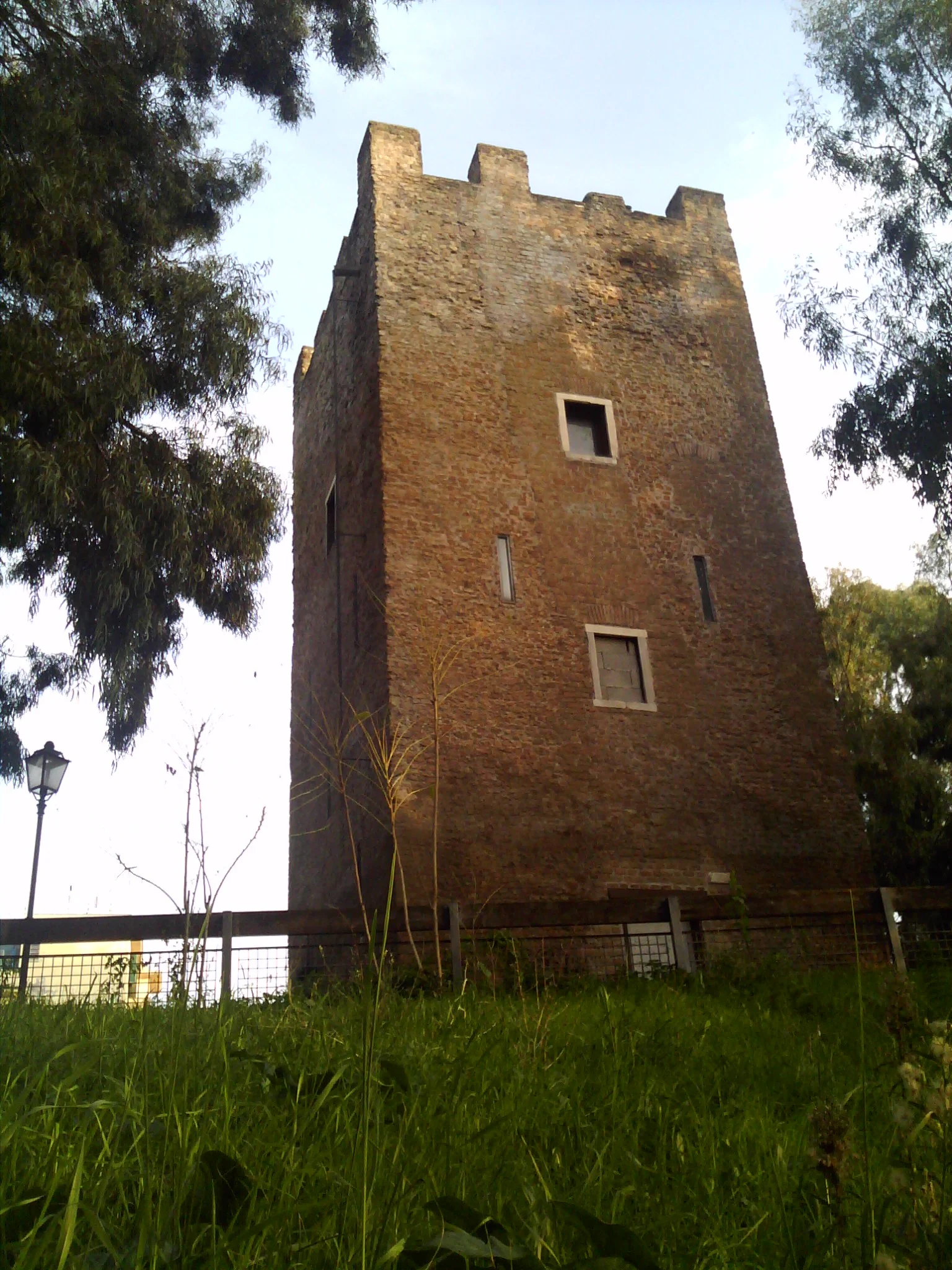
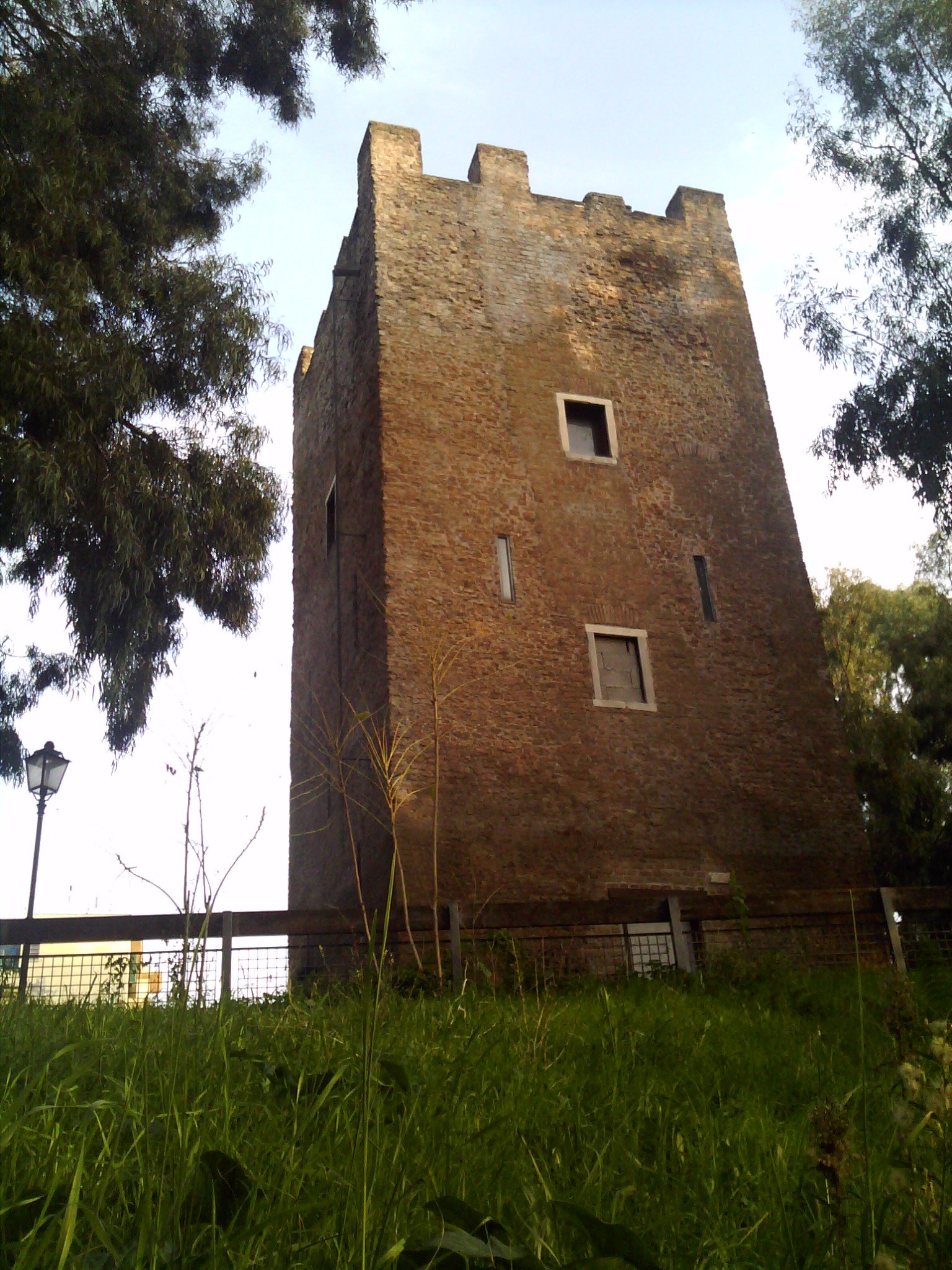
The word Tor comes instead from a medieval tower of tuff blocks, about 15 meters tall, that watched over the countryside between Via Ardeatina and Via delle Sette Chiese. The Appia Antica Archaeological Park writes that it was destroyed between the end of the 1500s and the middle of the 1600s, because it no longer appears in the map of the Catasto Alessandrino of 1660. The name has outlived the tower by more than three centuries.
There is also a second, less followed hypothesis, which links the place name to the Marana, that is, to one of the watercourses of the area, in particular the Almone, which in these parts was called by popular names tied to water. It's a reading that has its own logic, given that water is the common thread of the whole history of the neighborhood, but it doesn't have a strong document behind it like the inscription of Amaranthus.
And then there is the masculine form. In the resolution of the Governatorato of 1933 that gave birth to the borgata and in literary texts of the 1950s the place is called Tormarancio, all one word, with the final vowel that Romans used for estates. If you hear an elderly person of the neighborhood say Tormarancio, they are not making a mistake. They are using the name the place had when they arrived there as a child.
How to Look Without Disturbing
The starting point is simple: the buildings are inhabited by families who have lived there for decades, in many cases since the 1950s according to the 2015 press reports. The museum came after the people. Turismo Roma says it plainly on its page: visitors must respect the privacy and daily life of the residents. Translated into practice, it means looking at the walls and leaving everything else in peace.
No doorways, no entrance halls, no stairwells, no balconies framed up close. The murals are on the blind end walls precisely because they are seen from afar, and from afar they look better. Stay on the street and on the open passages, without entering the spaces that belong to the stairs. If an area looks closed or private to you, it is. You don't need to ask anyone's permission to look at a wall from the sidewalk.
Photographs of people, of children playing, of laundry hung out and of windows are not taken, or are taken only with explicit consent. Drones are ruled out by common sense even before the regulation on flying over inhabited areas. Low voice, small groups, no portable speakers. Anyone leading groups should split the group above 15 people and alternate the stops, because 30 people standing in front of a doorway block those coming home with their groceries.
Hours matter. Avoid the lunch and dinner time slots, when the courtyards are the hallway of the home for those coming back. Late morning on weekdays and early afternoon are the quietest moments. On Saturday and Sunday morning there is more life, more children, and respect requires even more attention. In any case, a greeting to those you cross paths with opens more doors than any printed guide.
Something Nobody Tells You About Tor Marancia
There are two Tor Marancias, and almost everyone knows only one. The first is the neighborhood of the murals. The second is the Tor Marancia estate, 200 hectares of Roman countryside that the Appia Antica Archaeological Park describes as miraculously intact, a few minutes on foot from the painted estate. Those who come for the street art leave without knowing that on the other side of Via Sartorio an ancient agricultural landscape begins.
That countryside was saved by a hair. In the 1990s residential projects weighed on the estate, then a long confrontation among environmentalists, associations, political forces and neighborhood committees led in 2002 the City Council and the Giunta of Rome to resolve the creation of the park, now considered part of the Appia Antica system. It is one of the few Roman urban planning battles that ended with more green instead of more concrete.
Inside the estate the history is very long. The Archaeological Park points out traces of human presence from the Middle Paleolithic, paved roads, burials along the routes of the Ardeatina and the Laurentina, and the remains of the villa of the Numisii from the middle of the 2nd century, identified thanks to a stamp with the name of the owner, Numisia Procula, impressed on a lead pipe. A plumbing label from 18 centuries ago that gave a name to a ruin.
The entrances indicated by the Park are three: two from Via Giulio Aristide Sartorio, at Piazza Lante and Via Francesco Belloni, and one from Viale Londra, on the Grotta Perfetta side. The opening hours of the gates are not published on the Park's page, so go during the day and count on a real countryside area, with dirt paths, little shade in some stretches and no services.
The reason is simple: the mural neighborhood, without the estate, looks like an island of public housing in the middle of traffic. With the estate you understand where the borgata of the 1930s really stood, in a basin of countryside crossed by ditches, far from everything. An hour of murals and an hour of estate tell the place better than three hours spent photographing walls.
Why They Called It Shanghai: Documents, Tradition, Legend
Let's start with what the documents say. On May 6, 1933 the Governatorato of Rome entrusted the Giovannetti brothers' firm with building a group of shelters for evicted people in the Tormarancio area, with resolution number 2631. No official act uses the name Shanghai. The documents do, however, describe precisely the position of the settlement, in a low and marshy area, and the condition of the dwellings, built in a hurry, with beaten-earth floors and shared facilities.
Still on the documentary side, there are the water and the words of writers. The Internazionale report of 2015 ties the flooding to the ditch that crossed the area and overflowed with the rains. In 1954 Alberto Moravia, in the story Il pupo, has a father of a family speak who lives in Tormarancio in a room full of mattresses where, when it rains, the water comes in and out as on the quays of the port of Ripetta. It is literature, but literature written by someone who had seen those places.
Then there is tradition, that is, what the neighborhood tells about itself. According to the local memory collected by the periodical Cara Garbatella, the borgata lay in a depression called the Buca, which with storms turned into a swamp like the Asian monsoons, and from there the comparison with the Chinese metropolis would have arisen. Some guides add a second reason, density: large families crammed into single rooms, as in the working-class districts of the Eastern city.
Finally the legend, which has to be called by its name. The most romanticized version turns the nickname into a license for criminality, as if Shanghai evoked the port of adventure novels and traffickings. No document supports this reading. The report of the Fascist party of March 1935, which does count people under special surveillance and former prisoners among the inhabitants, describes above all tuberculosis among children, a single part-time doctor and about 350 unemployed heads of household.
The result, lined up, is this: the name Shanghai is a popular nickname, born almost certainly from water and mud, reinforced by poverty and crowding, never official. The 2015 project took it and made it a brand, with Mr. Klevra's Madonna and Caratoes's welcome. Those who lived there in the 1930s would never have used it to brag. Today their children and grandchildren use it, with a pride that is a form of revenge.
My Advice for Visiting Tor Marancia
Go with someone from the neighborhood. The visits accompanied by the TormarArte association, which has its office right in the estate, give what no app can give: someone who lived the 2015 building site, who knows the families portrayed or evoked in the works, who knows which stories can be told and which cannot. Write a few weeks ahead to visiteguidate@tormararte.it and state the number of people, language and preferred date.
If you come alone, plan the round against the crowd. Most visitors enter from the viale and stop at the first walls. You first make a wide loop along the perimeter, looking at the end walls from afar, and only afterward approach the works that struck you. The paintings are designed to be read from a distance: from below, with your nose to the wall, you lose the composition and see only colored plaster.
Bring a sheet with the names of the artists and the titles, not the phone in your hand the whole time. First, because the signal in the passages between the buildings is not always good. Second, because a group walking while looking at a screen in an inhabited courtyard gives a terrible impression to those who live there. Third, because the pleasure of the visit is recognizing the works, not ticking them off a list.
Give the estate an hour, no more, and the rest of the area double that. The best pairing on foot is the Tor Marancia estate, with entrance from Piazza Lante, then, for those who have time and have booked, the Domitilla catacombs on Via delle Sette Chiese, closed on Tuesday. The sequence of public housing, ancient countryside, underground Christian cemetery says more about Rome than a whole day in the center.
One last thing: don't come on days of heavy rain. Not because of the mud, which by now is gone, but because wet walls change color and the photographs come out flat, and because in the narrow passages with open umbrellas you end up getting in the residents' way. A day of light sun, in spring or fall, is ideal, with the light sliding over the end walls without burning them out.
Guided Tours, Costs and Who Runs It Today
The free visit costs nothing. Turismo Roma lists the Museo condominiale as accessible at any time and free of charge, because the works are on the facades of public housing. There is no official ticket, and anyone who sells you an entrance to Tor Marancia is actually selling their own accompanying service, which is another thing. For guided visits of the neighborhood the channel to use is the association's.
The contacts published by TormarArte are the phone 339 4759013, the address info@tormararte.it for general information and visiteguidate@tormararte.it for tour bookings. The association lists two offices, one at Viale di Tor Marancia 63 and one at Via Valeria Rufina 3. The cost of the guided visits is not published on the association's website: ask when you make the request, together with the duration and the meeting point.
Roma Capitale has also included the museum in the Unexpected Itineraries of Turismo Roma, with free visits of about two hours, booking required at 060608 and dates set in the city calendar. For the fall of 2025 the city page showed the visits as suspended because of redevelopment works in the area. If you are looking for a free date from the Comune, phone 060608 and ask if the cycle has resumed.
Who runs what, summarized in a few lines: the homes belong to ATER of Rome, the original 2015 project was signed by the 999Contemporary association with the support of Fondazione Roma and the Comune, and the TormarArte association, founded in 2015 according to the press reports, runs the Museo condominiale today with the curator Francesca Mezzano. Then there are private guides and agencies offering paid street art tours: weigh the price knowing that access to the walls is free.
Another Well-Known Fact, Yet Rarely Cited
Everyone knows the murals made Tor Marancia famous. Few remember who paid for them and how much. The Internazionale report of April 2015 gave a budget of €166,000 for the estate, with €45,000 from Fondazione Roma, €30,000 from the Comune and the rest borne by the promoting association. Modest figures for 20 monumental walls, compared with any extraordinary maintenance job on a public building.
The second little-cited detail concerns recognition. In 2016 the project was selected for the Italian Pavilion at the 15th International Architecture Exhibition of the Venice Biennale, dedicated to the theme Taking care, designing for the common good. A painted wall of Roman public housing exhibited as an example of social architecture. The foundation that sponsored the app speaks of the Biennale of 2017, but the architecture edition with that theme is the one of 2016.
The third concerns method. The works were not dropped in from above: the artists worked by gathering stories, photographs and words of the inhabitants, and several murals translate into images events of the estate. The building site lasted a few weeks, from January 8 to February 27, 2015 according to the organizers' entry repeated by RomaToday, with the inauguration on March 9 in the presence of the mayor Ignazio Marino. The count of spray cans, 974, appears in all the sources.
The fourth, the oldest, is known by very few. In 1817 Maria Anna of Savoy, Duchess of Chiablese, owner of the estate, financed excavations entrusted to the archaeologist Luigi Biondi that brought to light the remains of two Roman villas. Mosaics, statues and inscriptions ended up in part in the Vatican Museums, in the Galleria dei Candelabri. Those who visit the Vatican walk past pieces of Tor Marancia without knowing it.
State of Conservation Today
The murals have 11 years of sun, rain and smog on their back, and for an outdoor painting that is a lot. The first loss came right away: the photographic poster by Matteo Basilè dedicated to Ai Weiwei, paper and glue on wall, degraded within a few months and was replaced by the mural of Guido van Helten. It is proof that on a public housing facade only what is designed to last survives.
In June 2025 the press reports on Pistoletto's new work announced together the restoration of the existing works and the redevelopment of the common spaces of the estate, promoted by TormarArte with Fondazione Roma and ATER. The best-documented intervention is Moneyless's, who took up his own 2015 mural and transformed it. For the other walls the operator does not publish a list of completed restorations with date and name of the restorer.
On April 21, 2026 the association announced the inauguration of the latest intervention of the Museo condominiale, supported by Fondazione Roma with Municipio VIII, Roma Capitale and ATER, and presented as urban regeneration of the common spaces. The announcement does not go into technical details. What you can expect, then, is a mixed picture: walls recently touched up next to others with more tired colors.
The management has not always been peaceful, and it would be wrong to stay silent about it. In 2020 some of the residents protested about the way the museum was being run, and already on the day of the 2015 inauguration some inhabitants had reminded the mayor of the maintenance problems of the homes. These are legitimate voices of people who live in the museum. Keeping them in mind helps you look at the walls with less naivety and more respect.
The Right Photo to Take at Tor Marancia
The right photo is not the mural alone. It is the mural with its building, the windows on the sides, a piece of sky above and a tree in front. Step back until the end wall fits whole in the frame with a margin of context, and shoot vertically. A 14-meter mural cropped as if it were a gallery canvas loses exactly what makes it different from a canvas: the fact of being on a house.
The end walls face different directions, so at any hour some are in full light and some in shade. Instead of chasing perfect light on all of them, make two passes: one in late morning and one in early afternoon. Direct sun saturates colors but creates reflections on acrylic paints, open shade renders the tones more faithfully. For the lighter works, like Vhils's, raking light makes the relief readable.
Avoid the wide angle pushed from below. It is everyone's temptation, because it makes the walls look taller, but it distorts the figures to the grotesque, and the faces by Seth or van Helten become caricatures. Better a normal focal length taken from afar, even at the cost of including a parked car or a dumpster. They are part of the neighborhood, and removing them tells of a place that doesn't exist.
One rule, with groups: no local person in the frame unless they have said yes. No children playing in front of the mural, no ladies at the window, no recognizable hung laundry. If you want a human figure for scale, pose one of your travel companions, from behind, small at the bottom. The proportion with the wall is understood immediately and no one is exposed against their will.
What Doesn't Convince in the Story About Tor Marancia
The opposing position, stated plainly: the story of the street art that made Tor Marancia reborn is told badly. The neighborhood was reborn in the postwar years, when the shacks of the borgata were replaced by public housing and roads, schools and services arrived. The 2015 murals changed the way the city looks at the neighborhood, and that's not nothing, but they did not change window frames, elevators or utilities. Confusing the two does a wrong to those who live there.
The second point concerns the visit. Tor Marancia is sold as a half-day open-air museum, and the estate alone doesn't support that: an hour is enough. Anyone who books a paid three-hour tour devoted only to the murals is mostly paying for the transfer. The real value of the area is found in the combination with the estate, with Domitilla and with the Garbatella, and that is the one I recommend building.
Third: the race to see who photographs the most walls in a morning, among Ostiense, Quadraro and Tor Marancia, produces visitors who don't know where they have been. I prefer a single neighborhood looked at well to three neighborhoods crossed by coach. The best Roman street art is tied to the place where it is, and if you detach the wall from its history what remains is a large decoration, nothing more.
How to Get There
By public transport the closest reference on rails is Metro line B, with the stations of the Garbatella and San Paolo area, from which you continue on foot crossing the Garbatella or with a surface bus. The ATAC lines that stop closest to number 63 of the viale are not given on the Turismo Roma page: use ATAC's official route planner the evening before, because surface routes change with building works.
A published reference exists for the nearby area. For the Domitilla catacombs, at Via delle Sette Chiese 282, the Pontifical Commission for Sacred Archaeology gives ATAC lines 30, 130, 160, 670, 174 and 716. Not all of them go through Viale di Tor Marancia, but they serve the quadrant between the Colombo and the Ardeatina and are useful if you build the day starting from the catacombs or ending there.
By car the area is reached from Via Cristoforo Colombo or from the Circonvallazione Ostiense. There is no dedicated parking for visitors, you park on the residential streets as the inhabitants do, and in the hours of return from work finding a spot is difficult. Don't leave the car in front of driveways or on the reserved yellow lines: the neighborhood needs them, and the fines arrive.
By bicycle it is one of the most sensible areas for a street art ride in the southern quadrant: from Ostiense to the Garbatella and then to Tor Marancia the distances are short. The traffic on the Colombo should be avoided, better to go by the internal streets. To get your bearings on Rome's public transport in general, tickets and apps included, you'll find a practical guide on how to get around Rome and one on the bike lanes of Rome by bike.
Some Important Events That Happened Here in History
In the 2nd century AD the countryside between the Ardeatina and the Laurentina is a mosaic of villas and agricultural estates. The villa of the Numisii, dated by the Archaeological Park to the middle of the century, belongs to Numisia Procula, and a freedman named Amaranthus manages the estates that will give the area its name. In the 1200s the tuff tower rises that completes the place name. From 1481 to 1797, according to the current historical reconstruction, the estate belongs to the Ospedale del Santissimo Salvatore at the Sancta Sanctorum.
Between the 1700s and 1800s the property passes to Luigi Braschi Onesti, nephew of Pope Pius VI, then to Count Domenico Lavaggi, and from 1816 to 1824 to Maria Anna of Savoy, Duchess of Chiablese, daughter of the King of Sardinia Victor Amadeus III. It is she who, in 1817, has the Roman villas excavated with the archaeologist Luigi Biondi. Part of the finds is today in the Galleria dei Candelabri of the Vatican Museums.
On May 6, 1933 the Governatorato entrusts the construction of the shelters for evicted people. About 3,000 people arrive in the borgata, largely expelled from the central rioni demolished by the regime's clearances, together with immigrants from the South and evicted families. In March 1935 a report of the Fascist party describes widespread tuberculosis among children, a part-time doctor and about 350 unemployed heads of household.
After the war the borgata is dismantled. Internazionale dates the demolition of the shacks to 1948, while the construction of the public housing begins in 1947, with the intervention of the Communist senators Edoardo D’Onofrio and Emilio Sereni. The decisive push comes with the INA-Casa plan, established in 1949 and closed in 1960. The 11 buildings of the painted estate belong to this first season of reconstruction.
In 2002 the Comune resolves the creation of the Tor Marancia park on the estate, removing it from the residential projects of the 1990s. In May 2014 Jaz paints the first wall of the estate, between January and February 2015 most of the artists work, on March 9, 2015 Big City Life is inaugurated. In 2016 the project enters the Italian Pavilion of the Architecture Biennale, in 2019 the museum's app arrives.
In June 2025 the work by Michelangelo Pistoletto and Raymundo Sesma is added and restorations and works on the common spaces begin. In the fall of the same year the free visits of the Comune are shown as suspended for the works. On April 21, 2026 TormarArte inaugurates the latest intervention with Fondazione Roma, Municipio VIII, Roma Capitale and ATER. The museum, 11 years after its birth, is still an open building site.
Who Has Passed Through Tor Marancia
Numisia Procula and her freedman Amaranthus, to begin with. She is an owner of the Antonine age whose name has come down to us stamped on a lead pipe, he is the manager who left his name to a neighborhood of Rome without knowing it. They are the two oldest documented presences with a name and a role, and they tell of a countryside of rich villas, very far from the borgata to come.
Maria Anna of Savoy, Duchess of Chiablese, daughter of a king, who at the beginning of the 1800s turned the estate into an excavation site and brought the villa of the Numisii into the history of archaeology. Working with her was Luigi Biondi, Roman archaeologist and man of letters. Part of the pieces found in those excavations ended up in the papal collections, and from there in the rooms of the Vatican Museums that are visited still today.
Alberto Moravia, who in 1954 set the story Il pupo in Tormarancio and gives a voice to a father with six children who lives in a room flooded at every rain. It is perhaps the best-known literary description of the borgata, and it is worth rereading before the visit. The Moravia of the Roman stories listened to the language of the borgate with a precise ear, and here you can hear it.
Edoardo D’Onofrio and Emilio Sereni, Communist senators who in the postwar years worked hard for the public housing of Tor Marancia. And, 70 years later, the mayor Ignazio Marino, who on March 9, 2015 inaugurated the murals in front of the residents. Two moments of Roman politics compared on the same street: first the walls to build, then the walls to paint. The neighborhood remembers both, with different judgments.
And then the artists, who came from about 10 countries: Seth from Paris, Vhils from Portugal, Gaia from the United States, Jaz from Argentina, Jerico from the Philippines, Reka from Australia, and in 2025 Michelangelo Pistoletto, one of the best-known names of Italian art of the second half of the 1900s. For a few weeks they lived the estate from the aerial work platforms, talking with those who lived behind the walls. Some of them have also worked in other Roman neighborhoods, from Ostiense and Testaccio to Quadraro.
The Domitilla Catacombs and the Other Surroundings
A short distance from the estate, at Via delle Sette Chiese 282, are the Domitilla catacombs, one of the most extensive underground Christian cemeteries in Rome, in the area of the holdings of the Flavian family. They are run by the missionaries of the Society of the Divine Word on behalf of the Pontifical Commission for Sacred Archaeology. Inside is the semi-underground basilica of Saints Nereus and Achilleus, the two martyrs who also give their name to the church near Caracalla.
The operator gives opening from 9:00 to 12:00 and from 14:00 to 17:00, weekly closing on Tuesday and an annual closing between the end of December and the second half of January, with dates that change every year. The published fares are €10 full price and €7 reduced, with free entry for children up to six years old and for some categories. The visit is always accompanied by the catacomb's guides.
Where you really buy: on the official website of the Domitilla catacombs, with the booking form, or by phone at 06 5110342 or by writing to info@domitilla.info. The Pontifical Commission's portal also refers to an online sales platform tied to the Vatican circuit. There is no need to go through third-party resellers: the spot costs €10 and the guide is included.
Those who still have energy can continue southeast on the system of the Appian catacombs, with San Callisto and San Sebastiano, and on the Mausoleum of the Fosse Ardeatine, which is on Via Ardeatina a short distance away and deserves a visit in silence. The general picture is on the page about the catacombs of Rome.
To the west, beyond the Colombo, you reach the Basilica of San Paolo fuori le Mura, and a little farther north the Commodilla catacombs, open only on special occasions. To the south Via Ardeatina leads to the Sanctuary of Divino Amore, destination of night pilgrimages. These are all directions doable in half a day, but not all together.
Eating in the Area
Tor Marancia is a residential neighborhood and from this point of view it is lucky: the tourist traps of the center don't take root here, because tourists stay only a few hours. You eat the way the Romans of the quadrant eat, in neighborhood trattorias, pizza by the slice shops, bakeries and local bars. The signs for recognizing places to avoid still apply, especially if you come from Ostiense or the Garbatella, where the flow of visitors is stronger.
First sign: the menu with photographs of the dishes, laminated and translated into five languages. A place that has to show you the picture of the carbonara is talking to someone who doesn't know what it is. Second: the lady rolling out the pasta sheet in the window or on the sidewalk. It is a scene staged to stop the passerby, and well-made fresh pasta is prepared in the kitchen in the morning, away from the dust of the street.
Third sign: the barker at the door. Someone who has to get customers by stopping them on the street has no regular customers, and regular customers are the only guarantee that counts. Fourth: the kitchen open without a break from morning to night. A real kitchen has a pause between lunch and dinner, because the people who work in it have to rest and prepare. Continuous service usually means reheated dishes.
Fifth sign, the most expensive: the price adapted to the customer. It happens in places in front of monuments and in high-traffic areas, with items without a price on the menu, fish of the day at an undeclared weight and, sometimes, a different price list between the indoor room and the outside tables. Always ask the price before ordering, especially for fish, wine by the glass and water. Romans don't go there for this, not out of snobbery.
The criterion is to look at who is sitting. Workers, office employees, neighborhood families speaking Romanesco at two in the afternoon on a weekday: you have found it. To avoid trial and error, I keep a public list of addresses I really go to, in Rome and around: our list of the places where we eat. It is not sponsored and it changes when the places change.
What to Combine in a Day
The most natural pairing is the Garbatella, next door, with its public housing lots of the 1920s and 1930s, the courtyards and the urban gardens. Placed side by side, Garbatella and Tor Marancia tell two opposite ways of housing poor Romans: the garden city carefully designed and the emergency borgata built in a hurry. The comparison is worth more than any explanation.
For those who follow street art, the southern route continues with the street art in Ostiense, where you find the Ex Porto Fluviale and the Gasometro area, and with the Ex Mira Lanza on the Tiber. To the east is Quadraro with its urban art museum. The complete map is on the page about street art in Rome.
Those who prefer an industrial and archaeological cut together can go down to Ostiense and see the Centrale Montemartini, where the ancient statues stand among the turbines. For green space, besides the Tor Marancia estate, there are the Appia Antica Park and the Caffarella Park, reachable in a few minutes by car or by bike with a bit of patience.
To understand where those sent to live in the borgata came from, it's worth looking at the places of the clearances: Via dei Fori Imperiali with the Museum of the Imperial Forums, the square around the Mausoleum of Augustus and the demolished spine of Borgo. For the Rome of the 1900s and the war there is the Museo storico della Liberazione. Those looking for other destinations without a ticket will find ideas in Rome for free.
Frequently Asked Questions
How much does it cost to see the Tor Marancia murals?
Nothing. The Museo condominiale of Tor Marancia, at Viale di Tor Marancia 63, is listed by Turismo Roma as free and accessible at any time, because the works are painted on the facades of ATER public housing. You pay only for an optional private guide service. The visits of the TormarArte association are booked at visiteguidate@tormararte.it, and their cost is not published: ask when you make the request.
How many murals are there and who painted them?
The sources don't agree on the exact number, which varies from 20 to 23 depending on the year and the way of counting. Among the documented artists are Seth, Vhils, Gaia, Jaz, Lek and Sowat, Philippe Baudelocque, Mr. Klevra, Diamond, Moneyless, Alberonero, Danilo Bucchi, Domenico Romeo, SatOne, Clemens Behr, Pantonio, Reka, Jerico, Caratoes, Guido van Helten and Best Ever. In 2025 Michelangelo Pistoletto was added with Raymundo Sesma.
Can you enter the courtyards of the buildings?
The complex is inhabited and must be respected like a home. The works are on the blind end walls of the buildings and are seen well from the street and the open passages, at a distance. Do not enter doorways, entrance halls or stairwells, do not photograph people, windows and balconies without consent, and keep your voice low. For an in-depth visit of the estate it's best to be accompanied by the neighborhood association.
Why was Tor Marancia called Shanghai?
The nickname does not appear in any official act. According to the neighborhood's memory it comes from the flooding: the borgata built in 1933 lay in a marshy basin that filled with water in storms, as in a monsoon. Some sources add the crowding of families in the rooms. The readings that link it to criminality have no documentary support and remain stories.
Where does the name Tor Marancia come from?
The most accredited explanation links it to Amaranthus, a freedman who in the 2nd century managed agricultural estates in the area, recorded by a Latin inscription as praedia Amarantiana. Tor comes from the medieval tuff tower that stood in the estate and was destroyed between the end of the 1500s and the middle of the 1600s. A minority hypothesis links the name to the Marana, that is, to the watercourses of the area.
How much time does the visit take?
For the mural estate a good hour is enough, looking at the walls calmly and from several distances. If you add a walk in the Tor Marancia estate, with entrance from Via Sartorio, count another hour or two. With the Domitilla catacombs, which have fixed hours and close on Tuesday, the visit becomes a full half day, to organize with a booking.
How do you get there without a car?
Metro line B serves the Garbatella and San Paolo area, from which you continue on foot or with a surface bus. The most convenient ATAC lines for Viale di Tor Marancia should be checked on the official route planner, because they change with building works. For the nearby Domitilla catacombs the Pontifical Commission gives lines 30, 130, 160, 670, 174 and 716.
Is it suitable for children?
Yes, if the children accept that these are inhabited homes and not a playground. The enormous colorful walls work well with the little ones, and recognizing the animals, the faces and the figures becomes a game. Avoid letting them run among the doorways and choose late morning on a weekday. To complete the day the Tor Marancia estate offers open space.
Who Wrote This Page
The page comes from the editorial team of Tour Leader Pro, the Rome-based organization that designs itineraries, visits and cultural events in Rome and Lazio. The contacts, visiting arrangements and data on the works given here come from the official sources and the press cited in the text as of the date indicated at the start. Since this is a museum in an inhabited and changing condominium, recheck them before you go and tell us what you find changed.
Lining up a day in the working-class neighborhoods of Rome means fitting together bookable visits run by volunteer associations, catacombs with split hours and a weekly closing, buses that change route because of building works and the respect owed to those who live there, for yourself or for a group of 40 people. Anyone facing this kind of puzzle will find on Tour Leader Pro working materials designed for those who lead groups and for those who organize on their own.
For the wide picture, that is regional trains and seasonal schedules, rentals, airports, travel between one province and another and destinations in Lazio outside the center of Rome, from the Castelli to the volcanic lakes of the north to the Tyrrhenian coast and the villages of the interior, a useful resource for putting together a multi-day itinerary is Italy Planner.