Mercato Centrale Rome
In short. Mercato Centrale Roma is at Via Giovanni Giolitti 36, on the south side of Termini Station, and you enter freely from the street with no train ticket and no reservation.

Mercato Centrale Roma is at Via Giovanni Giolitti 36, on the south side of Termini Station, and you enter freely from the street with no train ticket and no reservation. You don't pay to get in: you pay for what you eat, stall by stall. It is run by the company that carries the same brand, born in Florence, and the operator states it is open every day, Monday to Sunday, from 7:30 to 23:30.
Inside there is no neighborhood market. There is a food hall, that is, a large room with kitchen and gastronomy counters set along the walls, shared tables in the center and an upper floor. The hall is one of the most beautiful in the whole station: it is located inside the wing built on the design of Angiolo Mazzoni in the years between the late 1930s and the war, and it is known as the Cappa Mazzoniana.
The practical information on these pages was checked on September 29, 2026 against the sources named in the text. Hours, open floors, events and the makeup of the stalls change often, even from one season to the next, and the operator updates them on its own website: before organizing a group lunch or an appointment at a fixed time between one train and another, check the information page and the official contacts there.

Where it is and what you find inside
The entrance at Via Giolitti 36 opens on the side of the station that faces the Esquilino, the one with the low platforms and the tram stop. From inside the station you get there by walking along the gallery toward Via Giolitti. From outside you recognize the portal among the stone arches of the long railway wing. You don't need to pass the platform gates, and that makes it usable even by those who don't have to take any train.
The hall is a single large, tall space, with the stalls along the perimeter and a central area of shared tables where you sit wherever you can. Each counter has its own register and its specialty: pizza, pasta, fried food, sandwiches, meat, fish, desserts, coffee, wine and beer. You choose, pay, pick up the dish and look for a seat. Nobody brings you the menu at the table.
On the upper floor the operator has set up different spaces over the years, with functions that have changed several times: table-service dining, event areas, rooms for meetings and tastings. I won't describe in detail what you find up there today because it is the most changeable part of the offer and varies with the seasons. Ask at a counter or check the website before going up with a group.
A house rule, which regular customers know well, is that products to take home are not sold as in a neighborhood market. A few counters package takeout, some sell bread or desserts, but the week's grocery shopping isn't done here. Whoever is looking for fruit, vegetables, meat and fish at market prices has to go elsewhere, and further on it says where, 10 minutes on foot.
Via Giolitti is the long street that runs along the whole side of the station, from the area of Piazza dei Cinquecento toward Porta Maggiore. It is not a street for strolling: traffic, stops, hotels, luggage and phone shops. The market entrance is one of the few points where the Esquilino side of the station opens toward the neighborhood in a welcoming way, and you understand it as soon as you cross the door.
A curiosity about Mercato Centrale Roma
The name doesn't come from Rome. Mercato Centrale is a Florentine brand, and takes its name from the covered 1800s market of San Lorenzo in Florence, on whose upper floor the formula was born in 2014. Rome came two years later. So in the capital there is a market called central without ever having been a market, inside a station that in turn is called Termini for the nearby baths.
The second curious detail concerns the hall. Whoever walks in thinks they are in a postwar building, like the great 1950 atrium on the front of the station. Instead Via Giolitti wing is older, it belongs to the Mazzoni construction project approved in 1939 and stopped by the war in 1943. Two seasons of Italian architecture, one of the regime and one republican, live in the same complex and touch a few meters from here.
Third detail. In Rome nobody calls it by its full name. Romans say Mercato Centrale, or the food hall of Termini, and almost nobody uses the name Cappa Mazzoniana, which is instead how the hall appears in the news and in the restoration projects. If you ask a railway worker for directions, though, he will understand all three versions at once: the hall has been known for decades.
Then there is a calendar curiosity. Mercato Centrale Roma opened in October 2016, in a year when Rome was talking a lot about stations as places to live in and not only to pass through. The formula of the food hall in a station, which today seems normal, was then a gamble, and it wasn't a given that it would work: a hall of artisans with shared tables inside the busiest station in the country, on the least cared-for side of the building.
Mazzoni's hall: what it was before the market
Angiolo Mazzoni was the head of the architecture office of the Ferrovie dello Stato in the 1930s and signed stations, post offices and summer camps all over Italy. For Termini he presented a first proposal in 1937, a second in 1938, and the final project was approved in 1939. The demolitions of the 1800s station by Salvatore Bianchi began, along with the construction of the side bodies, along Via Marsala and along Via Giolitti.
In 1943 the war stopped the construction sites. In 1946 Mazzoni's facade project, with the monumental colonnade on the square, was abandoned, and the station was completed with the 1947 competition and the great atrium inaugurated in 1950. The side wings instead remained Mazzoni's, with the stone porticoes, the water towers and the service rooms. Our hall is part of that body.
On the original function of the hall it is the operator itself that writes it on its website: the Cappa Mazzoniana was the former railway dopolavoro, that is, the space for the recreational activities of railway employees. The construction dates of the individual hall, instead, don't appear among the official sources available: those of the Mazzoni project as a whole are known, told above, and it's best to stop there.
The 2016 restoration left the original layout readable: the height, the openings, the materials. It is a rare case at Termini of a space from the Fascist era returned to daily public use, without being divided into display windows and drop ceilings as has happened elsewhere in the station.
To understand who Mazzoni was, two examples outside Rome are enough: the station of Trento, with its clean volumes, and the post office of Sabaudia, in the founding city of the Agro Pontino. They are buildings that mix rationalism and regime rhetoric, and the same ambiguity is found here. The wings of Termini are more monumental and less experimental than those projects, but the language of stone and repeated openings is the same.
Something nobody tells you about Mercato Centrale Roma
Mercato Centrale is one of the few places in the Termini area where you can sit without being obliged to consume at a table with service. You get a coffee or a bottle of water at the counter and stay. For someone with a train in an hour, luggage and a tired child, it is a better waiting room than the waiting rooms, as long as you buy something and don't occupy a whole table at peak hours.
The second thing nobody says is that the prices are not market prices. They are those of a good place in the historic center, sometimes a bit more, because each counter is a small workshop with station rent, staff and selected raw materials. Whoever walks in thinking of a neighborhood market, where you eat for little, is thrown off at the first register. It isn't a flaw, it's the model, and it's best to know it beforehand.
Third thing. The tables are shared, and at lunch and dinner hours on weekdays the place fills with office workers, students from the nearby Sapienza and travelers with suitcases. Finding four chairs together at 13:15 on a Friday is an exercise in patience. If you come as a group, one of you holds the seats and the others stand in line at the counters. Everyone does it, with no ill will.
Last thing, the most practical. Each stall has its own register, so a family lunch with dishes taken from three different counters means three lines and three payments. Whoever travels in an organized group must know this, because there is no single bill and the overall time gets longer. With 20 people and 40 minutes between one train and another, Mercato Centrale becomes a problem, not a solution.
Who it is for and who it isn't
First the editorial position, which goes against the current in two directions. Whoever dismisses Mercato Centrale as a tourist trap is wrong: inside Termini it is the place where you eat with the most control over quality, in an area where places designed for those who pass through and never return are the rule. But whoever describes it as the most beautiful market in Rome is more wrong, because it is not a market, and Romans do their shopping elsewhere.
It is for those who arrive or leave by train and want to eat seated without leaving the station. It is for those with an hour's wait, for those who travel alone and don't want to sit in a trattoria, for families who need to satisfy different tastes with a single table. It is for rainy days, when the neighborhood around the station becomes uncomfortable, and for those who need to meet someone at an easy-to-find spot.
It is not for those looking for the experience of the Roman market, with vegetable stalls, voices, bargaining and low prices: for that there are the Nuovo Mercato Esquilino 10 minutes on foot away, the Mercato Trionfale, the Nuovo Mercato Testaccio and the Mercato di San Cosimato. Nor is it for those who want a Roman dinner with table service and long timing.
It is not for large groups with little time, as already explained, and not for those who think they will spend little. A dish and a glass of wine here cost as much as a simple meal in a trattoria, sometimes more. The advantage is the convenience of the location and the freedom of choice. If you need neither, leave the station and walk toward Monti or toward the Celio.
I add one last category for whom it works: those who work in the city for a few days and need a quick, decent meal between two appointments near the station. In that case Mercato Centrale is an honest solution, with a wide choice and predictable timing. Whoever has only one free evening in Rome should spend it in a neighborhood, not inside Termini. The city outside here is worth more.
The advice I give you for visiting Mercato Centrale Roma
Go outside the peaks. Between 11:00 and noon and after 3 in the afternoon the hall is half empty, the counters work calmly and you can look at the architecture instead of the line. At weekday lunch and on Friday and Saturday evenings the noise rises a lot and the tables turn over fast. The hall is tall and the acoustics, when it is full, are unforgiving.
First do a full lap without buying anything. It is the most common mistake: you walk in, see the first counter, order, and after 10 minutes discover that two counters further on there was exactly what you wanted. A lap of the hall takes three minutes. With children it counts double, because it avoids the argument halfway through the meal about who wanted the pizza and who the sandwich.
If you have a train, calculate the time honestly. From Via Giolitti entrance to the head platforms it takes several minutes on foot, more if the platforms are the far ones on the east side or if you have large suitcases. It's best to leave at least a quarter of an hour between the last forkful and the departure. Look at the board before sitting down, not after, because the platform is often known only shortly before.
Look up. The reason this hall deserves more than a quick meal is the volume Mazzoni designed, and most people ignore it because they look at the counters. Take two minutes from the upper floor or from a corner of the hall to see the height, the windows and the way the light comes in. Then go out and look from outside at the portico of Via Giolitti.
Last piece of advice, for those traveling in a guided group. If your tour leader gives you 30 free minutes in here before the train, pick just one counter and eat nearby. Going around the whole hall looking for the perfect dish works when you have two hours, not half an hour. And set the meeting point outside the hall, in a recognizable place, because inside with the crowd it's easy to get lost.
Hours, entrance and how to pay
Entrance to the hall is free, with no ticket and no reservation. The operator, on the information page of the official website, states it is open every day from 7:30 to 23:30, Monday to Sunday, and publishes as contacts the phone 06 462029 and the email info.roma@mercatocentrale.it. Not all counters follow the hall's hours: whoever arrives at opening finds mostly breakfast and coffee.
There is no ticket to buy and there are no paid tours that give access to anything not already free. Whoever offers you priority entry to Mercato Centrale is selling you a guided tour of the neighborhood with a stop in here, which may make sense for other reasons, but opens no door for you. The hall is crossed like a covered street.
You pay counter by counter, each with its own register. The accepted payment conditions, the phone contacts and the email address for groups and events are given by the operator on the official site, and that is where they should be asked for. For reservations of tables with service in the upstairs venues, when they exist, the same channel applies: no external portal has an agreement worth more.
If you arrive and find the hall closed, for a private event or reduced hours, don't despair. Inside the station there are bars and refreshment points open late, and outside, moving a few blocks toward the Esquilino or toward Monti, you find places frequented by residents. The chapter on eating nearby further on explains how to recognize the ones to avoid without naming names.
Another well-known fact, yet rarely cited
Everyone knows Termini is the largest station in Italy. Few remember that the name has nothing to do with the terminus of the trains. Termini comes from the baths, the Baths of Diocletian, the largest bath complex of ancient Rome, which stands in front of the station on the other side of Piazza dei Cinquecento. The word derives from the Latin thermae, passed through the medieval name of the area.
Today those baths are a seat of Museo Nazionale Romano, the Baths of Diocletian, with the Octagonal Hall and the great hall that Michelangelo transformed into the basilica of Santa Maria degli Angeli e dei Martiri. On the corner of the square is Palazzo Massimo alle Terme, with the frescoes of the Villa of Livia. All less than 10 minutes from the food hall.
The second well-known and rarely cited fact concerns the walls. In front of the station facade, on the square, a stretch of the Servian Walls remains, the republican circuit of the city, about 10 meters high. Thousands of people walk past it every day without looking. Whoever leaves Mercato Centrale and turns toward the square finds it in a few minutes, and it is worth the detour more than many windows in the gallery.
The third concerns the station as a place of cooking. Before Mercato Centrale, for decades, at Termini you ate standing, at the bar counter, with the ticket in hand. The idea of a hall where you sit calmly, inside the railway building, arrived late, and with effort. The current model changed the perception of the station more than any railway communication campaign.
The closure of January 2018
On January 12, 2018 the inspectors of ASL Roma 1, together with the NAS carabinieri, ordered the temporary closure of Mercato Centrale Roma. According to what RomaToday reported on January 16, 2018, the inspection had concerned a food preparation workshop found in poor condition of cleanliness and maintenance, and the closure of the whole structure was tied to the failure to comply with requirements notified earlier.
The same article reports that the workshop was intended for the preparation of vegetables, artichokes, mushrooms and raw seafood. The closure, in the accounts of those days, was presented by local and trade outlets as temporary, with reference to hygiene and structural shortcomings. Local accounts report no later public developments tied to that episode, and the case ended with the reopening.
The affair ended in a few days. On January 16, 2018 Mercato Centrale reopened to the public, after complying with what the ASL and NAS inspectors required, again according to RomaToday's reconstruction. Since then the structure has operated regularly until the closures imposed on all dining during the pandemic. I tell it because it is the public history of the place, not to pass judgment on today's cooking.
The right photo to take at Mercato Centrale Roma
The right photo is not taken at the counters, it is taken of the hall. Go up to the upper floor, if it is open, and shoot the volume from above looking down, with the shared tables in the center and the people seated: the human scale conveys the height better than any empty wide angle. Vertical works better than horizontal, because the real subject is the height Mazzoni wanted.
The second shot is outside, on Via Giolitti. The long arched portico of the Mazzoni wing photographs well early in the morning, with the light coming in sideways and the run of the arches pulling the perspective. Stand on the sidewalk opposite and let the tram or a bus enter the frame: they give the sense of the street and of the function of the building, which is still a station.
Whoever loves detail should look for the relationship between materials: the stone cladding of the wings, the obsessive repetition of the openings, the large smooth surfaces. It is the railway architecture of the Fascist era, and it reads better in black and white than in color. Mazzoni's water towers, with their external stairs, are the most graphic piece of the whole complex, but they have to be sought patiently along the perimeter of the station.
A courtesy note. Inside the hall people are eating, and nobody likes to be photographed with a fork in midair. If you want people in the frame, keep them small and far away, or ask. Avoid close-ups of the staff behind the counters without permission: they work fast, with fire and knives, and a sudden flash at the wrong moment is never a good idea.
If you have little time, the two photos that count are these: the volume of the hall from above and the run of the arches on Via Giolitti. The rest are images of dishes, which you can take anywhere and which in 10 years will tell you nothing about the place. A hall from Mazzoni's construction site reused as a market, instead, is a document of how Rome recycles its architecture, and it is worth keeping in a clean image.
How to get there
If you are already in the station, walk. From the main atrium take the transverse gallery toward Via Giolitti and follow the wing to the market entrance, without going outside. If you arrive by metro, get off at Termini stop, where lines A and B cross, and come up from the exits toward Via Giolitti. The station's internal signs also lead to the market, but they are less obvious than those for the platforms.
If you arrive from the neighborhood, you find the entrance directly on the sidewalk of Via Giolitti at number 36. The tram stop is along Via Giolitti, a few steps from the entrance. The Roman tram network often has suspensions for works, with replacement buses: check on the ATAC website if the line you need is running the day you come.
The city buses terminate in Piazza dei Cinquecento, on the front of the station: from there to the market you cross the station in five minutes. If you arrive from the airports by train or shuttle bus you find all the options on our page on from the airports to the center of Rome, and you get off at Termini in any case, a few minutes from the hall. It is the most convenient first meal for those who land hungry.
By car it isn't worth it. The area around the station has heavy traffic, parking is scarce and expensive, and illegal parking is fined regularly. If you really must, use a garage in the area and count on the walk. Taxis are taken at the official stand in Piazza dei Cinquecento or Via Marsala, never from someone who approaches you offering a ride.
On foot, finally, the market is easy to reach from many nearby areas. From the Monti rione you go up Via Cavour and turn onto Via Giolitti in a quarter of an hour. From Piazza Vittorio you arrive in 10 minutes walking toward the station. From the Sapienza university campus you pass by Via Marsala side and cross the station. They are urban routes, busy, but short and without elevation changes.
Some important events that happened here in history
On February 25, 1863 the provisional station of the Ferrovie Romane opens, still under the government of Pius IX. On July 2, 1868 work starts on the station designed by Salvatore Bianchi, tested on January 8, 1874, with the colonnaded bodies and the metal roof. It is that 1800s station, and not a vacant lot, that Mazzoni demolishes starting from the late 1930s to build the new wings.
In 1939 Mazzoni's final project is approved, and with it the side bodies along Via Marsala and Via Giolitti get under way. In 1943 the war stops the construction site. In 1946 the facade project is abandoned, in 1947 the competition is announced that leads to the new front, and on December 20, 1950 President Luigi Einaudi inaugurates the complete station, with Mazzoni's wings at the sides.
On Wednesday, October 5, 2016 Mercato Centrale Roma opens in the Cappa Mazzoniana, as announced in those days by ANSA and the Roman press. It is the brand's second location after the Florence one of 2014, and the first inside a railway station. The project brings into the station a hall of food artisans and reopens to the public a space that had long been little used.
On January 12, 2018 ASL Roma 1 and the NAS order the temporary closure of the structure after an inspection of a workshop, and on January 16, 2018 the market reopens after complying with the requirements. In the autumn of 2020, with the pandemic restrictions, Mercato Centrale closes, as Il Messaggero tells, and the trade press of 2021 tells of its reopening after about eight months.
In the years of the 2025 Jubilee the station and Piazza dei Cinquecento were at the center of redevelopment works, told step by step by the Roman press, and Via Giolitti wing also entered the plans for reorganizing the commercial spaces. Mercato Centrale remains in that context as the most recognizable use of the Mazzoni hall, the one that even those who don't take the train know by name.
Who has passed through Mercato Centrale Roma
Angiolo Mazzoni, first of all, even though he never saw the market. Engineer and architect, head of the architecture office of the Ferrovie dello Stato, he signed stations and post offices all over Italy. Critics left him in the shade for a long time because of his identification with the regime. Today his wings at Termini are looked at with less prejudice, and this hall is the place where you see them best from inside.
The railway workers, for decades. Termini was for generations the workplace of engineers, conductors, shunters, clerks, workshop workers, and the side wings housed offices and services for the staff. The operator itself presents this hall as the former railway dopolavoro. When you see a railway worker in uniform seated at a table on his lunch break, know that he is more at home than you are.
Umberto Montano, the restaurateur who devised the formula in Florence and brought it to Rome in 2016, according to what the gastronomic press of the time reported. His model, a hall with selected artisans, shared tables and long hours, was then imitated by many Italian food halls. For better or worse, it changed the way Romans look at a station as a place where you eat.
Vittorio De Sica, Jennifer Jones and Montgomery Clift, who in 1953 turned the whole station into the set of the film Stazione Termini. The market hall doesn't appear as such, but the film shows the wings, the porticoes and the crowd of the Italy of reconstruction. Watching it before coming here is the best way to understand what these spaces were when the market was still very far off.
And then the millions of nameless people who have crossed this wing: the emigrants leaving for the north and abroad, the pilgrims of the Jubilees, the commuters from the Castelli, the out-of-town students of the Sapienza. Today they are travelers with suitcases, neighborhood office workers, school groups waiting for the train. They are the history of this hall, more than any famous visit.
In 2025, the Jubilee year, the station saw an extraordinary number of pilgrims pass through, arrived by train from all over Italy and from half of Europe, and Piazza dei Cinquecento, redone for the occasion, welcomed groups at every hour. Part of that flow also passed through this hall, for a meal before the return trip. It is the latest wave of a story the station repeats at every Holy Year.
The Esquilino and the real markets
Leaving Via Giolitti you enter the Esquilino, the most multiethnic rione of Rome, with Piazza Vittorio 10 minutes on foot away. Whoever wants to understand the neighborhood finds the full picture on our page on the Esquiline Hill. Whoever wants a real market, with vegetables, spices, meat and fish from half the world, goes to the Nuovo Mercato Esquilino, which is the exact opposite of the Termini food hall.
The comparison between the two places is instructive. On one side a hall of selected artisans, center prices, tables to sit at. On the other grocery stalls for those who cook at home, neighborhood prices, voices in 10 languages. Visiting them on the same day, half an hour apart, explains better than any essay how the relationship between Rome and food has changed in the last 10 years.
Going down toward Monti you pass Via Leonina, where until 2022 the Mercato Monti was held, yet another thing: design and vintage in editions, today with no announced dates. The rione has its page, Rione Monti, and its church dearest to residents, Santa Maria dei Monti. For the general picture of the city's markets there is our guide to the markets of Rome.
Whoever comes to Rome for the first time and has time for only one market should choose the neighborhood one, not the food hall. Mercato Centrale remains a good practical solution for eating when passing through the station, but the real Roman market is where people do their shopping, and that is found outside here, in every rione.
Whoever wants a comparison with the historic markets of the center can go as far as Campo de' Fiori, the most famous market in Rome and also the one most changed by tourism. There the open-air market has remained in the piazza, but the souvenir stalls and the center prices tell of a transformation similar to that of the food hall, arrived by different roads. Neither of the two is the market of today's Romans.
When to go and when to avoid it
Early in the morning the hall is quiet, the coffee and pastry counters work for those leaving, and the tables are empty. It is the moment when the architecture is best seen. Mid-morning is the right time for an early lunch, with no lines. In the early afternoon it empties again, and becomes a good place to work half an hour on the computer or to wait for a delayed train.
To avoid, if you can, the weekday lunch hour and Friday and Saturday evening, when travelers, office workers, students and people going out for the night add up. Also avoid days of big events in the city, when Termini becomes a funnel for everyone: concerts, matches, demonstrations, holidays with mass exodus. On those days the hall is full and Via Giolitti entrance gets crowded early.
Rainy days are a case apart. Mercato Centrale fills up because it is one of the few large covered places in the area, and anyone with a bit of time uses it as a refuge. If you find yourself in the station in a downpour with two hours to fill, there are worse ways to spend them, as long as you accept the noise and the hunt for a seat.
In the summer months the hall gives relative relief from the heat of the square, but don't expect an environment as cool as a museum. It is a big volume full of working kitchens. In winter, on the other hand, it is one of the most welcoming places in the station. For extraordinary openings and closures on holidays the reference is always the operator's official page.
What not to expect
Don't expect table service. In the main hall everyone fends for themselves: order, pay, wait for the dish, look for a seat and at the end clear the table or leave the tray where indicated. Those coming from a traditional restaurant may find it spartan. Those traveling with elderly people or people with mobility difficulties need to organize, because someone has to stand in line while the others hold the table.
Don't expect silence. The hall amplifies voices, the kitchens are open, the coffee machines run, and at peak hours talking at a table of six requires raising your voice. For a serious work conversation, or for a romantic lunch, it isn't the right place. For a quick meal and a chat among friends it works very well, and that is its declared vocation.
Don't expect traditional Roman cooking and nothing else. There are Roman dishes, of course, but the hall is conceived as a showcase of different specialties, Italian and not only Roman. Those looking for the carbonara of the family trattoria will find it, but in a version designed for a fast counter. Don't expect low prices either, I repeat: you are inside a big station, with the costs that this entails for every counter.
On accessibility, the hall is at street level and is reached from the sidewalk of Via Giolitti, while for the upper floor you need to ask the staff which connections are available. A complete accessibility statement for the route is not explicitly given by the operator. Wheelchair users should ask in advance at the official contacts published on the website before counting on the upper floor, and have them tell you which entrance to use.
Eating nearby
Around Termini the cooking follows a rule every Roman knows: whoever passes through doesn't come back, and whoever doesn't come back doesn't need to be treated well. It doesn't apply to every place, but the density of spots designed for the passing traveler is higher here than almost anywhere in the city. It is also the reason Mercato Centrale has been successful: it offers a minimum guarantee in an area where the guarantee is missing.
The first warning sign outside the station is the menu with photos of the dishes, laminated and translated into five languages, hung outside. The second is the person at the door who stops you to invite you in. A place that has to get its customers on the sidewalk has no regular customers, and regular customers are the only guarantee that really counts. Romans never go in where they are called.
The third signal is the lady rolling out fresh pasta in the window or on the sidewalk. It's a scene, not a sign of quality: serious pasta is made in the kitchen, in the morning. The fourth is the kitchen open nonstop from noon to midnight with no break. A real brigade stops, rests and prepares, and whoever serves the same dish at 4 in the afternoon has been keeping it ready for hours.
The fifth signal costs more than the others: items with no price, fish of the day by undeclared weight, a different menu between the indoor room and the outside tables, a price list that adapts to the customer. It happens above all in places with a view of the monuments and on the streets leading to the big visitor sites. Always ask the price before ordering, and if the answer is vague, get up without embarrassment.
Why don't Romans go? Not out of snobbery. Simply, whoever lives in the city knows that the ratio of price to quality in those places is unfavorable and that the service is designed so as not to see you again. Whoever works in the neighborhood lunches where colleagues lunch, in places with the daily menu written by hand and the same customers every day. It's a simple criterion, and it works everywhere in Italy.
That said, the Esquilino has real cooking, and often it isn't Roman: it's Chinese, Indian, Bengali, African, Middle Eastern, and neighborhood people have frequented it for years. Moving a few blocks away from the station things improve a lot. To get your bearings without trial and error, we have prepared our list of the places where we eat, with no sponsorship and updated when places change.
What to combine in a day
Mercato Centrale works well as a break in the middle of a day of museums in the area. The morning at Palazzo Massimo or at the Baths, lunch on Via Giolitti, the afternoon at Santa Maria Maggiore and in the mosaic churches, Santa Prassede and Santa Pudenziana. All on foot, with no transport, with the hall as a base.
To the east, beyond Piazza Vittorio, are the Porta Alchemica and Sant'Eusebio all'Esquilino, then Santa Bibiana along the tracks and further on the underground basilica of Porta Maggiore. Beyond the railway, to the northeast, the San Lorenzo neighborhood, which gives another idea of Rome, university-oriented and working-class.
To the west, along Via Nazionale, you meet the basilica of San Vitale, the Palazzo delle Esposizioni and the Teatro dell'Opera. To the north, beyond Piazza della Repubblica, the Fountain of Moses, Santa Maria della Vittoria with Bernini, Santa Susanna and San Bernardo alle Terme.
Whoever is interested in 1900s architecture can build a day around the theme: Mazzoni's wings in the morning, then EUR in the afternoon with metro B, up to the Square Colosseum. It is the same historical period, with two different fates: the wings of Termini were absorbed by the postwar station, the EUR district remained an open-air manifesto.
Whoever has only an hour before the train can leave the hall and go down toward San Pietro in Vincoli for Michelangelo's Moses, or stop in front of the Esquiline obelisk behind Santa Maria Maggiore. Toward the north Michelangelo's Porta Pia can be reached in 20 minutes. They are all short detours, compatible with a train timetable.
For those with a whole day who want to leave the neighborhood, metro A from Termini takes you in a few minutes toward the Vatican, where the Camposanto Teutonico is, and with a walk toward Via Veneto you reach Sant'Isidoro a Capo le Case. Whoever stays at the station in the evening can instead book a seat at Teatro dell'Opera and have an early dinner first in the hall on Via Giolitti.
Frequently asked questions
Where exactly is Mercato Centrale Roma?
Mercato Centrale Roma is at Via Giovanni Giolitti 36, on the south side of Termini Station, in the hall of the wing designed by Angiolo Mazzoni and known as the Cappa Mazzoniana. You enter directly from the sidewalk of Via Giolitti or from inside the station, following the gallery toward that side. You don't need a train ticket and there are no gates to pass.
Do you pay to get in?
No, entrance to the hall is free. You pay only for what you order at the individual counters, each with its own register. There are no entry tickets, and any offer of priority entry actually concerns a guided tour of the neighborhood with a stop in the hall. For groups and events the contacts are those published by the operator on the official website.
What are the opening hours?
The operator states it is open every day, Monday to Sunday, from 7:30 to 23:30, on the information page of the official Mercato Centrale Roma website. Not all counters follow the same hours as the hall, and holidays or private events can change something: for a group or a tight schedule it is best to call first 06 462029, the number published by the operator.
Is it a market where you can do your grocery shopping?
No. Despite the name, it is a food hall: a room with kitchen and gastronomy counters and shared tables where you eat on the spot. A few counters sell products to take away, but shopping for fruit, vegetables, meat and fish is done in the neighborhood markets, for example at Nuovo Mercato Esquilino, about 10 minutes on foot from the station.
What was the hall before 2016?
The hall is part of the side wings of Termini built on the design of Angiolo Mazzoni, approved in 1939 and interrupted by the war in 1943. The operator describes it as the former railway dopolavoro, that is, the space for the recreational activities of railway employees. Mercato Centrale Roma opened in October 2016, on the 5th according to the press of those days.
Why was Mercato Centrale closed in 2018?
On January 12, 2018 ASL Roma 1 with the NAS ordered the temporary closure after an inspection of a food preparation workshop found in poor condition of cleanliness and maintenance, with requirements notified and not yet met. According to RomaToday the market reopened on January 16, 2018, after complying with what the inspectors required.
Is it a good place to eat before taking the train?
Yes, if you have at least three quarters of an hour. The hall is inside the station and you eat seated, but from Via Giolitti entrance to the platforms it takes several minutes on foot, more with large suitcases. At peak hours the lines at the counters and the search for a table lengthen the time. For large groups with little margin it isn't the right choice.
Can you organize a lunch for a group?
For groups and events the operator gives its official contacts on Mercato Centrale Roma website, and that is where conditions, availability and spaces should be asked about. In the main hall there is no single bill or table service, so a large group without prior arrangements must count on separate lines at the counters and a long time to find seats together.
Is it good for children and families?
It works well for families, because everyone chooses the counter they prefer and you meet again at the same table. The limit is the noise at peak hours and the need for an adult to hold the seats while the others stand in line. With strollers and small children it is best to go mid-morning or in the early afternoon, when the hall is emptier.
Who wrote the page
The page comes from the team at Tour Leader Pro, the Roman organization that designs itineraries, visits and cultural events across Rome and Lazio. The practical information comes from the sources referred to in the text at the date indicated at the opening. Since this is a commercial venue inside a big station, hours and organization of the spaces change often: recheck them on the operator's website and tell us what you find changed.
The first and last meal of a trip are often the hardest to organize, because they fall right next to a train, with suitcases, tight schedules and tired people. Whoever faces this kind of problem, for themselves or for a group of 40 people, will find on Tour Leader Pro working materials designed for those who lead groups and for those who organize on their own.
For the wide picture, that is regional trains and seasonal timetables, airport connections, rentals, moves between one province and another and destinations in Lazio outside the center of Rome, from the Castelli to the volcanic lakes to the Tyrrhenian coast and the villages of the interior, a useful resource for putting together a multi-day itinerary is Italy Planner.
Contact Information
Nearby
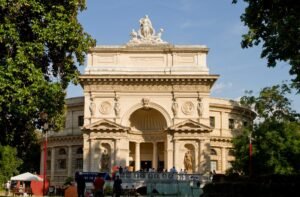
 Casa dell’Architettura100 m
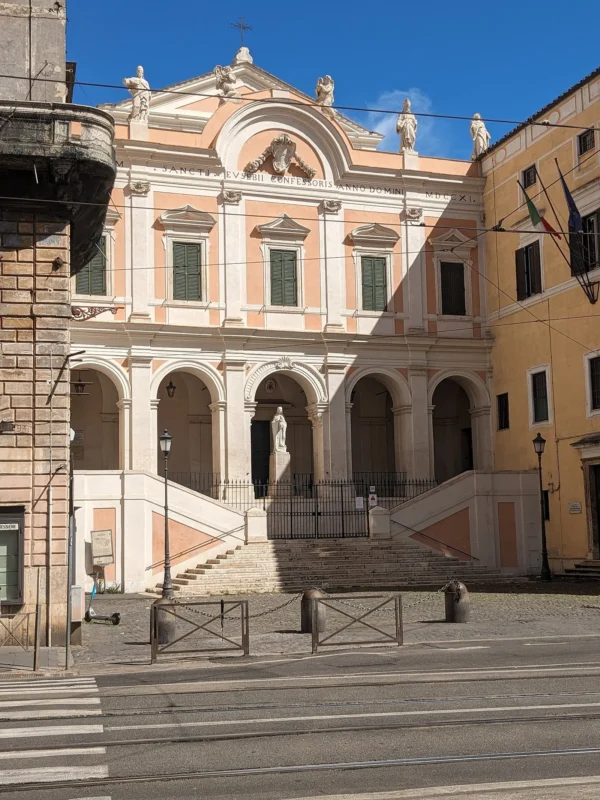
- Sant’Eusebio all’Esquilino300 m
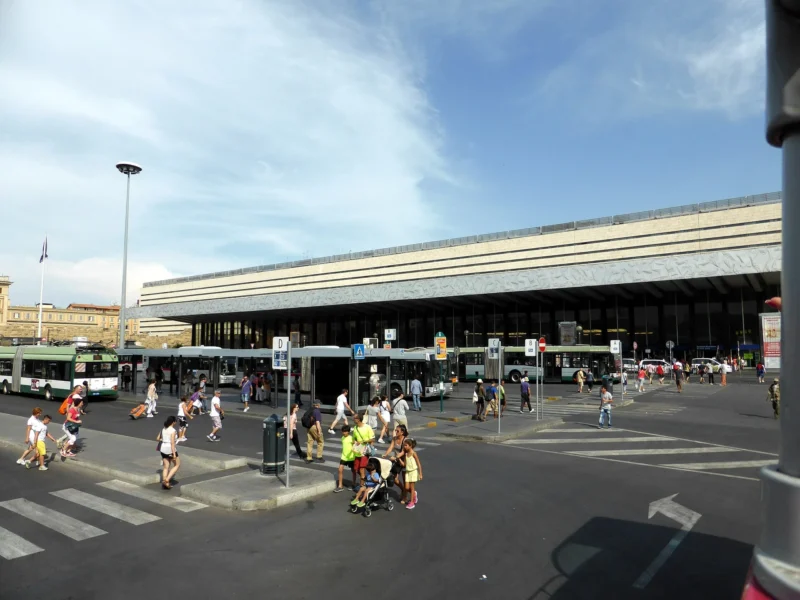
- Termini Station300 m
- Porta Alchemica of Piazza Vittorio300 m
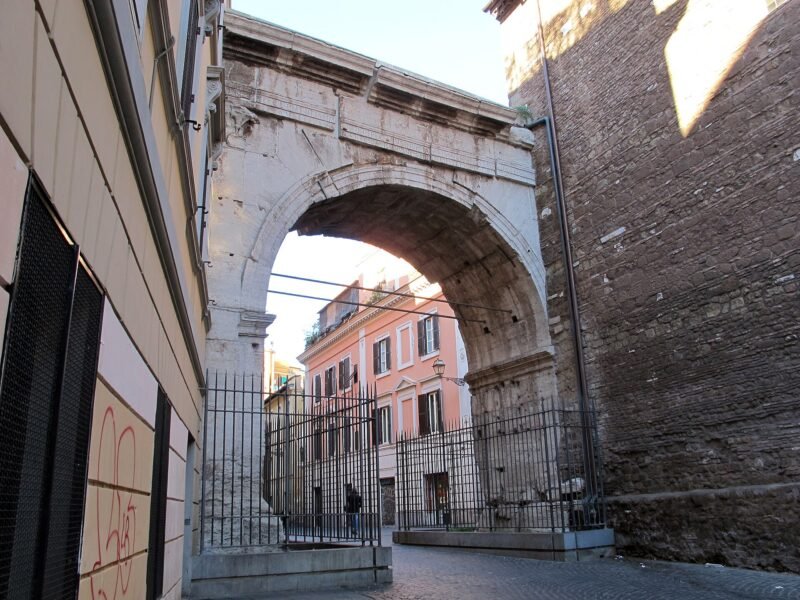
- Arch of Gallienus400 m
- Servian Walls400 m


Upcoming events nearby
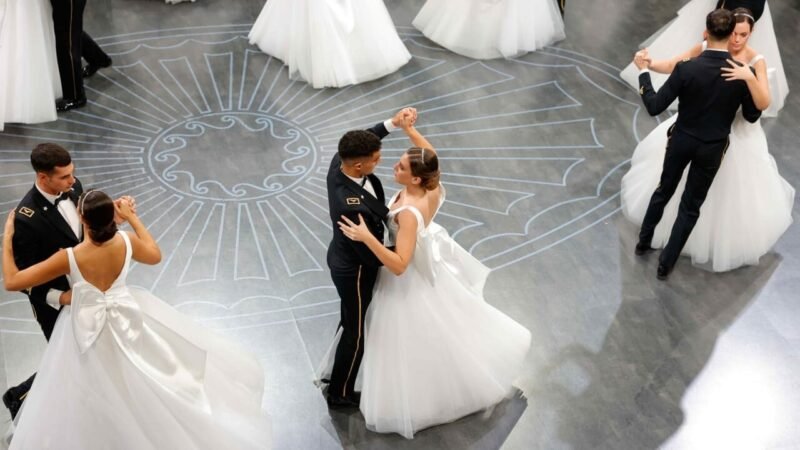
- Gran Ballo Viennese di Roma (18th edition) at Acquario Romano: Saturday, November 7, 2026100 m
- Arisa at Teatro Brancaccio in Rome, Live Tour 2026300 m
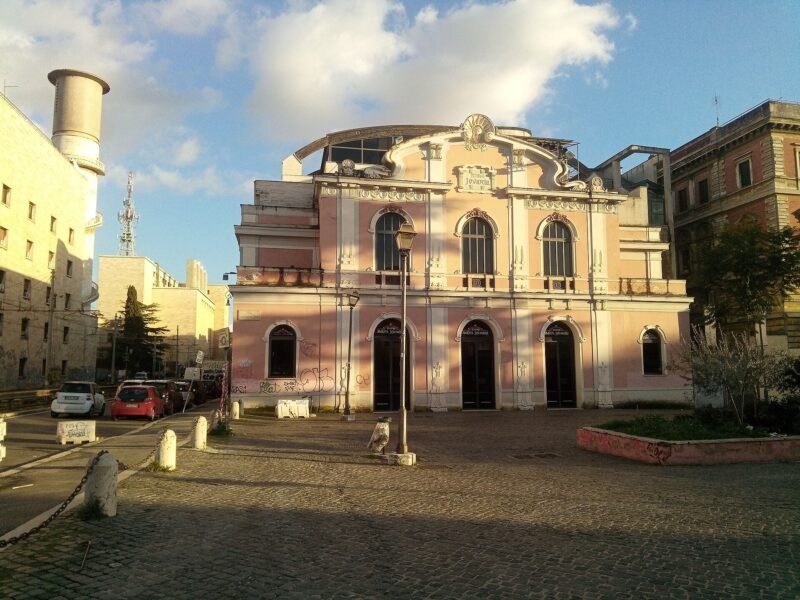
- Arianna Porcelli Safonov, Odiario at Teatro Ambra Jovinelli, November 7 and 8, 2026500 m
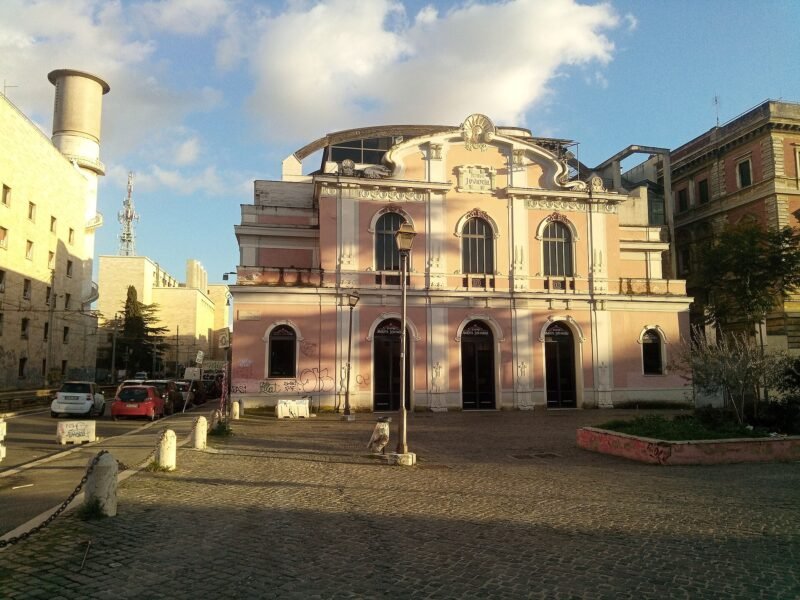
- La cosa giusta with Dino Abbrescia and Massimo De Lorenzo at the Ambra Jovinelli, January 13-24, 2027500 m