Santa Maria dei Monti
In short. Santa Maria dei Monti is at Via della Madonna dei Monti 41, in the Monti district, and it is a parish of the Diocese of Rome entrusted to the diocesan clergy: admission is free, you don't book and you don't pay anything.
Santa Maria dei Monti is at Via della Madonna dei Monti 41, in the Monti district, and it is a parish of the Diocese of Rome entrusted to the diocesan clergy: admission is free, you don't book and you don't pay anything. The parish states that the church is open every day from 7:00 to 22:00, until midnight on Friday and Saturday, with weekday Masses at 9:00, 13:15 and 19:00.
The name causes confusion and it's best to clear it up right away. The diocese lists the parish as Santa Maria ai Monti, guidebooks alternate between ai and dei, and in Rome almost everyone simply says la Madonna dei Monti, like the street and the square. It's the church that Giacomo Della Porta began around 1580 to house a fresco of the Virgin found in a hay barn, and it's the place where Saint Benedict Joseph Labre rests.
Opening hours, Masses and contacts come from the official parish page on the Diocese of Rome website, consulted on September 29, 2026. Parishes change their hours with the seasons, with holidays and with the arrival of a new pastor, and there was a change of pastor here in the summer of 2026: if you're coming specifically for an evening Mass or a particular celebration, call the parish first and have the time confirmed.
Where it is and what you really see
The church faces Via della Madonna dei Monti, the narrow street that runs down from the center of the district toward the Forums area, a few meters from the square of the same name with the fountain. Around it is today's Monti: shops, workshops, wine bars, and on Via Leonina, the street next door, the entrance where the Mercato Monti was held until 2022. Further up, by the stairways, you climb toward San Pietro in Vincoli and the Oppian Hill.
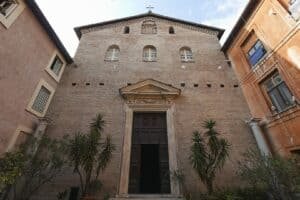
You only see the facade at an angle, because the street leaves no room to step back, and that's why many people walk past without looking up. It's a front on two orders of Corinthian pilasters joined by large side scrolls, with the dedicatory inscription above the portal and two niches at the sides. The scheme is that of the Church of the Gesù, which Della Porta had worked on in the same years, on a reduced scale.
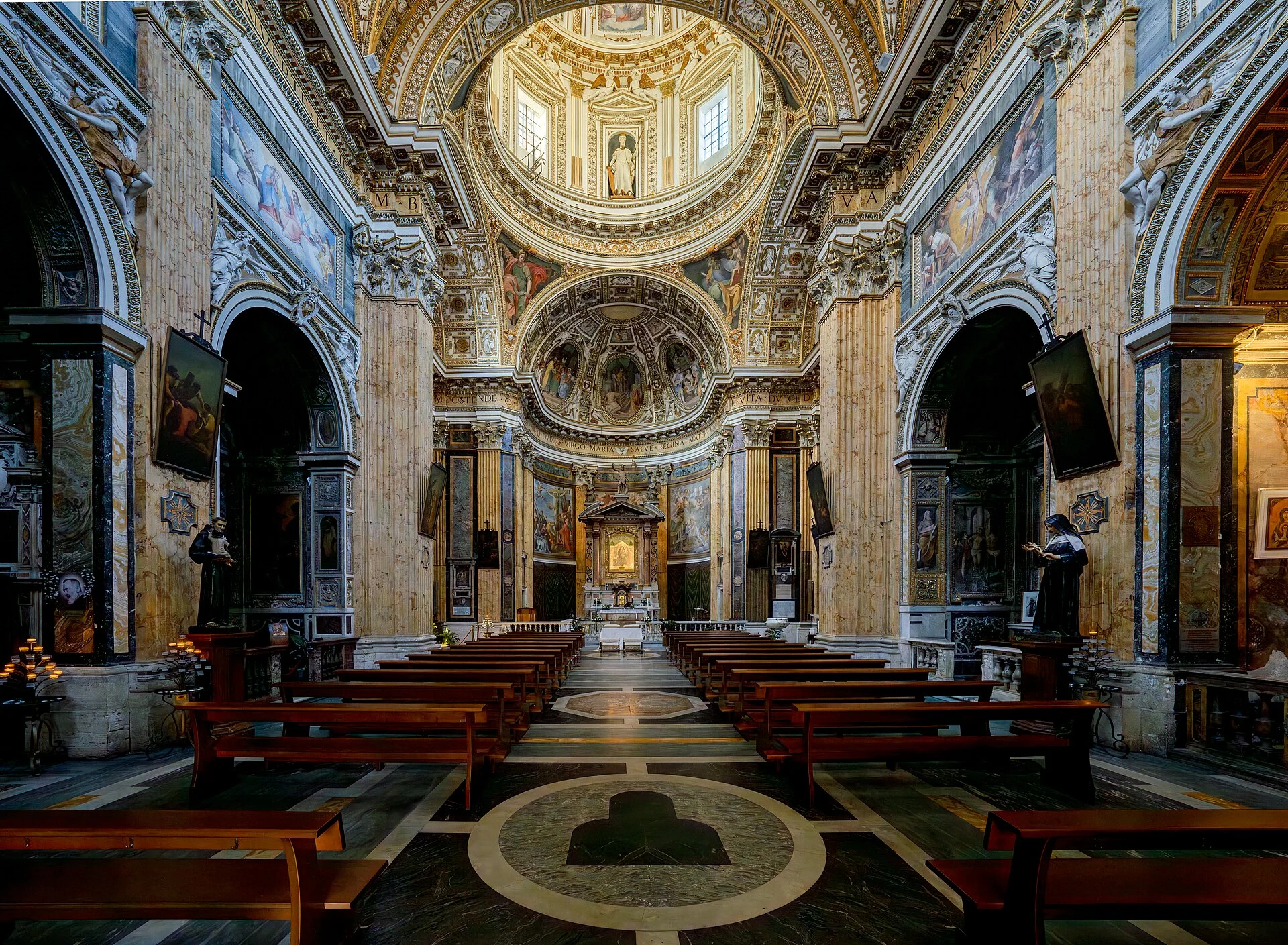
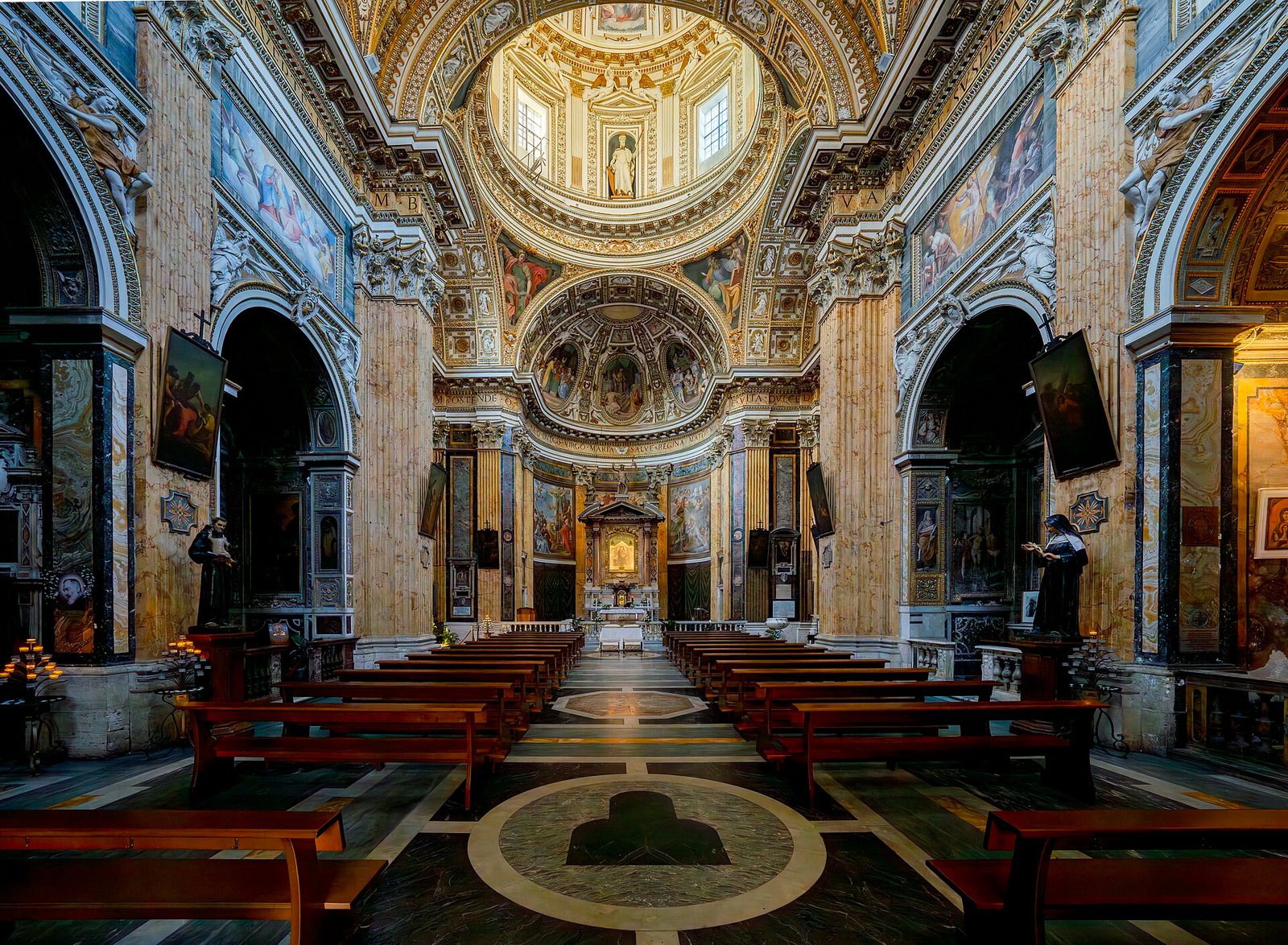
Inside you find a single nave, as the rules that came out of the Council of Trent required, with three chapels on each side, a wide transept, a dome over the crossing and a shallow apse. There are no side aisles to get lost in. The eye goes straight to the high altar, an aedicule with statues of the Savior among angels that frames the image of the Madonna and Child, the reason the building exists.
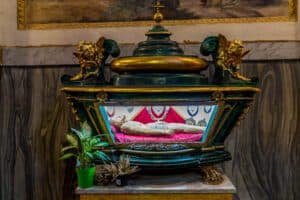
In the left transept, under an altar, is the burial place of Saint Benedict Joseph Labre, the French pilgrim who died a few dozen meters from here in 1783. It's the spot in the church where you're most likely to find someone praying, at any hour of the day. Respect that space: it isn't a museum stop, it's a place of living devotion that the neighborhood visits every day.
What you don't see: the medieval monastery the image comes from no longer exists as a readable complex, and the 1600s College of the Neophytes that closes off the square has no published public opening. There are no annexed halls, parish museum or visitable crypt. The visit is the church, and that's it. Half an hour taken calmly is more than enough, an hour if you stop to read the chapels one by one.
To get your bearings you need an idea of the terrain. Monti occupies the valley between the Viminal, the Quirinal and the Esquiline, which in ancient times was the Suburra, the crowded neighborhood behind the Forums. The streets all run down toward the archaeological zone, and Via della Madonna dei Monti is one of those descents. If you get lost, walk downhill and you reach the Forums, walk uphill and you reach the basilicas.
Hours, Masses and how to get in
According to the parish page on the Diocese of Rome website, the church opens every day from 7:00 to 22:00, and on Friday and Saturday it stays open until midnight. That is a very rare schedule for a church in the center, which usually closes at midday and reopens in mid-afternoon. Here the door stays open without a break, and this changes how you can organize your walk around the district.
Weekday Masses are at 9:00, 13:15 and 19:00. On Sundays and holidays the published list is longer: 9:00, 10:30, 12:00, 19:00 and 21:00. The Sunday 21:00 Mass is a valuable resource for travelers, because it lets you take part in the liturgy after a full day of sightseeing, when almost all the other parishes in the center closed their doors a long time ago.
Admission is free and there is no form of ticket, advance sale or reservation. Anyone offering you priority access or a pass for this church is selling you air. No guided tours organized by the parish are listed, and the operator doesn't mention dedicated visitor routes for tourists. If you're accompanying a large group, tell the parish before showing up, so you don't overlap with a funeral or a baptism.
The official contacts published by the diocese are the phone 06 485531 and the email santamariaaimonti@diocesidiroma.it. As a website the parish lists its own Facebook page, which is where changes of schedule, extraordinary celebrations and the program of the patron saint's feast appear. Since July 2026 the parish has been run by a parish administrator appointed by the diocese, assisted by a parochial vicar.
During Masses the church stays open but you don't walk around the chapels, you don't take photos and you don't talk. The best windows for a visit are late morning after the 9:00 Mass, early afternoon after the 13:15 one and late afternoon before 19:00. On Sundays, with five celebrations on the calendar, the free time for looking around shrinks quite a lot.
A curiosity about Santa Maria dei Monti
Look up when you enter and look at the choir loft above the portal, the balcony that holds the organ. According to some accounts, which the parish doesn't repeat on its channels, it would be the first choir loft in Rome built in reinforced concrete, at the end of the 1800s. So in a Counter-Reformation church, among stuccoes and gilding, there is a piece of modern engineering that nobody notices, and that from below looks like a balcony like any other.
The story of the instrument is even stranger. The organ was built in 1878 by the Turin firm of Alessandro Collino and his sons Giuseppe and Cesare, and according to the same accounts it was meant for the Pauline Chapel of the Quirinal Palace, after Victor Emmanuel II had taken up residence there. An organ designed for the court of the King of Italy, in a Rome just taken from the pope.
How it ended up in a parish in Monti is unknown. The sources recall that the Marquis De Robilant carried it to Rome and that the organ builder Augusto Del Chiaro installed it here in 1899, with some modifications, in place of an older instrument by the Roman Francesco Tessicini. The reason for the move, from the royal palace to the church of a working-class district, is not documented. It's one of those gaps that stay open in Rome for decades.
The instrument has a fully mechanical action, a single keyboard with a short pedalboard and 27 stops, and it was restored in 1969. If you happen to be here during a Sunday Mass with the organ playing, stop and listen from the back of the nave. The sound comes from above your head and fills the hall in a way a recording can't capture, and it makes you understand why that balcony had to be built so sturdy.
One thing nobody tells you about Santa Maria dei Monti
The church doesn't belong to the parish. The diocese's page lists it as property of the Pia Opera dei Catecumeni e dei Neofiti, and that name opens a page of Roman history that the district's guides almost always skip. The 1600s building that closes off the square, with its austere facade, was the College of the Neophytes, which also gives its name to the fountain in front of you.
The catechumens were people preparing for baptism, and the neophytes those just baptized. In papal Rome they were largely Jews, and to a lesser extent Muslims, who were housed and instructed before and after conversion. The institution began in the mid-1500s and from the 1630s it settled here, next to the Madonna dei Monti, which thus became the church tied to its activity.
Not all those conversions were voluntary, and historians have documented this thoroughly. The best-known case is that of Edgardo Mortara, the Jewish child from Bologna taken from his family in 1858 and brought to Casa dei Catecumeni in Rome: an affair that made the rounds of Europe and weighed on the image of the Papal State in its last years. Anyone who wants to understand the other half of this story has to walk to the Jewish Ghetto.
There, at the Synagogue and Jewish Museum, the same chapter is told from the point of view of the families. On the side of the ecclesiastical sources there are studies devoted to the confraternity of the catechumens and neophytes and to the church, useful for anyone who wants to go deeper. It isn't for judging the past with today's eyes, it's for looking at that square knowing what was happening behind its windows.
On this point the position is clear. Monti is sold as Rome's bohemian neighborhood, all vintage and aperitivos on the fountain steps, and that narrative is overrated. The district is a place of heavy stories, from the ancient Suburra to the college of the neophytes, and telling it only as a nice place to have a drink means missing the best part. Anyone who guides groups here should say so, without moralizing.
The Madonna of the hay barn: documents, tradition and legend
Let's start with what is solid. On the site there was a 1200s monastery of Poor Clares, and in a room of that complex, in the early 1400s, an image of the Madonna and Child accompanied by some saints was painted. When the nuns left the monastery, the rooms were reused for service purposes. That the church was built for that fresco, by will of Gregory XIII and to a design by Giacomo Della Porta, is beyond dispute.
Then there is the tradition, which religious sources and church histories report consistently. The room with the fresco had become a hay barn, and in 1579 the building is said to have been shaken by a series of tremors, like an earthquake, which led to the image being found under the hay. Healings considered miraculous followed, and an influx of crowds large enough to push the pope to intervene.
Finally there is the legend, which has to be told for what it is. According to the narrative handed down, during those tremors a voice was heard asking not to hurt the child. It's the detail that moves people and that every popular account repeats, but no contemporary document records it in a verifiable way. Keep it as part of the district's devotion, not as the chronicle of an established fact.
The passage that interests the historian is another: the pope had the fresco detached and placed on the high altar of the new church. What you see framed by the aedicule is therefore a fragment of medieval wall moved and adapted as an altarpiece. It's a frequent practice in Counter-Reformation Rome, which recovered venerated images from ruined buildings and built modern sanctuaries around them.
Anyone who wants to see the same mechanism elsewhere will find parallel cases throughout the city, and the Madonna della Vallicella is the most theatrical example: there too an ancient venerated image becomes the center of a new church and is protected by a modern altarpiece. At Monti the solution is simpler and more direct, without mechanisms, and perhaps that's why it lands better.
My advice for visiting Santa Maria dei Monti
Come on a Friday or Saturday evening, after dinner, between 22:00 and midnight. The parish states the church is open until 24:00 on those two days, and the effect is extraordinary: outside the square is full of voices and glasses, inside you find silence and very few people. It's the best way to understand what a neighborhood church is in an area that lives at night.
If you prefer natural light, go in on a weekday morning between 10:00 and noon. The 9:00 Mass is over, the 13:15 one is far off, and natural light comes down from above. It's the moment when the frescoes of the dome and pendentives read best with the naked eye, with the church almost empty and time to stop in front of each chapel without disturbing anyone.
Follow a precise order. Stop first at the center of the nave and look at the altar with the image, then stand under the dome and look up, then go to the left transept to Labre. Only after that go around the side chapels. It's the order of devotion, from the reason for the church to the neighborhood's saint, and it's also the order that helps you understand Della Porta's architecture best.
Dress as for any Roman church: shoulders covered, no very short shorts, hat off at the entrance. It's not a museum with a guard who stops you at the door, it's a living parish, and the faithful praying in front of Labre's tomb are often people from the neighborhood or people without a home. One look too many or a stolen photograph weighs more than you think.
One last practical tip. If you want to leave a mark, leave an offering in the box or light a candle, not a note on the saint's tomb if you aren't a devotee. The parish carries out welcome and outreach activities in the district, also described on the diocese's website, and visitors' offerings help keep a church open 15 hours a day, which is not a small detail.
The interior, chapel by chapel
Start from the left aisle, as you enter. Current attributions assign the Annunciation in the first chapel to Durante Alberti, the Adoration of the Magi and the Dream of Saint Joseph in the second to Cesare Nebbia, and the Nativity in the third to Girolamo Muziano. These are names from the Rome of the late 1500s, the generation that painted the great building projects of Sixtus V, and finding them all in a district church says how much this sanctuary mattered.
Nebbia, in particular, is the painter who directed the teams of the Sistine Chapel in Santa Maria Maggiore, a few minutes' walk away. If you do the two places on the same day, the comparison is instructive: the same hand, the same clear and somewhat didactic narrative taste, meant to be read by the faithful, at two very different scales. Here you see it up close, without crowds and without barriers.
On the right side, the first chapel is dedicated to Saint Charles Borromeo, with the Madonna and the saint and scenes from his life attributed to Giovanni da San Giovanni. The second brings together a Pietà copied from an original by Lorenzino da Bologna, a Way to Calvary attributed to Paris Nogari and a Resurrection by Giovanni Battista della Marca. In the third there is an Annunciation attributed to Paolo Guidotti. On some of these works the sources don't agree.
The dome deserves the longest time. In the pendentives are the four Evangelists, and the eight sails tell scenes from the life of the Virgin entrusted to different painters. The decoration of the vault with the Ascension, the angels and the Doctors of the Church is attributed to Cristoforo Casolani, the apse to Giacinto Gimignani. In the niches there are statues of prophets, and on the arches of the chapels stuccoes with angels attributed to Ambrogio Buonvicino.
Also look at how the space is built, besides what is hung in it. The single nave without side aisles served to let the altar be seen and the sermon be heard from every point of the church, as the Catholic reform required after Trent. The side chapels are shallow, almost niches, and don't steal attention from the center. It's a machine for liturgy and for the word, before it's a gallery of paintings.
An honest warning. None of these works is an absolute masterpiece, and anyone who enters expecting the power of Santa Prassede or San Clemente will be disappointed. The value of the church is in the whole: a Counter-Reformation sanctuary that has stayed coherent, decorated in a few decades by a homogeneous team, without later Baroque upheavals. It's a lesson in Roman art history on a small scale.
Another well-known fact, yet rarely cited
That Benedict Joseph Labre is buried here is known by the Romans of Monti and by devotees. It's known much less by those who visit the district, and general guidebooks often relegate it to a line. Yet he is the most Roman saint Rome had in the 1700s, even though he was born in France, in Artois, in 1748, and his story explains why this church is still today a point of reference for people who live on the street.
Labre tried to enter several monasteries and was rejected by all of them, then chose the life of a pilgrim on foot and crossed Europe from one sanctuary to another. In Rome he lived for years as a beggar, sleeping, according to the biographies, among the arches of the Colosseum and spending his days in prayer in the churches where the 40 Hours' Devotion was held. A devotion that made him recognizable to the whole neighborhood.
He died on April 16, 1783, at the age of 35, in a house on Via dei Serpenti, where he was taken after feeling ill, according to tradition, right on the steps of this church. The news ran through the district in a few hours and the crowd that came in the following days was enormous. He was buried here, where the diocese still indicates the presence of his relics today.
Pius IX proclaimed him blessed in 1860 and Leo XIII a saint in 1881. The room where he died, in the nearby street, has been turned into a dedicated chapel, but the information on public opening is not published clearly: ask at the parish. In the church there is also a work by Achille Albacini from 1892 that portrays him, tied to the season of devotion that followed the canonization.
There is also a calendar coincidence that devotees always remember. In 1783 Easter fell on April 20, so April 16 was the Wednesday of Holy Week, and Labre died while the churches of Rome were preparing for the Easter triduum. If you're in Rome in that period, our page on Easter in Rome helps you fit rites and visits together without overlaps.
The detail few people connect is this: a homeless saint buried in a church open 15 hours a day, in a neighborhood where today the parish does pastoral work on the street too. It's not a postcard coincidence, it's a continuity. If you pass by in the evening and find someone sleeping on the steps, remember that here that scene has more than two centuries of history behind it.
The square and the Catechumens fountain
The fountain in the center of Piazza della Madonna dei Monti is a design by Giacomo Della Porta, the same architect as the church, executed between 1588 and 1589. According to the page of the Sovrintendenza Capitolina, the work was started by the stonecutter Battista Rusconi, and in 1595 Girolamo de Rossi stepped in to arrange the stairway that surrounds it. It is made of travertine.
The water is that of the Acqua Felice, the aqueduct that Sixtus V, born Felice Peretti, had just built to bring water to the city's high hills. The octagonal basin carries panels with the pontiff's emblem and the city's coats of arms, and in the center two superimposed balusters hold as many bowls. The lower basin has four grotesque masks pouring water, and it's the part to look at up close.
The upper basin is not the original. It was replaced under Innocent XI Odescalchi, pope from 1676 to 1689, and the last complete restoration dates to 1997, when the square was repaved and made pedestrian. The name Catechumens fountain comes from the 1600s college beside it. To understand the network of Acqua Felice fountains, continue to the Four Fountains.
Della Porta signed some of Rome's best-loved fountains in those years. The idea of the Turtle Fountain is his, and so is the design of the basin of the Moor Fountain in Piazza Navona. The one at Monti is the simplest of the group, designed for a working-class district that needed, above all, water to draw, and this practical function can still be read in its form.
In the evening the fountain's stairway becomes the district's open-air living room, with people sitting on the steps until late. I say this without snobbery: for the visitor that isn't the best square, it's the most crowded. The fountain is best appreciated early in the morning, with the square empty, the masks at work and the light coming down on the facades. At midnight you mostly see bottles.
The right photo to take at Santa Maria dei Monti
The right photo is inside, under the dome, and it's taken vertically. Stand exactly in the center of the crossing between nave and transept, point the lens straight up and try to capture the whole ring of the dome with the pendentives in the corners. No flash, outside Mass times, on a bright day. A phone in night mode, held steady, works more wonders than a handheld reflex camera.
The second image is the facade, and here you need patience. The street is narrow and you can't step back, so don't chase the full frontal shot: stand on the opposite side of the street and shoot at an angle in vertical, letting the street enter the frame. The side scrolls, seen edge-on, tell Della Porta better than a flat elevation.
The third is the fountain, early in the morning. Crouch down to the height of the lower basin and shoot a mask in the foreground with the water coming out, leaving the square's facades blurred in the background. It's the image that tells the fountain as an object in use, not as a monument. With the square full of people and tables, after 11:00, it becomes impossible.
A rule to always respect, especially with groups: no photographs of Labre's tomb while someone is praying, and no photographs of the people sitting or lying on the church steps. These are scenes that will strike you, and rightly so, but they aren't yours to take. If you want to remember that altar, photograph it when it's empty, or buy a devotional image if the parish makes them available.
Avoid the photo of the crowded square in the evening, the one you find on all the district's social profiles: people sitting on the steps, bottles, the fountain hidden by the crowd. It tells the evening, not the place, and in 10 years it won't tell you anything. If you want the church, photograph the church. If you want the square, come back in the morning and focus on the fountain and its masks.
Some important events that happened here in history
In the 1200s there is a monastery of Poor Clares on the site, and in the early 1400s the Madonna and Child with some saints is painted in one of its rooms. After the nuns leave, the complex decays and the rooms become service spaces. We are in the lower part of the hill, right next to the ancient Suburra, an area that for centuries had a working-class and artisan character.
1579 is the year of the finding according to tradition, with the tremors, the healings and the crowds. Gregory XIII reacts quickly, has the fresco detached and entrusts Giacomo Della Porta with the design of the new church, which is begun around 1580. According to current accounts, Carlo Lombardi and Flaminio Ponzio then also take part in the works, while the decoration of the chapels proceeds over a few decades.
Between 1588 and 1589 Della Porta builds the square's fountain with the water just brought by Sixtus V. From the 1630s the institution of the catechumens and neophytes settles next to the church, which becomes its point of reference. Under Innocent XI the fountain receives a new upper basin. The face of the square you see today, church, college and fountain, is set in this century.
On April 16, 1783 Benedict Joseph Labre dies a few meters from here, and the church becomes the goal of a popular pilgrimage that still continues. On November 1, 1824 Leo XII establishes the parish, as the diocese's page reports. In 1860 Pius IX beatifies Labre, in 1881 Leo XIII canonizes him, and in 1892 comes the work by Achille Albacini that commemorates him.
Between 1878 and 1899 the organ built for the Savoy court arrives in the church and is placed on the reinforced concrete choir loft. In 1991 and 1992 the facade is restored, in 1997 it is the fountain's turn, with the pedestrianization of the square. Today the church is the titular church of Cardinal Jean-Marc Aveline, and in the summer of 2026 the diocese appointed a new parish administrator.
Who has passed through Santa Maria dei Monti
Gregory XIII, Ugo Boncompagni, the pope of the calendar, who left here the mark of a pontiff able to turn a devotional episode into a building site within a few months. The speed with which the church is begun says a lot about his method: where there was a crowd, a place was built to govern it. It's the same logic you see in many Marian sanctuaries of late 1500s Rome.
Giacomo Della Porta, the most sought-after architect in the Rome of those years, who completed the dome of St. Peter's Basilica and the facade of the Gesù. Here he signed the church and the fountain, that is, the entire urban scene of the square. It's rare to find a place in Rome where a single architect controls everything you see, and this is one of the few.
Benedict Joseph Labre, of course, who from an unknown beggar became the neighborhood's saint. With him, two centuries of pilgrims, poor people and homeless people have passed through this church, coming to pray at his tomb. Anyone who frequents the church early in the morning still meets them, and it's a presence that gives this place a character no guidebook manages to describe well.
The catechumens and neophytes, men, women and children about whom we know little and who crossed the square in the centuries of the college, often without having chosen it. They are the hardest figures to tell, because the sources almost always look at them from the point of view of the institution. Remembering them is as much a part of the place's history as remembering the painters, and perhaps more.
Today the link with France also passes through the cardinal's title. The diocese lists the church as the titular church of Cardinal Jean-Marc Aveline, Archbishop of Marseille. That a French cardinal holds as his title the church where Rome's most beloved French pilgrim rests is a symmetry that nobody has ever declared intended, but that anyone who knows Labre's story notices at once.
And then the painters: Cesare Nebbia, Girolamo Muziano, Durante Alberti, Giovanni da San Giovanni, the team that decorated the chapels and that you find again in the papal building sites of half of Rome. Anyone who wants to follow the same taste in a larger setting can go up to the Basilica of Santa Pudenziana and then to San Martino ai Monti, two churches of the district with decorations from the same years.
How to get there
On foot, which is the right way. From the Colosseum you climb toward Via Cavour and enter the grid of Monti, or you skirt the Forums and climb Via della Madonna dei Monti from below, up to the church. From Trajan's Forum it's a few minutes. From Santa Maria Maggiore you go down along the streets parallel to Via Cavour.
With public transport it's best not to rely on directions written once and for all. The Forums area is crossed by construction sites that in recent years have changed routes and stops several times, and surface lines are often diverted. Check the updated route on the Rome transit company's journey planner on the same day, entering Piazza della Madonna dei Monti as the destination.
From Termini station you get there on foot in about 20 minutes, mostly downhill, going through the streets of the Esquiline and then the inner streets of the district. It's a walk I recommend even with light luggage, because it brings you into the neighborhood from its less touristy side. If you first want a tour of the station area, you'll find our guide to the Esquiline.
By car, forget it. The district is made of narrow streets, one-way systems and parking spaces reserved for residents, and a good part of the historic center is subject to the gates of the limited traffic zone, with time bands that change between day and night. If you're coming from outside Rome it's quicker to leave the car at a park-and-ride and continue by metro.
The church works well as a first stop on a tour of the district. Starting from here you can go up toward San Lorenzo in Panisperna, where tradition places the saint's martyrdom, or go down toward Trajan's Markets and the Museum of the Imperial Forums, which occupy the same side of the valley.
When it's closed and what not to expect
On paper the church never closes during the day: from 7:00 to 22:00 every day, until midnight on Friday and Saturday. In practice there are moments when a visit isn't appropriate, namely Masses, funerals, weddings and celebrations of the patron saint's feast. The calendar of the latter is not published far in advance, and the parish page remains the most reliable channel.
The feast of the Madonna dei Monti is celebrated in spring, around the anniversary of the traditional finding, and the program appears year by year on the parish page. Labre's liturgical memorial, in mid-April, also brings more faithful than usual to the church. If you want to see the church full and alive, those are the right days. If you want silence, avoid them.
During Holy Week and Christmas the schedules of the celebrations change, and the parishes in the center add vigils, confessions and services that occupy the church for hours. In those periods a tourist visit becomes difficult, even though the door stays open. If your trip falls over the holidays, plan the church on a weekday away from the main liturgies and ask the parish for confirmation.
Don't expect tourist services. There are no audio guides, explanatory panels in several languages, bookshop or restrooms open to the public. The operator doesn't mention guided routes, and anyone who wants an explanation has to bring it from home. On accessibility the information isn't published: if you use a wheelchair, call the parish first, to find out if there's a step-free entrance and how to reach the transept.
Don't expect a postcard church either. The lighting is that of a parish, not a museum, and some chapels stay in half-light for much of the day. It's a working church, with pews used every day, and votive candles lit by the faithful in front of Labre's altar. Anyone looking for Baroque scenery would do better to choose another stop.
Eating in the area
Monti has a good food reputation, and it partly deserves it. But the district borders the Colosseum and the Forums, and along the main axes the cooking is built for people passing through once. The signs for recognizing the trap are always the same, and they apply here as in the rest of the center. You don't need guides or rankings to avoid it, you just have to look carefully before sitting down.
The first sign is the person at the door who stops you to invite you in. A place that has to get customers from the street has no regular customers, and regular customers are the only guarantee that a kitchen works. The second is the menu with laminated photographs of the dishes, translated into five languages: it speaks to people who don't know what a carbonara is, that is, not to you.
It's also worth saying what is not a sign. The outdoor table is not a flaw, and neither is the place full of tourists in August, when the Romans are at the seaside. The problem isn't who eats there, it's a kitchen that doesn't need to make you come back. A place that lives on neighborhood customers treats you like a neighborhood customer, even if you see it for the first time.
The third sign is the woman rolling out the pasta sheet in the window or right on the sidewalk. It's a scene staged to stop the passerby, not a sign of quality: fresh pasta is made in the kitchen, in the morning, away from the dust of the street. The fourth is the kitchen open nonstop from morning to late at night. A real kitchen has a break, because the crew has to rest and prepare.
The fifth concerns the places in front of monuments, in particular along the street that goes down toward the Colosseum. There the price tends to adapt to the customer: items without a price on the menu, fish of the day without the weight indicated, different price lists between the dining room and the outdoor tables. Always ask the price before ordering, and if the answer is vague, get up and go elsewhere without embarrassment.
The Romans don't go there, and not out of snobbery. They simply know an alternative 100 meters away, on a side street, with a handwritten menu that changes every day, and they've been eating lunch there for years. The criterion is to look at who is sitting and in what language they order. So you don't have to go by trial and error, here you'll find our list of the places where we eat.
What to combine in the same day
The most natural tour is that of the district, and the reference guide is our page on what to see in Monti. From here you go up to San Pietro in Vincoli for Michelangelo's Moses, then continue toward the Oppian Hill with the Baths of Trajan and the Domus Aurea, to be booked in advance.
If you'd rather stay with churches, the most sensible route goes up to Santa Prassede for the mosaics of the Chapel of San Zeno, passes through Santa Maria Maggiore and ends at San Vitale, on Via Nazionale. It's a dense half day, all on foot, and it shows you how the same hill hosts a thousand years of sacred architecture within a few hundred meters.
Anyone who wants the ancient world goes down toward the Forums: the Roman Forum, Trajan's Column, the two churches of Trajan's Forum and the Mamertine Prison, before climbing to the Capitoline Hill. It's the passage between the working-class district and the center of ancient power, the same one the Suburra had before its eyes 2,000 years ago.
Anyone who wants the 1600s goes up to the Quirinal: Bernini's Sant'Andrea al Quirinale and Borromini's San Carlo alle Quattro Fontane are a quarter of an hour's walk away. On the site you'll also find Sant'Isidoro a Capo le Case, another neighborhood church that is best appreciated at the same slow pace.
Anyone looking for the Mercato Monti on Via Leonina should know that it hasn't announced editions since 2022, and for market lovers the full picture is on our page on Rome's markets, from the Nuovo Mercato Esquilino to the historic neighborhood ones. End the evening with the church open until midnight, if it's Friday or Saturday.
Frequently asked questions
Is Santa Maria dei Monti open every day?
Yes. According to the parish's official page on the Diocese of Rome website, the church opens every day from 7:00 to 22:00, and on Friday and Saturday it stays open until midnight. During Masses you can enter to take part in the celebration, but not to visit the chapels or take photographs. For changes related to holidays it's best to call the parish at 06 485531.
How much does it cost to enter and do you need to book?
Admission is free and no reservation is needed. Santa Maria dei Monti is a diocesan parish, not a museum, and there are no tickets, advance sales or priority access. No guided tours organized by the parish are listed. Anyone accompanying a large group does well to notify them beforehand, by writing to santamariaaimonti@diocesidiroma.it, to avoid overlaps with funerals or baptisms.
What time are the Masses?
On weekdays the diocese's page lists Masses at 9:00, 13:15 and 19:00. On Sundays and holidays the celebrations are at 9:00, 10:30, 12:00, 19:00 and 21:00. The Sunday 21:00 Mass is one of the latest in the historic center and is convenient for travelers. Times should be rechecked during holiday periods.
Where is Saint Benedict Joseph Labre buried?
Saint Benedict Joseph Labre is buried in the left transept of the church, under an altar, and the diocese indicates the presence of his relics in the parish. The saint, a French pilgrim who lived in Rome as a beggar, died on April 16, 1783 in a house on Via dei Serpenti, a few meters from the church. He was beatified in 1860 and canonized in 1881.
What is the image on the high altar?
It is the 1400s fresco of the Madonna and Child from the ancient Poor Clares monastery that stood on the site. According to tradition it was found in 1579 in a room used as a hay barn, after a series of tremors and healings considered miraculous. Gregory XIII had it detached and had the church built around it, to a design by Giacomo Della Porta, starting in 1580.
Why is the square's fountain called the Catechumens fountain?
The fountain takes its name from the 1600s College of the Neophytes or Catechumens that faces the square, the institution that housed people preparing for baptism, largely Jews. The design is by Giacomo Della Porta, from 1588 and 1589, with water from the Acqua Felice. The basin is octagonal, in travertine, last restored in 1997.
Are Santa Maria dei Monti and Santa Maria ai Monti the same church?
Yes, they are two forms of the same name. The Diocese of Rome lists the parish as Santa Maria ai Monti, several guidebooks use Santa Maria dei Monti, and Romans almost always call it Madonna dei Monti, like the street and the square it faces. The official address is Via della Madonna dei Monti 41, in the Monti district.
How much time does the visit take?
A careful visit takes between half an hour and an hour: the time to look at the altar with the image, the dome, Labre's tomb and the six side chapels. If you add the square with the fountain and a walk in the nearby streets, count an hour and a half. It's a stop that fits easily into a longer tour among the Colosseum, the Forums and Santa Maria Maggiore.
Who wrote the page
The page comes from the editorial staff of Tour Leader Pro, the Rome-based organization that designs itineraries, tours and cultural events in Rome and Lazio. Opening hours, Masses and contacts reported here come from the official sources cited in the text as of the date given at the top: since this is a parish with a calendar that changes with the holidays, check them again before you leave. Tell us what you find changed.
Lining up a day in Monti means fitting together churches that open at different times, Masses that interrupt visits, construction sites that change transit stops and a district that transforms completely in the evening, for yourself or for a group of 40 people. If you're facing this kind of puzzle, on Tour Leader Pro you'll find working materials designed for those who guide groups and for those who organize on their own.
For the bigger picture, meaning regional trains and seasonal timetables, rentals, airports, transfers between provinces and Lazio destinations outside central Rome, from the Castelli to the volcanic lakes of the north, down to the Tyrrhenian coast and the villages of the interior, a useful resource for putting together a multi-day itinerary is Italy Planner.
Contact Information
Nearby
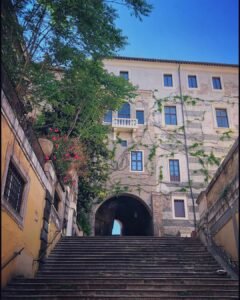
 Salita dei Borgia100 m
- Mercato Monti200 m
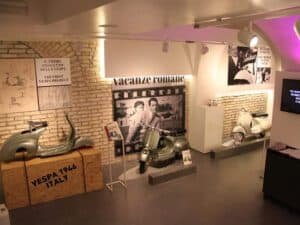
- Spazio Museo Vespa200 m
- Sant’Agata dei Goti200 m
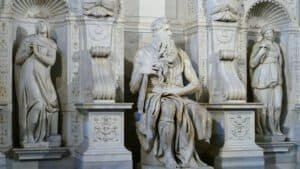
- Basilica of San Pietro in Vincoli200 m
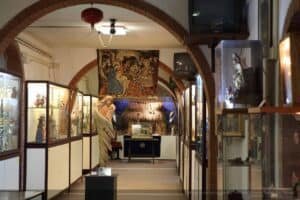
- International Nativity Scene Museum “Angelo Stefanucci”200 m


Upcoming events nearby
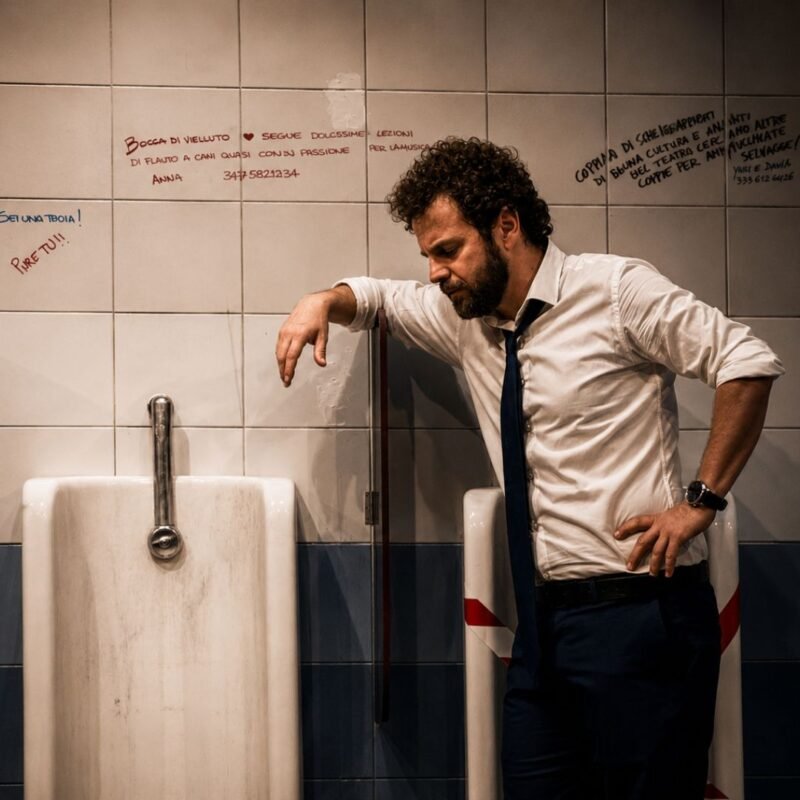
- Toilet at Piccolo Eliseo, from October 27 to November 8, 2026400 m
- Lezione d’amore with Milena Vukotic at Piccolo Eliseo, April 14 to 25, 2027400 m
- Un marziano a Roma at Piccolo Eliseo, April 7 to 11, 2027400 m
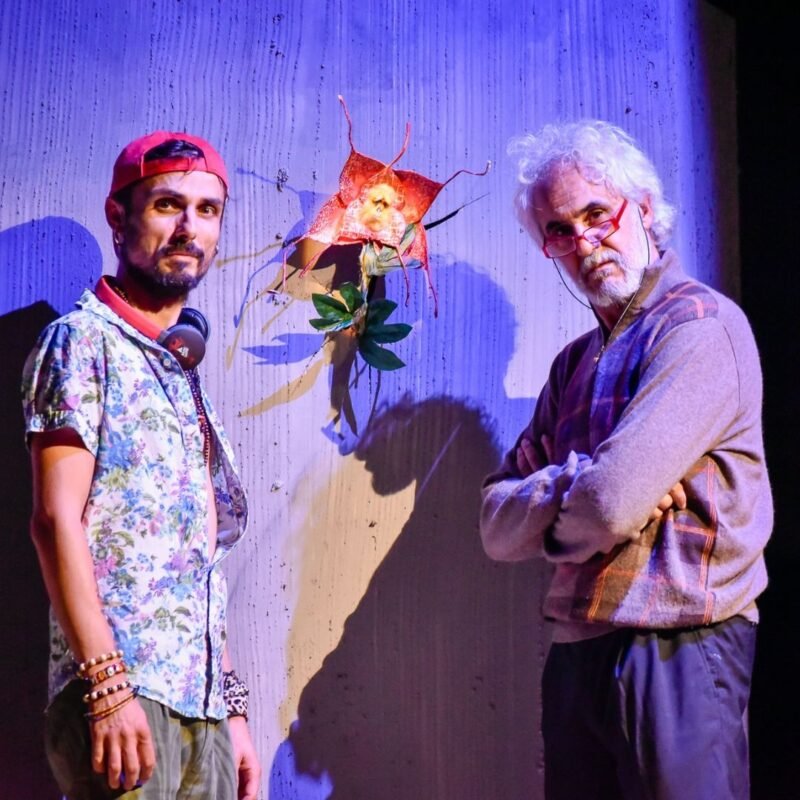
- Life is a flower at Piccolo Eliseo, November 10 to 15, 2026400 m