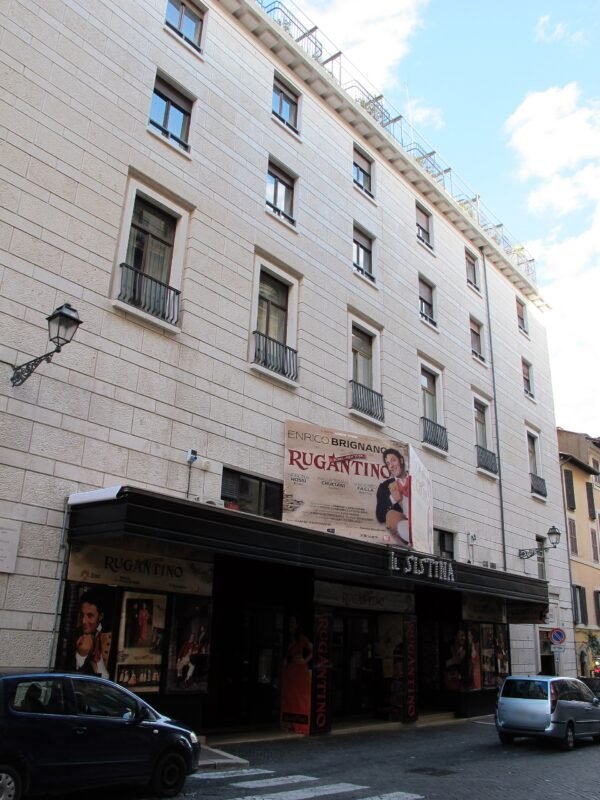
Life is a flower at Piccolo Eliseo, November 10 to 15, 2026
In short. Life is a flower: practical file. "Life is a flower", a show based on an idea by Daniele Ronco and directed by Raffaele Latagliata, is on at Piccolo Eliseo from November 10 to 15, 2026.
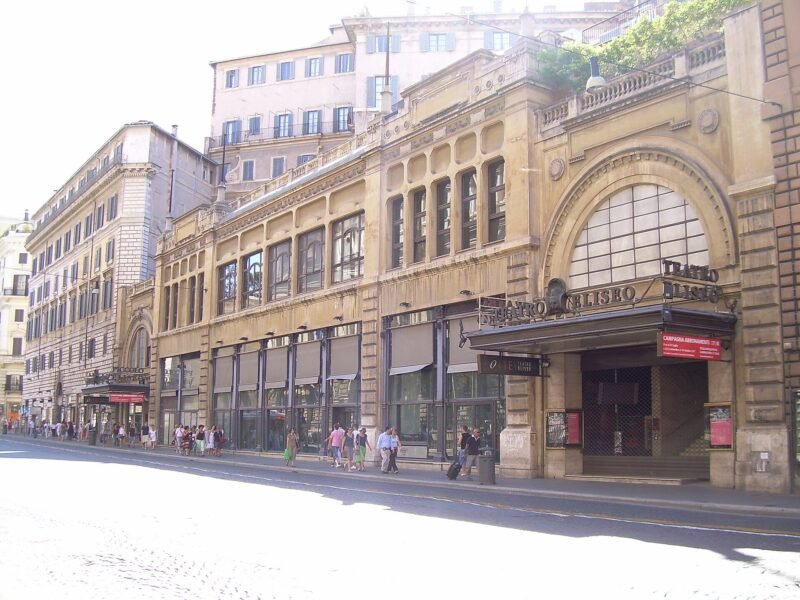
Life is a flower: practical file. "Life is a flower", a show based on an idea by Daniele Ronco and directed by Raffaele Latagliata, is on at Piccolo Eliseo from November 10 to 15, 2026. The poster lists Graziano Piazza and Daniele Ronco. The times published on the theater's website are: Tuesday the 10th, Wednesday the 11th, Thursday the 12th and Friday, November 13 at 20:00, Saturday the 14th and Sunday the 15th at 17:00. Piccolo Eliseo is at Via Nazionale 183, 00184 Rome, the same address as the box office (Turismo Roma, the City's tourism portal, gives number 182 instead: the sources disagree on the number, but the entrance indicated by the theater is 183). The price for the Poltrona section is 28 euros full price and 20 euros reduced, and the page also mentioned a launch promotion valid until October 19, now expired. The running time is not published. Tickets are sold at the box office at Via Nazionale 183, by phone or email with remote payment, or online through the sales channel indicated on the show's official page on eliseoteatro.it. The nearest metro stations, according to the theater, are Repubblica on line A, about nine minutes on foot, and Cavour on line B, about 11 minutes.
Language: performed in Italian. No English version or English surtitles are announced.
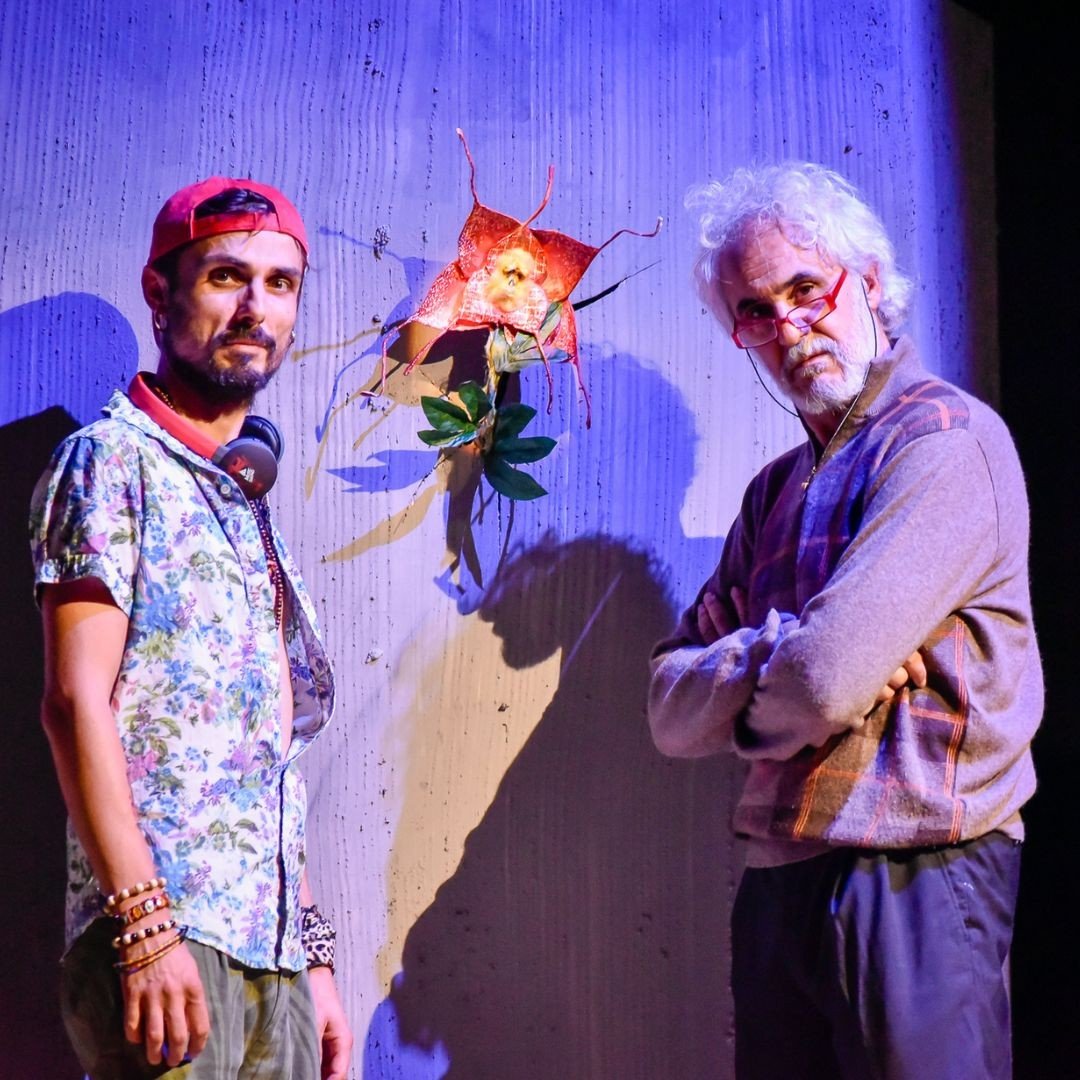
Life is a flower: two generations shut in a shelter
The show is set in an alternative present, or in a very near future. Acid rain has changed the planet's chemistry: water is toxic, the air almost unbreathable, and plants never seen before sprout from the concrete, growing out of control until they take over all the space. Governments, driven by a very severe climate crisis, adopt ever more drastic measures to preserve a semblance of normality. Human beings can no longer travel as they please or consume goods and services that increase carbon dioxide emissions, and water is rationed.
Two characters move through this scenario. Vez is an old architect, widowed for years. Gio is a young travel influencer with a mysterious past. A presentation of the show published for a tour date in Piedmont makes the premise clear: the young man is serving a sentence for exceeding the emission limits, and the punishment is to look after an elderly man for a year. The forced cohabitation becomes a constant generational clash.
A house that is both shelter and prison
The action takes place in a house that has the features of a shelter and a prison at the same time, surrounded by a hostile world that seems to rebel against the presence of humans. Inside those walls the two main characters' defense mechanisms end up giving way: Gio and Vez must face their own fears, what they have repressed, and the possibility, personal and collective, of having to face a reckoning.
Freedom and awareness
The thematic heart, in the words of the official presentation, is the paradox of a world very similar to ours, where freedom often can't coexist with awareness. On one side are the older generations, pointed to as responsible for the planet's crisis but also forgotten in their condition as people who gave a lot to a society that no longer understands them. On the other are the young, with their drive to make their mark and take the world that is theirs, but also with their impatience at the limits imposed and the struggle to deal with responsibilities larger and more uncomfortable than those a free life would offer.
Theater facing the climate crisis
The Piedmont presentation describes the show as a bitter joke about living in a reality that resembles science fiction, and above all as a story about dialogue between different worlds and for the world. It's an effective definition: the climate is the frame, but the real subject is how hard it is for different ages to talk to each other.
A theme running through the Italian stage
Facing a huge theme like the climate crisis, "Life is a flower" takes the path of the two-character chamber drama, the most classic one, and uses it to observe two people up close rather than an entire society. The audience doesn't get a lecture on the climate: it watches a conflict it knows well, the one between parents and children, moved to the near future.
The title
The title, in English, plays with the image of plants invading the city. In the world of the show flowers are not a sign of rebirth but an uncontrolled invasion, the symptom of a nature that has changed the rules. The theater's page doesn't explain where the phrase comes from, and every interpretation remains open.
Daniele Ronco and zero-impact theater
Daniele Ronco came up with the original idea and wrote the script together with Francesco Bianchi. His name is tied to a specific path, that of a theater that reflects on the environment in the way it is produced too. The best-known case is "Mi abbatto e sono felice", a monologue written and performed by Ronco and produced by the company Mulino ad Arte, presented as a show with zero environmental impact.
A bicycle instead of a power outlet
In that monologue, according to the presentation published in 2025 for a performance at Teatro Libero in Palermo, Ronco performs while pedaling a bicycle connected to a system that powers the lights and the set. The show doesn't need a power outlet: muscle power is enough. The theme was the possibility of being happy while reducing your impact on the planet, in a self-mocking and irreverent tone.
From a monologue to a dialogue
"Life is a flower" can be read as a development of that research: from the solitary voice of the monologue to the encounter between two performers, from personal self-mockery to the collective dimension of the conflict between generations. This is an editorial reading, not a statement by the company.
Graziano Piazza, an actor of the great directors
Graziano Piazza's career was built mainly in the companies of Italy's leading public theaters. It began in 1983, when he appeared on television in Manzoni's "Il Conte di Carmagnola" directed by Ugo Gregoretti. In theater he has worked with some of the most important directors on the European stage.
From Peter Stein to Luca Ronconi
In the 1989/90 season Piazza was in Shakespeare's "Titus Andronicus" directed by Peter Stein, with whom he later also performed in Kleist's "Penthesilea" at Epidaurus. From 1991 he took part in Federico Tiezzi's Dante trilogy, up to the "Paradiso" presented at the Ravenna Festival. With Luca Ronconi he was in "Infinities" and in "Odissea: doppio ritorno" in the 2007/08 season. He also performed in Chekhov's "Uncle Vanya" with Mario Missiroli, in Beckett's "Waiting for Godot", in Euripides' "Orestes" at the Greek Theater of Syracuse and in the "Macbeth" directed by Valter Malosti.
Film, television and radio
In film Piazza was in the cast of "Valzer" by Salvatore Maira, presented at the Venice Film Festival in 2007, and of "Sopra e sotto il ponte" by Alberto Bassetti. On television he starred in single episodes of "La Squadra" and "Don Matteo" and played Carlos Ribeira in "La Monaca di Monza" by Alberto Sironi. He has also worked extensively for Rai radio.
The direction and the creative team
The director is Raffaele Latagliata. The sets are by Massimo Voghera and Roberto Leanti, the costumes by Teresa Musolino. The production is by Mulino ad Arte, with the support of Fondazione Nuovo Teatro Faraggiana and a contribution from Fondazione Compagnia di San Paolo.
Who plays Vez and who plays Gio
Neither the theater's website nor the other presentations of the show state the casting of the roles explicitly. With two declared characters, an old man and a young one, and two actors on the poster, audiences can guess the answer, but the official page doesn't say it, so we don't report it as certain.
A touring show
The Rome date is part of a wider tour: on November 7, 2026, three days before opening at Piccolo Eliseo, the show is announced at Teatro Silvia Coassolo in Cantalupa, in the province of Turin.
Piccolo Eliseo in its reopening season
The run of "Life is a flower" comes at a special moment for the theater on Via Nazionale. The Eliseo had been closed since March 2020. According to an Artribune article of September 29, 2026, the management of Eliseo and Piccolo Eliseo was taken over at the end of May 2026 by Alessandro Longobardi, artistic curator of Viola Produzioni, with a lease for one season and an option for six more. Piccolo Eliseo reopened on Friday, October 2, 2026 with the national premiere of "Turbati come siamo, pallidi di preoccupazioni".
A reopening in three stages
The same autumn season also saw Teatro Valle return to activity, from October 16, and the Eliseo's main hall, with "Dylan Dog. Horror Show" directed by Valter Malosti. The sources disagree on the opening date of the main hall: Artribune gives October 28, the theater's website presents the show from October 22. Mayor Roberto Gualtieri called the reopenings an important milestone for the city's cultural life.
The small hall's program
In the 2026/2027 program of Piccolo Eliseo, alongside "Life is a flower", there are among others "Toilet", "Delitto e castigo", "La vasca", "Dracula a comedy of terrors" and "Vita del signor Molière". Since the 2000s the small hall has opened up in particular to new Italian and foreign playwriting and to new performers.
How to watch Life is a flower
A two-character drama asks the audience for a particular kind of attention. There are no spectacular scene changes or crowds of supporting actors: everything goes through words, pauses, minimal gestures. If you come to the theater expecting a science fiction story you may be caught off guard, because the future described by the official presentation is above all a backdrop, a set of rules that make the cohabitation of the two main characters inevitable.
Conflict as the engine
The structure described by the theater is the classic one of a clash between opposites: an old man who literally built yesterday's world and a young man who lives on images and travel, exactly what the new climate order forbids him. The fact that the young man is a travel influencer, that is, a professional traveler, makes the punishment even crueler and the premise more ironic. For today's audience the short circuit is immediate.
The questions that remain
According to the presentation, the show doesn't just put a generation on trial: it also points out how often the elderly are forgotten and how hard the young find it to deal with responsibilities bigger than themselves. It's a difficult balance, and its success will depend on the performers' ability not to take sides. On the way out, the discussion will probably continue at the bar or on the way home.
Who it's for
The theater doesn't give a recommended age. The theme and the form, a dialogue between two generations, make the show interesting for young audiences and schools too, which can contact the Promotion Office for dedicated rates.
The companies that made the Eliseo's history
In 1935 the Grande Compagnia Spettacoli Eliseo was founded, with Anna Magnani as its star. In the following years the Compagnia del Teatro Eliseo was formed, with Andreina Pagnani, Gino Cervi, Rina Morelli, Paolo Stoppa, Carlo Ninchi, Aroldo Tieri and the theater organizer Luigi Gatti. The companies of Memo Benassi and Ermete Zacconi were regulars too, as were the Tofano-Maltagliati company with its sentimental comedies and Antonio Gandusio with his comic repertoire, while Renzo Ricci and Eva Magni alternated Shakespeare with modern authors.
Eduardo and the Eliseo
The bond with the De Filippo family was very long: more than three months almost every season, with Eduardo's great hits. Even after the company of the three siblings broke up, Eduardo chose the Eliseo as his only theater in Rome.
The management from the 1990s
In July 1997 the management passed to Vincenzo Monaci and the artistic direction to Maurizio Scaparro, in charge until June 2001. After a brief interlude with Luca Barbareschi, in April 2002 Giuseppe Patroni Griffi was appointed, alongside Antonio Calbi, who succeeded him in 2005 after his sudden death. In 2007 the direction passed to Massimo Monaci.
The difficult years and the restart
The closure of March 2020, linked to the pandemic, turned into a silence lasting more than six years. On December 21, 2023 the Lazio Region announced the purchase of the theater on Via Nazionale, but the deal later fell through, and in November 2024 Luca Barbareschi launched a public appeal for the institutions to allow activity to resume.
The 2026 agreement
According to Artribune's account, the owning company is in liquidation and 21 workers were laid off, and no completed sale is on record. Alessandro Longobardi said he started the work for the venue's safety certification within 60 days of taking over the management and said he was sure the theater will stay open even if ownership changes. The announced program includes drama, musical comedy, contemporary theater and dance.
Practical information
The sections indicated by the theater are Poltronissima, Poltrona and the first, second and third balconies. The page gives the price for the Poltrona section, 28 euros full price and 20 reduced, and for the other sections it's best to check the website or ask at the box office.
The box office
The box office at Via Nazionale 183 is open Tuesday to Saturday from 16:00 to 19:00, closed on Monday, and on Sunday it opens only when there are shows scheduled. The phone number is 06 4575 2270, the email botteghino@eliseoteatro.it. The theater also accepts purchases by phone or email with payment by link, and payments with Carta del Docente and Carta della Cultura by contacting the box office.
Groups and schools
For dedicated promotions, agreements and reduced rates there's the Promotion Office, at 06 4575 2271, on WhatsApp at 340 776 0504 and at promozione@eliseoteatro.it.
How to get there
Besides Repubblica and Cavour stations, the theater lists bus lines 40, 60, 64, 70, 71, 170 and H, with the stops Nazionale/Palazzo delle Esposizioni, Nazionale/Quirinale or Nazionale/Torino depending on the direction. The page gives no information on parking, and for the public transport route the ATAC journey planner is useful.
What's around Via Nazionale
The theater is a short walk from Palazzo delle Esposizioni, which gives its name to one of the bus stops indicated by the theater, and from the slope that leads up to the Quirinale. If you arrive a little early you can visit an exhibition or take a walk to the square of Quirinal Palace and to Scuderie del Quirinale.
Toward Trevi and Santa Maria Maggiore
From Piazza del Quirinale you walk down in a few minutes to the Trevi Fountain, and in the opposite direction, going up toward the Esquiline, you reach the basilica of Santa Maria Maggiore. Piccolo Eliseo is therefore a good starting point for an evening that combines theater with a walk among some of the best-known places in the center.
A full evening
If you don't live in Rome, a performance at Piccolo Eliseo is a chance to discover a stretch of the city that is often crossed in a hurry. Via Nazionale is easy to walk: from the theater you can go down toward Largo Magnanapoli and the Forums, or back up toward Piazza della Repubblica. It's best to decide the route based on the performance you choose, keeping in mind that in mid-November it gets dark early.
A curious fact about Piccolo Eliseo
The small hall was born as a nightclub. Its origin is this: when in 1910 the complex on Via Nazionale was rebuilt in masonry under the name Teatro Apollo, the Ridotto was part of the building, and two years later it was separated and run independently as a café chantant, under the name Sala Apollo. The rest of the theater became Teatro Cines, devoted to film and some operetta. Only many decades later, under the management of Giuseppe Battista from October 1977, did the completely rebuilt Ridotto take the name Piccolo Eliseo and become the theater's second hall.
A wooden theater
The first core was even more modest: in the spring of 1900 the Arena Nazionale was born, an open-air wooden theater with a stage and a small canopy, used for variety shows.
The name chosen by a contest
Even the name has an unusual story. In May 1918 the owners held a contest to give the theater a new name, and the winner was a certain Prosperi, who proposed Eliseo, the name of the Elysian Fields, the home of the blessed in classical mythology. The name hasn't changed since, and the small hall inherited it with the diminutive.
Something nobody tells you about Piccolo Eliseo
The box office hours are short: three hours a day, from 16:00 to 19:00, Tuesday to Saturday. If you want to buy in person, perhaps to get advice on seats, you have to plan for the afternoon. Alternatively the theater offers a little-known option: you can book by phone or email and pay with a link sent by the bank, without going through online platforms and without going to Via Nazionale. It's also useful if you want to use the Carta del Docente or the Carta della Cultura, which have to be handled through the box office.
My tip for visiting Piccolo Eliseo
My tip is to choose the Saturday, November 14 or Sunday, November 15 performance at 17:00. The show ends in time for dinner in the center, and arriving in the early afternoon lets you combine the evening with an exhibition at Palazzo delle Esposizioni or a walk to the Quirinale in the sunset light. On weekdays, on the other hand, the 20:00 start is convenient if you're coming from work: Via Nazionale is well served by buses and the metro.
Arriving informed
A two-character show lives on details: seats close to the stage let you catch glances and silences. If your budget allows, the Poltronissima section is the best choice for a chamber drama.
Another well-known fact, yet rarely mentioned
Everyone knows the Eliseo is one of Rome's historic theaters. Less often remembered is that right here, on January 30, 1945, with Italy still divided by the Gothic Line and Rome governed by the Americans, Jean Cocteau's "I parenti terribili" was staged with an almost first-time director destined to change Italian theater: Luchino Visconti. Shortly after, the Compagnia italiana di prosa directed by Visconti was born, with Rina Morelli, Paolo Stoppa, Giorgio De Lullo and Tatiana Pavlova, joined from time to time by Ruggero Ruggeri, Arnoldo Foà, Franco Zeffirelli, Marcello Mastroianni and Vittorio Gassman.
The seized show
The company broke up after Giovanni Testori's "L'Arialda", which the judiciary had seized for obscenity on February 23, 1961. An episode that recalls how the theater on Via Nazionale was, in certain seasons, a battleground between the stage and censorship.
The right photo to take at Piccolo Eliseo
The best photograph is of the entrance with the sign lit and the evening traffic of Via Nazionale in motion: a slightly longer exposure turns the headlights of cars and buses into light trails in front of the theater. From a slightly raised spot on the opposite sidewalk you get a perspective of the street that conveys the sense of the place, one of the busiest streets in the center.
A souvenir of the evening
In the theater, before the start, you can photograph the empty stage with the set. During the performance filming is not allowed: it's a rule of respect for the performers, especially in an intimate show like this one.
Some important events that happened here in history
The history of the Eliseo is that of a theater younger than Rome's great theaters but which became a national point of reference within a few decades.
1910: the reinforced concrete Teatro Apollo
On September 24, 1910 the new Teatro Apollo was opened, built in masonry with a reinforced concrete structure designed and built by the firm of the engineer Giovanni Antonio Porcheddu. On the program were operetta, variety and opera.
1918: the name Eliseo
In May 1918 came the final name: Teatro Eliseo, chosen through a contest. The management passed to Mentore Clerici, already owner of the Cines.
1938: the reconstruction
The theater we know today was opened on January 5, 1938, after six months of radical reconstruction. It was directed by Vincenzo Torraca, who ran it for almost 40 years.
From 2015 to the closure
After a suspension in November 2014 and extraordinary maintenance work, Eliseo and Piccolo Eliseo resumed activity in September 2015 under the direction of Luca Barbareschi, who bought the theater in 2018. From March 2020 the building remained closed, until the reopening in autumn 2026.
Who has passed through Piccolo Eliseo
From the birth of the name until the early 1940s, the Eliseo stage saw Ettore Petrolini, Totò, Macario and Anna Magnani in variety shows, and the great stage actors from Emma Gramatica to Maria Melato, from Angelo Musco to Paola Borboni. The De Filippo siblings performed there almost every season, and "Natale in casa Cupiello" was staged there in 1936 with Titina, Eduardo and Peppino. In the 1950s and 1960s regulars included Anna Proclemer and Giorgio Albertazzi, the Piccolo Teatro di Milano directed by Strehler and the Compagnia dei Giovani with the new plays of Giuseppe Patroni Griffi.
The two-hall era
Under the Battista management, from 1977, the artistic direction of the two halls was entrusted to Valli, Giorgio De Lullo and Giuseppe Patroni Griffi, and in the 1980s and 1990s to Rossella Falk and Umberto Orsini, joined for a few years by Gabriele Lavia. Monica Vitti, Mariangela Melato and Nino Manfredi chose the Eliseo for their return to the stage, with lines at the box office from six in the morning.
Frequently asked questions about Life is a flower
When is Life is a flower on at Piccolo Eliseo?
From November 10 to 15, 2026. According to the theater's official page, the performances from Tuesday, November 10 to Friday, November 13 start at 20:00, while on Saturday the 14th and Sunday the 15th the show starts at 17:00. The Turismo Roma portal gives the same times and warns that the program may change, so it's best to check the theater's website before going out.
How much is a ticket?
For the Poltrona section the published price is 28 euros full price and 20 euros reduced. The other sections of the hall are the Poltronissima and three balconies, with prices to be checked on the website or at the box office. The show's page also mentioned a launch promotion valid until October 19, 2026, now expired.
Who are the performers?
The poster lists Graziano Piazza and Daniele Ronco. The idea is by Ronco, the script by Francesco Bianchi and Ronco himself, the direction by Raffaele Latagliata. The theater's page doesn't specify who plays Vez, the old architect, and who plays Gio, the young influencer: the casting of the roles is not published explicitly.
What is the show about?
It tells of the forced cohabitation of an old widowed architect and a young travel influencer in a near future marked by acid rain, rationed water and strict emission limits. From a generational clash it moves to a reckoning with the fears and repressed memories of both. It's a two-character drama that uses the climate crisis as its frame.
How long is it?
The running time is not given on the theater's page or in the other available presentations of the show. If you need to plan your trip home you can ask at the box office, at 06 4575 2270, Tuesday to Saturday between 16:00 and 19:00, or write to botteghino@eliseoteatro.it stating the date you've chosen.
How do you get to Piccolo Eliseo?
The theater is at Via Nazionale 183. Repubblica station on metro line A is about nine minutes on foot, Cavour station on line B about 11. Bus lines 40, 60, 64, 70, 71, 170 and H also run along Via Nazionale. The website gives no information on parking, so public transport is the simplest option.
What has happened to the Eliseo in recent years?
The theater was closed from March 2020. In spring 2026 the management passed to Alessandro Longobardi of Viola Produzioni, and Piccolo Eliseo reopened on October 2, 2026. According to Artribune the property still belongs to Luca Barbareschi's company, now in liquidation, and the management agreement is annual with an option to renew.
What can you see nearby?
Piccolo Eliseo is a short distance from Palazzo delle Esposizioni, which gives its name to one of the bus stops on Via Nazionale, and from the slope up to the Quirinale with its Scuderie. If you choose the weekend afternoon performances you can combine the show with an exhibition or a walk to the Trevi Fountain.
The final tip on Life is a flower
"Life is a flower" arrives in Rome in a season when Piccolo Eliseo has opened its doors again after years of silence, and that alone is a good reason to cross the threshold of Via Nazionale 183. The show offers a simple, direct take on a theme usually told with big numbers: two people, a house, a world changing outside the windows. Graziano Piazza's career between Stein, Tiezzi and Ronconi and Daniele Ronco's research into an environmentally aware theater promise a well-balanced encounter. It's best to buy early, using the box office channels, and pair the evening with a walk toward the Quirinale. To follow the rest of the program there's our page on Teatro Eliseo, and for the main hall the page on Dylan Dog Horror Show. Among the autumn reopenings, Teatro Valle is also worth a visit.
Article written by the editorial team of Tour Leader Pro, contact them for Private/Corporate/V.I.P. Tours and Experiences.
Planning a trip to Rome? The English guides for visiting the city are on ItalyPlanner.com.
Contact Information
Nearby
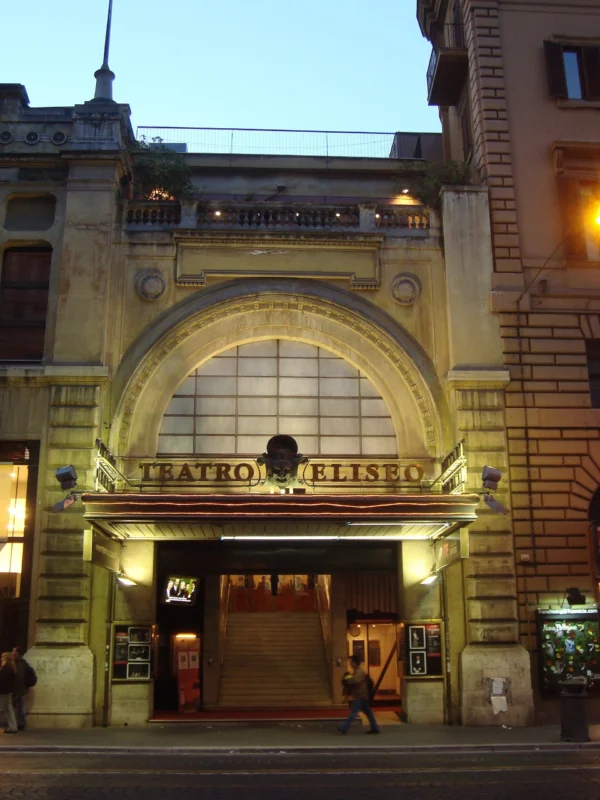
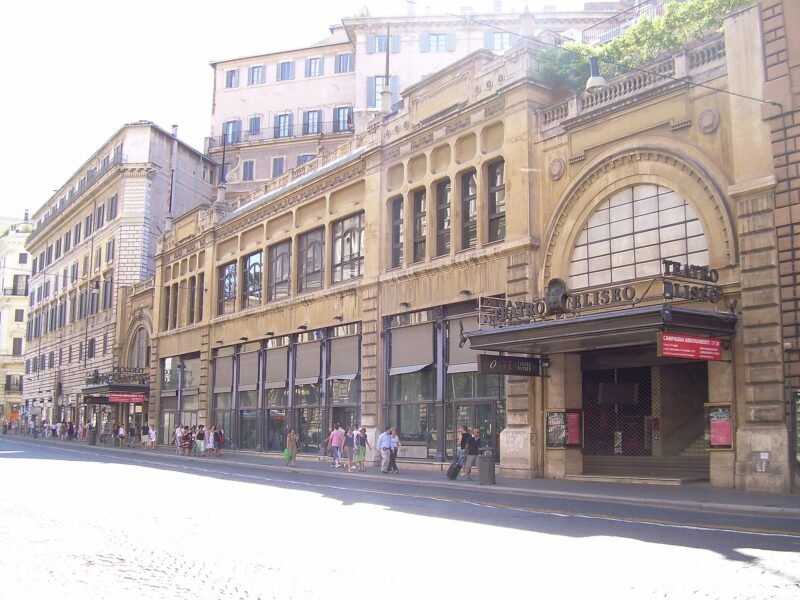
 Teatro Eliseo100 m
- Sant’Agata dei Goti200 m
- Church of San Silvestro al Quirinale200 m
- Scuderie del Quirinale200 m
- EXP200 m
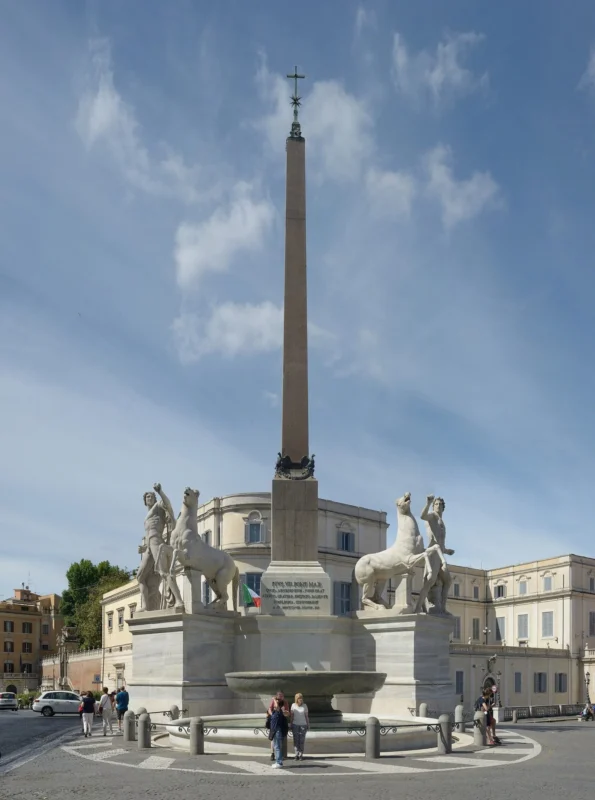
- Quirinal Obelisk200 m


Upcoming events nearby
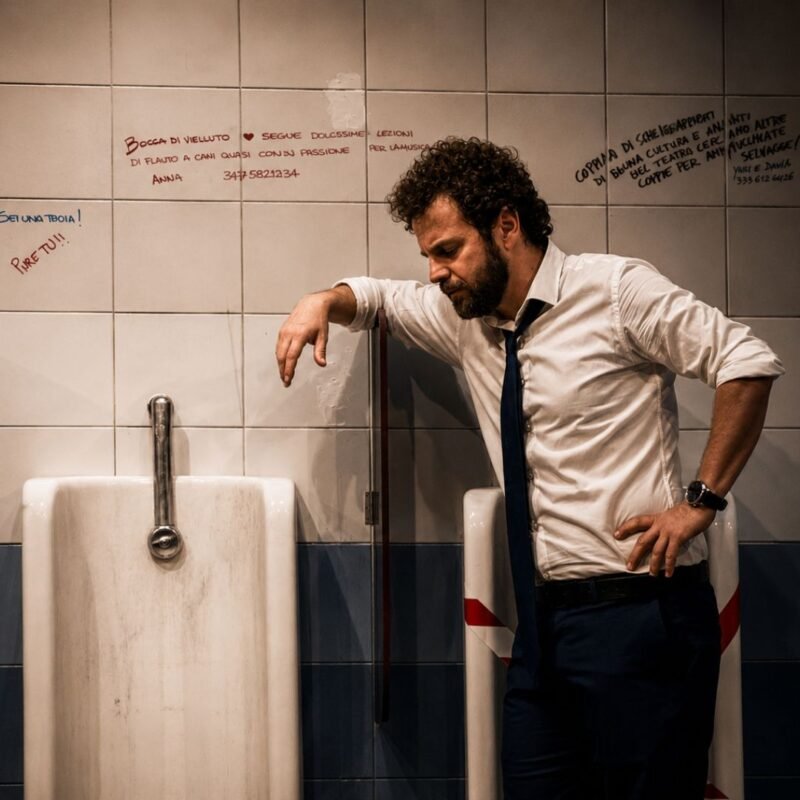
- Toilet at Piccolo Eliseo, from October 27 to November 8, 2026100 m
- Lezione d’amore with Milena Vukotic at Piccolo Eliseo, April 14 to 25, 2027100 m
- Un marziano a Roma at Piccolo Eliseo, April 7 to 11, 2027100 m
- Crime and Punishment at Piccolo Eliseo, November 17 to 29, 2026100 m
You might also like
- C’era una volta… Scugnizzi at Teatro Sistina, November 18 to 29, 2026
- Dominio Pubblico, Across The Arts at Argot Studio and Centro Giovani Zalib, September 21 to November 26, 2026
- Breaking Brecht with Veronica Pivetti at Teatro Sala Umberto, November 26 to 29, 2026
- Madre per sempre with Marisa Laurito and Giorgia Würth at Teatro Quirino, November 24 to 29, 2026
- Mother Courage and Her Children at Teatro Quirino, November 17 to 22, 2026
- A Midsummer Night’s Dream at Teatro Quirino, from November 3 to 8, 2026