Mother Courage and Her Children at Teatro Quirino, November 17 to 22, 2026
In short. Mother Courage at Teatro Quirino: Mother Courage and Her Children by Bertolt Brecht, in the new reading by Leo Muscato with Lunetta Savino in the title role, is on stage at Teatro Quirino Vittorio Gassman, Via delle Vergini 7, in the…
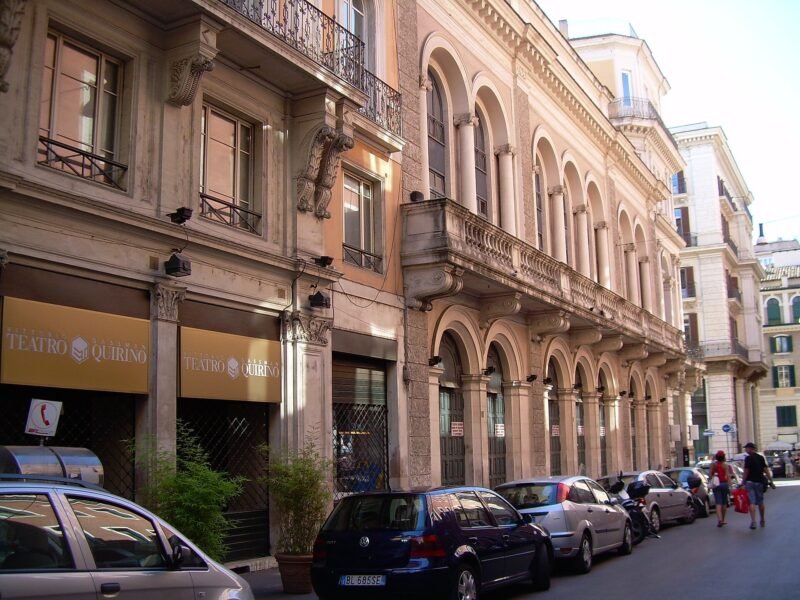
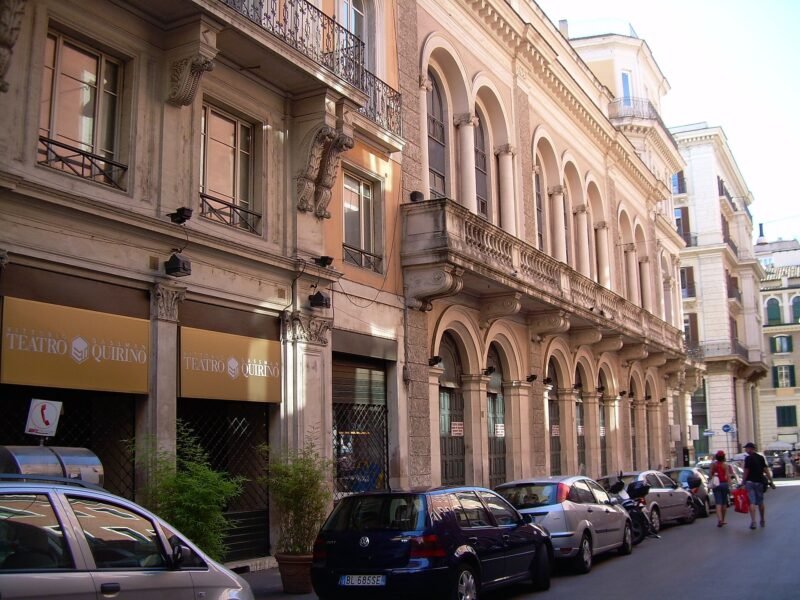
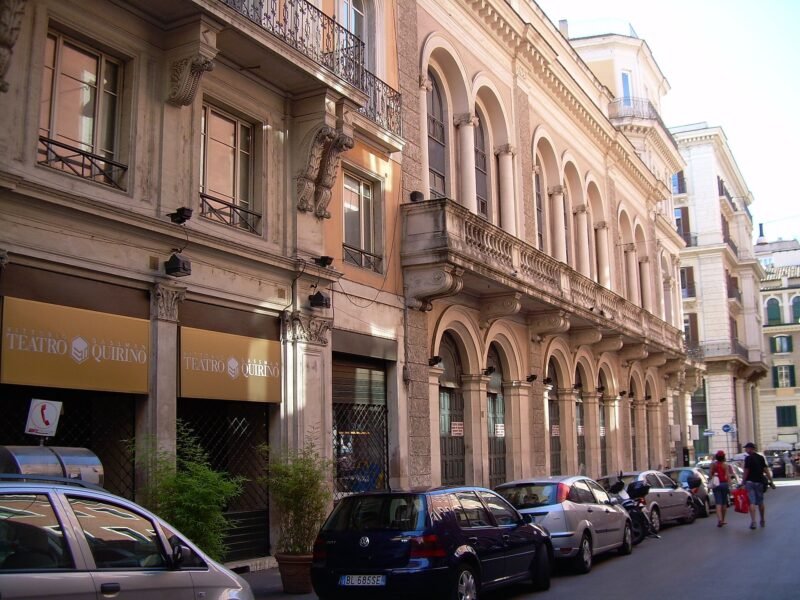
Mother Courage at Teatro Quirino: Mother Courage and Her Children by Bertolt Brecht, in the new reading by Leo Muscato with Lunetta Savino in the title role, is on stage at Teatro Quirino Vittorio Gassman, Via delle Vergini 7, in the Trevi district, a short walk from the Trevi Fountain and Via del Corso. The calendar published by the theater has six performances: Tuesday, November 17, 2026 at 21:00, Wednesday the 18th at 19:00, Thursday the 19th at 17:00, Friday the 20th and Saturday the 21st at 21:00, Sunday, November 22 at 17:00. The length isn't given on the show's page. The single-ticket price list for the 2026/2027 season, published by the Quirino, distinguishes weekday performances (Tuesday to Thursday: orchestra 32 euros, first balcony 26, second balcony 21, gallery 15) from weekend ones (Friday to Sunday: orchestra 36 euros, first balcony 30, second balcony 25, gallery 19), presale fee included. Tickets are sold from the theater's official website, through the linked sales network, or at the box office at the corner of Via delle Vergini and Via Minghetti. The phone box office answers at 06 6794585 Monday to Friday, from 10:00 to 13:00 and from 14:00 to 18:00. To reach the theater by public transportation, work out the route with the ATAC journey planner, entering the address as your destination.
Language: opera sung in its original language; no English surtitles are announced, so check with the theater.
Mother Courage according to Leo Muscato
The director's stated starting point is a clear-cut sentence: Brecht doesn't tell of a woman swept away by war, he tells of a woman who lives off war. In this light Anna Fierling, the canteen woman the world calls Mother Courage, is neither a victim nor a tragic heroine. She's a trader who sees the conflict as a market, and that's why she survives while everything around her is consumed. The official presentation insists on the slippery, contradictory nature of the character, and it's precisely this ambiguity that makes her human: in Courage coexist the mother who holds out inside a system that devours her, the person who doesn't learn from her mistakes, the one who speculates on crises and the one who gets used to living in a permanent emergency.
Muscato describes his reading as a return to the original nature of the text, which according to the program notes is popular, emotional and dialectical. It's a pointer worth taking seriously. Brecht wrote this chronicle of the 30 Years' War for a broad audience, with songs, short scenes and recognizable characters, and his reputation as a cerebral author has often ended up covering the theatrical, almost fairground substance of his work.
A stage space without shelter
The set imagined by Andrea Belli is described as bare, without shelter, suited to a theater in which everything is evoked more than illustrated. It's the condition, according to the presentation, for Brechtian estrangement to come alive again: the audience isn't drawn into an illusion but kept at a certain distance, so it can judge what it sees. Costumes are by Margherita Baldoni, lighting by Alessandro Verazzi.
The cart as a second body
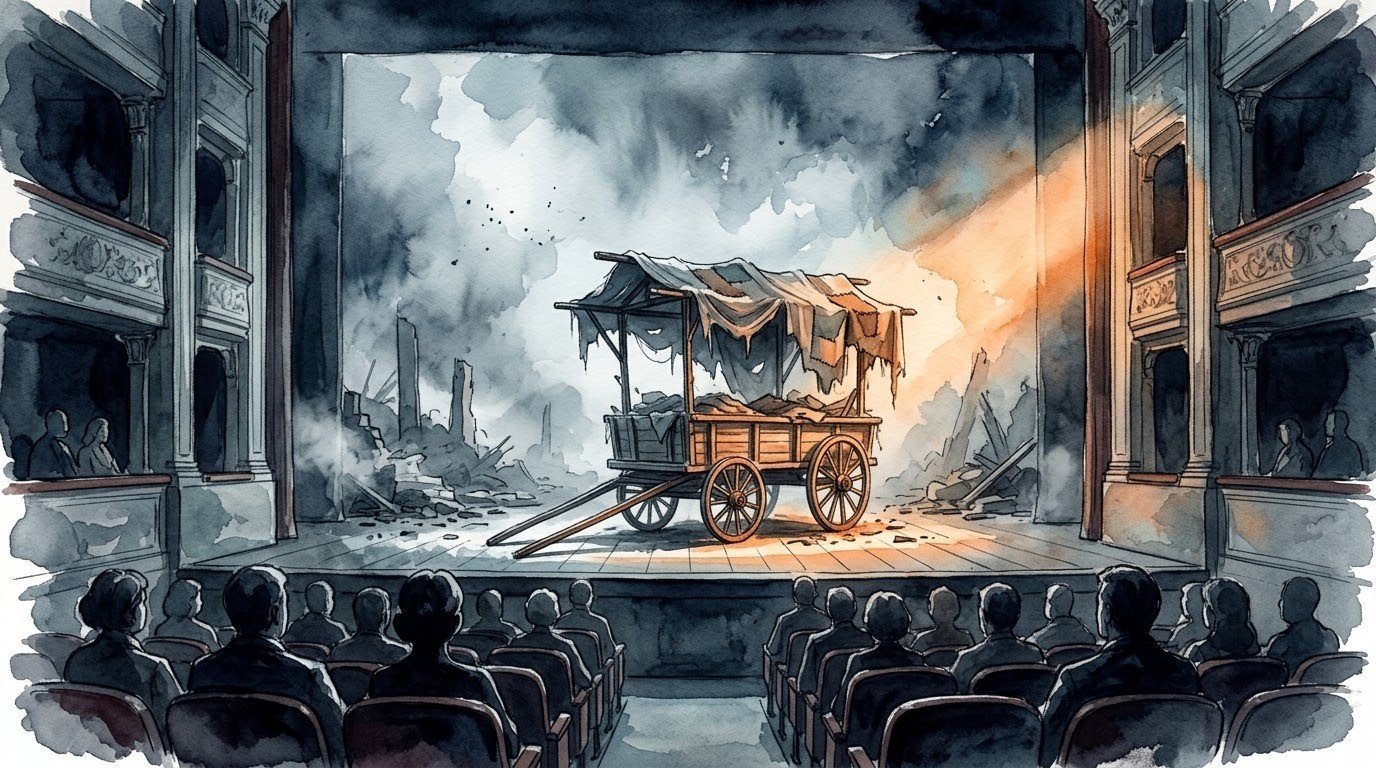
The visual center of the show is the cart with which Mother Courage follows the armies, her main customers. In the presentation the cart is a real object and at the same time a body parallel to the protagonist's, a kind of thermometer of her life: when business is good it's loaded, when the war moves away it empties. In Brecht's text the cart crosses the whole chronicle, from one military campaign to the next.
Live music
The theater's page stresses the central role of music played and sung live, with a rock imprint. Songs, in Brecht, aren't decorative interludes: they interrupt the action, comment on it, contradict what the characters say in prose. Entrusting them to musicians on stage means giving the audience back that break between story and comment that is one of the most recognizable traits of his theater.
Brecht's text: a chronicle of the 30 Years' War
Mother Courage and Her Children was written in 1939, in the days when Germany was invading Poland, and composed in just over a month. Brecht had been in exile since 1933, when he left Berlin after the Reichstag fire. The original subtitle presents it as a chronicle of the 30 Years' War, the conflict that devastated central Europe between 1618 and 1648. The action covers 12 years, from 1624 to 1636, in 12 scenes.
The 17th-century source
Brecht took his cue from the picaresque novel Simplicissimus by Hans Jacob Christoph von Grimmelshausen, published in the 17th century, which tells the same war from below, through the eyes of those who suffer it and those who profit from it. From Grimmelshausen's world also comes the figure of the canteen woman, the woman who follows the troops selling food, liquor, boots and shirts.
The three children
Courage has three children, each by a different father. Eilif, the eldest, is brave to the point of brutality and is recruited. Schweizerkas (Swiss Cheese), the youngest, is honest to the point of naivety and becomes a regiment's paymaster. Kattrin, the mute daughter, is the most exposed and the most generous. One after the other the three die, and none of these losses is enough to stop their mother's trade. It's the bitter core of the text: war takes everything from her, but she keeps seeing it as a source of income.
The drum scene
The most famous moment is when Kattrin, left for a night with a peasant family near the Protestant town of Halle, discovers that Catholic soldiers are preparing a surprise attack. She takes a drum from the cart, climbs onto the roof and beats it to wake the townspeople. She's killed, but the town is saved. It's the only truly selfless act in the whole drama, performed by the character who can't speak.
From the Zurich premiere to the Berliner Ensemble
The first performance took place in 1941 at the Schauspielhaus in Zurich, in the middle of the war, with Therese Giehse in the title role, staging by Leopold Lindtberg, music mostly by Paul Burkhard and sets by Teo Otto. After the Zurich reviews Brecht revised the text for a new production.
East Berlin, 1949
The revised version was staged in 1949 in East Berlin, directed by Brecht himself, with a new score by Paul Dessau and Helene Weigel, the author's wife, as Courage. The show made such an impact that it led to the birth of the Berliner Ensemble, Brecht's company, which became one of the reference points of postwar European theater. The text was published the same year, 1949. Brecht, who had returned to East Berlin in 1948 with his wife, died there on August 14, 1956.
Later productions
In 1950 Brecht directed a new production at the Munich Kammerspiele, again with Therese Giehse and sets by Teo Otto. In 1963 the play reached Broadway, directed by Jerome Robbins with Anne Bancroft in the lead. Since then it has become one of the most performed plays of the 20th century, and every generation of directors has looked in the canteen woman's cart for something that speaks of its own time.
Lunetta Savino, the lead
Lunetta Savino was born in Bari in 1957. She graduated from DAMS in Bologna and earned her diploma at the Alessandra Galante Garrone theater school, also in Bologna. The general public knows her mainly from television: from 1998 she was Cettina in Un medico in famiglia, and she later appeared in Il bello delle donne, È arrivata la felicità, Le indagini di Lolita Lobosco and Studio Battaglia.
Film
In film she has worked with very different directors, from Nanni Loy in Mi manda Picone to Cristina Comencini in Matrimoni, up to Ferzan Özpetek, who directed her in Saturno contro and Mine vaganti. For Mine vaganti she won the Nastro d'argento for best supporting actress in 2010.
A partnership already tested
Her bond with Leo Muscato isn't new. In 2007 Savino performed in Casa di bambola. L'altra Nora under his direction, a work that already started from a great classic to question the present. Finding them together again on Brecht has the flavor of a journey that continues.
The rest of the company
The official page lists the rest of the cast as still being finalized. The show is presented by Teatro Stabile di Bolzano and Teatro Stabile di Torino, Teatro Nazionale.
Leo Muscato, director and adapter
Leo Muscato was born in Martina Franca in 1973. He studied Letters and Philosophy at Sapienza, in Rome, and joined Luigi De Filippo's company very young, before winning a place in the directing course at the Scuola d'arte drammatica Paolo Grassi in Milan.
Between drama and opera
His career alternates spoken theater and opera. In drama he has directed, among others, Arthur Miller's Death of a Salesman, Gogol's The Government Inspector and, at the Greek Theater of Syracuse, Aeschylus's Prometheus Bound in 2023 and Plautus's Miles gloriosus in 2024. In opera he has directed Handel's Serse in Bonn and, in 2024, Verdi's La forza del destino for the opening of the season at Teatro alla Scala.
Awards
He received the critics' award for best drama director from the Associazione Nazionale dei Critici Teatrali in 2007 and the Premio Franco Abbiati for best opera director for the 2012 season. His familiarity with music theater is worth keeping in mind for a Brecht in which songs carry so much weight.
Why Mother Courage still speaks to us
Muscato closes his note with a simple idea: Courage concerns us because she's a trader who treats conflict as a market. There's no need to force topicality to recognize the issue. The wars we hear about every day produce victims, but also business, supply chains, intermediaries, and the question of who profits from a crisis is anything but theoretical.
Estrangement, explained without jargon
Brecht wanted an alert audience, not a hypnotized one. That's why he interrupted scenes with placards and songs, had actors perform so that the construction of the character could be seen, and showed the lights and the machinery. The result, when it works, is curious: you're moved anyway, but you leave the theater with a question in your pocket.
A reading that rejects easy compassion
Muscato's reading insists on Courage's vital cynicism, her fierce energy, her nature as an amoral survivor. It's a choice that asks the audience not to absolve the protagonist too quickly, and to look at her cart as a business before seeing it as a home.
The songs: the musical heart of the drama
If you go to the theater expecting a historical costume drama, you may be surprised. Mother Courage alternates dialogue scenes and songs, and the songs have a precise function: they stop the action and comment on it, sometimes with irony, sometimes with a rawness prose wouldn't allow. The historic reference score is the one Paul Dessau wrote for the 1949 Berlin production, in close collaboration with the author, but each production chooses its own route, and Muscato's goes for music played and sung live.
The Song of the Great Capitulation
It's perhaps the most quoted song in the drama. Courage sings it to a young soldier furious at an injustice he has suffered, to convince him that short-lived anger is useless and that in the end everyone falls into line. It's a lesson in resignation given by someone who has made resignation her trade, and that's exactly why it sounds like an accusation aimed at the audience.
The Fishwife and the Soldier
Among the songs given to Eilif, the soldier son, is the one about a woman who warns a soldier of the dangers of war, unheeded. In the context of the drama it becomes a prophecy about Eilif's own fate, and it shows well how Brecht uses song to anticipate what the audience will see happen.
The lullaby for Kattrin
In the finale Courage sings a lullaby beside her daughter's body. It's one of the moments when the character seems closest to a traditional mother, and at the same time one of the most ambiguous: right afterward the canteen woman takes to the road again behind the armies. It's a passage in which the performer must hold together grief and cynicism without choosing between them, and in which the strength of the whole directorial reading is measured.
Why live music changes the evening
With musicians on stage, Brecht's theater recovers the character of popular entertainment the author had in mind, halfway between the fairground ballad and cabaret. Music stops being an accompaniment and becomes one more character, commenting and taking sides.
Practical information for the evening
The Quirino box office is at the corner of Via delle Vergini and Via Minghetti. On evening show days, according to the theater, it also stays open after 18:00, but only for matters relating to that day's performance. The public opening hours published on the website cover the period until October 17. For November, check the box office page.
Cards and subscriptions
Mother Courage is included in the season's fixed-seat subscriptions. The theater also offers open cards for six or eight shows, in weekday and weekend versions. Tickets and cards, once issued, can't be exchanged or canceled.
Accessibility
The Quirino website has a section devoted to accessibility, to check before buying for access arrangements and reserved seats.
Teatro Quirino in brief
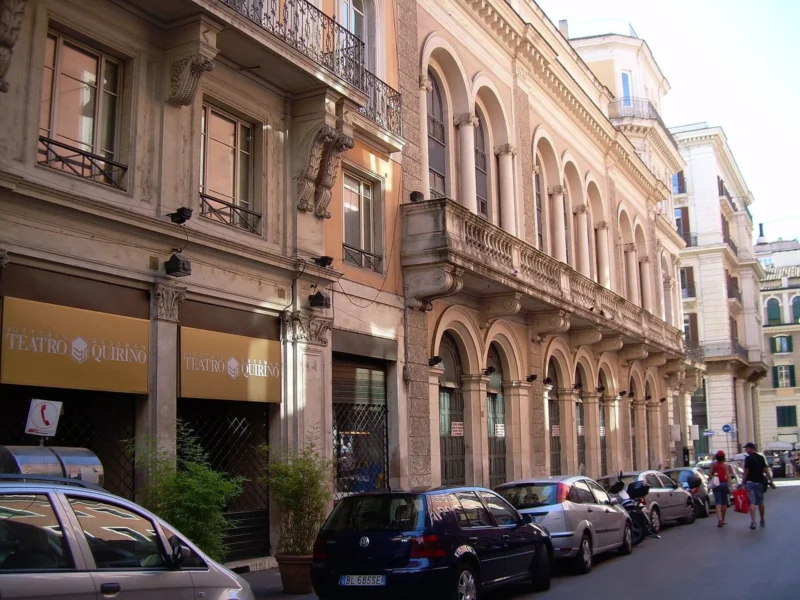
The Quirino was founded in 1871 at the wish of Prince Maffeo Barberini Colonna di Sciarra, who wanted a public theater on his properties near the Trevi Fountain. The name recalls the Quirinal Hill and the god Quirinus. Since June 29, 2004 it has also borne the name of Vittorio Gassman.
A hall of about 850 seats
The theater's website gives a capacity of 850 seats, spread across orchestra, two balconies and gallery, with a large foyer, cloakroom, a bookstore with books and vinyl records and a bistro. At the entrance are photos of the stars who have marked the theater's seasons.
Who runs it
From 1946 to 2009 the Quirino was managed and programmed by the Ente Teatrale Italiano. Since 2014 management has passed to a private company of industry professionals. Today the theater belongs to Quirino srl, based at the same address on Via delle Vergini.
A curious fact about Teatro Quirino
The first Quirino was a building made entirely of wood, and according to the historical reconstruction it was put up in a single day. Prince Sciarra, right after the capture of Rome in 1870, took advantage of the fact that papal limits on entertainment no longer applied and wanted a profitable hall, aimed at a middle-class audience, where mainly Pulcinella farces and operettas were staged.
The same architect as Galleria Sciarra
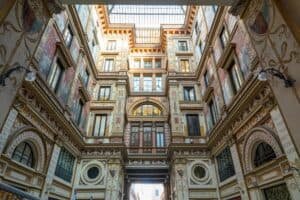
The design was entrusted to Giulio De Angelis, the same architect who a few years later, between 1885 and 1888, built Galleria Sciarra, the iron-and-glass covered courtyard that opens a few meters from the theater, between Piazza dell'Oratorio and Via Minghetti. So the complex running from the gallery to the Quirino comes from the same patron and, in part, the same hand.
Something nobody tells you about Teatro Quirino
The theater you see today isn't in the exact spot where it was born. In 1882 the wooden structure was dismantled because a link was needed between Via del Corso and the Trevi Fountain, and the new masonry Quirino was rebuilt a few meters from the original site, again designed by De Angelis, with a horseshoe-shaped hall and two tiers of boxes supported by cast-iron columns.
A roof that opened
In 1914 Marcello Piacentini thoroughly renovated the building, simplifying its forms geometrically, adding a third tier of boxes and building a retractable roof. The theater reopened with an opera season conducted by Pietro Mascagni. Few of those who enter the hall today imagine that above their heads, a century ago, you could see the sky.
My advice for visiting Teatro Quirino
My advice is to arrive from Via Minghetti side and walk through Galleria Sciarra before entering the theater, when the courtyard is open to the public during office hours. The walls are decorated with a cycle devoted to the glorification of women, with figures of female virtues, and under the iron-and-glass vault you get a clear sense of the taste of late 19th-century Rome, the same Rome that saw the masonry Quirino rise.
Choosing the right performance
For Mother Courage the calendar offers very different times: the 17:00 performances on Thursday and Sunday suit those who prefer the afternoon, while the 21:00 evenings leave time for a walk toward the fountain after the show. The Quirino's price list applies lower prices Tuesday to Thursday, a useful detail if you're after the orchestra.
Another well-known fact, yet one that is rarely mentioned
That the Quirino is one of Rome's great drama theaters is known to everyone. Less often mentioned is that, between the late 19th and early 20th centuries, its hall hosted opera and ballet seasons. After work completed in 1898, with interiors decorated with drapes, velvets and gilded stucco, the repertoire opened to opera: in June 1899 maestro Antonino Palminteri conducted Verdi's I Lombardi and Puccini's Manon Lescaut there.
The 1955 reopening
The hall's current look derives largely from the renovation again designed by Piacentini in 1954. Almost all the boxes were removed and replaced by cantilevered tiers, stage machinery, ventilation and heating were renewed, and the canopy that still marks the entrance today was built. The renovated theater was inaugurated on October 13, 1955.
The capacities don't match
Sources disagree on capacity: historical reconstructions speak of 990 seats after the 1950s work, while the theater's official website gives 850 seats today. The difference is probably due to later adjustments, but the current figure to go by is the theater's.
The right photo to take at Teatro Quirino
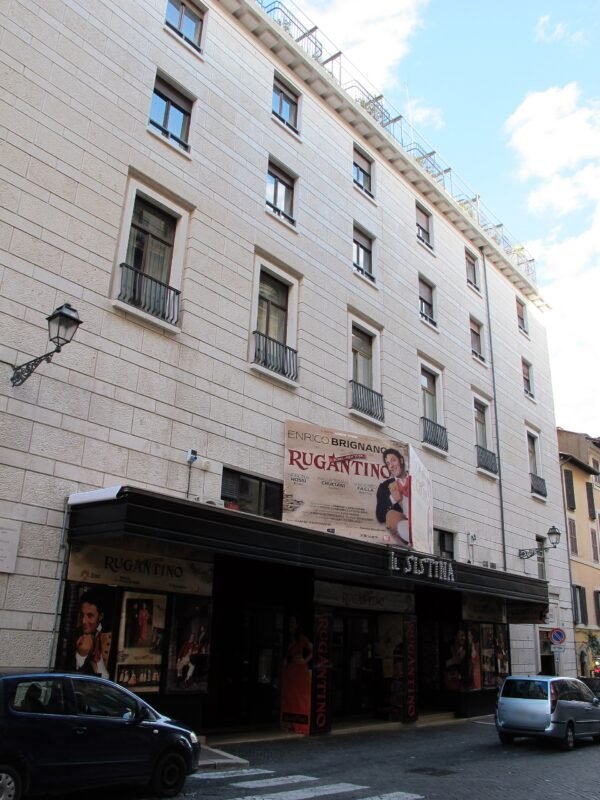
The photo that best tells the Quirino's story is taken from the street, framing the entrance canopy on Via delle Vergini with the theater's name and the show poster: it's the signature of the 1955 renovation and, at the same time, the image Romans associate with drama in the center. If you have a few more minutes, add a shot of the vault of Galleria Sciarra, a few steps away, to hold together two chapters of the same story.
Inside the hall
Inside it's worth photographing the cantilevered tiers from above, before the lights go down, and the pictures of the stars displayed at the entrance. During the performance it's good manners to keep your phone off: ask the house about the rules on filming.
Some important events that happened here in history
1871: the wooden theater
Prince Maffeo Sciarra had a public hall built on his properties near the Trevi Fountain. The all-wood structure hosted farces, Pulcinella shows and operettas for the middle-class audience of the new capital.
1882: rebuilt in masonry
To link Via del Corso and the fountain, the first building was dismantled. Giulio De Angelis designed the new theater a few meters away, with a horseshoe-shaped hall and cast-iron boxes.
1899: Verdi and Puccini
Antonino Palminteri conducted I Lombardi and Manon Lescaut: the Quirino entered the city's opera circuit.
1914: Piacentini and Mascagni
Marcello Piacentini renovated the building, adding a tier of boxes and the retractable roof. It reopened with an opera season conducted by Pietro Mascagni.
1946: the Ente Teatrale Italiano arrives
The long era of public management began, lasting until 2009 and making the Quirino one of the reference points of national drama.
2004: Gassman's name
On June 29, 2004 the theater added to its historic name that of Vittorio Gassman, whom the Quirino's website calls one of the most acclaimed Italian stage actors of the 20th century.
Who has passed through Teatro Quirino
The theater's website lists among the stars of its stage Ferruccio Benini, Ettore Petrolini, Eduardo De Filippo, Vittorio Gassman, Carmelo Bene, Carlo Giuffrè, Giorgio Strehler, Paolo Stoppa, Paola Borboni and Luca Ronconi. It's a list that spans more than a century and almost every form of Italian theater, from Benini's Venetian dialect to Petrolini's revue, from Strehler's critical direction to the experiments of Bene and Ronconi.
Brecht and the directors of the 20th century
The list brings together masters of direction like Strehler and Ronconi and great performers of the popular stage like Petrolini and Eduardo. It's the same double soul Muscato claims for Brecht: a cultured theater that doesn't forget the wide audience, the song, the bitter laugh.
Now Lunetta Savino
In November 2026 it will be Lunetta Savino pulling the canteen woman's cart on the same stage, in a season that also brings other repertory titles to the Quirino.
Before or after the show: the surroundings
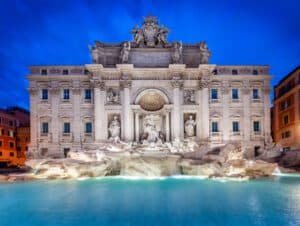
The Quirino is in one of the busiest areas of the center, and the most natural route is toward the Trevi Fountain, a few minutes away on foot. In the evening the square is less crowded than by day, and the lit fountain is a show in itself.
The Trevi district
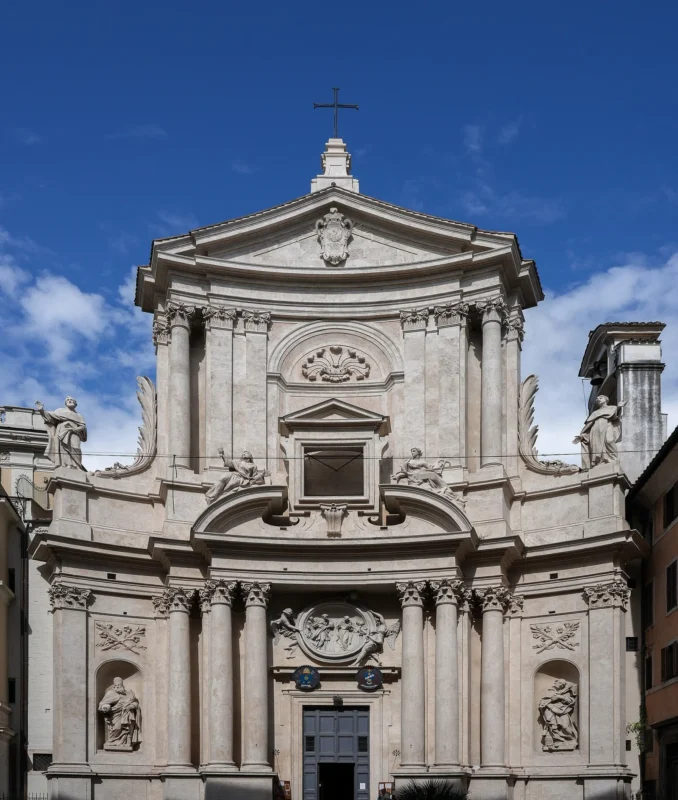
The theater belongs to the Trevi district, which climbs from the Corso toward the Quirinale. Besides the Trevi Fountain, the Trevi district includes the church of Santi Vincenzo e Anastasio, which faces the fountain's square, and the climb toward the Quirinal Palace.
Via del Corso and Galleria Alberto Sordi
To the west you reach, in a few steps, Via del Corso and Piazza Colonna, where Galleria Alberto Sordi offers a covered passage with shops and cafés, useful on rainy evenings.
Other titles in the season
If you follow the theater's season, keep an eye on Elettra 1944, scheduled in 2027 on the same stage.
Frequently asked questions about Mother Courage and Her Children
When is Mother Courage on at Teatro Quirino?
The show is scheduled from Tuesday, November 17 to Sunday, November 22, 2026, with six performances. The times published by the theater are: Tuesday the 17th at 21:00, Wednesday the 18th at 19:00, Thursday the 19th at 17:00, Friday the 20th and Saturday the 21st at 21:00, Sunday the 22nd at 17:00. Check the chosen performance when you buy, because times vary a lot from day to day.
How much are tickets?
The Quirino's 2026/2027 season price list gives, for Tuesday to Thursday performances, 32 euros in the orchestra, 26 in the first balcony, 21 in the second balcony and 15 in the gallery. Friday to Sunday prices rise to 36, 30, 25 and 19 euros. Prices include the presale fee. Statutory discounts apply to under-26s and over-65s, according to the rules given by the theater.
Where can you buy tickets?
From Teatro Quirino's official website, which links to its own online sales network, or at the box office at the corner of Via delle Vergini and Via Minghetti. The phone box office, at 06 6794585, answers Monday to Friday from 10:00 to 13:00 and from 14:00 to 18:00 for bookings, performance changes and purchases.
Who is on stage?
The lead is Lunetta Savino. Direction and adaptation are by Leo Muscato, sets by Andrea Belli, costumes by Margherita Baldoni, lighting by Alessandro Verazzi. The rest of the cast, when the theater's page was published, was still being finalized. The show is presented by Teatro Stabile di Bolzano and Teatro Stabile di Torino.
How long is the show?
The length isn't given on the show's official page: the information isn't published. Brecht's original text is laid out in 12 scenes, but every production adapts it, and this version also carries Muscato's name as adapter. To plan your evening, ask the phone box office.
Do you need to know Brecht to follow it?
No. The story is linear: a canteen woman follows the armies with her cart during the 30 Years' War and loses her three children, one after another. The live songs mark the rhythm of the story. Knowing the context, the 17th-century war and Brecht's exile, enriches the experience but isn't essential.
Is the show suitable for teens?
The theater doesn't give a recommended age. The text talks about war, death and survival without consoling shortcuts, and it's better suited to teenagers and adults. For school groups the Quirino has a dedicated promotion office, at 06 6783042, extensions 2 and 3.
How do you get to Teatro Quirino?
The theater is at Via delle Vergini 7, between Via del Corso and the Trevi Fountain. For public transportation the most reliable route is worked out with the ATAC journey planner. The area is largely pedestrian or limited traffic, so a car is impractical.
Final advice on Mother Courage and Her Children
Mother Courage is one of those plays you think you know until you see it on stage. Leo Muscato's reading promises a Brecht close to his popular roots, with live music, a bare space and a cart that is home, shop and fate all at once. Lunetta Savino brings to the character experience built across television, film and stage, and the Quirino offers the frame of a hall that for over a century and a half has accompanied Roman drama. My advice is to read, before going, at least Kattrin's drum scene: arriving prepared makes it even stronger.
Article written by the editorial team of Tour Leader Pro, contact them for Private/Corporate/V.I.P. Tours and Experiences.
Planning a trip to Rome? The English guides for visiting the city are on ItalyPlanner.com.
Contact Information
Nearby
 Teatro Quirino Vittorio Gassman100 m
- Galleria Sciarra100 m
- Vicus Caprarius, the City of Water100 m
- Fontanella degli innamorati100 m
- Trevi Fountain100 m
- Church of San Marcello al Corso100 m
Upcoming events nearby
- L’inconveniente with Milena Vukotic at Teatro Quirino, January 19 to 31, 2027100 m
- L’uomo, la bestia e la virtù with Vanessa Gravina at Teatro Quirino, March 16 to 21, 2027100 m
- Le serve with Fioretta Mari at Teatro Quirino, March 9 to 14, 2027100 m
- Rosso Malpelo with Enrico Guarneri at Teatro Quirino, February 2 to 7, 2027100 m

You might also like
- C’era una volta… Scugnizzi at Teatro Sistina, November 18 to 29, 2026
- Dominio Pubblico, Across The Arts at Argot Studio and Centro Giovani Zalib, September 21 to November 26, 2026
- Breaking Brecht with Veronica Pivetti at Teatro Sala Umberto, November 26 to 29, 2026
- Madre per sempre with Marisa Laurito and Giorgia Würth at Teatro Quirino, November 24 to 29, 2026
- Crime and Punishment at Piccolo Eliseo, November 17 to 29, 2026
- A Midsummer Night’s Dream at Teatro Quirino, from November 3 to 8, 2026