C’era una volta… Scugnizzi at Teatro Sistina, November 18 to 29, 2026
In short. Scugnizzi the musical, Claudio Mattone's C'era una volta... Scugnizzi, returns to Rome at Teatro Sistina, Via Sistina 129 (00187 Roma), from November 18 to 29, 2026, with a new generation of performers and directed by the author himself.
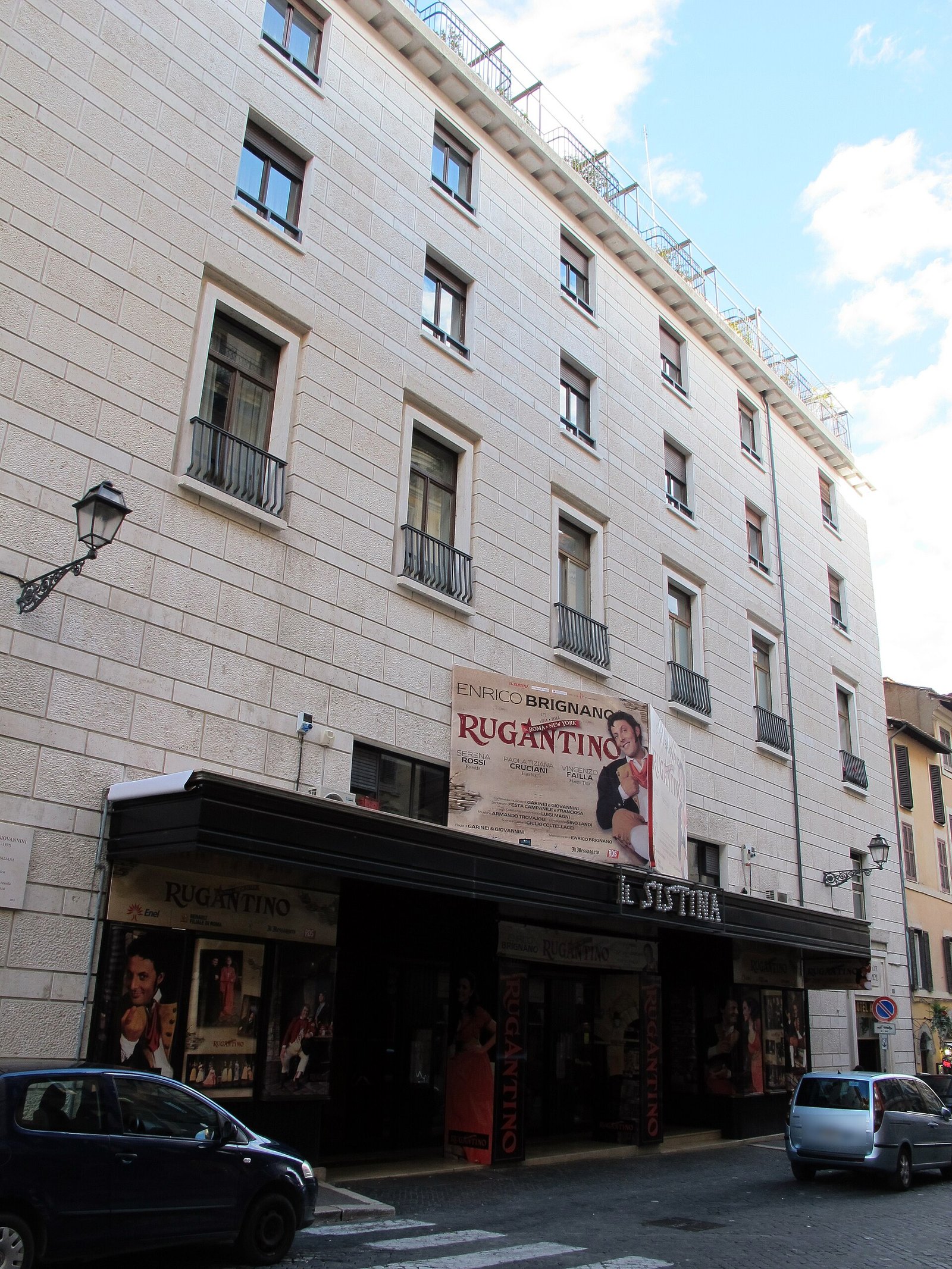
Scugnizzi the musical, Claudio Mattone's C'era una volta... Scugnizzi, returns to Rome at Teatro Sistina, Via Sistina 129 (00187 Roma), from November 18 to 29, 2026, with a new generation of performers and directed by the author himself. There are 11 performances: Wednesday to Saturday at 20:30, Sunday at 16:00, with an extra evening show on Tuesday, November 24, and no show on Monday, November 23. The show is presented by Claudio and Tullio Mattone with Napoliteatro. You reach the Sistina on Metro A, Barberini stop, walking up Via Sistina. The prices published by the theater are 66 euros in the front orchestra, 59 in the orchestra, 50 in the first balcony, 43 in the second balcony and 33 in the third balcony. Tickets are sold on the Sistina's official website, through the online box office linked from the show page, or at the box office on Via Sistina.
Language: performed in Italian. No English version or English surtitles are announced.
Scugnizzi at the Sistina at a glance
C'era una volta... Scugnizzi is on stage at Teatro Sistina in Rome from November 18 to 29, 2026, for 11 performances, with tickets from 33 to 66 euros.
The performance schedule
The Rome premiere is Wednesday, November 18, at 20:30. Then come the evening shows on Thursday 19, Friday 20 and Saturday 21, the Sunday 22 matinee at 16:00, then the evening shows from Tuesday 24 to Saturday 28 and the last performance on Sunday, November 29, at 16:00. On Monday 23 the theater is dark. This is the schedule published by the Sistina's official box office.
Prices
The Sistina publishes five price tiers: front orchestra 66 euros, orchestra 59, first balcony 50, second balcony 43, third balcony 33. These are the prices on the show's official page.
The production
The show is presented by Claudio and Tullio Mattone with Napoliteatro srl. Claudio Mattone signs the music, lyrics and direction. The original book was written with Enrico Vaime.
The big comeback
The theater's page presents this edition as the big comeback of one of the Italian public's favorite musicals, entrusted to a new generation of performers called on to take up an important legacy.
The plot of C'era una volta... Scugnizzi
C'era una volta... Scugnizzi tells of the clash between two men who grew up together in the Nisida juvenile prison, one who became a street priest and the other a Camorra boss, and of the rebellion of the kids of a Naples neighborhood.
Saverio and 'o russo
Two boys, Saverio De Lucia and Raffaele Capasso, known as 'o russo, are locked up in the Nisida reform institute for minors. Once free they take opposite paths and meet again 20 years later: Saverio has become a street priest devoted to rescuing the neighborhood kids, Raffaele is a Camorra man who uses those same kids as couriers.
The clash
Between the two a conflict of ideals and personalities grows ever harsher. 'O russo, unable to assert himself except through violence, ends up killing Saverio.
The kids' rebellion
What looks like a victory for the Camorra man turns into his defeat. Saverio's death gives the kids the strength to rebel and to hurl at the Camorra a cry of protest, desperate and liberating, that mocks the gangster and becomes the cry of the whole city.
A universal story
It's a simple, popular story, set in Naples but relevant, as the musical's historical presentation puts it, to kids and cities all over the world. The Sistina's page makes the same point: not just a Neapolitan story, but a message that crosses borders and time.
From Nanni Loy's film to the musical: the story of Scugnizzi
The musical C'era una volta... Scugnizzi, written by Claudio Mattone and Enrico Vaime in 2001 and premiered in 2002, is inspired by the film Scugnizzi directed by Nanni Loy in 1989.
The 1989 film
Nanni Loy's film was a success partly thanks to its music: Claudio Mattone's soundtrack won in 1990 the David di Donatello for best composer and for best original song, the Nastro d'argento, the foreign press Globo d'oro, the Ciak d'oro and the Osella at the Venice Film Festival.
The premiere at Teatro Augusteo
The musical opened on March 15, 2002, at Teatro Augusteo in Naples. It's a work produced and made entirely in Italy, in Italian and Neapolitan.
The awards
In 2002 came the Trofeo Massimo Troisi, in 2003 the ETI Gli Olimpici del Teatro award for best musical of the year, followed by the Premio Caruso in 2004, the Premio Charlot in 2006 and the Premio Carosone in 2007.
Editions and casts
The cast has changed several times. In the first edition in 2002 don Saverio was Sal da Vinci and 'o russo Pietro Pignatelli. In 2003 the Camorra man was Massimiliano Gallo. In 2010 the role of don Saverio passed to Andrea Sannino. Every edition has put about 20 kids on stage as the scugnizzi.
The 2026 comeback
In 2026 the musical returns to theaters with a new cast. In the new cast don Saverio is Alfonso Giorno, 'o russo is Ciro Salatino, with Salvatore Catanese as the police commissioner, Ciro Mazaner as the prison director and Peppe Romano as the member of parliament, plus 19 scugnizzi. The Sistina's page doesn't publish the cast: any changes should be checked with the theater.
The songs of Scugnizzi
The score of C'era una volta... Scugnizzi, in Neapolitan and Italian, is divided into two acts, each opened by an overture, and alternates ballads, ensemble choruses and rousing numbers.
Act one
Act one opens with Carcere 'e mare, the song of Nisida, and continues with Perzòne perzòne, Chiàmmame, Arrangiàmmoce, Scètate scè, Niente niente and 'A città 'e Pulecenella, among others. They're songs about street life, the art of getting by and the dream of a different city.
Act two
Act two includes, among others, Gli imbianchini, Stàteve accorte, Ajere, Parlanno parlanno, Cumannà, the number dedicated to 'o russo and the finale Magnifica gente, preceded by a medley.
Songs with a life of their own
Many of the musical's songs have also had a life outside the theater. Chiàmmame and other numbers have been performed by Eduardo De Crescenzo, Sal da Vinci and Andrea Sannino. Carcere 'e mare has also been sung by Tosca. Niente niente was born for the TV movie Dio ci ha creato gratis and sung by Luna.
Claudio Mattone: the author's biography
Claudio Mattone, born in 1943 in Santa Maria a Vico and raised in Naples in the Vasto district, is a composer, lyricist and publisher, author of songs that won Sanremo and Canzonissima and of soundtracks awarded the David di Donatello.
From jazz to song
Mattone first made a name as a jazz pianist. Drawn to popular music, he began writing music and lyrics. Having left law school in his final year, he moved to Rome and began working with RCA Italiana, where he debuted as a singer-songwriter in 1968 with È sera.
The hits with Franco Migliacci
With Franco Migliacci he wrote his first hits: Ma che freddo fa, sung by Nada, Ma chi se ne importa, winner of Canzonissima with Gianni Morandi, and Il cuore è uno zingaro, winner of the 1971 Sanremo Festival with Nada and Nicola Di Bari. In 1973 he won Sanremo again with Un grande amore e niente più, sung by Peppino di Capri.
Arbore, De Crescenzo, Proietti
With Renzo Arbore he wrote Ma la notte no, Il materasso, Il clarinetto, Sì, la vita è tutt'un quiz, Vengo dopo il tiggì and Cacao Meravigliao. For Eduardo De Crescenzo he wrote Ancora, critics' award at Sanremo 1981, and many other songs. He wrote songs for Gigi Proietti, Alberto Sordi, Renato Carosone, Enrico Montesano, Christian De Sica and, in 2020, Seduto sulla Luna for Renato Zero.
The talent scout
Mattone has launched many young artists: besides De Crescenzo, Mietta, with Sogno at Sanremo 1988, the Neri per Caso, first among the newcomers at Sanremo 1995 with Le ragazze, and Syria, first among the newcomers in 1996 with Non ci sto.
Cinema, theater, Neapolitan
He wrote soundtracks for Luciano De Crescenzo, Così parlò Bellavista, and for Nanni Loy, and music for Garinei and Giovannini shows such as Beati voi and Gli uomini sono tutti bambini. In 2024 he published a handbook on writing in Neapolitan dialect, Scrivere in napoletano (decentemente).
A curious fact about C'era una volta... Scugnizzi at Teatro Sistina, November 18 to 29, 2026
The most surprising curiosity is that some of the musical's songs were born many years before the show. In the list of Claudio Mattone's songs, Chiàmmame is dated 1983, like other numbers that later went into the score. 'A città 'e Pulecenella is dated 1992, Niente niente 1998, and the rest came in 2002. The musical, in short, is also the collection of a long work of writing in Neapolitan, begun in the days of the records with Eduardo De Crescenzo and polished over 20 years.
The second curiosity concerns the link between the author and the Sistina. Mattone wrote music for shows by Garinei and Giovannini, the writers and impresarios who ran this theater from 1960 to 2006: bringing his musical to Via Sistina means returning to the home of the Italian musical comedy he worked for. A 2010 announcement also documents C'era una volta... Scugnizzi at Teatro Sistina: it's not the first time Mattone's scugnizzi have taken this stage.
Third curiosity: the author is 83 and still directs his own show, with a cast of kids the same age as the characters. A generational gap the show turns into a passing of the baton, as the theater's own page puts it.
Teatro Sistina, the home of musical comedy
Teatro Sistina, at Via Sistina 129, opened on December 28, 1949, to a design by Marcello Piacentini and has 1015 seats in the orchestra and 566 in the balcony. The American magazine Variety called it Italy's answer to Broadway.
A hall without columns
The hall is semicircular, 28 meters wide and 30 deep, with no columns: from every seat the stage is visible without obstruction. For a musical with about 20 kids on stage and ensemble choreography, even the balcony offers a complete view.
Where a church once stood
The theater was built between 1946 and 1949 on the site of the church of Santa Francesca Romana, along what was then called Strada Felice. The first film shown was Le mura di Malapaga, the first revue Bada che ti mangio with Totò and Isa Barzizza.
Garinei and Giovannini
From 1960 to 2006 the theater was run by Garinei and Giovannini, the authors of Rugantino and Aggiungi un posto a tavola. Since 2013 the artistic director has been Massimo Romeo Piparo, who brought the Sistina back to producing its own musicals.
The fall lineup
In the same season the Sistina hosts Il ragazzo dai pantaloni rosa, the comedy La moglie fantasma and, from December 17, the holiday musical, running until December 31.
Something nobody tells you about C'era una volta... Scugnizzi at Teatro Sistina, November 18 to 29, 2026
What's rarely mentioned is that the Rome schedule holds a surprise: on Tuesday, November 24, there's an evening show at 20:30, outside the Wednesday to Sunday pattern announced on the show's main page. The official box office lists it as usual. If you're looking for a good seat at full price, a weeknight like that is often the best chance: less demand than Saturday and Sunday afternoon.
The second thing concerns the language. The songs are in Neapolitan, and some words escape even people who understand the dialect by ear. You don't need to know it to follow the story, which is linear and also told in Italian. If you want to enjoy the lyrics fully, listen to a few songs in the days before. Chiàmmame and Carcere 'e mare, in their recorded versions, are a good start.
Third thing: the subject. Behind the choreography and the choruses is the story of a Camorra murder and of kids used as couriers. It's a popular musical with a festive finale, but not light at every moment: with younger children it's best to know beforehand.
How to get to Teatro Sistina
You reach Teatro Sistina on Metro A, Barberini stop: from Piazza Barberini walk up Via Sistina and the theater is at number 129, a few minutes on foot.
By metro
Line A links Barberini to Termini in two stops and to San Giovanni and Ottaviano in a few minutes. It's the simplest way to get there and to get home after the evening show. Check the time of the last train on the ATAC website anyway.
On foot from the center
Via Sistina links Piazza Barberini to Trinità dei Monti, at the top of Piazza di Spagna steps. If you're in the center you can climb the steps and walk along the flat street.
By car
The Sistina is in the historic center, inside the limited traffic zone: driving isn't recommended. If you're coming from outside, leave the car in a parking lot outside the ZTL and continue by metro.
By taxi
For the evening exit a taxi is convenient if you don't live near line A. Piazza Barberini is an easy pickup point to give.
My advice for C'era una volta... Scugnizzi at Teatro Sistina, November 18 to 29, 2026
The advice is to choose your seat based on the nature of the show. C'era una volta... Scugnizzi is an ensemble musical, with about 20 kids on stage and group choreography: the pattern of the movements reads better from some distance and from a raised point. In a hall without columns like the Sistina's, the first balcony at 50 euros offers in our view the best balance of price and view, with the whole stage framed. If you want to see the leads' faces up close in the ballads, choose the central front orchestra.
The second piece of advice concerns the date. The Sunday matinees, on the 22nd and 29th at 16:00, are best suited to families and to people coming from outside Rome. The Tuesday 24 show is the quietest for those who live in the city.
Third piece of advice: listen to a few songs beforehand. The musical is in Neapolitan, and knowing the chorus of Chiàmmame or Magnifica gente turns the finale into a shared experience, when the audience sings along with the kids on stage.
Last piece of advice: arrive 20 minutes early. In a theater with over 1500 seats getting in takes time, and latecomers are let in only at set moments.
Another well-known fact, yet rarely mentioned
Everyone knows that Claudio Mattone wrote songs every Italian knows, from Il cuore è uno zingaro to Cacao Meravigliao. It's mentioned much less that his most awarded work isn't a Sanremo song but a soundtrack: the one for the film Scugnizzi, which in 1990 won two David di Donatello awards, the Nastro d'argento, the Globo d'oro, the Ciak d'oro and an Osella in Venice. The musical arriving at the Sistina was born from that: it's the transformation for the stage of a film success built on music.
Another well-known and rarely remembered fact is the musical's role in the careers of many Neapolitan performers. Sal da Vinci was the first don Saverio, in 2002, and returned to the role in 2003 and 2006. Massimiliano Gallo played 'o russo in 2003. Andrea Sannino was don Saverio in 2010. Names the public now knows from film, television and song, and who had one of their proving grounds here.
Finally, about the title: the formula C'era una volta, Once upon a time, with its ellipsis, declares the fairy-tale register from the start. It's a choice that explains the tone of the show, halfway between reality and poetry, as the theater's page says.
Via Sistina and the area around the theater
Teatro Sistina is between Piazza Barberini and Trinità dei Monti, in one of the most elegant areas of central Rome.
Piazza Barberini
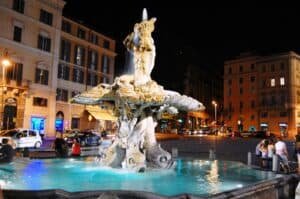
At the foot of Via Sistina is Piazza Barberini, with the Triton Fountain. Just above, Palazzo Barberini houses the Galleria nazionale d'arte antica, and opposite begins Via Veneto.
Trinità dei Monti and the Pincio
At the other end of Via Sistina you reach Trinità dei Monti and, further on, the Pincio and Villa Borghese. For the Sunday matinees, a morning walk on the Pincio is the ideal complement.
Toward Trevi
Going down from Piazza Barberini toward Via del Tritone you reach the Trevi Fountain in a few minutes.
How to plan your Scugnizzi evening at the Sistina
An evening of C'era una volta... Scugnizzi at the Sistina is planned around the performance you choose: the evening show at 20:30 with dinner afterward, or the Sunday matinee at 16:00 with a walk in the center before or after.
The evening show
For the 20:30 performances it's best to reach Piazza Barberini around 19:45, walk up Via Sistina calmly and be in your seat by 20:10. Dinner moves to after the show, in a trattoria toward Trevi or Monti.
The matinee
For Sundays the 22nd and 29th the most pleasant sequence is lunch, a walk on the Pincio or in Villa Borghese, the show at 16:00 and, on the way out, the Trinità dei Monti steps in the first evening lights.
Coming from Naples
If you're arriving by train from Naples or Campania, Termini station is two Metro A stops from Barberini: a Sunday matinee lets you get home the same day.
The intermission
The musical is divided into two acts, each opened by an overture: the intermission is the moment to stretch your legs and, if you're in the balcony, to look down over the big column-free hall.
Where to eat before and after the show
The area between Piazza Barberini, Via Sistina and Piazza di Spagna has a wide choice of restaurants, trattorias and bars, with prices on average higher than in other neighborhoods.
Before 20:30
With a 20:30 start it's best to eat something quick beforehand, or have dinner after. Around Piazza Barberini and toward Via del Tritone you'll find bars and places for a light meal.
After the show
A musical in two acts ends late in the evening. Heading down toward Trevi and the Pantheon the choice of kitchens still open grows. If you want to spend less, move toward Monti, a few metro stops away.
On Sunday
With the 16:00 performances you can have a relaxed lunch before and an early dinner after. To stay on theme, a Neapolitan pizza after the show is almost a must.
The right photo to take at C'era una volta... Scugnizzi at Teatro Sistina, November 18 to 29, 2026
The Sistina photo is taken from the other side of Via Sistina, with the theater's sign and facade in the frame. In the evening, before the show, the light at the entrance and the crowd at the doors give the image of a living theater, and the Scugnizzi poster, with Claudio Mattone's name, completes the scene. Take it when you arrive: on the way out the street fills up and the photo comes out worse.
The second photo is taken at Trinità dei Monti, at the end of Via Sistina, with Piazza di Spagna steps lit up. It's a few minutes from the theater and, after a Sunday matinee in late November, you arrive with the evening lights already on.
Inside, during the show, no photos or videos: it's a theater rule and a form of respect for the performers, especially the kids. The right moment is the finale, when the full cast comes to the front of the stage for the applause: if the ushers allow it, a photo of the stage full of scugnizzi is the best souvenir of the evening.
One last idea: in front of the plaque dedicated to Garinei and Giovannini next to the theater, if you want a souvenir of the history of Italian musical comedy.
Accessibility, children and practical information
For accessibility needs, seats for wheelchair users and companions, the reference is the Teatro Sistina box office, to be contacted before buying.
With children
C'era una volta... Scugnizzi is a musical with kids as protagonists and a festive finale, but it also tells a story of the Camorra and a murder. The theater gives no age limits. In our view it's suitable from 10 or 11 years old, especially at the Sunday matinees.
Arriving on time
At the Sistina, as in all large theaters, latecomers are let in only at set moments: arriving 20 minutes early is the minimum.
November in Rome
In late November Roman evenings are cool and often rainy: an umbrella in your bag is useful for the climb up Via Sistina.
Some important events that happened here in history
On December 28, 1949, the Sistina opened as a cinema and theater. Shortly afterward the first revue went on stage, Bada che ti mangio, produced by Remigio Paone, with Totò and Isa Barzizza. In October 1950 the curtain rose on La Bisarca by Pietro Garinei and Sandro Giovannini, with sets by Giulio Coltellacci: the start of a relationship that would mark the history of Italian theater. On December 15, 1952, Attanasio cavallo vanesio with Renato Rascel premiered, the first of a trilogy of musical fairy tales that opened the era of musical comedy.
In 1953 Sandro Giovannini discovered Delia Scala. After the Cinerama interlude, in 1960 management passed to Garinei and Giovannini, who held it until 2006. From 1977, after Giovannini's death, Garinei ran it alone. These were the years of Rugantino, Aggiungi un posto a tavola, Il giorno della tartaruga, Un paio d'ali, Alleluja brava gente.
Since 2013 the artistic director has been Massimo Romeo Piparo, who brought the Sistina back to producing musicals: Jesus Christ Superstar with Ted Neeley, Evita, Billy Elliot, School of Rock, Il marchese del Grillo, Cats, Matilda, West Side Story. In November 2026 the stage welcomes a musical born in Naples, produced and written entirely in Italy: a story consistent with that of the theater that invented Italian musical comedy.
Who has passed through C'era una volta... Scugnizzi at Teatro Sistina, November 18 to 29, 2026
The great names of Italian entertainment have passed across the Sistina stage, many of whom debuted or were consecrated here: Marcello Mastroianni, Renato Rascel, Delia Scala, Carlo Dapporto, Aldo Fabrizi, Walter Chiari, Gino Bramieri, Johnny Dorelli, Paolo Panelli, Bice Valori, Enrico Montesano, Gigi Proietti, Mariangela Melato, Sabrina Ferilli, Valerio Mastandrea, Massimo Ghini, Serena Autieri. And Totò, who opened its theater season.
In the Piparo years the Sistina has hosted concerts by John Legend, Massimo Ranieri, Ornella Vanoni, Renzo Arbore and Fiorello.
Among these names, several have a direct link with Claudio Mattone. Renzo Arbore is his writing partner for Ma la notte no, Il clarinetto and Cacao Meravigliao. Gigi Proietti sang many of his songs, from Non è per abitudine to Sul Lungotevere ruffiano. Enrico Montesano performed his theme songs for Fantastico 8 and his music for Beati voi, a Garinei and Giovannini show. From November 18 his musical and the 19 scugnizzi of the new edition pass through here: a piece of the Sistina's history comes home with them.
Frequently asked questions about Scugnizzi at Teatro Sistina
When is C'era una volta... Scugnizzi on at Teatro Sistina?
C'era una volta... Scugnizzi is on at Teatro Sistina from November 18 to 29, 2026, for 11 performances: Wednesday to Saturday and Tuesday 24 at 20:30, Sundays 22 and 29 at 16:00. There's no show on Monday 23.
How much are tickets for Scugnizzi at the Sistina?
Tickets for C'era una volta... Scugnizzi at Teatro Sistina cost 66 euros in the front orchestra, 59 in the orchestra, 50 in the first balcony, 43 in the second balcony and 33 in the third balcony. They're sold on the Sistina's official website or at the box office on Via Sistina.
What is C'era una volta... Scugnizzi about?
C'era una volta... Scugnizzi tells of two boys released from the Nisida juvenile prison: one becomes a street priest, the other a Camorra man. The Camorra man kills the priest, but his apparent victory becomes a defeat, because the neighborhood kids rebel against the Camorra.
Who wrote the musical Scugnizzi?
The musical C'era una volta... Scugnizzi is by Claudio Mattone, author of the music, lyrics and book, with the book written together with Enrico Vaime. Mattone also directs. The show, inspired by Nanni Loy's 1989 film, premiered at Teatro Augusteo in Naples on March 15, 2002.
Who is in the cast of Scugnizzi 2026?
In the 2026 edition of Scugnizzi don Saverio is Alfonso Giorno and 'o russo Ciro Salatino, with Salvatore Catanese, Ciro Mazaner, Peppe Romano and 19 scugnizzi. The Teatro Sistina page speaks of a new generation of performers without publishing the names.
Is Scugnizzi suitable for children?
C'era una volta... Scugnizzi is an ensemble musical with kids as protagonists and a festive finale, but it tells a story of the Camorra and a murder. Teatro Sistina gives no age limits. In our view it's suitable from 10 or 11 years old, preferably at the Sunday matinees.
How do you get to Teatro Sistina?
You reach Teatro Sistina on Metro A, Barberini stop: from Piazza Barberini walk up Via Sistina to number 129. From the center you can also walk up the Trinità dei Monti steps. Driving isn't recommended because the theater is in the limited traffic zone.
Final advice on Scugnizzi at Teatro Sistina
An Italian musical born from a film awarded for its music, written in Neapolitan by one of the most important authors of Italian song, brought back to the stage after more than 20 years with a new generation of kids, in the theater that invented musical comedy. The advice is to choose the first balcony to see the choreography in full, listen to a few songs before you go and stay until the last applause: the finale, with the audience singing, is the reason this show keeps coming back.
Article written by the editorial team of Tour Leader Pro, contact them for Private/Corporate/V.I.P. Tours and Experiences.
Planning a trip to Rome? English guides for visiting the city are on ItalyPlanner.com.
Contact Information
Nearby
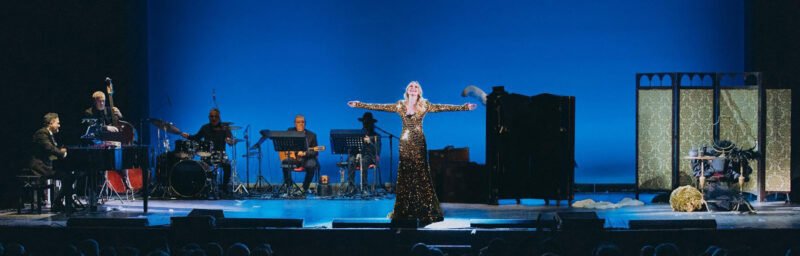
 La Sciantosa with Serena Autieri at Teatro Sistina, from April 21, 2027100 m
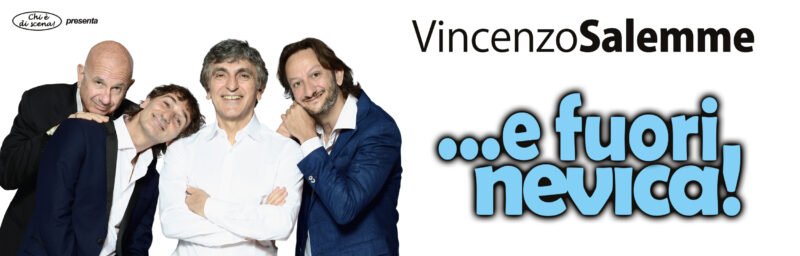
- E fuori nevica with Vincenzo Salemme at Teatro Sistina, from May 4, 2027100 m
- Teatro Sistina100 m
- San Giuseppe a Capo le Case100 m
- Galleria d’Arte Moderna di Roma (GAM)100 m
- Triton Fountain100 m
Upcoming events nearby
- La moglie fantasma at Teatro Sistina, November 11 to 15, 2026100 m
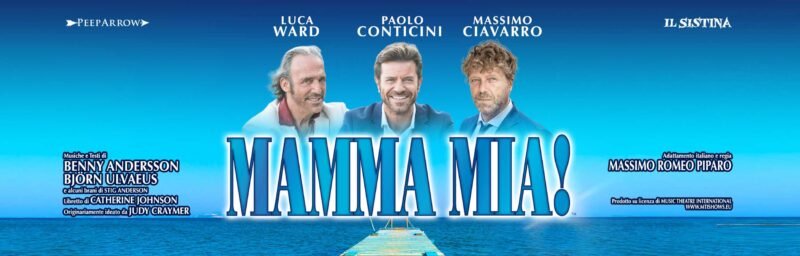
- Mamma Mia! the Musical at Teatro Sistina, December 17 to 31, 2026100 m
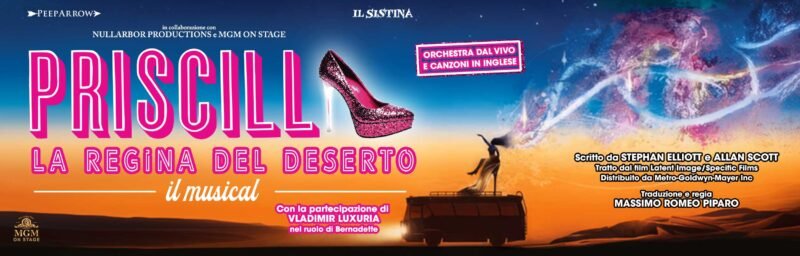
- Priscilla, La regina del deserto, the musical at Teatro Sistina, from February 10, 2027100 m
- Belle Ripiene at Teatro Sistina in Rome, from April 8, 2027100 m

You might also like
- Le dieu du carnage with Antonio Zavatteri at Teatro Quirino, March 30 to April 4, 2027
- L’uomo, la bestia e la virtù with Vanessa Gravina at Teatro Quirino, March 16 to 21, 2027
- Ispettore in casa Birling with Ettore Bassi and Galatea Ranzi at Teatro Quirino, March 2 to 7, 2027
- Il commissario Montalbano with Vincenzo Pirrotta at Teatro Quirino, February 16 to 28, 2027
- Il giuoco delle parti with Pippo Pattavina at Teatro Quirino, February 9 to 14, 2027
- Rosso Malpelo with Enrico Guarneri at Teatro Quirino, February 2 to 7, 2027