E fuori nevica with Vincenzo Salemme at Teatro Sistina, from May 4, 2027
In short. E fuori nevica with Vincenzo Salemme: from May 4, 2027 the actor is at Teatro Sistina, Via Sistina 129 (00187 Rome), with the comedy he wrote, directs and stars in, produced by his company Chi è di scena.
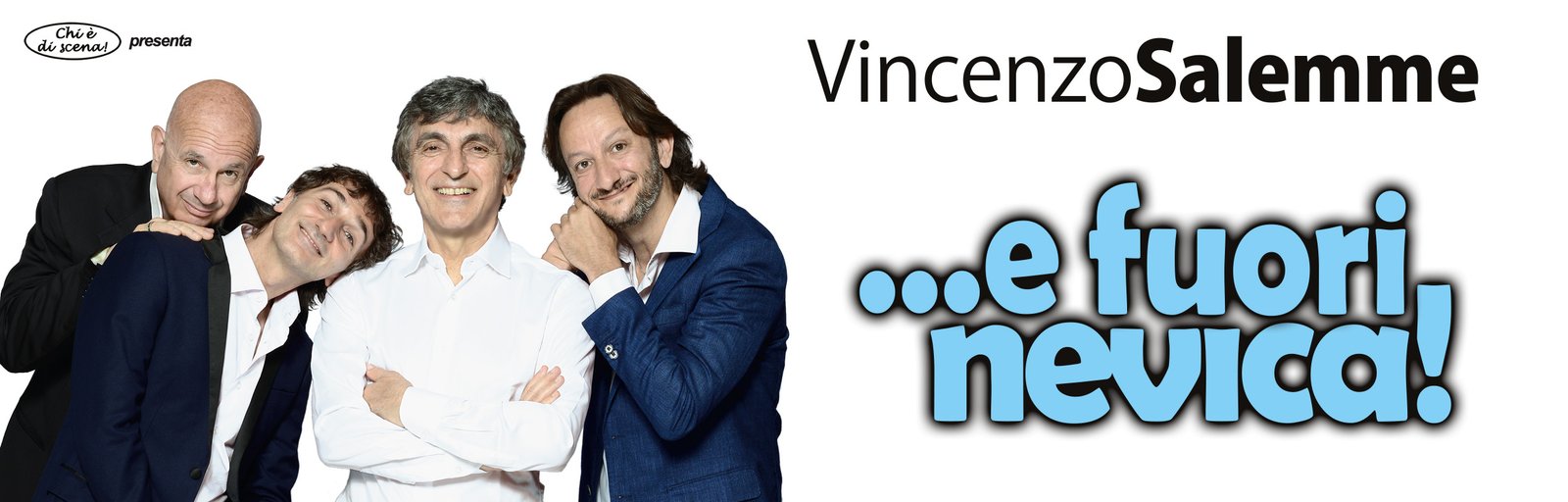
E fuori nevica with Vincenzo Salemme: from May 4, 2027 the actor is at Teatro Sistina, Via Sistina 129 (00187 Rome), with the comedy he wrote, directs and stars in, produced by his company Chi è di scena. The Sistina lists performances Wednesday to Saturday at 20:30 and Sunday at 16:00, and the closing date of the Rome run hasn't been published. The theater is a few steps from Piazza Barberini, served by Metro A, Barberini stop. Prices published by the theater are €53 in the Poltronissima, €49.50 in the Poltrona, €43 in the first gallery, €36 in the second gallery and €32 in the third gallery. Tickets are sold on the Sistina's official website, through the box office linked from the show's page, or at the box office on Via Sistina.
Language: performed in Italian. No English version or English surtitles are announced.
Three brothers, a mother who has just died, a will that forces them to live under the same roof. That's the setup of one of Salemme's best-loved comedies, born in the mid-1990s and made into a film in 2014, now back on stage with its author. The verdict is simple: if you've never seen Salemme live, this is your best chance, because E fuori nevica, "And outside it's snowing", is the play where his Neapolitan comedy and his melancholy go hand in hand better than anywhere else.
E fuori nevica at the Sistina in brief
E fuori nevica is on at Teatro Sistina in Rome from May 4, 2027, with Vincenzo Salemme and, in alphabetical order, Andrea Di Maria, Antonio Guerriero and Stefano Sarcinelli, presented by Chi è di scena.
Times
The Sistina's official page lists performances Wednesday to Saturday at 20:30 and Sunday at 16:00. May 4, 2027 is a Tuesday: check the opening night's time when you buy.
Until when
The theater announces the show with the formula "from May 4", with no closing date. The exact run can be read in the online box office calendar, which shows the nights on sale.
The company
Alongside Salemme are Andrea Di Maria, Antonio Guerriero and Stefano Sarcinelli. Sarcinelli is a longtime companion: he was already with Salemme and Francesco Paolantoni in La gente vuole ridere, in the early 1990s.
A note on television
The Sistina reports that the production has issued a statement: the show may be broadcast live in January on a major national TV network. The theater adds, rightly, that a live performance can never be matched by a broadcast on screen.
The plot of E fuori nevica
E fuori nevica follows three brothers, Cico, Stefano and Enzo Righi, summoned by the notary after their mother's death: to divide the considerable inheritance they must, by the deceased's wishes, live together.
Cico, the firstborn
Francesco, known as Cico, is the eldest brother. The Sistina's presentation describes him as having a form of autism, capable of peaks of absolute lucidity and moments of depression: he can manage extremely complicated things and can't tie his shoes. When he's happy he shouts "it's snowing, it's snowing", and he devours mountains of mashed potatoes to calm his anxiety. He's a volcano of energy who fills every gap with a frantic series of impersonations, from pizza maker to policeman, and forces his brothers to join in.
Stefano, the most ordinary
Stefano studied, graduated and settles for being a stockbroker. He's madly in love with Nora and about to marry her, although after a year the relationship is still only platonic, or rather by phone, and on top of that goes through his stern future mother-in-law, who won't let him speak to her daughter.
Enzo, the layabout
Enzo left home at 18 and is the classic immature man, incapable of the slightest responsibility. He poses as a musician, but in his guitar case he carries no instrument, only what he needs to travel. The story begins with his return to the family home.
The will
The mother has died after a long illness, and the notary reads her last wishes: the inheritance can be divided only if the three live together. Stefano can't marry, because his future wife would never agree to live with that half-crazy brother, and Enzo plays on cruise ships and can't take along someone who eats potatoes and shouts that it's snowing even on August 20. Who will look after Cico?
Need
In the forced cohabitation, the Sistina writes, irresistibly comic situations arise, but every so often reality shows through, sometimes cruel, the reality of needs: for peace, for money, for affection. The presentation's last line is the key to the comedy: it's the life of all of us.
From stage to screen and back: the story of E fuori nevica
E fuori nevica premiered in 1995 and is, according to accounts of Salemme's career, one of his great stage hits, born from an idea by Enzo Iacchetti. In 2014 Salemme made the film version.
The 1990s
The comedy came after a series of plays that founded Salemme's theater: Sogni, bisogni, incubi e risvegli in 1990, A chi figli, a chi figliastri in 1991, Lo strano caso di Felice C. in 1992, La gente vuole ridere and Passerotti o pipistrelli in 1993, and Fatti unici per atti comici in 1994. E fuori nevica closed that first cycle with its widest success.
The 2014 film
In 2014 Salemme returned to film directing with E fuori nevica itself, bringing the play to the screen. If you've seen the film you'll find the same characters and situations, but the theater gives back the comic timing the play was written for, with the audience's reactions part of the rhythm.
Back on stage
Reviving your own play 30 years on means rereading it at a different age. Salemme, who was 38 in 1995, returns to the Righi brothers after playing Luca Cupiello in Natale in casa Cupiello: the reckoning with his master, Eduardo, is behind him, and his family comedy can show its full kinship with Eduardo's.
Who Vincenzo Salemme is: biography
Vincenzo Salemme, born in Bacoli on July 24, 1957, is an actor, playwright, comedian, director, screenwriter and writer: trained in Eduardo De Filippo's company, he founded his own company in 1990 and has brought many of his comedies to the screen.
Family and studies
He's the second of four children of Enzo Maria Salemme, a lawyer, and Clotilde Di Meo, a teacher. He graduated from Liceo classico Umberto I in Naples and enrolled in Letters and Philosophy at the Federico II University, which he left after three exams. His brothers' names, Antonio and Stefano, are curiously close to those of the characters in his comedies.
Tato Russo and the move to Rome
In 1976 he was hired by Tato Russo's company and debuted in Ballata e morte di un capitano del popolo, based on Luigi Compagnone's novel. In 1977 he moved to Rome and, thanks to his friend Sergio Solli, joined Eduardo De Filippo's company.
Eduardo's school
With Eduardo he acted in Quei figuri di tanti anni fa, Il cilindro, Il sindaco del rione Sanità and Il contratto, broadcast on Rete Uno between 1978 and 1981. He stayed with him until 1984, the year his master died, and continued with his son Luca De Filippo until 1992. In a 2018 interview he recalled that Eduardo taught him to Italianize Neapolitan words so he could be understood all over Italy: it's the language the Sistina audience will hear.
The Chi è di scena company
In 1990 he founded the cultural association E.T. to strike out on his own. The debut was at Teatro dell'Orologio in Rome with Sogni, bisogni, incubi e risvegli, two one-act plays, Buonanotte and Il signor Colpodigenio. Its success allowed him to form a professional company: Chi è di scena, the same one that produces E fuori nevica today.
The comedies
Then came A chi figli, a chi figliastri, with L'amico del cuore, Telefono azzurro and Passacantando, Lo strano caso di Felice C., La gente vuole ridere, with Sarcinelli and Paolantoni, Passerotti o pipistrelli, which uses disability to dig into human unease, Fatti unici per atti comici, and E fuori nevica. In 1997 he staged Premiata pasticceria Bellavista, a satire of bourgeois respectability, in 1999 Di mamma ce n'è una sola, and in 2001 Faccio a pezzi il teatro, an anthology of his work.
Film
He made his screen debut with Nanni Moretti in Sogni d'oro, Bianca and La messa è finita. In 1998 he directed his first film, L'amico del cuore, which grossed 10 billion lire, followed by Amore a prima vista, A ruota libera, Volesse il cielo!, Ho visto le stelle!, Cose da pazzi, SMS Sotto mentite spoglie and No problem, and later Se mi lasci non vale in 2016, Una festa esagerata in 2018 and Con tutto il cuore in 2021. As an actor he has worked with Carlo Vanzina, Fausto Brizzi, Giuseppe Tornatore in Baarìa, Neri Parenti and Mario Martone in Morte di un matematico napoletano.
Television
He starred in Famiglia Salemme Show in 2006 and Da Nord a Sud... e ho detto tutto! in 2009 on Rai Uno, and from 2018 to 2020 he sat on the jury of Tale e quale show. In December 2019 Rai 2 aired Salemme, il bello della diretta!, three comedies in three episodes. On November 6, 2020 he hosted an episode of Tale e quale show, il torneo, standing in for Carlo Conti.
Eduardo, again
Since October 2023 he has been staging Natale in casa Cupiello, as director and star in the role of Luca Cupiello. The show opened the 2024 season of Teatro Diana in Naples and, broadcast on Rai 1 on December 26, 2024, won the night with a 20.54 percent share and more than 3 million viewers. In 2025 came Ogni promessa è debito, broadcast live on Rai 1 on January 5, 2026. Before that, from November 2021, came the tour of Napoletano? E famme 'na pizza!, brought to TV on Rai 2 in 2023.
Salemme's comedy
Vincenzo Salemme's comedy comes from the Neapolitan farce tradition filtered through Eduardo's teaching: misunderstandings, impossible families and an undercurrent of melancholy beneath the joke.
The line between dream and reality
In La gente vuole ridere Salemme took up one of his master's themes, the line between dream and reality. In E fuori nevica the dream has Cico's voice, shouting that it's snowing in the middle of August: the joke and the fragility coincide.
Disability as a lens
With Passerotti o pipistrelli Salemme had already used disability to explore everyone's unease. Paolo Petroni, in Corriere della Sera, spoke of a way of making comedy with one eye on reality. E fuori nevica continues down that road: you laugh at Cico, and then you realize that the sanest of the three may well be him.
The actor as author
Salemme writes for himself, and it shows. The comic timing is measured on his voice and his pauses, and the audience knows it and waits for his entrances. It's Italian actor's theater, the kind the Sistina has hosted for 70 years.
A curious fact about E fuori nevica with Vincenzo Salemme at Teatro Sistina, from May 4, 2027
The most delicious curious fact concerns the names. In the comedy the three brothers are Francesco, known as Cico, Stefano and Enzo. In real life Vincenzo Salemme is the son of a lawyer named Enzo Maria and has two lawyer brothers, Antonio and Stefano. The immature, idle brother bears the name of the author's father, and the graduate, orderly brother that of a real brother: it's hard not to see an affectionate game with his own family.
The second curious fact is its origin. According to accounts of his career, E fuori nevica was born in 1995 from an idea by Enzo Iacchetti, a Lombard comedian and host far removed from the Neapolitan tradition. An idea from the North, turned by Salemme into a Neapolitan family comedy: proof that his Eduardo lesson, making Neapolitan understandable to all of Italy, works in reverse too.
The third concerns Rome. Salemme came to Rome in 1977 to join Eduardo's company, and it was in Rome, at Teatro dell'Orologio, that he launched his own company in 1990. Returning to the Sistina with a play from those years has something circular about it: the city where he learned the trade is the same one where he comes back to show it.
Teatro Sistina, Italy's answer to Broadway
Teatro Sistina, at Via Sistina 129, opened on December 28, 1949 to a design by Marcello Piacentini and is one of Italy's great private theaters, with 1,015 seats in the orchestra and 566 in the gallery. The American magazine Variety called it Italy's answer to Broadway.
A hall without columns
The hall is semicircular, 28 meters wide and 30 deep, with no columns: from every seat the stage is unobstructed. For a four-actor comedy, made of entrances, exits and reactions, the overall view from the gallery is an advantage rather than a fallback.
Where a church once stood
The theater was built between 1946 and 1949 on the site of the church of Santa Francesca Romana, along what was then called Strada Felice. The first film screened was Le mura di Malapaga, and the first revue Bada che ti mangio, with Totò and Isa Barzizza.
The temple of musical comedy
From 1960 to 2006 the theater was run by Garinei and Giovannini, the authors of Rugantino and Aggiungi un posto a tavola, and since 2013 the artistic director has been Massimo Romeo Piparo. The full program is on the Sistina's official website.
Something nobody tells you about E fuori nevica with Vincenzo Salemme at Teatro Sistina, from May 4, 2027
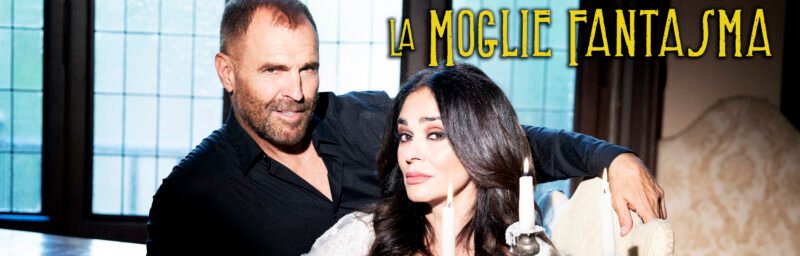
What's rarely said is that this production's prices are higher than those of other touring plays the Sistina hosts in the same season, like La moglie fantasma, from €30 to €49: here they range from €32 in the third gallery to €53 in the Poltronissima. It's the price of a name that has been filling halls for 30 years. The flip side is that the cheaper sections sell out fast: if you want to spend little, buy first, not last.
The second thing concerns the theme. E fuori nevica is a comedy, and you laugh a lot, but it talks about a dead mother, a fragile brother, money and loneliness. If you've cared for a family member with a disability or been through a difficult inheritance split, you'll find lines that make you laugh and think at the same time. It's not a reason not to go: it's a reason to go prepared.
The third is about the calendar. May is a busy month in Rome, with long weekends, school trips and spring tourism. The Sunday afternoon performances fill up with families and organized groups, while Wednesday and Thursday evenings are the calmest for those who live in the city.
My tip for E fuori nevica with Vincenzo Salemme at Teatro Sistina, from May 4, 2027
My tip is to choose the first gallery, at €43. In a hall without columns, for a four-actor comedy where the listeners' reactions count as much as the speakers' lines, the view from above captures the shape of the scenes better than the Poltronissima. The Poltronissima makes sense if you want to see Salemme's face up close, which is half the show.
Second tip: arrive from above, on foot. Get off the metro at Spagna, climb the Spanish Steps to Trinità dei Monti and walk along level Via Sistina to number 129. In May, at 20:00, the light on the Steps is still warm, and 10 minutes on foot are worth the metro ride you've skipped.
Third: if you can, rewatch the 2014 film afterward, not before. Theater lives on surprise, and Cico's lines work better if you don't see them coming. The film will then help you revisit the story and measure how much the stage adds.
Another well-known fact, yet one rarely mentioned
Almost everyone knows Rugantino and Aggiungi un posto a tavola were born at the Sistina. Less often remembered is that in the 1950s the theater risked becoming a cinema for good. A group of film industrialists turned it into a Cinerama hall, with three projection booths and a screen 27 meters wide and 11 high. The experiment failed and it went back to being a theater: without that failure, Italian musical comedy would have had a different history.
The second fact concerns Salemme, and it's as well known as it is overlooked: he's one of the actors trained directly by Eduardo, on stage and not from books. He joined his company in 1977, stayed until his master's death in 1984 and then with Luca De Filippo until 1992. 15 years of Eduardo's school before writing a line for himself.
The third is a coincidence of venue. The Sistina is the theater of Garinei and Giovannini's Italian-style comedy, the kind that mixes laughter and sentiment without embarrassment. E fuori nevica belongs to the same family: a popular comedy that isn't afraid to move you. On this stage it's at home.
How to get to Teatro Sistina for E fuori nevica
Teatro Sistina is reached by Metro A, Barberini stop: from Piazza Barberini walk up Via Sistina and the theater is at number 129, a few minutes on foot.
By metro
Line A links Barberini to Termini in two stops. It's the simplest way to get there and back, even late in the evening.
On foot from the center
Via Sistina links Piazza Barberini to Trinità dei Monti, at the top of the Spanish Steps above Piazza di Spagna. If you're in the center, you can climb the Steps and walk along the level street.
Bus
The surface lines serving Piazza Barberini and Via del Tritone often change routes, more in the evening than by day: check them on the day on the Rome transit company's journey planner.
By car and taxi
The Sistina is in the historic center, inside the limited traffic zone: driving isn't recommended. If you're coming from out of town, leave the car in a garage outside the ZTL and continue by metro. For the evening exit a taxi is handy if you don't live near line A, and Piazza Barberini is an easy pickup point to give.
The right photo to take at E fuori nevica with Vincenzo Salemme at Teatro Sistina, from May 4, 2027
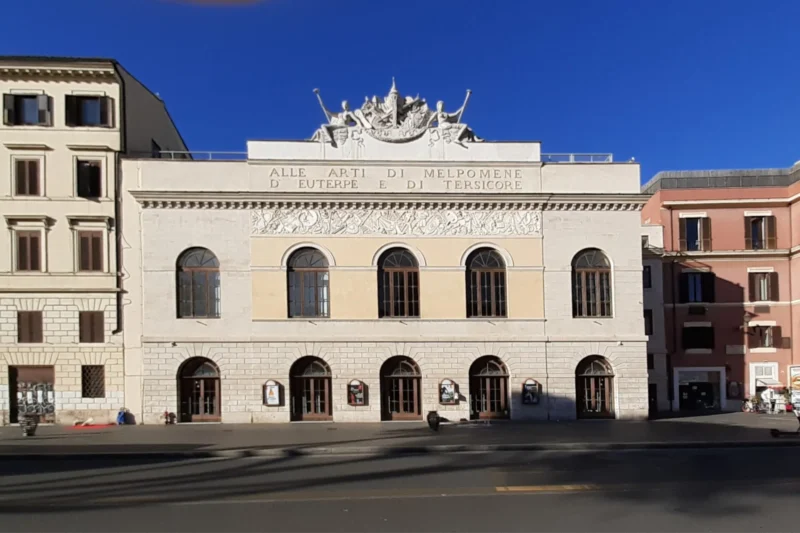
The Sistina photo is taken from the other side of Via Sistina, with the sign and the lit facade in the frame. In the evening, before the show, the light of the entrance and the crowd at the doors give you the image of a living theater. Take it when you arrive: on the way out the street fills up and the shot comes out worse.
For lovers of wordplay there's an on-theme photo: the billboard with the title, E fuori nevica, "And outside it's snowing", under a cloudless May sky. It's the same irony as Cico, who shouts that it's snowing on August 20, and 10 years from now it'll be the one that makes you smile most.
The third photo is taken at Trinità dei Monti, at the end of Via Sistina, with the Spanish Steps lit up below you. It's five minutes from the theater, and with the Sunday 16:00 performance you come out while it's still light, with the best view over the rooftops toward St. Peter's in the area.
Inside, during the show, no photos or video: it's a theater rule and a form of respect for the actors. The final applause is the moment to ask an usher if a shot is allowed.
Some important events that happened here in history
On December 28, 1949 the Sistina opened as a cinema and theater. Shortly after came its first revue, Bada che ti mangio, produced by Remigio Paone, with Totò and Isa Barzizza. In October 1950 the curtain rose on Pietro Garinei and Sandro Giovannini's La Bisarca, with sets by Giulio Coltellacci: the start of a relationship that would shape Italian theater history. On December 15, 1952 Attanasio cavallo vanesio opened with Renato Rascel, the first in a series of musical fables that launched the era of musical comedy.
In 1953, during a charity show, Sandro Giovannini saw Delia Scala dance and decided she would be the star of the new musical theater. After the Cinerama interlude, in 1960 management passed to Garinei and Giovannini, who held it until 2006, and from 1977, after Giovannini's death, Garinei ran it alone. These were the years of Rugantino, Aggiungi un posto a tavola, Il giorno della tartaruga, Un paio d'ali and Alleluja brava gente.
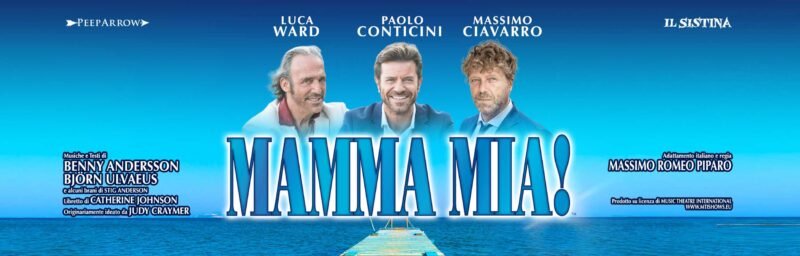
Since 2013 the artistic director has been Massimo Romeo Piparo, who brought the Sistina back to producing its own musicals: Jesus Christ Superstar with Ted Neeley, Mamma Mia!, Evita, Billy Elliot, School of Rock, Il marchese del Grillo, Cats, Matilda and West Side Story. Alongside musicals the theater hosts concerts and touring plays, like E fuori nevica, which in May 2027 brings Neapolitan author's comedy back to this stage.
Who has passed through E fuori nevica with Vincenzo Salemme at Teatro Sistina, from May 4, 2027
The great names of Italian entertainment have passed across the Sistina stage, many of them debuting or being consecrated here: Marcello Mastroianni, Renato Rascel, Delia Scala, Carlo Dapporto, Aldo Fabrizi, Walter Chiari, Gino Bramieri, Johnny Dorelli, Paolo Panelli, Bice Valori, Enrico Montesano, Gigi Proietti, Mariangela Melato, Sabrina Ferilli, Valerio Mastandrea, Massimo Ghini and Serena Autieri. And Totò, who opened its theater season.
In the Piparo years the Sistina has hosted concerts by John Legend, Massimo Ranieri, Ornella Vanoni, Renzo Arbore and Fiorello, and musicals with Ted Neeley and Lillo. In recent seasons the program has alternated in-house productions like Mamma Mia! and touring plays like La moglie fantasma.
Some of these names have a direct link to Salemme. Totò, who opened the Sistina's theater season, ties this stage to the Neapolitan comedy Salemme descends from. Aldo Fabrizi, Gino Bramieri and Walter Chiari are the masters of actor's comedy, writing and performing for themselves. And Serena Autieri acted with Salemme on screen in Se mi lasci non vale: in the Sistina's wings, E fuori nevica finds a family.
Via Sistina and the area around the theater
Teatro Sistina sits between Piazza Barberini and Trinità dei Monti, in one of the most elegant parts of central Rome.
Piazza Barberini
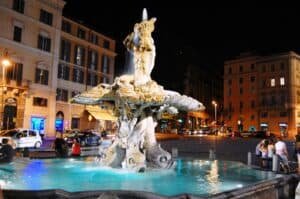
At the foot of Via Sistina is Piazza Barberini, with Bernini's Triton Fountain. Just above, Palazzo Barberini houses the National Gallery of Ancient Art, and opposite begins Via Veneto.
Trinità dei Monti and the Pincio
At the other end of Via Sistina you reach Trinità dei Monti and, farther on, the Pincio, with its terrace over Piazza del Popolo, and then Villa Borghese. In May, for the Sunday afternoon performance, a morning at the Pincio is the ideal complement.
Toward Trevi
Heading down from Piazza Barberini toward Via del Tritone you reach the Trevi Fountain in 10 minutes. In the evening, after the show, it's less crowded than by day.
Where to eat before and after E fuori nevica
The area between Piazza Barberini, Via Sistina and Piazza di Spagna has a wide choice of restaurants, trattorias and bars, with prices on average higher than in other neighborhoods.
Before 20:30
With a 20:30 start, have something quick beforehand, or eat after. Around Piazza Barberini and toward Via del Tritone you'll find bars and spots for a light meal.
After the show
Dinner after the theater is a Roman tradition, and in the center many kitchens stay open late. Heading down toward Trevi and the Pantheon the choice grows, and if you want to spend less you can move toward Monti, a few metro stops away.
On theme with the comedy
After two hours with a hero who devours mashed potatoes to calm his anxiety, the temptation is obvious. In Rome potatoes come in a thousand ways, starting with the roast potatoes of the trattorias: ordering them is the most fitting tribute to Cico.
Accessibility and practical information
For accessibility needs, wheelchair seating and companions, contact the Teatro Sistina box office before buying.
Arriving on time
At the Sistina, as in all big theaters, latecomers are let in only at set moments. In a hall of more than 1,500 seats, 20 minutes early is the minimum to settle in calmly.
With young people
E fuori nevica is a comedy for a broad audience, but the themes are adult: a mother's death, an inheritance, a brother's disability. The theater doesn't set age limits, and in our opinion it's suitable from 12 up, and a good way to talk about fragility as a family without heaviness.
May in Rome
In May Roman evenings are mild, and the climb up Via Sistina is a pleasure on foot. It's one of the best months for the city, with long days and theaters still in season, but also one of the most crowded: booking dinner and tickets ahead is wise.
Frequently asked questions about E fuori nevica at the Sistina
When is E fuori nevica on at Teatro Sistina?
E fuori nevica with Vincenzo Salemme is on at Teatro Sistina in Rome from May 4, 2027, Wednesday to Saturday at 20:30 and Sunday at 16:00. The theater doesn't publish a closing date: the nights on sale can be seen in the official box office calendar.
How much are tickets for E fuori nevica?
Tickets for E fuori nevica at the Sistina cost €53 in the Poltronissima, €49.50 in the Poltrona, €43 in the first gallery, €36 in the second gallery and €32 in the third gallery, according to the price list published by the theater. They're sold on the Sistina's official website or at the box office on Via Sistina.
Who's in E fuori nevica?
E fuori nevica at the Sistina stars Vincenzo Salemme, the comedy's author and director, and, in alphabetical order, Andrea Di Maria, Antonio Guerriero and Stefano Sarcinelli. The show is presented by Chi è di scena, the company Salemme founded in the early 1990s.
What is E fuori nevica about?
E fuori nevica tells the story of the Righi brothers: Cico, fragile and brilliant, Stefano, a stockbroker engaged by phone, and Enzo, a fake musician. When their mother dies, her will requires them to live together to divide the inheritance. The forced cohabitation brings laughs and real needs: peace, money, affection.
Is E fuori nevica the same as the film?
E fuori nevica is the stage comedy Vincenzo Salemme has performed since 1995 and also directed for the screen in 2014. At the Sistina you see the stage version, with Salemme on stage: the characters and situations are the same, but the comic timing is the stage's.
How do you get to Teatro Sistina?
Teatro Sistina is at Via Sistina 129 and is reached by Metro A, Barberini stop, a few minutes on foot. From the center you can also climb the Spanish Steps and walk along Via Sistina from Trinità dei Monti. The theater is in the limited traffic zone.
Is E fuori nevica suitable for young people?
E fuori nevica at Teatro Sistina is a comedy for a broad audience, with no age limits set by the theater. The themes, a mother's death and a brother's disability, are handled lightly but are adult: from 12 up the show is easy to follow and discuss.
Final tip
People usually go to the Sistina for the big musicals, and for Salemme you go for another reason: to see an actor-author trained in Eduardo's company in the comedy that represents him best. My advice is clear: first gallery, a Wednesday or Thursday evening, arriving on foot from Trinità dei Monti. And when Cico shouts that it's snowing, let yourself go: it's the moment where laughter and emotion touch.
Article written by the editorial team of Tour Leader Pro, contact them for Private/Corporate/V.I.P. Tours and Experiences.
Planning a trip to Rome? The English-language guides for visiting the city are on ItalyPlanner.com.
Contact Information
Nearby
 La Sciantosa with Serena Autieri at Teatro Sistina, from April 21, 2027100 m
- Teatro Sistina100 m
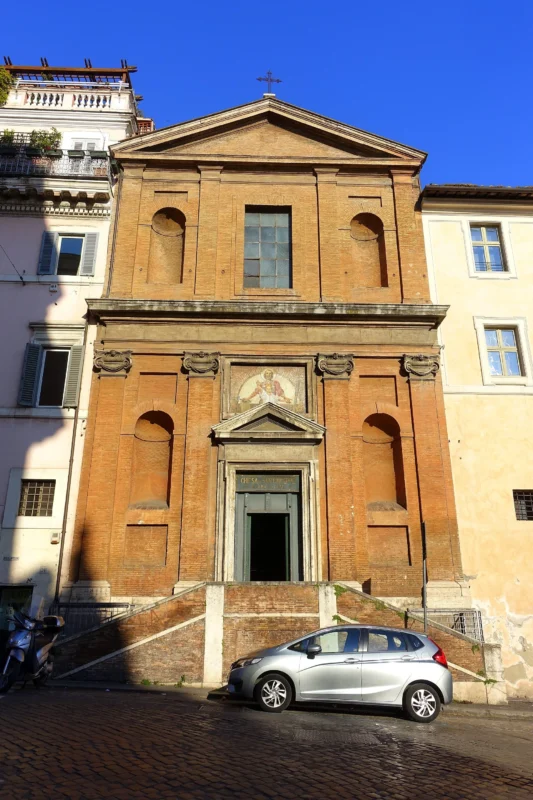
- San Giuseppe a Capo le Case100 m
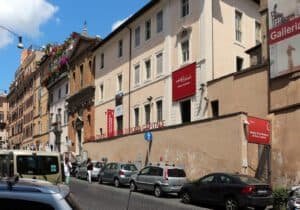
- Galleria d’Arte Moderna di Roma (GAM)100 m
- Triton Fountain100 m
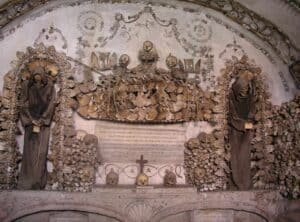
- Capuchin Friars Museum and Ossuary Crypt100 m
Upcoming events nearby
- La moglie fantasma at Teatro Sistina, November 11 to 15, 2026100 m
- Mamma Mia! the Musical at Teatro Sistina, December 17 to 31, 2026100 m
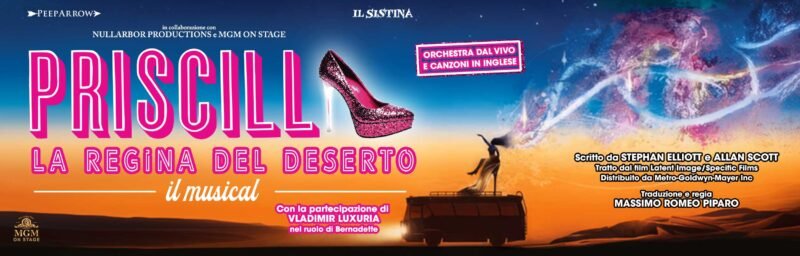
- Priscilla, La regina del deserto, the musical at Teatro Sistina, from February 10, 2027100 m
- Belle Ripiene at Teatro Sistina in Rome, from April 8, 2027100 m