Breaking Brecht with Veronica Pivetti at Teatro Sala Umberto, November 26 to 29, 2026
In short. Breaking Brecht. Sing'n'Song Cabaret, subtitled Lo strano caso di Bertolt Brecht (The Strange Case of Bertolt Brecht), brings Veronica Pivetti, Manuela Mandracchia and Lucia Vasini to Teatro Sala Umberto at Via della Mercede 50, between…
Breaking Brecht. Sing'n'Song Cabaret, subtitled Lo strano caso di Bertolt Brecht (The Strange Case of Bertolt Brecht), brings Veronica Pivetti, Manuela Mandracchia and Lucia Vasini to Teatro Sala Umberto at Via della Mercede 50, between Piazza di Spagna and the Trevi Fountain, from November 26 to 29, 2026. Text and direction are by Giovanna Gra, musical direction by Alessandro Nidi. The times published by the theater are: Thursday 26 and Friday November 27 at 20:30, Saturday 28 and Sunday 29 at 16:00. The running time given is 100 minutes. The full prices published are 34 euros in the front stalls, 28 euros in stalls A and 22 euros in stalls B. The first balcony section appears in the booking menu with no price given. The show is included in the seven-show and 10-show subscriptions. Tickets can be bought from the official Sala Umberto website, which links to online sales, or at the box office at Via della Mercede 50, open Tuesday to Saturday from 16:00 to 19:00 and on Sunday during show times. The call center answers at 06 6794753 during the same hours, and there's also a WhatsApp number, 345 9409718, as well as the address prenotazioni@salaumberto.com. To get there by public transport, use the ATAC journey planner.
Language: opera sung in its original language; no English surtitles are announced, so check with the theater.
Breaking Brecht: what happens on stage
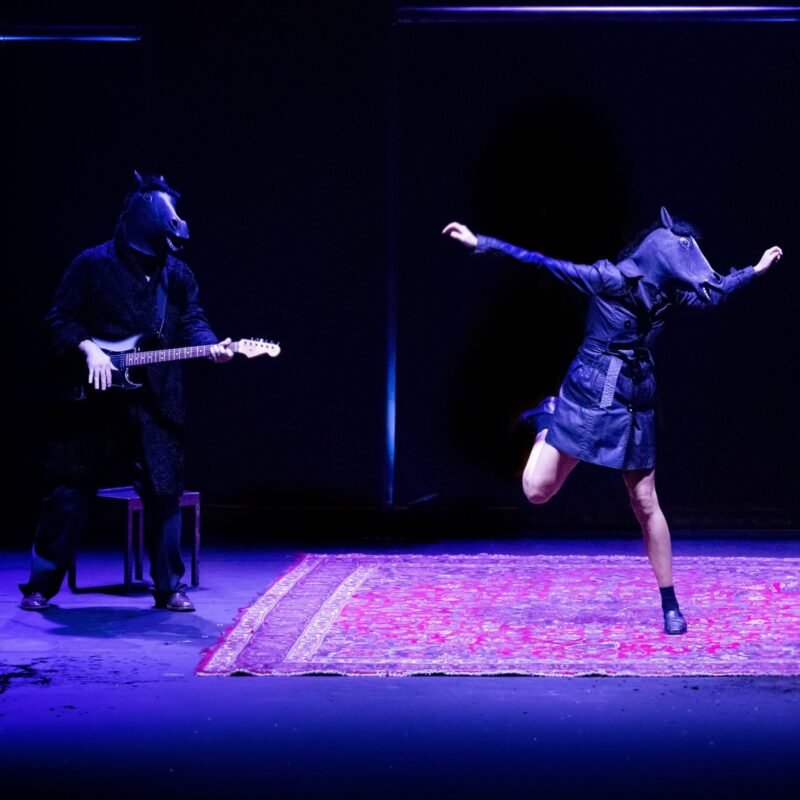
The official presentation calls Breaking Brecht an epic satirical show that tells the artistic battles and contradictions of the great German poet and playwright, in a contemporary language meant to entertain, make you think and move you. The three performers take the audience on a journey through the 20th century and its shadows, weaving together historical figures and cultural icons in a comic, revolutionary and musical key.
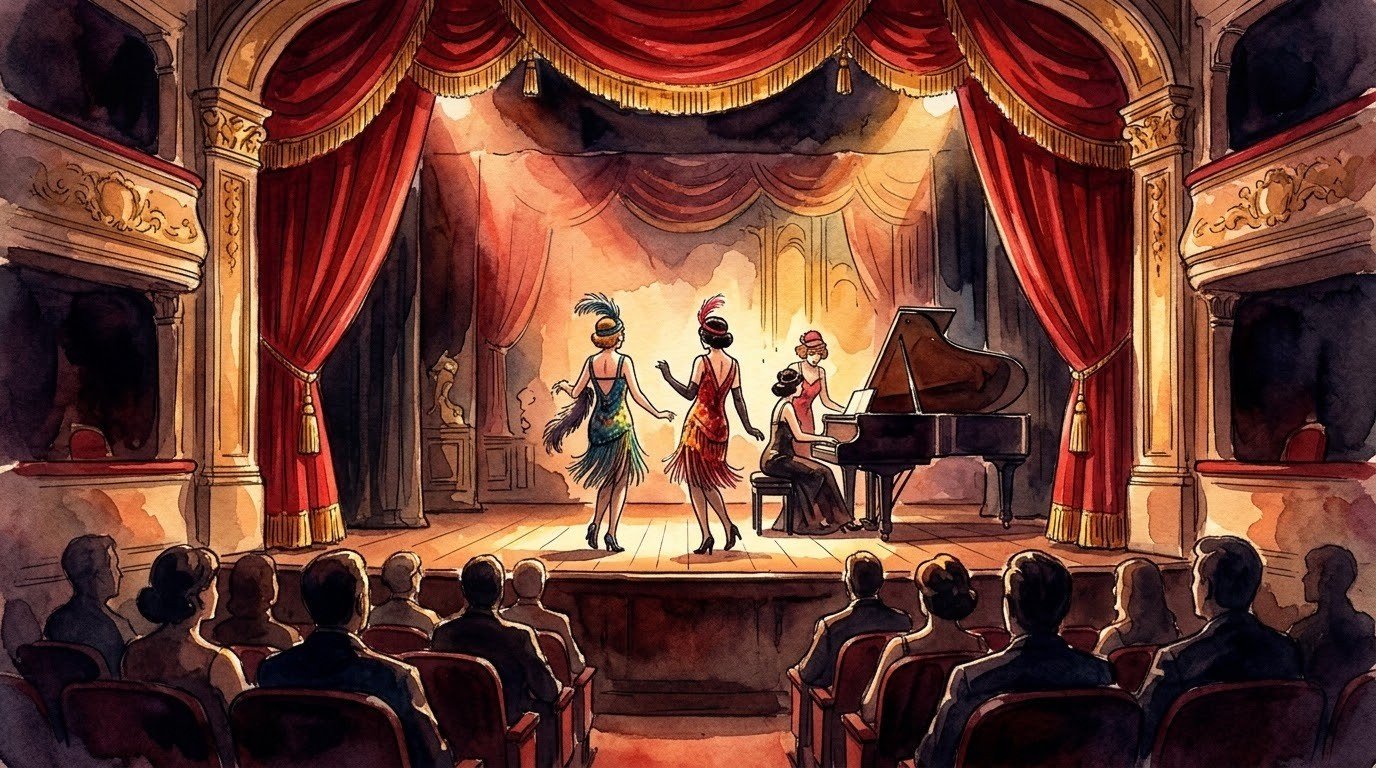
The format is cabaret, and not by chance. The songs Brecht wrote with Kurt Weill belong to a theater that mixes popular music, satire and storytelling, and cabaret is the form closest to that mix. Bringing Brecht back to a cabaret means, in a way, putting him back in his element.
Goebbels and mass manipulation
Among the scenes described in the presentation are Goebbels's theories of mass manipulation, explained with the direct involvement of the audience in the hall. It's one of the moments when the show uses comedy to dismantle the mechanisms of propaganda, drawing the audience into the game.
Freud, Hitler and Gastone
A puzzled Freud appears, forced to compare the ego of the past with the conscious self of the digital age. Hitler appears, delighting in that same ego by rewriting Ettore Petrolini's Gastone in his own way. A detail that, at Sala Umberto, takes on special meaning: Petrolini made his debut on this very stage, on May 25, 1911.
Marx and Engels in the present
Marx and Engels are catapulted into the present and find themselves comically dismayed by new technologies. It's a kind of comedy that plays on the gap between the fathers of 20th-century thought and the world of screens and networks.
Brecht in the flesh
And then there's Bertolt Brecht himself, who undoes, spoils and argues with his contemporaries and his forebears, quarrels with Wagner, and imagines a new life for Carmen and La traviata. Over everything, the presentation writes, hover the oblique shadows of the secret services, stirred up by artificial intelligence.
The finale
The finale gently tackles the gray areas surrounding the author's death, offering an intense ending, in memory of civic theater, reinterpreted in an innovative way. The presentation speaks of a cabaret that is inspired and popular at once, aiming at a single note: wonder.
The music: Weill, pop and opera
The show, according to the presentation, talks about the past to question the present with the force of Kurt Weill's music and great international pop, with the passion of opera and what the text calls the nuclear power of irony. Musical direction is by Alessandro Nidi.
Kurt Weill
Weill's name is inseparable from Brecht's. The Threepenny Opera, written by Brecht to music by Weill, opened on August 31, 1928 and was the greatest theatrical success of the Weimar Republic. Together they also wrote Mahagonny, between 1927 and 1929.
Opera
The reference to Wagner, Carmen and La traviata brings opera on stage as a point of comparison. Brecht's epic theater was born in opposition to the theater that pulls the audience into illusion. Imagining a new life for the heroines of melodrama is a comic way of putting that idea to the test.
Pop
Alongside Weill and opera, the show's score draws on great international pop. The pairing is consistent with Brecht's idea of a theater that uses popular music to reach everyone.
Bertolt Brecht in brief
Bertolt Brecht was born in Augsburg, Bavaria, on February 10, 1898, and died in East Berlin on August 14, 1956, of a heart attack. He is considered the founder of epic theater and one of the most influential playwrights of the 20th century.
The Weimar years
His first success came with Drums in the Night, from 1919, which earned him the Kleist Prize in 1922. Then came Man Equals Man, Mahagonny and, in 1928, The Threepenny Opera. In 1930 he wrote Saint Joan of the Stockyards.
Exile
On February 28, 1933, after the Reichstag fire, Brecht left Berlin. He passed through Prague, Vienna, Zurich and Paris, lived about five years in Denmark, then in Sweden, Finland, the Soviet Union and finally the United States, where he spent about five years in California, in Santa Monica. In exile he wrote some of his masterpieces: Mother Courage and Her Children, The Good Person of Szechwan, Life of Galileo, The Resistible Rise of Arturo Ui and The Caucasian Chalk Circle.
The American committee
On October 30, 1947 Brecht was questioned by the House Un-American Activities Committee. Shortly afterward he left the United States and in 1948 returned to East Berlin with his wife, the actress Helene Weigel, whom he had married in April 1929.
The Berliner Ensemble
In 1949 he founded the Berliner Ensemble in East Berlin, which became one of the most important theater companies in Europe. After his death he was buried in the Dorotheenstadt cemetery, where Helene Weigel would also be buried next to him.
Why a strange case
The subtitle, The Strange Case of Bertolt Brecht, suggests an investigation. Brecht was an author full of contradictions: a political writer who spent five years in California and was questioned by the American committee, a theorist of an anti-illusionist theater who wrote famous songs, an exile who went back to live in postwar East Berlin. Giovanna Gra's show sets out to tell precisely these contradictions.
The gray areas
The finale, according to the presentation, focuses on the gray areas surrounding the author's death. The show doesn't claim to resolve them: it uses them as theatrical material, in the spirit of the civic theater that cabaret, at its highest, has always practiced.
The shadows of the secret services
The oblique shadows of the secret services hovering over the stage recall the Cold War climate in which Brecht lived his last years, between the American interrogation and postwar East Berlin. The fact that they are stirred up by artificial intelligence is one of the short circuits between past and present on which the show is built.
A satire that looks at the present
The show is about the 20th century, but every scene described in the presentation contains a reference to today. Freud confronts the self of the digital age, Marx and Engels new technologies, the secret services artificial intelligence. The past becomes a lens for looking at the present, following a method Brecht himself often used, setting in distant eras dramas that spoke about his own time.
Propaganda then and now
The scene about Goebbels and mass manipulation, built with audience involvement, is perhaps the most openly political. Showing on stage how the mechanisms of persuasion work, and letting the audience experience some of them, is an exercise in awareness that satire can make entertaining without making it harmless.
Artificial intelligence as a new power
That it's artificial intelligence systems stirring up the shadows of the secret services is an idea that links the fears of the Cold War with today's. It's one of the points where the show tries to do what the presentation promises: talk about the past to question the present.
Cabaret as a theatrical form
Cabaret is a form made of short numbers, songs, monologues and sketches, held together by a common thread more than by a plot. It's a flexible form, which lets you move in a few minutes from laughter to emotion, from political satire to love song. Breaking Brecht exploits all its possibilities.
Three performers, many characters
With only three actresses on stage and a gallery of characters that includes Brecht, Freud, Hitler, Goebbels, Marx and Engels, the show necessarily relies on quick changes. The official page doesn't say who plays each character: the information isn't published, and the surprise is part of the game.
Civic theater
The presentation closes by speaking of civic theater, reinterpreted in an innovative way. It's an important indication: beneath the comic surface, the show wants to keep the political vocation of Brecht's theater, that of a stage that doesn't merely entertain.
Who the show is for
Breaking Brecht is meant for a wide audience. If you know Brecht and Weill you'll appreciate the quotations and reversals. If you don't, you'll find a musical cabaret with three much-loved actresses, each with her own following. The 100-minute running time makes it accessible even if you don't like overly long evenings.
For music lovers
The blend of Weill, pop and opera is one of the most original aspects of the show, and will appeal to lovers of musical theater and quality cabaret.
For teenagers
The page doesn't give a recommended age. The themes, from Nazi propaganda to the manipulation of the masses, can offer older students food for historical reflection, filtered through the lightness of satire.
Veronica Pivetti
Veronica Pivetti was born in Milan on February 19, 1965. She is the daughter of the director Paolo Pivetti and the actress and voice actress Grazia Gabrielli. She started working as a voice actress at six, and in the 1980s she voiced many cartoon characters. In 1997 she was the voice of Megara in Disney's Hercules.
Television
The general public got to know her in programs such as Quelli che il calcio and in TV drama: she was the partner of Gigi Proietti's character in Il maresciallo Rocca and, from 2005, the teacher Camilla Baudino in Provaci ancora prof!. In 1998 she hosted the Sanremo Festival with Raimondo Vianello and Eva Herzigová. Since 2018 she has hosted, with some breaks, Amore criminale on Rai 3.
Writing
She has published several books with Mondadori, from Ho smesso di piangere in 2012 to Tequila Bang Bang in 2022, and Rosa with Rai Libri in 2023. Since 2005 she has also hosted Veronica In on Rai Radio 2.
The bond with Giovanna Gra
Giovanna Gra's name appears in Pivetti's biography as early as 2010, as co-creator, with Dido Castelli, of the series La ladra, in which the actress starred. Breaking Brecht is a new chapter in this collaboration.
Manuela Mandracchia
Manuela Mandracchia was born in Rome on February 19, 1970. She graduated in 1993 from the Accademia Nazionale d'Arte Drammatica, and that same year the jury of the Premio Wanda Capodaglio named her among the best students of Italian drama schools.
With Luca Ronconi
The most important partnership of her career is the one with Luca Ronconi, who directed her among others in Tonight We Improvise, I due gemelli veneziani, Candelaio, Amor nello specchio and Il panico. She has also worked with Massimo Castri, Piero Maccarinelli, Filippo Dini and Anna Bonaiuto, and in 2006 she founded the group MitiPretese.
Awards
She has won two Premi Ubu, as best actress under 30 in the 1998-1999 season and as best supporting actress in 2002-2003, the Premio Flaiano in 2008 for Ritter, Dene, Voss, and two Le Maschere del Teatro Italiano awards, in 2015 for Hedda Gabler and in 2024 for August: Osage County.
Film and television
In film she has acted among others in We Have a Pope and Sweet Dreams. On television in Luna nera, Petra and Call My Agent Italia.
Lucia Vasini
Lucia Vasini was born in Ravenna on December 13, 1955. She graduated from the Piccolo Teatro school in Milan, studied singing and acting with Linda Wise and attended workshops in Los Angeles in the Actors Studio method.
A long career in comedy
From 1985 to 1989 she was part, with Daniela Piperno and Pia Engleberth, of the comedy trio Sorelle Sister. On stage she has worked with Dario Fo and Franca Rame, Gabriele Salvatores, Paolo Rossi, Cesare Lievi and Enzo Iacchetti.
Film
Her films include Il ragazzo di campagna, Gabriele Salvatores's Kamikazen. Ultima notte a Milano, Marco Ferreri's The House of Smiles, Carlo Mazzacurati's Il toro and Giovanni Veronesi's Manuale d'amore 2.
Three actresses, three schools
Pivetti comes from dubbing and television, Mandracchia from the Accademia and Ronconi's theater, Vasini from the Piccolo and the Milanese comedy of Fo and Salvatores. It's a trio built on difference, suited to a cabaret that keeps changing register.
The creative team and the production
Text and direction are by Giovanna Gra, musical direction by Alessandro Nidi, lighting design by Eva Bruno. The production is by International Music and Arts and Pigra Srl. The show is touring several Italian cities: on December 16, 2026, for example, it's announced at Teatro Nuovo in Ferrara.
A cabaret touring Italy
The Rome stop comes in the middle of the tour, and Sala Umberto, with its history of variety and revue, is a particularly fitting setting for a show that draws on the cabaret tradition.
Practical information
The four performances are split between two evening shows, Thursday and Friday at 20:30, and two afternoon shows, Saturday and Sunday at 16:00. With a 100-minute running time, the afternoon shows end in time for a walk in the center before dinner.
Sections and prices
The prices published are 34 euros for the front stalls, 28 for stalls A and 22 for stalls B. The first balcony section is listed but with no price: the information isn't published on the show page.
Subscriptions
Breaking Brecht is included in the seven-show and 10-show subscriptions of the Sala Umberto season.
Booking
Besides the box office and the call center, the theater gives an email address for bookings, prenotazioni@salaumberto.com, and a WhatsApp number. For front stalls seats, the closest to the stage, it's best to move well ahead of your chosen dates.
Teatro Sala Umberto in brief
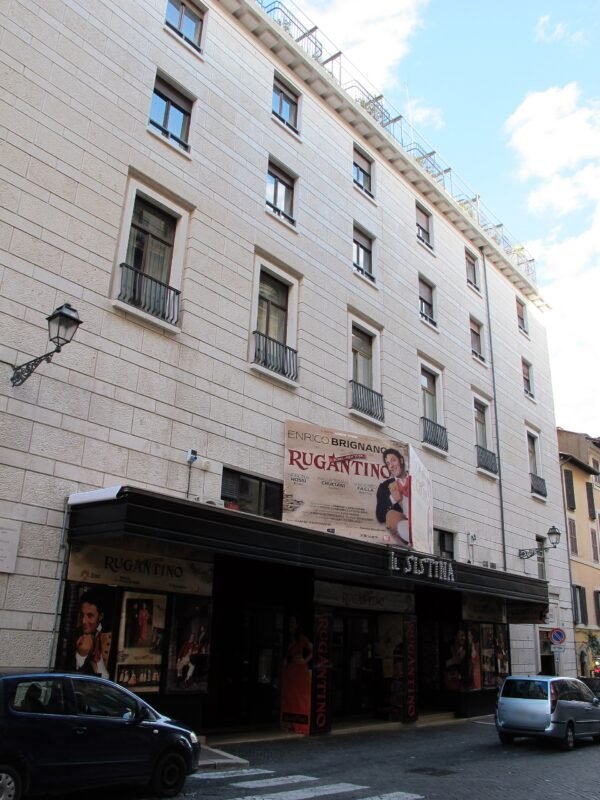
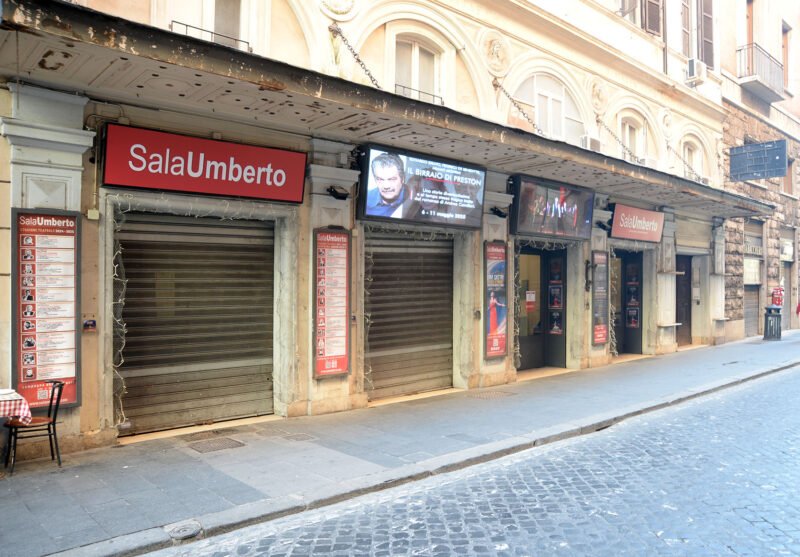
Sala Umberto is on Via della Mercede, on the ground floor of a palazzo. According to the theater's website it was designed by the architect Andrea Busiri Vici, with decorations by the set designer Alessandro Bazzani, and opened in 1882 as a concert hall. Between 1910 and 1940 it was known as a temple of Italian variety and revue.
Recent managements
In 1981 the theater returned to drama with Luigi Longobardi's first season, opened by Domenico Modugno in L'uomo che incontrò se stesso, directed by Edmo Fenoglio. From 1983 to 1991 programming was entrusted to the Ente Teatrale Italiano. From 1991 to 2001 the hall worked as an art-house cinema. In September 2002 the theater resumed activity with Alessandro Longobardi as artistic director, inaugurated by Maddalena Crippa in Femmine fatali, conceived and directed by Peter Stein.
A network of halls
Sala Umberto is part of a group of theaters run by Alessandro Longobardi: according to Artribune, besides the hall on Via della Mercede, Longobardi has run Teatro Brancaccio and the Brancaccino since 2012, Spazio Diamante since 2015 and, since spring 2026, the Eliseo and Piccolo Eliseo on Via Nazionale, reopened after six years of closure. The parent company is Viola Produzioni.
Youth theater and restaurant
Today Sala Umberto also hosts a youth theater program, directed by Livia Clementi, projects ranging from contemporary theater to dance and concerts, and a restaurant space called sUeat.
A curious fact about Teatro Sala Umberto
The hall's first name wasn't Umberto. According to the theater's website, in 1882 it opened as Teatro della Piccola Borsa, a concert hall. The current name came around 1900.
The Cinemofono
In 1906, according to the theater's website, the hall was also used as a Cinemofono, one of the first venues for sound film. It's a detail that foreshadows the long cinema vocation of this space, which became a movie theater again several times during the 20th century.
Something nobody tells you about Teatro Sala Umberto
Few theatergoers know that for 10 years Sala Umberto was an art-house cinema. From 1991 to 2001 programming was handled first by Istituto Luce and then by Medusa. The return to theater, in 2002, is therefore relatively recent, and gave the city back a hall that risked remaining tied only to the big screen.
A disputed date
On the return to theater the accounts don't fully agree: Artribune writes that Alessandro Longobardi reopened Sala Umberto in 2001, while the theater's website gives 2002, with the season inaugurated in September of that year.
My advice for visiting Teatro Sala Umberto
My advice is to choose the afternoon show on Saturday 28 or Sunday 29 at 16:00, and to arrive by way of the Trevi Fountain, a few minutes' walk away. When you come out, shortly before 18:00, the center is at its best, and Via della Mercede leads in a few steps toward Piazza di Spagna and Via del Tritone.
Brush up on Petrolini
Before going it's worth listening to a recording of Gastone, the Ettore Petrolini character Hitler rewrites in the show. Knowing that Petrolini made his debut on this very stage makes the scene even more enjoyable.
Another well-known fact, yet rarely mentioned
Sala Umberto is known as a variety theater. Less often do people remember how many big names it hosted in that era: the theater's website mentions Petrolini, Raffaele Viviani, Nicola Maldacea, Totò, Aldo Fabrizi, the De Filippo siblings, Anna Fougez, Odoardo Spadaro, the De Rege brothers, Renato Rascel, Rossano Brazzi, Anna Magnani and Walter Chiari, among others.
The works for the 50th anniversary
Between 1911 and 1913, according to the theater's website, the hall was renovated by Attilio Spaccarelli and Arnaldo Foschini for the 50th anniversary of Italian Unification. In 1928 a stage with a 12-meter proscenium opening and modern projection equipment was added.
The right photo to take at Teatro Sala Umberto
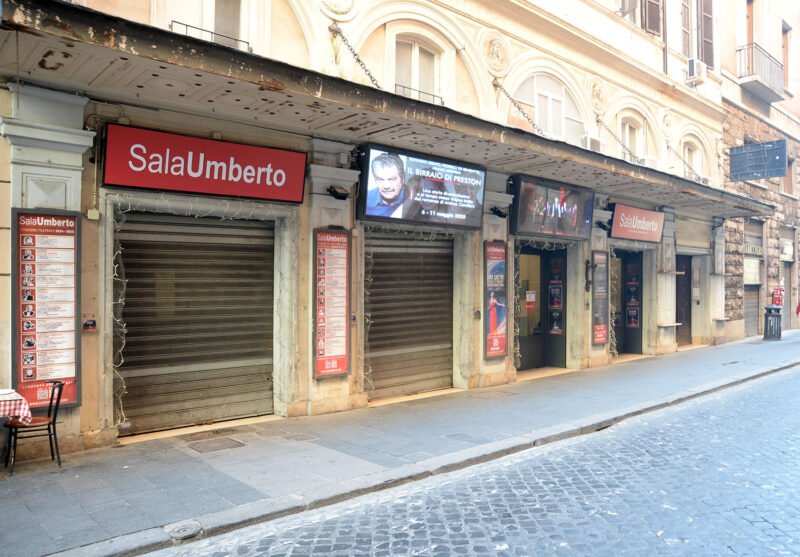
The most recognizable photo is taken on Via della Mercede, framing the entrance of Sala Umberto with the season's posters. It's a narrow street in the historic center, and the theater's sign among the palazzi conveys well the idea of a hall born on the ground floor of a residential building.
A Roman diptych
If you like context shots, you can add one of the nearby Trevi Fountain, to hold together in a single walk the variety theater and one of the most famous fountains in the city.
Some important events that happened here
1882: the concert hall
The hall opened to a design by Andrea Busiri Vici, with decorations by Alessandro Bazzani.
1890: the expansion
Giulio Podesti expanded the hall, which according to the theater's website reached 450 seats.
May 25, 1911: Petrolini
Ettore Petrolini made his debut at Sala Umberto.
1911-1913: the renovation
Spaccarelli and Foschini renovated the hall for the 50th anniversary of Unification.
1981: the return to drama
Domenico Modugno opened the first season of Luigi Longobardi's management.
1991-2001: the art-house cinema
The hall hosted the programming of Istituto Luce and then of Medusa.
2002: the new theater season
Maddalena Crippa inaugurated Alessandro Longobardi's management with Peter Stein's Femmine fatali.
Who has passed through Teatro Sala Umberto
The list of variety and revue stars who have trod the boards of Sala Umberto is very long: besides the names already mentioned, the theater's website lists Lydia Johnson, the Riviera Five, the Bonos brothers, Cuttica, Alfredo Bambi, the De Vico brothers, Michele Galdieri, Isa Lysette's company and Libero Bovio.
Today's season
Today's programming welcomes big names from music and theater: this season Sala Umberto hosts among others Francesco De Gregori, and the program also includes Cime tempestose.
Brecht in Rome in November
In the same month of November 2026 Brecht is also center stage at Teatro Quirino, where Mother Courage and Her Children with Lunetta Savino is on from November 17 to 22: a chance to see the playwright told in two very different ways.
Before or after the show: the surroundings
Sala Umberto is in one of the most central areas of Rome. In a few minutes you reach the Trevi Fountain and Piazza di Spagna.
San Silvestro and the Tritone
A stone's throw away is the church of San Silvestro in Capite, on the square of the same name, and a little further on the Triton Fountain in Piazza Barberini.
Piazza Colonna and Galleria Alberto Sordi
Toward Via del Corso you reach Piazza Colonna and Galleria Alberto Sordi, handy for a coffee before the show.
Frequently asked questions about Breaking Brecht
When is Breaking Brecht on at Sala Umberto?
From November 26 to 29, 2026. The times published by the theater are: Thursday 26 and Friday 27 at 20:30, Saturday 28 and Sunday 29 at 16:00. The two weekend performances are therefore afternoon shows, a convenient choice if you want to pair the show with a day in the center.
How long is the show?
The running time given on the official page is 100 minutes. It's a compact, cabaret-sized length, alternating songs, sketches and storytelling. At the 16:00 afternoon shows, the show therefore ends shortly before 18:00, leaving time for a walk.
How much are tickets?
The full prices published are 34 euros in the front stalls, 28 euros in stalls A and 22 euros in stalls B. The first balcony section is listed without a price. The show is also included in the season's seven-show and 10-show subscriptions.
Where do you buy tickets?
From the official Sala Umberto website, which links to online sales, or at the box office at Via della Mercede 50, open Tuesday to Saturday from 16:00 to 19:00 and on Sunday during show times. The call center answers at 06 6794753, WhatsApp at 345 9409718.
Who is on stage?
Veronica Pivetti, Manuela Mandracchia and Lucia Vasini. Text and direction are by Giovanna Gra, musical direction by Alessandro Nidi, lighting design by Eva Bruno. The production is by International Music and Arts and Pigra Srl.
Do you need to know Brecht to enjoy it?
No. The show is a satirical cabaret that uses historical figures, from Freud to Marx, from Goebbels to Hitler, in a comic and musical key. Knowing Brecht and Kurt Weill enriches the experience, but the presentation stresses a contemporary language designed to entertain, make you think and move you.
What music do you hear?
According to the presentation, the music of Kurt Weill, great international pop and opera, with references to Wagner, Carmen and La traviata. Musical direction is entrusted to Alessandro Nidi, and the three performers sing and act.
How do you get to Sala Umberto?
The theater is at Via della Mercede 50, between Piazza di Spagna and the Trevi Fountain, in a limited traffic area of the center. For public transport, the most up-to-date route is calculated with the ATAC journey planner.
Final advice on Breaking Brecht
Breaking Brecht brings the German playwright back to the place his music started from, the cabaret, and does so with three actresses from very different schools, united by Giovanna Gra's direction and Alessandro Nidi's musical direction. At Sala Umberto, the old temple of variety where Petrolini made his debut, the idea of a Hitler rewriting Gastone has a particular flavor. My advice is to choose one of the weekend afternoon shows and to also see, in the same month, Mother Courage at the Quirino: two Brechts a short walk apart, one popular and satirical, the other epic and bitter, show well how much this author still speaks to us.
Article written by the editorial team of Tour Leader Pro, contact them for Private/Corporate/V.I.P. Tours and Experiences.
Planning a trip to Rome? The English-language guides to visiting the city are on ItalyPlanner.com.
Contact Information
Nearby
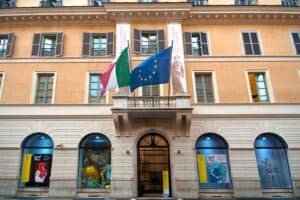
 Teatro Sala Umberto100 m
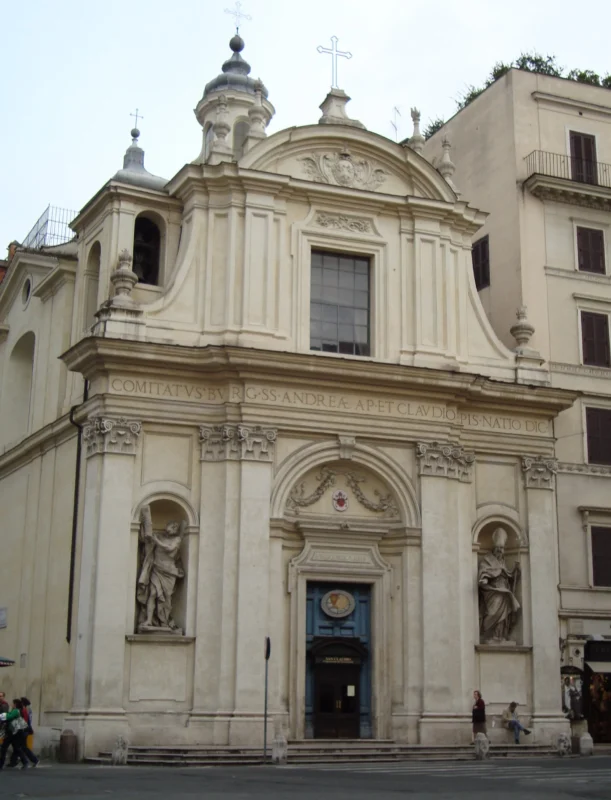
- San Claudio dei Borgognoni100 m
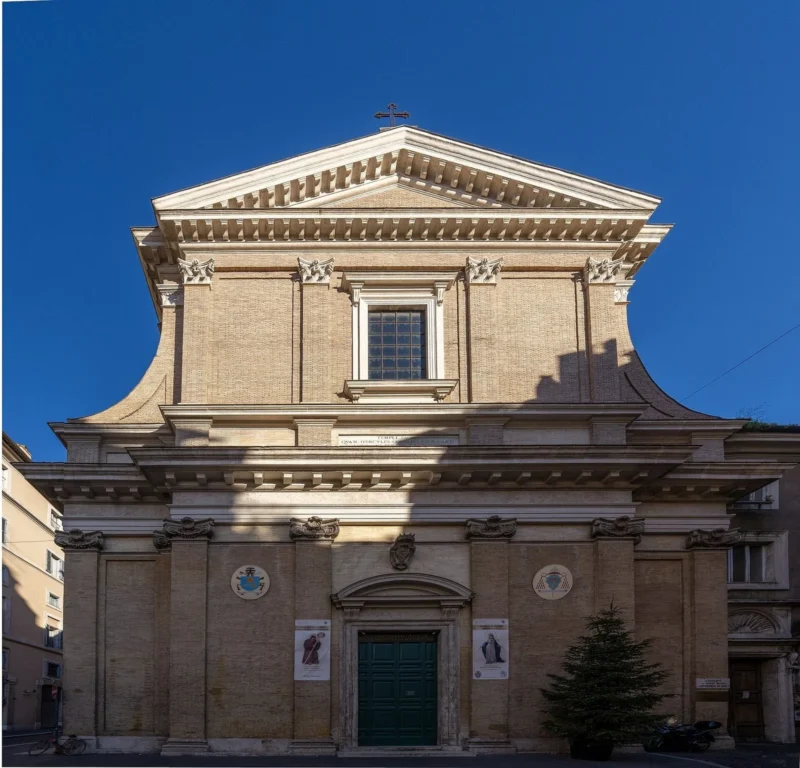
- San Silvestro in Capite100 m
- Sant’Andrea delle Fratte200 m
- Accademia Nazionale di San Luca200 m
- Istituto Centrale per la Grafica – Palazzo Poli200 m
Upcoming events nearby
- Captivo by Gianfranco Gallo at Teatro Sala Umberto, January 13-24, 2027100 m
- Federico Mecozzi, Traiettorie impercettibili at Teatro Sala Umberto, January 11, 2027100 m
- Piccole donne il musical with Antonella Morea at Teatro Sala Umberto, March 16 to 21, 2027100 m
- Don Giovanni with Simone Toni and Enzo Paci at Teatro Sala Umberto, February 2 to 14, 2027100 m
You might also like
- C’era una volta… Scugnizzi at Teatro Sistina, November 18 to 29, 2026
- Dominio Pubblico, Across The Arts at Argot Studio and Centro Giovani Zalib, September 21 to November 26, 2026
- Madre per sempre with Marisa Laurito and Giorgia Würth at Teatro Quirino, November 24 to 29, 2026
- Mother Courage and Her Children at Teatro Quirino, November 17 to 22, 2026
- Crime and Punishment at Piccolo Eliseo, November 17 to 29, 2026
- A Midsummer Night’s Dream at Teatro Quirino, from November 3 to 8, 2026