Captivo by Gianfranco Gallo at Teatro Sala Umberto, January 13-24, 2027
In short. Captivo by Gianfranco Gallo, a show written and performed by Gallo himself, is on at Teatro Sala Umberto from January 13 to 24, 2027, at Via della Mercede 50 (00187 Rome).
Captivo by Gianfranco Gallo, a show written and performed by Gallo himself, is on at Teatro Sala Umberto from January 13 to 24, 2027, at Via della Mercede 50 (00187 Rome). Evening performances are at 8:30 p.m., except Wednesday, January 20 at 7:30 p.m., on Saturday and Sunday the show is at 4:00 p.m. Playing with Gallo are Antonio Maiello on guitar, Luigi Esposito on accordion, Michele Visconte on bass and violin and Marco Castaldo on drums. The hall is in the Colonna district, between Piazza di Spagna and the Trevi Fountain, about 10 minutes' walk from the Spagna and Barberini stops of metro line A. Tickets cost 34 euros in poltronissima, 28 in poltrona A and 22 in poltrona B, according to the official page, and are bought on the theater's website, salaumberto.com, or at the box office.
Language: performed in Italian. No English version or English surtitles are announced.
Shakespeare translated into Neapolitan, Manu Chao, Eduardo, Raffaele Viviani seen through Kubrick, the great classic songs stripped of their reassuring melodies: Captivo is an ambitious mosaic, and Gallo defines it with a formula of his own, Panacronic Opera. A total of 10 performances in a hall of 485 seats.
Captivo: Gianfranco Gallo's show
Captivo is a dramaturgical and musical rewrite that fuses eras, styles and languages around a single theme: the border between jailer and prisoner, between culprit and victim.
Panacronic Opera
In the official presentation Gallo recounts having looked for a definition of the way he builds his shows, and having found it in the words Panacronic Opera. He does not claim to have invented an academic genre: the formula describes the urgency of tearing down the barriers of time and uniting past, present and future in a single scenic instant, guided by a universal theme.
The title
Captivo comes from the Latin captivus, which in classical Latin meant only prisoner. In the Middle Ages the expression captivus diaboli, the devil's prisoner, reversed the sense of the word, and the prisoner became the cattivo (bad guy) of the Italian language. The show moves on this misunderstanding of history, with a suspended question: who imprisons whom, who is the bad guy and who the inmate?
An expressionist painting
Gallo defines it as an expressionist painting, and the image says a lot: no linear story, but a series of scenes set side by side by contrast, in which the same question returns with different faces. In some parts, the presentation warns, the mosaic turns hard, almost violent.
The texts of Captivo: from Shakespeare to Manu Chao
The fabric of Captivo is made of texts far from one another: Shakespeare's The Merchant of Venice translated into Neapolitan, Manu Chao's Clandestino, Eduardo De Filippo's Vincenzo De Pretore, Raffaele Viviani's Festa di Piedigrotta.
Shylock in Neapolitan
Gallo takes some passages of The Merchant of Venice and translates them into Neapolitan, to overturn the certainties of the listener: who is the real victim, Shylock, the Jewish moneylender isolated from the world, or Bassanio and Antonio? In the author's reading, yesterday's persecuted Shylock takes on today the face and destiny of a Palestinian: the wheel of history, he writes, continually reverses the roles of suffering. It is the show's strongest and most debated choice.
Clandestino
The sense of that marginalization is tied, in the dramaturgy, to Manu Chao's Clandestino, which Gallo translated into Neapolitan, understood as a lived language, as flesh, as the language of exclusion. The Shakespearean clandestine and the modern one, the presentation says, speak to each other.
Vincenzo De Pretore
On the same thread comes in Eduardo De Filippo with Vincenzo De Pretore, a character always on the edge, suspended between guilt and innocence, between the prisoner and the one who holds the keys to the cell.
Viviani according to Kubrick
In the hardest part Raffaele Viviani enters with the violent characters of Festa di Piedigrotta and the attack of the Bazzarioti. Gallo makes them speak as if directed by Stanley Kubrick in A Clockwork Orange, and asks what difference there is between the violence of the old popular street and the lucid, unmotivated violence of Alex and his droogs. Mimì from Montemurro, victim of the street kids, becomes in the author's imagination a character subjected to the Ludovico Technique.
The songs of Captivo
The journey of Captivo is held together by Gallo's texts and by songs that the author considers emotional pillars more than interludes: among them Io te vurria vasà (I Would Like to Kiss You), Torna maggio (Come Back, May) and Voce 'e notte (Voice of the Night).
Stripped melodies
The masterpieces of Neapolitan song, in the presentation, are stripped of their reassuring melodies and become a single musical flow uniting Manu Chao, Salvatore Di Giacomo and Raffaele Viviani. The effect sought is a continuous wave that overturns intentions and gives the words back their dramatic weight.
The band
Onstage play Antonio Maiello on guitar, Luigi Esposito on accordion, Michele Visconte on bass and violin, Marco Castaldo on drums. A lineup of modern Neapolitan song, with the accordion holding the thread with tradition and the drums pushing toward the present.
A singer's son
Gianfranco Gallo is the son of Nunzio Gallo, a singer: Neapolitan song, for him, is a family language before it is a repertoire.
Dates, times and tickets for Captivo
Captivo stays on at the Sala Umberto from January 13 to 24, 2027, with 10 performances between evenings and afternoons.
The calendar
Wednesday the 13th, Thursday the 14th and Friday, January 15 at 8:30 p.m., Saturday the 16th and Sunday the 17th at 4:00 p.m. In the second week: Wednesday the 20th at 7:30 p.m., Thursday the 21st and Friday the 22nd at 8:30 p.m., Saturday the 23rd and Sunday the 24th at 4:00 p.m. There are no performances on Monday and Tuesday.
The prices
According to the table on the official page, the full ticket costs 34 euros in poltronissima, 28 in poltrona A, 22 in poltrona B.
Where to buy
Tickets are bought on the Sala Umberto's official website, which links to the authorized presale network, or at the box office. For reservations and information: phone 06 6794753, WhatsApp 345 9409718, email prenotazioni@salaumberto.com. The theater accepts the teacher's card (Carta del Docente).
Gianfranco Gallo: the biography
Gianfranco Gallo was born in Naples on December 5, 1961: an actor, singer and playwright, he is the son of the singer Nunzio Gallo and the actress Bianca Maria Varriale, and the older brother of the actor Massimiliano Gallo.
The debut with Roberto De Simone
He made his theater debut in 1981 with Raffaele Viviani's Eden Teatro, in the company of maestro Roberto De Simone, where he stayed three years, L'opera buffa del giovedì santo (The Holy Thursday Comic Opera) and the Lucilla Costante followed. It is a school that marks all his later work: music, the Neapolitan language and popular theater as a learned material.
The company and cabaret theater
In 1988 he formed his own company and toured Italy with Fratelli d'Italia and Francesca da Rimini, directed by Aldo Giuffré. From 1990 to 1995 he made his name in cabaret theater with texts he wrote himself. From 1995 to 1997 he was a lead at the Bal Tabarin in Rome.
Naples: Sannazaro, Cilea, Trianon
From 1997 to 2002 he acted, wrote and began directing for the Teatro Sannazaro in Naples, where in 1998 he took over the artistic direction of the company. With I Cucuzzari, a text on the Neapolitan revolution of 1799, he won the Episcopio Teatro Festival prize in 2002. From 2002 his company was produced by the Teatro Cilea, where in 2003 he staged Quartieri Spagnoli, in 2004-2005 the Teatro Trianon produced his musical Napoli 1799, and in the following season he wrote and starred in a musical inspired by Eduardo Scarpetta's Miseria e nobiltà.
The Teatro dei Comici and the books
In 2007 he wrote and starred in Ti ho sposato per ignoranza (I Married You Out of Ignorance), since 2009 he has been artistic director of the Teatro dei Comici. He has published the short story collection Napoli da sotto a sopra (2011), the essay Cuori in ordine alfabetico (2013) and the novel Segreti e quarantene (2020).
Gianfranco Gallo in film and television
Alongside theater, Gianfranco Gallo has a long filmography: from Marco Risi's Fortapàsc to Matteo Garrone's Pinocchio, from Gomorra La serie to Marco Bellocchio's Portobello.
Cinema
Among his films are Marco Risi's Fortapàsc (2009), Guido Lombardi's Take Five, Marco Risi's Tre tocchi, Edoardo De Angelis's Indivisibili (2016), Matteo Garrone's Pinocchio (2019), Massimiliano Bruno's Ritorno al crimine (Return to Crime), Davide Minnella's La cena perfetta (The Perfect Dinner), Michele Placido's L'ombra di Caravaggio (Caravaggio's Shadow, 2022) and Cattiva coscienza (Bad Conscience, 2023).
Dodici repliche
In 2021 he shot his first film as screenwriter, director and lead, Dodici repliche (12 Performances), and the short film The Winner. The title of the film, devoted to the world of theater, says a lot about an author who has spent his life between stage and writing.
Television
On television he has been in Un posto al sole (A Place in the Sun), La nuova squadra (The New Squad), Il clan dei camorristi (The Camorra Clan), Don Matteo, Gomorra La serie for 10 episodes between 2016 and 2017, Luna Park, the Argentine series on Maradona, La voce che hai dentro (The Voice Inside You). In 2026 he plays Raffaele Cutolo in the miniseries Portobello by Marco Bellocchio, devoted to Enzo Tortora.
The Sala Umberto, the theater on Via della Mercede
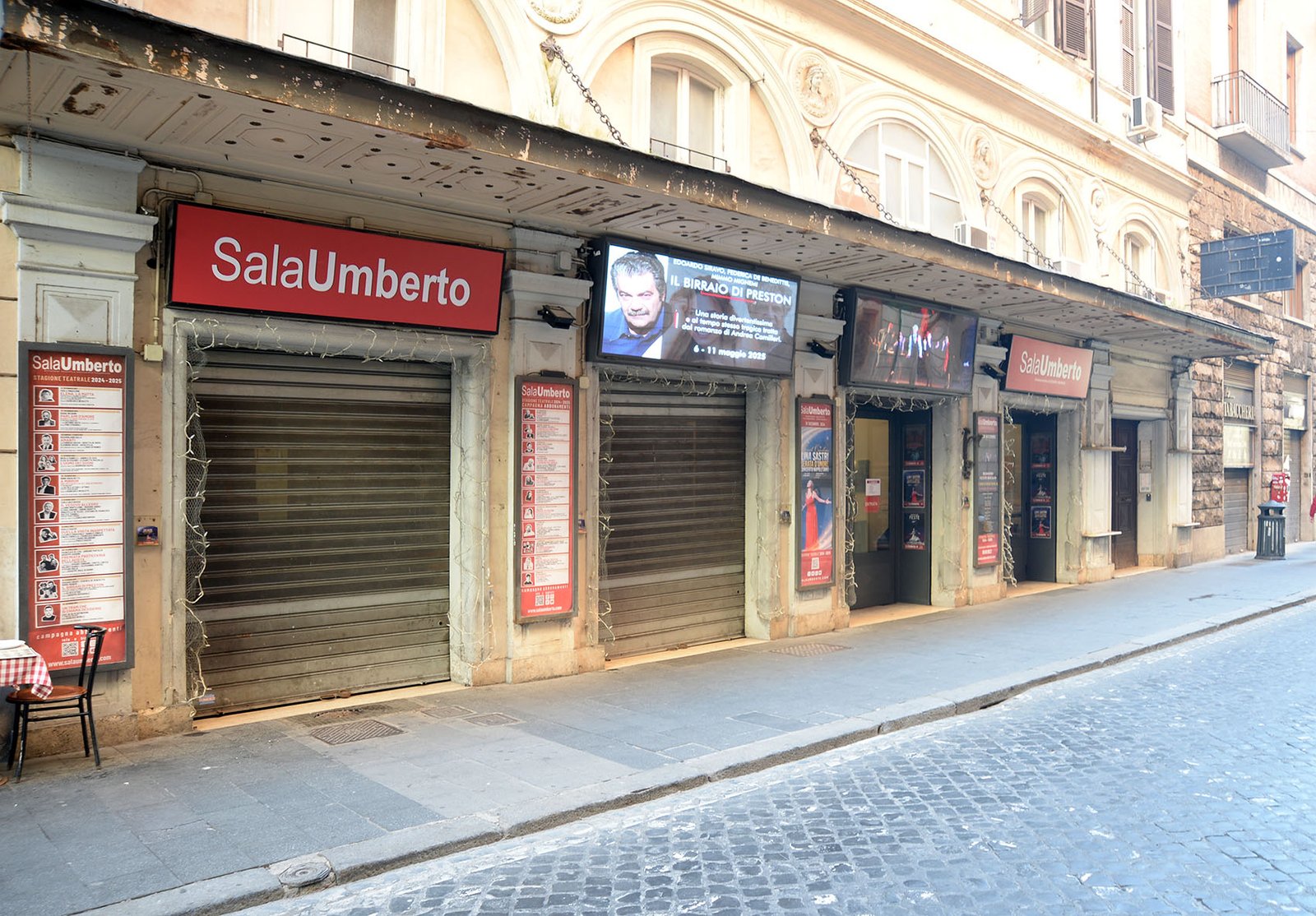
The Teatro Sala Umberto has 485 seats in a rectangular hall with a sloping orchestra and a balcony, born in 1882 on the ground floor of a building on Via della Mercede, it has been artistically directed by Alessandro Longobardi since 2002.
From 1882 to variety
The hall was commissioned by Andrea Busiri Vici and decorated by Alessandro Bazzani, it hosted concerts, operettas and comedies. In 1890 Giulio Podesti enlarged it to 650 seats, and in 1913 it became a movie house. In 1928 the Marino brothers, already owners of the Salone Margherita, brought it back to variety, with comedians, chanteuses and vedettes, and gave it the king's name.
From cinema to drama
Around 1930 cinema returned. In 1981 the hall reopened as a theater with the Ente teatrale italiano, in 1991 it went back to cinema, and since 2002 it has been steadily a theater, with drama, comedy, music and shows for kids.
A hall for theater with music
The intimate size is an advantage for a show like Captivo, which mixes spoken word and song: the voice reaches even the back rows without excessive amplification, and the band stays close to the audience.
Around the Sala Umberto: the Colonna district
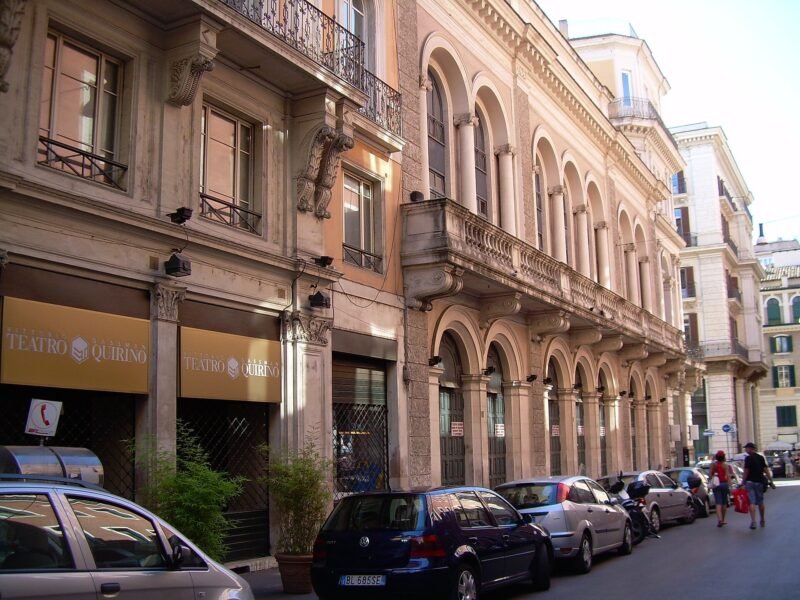
Via della Mercede is in the Colonna district, between the Trevi Fountain and Piazza di Spagna, a stone's throw from Via del Corso.
The nearby churches
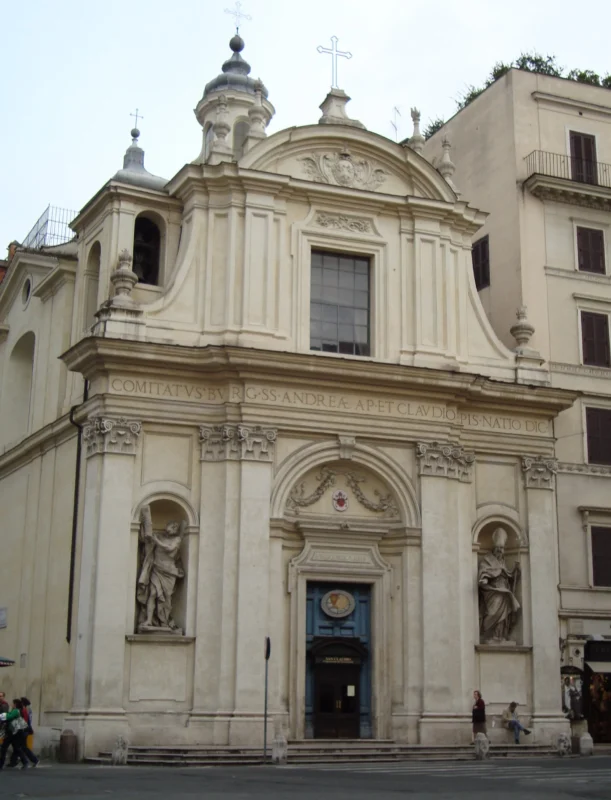
A few meters away is Piazza San Silvestro, with San Silvestro in Capite, a little higher, on Via di Capo le Case, Sant'Andrea delle Fratte, with Borromini's dome and bell tower and Bernini's angels.
Piazza Colonna and the Galleria
Along Via del Corso you reach Piazza Colonna, with the column of Marcus Aurelius and Palazzo Chigi, and the Galleria Alberto Sordi, useful on rainy evenings.
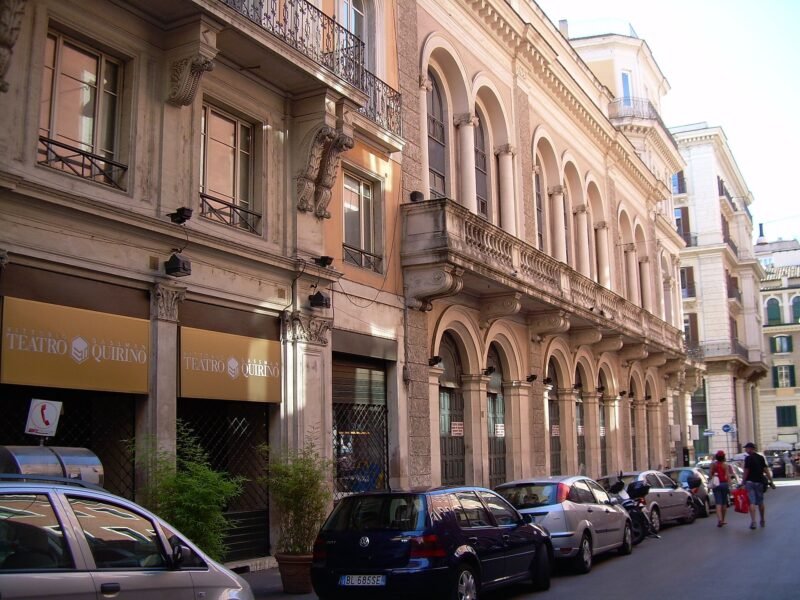
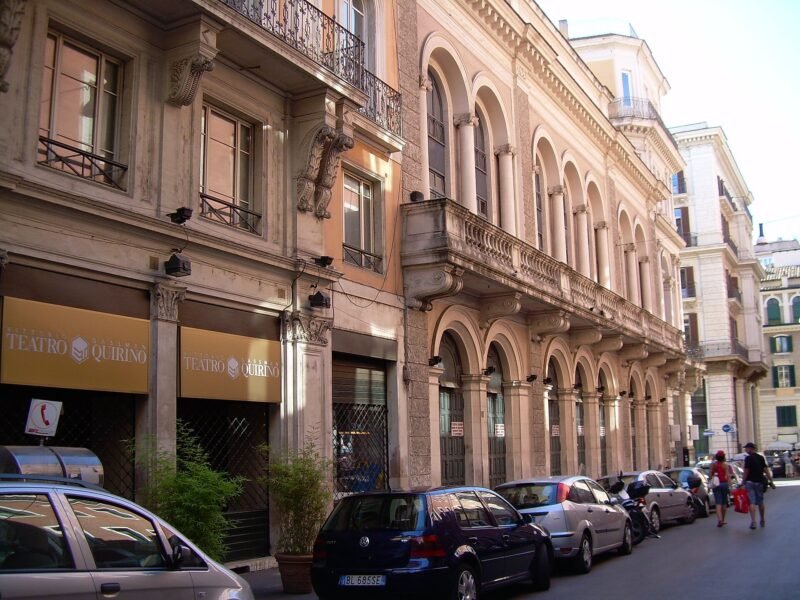
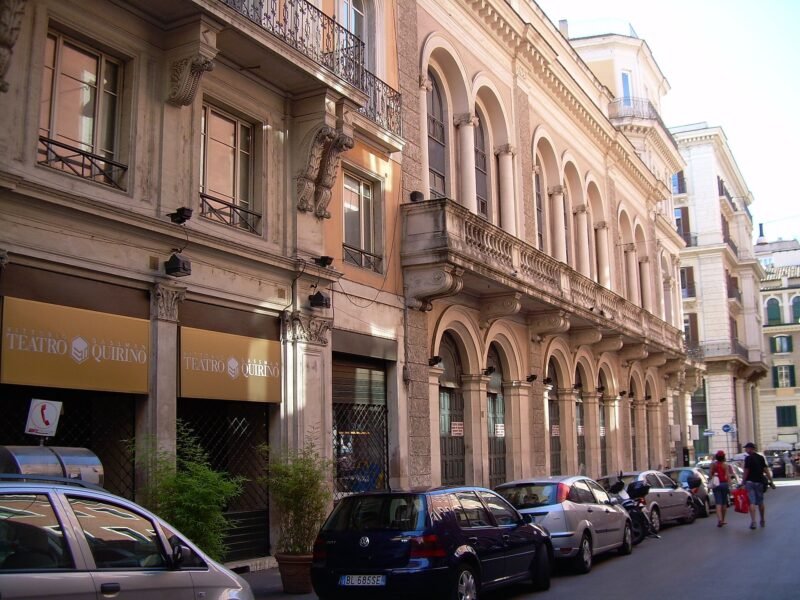
Teatro Quirino
A 10-minute walk away is the Teatro Quirino: those staying in Rome a few days can build a small theater week without taking any transport.
How to get to the Sala Umberto
The Sala Umberto is inside the historic center's ZTL (limited traffic zone): you get there by metro line A, getting off at Spagna or Barberini and continuing on foot for about 10 minutes.
From Spagna or Barberini
From Spagna you cross the square and take Via di Propaganda toward Sant'Andrea delle Fratte, from Barberini you go down Via del Tritone and bear right toward Via della Mercede. These are flat or gently downhill routes.
By bus
Many surface lines run along Via del Tritone and Via del Corso: for the exact route it is wise to use the ATAC calculator, which accounts for diversions in the center.
By car and taxi
The car should be left outside the ZTL, in the garages around Villa Borghese. After the evening performances a taxi is the most convenient solution, Piazza San Silvestro is an easy point to name.
How to plan the evening or the afternoon
With six evening and four afternoon performances, Captivo offers two ways of experiencing the show: in the evening after work, with dinner afterward, or on a weekend afternoon within a day in the center.
The evening performance
The 8:30 p.m. performances end in time for dinner on the streets around Via della Mercede. Wednesday the 20th starts at 7:30 p.m.: it is the right date for those who want to get home early or dine calmly afterward.
The afternoon performance
The 4:00 p.m. performances on Saturday and Sunday are convenient for those visiting Rome: a museum in the morning, a light lunch, theater, and on the way out a stroll between Trevi and Piazza di Spagna with the evening lights.
When to arrive
It is wise to be in the hall at least 20 minutes early: ticket pickup and the coat check take time, and in a show that opens with a statement of poetics, missing the beginning means missing the key.
Where to eat before or after Captivo
The Colonna district offers dining of every kind, it is wise to move a few streets away from the most touristy roads.
Trattorias
On the streets between Via della Mercede, Via del Pozzetto and Via della Vite there are Roman trattorias frequented at lunch by those who work in the buildings of the area: a good sign of quality.
Before the afternoon performance
For the 4:00 p.m. performances the bars and pizza-by-the-slice places on Via del Tritone work well. After the Saturday or Sunday show there is still time for an aperitivo in the center.
After the evening performance
At the end of the show many kitchens in the center are still open, for a glass, the wine bars between Via del Corso and Piazza di Spagna.
Accessibility, recommended age and practical information
For the Sala Umberto's accessibility for people with reduced mobility and for access to the balcony it is best to contact the theater's box office, at 06 6794753, before buying.
With teens
Captivo touches adult themes: imprisonment, violence, guilt, exclusion, with passages that the presentation itself calls hard and almost violent. It suits older teens, from 16, especially if they study Shakespeare or Neapolitan theater, not children.
The language
A good part of the texts is in Neapolitan. Those who do not speak it will still grasp the sense of the scenes, but arriving with an idea of the plot of The Merchant of Venice helps.
Mid-January in Rome: two weeks of theater
The two weeks of Captivo fall right after the holidays, when the Roman theater season resumes at full pace.
The climate
In January the evenings are cold and damp, for the weekend afternoon performances the center, after the show, is still lit by the last light of the day.
The other shows
Two days before the opening, on January 11, the Sala Umberto hosts Federico Mecozzi's concert on Franco Battiato. On the same dates as Captivo, January 13 to 24, at the Ambra Jovinelli La cosa giusta (The Right Thing) is on with Dino Abbrescia and Massimo De Lorenzo: two different ways of telling guilt, one tragic, the other in comedy.
A curiosity about Captivo by Gianfranco Gallo at Teatro Sala Umberto, January 13-24, 2027
The nicest curiosity is a circle that closes. Gianfranco Gallo made his theater debut in 1981 with Raffaele Viviani's Eden Teatro, in Roberto De Simone's company. 45 years later, Viviani returns to the center of his show, with the violent characters of Festa di Piedigrotta: this time not played with philological respect, but made to speak as if Stanley Kubrick were directing them in A Clockwork Orange. The young actor of De Simone's company has become the author who rereads Viviani with the eyes of 20th-century cinema.
The second curiosity concerns the word of the title. Captivus, in classical Latin, meant prisoner and nothing else. It was the Middle Ages, with the expression captivus diaboli, that turned the prisoner into a bad guy. It is a story of language that Gallo puts at the center of the show, and it explains his method well: start from a historical misunderstanding to pose a current question.
The third concerns the family. Gianfranco is the son of the singer Nunzio Gallo and the brother of the actor Massimiliano Gallo: in Captivo the two souls of the house, song and acting, share the same stage in the same person.
Something nobody tells you about Captivo by Gianfranco Gallo at Teatro Sala Umberto, January 13-24, 2027
What goes unsaid is that Captivo contains a clear political stance. In the official presentation Gallo writes that yesterday's persecuted Shylock takes on today the face and destiny of a Palestinian, demonstrating how history continually reverses the roles of suffering. It is not a marginal detail: it is one of the keys with which the author rereads The Merchant of Venice, and part of the audience may find it debatable. Anyone buying a ticket would do well to know it, to arrive ready for a theater that does not seek consensus.
The second thing concerns the genre. The Sala Umberto's program alternates comedy and drama, and Gallo's name, for many spectators, is tied to 1990s cabaret and television roles. Captivo is something else: an expressionist work, at times hard, in which the classic songs are stripped of their consoling melodies. Anyone expecting a light evening will change their mind in the first minutes.
The third thing is about the calendar: on Wednesday, January 20 the performance starts at 7:30 p.m., an hour earlier than the other evening shows. Anyone choosing that date should check the time carefully.
The advice I give you for visiting Captivo by Gianfranco Gallo at Teatro Sala Umberto, January 13-24, 2027
The advice is to reread, before going, the trial scenes in The Merchant of Venice. It is the heart of Shakespeare's text and the point from which Captivo's question starts, who is judging whom: arriving with those pages in mind lets you follow the Neapolitan translation without getting lost, and catch where Gallo reverses the roles.
Second piece of advice: listen again to Manu Chao's Clandestino and to a classic version of Voce 'e notte or Io te vurria vasà. The show strips these songs of their reassuring melodies: knowing the original is the only way to measure the distance.
Third, on seats: the poltronissima costs 34 euros, the poltrona B 22. In a hall of 485 seats the difference in visibility is not huge, but for a show that lives on words and expressions the front rows are worth the surcharge. Those on a tight budget should choose poltrona A, halfway.
Finally, in our view, it is best to choose one of the second-week performances: the show will already have taken the measure of the hall, and the first week's word of mouth can help you judge if it is the right evening.
Another well-known fact, yet rarely mentioned
It is well known that Gianfranco Gallo is a face of Italian fiction: Un posto al sole, Gomorra La serie, Luna Park, and in 2026 Raffaele Cutolo in Marco Bellocchio's Portobello. Less often remembered is that his career was born in learned musical theater, with Roberto De Simone, and that for years he was the author and artistic director of Neapolitan companies and theaters: the Sannazaro, where in 1998 he took over the artistic direction of the company, the Cilea, the Trianon, and since 2009 the Teatro dei Comici.
A second little-cited fact concerns Neapolitan history. In 2002 Gallo won the Episcopio Teatro Festival prize with I Cucuzzari, a text on the Neapolitan revolution of 1799, and in 2004 he brought to the Trianon the musical Napoli 1799: the same season of Parthenopean history, told twice in two different forms. He is an author who uses history to talk about the present, exactly as Captivo does with Shakespeare and Viviani.
The third concerns Rome: from 1995 to 1997 Gallo was a lead at the capital's Bal Tabarin. The return to a theater in the center like the Sala Umberto closes, 30 years later, another Roman circle.
The right photo to take at Captivo by Gianfranco Gallo at Teatro Sala Umberto, January 13-24, 2027
During the show no photographing or filming: in a work made of words, music and lights, a lit screen disturbs the performers and those seated around. The photo is taken before or after.
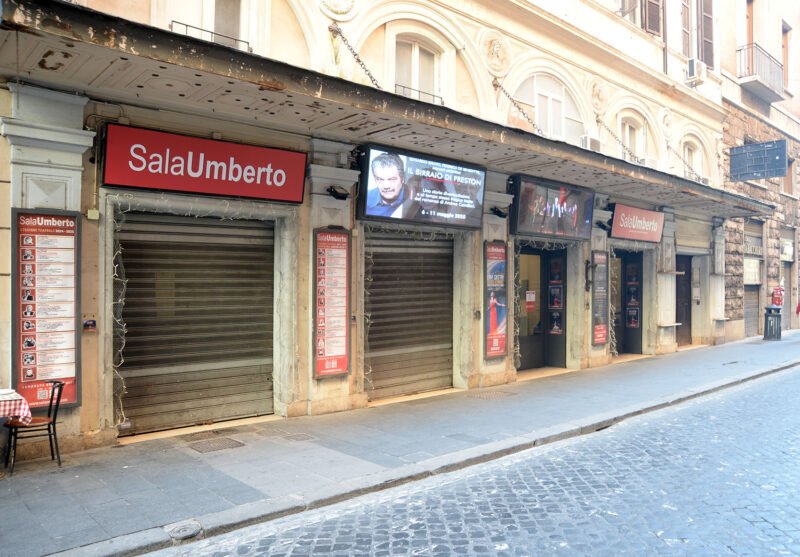
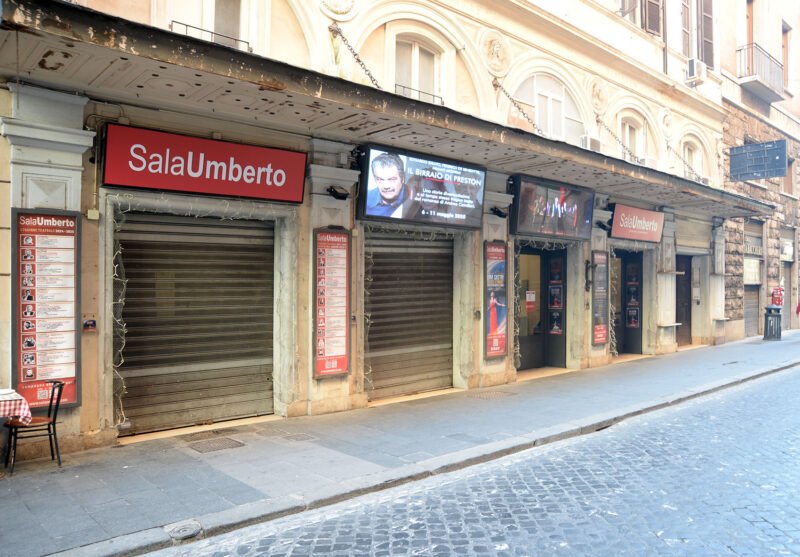
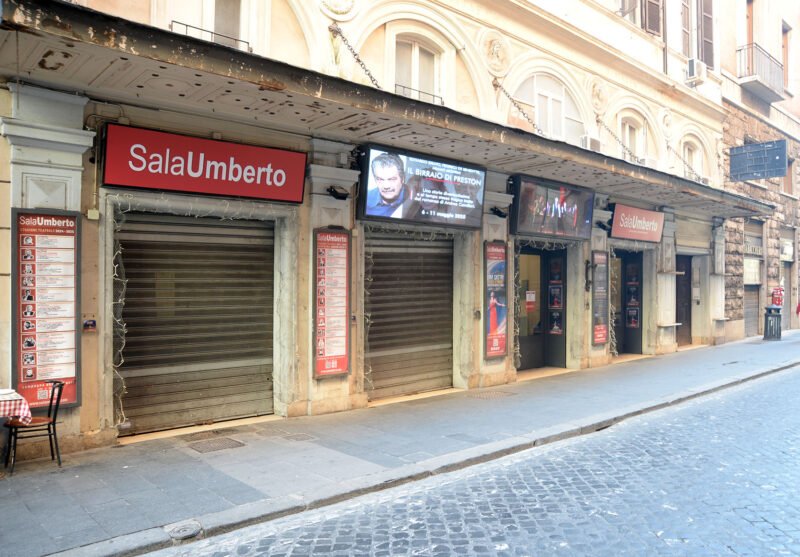
The best one is shot on Via della Mercede, from the opposite sidewalk, with the red sign of the Sala Umberto and the Captivo poster. Leave room above for the facade of the building that houses the theater, with its arched windows and medallions: it tells of a Rome of theaters hidden in ground floors, far from postcards.
If you go to an afternoon performance, there is still a bit of light on the way out: a few minutes away, the steps of Trinità dei Monti at a January sunset, with the sky darkening above the church, make a simple, successful photo. For those choosing the evening show, the Trevi Fountain lit after 10:30 p.m., when the crowd thins, remains the quintessential Roman image.
In the hall, before the start, a photo of the sloping orchestra and the balcony conveys the intimate size of a theater born in 1882, which saw operettas, cinema and variety before returning to drama.
Some important events that took place here in history
The Sala Umberto was born in 1882, on the ground floor of a building on Via della Mercede, at the wish of Andrea Busiri Vici, with interiors decorated by Alessandro Bazzani: concerts, operettas, comedies. In 1890 the architect Giulio Podesti enlarged it to 650 seats, perhaps in that period it was known as the Sala della Piccola Borsa. In 1913 cinema took it over, as it took over the halls of every Italian city.
In 1928 the Marino brothers, owners of the Salone Margherita, brought it back to the stage with variety, and named it after the king: Sala Umberto. For a couple of years comedians, chanteuses and vedettes performed there, around 1930 cinema returned, and it would stay for half a century.
In 1981 the hall reopened as a theater after a renovation, under the direction of the Ente teatrale italiano and a drama program. In 1991 it went back to cinema. Since 2002, with Alessandro Longobardi as artistic director, it has been steadily a theater. Captivo, with its mix of acting and song, brings back to Via della Mercede something of the Neapolitan variety of the 1920s, turned upside down into a tragic key: the Marino brothers' chanteuses sang to entertain, Gallo sings to unsettle.
Who has passed through Captivo by Gianfranco Gallo at Teatro Sala Umberto, January 13-24, 2027
Through the Sala Umberto passed, between the two wars, the variety artists hired by the Marino brothers: comedians, chanteuses, vedettes billed as international, the same world that animated the Salone Margherita. The sources do not preserve a reliable list of names, but the picture is of a Rome that went at night to Via della Mercede to hear songs.
Since 2002 the hall has mostly hosted drama, comedy and music. In the 2026-2027 season its stage hosts, among others, Francesco Montanari with Storia di un cinghiale (Story of a Wild Boar), Giulio Corso and Federica De Benedittis with Cime Tempestose (Wuthering Heights), Francesco De Gregori with his autumn concerts and, on January 11, Federico Mecozzi with his instrumental tribute to Franco Battiato.
From January 13 to 24, 2027 Gianfranco Gallo, Antonio Maiello, Luigi Esposito, Michele Visconte and Marco Castaldo pass through Via della Mercede. And, through the texts, William Shakespeare, Eduardo De Filippo, Raffaele Viviani, Salvatore Di Giacomo and Manu Chao, with the shadow of Stanley Kubrick over the hardest scene.
Frequently asked questions about Captivo at the Sala Umberto
When is Captivo on in Rome?
Gianfranco Gallo's Captivo is on at Teatro Sala Umberto from January 13 to 24, 2027. Evening performances are at 8:30 p.m., Wednesday the 20th at 7:30 p.m., Saturday the 16th, Sunday the 17th, Saturday the 23rd and Sunday the 24th at 4:00 p.m. There are no performances on Monday and Tuesday.
How much do tickets for Captivo cost?
Tickets for Captivo at the Sala Umberto cost 34 euros in poltronissima, 28 in poltrona A and 22 in poltrona B, according to the official page. They are bought on the theater's website or at the box office, also with the teacher's card.
What is Captivo about?
Captivo is a theater and music show that questions the border between jailer and prisoner, between victim and culprit, fusing The Merchant of Venice translated into Neapolitan, Manu Chao's Clandestino, Eduardo, Viviani and great Neapolitan songs.
Who is Gianfranco Gallo?
Gianfranco Gallo is a Neapolitan actor, singer and playwright born in 1961, the son of Nunzio Gallo. He debuted with Roberto De Simone in 1981, has directed companies in Naples and acted in films such as Fortapàsc and Pinocchio and in the series Gomorra and Portobello.
What does Panacronic Opera mean?
Panacronic Opera is the formula with which Gianfranco Gallo describes his way of building shows like Captivo: fusing different times, styles and languages in a single scenic instant, guided by one universal theme.
Is Captivo suitable for teens?
Captivo deals with adult themes such as imprisonment, violence and exclusion, with passages described as hard even by the official presentation. It suits teens from 16, especially if they study Shakespeare or Neapolitan theater, not children.
Where is Teatro Sala Umberto?
Teatro Sala Umberto is at Via della Mercede 50, in the Colonna district, between Piazza di Spagna and the Trevi Fountain. The most convenient stops are Spagna and Barberini on metro line A, the theater is in the ZTL.
The final advice on Captivo
Captivo is a show that asks to be taken seriously: Shakespeare in Neapolitan, Viviani read through Kubrick, the best-loved songs stripped of their consolation, and an explicit political stance. In our view it is best to choose it knowing what you are going to see, reread the trial in The Merchant of Venice, book in poltronissima or poltrona A for one of the second-week performances and, on the way out, walk to the Trevi Fountain to let the questions the show leaves open settle.
Article written by the editorial team of Tour Leader Pro, contact them for Private/Corporate/V.I.P. Tours and Experiences.
Planning a trip to Rome? The English-language guides to visiting the city are on ItalyPlanner.com.
Contact Information
Nearby
 Teatro Sala Umberto100 m
- San Claudio dei Borgognoni100 m
- San Silvestro in Capite100 m
- Sant’Andrea delle Fratte200 m
- Accademia Nazionale di San Luca200 m
- Istituto Centrale per la Grafica – Palazzo Poli200 m
Upcoming events nearby
- Federico Mecozzi, Traiettorie impercettibili at Teatro Sala Umberto, January 11, 2027100 m
- Piccole donne il musical with Antonella Morea at Teatro Sala Umberto, March 16 to 21, 2027100 m
- Don Giovanni with Simone Toni and Enzo Paci at Teatro Sala Umberto, February 2 to 14, 2027100 m
- Figli maschi by Centouno at Teatro Sala Umberto, February 16 to 28, 2027100 m

You might also like
- Il commissario Montalbano with Vincenzo Pirrotta at Teatro Quirino, February 16 to 28, 2027
- Il giuoco delle parti with Pippo Pattavina at Teatro Quirino, February 9 to 14, 2027
- Priscilla, La regina del deserto, the musical at Teatro Sistina, from February 10, 2027
- Rosso Malpelo with Enrico Guarneri at Teatro Quirino, February 2 to 7, 2027
- L’inconveniente with Milena Vukotic at Teatro Quirino, January 19 to 31, 2027
- Totalmente incompatibili, Nuzzo and Di Biase at Teatro Sistina, January 22-24, 2027