San Silvestro in Capite
In short. San Silvestro in Capite is the church that opens on the north side of Piazza di San Silvestro, one block from Via del Corso and just under 10 minutes on foot from the stairway of Piazza di Spagna.
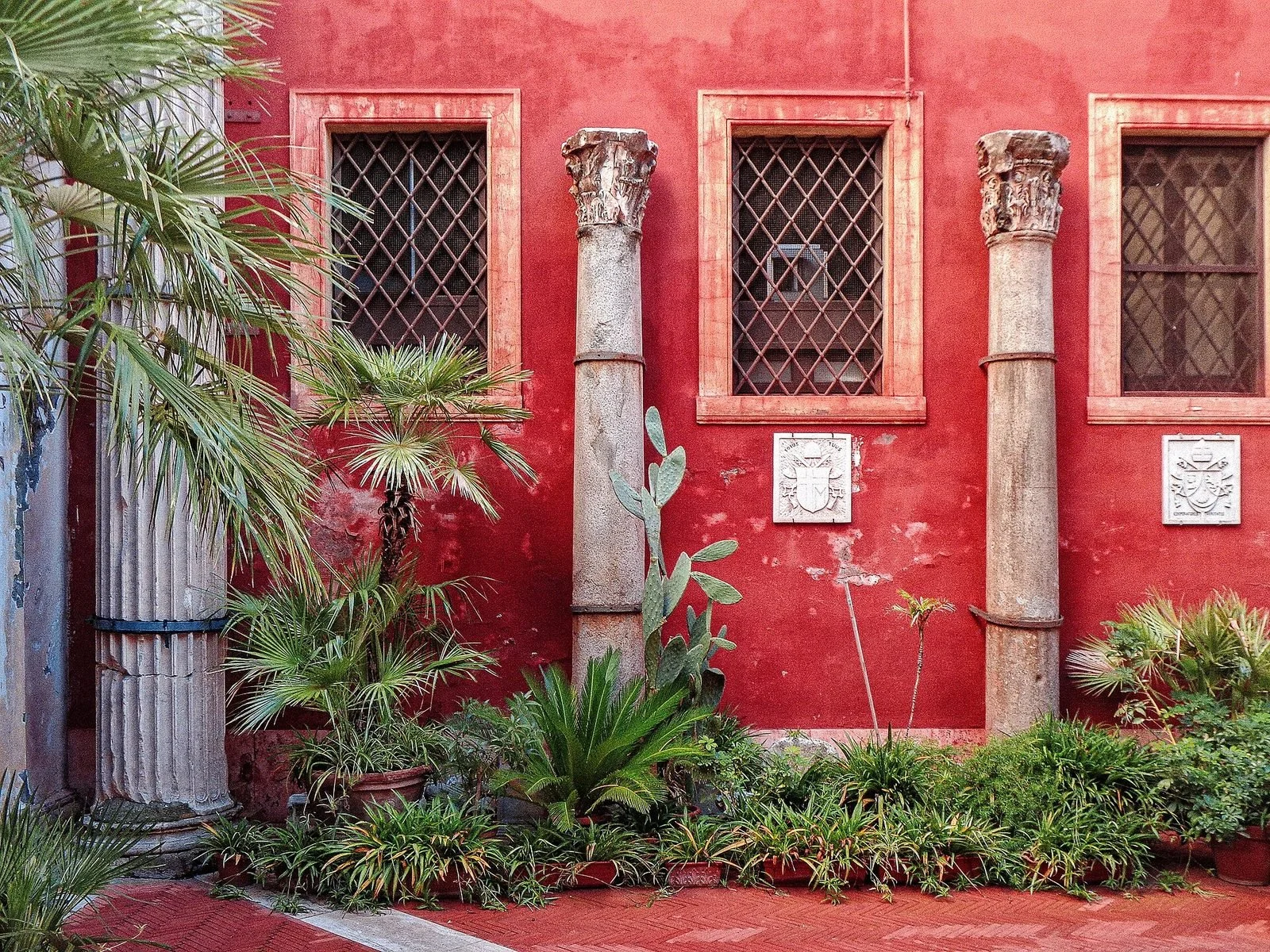
San Silvestro in Capite is the church that opens on the north side of Piazza di San Silvestro, one block from Via del Corso and just under 10 minutes on foot from the stairway of Piazza di Spagna. It is the national church of English Catholics in Rome, and this explains almost everything a visitor notices on entering: the notices in English, the schedule of Masses in English, the ease with which someone sits down at the back and stays there half an hour without photographing anything. The name, that “in Capite” that so many read and nobody explains, refers to the relic kept in a chapel to the left of the entrance, which tradition identifies as the head of Saint John the Baptist. It is a venerated relic, not an established historical fact, and on this point it's best to be clear right away, because almost all tourist pages tell it as if it were a fact. The building you see today is the result of a rebuilding between the 16th and 17th centuries on a much older layout, the monastery founded in the 8th century by Pope Paul I. In the entrance courtyard are set ancient fragments and reused medieval inscriptions, and it's the part of the visit most often walked through in a hurry without looking at it. The lines that follow tell what you really see here, how to get there, what is verified and what is instead tradition.
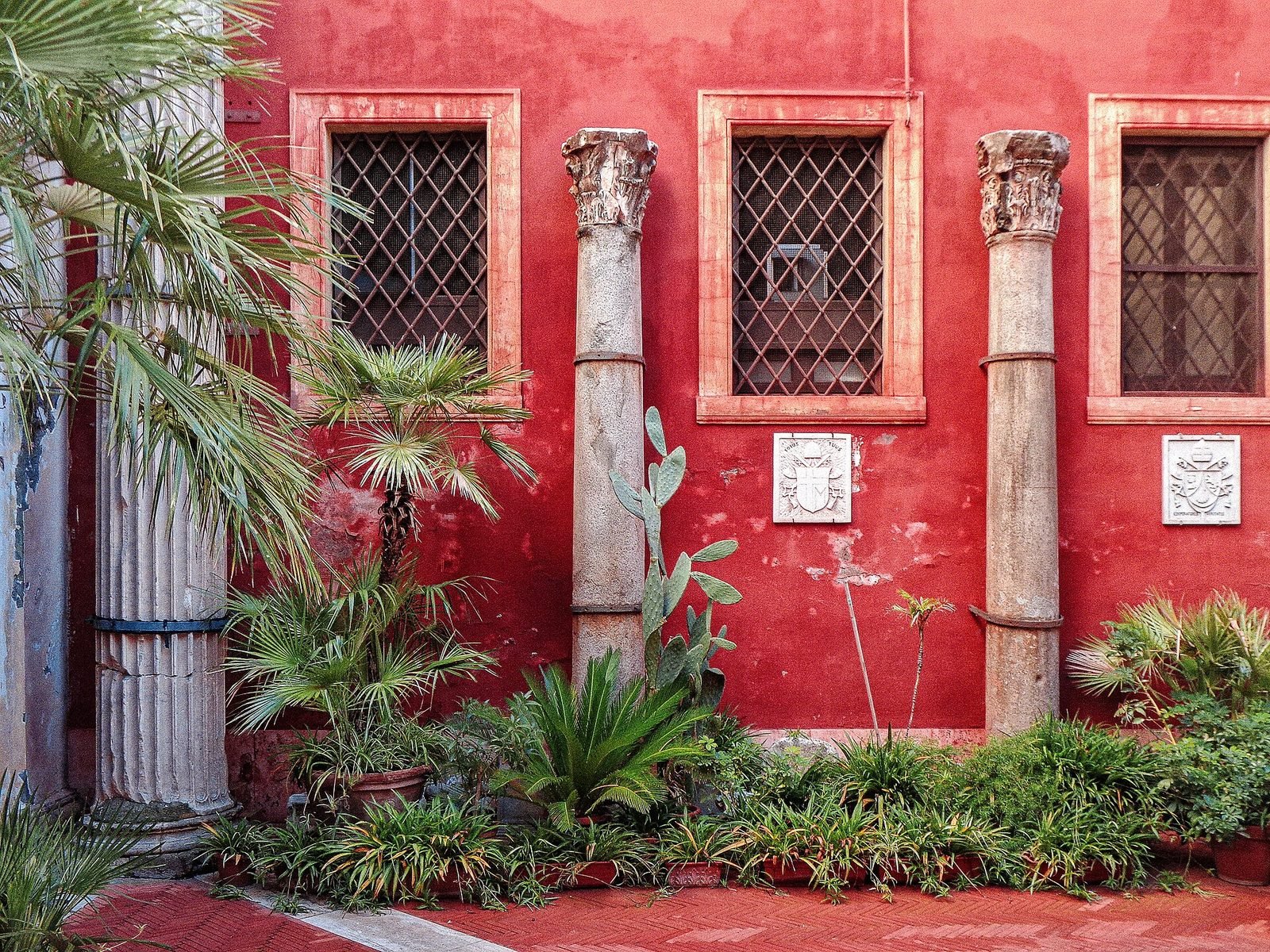
Where San Silvestro in Capite is and how to get there
The church faces Piazza di San Silvestro, in the Colonna district, in a rectangle bounded by Via del Tritone to the north, Via del Corso to the west and the quadrilateral of shops that slopes down toward Piazza Colonna. The address that appears on the official channels is Piazza di San Silvestro 17A, postal code 00187, and it's worth rechecking before setting a navigator, because in the same square you find the central post office, some office headquarters and more than one street number carrying letters.
On foot from the Tridente and the Corso
Coming down from Piazza del Popolo along Via del Corso you arrive in about 15 minutes: at Largo Chigi you turn left and the square opens after a few meters. From Piazza di Spagna the shortest route goes by Via Frattina or Via dei Due Macelli, 8 or 10 minutes at normal pace, and crosses the most commercial part of the center, that of shop windows and dense weekend crowds. From the Trevi Fountain it's a five-minute walk going up toward Via del Tritone. From the Pantheon you need about 10 crossing Piazza di Pietra and Via dei Bergamaschi.
By public transport
Piazza di San Silvestro is one of the most important surface terminals of the historic center of Rome: many bus lines start and arrive here, linking the Tridente with Termini, the Vatican, Trastevere and the neighborhoods north of the center. The line numbers change fairly often, and for that reason we don't report them: it's best to check them on the spot on the app or the website of Rome's transport company, where temporary detours for work sites and events are flagged in real time. The center of Rome has quite a few detours, and in this square you hear about every one of them.
The nearest metro stations are Spagna and Barberini, both on Line A, about 10 minutes on foot each. If you're coming from Termini you can take Line A toward Battistini and get off at Barberini, or board one of the buses that go down toward the center: depending on traffic the times are equivalent, but the metro remains the most predictable choice at rush hour. For a broader picture on tickets, time validity and interchange points we refer you to our page on getting around Rome, which gathers the practical information in one place.
By car: the short answer is no
The area is inside the limited traffic zone of the historic center, active in time bands that cover a large part of the day on weekdays and evening hours on weekends too. There is no parking in the square. If you come from outside Rome you're much better off leaving the car in a park-and-ride connected to the metro and finishing the trip on Line A. Trying to enter this quadrilateral by car is the quickest way to turn a 40-minute visit into a lost afternoon.
Finding your way in the square without picking the wrong door
Anyone arriving for the first time often looks for an isolated monumental facade and doesn't find it, because the church is set into the continuous front of the square, next to the big post office building. The surest landmark is the Romanesque brick bell tower, visible from afar above the rooftops: if you can see that, the church is right below it. The second landmark is the main door leading to the porticoed courtyard, which comes before the nave and from the square looks like the entrance to any ordinary courtyard. That's exactly what it is: you go in from there.
What you see at San Silvestro in Capite, in visiting order
The visit to San Silvestro in Capite takes place in three distinct spaces: the porticoed courtyard with the reused marbles, the Baroque single-nave hall with side chapels, and the relic chapel to the left of the entrance. Overall 20 minutes is enough for an attentive visit, 40 if you read some of the inscriptions set into the portico. Entry is free.
The porticoed courtyard and the walled-in marbles
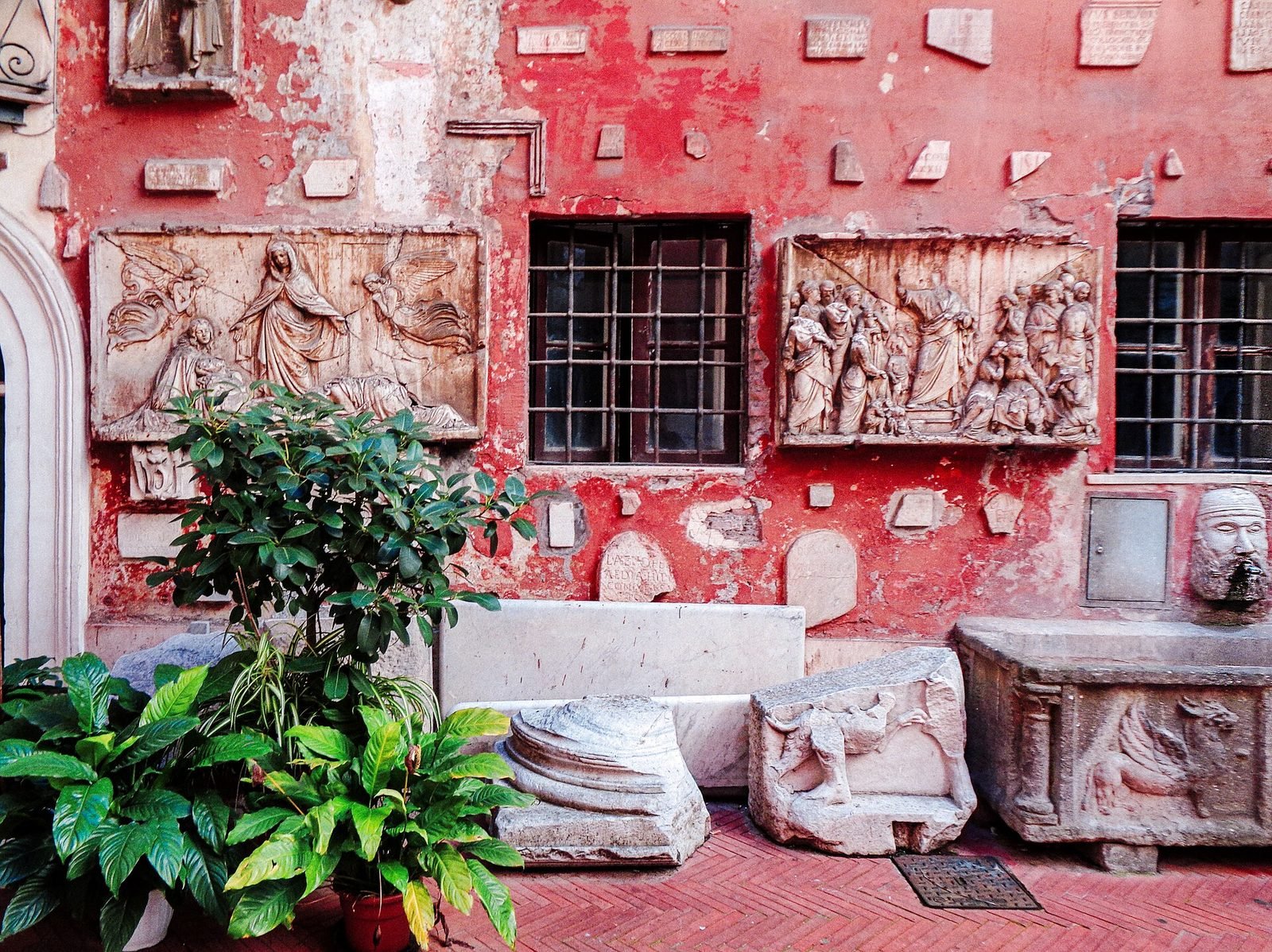
The most interesting part for anyone with an archaeological eye is the first, and almost everyone crosses it looking straight ahead. In the walls of the courtyard that precedes the church are set fragments from the Roman era and medieval inscriptions recovered in works of past centuries: pieces of cornices, inscribed slabs, sculptural fragments that have no relationship with one another except having all ended up here. It's a collection on a wall, in the literal sense: reused materials fixed to the wall as commonly happened in Roman churches, where recovering ancient marbles was ordinary practice and not an antiquarian gesture.
Among these inscriptions, the one that deserves the most attention concerns the relics transferred from the catacombs to within the city walls in the early Middle Ages. The subject is anything but secondary in the history of Rome: between the 8th and 9th centuries the popes organized a systematic transfer of holy bodies from the suburban cemeteries, by then exposed and hard to defend, to the city churches. If you want to understand what those cemeteries of departure were like, you'll find the picture on our page on the catacombs of Rome and on the catacombs of Priscilla, one of the complexes from which the most material was brought inside the walls.
The Romanesque bell tower
The brick bell tower, with several tiers of mullioned windows, belongs to the medieval phase of the complex and is one of the surviving Romanesque bell towers of central Rome. The current dating places it between the end of the 12th and the beginning of the 13th century, that is in the period when most bell towers of this type were built in Rome. The sources differ on the precise year and on which pontificate to credit with building it: anyone writing an essay has to take a position, anyone visiting a church can settle for the century, which is certain.
The Baroque hall
Inside, the church has a single nave with side chapels, a layout typical of the post-Tridentine reform, designed to concentrate attention on the high altar and on preaching. The decoration belongs mostly to the 17th and 18th centuries: stuccoes, gilding, canvases and frescoes covering the vault and the apse. The attributions of the individual paintings vary from one source to another, and visitors will do well to read the labels on site rather than trust a list found online, ours included: for churches of this size the literature is less solid than it seems and guidebooks have been copying each other for generations.
What can be said without a margin of doubt is the overall effect, which is that of a mid-sized Baroque Roman church, bright, with continuous decoration that leaves no bare surfaces. Anyone coming from San Marcello or the Minerva finds the same grammar here, applied to a more intimate space. For the comparison our pages on San Marcello al Corso and on the Basilica of Santa Maria sopra Minerva are well worth a look, since in the same quarter they show two different solutions to the same problem.
The relic chapel
To the left of the entrance opens the chapel where the relic that gives the church its name is kept. The case is protected and visibility depends on the lighting at the moment and on if the chapel is open or cordoned off, a condition that changes over the year. It's a devotional chapel, furnished as such, with no scenographic apparatus. If you enter during a service, avoid walking through it with a camera in hand.
The national church of English Catholics in Rome
San Silvestro in Capite has been, since 1890, the national church of the Catholics of England and Wales in Rome, entrusted to the Pallottine Fathers. It's the fact that explains the atmosphere of the building better than any architectural description: the language of the notices, the schedule of services, the kind of public that attends the church on weekdays.
What “national church” means in Rome
In Rome the national churches are buildings historically assigned to the Catholic communities of a given country or a given language, who find there services in their own language, spiritual assistance and a point of reference for residents, students and pilgrims. It's a system that has worked in Rome for centuries and has produced some of the most visited churches in the city. The French have San Luigi dei Francesi, the Florentines the Basilica of San Giovanni Battista dei Fiorentini, and so on for dozens of communities. The English have this one.
The practical consequence for visitors is simple. In a national church the liturgical service takes precedence over tourist use more sharply than elsewhere, because the community that uses it is not a passing flow but a group of people who come back every week. Walking in during a Mass and wandering among the pews taking photographs is, here, even more out of place than usual.
Masses and services in English
The church regularly celebrates in English, and it is one of the few points in the historic center where an English-speaking Catholic is certain to find their own language. The times of the services change with the liturgical calendar, the season and the community's needs: we don't give them here and we advise reading them on the church's official channels or on the notice posted on site before planning a visit. A wrong time copied from a guide three years old costs the trip to many more people than you'd think.
Not to be confused with the Venerable English College
The Venerable English College, the seminary for candidates to the priesthood from England and Wales, is a different institution and is based on Via di Monserrato, on the other side of the center from Piazza di San Silvestro. The two get mixed up all the time. The college is a house of formation with a very long history, which cannot be freely visited. San Silvestro is a church open to the public that works as a reference point for the English-speaking Catholic community in the city. Anyone looking for one and finding the other has got the wrong neighborhood, not just the wrong address.
The cardinal title and the English cardinals
San Silvestro in Capite is the seat of a cardinal title, that is one of the churches of Rome nominally assigned to the world's cardinals as a sign of their bond with the Roman clergy. During the 20th century the title was held by several archbishops of Westminster, the Catholic metropolitan see of England, starting with Herbert Vaughan in the 1890s and continuing with a series of his successors, up to Basil Hume late in the 20th century.
A clarification is needed here, because a simplified version often circulates online. The assignment of San Silvestro in Capite to the archbishops of Westminster is a frequent custom, never an automatic rule. Some cardinals of Westminster received different titles. Anyone who needs the exact data for a single cardinal should check the official yearbooks of the Holy See, which give each one's title with the date of conferral.
Why it's called “in Capite”: the relic and its rival claims
The name “in Capite” is tied by tradition to the relic of the head of Saint John the Baptist, kept in the church and venerated in a chapel to the left of the entrance. It's the current explanation, repeated for centuries, and it needs to be stated for what it is: a tradition, not a documented historical fact.
A venerated relic, not an established fact
The distinction matters, and we make it explicit because almost nobody does. That the church has long kept a relic identified as the head of the Baptist is a verifiable fact, documented by devotion, by the sources and by liturgical use. That this relic really is the head of John the Baptist is a claim of a different order, which no historical analysis can support and which the Church itself does not present as a truth of faith. Relics are venerated, not proven.
The correct way to tell it, for us, is this: here is kept and venerated a relic that tradition identifies with the head of Saint John the Baptist. Period. Without mockery, because the devotion of millions of people over 12 centuries is a first-rate historical fact even for those who don't share it, and without passing off as established what isn't established.
The other claims in Europe
Rome is not the only place that keeps a relic identified as the head of the Baptist. The cathedral of Amiens, in France, holds one that reached the West in the context of the Fourth Crusade and the sack of Constantinople in 1204, and it is the best-known claim after the Roman one. Other traditions link the head of the Baptist to the great mosque of Damascus, built on a previous Christian building, and to several minor shrines scattered across France, Germany and the Mediterranean area.
The other possible etymology
There is also a toponymic reading of the name, which links it not to the relic but to the place: “caput” as extremity, head of an urban area, referring to the northern sector of the ancient Campus Martius in which the church stands. Others have proposed a reference to the head of an ancient statue found in the area.
The sources differ and none of the three explanations is conclusively proven. The first, the relic, is by far the most widespread and the oldest in use. The others remain scholarly hypotheses. We report all three so the reader knows the question is open, and because a site that presents an uncertain etymology as certain does a small but real harm.
From the 8th-century monastery to the Baroque church
The complex began in the 8th century as a monastery founded by Pope Paul I, who led the Church from 757 to 767, on a property tied to his family in the northern part of the Campus Martius. The present church is the result of a complete rebuilding carried out between the end of the 16th century and the beginning of the 17th, which erased almost every visible trace of the early medieval layout except the bell tower and the materials set into the portico.
Paul I and the transfer of the relics
The foundation falls within a broader operation that marks the Rome of the 8th century: the transfer of the martyrs' bodies from the suburban catacombs to the churches inside the walls. The cemeteries outside the gates had been plundered and abandoned, the population had shrunk, the defense of the suburbs had become impracticable. The popes responded by bringing inside the walls the devotional heritage that until then lay outside, and by building new churches to receive it.
Paul I was one of the protagonists of this season, and the monastery of San Silvestro was also born with this function: to keep transferred relics. The inscriptions set into the portico, partly still legible, belong to this context and are the most direct document the visitor has before their eyes. Anyone who wants to see the other end of that movement, that is the places from which those relics departed, will find the best-preserved examples at the catacombs of San Callisto and the catacombs of Domitilla.
The question of the Temple of the Sun
A well-established scholarly tradition links the area of the church to the remains of the temple dedicated to the Sun by Aurelian in the 3rd century, which stood in this sector of the Campus Martius. Materials from that complex, according to this reading, would have been reused in the medieval buildings of the area.
The exact location of the Templum Solis and the extent of its remains remain debated among archaeologists, with different proposals that shift the complex by a few tens of meters or shrink its extent. What is certain is that the area was densely built up in the imperial age and that ancient marbles from these constructions ended up, as everywhere in Rome, inside later buildings. Attributing every fragment of the portico to a specific temple is a logical leap that the sources do not authorize.
The monks, the Poor Clares, the monastery
Over the centuries the monastery passed through different phases and communities, Benedictine in its earliest phases, and in the medieval period it was assigned to a women's community of Poor Clares, who held it for a very long time, until the suppression of religious bodies that followed Italian unification. On the precise dates of the individual changes the sources don't always agree, and anyone who needs an exact chronology has to turn to the specialist literature on the history of religious orders in Rome rather than to general guidebooks.
What can still be seen today, though, is very clear: the bulk of the former convent takes up an entire block and, after the suppression, became the seat of the postal administration. The large building that closes the square next to the church is, in its frame, that convent. A cloistered community and a post office in the same walled shell: the urban history of Rome is made of these overlaps, and here it can be read with the naked eye.
The rebuilding between the 16th and 17th centuries
The church was rebuilt in modern forms straddling the two centuries, in a building campaign that the literature links to Francesco Capriani da Volterra and, for the completion phase, to Carlo Maderno, the architect who in those same years was working on the major building sites of the Rome of the popes. The facade was finished in the early 18th century, and the current attribution assigns it to Domenico de Rossi.
A curiosity about San Silvestro in Capite
The most solid curiosity concerns the neighbor: the national church of English Catholics in Rome shares a wall with the city's central post office, because both occupy parts of the same ancient monastery. Anyone who drops a letter in the mailbox in Piazza di San Silvestro does it inside the perimeter of an 8th-century convent.
The detail almost nobody notices on entering
The passage from the square into the church isn't direct. You cross a courtyard, and that courtyard is what remains of the monastic logic of the complex: a filter between the street and the sacred space. In most Roman churches in the center this filter was eliminated in the Baroque remodelings, which brought the facade straight onto the street. Here it survived, and with it the physical sensation of entering an enclosure and not a building.
Something nobody tells you about San Silvestro in Capite
What nobody writes is that the relic of the Baptist's head, the reason the church has this name and is famous, is almost always seen badly or not at all. The chapel may be closed, poorly lit or cordoned off, and the pilgrim who arrives expecting a clearly visible display is often disappointed.
Why it happens
There is no mystery. A relic kept in a case in a side chapel of a parish church is not a museum object with scenographic lighting and an explanatory sign. It is an object of worship in a building of worship, run by a community with ordinary resources. Visual access depends on the time of day, on the presence of services, on the state of conservation and on choices by the parish that change over time.
What to do if you come specifically for it
The operational advice is not to organize a trip around this single sight. Anyone who really cares should do one simple thing: ask in the sacristy, politely, during ordinary opening hours and outside services. In many Roman churches a courteous request gets much more than any online booking, and in a community as small as this one the difference shows. Anyone who instead expects a route marked with panels and arrows is looking for something that doesn't exist here.
The advice I give you for visiting San Silvestro in Capite
The operational advice is one: visit San Silvestro in Capite on a weekday, in the middle of the morning, and fit it into a walking route that includes the other churches of the quarter instead of reaching it as an isolated destination. 20 minutes here make sense inside a two-hour itinerary, much less as a trip of their own.
The right time
Roman churches of this size often close in the middle of the afternoon and reopen toward evening. The hours of San Silvestro in Capite are variable and change with the liturgical calendar: we don't give them and we don't estimate them, because an invented time is worse than no time. They need to be read on the church's official channels or on the notice posted at the entrance. The practical rule that holds everywhere in Rome remains this: if you have only one chance, go in the morning.
The route we recommend
An itinerary that works starts from Piazza del Popolo and the church of Santa Maria del Popolo, goes down Via del Corso with a stop at the Basilica of San Lorenzo in Lucina, detours to San Silvestro, picks up the Corso again toward Piazza Colonna with the Column of Marcus Aurelius, and finishes at Santa Maria in Via Lata and San Marcello al Corso. It's a little over 2 kilometers in all, all flat, with five indoor stops. In summer it is one of the few sequences in the center that lets you stay in the shade almost all the time.
How much time you really need
20 minutes for a normal visit, 40 for anyone reading the portico inscriptions, an hour for anyone attending a service. If you have only an afternoon in Rome and have to choose between this church and the Pantheon, choose the Pantheon without hesitation: our verdict is that San Silvestro is a second-round stop, excellent for people returning to Rome or who have already seen the major monuments, not very sensible for someone on a first two-day visit.
Another well-known fact, yet rarely mentioned
The fact is this: Piazza di San Silvestro is one of the most important surface public transport hubs of the historic center of Rome, and the church that gives it its name is walked past every day by thousands of people who don't know they are passing in front of an 8th-century foundation. The square is known as a stop, not as a monument.
The square as the city's waiting room
For generations of Romans Piazza di San Silvestro has meant one thing only: the place where you catch the bus. It's a case of a hollowed-out place name, in which the name of a church becomes the label of a service. It happens in many cities, and in Rome it happens often: names of saints that survive in everyday use as indications of a stop, a terminal, a neighborhood, without almost anyone still linking the name to the building.
The right photo to take at San Silvestro in Capite
The right photo at San Silvestro in Capite isn't the interior, which is difficult and unrewarding without a tripod, but the porticoed courtyard with the ancient marbles set into the walls, taken from the threshold, with the light coming in from the opening toward the square. It's the only framing that tells the two ages of the building together.
Light and hours
The courtyard is a space closed on four sides with overhead and side natural light, so it comes out best in the middle hours, when the sun is high and the light falls in instead of cutting across. In the low hours of morning and late afternoon the contrast between the lit part and the walls in shadow becomes hard to handle without photo editing.
The bell tower from the square
The second photo worth taking is the Romanesque bell tower, and it has to be taken from the square, moving to the opposite side to gain distance. The problem is the context: around it are modern buildings, signs, signpost poles, parked vehicles. It's best to tilt the framing up and cut out the street level, keeping only the tower against the sky. With an overcast sky the brick loses and the photo isn't worth it.
What not to photograph
Inside the church, during services, you don't photograph. It isn't a rule written everywhere, it's common sense applied to a community that is praying. The relic chapel in particular should be left alone when people are praying: a case photographed over the shoulder of someone praying is a photograph that serves nobody. For anyone looking for photogenic interiors of Roman churches without this kind of constraint there are better options, from the church of Sant’Ignazio di Loyola with its painted vault to the Church of the Gesù.
Some important events that happened here in history
The history of this complex rests on five documented moments: the monastic foundation of the 8th century under Pope Paul I, the transfer of the relics from the catacombs, the long medieval and female monastic phase, the Baroque rebuilding between the 16th and 17th centuries, and the assignment to English Catholics in 1890.
8th century: the foundation
Paul I, pontiff from 757 to 767, founds the monastery on land tied to his family in the northern sector of the Campus Martius. The foundation fits into the program of transferring the martyrs' bodies inside the walls, which characterizes the religious and urban policy of the popes of that century.
Middle Ages: the monastery and the bell tower
Between the 12th and 13th centuries the complex receives the brick bell tower still seen today, in the season when Rome fills with Romanesque bell towers. The monastery then passes through the centuries moving to a community of Poor Clares, who hold it for a very long time. On the exact dates of the changes of ownership and rule the sources don't agree, and we flag it instead of picking one at random.
Between the 16th and 17th centuries: the rebuilding
The medieval church is demolished and rebuilt in modern forms in the building campaign that the literature links to Francesco Capriani da Volterra and Carlo Maderno. It is the same change that in those years affected dozens of Roman churches, in the climate of reorganization of sacred spaces that followed the Council of Trent. We also talk about the general picture of that season on the pages on Borromini in Rome and Bernini in Rome, which tell of the next phase, that of mature Baroque.
1873 and thereabouts: the convent becomes a post office
After the annexation of Rome to the Kingdom of Italy and the suppression of religious bodies, the large convent is expropriated and assigned to the offices of the postal administration. It's the change that definitively transforms the square and explains the bulk of the building next to the church.
1890: the church of the English
The church is assigned to the Catholics of England and Wales and entrusted to the Pallottine Fathers. From that moment San Silvestro in Capite takes on the function it has today, with services in English and the role of reference point for Rome's English-speaking Catholic community, made up of residents, students, diplomatic staff and pilgrims.
The 20th century and today
During the 20th century the cardinal title tied to the church is conferred on several archbishops of Westminster, strengthening the symbolic link with the Catholic Church of England. In recent decades works on the square have changed its layout, with fewer vehicles stopping and more pedestrian space.
Who has passed through San Silvestro in Capite
Through San Silvestro in Capite have passed Pope Paul I as founder in the 8th century, generations of cloistered nuns up to the 19th century, the architects of the Baroque building site, and since 1890 the English Catholic community of Rome with its titular cardinals, starting with Herbert Vaughan.
Paul I
The pontiff who founded the monastery belonged to a Roman family of the aristocracy of the time and governed in a very delicate period for the papacy, between Lombard pressure and the Frankish alliance. The foundation of a monastery on family property, with the function of keeping relics, is a political gesture as well as a religious one, and has to be read in that frame.
The Poor Clares
The women's community that held the monastery for centuries is the most continuous human presence in the building's history, and also the least documented in tourist accounts, which as a rule skip it entirely. An urban cloister in the center of Rome, a few tens of meters from the city's most commercial street, is a historical fact that says a lot about how the social fabric of the district worked.
The architects
Francesco Capriani da Volterra and Carlo Maderno are the names the literature associates with the rebuilding site, with Domenico de Rossi for the completion of the facade in the early 18th century. Maderno is the architect who in the same decades worked on the papal building sites of the largest scale, and his presence here, if confirmed, places the church inside the highest professional circle of the Rome of the time.
The cardinals of Westminster
Herbert Vaughan, archbishop of Westminster, received the title of San Silvestro in Capite at the end of the 19th century, and in the 20th century several of his successors in the same see received it in turn, up to Basil Hume. It's the link that has made this church a reference point for British Catholics traveling in Rome. We repeat the clarification made above: the custom is frequent but not automatic, and individual cases need to be checked against the pontifical yearbooks.
English-speaking travelers
The relationship between Rome and the Anglo-Saxon world was not born in 1890 and does not pass only through this church. The center keeps traces of it in different places, from the Keats Shelley House at the foot of the Trinità dei Monti stairway to the Non-Catholic Cemetery of Rome in Testaccio, where many Protestant and Orthodox foreigners who died in the city are buried. San Silvestro is the Catholic chapter of that same story, and it reads better if you hold the three places together.
Eating around Piazza di San Silvestro: how to choose
Piazza di San Silvestro is in the middle of the most trodden shopping area of central Rome, between Via del Corso, Via del Tritone and the quadrilateral of shops, and this means the density of venues built on tourist traffic is among the highest in the city. We don't name names, as an editorial choice: a list of signs gets old in a few months and teaches nothing. Instead we give the criteria, which stay valid.
The five signs that point to a trap
The first sign is the lady rolling fresh pasta in the window or at a little table in the street. It's a staged lure, set up for passersby: where they really cook, pasta is made inside, not on the sidewalk. The second is the menu with photographs of the dishes, in several languages, displayed at the entrance: it's for people who will never come back, and someone who will never come back isn't a customer to satisfy.
The third sign is the barker, the person who stops passersby and invites them to sit. No kitchen that works well needs someone to pull people in. The fourth is nonstop hours from morning to night with no kitchen break: a real kitchen has shifts, rests and a pause between lunch and dinner, and a place that serves carbonara at five in the afternoon is reheating something.
The fifth sign concerns the position: places set in front of the most photographed monuments tend to adjust the price to the tourist in front of them. The symptoms are always the same: menu items with no price, cover charge and service not clearly declared, different price lists between the outside table and the room. It also happens a few steps from the Trevi Fountain, which is five minutes from here and is one of the points in the city where the phenomenon is best observed.
The chains in the center
In the quarter between the Corso and Via del Tritone there are by now several restaurant chains with the same sign repeated in several spots around the city, an identical menu everywhere and queues managed with ticket numbers. We don't name them and we don't recommend them. The useful observation is another one, and anyone who lives in Rome can make it: Romans don't go to them, except for reasons of timing or because they happened to land there. A place that in a city with this food tradition has no local customers is selling something other than what it declares.
The simplest test there is
Before sitting down, look at who is sitting and in what language they order. If the tables hold people speaking Italian with a Roman accent, who know the waiter, who order without looking at the menu, the place probably holds up. If instead all the tables are occupied by people with backpacks, maps and a translator app open, the place lives off passing trade and quality is not its main concern. It's a crude test and it works almost always, better than any online rating.
Daniele Dezi's list
For those who want a reference anyway, there is a personal collection of Roman addresses curated by Daniele Dezi and published on Google Maps: you can consult it here, in Daniele Dezi's personal list on Google Maps. It's a personal selection, not sponsored and not advertising, and should be taken for what it is: the notebook of someone who lives and works in this city, not a ranking. Anyone who wants a broader picture of Roman eating habits will also find something on our pages about where to eat in Rome, the markets of Rome and the historic cafés and shops of Rome.
A note on coffee
In this area the ratio between the price at the counter and the price at the table is among the most lopsided in the city, and the difference is entirely legitimate as long as it is posted. The price list must be displayed: if you don't see it, ask before ordering. For anyone who wants to sit in a historic venue, accepting the cost, the Antico Caffè Greco on Via dei Condotti is close by, which is a conscious choice and not a bargain.
Practical information for the visit
Entry to San Silvestro in Capite is free and no booking is required for an ordinary visit. Opening hours are variable and tied to the schedule of services: they need checking on the church's official channels before you leave.
Hours and access
We don't publish hours for this church, and it's a deliberate choice. Roman churches with an active parish community change their hours for special services, feasts, liturgical periods and the clergy's shifts, and a figure copied from an old source produces wasted trips. The notice posted at the entrance remains the most reliable source of all, followed by the parish's official channels. If you arrive and find it closed you can always turn the corner: within a 10-minute walk there are at least five open churches.
Accessibility
The entry route goes from the square to the courtyard and from the courtyard to the nave. If you use a wheelchair or have mobility difficulties, mention it in the sacristy, because the presence of steps and their size may vary from one access to another and we have no updated official information to report. The outside square is flat and largely pedestrianized, so the approach poses no problems.
What to see within 10 minutes
The quarter is very dense. On foot you reach in a few minutes Piazza Colonna with the Column of Marcus Aurelius, the seat of Montecitorio with its obelisk, the Galleria Alberto Sordi, the Trevi Fountain, the Barcaccia fountain in Piazza di Spagna and, climbing up, Trinità dei Monti. For historic shopping there are Via dei Condotti and Via del Babuino, while toward the north you reach the Ara Pacis and the Mausoleum of Augustus.
If it rains
This area is one of the few in the center where an alternative indoor program can be put together in five minutes, among churches, galleries and porticoes. Besides the churches already mentioned you can fall back on the Galleria Sciarra, a short step away, or head up to Palazzo Barberini, which however requires a ticket and at least an hour and a half.
Frequently asked questions about San Silvestro in Capite
How much does it cost to enter San Silvestro in Capite?
Entry to San Silvestro in Capite is free and costs nothing, as in almost all parish churches in Rome. There is no ticket office, no booking and no cost for an ordinary visit. Free offerings are welcome, left in the boxes inside, and go toward maintaining the building. Anyone looking for specialist guided visits has to turn to outside operators, because the church does not run its own paid visit service.
What are the opening hours of San Silvestro in Capite?
The hours of San Silvestro in Capite are variable and depend on the schedule of services, so they need checking on the church's official channels or on the notice posted at the entrance. We deliberately don't give indicative hours: Roman churches with an active parish change them for feasts, liturgical periods and the clergy's shifts, and a figure copied from an out-of-date source costs you the trip. The practical rule that works almost always in Rome is to visit in the morning.
Where is the head of Saint John the Baptist at San Silvestro in Capite?
The relic venerated as the head of Saint John the Baptist is kept at San Silvestro in Capite in a chapel on the left side, near the entrance. It is a relic that is an object of devotion, not an established historical fact, and other churches in Europe make similar claims, including the cathedral of Amiens in France. The visibility of the case depends on the lighting and on if the chapel is open at the time of the visit.
Why is San Silvestro in Capite called that?
The name San Silvestro in Capite is traditionally traced to the relic of the head of Saint John the Baptist kept in the church. There are, however, two other explanations proposed by scholars: a topographical reference to “caput” as the northern extremity of the ancient Campus Martius, and a reference to the head of an ancient statue found in the area. The sources differ and none of the three hypotheses is conclusively proven.
How do you get to San Silvestro in Capite by public transport?
San Silvestro in Capite faces Piazza di San Silvestro, which is one of the main bus terminals of the historic center of Rome. The nearest metro stations are Spagna and Barberini, both on Line A, about 10 minutes on foot. The numbers of the surface lines change often and need checking on the app of Rome's transport company, which also flags temporary detours for work sites and events.
How much time do you need to visit San Silvestro in Capite?
To visit San Silvestro in Capite 20 minutes is enough, which becomes 40 for anyone who stops to read the ancient inscriptions set into the porticoed courtyard. The church has a single nave with side chapels and a short route. It makes sense to fit it into a walking itinerary along Via del Corso together with other churches of the quarter, rather than reaching it as an isolated destination for a morning.
Can you take photographs inside San Silvestro in Capite?
Inside San Silvestro in Capite you can take photographs during ordinary opening hours, without flash and without a tripod, avoiding any shooting during services entirely. Since it is the national church of English Catholics, attendance by the community is constant on weekdays too. The relic chapel should be left free when people are praying.
Is San Silvestro in Capite the English church in Rome?
San Silvestro in Capite has been the national church of the Catholics of England and Wales in Rome since 1890, entrusted to the Pallottine Fathers, and Mass is regularly celebrated there in English. It should not be confused with the Venerable English College, which is the seminary for British candidates to the priesthood and is based on Via di Monserrato, in another part of the historic center.
Is San Silvestro in Capite accessible to people with mobility disabilities?
Access to San Silvestro in Capite is from the square through a porticoed courtyard, and the outside square is flat and largely pedestrianized. On the presence and size of any interior steps we have no updated official information: it's best to mention the need in the sacristy on arrival, because the staff can point out the most convenient access available at that moment.
Who wrote this page
This page is maintained by the editorial team of Tour Leader Pro, the Rome-based project office that designs and coordinates visits, itineraries and cultural events in Rome and Lazio. Hours, prices and access conditions given here are verified as of the publication date against the official sources named in the text: before you leave it's worth rechecking them, because they change often. If you find out-of-date information, let us know.
If you're building an itinerary in the center of Rome crossing this stop with the other stops of the Tridente and the Corso, and you need to fit timings, openings and walking transfers into a single day, you'll find planning tools on Tour Leader Pro, which works on these routes as a project office.
For a wider picture, covering connections between Rome and the rest of Lazio, regional transport and the destinations reachable as day trips outside the city, the resource we recommend is Italy Planner, especially useful for anyone arriving by air who has to organize several stops in a few days. Anyone staying in the city in the hot months can instead look at the calendar of Estate Romana and the summer arenas of Rome, which fill the evenings of June, July and August.