Rome’s Summer Movie Arenas: Where to Watch Outdoor Cinema
Rome's summer arenas are the open-air cinemas that every year, between the end of May and the first half of October, take over the city's squares, lawns, courtyards, terraces, riverbanks and archaeological areas: in the surveys of the City's cultural portal, several dozen are usually counted, with free admission and subsidized tickets, spread across all the municipi and not only in the historic center. It's one of the few things Rome does better than almost any other European capital, and not for romantic reasons: it works because the climate allows outdoor screenings for four months straight, because there is a public procedure that funds part of the arenas by asking for free admission in return, and because alongside that procedure a tradition of commercial summer cinemas survives that has never been interrupted in Rome. The lines that follow explain how this system is built, which arenas really come back every summer and where, what you see there, how much it costs, what it's worth bringing and why some of the arenas change name from one summer to the next. For the general picture of the cultural season within which all this takes place, we refer you to the page dedicated to Estate Romana, which reconstructs the history and administrative workings of the program.
What a summer arena is in Rome
A summer arena is a temporary cinema set up outdoors for the warm season only: a screen, a digital projector, a sound system, an audience area of chairs or tiered seating and a ticket booth or reception desk. The difference from an indoor cinema isn't only the roof: the schedule, the audience, the way of sitting and even the kind of film that makes sense to program all change.
Why arenas work in Rome
The main reason is meteorological and has to do with humidity more than heat. From June to September Roman evenings are almost always dry and the showers, when they come, are brief: an organizer can schedule 60 or 90 consecutive evenings allowing for few postponements. The second reason is urban planning: Rome has an unusual amount of usable open space, among historic villas, neighborhood parks, tree-lined squares, school and parish courtyards, riverbanks and archaeological areas. The third is cultural: the city has a density of film-loving audiences that no other Italian center can match, fed by the presence of Cinecittà, the Centro Sperimentale di Cinematografia and a web of associations that program cinema all year.
How the system works: public notice, grants, free admission
The share of arenas funded by the City goes through a public notice from the Department of Cultural Activities of Roma Capitale, not through a tender: it is a selective procedure that awards grants to cultural projects submitted by private parties, governed by the Capitoline regulation on grants for cultural activities and by Article 12 of Law 241 of 1990. Whoever wins enters the ranking, signs an agreement and carries out the project while keeping its own artistic autonomy. This explains two things that always seem unclear to the public: why the City isn't responsible for the artistic quality of individual evenings, and why the calendars come out late.
A notice that changes name but not mechanism
The instrument in force has changed its name several times over the years: for several cycles it was called the Estate Romana public notice, with an annual and then biennial term, and in the most recent cycle it took the form of a notice for culture spread across the whole year, with an allocation of several million euros divided into thematic sections. Anyone reading outside the reference period has to check which instrument has taken over, but the underlying mechanism hasn't changed: notice, applications, evaluation, commission, ranking, managerial determination, agreement and only at that point the calendars. The documentary detail of this procedure, with the administrative references, is on our page on Estate Romana.
The subsection dedicated to arenas
Within the City's notice there has been for years a specific subsection for film arenas, with two recurring requirements that on their own explain the geography of Roman summer cinema: admission must be free and priority must be given to areas without movie theaters. That's why the arenas funded by the public grant are often found in neighborhoods where there hasn't been a cinema for 20 years, and not in the squares of the center where the audience would come anyway. The period allowed for these arenas, in recent editions of the notice, runs from June 1 to mid-October.
Those that don't go through the notice
A substantial share of Rome's arenas doesn't depend at all on the City's grant. The historic commercial arenas live on ticket sales and on agreements with distributors. The programs of the national film institutions have their own budgets. The municipi's arenas are funded by the municipi themselves. Some programs have been supported in recent years with European funds from the National Recovery and Resilience Plan. And several neighborhood arenas rely on self-financing, association memberships and volunteer work. When you read that Estate Romana costs a certain amount, that amount almost always refers only to the public notice.
The free arenas that come back every summer
Free-admission arenas are the largest component of Roman summer cinema and the one with the most stable recurrence: several free programs have been coming back for more than 10 years to the same place, with the same name and the same operator. They are also the ones that fill up the most, because free admission draws an audience even to titles that wouldn't have a market in a theater.
The arenas of the Fondazione Piccolo America
The best-known program in the city is that of the Fondazione Piccolo America, born from the experience of the occupation of a closed cinema in Trastevere in the early 2010s and in a short time turned into a stable organization with several venues. The screenings are free and are held in three recurring places: the square in front of the San Cosimato cloisters in Trastevere, the Monte Ciocci park in Valle Aurelia and the Cervelletta park in Tor Sapienza. The formula includes dozens of consecutive evenings per venue, retrospectives devoted to one director, restored films and a number of encounters with directors, actors and screenwriters that over the years has brought leading international guests into the square.
In practice it's worth knowing three things. The first is that admission is free and without booking for ordinary evenings, while for encounters with highly sought-after guests the organizers sometimes open a free online booking: it's best to check the foundation's official channel on the same day. The second is that evenings with a guest fill the square very early, and anyone arriving at the start time stands at the sides. The third is that the three venues have different audiences and atmospheres: San Cosimato is the most crowded and the most touristy, Monte Ciocci has the advantage of an open lawn and a view of the dome of St. Peter's, the Cervelletta is the farthest from the center and the quietest.
The Casa del Cinema arena at Villa Borghese
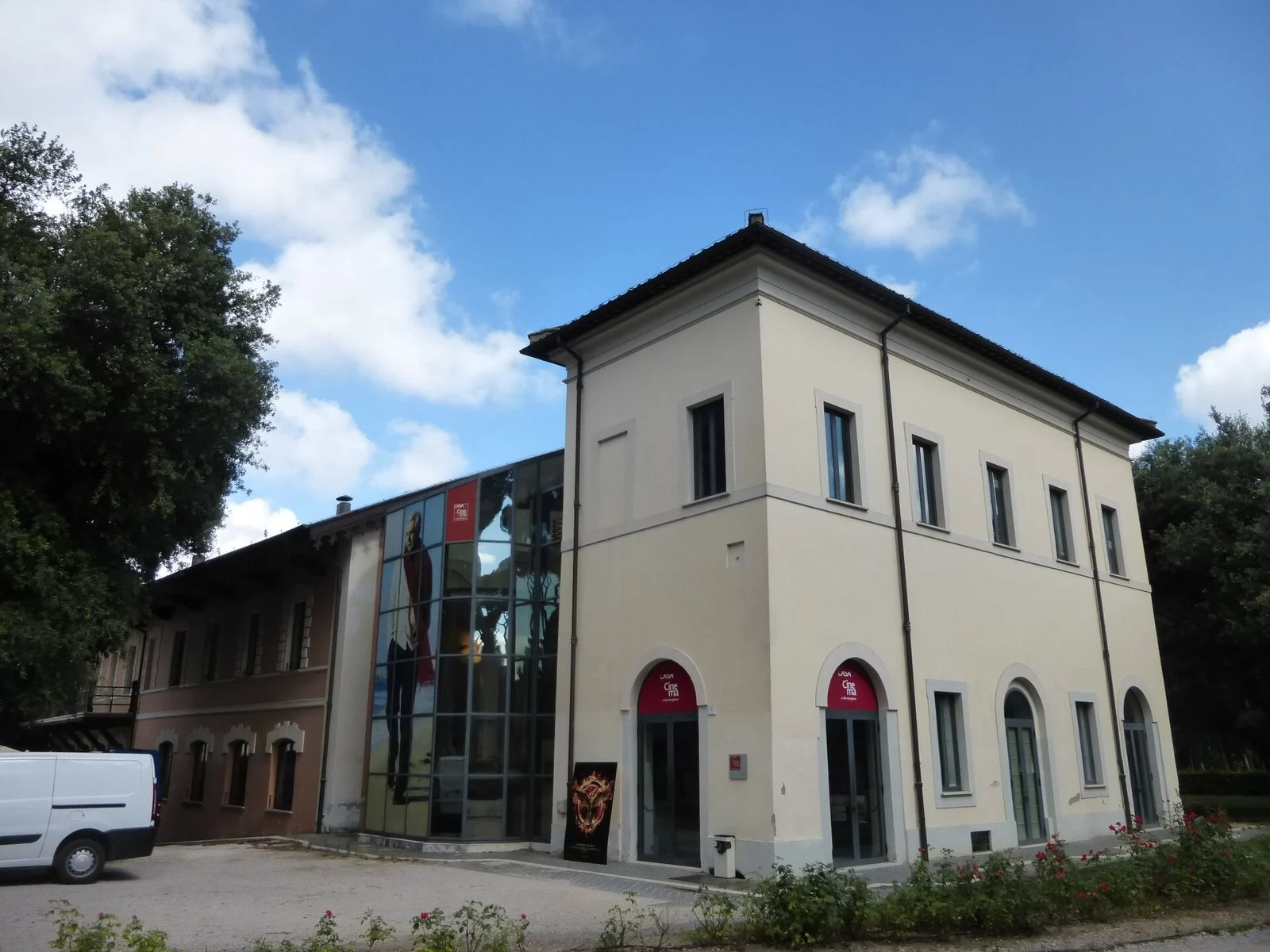
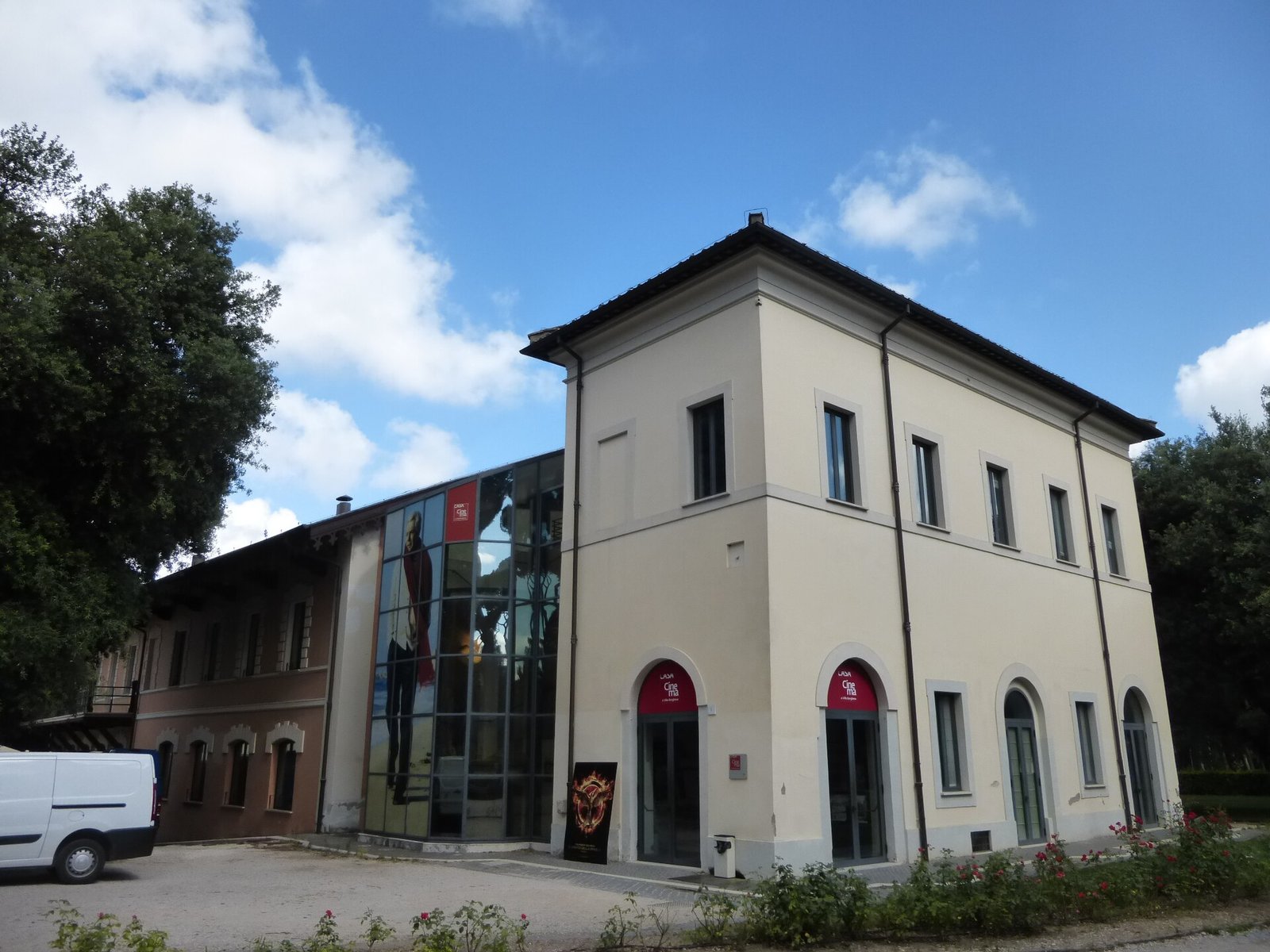
The Casa del Cinema, at Largo Marcello Mastroianni inside Villa Borghese, opens its own outdoor arena every summer, the Teatro Ettore Scola, with about 300 seats under the trees. It's the main reference for anyone looking for screenings in the original language: in recent seasons all of the arena's screenings have been programmed in the original version with Italian subtitles, with free admission and an evening start around 21:00. In case of rain the screenings move to one of the indoor halls, with free access after picking up a ticket at the entrance: it's one of the few Roman arenas with a covered plan B, and this makes it the safest choice on unsettled evenings in late August and September.
The arenas of film foundations and institutions
Alongside the Casa del Cinema, other institutional players in the sector operate every summer. The foundation that organizes the Festa del Cinema di Roma has for several seasons run a project of free arenas spread across the neighborhoods, with screens lit at the same time in different points of the city: the Vivi il Cinema program has brought free screenings to the Santa Maria della Pietà park, to Corviale and to Tor Marancia. The Cineteca Nazionale of the Centro Sperimentale di Cinematografia, instead, programs summer series in monumental places, in collaboration with the bodies that manage them.
The municipi's arenas
Several municipi fund their own free arena, often in a neighborhood park and often with a formula that pairs the film with a talk, a concert or a workshop for children. The free program in the park of the Aurelian Walls, Il Cinema alle Mura, is the longest-running example: it has gone on for several consecutive editions, with about 20 evenings per season under the brick curtain wall, and is promoted by the municipio responsible. Other municipal arenas have a shorter life and change park from one summer to the next depending on the funds available and the permits obtained.
The ticketed arenas: the tradition of summer cinemas
Alongside the free arenas Rome keeps a network of commercial arenas with reduced tickets, direct heirs of the summer cinemas that have existed in the city since the postwar period: the price is typically a fraction of that of a winter theater, with differentiated rates and discounts, and the programming focuses on releases from the season just ended more than on absolute premieres.
The arena in the gardens of Piazza Vittorio
The program in the Nicola Calipari gardens, inside the square of Piazza Vittorio Emanuele II in the Esquilino, is the longest-running paid arena in the city: the Notti di Cinema a Piazza Vittorio have been going on for more than 20 years, are produced by the association of Lazio movie theater operators with the support of Roma Capitale, and fill the whole season, from mid-June to mid or late September, so well past the closing of the free arenas in July. Rates are differentiated between Italian and European films on one side and international films on the other, remain in the range of a few euros and include discounts tied to public transport passes and other agreements: the exact values change every edition and should be checked on the organizer's website. The same organization usually runs other arenas in different quadrants of the city, including one on the Lungotevere at Marconi and one in the Appia Nuova area.
The historic ticketed neighborhood arenas
Some commercial arenas are neighborhood institutions with decades of continuity. The arena of Garbatella, in Piazza Benedetto Brin, is the one with the strongest neighborhood identity: it has operated for very many seasons in the same green space, with an audience largely made up of residents and a program that alternates Italian comedies, auteur titles and family evenings. Other ticketed arenas operate in the Flaminio area, near the MAXXI, and in the Appia Nuova and Tuscolana area. What they share is the long season, which often runs well into September when the free programs have already packed up.
The arena of an art-house cinema
A particular formula is that of art-house cinemas that open an arena in the summer in the adjacent courtyard or in the space behind, programming there the best of their winter season along with talks with the filmmakers. The best-known example is that of a historic cinema in Trastevere, tied to a Roman director, which every summer sets up an arena at Largo Ascianghi with a cycle of a few weeks between late June and July and in-theater presentations by the films' makers. The ticket is reduced compared with the winter rate and the audience is small, so on evenings with a guest it's best to arrive early.
Programs inside parks and historic villas
A substantial part of Roman summer cinema takes place inside public parks and historic villas, and this changes the experience more than you might imagine: you enter through a gate that normally closes at sunset, you walk on paths that are not always lit and you leave after midnight in an empty park. It's worth knowing in advance which gate stays open for the exit.
Villa Ada and the 19th-century fort
Inside Villa Ada, in the northern part of the park, there is a 19th-century military fort that for some seasons has hosted an outdoor cinema program with free admission: the Forte Antenne arena, on Via del Forte Antenne, with an unusually long season that starts before the others and continues into the fall. It's one of the few forts of the Roman entrenched camp regularly open to the public, and the evening is worth it for the place too. In the same park, but in a different area and on an entirely different scale, the music festival Roma Incontra il Mondo also takes place in summer, which has no connection with the cinema: they are two separate initiatives, and it's best not to confuse them when looking for the right entrance.
The Parco degli Acquedotti
The Aqueducts Park, at Via Lemonia, hosts in some summers a large free arena set up on the lawn under the arches: the Roma Cinema Arena program has worked with an audience area on the order of a thousand seats, free admission and about 20 evenings concentrated in July. It's the most scenic setting among Rome's arenas, and also the most exposed: the park is open and in the evening dampness settles on the lawn, so a sweatshirt and something to sit on are really needed. The most convenient subway stop is Subaugusta, on Line A, from which it's about a 10-minute walk.
Historic villas and their festivals
Not all Roman villas host film arenas, but almost all host some form of evening programming in summer. At Villa Celimontana the jazz village returns every year, at Villa Torlonia and Villa Doria Pamphilj there are theater and music programs, at the Casa del Jazz the park becomes an audience area. Anyone looking specifically for cinema will do well to check case by case, because the presence of a screen in a villa changes from one summer to the next depending on the funded projects.
Neighborhood parks
Most of the free arenas are in neighborhood parks, not in the monumental villas: the Parco del Pineto, the Parco di Aguzzano, the Parco della Mistica, the Caffarella Park and several others have over time hosted evening screenings organized by local associations and neighborhood committees. These are the least publicized arenas and the hardest to find, because often the only communication channel is the social media page of the association that runs them.
Cinema in archaeological areas
Screening films inside a state archaeological area requires specific permits from the park in charge, and for this reason programs of this kind are few, short and tightly controlled: generally about 10 evenings, with limited admission and often with mandatory free booking.
The program at the Temple of Venus and Roma
The most regular program is the one held on the terrace of the Temple of Venus and Roma, inside the area of the Colosseum Archaeological Park, organized together with the Cineteca Nazionale of the Centro Sperimentale di Cinematografia. It takes place in July, lasts a few days, has free admission and screens with the Flavian Amphitheater behind the screen. It's the Roman arena with the closest relationship between film and place, and also the one with the most contested seats: capacity is limited by the needs of protecting the area, so the booking, when required, sells out in a few hours.
The other archaeological areas
Other Roman archaeological areas host live performances in summer more than cinema. The Baths of Caracalla are the historic home of the summer opera season and of a free jazz program in the garden in front, and in recent years they have also welcomed clubbing nights such as the Muccassassina summer season. The Circus Maximus hosts large-scale concerts and, in some seasons, the relocated opera season. In the Roman Forum there are symphonic concerts among the ruins of the Basilica of Maxentius. At Ostia Antica the Roman theater welcomes a theater festival every summer. Cinema, in these places, shows up intermittently and almost always as a single event inside a program of another kind.
Cinema on the Tiber and on Tiber Island
The river is one of the historic homes of Roman summer cinema: on the embankments of the central stretch and on Tiber Island programs are held every summer that combine screenings, markets, music and food service, in mixed formats in which access to the area is free and you pay only for the individual event or for what you consume.
The Tiber Island program
On Tiber Island an open-air film festival has been held for almost 30 years, with several screens set up between the tip of the island and the adjacent embankments, a program that pairs previews, contemporary Italian cinema, international sections, documentaries and short films, and a number of encounters with directors and actors. The festival lasts about two and a half months, from the second half of June to the start of September, and so also covers August, when many other arenas are closed. Access conditions and rates change from year to year and should be checked on the event's official channel: in recent seasons the organizational situation of the island has been rather fluid, so the advice is not to take for granted any information gathered the previous summer.
The embankments between Ponte Sublicio and Ponte Sisto
On the left bank, between Ponte Sublicio and Ponte Sisto, the summer village Lungo il Tevere Roma is set up every year: a pedestrian route along the embankment with stands, food and drink points, spaces for children and a stage, within which in some editions evening screenings also find a place. Access to the promenade is free. It's the place where the film offering is the most occasional and the most tied to the individual edition, so it shouldn't be sought out as a stable arena but as a container inside which, on certain evenings, there is also a film.
The river arenas farther downstream
Farther downstream, in the Marconi stretch, a paid arena usually operates inside a park overlooking the river, run by the same circuit that programs the Esquilino arena. And at the opposite end of the city, where the Tiber ends in the sea, the Idroscalo di Ostia hosts a free open-air film festival built together with the local residents, with a program made of documentaries, cinema of the real and films that tell the story of suburbs and urban margins. Anyone going has to allow for the trip: the train to the coast plus the bus, or the car, and a night-time return to arrange in advance.
Neighborhood arenas and those in self-managed spaces
The least visible and most interesting part of Roman summer cinema is that of the self-produced arenas: social centers, occupied spaces, community houses, parishes, neighborhood committees and cultural associations that set up a screen in a courtyard or on a terrace and program one evening a week for the whole summer, almost always free or with a voluntary donation.
Some recurring examples
Among the experiences that repeat from season to season are the program on the terrace of the Casilino Sky Park, which screens one evening a week on a rooftop in the Casilina area. The civic cinema program hosted by the Eur Social Park, Schermi di Piombo, built around themed evenings with guests. The L'Aperossa program, curated by the audiovisual archive of the labor movement in a social space in Garbatella, which works on cinema, memory and rights. The San Lorenzo film festival, which occupies for much of the summer the Parco dei Caduti del 19 Luglio 1943 next to the Basilica of San Lorenzo fuori le Mura. And the Celio Stellato program, in a school garden on Salita di San Gregorio, a stone's throw from the Colosseum and almost invisible from the street.
How to find these arenas
They almost never appear in general guides and often not even in the City's calendar, because many don't apply to the notice. The realistic way to find them is to check the social media pages of the spaces in your own quadrant, the bulletin boards of neighborhood markets such as the Esquilino market or the Testaccio market: in Rome the posted flyer still works.
Where the arenas are, quadrant by quadrant
The distribution of Rome's arenas follows a precise rule dictated by the public notice: where there are no movie theaters, the free arenas multiply. The result is a geography turned upside down compared with the tourist one, with the historic center relatively poor in screens and the outskirts well served.
Historic center and Trastevere
In the center the arenas are few and almost all tied to an institution: the Casa del Cinema arena inside Villa Borghese, the program in the Colosseum archaeological area, the square in Trastevere in front of the San Cosimato cloisters, the art-house cinema arena at Largo Ascianghi and Tiber Island. Anyone staying in the center therefore has less choice than anyone staying in the outskirts, but has the advantage of being able to walk there. For anyone who wants to build a longer evening around it, the page on Rome at night gathers the options after sunset.
North Rome
In the northern quadrant the reference is Villa Ada with the fort, flanked by the commercial arenas of the Flaminio area near the Parco della Musica and by the programs in the MAXXI square, where in summer cinema, jazz and electronic music are scheduled. Farther north, beyond the ring road, neighborhood arenas operate in parks such as Parco delle Valli and in the courtyards of schools in the northern municipio.
East Rome
The eastern quadrant is the one with the most free arenas: the Cervelletta park in Tor Sapienza, the terraces and courtyards of the Casilina area, the programs in the Parco Nomentano with the Aniene Festival, the San Lorenzo festival, the summer arena of the Tor Bella Monaca theater, the Casilino Urban Fest and the activities of the Villa De Sanctis cultural center. It's also the quadrant where night public transport is weakest, so it's where you should check the way home first.
South Rome
In the south the Parco degli Acquedotti is the most spectacular place, the Garbatella arena the one with the most tradition, the Eur Social Park the one with the most political programming. Non-film programs are also concentrated in the same area, such as the Eur summer village and the Latin festival in Parco Rosati, as well as the evenings at the Eur lake. Toward the Appian Way screenings are rare for protection reasons: the Appian Way Park hosts mostly evening visits and concerts in summer.
West Rome and Monteverde
In the west the fixed point is the Monte Ciocci park above Valle Aurelia, with the sloping lawn and the view of the dome. Around it are the arenas of the western municipi, often hosted in school courtyards, and the programs of the Monteverde parks such as Villa Sciarra and Villa Pamphilj. The quadrant is also the one where arenas change venue most often, because many depend on temporary concessions of school spaces.
Testaccio, Ostiense and the coast
Between Testaccio and Ostiense the screenings are grafted onto larger containers: the former Mattatoio and the Città dell'Altra Economia host in summer programs of music and urban cultures within which film evenings also appear, and the Monte dei Cocci serves as a backdrop for several initiatives. On the coast, besides the Idroscalo, the Lido di Ostia theater programs shows and screenings for families in summer.
What you see in an arena: premieres, retrospectives, original language
The programming of Rome's arenas divides into four fairly recognizable families, and knowing which one an arena belongs to spares you the disappointment of arriving expecting one thing and finding another.
Original version with subtitles
Rome is a city where finding films in the original language in winter takes patience, and in summer the situation paradoxically improves. The Casa del Cinema arena usually programs its whole season in the original version with Italian subtitles, which makes it the reference point for anyone who doesn't speak Italian and for anyone who prefers not to hear dubbing. Other arenas alternate: Italian films in their language, foreign ones dubbed, with a few evenings in the original noted in the program. Anyone arriving from abroad will do well to check the label next to the title, because most Roman arenas screen in Italian.
Meetings with the filmmakers
The practice of a talk with the director or the cast before the screening is by now standard in the most important free programs, and in some seasons it has brought internationally prominent names into the square. These are the evenings that fill up the most and sell out first: if a program announces a guest, the practical advice is to show up at least an hour before the screening time, because the talk starts before the film and the seats run out well in advance.
Cinema of the real, documentaries, short films
A fourth family, smaller but well established, is that of the programs that show documentaries, cinema of the real and short films, often with a declared theme: memory, work, rights, suburbs, the environment. These are the programs of the neighborhood festivals and the audiovisual archives, and they are the place where you see films that have no theatrical distribution. Anyone interested in the history of Italian cinema can pair it with a visit to the MIAC, the audiovisual museum inside the Cinecittà studios, or follow the Roman locations of the films that made cinema history.
How to find the programs
There is no single program for Rome's arenas, and this is the main practical difficulty: each program communicates on its own, at different times and on different channels. There are, however, four sources that, put together, cover almost everything.
The City's cultural portal
The cultural portal of Roma Capitale publishes the entries for individual events, with place, dates, times and, when available, the link to the organizer's ticket office. It is the most complete source for the arenas that received the public grant, and it is also where the official list of the season's free arenas comes from. Its flaw is that it updates late and doesn't cover what doesn't go through the notice.
The pages of our site
On our site every recurring program has a dedicated page with address, access, public transport and the characteristics of the space, updated season by season. Anyone looking for the overall picture of the cultural season finds the starting point in the page on Estate Romana. Anyone in the city in the hardest month can start from Rome in August, which gathers what stays open when the city empties out.
How much it costs to go to the cinema outdoors in Rome
There is no single price: Rome's arenas divide into free admission, reduced ticket and voluntary donation, and the practical rule is that the more an arena is supported by the City's or the municipio's grant, the more likely it is to be free.
The free arenas
The arenas funded by the dedicated subsection of the City's public notice are free by obligation of the agreement, and the programs of the big film foundations and several municipal arenas are free by choice. Free, in this context, really means without a ticket: there is no booking fee, no presale fee, no mandatory purchase. When a booking appears, that too is free and serves only to limit the number of seats.
The paid arenas
In the commercial arenas the ticket stays in the range of a few euros, well below the rate of a winter theater, with differences between Italian and European films on one side and international films on the other and with discounts tied to public transport passes, agreements and city cards. The precise values change every season and every arena: we don't give them because a wrong figure is worse than no figure, and they should be read on the organizer's website before you leave the house. Where online presale exists, a booking fee of a few cents is normally added.
What to bring and how you sit
A Roman summer arena is not an air-conditioned theater with reclining seats, and the difference between a good evening and an uncomfortable one depends almost entirely on three or four items.
Against mosquitoes
It's problem number one, especially in arenas inside parks, near the river and in villas with fountains or ponds. A skin repellent applied before going out, and reapplied after a couple of hours, is more effective than any coil lit on the ground. Light long pants, however counterintuitive in July, solve the problem at the ankles, which is where Roman mosquitoes work best.
Water and food
Almost all arenas allow you to bring water in a plastic bottle, many ban glass, and some, especially those inside archaeological sites or parks with a food service concession, ban bringing food from outside. The refreshment points inside, where there are any, have long lines at intermission. Rome's public drinking fountains stay almost all active in summer: a water bottle filled before going in avoids both the line and the expense.
Arrive early and sit well
In arenas with unnumbered chairs your position is won by arriving early: half an hour before on ordinary evenings, an hour or more on evenings with a guest. The front rows, contrary to what you might think, are not the best: in an arena the screen is mounted high and from the front rows you watch with your neck bent for two hours. The best spot is generally between the third and sixth section of chairs, slightly off the axis, where the audio from the side speakers balances out.
Eating before or after the film
A screening that starts at 21:00 and ends after 23:00 splits the evening in two. The criterion for choosing where to eat, however, doesn't change with the arena.
The criterion, not the address
We don't name places, for a practical reason: a list of restaurants goes stale in a few months and helps no one. The criterion, instead, always holds, and it's the simplest possible: look at who is sitting at the tables and in what language they order. A place full of residents at nine in the evening on a July Tuesday is almost always a better choice than a place full of people with backpacks and a guidebook in hand.
The signs to recognize
There are five signs that work as a warning in the field. The lady rolling fresh pasta in the window or right on the street is a lure for passersby, not a clue to a kitchen. The menu with photographs of the dishes indicates a clientele that isn't presumed able to read the name of a dish. The barker who invites you to sit from the doorway is a marketing cost that ends up in the bill. A place open from morning to night with no kitchen break isn't cooking anything at the moment. And the places immediately in front of the most photographed monuments tend to set their prices on the tourist in front of them, with unpriced items on the menu or different price lists inside and outside.
The chains in the center
In the historic center in recent years a type of business has multiplied with the same sign repeated in several spots, identical menu and a line managed with a numbered ticket. The useful fact to know is that Romans don't go there: those lines are made up almost entirely of visitors. It's not a matter of taste: it's a matter of which clientele the place has chosen.
One more resource
For anyone who wants a concrete starting point, the founder of Tour Leader Pro keeps a personal list by Daniele Dezi on Google Maps: it's a curated, non-sponsored collection, built in the field, that works as a starting selection and not as a ranking. On arena nights it's still preferable to eat something light beforehand and save the real dinner for another evening: after 23:30, in Rome, the open kitchens are few and almost never the best.
Why many arenas close and reopen under different names
Anyone returning to Rome after a few years and looking for the arena they remembered often doesn't find it: in its place there is another program, with another name, maybe 200 meters away. It's not chance, it's a structural consequence of the way Roman summer cinema is funded and authorized.
The grant is annual or biennial, the space is not
An association that wins the City's grant gets it for one or two seasons. At expiry it has to apply again, and the ranking can change. If it isn't among those funded, the arena doesn't happen, or happens in reduced form and under another name, or passes to another party that in the meantime has obtained the grant for the same space. A program's decade-long continuity is not the norm: it's the exception of those who have built an identity strong enough to get through the cycles.
Accessibility, children, animals
The City's public notice asks applicants to guarantee the accessibility of the initiatives for people with motor or sensory disabilities, but implementation varies a lot from place to place: an arena on a paved square and an arena on grass or on ancient paving stones do not offer the same conditions.
Children
Arenas are one of the best ways to bring children to the cinema, because the setting is tolerant: you can talk quietly, get up, go out and come back in. Many neighborhood programs have a weekly evening dedicated to families, with an earlier start. Anyone looking for evening activities for children in summer can also look at Luneur Park, which stays open in the evening, and at the family programs of the municipal theaters.
Frequently asked questions about Rome's summer arenas
How many summer arenas are there in Rome?
Rome's summer arenas number several dozen each season: the surveys of the City's cultural portal have usually counted around 50, with free admission and reduced tickets, spread across all the municipi. The number changes every year because it depends on the rankings of the City's public notice, on public land concessions and on the availability of the individual organizers.
Are Rome's summer arenas free?
Many of Rome's summer arenas are free, but not all. Those funded by the subsection of the City's public notice dedicated to outdoor cinema are free-admission by obligation of the agreement, as are the programs of the big film foundations and several municipal arenas. The historic commercial arenas remain paid, with tickets that are still reduced compared with winter theaters and with discounts tied to transport passes and agreements.
When do Rome's summer arenas open and close?
Rome's summer arenas generally run between the end of May and the first half of October: for the free arenas the City's notice sets a span that goes from June 1 to October 15. The best-known free programs are concentrated between June and mid-July, while the ticketed arenas often continue into late September. The precise dates change every season and are announced between the end of May and mid-June.
Where can you see films in the original language in Rome in summer?
The reference for the original language is the open-air arena of the Casa del Cinema inside Villa Borghese, which in recent seasons has programmed the entire program in the original version with Italian subtitles and with free admission. Other arenas alternate dubbed screenings and evenings in the original noted in the program. Anyone who doesn't speak Italian will do well to check the wording next to the title before going.
Do you need to book for Rome's summer arenas?
For most of Rome's summer arenas you don't need to book: you arrive, pay the ticket where required and sit down. Booking, when it exists, is free and serves to limit seats, and it mainly concerns programs inside archaeological areas, spaces with limited capacity and evenings with highly sought-after guests. In those cases the seats run out within a few hours of bookings opening.
How do you get to the outskirts arenas in the evening and how do you get back?
You almost always get to Rome's outskirts arenas by subway or bus, but the problem is the return: the daytime surface lines end before the screenings finish and the night network is less dense. It's best to check the last useful run in advance, look at the night lines that replace the subway, or allow for a taxi or a car with driver for the way back.
What do you need to bring to a summer arena in Rome?
In a Roman summer arena you need three things: a mosquito repellent, which makes the difference in parks and near the Tiber, a sweatshirt, because after 23:00 you feel the dampness even in July, and water in a plastic bottle, since glass is banned almost everywhere. On the lawn you also need a sheet to put underneath. Your own chairs and bulky backpacks are often turned away.
Why does the arena I was looking for no longer exist?
Rome's summer arenas change name, operator or venue often because the public grant that supports them lasts one or two years and has to be won again in the ranking each cycle. On top of this come the land concessions, the protection restrictions on green areas and archaeological areas, the noise limits and residents' complaints. It's always best to check that a program still exists in the current season.
Are Rome's summer arenas accessible to people with disabilities?
Rome's summer arenas have very different levels of accessibility from one another: the City's public notice asks applicants to guarantee access for people with motor or sensory disabilities, but an arena on a paved square and one on grass or on ancient paving stones do not offer the same conditions. We recommend contacting the organizer in advance, because almost all arenas reserve dedicated places if notified beforehand.
Who wrote this page
This page is curated by the editorial team of Tour Leader Pro, the Rome-based project office that designs and coordinates visits, itineraries and cultural events in Rome and Lazio. The hours, fares and access conditions given here were verified at the date of publication against the official sources indicated in the text: it's best to check them again before leaving, because they change often. If you find outdated information, tell us.
One last piece of advice for anyone organizing the evening
Anyone who wants to build a Roman summer evening around a film will do well to choose the neighborhood first and then the title: the difference between a good evening and a tiring one almost always comes from the journey, not from the programming. An arena 20 minutes' walk from your lodging is worth more than an arena at the other end of the city from which you have to come back at half past midnight.
Anyone putting together a wider Roman itinerary, combining an evening at an arena with visits, archaeological areas and travel between neighborhoods, can find useful planning tools on Tour Leader Pro, while for the general picture on transport, seasons and destinations in Lazio a good resource is Italy Planner.