Parco Della Mistica
In short. Mistica Park is reached from Via della Tenuta della Mistica, in eastern Rome, in the quadrant between Tor Sapienza, Tor Tre Teste and Torre Maura, a short distance from the Grande Raccordo Anulare ring road and halfway between Via Prenestina and Via Casilina.
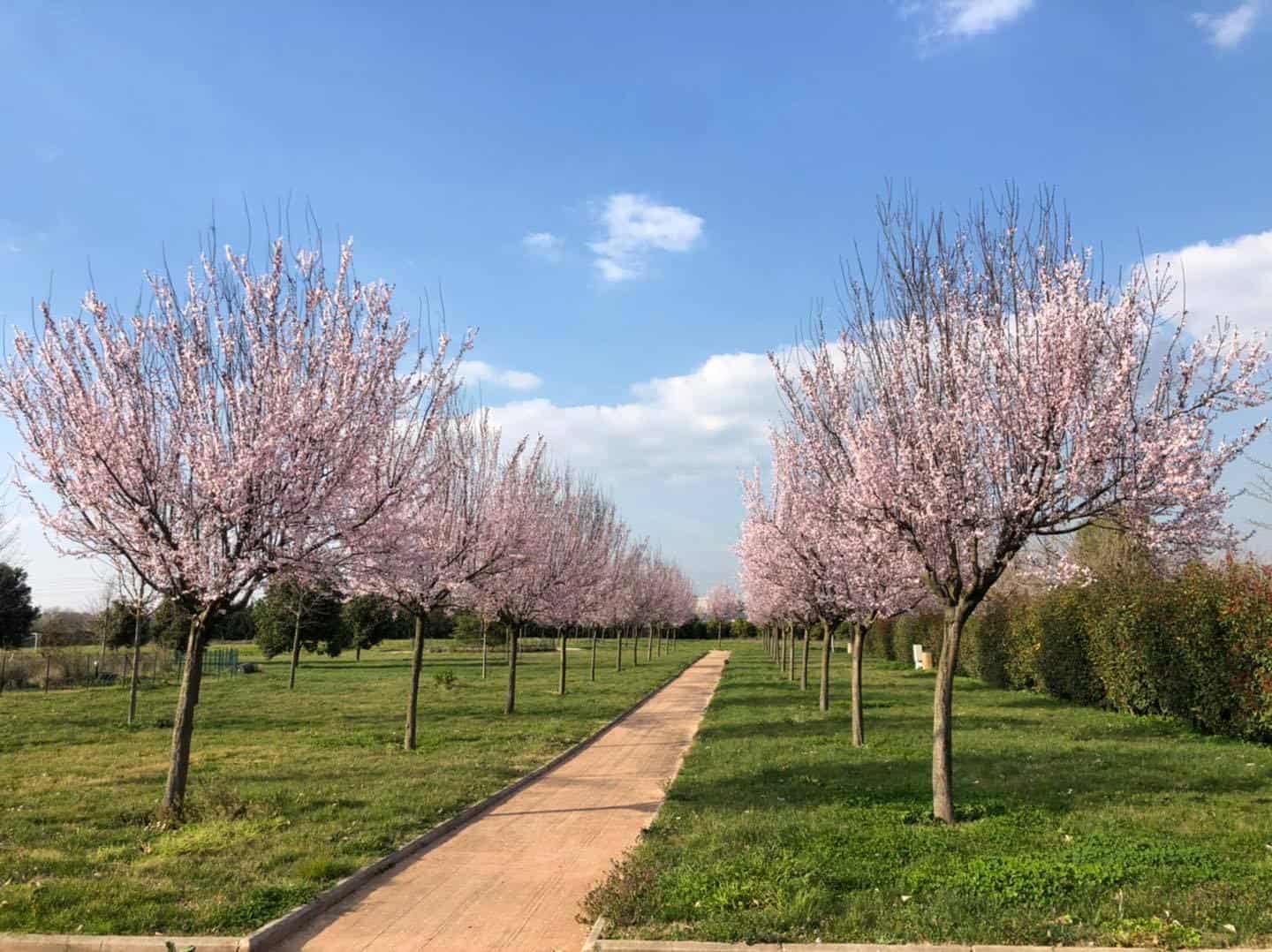
Mistica Park is reached from Via della Tenuta della Mistica, in eastern Rome, in the quadrant between Tor Sapienza, Tor Tre Teste and Torre Maura, a short distance from the Grande Raccordo Anulare ring road and halfway between Via Prenestina and Via Casilina. Access to the green area is free and you don't pay any ticket to enter and walk. The organized activities held in the equipped area follow their own seasonal calendars and should be confirmed with whoever runs them before you get in the car. If you come by car, you leave the vehicle along the access road. If you come by public transport, you get off at the stops of the surface lines serving Tor Sapienza and the urban stretch of Via Prenestina, and walk the last stretch. Bring water, a hat and closed shoes: this is a piece of the Roman countryside left inside the city, not a public garden with shaded benches every 20 meters.
If you're looking for other green lungs in the same eastern belt of the city, you'll find pages dedicated to Cervelletta Park and to the Aniene Valley Nature Reserve, which together with Mistica Park make up the ring of green between Via Tiburtina and Via Casilina.
A useful clarification before you leave, because it causes a lot of misunderstandings: under the name Mistica Park two different things live side by side. The first is the estate, that is, an agricultural area of dozens of hectares with fields, tree rows, ditches and service lanes. The second is the area equipped for play and socializing that occupies a limited portion of that area, with mown lawns, play equipment, tables and covered spaces. Anyone who arrives expecting an amusement park is thrown by the countryside, and anyone who arrives expecting a nature reserve is thrown by the rides. Mistica Park is both, and it's this coexistence that makes it interesting.

How to get to Mistica Park
Geography matters more than the address in this corner of Rome. Mistica Park occupies the bottom and the slopes of a small valley that descends toward the east, in a sector where the built-up city stops abruptly and farmland begins. Anyone driving along Via Prenestina toward Lunghezza, or along Via Casilina toward Torre Gaia, passes within a few 100 meters of the Mistica fields without noticing: the buildings along the main roads act as a backdrop and hide everything that lies behind them.
By car to Mistica Park
Arriving by car is the simplest and the most common. Set Via della Tenuta della Mistica as your destination and leave the Raccordo Anulare on the eastern side, following the signs for Via Prenestina or Via Casilina depending on where you're coming from. The last stretch is a paved country road, just wide enough for two cars, with a few dips and no decent lighting after sunset. Don't take the curves at speed: bicycles, dogs on leashes and farm vehicles use the road here, and the road surface gets worse in the rainy months. Parking is along the road and in the service lots. On spring weekends the spaces run out early: arriving by mid-morning means avoiding half a kilometer more of walking with a child seat in your arms.
By public transport to Mistica Park
Public transport stops nearby, not at the gate. The surface lines serving Tor Sapienza, the Prenestina area and the Casilina area leave you a 10 to 15 minute walk from the entrance. The exact number of lines changes with network schedule revisions, so the sensible thing is to plan the route on Atac's portal on the same day, using the real departure time, because on weekends the frequencies thin out a lot. On the rail side, Tor Sapienza station serves the line that runs east from Roma Tiburtina, and it is the fastest way to reach the area for anyone leaving the city center without a car. Farther south, Metro Line C runs along the Casilina and covers the entire area between Centocelle and the Raccordo. Getting off at one of the stations on that stretch and finishing the trip by bus is often faster than crossing the city on the surface.
By bike to Parco Della Mistica
The bike is the means of transport that best conveys the feel of the place. From Tor Tre Teste and Tor Sapienza, you reach it on flat ground along side roads, and the overall elevation change is modest. Once inside, the estate's service lanes are rideable with a trekking bike or a gravel bike. There are no technical demands, but after rain the surface turns to clay that sticks to the wheels and makes pedaling hard. Anyone who wants to extend the ride can link up with the Aniene valley within a single day, with the Parco di Aguzzano as an intermediate stop heading north.
What Parco Della Mistica really is
The name misleads twice. The word parco makes you think of a designed urban garden, with avenues and flower beds, and this place is not one. The word Mistica makes you think of a religious story, and there is no evidence that the place name comes from there. Generations of owners, farmhouses, boundaries and changes of hands settle into the names of estates in the agro romano. Many derive from family surnames, from church institutions that owned the land, or from local nicknames distorted by use. For the Mistica, the exact origin remains uncertain, and anyone who tells you the story with confidence is selling you an explanation that is prettier than the facts. It's better to stick with the hypothesis, stated as such, that the place name belongs to the long family of estate names passed down through cadastral records.
An agricultural estate inside the Grande Raccordo Anulare
This is the point that really matters. Rome is the European city with the largest agricultural area within its administrative boundaries, and Parco Della Mistica is one of the pieces that keep that primacy standing on the eastern side. It is not a leftover fragment. It is a system that works, with cultivated land, crop rotations, farm machinery, and sowing and harvest seasons. The countryside here is not a backdrop. Anyone walking along the edges of the fields in June can smell ripe wheat 200 meters from the apartment buildings, and anyone who returns in November finds the same surfaces freshly plowed, with seagulls following the tractor as they would in open countryside.
The equipped area and the rest of the estate
The equipped area of Parco Della Mistica is the part everyone photographs, and the one that gives the place its reputation as a destination for families: lawns kept short, play equipment, tables, outdoor eating areas, sports fields. It covers a few hectares, a fraction of the total. Everything else is estate: arable land, uncultivated land, hedgerows, gullies, dirt lanes. The proportion is important to keep in mind when you plan your day, because it determines the distances. From the play area to the far edge of the estate there are kilometers, not meters. With young kids, it's better to choose one of the two and not try to cover both in one afternoon.
The casale, the factory of the landscape
The casale is the building that explains everything else. In the agro romano, the casale is not a holiday villa. It is the estate's productive machine, and its shape depends on its function. Thick walls of tuff and brick keep things cool, with small openings on the exposed sides. A low main block surrounds a threshing floor where grain was beaten, with storerooms on the ground floor and living quarters on the upper floor, and stables and haylofts complete the quadrangle. Many casali in the agro romano incorporate reused ancient material in their masonry, blocks and fragments collected from the surrounding fields, and some grew up around a fortified medieval core, the tower that gave the locality its name. The place names of the area tell exactly this story: Tor Sapienza, Tor Tre Teste, Torre Maura, Torre Gaia, Torrenova. They are all towers, that is, strongholds for controlling the territory that arose between the Middle Ages and the early modern period, around which the countryside was organized. Look at the Mistica casale with this key and it stops being an anonymous building at the end of a field.
The landscape of the agro romano around Parco Della Mistica
The landscape you cross at Parco Della Mistica is the classic one of the eastern agro romano. It has a precise structure that is worth learning to read, because it turns a generic walk into a reading of the territory.
The ditches, the marrane and the shape of the land
The soil of this sector is of volcanic origin: tuffs, pozzolanas and deposits tied to the activity of the Colli Albani, which water has carved into a network of shallow little valleys. These are the ditches, called marrane in Rome. They flow in winter and in summer shrink to a trickle or a dry bed, with the riparian vegetation signaling where they pass. The layout of the estate follows exactly this geometry: the cultivated fields occupy the plateaus and the gentle slopes, the spontaneous vegetation clings to the hollows where the tractor doesn't reach, and the lanes run along mid-slope. If you get disoriented, the trick is this: the valley floor always leads east, toward the Aniene and the system of ditches that flows into it.
The cultivated fields and the rhythm of the seasons
A field of arable crops changes its face five times a year, and anyone who comes back to Mistica at different times visits five different places. In autumn the plowing lays bare the reddish earth and the landscape becomes geometric, cut by parallel furrows. In winter the tender green of the cereals covers everything in a uniform color that from a distance looks like a lawn. In April and May the vegetation at the edges explodes and wildflowers fill the field margins. In June the wheat turns yellow and the ears lean over. The harvest leaves short stubble and round bales that stay for weeks. In August everything is dry, the light is white and merciless, and the place has to be tackled early in the morning or not at all. This alternation is the real show at Mistica Park, much more than the equipment.
Trees, hedges and margins
The tree vegetation here doesn't make a forest, it makes a structure. Tree rows and isolated trees mark the boundaries of the plots, hedges divide the fields and shelter the liveliest part of the wildlife, and umbrella pines mark the entrances and service avenues as happens throughout the Roman countryside. The edges of the ditches concentrate the riparian vegetation, which in summer stays green when everything else is scorched. Anyone used to the city's historic parks, with the centuries-old holm oaks of Villa Borghese or the monumental backdrops of Villa Doria Pamphilj, has to change their eye here: the value isn't in the single monumental tree, it's in the mosaic.

Visiting Mistica Park, step by step
What follows is the route I recommend to a group that comes for the first time and has half a day. You start from the equipped area, head out toward the fields, finish with the valley floor and come back on the other slope.
The entrance and the first 100 meters
The first stretch is the one that disorients the most, because the passage from the road to the green is abrupt and without any transition. There are no monumental gates, ticket offices or bookshops. There's a road, an open space, some lawns. Take two minutes to understand where you are: find the highest point, see which way the ground slopes, note where you left the car. In open fields you lose your bearings more easily than in the city, and vertical landmarks here are few.
The lawns and picnic areas of Mistica Park
The low-cut lawns are the social heart of the place. Here you spread out blankets, set up tables, open the basket. The areas set aside for outdoor lunch and grilling are the reason many Roman families know the name Mistica and don't know the name of the estate around it. Two warnings from a professional: the first is that using fire in a peri-urban agricultural area is subject to strict seasonal rules, and in the months of highest fire risk the limits can go as far as a total ban, so ask first and always respect it. The second is that shade here is a scarce and contested resource, and anyone who arrives at noon in July finds everything under a tree canopy taken. If your plan includes lunch, mentally reserve the shade two hours ahead.
The play equipment and rides for kids
The equipped area for the youngest kids is generous and designed for different ages, from low structures for kids who have just learned to walk up to those that test older kids. It's the most visited area on spring afternoons and weekends, and the practical advice is to set a visible meeting point before letting the kids go: the spaces are large and the landmarks look alike. Outdoor structures depend on maintenance, and maintenance depends on whoever is running the area at the time: if the day depends on one particular game, check that it's working before promising anything to a five-year-old.
The dinosaurs and sculptures of Parco Della Mistica
The reproductions of large prehistoric animals scattered among the greenery are the most photographed element of the Mistica and the one kids remember months later. They work for the same reason they work in natural history museums: scale. An animal three meters tall in the middle of a meadow creates an effect no illustration in a book can achieve, and it also produces a considerable number of questions that an adult would do well to prepare for. They are recreational sculptures, not certified scientific reconstructions, and it's worth explaining this distinction to older kids: it serves to teach the difference between an educational display and a museum installation. Parents who want to take their children further, onto the path of real science, will find the natural next steps in Bioparco di Roma (Rome Zoo) and in Explora, il museo dei bambini di Roma.
The minigolf, the soccer field and the volleyball court
The sports offering at the Mistica is deliberately simple: a minigolf course, a field for soccer, and one for volleyball. Don't look for federation-standard facilities, look for a way to keep a mixed group of adults and kids busy for three hours. Minigolf is the surprise: it's the only game in the park where a grandfather can beat a 12-year-old grandchild, and that makes it an extraordinary generational leveler. Bring sneakers if you plan to use the fields, because the outdoor surface doesn't forgive smooth soles.
The gazebos and private parties at Parco Della Mistica
The covered spaces can be reserved for parties and celebrations, and it's one of the most common uses of the place on weekends from April to October. Whoever is organizing has to move early, because the good spring dates sell out fast, and they have to plan for the fact that this is an outdoor space: the backup plan for rain has to be thought out in advance, not the morning of. Conditions, availability and booking procedures should be asked directly of the person managing the area.
The farm and the educational vegetable garden
The agricultural component with educational purposes is what gives the Mistica its particular character. A teaching vegetable garden is not a demonstration flower bed: it is a tool used to explain to a class how to sow, how much time passes between sowing and harvest, why one crop is rotated with another, and what a plant eats. For a child raised in a city where vegetables already come washed in trays, this is a piece of literacy worth an entire afternoon. Activities for school groups follow the school calendar and are arranged in advance with whoever organizes them.
The trails of Parco Della Mistica
The trails are the part that occasional visitors ignore and that, for me, justifies the trip. They are not trails marked with white and red paint: they are service roads and passages between the fields, wide, easy, with minimal slopes. You walk on natural ground, which means dust in summer and mud in winter. The logic of the routes is simple: you climb onto the plateau for the view, descend into the gully for shade and water, and return halfway up the slope. A reasonable loop takes an hour and a half at an easy pace, two hours with stops. Don't count on drinking fountains along the way: bring your water from home.
The pond and the valley floor
The body of water is the children's favorite destination and the coolest spot of the entire walk. Still water in an agricultural setting works like an ecological magnet: it attracts dragonflies, amphibians, birds that come to drink, and insects that in turn attract their predators. Stay on the worn edges, don't trample the riparian vegetation and don't feed the fish: bread does more damage than you'd imagine to the balance of a small pond. Those looking for a comparison with an artificial basin of a very different scale and very different urban history will find it on the page for the laghetto dell'Eur.

Accessibility of Mistica Park
The inclusive vocation is Mistica's defining trait, and it's not a statement of principle hung on a sign. The equipped area is designed so that a wheelchair can get where everyone else gets: level paths, compact surfaces, room to maneuver, equipment usable even by those who can't walk. It's rare enough to deserve being said without rhetoric: most Roman green areas become impassable after the first 50 meters, when the surface turns into loose gravel or exposed roots. Here the design took the problem into account.
An honest distinction has to be made, though, between the two souls of the place. The equipped area is accessible. The agricultural paths of the estate aren't, or not all of them, because the natural surface, the slopes of the hillsides and the condition of the ground after rain change the conditions completely. Anyone accompanying a person with mobility difficulties should base themselves in the equipped part and judge on the spot how far to go beyond it. For a mixed group, with elderly people and small children, this is also the most efficient choice logistically: one fixed point, reachable, with services at hand.
Mistica Park with kids
Here is what you really need, by age.
Under three
Bring the stroller only if you're staying in the equipped area: on the agricultural paths it's dead weight, and a baby carrier backpack works much better. You need a blanket, a full change of clothes and a hat. The low lawns are the ideal place for those who have just learned to walk, because falls are harmless and there are no steps.
From four to 10
This is the age group Mistica was designed for. Play equipment, sculptures, open lawns, room to run without anyone saying to watch out for cars. If you have two hours, spend one hour on the play equipment and one on the walk toward the little lake: alternating works better than two hours in the same place. An inexpensive pair of binoculars turns the walk into a bird hunt and buys you 40 more minutes of attention.
From 11 up
With preteens you need a goal, otherwise generic greenery bores them. Mini golf, the playing fields and biking all work, and so does photography if you give them a specific theme. Reading the landscape also works, if it's told like an investigation: where the name of the place comes from, why the fields have that shape, where the water goes, what a tower was and what it was for.

Parco Tutti Insieme, Mistica Park
Wildlife and birdlife of Mistica Park
A mosaic of cultivated fields, hedges, fallow land and ditches is a richer habitat than it seems to a distracted eye, and this is true of the whole peri-urban Roman countryside. The rule of observation is always the same: you see more early in the morning and in the last hour before sunset, you see more standing still and quiet than walking, you see more at the edges than in the middle of a field.
The birds of the cultivated fields and margins
The open fields of the Roman countryside are the kingdom of the corvids, which are noticed right away for size and noise, and of the passerines that nest in the hedges and feed in the arable fields. On plowing days the birds follow the tractor to pick up what the plowshare brings to the surface: it's a scene you don't see anywhere else in the city, and at the Mistica you can watch it from a few meters away. At the edges of the ditches, where water guarantees insects even in midsummer, the density of species grows noticeably.
Birds of Prey and How to Recognize Them from Afar
Over the peri-urban crops diurnal raptors regularly fly, and learning to tell them apart is one of the easiest satisfactions to get. The key is not color, which you can't see against the light, it is behavior: the flapping flight with hovering pauses in place, the soaring flight in wide circles using warm currents, the low direct flight that cuts the field skimming the grain heads. Bring 10x40 binoculars, which is the right tool for open landscape, and look toward the posts and isolated trees: raptors use dominant perches to watch over the hunting ground.
The Rest of the Fauna
In the ditches and temporary pools amphibians make their home, which announce themselves more by voice than by sight, especially on mild spring evenings. Among the stubble run the small mammals that make up the base of the raptors' food chain. The flowering strips at the edges of the fields concentrate pollinators and butterflies in the central months. In the evening the landscape changes shift: nocturnal insects and their predators come out, and the valley floor becomes the liveliest place on the whole estate.
How to Behave
Three rules that apply here as in any agricultural area: don't enter the cultivated fields, because an arable field is a production and not a public lawn. Don't pick anything, neither fruit nor flowers nor eggs. Dogs are kept on a leash, always, because a free dog in a field in spring destroys ground nests without the owner noticing.
Parco Della Mistica and the Centocelle Archaeological Park
A few kilometers to the west opens the most instructive story of the whole quadrant. The Parco di Centocelle is an area of 126 hectares, of which only 33 turn out to have actually been completed, spread among the neighborhoods Quadraro, Torpignattara, Don Bosco, Lamaro, Cinecittà, Centocelle, Pigneto, Alessandrino and Romanisti, and administered by Roma Capitale with the involvement of three municipalities, the fifth, the sixth and the seventh. Under those lawns lies a stratification of almost 2,000 years: the imperial villa known as ad duas lauros, tied to Helena, mother of Constantine, the thermal installations and the quarters of the imperial cavalry. The very name of the neighborhood comes from centum cellae, the 100 cells of the soldiers' lodgings.
The distance between plan and reality, at Centocelle, is enormous: despite the institutional decisions matured between 2003 and 2006, the area still suffers from widespread decay, buried hazardous waste, car-dismantling businesses set up on protected land and recurring fires, so much that the committees that follow its fate have for years asked for free access from all the bordering neighborhoods. The comparison with the Mistica is merciless and must be made: where at Centocelle the public green has remained a promise, at the Mistica the continuous presence of those who work the land and of those who manage the equipped area has kept the ground alive. A green area survives if someone inhabits it every day. It is the most important lesson this quadrant of Rome has to teach.
Parco Della Mistica and the Valle dell'Aniene Reserve
To the north, the system of ditches of this sector flows into the Aniene valley, which in Rome is protected as a regional nature reserve and managed by RomaNatura, the regional body established to administer, protect and enhance the protected natural areas of the municipal territory. The reserve protects the many bends of the river in the urban stretch inside the Raccordo Anulare, with nature trails and cycling routes. Its administration is based at Villa Mazzanti, at Via Gomenizza 81, inside the Monte Mario Nature Reserve, with telephone number 06.35405350. A part of the Acqua Vergine complex and of the ancient crater of Lake Castiglione, outside the Raccordo, is not yet formally included within the boundaries of the reserve.
For a visitor who wants to understand eastern Rome, the juxtaposition of the two places is illuminating: the Mistica is the countryside of the cultivated plateaus, the Aniene is the damp corridor of the river. Different habitats, different fauna, different light. Whoever has two days should devote one to each, with the page of the Valle dell'Aniene Nature Reserve and that of Villa Mazzanti as references for the managing body.
Protected Areas and Municipal Green Space: Where Parco Della Mistica Fits
Something needs to be said here that clears up a lot of confusion. The system of protected areas managed by RomaNatura includes the nature reserves of Marcigliana, Insugherata, Valle dell'Aniene, Decima Malafede, Laurentino Acqua Acetosa, Valle dei Casali, Tenuta dei Massimi, Tenuta di Acquafredda and Monte Mario. It also includes the urban regional parks of Aguzzano and Pineto, and the natural monuments of Mazzalupetto Quarto degli Ebrei, Galeria Antica, Parco della Cellulosa, Lago ex Snia Viscosa and Fosso della Cecchignola. Finally, it includes the marine protected area of Secche di Torpaterno. Parco Della Mistica is not on that list.
It's not a flaw and it's not a downgrade. It simply means that its protection works through different tools than those of the regional protected natural area, and that its survival depends to a greater extent on how the land is zoned and on who uses it. The areas without a label are the most fragile and, at the same time, the most interesting. They have no body that defends them by default, so they live off the daily relationship with the neighborhood around them. If you want to compare with areas that do have the label, you can read the pages on Parco della Marcigliana, Riserva naturale Valle dei Casali and Parco della Cellulosa.
When to go to Parco Della Mistica
Spring
From mid-March to the end of May is the best time by far. The temperatures hold all day, the fields are green, the wildflowers along the edges are at their peak, and the birds sing and can be seen. It's also the busiest period on weekends. If you're looking for silence, come on a Thursday.
Summer
From June to August the landscape is beautiful and the heat is a serious problem. On a cultivated plateau there is no shade at all, and the sun between 11:00 and 17:00 is brutal. The rule is simple: either go in at dawn, or go in during the last two hours of daylight. In between, stay home. On the other hand, the low evening light over a field of stubble is one of the most beautiful things Rome has to offer for free.
Autumn
September and October are the season I recommend to anyone who comes to walk. The plowing redraws the landscape, the air is clean, and visibility toward the Colli Albani and the Prenestini becomes excellent. Watch the ground after the first storms: the clay of the Roman countryside turns into a paste that doubles the weight of your shoes.
Winter
From November to February Mistica is almost empty, and that's why I go there gladly. The clear days after the tramontana bring sharp horizons and perfect low light. You need waterproof shoes and an extra layer, because the wind in the open field here finds nothing to stop it.
How much it costs and how long a visit to Parco Della Mistica takes
Walking in the green costs nothing. Costs, when there are any, concern organized activities, the use of specific equipment, and booking spaces for parties. Prices and conditions should be asked directly of whoever manages the area, because they change over time and by type of service. As for timing, these are the rough orders of magnitude useful for planning: an hour and a half for the equipped area alone with small children, two and a half hours for a loop on foot with a few stops, half a full day if you combine a walk, an outdoor lunch and an afternoon of games, a whole day if you add a bike and a trip toward the Aniene valley.
What's around Parco Della Mistica
The area is not touristy, and that's exactly why it lends itself to itineraries that no bus will ever drop you off in front of. To the west is the large archaeological site of Centocelle. To the north is the Cervelletta, with its fortified farmhouse, which is the most direct point of comparison for understanding how an estate in the Roman countryside worked. Further north still is the Parco di Aguzzano, an urban regional park established in 1989, set between the Nomentana, the Tiburtina and the Raccordo, and one of the few green lungs in this part of the city. To the south, along the Casilina, you can easily reach the Aqueducts Park, which is the cinematic image of the Roman countryside par excellence. Anyone who wants to close the circle with the most famous piece of countryside of all can continue toward the Caffarella and the Appian Way Park. For the cultural life of the neighborhood, the closest reference point is the Casa della Cultura di Villa De Sanctis, on the Torpignattara side.
A curiosity about Parco Della Mistica
The most solid fact about this place isn't a legend but a classification, and you can check it by comparing the official lists. Rome has a system of protected natural areas that the regional agency RomaNatura manages on behalf of the city: nine nature reserves, two urban regional parks, five natural monuments, and one marine protected area. These are names Romans know: Marcigliana, Insugherata, Valle dell'Aniene, Decima Malafede, Monte Mario, Aguzzano, Pineto, and the lake of the former Snia Viscosa. Parco Della Mistica, which is still one of the largest and most heavily used green spaces in the eastern quadrant, isn't on that list.
This surprises anyone who has walked here, because the landscape is no less impressive than that of some established reserves. The explanation lies entirely in the administrative history of Rome's green spaces. The regional protected areas came from a legislative choice that, at the end of the last century, selected some districts and not others, using criteria that mixed natural value, ongoing building pressure, and the political willingness of the moment. What was left out is no less beautiful. It is simply less protected. And here's the part I find fascinating. La Mistica has made up for the missing label with something rarer, namely everyday use. A green area looked after by the people who farm it, by those who bring their kids on Saturdays, and by those who hold school classes there is defended better than any sign. The eastern quadrant of Rome offers the proof by contrast. Where the green was only restricted on paper and never lived in, as in a large part of the Centocelle area, buried waste, scrapyards, and fires moved in. Where it was both restricted and lived in, as at La Mistica, the land held up. This is the fact worth taking home: Parco Della Mistica is a case of successful conservation without the formal title of conservation.
Something Nobody Tells You About Parco Della Mistica
Know that the two halves of Parco Della Mistica run on two different clocks, and anyone who doesn't know this plans the day badly. The countryside doesn't close. The fields, the dirt paths, and the edges of the ditches follow the light and the seasons, so an afternoon in January ends at five even if nobody has told you. The equipped area, on the other hand, follows the schedule of whoever runs it, with openings concentrated on weekends and afternoons, changes between the warm and cold seasons, midweek closing days, and special closures for maintenance or private events. The two almost never line up. Arriving at 10 on a Tuesday in November counting on the games and the mini golf is the simplest way to ruin an outing, and a phone call avoids that mistake.
The second thing nobody says concerns the dirt roads and the weather of the previous 48 hours. The soil of the Agro Romano is clay. After two days of rain, the paths become slippery and sticky, the stroller sinks in, the bike clogs up, and a walk that takes one hour on dry ground takes twice as long. No sign at the entrance will warn you. Checking the forecast isn't enough. You need to look at what happened in the two days before, not at what will happen.
The third, the one that surprises most, is the wind. A cultivated plateau with no tree cover is an open corridor, and with the tramontana the perceived temperature drops several degrees below what you read on your phone. On a clear winter day that looks perfect on paper, you suffer more here than inside a tree-lined city park. A windproof jacket takes up no room in your backpack and saves the afternoon.
The Advice I Give You for Visiting Parco Della Mistica
It pays to reverse the order in which almost everyone visits this place. Most people arrive, park, stop at the equipped area, and never move again. They eat there, play there, and leave from there. Do the opposite. Arrive early, cross the equipped part right away without stopping, and go walk the fields while the air is cool and the light is low. Then head back toward the lawns for lunch and leave the afternoon for the games, when the kids are already tired and the shade of the tables is worth more than any view. This sequence gets you three times as much, and it works for a simple reason: the best part of La Mistica is the one that gets used up in the first two hours of daylight, and the part most resistant to heat and crowds is the equipped one.
The second tip concerns gear, and I give it without any softening. Wear closed shoes with a sole that holds, always, even in July. The fields have sharp stubble, stones, and dips, and there are animals you're better off not touching in sandals. Bring more water than you think you'll need. There are no drinking fountains along the route, and the wind dries you out without your noticing. Get a wide-brimmed hat, not a visor. Bring binoculars if you have a pair. Without them, half the wildlife stays invisible. And bring a bag to carry out your trash, because the upkeep of an area like this depends on the good sense of whoever goes in.
The third tip is the most important: don't come in just one season, and don't draw conclusions from a single visit. An arable field in August and the same field in April are two landscapes that have nothing in common, and anyone who has only seen the scorched late-summer version thinks La Mistica is a dusty, barren place. Come back in March, with the tall green and the flowering edges, and you'll realize you've visited a different place.
Another well-known fact, yet rarely mentioned
That this piece of eastern Rome sits on one of the densest archaeological layers on the city's outskirts, and almost none of the regulars know it. The main reference point is the Centocelle area, a little further west: 126 hectares in total, of which only 33 have actually been developed as a park, spread across nine neighborhoods and administered by Roma Capitale with the involvement of three municipi. Under that surface lie the remains of the imperial villa ad duas lauros, linked to Helena, mother of the emperor Constantine, with thermal baths, and the remains of the barracks of the imperial cavalry, the equites singulares, from which the name of the Centocelle neighborhood itself derives, via the centum cellae.
The little-mentioned fact is not that the remains exist: it's why they are there. In imperial times, the entire eastern strip between the Prenestina and the Casilina was Rome's suburban belt, a continuous stretch of villas, tombs, productive estates and military installations lined up along the consular roads leaving the city. The countryside you cross at La Mistica is not a leftover of wild nature: it is the direct successor of that organized farming landscape, which survived through the medieval incastellamento, which left the quadrant its toponymy of towers, and through the system of large estates of the modern age, which left the casali. Every time you walk along the edge of a field in here, you are walking on a function that hasn't changed in 2,000 years: producing food for Rome. This continuity is both the best-known and the least told fact about the entire quadrant.
The Right Photo to Take at Parco Della Mistica
The best photo at Parco Della Mistica is not the one of the dinosaur sculptures, which still ends up on everyone's phone, and there's a technical reason: everyone takes the same picture, because the subject is large, central and head-on, and leaves no room for interpretation. The photo that matters is a different one, and it requires getting up early.
Climb to the highest point of the plateau in the hour before sunset, or in the first hour after sunrise, and position yourself with the sun to the side, never behind you. With low, raking light the tilled ground shows its texture: the furrows of the plowing become lines of light and shadow, the stubble glows against the light, and the unripe wheat takes on a green that doesn't exist at midday. Compose in three horizontal bands: the field in the foreground taking up the lower two-thirds, the line of trees or hedgerow closing off the background, and the sky reduced to a thin strip. If the outlines of the Alban Hills or the Prenestini are visible on the horizon, give the sky a little more room and let the haze work as a separator between planes. An isolated vertical element, a tree, a pole, a bale of hay, saves the frame from monotony: place it off center, never dead center.
Your phone works perfectly well for this, on two conditions: lock the exposure by tapping the brightest area, otherwise the camera flattens the contrast and gives you a gray field, and stay low. Getting down to the height of the ears of grain changes the photo more than any filter. For people, the best portrait is taken from behind, as they walk into the field, with the subject small within the landscape: at La Mistica the main character is the space, and whoever crosses it serves to give it scale. One last recommendation, not technical but about manners: photograph from the edge of the field, not by going into it. A trampled field is a lost harvest, and the people who work here notice.
Some Important Events That Took Place Here in History
The history of this sector of Rome is not read in a list of battles, but in a succession of changes to the land. It's worth going through, because each of those phases left something you can still see while walking around La Mistica.
The first is the building of the ancient suburban belt. Between the Prenestina and the Casilina, in imperial times, a continuous stretch of properties, production facilities and military structures took shape: the main case, and the best documented, is Centocelle, with the villa ad duas lauros linked to Helena, mother of Constantine, with its thermal baths and with the barracks of the imperial cavalry that gave the neighborhood its name. This is the moment when the farmland of this strip permanently enters the service of the city.
The second phase is that of the incastellamento and the towers. The quadrant fills with strongholds that control roads and estates, and the places we read on road signs today take their names from those strongholds: Tor Sapienza, Tor Tre Teste, Torre Maura, Torre Gaia, Torrenova. The landscape of the large estates, with the casali organized around the aia, grows out of this structure and inherits it.
The third phase is the contemporary one, and here the facts become precisely documentable. In 1989 the Aguzzano Regional Urban Park was born, a little to the north, set between Via Nomentana, Via Tiburtina and the Grande Raccordo Anulare: it's one of the first formal recognitions of the fact that the remaining green of the eastern periphery is not building land waiting its turn, but heritage to be protected. Within a few years the system that RomaNatura manages today took shape: nine nature reserves, two regional urban parks, five natural monuments and a protected marine area, with its administrative seat at Villa Mazzanti, at Via Gomenizza 81.
The fourth is the story of Centocelle, which is both the most ambitious and the most bitter. Between 2003 and 2006 the institutional decisions matured that set aside 126 hectares for an archaeological park. 20 years later, 33 have been completed, while the rest is weighed down by degradation, hazardous waste buried underground, car-dismantling businesses set up on protected land and fires that repeat every summer. The committees following the matter keep asking for free access from all the neighboring districts of the three municipalities involved.
The fifth phase, the one that directly concerns Mistica Park, is the most recent and the least celebrated: the conversion of a peri-urban farming estate into a space for collective use, open to families, schools and social activities, without ceasing to be a place where things are grown. It has no date to carve on a plaque. It does have a visible result, which is the reason it's talked about: a piece of countryside inside the Raccordo that in the meantime has become neither a construction site nor a dump.
Who has passed through Mistica Park
Anyone expecting to find a list of emperors and poets here will be disappointed, and it would be dishonest to build one for them. This is not a Grand Tour place: no 18th-century English traveler drew the Mistica farmhouse, no pope signed a bull here. The quadrant, however, is not at all lacking in prominent figures, and it's worth telling about the documented ones instead of inventing convenient ones.
The most important is Helena, mother of the emperor Constantine, whose name is tied to the complex of ad duas lauros, the imperial property that occupied the Centocelle area, a few kilometers west of these fields. With her, the imperial family of the early Constantinian age passes through this belt of the suburbs, and with the imperial family pass the equites singulares, the cavalry corps whose quarters left the district its name through the expression centum cellae. They are, literally, the people who built the landscape you walk on today.
Then there are the nameless protagonists, who in an agricultural place count for more than famous figures. The peasants of the great estates of the Roman countryside, who until the twentieth century worked by the day on enormous, unhealthy lands, the mounted butteri who managed the cattle, the seasonal laborers who came from outside Rome for the harvest. They are the ones who drew the shape of the fields you photograph. In the twentieth century the residents of the eastern borgate arrive, and with them the quadrant changes nature: the countryside stops being only a place of work and also becomes the backyard of tens of thousands of people.
Finally, those who pass through today, who deserve to be mentioned as much as the others: the school groups following the educational routes, the families who take over the tables on Saturday, the people with disabilities who in this park find usable paths like in few other places in Rome, the volunteers and workers of the social organizations who keep the equipped area open. They are the ones writing the story of this place, and it's a more interesting story than that of a cardinal passing through.
Walking and running at Mistica Park
For runners, this is one of the few places in the quadrant where you can put together kilometers on a natural surface without crossing a traffic light. The agricultural lanes offer a firm surface when dry, with gentle changes in elevation and no technical hazards: ideal for slow distance and for long repeats. Two warnings from someone who has hurt their legs here: the surface changes from one day to the next with the farm work, so a smooth stretch last week can show up plowed today, and on full-sun days there isn't a meter of shade to recover in. Those who walk at hiking pace can close a loop between the plateau and the valley floor, allowing an hour and a half. Those training for long distances can use Mistica as the central stretch of a longer route to the north, linking up the trails of the Aniene valley and the Parco delle Valli.
Rules, manners and dogs at Mistica Park
An agricultural area open to the public only works if the people who enter behave well, and here the rules are not formalities. Dogs must be kept on a leash: in the spring months, several birds nest on the ground among the crops, and a loose dog destroys a clutch in seconds, without its owner noticing. Waste must be taken home, including organic waste, because an abandoned peel in a field attracts synanthropic animals and upsets the local balance. Fires are not lit outside the designated areas, and during periods of maximum risk they are not lit at all. You do not enter cultivated fields and you do not pick anything. Bicycles give way to pedestrians on narrow paths. Drones, in urban public areas, are subject to specific regulations, and they are not to be flown lightly over children's heads. These are basic rules: just one visitor in a hundred who ignores them is enough to get an entrance closed for everyone.
Frequently asked questions about Parco Della Mistica
Where exactly is Parco Della Mistica?
Parco Della Mistica is in east Rome, along via della Tenuta della Mistica, in the area between Tor Sapienza, Tor Tre Teste and Torre Maura, between via Prenestina and via Casilina and close to the Grande Raccordo Anulare. It occupies the floor and slopes of a small valley where the built city ends and the farmland begins.
Do you have to pay a ticket to enter Parco Della Mistica?
No, walking in the greenery of Parco Della Mistica does not require an entrance ticket. Organized activities, the use of certain specific equipment, and the reservation of spaces for parties may have a cost, which should be asked directly from whoever manages the equipped area.
Is Parco Della Mistica wheelchair accessible?
Yes, accessibility is the defining feature of Parco Della Mistica: the equipped area is designed so that a wheelchair can reach the same places as everyone else, with level paths, firm surfaces, maneuvering space and equipment that can also be used by those who don't walk. It is a rare feature among the peri-urban parks of Rome.
Is Parco Della Mistica suitable for small children?
Yes, with a few precautions depending on age: under three, it's best to bring the stroller only into the equipped area, because on the farm paths it becomes dead weight, while a baby carrier backpack works better. The low meadows of Parco Della Mistica are the ideal spot for those who have just learned to walk, because falls are harmless.
How much time do you need to visit Parco Della Mistica?
For a visit to Parco Della Mistica, allow an hour and a half for the equipped area alone, or half a day if you include the walk through the fields and the valley bottom. Timing varies a lot depending on whether you stop only in the equipped area or also explore the surrounding countryside.
When is the best time to go to Parco Della Mistica?
Mid-March to late May is the best time of all for Parco Della Mistica: temperatures hold up all day, the fields are green, the flowers along the edges are at their peak and the birds are easy to see. It is also the busiest period on weekends, so those looking for quiet should go on a Thursday.
Are dogs allowed at Parco Della Mistica?
Yes, but they must be kept on a leash: in the spring months, several birds nest on the ground among the crops at Parco Della Mistica, and a loose dog can destroy a clutch in seconds without its owner noticing. Waste, including organic waste, must always be taken home too.
Parco Della Mistica for groups, schools and companies
A place with this layout works well for organized activities too, as long as you know its limits. For a class, the combination of a teaching vegetable garden, a walk and wildlife observation fills a full morning and covers science and geography curricula without forcing it. For an adult group, La Mistica is a contrasting stop within a Roman itinerary: taking an international group to see the wheat inside the Raccordo Anulare, the day after the Colosseum, produces an effect that no museum manages to achieve. For those organizing company outings, open spaces lend themselves to team formats, and logistics should be built with people who know the terrain: the colleagues at TourLeaderPro have been working on this type of activity in Rome for years, and for the escort of structured groups the reference is their dedicated page on professional tourist escort.
For foreign visitors building a trip to Rome who want to figure out where to fit a morning like this into a tight schedule, the English-language guides from ItalyPlanner on things to do in Rome and the three-day itinerary help decide what to give up: because a trip to La Mistica takes up half a day, and half a day in Rome should be spent knowing what you are leaving behind.

Quick questions about Mistica Park
Where exactly is Mistica Park?
In eastern Rome, along Via della Tenuta della Mistica, in the quadrant between Tor Sapienza, Tor Tre Teste and Torre Maura, between Via Prenestina and Via Casilina and right up against the Grande Raccordo Anulare.
Do you pay a ticket to enter Mistica Park?
Walking in the green doesn't require paying an entrance ticket. Organized activities, the use of some equipment and reserving spaces for parties may have costs: ask whoever runs the area.
What are the opening hours of Mistica Park?
The hours of the equipped area change between the warm season and the cold season and include weekday closing days. The sensible thing is to ask for confirmation before leaving, especially if the outing depends on the play equipment or the mini golf.
How long does a visit to Mistica Park take?
An hour and a half for the equipped area alone with small children, two and a half hours for a walking loop with stops, half a day if you add lunch outdoors, a full day with the bike and a side trip toward the Aniene valley.
Is Mistica Park suitable for kids?
It's one of the places in eastern Rome best designed for them: open lawns, play equipment for different age groups, sculptures of big prehistoric animals, spaces for lunch. The age group that has the most fun is from four to 10.
Is Mistica Park wheelchair accessible?
The equipped area is designed with accessibility criteria and lets people in wheelchairs reach the main points. The agricultural paths of the estate, on natural surface and with varying slopes, don't offer the same guarantees, especially after rain.
Can you have a picnic at Mistica Park?
Yes, there are areas set aside for outdoor lunch and it's one of the most frequent uses of the place. Shade is scarce and contested: anyone who arrives late in summer eats in the sun.
Can you use barbecues?
There are spaces equipped for grilling, but using fire in a peri-urban agricultural context is subject to seasonal rules and in the periods of highest fire risk it can be banned altogether. Ask first and respect it without argument.
Can you bring dogs to Mistica Park?
Yes, on a leash. In spring several birds nest on the ground among the crops and a loose dog does irreparable damage in a few seconds.
How do you get to Mistica Park by public transport?
The surface lines serving Tor Sapienza and the Prenestina and Casilina quadrants leave you 10 or 15 minutes on foot away. The number of lines changes with network reschedulings: it's best to calculate the route on the Atac portal the same day. The Tor Sapienza railway station, on the line that leaves Roma Tiburtina heading east, is the quickest alternative for those coming from the center.
Is there parking at Mistica Park?
You park along the access road and in the service lots. On spring weekends the spaces near the entrance run out by mid-morning.
How big is Mistica Park?
The estate extends over dozens of hectares of agricultural land, and the area equipped for play and socializing occupies a limited fraction of it. The difference between the two sizes is the first thing to understand in order to organize the day well.
Is Mistica Park a nature reserve?
No. It doesn't appear in the list of protected areas managed by RomaNatura, which includes nine nature reserves, two regional urban parks, five natural monuments and a protected marine area. Its protection goes through different instruments.
What is the best time to visit Mistica Park?
Spring, from mid-March to the end of May. Autumn is the best period for those who come mainly to walk. In midsummer you go in at dawn or in the last two hours of light, never in the middle of the day.
Are there drinking fountains along the paths?
Don't count on it. Bring your water from home, and bring more than you think you need: in the open fields the wind dehydrates you without your noticing it.
Can you bike at Parco Della Mistica?
Yes. The service dirt roads can be ridden on a trekking bike or a gravel bike. After rain, the clay surface sticks to the wheels and pedaling becomes hard work.
Can you run at Parco Della Mistica?
It's one of the few spots in the area where you can rack up kilometers on natural ground without traffic lights. The ground changes with the farm work, and there is no shade: it's best to avoid the central hours of the day from June to September.
What animals can you see at Parco Della Mistica?
The mosaic of cultivated fields, hedgerows, uncultivated land and ditches is home to the typical wildlife of the Roman periurban countryside: crows and songbirds in the fields and hedgerows, daytime raptors hunting over the arable land, amphibians and dragonflies around the water, small mammals among the stubble. They are much easier to see at dawn and in the last hour of light, if you stay still.
Can you hold private parties at Parco Della Mistica?
The covered spaces can be booked for parties and celebrations. Spring dates sell out well in advance, and the backup plan for rain needs to be thought out ahead of time, not on the morning itself.
Are there activities for schools?
The farming component with educational aims, including the teaching vegetable garden, is one of the defining features of the place. Activities for school classes follow the school calendar and are arranged in advance with whoever organizes them.
What's the difference between Parco Della Mistica and Parco di Centocelle?
Centocelle is an archaeological area of 126 hectares, 33 of which are developed, weighed down by neglect, buried waste and recurring fires. La Mistica is an active farm estate with an equipped area visited every day. The comparison explains why a green area that is looked after survives and one left alone does not.
What's the difference between Parco Della Mistica and the Valle dell'Aniene Nature Reserve?
La Mistica is cultivated countryside on plateaus and slopes. The Valle dell'Aniene is the damp corridor of the river, protected as a regional nature reserve and managed by RomaNatura. Different habitats, different wildlife, different experiences. They should be visited on two separate days.
Can you visit Parco Della Mistica in winter too?
Yes, and it's the season when it's emptiest. You'll need waterproof shoes and a windproof jacket: in the open fields the tramontana lowers the perceived temperature by several degrees.
Do you need a reservation to visit Parco Della Mistica?
For walking, no. For organized activities, educational routes, and reserving the spaces set aside for parties, yes: contact whoever manages the area in advance.
We'll close with our opinion of this area. Parco Della Mistica is not a spectacular place and has no monument to put on the cover. It's something rarer: a piece of working countryside that survived inside the Grande Raccordo Anulare and was made accessible, where a child can see wheat becoming bread and a person in a wheelchair can reach the same places as everyone else. If you have only one morning, pick April, arrive at eight, and bring binoculars. If you have two, come back in November after plowing, when the fields are bare and the horizon reaches the Colli Albani. Rome is not only what you see from the Gianicolo.
Article written by the editorial team of TourLeaderPro, contact them for Tours and Private/Corporate/V.I.P. Experiences.
Planning a trip to Rome? The English-language guides for visiting the city are on ItalyPlanner.com.