Parco della Cellulosa
In short. The Parco della Cellulosa is in western Rome, in the Casalotti neighborhood, with the main entrance at the casaletto at Via della Cellulosa 132 (00166 Roma).
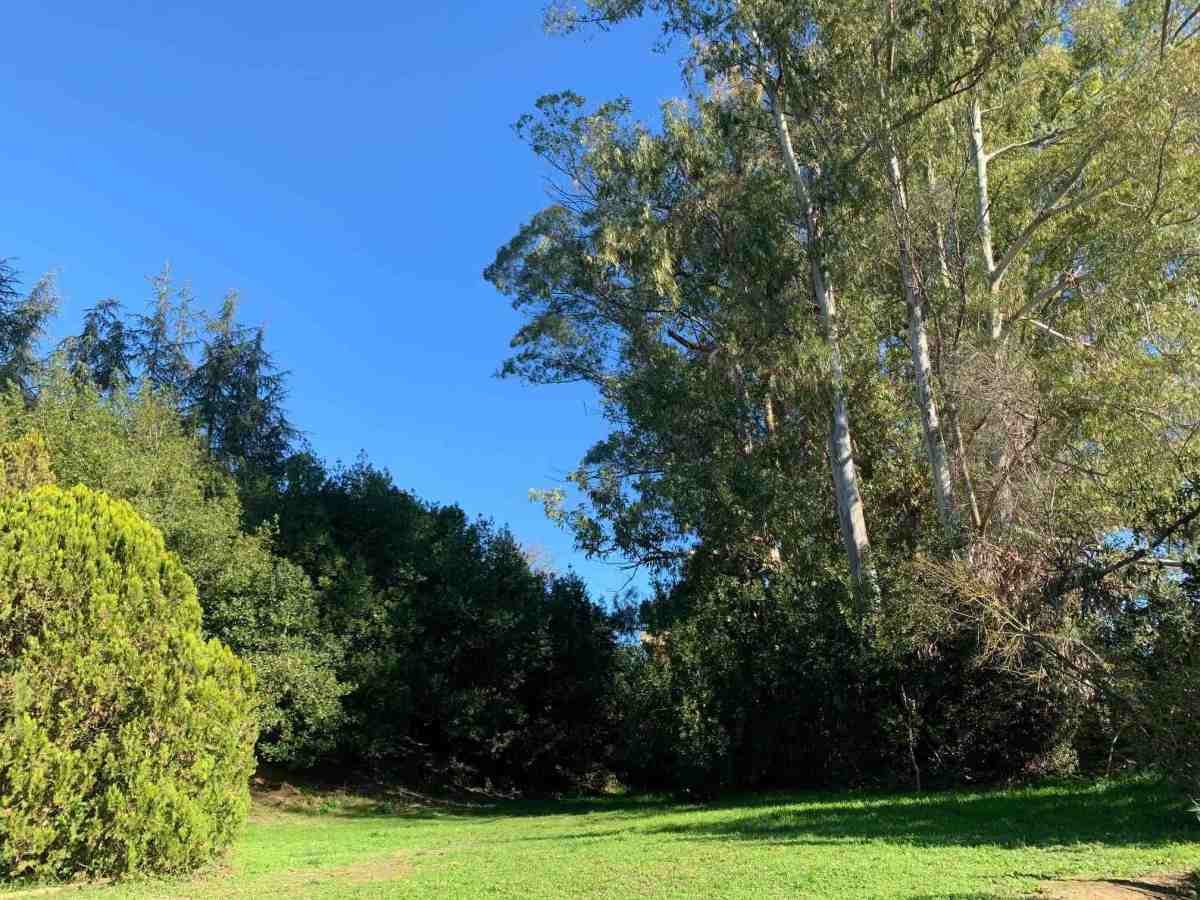
The Parco della Cellulosa is in western Rome, in the Casalotti neighborhood, with the main entrance at the casaletto at Via della Cellulosa 132 (00166 Roma). There are two open pedestrian entrances: Via di Santa Seconda opposite number 74 and Via della Cellulosa opposite number 88. You can get there by bus without difficulty: line 146 leaves from the Battistini terminus, on Metro A, and goes up Via di Casalotti. Line 905 leaves from Cornelia, also Metro A, and you get off at the Cellulosa Santa Seconda stop. Entry is open and free, because the park is a public green area and not a museum with tickets: no need to book for a walk, there is no turnstile, there is no ticket desk. Hours follow the light, from dawn to dusk, as for almost all natural areas managed in the city. For organized activities, guided visits and the events calendar, it is better to check the park's official website and the channels of the citizens' committee, because the program changes from season to season there. The committee's office, historically, receives visitors on Friday in the late afternoon at the casaletto at Via della Cellulosa 132.
If you are looking for other protected areas in the same quadrant, all part of the system managed by RomaNatura, you can head toward the Insugherata Reserve, the Monte Mario Reserve, the Valle dei Casali or the Tenuta dei Massimi, while farther north, toward the countryside that the Fosso Galeria crosses, you find the Castel di Guido Oasis and the Veio Park.
The Parco della Cellulosa extends over about 100 hectares and was born from the union of two zones once used by the former Ente Nazionale per la Cellulosa e la Carta, connected to each other by the Fosso Galeria. Since May 11, 2006 the whole area falls within a Natural Monument, the form of protection that the Lazio Region reserves for places of particular natural and landscape value within the urban fabric. The name, which to a distracted ear sounds industrial, tells a precise story: here, for half a century, scientific research was done on the trees from which paper is made. Whoever enters today walks inside a former forestry experimentation center that has become a green neighborhood, and this double layer, the woods and the laboratory, is the key to understanding the place.
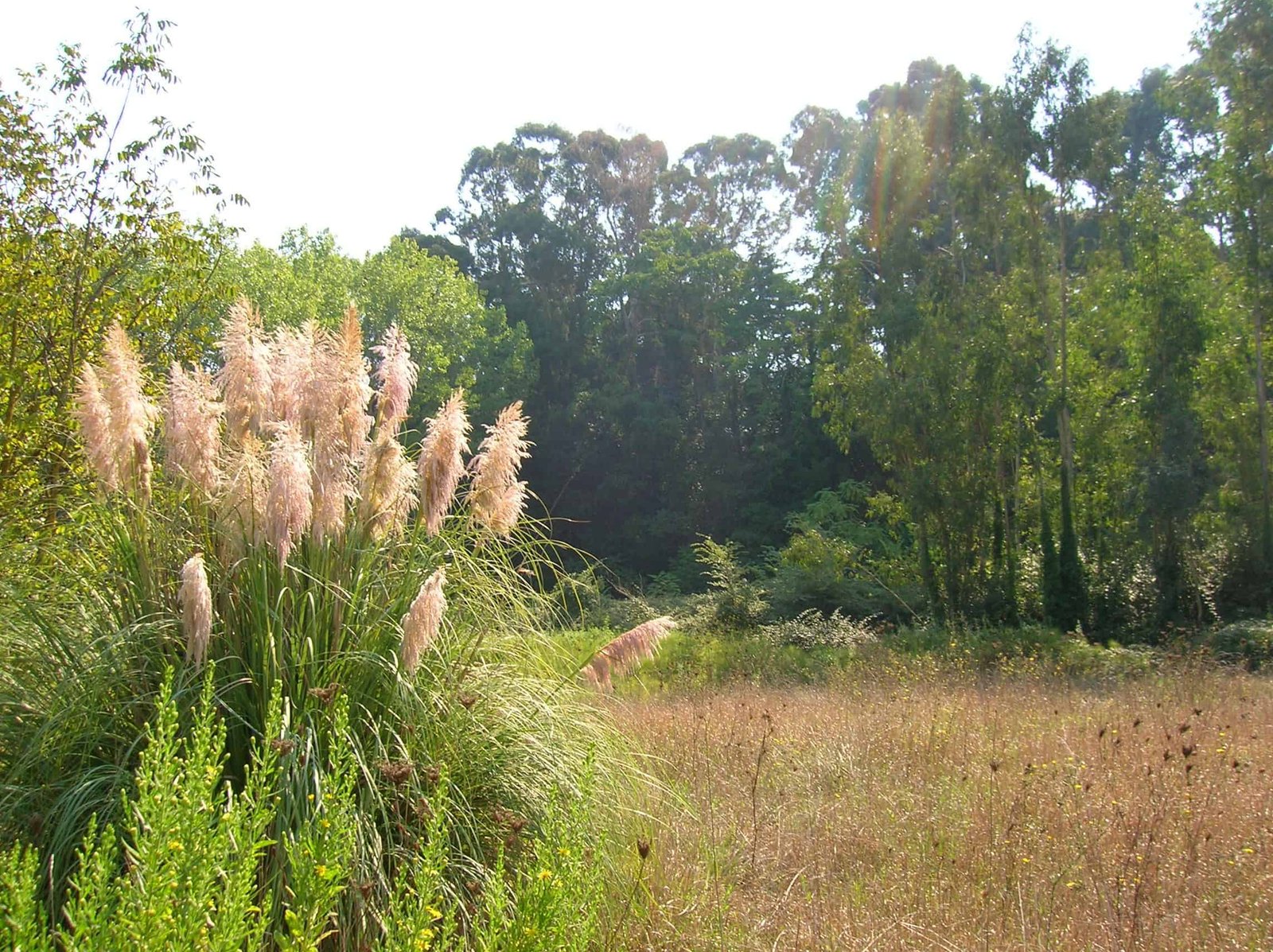
What the Parco della Cellulosa really is
The official designation is Natural Monument Parco della Cellulosa, and it is worth pausing a moment on the words. A Natural Monument is not just any city park, with flower beds and playground rides, and it is not a closed and fenced reserve either, where you enter only with a guide. It is an intermediate category of protection, designed to protect a natural environment that has survived inside the city and deserves to stay as it is. In Lazio this form of protection is entrusted to the regional body RomaNatura, which administers an entire system of protected areas inside and around the capital, from the countryside to the north all the way to the estates to the south.
The Parco della Cellulosa occupies the northwestern quadrant of Rome, near Casalotti, a neighborhood that in recent decades has filled up with small apartment buildings and that without these 100 hectares would be concrete almost without interruption all the way to the countryside. The territory is made up of two distinct cores, both once belonging to the Ente Nazionale per la Cellulosa e la Carta, which the Fosso Galeria holds together like a thread of water. One of the two cores, the one of about 14 hectares around the old research center, is the open part that can be visited. The other, much larger, is the former experimental farm that still holds plantings and collections of trees.
The area of the Parco della Cellulosa and its two souls
The numbers help with orientation. The protected whole is around 100 hectares, but not all of it can be walked in the same way. The portion usable without limits, the one with the pedestrian entrances, the play area and the paths, corresponds roughly to the 14 hectares of the former Experimentation Center, the historic heart around the casaletto on Via della Cellulosa. The larger part, a good 76 hectares of the former farm called Ovile, is forestry research ground and does not have the same tourist openness: there the trees are not ornament but study material, rows of poplars and collections of Mediterranean species planted and observed by agronomists. Knowing this division spares the disappointment of those who arrive thinking of a large continuous garden: the Parco della Cellulosa is half a place for leisure and half a scientific station, and the second half is sensed more than seen.
The nature of the Parco della Cellulosa
The reason the Region protected this strip of green is not scenic in the postcard sense, but ecological. In a densely populated area like Casalotti, 100 hectares of trees and meadows work as a refuge for wildlife that elsewhere on the periphery would not find a home, and as a corridor connecting the city to the open countryside of the Galeria valley.
The trees of the Parco della Cellulosa
The vegetation tells the double origin of the place. On one side are the species of the local Mediterranean scrub, the ones that would grow here anyway: the oak, the evergreen holm oak, the elm, the laurel. On the other are the trees that arrived with the research, planted to be studied and never removed again, and this explains presences that you would not expect in a spontaneous Roman wood. You walk and you meet the eucalyptus, with its peeling bark and the balsamic scent of its leaves, the mimosa, which at the end of winter lights up a corner of the park in yellow, the walnut, the pine, the American maple. The broussonetia papyrifera also appears, the paper mulberry, a tree that with the name of the park closes an almost perfect circle: in the Orient, paper was made from its bark, and it is hard to imagine a plant better suited to a former cellulose agency. Along the Fosso Galeria, where the soil stays damp, horsetail and the other riparian species that love water thrive, a band of vegetation different from all the rest and precious for exactly that reason.
The animals of the Parco della Cellulosa
Whoever arrives early in the morning, or stops by toward sunset, has a good chance of hearing and sometimes seeing wildlife that is surprisingly varied for a park on the outskirts. Among the birds the most photogenic is the hoopoe, with its fan-shaped crest and undulating flight. Over the open meadows you may spot the buzzard wheeling in search of prey, while among the trees live the tawny owl and the little owl, the two nocturnal birds of prey that begin to be heard at dusk. There is also the rose-ringed parakeet, the green parrot now naturalized all over Rome, noisy and unmistakable. Mammals show themselves less, but they leave their mark: whoever knows the tracks recognizes the passage of the porcupine, with its quills lost along the paths, of the badger and of the fox. None of these animals is rare in absolute terms, but finding them all together inside a patch of green squeezed between small apartment buildings is the measure of how much the park works as a refuge.
How the Parco della Cellulosa began: from the Ente to forestry research
To really understand the Parco della Cellulosa you have to go back to 1952, the year the Ente Nazionale per la Cellulosa e la Carta is founded. Postwar Italy is hungry for domestic raw materials, and paper is one of them: the Ente receives a precise institutional mandate, to adopt measures capable of facilitating the production and use of domestic raw materials for cellulose. Not a company that prints sheets, but a public body that has to grow in Italy the right trees, poplars above all, from which to obtain wood pulp.
The Ente builds a network of farms scattered across almost all the Italian regions and, for the scientific side, equips itself with two research institutes of international fame: the Experimentation Institute for Poplar Growing in Casale Monferrato, in the province of Alessandria, and the Agricultural and Forestry Experimentation Center of Rome. It is this second institute that is the root of the park.
The Experimentation Center of 1953
The Agricultural and Forestry Experimentation Center of Rome is established in 1953 in the locality of Casalotti, on an area of 14 hectares that today corresponds to the open part of the Parco della Cellulosa. It was not a simple nursery: real research was done here, with a complex of laboratories and greenhouses and a range of disciplines that surprises with its breadth. They studied ecology, biology, crop genetics, microbiology, plant pathology, entomology and wood technology. Put another way, the tree was looked at from every possible angle: how it grows, what diseases strike it, what insects threaten it, how its wood is worked. For field trials the Center relied on the adjoining farm called Ovile, a surface of 76 hectares and 65 ares, where the theories of the laboratory became real rows of trees to observe for years.
From the SAF to the liquidation of the Ente
The arc of the Ente follows that of much Italian public research. In 1979 operational management passes to one of the affiliated companies, the Società Agricola e Forestale per le Piante da Cellulosa e da Carta. Then come the 1990s and with them the dissolution: two laws, number 595 of 1994 and number 337 of 1995, decree the end of the Ente and of the controlled companies, and all the assets end up gathered under a Sole Liquidating Commissioner. It is the moment when this heritage of trees and laboratories risks dissolving into the folds of bureaucracy, split up among different ministries and institutes.
ICRAM, URF and the fate of the buildings
What follows is a story of loans for use and changes of hands that is worth knowing, because it explains why part of the park remains closed. In 1997 the former Experimentation Center portion, the 14 hectares between Via di Casalotti, Via della Cellulosa and Via di Santa Seconda, after a brief passage to the Ministry of the Environment, is entrusted on loan for use to the Istituto Centrale per la Ricerca sul Mare. Between 2000 and 2001 that loan expires and the liquidation passes under the control of the Ministry of the Treasury, with a decree of May 4, 2000: since then the marine institute has paid an occupancy fee. The buildings in the area, those still in use and those disused, amount to about 24 thousand cubic meters, with another 13 thousand or so potentially buildable, and the area was long evaluated for sale through the public company that manages auctions of State property.
The 76 hectares of the Ovile farm have instead had a fate more consistent with their nature. In 2001, as a structure connected to the Istituto di Sperimentazione per la Pioppicoltura, they were transferred to the Ministry of Agricultural and Forestry Policies to fall within the reorganization of the agricultural research institutes, inside the Council for Research and Experimentation in Agriculture. Since then the former Ovile has borne the name Unità di Ricerca Forestale, and its administrative management has been entrusted to the Istituto sperimentale per lo studio e la difesa del suolo. The value of that land is not economic but scientific: the plant material studied and preserved in the experimental plantations is considered among the largest and most complete at the national level, second, in the Mediterranean area, perhaps only to the great French collections. It is a genetic heritage of trees that no real estate auction could rebuild.
The Parco della Cellulosa today: the citizens who saved it
The recent history of the park is the most interesting part, and the least told by guides. An area like this, former state property in liquidation, squeezed between ministries and potential auctions, could have ended up subdivided into lots. What prevented it was a group of residents of the neighborhood who in 2005 formed the Comitato per la Tutela e la Salvaguardia del Parco della Cellulosa. It was that committee, with pressure from citizens and local associations, that obtained the following year the protection as a Natural Monument, which came with decree number 165 of the president of the Lazio Region of May 11, 2006.
Since then it is volunteers who keep the open part of the park alive. They take care of the green areas, they built benches, tables and gates with their own hands, they maintain the paths, and they organize a busy calendar of initiatives in collaboration with RomaNatura, with schools and with the many associations of Casalotti. The Parco della Cellulosa, in this sense, is not a garden dropped from above but a neighborhood conquest, and you can feel it: those who frequent it treat it as their own.
The urban vegetable gardens of the Parco della Cellulosa
One of the most successful experiments is that of the urban vegetable gardens, started by the local Legambiente chapter. In 2009 a pilot project was approved that took an area of about a thousand square meters, previously covered with brambles and waste materials, and transformed it into cultivable plots. The first assignees were 17 gardeners, with a concession of up to five years. For new assignees the terms are shorter, from one to three years. The rules tell the spirit of the place well: priority to residents of the neighborhood, precedence to those further ahead on the list and to categories such as retirees, organic cultivation preferred, a ban on the most toxic pesticides and on weed killers, no paid workers because the garden is worked by whoever has it in concession. In exchange, the gardeners commit to keeping the area tidy, to lending a hand in the maintenance of the park and to collaborating with schools in educational activities. The water is supplied by the chapter. The gardens are not an agricultural detail: they are the tool with which the park became a piece of community, a place where retired grandparents and schoolchildren learn together how a tomato grows and what seasonality means.
The school in the woods and the educational activities
Alongside the gardens, the Legambiente chapter has carried forward for years an environmental education project aimed at schools, designed to let children experience the wood as an open-air classroom. The Parco della Cellulosa is a natural educational laboratory: there are the trees of the experimental collections with which to explain botany, the fauna with which to teach respect for wild animals, the ditch with its riparian vegetation, and the very history of the place, which makes it possible to tell a school class how a research center became a public park. The classes that come here don't find just any garden, but a place that has a lot to teach precisely because it was born from science.
Events, wood workshops and community life
The calendar at Parco della Cellulosa, run by the committee and the associations, is livelier than its outlying location would suggest. Over the years it has hosted orienteering races among the trees, photography exhibitions, wood reuse workshops with a small dedicated atelier, and a long series of recreational, cultural and environmental activities meant to involve the neighborhood. There is real culture too, with presentations, talks and events that make use of the covered spaces of the small house. There is even a book booth for swapping books, with the simple and kind rule of taking one and leaving another. To find out what is happening in a given week, the reference is still the park's official website and the committee's channels, because the program is seasonal and changes often.
How to visit Parco della Cellulosa
A visit to Parco della Cellulosa is the visit of a neighborhood park, not of a monument: you come to walk, to bring the kids, to run, to be outdoors away from traffic. The open part, around the small house at Via della Cellulosa 132, offers a running path that runs between Via di Santa Seconda and Via della Cellulosa, a playground for the little ones, resting areas with benches and tables, and the paths that cross the trees. It isn't big like the large historic parks of the center, but it's exactly its compact scale that makes it convenient: in an hour or two you can walk it all at an easy pace.
How to get to Parco della Cellulosa
By public transport the park can be reached with two surface lines that both start from Metro A. The 146 leaves from the Battistini terminus and runs along Via di Casalotti. The 905 leaves from Cornelia and stops at the Cellulosa Santa Seconda stop, the closest to the pedestrian entrances. If you come by car, the reference point is the small house at Via della Cellulosa 132. The coordinates fall around 41 degrees 55 minutes north latitude and 12 degrees 21 minutes east longitude. On foot, besides the main entrance, the entrances are the one on Via di Santa Seconda opposite number 74 and the one on Via della Cellulosa opposite number 88. Since it's an outlying area, the car is convenient, but the bus from Metro A remains the simplest option for those coming from the center.
How much it costs and how long a visit to Parco della Cellulosa takes
Cost is the big advantage: zero. The park is public and admission is free, with no ticket and no reservation for a simple walk. Some organized activities are an exception, such as certain workshops or courses, which may require registration with the committee or with the associations that offer them. As for duration, the open part is easily visited in an hour and a half or two, longer if you bring a book, a blanket or a packed lunch and turn the day into an outing.
Parco della Cellulosa with kids
It's one of the most family-friendly outlying parks in all of western Rome, and not by chance: there's the playground, there are wide spaces where the little ones can run safely away from the roads, and there's the educational side of the gardens and the forest school. A child who sees a porcupine among the bushes here, or learns to recognize the hoopoe, takes home something no concrete playground can give. The book booth, then, is a small game in itself for those who love books.
A curiosity about Parco della Cellulosa
The best curiosity is hidden in the name, and almost nobody gets it. People passing through think Cellulosa is an industrial word, maybe the memory of a paper factory. There was never any factory: research was done here on the trees from which paper is made. And nature, in one of those coincidences that seem written on purpose, left the paper tree itself inside the park. Among the species you meet along the paths is the broussonetia papyrifera, the paper mulberry: a plant native to East Asia whose inner bark has been used for centuries in Japan and China to make a fine paper. In a park called della Cellulosa, born from a cellulose and paper agency, finding the very tree from which paper is made is a rhyme that is almost too perfect. It's worth looking for it and learning to recognize it: it has large, variable leaves, often irregularly lobed on the same branch, and round fruits that turn orange at the end of summer. It's the little botanical secret of the place, and telling it to whoever walks with you will make you look good.
Something nobody tells you about Parco della Cellulosa
What no tourist guide explains is that Parco della Cellulosa is not all the same, and that the part you see is the smaller one. The 100 protected hectares are split in two: the 14 open hectares around the small house, where the paths, the playground and the gardens are, and a good 76 hectares of the former Ovile farm, today the Forest Research Unit, which remain a study area not freely accessible. Anyone arriving expecting to find a big continuous park like Villa Pamphilj risks disappointment: the space for walking is compact, and the rest is research. But it's exactly that invisible rest that makes the place special. Behind the fences there are experimental timber plantations and a collection of Mediterranean species gathered from all of Lazio and central Italy, considered among the most complete in Italy. In practice, while you stroll through the open part, a few hundred meters away there is a living archive of trees, a genetic heritage built over decades of scientific work. Knowing this changes how you look: it isn't a park carved out of some ordinary former farmland, but a forest research center that the city absorbed and partly opened to its citizens.
My advice for visiting Parco della Cellulosa
My advice is not to treat it as a tourist destination but as what it is: a community park that gives its best when there's life in it. Come on a day when the committee has organized something, a guided visit, a workshop, an event in the gardens, and not on just any weekday afternoon, when you risk finding only a few runners and the gates of the study area closed. The right time of year is spring, between March and May: the mimosa at the end of winter lights up a corner in yellow, then everything turns green and the wildlife is more active. In summer the western outskirts bake in the sun and the shade here is not the dense shade of a mountain forest, so early morning or late afternoon is best. Bring water, because the facilities are the essential ones of a public park, and comfortable shoes but not trekking ones: the routes are flat and easy. If you're interested in the botanical and historical side, the added value is enormous with a committee guide who opens the doors for you and tells you about the research. On your own you'll see a nice neighborhood park, accompanied, you'll understand a piece of Italian scientific history. And one last thing: ask about the gardens. They are the real soul of the place.
Another well-known fact, yet rarely mentioned
Everyone in Casalotti knows Parco della Cellulosa exists, but few remember that without a group of stubborn residents it wouldn't exist at all. It's an almost banal fact, yet it's taken for granted: this Natural Monument was not established by an enlightened ministry nor handed over by the City, but wrested from liquidation by a neighborhood committee born in 2005. A year later, on May 11, 2006, the Lazio Region signed the protection decree, number 165. In the meantime the part with the buildings had even been considered for sale at auction, with buildable volumes already calculated. The green space you cross for free today, with the hoopoe flying over the meadows and the kids at the playground, could have become yet another block of small apartment buildings. It's forgotten because grassroots mobilization doesn't make the news like a ribbon cutting, but it's the most important fact of the whole story: Parco della Cellulosa exists because someone decided it should exist and put years of volunteer work into it. Every bench built by hand by the volunteers is, in this sense, a small monument to that choice.
The right photo to take at Parco della Cellulosa
The photo that Parco della Cellulosa gives you to take home is not a wide panorama, because the park doesn't offer big open views: it's a detail. The recommended subject is the mimosa in bloom at the end of winter, when between February and March a corner of the park lights up with that yellow that lasts a few weeks and looks great against the clear sky of cold days: it's the most recognizable and seasonal photograph of the place. The second choice is the strip of vegetation along the fosso Galeria, where the horsetail and the riparian plants create a green and humid environment different from everything else, excellent in the raking light of the morning. Those who love botanical details should aim at the leaves and fruits of the broussonetia, the paper mulberry, for the photo that tells the curiosity of the name. If you come with kids, the book booth for swapping books and the playground make the everyday-life shot. A warning for the patient photographer: the interesting wildlife, hoopoe, buzzard, nocturnal raptors, shows up at dawn or dusk and you need a telephoto lens and luck. Better to aim at the plants, which stand still and don't fly away.
Some important events that happened here in history
The history of Parco della Cellulosa is not made of battles or coronations, but of institutional dates that decided the fate of this green space, and lined up they tell a century of research and of a changing city. The first event is from 1952, when the Ente Nazionale per la Cellulosa e la Carta was founded with the task of making Italy more self-sufficient in the production of raw materials for paper. The key year for the place is 1953, when the Center for Agricultural and Forest Experimentation was born here on 14 hectares in Casalotti: from that moment this land becomes science. Then comes 1979, with the management passing to the Società Agricola e Forestale, and then the season of dissolution, with the laws of 1994 and 1995 that close the Ente and entrust everything to a liquidating commissioner. 1997 brings the former research center under the Istituto per la Ricerca sul Mare, and 2001 transfers the 76 hectares of the Ovile to the Ministry of Agriculture as the Forest Research Unit. 2005 is the year of the popular turning point, with the birth of the citizens' committee, and May 11, 2006 is the date of salvation, with regional decree number 165 that establishes the Natural Monument. Finally, 2009 marks the start of the urban gardens, the moment when the protected park also becomes a lived-in park. They are administrative events, not epic ones, but it's rare to be able to read in a single place, superimposed, the history of Italian public research and that of an outlying neighborhood organizing to defend its green space.
Who has passed through Parco della Cellulosa
Parco della Cellulosa is not a Grand Tour place, and it would be dishonest to invent emperors or poets for it who never set foot here. Those who passed through, and left a real mark, belong to another genealogy: that of scientists. For half a century, from the 1950s onward, these hectares were walked by agronomists, botanists, forest geneticists, entomologists and wood technologists, researchers who worked in the labs and greenhouses of the Experimentation Center and who in the adjoining Ovile farm planted and observed the trees year after year. They were the men and women of an institute tied to the Ente Nazionale per la Cellulosa and to research on poplar growing, people whose names don't end up in history books but whose work survives in the trees still studied inside the Forest Research Unit. Then, from 2005 onward, another crowd passed through, less titled and just as decisive: the citizens of Casalotti, the committee volunteers, the Legambiente members, the gardeners, the school groups that come every year for the forest school. If you look for famous figures who passed through this park you'll come away empty-handed. If you accept that history is also made by anonymous scientists and organized citizens, then Parco della Cellulosa is full of people who passed through and left something.
Parco della Cellulosa within the RomaNatura system
To place Parco della Cellulosa properly you need to understand who protects it. RomaNatura is the regional agency that since the 1990s has administered the protected natural areas of the municipality of Rome, a mosaic that includes reserves, parks and natural monuments spread from the countryside in the north to the estates in the south and the coast. It's an almost unique case in Europe: no other capital preserves within its borders such a quantity of protected nature, thousands of hectares of pine woods, river valleys, farmland and forests. Parco della Cellulosa is one of the smallest pieces of this system, but not one of the least significant, because it represents a particular type of protection, that of the Natural Monument, reserved for circumscribed and valuable environments absorbed into the urban fabric.
Being part of the RomaNatura system means, in concrete terms, that the park shares management, rules and sometimes the calendar of initiatives with the city's other protected areas. It's worth reading Parco della Cellulosa not as an isolated fact of Casalotti, but as a node of a green network that, following the fosso Galeria and the other watercourses, connects the built-up outskirts to the still open Roman countryside. It's this ecological continuity that justifies the protection: without corridors like this one, wildlife would remain trapped in islands of green with no exchange, and the biodiversity observed in the park today would not be possible.
The experimental plantations and the tree collection of Parco della Cellulosa
The least visible and most important asset of Parco della Cellulosa is its scientific legacy of trees. In the part of the former Ovile farm, today the Forest Research Unit, there are preserved experimental timber plantations and a collection of Mediterranean species gathered across all of Lazio and central Italy, considered among the largest and most complete at the national level. It isn't a botanical garden to visit with a label in front of each plant: it's a living archive, born for research, where every row has a scientific meaning and every provenance is documented.
Poplar growing and the vocation of the Ente
The common thread of it all is the poplar. The Ente Nazionale per la Cellulosa e la Carta existed to make Italy less dependent on wood pulp imports, and the poplar, which grows fast and gives wood suited to paper, was the key species. Not only at Casalotti: the scientific twin of the Roman center was the Istituto di sperimentazione per la Pioppicoltura in Casale Monferrato, in Piedmont, one of the international reference points of the field. In Rome, the Forest Research Unit was born as a structure connected precisely to the poplar growing institute, and this explains the nature of the collections: not ornamental trees, but genetic material selected to study growth, disease resistance and yield. Knowing that behind the fences of Parco della Cellulosa survives a piece of the history of Italian forest research gives the place a depth that no lawn, however well kept, could have.
Why a tree collection is a treasure
It may seem strange to call a row of poplars or a collection of oaks a treasure, but the value is real and cannot be reproduced. A collection of forest species built over decades contains varieties, ecotypes and provenances that could no longer be gathered in the same way today, because many of the original environments have changed. It's genetic capital, useful for research on climate, on plant diseases and on the future of forests. That's why, when the sale of the buildings of the former center was discussed, the collections part stayed tied to the Ministry of Agriculture and to research: buildings can be rebuilt, a living archive of trees cannot. Parco della Cellulosa safeguards, almost without showing it, one of the most complete forest heritages in the country, second in the Mediterranean area perhaps only to the great French collections.
Casalotti and the geography of Parco della Cellulosa
Parco della Cellulosa is in the northwestern sector of Rome, in the Casalotti neighborhood, along the axis that climbs from Via Aurelia and Via di Boccea toward the countryside. It's a Rome that tourism almost completely ignores, made of small apartment buildings built from the 1970s onward, big arterial roads and strips of countryside that survived between one building lot and the next. This very context makes the park all the more important: in a quadrant where public green space has historically been scarce, 100 protected hectares are a rare resource.
The geography also explains the name of the watercourse that crosses the park. The fosso Galeria is one of the many ditches that run down toward the Tiber, cutting through the countryside west of Rome, and it gives its name to the ancient Galeria, the abandoned medieval village a little further north. Following the water in your mind, from Parco della Cellulosa you move toward a countryside that is still open, that of the estates and oases that dot the Aurelian sector. The park, in this sense, is the urban gateway to a much wider green system, the point where the built city gives way to the Roman countryside.
Accessibility and services at Parco della Cellulosa
It's best to arrive with the right expectations about services. Parco della Cellulosa is a natural park run in large part by volunteers, not a landscaped garden with a café, rentals and permanent staff. In the open part there are the paths, the playground, resting areas with benches and tables built by the volunteers, and the essential facilities. Don't expect kiosks at every corner: bring water, especially in summer, and any packed lunch. The surface of the routes is largely natural and flat, fine for a family walk, but not suitable everywhere for those with strict accessibility needs. For a targeted check, with a wheelchair or a sturdy stroller, it's best to ask the committee or RomaNatura first, who know the condition of the individual stretches. Wi-fi coverage, according to what the park states, is available on request in some areas. For precise opening hours of the covered spaces, the secretariat and the committee's reception, the reference remains the park's official website.
What to see around Parco della Cellulosa
Parco della Cellulosa is in an area of Rome rich in protected natural areas, almost all managed by RomaNatura, and this lets you build a themed green day. Staying in the west and northwest quadrant, a short distance away you find the Insugherata Nature Reserve, which runs down toward Via Trionfale, and the Monte Mario Reserve, with its observatory and views over the city. To the south open the Valle dei Casali and the Tenuta dei Massimi, Roman countryside that remained inside the Grande Raccordo. Following the course of the fosso Galeria toward its valley you reach the Castel di Guido Oasis and, further north, the large Veio Park with its gorges and Etruscan remains. Those who instead want a large historic park for walking, with more services, have Villa Doria Pamphilj within reach, the largest park in Rome, and on the opposite side of the city the Aniene Valley and the Marcigliana complete the picture of the RomaNatura areas. The Pineto Park, a little further east, is the link that connects this patch of green to the consolidated city.
Quick questions about Parco della Cellulosa
How much does it cost to enter Parco della Cellulosa?
Nothing. Parco della Cellulosa is a public green area with free admission. There's no ticket and you don't need to book for a walk. Only some organized activities, such as courses or workshops, may require registration.
What are the opening hours of Parco della Cellulosa?
The open part follows daylight, from dawn to dusk, like the other natural areas managed in the city. For events and guided visits, which have their own hours, it's best to check the park's official website and the committee's channels.
How do you get to Parco della Cellulosa by public transport?
With bus 146 from the Battistini terminus, on Metro A, along Via di Casalotti, or with bus 905 from Cornelia, also Metro A, getting off at the Cellulosa Santa Seconda stop. The main entrance is at the small house at Via della Cellulosa 132.
Where are the entrances to Parco della Cellulosa?
The main access is at Via della Cellulosa 132. Then there are two pedestrian entrances, one on Via di Santa Seconda opposite number 74 and one on Via della Cellulosa opposite number 88.
Do you need to book to visit Parco della Cellulosa?
Not for a simple walk: you enter freely during opening hours. Booking may be needed only for guided visits, educational workshops or courses organized by the committee and the associations.
Is Parco della Cellulosa suitable for kids?
Yes, very. There's a playground, there are wide safe spaces away from traffic, the urban gardens with their educational side, the forest school and a book booth for swapping books. It's one of the most family-friendly outlying parks in western Rome.
Can you bring a dog to Parco della Cellulosa?
As in the protected areas managed by RomaNatura, dogs are generally allowed on a leash and with the obligation to pick up their waste, out of respect for the wildlife. For the detailed rules and any reserved areas it's best to check on site or on the official website.
How much time do you need to visit Parco della Cellulosa?
The open part can be walked at an easy pace in an hour and a half or two. With a packed lunch, kids at the playground or a guided visit, half a day fills up easily.
What animals can you see at Parco della Cellulosa?
Among the birds, the hoopoe, the buzzard, the ring-necked parakeet, the tawny owl and the little owl. Among the mammals, which show themselves less but leave traces, the porcupine, the badger and the fox. The best times for spotting are dawn and dusk.
Why is it called Parco della Cellulosa?
Because the area belonged to the Ente Nazionale per la Cellulosa e la Carta, which from 1953 ran a forest research center here on the trees from which paper is made. There was never a factory: the name comes from science, not from industry.
Is Parco della Cellulosa wheelchair accessible?
The open part has routes that are largely flat, but since it's a natural park with a surface that isn't always paved, accessibility varies from point to point. For a targeted check it's best to contact the committee or RomaNatura before the visit.
How big is Parco della Cellulosa?
The area protected as a Natural Monument is about 100 hectares, but the freely usable part corresponds to the 14 hectares of the former experimentation center. The 76 hectares of the former Ovile farm are a forest research zone not open to the public.
Are there urban gardens at Parco della Cellulosa?
Yes. Since 2009 the local Legambiente circle has run an urban gardens project on about 1,000 square meters, with priority for neighborhood residents, organic farming and a strong social and educational character.
What is the fosso Galeria?
It's the watercourse that connects the park's two zones, the research center one and the Ovile farm one. Along its banks grows riparian vegetation, with horsetail and other water-loving species, different from the rest of the park.
Does Parco della Cellulosa have a picnic or barbecue area?
There are resting areas with benches and tables made by the committee's volunteers. For the use of any equipment and the rules on fires and barbecues it's best to check the official website or with the committee, because seasonal fire restrictions apply in protected areas.
Who runs Parco della Cellulosa?
Protection is the responsibility of the regional agency RomaNatura, which administers Rome's protected areas. The day-to-day care of the open part is entrusted to the volunteers of the Committee for the Protection and Safeguarding of Parco della Cellulosa and to the local associations, including Legambiente.
Can you organize guided visits at Parco della Cellulosa?
Yes, the committee and the associations regularly offer guided visits, educational workshops and activities for schools. The calendar is seasonal: the reference is the park's official website and its social channels.
What is the best time to visit Parco della Cellulosa?
Spring, from March to May, when the vegetation is at its best and the wildlife is more active. At the end of winter the mimosa in bloom is the most photogenic sight. In summer, early morning or late afternoon is better, because of the sun of the western outskirts.
Parco della Cellulosa is not the place I'd recommend to someone with a single afternoon in Rome who wants to see the Colosseum. It's a place for those who live Rome, or want to understand it beyond the postcards: a former forest research center turned neighborhood park thanks to the stubbornness of the people who live there. Go with the right spirit, that of someone looking for real green space and a little-told story instead of the famous monument, ask about the gardens and the research, and you'll leave knowing something your fellow bus riders, almost certainly, don't.
Article written by the editorial team of TourLeaderPro, contact them for Private/Corporate/V.I.P. Tours and Experiences.
Planning a trip to Rome? The English guides for visiting the city are on ItalyPlanner.com.