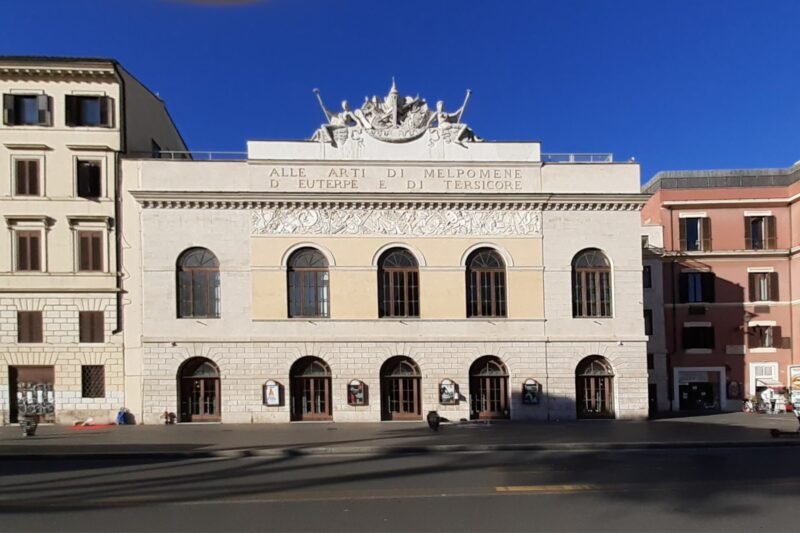
Francesco De Gregori in Rome at Teatro Sala Umberto, October 27 to November 15, 2026
In short. Francesco De Gregori's residency at Teatro Sala Umberto in Rome, between the end of October and mid-November 2026, is a concert built on closeness rather than breadth: 15 nights in a historic center theater, with the stage a few meters…
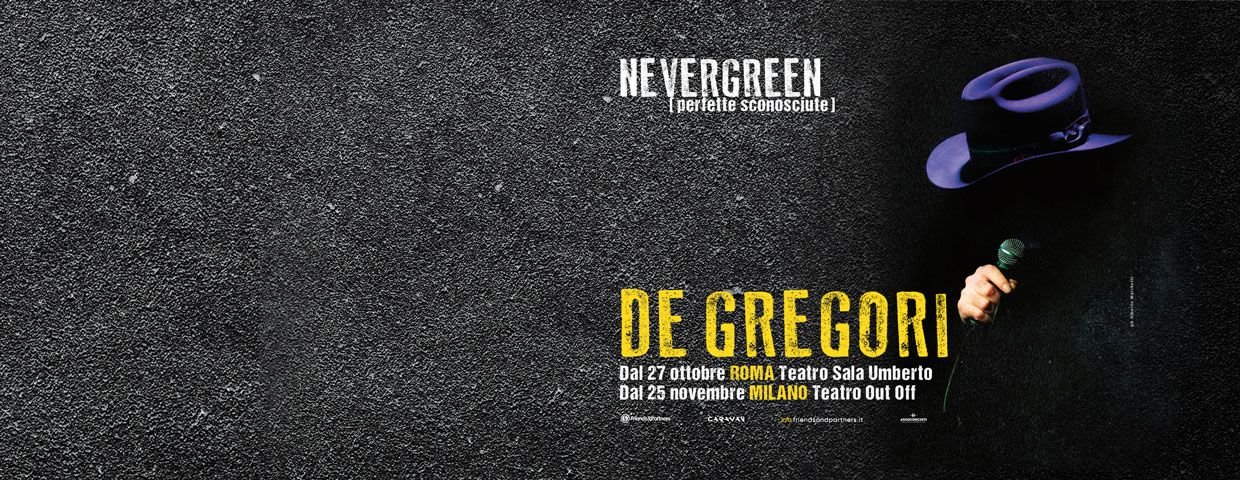
Francesco De Gregori's residency at Teatro Sala Umberto in Rome, between the end of October and mid-November 2026, is a concert built on closeness rather than breadth: 15 nights in a historic center theater, with the stage a few meters from the front row and a repertoire built around the songs that over the years have stayed on the margins of the set lists.
The project's title is “Nevergreen (Perfette sconosciute)”, and it already says almost everything. If evergreens are the songs that last, the ones the audience sings before the artist even starts, nevergreens are the exact opposite: songs recorded, released, sometimes even loved by the most devoted fans, which however never made it into the collective chorus. De Gregori has many of them, because his catalog covers more than 50 years of work and more than 20 albums of new songs. Bringing them to the stage for 15 nights in a row, in front of an intimate audience, is a choice artists at his level of popularity don't usually make.
The dates run from October 27 to November 15, 2026, all starting at 21:00. The theater is at Via della Mercede 50, halfway between Piazza San Silvestro and the Tridente, in an area whose relationship with passersby changes completely in the evening: by day it's traffic, offices, shop windows and passing tourists, after 20:00 it becomes a web of almost silent streets two minutes from the most photographed steps in Europe. What follows serves to frame the concert series, describe the theater that hosts it, explain how to get there and what to expect from a night in a theater of this kind, as well as give a few pointers on what's worth seeing before or after, since this is one of the densest corners of central Rome.
What this theater residency is and why it's a rare format
The word residency, applied to live music, means something precise: an artist who, instead of moving to a different city every night, stays in a single venue for an extended series of nights. It's a format born in English-speaking theaters and clubs, common above all in London, New York and Las Vegas, and in Italy it long remained marginal because the concert market organized itself around the tour: vans, arenas, one city a day, the same set list repeated with minimal variations.
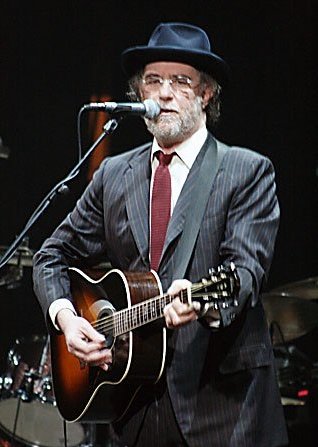
15 consecutive nights in the same theater turn that logic upside down. The production is set up only once, the sound is tuned to the hall and not to a different warehouse every night, and above all the set list can change without anyone having to redo the lighting design from scratch. The theater states explicitly that the set list will always be different, and this is the core of the project: those who go two nights in a row don't see the same concert twice.
Then there's a question of scale. Sala Umberto is a theater of modest size, and the official communication speaks of a limited capacity for each night. An artist who fills arenas chooses to play for a number of people who in an arena would take up a handful of sections. It isn't a neutral choice: it changes the way he sings, it changes the volume of the instruments, it changes the possibility of keeping in the set list songs that live, in a 10,000-person venue, wouldn't hold up against the audience singing along.
The project wasn't born in Rome. “Nevergreen (Perfette sconosciute)” had already been staged in 2024 at Teatro Out Off in Milan, an equally small theater with a tradition of experimental theater, and from those nights came a documentary film directed by Stefano Pistolini, premiered out of competition at the 82nd Venice International Film Festival in September 2025. The Rome version therefore comes after a trial run and after a film account of the same format: it isn't an improvised experiment but a form the artist has already tested and evidently wants to repeat.
Dates, times and rest days
The calendar released by the theater includes 15 performances, all starting at 21:00. These are the dates: Tuesday, October 27, Wednesday the 28th and Thursday the 29th, Saturday, October 31 and Sunday, November 1, Tuesday the 3rd and Wednesday, November 4, Friday the 6th, Saturday the 7th and Sunday, November 8, Tuesday the 10th and Wednesday, November 11, Friday the 13th, Saturday the 14th and Sunday, November 15.
The rest days, that is, the dates with no performance, are Friday, October 30, Monday, November 2, Thursday, November 5, Monday, November 9 and Thursday, November 12. It's worth keeping them in mind, because the pattern doesn't follow the usual one of Roman theaters, where the closing day is almost always Monday and that's it: here a Friday and two Thursdays are skipped too, and anyone planning from memory risks showing up at a closed door.
On timing: the 21:00 given is the start time of the show, not the time to arrive. In a historic center theater, with the orchestra filling up all in the same quarter of an hour and a foyer with the space it has, showing up at 20:55 means walking in as the lights are already going down. Half an hour early is the reasonable measure, 40 minutes if you also want to leave your coat at the coat check without lining up twice.
No official information is circulating on the running time, and it's not wise to trust estimates read around. A concert of this kind, with no declared intermission and a variable set list, can reasonably take up the evening until late, but the sensible thing is to plan the trip home knowing that the last run of the Rome metro, on weekdays, is never particularly late. Those counting on public transport would do well to check the day's times before leaving home.
Who Francesco De Gregori is, briefly and without rhetoric
Francesco De Gregori was born in Rome on April 4, 1951, son of the librarian Giorgio De Gregori and the teacher Rita Grechi. He bears the name of a paternal uncle, an Alpini officer and later partisan deputy commander of the Osoppo brigades, killed at Porzûs in 1945. Because of his father's job he grew up in Pescara until he was about 10, then the family moved back to Rome. He attended the Virgilio classical high school and then a university course in which he completed the exams without getting to the thesis, agreed with historian Renzo De Felice.
He started playing guitar in 1966, at 15, and the first song he learned was Celentano's “Il ragazzo della via Gluck”. The same year he went with his father and his older brother Luigi to Florence, among the volunteers who rushed there after the November flood. Luigi, seven years older, would also become a singer-songwriter, choosing his mother's surname, Grechi, as his stage name.
His public debut came in 1969 at the Folkstudio, the Roman venue that in those years worked as a laboratory for an entire generation. There De Gregori met Caterina Bueno, Antonello Venditti, Mimmo Locasciulli, Ernesto Bassignano, Edoardo De Angelis, Giorgio Lo Cascio. With the latter he formed for a time a duo with an openly folk approach, with a repertoire that included Bob Dylan and Leonard Cohen. With Venditti he recorded “Theorius Campus” in June 1972, a two-name record remembered today mainly for Venditti's songs but which also contains the first recordings of De Gregori as a composer.
His first solo album, “Alice non lo sa”, came out in 1973 and divided critics with its hermetic vein. In 1974 came an untitled record, commonly called the sheep album because of its cover, which the author himself later judged severely. Success arrived in 1975 with “Rimmel”, one of the best-selling records of the decade, and continued in 1976 with “Bufalo Bill”. In between there were the collaboration with Fabrizio De André, the translation of Dylan's “Desolation Row” and the four-handed work that led to songs like “Le storie di ieri” and “La cattiva strada”.
In April 1976 came the episode at the Palalido in Milan, when some militants from student collectives climbed on stage, interrupting the concert to read a political statement. It was a hard moment in the artist's biography, and in the following months he drastically cut back his live appearances. He came out of it with “De Gregori” in 1978 and above all with “Viva l'Italia” in 1979, the year in which he also took on the “Banana Republic” tour with Lucio Dalla, an operation that brought singer-songwriter music to Italian stadiums for the first time and sold half a million copies between record and film.
The 1980s opened with his only Sanremo experience, and only as an author: in 1980 he wrote the lyrics of “Mariù”, music by Ron, taken to the festival by Gianni Morandi, who finished 4th. In 1982 came “Titanic”, in 1983 the mini album “La donna cannone” with the songs written for Roberto Russo's film “Flirt” with Monica Vitti. “Scacchi e tarocchi” followed in 1985 and “Terra di nessuno” in 1987, the latter awarded the Targa Tenco for best album of the year.
His later output spans decades: “Prendere e lasciare” in 1996, “Amore nel pomeriggio” in 2001, “Il fischio del vapore” with Giovanna Marini in 2002 (Targa Tenco for best performers in 2003), “Pezzi” in 2005 (Targa Tenco for best album), “Sulla strada” in 2012, “Vivavoce” in 2014, “De Gregori canta Bob Dylan: Amore e furto” released on October 30, 2015. In 2024 came “Pastiche”, made together with Checco Zalone. He is among the artists most awarded by the Club Tenco, with six Targhe received, and was named Officer of the Order of Merit of the Italian Republic on May 26, 2005. In 1984, together with Lucio Dalla, the asteroid 6114 Dalla-Degregori was named after him.
On the concert front, the last 15 years have seen him alternate very different formats: the 2016 club and theater tour after the Dylan record, the international dates of autumn 2017 between the Bataclan in Paris, the Shepherd's Bush Empire in London and the Town Hall in New York, the return to stadiums with Antonello Venditti in 2022 and 2023, and finally the intimate format of “Nevergreen”. Those who have followed him for a long time know that this swing between big and small isn't a contradiction but a working method.
A last useful note to understand what to expect. De Gregori isn't a performer who fills the stage with gestures: his presence is spare, his live voice stays close to the record, and the weight of the night falls on the songs and the arrangements. In a small hall this becomes an obvious advantage, because what gets lost in the reverberation of an arena arrives whole here.
A curious fact about Francesco De Gregori in Rome at Teatro Sala Umberto, October 27 to November 15, 2026
The curious fact concerns the title. “Nevergreen” isn't a word in common use in English: it's built in opposition to evergreen, and it only works if the listener knows the model. Applied to a repertoire like De Gregori's, which has produced some of the most solid evergreens of Italian song, the word becomes a statement of intent: the night won't be built on the titles everyone expects.
The subtitle adds a second level. “Perfette sconosciute”, perfect strangers, is a play on words that flips a familiar expression and applies it to songs, treated like people: songs that have existed for 40 years, that anyone might have heard once, and yet remain foreign to collective memory. Calling them perfect, and not simply unknown, shifts the judgment: they aren't rejects, they're songs the mechanism of popularity left behind.
There's one fact that makes the project less obvious than it seems. An artist with a large catalog, who has reached a very high level of recognition, has in fact an implicit obligation toward the audience: the songs people paid to hear. Every set list is a negotiation between what the artist would like to play and what the audience expects. A residency openly built on the minor songs suspends that negotiation, and does so in advance, in the title itself, so that no one can complain of not having been warned.
Behind this choice there's also a practical catalog question. Over more than 50 years of career, with more than 20 albums of new songs, an author accumulates dozens of songs that never made it onto a compilation, never had a single, were never used in a film. Many of those songs have never been performed live, or only very rarely. Bringing them back to the stage means putting them back into circulation, and in some cases it means playing them in front of an audience for the first time decades after they were recorded.
Teatro Sala Umberto, history and shape of a downtown theater
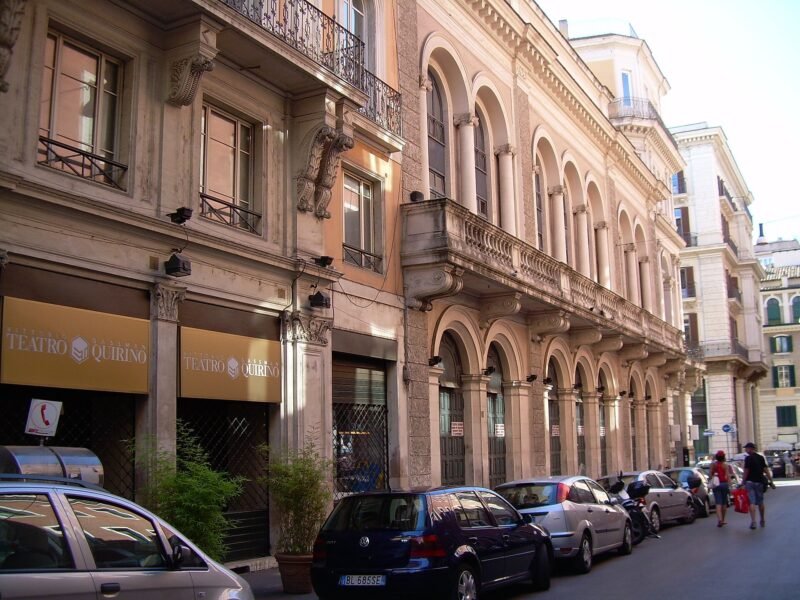
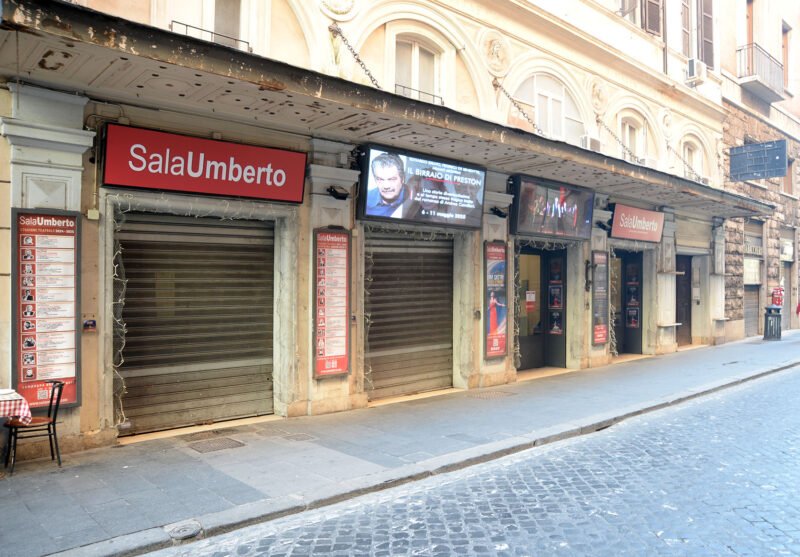
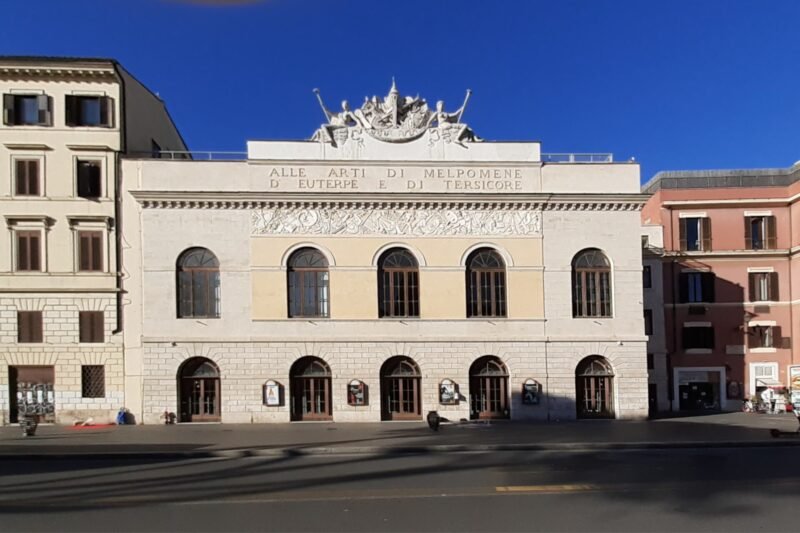
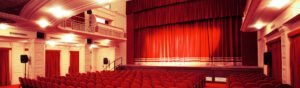
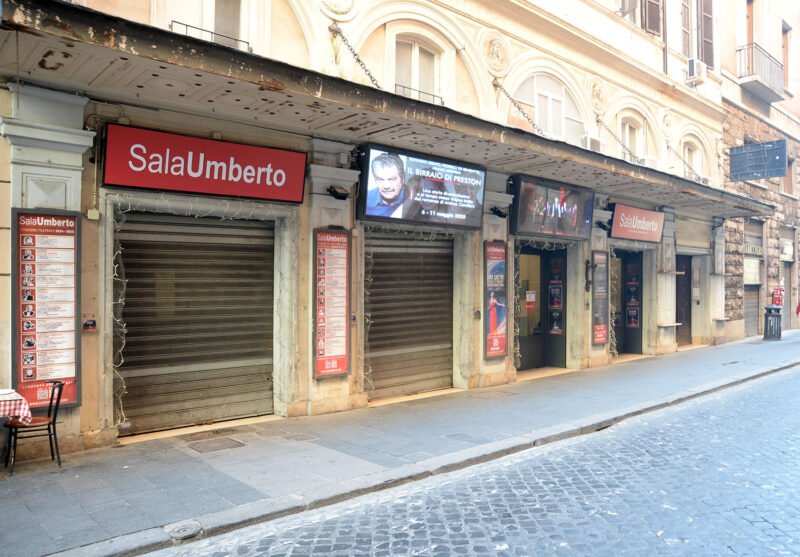
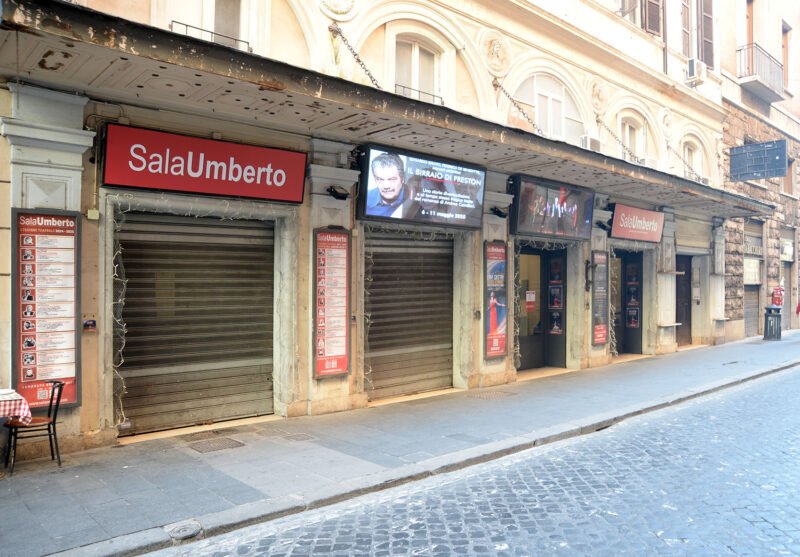
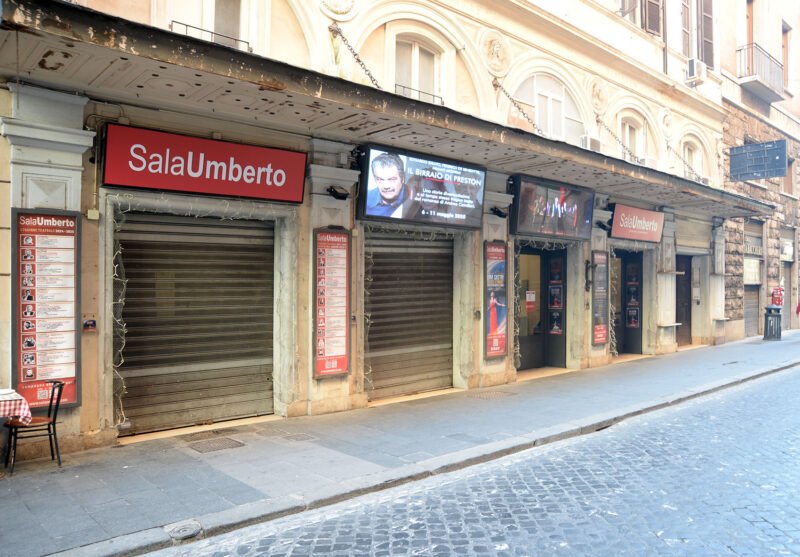
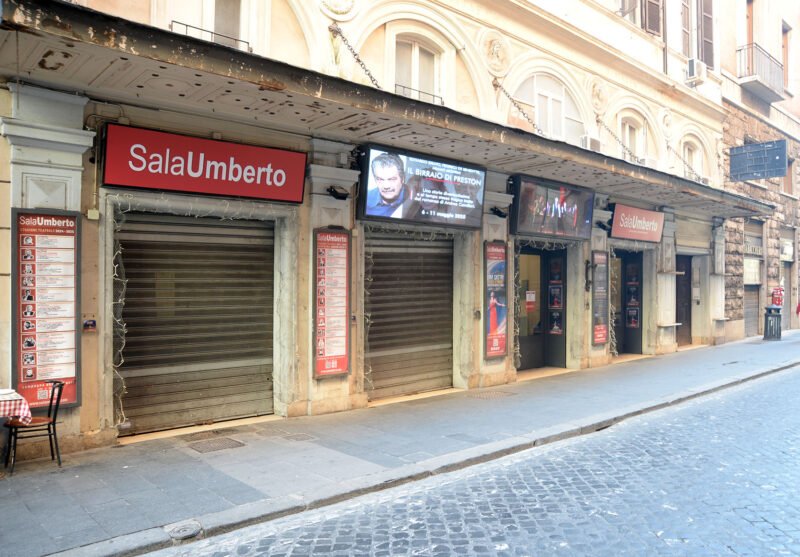
Teatro Sala Umberto is at Via della Mercede 50, in the Colonna district, on the ground floor of a building facing a narrow one-way street. Those passing by without knowing what they're looking for risk not noticing it: the entrance doesn't have the grandeur of 19th-century theaters with colonnades and steps, and the facade reads like any building front with a sign.
The hall was born in 1882 at the wish of Andrea Busiri Vici, who had its interiors decorated by Alessandro Bazzani. Originally it was meant as a concert hall, with operettas and comedies. In 1890 the architect Giulio Podesti oversaw the enlargement work, creating a capacity of 650 seats. In that phase the hall was probably called Sala della Piccola Borsa, a name that says a lot about the neighborhood back then, made of offices, banks and businesses close to the center of power.
In 1913 a new renovation turned the space into a movie theater. The turning point came in 1928, when management passed to the Marino brothers, already owners of the Salone Margherita: the venue went back to being a theater and took the name Sala Umberto, in honor of the king of Italy. The Marinos brought the same program as the Salone Margherita, that is, variety and revue, with stars with exotic stage names that in most cases hid Italian artists, comedians and chanteuses. That season lasted until around 1930, then the hall went back to cinema.
It reopened as a theater in 1981, after renovation and modernization work, with management taken on by the Ente teatrale italiano and a program focused on drama. It didn't last long: in 1991 another change of use brought Sala Umberto back to cinema. Only since 2002 has the space been a theater for good, with Alessandro Longobardi as artistic director, and since then the program has moved between comedy, contemporary drama and, more and more often in recent years, concerts.
The scale of the hall is precisely the decisive feature for a concert like this. In an orchestra of a few hundred seats, the distance between the last row and the stage stays short, and the sound doesn't have to travel the very long path it travels in an arena. There's no delay between what you see and what you hear, there are no giant screens, there's no need to push the system to cover a hostile space. Sound engineers know this well: a theater of this size forgives very little, because every imprecision comes through clearly, but in return it gives back details that get lost elsewhere.
The sections for this show are given by the theater as poltronissima, poltrona and first balcony. They're the three classic bands of mid-size Roman theaters: the front rows of the orchestra, the rest of the orchestra, and the raised section. It's worth knowing right away that the balcony, in a hall like this, isn't a fallback: the height is modest and the view of the stage is clean, even if the perspective on the sound changes, arriving a bit more blended and a bit less direct.
The venue is run by Viola Produzioni, a company based at Via Mecenate 2 that also manages other Roman theaters. It's an administrative detail, but it explains why the address at the bottom of the official website doesn't match the theater's address: anyone looking for the hall starting from that line would end up near the Esquilino, a couple of kilometers away.
Something nobody tells you about Francesco De Gregori in Rome at Teatro Sala Umberto, October 27 to November 15, 2026
What almost nobody explains concerns the street, not the theater. Via della Mercede is a narrow one-way street, with thin sidewalks and evening traffic that's never really calm because it connects the Tridente to Via del Tritone. When 15 nights in a row bring several hundred people converging on the same door in the same quarter of an hour, the sidewalk in front of the entrance becomes the critical point of the night.
The practical consequence: those who arrive close to the start time end up lining up on the street, not in a large foyer, and on a November evening that means 20 minutes in the cold. Those who arrive half an hour early go in without waiting, drop off their coat and sit down calmly. The difference between the two experiences is all in 30 minutes of advance, and it doesn't depend on the theater's organization but on the geometry of the street.
A second little-mentioned thing: the exit. At the end of a concert in a historic center theater, several hundred people come out at the same time onto a narrow street and almost all head in the same direction, toward Piazza San Silvestro or the metro. Those in a hurry to catch the last run would do well to allow a few minutes for the crowd to thin. Those who aren't in a hurry will discover that staying five minutes behind means coming out onto an almost empty street, and at that point the walk toward the Tridente is one of the most beautiful that central Rome offers at night.
A third thing: parking. The area is within the limited traffic zone, the number of street spaces is close to zero and the area's garages have historic center rates. Arriving by car, for a concert here, is the least practical choice of all. Even taxis have a limit, because they can't stop just anywhere on a narrow street: the useful stands are San Silvestro, Mignanelli and Largo Chigi, all a few minutes' walk away.
How to get there
The address is Via della Mercede 50, 00187 Rome. The theater's official directions list the useful transport precisely, and it's worth following them instead of improvising, because the area is one of the most tangled surface hubs in the city.
Metro. Line A serves the area with two stops: Spagna and Barberini. From the first you go down toward Piazza Mignanelli and continue along Via di Propaganda, reaching Via della Mercede from the west. From the second you go down Via del Tritone and turn right. In both cases it's a short walk, around 10 minutes at a normal pace. The Spagna stop has the advantage of an exit that comes out right on the square, Barberini the advantage of a route all on wide, lit streets.
Bus. The theater lists four useful stops. The San Claudio stop is served by lines 3, 71, 80, 160F, 63, 175 and 492. Largo Chigi is served by 53, 71, 80L, 85, 117, 630, 119 and 628. The Tritone stop is served by 62, 116, 175, 492, 590, 630 and 119. The Mercede stop, the closest of all, is served by the 116. It should be said that the downtown surface network is frequently diverted for demonstrations, marches and roadworks, and checking the route on the day saves surprises.
Taxi. The reference stands are San Silvestro, Mignanelli and Largo Chigi. All three are a few minutes' walk from the theater entrance. At the end of the show, on a November evening and with other venues in the area closing at the same time, the wait can get longer: those with a complicated trip home would do well to plan ahead.
On foot. It's the option that works best, and not only because of traffic. From the Pantheon you get there in just under a quarter of an hour passing through Piazza Colonna and the Galleria Alberto Sordi. From Piazza di Spagna it's five minutes. From Piazza del Popolo, going down Via del Corso and turning at San Silvestro, you get there in a good 20 minutes. From the Trevi Fountain eight or 10 minutes are enough, heading up toward Via del Tritone.
Car. Not recommended, plain and simple. The area is subject to traffic restrictions, street parking is basically nonexistent and the closest garages charge historic center rates. Those who really have to use the car would do better to leave it at a park-and-ride along metro line A and cover the last stretch by rail.
My advice for Francesco De Gregori in Rome at Teatro Sala Umberto, October 27 to November 15, 2026
My advice is just one and concerns the choice of night. Since the set list changes at every performance, the date you choose determines the concert you hear, and this turns upside down the usual criterion for booking. Usually you choose the most convenient date. Here it's worth also thinking about what kind of night you want.
Weeknights, Tuesday and Wednesday, tend to have a more local and more focused audience: people coming from work, who know the repertoire, who aren't there for the event but for the songs. Weekend nights have a more mixed audience, often with people from outside Rome, and a more festive atmosphere. Neither is better than the other, but they're different, and those with a preference would do well to keep it in mind before choosing.
Second piece of advice: take the whole evening, not just the two hours of the concert. The theater is in the middle of one of the densest corners of the historic center, and at 19:00 the area between Via della Mercede, Piazza di Spagna and the Trevi Fountain is in an interesting moment of transition, with shops closing and tourists thinning out. Getting to the center an hour and a half early, doing the short loop between Sant'Andrea delle Fratte, Piazza di Spagna and Via dei Condotti, and then going into the theater turns an evening into a day.
Third piece of advice, on seating. If you can choose the section, in a hall of this size the criterion isn't absolute closeness but centrality. A central seat at the back of the orchestra, for an acoustic concert with a seven-piece band, often works better than a side seat in the front row, where you hear the nearby amplifier more than the whole. The same goes for the balcony: the central rows give an excellent overall sound.
Fourth piece of advice, for those who don't know the lesser-known repertoire. It's worth arriving having listened to at least a couple of less famous albums, for example “Terra di nessuno” or “Prendere e lasciare”, instead of reviewing the compilations. A night devoted to rarely performed songs rewards those with a few reference points, and the opposite risk, that is, waiting two hours for the famous titles, is the surest way not to enjoy the concert.
How a concert in a theater works, if you've never been to one
A concert in a drama theater follows different rules from those of a club or an arena, and it's worth knowing them in advance because they affect the night quite a bit.
The first point is the assigned seat. In a theater there's no general admission standing: each ticket corresponds to a specific seat, with row and number, and you don't move. This eliminates the rush to the front of the stage, the hours-long line before opening and the whole dynamic of conquering space typical of standing concerts. Those who arrive 10 minutes before the start have exactly the same seat as those who arrive two hours early.
The second point is the relationship with silence. In a hall of a few hundred seats you can hear the audience, and you hear it a lot: a vibrating phone, a whispered conversation, a little bottle rolling under the seats. In an arena all this disappears into the background noise, here it doesn't. For a concert built on little-known songs, where listening is the substance of the night, the difference is substantial.
Third point: the encore. In theaters encores very much exist, but they unfold with a different dynamic from big venues. There's no total darkness with phone flashlights on. There's applause that keeps going, house lights that don't come on and the artist coming back. Those who get up to leave as soon as the last song ends simply risk missing the final part.
Another well-known fact, yet not often mentioned
The well-known fact is that De Gregori is Roman. What's almost never added is that his musical training took place a short distance from the place where these concerts are held, between the Folkstudio in Trastevere and the historic center venues where, at the turn of the 1960s and 1970s, folk music and singer-songwriter music were played in front of a few dozen people.
The Folkstudio is the hub of that story. It was a small venue, with a small audience, and a program that mixed blues, American folk, Italian folk song and the first attempts of the Roman singer-songwriters. De Gregori debuted there in 1969 presenting an unreleased song, and there he met Caterina Bueno, Antonello Venditti, Giorgio Lo Cascio, Ernesto Bassignano, Edoardo De Angelis and Mimmo Locasciulli. It's the same scene Venditti would later evoke in the opening lines of “Notte prima degli esami”, where four kids with a guitar and a piano on their shoulders are the portrait of that group.
The detail that makes this relevant to these nights concerns scale. At the Folkstudio people played for an audience you could count on the fingers of two hands multiplied by a few. Then came the success of “Rimmel”, then “Banana Republic” in 1979 brought singer-songwriter music to Italian stadiums for the first time, and the size of concerts changed irreversibly for an entire generation of artists. A residency in a theater of a few hundred seats, 50 years later, brings the size of the audience back to something closer to the beginnings than to the rest of his career.
A second little-mentioned element concerns the first review of one of his concerts, published after a performance at the Folkstudio on May 23, 1971, which contained a glaring error in the transcription of the title of “Signora Aquilone”, which became “La signora Piloni” in the article. It's a minor anecdote, but it shows well how unstructured the system those musicians moved in was.
A third element: De Gregori's relationship with cinema, which has left concrete traces in Rome. Shortly before becoming known he was contacted for an audition as the lead in a Federico Fellini film, and was turned down. In 2003 he acted in the first film directed by Franco Battiato. In 1983 he wrote the music for “Flirt”, which earned him a David di Donatello nomination for best score in 1984. Between 2013 and 2016 he hosted the radio show “Hollywood Party” on Rai Radio 3 three times with Steve Della Casa. It's a parallel line of work that rarely appears in short profiles.
Tickets and access, in general
Ticket sales for this concert series are handled by the theater through its official channels, with the sections listed as poltronissima, poltrona and first balcony. The reference website is salaumberto.com, which hosts the show's page with the full calendar of performances.
The theater box office is open Tuesday to Saturday from 16:00 to 19:00, and on Sunday during show hours. The theater's call center answers at 06 6794753, on the same days and at the same times, that is, Tuesday to Saturday from 16:00 to 19:00. There's also a WhatsApp contact at 345 9409718 and an email address, prenotazioni@salaumberto.com.
On prices, remaining availability and possible sellouts there's no point in reporting numbers: they change over time and depend on the section and the date. The only reliable information is what appears on the official channels at the moment you check. For a show spread over 15 nights, with a capacity the theater itself describes as limited, the variation from one date to another can be considerable.
A note on method that applies to any concert and not only this one: the official channels are those indicated by the theater or the production. Secondary resale networks, where tickets appear at prices different from the list price, offer no guarantee that the ticket is valid, and theaters aren't required to accept them. It's worth starting from the show's official page and going from there.
Accessibility
The theater publishes detailed accessibility information, and it's useful to report it precisely because it's more detailed than that of the average Roman theater.
The orchestra has an area dedicated to wheelchair positioning, reached by a ramp. Available, while they last, are three orchestra spaces for wheelchair users with mobility disabilities, with their companions, and one orchestra seat for people with walking difficulties. There are also reserved orchestra seats for spectators with visual and hearing disabilities, available on booking.
The restroom for people with mobility disabilities and wheelchair users is on the ground floor and accessible from the orchestra foyer.
There's a declared structural limit: there are no elevators to the gallery section, and wheelchairs can't reach the upper sections. Those with accessibility needs should therefore aim for the orchestra and, as a result, book well in advance, given the small number of spaces available.
Service dogs are allowed, on request.
The procedure given by the theater involves sending a request to prenotazioni@salaumberto.com, attaching the completed form and documentation of the disability or the Disability Card. For people with 100 percent disability or a certified need for a companion, reduced prices agreed with the show's production are available.
A practical observation on the outside route, which the accessibility of the hall alone doesn't solve. Via della Mercede has narrow sidewalks and an uneven surface in some stretches, and the streets leading into it have the cobblestones typical of the historic center. Those arriving in a wheelchair would do well to study the route in advance and favor the approach from Via del Tritone, which is the route with the widest sidewalks. Metro stations also deserve a prior check on the availability and functioning of elevators on the chosen day.
The right photo to take at Francesco De Gregori in Rome at Teatro Sala Umberto, October 27 to November 15, 2026
Let's start with what the right photo isn't: it isn't a photo of the stage during the concert. In a small hall filming is regulated and comes out badly anyway, because the stage light of an acoustic concert is low and warm and no phone handles it decently. The standard result is a dark rectangle with an orange blob in the middle, and in the meantime the lit screen bothers four rows of people.
The right photo is taken outside, and beforehand. The subject is the theater entrance on Via della Mercede, at night, with the sign lit and the line forming on the narrow sidewalk. It's a frame that tells exactly the theme of the night: a hall of a few hundred seats squeezed into the ground floor of a downtown building, without grand steps and without a portico, recognizable only because there are people in front of it. It's best to stand on the opposite sidewalk and shoot vertically, including a piece of facade above the sign to give a sense of the building's scale.
The second good photo is two minutes away, at the corner of Via di Propaganda and Via Sant'Andrea delle Fratte. From there you frame the bell tower of Sant'Andrea delle Fratte, by Francesco Borromini, with the second-order capitals made of herms of two-faced Janus, and behind it the drum left in exposed brick. At night, with low street lighting, that bell tower has a profile that rarely appears in guidebooks because the church is squeezed between buildings and doesn't offer the frontal view of the major basilicas.
The third is the most obvious but still the best for those coming from out of town: Piazza di Spagna after 22:00, that is, after the time when the tourist flow drops and the Spanish Steps stop being a grandstand occupied on every step. The Barcaccia Fountain in the foreground and Trinità dei Monti at the back form a perspective that's impossible to isolate by day. Leaving the theater at 23:00, with a five-minute walk, you arrive at exactly the right moment.
A technical tip that applies to all three: downtown, at night, the problem isn't a lack of light but its imbalance, with warm street lamps and cold shop windows in the same scene. Resting the phone on a railing or a low wall, lowering the exposure by one stop from the automatic value and shooting when no cars pass solves most of the defects.
Some important events that happened here in history
The timeline of the hall on Via della Mercede is a miniature summary of how central Rome has used its performance spaces over the last 140 years.
1882. Sala Umberto was born at the wish of Andrea Busiri Vici, on the ground floor of a building on Via della Mercede, with interiors decorated by Alessandro Bazzani. Its initial use included concerts, operettas and comedies. These were the years right after the capital moved to Rome, when the city filled with offices, ministries and a white-collar class demanding evening entertainment.
1890. The architect Giulio Podesti oversaw the enlargement work and created a capacity of 650 seats. In that phase the hall was probably called Sala della Piccola Borsa, a name that places the venue in the commercial and financial fabric of the Colonna district.
1913. A renovation turned the space into a movie theater. It was the moment when cinema took hold in Italian cities and many mid-size theaters changed use, because screenings required fewer staff and filled more shows a day.
1928. The Marino brothers, already owners of the Salone Margherita, took over the hall and brought it back to theater under the name Sala Umberto, in honor of the king of Italy. The program followed that of the Salone Margherita: variety, revue, international stars (at least according to the posters, because it was customary for performers to adopt high-sounding foreign stage names), comedians and chanteuses. It's the most distinctive season in the venue's history.
Around 1930. Variety ran its course and the hall went back to cinema. It would stay that way for decades, through the war, reconstruction and the boom, in the period when central Rome's movie theaters numbered in the dozens and showed first-run films.
1981. After renovation and modernization work Sala Umberto reopened as a theater, with management entrusted to the Ente teatrale italiano and a program focused mainly on drama. It was the decade when public intervention in Italian theater tried to recover the spaces lost to cinema.
1991. Another change of use: the hall went back to being a movie theater. The arc repeated itself, and the explanation lies in the difficulty of balancing the books of a theater that size in an area with historic center rents.
2002. Sala Umberto went back to being a theater for good, with Alessandro Longobardi as artistic director, and hasn't changed function since. The program moves between comedy, contemporary drama, youth theater and, increasingly, live music.
2026. The program of the 2026-2027 season places Francesco De Gregori's residency among the concerts, 15 performances from October 27 to November 15. In the venue's history it's one of the times the hall has been occupied by a single name for such an extended period.
It's worth adding a piece of context that concerns the neighborhood and not the theater. The Colonna district, where the hall is, has for centuries hosted an unusual concentration of functions: political power around Montecitorio, publishing and the press along Via del Tritone, the shops of the Tridente, and a density of Baroque churches hard to match elsewhere. A theater born here in 1882 was already born inside a complex urban system, and its swings between cinema and theater closely follow the transformations of that system.
Who has passed through Francesco De Gregori in Rome at Teatro Sala Umberto, October 27 to November 15, 2026
On the stage of these 15 nights, alongside Francesco De Gregori, the theater lists a lineup of seven musicians plus two backing singers. Guido Guglielminetti on bass and double bass, Primiano Di Biase on artistic direction, Hammond organ, keyboards and accordion, Carlo Gaudiello on piano and keyboards, Paolo Giovenchi on guitars, Alessandro Valle on pedal steel guitar and mandolin, Simone Talone on drums and percussion. On backing vocals Francesca La Colla and Cristina Greco. The production is by Friends and Partners.
It's a lineup De Gregori's followers recognize: several of these musicians have been with him for many years, and the simultaneous presence of pedal steel, mandolin, accordion and Hammond already says a lot about the kind of sound planned, closer to folk and Americana than to big-venue pop. In an intimate hall, instrumentation like this works particularly well, because each timbre stays distinguishable.
Widening the view to the history of the hall, the list of who has passed through it is built by categories more than by names, since sources on the program of the early seasons are patchy. In the Marino brothers' period, between 1928 and around 1930, the typical figures of Italian variety of those years alternated on stage: comedians, chanteuses, performers presented with foreign stage names. It was the same formula as the Salone Margherita, which spans much of the history of Roman light entertainment.
From 2002 on, that is, since the hall went back to being a theater for good under the direction of Alessandro Longobardi, the program has regularly hosted contemporary drama and above all comedy, a genre that has a well-established pipeline in Rome and finds its natural size in halls of this scale. In recent years concerts have been added, with a dedicated section within the season.
A useful comparison to understand where Sala Umberto sits in the Roman theater system: Teatro Sistina is the house of big musicals and productions with orchestra, Teatro Brancaccio works on a larger capacity and hosts many singer-songwriter concerts, Teatro Olimpico has a calling between dance, music and entertainment, and Teatro dell'Opera covers opera and ballet. Sala Umberto occupies the band of small to mid-size downtown halls, those where the relationship between stage and audience stays close: a feature that for a residency like this one is exactly the requirement.
As for the artist's career, the list of those who have shared the stage with De Gregori over the years is long and documented: Lucio Dalla on the 1979 “Banana Republic” tour, Giovanna Marini in the 2002 “Il fischio del vapore” project, Antonello Venditti on the 2022 and 2023 tours, and at the “Rimmel 2015” night at the Arena di Verona guests such as Luciano Ligabue, Elisa, Malika Ayane, Fausto Leali, Renzo Zenobi and Giuliano Sangiorgi. For the 2026 Rome nights, though, no guests have been announced: the lineup released by the theater is the band's.
What's around: Via della Mercede, the Tridente, Trevi
The theater is in one of the best-served spots in the historic center for those who want to do something before or after the concert. Within a 10-minute walk are some of the most visited sights in Rome and some of the least frequented, which makes the area suitable both for first-timers and for those who know it by heart.
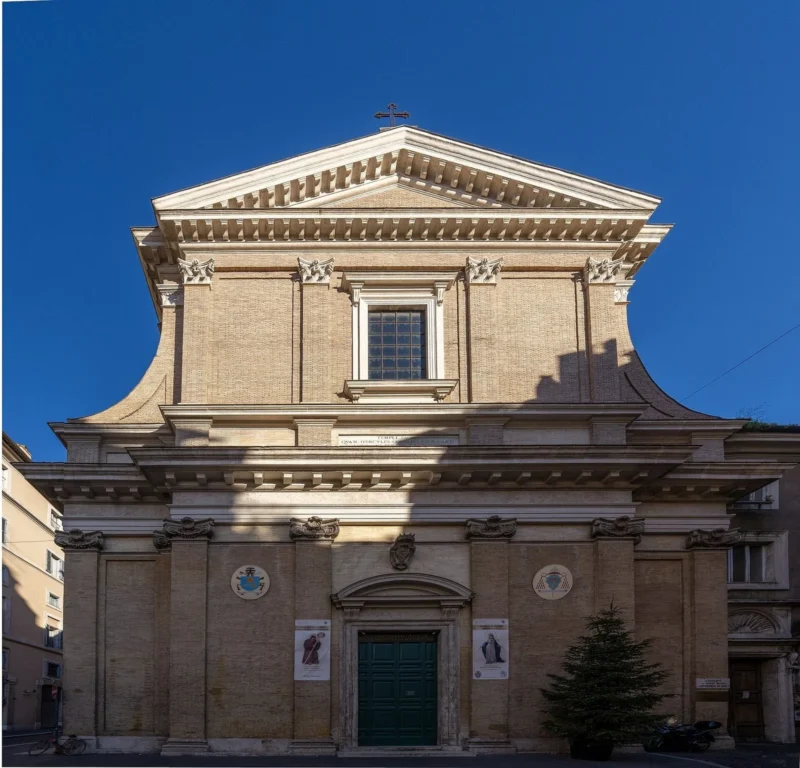
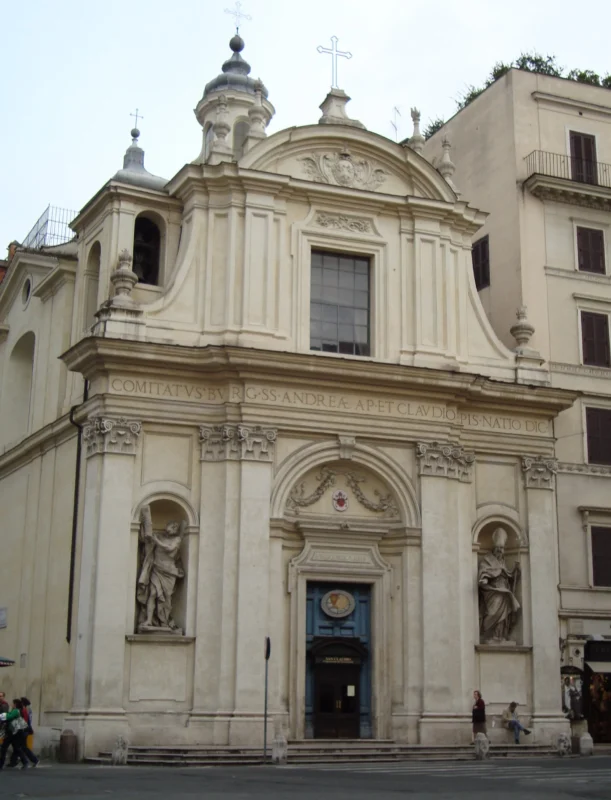
Via della Mercede and its immediate surroundings. The street takes its name from the Mercedarian religious order, and runs parallel to Via del Tritone, connecting Piazza San Silvestro area to Via di Propaganda. It's a service street more than a strolling one, with tall buildings, offices and a few historic shops. A few steps away is the corner where two protagonists of the Roman Baroque face each other: the Collegio di Propaganda Fide, with the facade on Via di Propaganda designed by Francesco Borromini, and the basilica of Sant'Andrea delle Fratte, where Borromini built the two-order bell tower and the drum of the dome. Inside the church are two monumental statues of angels with the symbols of the Passion carved by Gian Lorenzo Bernini on commission from Clement IX for Ponte Sant'Angelo, considered too precious to remain exposed to the weather and donated to the church in 1729 by the sculptor's heirs, who lived nearby. The crypt holds the only example of a putridarium in the city. The basilica's current facade, on the other hand, is 19th-century, by Pasquale Belli, made possible by a donation from Cardinal Ercole Consalvi.
Piazza di Spagna. Five minutes on foot. Piazza di Spagna by day is a continuous flow, in the evening after 22:00 it becomes something else and is worth a stop. At the foot of the steps is the Barcaccia Fountain, at the top the church of Trinità dei Monti with its obelisk. From there start Via dei Condotti and Via del Babuino, the two streets that complete the Tridente together with Via del Corso.
Trevi Fountain. Eight or 10 minutes, heading up toward Via del Tritone and then down. The Trevi Fountain after 23:00 stays lit and the crowd shrinks noticeably compared with daytime, though it never disappears completely. For those leaving the theater around 23:00, it's a detour that costs little and gives back a lot. On the way you pass the Galleria Sciarra, a covered Art Nouveau courtyard with a fresco cycle dedicated to women, open at limited times but visible from outside.
Piazza Colonna and surroundings. 10 minutes in the opposite direction. Piazza Colonna with the Column of Marcus Aurelius, next to it the Galleria Alberto Sordi, and right behind it Montecitorio with its obelisk. Continuing on you reach the church of Sant'Ignazio di Loyola, with its famous ceiling painted in perspective, and then the Pantheon.
Heading north. A good quarter of an hour along Via del Corso takes you to Piazza del Popolo and the church of Santa Maria del Popolo, with the two Caravaggio canvases in the Cerasi Chapel. Just before, on the left, you pass the Mausoleum of Augustus and the Ara Pacis. From Piazza del Popolo you go up to Villa Borghese via the Pincio ramp, but this is an afternoon walk, not an after-concert one.
On eating, a note on method more than an address: the band right around Piazza di Spagna and Trevi has a value for money that gets worse the closer you get to the monuments. The streets behind Piazza San Silvestro and toward Via del Gambero, that is, right in the direction of the theater, keep a few places frequented by people who work in the area too. After 23:00 the choice shrinks a lot, so those planning to have dinner after the concert would do well to check closing times instead of improvising.
Quick questions
How many nights are there in all?
15, spread between October 27 and November 15, 2026.
What time do the concerts start?
All performances are listed as starting at 21:00.
Which days have no show?
Friday, October 30, Monday, November 2, Thursday, November 5, Monday, November 9 and Thursday, November 12.
Is the set list always the same?
No. The theater expressly states that the set list will change every night, with the aim of bringing out songs rarely performed live. Which songs will be played on a specific date isn't published in advance, and that's part of the project.
Where exactly is the theater?
Via della Mercede 50, 00187 Rome, Colonna district. Via Mecenate 2 address at the bottom of the official website is that of the management company, not the hall.
What's the most convenient metro stop?
Line A, Spagna or Barberini stops. Both about 10 minutes' walk away.
Can you get there by car?
Technically yes, in practice it's best to avoid it: the area is subject to traffic restrictions, street parking is almost nonexistent and garages charge historic center rates.
How long is the concert?
No official running time has been given. It's best to plan the trip home without counting on a precise end time, keeping in mind the times of the last public transport runs.
How much are tickets?
The sections listed are poltronissima, poltrona and first balcony. Prices and availability should be checked on the theater's official channels, because they change by section and by date.
Is the theater accessible to people with mobility disabilities?
The orchestra is, via a ramp and an area dedicated to wheelchairs, with three reserved spaces plus companions and one seat for people with walking difficulties. The gallery isn't, because there are no elevators.
How do you book an accessible seat?
By writing to prenotazioni@salaumberto.com, attaching the completed form and documentation of the disability or the Disability Card.
Are service dogs allowed?
Yes, on request.
What are the box office hours?
Tuesday to Saturday from 16:00 to 19:00, and on Sunday during show hours. The call center answers at 06 6794753 at the same times.
Who joins De Gregori on stage?
Guido Guglielminetti, Primiano Di Biase, Carlo Gaudiello, Paolo Giovenchi, Alessandro Valle and Simone Talone, with Francesca La Colla and Cristina Greco on backing vocals.
Is it the same show already seen elsewhere?
The “Nevergreen (Perfette sconosciute)” project had already been staged in 2024 at Teatro Out Off in Milan, and from those nights came a documentary directed by Stefano Pistolini presented at the Venice Film Festival in 2025. The format is the same, the set lists aren't, by definition.
Is it worth arriving early?
Yes. Half an hour early is the reasonable measure, considering the narrow street, the coat check and the fact that entry after the start is normally regulated in theaters.
Frequently asked questions about Francesco De Gregori in Rome, Teatro Sala Umberto, October 27 to November 15, 2026
What is Francesco De Gregori's residency at Teatro Sala Umberto?
Francesco De Gregori's residency at Teatro Sala Umberto is a series of 15 performances in which the artist, instead of moving to a different city every night, stays in a single venue for an extended series of nights. The set list changes at every performance, built also on the least played songs in the repertoire.
When are the concerts?
Francesco De Gregori's concerts at Teatro Sala Umberto run from October 27 to November 15, 2026, with 15 performances in total, all starting at 21:00.
Which days have no show?
In Francesco De Gregori's series at Teatro Sala Umberto, the rest days with no performance are Friday, October 30, Monday, November 2, Thursday, November 5, Monday, November 9 and Thursday, November 12.
Where is Teatro Sala Umberto?
Teatro Sala Umberto, where Francesco De Gregori's residency is held, is at Via della Mercede 50, 00187 Rome, in the Colonna district, on the ground floor of a building on a narrow one-way street.
How do you get to Teatro Sala Umberto?
To reach Francesco De Gregori's concerts, metro line A serves the area with two stops, Spagna and Barberini. From Spagna you go down toward Piazza Mignanelli and continue along Via di Propaganda to Via della Mercede.
Are seats assigned?
Yes, for Francesco De Gregori's concerts at Teatro Sala Umberto each ticket corresponds to a specific seat, with row and number, in the poltronissima, poltrona and first balcony sections: there's no general admission standing as in a club or an arena.
Where do you buy tickets?
Tickets for Francesco De Gregori at Teatro Sala Umberto are handled by the theater through its official channels, on the website salaumberto.com. The theater box office is open Tuesday to Saturday from 16:00 to 19:00, and on Sunday during show hours.
Before you leave home
To sum up the essentials: 15 nights, from October 27 to November 15, 2026, always at 21:00, at Teatro Sala Umberto, Via della Mercede 50. A different set list at every performance, built on the least played songs in the repertoire. Small hall, assigned seats, three sections. Metro line A to Spagna or Barberini, and then on foot. Car not recommended. Arriving half an hour early recommended.
For everything that changes over time, that is, prices, availability, possible calendar changes and entry rules, the source to check remains the theater's website. For accessibility, the right path is a written request to the dedicated address, well in advance, given the small number of reserved spaces in the orchestra.
If you're looking for other itineraries in Rome and Italy, practical guides and travel ideas built by people who work in the field, you'll find everything on ItalyPlanner. If instead you need a licensed guide, a tour leader or professional assistance for a group, the reference is TourLeaderPro.
Contact Information
Nearby
 Teatro Sala Umberto100 m
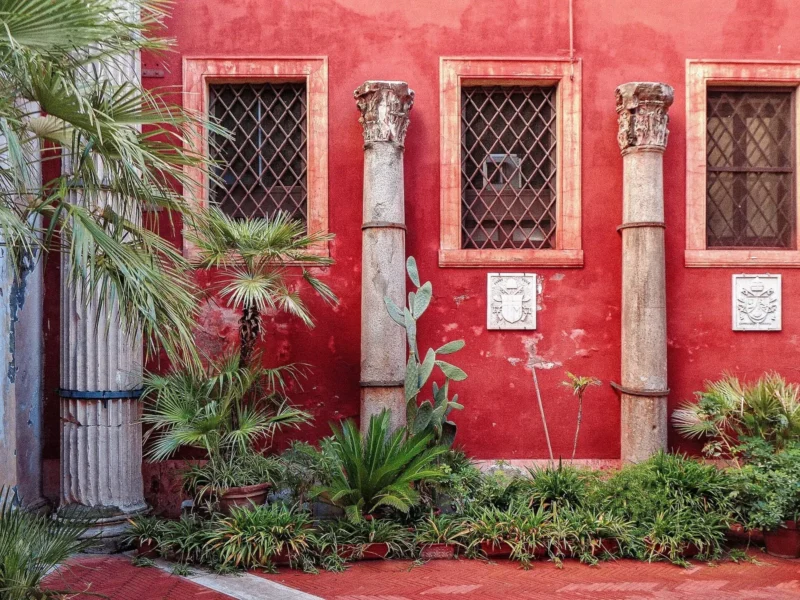
- Sant’Andrea delle Fratte100 m
- Column of the Immaculate Conception200 m
- Gregory’s Jazz Club200 m
- San Silvestro in Capite200 m
- San Claudio dei Borgognoni200 m
Upcoming events nearby
- Captivo by Gianfranco Gallo at Teatro Sala Umberto, January 13-24, 2027100 m
- Federico Mecozzi, Traiettorie impercettibili at Teatro Sala Umberto, January 11, 2027100 m
- Piccole donne il musical with Antonella Morea at Teatro Sala Umberto, March 16 to 21, 2027100 m
- Don Giovanni with Simone Toni and Enzo Paci at Teatro Sala Umberto, February 2 to 14, 2027100 m
You might also like
- Anna Fedorova at Teatro Argentina, November 19, 2026
- I Solisti della Filarmonica: Mahler, Symphony No. 4 at Teatro Argentina, November 5, 2026
- Nello Daniele in Daniele racconta Daniele at Teatro Quirino, April 9, 2027
- Samuele Rizzuto, Il pianista dell’anima at Teatro Sala Umberto, March 31, 2027
- Filippo Gorini for Filarmonica Romana at Teatro Argentina, March 18, 2027
- Quartetto Prometeo and Claudio Pasceri at Teatro Argentina, March 4, 2027