Quartetto Prometeo and Claudio Pasceri at Teatro Argentina, March 4, 2027
In short. Quartetto Prometeo and cellist Claudio Pasceri play for the Accademia Filarmonica Romana on Thursday, March 4, 2027 at 21:00 at Teatro Argentina, in Largo di Torre Argentina 52 (00186 Rome), in the historic center.
Quartetto Prometeo and cellist Claudio Pasceri play for the Accademia Filarmonica Romana on Thursday, March 4, 2027 at 21:00 at Teatro Argentina, in Largo di Torre Argentina 52 (00186 Rome), in the historic center. On stage are Mirei Yamada and Aldo Campagnari on violins, Danusha Waskiewicz on viola, Francesco Dillon and Claudio Pasceri on cellos, with Ivan Fedele's Rizhom in its first performance and Franz Schubert's String Quintet in C major, Op. 163, D 956. You can reach the theater by tram 8, stop Torre Argentina, by the many bus lines that cross the largo, or on foot from the Pantheon and Piazza Venezia. The closest metro B stations are Colosseo and Circo Massimo. Prices are published on the authorized presale circuit that the official concert page on the Filarmonica's website links to. Tickets are bought from there or at the theater's box office.
A quartet that has already played all of Shostakovich's quartets for the Filarmonica, a cellist from Turin devoted to contemporary music, a composer Prometeo has worked with for many years, and Schubert's last chamber masterpiece, written a few months before he died. Five string players in an 18th-century hall, a short walk from the sacred area.
Quartetto Prometeo at Teatro Argentina: date, time and tickets
The concert by Quartetto Prometeo with Claudio Pasceri is scheduled for Thursday, March 4, 2027 at 21:00 at Teatro Argentina, as part of the 2026/2027 season of the Accademia Filarmonica Romana. It's a one-night-only date.
The time
21:00 is the usual time for the Filarmonica's evening concerts at the Argentina. The running time isn't published. Schubert's Quintet, which the Filarmonica describes as of considerable length and decidedly symphonic in look, takes up a large part of the evening by itself.
Where to buy tickets
From the concert page on the Filarmonica's website, a purchase button leads to the authorized presale circuit, where the prices are listed. Alternatively, you can go to the Teatro Argentina box office. If you plan to attend several concerts, the Filarmonica's website also has a section dedicated to subscriptions.
The series at the Argentina
The concert is part of the series the Filarmonica holds at the Argentina this season, which opened on November 5, 2026 with I Solisti della Filarmonica and Mahler's Fourth and continued with the recital by pianist Anna Fedorova, Trio Concept in December, and percussionist Adélaïde Ferrière and baritone Thomas Oliemans in Winterreise in February.
The program: Fedele and Schubert
The program of Quartetto Prometeo and Claudio Pasceri alternates, as the Filarmonica writes, Franz Schubert's Quintet, Op. 163 with a new work by Ivan Fedele, Rizhom, a composer Prometeo has collaborated with for many years.
Rizhom by Ivan Fedele
Rizhom is the new piece of the evening. The official sources don't agree on how to define it: the heading of the Filarmonica's page lists it as a world premiere, while the presentation text speaks of an Italian premiere. Either way, the Argentina audience is among the first to hear it.
Schubert's Quintet
The String Quintet in C major, Op. 163, D 956 is the only work Schubert wrote for this ensemble: two violins, viola and two cellos. It was composed in 1828, a few months before the composer's death.
A premiere after 32 years
According to the Filarmonica's presentation, the Quintet had its first public performance only 32 years after it was composed, in 1860, at the Musikverein in Vienna, with the Hellmesberger Quartet and cellist Josef Stransky. It was long forgotten: a work of considerable length and decidedly symphonic in look.
Two cellos
The Quintet's scoring calls for two cellos. That's why Quartetto Prometeo, for the occasion, expands by bringing in a second cellist, Claudio Pasceri.
Who is Quartetto Prometeo
Quartetto Prometeo is an Italian string quartet that won the 50th edition of the Prague Spring International Music Competition in 1998 and the Silver Lion of the Venice Biennale Musica in 2012. Today it consists of Mirei Yamada, Aldo Campagnari, Danusha Waskiewicz and Francesco Dillon.
The Prague and Munich prizes
In Prague, in 1998, the quartet also received the Bärenreiter Special Prize for the best performance faithful to the original text of Mozart's Quartet K 590, the City of Prague Prize as best quartet and the Pro Harmonia Mundi Prize. In 1999 it received the Thomas Infeld prize from the Internationale Sommer Akademie Prag Wien Budapest and came second at the Concours International de Quatuors in Bordeaux. In 2000 it won the Bärenreiter Special Prize again at the ARD Competition in Munich.
Aldeburgh and the great halls
In 1998 it was elected resident ensemble of the Britten Pears Academy in Aldeburgh. It has played at the Concertgebouw in Amsterdam, the Musikverein, Wigmore Hall, the Aldeburgh Festival, the Prague Spring Festival and the Mecklenburg Festival, at the Accademia di Santa Cecilia, the Società del Quartetto in Milan, the Amici della Musica in Florence and La Fenice.
The composers
Its artistic relationship with Salvatore Sciarrino, Ivan Fedele and Stefano Gervasoni is particularly intense. Since 2013 Prometeo has been quartet in residence at the Accademia Chigiana in Siena, in collaboration with Sciarrino's composition class.
Collaborations and recordings
It has played with Mario Brunello, David Geringas, Veronika Hagen, Alexander Lonquich, Enrico Pace, Stefano Scodanibbio, the Belcea Quartet, Enrico Bronzi, Mariangela Vacatello and Lilya Zilberstein, and has recorded for ECM, Sony and Brilliant. Since 2019 it has taught quartet courses at the Accademia musicale Santa Cecilia in Portogruaro and since 2020 in Rome, as part of Avos Project.
Who is Claudio Pasceri
Claudio Pasceri is a cellist born in Turin in 1976, whom the Filarmonica presents as one of the most appreciated cellists of his generation, with a predilection for contemporary music.
His training
He began studying the cello with Renzo Brancaleon at the Conservatorio Giuseppe Verdi in Turin, graduating with top marks in Dario Destefano's class. A scholarship holder of the De Sono foundation from 2000 to 2002, he went on to refine his studies with Julius Berger at the Johannes Gutenberg Universität in Mainz and at the Mozarteum in Salzburg.
The concerts
He has played at the Tonhalle in Zurich, the Teatro Olimpico in Vicenza, the Unione Musicale in Turin, the Schleswig Holstein Festival, Tully Hall at Lincoln Center in New York, the Festival delle Nazioni in Città di Castello and the Parco della Musica in Rome. His repertoire with orchestra runs from Vivaldi's concertos to the works of Schnittke, with ensembles such as the Orchestre de Chambre de Toulouse and the Arpeggione Kammerorchester. A performance of his of Schumann's Concerto was recorded by Bayerischer Rundfunk.
Chamber music
In chamber settings he has played with Salvatore Accardo, Pavel Gililov, Dora Schwarzberg, Bruno Giuranna, Rohan de Saram, Rocco Filippini and Gilles Apap.
Contemporary music and festivals
Since 2012 he has been the cellist of the Xenia Ensemble, a quartet specializing in contemporary repertoire. From 2014 to 2016 he was artiste associé and artistic director of the Festival de Musique de Conques, in France. He is artistic coordinator of the contemporary music festival Estovest and teaches cello at the Accademia di Musica in Pinerolo.
Ivan Fedele, the composer
Ivan Fedele is an Italian composer born in Lecce on May 6, 1953, a member of the Accademia di Santa Cecilia and director of the Music Department of the Venice Biennale from 2012 to 2020.
His training
He studied piano at the Milan Conservatory with Bruno Canino, Vincenzo Vitale and Ilonka Deckers, composition with Renato Dionisi and Azio Corghi and, at the Accademia di Santa Cecilia, with Franco Donatoni. He earned a degree in Philosophy from the Università degli Studi di Milano.
The teacher
He has taught composition at some of the major European music institutions and was the teacher of composers who later made their name, among them Christophe Bertrand and Vittorio Montalti.
The string catalog
Strings have an important place in his catalog: a First Quartet from 1981/89, the Pentalogon Quartet from 1987, the third quartet Tar from 1999/2000, Capt-Actions for string quartet, accordion and electronics, and concertos for viola, for cello and for violin. In 1997 he wrote Dioscuri for two cellos and orchestra, so a pair of cellos is not new to him. In 2007 the Maggio Musicale Fiorentino commissioned the opera Antigone from him.
Why hear Fedele and Schubert on the same evening
Placing a premiere by Ivan Fedele next to Schubert's Quintet means putting side by side a piece just born and one that remained in silence for 32 years after its composition.
The new and the forgotten
Schubert's Quintet, the Filarmonica reminds us, was a long-forgotten work before entering the repertoire. Rizhom, on the other hand, is at its first public outing. In our opinion it's a pairing that invites a simple reflection: every masterpiece was, one day, new music heard for the first time.
A quartet for the contemporary
The intense relationship with Sciarrino, Fedele and Gervasoni and the residency at the Accademia Chigiana alongside Sciarrino's composition class describe a quartet that works in close contact with today's composers, without abandoning Mozart and Schubert. Pasceri shares the same calling: the evening is built on musicians who move with equal ease between Schubert and living composers.
A curiosity about Quartetto Prometeo and Claudio Pasceri at Teatro Argentina, March 4, 2027
The most interesting curiosity is a crossing of biographies. In 2012 Quartetto Prometeo received the Silver Lion at the Venice Biennale Musica. In the same year Ivan Fedele began his term as director of the Biennale's Music Department, which lasted until 2020. The composer of Rizhom and the quartet that performs it are linked, beyond a long-standing collaboration, by a precise moment in the history of Italian contemporary music.
The second curiosity concerns the Filarmonica. Prometeo is not a new guest: some years ago, the presentation recalls, it starred for the Accademia Filarmonica Romana in a complete performance of Shostakovich's String Quartets, spread over three seasons. A rare undertaking, which built a relationship of trust between the quartet and the Roman audience.
The third is a double coincidence about the cello. Schubert wrote his Quintet with two cellos. 30 years ago Fedele wrote Dioscuri for two cellos and orchestra, and Claudio Pasceri has played for over 10 years in a quartet dedicated to contemporary repertoire. The evening brings together, on the same stage, two cellists with a strong calling for today's music.
Teatro Argentina, the concert venue
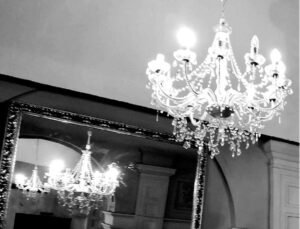
Teatro Argentina is an Italian-style horseshoe hall with 720 seats, 354 in the orchestra and 366 in six tiers of boxes, according to figures from the Teatro di Roma, which runs it. Red and gold, with a decorated green ceiling and a large 16-armed chandelier, it is one of the most beautiful historic halls in the city.
The name and the Burcardo
The name has nothing to do with the South American country. It comes from the tower of the palace of Johannes Burckardt, the Burcardo, a papal master of ceremonies born in Strasbourg, in Latin Argentoratum, who signed himself episcopus argentinensis. The tower, the largo and the theater took their name from him. The Burcardo's palace, built between 1491 and 1500, still stands in Via del Sudario, next to the theater.
The Sforza Cesarini family and Theodoli
The Sforza Cesarini family started construction in 1730. The hall was designed by the architect and marquis Gerolamo Theodoli, who chose the horseshoe shape for acoustics and visibility. Originally it was almost entirely made of wood.
The facade and the restoration
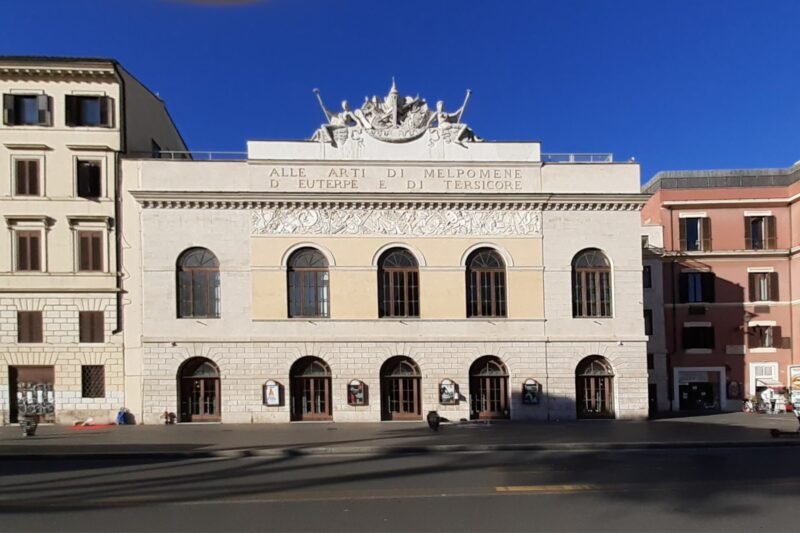
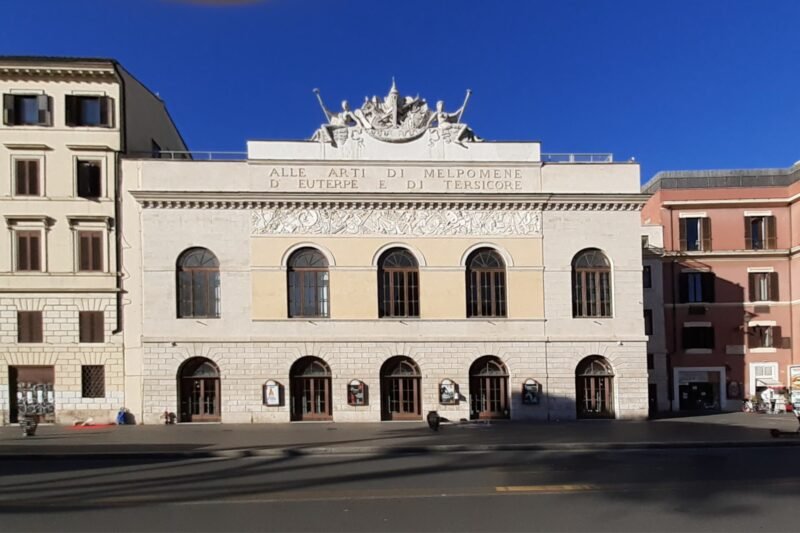
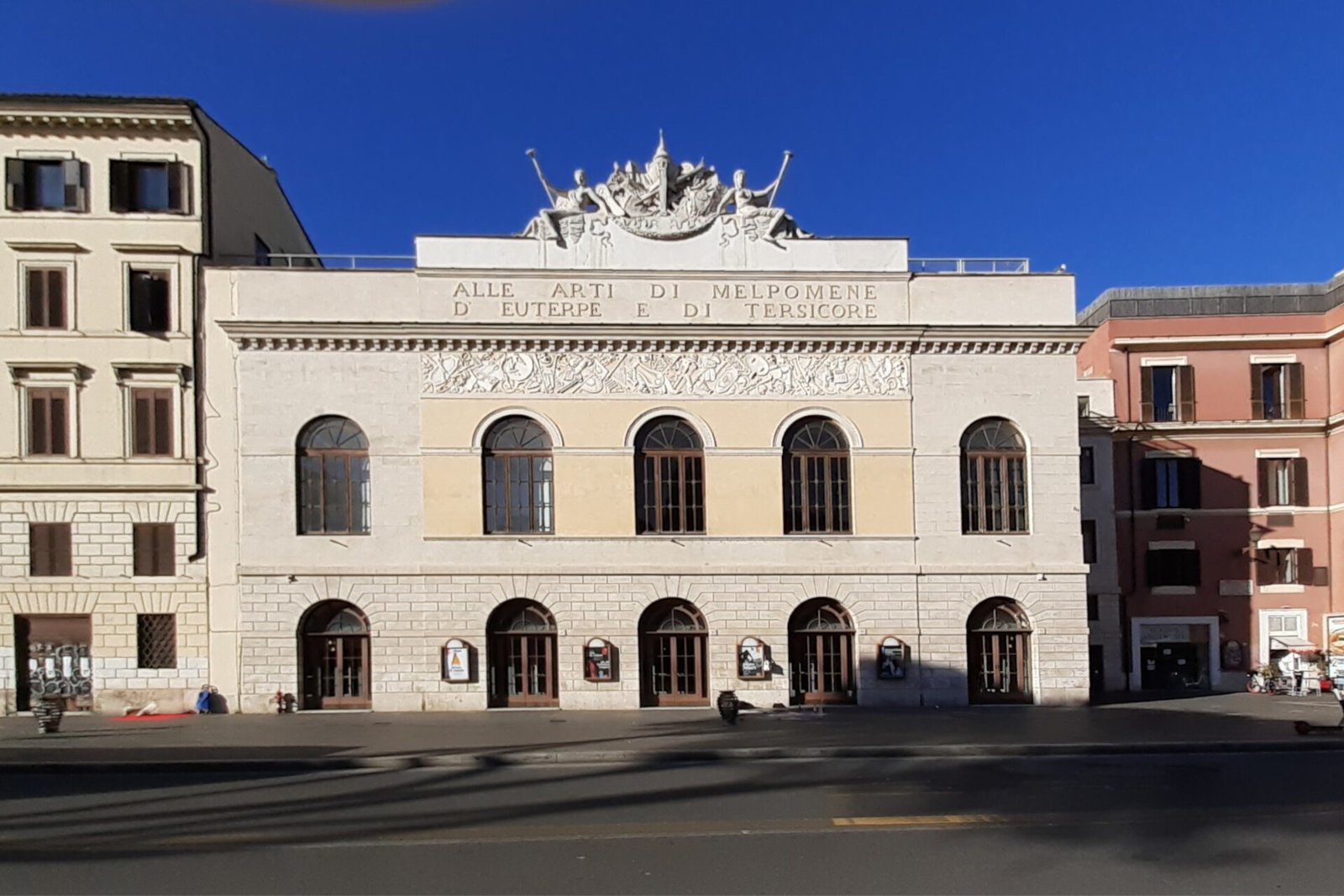
The neoclassical facade, with its dedication to the muses Melpomene, Euterpe and Terpsichore, was built in 1826 to a design by Pietro Holl. In 1993 Paolo Portoghesi restored the theater, bringing back the red of the upholstery and the original profile of the box valances.
Something nobody tells you about Quartetto Prometeo and Claudio Pasceri at Teatro Argentina, March 4, 2027
What few people say is that Teatro Argentina, today the home of drama for the Teatro di Roma, was born as an opera and music theater. It was inaugurated in January 1732 with Domenico Sarro's Berenice. Rossini's The Barber of Seville debuted here, on February 20, 1816. Niccolò Paganini played here in 1827. A string concert at the Argentina is a return to the building's original calling.
The second thing concerns listening. In a horseshoe hall of this size a string quintet reaches you directly, without the distance of the large symphonic halls: the five voices can be told apart one by one. For chamber music, in our opinion, even the highest boxes work well, because here listening matters more than the view.
The third is practical: the theater is in a limited traffic zone and has no parking. If you come by car, you have to leave it outside the ZTL and take tram 8, which stops in front of the sacred area, or walk. And the same evening, at the Auditorium Parco della Musica, Daniel Harding's series of concerts with Beatrice Rana begins: music lovers have to choose.
My advice for visiting Quartetto Prometeo and Claudio Pasceri at Teatro Argentina, March 4, 2027
My advice is to listen to Schubert's Quintet before the concert, at least once, from beginning to end. It's a long piece, and the Filarmonica stresses its symphonic look. Knowing its overall arc lets you enjoy the details in the hall, instead of getting lost in its dimensions.
Second: approach Rizhom without prejudice. A first performance is a rare event, and the best way to hear it is to let Fedele's music arrive for what it is. If you want to prepare, you can listen to other string works by the composer, such as the Pentalogon or Tar quartets.
Third: arrive at the Argentina on foot, crossing the historic center from the Pantheon or Piazza Navona. The evening stroll through the alleys, before entering an 18th-century hall, is part of the experience. Arriving half an hour early lets you look at the hall with the lights on, before they go down.
The Accademia Filarmonica Romana, the organizer
The Accademia Filarmonica Romana is a private nonprofit institution founded in Rome in 1821, which organizes chamber and symphonic concerts, ballets and music theater performances: one of the oldest music institutions in the city.
The origins
It was founded by a group of amateur musicians gathered around the composer Raffaele Muti Papazzurri, to perform chamber and symphonic music and operas in concert form when censorship banned staging them. In 1824 it became an official institution of the Papal States.
From the Pantheon to Via Flaminia
After 1870 it became a choral society and from 1878 it provided the music for official commemorations at the Pantheon. In 1946 it was refounded with Alfredo Casella as artistic director. The seat moved to the Casina Vagnuzzi, at Via Flaminia 118, where Sala Casella is today. Since 1980 the Filarmonica has owned the Teatro Olimpico.
The great guests
The history published by the Accademia mentions, between the wars, performers such as Adolf Busch, Rudolf Serkin, Alfred Cortot and Jascha Heifetz, and after 1946 Bartók, Britten, Messiaen, Stravinsky, Berio, Boulez. Among its artistic directors are Goffredo Petrassi, Luciano Berio and Hans Werner Henze. Since 2024 the direction has been Domenico Turi's.
How to get to Teatro Argentina
Teatro Argentina is at Largo di Torre Argentina 52, in front of the sacred area, in the historic center. Tram 8 is the most convenient way.
By tram
Tram 8 stops at Torre Argentina, a few steps from the entrance. Going and coming back, it's the simplest solution for anyone coming from Trastevere or Monteverde.
By metro and bus
No metro station is close to the theater. The most convenient are Colosseo and Circo Massimo, on line B, from which you continue on foot or by surface transit. Largo Argentina and Corso Vittorio Emanuele II are crossed by many bus lines that connect Termini, Piazza Venezia, the Vatican and Trastevere. Evening times should be checked on the ATAC route planner.
On foot and by car
From Piazza Venezia, along Via delle Botteghe Oscure, it takes just a few minutes. The same goes from the Pantheon, Piazza Navona, Campo de' Fiori and the Ghetto. If you drive, you must park outside the ZTL: the theater has no parking.
Another well-known fact, yet rarely mentioned
It's well known that the C major Quintet is one of the masterpieces of Schubert's chamber music. Less often remembered is its story: composed in 1828, a few months before the author's death, it was not performed in public for 32 years. The first public performance came only in 1860, at the Musikverein in Vienna, with the Hellmesberger Quartet and cellist Josef Stransky. A masterpiece left in a drawer for a generation.
A second little-mentioned fact concerns Quartetto Prometeo: among the halls where it has played is the Accademia di Santa Cecilia, and in Rome since 2020 the quartet has taught quartet courses as part of Avos Project. The Argentina concert, for Prometeo, is a return to a city where it works continuously.
Third: Ivan Fedele also studied composition in Rome, at the Accademia di Santa Cecilia, with Franco Donatoni, and is now a member of it. The premiere of Rizhom, a few kilometers from where he trained, therefore has a special flavor.
The right photo to take of Quartetto Prometeo and Claudio Pasceri at Teatro Argentina, March 4, 2027
The right photo is taken from the orchestra, before the lights go down, pointing upward: the six tiers of red and gold boxes, the green ceiling, the 16-armed chandelier. It's the shot that tells the Argentina better than any description, and it works with a phone too, as long as you keep the whole hall in the frame.
The second is the stage before the start: five chairs in a semicircle and five music stands, in the middle of a hall built for opera. An image that says at a glance the difference in scale between the place and chamber music.
The third is taken outside, in the evening, from the opposite side of the largo: the neoclassical facade with its dedication to the muses and, in the foreground, the illuminated columns of the sacred area. During the concert, however, the phone stays off: in the most intimate moments of Schubert's Quintet, a pianissimo from the strings is worth more than any photo.
Some important events that happened here in history
Teatro Argentina was inaugurated in January 1732 with Domenico Sarro's Berenice, and since then its history has been intertwined with that of Italian music and Roman politics. In the 18th century foreign travelers considered it the most important of the city's theaters.
On February 20, 1816 the premiere of Rossini's The Barber of Seville was staged here, with Manuel García. It was a fiasco, because many admirers of Paisiello's Barber sat in the orchestra, but from the second night the opera triumphed. On January 28, 1822 the Argentina hosted the world premiere of Donizetti's Zoraida di Granata. In 1827 it hosted a concert by Niccolò Paganini.
Verdi brought I due Foscari here in 1844 and The Battle of Legnano in 1849. According to the Teatro di Roma's account, it was on the occasion of the latter that Romans began the demonstrations that led to the Roman Republic. After 1870 the building passed to the City. In 1993 came Paolo Portoghesi's restoration. Since 2022 it has been the main venue of the Fondazione Teatro di Roma, and it also hosts the concerts of the Accademia Filarmonica Romana.
Who has passed through: Quartetto Prometeo and Claudio Pasceri at Teatro Argentina, March 4, 2027
Through the stage of the Argentina have passed Gioachino Rossini with The Barber of Seville and Manuel García, Gaetano Donizetti with Zoraida di Granata, Giuseppe Verdi with two premieres, and Niccolò Paganini in concert. In the 20th century the hall saw the works of Gabriele D'Annunzio and Luigi Pirandello, and the directors of the Teatro di Roma, from Vito Pandolfi to Luca Ronconi.
Through the history of the Filarmonica, which brings Prometeo to this hall on March 4, pass Raffaele Muti Papazzurri, the founder, Alfredo Casella, Goffredo Petrassi, Luciano Berio, Hans Werner Henze and Giuseppe Sinopoli, along with performers such as Serkin, Cortot and Heifetz.
And through the careers of the five musicians pass Salvatore Sciarrino and Stefano Gervasoni, Mario Brunello and the Belcea Quartet, Salvatore Accardo and Bruno Giuranna, Julius Berger and Rocco Filippini. On March 4 the ones stepping onto the stage are Mirei Yamada, Aldo Campagnari, Danusha Waskiewicz, Francesco Dillon and Claudio Pasceri.
Around Teatro Argentina
Teatro Argentina is a few minutes' walk from the Pantheon, Piazza Navona, Campo de' Fiori and the Ghetto: a concert here pairs naturally with a stroll through the historic center.
The sacred area
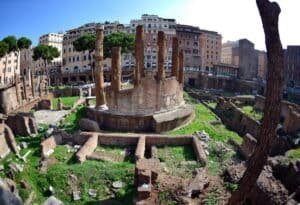
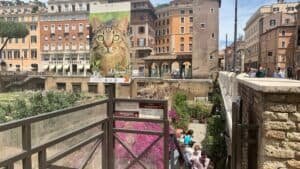
In front of the theater opens the Largo Argentina sacred area, with the remains of the temples and structures tied to the Theater of Pompey complex. Among the ruins lives the cat colony of the Largo Argentina cat sanctuary.
The Pantheon and Piazza Navona
Toward the north, in five minutes, you reach the Pantheon. Toward the west, beyond Corso Vittorio Emanuele II, are Piazza Navona and Campo de' Fiori.
The Ghetto
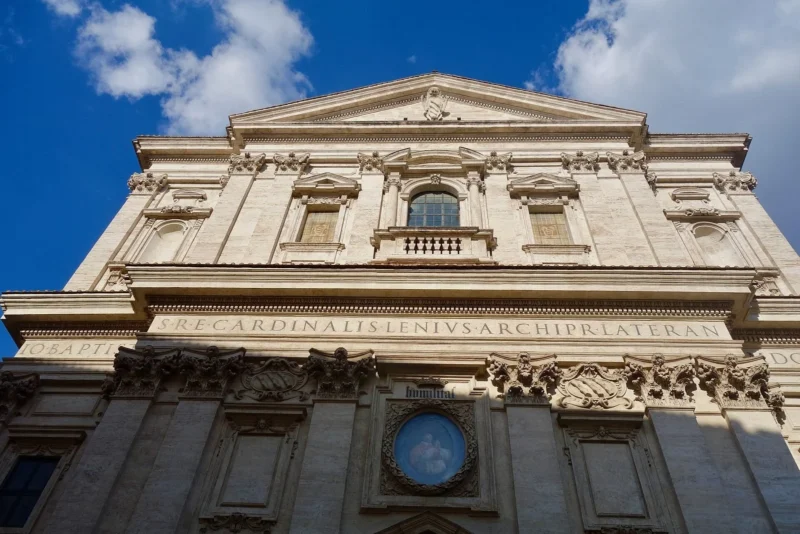
Toward the Tiber you enter the Jewish Ghetto and reach the Theater of Marcellus. A few steps from the Argentina is also the Church of the Gesù.
Accessibility and practical information
Teatro Argentina is a historic building where architectural barriers cannot be completely eliminated. According to the Teatro di Roma, the facility has elevators and reserved seats in the orchestra for people with disabilities. For availability on the evening of the concert, it's best to contact the Filarmonica or the theater's box office in advance.
With kids
A string quintet is a good opportunity for a kid who studies violin, viola or cello: five recognizable voices and a first performance to talk about. The 21:00 start time makes the evening demanding for the youngest.
Where to eat before or after the concert
The historic center around the Argentina offers every kind of place: Roman trattorias on the streets toward Campo de' Fiori, Roman Jewish cooking in the Ghetto, bakeries and pizza-by-the-slice shops along Corso Vittorio Emanuele II for a quick meal before 21:00, wine bars and bistros around the Pantheon for after the concert. With a 21:00 start, it's best to eat early, around 19:30, or book for afterward, keeping in mind that many kitchens close around 23:00.
A concert in early March
Early March is a rich week for classical music lovers in Rome: on March 3 Mikhail Pletnev plays Beethoven and Tchaikovsky for Santa Cecilia, and from the 4th to the 6th Daniel Harding conducts Beatrice Rana at the Auditorium. Prometeo's concert is the chamber and contemporary alternative, in the historic center. The evenings are still cool: bring a heavy jacket and comfortable shoes for the walk through the alleys.
Frequently asked questions about Quartetto Prometeo at Teatro Argentina
When does Quartetto Prometeo play at Teatro Argentina?
Quartetto Prometeo plays with cellist Claudio Pasceri at Teatro Argentina on Thursday, March 4, 2027 at 21:00, in the season of the Accademia Filarmonica Romana. The theater is at Largo di Torre Argentina 52, in the historic center of Rome.
What do Quartetto Prometeo and Claudio Pasceri play?
Quartetto Prometeo and Claudio Pasceri perform Rizhom by Ivan Fedele, in its first performance, and Franz Schubert's String Quintet in C major, Op. 163, D 956, composed in 1828 and written for two violins, viola and two cellos.
Who are the musicians of Quartetto Prometeo?
Quartetto Prometeo consists of Mirei Yamada on first violin, Aldo Campagnari on second violin, Danusha Waskiewicz on viola and Francesco Dillon on cello. It won the Prague Spring competition in 1998 and the Silver Lion of the Biennale Musica in 2012.
Where do you buy tickets for Quartetto Prometeo?
Tickets for Quartetto Prometeo at Teatro Argentina are bought from the concert page on the Accademia Filarmonica Romana's website, which links to the authorized presale circuit where the prices are published, or at the theater's box office.
How do you get to Teatro Argentina?
Teatro Argentina, at Largo di Torre Argentina 52, can be reached by tram 8, stop Torre Argentina, and by the many bus lines that cross the largo. The closest metro B stations are Colosseo and Circo Massimo. The theater is in the ZTL and has no parking.
Is Fedele's Rizhom a world premiere?
Ivan Fedele's Rizhom, on the program at Teatro Argentina, is listed by the Filarmonica Romana as a world premiere in the concert heading and as an Italian premiere in the presentation text. In any case it's new for the Roman audience.
Final advice on Quartetto Prometeo at Teatro Argentina
A quartet awarded in Prague and Venice, a cellist who lives on contemporary music, a premiere by Ivan Fedele and Schubert's last chamber masterpiece, in a hall from 1732 where The Barber of Seville debuted: in our opinion it's the most interesting chamber concert of early March in Rome. My advice is to listen to the Quintet first, arrive on foot from the Pantheon, eat early or book for afterward, and take 10 minutes to look at the hall before the lights go down.
Article written by the editorial team of Tour Leader Pro, contact them for Private/Corporate/V.I.P. Tours and Experiences.
Planning a trip to Rome? The English-language guides to visiting the city are on ItalyPlanner.com.
Contact Information
Nearby
 Teatro Argentina100 m
- Teatro Centrale100 m
- Largo Torre Argentina – Sacred Area of Campo Marzio100 m
- Cat Sanctuary at Largo Argentina100 m
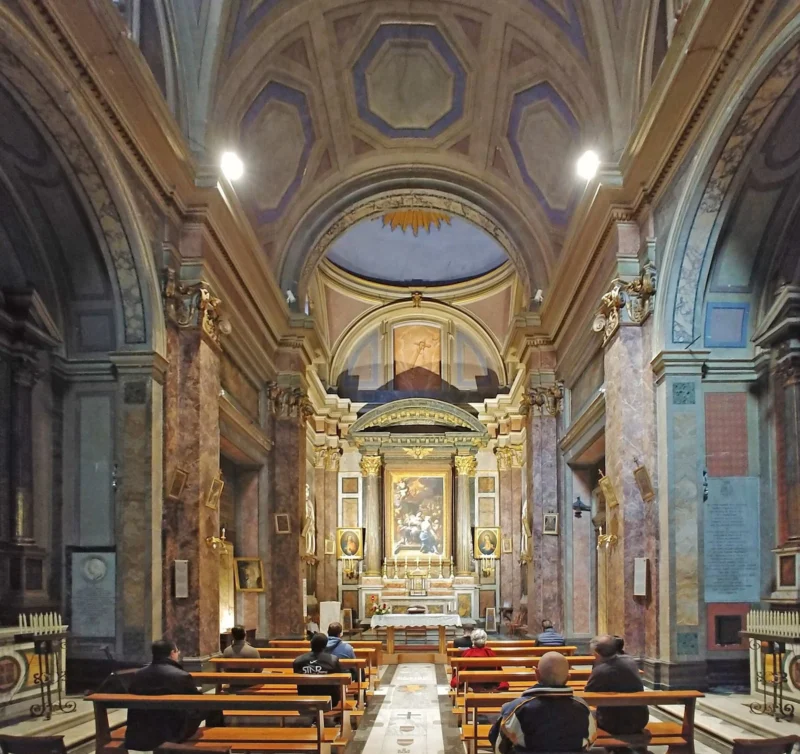
- San Carlo ai Catinari200 m
- Santa Maria in Publicolis200 m
Upcoming events nearby
- Othello at Teatro Argentina, November 4 to 29, 2026100 m
- The Madness of King George with Massimo Popolizio at Teatro Argentina in Rome, January 9 to 31, 2027100 m
- Una delle ultime sere di Carnovale at Teatro Argentina, February 2 to 14, 2027100 m
- Lo zar by and with Stefano Massini at Teatro Argentina in Rome, March 16 to 25, 2027100 m
You might also like
- Samuele Rizzuto, Il pianista dell’anima at Teatro Sala Umberto, March 31, 2027
- Filippo Gorini for Filarmonica Romana at Teatro Argentina, March 18, 2027
- Nello Daniele in Daniele racconta Daniele at Teatro Quirino, April 9, 2027
- Thomas Oliemans, Winterreise at Teatro Argentina, February 11, 2027
- Adélaïde Ferrière for the Filarmonica Romana at Teatro Argentina, February 4, 2027
- Trio Concept for the Filarmonica Romana at Teatro Argentina, December 10, 2026