Filippo Gorini for Filarmonica Romana at Teatro Argentina, March 18, 2027
In short. Pianist Filippo Gorini plays for Accademia Filarmonica Romana on Thursday, March 18, 2027 at 21:00 at Teatro Argentina, at Largo di Torre Argentina 52, in Rome's historic center.
Pianist Filippo Gorini plays for Accademia Filarmonica Romana on Thursday, March 18, 2027 at 21:00 at Teatro Argentina, at Largo di Torre Argentina 52, in Rome's historic center. It's the third and last recital of the project dedicated to the last Sonatas of Beethoven and Schubert: the program has Beethoven's Sonata No. 30 in E major, Op. 109, Schubert's Sonata in A major, D. 959, and a new composition by the German Oscar Jockel in Italian premiere. You get to the theater by tram 8, Torre Argentina stop, with the many bus lines that cross the square, or on foot from the Pantheon and Piazza Venezia. Prices are published on the authorized presale network that the official concert page on Filarmonica's website links to. Tickets are bought from there or at the theater's box office.
Filippo Gorini is artist in residence at Filarmonica Romana for the three-year period 2025-2027, winner of the 2022 Premio Abbiati as best soloist of the year, first prize at the Telekom-Beethoven Competition in Bonn in 2015. The March recital closes a three-season journey in an 18th-century hall a few steps from the Pantheon, with two masterpieces of late Beethoven and late Schubert and a piece just written.
Filippo Gorini at Teatro Argentina: Date, Time and Tickets
Filippo Gorini's recital is scheduled for Thursday, March 18, 2027 at 21:00 at Teatro Argentina, in the season of Accademia Filarmonica Romana. It's a single date, titled Beethoven and Schubert: The Last Sonatas (Concert III).
The Time
21:00 is the usual time for Filarmonica's evening concerts at Argentina. The running time isn't given: the two sonatas on the program, added together, fill a full recital, and Jockel's new piece comes on top of these.
Where to Buy Tickets
From the concert page on Filarmonica's website a purchase button leads to the authorized presale network, where prices are listed. Alternatively, you can go to the box office of Teatro Argentina. Anyone attending several concerts will find the subscriptions section on Filarmonica's website.
The Series at Argentina
Gorini's recital is part of the series Filarmonica holds at Argentina in the 2026/2027 season, opened on November 5 with I Solisti della Filarmonica and Mahler's Fourth and continued with the recital by pianist Anna Fedorova.
The Program: Beethoven Op. 109, Schubert D. 959 and Oscar Jockel
The program pairs Beethoven's Sonata Op. 109, composed in 1820, with Schubert's Sonata D. 959, written in 1828 a few weeks before the composer's death, and with a new composition by Oscar Jockel in Italian premiere.
Beethoven, Sonata No. 30, Op. 109
Composed in 1820, Op. 109 is the first of Beethoven's last three piano sonatas. Filarmonica presents it as the work in which some traits of Beethoven's so-called third style are most clearly defined, and it recalls Roman Vlad's formula about the fantastic freedom that transcends the limits of the traditional sonata form. Opening a recital with Op. 109 means going straight into the freest and least predictable Beethoven.
Schubert, Sonata in A major, D. 959
Schubert wrote D. 959 in 1828, a few weeks before dying: it is the second-to-last of his piano sonatas. Filarmonica's presentation describes it as a work of great expressiveness, alternating bold harmonic solutions with lyrical melodies of noble and serene character. Paired with Op. 109, it shows two different ways of closing a creative life: Beethoven with concentration, Schubert with breadth.
Oscar Jockel, the New Piece
The new composition by the German Oscar Jockel is in Italian premiere. The title isn't given on the concert page. Jockel is one of the seven composers from whom Gorini has commissioned a new piano piece in the project Sonata for 7 cities, along with Stefano Gervasoni, Federico Gardella, Beat Furrer, Michelle Agnes Magalhães, Yukiko Watanabe and Ondřej Adámek.
The Three-Season Project
The 2027 recital is the third and last of a cycle that, over three seasons, has paired the last sonatas of Beethoven and Schubert with new performances: in 2025 some Játékok by György Kurtág never performed in Italy, in 2026 the Piano Sonata by the Brazilian composer Michelle Agnes Magalhães. Anyone who followed the first two recitals closes the circle. Anyone arriving now hears the final chapter.
Who Filippo Gorini Is: Biography
Filippo Gorini graduated with honors from the Donizetti Conservatory in Bergamo and the Mozarteum University in Salzburg, and continued his training with Maria Grazia Bellocchio, Pavel Gililov, Alfred Brendel and Mitsuko Uchida. In 2022 he received the Premio Abbiati, the Italian music critics' award, as best soloist of the year.
Awards
Before the Abbiati, Gorini had won first prize at the Telekom-Beethoven Competition in Bonn in 2015 and the Borletti-Buitoni Trust Award in 2020. His biography notes that the Abbiati has been awarded in the past to Maurizio Pollini, Salvatore Accardo, Arturo Benedetti Michelangeli, Sviatoslav Richter, Radu Lupu, András Schiff, Krystian Zimerman, Daniil Trifonov and Beatrice Rana.
The Halls
He has given recitals at La Scala in Milan, the Concertgebouw in Amsterdam, the Konzerthaus in Berlin, the Fondation Louis Vuitton in Paris, Wigmore Hall in London, and has played with orchestras such as the Orchestra of the Accademia di Santa Cecilia in Rome, the Mozarteum Orchester Salzburg, the Flanders Symphony Orchestra and the Gyeonggi Philharmonic in Seoul, with conductors such as Daniele Gatti, Hartmut Haenchen and Junichi Hirokami.
The Records
He has recorded three albums for Alpha Classics dedicated to the late works of Beethoven and Bach, received with a Diapason d'Or and with five-star reviews in The Guardian, BBC Music Magazine and Le Monde. Bach's Art of Fugue, released in 2021, is the heart of the project The Art of Fugue Explored.
Chamber Music and New Music
Alongside his solo career, Gorini plays chamber music with Marc Bouchkov, Itamar Zorman, Andrea Cicalese, Pablo Ferrández, Brannon Cho and Enrico Bronzi, at festivals such as Marlboro, Prussia Cove and Kronberg with Steven Isserlis. He follows contemporary composition closely: he has performed Stockhausen, Kurtág, Boulez and Lachenmann, and commissions new pieces.
Sonata for 7 cities, Gorini's Project
Sonata for 7 cities is the project with which Filippo Gorini, until May 2027, spends a month in each of seven cities: Vienna, Cape Town, Hong Kong, Portland, Medellín, Sydney and Milan. Each residency combines concerts, local activities, teaching and philanthropy.
A Different Way to Do Concerts
The project is presented as a new, responsible and ethical approach to concert life: instead of constantly moving from city to city for a single evening, the pianist stays a month and works with the local community. The journey is documented by a series directed by Ruggero Romano and by seven live albums for Alpha Classics.
Seven New Pieces
For the project Gorini performs seven new pieces commissioned from Stefano Gervasoni, Federico Gardella, Beat Furrer, Michelle Agnes Magalhães, Yukiko Watanabe, Oscar Jockel and Ondřej Adámek. Two of these composers have come through the Rome recitals: Magalhães in 2026, Jockel in 2027.
The Precedent: The Art of Fugue
The previous project, The Art of Fugue Explored, supported by the Borletti-Buitoni Trust, took Bach's Art of Fugue to more than 30 international performances and produced a series of filmed conversations aired on RAI5 with figures such as Peter Sellars, Frank Gehry, Sasha Waltz, Alexander Sokurov, Alfred Brendel and George Benjamin.
A Fun Fact About Filippo Gorini for Filarmonica Romana at Teatro Argentina, March 18, 2027
Oscar Jockel, the composer of the new piece on the program, appears in Gorini's biography in another role as well: among the artists with whom the pianist performed Beethoven's Triple Concerto at the Elbphilharmonie in Hamburg, together with Andrea Cicalese, Hayoung Choi and the Brussels Philharmonic. The name the Roman audience will read as the author of an Italian premiere therefore belongs to a direct collaborator of the pianist.
The second fun fact concerns the dates. Beethoven's Op. 109 is from 1820, Schubert's D. 959 from 1828: eight years separate the two sonatas, and in between is Beethoven's death, in 1827. In 2027 falls the bicentennial of that death, and Gorini's recital, though not declaring it in the title, falls within the anniversary the city celebrates in more than one hall.
The third concerns the place. Filarmonica Romana, which hosts Gorini as artist in residence, was founded in 1821, a year after the composition of Op. 109. When Beethoven was writing this sonata, in Rome a group of amateur musicians was about to give life to the institution that two centuries later would put it on its program.
And one last coincidence: on the evening of March 18, in Rome, two very different pianists play. Gorini at Argentina, Martha Argerich at Auditorium Parco della Musica with Charles Dutoit, in the same week. Two generations of piano a few kilometers apart.
Teatro Argentina, the Concert Venue
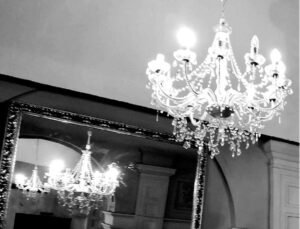
Teatro Argentina is a horseshoe-shaped Italian-style hall with 720 seats, 354 in the orchestra and 366 in six tiers of boxes, according to the data of Teatro di Roma, which runs it. Red and gold, with a decorated green ceiling and a large 16-armed chandelier, it is one of the most beautiful historic halls in the city.
A Name That Comes From Strasbourg
The name comes from the tower of the palace of Johannes Burckardt, the Burcardo, a papal master of ceremonies born in Strasbourg, in Latin Argentoratum, who signed himself episcopus argentinensis. The tower, the square and the theater took their name from him. The Burcardo palace, built between 1491 and 1500, is still on Via del Sudario.
The Sforza Cesarini and Theodoli
The Sforza Cesarini family started construction in 1730. The hall was designed by the architect and marquis Gerolamo Theodoli, who chose the horseshoe shape for acoustics and visibility. Originally it was almost entirely made of wood, with 186 boxes.
The Facade and the Restoration
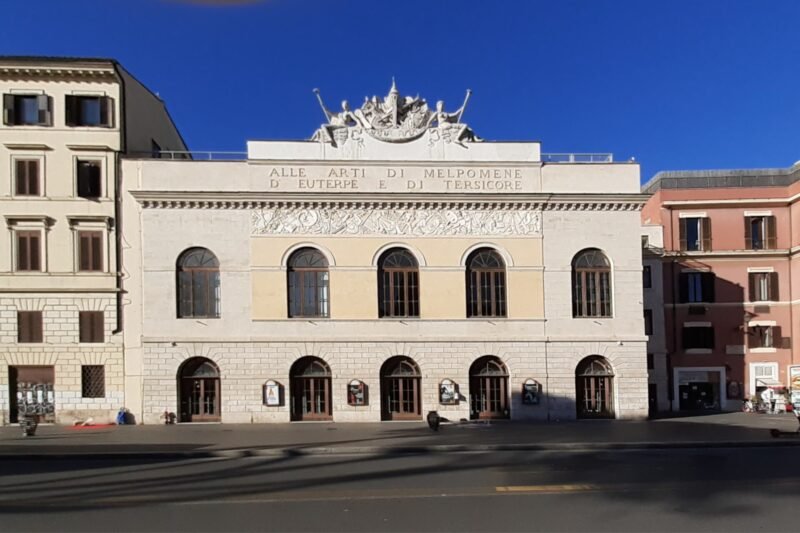
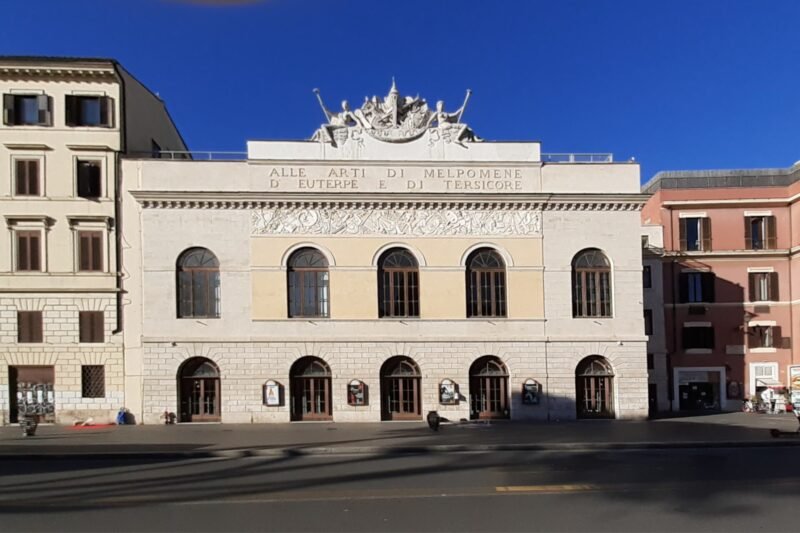
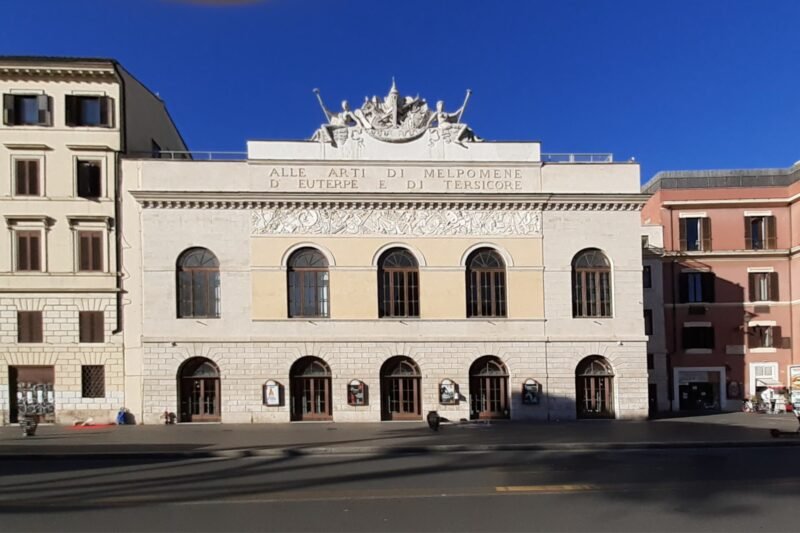
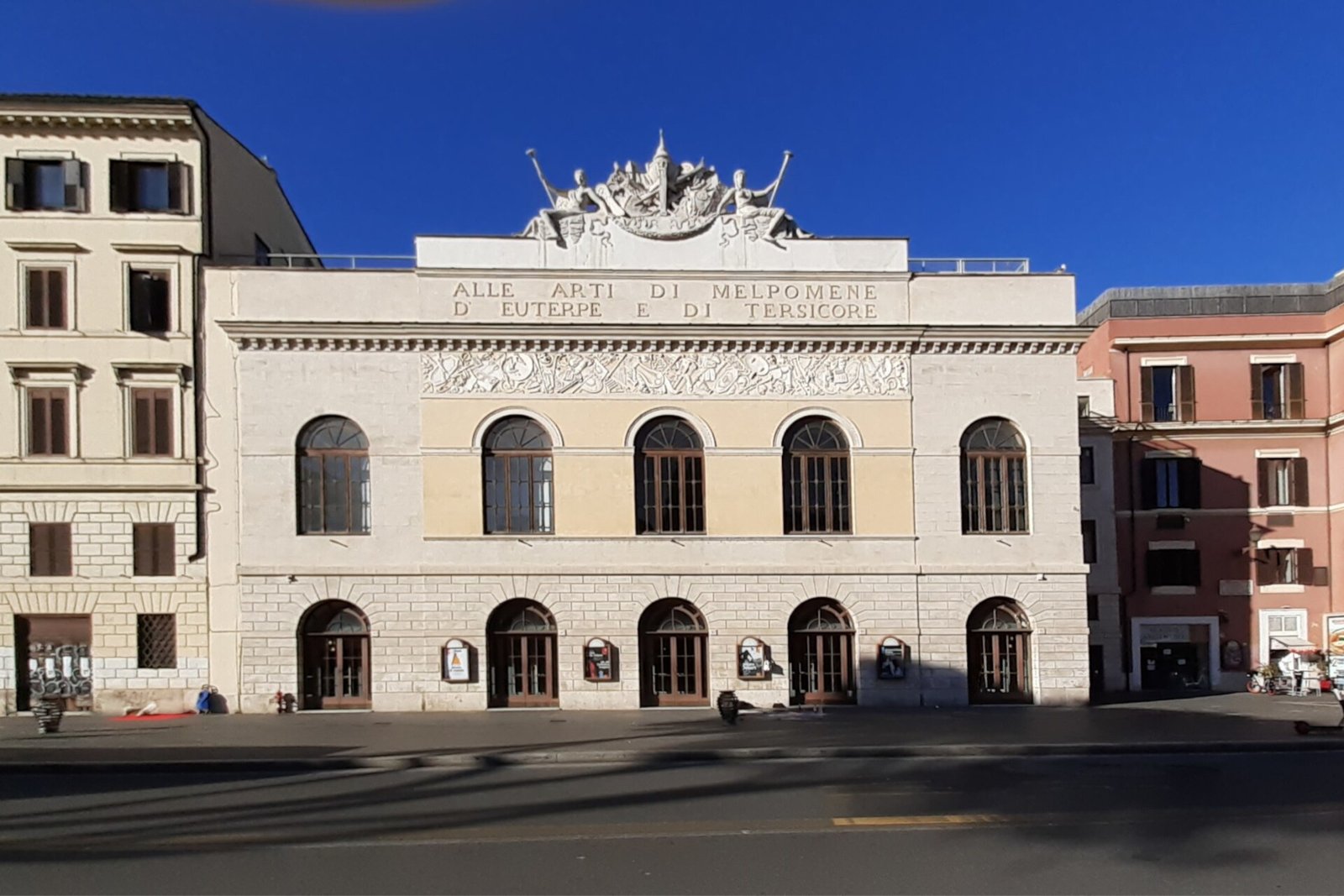
The neoclassical facade, with the dedication to the muses Melpomene, Euterpe and Terpsichore, was built in 1826 to a design by Pietro Holl. In 1993 Paolo Portoghesi restored the theater, bringing back the red of the upholstery and the original shape of the box valances.
Something Nobody Tells You About Filippo Gorini for Filarmonica Romana at Teatro Argentina, March 18, 2027
What few people say is that Teatro Argentina, today the home of Teatro di Roma's drama, was born as an opera and music theater. It was inaugurated in January 1732 with Domenico Sarro's Berenice. Rossini's The Barber of Seville debuted there on February 20, 1816. Niccolò Paganini played there in 1827, the same year Beethoven died. A piano recital at Argentina brings the building back to its original vocation.
The second thing concerns listening. In a horseshoe hall of this size the piano arrives directly, without the distance of large symphonic halls. For a recital, in our opinion, even the highest boxes work well, because listening matters more than the view. If you want to see the hands instead, sit on the left side of the orchestra or in the boxes on that side, from which you see the keyboard.
The third is that an Italian premiere in a repertoire recital changes the way you listen to the two sonatas too. After a piece written today, the dissonances of late Beethoven and the modulations of late Schubert sound less distant: it's the effect Gorini's cycle has built over three years.
The fourth is practical: the theater is in a limited traffic zone and has no parking. If you arrive by car you must leave it outside the ZTL and take tram 8 or walk.
My Advice for Seeing Filippo Gorini for Filarmonica Romana at Teatro Argentina, March 18, 2027
My advice is to choose a seat on the left side of the orchestra or in the low boxes on that side, and to listen to Jockel's new piece without prejudice before the two sonatas. From the left side you see the pianist's hands, and in a recital of this level seeing them adds a lot.
The second piece of advice concerns preparation. If you don't know Op. 109, you can listen to a recording in the days before, paying particular attention to the final movement: in the hall it will be easier to follow its path. Schubert's D. 959, on the other hand, is better heard without preparation, letting yourself be surprised by the harmonic solutions Filarmonica itself flags as bold.
The third concerns the week. Anyone who loves piano and stays in Rome a few days has, after Gorini, Grigory Sokolov's recital at Santa Cecilia on Monday, March 22. Two recitals in five days, two generations, two different halls: it's a rare combination.
The fourth is about timing. With the start at 21:00 it's best to have an early dinner in the streets around the square, or book for after the concert, knowing that many kitchens close around 23:00.
Accademia Filarmonica Romana, the Organizer
Accademia Filarmonica Romana is a private nonprofit institution founded in Rome in 1821, which organizes chamber and symphonic concerts, ballets and musical theater productions. It's one of the oldest music institutions in the city.
The Origins
It was founded by a few amateur musicians gathered around the composer Raffaele Muti Papazzurri. In 1824 it became an official institution of the Papal State. Its activity was interrupted between 1849 and 1856 for economic reasons and between 1860 and 1870 for political reasons.
From Via Flaminia to Teatro Olimpico
In 1946 it was refounded under the artistic direction of Alfredo Casella. Its seat is the Casina Vagnuzzi, at Via Flaminia 118, where Sala Casella is. Since 1980 Filarmonica has owned Teatro Olimpico.
The Great Names
The Accademia's history recalls the Italian premiere of L'assedio di Corinto in 1827 and Anna Bolena conducted by Donizetti in 1833. Between the wars, performers such as Adolf Busch, Rudolf Serkin, Alfred Cortot and Jascha Heifetz. After 1946, Bartók, Britten, Messiaen, Stravinsky, Berio, Boulez. Among the artistic directors are Goffredo Petrassi, Luciano Berio and Hans Werner Henze. Since 2024 the director has been Domenico Turi.
Artists in Residence
The artist-in-residence formula allows Filarmonica's audience to follow a performer over several seasons. Gorini's three-year period, 2025-2027, is an example of this choice: three recitals, three new pieces, a single project on the last sonatas of Beethoven and Schubert.
How to Get to Teatro Argentina
Teatro Argentina is at Largo di Torre Argentina 52, facing the sacred area, in the historic center. Tram 8, Torre Argentina stop, is the most convenient way.
By Tram
Tram 8 stops a few steps from the entrance: it's the simplest solution for anyone coming from Trastevere or Monteverde, there and back.
By Metro and Bus
No metro station is near the theater: the most convenient are Colosseo and Circo Massimo, on line B, from which you continue on foot or by surface transport. Largo Argentina and Corso Vittorio Emanuele II are crossed by many bus lines that connect Termini, Piazza Venezia, the Vatican and Trastevere. Evening schedules should be checked on the route planner of Rome's transit company.
On Foot and by Car
From Piazza Venezia, along Via delle Botteghe Oscure, it takes a few minutes. The same from the Pantheon, Piazza Navona, Campo de' Fiori and the Ghetto. By car you have to park outside the ZTL: the theater has no parking.
Another Well-Known Fact, Yet Rarely Mentioned
It's well known that Op. 109 opens the group of Beethoven's last three piano sonatas. It's mentioned less often how close in time it was to Schubert's second-to-last sonata. Beethoven composed it in 1820. Schubert wrote D. 959 in 1828, a year after Beethoven's death, which occurred in 1827, and a few weeks before his own.
Eight years separate the two pieces, and in between is the passing of the older of the two. Pairing Op. 109 with D. 959, as Gorini does, means putting side by side two composers of the same era, a few years apart, who closed their piano output in very different ways: the concentration of one, the breadth of the other.
A second known and little-cited fact concerns Teatro Argentina and Rossini. The Barber of Seville, staged here on February 20, 1816, was a fiasco on opening night, because many admirers of Paisiello's Barber sat in the orchestra. From the second night the opera triumphed. Argentina's audience therefore has a long history of encounters with new works, not always kind on first hearing. In 2027 it's Oscar Jockel's piece's turn.
The Right Photo to Take at Filippo Gorini for Filarmonica Romana at Teatro Argentina, March 18, 2027
The right photo is taken from the orchestra, before the lights go down, pointing upward: the six tiers of red and gold boxes, the green ceiling, the 16-armed chandelier. It's the framing that tells Argentina better than any description, and it works with a phone too.
The second is the stage before the start: a grand piano alone, in the center of a hall built for opera. It's an image that says at a glance the difference in scale between the place and the recital.
The third is taken outside, in the evening, from the opposite side of the square: the neoclassical facade with the dedication to the muses and, in the foreground, the lit columns of the sacred area. In mid-March, on leaving, the square is quiet and the artificial light on the ruins makes the photo more interesting than by day.
During the concert the phone stays off: in the finale of Op. 109 a pianissimo is worth more than any image, and in a hall of this size a lit screen can be seen from the boxes opposite.
Around Teatro Argentina
Teatro Argentina is a few minutes' walk from the Pantheon, Piazza Navona, Campo de' Fiori and the Ghetto. A concert here pairs naturally with a walk in the historic center.
The Sacred Area
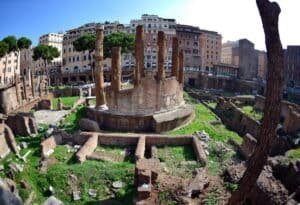
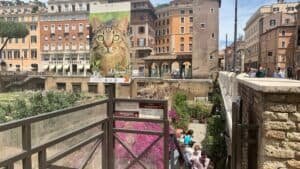
In front of the theater opens the sacred area of Largo Argentina, with the remains of the temples tied to the Theater of Pompey complex. Among the ruins lives the cat colony of the Largo Argentina cat sanctuary.
Pantheon and Piazza Navona
To the north, in five minutes, you reach the Pantheon. To the west, beyond Corso Vittorio Emanuele II, Piazza Navona and Campo de' Fiori.
The Ghetto
Toward the Tiber you enter the Jewish Ghetto and reach the Theater of Marcellus: a 10-minute walk before the concert.
Some Important Events That Happened Here in History
Teatro Argentina was inaugurated in January 1732 with Domenico Sarro's Berenice, and since then its history has been intertwined with that of Italian music and Roman politics. In the 18th century foreign travelers considered it the most important of the city's theaters.
On February 20, 1816 the premiere of Rossini's The Barber of Seville was staged there, with Manuel García. On January 28, 1822 Argentina hosted the world premiere of Donizetti's Zoraida di Granata. In 1827, a concert by Niccolò Paganini.
Verdi brought I due Foscari there in 1844 and La battaglia di Legnano in 1849. According to Teatro di Roma's account, it was on the occasion of the latter that Romans started the demonstrations that led to the Roman Republic. After 1870 the opening of Corso Vittorio Emanuele II put the theater at the center of the new city, and the building passed to the City. In 1993, the restoration by Paolo Portoghesi. Since 2022 it has been the main venue of Fondazione Teatro di Roma, and hosts the concerts of Accademia Filarmonica Romana.
Who Has Passed Through Filippo Gorini for Filarmonica Romana at Teatro Argentina, March 18, 2027
Across Argentina's stage have passed Gioachino Rossini with The Barber of Seville and Manuel García. Gaetano Donizetti with Zoraida di Granata. Giuseppe Verdi with two premieres. Niccolò Paganini in concert. In the 20th century the hall saw the works of Gabriele D'Annunzio and Luigi Pirandello, and the directors of Teatro di Roma, from Vito Pandolfi to Luca Ronconi.
In the history of Filarmonica, which brings Gorini to this hall, pass Raffaele Muti Papazzurri, the founder, Alfredo Casella, Goffredo Petrassi, Luciano Berio, Hans Werner Henze and Giuseppe Sinopoli, and performers such as Rudolf Serkin, Alfred Cortot and Jascha Heifetz.
Over the last three years Filippo Gorini has passed through here every season, with Kurtág's Játékok in 2025 and Michelle Agnes Magalhães's Piano Sonata in 2026. On March 18, 2027, with him, Oscar Jockel's music passes through for the first time in Italy. And ideally Beethoven and Schubert pass through here too, two composers whom Argentina knew in their lifetimes: the theater had already existed for almost a century when they wrote the sonatas on the program.
Accessibility and Practical Information
Teatro Argentina is a historic building in which architectural barriers cannot be fully eliminated. According to Teatro di Roma the venue has elevators and reserved seats in the orchestra for people with disabilities. For availability on the night of the concert, contact Filarmonica or the theater's box office in advance.
With Kids
A piano recital is a good chance for a kid who studies the instrument, especially with a young performer like Gorini. The 21:00 start and the density of the program make the evening demanding for the youngest.
Dress
At Argentina there is no dress code, but the 18th-century hall invites a minimum of care. In March a coat and umbrella are often useful.
Where to Eat Before or After the Concert
The historic center around Argentina offers every kind of place, from the Roman trattorias toward Campo de' Fiori to the Roman-Jewish cuisine of the Ghetto. With the start at 21:00 it's best to have dinner around 19:30 or book for after.
Before the Concert
Bakeries and pizza-by-the-slice places along Corso Vittorio Emanuele II are a quick solution. In the Ghetto the trattorias open early in the evening, and from there the theater is a few minutes' walk.
After the Concert
Wine bars and bistros around the Pantheon stay open longer. On a Thursday night booking isn't essential, but it reduces the wait.
A Week of Piano in Rome
The week of March 18, 2027 is one of the richest of the Roman piano season. Besides Gorini, the city offers in a few days some of the most important names in piano.
Argerich and Sokolov
From March 18 to 20 at Auditorium Parco della Musica Martha Argerich plays with Charles Dutoit. On Monday, March 22, in Santa Cecilia's chamber season, it's Grigory Sokolov's turn. Anyone in Rome that week can hear three generations of pianists in five days.
Beethoven's Bicentennial
2027 marks 200 years since Beethoven's death, and Gorini's Op. 109 adds to a Roman spring full of Beethoven: the same evening, at Teatro Costanzi, the Orchestra Nazionale Barocca dei Conservatori performs the First Symphony on historical instruments.
Frequently Asked Questions About Filippo Gorini at Teatro Argentina
When Does Filippo Gorini Play in Rome?
Filippo Gorini plays at Teatro Argentina on Thursday, March 18, 2027 at 21:00, for the season of Accademia Filarmonica Romana. It's the third and last recital of his project on the last Sonatas of Beethoven and Schubert, on a single date.
What Does Gorini Play at Teatro Argentina?
At Teatro Argentina Filippo Gorini plays Beethoven's Sonata No. 30, Op. 109, Schubert's Sonata in A major, D. 959, and a new composition by Oscar Jockel in Italian premiere. The title of Jockel's piece isn't given on the concert page.
Where Do You Buy Tickets for Gorini's Recital?
Tickets for Filippo Gorini's recital are bought from the concert page on Filarmonica Romana's website, which links to the authorized presale network, or at the box office of Teatro Argentina. Prices are listed on the sales network.
Who Is Filippo Gorini?
Filippo Gorini is an Italian pianist, a graduate of the Bergamo Conservatory and the Mozarteum in Salzburg, winner of the 2022 Premio Abbiati, the 2020 Borletti-Buitoni Trust Award and the Telekom-Beethoven Competition in Bonn in 2015. He records for Alpha Classics and is artist in residence at Filarmonica Romana from 2025 to 2027.
How Do You Get to Teatro Argentina?
Teatro Argentina, at Largo di Torre Argentina 52, is reached by tram 8, Torre Argentina stop, or by the many bus lines that cross the square. The nearest metro stations are Colosseo and Circo Massimo, on line B. The theater is in the ZTL and has no parking.
What Is the Sonata for 7 cities Project?
Sonata for 7 cities is Filippo Gorini's project, running until May 2027, with one-month residencies in Vienna, Cape Town, Hong Kong, Portland, Medellín, Sydney and Milan and seven newly commissioned pieces, including the one by Oscar Jockel on the program at Teatro Argentina.
Is Teatro Argentina Accessible?
According to Teatro di Roma, Teatro Argentina has elevators and reserved seats in the orchestra for people with disabilities, though it is a historic building with some barriers. For Gorini's recital, contact the box office or Filarmonica first.
The Final Advice on Filippo Gorini at Teatro Argentina
A pianist awarded the Abbiati, a three-year project reaching its end, the last Beethoven and the last Schubert, a new piece just written and an 18th-century hall where The Barber of Seville debuted: March 18, 2027 at Argentina is one of the most accomplished chamber evenings of the season. My advice is to take a seat on the left side of the orchestra, listen to Op. 109 at home in the days before and, if the week allows, complete the path with Sokolov at Santa Cecilia the following Monday.
Article written by the editorial team of Tour Leader Pro, contact them for Private/Corporate/V.I.P. Tours and Experiences.
Planning a trip to Rome? The English-language guides for visiting the city are on ItalyPlanner.com.
Contact Information
Nearby
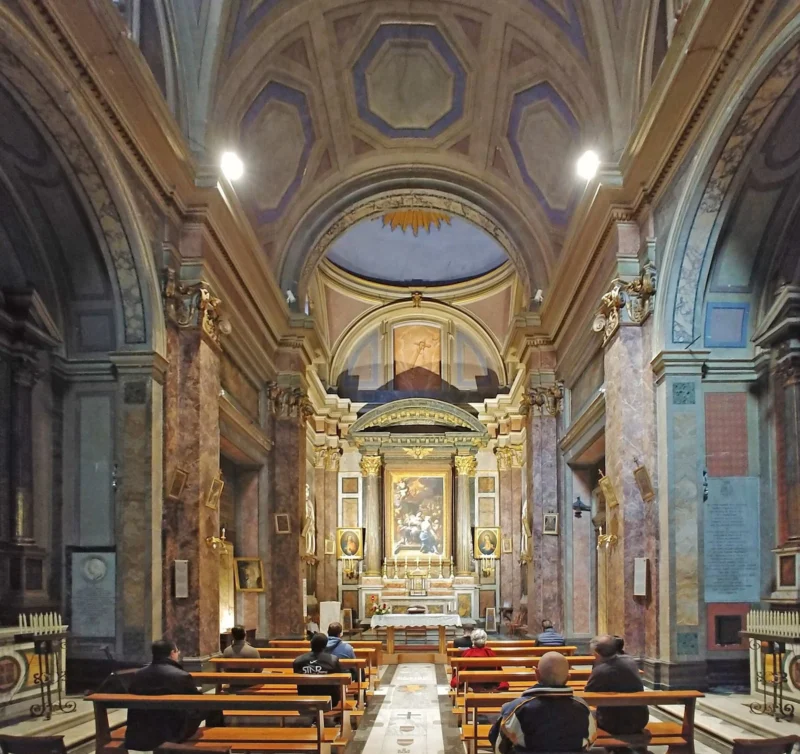
 Teatro Argentina100 m
- Teatro Centrale100 m
- Largo Torre Argentina – Sacred Area of Campo Marzio100 m
- Cat Sanctuary at Largo Argentina100 m
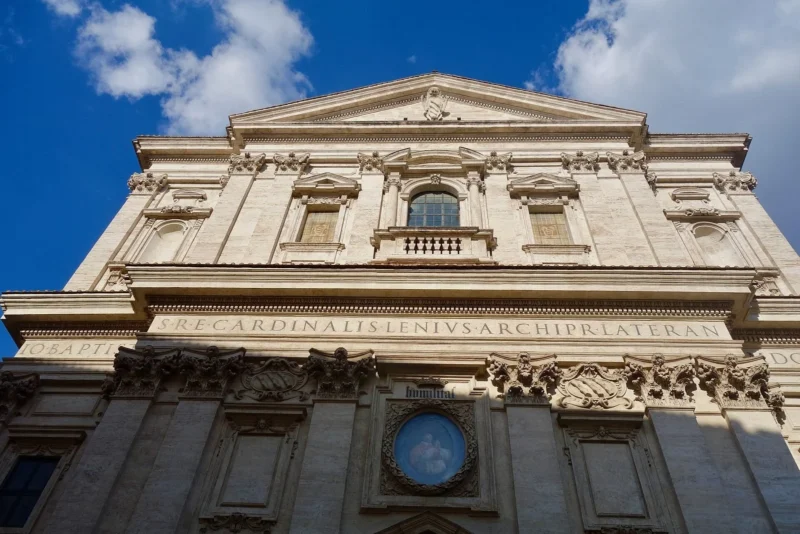
- San Carlo ai Catinari200 m
- Santa Maria in Publicolis200 m
Upcoming events nearby
- Othello at Teatro Argentina, November 4 to 29, 2026100 m
- The Madness of King George with Massimo Popolizio at Teatro Argentina in Rome, January 9 to 31, 2027100 m
- Una delle ultime sere di Carnovale at Teatro Argentina, February 2 to 14, 2027100 m
- Lo zar by and with Stefano Massini at Teatro Argentina in Rome, March 16 to 25, 2027100 m
You might also like
- Samuele Rizzuto, Il pianista dell’anima at Teatro Sala Umberto, March 31, 2027
- Quartetto Prometeo and Claudio Pasceri at Teatro Argentina, March 4, 2027
- Nello Daniele in Daniele racconta Daniele at Teatro Quirino, April 9, 2027
- Thomas Oliemans, Winterreise at Teatro Argentina, February 11, 2027
- Adélaïde Ferrière for the Filarmonica Romana at Teatro Argentina, February 4, 2027
- Trio Concept for the Filarmonica Romana at Teatro Argentina, December 10, 2026