Thomas Oliemans, Winterreise at Teatro Argentina, February 11, 2027
In short. Dutch baritone Thomas Oliemans sings Franz Schubert's Winterreise, playing the piano part himself, on Thursday, February 11, 2027 at 21:00 at Teatro Argentina, Largo di Torre Argentina 52, for the Accademia Filarmonica Romana.
Dutch baritone Thomas Oliemans sings Franz Schubert's Winterreise, playing the piano part himself, on Thursday, February 11, 2027 at 21:00 at Teatro Argentina, Largo di Torre Argentina 52, for the Accademia Filarmonica Romana. The program is the complete cycle, op. 89 D 911, 24 Lieder for voice and piano on texts by Wilhelm Müller. The theater is reached by tram 8, Torre Argentina stop, by the many bus lines crossing the square, or on foot from the Pantheon and Piazza Venezia. The closest Metro Line B stations are Colosseo and Circo Massimo. Prices are published on the authorized presale network to which the official concert page on the Filarmonica website links. Tickets are bought there or at the theater box office.
A singer alone at the piano, with no one beside him: this is how Oliemans has chosen to perform the most famous cycle in the history of the Lied. The Filarmonica calls it a truly rare performance, and it is the baritone's first concert for the Roman institution.
Thomas Oliemans and Winterreise at Teatro Argentina: date, time and tickets
Thomas Oliemans's concert is scheduled for Thursday, February 11, 2027 at 21:00 at Teatro Argentina, in the Accademia Filarmonica Romana's 2026/2027 season. It is a single date. Those who want to hear this Winterreise will not get a second chance in the season, which is the main reason not to put off buying.
Start time and length
21:00 is the Filarmonica's usual start time at the Argentina. The running time is not listed on the concert page. Winterreise is a single cycle of 24 Lieder, conceived as one narrative arc.
Tickets
From the concert page on the Filarmonica website, the purchase button leads to the authorized presale network, where prices and sections are listed. You can also go to the Teatro Argentina box office. The Filarmonica website also has a section on subscriptions.
The series at the Argentina
Oliemans's recital is part of the Filarmonica's series at the Argentina, which opened on November 5 with I Solisti della Filarmonica and Mahler's Fourth and continued with the recital by pianist Anna Fedorova. A week earlier, on February 4, percussionist Adélaïde Ferrière plays in the same hall.
The program: Schubert's Winterreise
Winterreise (Winter Journey), op. 89 D 911 by Franz Schubert, is a cycle of 24 Lieder for voice and piano on poems by Wilhelm Müller, composed in 1827, a year before the composer's death.
Wilhelm Müller
The Filarmonica presents Müller as a poet very close to Schubert's thinking and aesthetics. The 24 poems form a first-person narrative with no plot in the strict sense: a succession of landscapes and moods along a walk through the snow.
The journey
The critic Fedele d'Amico, quoted by the Filarmonica, described the cycle as the journey of a lover rejected forever, who flees aimlessly and gets lost in a sort of Via Crucis through a winter landscape, a landscape that becomes the symbol of the deadly frost of every memory and every hope.
A cycle to hear in full
Unlike a collection of songs, Winterreise lives on its continuity. The Lieder follow one another like stages of a single walk, and the overall effect depends on listening from beginning to end.
The piano and the voice
In Winterreise, a cycle for voice and piano, the piano is not background but the other half of the story. In Oliemans's version, where he plays the piano part himself, voice and instrument come from the same person, and the dialogue between the two becomes an inner monologue. In our view this is the main reason not to miss this evening.
Who Thomas Oliemans is
Thomas Oliemans is a Dutch baritone and pianist born in 1977 who moves between classical and popular music. The Filarmonica considers him one of the most interesting and versatile performers on the international opera and concert scene.
His beginnings
As a boy he sang along to his father's records of French chansonniers. He studied at the Amsterdam Conservatory with Margreet Honig, and French song has remained one of his passions alongside opera and Lied.
Opera
At the Dutch National Opera he has sung important roles in works such as Puccini's La bohème and Kurt Weill's Rise and Fall of the City of Mahagonny, and has taken part in new operas by Peter-Jan Wagemans, Rob Zuidam and Martijn Padding. In London he has sung at the English National Opera and at the Royal Opera House in Covent Garden. He has also performed in the opera houses of Geneva, Madrid, Tokyo, Paris, Toulouse and Berlin and at the Aix-en-Provence and Salzburg festivals.
Papageno
In 2013 the friends of the Dutch National Opera gave him the Prix d'Amis for his Papageno in The Magic Flute staged by Simon McBurney.
Schubert at the Concertgebouw
At the Concertgebouw in Amsterdam he has sung, among other things, Schubert's three great Lieder cycles with pianist Malcolm Martineau. Before it became the project in which he plays the piano himself, he had therefore performed Winterreise for a long time with one of the great Lied pianists.
Chanson and piano
With the Amsterdam Sinfonietta and pianist and accordionist Bert van den Brink he returned to French song: in summer 2019 with the program Langs Brel en Bannink, and in summer 2021 with a French program in the Grote Zaal of the Concertgebouw, in which he accompanied himself at the piano in some pieces. On November 20, 2021, on the program Podium Witteman, he received the De Ovatie prize for classical music from Paul Witteman.
A curiosity about Thomas Oliemans, Winterreise at Teatro Argentina, February 11, 2027
The best curiosity concerns a podcast. Oliemans, together with journalist Gijs Groenteman and musicologist Thomas de Jonker, devoted an in-depth analysis to Winterreise itself, as well as to Bach's St. Matthew Passion and Mahler's nine symphonies. Those who hear the cycle at Teatro Argentina will have in front of them a performer who has taken it apart and explained it piece by piece, before singing and playing it alone.
The second concerns his training. The baritone who sings Schubert at the piano began by singing along to his father's records of French song, and kept going back to that repertoire as far as Brel. In 2021, at the Concertgebouw, he had already sat at the piano to accompany himself in some pieces, and Winterreise is the natural development of that experience.
Third curiosity: in the same season Rome has more than one Winterreise. In the Santa Cecilia chamber season the Schubert cycle is scheduled for January 20, 2027. And at the Mattatoio, for the Romaeuropa Festival, Ersan Mondtag staged Elfriede Jelinek's Winterreise, the theatrical text that engages with Schubert's cycle.
Teatro Argentina, the recital hall
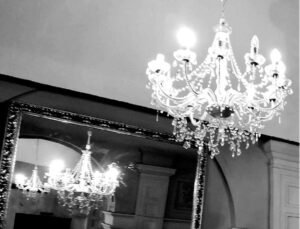
Teatro Argentina is a horseshoe-shaped hall of 720 seats, 354 in the orchestra and 366 in six tiers of boxes, according to figures from the Teatro di Roma, which runs it. It is red and gold, with a decorated green ceiling and a large chandelier with 16 arms.
A German name
The name comes from Strasbourg, not South America. Johannes Burckardt, a papal master of ceremonies born in Strasbourg, in Latin Argentoratum, signed himself episcopus argentinensis. His palace's tower, the square and the theater took their name from him. The Burcardo palace, built between 1491 and 1500, is still on Via del Sudario, next to the theater.
Theodoli and the Sforza Cesarini
Construction began in 1730 under the Sforza Cesarini family. The hall was designed by architect and marquis Gerolamo Theodoli, who chose the horseshoe shape for acoustics and visibility. It was originally almost entirely wooden, with 186 boxes.
The facade and the restoration
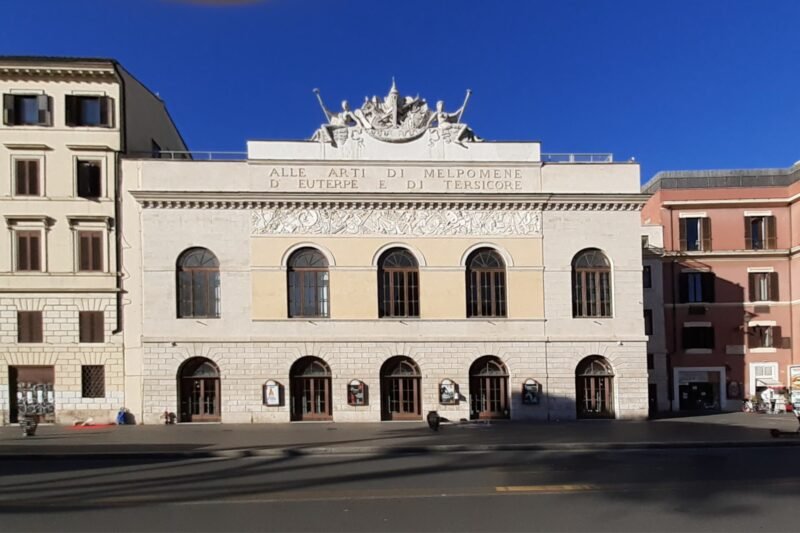
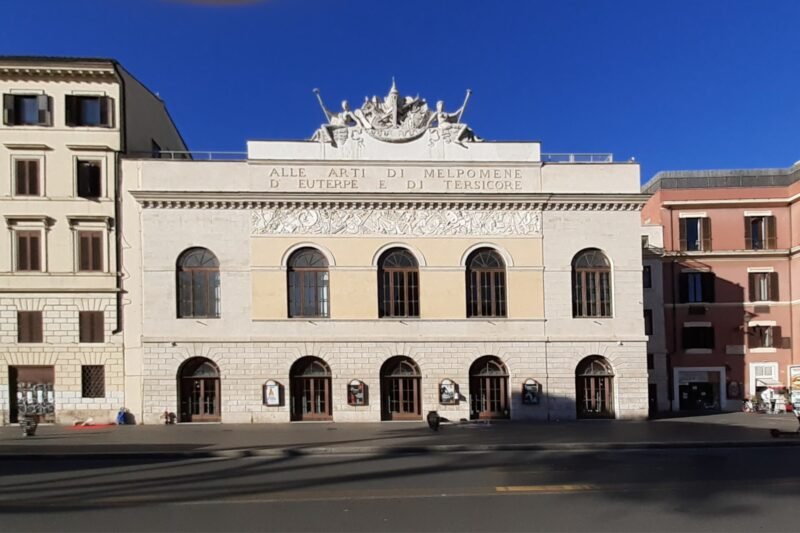
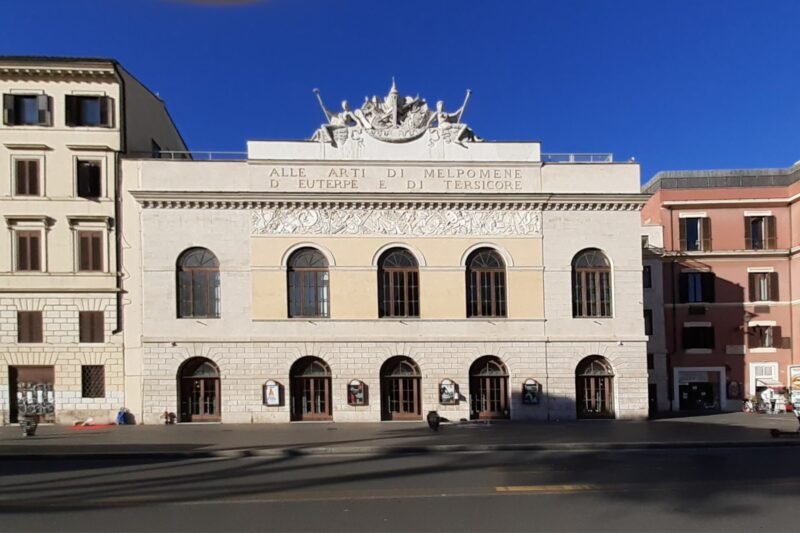
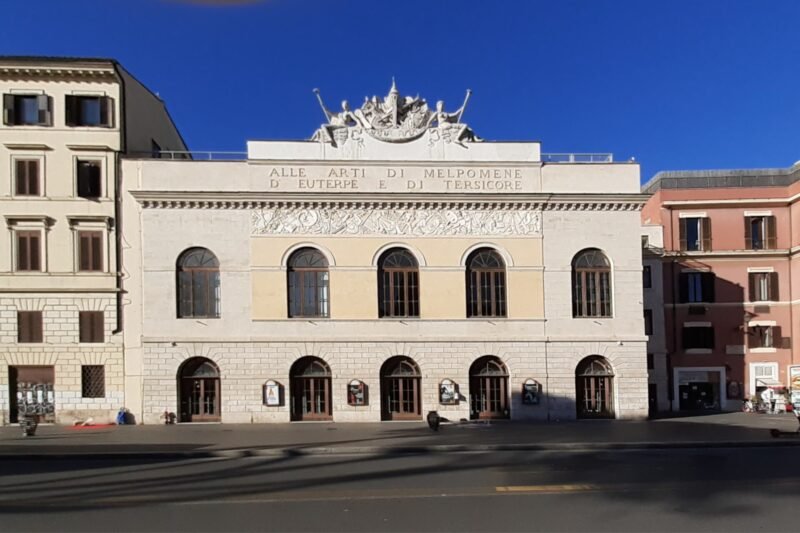
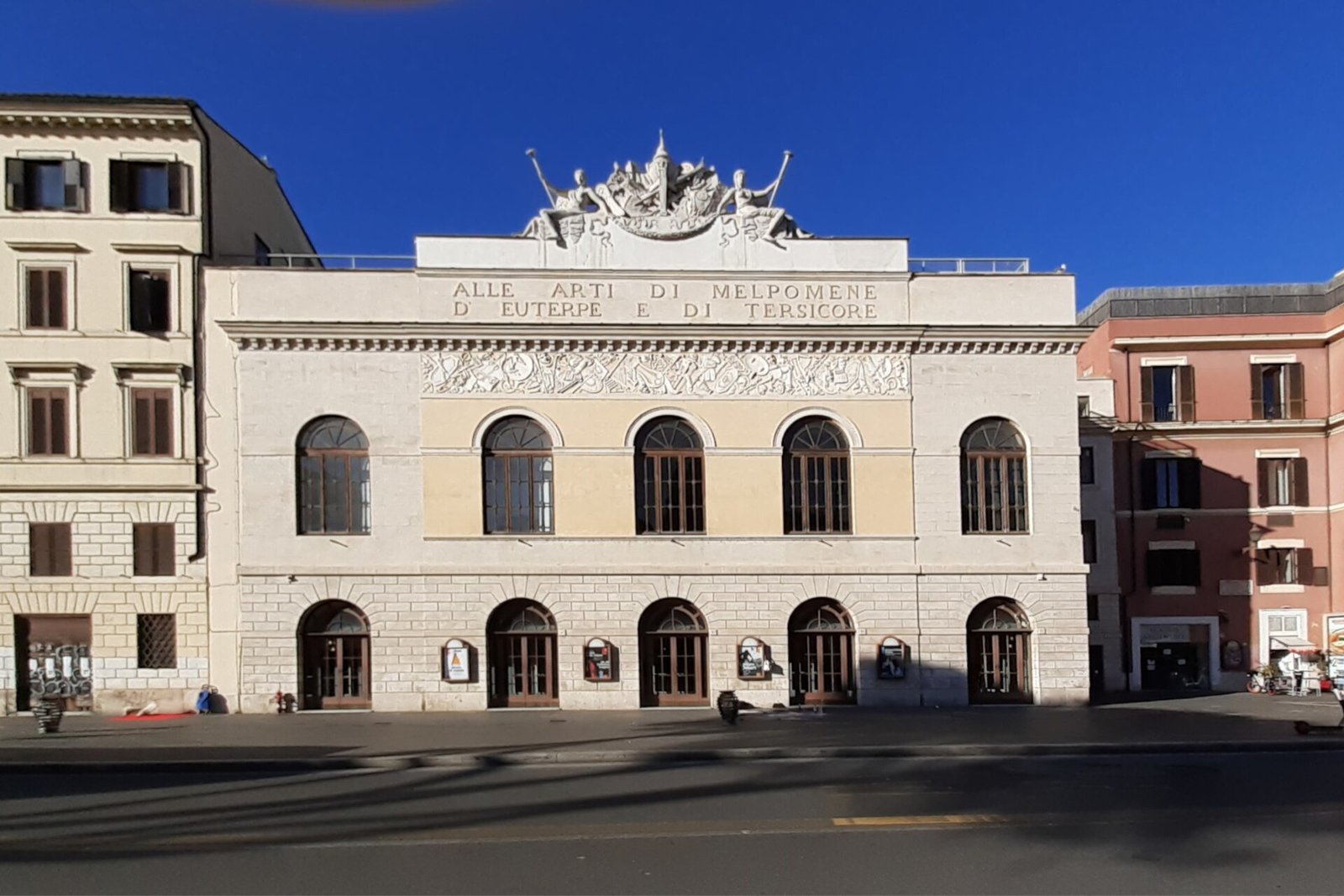
The neoclassical facade, with its dedication to the muses Melpomene, Euterpe and Terpsichore, was built in 1826 to a design by Pietro Holl. Paolo Portoghesi's 1993 restoration brought back the red of the upholstery and the original outline of the box valances.
An opera hall for a Lied
The Lied is chamber music, intimate by nature, and Winterreise is its most famous example. Bringing it to a horseshoe hall of 720 seats is a choice that, in our view, works. The Argentina's size stays intimate, the voice reaches even the boxes directly, and the red and gold setting gives the winter journey a theatrical contrast. A lone singer at the center of a stage built for grand opera becomes the very image of the cycle's protagonist.
One thing nobody tells you about Thomas Oliemans, Winterreise at Teatro Argentina, February 11, 2027
What few people say is that a Winterreise in which the singer plays the piano himself also changes the layout on stage. The singer is not standing beside the instrument but seated at the keyboard, and the audience sees him in profile or three-quarter view depending on the piano's position. To see his face as well as his hands, choose a seat facing the stage, in the central orchestra or the central boxes.
The second thing concerns listening. In an Italian-style hall of this size the voice arrives directly, without the distance of the big concert halls, and the words can be understood. Those who know a little German, or have read the translations beforehand, can follow the story line by line.
The third is practical: the theater is in a limited traffic zone and has no parking. Those who arrive by car must leave it outside the ZTL and continue on tram 8, which stops in front of the sacred area, or on foot.
The advice I give you for visiting Thomas Oliemans, Winterreise at Teatro Argentina, February 11, 2027
The advice is to read Müller's texts in Italian translation first. Winterreise is a story, and knowing what each Lied says, from first to last, transforms the listening and lets you follow Schubert's music word by word.
Second piece of advice: do not applaud between Lieder. The cycle is a single arc, and the silence between pieces is part of it. You applaud at the end, when the singer lifts his hands from the keyboard.
Third: arrive on foot, crossing the historic center from the Pantheon or Piazza Navona on a February evening. The cold, the half-empty streets, the low lights: a small winter journey before Schubert's.
Finally, take your seat a few minutes early and look at the hall with the lights on. The contrast between a lone piano and six tiers of red and gold boxes is part of the evening.
The Accademia Filarmonica Romana, the organizer
The Accademia Filarmonica Romana, founded in Rome in 1821, is a private non-profit institution that organizes chamber and symphonic concerts, ballets and music theater performances. It is one of the oldest musical institutions in the city.
Music against censorship
It was founded by amateur musicians gathered around composer Raffaele Muti Papazzurri to perform chamber music, symphonic music and operas in concert form when censorship banned their staging. In 1824 it became an official institution of the Papal States. Its activity was suspended between 1849 and 1856 and between 1860 and 1870.
The refounding
In 1946 it was refounded under the artistic direction of Alfredo Casella. Its seat moved to the Casina Vagnuzzi, at Via Flaminia 118, where the Sala Casella now stands. Since 1980 the Filarmonica has owned the Teatro Olimpico. Its artistic directors have included Goffredo Petrassi, Luciano Berio and Hans Werner Henze, and since 2024 the direction has been Domenico Turi's.
The premieres
The history published by the Academy recalls the Italian premiere of The Siege of Corinth in 1827 and Anna Bolena conducted by Donizetti in 1833. Between the wars it hosted performers such as Adolf Busch, Rudolf Serkin, Alfred Cortot and Jascha Heifetz, and after 1946 Bartók, Britten, Messiaen, Stravinsky, Berio and Boulez. The Rome 1827 of The Siege of Corinth is the same year Schubert was composing Winterreise in Vienna.
How to get to Teatro Argentina
Teatro Argentina is at Largo di Torre Argentina 52, opposite the sacred area, in the historic center. Tram 8 is the most convenient way.
Tram 8
Tram 8 stops at Torre Argentina, a few steps from the entrance, and connects the square with Trastevere and Monteverde.
Metro and bus
No Metro station is close. The most convenient are Colosseo and Circo Massimo, on Line B, from which you continue on foot or by surface transport. Largo Argentina and Corso Vittorio Emanuele II are crossed by many bus lines linking Termini, Piazza Venezia, the Vatican and Trastevere. Evening schedules can be checked on the Rome public transport information service.
On foot and by car
From Piazza Venezia, along Via delle Botteghe Oscure, it takes just a few minutes, and the same goes from the Pantheon, Piazza Navona, Campo de' Fiori and the Ghetto. By car you must park outside the ZTL, since the theater has no parking.
Another well-known fact, yet rarely mentioned
It is well known that Winterreise is one of Schubert's masterpieces. Less often remembered is the date: the cycle was composed in 1827, a year before the composer's death, as the Filarmonica notes. The journey into winter and toward the end that it tells was written by a musician with little more than a year of life ahead of him.
A second little-cited fact concerns the Argentina itself: the theater where Oliemans sings Schubert was born as an opera house. It was inaugurated in January 1732 with Berenice by Domenico Sarro, Rossini's Barber of Seville debuted there on February 20, 1816, and in 1827, the year of Winterreise, Niccolò Paganini played there.
Third fact: the Filarmonica, which today brings a Lieder cycle to the Argentina, was also born to perform in concert form the operas that papal censorship did not allow on stage. Chamber and vocal music in concert form has been its vocation for 200 years.
The right photo to take at Thomas Oliemans, Winterreise at Teatro Argentina, February 11, 2027
The right photo is the stage before the start: a lone grand piano with its stool, in the middle of a hall built for opera, under six tiers of red and gold boxes. It is the perfect image of Winterreise: a man alone in the landscape.
The second is taken from the orchestra, with the lights on, pointing upward: the boxes, the green ceiling, the 16-arm chandelier. It is the shot that tells the Argentina better than any description.
The third is taken outside, after the concert: the neoclassical facade with its dedication to the muses seen from the opposite side of the square, with the columns of the sacred area lit in the foreground. During the cycle, however, the phone stays off, because in Winterreise the silence between one Lied and the next is music.
Around Teatro Argentina
Teatro Argentina is a few minutes on foot from the Pantheon, Piazza Navona, Campo de' Fiori and the Ghetto, so the evening can be completed with a walk through the historic center.
The sacred area and the cats
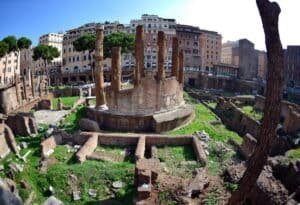
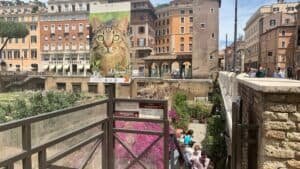
In front of the theater opens the sacred area of Largo Argentina, with the remains of the temples and of structures linked to the Theater of Pompey complex. Among the ruins lives the colony of the cat sanctuary at Largo Argentina.
Pantheon, Navona, Campo de' Fiori
The Pantheon is five minutes to the north. Beyond Corso Vittorio Emanuele II are Piazza Navona and Campo de' Fiori.
The Ghetto and the Theater of Marcellus
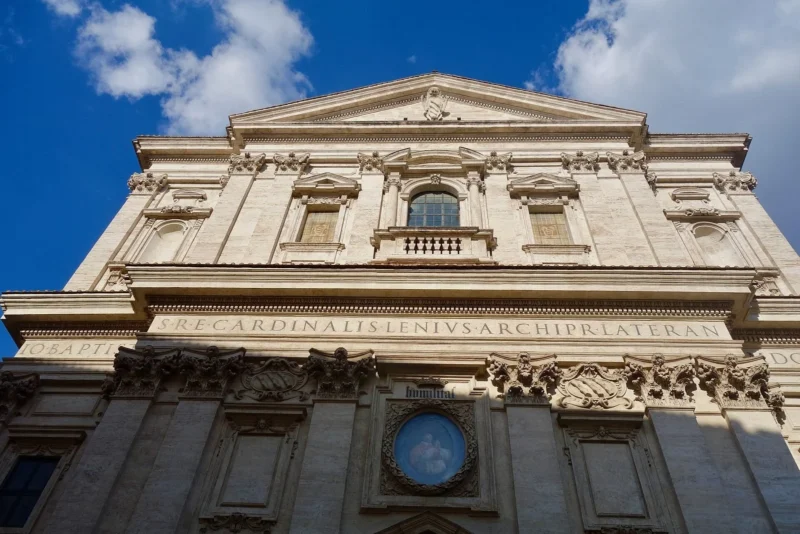
Toward the Tiber you enter the Jewish Ghetto and reach the Theater of Marcellus. A few steps from the Argentina is also the Church of the Gesù.
An off-season evening
In mid-February, on a Thursday, the historic center around the Argentina is quieter than at any other time of year. Arriving early lets you walk around the sacred area, step into the Pantheon if it is still open and reach the theater on foot without the crowds of the peak months.
Some important events that took place here in history
Teatro Argentina opened in January 1732 with Domenico Sarro's Berenice, and since then its history has been intertwined with that of Italian music and Roman politics. In the 18th century foreign travelers considered it the most important of the city's theaters.
On February 20, 1816 the premiere of Rossini's Barber of Seville was staged there, with Manuel García. The first night was a fiasco, because the audience included many admirers of Paisiello's Barber, but from the second night the opera triumphed. On January 28, 1822 the Argentina hosted the premiere of Donizetti's Zoraida di Granata, and in 1827 a concert by Niccolò Paganini.
Verdi brought I due Foscari there in 1844 and La battaglia di Legnano in 1849. According to the Teatro di Roma, it was with the latter that the Romans began the demonstrations that led to the Roman Republic. After 1870 the building passed to the city, in 1993 came Portoghesi's restoration, and since 2022 it has been the primary venue of the Fondazione Teatro di Roma, and it hosts the Filarmonica's concerts.
Who has played Thomas Oliemans, Winterreise at Teatro Argentina, February 11, 2027
Through the Argentina's stage have passed Gioachino Rossini and Manuel García with the Barber of Seville, Gaetano Donizetti with Zoraida di Granata, sung by Domenico Donzelli and Luigia Boccabadati, Giuseppe Verdi with two premieres, and Niccolò Paganini in concert. In the 20th century the hall saw the plays of Gabriele D'Annunzio and Luigi Pirandello, and Teatro di Roma directors such as Vito Pandolfi and Luca Ronconi.
In the history of the Filarmonica appear founder Raffaele Muti Papazzurri, Alfredo Casella, Goffredo Petrassi, Luciano Berio, Hans Werner Henze and Giuseppe Sinopoli, and performers such as Serkin, Cortot and Heifetz.
On February 11, 2027 Thomas Oliemans takes the Argentina stage, for the first time for the Filarmonica. He is a baritone who has sung Papageno in Amsterdam and Puccini and Weill at the Dutch National Opera, and who brings to Rome a Schubert all his own.
Accessibility and practical information
Teatro Argentina is a historic building where architectural barriers can't be removed entirely. According to the Teatro di Roma, the building has elevators and reserved seats in the stalls for people with disabilities. For availability on the evening of the concert, it's best to contact the Filarmonica or the theater box office in advance.
With teenagers
Winterreise is a long cycle, in German, of great intensity. It suits a teenager who studies voice, piano or German literature better than a child. The 21:00 start time should be weighed for the youngest.
Translations
It is not stated if texts or translations will be available in the hall. Those who do not know German would do well to print or save on their phone, to read before the start, an Italian translation of Müller's 24 poems.
Where to eat before or after the concert
Around the Argentina the historic center offers every kind of place: Roman trattorias toward Campo de' Fiori, Roman-Jewish cooking in the Ghetto, bakeries and pizza-by-the-slice shops along Corso Vittorio Emanuele II, wine bars and bistros around the Pantheon.
Before or after
With a 21:00 start it is best to dine early, around 19:30, or to book for afterward, bearing in mind that many kitchens in the center close around 23:00. After a cycle like Winterreise, a glass of wine at a wine bar near the Pantheon is the right way to come back to the present.
In the Ghetto
For those who prefer to dine after the concert, the streets of the Ghetto are a few minutes on foot and offer Roman-Jewish cooking. On a February Thursday it is easier to find a table than on the weekend, but booking remains the prudent choice.
A winter journey in Rome
Mid-February is low season. The historic center is less crowded, the museums are comfortable to visit and the music seasons are in full swing. Those in town can combine several concerts in the same week.
The music week
On the same evenings, at the Auditorium Parco della Musica, Antonio Pappano conducts the Santa Cecilia Orchestra with Jan Lisiecki in Beethoven's Emperor, on Thursday the 11th, Friday the 12th and Saturday, February 13. On Thursday the symphonic concert starts at 19:30, two hours before Winterreise: two different evenings for two different kinds of listener.
The weather
February evenings in Rome are cool and sometimes rainy. For the walk to the Argentina you need comfortable shoes, a coat and a folding umbrella: a small winter journey, indeed.
How to listen to Oliemans's Winterreise
Thomas Oliemans's Winterreise asks the audience for focused listening: 24 Lieder, one performer, no scene changes. It is an evening that is better lived knowing in advance what to expect.
The story before the music
The cycle follows a protagonist rejected by his beloved who leaves the town in winter and walks aimlessly. Each Lied is a stage: an object, a landscape, a memory. Those who keep this thread in mind follow the evening like a short novel, not a series of unconnected songs.
The voice that accompanies itself
With the singer at the piano, the relationship between voice and instrument changes. There are no glances between two performers, but a single breath. In our view it is the most interesting thing to watch, because every choice of tempo and color comes from one head.
The silence
Between one Lied and the next, the pauses are part of the music. In an Italian-style hall like the Argentina every noise carries: phones off, candies unwrapped before the start, coats left at the coat check or settled before the lights go down.
Afterward
At the end of the cycle the applause often comes after a few seconds of silence. It is best to let it happen, because it is the way the audience gives back to the performer the last image of the journey.
The Filarmonica's other venues
Teatro Argentina is one of the venues of the Accademia Filarmonica Romana season. Alongside the concert series in this hall, the Filarmonica programs chamber concerts and music lessons in the Sala Casella, at Via Flaminia 118, and dance and music theater performances at Teatro Olimpico.
A route through the city
Those who follow the season can build an itinerary between the historic center and the Flaminio district, with very different offerings: chamber music in the historic seat on Via Flaminia, ballet at the Olimpico, recitals in the 18th-century hall of the Argentina.
Frequently asked questions about Thomas Oliemans and Winterreise
When does Thomas Oliemans sing Winterreise in Rome?
Thomas Oliemans sings Schubert's Winterreise at Teatro Argentina on Thursday, February 11, 2027 at 21:00, for the Accademia Filarmonica Romana season. The theater is at Largo di Torre Argentina 52, in the historic center. It is a single date.
Does Oliemans also play the piano?
Thomas Oliemans performs Winterreise singing and playing the piano part himself. The Filarmonica calls it a truly rare performance. The Dutch baritone is also a pianist, and at the Concertgebouw in Amsterdam he had already sat at the piano for some pieces of a French program.
What is Winterreise?
Franz Schubert's Winterreise op. 89 D 911 is a cycle of 24 Lieder for voice and piano on poems by Wilhelm Müller, composed in 1827, a year before the composer's death. It tells the aimless journey of a rejected lover through a winter landscape.
Who is Thomas Oliemans?
Thomas Oliemans is a Dutch baritone and pianist born in 1977, trained at the Amsterdam Conservatory, who has sung at the Dutch National Opera, at Covent Garden and at the Aix-en-Provence and Salzburg festivals. In 2013 he won the Prix d'Amis as Papageno and in 2021 the De Ovatie prize.
Where do you buy tickets?
Tickets for Thomas Oliemans at Teatro Argentina are bought from the concert page on the Accademia Filarmonica Romana website, which links to the authorized presale network where prices are published, or at the theater box office.
How do you get to Teatro Argentina?
Teatro Argentina, at Largo di Torre Argentina 52, is reached on tram 8, Torre Argentina stop, and on the many bus lines that cross the square. The nearest Metro B stations are Colosseo and Circo Massimo. The theater is in the ZTL and has no parking.
Is Winterreise sung in German?
Schubert's Winterreise, on the program at Teatro Argentina with Thomas Oliemans, is set to German poems by Wilhelm Müller and is sung in German. It is not stated if translations will be available in the hall, so it is best to read an Italian version of the 24 texts beforehand.
Is this Oliemans's first time for the Filarmonica?
The February 11, 2027 concert at Teatro Argentina is Thomas Oliemans's first concert for the Accademia Filarmonica Romana, as the Filarmonica itself states, presenting his Winterreise at the piano as a truly rare performance.
The final advice on Thomas Oliemans and Winterreise
A baritone who has studied Winterreise to the point of explaining it in a podcast, who sings it playing the piano himself, in a hall from 1732 where the Barber of Seville debuted: in our view it is one of the most original Lied evenings of the Roman season. The advice is to read Müller's texts in translation first, choose a seat facing the stage, not applaud between Lieder and arrive on foot through the historic center in winter.
Article written by the editorial team of Tour Leader Pro, contact them for Private/Corporate/V.I.P. Tours and Experiences.
Planning a trip to Rome? The English guides to visiting the city are on ItalyPlanner.com.
Contact Information
Nearby
 Teatro Argentina100 m
- Teatro Centrale100 m
- Largo Torre Argentina – Sacred Area of Campo Marzio100 m
- Cat Sanctuary at Largo Argentina100 m
- San Carlo ai Catinari200 m
- Santa Maria in Publicolis200 m
Upcoming events nearby
- Othello at Teatro Argentina, November 4 to 29, 2026100 m
- The Madness of King George with Massimo Popolizio at Teatro Argentina in Rome, January 9 to 31, 2027100 m
- Una delle ultime sere di Carnovale at Teatro Argentina, February 2 to 14, 2027100 m
- Lo zar by and with Stefano Massini at Teatro Argentina in Rome, March 16 to 25, 2027100 m
You might also like
- Adélaïde Ferrière for the Filarmonica Romana at Teatro Argentina, February 4, 2027
- Trio Concept for the Filarmonica Romana at Teatro Argentina, December 10, 2026
- Samuele Rizzuto, Il pianista dell’anima at Teatro Sala Umberto, March 31, 2027
- Filippo Gorini for Filarmonica Romana at Teatro Argentina, March 18, 2027
- Quartetto Prometeo and Claudio Pasceri at Teatro Argentina, March 4, 2027
- Amedeo Minghi, Anniversari Tour at Teatro Sistina, January 18, 2027