I Solisti della Filarmonica: Mahler, Symphony No. 4 at Teatro Argentina, November 5, 2026
In short. On Thursday, November 5, 2026, at 21:00, the Accademia Filarmonica Romana opens its 2026/2027 season at Teatro Argentina with I Solisti della Filarmonica: Mahler, Symphony No.
On Thursday, November 5, 2026, at 21:00, the Accademia Filarmonica Romana opens its 2026/2027 season at Teatro Argentina with I Solisti della Filarmonica: Mahler, Symphony No. 4. On stage is the new ensemble I Solisti della Filarmonica, a chamber orchestra, with soprano Désirée Giove, conducted by Sieva Borzak, in Klaus Simon's 2007 arrangement of Gustav Mahler's Symphony No. 4 for chamber orchestra and solo soprano. Teatro Argentina is at Largo di Torre Argentina 52, in the historic center, with the tram 8 stop a few steps away and the Colosseo and Circo Massimo stations of Metro B as the nearest metro references. Prices are published by the Accademia, and tickets are sold from the concert page on the Filarmonica's official website, which links to the authorized presale network, or at the theater box office.
I Solisti della Filarmonica at Teatro Argentina: date, time and tickets
The concert I Solisti della Filarmonica: Mahler, Symphony No. 4 is scheduled for Thursday, November 5, 2026 at 21:00 at Teatro Argentina. It's the concert with which the Accademia Filarmonica Romana opens its 2026/2027 season, and the first date of the series the institution holds in the Largo Argentina hall.
The time
The start is at 21:00, the usual time for the Filarmonica's evening concerts at the Argentina. The length isn't given. The program is a single symphony in four movements, and it's worth taking your seat in good time: coming in after the music has started disturbs everyone's listening.
Where to buy tickets
The concert page on the Accademia Filarmonica Romana website has a direct purchase link that leads to the authorized presale network, and the same event is also on sale for Teatro Argentina. Prices and any discounts are those published by the Accademia. If you're thinking of attending more concerts this season, the Filarmonica's website has a section on subscriptions.
The series at the Argentina
The Mahler concert opens a series that continues in the same hall on November 19 with pianist Anna Fedorova, on December 10 with Trio Concept, on February 4, 2027 with percussionist Adélaïde Ferrière and on February 11 with baritone Thomas Oliemans in Winterreise. All the concerts in the series start at 21:00.
The program: Mahler's Fourth Symphony in a chamber version
There's a single work on the program: Gustav Mahler's Symphony No. 4 in G major, in Klaus Simon's 2007 arrangement for chamber orchestra and solo soprano. It's a choice that lets you hear a great symphony at the turn of the 20th century with about 15 musicians, in a horseshoe-shaped Italian theater.
A symphony between two centuries
Mahler wrote the Fourth between 1899 and 1900. The Accademia's presentation notes that it was composed in Vienna in 1900 and acts as a hinge between his symphonic output of the 1890s and that of the following decade. Among Mahler's symphonies it's the one with the smallest orchestra, which makes it the natural candidate for a chamber version.
The four movements
The symphony is in four movements: Bedächtig. Nicht eilen, deliberate and unhurried, In gemächlicher Bewegung, at a leisurely pace, Ruhevoll, poco adagio, and Sehr behaglich, very comfortably, the finale for soprano. Although it's usually listed in G major, the work follows a progressive tonal scheme.
The heavenly life
The fourth movement is a song for soprano that Mahler had already written in 1892, Das himmlische Leben, The Heavenly Life, on a text from the German folk collection Des Knaben Wunderhorn. It tells a child's vision of Paradise. In Rome it's sung by Désirée Giove.
What the presentation says
The Accademia describes many typical elements of Mahler's music in the Fourth: the plurality and mixing of styles, irony, the overlapping of contrasting moods, abrupt expressive turns, idealistic drive and dejection, utopia and the anguish of defeat, the looming presence of death. In a chamber version, in our view, these contrasts are even more exposed, because every instrument is a soloist.
I Solisti della Filarmonica: who plays
I Solisti della Filarmonica is a new ensemble of the Accademia Filarmonica Romana, made up of Italian performers of the younger generations who have made their names internationally and who played in the Filarmonica's recent seasons as young talents. Today, the Accademia writes, they're principal players in international orchestras, soloists, members of award-winning chamber groups and winners of international competitions.
Woodwinds and brass
Bianca Fiorito plays flute and piccolo, Elisa Tosca De Angelis oboe and English horn, Aron Chiesa clarinet in B-flat and A, Lucia Nardacci bass clarinet, Davide Carbonare bassoon and Gabriele Gregori horn.
Percussion, accordion and piano
Flavio Tanzi and José Vicente Espí Causera are on percussion, Samuele Telari on accordion and Fabio Fornaciari on piano. Accordion and piano are part of the published scoring for the arrangement: in our view they're the instruments to watch to understand how, with few musicians, you recreate the color of a full orchestra.
The strings
Misia Jannoni Sebastianini is first violin, Gloria Santarelli second violin, Martina Santarone viola, Vladimir Bogdanovic cello and Francesco D'Innocenzo double bass. Five strings, one per part: it's the most obvious difference from the orchestral version, in which each section has many players.
The conductor and the soprano
On the podium is Sieva Borzak, an Italian-Russian conductor, leading the new group in its debut. The solo voice is soprano Désirée Giove. The official concert photo released by the Accademia shows the conductor.
The Accademia Filarmonica Romana: the history of the organizer
The Accademia Filarmonica Romana is a private nonprofit founded in Rome in 1821 that organizes chamber and symphonic concerts, ballets and music theater. It's one of the city's oldest music institutions.
The origins
It was founded by a group of amateur musicians gathered around composer Raffaele Muti Papazzurri, to perform chamber and symphonic music, and operas in concert form when censorship prevented them from being staged. In 1824 it became an official institution of the Papal States. Its life was difficult: it was interrupted between 1849 and 1856 for financial reasons and from 1860 to 1870 for political ones, because many members had expressed liberal ideas.
From the Pantheon to the Augusteo
After 1870 it became a choral society, and from 1878 it handled the music at official commemorations in the Pantheon, such as the one for the death of Victor Emmanuel II. In 1915 it got a new home on Via di Ripetta, later named after Giovanni Sgambati. Between the wars its concerts took place in the auditorium built on the Mausoleum of Augustus, dismantled in 1936.
Casella and the postwar years
In 1943 activity was suspended. It was refounded in 1946 under the artistic direction of Alfredo Casella, who focused on contemporary music. The administrative headquarters moved to the Casina Vagnuzzi, at Via Flaminia 118, where Sala Casella is today. Concerts were held first at Teatro Eliseo, then at Teatro Olimpico, owned by the Filarmonica since 1980.
Rome premieres and great guests
The history published by the Accademia recalls the Rome premieres of works by Rossini, Donizetti, Meyerbeer and Mercadante, the Italian premiere of L'assedio di Corinto in 1827 and Anna Bolena conducted by Donizetti himself in 1833. Between the wars, under Romolo Giraldi, performers such as Adolf Busch, Rudolf Serkin, Walter Gieseking, Alfred Cortot and Jascha Heifetz played the Filarmonica's concerts. After the war, Casella's programming opened up to Bartók, de Falla, Britten, Messiaen and Schoenberg's Pierrot lunaire, and later to Stravinsky, Berio and Boulez.
The artistic directors
The list of artistic directors runs through the history of Italian music: Goffredo Petrassi, Roman Vlad, Massimo Bogianckino, Luciano Berio from 1976 to 1978, Hans Werner Henze from 1981 to 1983, Gioacchino Lanza Tomasi, Giorgio Battistelli, Marcello Panni, Sandro Cappelletto, Andrea Lucchesini and Enrico Dindo. Since 2024 the artistic director has been Domenico Turi.
A curious fact about I Solisti della Filarmonica: Mahler, Symphony No. 4 at Teatro Argentina, November 5, 2026
The most interesting curiosity concerns the ensemble's name. I Solisti della Filarmonica isn't entirely new: the Accademia's history recalls a group of the same name, created by Giuseppe Sinopoli in 1993 as an ensemble of Italian musicians tied to the institution and meant mainly to explore the repertoire of Vienna in the early decades of the 20th century. That group lasted more than a decade and brought little-known repertoire to light.
The new project, the Accademia says, is different, but it connects to Sinopoli's idea of creating a close bond between the musicians and the Filarmonica. And the debut program closes the circle in a way that's hard to see as a coincidence: Mahler's Fourth was composed in Vienna in 1900, right at the threshold of the Viennese 20th century the old Solisti explored.
There's a second thread. Among the reference recordings of the Fourth Symphony is Giuseppe Sinopoli's with the Staatskapelle Dresden and soprano Juliane Banse. So the founder of the first Solisti left his own reading of the symphony the new Solisti debut with.
Teatro Argentina, the concert venue
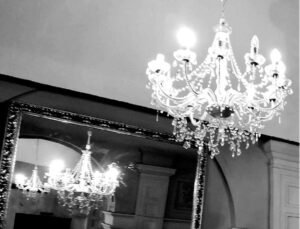
Teatro Argentina has 720 seats, 354 in the orchestra and 366 spread over six tiers of boxes, according to Teatro di Roma, which runs it. It's a horseshoe-shaped Italian theater in red and gold, with a decorated green ceiling and a large 16-arm chandelier.
The name of the tower
The name has nothing to do with the South American country. It comes from the tower of the palace of Johannes Burckardt, known as Burcardo, a papal master of ceremonies born in Strasbourg, a city called Argentoratum in Latin: Burcardo signed himself episcopus argentinensis, and the tower, the square and the theater all took their name from him. Palazzo del Burcardo, built between 1491 and 1500, still stands on Via del Sudario, next to the theater.
The Sforza Cesarini and Theodoli
The theater was commissioned by the Sforza Cesarini family, who began construction in 1730. The hall was designed by architect and marquis Gerolamo Theodoli in a horseshoe shape, chosen for acoustics and sightlines. Originally it was almost entirely wooden, with 186 boxes.
The facade and the restoration
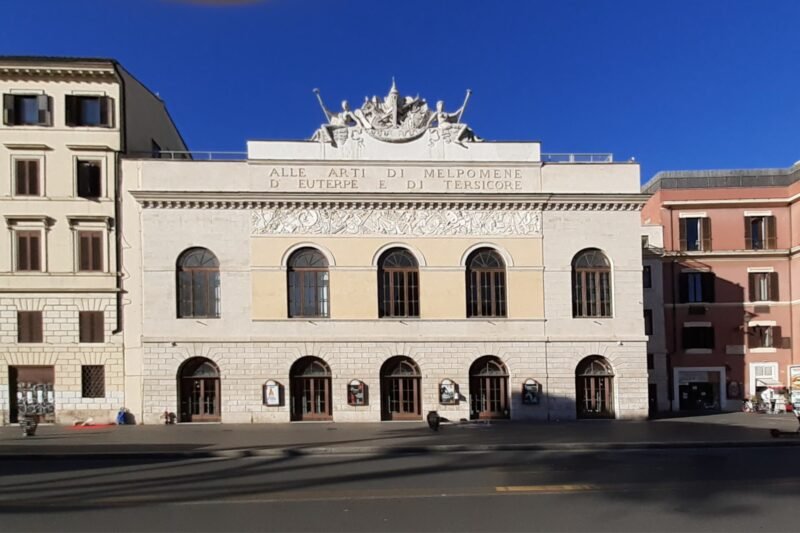
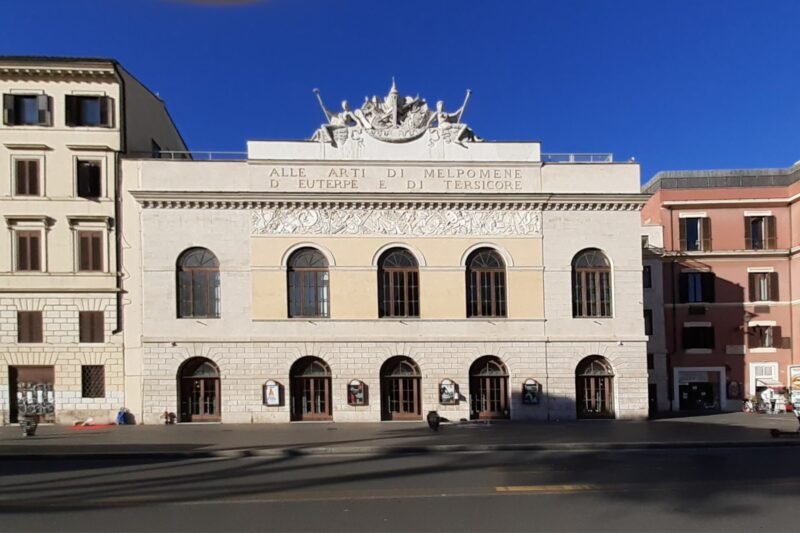
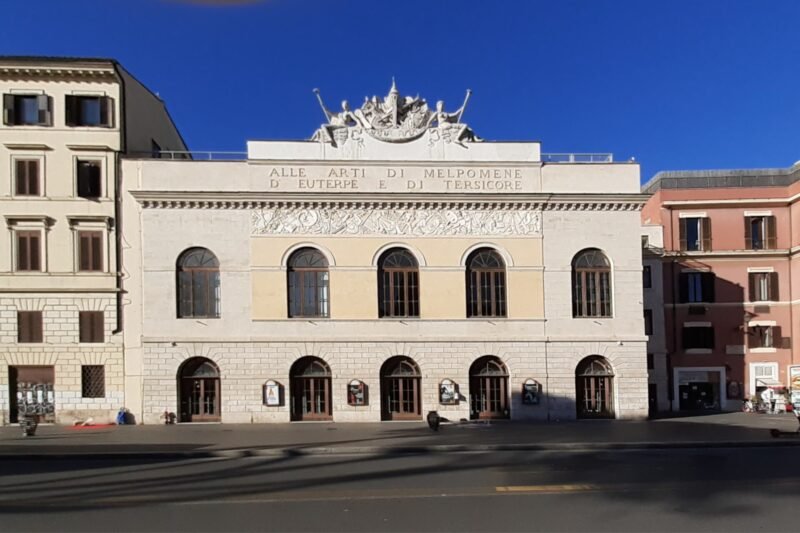
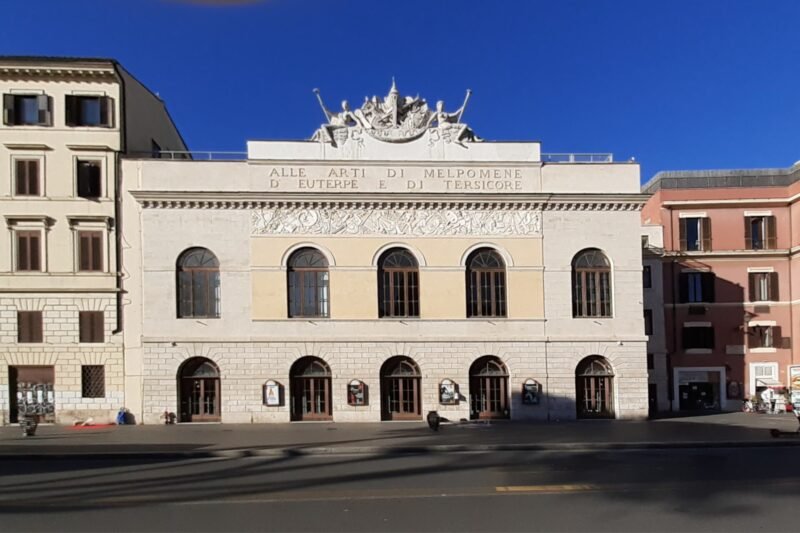
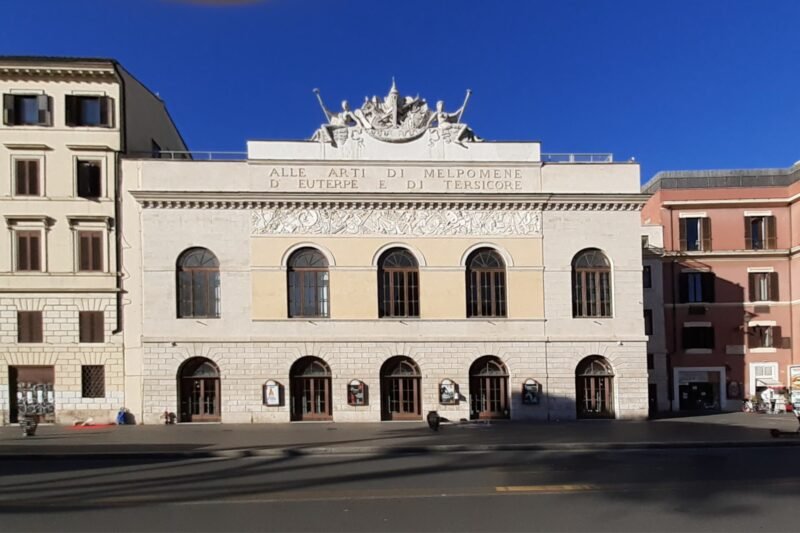
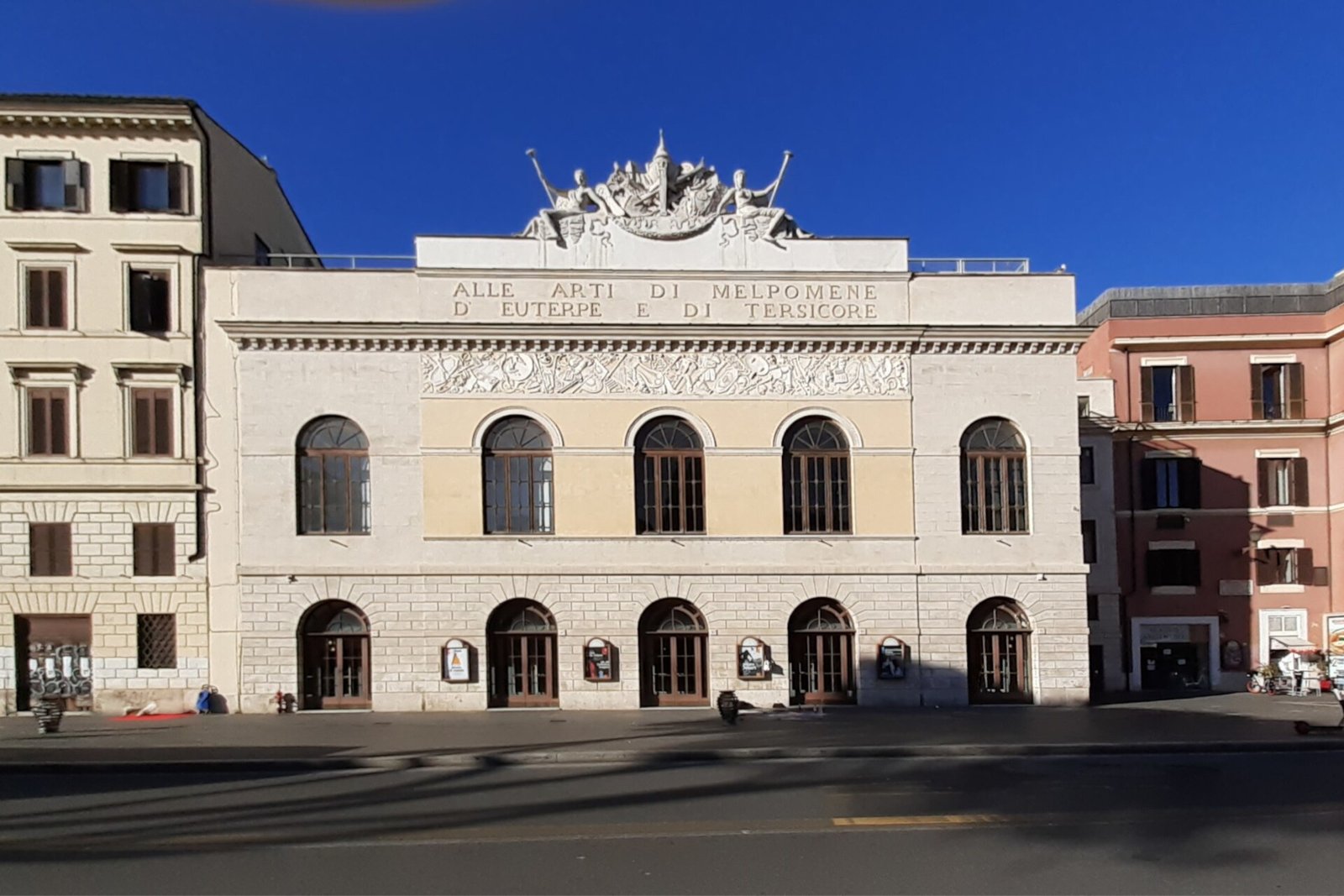
The neoclassical facade came in 1826, designed by Pietro Holl, with a dedication to the arts of Melpomene, Euterpe and Terpsichore. In 1993 the theater was restored by Paolo Portoghesi, who brought back the red of the upholstery and the original shape of the box valances. It's thanks to that work that the hall again looks as it did in the 18th century.
Something nobody tells you about I Solisti della Filarmonica: Mahler, Symphony No. 4 at Teatro Argentina, November 5, 2026
What few people say is that Teatro Argentina, today the home of Teatro di Roma's drama, was born as an opera and music house and was for more than a century one of the key places in Rome's musical life. It opened in January 1732 with Domenico Sarro's Berenice. Rossini's Barber of Seville premiered here on February 20, 1816. Niccolò Paganini played here in 1827, and Verdi brought two premieres here. A symphonic concert at the Argentina isn't an exception in a drama theater: it's a return to the building's original calling.
The second thing rarely said concerns acoustics. Theodoli chose the horseshoe shape to get the best acoustics and sightlines. For a chamber ensemble, with strings one per part and solo winds, a hall this size lets you hear every instrumental line directly, without the distance of large symphony halls.
The third is practical: Teatro Argentina is subject to the historic center's ZTL (limited traffic zone) hours and has no parking. If you drive in from the outskirts, you may find out with a fine. The solution is to leave the car outside the limited traffic zone and take tram 8, which stops right in front of the sacred area.
My tip for I Solisti della Filarmonica: Mahler, Symphony No. 4 at Teatro Argentina, November 5, 2026
My advice is to listen to Mahler's Fourth in the orchestral version in the days before, and then go to the Argentina to hear the arrangement. The comparison is the most interesting part of the evening: understanding what's left of a symphony when the orchestra shrinks to about 15 musicians, and what you gain in transparency. Among the recordings listed in standard discographies is Lorin Maazel's with the Vienna Philharmonic and Kathleen Battle. If you want the link to the Solisti's history, choose Sinopoli's with the Staatskapelle Dresden.
Second point: the text of the finale. The fourth movement is a song in German, The Heavenly Life, and it's worth reading a translation before the concert. The vision of Paradise through a child's eyes takes on a different meaning once you understand the words.
Third point: your seat. In an Italian horseshoe theater, the orchestra and the lower tiers of boxes offer the best view of the ensemble. For a chamber concert even the higher boxes work well, because listening matters more than the view. Arriving half an hour early lets you see the hall with the lights on.
How to get to Teatro Argentina
Teatro Argentina is at Largo di Torre Argentina 52, opposite the sacred area, in Rome's historic center. The most convenient option is tram 8, which stops at Torre Argentina.
By tram
Tram 8 has a stop at Torre Argentina, a few steps from the theater entrance. It's also the easiest option on the way out if you're heading back toward Trastevere or Monteverde.
By metro
No metro station is right by the theater. The most convenient are Colosseo and Circo Massimo on line B, from which you continue on foot or by surface transport. From Piazza Venezia to the theater, along Via delle Botteghe Oscure, it's just a few minutes on foot.
By bus
Largo di Torre Argentina and Corso Vittorio Emanuele II are crossed by many lines linking Termini, Piazza Venezia, the Vatican and Trastevere. Check evening lines and times on the Rome public transport information service before you leave.
By car and on foot
The theater has no parking and is subject to ZTL hours: if you come by car, park outside the limited traffic zone. From the Pantheon, Piazza Navona, Campo de' Fiori and the Ghetto the theater is a few minutes on foot, and that's the best choice.
Another well-known fact that rarely gets mentioned
It's well known that the finale of the Fourth Symphony is given to a soprano. Less often remembered is that this voice, as the text intends, is the voice of a child describing Paradise, and that this reading has led some conductors to different choices. In 1984 Leonard Bernstein had the part sung by Allan Bergius, a boy soloist from the Tölzer Knabenchor, in a series of concerts in Vienna, Boston, Cleveland, at Carnegie Hall in New York and at Teatro alla Scala in Milan. In 1987, at the Concertgebouw in Amsterdam, again with Bernstein, Helmut Wittek sang it, and in 1991 Max Emanuel Cenčić, then a boy, recorded it with Anton Nanut in Ljubljana.
The most common tradition, though, is still a female voice, with performers such as Irmgard Seefried, Dorothea Röschmann and Kathleen Battle. At the Argentina the part goes to soprano Désirée Giove.
The second rarely mentioned fact concerns the date of the song. The Heavenly Life was written in 1892, seven years before Mahler started the symphony. So Mahler built an entire symphony that leads to a song already written: the first three movements prepare the ground for a finale that existed before them.
The right photo to take at I Solisti della Filarmonica: Mahler, Symphony No. 4 at Teatro Argentina, November 5, 2026
The right photo is taken from the orchestra seats before the lights go down, pointing upward: the six tiers of red and gold boxes, the green ceiling and the 16-arm chandelier. It's the shot that sums up the Argentina better than any description, and it works with a phone too, as long as you keep the whole hall in the frame. The best moment is while the audience is coming in and the house lights are fully on.
The second photo is of the stage before the start, with chairs and music stands set out for about 15 musicians and the accordion and piano in view: an image that shows at a glance what a symphony in a chamber version is.
The third is outside, in the evening, from the other side of the square: the neoclassical facade with the dedication to the muses and, in the foreground, the lit columns of the sacred area. During the concert, though, the phone goes off. In a Mahler symphony the pianissimos are part of the music, and a lit screen in the orchestra seats can be seen from every box.
Around Teatro Argentina
Teatro Argentina is in the historic center, a few minutes' walk from the Pantheon, Piazza Navona, Campo de' Fiori and the Ghetto: a concert here pairs easily with an evening stroll.
The sacred area
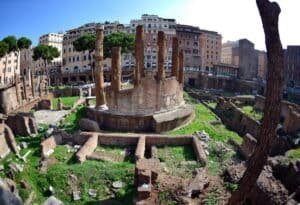
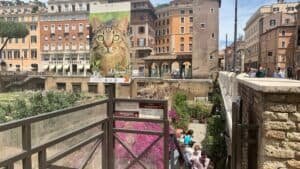
Opposite the theater lies the sacred area of Largo Argentina, with the remains of temples and structures linked to the Theater of Pompey complex. Among the ruins lives the cat colony described on the page about the Largo Argentina cat sanctuary.
Pantheon and Piazza Navona
Five minutes north is the Pantheon, and to the west, beyond Corso Vittorio Emanuele II, Piazza Navona and Campo de' Fiori.
The Ghetto and the Theater of Marcellus
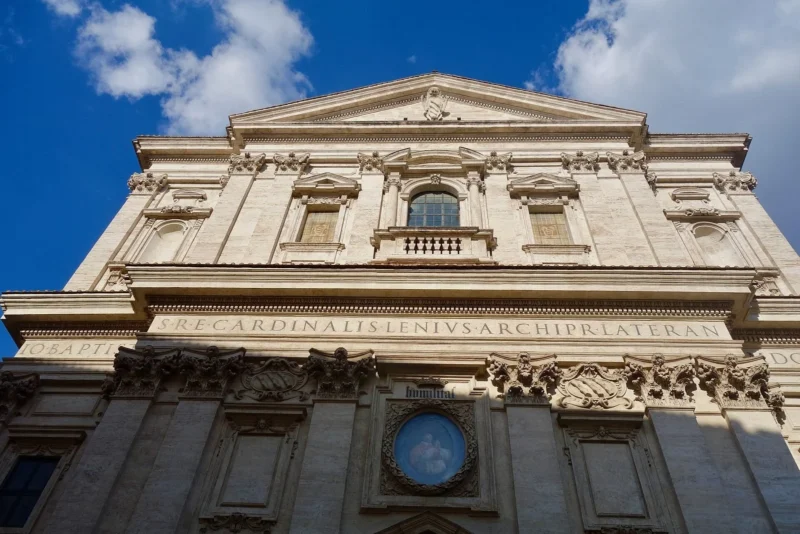
Toward the Tiber you enter the Jewish Ghetto and reach the Theater of Marcellus. A few steps from the theater is also the church of the Gesù.
Some important events that happened here
Teatro Argentina opened in January 1732 with Berenice, an opera by Domenico Sarro, and since then its history has been intertwined with that of Italian music and with the politics of Rome. In the 18th century foreign travelers considered it the most important of Rome's theaters.
On February 20, 1816 Rossini's Barber of Seville premiered here, with Manuel García: it was a flop, because many admirers of Paisiello's Barber sat in the audience, but from the second night the opera triumphed. On January 28, 1822 the Argentina hosted the world premiere of Donizetti's Zoraida di Granata, and in 1827 a concert by Niccolò Paganini.
Giuseppe Verdi brought I due Foscari here in 1844 and La battaglia di Legnano in 1849. According to Teatro di Roma's account, it was at the latter that Romans began the demonstrations against the papal government that led to the Roman Republic. After 1870 the opening of Corso Vittorio Emanuele II put the theater at the center of the new city, and the building passed to the city government. In 1993 Paolo Portoghesi's restoration gave it back its 18th-century look. Today it's the main venue of Fondazione Teatro di Roma, which became a foundation in 2022, and it also hosts the concerts of the Accademia Filarmonica Romana.
Who has passed through Teatro Argentina
Some of the greatest names in Italian music have passed across the Argentina stage: Gioachino Rossini with The Barber of Seville and Manuel García, Gaetano Donizetti with Zoraida di Granata, sung by Domenico Donzelli and Luigia Boccabadati, Giuseppe Verdi with two premieres and Niccolò Paganini in concert. In the 20th century the hall saw works by Gabriele D'Annunzio and Luigi Pirandello, and the directors of Teatro di Roma, from Vito Pandolfi to Luca Ronconi.
The history of the Accademia Filarmonica Romana, which brings its Solisti to this hall on November 5, includes Raffaele Muti Papazzurri, the founder, Alfredo Casella, Goffredo Petrassi, Luciano Berio, Hans Werner Henze and Giuseppe Sinopoli, who in 1993 created the first lineup of I Solisti della Filarmonica.
On November 5 Sieva Borzak, Désirée Giove and the 15 musicians of the new ensemble take the stage: Bianca Fiorito, Elisa Tosca De Angelis, Aron Chiesa, Lucia Nardacci, Davide Carbonare, Gabriele Gregori, Flavio Tanzi, José Vicente Espí Causera, Samuele Telari, Fabio Fornaciari, Misia Jannoni Sebastianini, Gloria Santarelli, Martina Santarone, Vladimir Bogdanovic and Francesco D'Innocenzo. With them, in spirit, are Gustav Mahler and Klaus Simon, the author of the arrangement.
Accessibility and practical information
Teatro Argentina is a historic building where architectural barriers can't be removed entirely, but it has elevators and reserved orchestra seats for people with disabilities, according to Teatro di Roma. For availability on the night of the concert, contact the Accademia Filarmonica Romana or the theater box office in advance.
With young people
A Mahler symphony in a chamber version is a good first encounter with symphonic music for a teenager who studies an instrument: the small ensemble lets you pick out every voice. For younger children the evening time and the length of a symphony can be demanding.
Clothing
There's no dress code at the Argentina, but the 18th-century hall invites a little care. In November a coat and an umbrella are almost always useful.
Where to eat before or after the concert
The historic center around the Argentina has every kind of place: Roman trattorias on the streets toward Campo de' Fiori, Roman Jewish cooking in the Ghetto, bakeries and pizza-by-the-slice shops along Corso Vittorio Emanuele II for a quick bite before 21:00, and wine bars and bistros around the Pantheon for after the concert. With a 21:00 start, eat early, around 19:30, or book for afterward, keeping in mind that many kitchens close around 23:00.
A concert in early November
Early November is when Rome's music seasons get into full swing: the Accademia Filarmonica Romana opens its 2026/2027 season with this very concert, and in the same weeks the historic center returns to a quieter pace after summer. It's a good time for an evening in a historic hall, with a stroll between the Pantheon and the Ghetto before or after the music.
The Argentina is one of the venues of the Accademia's season. In the same weeks the Filarmonica programs the Dialoghi d'autunno chamber concerts and the Lezioni di musica in Sala Casella, at Via Flaminia 118, as well as shows at Teatro Olimpico, such as Balletto di Roma's Astor. Un secolo di tango, across September and October.
Frequently asked questions about I Solisti della Filarmonica and Mahler
When do I Solisti della Filarmonica play Teatro Argentina?
I Solisti della Filarmonica play Teatro Argentina on Thursday, November 5, 2026 at 21:00, with Mahler's Fourth Symphony in Klaus Simon's arrangement. It's the opening concert of the Accademia Filarmonica Romana's 2026/2027 season.
Who conducts Mahler's Fourth at the Argentina?
Mahler's Fourth Symphony at Teatro Argentina is conducted by Sieva Borzak, an Italian-Russian conductor, leading the new ensemble I Solisti della Filarmonica. The solo soprano part, in the finale The Heavenly Life, goes to Désirée Giove.
What is Klaus Simon's arrangement?
Klaus Simon's 2007 arrangement adapts Mahler's Symphony No. 4 for chamber orchestra and solo soprano. At the Argentina the ensemble has 15 musicians, with winds, percussion, accordion, piano and a single instrument for each string section.
Where do you buy tickets for the concert?
Tickets for I Solisti della Filarmonica at Teatro Argentina are sold from the concert page on the Accademia Filarmonica Romana website, which links to the authorized presale network, where prices are published. The Accademia's website also lists season subscriptions.
How do you get to Teatro Argentina?
Teatro Argentina, at Largo di Torre Argentina 52, is reached by tram 8, Torre Argentina stop, and by the many bus lines that cross the square. The nearest Metro B stations are Colosseo and Circo Massimo. The theater has no parking and is in the ZTL.
Who are I Solisti della Filarmonica?
I Solisti della Filarmonica is the new ensemble of the Accademia Filarmonica Romana, made up of young Italian performers established internationally. The name echoes the group created by Giuseppe Sinopoli in 1993 and devoted to the Viennese repertoire of the early 20th century.
What other concerts does the Filarmonica hold at the Argentina?
After Mahler, the Accademia Filarmonica Romana returns to Teatro Argentina on November 19, 2026 with Anna Fedorova, on December 10 with Trio Concept, on February 4, 2027 with Adélaïde Ferrière and on February 11 with Thomas Oliemans in Winterreise, always at 21:00.
Final advice on I Solisti della Filarmonica at Teatro Argentina
A Viennese symphony from 1900 reduced to 15 musicians, a new ensemble that revives the name of Sinopoli's, a hall from 1732 where The Barber of Seville premiered: in our view it's the most interesting season opening of the week in Rome. Listen to the orchestral version first, read the text of the final song, walk over from the Pantheon or take tram 8, and give yourself 10 minutes to look at the hall before the lights go down.
Article written by the editorial team of Tour Leader Pro, contact them for Private/Corporate/V.I.P. Tours and Experiences.
Planning a trip to Rome? The English-language guides for visiting the city are on ItalyPlanner.com.
Contact Information
Nearby
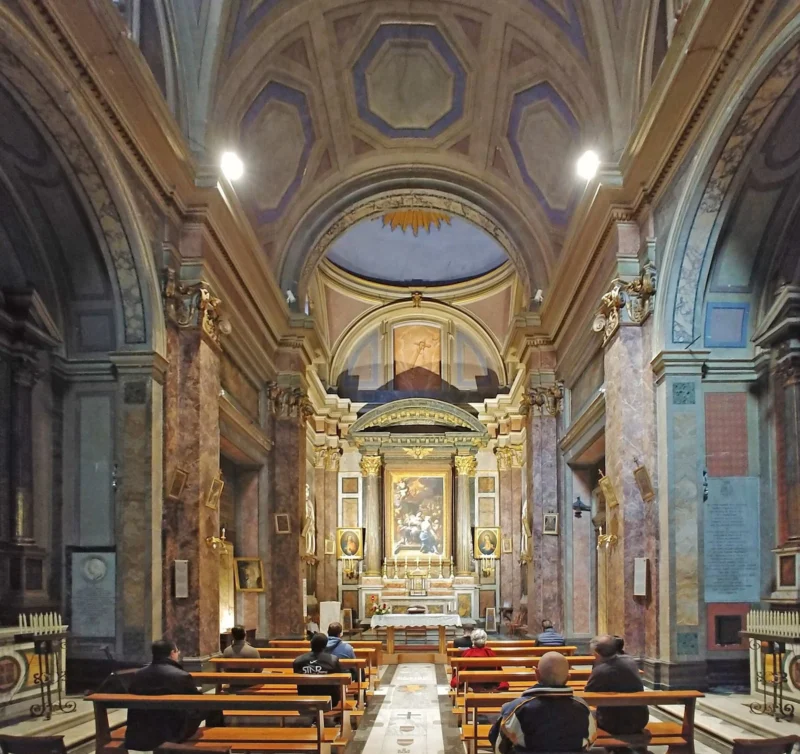
 Teatro Argentina100 m
- Teatro Centrale100 m
- Largo Torre Argentina – Sacred Area of Campo Marzio100 m
- Cat Sanctuary at Largo Argentina100 m
- San Carlo ai Catinari200 m
- Santa Maria in Publicolis200 m
Upcoming events nearby
- Othello at Teatro Argentina, November 4 to 29, 2026100 m
- The Madness of King George with Massimo Popolizio at Teatro Argentina in Rome, January 9 to 31, 2027100 m
- Una delle ultime sere di Carnovale at Teatro Argentina, February 2 to 14, 2027100 m
- Lo zar by and with Stefano Massini at Teatro Argentina in Rome, March 16 to 25, 2027100 m
You might also like
- Anna Fedorova at Teatro Argentina, November 19, 2026
- Samuele Rizzuto, Il pianista dell’anima at Teatro Sala Umberto, March 31, 2027
- Filippo Gorini for Filarmonica Romana at Teatro Argentina, March 18, 2027
- Quartetto Prometeo and Claudio Pasceri at Teatro Argentina, March 4, 2027
- Thomas Oliemans, Winterreise at Teatro Argentina, February 11, 2027
- Adélaïde Ferrière for the Filarmonica Romana at Teatro Argentina, February 4, 2027