Lo zar by and with Stefano Massini at Teatro Argentina in Rome, March 16 to 25, 2027
In short. Lo zar, the monologue written and performed by Stefano Massini on the life of Vladimir Putin, is on at Teatro Argentina in Rome from March 16 to 25, 2027, at Largo di Torre Argentina 52, for nine performances: from Tuesday, March 16 to…
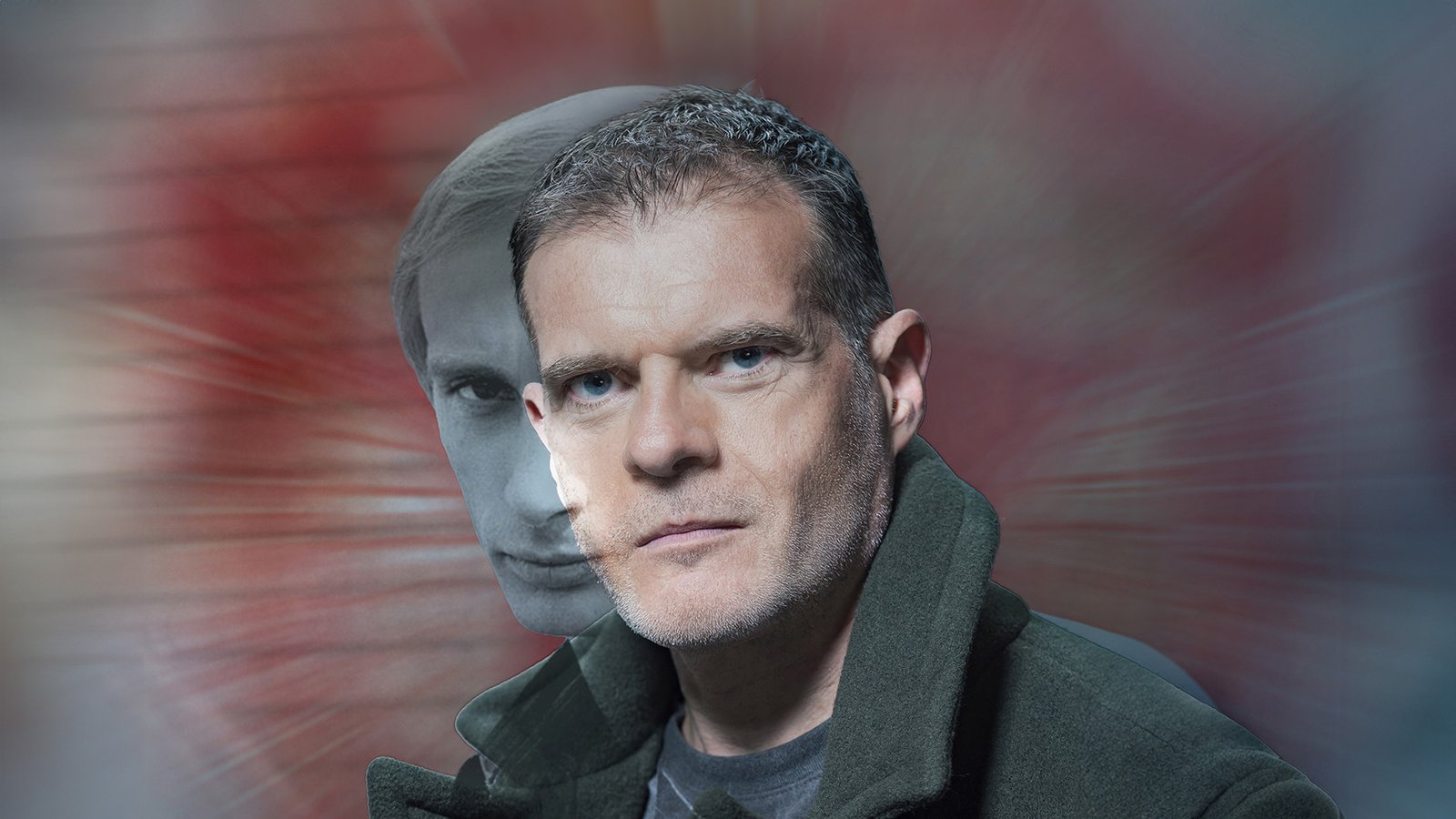
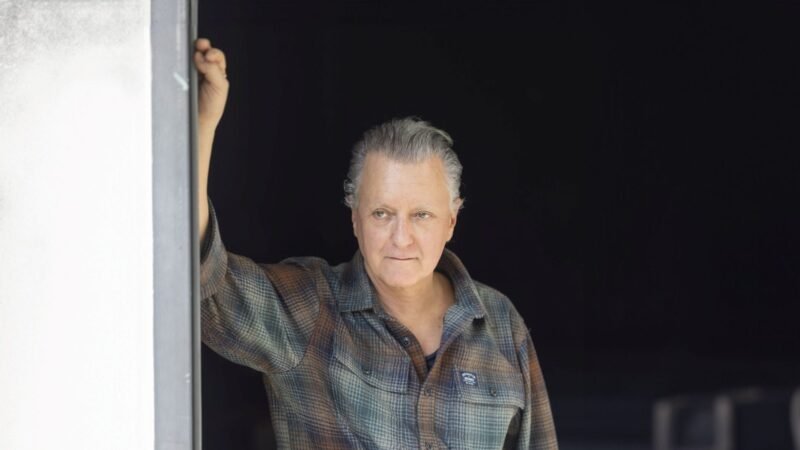
Lo zar, the monologue written and performed by Stefano Massini on the life of Vladimir Putin, is on at Teatro Argentina in Rome from March 16 to 25, 2027, at Largo di Torre Argentina 52, for nine performances: from Tuesday, March 16 to Sunday, March 21 and then from Tuesday, March 23 to Thursday, March 25, with Monday, March 22 as a rest day. The music by Luca Roccia Baldini is performed live by Mariel Tahiraj. The production is by Teatro della Toscana. The theater can be reached by tram 8, Torre Argentina stop, or on foot from Piazza Venezia in a few minutes. The most convenient metro B stations are Colosseo and Circo Massimo. The start times of the individual performances and the prices are published on the official website of Teatro di Roma. Tickets are bought at the theater's ticket office, open Monday to Saturday from 11:00 to 19:00, or online on the authorized presale network indicated by Teatro di Roma.
Language: performed in Italian. No English version or English surtitles are announced.
Let's say it right away: Lo zar is the show of March that shouldn't be put off. An author who has gone around the world with the Lehman Trilogy, a monologue on the most discussed power of our time, the gilded hall of Teatro Argentina, a few meters from where Julius Caesar was killed. I tell the rest below.
Lo zar at Teatro Argentina: dates, ticket office and essential information
Stefano Massini's Lo zar stays at Teatro Argentina for nine evenings, from March 16 to 25, 2027, a short run for a title with this kind of draw. Those who are thinking of going will do well to decide early.
The nine dates of Lo zar
The calendar published by Teatro di Roma lists Tuesday, March 16, Wednesday 17, Thursday 18, Friday 19, Saturday 20 and Sunday, March 21, then Tuesday, March 23, Wednesday 24 and Thursday, March 25. On Monday, March 22 the theater rests. The first week therefore has a full weekend, the second ends on a Thursday: those who are free in the evening only on weekends should aim for Saturday, March 20 or Sunday, March 21.
Start times
The times of the individual performances, evening and afternoon, appear on the show's page and in the Teatro di Roma calendar. It is best to check them at the time of purchase, especially for Sunday, because the start time changes how you organize your day.
Where to buy tickets
There are two channels: the ticket office of Teatro Argentina, at Largo di Torre Argentina 52, and online sales on the authorized presale network that Teatro di Roma indicates from the purchase button on its website. Those who hold a Teatro di Roma season subscription should check if Lo zar is included in their carnet.
Lo zar: Stefano Massini's monologue on Vladimir Putin
The starting point of Lo zar is a precise document: in 2000 Vladimir Putin tells the story of his life, in public, for the only time, ahead of the presidential elections. It is on that material that Stefano Massini built his monologue.
A chilling autobiography
Teatro di Roma defines that account as a chilling biography. Putin spares no details of extreme violence and describes himself as a hoodlum kid raised on the street, soon devoted in everything to the cause of the Secret Services, experienced as a mirage of power and absolute control. The material, put differently, comes from the very source that should make it reassuring: it is the candidate presenting himself to voters. And that is exactly the short circuit Massini works on.
Speeches, conferences, historical essays
To the autobiographical text Massini adds excerpts of speeches and conferences by Putin, as well as the revelations of many historical essays and reconstructions on the shadows of his rise to power. What comes out, according to the Teatro di Roma presentation, is a fierce and shattering story, against the backdrop of the Soviet system collapsing and sweeping everything away in an endless apocalypse. It is the method Massini has used for years: a great narrator who takes documents and turns them into oral storytelling, never losing the thread of the news.
From television to the stage
The text of Lo zar is published by Einaudi and is being translated into 18 languages. Before the theater it went through television: in spring 2026 Massini played Putin in prime time, with great media attention. Teatro di Roma reports the judgment of Aldo Grasso in Corriere della Sera, who spoke of "a hypnotic monologue that rips open the recesses of Putin's psyche". The stage version now arrives on the main Italian stages, and Rome hosts it in its oldest hall.
Why see it in the theater
The judgment is clear: whoever saw the television version saw something else. Massini is a narrator who works on presence, on voice, on the silence of an audience holding its breath. On television the editing decides for the viewer, in the theater it doesn't. And here there is music performed live, which in a hall like Teatro Argentina, with its horseshoe boxes, changes the breathing of the whole evening.
Live music, sets and lighting of Lo zar
Lo zar is a monologue, but behind Stefano Massini a full team is at work, produced by Teatro della Toscana.
The music of Luca Roccia Baldini
The music is by Luca Roccia Baldini and is performed live by Mariel Tahiraj. It is a detail that matters: in Massini's tales the music acts as a counterpoint to the word, marks the transitions, opens spaces to breathe between one episode and the next. Having a musician on stage means the rhythm can change from one evening to the next, as happens at a concert.
Sets, costumes, lighting, sound
The sets are by Paolo Di Benedetto, the costumes by Elena Bianchini, the lighting design by Manuel Frenda, the sound by Andrea Baggio. The production photos are by Filippo Manzini.
The voice of Anna Politkovskaja
In the credits there is a line that by itself is worth the evening: the voice of Anna Politkovskaja is Ottavia Piccolo's. The Russian journalist is a figure Massini knows closely, because in 2007 he dedicated to her Donna non rieducabile, a theatrical memorandum on Anna Politkovskaja. And Ottavia Piccolo is the actress with whom Massini began one of the longest partnerships of his career, starting in 2006 with Processo a Dio. 20 years later, her voice returns in a Massini text, this time to give body to a woman who had opposed the power being talked about on stage.
Teatro della Toscana
The production is by Teatro della Toscana, the national theater of which Massini was appointed artistic director on January 11, 2025, for a five-year term. Lo zar is therefore a show that its author takes around Italy also as the director of a great public theater.
Who Stefano Massini is
Stefano Massini was born in Florence on September 22, 1975. A writer, playwright and television storyteller, he is the first Italian to have won a Tony Award, in 2022, with the Lehman Trilogy directed by Sam Mendes.
Training: Florence, the Maggio, Ronconi
After graduating from the Liceo Ginnasio Dante in Florence in 1994, Massini earned a degree in classics at the University of Florence. At 24 he was chosen as guest assistant for two operas at the Maggio Musicale Fiorentino. In 2001 he joined the Piccolo Teatro di Milano as a volunteer assistant to Luca Ronconi, who pushed him to devote himself to writing new texts. The bond with Ronconi runs through his whole career, and concerns Teatro Argentina closely too, which Ronconi directed in the 1990s.
The first texts and the first prizes
In 2005 Massini wins the Tondelli Prize with L'odore assordante del bianco. In 2006 Processo a Dio debuts, directed by Sergio Fantoni, with a cast led by Ottavia Piccolo. Texts follow that mark a precise line: Donna non rieducabile on Anna Politkovskaja in 2007, Lo schifo on the murder of Ilaria Alpi in 2010, Credoinunsolodio in 2011. It is the theater of an author who starts from news and history and gives them back as civic storytelling.
Lehman Trilogy, a worldwide success
The international breakthrough comes with Lehman Trilogy, written between 2009 and 2012: the rise and decline of the Lehman dynasty, told starting from the events that followed the crisis of 2008. The work has been translated into 38 languages. In Italy Luca Ronconi staged it for the first time in an extended version in 2015, with great success and two Ubu Awards. In Germany the German version was staged at the same time by six public theaters. In Belgium it won the critics' prize as show of the year. On June 12, 2022, the version directed by Sam Mendes won five Tony Awards out of eight nominations.
7 minuti, from theater to film
In 2014 7 minuti debuts, directed by Alessandro Gassmann with 11 actresses, among them Ottavia Piccolo: a news story that happened in France to 11 female factory workers. In 2016 the text becomes a film directed by Michele Placido, co-written by the author, which receives the 2017 Nastri d'Argento Special Prize. In 2020 the Comédie-Française produces it, directed by Maëlle Poésy-Guichard.
The novelist: Qualcosa sui Lehman
In 2016 Massini publishes the novel Qualcosa sui Lehman, the full version from which the play had been drawn: it wins the Super Mondello, the Campiello Jury Selection, the De Sica Prize, the Giusti Prize and the Fiesole Prize. The 2018 French edition receives the Prix Médicis and the Prix du meilleur livre étranger. In 2017 comes L'interpretatore dei sogni, from which a show by Federico Tiezzi for the Piccolo was drawn. For Il Mulino he writes Lavoro e 55 giorni. L'Italia senza Moro.
The television storyteller
The general public knows him for the Thursday-night stories on Piazzapulita, on La7. Since the 2018 May Day Concert, in Piazza San Giovanni in Rome, he has returned to that stage in 2019, 2023 and 2024. From December 12, 2020 he hosted with Andrea Delogu Ricomincio da Raitre, live from Teatro Sistina. On February 8, 2024 he was a guest at Sanremo with Paolo Jannacci, with L'uomo nel lampo, a song about workplace deaths that made the final five of the Premio Tenco. From May 27, 2024 to October 3, 2025 he hosted Riserva indiana on Rai 3.
Consultant at the Piccolo, director in Tuscany
From 2015 to 2020 Massini was artistic consultant of the Piccolo Teatro di Milano. Since 2016 he has collaborated with La Repubblica. His plays are published in Italy by Ubulibri and by Einaudi. In January 2025 he was appointed artistic director of Teatro della Toscana.
Stefano Massini and the telling of power: from Politkovskaja to Lo zar
Lo zar doesn't come from nowhere. In the list of Stefano Massini's productions a precise line can be read, which over 20 years has led the author to tell power from the inside, through the words of those who exercised or suffered it.
From Politkovskaja's Russia to Bulgakov's
Russia often returns in his theater. Donna non rieducabile, in 2007, tells of Anna Politkovskaja. Cuore di cane, in 2018, is a stage version of Mikhail Bulgakov's novel. Lo zar closes the circle: after the journalist and after the satirical writer, power itself.
Eichmann, Mein Kampf, Donald
In recent years Massini has taken on the great protagonists of political history: Eichmann. Dove inizia la notte in 2022, Mein Kampf in 2024, Donald, storia molto più che leggendaria di un Golden Man in 2025, and finally Lo zar in 2026. A cycle, in fact, on the faces of power of the 20th century and of today. Seeing one in the theater helps to understand the others.
A curiosity about Lo zar by and with Stefano Massini at Teatro Argentina in Rome, March 16 to 25, 2027
The best curiosity of this show is hidden in the credits, and it concerns the hall. Stefano Massini began writing for the theater because Luca Ronconi pushed him to, whose volunteer assistant he was in 2001 at the Piccolo Teatro di Milano. And it was Ronconi, in 2015, who brought the Lehman Trilogy to Italy for the first time in an extended version, with the two Ubu Awards. Well: Ronconi, before all this, had been director of Teatro di Roma, and therefore of Teatro Argentina, from 1994 to 1999.
When Massini steps onto the stage of Teatro Argentina, then, he performs in the house that his master led for five seasons. No program booklet underlines it, but those who love the theater feel it.
The second curiosity is in the recorded voice. Ottavia Piccolo lends her voice to Anna Politkovskaja: the same actress who in 2006 led the cast of Processo a Dio, the text with which Massini truly debuted, and who in 2014 was among the 11 performers of 7 minuti. It is rare for an author to bring back to the stage, 20 years later, the first actress who believed in him. Here it happens, even if we only see her with our ears.
Teatro Argentina: history and shape of the hall
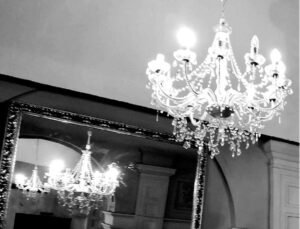
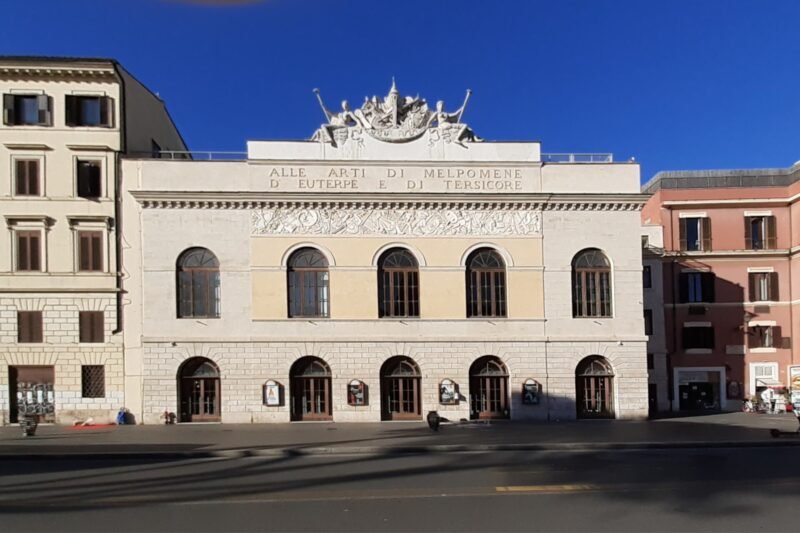
Teatro Argentina has 720 seats, 354 in the orchestra and 366 spread across six tiers of boxes, according to Teatro di Roma's data. It is an Italian-style horseshoe hall, red and gold, with a decorated green ceiling and a big chandelier with 16 arms.
The name doesn't come from South America
Argentina comes from Strasbourg. The Latin name of the city was Argentoratum, and Johannes Burckardt, known as Burcardo, a papal master of ceremonies native of Strasbourg, signed himself episcopus argentinensis. His late Gothic palace, built between 1491 and 1500, had a tower that took the name Argentina. With it came the largo, the street and the theater. Burcardo's palace still stands on Via del Sudario, next to the theater.
The Sforza Cesarini and Gerolamo Theodoli
The theater was commissioned by the Sforza Cesarini family, who in 1730 started the construction site using part of their own buildings. The hall was designed by the architect and marquis Gerolamo Theodoli with the horseshoe shape, chosen for acoustics and visibility. Originally it was almost entirely made of wood, with 40 rows of benches in the orchestra and 186 boxes.
The facade with the three muses
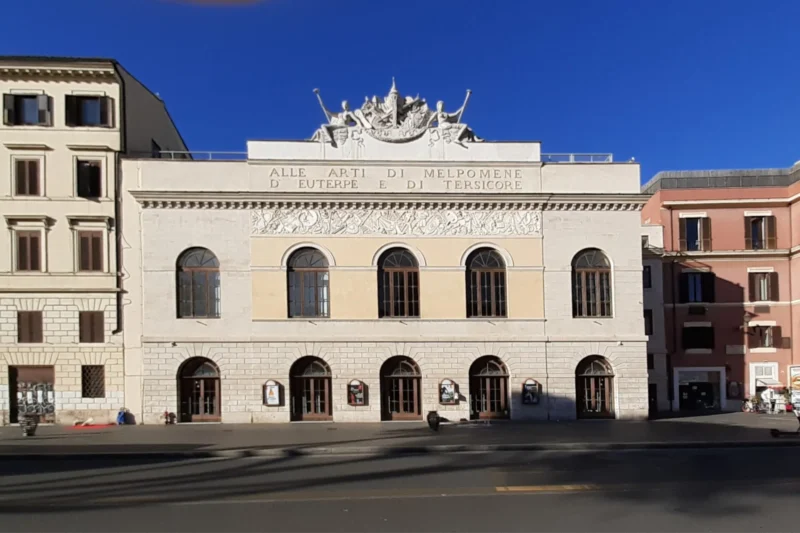
The neoclassical facade arrived in 1826, designed by Pietro Holl. Above the arched windows runs the dedication to the arts of Melpomene, Euterpe and Terpsichore: tragedy, lyric poetry and dance. For a show like Lo zar, the first of the three is the right one.
Portoghesi and the return to red
In 1993 Paolo Portoghesi restored the theater, making the stage usable again and bringing the upholstery back to the original red, in place of the gold yellow of the 1970 restoration. It is thanks to that work that the hall has regained its 18th-century look.
The first venue of Teatro di Roma
Argentina is the first venue of the Fondazione Teatro di Roma, Teatro Nazionale, which has been a foundation since 2022. Inside it has a historical museum and an archive that the Centro Studi makes available to students and researchers.
Something nobody tells you about Lo zar by and with Stefano Massini at Teatro Argentina in Rome, March 16 to 25, 2027
Few spectators know it when they walk in: Teatro Argentina stands on top of part of the great complex of the Theater of Pompey, of which the Curia where Julius Caesar was killed in 44 BC was part. Teatro di Roma tells it without beating around the bush: the history of this theater begins with a political assassination. Going to see a monologue on the rise of a man who concentrated almost absolute power in himself, right there, carries a weight that no set design could give.
There is more. The route of the show visits organized by Teatro di Roma ends in the refectory of the old Benedictine convent of the Abbey of Farfa, in the archaeological area between the theater and the Curia of Pompey. Inside the perimeter of the theater, that is, there is an access to that layer of the ancient city. During performances those rooms are not visited, but whoever wants to go deeper can book a show visit on another day.
And a practical detail that costs many dearly: Teatro Argentina is bound by the ZTL hours of the historic center, and has no private parking. Those who arrive by car from the outskirts often find this out with a fine. The right solution is to leave the car outside the limited traffic zone and take tram 8, which stops in front of the sacred area.
How to get to Teatro Argentina for Lo zar
Teatro Argentina is at Largo di Torre Argentina 52, across from the sacred area, in the historic center. The most convenient way is tram 8, with a stop right at Torre Argentina.
Tram 8
The Torre Argentina stop of tram 8 is a few steps from the entrance. For those coming from Trastevere it is the simplest solution on the way back too, at the end of the show.
The metro
No metro station is right next to the theater. The most convenient are Colosseo and Circo Massimo, on Line B, from which you continue on foot or by surface transport. From Piazza Venezia to Largo Argentina, along Via delle Botteghe Oscure, it is just a few minutes on foot.
Buses
Largo di Torre Argentina and Corso Vittorio Emanuele II are crossed by many lines linking Termini, Piazza Venezia, the Vatican and Trastevere. The lines and the evening runs should be checked on the ATAC route planner before leaving.
Car and taxi
The theater has no parking and falls within the ZTL of the historic center. Those arriving by car must leave it outside the limited traffic zone and complete the trip by public transport. The taxi remains the simplest choice for those with mobility difficulties.
On foot
From the Pantheon, from Piazza Navona, from Campo de' Fiori and from the Ghetto the theater is reached in a few minutes. It is one of the rare Roman theaters where arriving on foot is the best choice.
My advice for visiting Lo zar by and with Stefano Massini at Teatro Argentina in Rome, March 16 to 25, 2027
My advice is to choose the boxes, and not to save money. In a monologue everything goes through the voice and face of a single performer, and the temptation is to sit in the orchestra, as close as possible. At Teatro Argentina, however, the boxes in the first and second tiers are built precisely for hearing well: Theodoli's horseshoe hall was designed for acoustics, and the voice of a narrator like Massini arrives crisp even up there. In addition, from a box you see the whole hall, and in a show about power, watching the audience listen is part of the experience.
Second piece of advice: arrive prepared, but not too much. You don't need to have read the Einaudi book or seen the television version. What you do need is to have in mind the essential dates of post-Soviet Russia, because the story runs through them at speed. 10 minutes of reading in the afternoon is enough.
Third: take the first week. The weekend of March 20 and 21 is the one that fills up first, and in the second week there are only three midweek performances. Those with flexibility can aim for Tuesday, March 16, the evening of the Rome opening, or for Wednesday, March 17: these are the evenings when the hall is most attentive and the audience most theatrical. And after the show, instead of rushing to the stop, take a few steps around the lit sacred area. After an hour and a half of Putin, the columns of the republican temples have a different effect.
Teatro Argentina ticket office: hours and rules
The ticket office of Teatro Argentina, at Largo di Torre Argentina 52, is open Monday to Saturday from 11:00 to 19:00 and on Sunday three hours before the start of the show. On a Sunday without a show it stays closed.
Hours and phone
Teatro di Roma gives the numbers 06 684000311 and 06 684000314 for information. On performance days the ticket office is always open, and from one hour before the show it works exclusively for that day's performance: those who want to buy for another date must go earlier.
Discounts
Teatro di Roma applies the reduced price to people under 35 and over 65, to teachers, to associations, to affiliated CRALs and to people with disabilities, with dedicated rates for university students and students of affiliated theater schools. The conditions valid for Lo zar should be checked on the theater's website at the time of purchase.
Subscriptions
Teatro Argentina offers fixed-seat subscriptions and the TdR Card. Those who plan to see more titles of the season Il teatro è vita do well to compare the options before buying a single ticket.
Another well-known fact, yet rarely cited
Everyone knows that in Rome "doing the Portuguese" means getting into a show without paying. Less well known is that one of the most widespread explanations of the saying leads right to Teatro Argentina. In the 18th century, according to this version, the ambassador of Portugal to the Papal States invited the Portuguese living in Rome to attend a show at Teatro Argentina for free: all you had to do was declare your nationality. Many Romans took advantage, passing themselves off as Portuguese.
It is a hypothesis, not a documented fact, and there are others, among them one that goes back to 1514 and Pope Leo X. The Teatro Argentina version, however, remains the one most often reported.
The well-known fact that concerns Lo zar closely is another one, and it is rarely cited: Stefano Massini is the first Italian to have won a Tony Award, the most important prize in American theater. The newspapers know it, those who follow theater know it, and yet it is rarely mentioned when people talk about him on television, where the audience knows him as the Thursday-night storyteller. On June 12, 2022, Sam Mendes's Lehman Trilogy won five Tonys out of eight nominations. Whoever walks into Teatro Argentina in March is going to hear, in short, the first Italian to be awarded a Tony. Live, a short walk from the Pantheon.
Accessibility at Teatro Argentina
Teatro Argentina is accessible to audiences with disabilities: the historic building does not allow all barriers to be removed, but the structure has elevators and services that ease access.
Seats in the orchestra
The theater reserves some seats in the orchestra for people with disabilities, according to safety regulations. The companion sits nearby. For availability the theater asks you to write to the ticket office or phone during opening hours.
Companions
Spectators with disabilities buy the reduced ticket at the box office. For holders of an attendance allowance certified by INPS, a complimentary ticket is provided for the companion. The house staff is available.
The right photo to take of Lo zar by and with Stefano Massini at Teatro Argentina in Rome, March 16 to 25, 2027
The right photo is taken from the orchestra, before the lights go down, with the phone pointed upward: the six tiers of red and gold boxes, the green ceiling, the chandelier with 16 arms. It is the framing that tells Teatro Argentina better than any description. Keep the whole hall in the frame and give up on detail. Then the phone goes off: in a monologue built on tension, a lit screen can be seen from every box, and the actor sees it too.
The second photo is outside, at the end of March, when at 19:00 there is still a thread of light. From the other side of the largo you frame together the neoclassical facade with the dedication to the muses and, in the foreground, the columns of the sacred area. It is the image of the whole history of the place: the temples of republican Rome, the Curia of Pompey where Caesar fell, the 18th-century theater, the modern city of the tram. For a monologue on power, it is the perfect frame.
A third possibility, for those who arrive early: Burcardo's palace on Via del Sudario, behind the theater, with its late Gothic facade. It is the tower that gave Argentina its name, and almost nobody photographs it. And if you want an image of the show, use the official photos by Filippo Manzini published by Teatro di Roma: during the performance, no shots.
Around Teatro Argentina: what to see before and after Lo zar
Teatro Argentina is a few minutes on foot from the Pantheon, from Piazza Navona, from Campo de' Fiori and from the Ghetto. An evening at the theater here pairs effortlessly with a walk among the city's most important places.
The sacred area
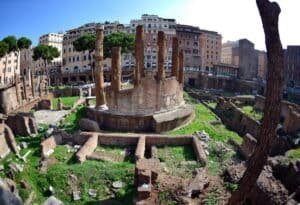
In front of the theater opens the Largo Argentina sacred area, with the remains of the temples and of the structures linked to the Theater of Pompey complex. Among the ruins lives a cat colony looked after by volunteers: the listing on the Largo Argentina cat sanctuary explains how it works.
Pantheon and Piazza Navona
In five minutes to the north you reach the Pantheon. To the west, beyond Corso Vittorio Emanuele II, you reach Piazza Navona and Campo de' Fiori.
The Gesù, the Ghetto, the Theater of Marcellus
To the east is the Church of the Gesù. Going down toward the Tiber you enter the Jewish Ghetto and arrive at the Theater of Marcellus: an ancient theater a few steps from an 18th-century theater. Continuing along Via delle Botteghe Oscure you reach Piazza Venezia, a hub of public transport.
Some important events that happened here in history
Teatro Argentina was inaugurated in January 1732 with Berenice, an opera by Domenico Sarro. In the 18th century, according to foreign travelers, it was the most important of the Roman theaters.
On February 20, 1816 the premiere of Gioachino Rossini's The Barber of Seville was staged there, with Manuel García. It was a fiasco: in the orchestra sat many admirers of Giovanni Paisiello's Barber, who whistled in protest. From the second night, however, the opera triumphed. On January 28, 1822 Teatro Argentina hosted the world premiere of Gaetano Donizetti's Zoraida di Granata. In 1827 Niccolò Paganini played there.
Giuseppe Verdi brought two premieres there: I due Foscari in 1844 and La battaglia di Legnano in 1849. The latter, according to Teatro di Roma's reconstruction, was the occasion when Romans began the demonstrations against the papal government that led to the Roman Republic. It is the most illustrious precedent for a show like Lo zar: in this hall the theater has already spoken of power, and the city listened.
After 1870, with the opening of Corso Vittorio Emanuele II, the theater found itself at the center of the new capital and passed to the city government. In the 20th century it became the home of Rome's public drama. From 1994 to 1999 it was directed by Luca Ronconi, Massini's master. In 1993 Paolo Portoghesi's restoration gave it back its 18th-century look, and in 2022 management passed to a foundation.
Who has passed through Lo zar by and with Stefano Massini at Teatro Argentina in Rome, March 16 to 25, 2027
Through the stage of Teatro Argentina have passed Gioachino Rossini, who presented The Barber of Seville there in 1816, Gaetano Donizetti, with Zoraida di Granata in 1822, Giuseppe Verdi, with I due Foscari and La battaglia di Legnano, and Niccolò Paganini, in concert in 1827. The route of Teatro di Roma's show visits also recalls the works of Gabriele D'Annunzio and Luigi Pirandello, and the judgment of Marcel Proust, who loved the look of the boxes as small suspended salons.
Then there are the directors, who brought here a decisive part of the Italian scene: Vito Pandolfi from 1964, Franco Enriquez, Luigi Squarzina, Maurizio Scaparro, Pietro Carriglio, Luca Ronconi from 1994 to 1999, Mario Martone, Giorgio Albertazzi, Gabriele Lavia, Antonio Calbi, Giorgio Barberio Corsetti and today Luca De Fusco.
Ronconi's is the name that ties the history of the hall to Lo zar. Massini met him in 2001 at the Piccolo in Milan, as a volunteer assistant. It was Ronconi who pushed him toward writing, and it was he who directed in 2015 the first Italian Lehman Trilogy. In March, then, onto the stage that Ronconi directed steps the author whom Ronconi brought into being. And with him, in voice, Ottavia Piccolo, one of the best-loved actresses of Italian theater.
Those who want to see the season as a whole will find on the site the other listings for Teatro Argentina, from Luca De Fusco's Otello to La pazzia di re Giorgio with Massimo Popolizio.
How to organize the evening of Lo zar in Rome
An evening of Lo zar at Teatro Argentina is organized on foot: dinner before or after in the historic center, the show, the return by tram 8 or by taxi from Piazza Venezia.
Where to eat before or after
The historic center around Teatro Argentina offers every type: Roman trattorias toward Campo de' Fiori, Roman-Jewish cuisine in the Ghetto, pizza by the slice shops and bakeries along Corso Vittorio Emanuele II for a quick meal before the show, wine bars and bistros around the Pantheon for after the theater. On weekends it is best to book, especially after 22:00.
With the kids
Lo zar is a monologue for adults and for high schoolers interested in recent history. The story, as the theater warns, does not spare details of violence: for the youngest it is not recommended. For a senior-year student, instead, it is a lesson in contemporary history that no textbook can give with the same force.
March in Rome
The second half of March is one of the best periods for the historic center: days getting longer, mild temperatures, a city not yet invaded by the Easter crowds. The evenings can be cool, and an overcoat is still necessary. Those coming from out of town can pair the evening with an afternoon at the Pantheon or in the museums of the center.
Dress code
At Teatro Argentina there is no dress code, but the 18th-century hall invites a minimum of care. Arrive a quarter of an hour early: in the last hour before the show the ticket office serves only that day's performance.
Frequently asked questions about Stefano Massini's Lo zar
When is Stefano Massini's Lo zar on in Rome?
Stefano Massini's Lo zar is on at Teatro Argentina from March 16 to 25, 2027, for nine performances: from Tuesday, March 16 to Sunday, March 21 and from Tuesday, March 23 to Thursday, March 25. On Monday, March 22 the theater rests. The start times are published on the Teatro di Roma website.
What is Lo zar about?
Lo zar tells the life of Vladimir Putin starting from the autobiography that the Russian president made public in 2000, ahead of the elections. Stefano Massini combines it with speeches, conferences and historical essays on his rise to power, against the backdrop of the collapse of the Soviet system. The text is published by Einaudi.
Who is on stage with Stefano Massini?
In Lo zar Stefano Massini is alone on stage, accompanied by the music of Luca Roccia Baldini performed live by Mariel Tahiraj. The voice of Anna Politkovskaja is Ottavia Piccolo's. Sets by Paolo Di Benedetto, costumes by Elena Bianchini, lighting by Manuel Frenda. The production is by Teatro della Toscana.
Where do I buy tickets for Lo zar at Teatro Argentina?
Tickets for Lo zar are bought at the ticket office of Teatro Argentina, at Largo di Torre Argentina 52, open Monday to Saturday from 11:00 to 19:00 and on Sunday three hours before the show, or online on the authorized network indicated by Teatro di Roma. The prices are published on the official website.
How do I get to Teatro Argentina by public transport?
Teatro Argentina is reached by tram 8, Torre Argentina stop, a few steps from the entrance. The most convenient metro stops are Colosseo and Circo Massimo on Line B, from which you continue on foot or by bus. The theater is in the ZTL and has no parking.
How many seats does Teatro Argentina have?
Teatro Argentina has 720 seats according to Teatro di Roma: 354 in the orchestra and 366 spread across six tiers of boxes. It is an Italian-style horseshoe hall, designed by Gerolamo Theodoli and inaugurated in 1732, restored by Paolo Portoghesi in 1993.
Is Lo zar suitable for kids?
Lo zar is suitable for high schoolers interested in contemporary history, less so for children: Teatro di Roma warns that Putin's autobiographical account contains details of extreme violence. For a senior-year student it is a rare chance to see recent history told by a great author.
Who is Stefano Massini?
Stefano Massini is a Florentine writer and playwright, born in 1975, author of the Lehman Trilogy, translated into 38 languages. With Sam Mendes directing it won five Tony Awards in 2022, making him the first Italian awarded. The television audience knows him for his stories on Piazzapulita. Since 2025 he has directed Teatro della Toscana.
Final advice on Lo zar
Teatro Argentina gives its best with the bare word: one actor, one voice, an audience that listens. Lo zar is exactly this, with the addition of a theme that concerns everyone's present. Buy your ticket early, choose a box in the first or second tier, arrive on foot from the Pantheon and, on the way out, stop for a minute in front of the sacred area. Caesar fell a few meters from there. Massini will have just told you how a power that does not want to fall is built.
Article written by the editorial team of Tour Leader Pro, contact them for Private/Corporate/V.I.P. Tours and Experiences.
Planning a trip to Rome? The English guides to visiting the city are on ItalyPlanner.com.
Contact Information
Nearby
 Teatro Argentina100 m
- Teatro Centrale100 m
- Largo Torre Argentina – Sacred Area of Campo Marzio100 m
- Cat Sanctuary at Largo Argentina100 m
- San Carlo ai Catinari200 m
- Santa Maria in Publicolis200 m
Upcoming events nearby
- Othello at Teatro Argentina, November 4 to 29, 2026100 m
- The Madness of King George with Massimo Popolizio at Teatro Argentina in Rome, January 9 to 31, 2027100 m
- Una delle ultime sere di Carnovale at Teatro Argentina, February 2 to 14, 2027100 m
- I Solisti della Filarmonica: Mahler, Symphony No. 4 at Teatro Argentina, November 5, 2026100 m
You might also like
- Le dieu du carnage with Antonio Zavatteri at Teatro Quirino, March 30 to April 4, 2027
- L’uomo, la bestia e la virtù with Vanessa Gravina at Teatro Quirino, March 16 to 21, 2027
- Ispettore in casa Birling with Ettore Bassi and Galatea Ranzi at Teatro Quirino, March 2 to 7, 2027
- Belle Ripiene at Teatro Sistina in Rome, from April 8, 2027
- Sfidati di me, Paolo Kessisoglu at Teatro Sala Umberto, April 1 to 4, 2027
- L’anatra all’arancia with Emilio Solfrizzi at Teatro Quirino, April 20 to May 2, 2027