Teatro Centrale
In short. There are places in Rome that tell their own story because they stand on a monumental square, with the facade in view and the name carved on the architrave.
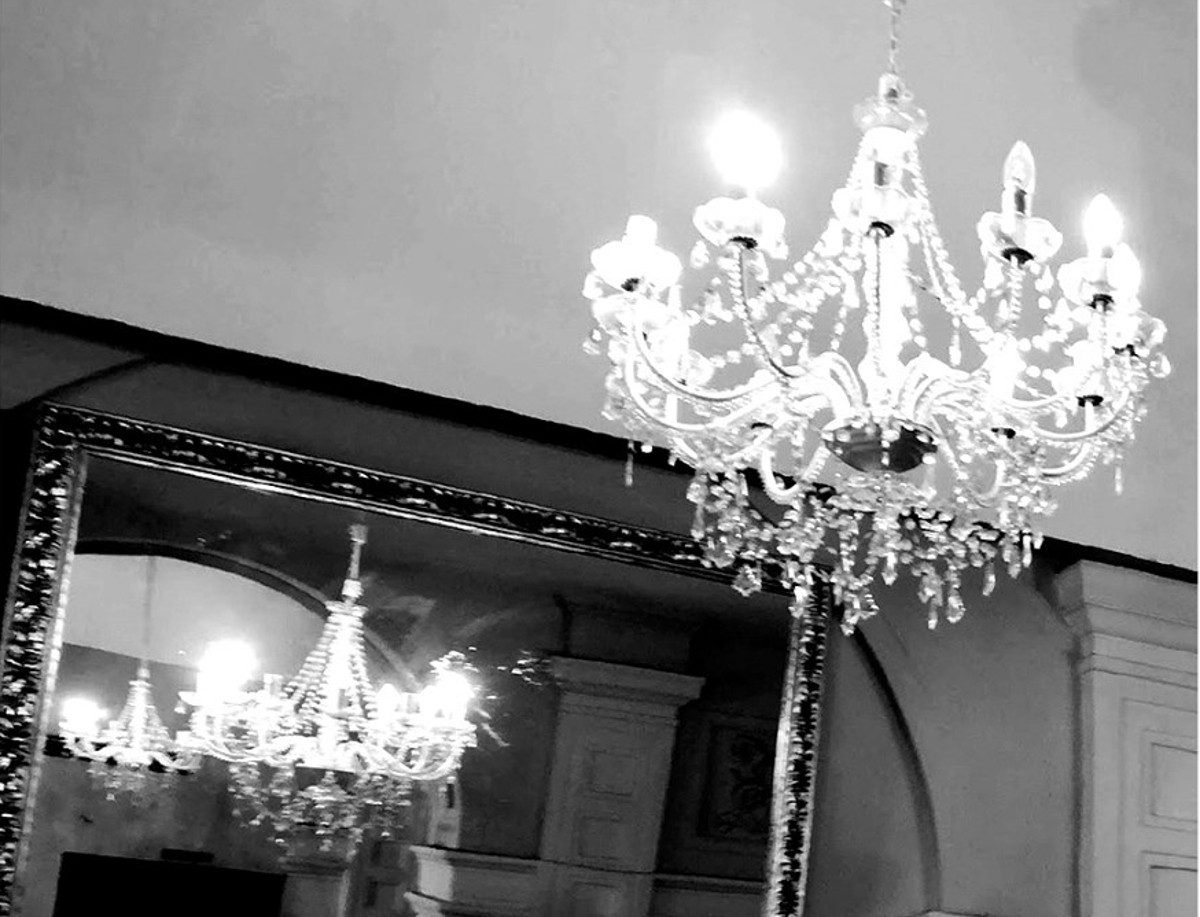
Teatro Centrale, where it really is and why the address matters
There are places in Rome that tell their own story because they stand on a monumental square, with the facade in view and the name carved on the architrave. Teatro Centrale is not one of them. Teatro Centrale is at Via Celsa 6, a short, narrow, almost shy street that opens behind Piazza del Gesù and slides toward the bottom of the Pigna district. If you don't know it's there, you walk past it and don't see it. And that is exactly the reason it's best to start from the address and not from the stage.
The coordinates, for those who like precision, fall around 41.895 latitude and 12.476 longitude. We are in the geometric heart of historic Rome, inside Municipio I, a few dozen meters from the point where the medieval, the Baroque and the Republican city overlap without a break. From Via Celsa, walking five minutes in one direction, you reach the Pantheon. Five minutes in the other and you are at the foot of the Vittoriano. Just under three minutes and you are looking out over the sacred area of Largo di Torre Argentina, where the Republican temples sit four meters below the level of the modern street.
This condition, a theater hidden in the middle of everything, is not a decorative detail. It is the interpretive key to the whole place. Teatro Centrale belongs to that family of Roman halls that were not born as monuments but as businesses: spaces built inside the existing building fabric, carved out of courtyards, warehouses, inner courts, adapted and readapted over more than a century. They have no famous architect to show off, no inauguration date that makes it into the textbooks, and for exactly this reason they are the most honest witnesses of how the cultural life of a city really works.
The verdict, right away: if you come to Rome for the first time and have three days, Teatro Centrale will not be the reason for your trip. But if you go back, if you want to understand how Romans used their historic center in the 20th century instead of just photographing it, then the address of Via Celsa 6 becomes a stop that explains more than many basilicas.
The exact point on the city's mental map
To orient yourself without a phone in hand, keep three reference points. The first is the facade of the Church of the Gesù, the mother church of the Society of Jesus, which closes the square of the same name with its travertine mass and its dense history. The second is the reddish, severe bulk of Palazzo Altieri, which occupies a whole side of the same widening. The third is Via delle Botteghe Oscure, the artery that runs a little farther south and that in the 20th century was, in the Italian political imagination, a synonym for an entire party. Teatro Centrale sits inside the triangle defined by these three points.
It is a tiny triangle, you cross it in under 10 minutes at a slow pace, and yet it holds a disproportionate quantity of history: a Republican temple, an ancient theater of the Augustan age, a church that rewrote religious architecture for half of Europe, a cardinal's palace, and an early 20th-century performance hall. I don't know many cities where a walk of 800 meters covers 2,000 years with this density.
Via Celsa, the street that hosts Teatro Centrale
Via Celsa is one of those Roman streets you cross without noticing. It is short, it is in shadow for a good part of the day, it has a paving of sampietrini and buildings tall enough to turn it into a sort of corridor. Those who walk it usually do so to cut through, to get out of the congestion of Piazza del Gesù and slip toward the quieter streets that go down to the Ghetto and Piazza Margana.
The name, as with very many streets in the center, comes from a family that owned property there. Roman street-name tradition links it to the Celsi, whose memory has been preserved in the street far more than in documents. It is a mechanism that repeats everywhere in Rome: Via dei Polacchi, Via dei Delfini, Via dei Funari, Via dei Barbieri. The streets of the center are a horizontal archive of surnames, trades and nations. If you learn to read them, the historic center stops being a maze and becomes an index.
Walking on Via Celsa also means understanding something counterintuitive for those who arrive from outside: the center of Rome is not made of great axes. It is made of widened squares connected by narrow passages. The great straight arteries, Corso Vittorio Emanuele II, Via del Plebiscito, Via delle Botteghe Oscure, are in large part 19th- and 20th-century interventions, demolitions that cut through the medieval fabric to let carriages pass first and cars later. Via Celsa belongs instead to what remained underneath, or rather alongside: the ancient weave, the one that survives in the gaps.
That is why I find the location of Teatro Centrale narratively perfect. A theater that stands in an alley, wedged between two demolitions, is the physical metaphor for what it means to make live culture in a city that already has everything and that, for that very reason, tends not to notice what is happening on top of it.
How the street changes over the course of the day
In the morning Via Celsa is a service street: vans double-parked, shutters going up, office workers cutting toward the offices of Via delle Botteghe Oscure and the Ghetto. In the early afternoon it empties. Toward evening, when the lights of the doorways come on and the traffic noise dies down, it changes character. It becomes one of those streets that seem made to be walked before going into somewhere. The raking light of the end of the day on the ocher facades is, without exaggeration, one of the small free pleasures of the district.
If I had to recommend a moment to arrive at Teatro Centrale without rushing, I would say 40 minutes before whatever brought you there. Not out of anxiety about the time, but because those 40 minutes spent wandering between Via Celsa, Piazza Margana and Via dei Delfini are worth more than many guided tours.
The Pigna district, the frame of Teatro Centrale
Teatro Centrale is in the Pigna district, the ninth of Rome's historic rioni, and this is not bureaucratic information: it is the premise of everything else. Pigna is a small, compressed rione, squeezed between the Pantheon to the north, Largo Argentina to the west and Piazza Venezia to the southeast. In its modest area it holds a density of monuments that in any other European city would be enough for a whole historic center.
The name derives from the great bronze pinecone of Roman date, more than four meters tall, which in antiquity probably stood near the Baths of Agrippa or at any rate in the area of the central Campo Marzio, and which in the Middle Ages was moved in front of St. Peter's Basilica before finding, in the 16th century, its definitive place in the great Vatican courtyard that takes its name from it: the Cortile della Pigna. The district has thus lost its own symbol, which today is admired two and a half kilometers away, inside the Vatican Museums. It is a loss I find instructive: in Rome symbols migrate, and the name stays attached to the place even when the object has gone.
The district's coat of arms is precisely a pinecone, usually shown gilded on a red field. You find it on the enameled street signs and on some plaques. It's a small recommended game: as you wander around Teatro Centrale, raise your eyes to the signs and try to work out when you cross the boundary between Pigna, Sant'Angelo and Campitelli. The boundaries of the rioni are invisible but real, and they change the character of the streets in a surprisingly sharp way.
What Pigna contains besides Teatro Centrale
Within the perimeter of the rione, or immediately next to it, are the Pantheon, the basilica of Santa Maria sopra Minerva with its neo-Gothic starry vault and Bernini's little elephant in front, the Collegio Romano with its facade of Jesuit severity, the Church of the Gesù, Palazzo Altieri, Palazzo Doria Pamphilj with its private gallery among the most beautiful in Europe, the sacred area of Largo Argentina and the Crypta Balbi.
Lining up these names serves to understand one thing: whoever goes to Teatro Centrale is not going to a cultural periphery, but entering one of the densest concentrations of heritage on the planet. And entering it by the service door, which is perhaps the best way.
Piazza del Gesù, the antechamber of Teatro Centrale
If you reach Teatro Centrale on foot from the center, you will in all likelihood pass through Piazza del Gesù. It is a strange, asymmetrical, windy square. Romans built a saying on it, joking that the wind waits outside for the devil who went into the church and never came out. It is a perfect urban legend because it explains a real fact: the shape of the square, wedged between the bulk of the Gesù and that of Palazzo Altieri, creates air currents that anyone who has waited there for a bus in January remembers very well.
The square is a crossroads of powers. On one side the mother church of the Jesuits, that is, for centuries one of the nerve centers of world Catholic culture. On the other Palazzo Altieri, residence of a family that gave the Church Pope Clement X. Not far away, the building that long housed the headquarters of a political party that marked Italian republican history. It is a quantity of power per square meter that, when you stop to think about it, inspires a certain awe.
And yet, and here is the beauty of it, today Piazza del Gesù is above all a place of passage: people waiting, tourists consulting a map, Romans cutting toward work. Rome has this unique ability to demote its centers of power to daily shortcuts. No other city does it with such nonchalance.
The detail not to miss in the square
Look at the corner of Palazzo Altieri toward Via del Plebiscito and look for the tiny little window wedged into the masonry, out of proportion with the rest. Tradition says it belonged to the house of an old woman owner who refused to sell when the Altieri enlarged the palace, and that the commissioning cardinal, so as not to use force, had the dwelling absorbed into the new building, leaving its window visible.
That the anecdote is historically exact in every detail is not guaranteed, and it should be taken for what it is: a story Romans have handed down for generations. But it is exactly the kind of tale that makes a walk come alive, and that I recommend checking with your own eyes before entering Via Celsa.
The Church of the Gesù, the illustrious neighbor of Teatro Centrale
Less than 200 meters from Teatro Centrale stands a building that changed European religious architecture. The Church of the Gesù, mother church of the Society of Jesus, was begun in 1568 to a design by Jacopo Barozzi da Vignola, with the decisive financing of Cardinal Alessandro Farnese, and the facade was then built by Giacomo della Porta. Consecrated in 1584, it immediately became the reference model for hundreds of churches built by the Jesuits in Europe, Latin America and Asia.
The reason for this success is technical even before aesthetic. The Counter-Reformation needed spaces in which the preaching was audible and the Mass visible to everyone. Vignola answered with a single wide nave, communicating side chapels in place of aisles, a barely projecting transept and a dome over the crossing. The result is a hall that concentrates attention on the altar and the pulpit. Anyone who has designed a performance hall immediately recognizes the problem addressed and the solution adopted: it is a problem of acoustics, sight lines and hierarchy of the gaze.
I find this parallel anything but idle when talking about a theater. The Italian-style hall, with its stalls and boxes, and the Counter-Reformation hall were born a short chronological distance apart and tackle the same question: how you hold a large audience together and govern it through space. Going from the Gesù to a 20th-century performance hall in 200 meters of street is an exercise in architectural history worth a semester.
Baciccia's vault and Baroque spectacle
Inside the Gesù, the vault of the nave holds the "Triumph of the Name of Jesus," frescoed by Giovanni Battista Gaulli, known as Baciccia, between 1676 and 1679. It is one of the great illusionistic machines of the Roman Baroque: the architectural frame pretends to open, some figures seem to spill beyond the edge of the fresco and project into the real space of the church, with painted shadows on the cornice completing the deception.
That vault is pure theater. It is stage design, perspective illusion, management of light, and it uses the same mental tools that a century later the stage designers of the Italian-style halls would use. When I say that in Rome the border between the sacred and the spectacle is more porous than people say, I am thinking exactly of this ceiling.
In the same church is the chapel of Sant'Ignazio di Loyola, arranged at the end of the 17th century by Andrea Pozzo, a Jesuit and theorist of perspective, author of the famous treatise on perspective painting. Pozzo is the man who taught Europe how to make a ceiling break open. If you want to understand where the Western idea of stage illusion comes from, his Roman work is an obligatory stop.
Palazzo Altieri, the mass that closes the horizon of Teatro Centrale
Palazzo Altieri occupies a whole side of Piazza del Gesù and continues along Via del Plebiscito with a facade that seems never to end. Its construction, begun in the 16th century on pre-existing cores, had its decisive phase in the 17th century, when the family reached its peak with the election of Emilio Altieri to the papacy as Clement X in 1670. The main architect of the great phase of enlargement was Giovanni Antonio de' Rossi.
What strikes you about this palace is the disproportion between its grandeur and its perceived anonymity. Thousands of people pass in front of it every day without knowing that it is one of the largest noble palaces in Rome, with a central hall frescoed by Carlo Maratta. It is the Rome effect in its purest form: the quantity of excellence is such that excellence stops being noticed.
For those going to Teatro Centrale there is a practical side too. Palazzo Altieri is the most reliable visual reference for orienting yourself: if you have its facade behind you and the Church of the Gesù on your left, you are a couple of minutes from the mouth of Via Celsa. It is a way of navigating the historic center that works: replacing digital directions with three or four memorized architectural masses. It works better, and it doesn't need downloading.
The family, the pope and the Roman way of leaving a trace
The Altieri are a textbook case of how the rise of Roman families worked. A member reaches the papacy, and within a few years the family fortune, the palace, the chapels and the name are consolidated in monumental form. Clement X reigned from 1670 to 1676, and in that short span the family stamped on the city a mark that has lasted three and a half centuries.
When you walk in the Pigna district, you walk inside this mechanism. Every facade is the residue of a family strategy. It is a cynical reading, perhaps, but it is also the only one that explains why the center of Rome has exactly this shape and not another.
The Collegio Romano and the factory of knowledge next to Teatro Centrale
A little north of Teatro Centrale, toward the Pantheon, opens Piazza del Collegio Romano, closed by the facade of the building the Jesuits built as their great educational institution. The Collegio Romano was founded by Ignatius of Loyola in 1551 and the monumental seat was built at the end of the 16th century under the pontificate of Gregory XIII, the pope of the calendar reform.
That building was for centuries one of the most important scientific centers in Europe. Christopher Clavius taught there, mathematician and astronomer, among the protagonists of the commission that drew up the Gregorian calendar introduced in 1582. Athanasius Kircher worked there, polymath, Egyptologist ante litteram, collector and experimenter, whose museum of curiosities was one of the wonders of 17th-century Rome. On the roof of the building, in the 19th century, the astronomical observatory was active, directed among others by Angelo Secchi, pioneer of stellar spectroscopy and of the spectral classification of stars.
I recall all this because when talking about a theater in the Pigna district one tends to imagine a purely devotional or purely touristic context. It isn't so. This is the quadrant in which, for four centuries, science was produced, optics and astronomy were debated, Greek and rhetoric were taught. The audience that in the 20th century entered the performance halls of this area walked over a stratification of classrooms and libraries.
From Jesuit college to State institution
After 1870 and the passage of Rome to the Kingdom of Italy, the building of the Collegio Romano was largely taken over by the State and assigned new functions, including a classical high school that still bears the name of Ennio Quirino Visconti and, for a long time, ministry offices and cultural institutes. It is another example of that continuous metamorphosis that makes Rome hard to tell by fixed categories: nothing ever remains exactly what it was born for.
Teatro Centrale, with its trajectory as a hall born in the early 20th century and readapted several times until becoming a space for live music, belongs to the same logic. The difference is only one of scale.
Largo di Torre Argentina and the Republican temples near Teatro Centrale
Three minutes' walk from Teatro Centrale, toward the west, opens one of the most underrated archaeological sights in the city: the sacred area of Largo di Torre Argentina. Four temples of the Republican age, conventionally indicated by the letters A, B, C and D because their attribution was long debated, stand in a large rectangular basin dug below the level of the modern street.
They were brought to light between 1926 and 1929, during the urban redevelopment works of the district. Temple C is the oldest of the group and probably dates to the 4th or 3rd century BC. Temple B, the circular one with the columns still standing, is generally identified with the aedes Fortunae Huiusce Diei, dedicated by the gens Lutatia at the end of the 2nd century BC. It is material from mid-Republican Rome, that is, from an age from which very little has survived in the city.
But the reason Largo Argentina is famous around the world is another. On the eastern side of the area are the remains of the Curia of Pompey, the hall attached to the great theater complex that Pompey the Great inaugurated in 55 BC. In that hall, on the Ides of March of 44 BC, the Senate met and Gaius Julius Caesar was killed. The material site of the most famous assassination in Western history is a few hundred meters from Via Celsa.
Why the Senate met in a theater
It's worth explaining the reason, because it tells a lot about the Roman relationship between politics and spectacle. The Curia Hostilia in the Forum was at that time unusable because of works, and the Senate met in alternative buildings. Pompey had built in the Campo Marzio an enormous complex that included the first permanent masonry theater in Rome, a large portico with gardens and, precisely, a hall for assemblies.
The fact that Republican political power met in an annex of a theater is not an accident of history: it is proof that in Rome the space of spectacle and the space of collective decision were physically adjacent from the very beginning. Entering a hall in the historic center, it's worth thinking about this continuity.
I add a detail that amuses everyone and is documented: for decades the sacred area was one of the best-known cat colonies in Europe, with cats sleeping on column drums from the 3rd century BC. The arrangement of the area with the visitor walkway brought order to the situation, but the cats have remained part of the landscape, and continue to be the first photographic subject of anyone who leans over the balustrade.
The Crypta Balbi, the ancient theater buried next to Teatro Centrale
There is a fact almost too good to be true, tied to Via Celsa. 200 meters from a 20th-century theater are the remains of a theater from the year 13 BC.
The theater of Lucius Cornelius Balbus, known as Balbus the Younger, was inaugurated in 13 BC, in the Augustan age, and was the third permanent masonry theater in Rome after those of Pompey and Marcellus. Attached to the theater was a large quadriportico, the crypta Balbi, a covered space where the public could stroll and take shelter. Of that complex one sector is preserved today, absorbed into centuries of later construction, along Via delle Botteghe Oscure.
The site has become a museum venue that hosts a route devoted largely to Rome in the early Middle Ages, that is, the period worst represented in all the other city collections. I consider it, without hesitation, one of the most intelligent museums in Italy, because instead of displaying isolated masterpieces it shows the method: how you read a stratigraphy, how an ancient building becomes a lime kiln, then a house, then a convent, then an apartment building, and how archaeologists reconstruct this chain.
The lesson of stratigraphy applied to a modern theater
If you have time, go to the Crypta Balbi before going to Teatro Centrale. The order matters. Coming out of the museum, you will have in your head the idea that every building in the historic center is the result of a sequence of reuses, and you will look at the hall on Via Celsa with different eyes.
Because it is exactly what it is: a space born with one purpose, transformed several times, readapted to the needs of successive eras, survived thanks to its capacity to change function. In the center of Rome survival does not reward purity, it rewards adaptability. It holds for an Augustan quadriportico and it holds for a performance hall of a hundred years ago.
The Pantheon a few minutes from Teatro Centrale
Five or six minutes' walk north from Via Celsa and you reach Piazza della Rotonda. The Pantheon, in the form we see, is the Hadrianic rebuilding of a building originally built by Marcus Vipsanius Agrippa. The inscription on the pediment still cites Agrippa, but the current structure is conventionally dated to the second decade of the 2nd century AD, under Hadrian.
The concrete dome, with its roughly 43.3 meters of interior diameter, remained for over 13 centuries the widest ever built, and still today it is the largest unreinforced concrete dome in the world. The oculus open at the center measures about nine meters. The interior height coincides with the diameter, which means that a perfect sphere can be inscribed in the interior space: a geometric choice that is not decorative but cosmological.
The conversion into a Christian church, which took place in 609 with the dedication to Santa Maria ad Martyres, is the main reason the building has come down to us intact. It is an exemplary case of conservation through reuse: nobody protected it because it was beautiful, it was saved because it was useful.
The link with the dome of Teatro Centrale
I make a comparison that may seem daring and is instead the best way to make the geography of the rione memorable. Teatro Centrale has, at the center of its hall, a domed covering. It is obviously a dome of a completely different scale and nature from that of the Pantheon: we are talking about an early 20th-century performance hall, not an imperial monument.
But the idea of gathering an audience under a central covering, so that everyone looks toward the same point and the sound is distributed evenly, comes from there. In the Pigna district there are two halls with a compact plan under a dome, 600 meters and 18 centuries apart. I don't think the 20th-century architects had this in mind. But the city did, the city always has it in mind.
What Teatro Centrale is today
Let's get to the point. Teatro Centrale is an early 20th-century performance hall, located at Via Celsa 6, that over time has been readapted as a cultural hub and that today hosts mostly live music, concerts, shows and events. The hall has a central dome covering, a balcony and a capacity of around 500 people.
These are numbers to be read well, because they say a lot. 500 seats is a precise size in the ecosystem of performance venues. It is too many for a club of 150 people, where the relationship with those on stage is almost domestic. It is far less than a historic Italian-style theater like the Argentina or the Sistina, which stand comfortably above a thousand. It is the size at which an artist can still see the faces of the first row and at the same time the hall makes a mass, the sound has body and the applause counts.
In the Rome of concerts that size is precious and rare, because the historic center has very little of it. The city's mid-sized halls are almost all outside the perimeter of the Walls or at any rate far from the monumental heart, for obvious reasons of space, logistics and restrictions. Having 500 seats in an alley behind Piazza del Gesù is an urbanistic anomaly, and it is the main reason this place continues to be of interest.
A cultural hub more than a drama theater
It is important not to misunderstand the name. The word "teatro" on the sign indicates the origin of the building and its structure, not necessarily the programming. In its recent configuration Teatro Centrale has worked mainly as a space for concerts and events, that is, as a place where the stage hosts live music more than drama seasons.
This distinction, which holds in Rome for quite a few spaces, explains why it's always best to check in advance the nature of what you are going to see. An Italian-style theater with a drama season and a hub for live music are two completely different experiences even when the building is the same: the layout of the audience changes, the volume changes, the schedule changes, even the way it's best to dress changes.
On the program there is no point going into detail: the schedules change from season to season and the names might already be out of date by the time you read this. What I can tell you with certainty is the nature of the container. The content, check at the source, always.
The hall of Teatro Centrale: dome, balcony and the geometry of listening
The configuration of the hall of Teatro Centrale, central dome, balcony, capacity around 500 units, describes a clearly recognizable architectural type: the hall with a compact plan and a raised gallery, typical of performance buildings of the first decades of the 20th century.
The balcony is not a whim. In a hall of that size the gallery solves three problems at once. It increases capacity without lengthening the distance from the stage, and distance is the number one enemy of live sound. It creates a second listening point, often the best of all for amplified music, because it sits above the heads of the audience in the stalls and receives less absorption. And it offers the eye a view from above that completely changes the perception of the stage space.
The dome, for its part, is an ambivalent acoustic choice and it has to be said honestly. A curved surface concentrates reflections, and in historic halls this sometimes produces focal points, that is, zones where the sound arrives abnormally reinforced. It is one of the reasons why in halls with a curved covering you almost always intervene with sound-absorbing or diffusing treatments, and why the placement of the sound system is particularly delicate.
Where it's best to sit
I give a tip that holds for most halls with this geometry and that you can adapt. If you are after sound quality, the center of the stalls at about two thirds of the depth, or the first row of the balcony, are almost always the best positions. If you are after energy and contact, the front of the stage slightly off the axis is preferable to the exact axis, because on the axis you often find yourself in the middle of the overlaps of the speakers.
If instead you are there to enjoy the building more than the event, the right spot is the back of the balcony, from which you take in the whole geometry: the curve of the covering, the railing, the cut of the proscenium, the stalls seen at an angle. It is from there that a hall tells its age.
An early 20th-century theater: how Teatro Centrale was born
The building is documented as an early 20th-century theater, and this fact places Teatro Centrale in a precise season of Roman urban history. Between the end of the 19th century and the first decades of the 20th, Rome as a capital saw a multiplication of performance venues without precedent.
The reasons are demographic before cultural. In 1870 Rome had just over 200,000 inhabitants. On the eve of the First World War it had passed 500,000. In the 1930s it was approaching a million. A city that triples its population in 60 years needs spaces where that population can spend the evening. So there arose neighborhood theaters, variety halls, politeama, café-chantants, and then, with growing speed, movie theaters.
Many of these halls were carved out inside the existing building fabric, occupying inner courtyards, former warehouses, palace courts. They were not works signed by great architects and they did not end up in the specialist magazines. They were infrastructures of urban entertainment, built in a hurry, on small budgets, and destined to change skin as soon as the market required it.
The generation of invisible halls
This is the family to which Teatro Centrale belongs, and in our judgment it is the most interesting family to study, precisely because it is the least documented. Of the great historic Roman halls we know almost everything: the Argentina, the Valle, the Costanzi that became the Teatro dell'Opera have archives, monographs, complete chronologies. Of the minor halls of the early 20th century we know very little, because nobody ever considered their archive worth preserving.
The result is that the history of Roman entertainment that we read in books is the history of its peaks. The history of everyday cultural consumption, what a clerk or an artisan really did on Saturday night, is largely lost. Entering one of these surviving halls gives the feeling of walking inside a primary source that nobody has yet transcribed.
In honesty I must add that on the specific building history of Via Celsa 6 the easily accessible documentation is scarce. I will not give you design dates, names of designers or chronologies of renovations that I am not able to verify. I prefer a declared gap to an invented line.
The parallel lives of Teatro Centrale in the 20th century
If there is a law that governs the performance venues of central Rome, it is the law of intermittence. They open, work for a decade, close, stay empty for years, reopen under another name and with another purpose. The description commonly given of Teatro Centrale, an old early 20th-century theater converted into a cultural hub, is the perfect summary of this fate.
The entertainment world, especially as regards physical spaces, works in a karstic way: venues that are riding the crest of the wave suddenly vanish, stay underground for years and resurface farther downstream in completely new guises. Anyone who has frequented Rome for a few decades knows well the feeling of passing a doorway and not being able to remember what was there before.
In the case of Via Celsa this cycle went through at least one commercial episode worth recalling, namely the attempt, today almost forgotten, by a big international beer brand to open its own venue in the center of Rome. It was one of those brand experience operations that in the 2000s seemed to be the future of marketing and that, like many of those operations, left no lasting mark.
Why the halls of the center close
The reasons are always the same and it's worth listing them, because they help understand how fragile what we take for granted is. The cost of real estate in the historic center is such that any square meter earns more as accommodation or retail than as a performance hall. Acoustic restrictions toward the neighbors limit hours and volumes. Logistics are prohibitive: getting a truck with equipment into an alley in a limited traffic zone is a daily undertaking. And the public, in recent decades, has moved toward areas where parking is possible.
Every hall that survives in the center of Rome does so against the economy, not thanks to it. It is a fact to keep in mind, because in a place like this it makes you look with a little more respect even at the less polished details.
Teatro Centrale and contemporary music: the Nuova Consonanza chapter
There is a passage in the history of this hall that I consider the most fascinating of all, and it concerns the Roman musical avant-garde of the second half of the 20th century.
The Gruppo di Improvvisazione Nuova Consonanza, founded in Rome in the first half of the 1960s, was one of the most radical collective experiments in postwar European music. It was not an ensemble that performed scores: it was a collective of composers who improvised together, calling into question the very role of the author and the separation between who writes and who performs. Among its protagonists are leading names of 20th-century Italian music, and Ennio Morricone also played in the group, taking part as a trumpeter and experimenter.
Well, among the Roman venues where this group gave live concerts figures precisely the Teatro Centrale on Via Celsa. And the circumstance handed down is so eloquent that it is worth a whole essay: their performances had a very small audience in the hall. A few dozen people in a hall with hundreds of seats, listening to a collective of composers systematically demolishing the conventions of listening.
What a half-empty hall means
This detail, which might look like a failure, is instead the sign of something precious. Musical revolutions are not born in arenas. They are born in half-empty halls, in front of 20 or 30 people who will then become critics, composers, producers, and who will carry elsewhere what they heard.
The influence of Nuova Consonanza on later music, on Italian soundtracks, on electronics, on whole generations of European improvisers, is out of proportion to the number of tickets they sold. It is the classic paradox of the avant-garde: the audience present counts less than the audience that audience will generate.
For me this is the real title of nobility of Teatro Centrale. Not a program of big names, but having hosted, in a Rome that did not notice, one of the most courageous sound laboratories on the continent.
The recent reopening and the new season of Teatro Centrale
After a period of intermittence, the hall on Via Celsa was taken in hand by a new management that since 2019 has given it new life, orienting it above all toward live music. The management belongs to the same outfit that has historically operated in another Roman hall devoted to concerts, and this detail is more significant than it seems.
When an operator who already runs a live music venue takes on a second hall, it almost never does so to duplicate the offering. It does so to complete it. The two sizes complement each other: a big hall for the major tours, a mid-sized hall in the center for projects that would not fill the big space but deserve a real audience. It is how the concert circuit works in all mature European cities, and seeing it applied to the historic center of Rome is news in itself.
The names that have passed through on stage in recent years are left out, for the reason already given: schedules change, and a guide that freezes them grows old in six months. But the positioning is clear: 500 seats, in the center, devoted mainly to live.
What Changes When You Go to a Concert Downtown
Going to a concert in the heart of the historic center is a different experience from going to one on the outskirts, and it's worth knowing that beforehand. On the plus side: you arrive on foot or by surface transit, you can have dinner first within 200 meters, and when you leave you find yourself on streets that at night are among the most beautiful in Europe. Walking from Via Celsa toward the Pantheon after a concert, with the squares almost empty, is one of those things people talk about for years.
On the minus side: parking is practically impossible, the limited traffic zone demands attention, and public peace and quiet restrictions make schedules less flexible than elsewhere. Anyone arriving by car from the province would do well to leave it in a park-and-ride lot and complete the trip by public transit. It's not laziness, it's the only realistic advice.
Teatro Centrale in Rome's Theater System
To understand where Teatro Centrale fits, it helps to look at the map of the city's theaters, which is one of the richest in Europe and also one of the most disorderly.
At the institutional top is the Teatro dell'Opera di Roma, the old Costanzi, opened in 1880, where the world premiere of Pietro Mascagni's "Cavalleria rusticana" took place in 1890 and that of Giacomo Puccini's "Tosca" in 1900. Two world premieres of that weight in 10 years are enough to make a theater's history.
Then there's the Teatro Argentina, opened in 1732, which is the historic home of the Teatro di Roma and stands a few hundred meters from Via Celsa: it faces the same largo that holds the sacred area. And there's the Teatro Valle, opened in 1727, the oldest Roman theater still in existence, where in 1816 the famous and disastrous premiere of Rossini's "The Barber of Seville" took place, booed mercilessly and turned into a triumph in the following performances.
Below this golden tier comes the middle band: the Sistina for big musicals, the Brancaccio, the Quirino, the Eliseo, the Ambra Jovinelli, heir to the avanspettacolo variety tradition. And below that is the densest and most changeable band, that of mid-sized and small halls, experimental theaters and hybrid spaces. This is where Teatro Centrale sits.
Why the Middle Band Is the Decisive One
In public talk about culture, people almost always discuss the big theaters, which are few and easy to recognize. But the real health of a city's cultural life is measured in the middle band: halls of between 300 and 700 seats, where an artist can grow before facing bigger audiences and where an audience can develop a taste.
If that band thins out, a precise and documentable phenomenon occurs: emerging artists jump straight from the venue with 100 seats to the arena, and the training that happens in between is lost. Rome, for real estate reasons, has a middle band more fragile than its size would require. Every hall that holds that size, and in the center no less, serves a system-wide function.
The Teatro Valle, the Argentina and the Genealogy Teatro Centrale Belongs To
I want to dwell on the two historic theaters closest to Via Celsa, because without them you can't understand what "theater" means in the Roman vocabulary.
The Teatro Argentina was opened in January 1732 at the wish of the Sforza Cesarini family, to a design by Girolamo Theodoli. The name has nothing to do with the South American country: it comes from the nearby Torre Argentina, in turn linked to the Latin name of Strasbourg, Argentoratum, the home city of the prelate Johannes Burckardt, who had his palace built there at the end of the 1400s. It's one of the most elegant etymologies in Roman place names, and I tell it every time because nobody expects it.
At the Argentina, in February 1816, the world premiere of "The Barber of Seville" took place. It was a memorable fiasco, with whistling, accidents on stage and hostility organized by the supporters of Paisiello's old "Barber." Rossini, 24 years old, skipped the second night. The second night was a triumph. It's the most instructive parable in the history of show business: opening night is not a verdict, it's a social event.
The Valle and the Birth of Modern Drama
The Teatro Valle, opened in 1727, is the oldest theater in Rome still standing, and it has a very dense history. Important premieres of the 19th-century repertoire were held there, and in the 20th century it saw one of the founding episodes of modern European theater: in May 1921 the premiere of Luigi Pirandello's "Six Characters in Search of an Author" took place, and the evening ended in a brawl, with part of the audience shouting against the author.
Here too the parable is the same: the work that scandalizes Rome becomes, within a few years, a canonical text performed all over the world. The Roman public has a long tradition of loudly rejecting what it will later adopt.
I recall these two evenings, 1816 at the Argentina and 1921 at the Valle, because they help put into context the anecdote of Nuova Consonanza at Teatro Centrale in the 1960s. The half-empty hall on Via Celsa belongs to the same story: that of a city where innovation always arrives before its audience.
Experimental Theaters in Rome in the Late 20th Century
To place the cultural role of a space like Teatro Centrale correctly, we have to tell what was happening in Rome between the 1960s and the 1980s, because in those decades the city was one of the most intense theater laboratories in Europe.
The phenomenon took the name of teatro di ricerca, or teatro di cantina (basement theater), and the second definition is literal: many of the spaces used were basements, garages, warehouses and disused parish halls, carved out in the rioni of the center. There were no proscenium arches, no stages, often not even a separation between audience and actors. It was an explicit response to Italian-style bourgeois theater, considered a machine for preservation.
In that context worked figures who would leave a mark on international theater: Carmelo Bene, whose first Roman season in the 1960s was a series of systematic provocations, Giancarlo Nanni and Manuela Kustermann with the Vascello space, Memè Perlini, Simone Carella, Giuseppe Bartolucci as theorist and organizer. In 1977 the Beat 72, one of the best-known basements, was among the centers of that season of experimentation.
The Lesson of the Basements Applied to Today
What does that season leave us? Above all an idea: that space is not neutral. An Italian-style theater forces the audience into a hierarchy, with some in the stalls, some in the boxes, some in the gallery, and into a frontal relationship. A hybrid space, carved out of a building made for something else, allows different configurations and produces a different experience.
Halls like the one on Via Celsa, with their history of successive conversions, carry this lesson inside them even when they host commercial music. The flexibility that today lets a former early 20th-century theater work as a concert hall is the same flexibility that 40 years ago let a garage work as a theater. It's the same urban gene.
One more consideration, an important one. That Roman season was possible because rents in the center were still affordable and because there was a social tolerance for temporary uses of buildings. Both conditions have largely disappeared today. Whoever opens a cultural space in the center of Rome in the 21st century faces an economic mountain that in the 1970s was a hill.
How to Get to Teatro Centrale
The transit geography around Via Celsa is simple to understand and slightly frustrating to deal with, so it's worth explaining well.
The absolute point of reference is Piazza Venezia, about four or five minutes away on foot. Piazza Venezia is the surface transit hub of the center: most of the lines that cross the city from east to west and from north to south pass through it. If you know how to get to Piazza Venezia, you know how to get to Teatro Centrale.
The second reference is Largo di Torre Argentina, also a few minutes away, another big terminus and interchange, from which many lines depart and pass, including those that connect the center to Trastevere and to Termini station.
The metro, on the other hand, does not directly serve the rione. Line B has a stop at Colosseo and one at Cavour, line A has Barberini and Spagna. From each of these you walk, and the shortest stretch is the one starting from the Colosseo stop, with a 15 or 20 minute walk along Via dei Fori Imperiali that, by the way, is among the most spectacular you can take to get to a concert.
Practical Advice on the ZTL
The historic center of Rome is covered by a limited traffic zone with activation hours that vary depending on the sector and the day, and the gates are monitored electronically. If you are not a resident or authorized, a car in that zone is simply a problem. The fine arrives in the mail and admits no discussion.
The sensible alternative, for those arriving from outside Rome, is to leave the car in a park-and-ride lot served by the metro and complete the trip by public transit. By taxi, give Piazza del Gesù as the destination: the drivers all know it, while Via Celsa requires an extra explanation.
One last note: when leaving late in the evening, surface service thins out and it's best to plan ahead. The night network exists and goes through Piazza Venezia, but the frequencies are what they are. If you're staying in the center you have no problems, but if you're staying far away, do the math first.
What to See Within 500 Meters of Teatro Centrale
It's worth doing an exercise: draw a circle with a 500-meter radius around an address and see what ends up inside. Around Via Celsa 6 the result is almost comical in its abundance.
Inside the circle are: the Pantheon, the basilica of Santa Maria sopra Minerva, the sacred area of Largo Argentina with its four Republican temples, the Crypta Balbi, the Church of the Gesù, Palazzo Altieri, Palazzo Doria Pamphilj with its gallery, the Collegio Romano, the basilica of San Marco Evangelista al Campidoglio, Palazzo Venezia, the Vittoriano, Piazza del Campidoglio designed by Michelangelo, the Theater of Marcellus, the Portico of Octavia and the entrance to the Ghetto, Piazza Mattei with the Turtle Fountain, the Teatro Argentina and, just beyond, the Teatro Valle.
That is, without exaggeration, 2,100 years of architecture within a 10 minute walk. I don't know another spot on Earth with this density, and I know it well enough to say so without rhetoric.
The Route I Recommend Before a Show
If you have an hour and a half to fill before going in, here's a loop that works. You start from Via Celsa, go down toward Via delle Botteghe Oscure and go see the outside of the Crypta Balbi to get an idea of the stratigraphy. You continue toward Piazza Mattei and stop for five minutes in front of the Turtle Fountain, which is probably the most delicate fountain in Rome. You go down to the Portico of Octavia and look at the Theater of Marcellus from below, with its three superimposed orders and the Renaissance palaces built above the arches.
Then you climb back up along Via Montanara toward Piazza Venezia, cut behind the Vittoriano and come back toward Piazza del Gesù from Via del Plebiscito side. The loop takes about an hour at a human pace, with stops. And it delivers to the concert an audience in a decidedly better mood than the one that arrived by taxi five minutes earlier.
The Ghetto and Piazza Mattei, Teatro Centrale's Southern Neighborhood
Going down from Via Celsa toward the south, you quickly enter the area of the rione Sant'Angelo and the Ghetto, which is perhaps the most moving quadrant of the historic center.
The Ghetto of Rome was established in 1555 with the bull "Cum nimis absurdum" of Paul IV, which imposed on the Roman Jews confinement in an enclosed area closed off by gates. The Jewish community of Rome is the oldest of the Western diaspora, documented in the city since the 2nd century BC, and it has lived through more than 2,000 years of Roman history. The enclosure was definitively abolished only with the end of the Papal State, in 1870.
Inside that quadrant you find the Portico of Octavia, an Augustan monument later turned into a medieval fish market, the Synagogue with its square dome, inaugurated in 1904, and the streets where Roman-Jewish cooking produced some of its most imitated inventions: the carciofo alla giudia, the fried cod fillets, the ricotta and sour cherry tart.
The Stumbling Stones and October 16, 1943
Walking these streets you come across, set into the paving, the stumbling stones: small blocks with a brass plaque carrying the name, the date of birth, the date of deportation and the fate of a person who lived in that building. The project is by the German artist Gunter Demnig and by now has covered much of Europe.
The historical reference is the roundup of the Ghetto of Rome on October 16, 1943, when more than 1,000 people were rounded up and deported to Auschwitz. The survivors who returned were very few. It's a wound that the neighborhood neither hides nor turns into a spectacle: it keeps it there, underfoot, and asks only that you lower your gaze.
I say this to those who will come for a concert on Via Celsa: if you have half an hour, go 400 meters south and walk slowly along Via del Portico d'Ottavia. It's the best way I know to remember that an evening of music in the center of Rome is a privilege built on a history that was not light for everyone.
Piazza Venezia and the Vittoriano, the Backdrop of Teatro Centrale
Leaving Via Celsa and heading southeast you reach Piazza Venezia in a few minutes, which is both the busiest crossroads and one of the most debated spaces in the city.
The Vittoriano, the big white monument dedicated to Victor Emmanuel II, was designed by Giuseppe Sacconi, who won the competition in 1884. It was inaugurated in 1911 for the 50th anniversary of the Unification of Italy and completed in the following decades. The marble used is botticino, from the Brescia area, and its dazzling whiteness against the golden travertine of the rest of the city is the main reason for the controversies that have accompanied the building for over a century.
Romans have christened it with a series of affectionately irreverent nicknames, from the typewriter to the wedding cake. But its construction involved the demolition of an entire sector of medieval and Renaissance buildings on the flank of the Capitoline Hill, and that is the real reason why 20th-century criticism treated it harshly.
The View Nobody Considers
Having said all the bad I can, I'll add the good: the top terrace of the Vittoriano, reachable by panoramic elevators, offers the most complete viewpoint over the historic center. From up there you see the Forum, the Colosseum, the domes lined up, and, with a bit of attention, also the patch of roofs under which the rione Pigna lies.
It's the only place from which you can, literally, look down on the block that contains Teatro Centrale. You won't recognize it, because that hall has no visible roof that distinguishes it from the surrounding rooftops. But knowing that it's there, invisible in a sea of clay tiles, is a subtle pleasure that I recommend.
The monument also holds the Altare della Patria with the tomb of the Unknown Soldier, placed there in 1921. The body was chosen by Maria Bergamas, mother of a missing fallen soldier, from among 11 coffins of unidentified soldiers, in a ceremony in the basilica of Aquileia. It's one of the rare moments in which Italian national rhetoric produced a gesture of authentic symbolic power.
Where to Eat and Drink Around Teatro Centrale
I won't name venues, for a reason of method: the signs in the center of Rome change ownership and quality at a speed that makes any list irresponsible. Instead I'll do something more useful, which is to explain how to read the area.
Around Piazza del Gesù and along Via del Plebiscito, the passing-trade offer prevails, geared to tourism and offices. Eating in those windows is possible, and it's almost always a transaction without memory. There's nothing scandalous about it, but it's not why you come to Rome.
The jump in quality happens when you move two or three blocks away. Heading toward the Ghetto, toward Piazza Margana, toward Via dei Delfini and Via dei Funari, you enter a fabric of trattorias and osterie that still lives largely off a Roman clientele. Heading instead north, toward Via dei Cestari and the Minerva area, you find a more composed and more expensive offer, with a few historic names.
The 200 Meter Rule
A useful criterion: in the center of Rome the average quality of a venue is inversely proportional to its visibility from a monument. 200 meters of distance from a famous square, on a street with no scenic outlook, completely changes the cooking and the price.
The second criterion is the language of the menu. If the menu is translated into six languages and displayed with photos of the dishes, you're in a place that lives on passing trade and doesn't need to make you come back. If the menu is in Italian, handwritten or printed that day, and changes with the seasons, you've found a place that counts on regular customers.
The third criterion is the time. Romans eat dinner late. A place that is full at 19:30 is a place that works with tourists, while a place that fills up at 21:00 is a place that works with the neighborhood. Anyone going to a show has to deal with this asymmetry, and often it's better to eat afterward rather than before.
Teatro Centrale and Accessibility in the Historic Center
It's a topic I always bring up, because it is rarely asked about and is extremely useful. The historic center of Rome, for people with mobility difficulties, presents concrete obstacles and has to be planned ahead.
The first obstacle is the paving. The sampietrini, the leucitite cubes that pave much of the center, are splendid to photograph and tiring to cross in a wheelchair, with a stroller or with a cane. The joints are irregular, and in some stretches wear has produced noticeable dips. Via Celsa and the surrounding streets are largely paved this way.
The second obstacle is the width of the sidewalks, often reduced to a few centimeters or completely absent in the alleys, which forces you to walk in the roadway. The third is that the historic buildings of the center frequently have thresholds, entrance steps and elevators that are absent or of minimal size.
What to Do in Practice
The operational advice is just one, and it's always the same: contact the venue in advance and ask specifically. Not "are you accessible," a question everyone answers yes to, but precise questions. How many steps there are from the entrance to the stalls. Is the balcony reachable only by stairs? Do reserved seats exist and how are they booked? Is there an equipped restroom? Where a car can pull up to let a person out.
For the rest of the day, the big archaeological sites and museums in the area have greatly improved their accessible routes in recent years, and updated information can be found on their official channels. I still always recommend a phone check the day before: in the center of Rome construction sites appear and disappear quickly, and a route that is passable in March may not be in May.
When It Makes Sense to Stop by Teatro Centrale
The seasonality of Rome's historic center is marked and worth knowing, regardless of what you're going to see.
Winter, from November to February, is the period I prefer. It's cold but rarely aggressively so, the light is low and slanting, the streets are passable, and indoor cultural life is in the middle of its season. A January evening on Via Celsa, with the damp buildings and the thin fog that now and then rises from the Tiber, has a character that is impossible to find in summer.
Spring, March and April, is the most beautiful season and the most crowded. From mid-April on, the historic center enters a regime of high tourist pressure, and walking between Piazza Venezia and the Pantheon in mid-afternoon becomes an exercise in patience. The evenings remain perfect.
The Roman summer is hot, and in the center the heat stored by the stones doesn't discharge before 11 at night. It is, however, the season in which the city multiplies its outdoor events along the river, in the villas, in the archaeological areas. Anyone looking for indoor shows in July and August finds a thinner offer, because many halls suspend activity.
Autumn, the Technical Season
September and October are the time when the city picks up its rhythm again. The halls reopen, the programs start again, tourism thins out compared to spring and the climate is still mild. For anyone who wants to combine daytime visits and indoor evenings, it is objectively the best window of the year.
I'll add a practical detail that always gets overlooked: daylight saving time ends at the end of October, and from that moment in Rome darkness arrives before half past five in the afternoon. Evening photos on the streets of the center, with the streetlights on and still a residue of blue sky, are taken in that short interval. It's the only moment when Via Celsa lets itself be photographed really well.
Mistakes Not to Make When Going to Teatro Centrale
I come to the most useful and least poetic part. The mistakes are always the same, and it's worth listing them in advance.
The first mistake is looking for the address at the last moment. Via Celsa is short and poorly signposted, the street numbers in the historic center follow logics that defy intuition, and navigation apps lose precision in alleys with tall buildings. If you have a set time, arrive in the area with 20 minutes to spare and find the doorway calmly.
The second mistake is thinking that "historic center" means "easy to reach by car." The opposite is true. The limited traffic zone, the almost total absence of free parking and the layout of the streets make the car the worst of all possible options.
The third mistake is not checking the nature of the event in advance. As already said, the hall works mainly as a space for live music, which can mean seated places or a standing floor depending on the configuration chosen for the evening. They are two radically different experiences, especially for people with back problems, for those bringing children, or for those who are simply of a certain age.
The Subtler Mistakes
The fourth mistake is dressing as for an opera house. In a concert hall formality is out of place, and in winter there's the practical problem of the coat check: whoever arrives with a heavy coat and finds no service available spends the evening with the bulk on their knees.
The fifth mistake is scheduling dinner immediately before. In the center, between the restaurant reservation and entering the hall, the margin always shrinks more than expected, and you end up eating in a rush and arriving out of breath. Better an aperitivo before and dinner after, since in Rome neighborhood kitchens stay open later than visitors imagine.
The sixth mistake, the most common, is not looking around. You arrive, you go in, you come out, you take a bus and go back to the hotel, without realizing you spent three hours 200 meters from the mother church of the Jesuits and 400 from the place where Caesar was killed. If you have read this far, you won't make this mistake.
Frequently Asked Questions About Teatro Centrale
I collect here the recurring questions, with honest answers, including those where the honest answer is "check at the source."
Is It a Drama Theater or a Concert Hall
In its recent configuration it works mainly as a space for live music and events, even though it was born as an early 20th-century theater and keeps its structure. The word "theater" in the name describes the building, not necessarily the type of programming.
How Many People Does It Hold
The stated capacity is around 500 units, distributed between the stalls and the balcony. It's a medium size, which is rare in the center of Rome.
Can You See Well From All Seats
In halls with this geometry, with a compact plan, a central roof and a gallery, visibility is generally good precisely because the distances from the stage are contained. The critical points, as always, are the lateral extremes of the stalls and the seats immediately under the overhang of the balcony, where the low ceiling can compress the acoustics.
What Was Here Before
The hall went through several uses over the course of the 20th century and the early 2000s, including phases of closure and conversion, and among these also the experiment of a venue tied to a major international beer brand in the center of Rome, today largely forgotten. Since 2019 the building has been taken in hand again and brought back into activity with a focus on live music.
Is It Worth Going if I'm in Rome for a Few Days
If you have three days and have never been to Rome, no: devote them to the Forum, the Vatican Museums, the Pantheon and walking. If instead you're coming back, or if you're looking for an evening that isn't the usual one, then yes, as long as the program really interests you. A beautiful container doesn't save the wrong evening, in any theater in the world.
A Curiosity About Teatro Centrale
The nicest curiosity concerns a geographic coincidence that nobody ever tells, and it's perhaps the most remarkable fact about this whole address.
A few hundred meters from Teatro Centrale, along Via delle Botteghe Oscure, are the remains of the theater of Balbus, inaugurated in 13 BC, and a short distance in the opposite direction are those of the theater complex of Pompey, from 55 BC, and farther south the Theater of Marcellus, also dedicated in the Augustan age. This means that the block at Via Celsa 6 sits exactly in the middle of the quadrant where ancient Rome concentrated its three permanent masonry theaters.
It's no accident. The southern Campus Martius was, in the late Republican and Augustan age, the zone where buildings for entertainment were put up, because it lay outside the pomerium, the sacred boundary of the city, and because it offered flat surfaces still available. Within 40 years, between 55 and 13 BC, three masonry theaters sprang up on that handkerchief of land, together able to hold tens of thousands of spectators.
The curiosity, then, is this: building a theater on Via Celsa at the start of the 20th century meant, without anyone probably thinking about it, bringing the theatrical function back exactly where the city had placed it 2,000 years before. The entertainment quadrant of ancient Rome and the quadrant of a 21st-century concert hall coincide almost perfectly.
Call it functional persistence, call it chance. It's one of the most elegant things you can tell while walking along that street. Cities have a memory that doesn't pass through the consciousness of those who build them: it passes through the shape of the ground, the availability of spaces, the position relative to flows. And the shape of the ground, at that point, has been saying "show" for 20 centuries.
Something Nobody Tells You About Teatro Centrale
Here is the thing you won't find written anywhere, and which is the key to understanding this place: Teatro Centrale is one of the very few places in the historic center of Rome where contemporary culture is produced instead of past culture being preserved.
Try mentally taking an inventory of what lies inside the 500-meter circle described earlier. The Pantheon: preservation. The Church of the Gesù: preservation. Palazzo Altieri: preservation. Largo Argentina: preservation. The Crypta Balbi: preservation, however intelligent. Palazzo Doria Pamphilj: preservation. The Vittoriano: preservation.
They are all wonderful places and all, without exception, devoted to safeguarding and showing something that has already happened. In that circle, the places where something new happens tonight, something that didn't exist before, can be counted on the fingers of one hand. Teatro Centrale is one of them.
This fact has an urbanistic consequence that few consider. A historic center entirely devoted to preservation gradually stops being a city and becomes a museum with residents inside. It's a process with a name, museification, and it is documented in dozens of European cities: residents decrease, neighborhood shops close, apartments become tourist lodging, and in the end the center is full of people and empty of life.
Every space in the center of Rome that continues to host living cultural production, not replicas, not reconstructions, not reenactments, but people who climb onto a stage tonight and do something that had never been done before, is performing a function of urban resistance that appears in no budget and that nobody acknowledges.
The thing nobody tells you, then, is that when you buy a ticket for a hall like this you are not just buying an evening. You are paying a small share of the rent of one of the most contested square meters in Europe, keeping it for a few more hours from the fate of becoming yet another commercial business. It's not militant rhetoric: it's real estate arithmetic.
My Advice for Visiting Teatro Centrale
The advice is twofold, and the first part concerns time.
Arrive in the area at least an hour early. Not at the door: in the area. Use that hour to do the loop described above (Botteghe Oscure, Piazza Mattei, the Portico of Octavia, the Theater of Marcellus, and back via Via del Plebiscito) or a shorter variant of it. The difference between someone who enters the hall after walking for an hour in the rione and someone who enters stepping out of a taxi is enormous, and it affects the quality of the evening more than you imagine.
The second part of the advice concerns checking. Before setting out, check three things at the direct source: that the event is confirmed, what the hall configuration is for that evening, seated places or a standing floor, and what the real door opening time is, which in live music is almost always different from, and earlier than, the declared start time.
I'll add a third element that applies in general to the historic center: also check that no demonstrations, marches or security measures are planned in the area for that date. Piazza Venezia and the neighboring streets are one of the nerve centers of Italian institutional life, and the sudden closure of a road axis can completely change travel times. It doesn't happen often, but when it happens, it happens badly.
Advice for Those Going Alone
I'll add one that I rarely give because it sounds strange, and yet it works. A concert in a 500-seat hall is one of the few cultural events you can enjoy perfectly well alone. There's no formality of the opera house, no obligatory conversation at intermission, no one asking what you think while you're still listening.
If you're in Rome for work and have a free evening, a mid-sized hall in the center is a better idea than a solitary dinner at the hotel. And on the way out, you have the whole rione at your disposal for a night walk that costs nothing and is worth the trip.
Another Well-Known Fact, Yet Rarely Cited
The fact is this: in the historic center of Rome there is almost no building that was born for the purpose it serves today. And this, which everyone knows in the abstract, almost nobody applies when looking at a concrete place.
The Pantheon is a temple turned into a church. The Theater of Marcellus is an Augustan theater turned into a medieval fortress and then into an inhabited noble palace. Palazzo Venezia was a cardinal's residence, then an embassy, then the seat of government, then a museum. The Collegio Romano was a Jesuit institution, then State property, then a high school and ministry offices. Castel Sant'Angelo was born an imperial mausoleum, became a fortress, a prison, a papal residence and finally a museum.
The rule of Rome is not preservation: it's continuous reuse. The buildings that have come down to us are not those that someone protected for beauty, they are those that found, time after time, a function that made them useful. Beauty, paradoxically, has never saved anything by itself. Usefulness has.
Applied to Teatro Centrale, this rule explains everything. An early 20th-century theater that over the course of a century changed its skin several times, hosted musical avant-gardes in front of half-empty halls, went through a commercial experiment tied to a beer brand, knew periods of closure and was brought back into activity in 2019 as a concert hall, is not an anomalous case of instability: it's a Roman building behaving exactly as all Roman buildings have behaved for 20 centuries.
The difference is only one of speed. The Pantheon changed function once in 2,000 years, while a 20th-century entertainment hall does it every 15 or 20 years, because the entertainment market moves at a frequency that religious architecture never knew.
I find it a consolation, more than a melancholy. A place that changes is a living place. The places that no longer change, in Rome, are those that have stopped serving anyone, and they are almost always the saddest to visit.
The Right Photo to Take at Teatro Centrale
I'll be direct: the facade on Via Celsa is not the subject. It's a modest front on a narrow street, without enough setback for a decent frontal shot and with light that for a good part of the day is flat. Anyone who insists on photographing the entrance takes home an anonymous image.
The right photo is another one, and it's inside. It's the frame from the balcony toward the stalls, taken from the back, with the curve of the roof entering the frame at the top and the gallery railing cutting across the foreground at the bottom. In that frame you can read everything that makes the hall interesting: the compact plan, the geometry of containment, the physical relationship between those who watch and those on the stage. It's an architecture photograph disguised as an event photograph.
Technically very little is needed: a moderate wide-angle focal length, around 24 or 28 millimeters equivalent, kept as level as possible so the verticals don't fall. The temptation to go to an extreme wide angle must be resisted, because it distorts the curve of the roof and turns the hall into a caricature of itself.
The Rule That Comes Before Technique
Before all this, though, there is one thing to always check: whether photos are allowed that evening. In many live music situations there are restrictions agreed with the artists, and they don't concern only professionals. A sign at the entrance or an indication from the staff counts for more than any photography advice.
And I'll add the rule of conduct, which holds in every hall in the world: no flash, ever. Flash doesn't improve your photo, because at that distance it lights nothing useful, and it ruins the evening for those around you and for the artist, whose lights are calibrated to the millimeter. If the light is low, raise the sensitivity and accept the noise. A noisy photo is a photo, while a photo with flash at a concert is a wrong done to others.
The Right Photo Outside the Hall
If you're instead looking for an image to take home that tells the context, go out and walk 100 meters to Piazza del Gesù. Stand with your back to Via del Plebiscito and frame the facade of the Gesù at three-quarters, with the mass of Palazzo Altieri as a side wing. Do it in the half hour after sunset, when the artificial lighting of the facade is already on but the sky still keeps a deep blue cast.
It's the blue hour, it lasts a few minutes and changes with the season. It's the only moment when the exposure of the lit stone and that of the sky balance without the need for tricks. With that photo in your pocket, and the story of the hidden theater on Via Celsa to tell, you have a Roman evening worth twice the ticket.
Some Important Events That Happened Here in History
I have to start with a note on method, because history is respected also by saying what is not known. On the internal chronology of this hall, easily accessible documentation is scarce: there is no published chronology of the shows hosted on Via Celsa over the course of the 20th century. So I won't list premiere dates, season names or events I can't support. I'll tell you instead the documented events that concern this place and its immediate context, which are remarkable all the same.
The Avant-Garde Concerts of the 1960s
The best-documented event directly concerning Teatro Centrale is the concert activity of the Gruppo di Improvvisazione Nuova Consonanza, which held some of its live performances here. The group, born in Rome in the 1960s, brought together composers who improvised collectively, and among its members was Ennio Morricone.
The testimony handed down stresses that those concerts had a very small audience in the hall. It's a detail that counts as a social document: it says that in the 1960s, in a hall in the center of Rome, frontier music was performed in front of a few dozen people, and that this practice had enormous consequences on later European music, from soundtracks to experimental electronics.
Events in the Quadrant
If we widen our view by 300 meters, the historical events become absolutely front rank. On the Ides of March of 44 BC, in the Curia of Pompey, whose remains emerge on the eastern side of the sacred area of Largo Argentina, Gaius Julius Caesar was assassinated. It is probably the most recounted political event in Western history, and it happened less than a five minute walk from Via Celsa.
In 13 BC, a few dozen meters away, the theater of Balbus was inaugurated, the third permanent masonry theater of Rome, with its quadriporticus. In 1568 construction began on the Church of the Gesù, which would provide the architectural model for hundreds of churches on four continents. It was consecrated in 1584. In 1670 Emilio Altieri became pope with the name Clement X, and his family consolidated the palace that still today closes off the square.
In January 1732, 300 meters from here, the Teatro Argentina was inaugurated, where in February 1816 the premiere of Rossini's "The Barber of Seville" ended in a resounding fiasco destined to turn into a triumph. On October 16, 1943, 400 meters away, the roundup of the Ghetto of Rome took place, with more than 1,000 people deported.
The 2019 Reopening
The latest documented event directly concerning this hall is the return to activity from 2019 under new management, with a focus on live music. On the scale of the events just listed it may seem small, and in terms of universal history it is. In terms of urban history, though, the reopening of a 500-seat hall in the heart of the historic center of a European capital in the 21st century is anything but ordinary, and in many other cities it simply would not have happened.
Who Has Passed Through Teatro Centrale
Here too I proceed honestly. There is no published, verifiable list of the artists who have trodden this stage over the course of the 20th century, and building one to fill space would make no sense. Here is what can be supported.
The Composers of Nuova Consonanza
The best-attested passage concerns the Gruppo di Improvvisazione Nuova Consonanza, which performed here during the years of its activity. Ennio Morricone was part of the group, the best-known Italian composer in the world, author of hundreds of soundtracks and an Oscar winner. That Morricone played in a hall on Via Celsa in front of a few dozen people, at a stage when his experimental research ran parallel to and hidden from his film work, is the kind of detail that makes a hall interesting far more than a list of big names.
The group included other important composers of 20th-century Italian music, engaged in an operation of radical redefinition of roles: no conductor, no score, no hierarchy between those who write and those who perform. They were cultivated musicians who deliberately chose not to know in advance what would happen.
The Audience as Protagonist
There is a second way to answer the question of who has passed through here, and it is probably the truer one for a hall of this kind. Through Teatro Centrale, in over a century, hundreds of thousands of ordinary people have passed: Romans going out in the evening, office workers from Via delle Botteghe Oscure quadrant, students, couples, groups of friends.
They are the real repertoire of a neighborhood hall that became a cultural hub. The names on the bill change, while the gesture of leaving home in the evening to go listen to something together with other strangers has remained identical from the early 20th century to today, and it is one of the few collective urban rituals to have survived first television and then individual screens.
Who Passes Through Today
Since activity resumed in 2019 the hall has hosted mostly live music, with a program of concerts and events. No list of names, for the reason already given: the bills change, and a frozen list goes stale in a season, while the building and its history remain.
The final advice is therefore simple and holds over the years: check the program at the direct source, choose an evening that really interests you, arrive an hour early and walk. The rest, that is the dome, the balcony, the 500 seats, the alley behind Piazza del Gesù, the 20 centuries of entertainment buried under the surrounding streets, the place tells by itself, if you give it the time to do so.
Article written by the editorial team of TourLeaderPro, contact them for Private/Corporate/V.I.P. Tours and Experiences.
Planning a trip to Rome? The English guides to visiting the city are on ItalyPlanner.com.
Contact Information
Via Celsa, 6
Roma Roma Città, Roma Città