Anna Fedorova at Teatro Argentina, November 19, 2026
In short. On Thursday, November 19, 2026, at 21:00, the pianist Anna Fedorova plays Teatro Argentina for the 2026/2027 season of the Accademia Filarmonica Romana, with a recital devoted to Beethoven, Brahms and Schumann: the Sonata No.
On Thursday, November 19, 2026, at 21:00, the pianist Anna Fedorova plays Teatro Argentina for the 2026/2027 season of the Accademia Filarmonica Romana, with a recital devoted to Beethoven, Brahms and Schumann: the Sonata No. 23 in F minor op. 57 "Appassionata", the Three Intermezzi op. 117 and Carnaval op. 9. Teatro Argentina is at Largo di Torre Argentina 52, in the historic center, with the Torre Argentina stop of tram 8 in front of the sacred area and the Colosseo and Circo Massimo stations of metro B as the closest references. Prices are published by the Accademia Filarmonica Romana. Tickets are sold on the concert page of the Filarmonica's official website, which links to the presale circuit authorized by the organizers, or at the theater box office.
Anna Fedorova at Teatro Argentina: date, time and tickets
Anna Fedorova's recital is scheduled for Thursday, November 19, 2026, at 21:00 at Teatro Argentina in Rome, in the concert series the Accademia Filarmonica Romana holds in the hall on Largo Argentina during the 2026/2027 season. It's the second event in the series, after the November 5 opening with I Solisti della Filarmonica and Mahler's Fourth Symphony.
The time
The start is set for 21:00. The length isn't published, but the program includes three titles from the great piano repertoire: a sonata, three intermezzi and a cycle of pieces. Be in the hall a few minutes early: in a solo piano recital every noise can be heard.
Where to buy tickets
The concert page on the Accademia Filarmonica Romana website has the purchase link, which leads to the presale circuit authorized by the organizers. Prices and any discounts are those published by the Accademia. If you're thinking of attending several concerts of the season, the Filarmonica website also has a section on subscriptions.
The other concerts in the series
After Anna Fedorova's recital the Filarmonica returns to the Argentina on December 10 with Trio Concept, on February 4, 2027, with the percussionist Adélaïde Ferrière and on February 11 with the baritone Thomas Oliemans in Schubert's Winterreise. All concerts in the series start at 21:00.
The recital program: Beethoven, Brahms, Schumann
Anna Fedorova's program at Teatro Argentina spans the whole 19th century of the piano: it opens with Beethoven's Sonata op. 57, written between 1804 and 1805, continues with Schumann's Carnaval op. 9, from 1835, and closes with the Three Intermezzi op. 117 that Brahms composed in 1892. The Accademia's presentation stresses exactly this architecture: a sonata that opens the Romantic century and three pieces that bid it farewell.
Beethoven, Sonata No. 23 in F minor op. 57 "Appassionata"
It's one of Ludwig van Beethoven's most famous sonatas. The Accademia's presentation recalls that it was written between 1804 and 1805 and that the composer considered it his favorite, at least until the Sonata op. 106. In our opinion it's the piece that tests a performer's stamina, for the contrasts of character that run through it from beginning to end.
Schumann, Carnaval op. 9
Between Beethoven and Brahms the pianist places a masterpiece by Robert Schumann, Carnaval op. 9, composed in 1835. The Accademia describes it as a poetic world of different and opposing moods, between ardent surges and sudden withdrawals, impulses and tenderness. The title itself evokes a masked ball: for the listener, in our opinion, it's the most narrative moment of the evening.
Brahms, Three Intermezzi op. 117
The Three Intermezzi op. 117 were composed by Johannes Brahms in 1892. The presentation calls them the ultimate expression of the Romantic conception of music and of the piano as an instrument of intimate, rhapsodic confessions, while remaining tied to Beethoven's writing and to the classical principles of musical architecture. They're inward, almost whispered pages that call for attentive listening.
Why this order
The meaning of the program, the Accademia explains, lies in the comparison between the two extremes: Beethoven's sonata, at the height of the classical style, opens the 19th century of the piano. Brahms' intermezzi close it. In between, Schumann represents Romanticism in its purest form. Three German composers, three generations, a single instrument.
Who is Anna Fedorova: the pianist's biography
Anna Fedorova is a Ukrainian and Dutch pianist born in Kyiv on February 27, 1990. She performs as a soloist, in chamber ensembles and with symphony orchestras, and has played the main concert halls of Europe, the United States, Latin America and Asia.
A family of pianists
Both her parents, Tatiana Abayeva and Boris Fedorov, are concert musicians, scholars and teachers. Anna Fedorova started playing at five, gave her first public recital at six and made her national debut at seven, at the National Philharmonic of Ukraine. Her first teachers were her parents themselves, whom the pianist considers decisive for her training.
Training in Kyiv, Imola and London
In 2008 she graduated from the Lysenko Music College for gifted children in Kyiv, where between 2003 and 2008 she held the scholarship of the President of Ukraine. Outside Ukraine she studied with Leonid Margarius at the Accademia pianistica internazionale in Imola, Italy, and at the Royal College of Music in London with Norma Fisher. She received artistic advice from Alfred Brendel, Menahem Pressler and András Schiff.
Competitions
In 2004 she won first prize at the Chopin Competition in Narva, Estonia, and second prize with a special prize at the Chopin Competition for young pianists in Moscow. In 2005 she won first prize in Tbilisi, with the award for best pianist of the competition. In 2009, first prize at the International Rubinstein in memoriam Competition in Bydgoszcz, Poland. In 2012, third prize and the audience prize at the Lyon Piano Competition. She was also honored by the Verbier Festival Academy.
The Concertgebouw and the video with millions of views
The hall Anna Fedorova's name is most closely linked to is the Concertgebouw in Amsterdam, where she has performed more than 30 times. In December 2010 she filled the 1,974 seats of the Grote Zaal. In September 2013 she opened the season of Sunday morning concerts with Rachmaninoff's Second Concerto, with the Nordwestdeutsche Philharmonie. The video recording of that concert has passed tens of millions of views online, and introduced the pianist to an audience far removed from concert halls. In November 2015 she returned to the Concertgebouw with Rachmaninoff's Third Concerto, broadcast live.
Orchestras, halls and conductors
She has played with the Philharmonia Orchestra, the BBC Symphony and the Royal Philharmonic in London, the Hong Kong Philharmonic, the Dallas Symphony Orchestra, the Orchestre de Chambre de Lausanne, the Residentie Orkest in The Hague and, since its founding in 2022, with the Ukrainian Freedom Orchestra. The halls where she has performed include Carnegie Hall in New York, the Royal Albert Hall for the Proms, the Elbphilharmonie in Hamburg, the Konzerthaus in Berlin, the Théâtre des Champs-Élysées in Paris, Teatro Colón in Buenos Aires and Sala Verdi in Milan. The conductors she has worked with include Gianandrea Noseda, Jaap van Zweden and Vasily Petrenko, with whom she performed Grieg's Concerto in Hong Kong in September 2024.
Recordings
Her first live album, from 2014, contains music by Brahms, Liszt and Chopin. The same year saw the release of Russian Masters, recorded with the cellist Jamal Aliyev. In 2015 she recorded for Piano Classics Rachmaninoff's Second Concerto with the Nordwestdeutsche Philharmonie and the Cello Sonata with Benedict Kloeckner, and a recital with Chopin's Third Sonata, a Petrarch Sonnet by Liszt and Brahms' Six Pieces op. 118. In 2016 came Rachmaninoff's Third Concerto and Mussorgsky's Pictures at an Exhibition. With the double bassist Nicolas Schwarz she forms the Oyster Duo.
The three-year residency at the Accademia Filarmonica Romana
The November 19 recital is part of a three-year project that has Anna Fedorova in residence at the Accademia Filarmonica Romana from 2025 to 2027. The Accademia presents her as a favorite of the Roman audience, returning to Teatro Argentina after the concerts of previous seasons.
What a residency means
An artistic residency ties a performer to an institution for several seasons, with programs designed in continuity. For the audience the advantage is clear: following the same pianist over time, in different repertoires, lets you get to know her sound and choices better than a single concert allows. Anna Fedorova knows this format well: in the 2015-2016 season she was artist in residence in Ede, in the Netherlands, where in 2017 she also directed the first edition of an international chamber music festival.
Who organizes it: the Accademia Filarmonica Romana
The Accademia Filarmonica Romana is a private nonprofit founded in Rome in 1821, one of the oldest music institutions in the city. It was founded by some amateur musicians gathered around the composer Raffaele Muti Papazzurri. In 1824 it became an official institution of the Papal State. After its refounding in 1946, with artistic direction by Alfredo Casella, its seat moved to Casina Vagnuzzi at Via Flaminia 118, home of Sala Casella. Its artistic directors have included Goffredo Petrassi, Luciano Berio and Hans Werner Henze. Since 2024 the artistic director has been Domenico Turi. Teatro Olimpico has been owned by the Filarmonica since 1980.
A curious fact about Anna Fedorova at Teatro Argentina, November 19, 2026
The curious fact concerns Beethoven's preference. The Accademia's presentation recalls that the composer considered the Appassionata his favorite sonata, at least until op. 106. This means that the piece Anna Fedorova opens the evening with is, according to its own author, the peak of his piano output up to that date. So the Argentina audience hears, at the start, the page Beethoven himself put ahead of the others.
There's also a thread linking the pianist to this repertoire. Among Anna Fedorova's widely shared video recordings is the first movement of the same Sonata No. 23, and her 2015 recital album includes Brahms' Six Pieces op. 118, a collection very close in opus number to the intermezzi op. 117 on the program in Rome. At the Argentina, that is, the pianist brings pieces she has lived with for years.
A last curious fact concerns her teachers. Among the artists who gave her advice are Alfred Brendel, Menahem Pressler and András Schiff, three piano masters of the late 20th century. Hearing the Appassionata and Carnaval from someone who received that advice, in an 18th-century hall, is a way to understand how a tradition passes from one generation to the next.
Teatro Argentina, the recital hall
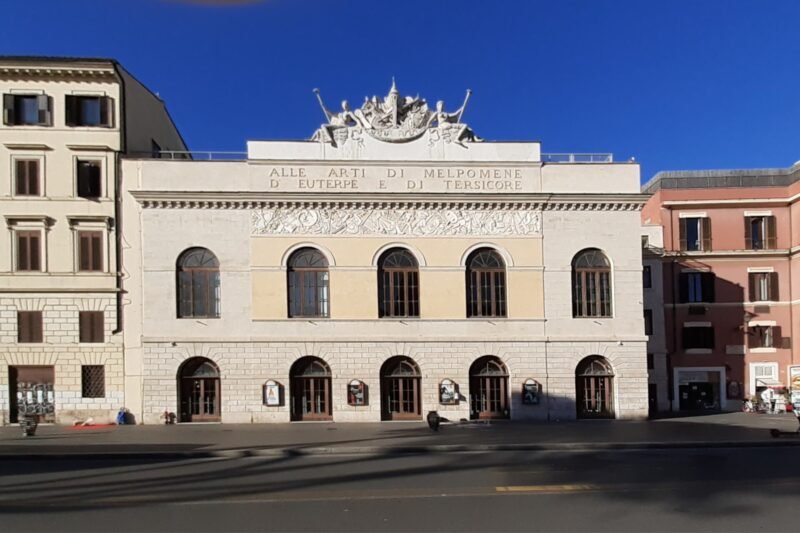
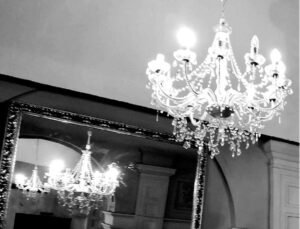
Teatro Argentina has 720 seats, 354 in the orchestra and 366 in the six tiers of boxes, according to figures from Teatro di Roma, which runs it. It's an Italian-style horseshoe hall, red and gold, with a decorated green ceiling and a large chandelier with 16 arms.
A name that comes from Strasbourg
The theater's name has nothing to do with the South American country. It comes from the tower of the palace of Johannes Burckardt, known as Burcardo, papal master of ceremonies from Strasbourg, a city called Argentoratum in Latin. Burcardo signed himself episcopus argentinensis: from him the tower, the square and then the theater took their name. His palace, built between 1491 and 1500, still stands on Via del Sudario, next to the hall.
The Sforza Cesarini and the architect Theodoli
Construction was started in 1730 by the Sforza Cesarini family. The design of the hall is by the marquis and architect Gerolamo Theodoli, who chose the horseshoe plan to get the best acoustics and the best sightlines. Originally the structure was almost entirely wooden, with 186 boxes.
The facade and Portoghesi's restoration
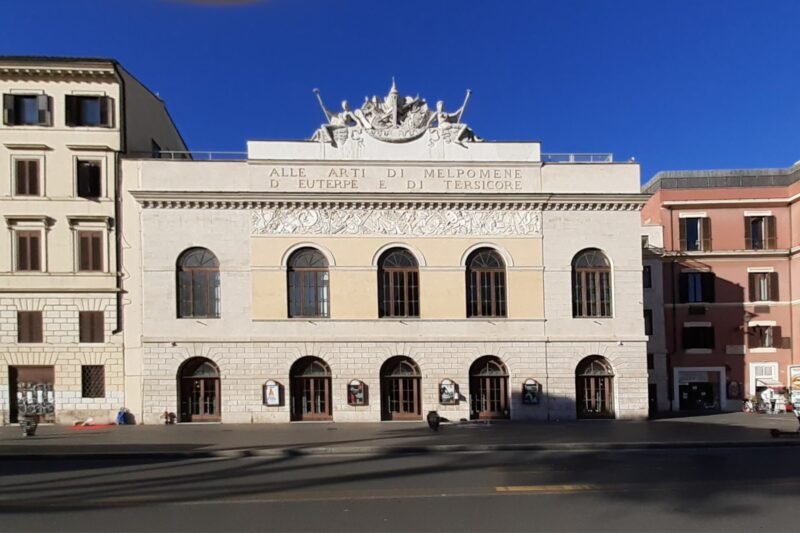
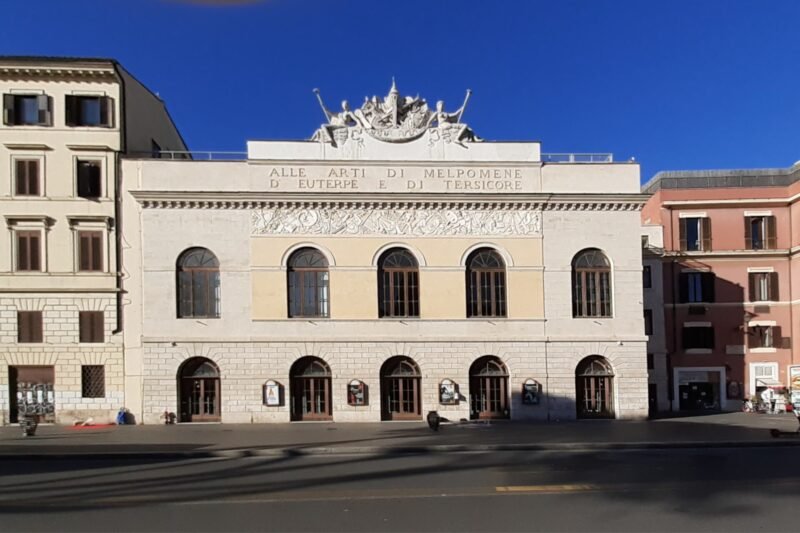
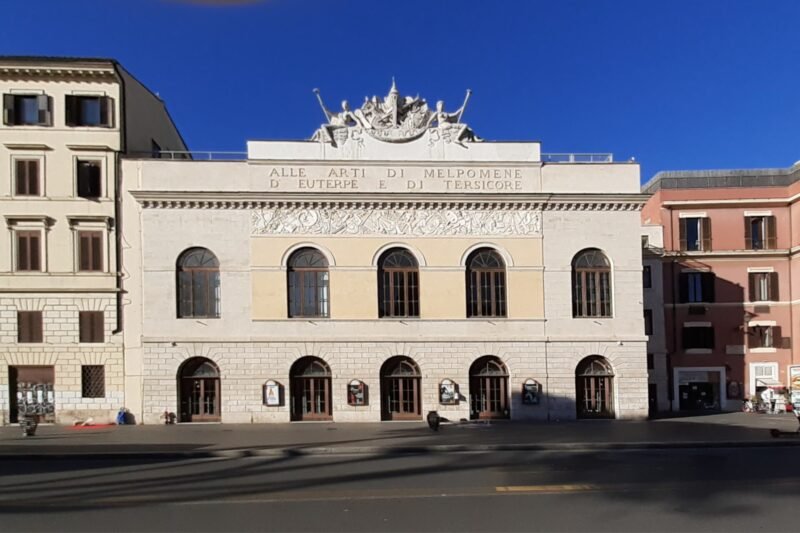
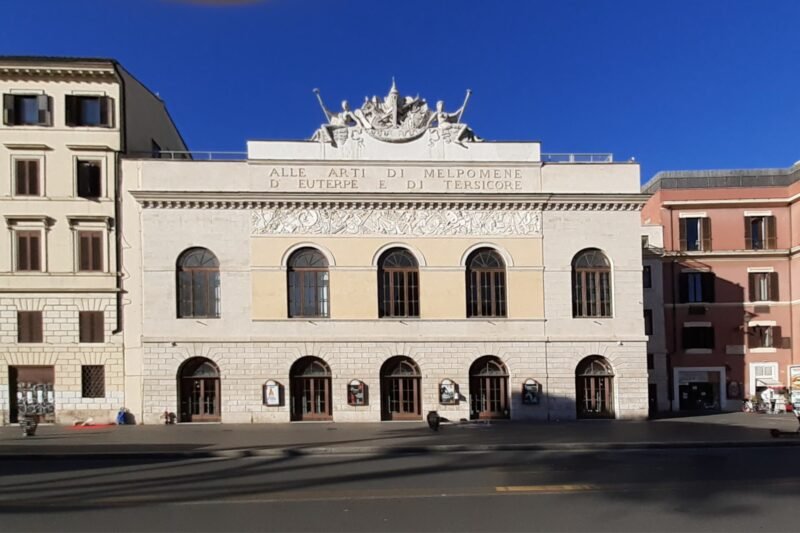
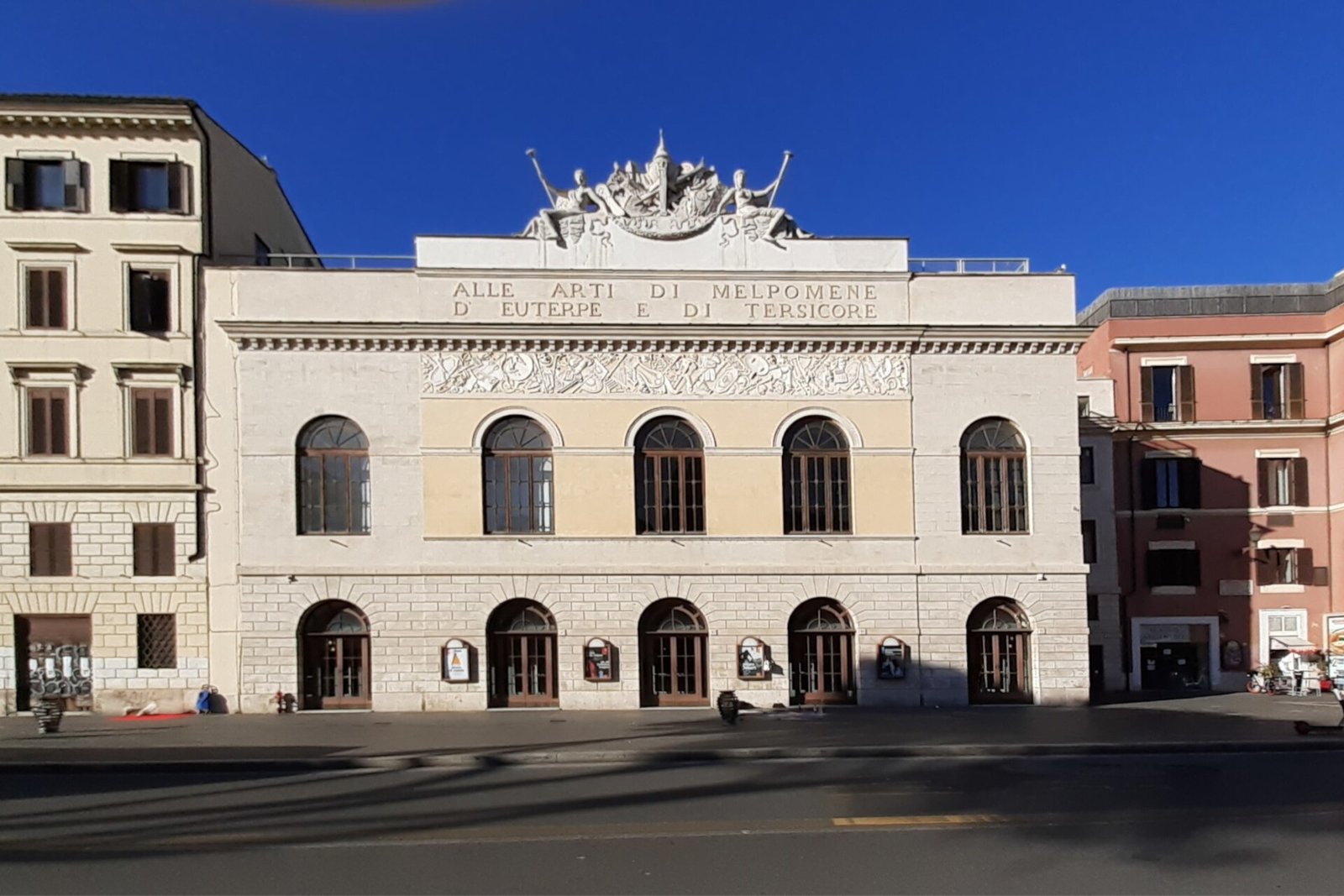
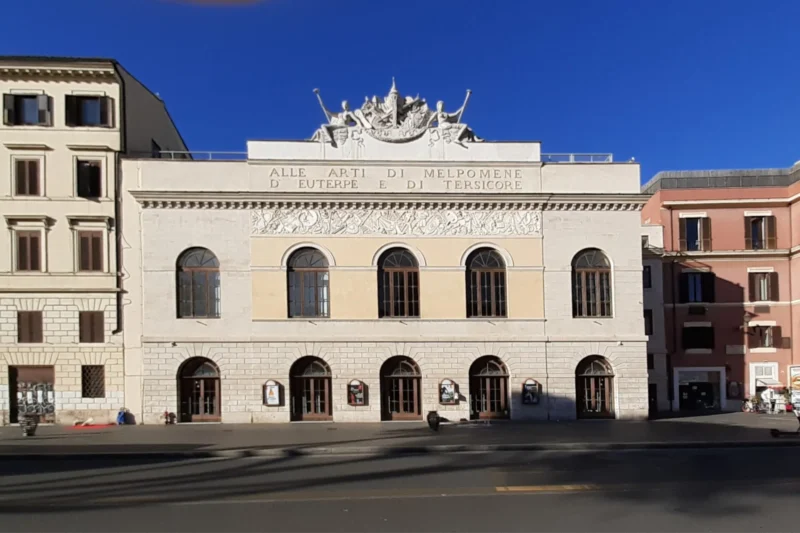
The neoclassical facade, with its dedication to the muses Melpomene, Euterpe and Terpsichore, was built in 1826 to a design by Pietro Holl. In 1993 Paolo Portoghesi restored the theater, bringing back the red of the coverings and the original shape of the box valances: the 18th-century look the hall has today is due to that restoration.
Something nobody tells you about Anna Fedorova at Teatro Argentina, November 19, 2026
What's rarely said is that Teatro Argentina, today the main drama venue of Teatro di Roma, was born as an opera and music house, and for over a century it was one of the central places of Roman musical life. It opened in January 1732 with Berenice by Domenico Sarro. Rossini's Barber of Seville premiered here in 1816. Niccolò Paganini played here in 1827. A piano recital in the hall on Largo Argentina isn't a guest in someone else's house: it brings the building back to its original calling.
The second little-known thing concerns the sound. The horseshoe plan chosen by Theodoli was designed for acoustics. For a solo piano the hall has a size that lets you catch the pianissimos of the Brahms intermezzi even from the upper boxes, which isn't a given in large symphony halls.
The third is practical: the theater is inside the limited traffic zone (ZTL) of the historic center and has no parking. If you drive in from the outskirts, you risk a fine if you don't know the ZTL hours. The simplest solution is to leave the car outside the ZTL and take tram 8, which stops right in front of the sacred area, a few steps from the entrance.
My advice for attending Anna Fedorova at Teatro Argentina, November 19, 2026
My advice is to come to the recital having listened at least once to Schumann's Carnaval, perhaps reading an introduction to the cycle. It's the piece that gains the most from a little preparation: recognizing the alternating characters, between surges and withdrawals, turns the music into a story instead of a sequence.
Second point: the seat. In an Italian-style hall, for a piano recital, choose a seat in the orchestra or in the boxes on the keyboard side, that is, on the left as you face the stage, to see the pianist's hands. For pure listening the higher boxes work well too.
Third point: timing. With a 21:00 start, arrive at Largo Argentina around 20:30, take a short walk around the sacred area and then go into the hall with a few minutes to spare to look at the boxes with the lights on. During the concert your phone should be turned off, not just silenced: in a hall this size a lit screen in the orchestra can be seen from every box.
How to get to Teatro Argentina
Teatro Argentina is at Largo di Torre Argentina 52, opposite the sacred area, in Rome's historic center. The most convenient way to get there is tram 8, Torre Argentina stop.
By tram
Tram 8 stops at Torre Argentina, a few steps from the theater. If you live in Trastevere, Monteverde or along Viale Trastevere, it's the most direct connection on the way back too.
By metro
No metro station is right next to the theater. The closest are Colosseo and Circo Massimo on line B, from which you continue on foot or by surface transportation. From Piazza Venezia, along Via delle Botteghe Oscure, the theater is a few minutes' walk.
By bus
Largo di Torre Argentina and Corso Vittorio Emanuele II are crossed by many lines connecting Termini, Piazza Venezia, the Vatican and Trastevere. Check evening lines and times before leaving with the journey planner of ATAC, Rome's public transit company.
By car and on foot
The theater has no parking and is inside the ZTL of the historic center: if you come by car, you have to leave it outside the limited traffic zone. From the Pantheon, Piazza Navona, Campo de' Fiori and the Ghetto you can reach the Argentina on foot in a few minutes, and that's the best solution.
Another well-known fact, yet rarely mentioned
It's well known that the video of Rachmaninoff's Second Concerto played by Anna Fedorova at the Concertgebouw in 2013 is one of the most watched classical music videos online. It's less often remembered that the concert was simply the season opener of a Sunday morning series, and that the pianist was 23 at the time. The video's popularity ended up overshadowing the rest of her career: the competitions won as a teenager, her training in Imola and London, her chamber music work, the artistic direction of a festival.
The second rarely mentioned fact concerns her artistic citizenship. Anna Fedorova was born in Kyiv and is Ukrainian, but her career has developed mostly in the Netherlands, and today she's described as a Ukrainian and Dutch pianist. Since 2022 she has played with the Ukrainian Freedom Orchestra, the ensemble founded that year to bring Ukrainian musicians together.
The third concerns Italy. Before London, Anna Fedorova studied at the Accademia pianistica internazionale in Imola with Leonid Margarius: the Roman audience that calls her a favorite, to use the Accademia Filarmonica's word, is listening to a pianist who received part of her training right here in Italy.
The right photo to take at Anna Fedorova at Teatro Argentina, November 19, 2026
The right photo is taken before the concert, from the orchestra, with the house lights still on: the grand piano alone at the center of the stage, and around it the six tiers of red and gold boxes, the green ceiling and the chandelier. It's an image that tells the story of a recital better than any close-up, because it shows how much space there is around a single instrument. It works with a phone too, as long as you keep the whole curve of the boxes in the frame.
The second photo is taken from the second or third tier of boxes, looking down: the open lid of the piano and the orchestra filling up. The third is outside, at the end of the evening, from the other side of the square: the lit neoclassical facade and, in the foreground, the columns of the sacred area.
During the recital, though, your phone stays in your pocket: in a program that includes the Brahms intermezzi, the sound of the shutter and the light of the screen are truly disruptive.
Around Teatro Argentina
Teatro Argentina is in the historic center, a few minutes' walk from the Pantheon, Piazza Navona, Campo de' Fiori and the Ghetto: a recital here combines with an evening walk among some of the best-known places in Rome.
The sacred area of Largo Argentina
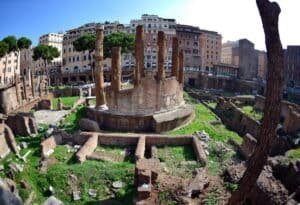
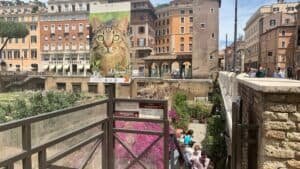
In front of the theater lies the sacred area of Largo Argentina, with the remains of Republican temples and structures linked to the Theater of Pompey complex. Among the ruins lives the cat colony described on the page about the Largo Argentina cat sanctuary.
Pantheon, Navona and Campo de' Fiori
Five minutes north you reach the Pantheon. To the west, beyond Corso Vittorio Emanuele II, you reach Piazza Navona and Campo de' Fiori, which in the evening have a very different atmosphere from the daytime.
The Ghetto and the Theater of Marcellus
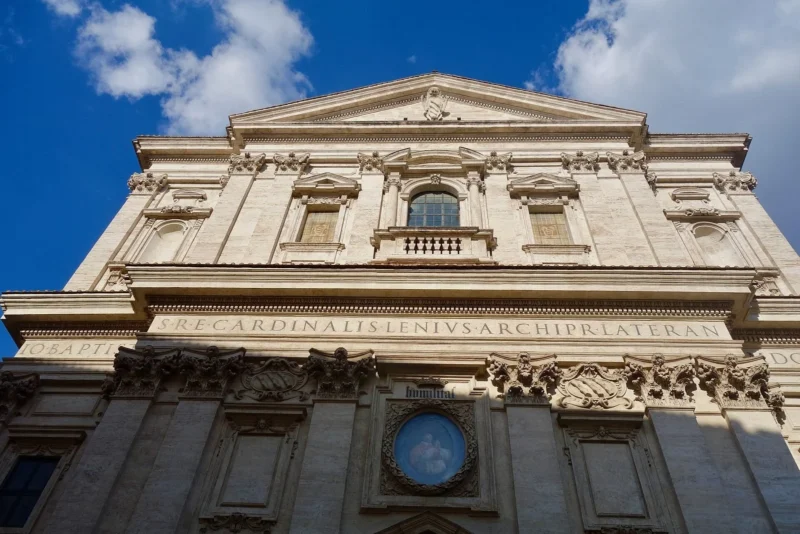
Toward the Tiber you enter the Jewish Ghetto and reach the Theater of Marcellus. A short walk from the Argentina, toward Piazza Venezia, there's also the Church of the Gesù.
Some important events that happened here in history
Teatro Argentina opened in January 1732 with Berenice, an opera by Domenico Sarro. In the 18th century foreign travelers considered it the most important of Rome's theaters, and since then its history has been intertwined with that of Italian music and with the political history of the city.
On February 20, 1816, it hosted the premiere of Gioachino Rossini's Barber of Seville, with Manuel García. The first night was a flop, because the audience included many admirers of Paisiello's Barber. From the second night the opera triumphed. On January 28, 1822, the hall hosted the world premiere of Donizetti's Zoraida di Granata, and in 1827 a concert by Niccolò Paganini.
Giuseppe Verdi presented I due Foscari there in 1844 and La battaglia di Legnano in 1849: according to Teatro di Roma's account, on the occasion of the latter the Romans started the demonstrations against the papal government that led to the Roman Republic. After 1870 the opening of Corso Vittorio Emanuele II put the theater at the center of the new city and the building passed to the City. In 1993 Paolo Portoghesi's restoration gave it back its 18th-century look. Today it's the main venue of Fondazione Teatro di Roma, which became a foundation in 2022, and it hosts the Accademia Filarmonica Romana concert series that includes Anna Fedorova's recital.
Who has passed through Anna Fedorova at Teatro Argentina, November 19, 2026
The Argentina stage has seen Gioachino Rossini with The Barber of Seville and the tenor Manuel García, Gaetano Donizetti with Zoraida di Granata, sung by Domenico Donzelli and Luigia Boccabadati, Giuseppe Verdi with two premieres, Niccolò Paganini in concert. In the 20th century the hall saw the works of Gabriele D'Annunzio and Luigi Pirandello, and the directors of Teatro di Roma from Vito Pandolfi to Luca Ronconi.
The history of the Accademia Filarmonica Romana, which organizes the recital, includes Raffaele Muti Papazzurri, founder in 1821, Alfredo Casella, Goffredo Petrassi, Luciano Berio, Hans Werner Henze and Giuseppe Sinopoli. Between the wars, pianists like Rudolf Serkin, Walter Gieseking and Alfred Cortot played in the Filarmonica's concerts: names that give an idea of the institution's piano tradition.
On November 19 Anna Fedorova takes the stage, and with her, ideally, Beethoven, Schumann and Brahms. Her path includes teachers and mentors like Leonid Margarius and Norma Fisher, and the advice of Alfred Brendel, Menahem Pressler and András Schiff: an important part of the history of the piano in the late 20th century passes, by proxy, through this evening too.
Accessibility and practical information
Teatro Argentina is a historic building where architectural barriers can't be entirely removed, but the structure has elevators and reserved seats in the orchestra for people with disabilities, according to Teatro di Roma. For availability on the evening of the recital, contact the Accademia Filarmonica Romana or the theater box office in advance.
With teens
A recital with the Appassionata and Carnaval is a good first encounter with the concert piano for a teenager who studies the instrument: Beethoven's contrasts and Schumann's short pieces keep attention alive. For younger children the evening time and the silences required by the Brahms intermezzi can be demanding.
What to wear and the weather
There's no dress code at Teatro Argentina, but the 18th-century hall invites a little care. In late November evenings in Rome are cool and often rainy: a coat and an umbrella are almost always useful, also for the walk before or after the concert.
Where to eat before or after the recital
The historic center around Teatro Argentina offers every kind of place: Roman trattorias on the streets toward Campo de' Fiori, Roman Jewish cooking in the Ghetto, bakeries and pizza-by-the-slice shops along Corso Vittorio Emanuele II for a quick bite before 21:00, wine bars and bistros around the Pantheon for after the concert. With a 21:00 start, have dinner early, around 19:30, or book for afterward, bearing in mind that many kitchens close around 23:00.
How to plan the Anna Fedorova evening
A recital at Teatro Argentina fits well into an evening in the historic center. If you're coming from out of town, you can leave your car beyond the ZTL and reach the theater on tram 8, or arrive on foot from Piazza Venezia.
Before the concert
A walk from the Pantheon to Largo Argentina takes a few minutes, and the lit sacred area is worth a stop. If you have time, you can eat early in the Ghetto or Campo de' Fiori area and reach the theater around 20:30.
After the concert
On the way out, the center is still lively. Tram 8 takes you back toward Trastevere, and the bus lines on Corso Vittorio Emanuele II connect with Termini and the Vatican. For the late-night trip back, check times with the ATAC journey planner before leaving home.
A recital in late November
Late November is when Rome's music seasons are in full swing: the Accademia Filarmonica Romana series at the Argentina has just begun, and in the same weeks the Filarmonica schedules other concerts at Sala Casella on Via Flaminia and at Teatro Olimpico. The days are short and the historic center, after the end of the busiest tourist season, returns to a quieter pace: it's a good time for an evening in a historic hall.
Frequently asked questions about Anna Fedorova in Rome
When does Anna Fedorova play at Teatro Argentina?
Anna Fedorova plays at Teatro Argentina on Thursday, November 19, 2026, at 21:00, in the 2026/2027 season of the Accademia Filarmonica Romana. The recital is part of the three-year project that has the pianist in residence at the Filarmonica from 2025 to 2027.
What is Anna Fedorova playing in Rome?
Anna Fedorova's recital at Teatro Argentina includes Beethoven's Sonata No. 23 in F minor op. 57 "Appassionata", Brahms' Three Intermezzi op. 117 and Schumann's Carnaval op. 9, according to the program published by the Accademia Filarmonica Romana.
Where can you buy tickets for Anna Fedorova?
Tickets for Anna Fedorova at Teatro Argentina are sold on the concert page of the Accademia Filarmonica Romana website, which links to the authorized presale circuit, where prices are published. The Filarmonica website also lists season subscriptions.
Who is Anna Fedorova?
Anna Fedorova is a Ukrainian and Dutch pianist born in Kyiv in 1990, the daughter of two pianists. She studied in Kyiv, in Imola with Leonid Margarius and at the Royal College of Music in London, has won international competitions and has performed more than 30 times at the Concertgebouw in Amsterdam.
How do you get to Teatro Argentina?
Teatro Argentina, at Largo di Torre Argentina 52, can be reached by tram 8, Torre Argentina stop, and by the many bus lines that cross the square. The closest metro B stations are Colosseo and Circo Massimo. The theater has no parking and is inside the ZTL.
How long is Anna Fedorova's recital?
The length of Anna Fedorova's recital at Teatro Argentina hasn't been published by the Accademia Filarmonica Romana. The program includes three works, a Beethoven sonata, three Brahms intermezzi and Schumann's Carnaval cycle. The start is at 21:00.
What other concerts does the Filarmonica hold at the Argentina?
After Anna Fedorova, the Accademia Filarmonica Romana returns to Teatro Argentina on December 10, 2026, with Trio Concept, on February 4, 2027, with Adélaïde Ferrière and on February 11 with Thomas Oliemans in Winterreise, always at 21:00.
Final advice on Anna Fedorova at Teatro Argentina
A pianist the Roman audience has already adopted, a program that goes from Beethoven's Appassionata to Brahms' last intermezzi by way of Schumann's Carnaval, a hall from 1732 born for music: in our opinion it's one of the most complete recitals of the November season in Rome. Listen to Carnaval first, arrive on tram 8 or on foot from the Pantheon, choose a seat on the keyboard side and give the final intermezzi all the silence they ask for.
Article written by the editorial team of Tour Leader Pro, contact them for Private/Corporate/V.I.P. Tours and Experiences.
Planning a trip to Rome? English guides to visiting the city are on ItalyPlanner.com.
Contact Information
Nearby
 Teatro Argentina100 m
- Teatro Centrale100 m
- Largo Torre Argentina – Sacred Area of Campo Marzio100 m
- Cat Sanctuary at Largo Argentina100 m
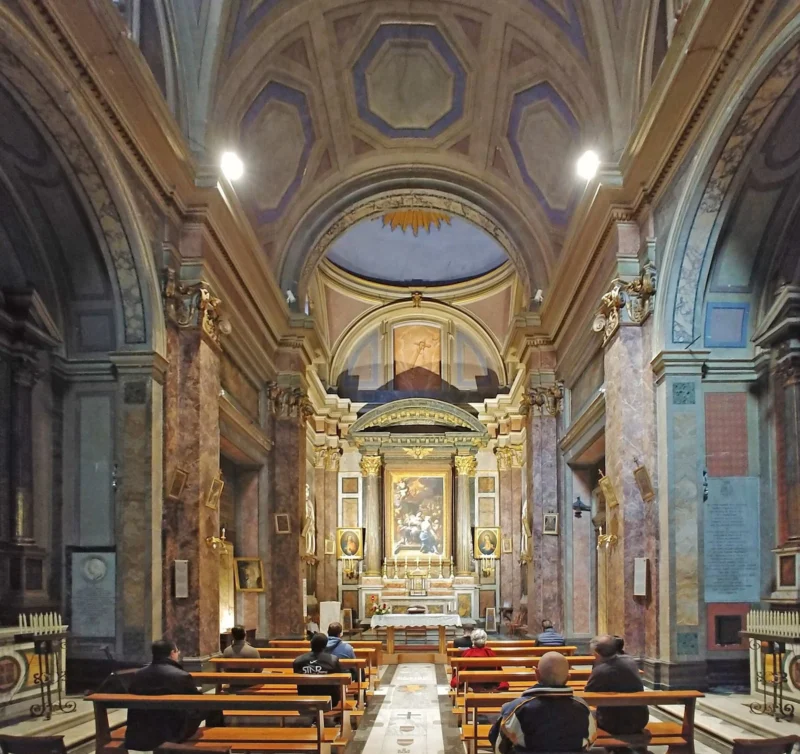
- San Carlo ai Catinari200 m
- Santa Maria in Publicolis200 m
Upcoming events nearby
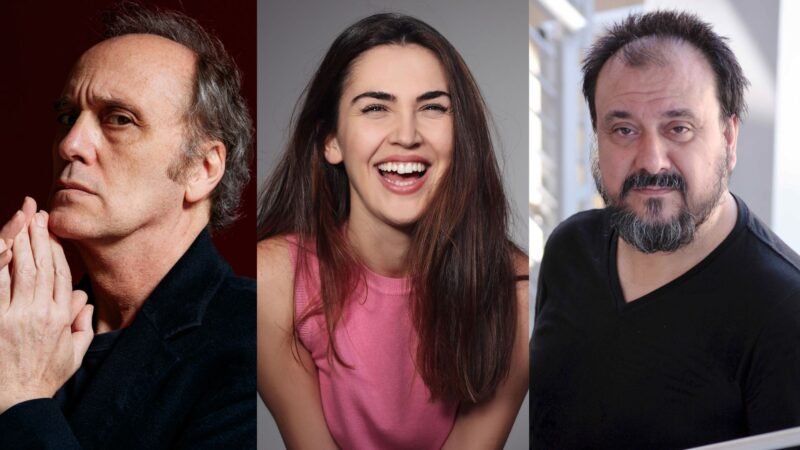
- Othello at Teatro Argentina, November 4 to 29, 2026100 m
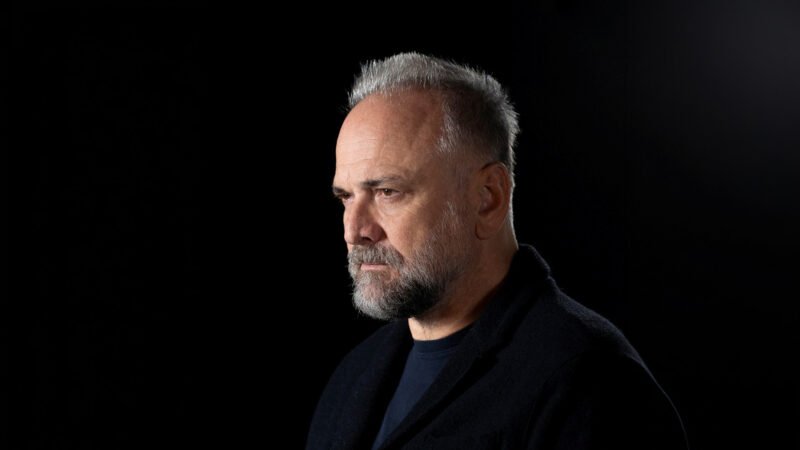
- The Madness of King George with Massimo Popolizio at Teatro Argentina in Rome, January 9 to 31, 2027100 m
- Una delle ultime sere di Carnovale at Teatro Argentina, February 2 to 14, 2027100 m
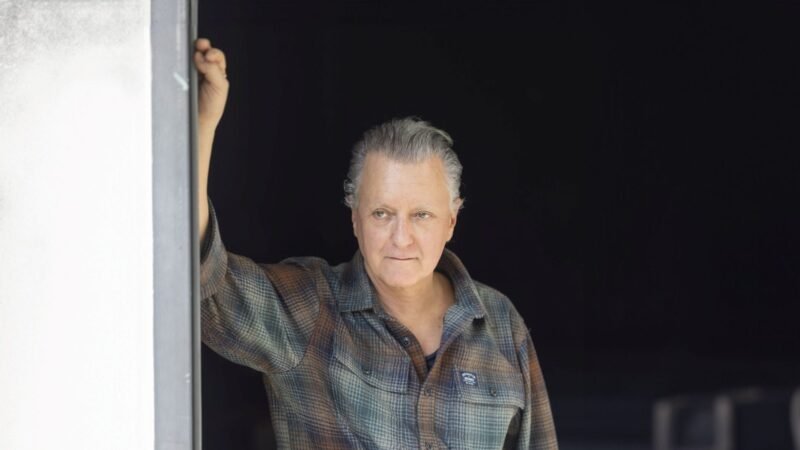
- Lo zar by and with Stefano Massini at Teatro Argentina in Rome, March 16 to 25, 2027100 m
You might also like
- I Solisti della Filarmonica: Mahler, Symphony No. 4 at Teatro Argentina, November 5, 2026
- Samuele Rizzuto, Il pianista dell’anima at Teatro Sala Umberto, March 31, 2027
- Filippo Gorini for Filarmonica Romana at Teatro Argentina, March 18, 2027
- Quartetto Prometeo and Claudio Pasceri at Teatro Argentina, March 4, 2027
- Thomas Oliemans, Winterreise at Teatro Argentina, February 11, 2027
- Adélaïde Ferrière for the Filarmonica Romana at Teatro Argentina, February 4, 2027