Amedeo Minghi, Anniversari Tour at Teatro Sistina, January 18, 2027
In short. Amedeo Minghi brings the Anniversari Tour to Teatro Sistina, at Via Sistina 129 (00187 Rome), on Monday, January 18, 2027 at 20:30, for one night only.
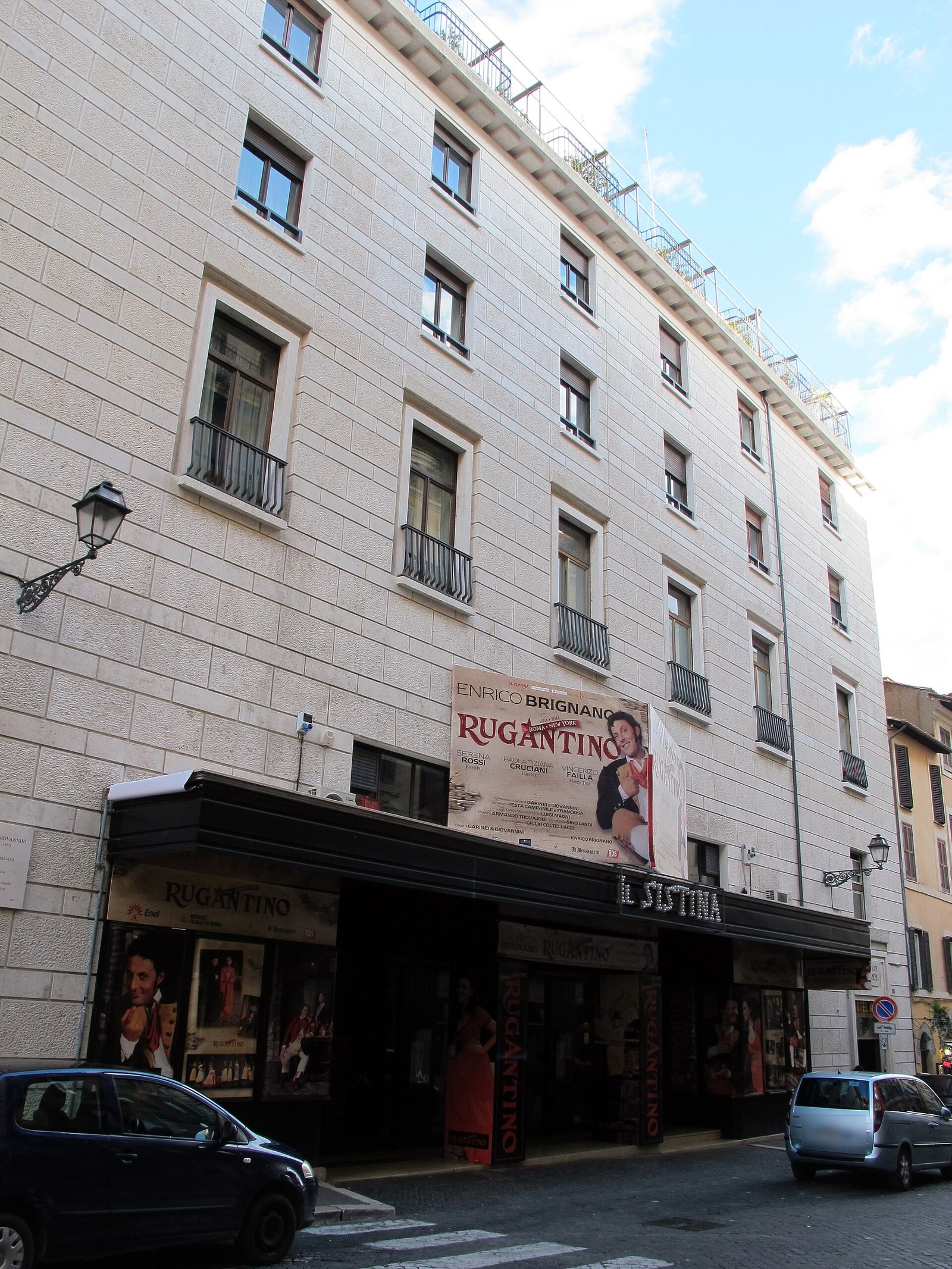
Amedeo Minghi brings the Anniversari Tour to Teatro Sistina, at Via Sistina 129 (00187 Rome), on Monday, January 18, 2027 at 20:30, for one night only. The concert is presented by DM Produzioni and Ventidieci and celebrates 60 years of career of the Roman singer-songwriter, 50 years of L'immenso and 30 years of the album Cantare è d'amore. The Sistina is reached by metro line A, Barberini stop, walking up Via Sistina. The prices published by the theater range from 38 euros in the third gallery to 69 euros in poltronissima Gold. Tickets are bought on the official website of Teatro Sistina, from the online purchase button on the concert page, or at the theater's box office.
Amedeo Minghi at the Sistina: date, time and prices
Amedeo Minghi's Anniversari Tour stops at Teatro Sistina in Rome on Monday, January 18, 2027 at 20:30, a single date, with tickets from 38 to 69 euros.
The price list
The Sistina publishes six price bands: poltronissima Gold 69 euros, poltronissima 58 euros, poltrona 48 euros, first gallery 48 euros, second gallery 42 euros, third gallery 38 euros. The first gallery costs the same as the poltrona, a useful hint for those who have to choose, because in a hall without columns like the Sistina's the low gallery offers a complete view of the stage.
Where to buy
Tickets are bought from the online purchase button on the official concert page on the Sistina website, linked to the theater's box office, or at the box office at Via Sistina 129.
Who organizes
The concert is presented by DM Produzioni and Ventidieci. It is a stop on the theater tour created for the singer-songwriter's year of anniversaries.
A Roman date
Minghi is a Roman, and a concert in his own city carries particular weight: the Sistina audience is largely the one that has followed him since the 1980s. The date is a single one, on a Monday: it is best not to wait until the last moment.
What you will hear in the Anniversari Tour
The Anniversari Tour retraces 60 years of songs by Amedeo Minghi. In the setlist announced by the official presentation are 1950, La vita mia, Vattene amore and I ricordi del cuore, up to the most recent productions.
Three anniversaries in one
The Sistina presentation explains that 2026 is a particularly significant year for Minghi: it marks 60 years of career, 50 years since the release of L'immenso, the singer-songwriter's first masterpiece, and 30 years since Cantare è d'amore, the 1996 album whose title track, presented at the Sanremo Festival the same year, became a classic of his repertoire.
The songs
The show, the presentation says, combines romanticism, musical exploration and poetic vision. Alongside the classics there will be new offerings: the singer-songwriter describes the concert as a long musical journey devoted to his audience, with the idea of renewing the bond with the generations that have shared his songs.
The band
Onstage with Minghi are Giandomenico Anellino on guitars, Alessandro Mazza on bass, Luca Perroni on piano and keyboards, Stefano Marazzi on drums, and Rosy Messina and Giordano Spadafora on backing vocals. A classic singer-songwriter lineup, with two supporting voices that serve the songs born as duets.
A year of events
Besides the theater tour, according to the presentation, the year of anniversaries is marked by surprises and events retracing Minghi's artistic activity. The Rome concert arrives in January 2027, at the tail end of that year.
Who Amedeo Minghi is: the biography
Amedeo Minghi, born in Rome on August 12, 1947, is a singer-songwriter and composer who has taken part eight times in the Sanremo Festival as a performer and has written for Mietta, Mia Martini, Anna Oxa, Andrea Bocelli, Rita Pavone and many others.
Beginnings in Prati
The youngest of six children, Minghi grew up in the Prati district and began making music with a beat group, I Noemi, of which he was lead singer. After moving to a solo career, following an audition with Stelvio Cipriani, Alberto Durante and Gianni Sanjust, he signed with Dischi Ricordi, which in 1966 had him record a 45 rpm single with two songs on lyrics by Mogol. It is the date from which the 60 years of career are counted.
The 1970s and L'immenso
In 1970 he met Edoardo Vianello and moved to Apollo, writing for I Vianella songs such as Vojo er canto de 'na canzone and Fijo mio, Franco Califano's first real success as a lyricist. In 1973 his first album came out, with lyrics by Edoardo De Angelis, Francesco De Gregori and Carla Vistarini. In 1976 came L'immenso, which went past 15 international versions and 2 million records sold.
1950 and the collaboration with Gaio Chiocchio
In the 1980s Minghi met the lyricist Gaio Chiocchio, with whom he signed some of his most important songs. In 1983 he brought 1950 to Sanremo. The song did not reach the final, but became the one that the singer-songwriter himself defined as the most representative of him.
Vattene amore and the 1990s
In 1989 the album La vita mia sold 500,000 copies and opened a three-year theater tour with more than 160 performances. In the same period Minghi launched Mietta, who with his song Canzoni won the Nuovi category at Sanremo. In 1990 came Vattene amore, sung with Mietta: third at Sanremo, 10 platinum records, one of the most famous songs in Italian music. In 1992 I ricordi del cuore, written for the soap opera Edera, carried the album of the same name to the top of the chart with over 600,000 copies.
Soundtracks
Minghi wrote the music for the television miniseries Fantaghirò, La principessa e il povero, Desideria e l'anello del drago and, in 2011, the fiction Anita Garibaldi. The Fantaghirò theme, Mio nemico amatissimo, is sung by Rossana Casale.
The 2000s
In 2000 came Un uomo venuto da lontano, dedicated to John Paul II and performed before the pope along with Gerusalemme, commissioned by the Vatican for the Jubilee. In 2006 he published the autobiography L'ascolteranno gli americani and received a career plaque at the Campidoglio. In 2012 he hosted, on Rai 1 with Serena Autieri, the Saturday night show Cantare è d'amore. In 2016, for 50 years of career, the triple album La bussola e il cuore came out. In 2024 came the album of new songs Anima sbiadita.
Minghi's style: melody and words
Amedeo Minghi's style draws on Italian melodrama, fused with the singer-songwriter tradition: a broad melodic writing, with crescendos and openings, that needs a theater to breathe.
Two lyricists
Among the many authors of his lyrics, two marked Minghi's career. Gaio Chiocchio gave his songs cinematic lyrics, with open narration, full of hope. Pasquale Panella, after his collaboration with Lucio Battisti, gave him intimate lyrics on the discourse of love. Since the 2000s Minghi is often co-author or sole author of his own words.
Faith
A practicing Catholic, Minghi has set sacred texts to music, such as the Canticle of the Creatures and the Beatitudes. It is a part of the repertoire less known to the general public, but consistent with his writing.
The talent scout
Minghi discovered and produced Mietta and Mario Castelnuovo, and in 2007 produced the first album by Khorakhanè. His role as a producer explains why so many of his songs were born as duets.
The songs to listen to again before the concert
Before the Anniversari Tour it is worth listening again to six songs by Amedeo Minghi: they are the milestones of his career and almost all are announced in the setlist or celebrated by the tour.
L'immenso (1976)
Released as a single in 1976, it is the song that first brought Minghi onto the international charts, with versions in other languages such as El inmenso and Allein mit dir. The tour celebrates its 50th anniversary.
1950 (1983)
Written with Gaio Chiocchio and presented at Sanremo in 1983, it tells of a year suspended between the war and the year 2000 with the image of a kicked ball. It is the song the singer-songwriter considers closest to himself.
La vita mia (1989)
It gives its title to the 500,000-copy album that opened the theater tour Forse sì musicale, three years of performances. It is one of the songs announced in the Rome setlist.
Vattene amore (1990)
The duet with Mietta, lyrics by Pasquale Panella, third at Sanremo. In September 2023 Minghi and Mietta returned to sing it together on television, in the summer show hosted by Amadeus.
I ricordi del cuore (1992)
Born for the Canale 5 soap opera Edera, it pulled the album of the same name to the top of the chart, with three platinum records and over 600,000 copies.
Cantare è d'amore (1996)
Presented at Sanremo in 1996 and finishing ninth, it gives its title to the album whose 30th anniversary the tour celebrates. In 1997 a Spanish version for Latin America also came out, Cantar es de amor.
Amedeo Minghi and the Sanremo Festival
Amedeo Minghi took part in the Sanremo Festival eight times as a singer-songwriter, between 1983 and 2008, and other times as a guest, author and producer.
The appearances
In 1983 with 1950, not a finalist. In 1990 third with Vattene amore, as a duo with Mietta. In 1991 sixth with Nenè. In 1993 ninth with Notte bella, magnifica. In 1996 ninth with Cantare è d'amore. In 2000 14th with Futuro come te, with Mariella Nava. In 2003 19th with Sarà una canzone. In 2008 18th with Cammina cammina.
As author and guest
As an author Minghi won the 1989 Nuovi category with Canzoni, sung by Mietta, which also took the critics' prize. As a guest he took the Ariston stage in 1985 with Katia Ricciarelli, for Il profumo del tempo, and in 2020 with Rita Pavone, for 1950.
A curiosity about Amedeo Minghi, Anniversari Tour at Teatro Sistina, January 18, 2027
The most surprising curiosity about the song that ideally opens the concert, 1950, is its debut. At the 1983 Sanremo Festival the song was not admitted to the final evening and finished last, with 17,017 votes, in the non-competitive ranking of the Totip popular vote. Yet 1950 is the song Minghi has called the most representative of himself, the one that joins love, peace and war in a melodic crescendo. Gianni Morandi covered it, a car commercial used a snippet, and in 2020 Minghi sang it on the Sanremo stage with Rita Pavone, as a guest. 37 years after that last place, the song returned to the same stage as a classic.
The second curiosity concerns Vattene amore. In 2023, 33 years after its release, the song received a new certification, a gold record, added to the 10 platinum records of 1990. In the same year Minghi and Mietta returned to sing it together on television for the first time in 33 years.
The third is international: in 2013 Justin Timberlake quoted in the song Only When I Walk Away a Minghi song from 1972, Lustful. It is the sign of a repertoire that has traveled farther than you might imagine.
Teatro Sistina, the hall of the musical comedy
Teatro Sistina, at Via Sistina 129, was inaugurated on December 28, 1949 to a design by Marcello Piacentini and has 1,015 seats on the orchestra level and 566 in the gallery. The American magazine Variety called it the Italian answer to Broadway.
A hall without columns
The hall is semicircular, 28 meters wide and 30 deep, with no columns: from every seat the stage is seen without obstacles. There is also an orchestra pit. For a singer-songwriter concert, with the singer at the center and the band around him, the view is good from the galleries too.
A church and a papal street
The theater was built between 1946 and 1949 on the site of the church of Santa Francesca Romana, along what was called Strada Felice. The first film shown was Le mura di Malapaga, and the first revue was Bada che ti mangio, with Totò and Isa Barzizza.
Today
Since 2013 the artistic direction has been Massimo Romeo Piparo's, who brought the Sistina back to producing musicals and opened the hall to concerts by big names in song, from Massimo Ranieri to Ornella Vanoni. The listing for the venue is on the page for Teatro Sistina.
Something nobody tells you about Amedeo Minghi, Anniversari Tour at Teatro Sistina, January 18, 2027
What goes unsaid is that Amedeo Minghi was for years a successful songwriter before he was one as a singer. His songs found fortune in other people's voices: I Vianella with Vojo er canto de 'na canzone, Mia Martini with Ma sono solo giorni, Rita Pavone with Ti perdo e non vorrei, Marcella Bella with Camminando e cantando, Anna Oxa with Toledo, Gianni Morandi with Solo all'ultimo piano and Romanzo d'appendice, Mietta with Canzoni. Those who go to the Sistina expecting only the big hits of the 1990s may discover that many familiar melodies carry his signature.
The second thing concerns Rome. Minghi grew up in Prati, began with Edoardo Vianello's label, recorded Fijo mio as a duet with Lando Fiorini, and received a career plaque at the Campidoglio in 2006. His bond with the city also runs through the songs in Roman dialect of his early years, an aspect the general public knows little about.
Third thing: the date. January 18, 2027 is a Monday, a day when many people go out less. For those who are free it means a more intimate theater and less traffic in the center. For those who work, it means planning the return well.
How to get to Teatro Sistina
Teatro Sistina is reached by metro line A, Barberini stop: from Piazza Barberini you walk up Via Sistina and the theater is at number 129, a few minutes on foot.
Metro line A
Line A connects Barberini to Termini in two stops. It is the simplest way to get there and to return after the concert. The time of the last run should be checked on the Atac website, especially for those who live far from the line.
On foot
Via Sistina links Piazza Barberini to the Trinità dei Monti, at the top of the steps of Piazza di Spagna. Those in the center can climb the steps and walk the level street to the theater.
Car and taxi
The Sistina is in the historic center, inside the limited traffic zone: a car is not recommended. For the evening a taxi is convenient, and Piazza Barberini is a pickup point that is easy to name. For buses it is best to use the Atac route planner.
The advice I give you for visiting Amedeo Minghi, Anniversari Tour at Teatro Sistina, January 18, 2027
My advice is to choose the first gallery. At the Sistina it costs 48 euros, like the poltrona, but in a semicircular hall without columns it offers a complete view of the stage and balanced sound. For a concert of melodic song, where the voice and the band as a whole matter more than the details of faces, it is in our view the best value for money. Those who want to see the singer-songwriter at the piano up close should choose the central poltronissima instead.
The second piece of advice is to listen again beforehand to L'immenso and Cantare è d'amore, the two songs whose anniversaries the tour celebrates, and to 1950, which the singer-songwriter considers the most representative of himself. Knowing the story of those songs, from last place at the 1983 Totip to today's classic, changes the way you hear them live.
Third piece of advice: bring someone who lived through the years of Vattene amore. Minghi's audience crosses generations, and the concert is built precisely on the relationship between the songs and the lives of those who listened to them. An evening with a parent or a longtime friend is the right way to experience it.
Finally, arrive 20 minutes early: in a theater of over 1,500 seats entry takes time, and latecomers enter only at set moments.
Another well-known fact, yet rarely mentioned
It is well known that Vattene amore, sung by Amedeo Minghi and Mietta at the 1990 Sanremo Festival, is one of the most famous duets in Italian music. Much less often cited is that the song came third, not first: that year's victory went to others, yet Vattene amore won 10 platinum records and a Telegatto d'oro, and was the second best-selling single of the year. Success is measured in collective memory more than in the charts, and this song is the perfect example.
Another known and little-remembered fact concerns concert numbers. On July 23, 1990 Minghi gave a concert in front of 40,000 people, recorded on the album Amedeo Minghi in concerto. The theater tour Forse sì musicale, begun after La vita mia, lasted three years with more than 160 performances and a million spectators. Minghi is an artist born for theaters: the Sistina's dimension is the one in which he built his audience.
Finally, on the tour's title: the anniversaries are three, but a fourth could be added. On February 2, 2008, at the Auditorium Conciliazione in Rome, Minghi celebrated 40 years of career with a concert later released on disc and DVD, with guests such as Mietta, Rossana Casale, Serena Autieri and Lino Banfi. 19 years later he returns to celebrate in another Roman theater.
The right photo to take at Amedeo Minghi, Anniversari Tour at Teatro Sistina, January 18, 2027
The photo of the Sistina is taken from the other side of Via Sistina, with the theater's sign and facade in the frame. In the evening, before the concert, the light of the entrance and the audience in front of the doors give the image of a living theater. The poster of the Anniversari Tour, with Minghi's name, completes the scene. It is best to shoot it on arrival, because when the show lets out the street fills up.
The second photo is taken at the Trinità dei Monti, at the end of Via Sistina, with the steps of Piazza di Spagna lit up. It is a few minutes from the theater, and in January evening comes early: before 20:30 there is time for a walk and a shot from the terrace over the city.
Inside, during the concert, no continuous filming with the phone: it bothers those seated behind and takes attention away from the music. The right moment, if the house staff allow it, is the final bow, with Minghi and the band at the front of the stage for the applause. It is the best memento of the evening.
One more idea for those who love night photos: walk down from Piazza Barberini toward the Triton Fountain, lit up, after the concert.
Via Sistina and the area around the theater
Teatro Sistina is between Piazza Barberini and the Trinità dei Monti, in one of the most elegant areas of the center of Rome.
Piazza Barberini
At the foot of Via Sistina is Piazza Barberini, with the Triton Fountain. A little above, Palazzo Barberini houses the Galleria Nazionale d'Arte Antica: with a free afternoon before the concert it is the most convenient visit.
The Pincio and Villa Borghese
At the other end of Via Sistina you reach the Trinità dei Monti and, continuing, the Pincio and Villa Borghese. In January the park is best enjoyed by day, in the low winter light.
Minghi's district
Those who want one more tribute to the singer-songwriter can devote a walk to Prati, the district across the Tiber where Minghi grew up and began playing with I Noemi. The listing on Prati and Borgo helps build the route, from Via Cola di Rienzo to Piazza Cavour.
Toward Trevi
Going down from Piazza Barberini toward Via del Tritone you reach in a few minutes the Trevi Fountain, less crowded on a winter Monday evening than the rest of the year.
Where to eat before and after the concert
The area between Piazza Barberini, Via Sistina and Piazza di Spagna has a wide offering of restaurants, trattorias and bars, with prices on average higher than in other districts.
Before 20:30
With a 20:30 start it is best to eat something light beforehand, or to have dinner afterward. Around Piazza Barberini and toward Via del Tritone you find bars and venues for a quick meal.
After the concert
Going down toward Trevi and the Pantheon the choice of kitchens still open grows. On Mondays some places may be closed for their day off: better to check and book first.
Some important events that took place here in history
On December 28, 1949 the Sistina opened as a cinema and theater, built on the site of the church of Santa Francesca Romana. Soon after, the first revue, Bada che ti mangio, produced by Remigio Paone, with Totò and Isa Barzizza, went on stage. The final scene of the film Totò cerca moglie was shot in this very theater.
In October 1950 La Bisarca by Pietro Garinei and Sandro Giovannini debuted, with sets by Giulio Coltellacci: a partnership began that would mark the history of Italian theater. On December 15, 1952 Attanasio cavallo vanesio with Renato Rascel went on stage, the first of a series of musical fairy tales that opened the era of the musical comedy. In 1953 Giovannini discovered Delia Scala. There was also an unlucky technological parenthesis: Cinerama, with a screen 27 meters by 11, which had no success.
From 1960 to 2006 the theater was run by Garinei and Giovannini, and from 1977, after Giovannini's death, Garinei directed it alone. These are the years of Rugantino, Aggiungi un posto a tavola, Il giorno della tartaruga, Un paio d'ali and Alleluja brava gente. Since 2013 the artistic direction has been Massimo Romeo Piparo's, with the musicals Mamma Mia!, Jesus Christ Superstar with Ted Neeley, Evita, Billy Elliot, Cats and West Side Story, and concerts by John Legend, Massimo Ranieri, Ornella Vanoni, Renzo Arbore and Fiorello. In January 2027 the stage welcomes a Roman singer-songwriter celebrating 60 years of songs.
Who has passed through Amedeo Minghi, Anniversari Tour at Teatro Sistina, January 18, 2027
The great names of Italian entertainment have passed through the Sistina stage, many of whom debuted here or were consecrated here: Marcello Mastroianni, Renato Rascel, Delia Scala, Carlo Dapporto, Aldo Fabrizi, Walter Chiari, Gino Bramieri, Johnny Dorelli, Paolo Panelli, Bice Valori, Enrico Montesano, Gigi Proietti, Mariangela Melato, Sabrina Ferilli, Valerio Mastandrea, Massimo Ghini and Serena Autieri. And Totò, the star of the first revue.
Among these names, some have crossed paths with Minghi's career. Serena Autieri was a guest at his 40-year career concert in 2008, and in 2012 hosted with him on Rai 1 the show Cantare è d'amore. She is expected at the Sistina in 2027 as well with La Sciantosa. Massimo Ranieri, who gave concerts at the Sistina during the Piparo years, was a guest on the same television show, together with Andrea Bocelli, Claudio Baglioni, Gino Paoli and the Modà.
Many of the most important voices of Italian song have passed through Minghi's career as well: Mia Martini, Mietta, Anna Oxa, Rita Pavone, Marcella Bella, Gianni Morandi, Franco Califano, Katia Ricciarelli, Lino Banfi, Lando Fiorini and Mariella Nava. On January 18 the six musicians of the band also pass through the Sistina, from Giandomenico Anellino on guitars to the backing vocals of Rosy Messina and Giordano Spadafora. They give body to the long musical journey the singer-songwriter dedicates to his audience.
Accessibility and practical information
For accessibility needs, seats for people in wheelchairs and for those assisting them, the reference is the Teatro Sistina box office, to be contacted before buying.
Arriving on time
At the Sistina, as in all large theaters, latecomers enter only at set moments: arriving 20 minutes early is the minimum.
January in Rome
Mid-January evenings are cold and often damp: a coat and an umbrella are useful for the climb up Via Sistina.
With young people
A concert of melodic singer-songwriter song suits all ages. For a young person who studies piano or singing, hearing live a composer who wrote for the great Italian voices is a good lesson in musical writing.
Frequently asked questions about Amedeo Minghi at the Sistina
When does Amedeo Minghi play at Teatro Sistina?
Amedeo Minghi plays at Teatro Sistina in Rome on Monday, January 18, 2027 at 20:30, with the Anniversari Tour. It is a single date, presented by DM Produzioni and Ventidieci, celebrating 60 years of career of the Roman singer-songwriter.
How much do tickets for Amedeo Minghi at the Sistina cost?
Tickets for Amedeo Minghi at Teatro Sistina cost 69 euros in poltronissima Gold, 58 in poltronissima, 48 in poltrona and in the first gallery, 42 in the second gallery and 38 in the third gallery, according to the theater's official price list.
Which songs will Minghi sing in the Anniversari Tour?
For Amedeo Minghi's Anniversari Tour the official presentation announces 1950, La vita mia, Vattene amore and I ricordi del cuore, along with the most recent productions. The tour also celebrates L'immenso, released 50 years ago, and Cantare è d'amore, from 1996.
Who plays with Amedeo Minghi?
Playing with Amedeo Minghi at the Sistina are Giandomenico Anellino on guitars, Alessandro Mazza on bass, Luca Perroni on piano and keyboards and Stefano Marazzi on drums. On backing vocals are Rosy Messina and Giordano Spadafora.
Why is it called Anniversari Tour?
Amedeo Minghi's Anniversari Tour celebrates three anniversaries: 60 years of career, begun in 1966 with the first 45 rpm single for Dischi Ricordi, 50 years of L'immenso, from 1976, and 30 years of the album Cantare è d'amore, from 1996.
How do you get to Teatro Sistina?
Teatro Sistina, at Via Sistina 129, is reached by metro line A, Barberini stop, walking up Via Sistina. From the center you can also come by the Trinità dei Monti steps. A car is not recommended because the theater is in the limited traffic zone.
What is the best seat for the concert?
At Teatro Sistina, a semicircular hall without columns, the first gallery at 48 euros offers a complete view of the stage at the same price as the poltrona. Those who want to see Amedeo Minghi at the piano up close should choose the central poltronissima, at 58 euros, or the Gold at 69.
The final advice on Amedeo Minghi at the Sistina
60 years of songs in one evening, in his own city, in a theater built for music with no columns to spoil the view. The advice is to take a seat in the first gallery, listen again beforehand to 1950 and L'immenso, and go with someone who remembers where they were when Vattene amore came out: the Anniversari Tour is built precisely on that link between the songs and the lives of those who sang them.
Article written by the editorial team of Tour Leader Pro, contact them for Private/Corporate/V.I.P. Tours and Experiences.
Planning a trip to Rome? The English-language guides to visiting the city are on ItalyPlanner.com.
Contact Information
Nearby
 La Sciantosa with Serena Autieri at Teatro Sistina, from April 21, 2027100 m
- E fuori nevica with Vincenzo Salemme at Teatro Sistina, from May 4, 2027100 m
- Teatro Sistina100 m
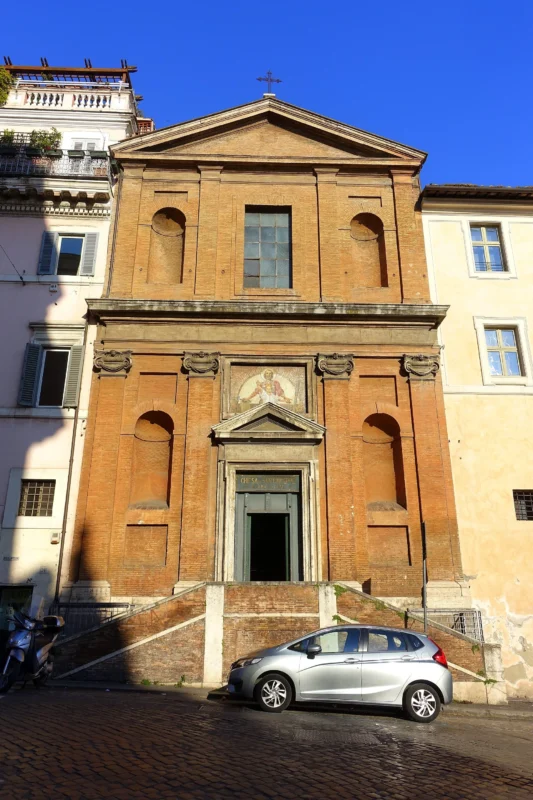
- San Giuseppe a Capo le Case100 m
- Galleria d’Arte Moderna di Roma (GAM)100 m
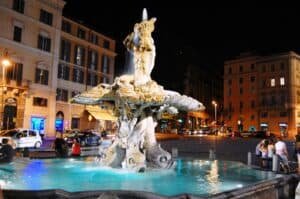
- Triton Fountain100 m

Upcoming events nearby
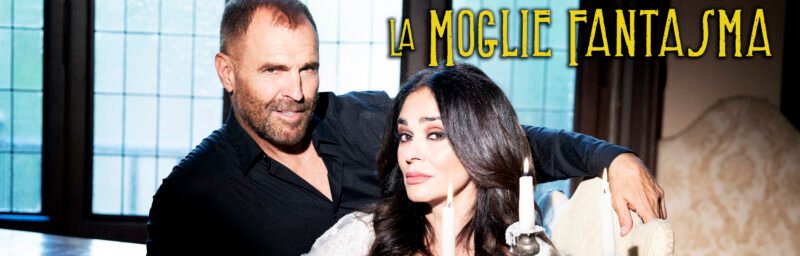
- La moglie fantasma at Teatro Sistina, November 11 to 15, 2026100 m
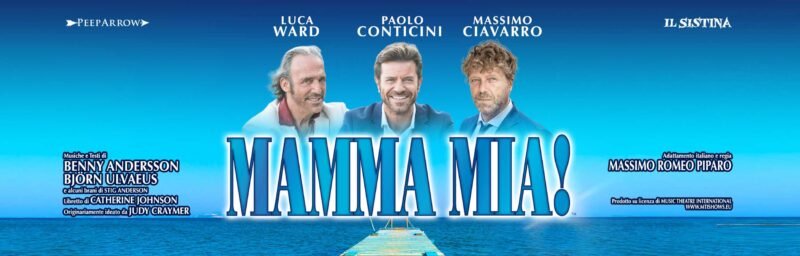
- Mamma Mia! the Musical at Teatro Sistina, December 17 to 31, 2026100 m
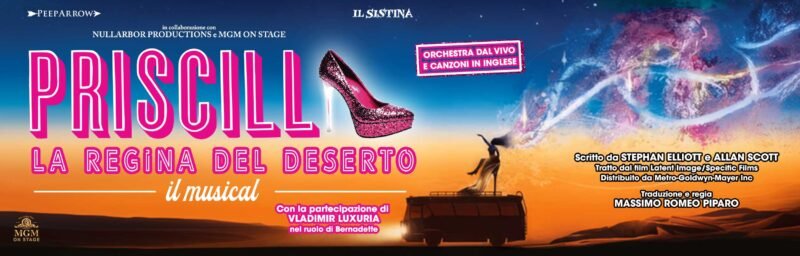
- Priscilla, La regina del deserto, the musical at Teatro Sistina, from February 10, 2027100 m
- Belle Ripiene at Teatro Sistina in Rome, from April 8, 2027100 m

You might also like
- Federico Mecozzi, Traiettorie impercettibili at Teatro Sala Umberto, January 11, 2027
- Nello Daniele in Daniele racconta Daniele at Teatro Quirino, April 9, 2027
- Thomas Oliemans, Winterreise at Teatro Argentina, February 11, 2027
- Adélaïde Ferrière for the Filarmonica Romana at Teatro Argentina, February 4, 2027
- Trio Concept for the Filarmonica Romana at Teatro Argentina, December 10, 2026
- Samuele Rizzuto, Il pianista dell’anima at Teatro Sala Umberto, March 31, 2027