Le serve with Fioretta Mari at Teatro Quirino, March 9 to 14, 2027
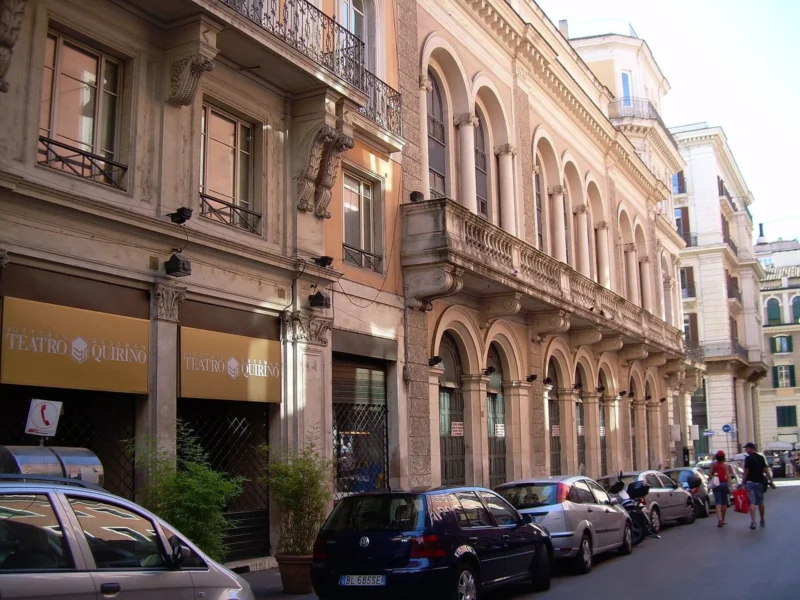
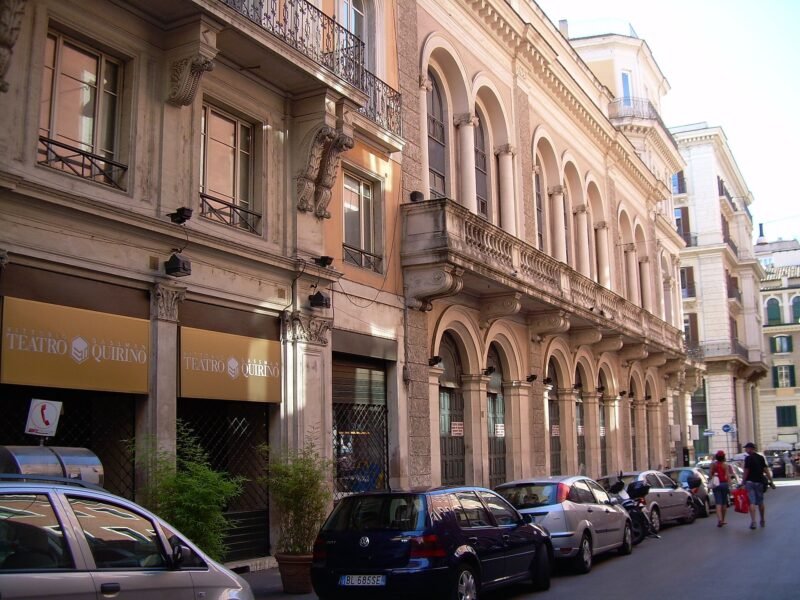
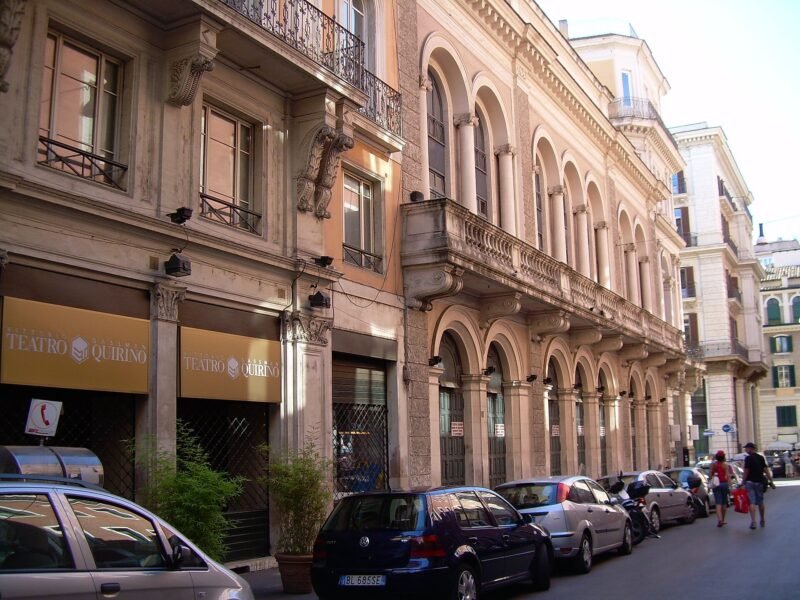
In short. Le serve by Jean Genet, with Fioretta Mari, Nadia De Luca and Francesca Ferro and directed by Guglielmo Ferro, is on stage from March 9 to 14, 2027 at Teatro Quirino Vittorio Gassman, at Via delle Vergini 7, in the Trevi district.
Le serve by Jean Genet, with Fioretta Mari, Nadia De Luca and Francesca Ferro and directed by Guglielmo Ferro, is on stage from March 9 to 14, 2027 at Teatro Quirino Vittorio Gassman, at Via delle Vergini 7, in the Trevi district. The calendar published by the theater has six performances: Tuesday, March 9 at 21:00, Wednesday the 10th at 19:00, Thursday the 11th at 17:00, Friday the 12th and Saturday the 13th at 21:00, Sunday the 14th at 17:00. The theater is on a side street off Via del Corso, a few steps from the Trevi Fountain: the most convenient Metro Line A stop is Barberini, from which you walk down Via del Tritone. Prices for the sections are published on the official website of Teatro Quirino, which leads to the presale network authorized by the organizers. Tickets can also be bought at the theater's box office. The production is by the Associazione Culturale Progetto Teatrando.
Language: opera sung in its original language; no English surtitles are announced, so check with the theater.
Le serve at Quirino: dates, times and tickets
Le serve stays on the bill at Teatro Quirino for a week, from Tuesday, March 9 to Sunday, March 14, 2027, with three evening performances, one early-evening and two afternoon.
The calendar of the six performances
Quirino's calendar is built for different audiences. The first is Tuesday, March 9 at 21:00. On Wednesday the 10th it starts at 19:00, a time designed for people leaving the office who want to have dinner afterward. On Thursday the 11th the performance is in the afternoon, at 17:00. Friday the 12th and Saturday the 13th go back to 21:00, and Sunday the 14th closes with the 17:00 matinee. On Monday the 8th and Monday the 15th the theater is dark. The program may change: before heading out it's best to check the show page on the theater's website.
Which performance to choose
Le serve is a one-act play, a compact and tense text. The Thursday matinee at 17:00 is the choice of those who prefer an intimate hall and an audience of attentive subscribers. The Wednesday early-evening show at 19:00 lets you come out with the whole evening ahead. Saturday at 21:00 is the performance with the most atmosphere. For a text that works on details, on hands, on clothes, on objects, the time matters little and the distance from the stage matters a lot.
Tickets
Prices for orchestra and balconies are published on the official website of Teatro Quirino. The box office on Via delle Vergini handles purchases, exchanges and information during the hours listed on the website. The theater also has a remote box office for reservations and phone purchases. Anyone with Quirino Card can download tickets with the procedure indicated by the theater.
The address
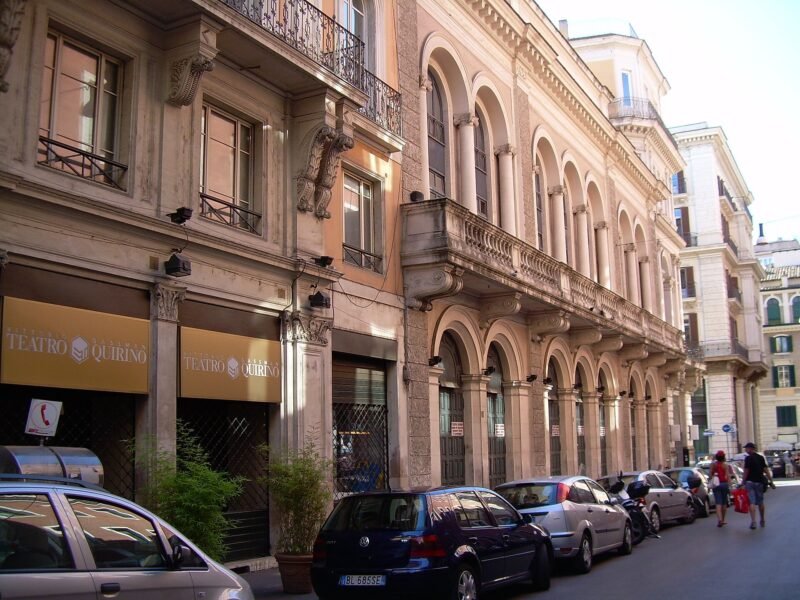
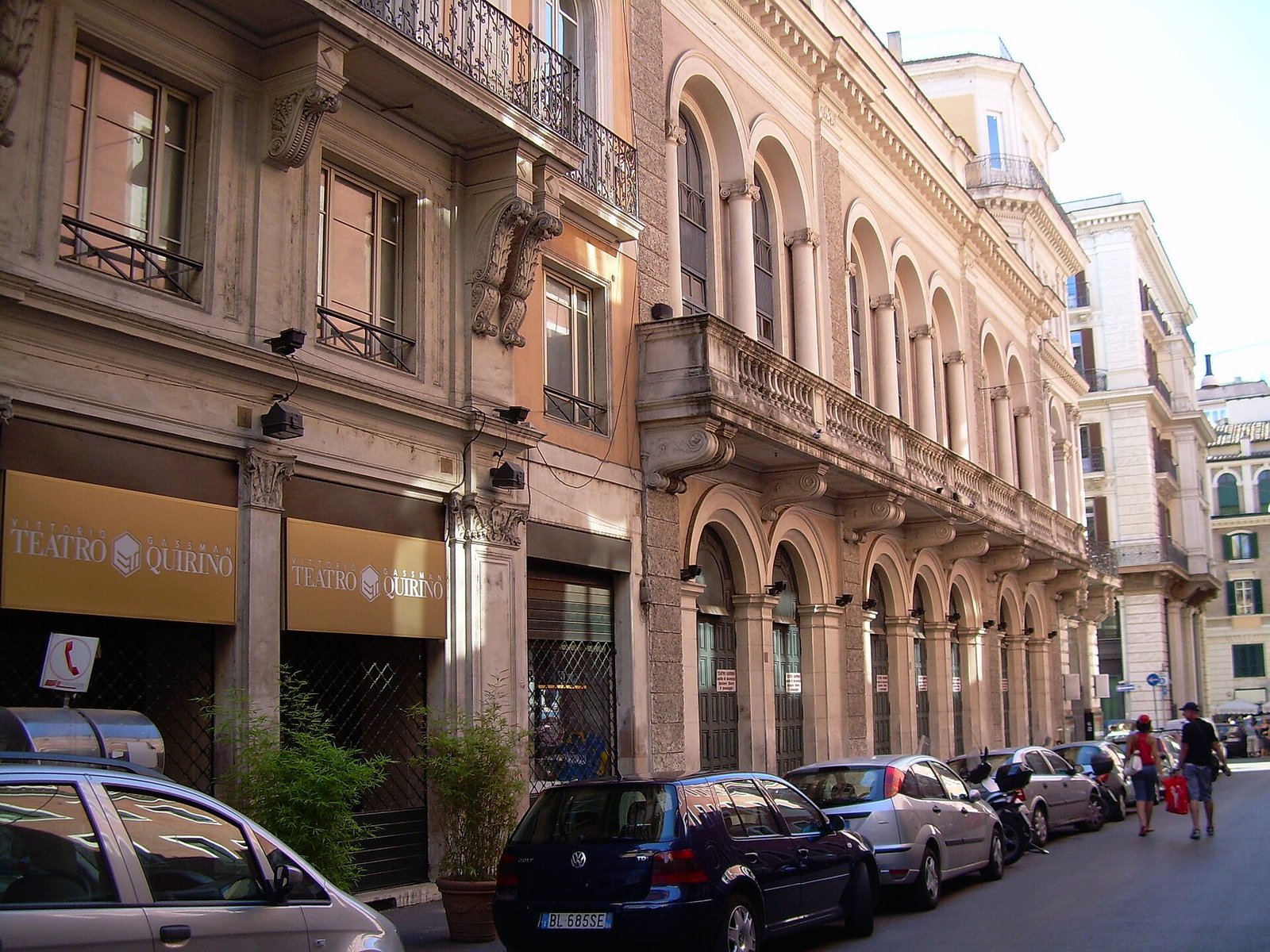
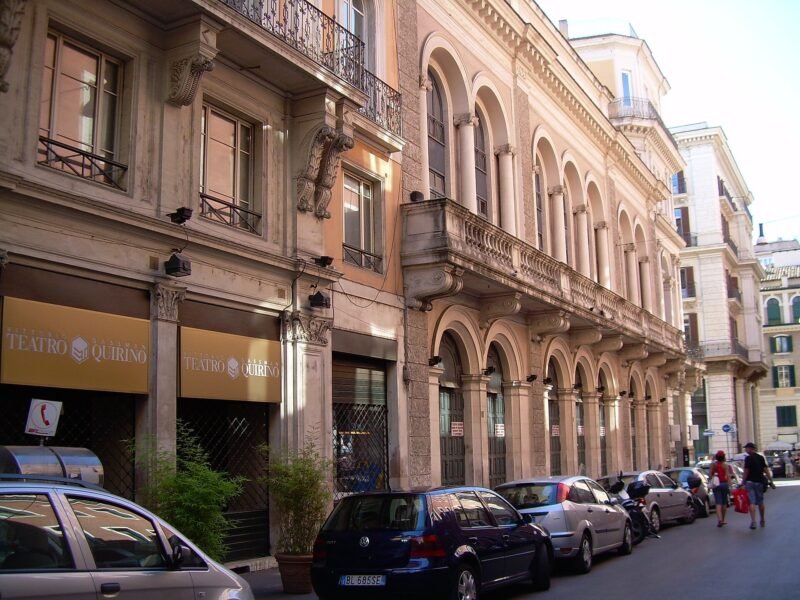
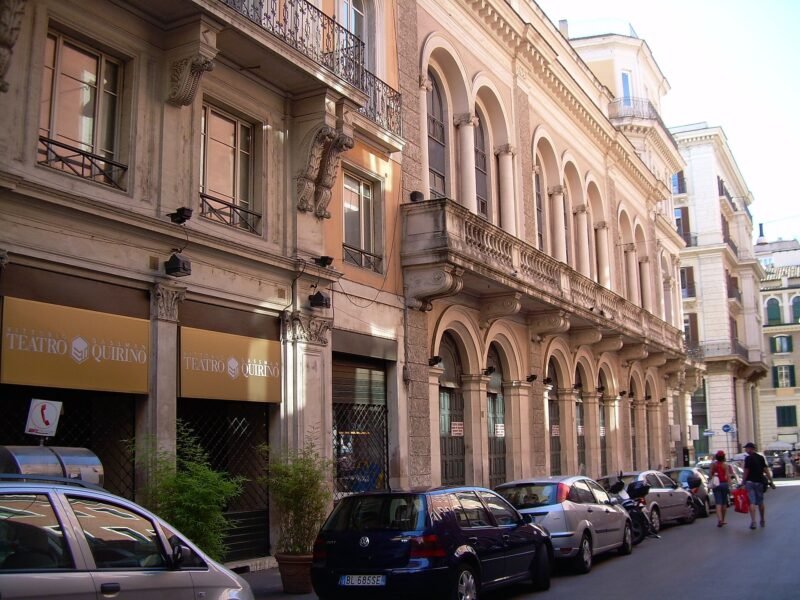
Teatro Quirino Vittorio Gassman, Via delle Vergini 7, 00187 Rome. The street branches off Via del Corso in the stretch between Piazza Colonna and Piazza Venezia and climbs toward the Trevi Fountain: anyone arriving from the fountain finds it two minutes away on foot.
What you'll see: Le serve according to Guglielmo Ferro
The staging by Guglielmo Ferro turns the entire stage space into what the theater calls the two sisters' rehearsal room: a place where Claire and Solange do not merely play the mistress, Madame, but play themselves as they try to exist.
The rehearsal room
In the notes published by Quirino, each ritual of the two maids is described as a dress rehearsal never completed. The direction highlights the metatheatrical frame of the text: the spectator sees the game, sees who plays it, and sees the cracks. It is a reading faithful to Genet, who built the drama on exactly this mechanism, two women who every night, when the lady goes out, swap roles and take turns playing the mistress and the maid.
Clothes that don't fit
The most concrete detail concerns the costumes. Under the maids' uniforms the actresses wear layers of Madame's unfinished dresses, and the act of dressing as the mistress stays visible, laborious, never perfect: visible pins, raw hems, heels too big. The mask, the theater writes, does not fit, and it is the sign of the protagonists' identity crisis. The costumes are by Sartoria Pipi of Palermo.
Realistic and ritual objects
Every object on stage, according to the presentation, has a double function, realistic and ritual. The keys jingle like initiation bells. The flowers wither during the show. Even when absent, Madame remains present in her objects and in the gestures the two sisters imitate: her identity, the theater writes, is a script written on the maids.
Madame as icon
When she enters, Madame appears as a real body that is nevertheless treated as a stage icon, more theatrical than her maids. It is a reversal that shows power as pure representation: bourgeois power, in the words of the direction, manifests as mastery of gesture, and the maids learn the gesture without ever possessing its sign. There always remains an almost, because every ceremony is the same and each time different.
Failure as a condition
The director's note closes on an idea that works as a key to the whole evening: failure is not a mistake but a condition, and identity is sought precisely because it is not possessed. The desire to be Madame is also the desire to be seen. Identity is born from the gaze of the other. In the hall, that gaze is ours.
The team
The sets are by Salvo Manciagli, the costumes by Sartoria Pipi of Palermo, the lighting by Santi Rapisarda, the direction by Guglielmo Ferro. On stage are Fioretta Mari, Nadia De Luca and Francesca Ferro. The production is by the Associazione Culturale Progetto Teatrando.
Le serve by Jean Genet: the text
Le serve, Les bonnes in French, is a one-act play written by Jean Genet in 1946 and first performed in Paris, at the Théâtre de l'Athénée, in April 1947, directed by Louis Jouvet.
A true crime of 1933
The text is loosely inspired by a crime case that took place in Le Mans in February 1933: two sisters, Christine and Léa Papin, domestic servants for years in a bourgeois family, killed the mistress and her daughter after a reprimand over a trivial incident. The case shook the France of the time and also interested Jacques Lacan, who devoted one of his first studies to it. Genet drew from it something very different from a reconstruction: a tragedy about desire, power and fiction.
The plot
Claire and Solange are two sisters, maids in the service of a rich lady. Every time Madame goes out, the two swap roles: one plays the mistress, the other the maid, and the one playing the maid is really playing her sister. They wear Madame's finest jewels and dresses, imitate her voice and manners, and in the game they vent a double feeling of adoration and resentment. The game becomes dangerous when the two find out that Madame's lover, whom they reported with anonymous letters, is about to be released from prison: fiction and reality blur, and the poisoned herbal tea prepared for the mistress changes destination.
The first performances
At the 1947 premiere the parts were assigned to Monique Mélinand, Yvette Etiévant and Yolande Laffon. Genet would have wanted the two maids to be played by young men, but he allowed Jouvet to assign them to actresses. Since then the text has become one of the most performed in 20th-century French theater, a testing ground for pairs of performers.
Le serve in Italy
In Italy Le serve has had leading performers. In 1968 Maurizio Scaparro directed it with Piera Degli Esposti and Miranda Martino. In 1980 Mario Missiroli, at Stabile di Torino, with Adriana Asti, Manuela Kustermann and Copi. In 1990 Massimo Castri with Anita Bartolucci, Paola Mannoni and Lucilla Morlacchi. In 2006 Giuseppe Marini staged it with Franca Valeri and Anna Maria Guarnieri, in the translation by Franco Quadri. In 2016 Giovanni Anfuso with Vanessa Gravina, Anna Bonaiuto and Manuela Mandracchia.
Who was Jean Genet, the author of Le serve
Jean Genet, born in Paris on December 19, 1910 and died in Paris on April 15, 1986, was a writer, playwright and poet, one of the most discussed authors of 20th-century French literature.
A life on the margins
Son of an unknown father, placed in public care and raised by a foster family in the Morvan, Genet soon knew reform school, the Foreign Legion, street life and prisons. In his work lived life and invention are intertwined to the point that it is hard to tell them apart: the best-known example is The Thief's Journal, from 1949, a fictionalized autobiography of a vagabond in 1930s Europe.
Cocteau, Sartre and success
His first texts, published at his own expense, won him the attention of Jean Cocteau and then of Jean-Paul Sartre, who devoted to him the essay Saint Genet: Actor and Martyr. In the years of Parisian success Genet frequented Sartre, Simone de Beauvoir, Alberto Giacometti, Henri Matisse, Brassaï.
Genet's theater
After Le serve came Deathwatch, The Balcony, from 1956, The Blacks, from 1958, and The Screens, from 1961. They are texts in which theater becomes ritual, disguise, a game of mirrors between those who command and those who obey. Le serve is the shortest and the most performed, and it is the most direct way into his world.
Fioretta Mari: biography of an actress of the Sicilian school
Fioretta Mari, stage name of Fioretta Manetti, was born in Florence on July 19, 1942 to a Florentine father and a Sicilian mother: actress, director and artistic director, she has behind her more than 150 theater productions.
Child prodigy
Her career began very early. A child prodigy, over the course of her career she worked alongside great theater and film actors: Turi Ferro, whose niece she is, Oreste Lionello, Vittorio Gassman, Jean-Louis Barrault, Madeleine Renaud, Leo Gullotta, Massimo Troisi, Aldo Giuffrè, Nino Manfredi, Ugo Tognazzi, Pino Caruso, Mario Scaccia.
The years at Teatro Stabile di Catania
The repertoire of her beginnings is that of great Sicilian theater. In 1959 she is in Pirandello's Liolà for the Ente Teatro di Sicilia, in 1960 in Nino Martoglio's L'aria del continente. With Teatro Stabile di Catania she acts in Sciascia's Il giorno della civetta in 1963, in Shakespeare's Much Ado About Nothing and in García Lorca's Yerma, in I Viceré and I mafiosi by Sciascia in 1969, in Pirandello's Il berretto a sonagli in 1971, in Mastro don Gesualdo in 1974. In 1968 and 1970 she works under the direction of Turi Ferro himself.
Around the world, with radio and television
Her shows have toured the main cities of the world, from New York to London, from Paris to Moscow, and then Berlin, Rio de Janeiro, Budapest, Montevideo. In 1984 she is the lead in L'Acquario, a radio drama written and directed by Aldo Sarullo, winner of the Premio Rai for radio dramas. The general television public knows her as the diction and acting teacher on Amici di Maria De Filippi, from the first to the eighth edition.
Teaching
Since 2009 she has taught at the Strasberg Institute in New York, where she has brought the method of Commedia dell'arte. In September 2010 she became artistic director of the ArtAcademy in Carrara, an academy of performing arts trades, and since 2015 she has directed the actors' festival ACT Italy, which ended with a three-day event at Teatro Parioli in Rome.
Film and awards
In film she worked with Paolo Cavara in Il lumacone, in 1974, and more recently in Al posto tuo by Max Croci, in Natale a tutti i costi and Ricchi a tutti i costi by Giovanni Bognetti, and in the docufilm Alberto Sordi secret by Igor Righetti, presented at the Rome Film Festival, where she plays grandmother Adelaide of Valmontone. In 2004 she received the Bonifacio VIII international prize of the Accademia Bonifaciana of Anagni and in 2010 the Grand Prix Corallo Città di Alghero.
Nadia De Luca, Francesca Ferro and the direction of Guglielmo Ferro
Alongside Fioretta Mari are Nadia De Luca and Francesca Ferro. The direction is by Guglielmo Ferro, artistic director of Teatro Quirino since 2015, the year in which the management of the theater passed to the company Quirino srl.
Three actresses for a three-voice text
Le serve has three characters: Claire, Solange and Madame. The theater does not say who plays each role, and the casting is discovered in the hall. It is a detail worth leaving as a surprise: in a text in which the sisters constantly swap parts, who is Claire and who is Solange matters less than how the two pass the mask to each other.
A director from the house
When the artistic director of a theater directs a title of his own season, the show becomes a statement of direction. In the same hall Guglielmo Ferro directed in autumn 2026 Pirandello's Six Characters in Search of an Author, another text built on theater that shows itself. Le serve continues down that road: the stage as a place of rehearsal, of play, of the mask that slips.
A curiosity about Le serve with Fioretta Mari at Teatro Quirino, March 9 to 14, 2027
The most interesting curiosity concerns the author and his intentions. Jean Genet would have wanted Claire and Solange to be played by young men: the disguise, for him, was to be double, an actor playing a woman playing another woman playing the mistress. It was Louis Jouvet, at the Paris premiere in 1947, who obtained permission to assign the parts to actresses, and since then the tradition has remained that. In Italy some directors have tried to return to the original idea, but most stagings, this one included, choose three women performers.
Guglielmo Ferro's direction, however, recovers the spirit of that request by another route. Showing the pins, the raw hems, the heels too big means making the disguise visible, preventing the spectator from forgetting that it is a game. It is the same effect Genet sought with male actors: no illusion, only fiction on display.
The second curiosity is a theatrical family matter. Fioretta Mari is the niece of Turi Ferro, the great Catania actor who founded Teatro Stabile di Catania in 1958, and she acted with that company for a long time, from the 1960s to the 1970s. Today she returns to the stage in a production directed by a Ferro, on the stage of the theater that bears the name of Vittorio Gassman, one of the great actors she worked with in her long career.
Teatro Quirino Vittorio Gassman, home of Le serve
Teatro Quirino is a horseshoe-shaped hall with two balconies and a gallery, with 852 seats, in the Trevi district. Since 2015 it has been run by the company Quirino srl with Guglielmo Ferro as artistic director. The venue page on Estate Romana is here: Teatro Quirino.
The wooden theater of 1871
The first Quirino was commissioned in 1871 by Prince Maffeo Barberini Colonna di Sciarra within the property of Palazzo Sciarra, with an entrance from Via del Corso and an extension right up to the Trevi Fountain. The design was by Giulio De Angelis with Francesco Marra. The structure, entirely of wood, according to tradition was erected in a single day. The repertoire was popular, pulcinellate and operettas, and the name tied the hall to the Quirinale and to the god Quirinus.
The reconstruction of 1882
In 1882 the opening of a street between Via del Corso and the Trevi Fountain forced the theater to be dismantled. De Angelis rebuilt it in masonry a few meters farther on, with a horseshoe plan, two tiers of boxes and a metal structure supported by cast-iron columns in neoclassical style. In 1898 came the drapes, the velvets and the gilded stuccoes, and with them opera and ballet.
The two hands of Marcello Piacentini
In 1914 Marcello Piacentini added a third tier of boxes, lowering the orchestra, and a retractable roof. In 1954 he returned to the theater with a more radical intervention: cantilevered tiers in place of the boxes, new systems, and over the entrance the canopy that can still be seen today. The theater reopened on October 13, 1955.
The managements
From 1946 Quirino was run by the Ente Teatrale Italiano, which also had its offices there. In 2009 it passed to the Gitiesse Artisti Riuniti of Geppy Gleijeses, in 2015 to Quirino srl. The name of Vittorio Gassman was added to the historic name, and the hall today also has a training space, the Officine Quirino.
Something nobody tells you about Le serve with Fioretta Mari at Teatro Quirino, March 9 to 14, 2027
What is rarely said about Le serve is that it is a short text. A one-act play, without an intermission in most stagings, that unfolds in compressed theatrical time and without pauses. The theater does not publish the running time of this production, but anyone expecting a long evening will be surprised: it is a show you watch in one breath, and one that leaves time for an unhurried dinner even after the 21:00 performance.
The second thing concerns the seat. The direction works on minimal details: a pin, a loose hem, a flower that withers during the performance, the sound of a bunch of keys. From the orchestra these details can be seen and heard. From Quirino's gallery, which after Piacentini's work is a steep tiered section far from the stage, a lot is lost. For this show, in our judgment, it is worth spending a little more and choosing the orchestra or the first balcony.
The third is about the calendar. On Thursday, March 11 the performance is at 17:00, a time that in Rome is attended mostly by longtime subscribers. For anyone in town for work or on vacation with the afternoon free, it is often the performance with the most choice of seats.
How to get to Teatro Quirino
Teatro Quirino is reached by Metro Line A, Barberini stop, and a walk of about 10 minutes along Via del Tritone toward Via del Corso.
By metro
From the Barberini stop you walk down Via del Tritone. At the level of the Trevi Fountain you enter the small streets of the district as far as Via delle Vergini. Alternatively, get off at Spagna and cross the Tridente to Via del Corso: the route is longer, but it passes through some of the most beautiful streets in the center.
By bus
Many bus lines run along Via del Tritone and Via del Corso or stop around Piazza Venezia and Largo Chigi. The best combination depends on the starting point, and the Rome transit company's route planner gives it in real time.
By car and taxi
The historic center is in a limited traffic zone, with gates active in the evening too on many days. Anyone arriving by car must leave it outside the ZTL and continue on foot or by public transport. For the Thursday or Sunday matinee, with elderly people or children, a taxi to the start of Via delle Vergini remains the most convenient choice.
On foot
From Piazza Venezia you get there in a few minutes along Via del Corso, from Piazza di Spagna in a quarter of an hour. The theater is a good excuse for a walk in the center before the show, perhaps with a stop at the fountain.
The tip I give you for seeing Le serve with Fioretta Mari at Teatro Quirino, March 9 to 14, 2027
The first tip is to arrive knowing how the game works. Le serve begins in medias res: when the scene opens, the two sisters are already acting, and one of them is playing Madame. Anyone who doesn't know this may take a few minutes to work out who is who. Just remember this: until the mistress comes back, everything you see is a play within the play. From there on, the text is easy to follow.
The second tip concerns the seat. For a production that entrusts so much to costumes and objects, the orchestra, in the center rows, or the first balcony is best. Anyone with poor eyesight should bring glasses even if they don't usually use them at the theater: the visible pins and raw hems the direction talks about are part of the story.
The third is about timing. Anyone who can should choose the early-evening show on Wednesday, March 10 at 19:00: you get out early, with Via del Corso still lively, and have all the time to have dinner and talk about what you've seen. Le serve is a text that asks to be discussed afterward, at the table, and an unhurried dinner is part of the evening.
Another well-known fact, yet rarely cited
It is well known that Le serve comes from a true crime, the case of the Papin sisters in Le Mans in 1933: almost all presentations of the show recall it. It is much less often cited that Genet departed from it in almost everything. In his text the murder of the mistress does not happen: the sisters try it, act it out, prepare it with a poisoned herbal tea, but fail. The real crime, the one from the news, becomes in the drama an imagined crime, and the tragedy is played out inside the fiction.
This distance from the news is the heart of the text and explains why, 80 years later, Le serve is still performed. It is not a courtroom drama, it is not a reconstruction: it is a reflection on what happens when those who obey try to put on, even just as a game, the clothes of those who command. Jean-Paul Sartre, who wrote a monumental essay on Genet, read the two maids as figures of all the oppressed and outcasts, and Ferro's direction goes in the same direction when it speaks of power as mastery of gesture.
There is also a second well-known and rarely cited fact, which concerns the hall. Everyone knows that Quirino bears the name of Vittorio Gassman. Few remember that Fioretta Mari, among the many great actors of her career, also worked alongside him. Returning to act in a theater named after him has the flavor of a circle closing.
The Trevi district around Quirino
Teatro Quirino is in the Trevi district, between Via del Corso and the Quirinal Hill: within a few minutes on foot you reach the Trevi Fountain, the Quirinale, Piazza Colonna and Galleria Alberto Sordi.
The Trevi Fountain
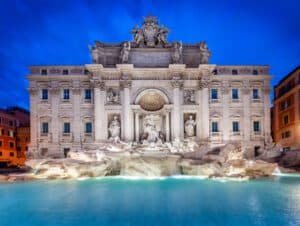
The Trevi Fountain is a few dozen meters from the theater, so close that the first Quirino, in 1871, reached right up to the basin. Opposite the fountain is the church of Santi Vincenzo e Anastasio a Trevi. In mid-March, in the late afternoon, the light on the facade of Palazzo Poli is already that of spring.
The Quirinale
Climbing through the streets of the district you reach the square of the Quirinal Palace, with the obelisk and, on the opposite side, Scuderie del Quirinale, home of major exhibitions. From the square you take in one of the widest views over the rooftops of the center.
Via del Corso and Piazza Colonna
Going down toward Via del Corso you meet Palazzo Sciarra, on whose property the first theater was born, and a little farther north Piazza Colonna with the Column of Marcus Aurelius. Opposite opens Galleria Alberto Sordi, a convenient shelter on rainy March evenings.
The right photo to take at Le serve with Fioretta Mari at Teatro Quirino, March 9 to 14, 2027
The right photo is taken outside, before going in, under the canopy that Marcello Piacentini added to the entrance in the 1950s and that is still the distinguishing mark of the facade. With the sign lit and the poster of Le serve next to the door, it is the image that tells the evening: an Italian-style theater on a small street in the center, a stone's throw from the most famous fountain in the world.
Inside, during the show, no photographs and no filming: the theater's rules ask for it, and so does respect for the actresses, and in a text built on silences and details a lit phone breaks the scene for the whole hall. Before the start, if the staff allows it, you can photograph the hall from the orchestra toward the balconies, with Piacentini's cantilevered tiers.
The third photo is the one for afterward. On the way out, you walk down toward the Trevi Fountain, which late in the evening, with fewer people, lets itself be photographed at leisure. A shot of the lit basin, after an hour spent with two maids who dream of being the mistress, has a particular flavor: the fountain too, in the end, is a palace facade turned into a stage set.
Some important events that happened here in history
The history of Teatro Quirino spans more than 150 years of Rome as capital, from the end of the temporal power of the popes to today.
1871, the wooden theater
Prince Maffeo Barberini Colonna di Sciarra has a wooden theater built on the property of Palazzo Sciarra, designed by Giulio De Angelis and Francesco Marra. Rome has just become the capital of the Kingdom of Italy.
1882, the masonry reconstruction
To open a street between Via del Corso and the Trevi Fountain the theater is dismantled and rebuilt in masonry a few meters farther on, with cast-iron columns and two tiers of boxes.
1899, Verdi and Puccini
After the decorations of 1898, in June 1899 the conductor Antonino Palminteri conducts at Quirino I Lombardi alla prima crociata by Giuseppe Verdi and Manon Lescaut by Giacomo Puccini.
1914 and 1954, Piacentini
Marcello Piacentini renovates the theater a first time in 1914, with the third tier of boxes and the retractable roof, and a second time in 1954, with the cantilevered tiers and the canopy. The theater reopens on October 13, 1955.
From 1946 to 2015, the managements
In 1946 Quirino passes to the Ente Teatrale Italiano. In 2009 it passes to the Gitiesse Artisti Riuniti of Geppy Gleijeses. From 2015 it belongs to Quirino srl, with the artistic direction of Guglielmo Ferro, who in March 2027 directs Le serve.
Who has passed through Le serve with Fioretta Mari at Teatro Quirino, March 9 to 14, 2027
Through Teatro Quirino have passed, first of all, the men who built and transformed it. Prince Maffeo Barberini Colonna di Sciarra, who wanted it in 1871. Giulio De Angelis, who designed it twice, in wood and in masonry. Marcello Piacentini, the architect who more than any other marked the Rome of the early 20th century, who renovated it in 1914 and redesigned it in 1954. On the podium, in June 1899, stood Antonino Palminteri, with Verdi and Puccini.
The theater today bears the name of Vittorio Gassman, one of the greatest actors of 20th-century Italy, and among its recent directors have been Geppy Gleijeses and Guglielmo Ferro. In the 2026-2027 season, among others, Cesare Bocci passed through this stage in Pirandello's Six Characters in Search of an Author, in autumn 2026, and Milena Vukotic in L'inconveniente, in January 2027.
With Le serve comes Fioretta Mari, an actress who has gone through the Sicilian theater of Stabile di Catania, international tours, radio, television and teaching in New York. And with her pass, once again, Claire, Solange and Madame: three figures born in the Paris of 1946 who for 80 years have been returning to stages around the world to enact their ritual.
Accessibility at Teatro Quirino
For the conditions of access to the hall for people with disabilities, the dedicated seats and any discounts, the reference is the Accessibility page of Teatro Quirino website and its box office.
Before booking
Quirino is a historic theater, remodeled several times: it's best to ask the box office which sections can be reached without stairs before choosing the seat, especially for anyone thinking of the balconies.
Getting there
The streets of the Trevi district are paved with sampietrini and often crowded. For anyone with mobility difficulties, a taxi to the entrance on Via delle Vergini is the safest choice, particularly for the matinees.
Le serve with teenagers
Le serve is a text for an adult audience or for high school students already familiar with the theater: it talks about power, desire, resentment, and it ends with a death.
With students
For a student reading 20th-century theater, seeing Genet on stage is the fastest way to understand what is meant by theater within theater. Before going, it is enough to explain the situation in two lines, two domestic sisters who play the mistress. Afterward, the discussion comes by itself.
With younger children
It is not a suitable show for children: the language is dense and the themes are adult. For a family outing to the theater in Rome, it's best to choose a title designed for families.
Where to eat near Teatro Quirino
The Trevi district is full of restaurants, but many are designed for the crowd around the fountain: to eat well before or after the show it's best to move a few streets away.
Before the matinee
For a light lunch before 17:00 on Thursday or Sunday, the streets between Via del Corso and the Pantheon offer trattorias, bakeries and bars. Better to avoid places with a photographed menu in the window on the busiest squares.
After the evening show
After the 21:00 performance dinner becomes a post-theater meal: the Pantheon area, 10 minutes on foot away, stays lively late even on weeknights, and toward Piazza di Spagna you find restaurants for every taste and every budget.
After the early-evening show
With the Wednesday performance at 19:00 you come out at dinnertime: it is the most convenient evening to book a table in the district without having to choose between show and kitchen.
March in Rome, the week of Le serve
The second week of March is one of the most pleasant moments for theater in Rome: the days get longer, the evening is still cool, and the center doesn't yet have the Easter crowds.
Weather and clothing
In mid-March the evenings can be damp and rainy: an umbrella and a waterproof jacket are useful for the trip between the metro and the theater. In the hall you are comfortable in normal dress. Quirino imposes no dress code.
Another week of theater
The same week, in other halls of the city, comedies and classics are on stage: anyone staying in Rome a few days can pair Le serve with another show, choosing by contrast a light title after Genet's tension.
Frequently asked questions about Le serve at Quirino
When is Le serve on at Teatro Quirino?
Le serve is on at Teatro Quirino in Rome from March 9 to 14, 2027. The performances are Tuesday the 9th at 21:00, Wednesday the 10th at 19:00, Thursday the 11th at 17:00, Friday the 12th and Saturday the 13th at 21:00, Sunday the 14th at 17:00. It's best to check for any changes on the theater's website.
Who is in Le serve at Quirino?
In Le serve at Teatro Quirino the cast is Fioretta Mari, Nadia De Luca and Francesca Ferro, directed by Guglielmo Ferro, artistic director of the theater. Sets by Salvo Manciagli, costumes by Sartoria Pipi of Palermo, lighting by Santi Rapisarda. Production by Progetto Teatrando.
What is Jean Genet's Le serve about?
Jean Genet's Le serve tells of two domestic sisters, Claire and Solange, who when the mistress goes out take turns playing the part of Madame and that of the maid. The game blends with reality up to an attempted poisoning. It is a one-act play from 1946, staged in Paris in 1947.
Where is Teatro Quirino?
Teatro Quirino Vittorio Gassman is at Via delle Vergini 7, in the Trevi district, between Via del Corso and the Trevi Fountain. From the Barberini stop on Metro Line A you get there on foot in about 10 minutes along Via del Tritone.
How much do tickets for Le serve cost?
Ticket prices for Le serve at Teatro Quirino are published on the theater's official website, which leads to the authorized presale network. The box office on Via delle Vergini and Quirino's remote box office also handle phone purchases, exchanges and information.
How long is the show?
The running time of Le serve at Teatro Quirino is not given on the show page. Genet's text is a one-act play, which in most stagings is performed without an intermission: it's still best to ask the box office before planning dinner or the trip home.
Is Le serve suitable for teenagers?
Le serve at Quirino is a show for adults and for high school students with some theater habit: it deals with themes such as power, resentment and death. It is not recommended for children. For students it is an excellent encounter with 20th-century theater.
The final advice on Le serve at Quirino
The advice is to book the orchestra, arrive a few minutes early and know, before the scene opens, that the two sisters are already acting. Le serve is a short and cruel text, which Guglielmo Ferro's direction reads as an infinite dress rehearsal. Fioretta Mari brings to the stage 60 years of theater, from the Sicilian repertoire of Stabile di Catania to the acting schools of New York. In our judgment it is one of the most interesting prose evenings of the Roman March, and Quirino, with its history of wood, cast iron and stucco, is the right setting for a game of masks.
Article written by the editorial team of Tour Leader Pro, contact them for Private/Corporate/V.I.P. Tours and Experiences.
Planning a trip to Rome? The English guides to visiting the city are on ItalyPlanner.com.
Contact Information
Nearby
 Teatro Quirino Vittorio Gassman100 m
- Galleria Sciarra100 m
- Vicus Caprarius, the City of Water100 m
- Fontanella degli innamorati100 m
- Trevi Fountain100 m
- Church of San Marcello al Corso100 m
Upcoming events nearby
- L’inconveniente with Milena Vukotic at Teatro Quirino, January 19 to 31, 2027100 m
- L’uomo, la bestia e la virtù with Vanessa Gravina at Teatro Quirino, March 16 to 21, 2027100 m
- Rosso Malpelo with Enrico Guarneri at Teatro Quirino, February 2 to 7, 2027100 m
- Il giuoco delle parti with Pippo Pattavina at Teatro Quirino, February 9 to 14, 2027100 m
You might also like
- Carlotta Spallino in Io me lo merito at Teatro Sala Umberto, from March 6 to May 16, 2027
- Le dieu du carnage with Antonio Zavatteri at Teatro Quirino, March 30 to April 4, 2027
- Ispettore in casa Birling with Ettore Bassi and Galatea Ranzi at Teatro Quirino, March 2 to 7, 2027
- Belle Ripiene at Teatro Sistina in Rome, from April 8, 2027
- Sfidati di me, Paolo Kessisoglu at Teatro Sala Umberto, April 1 to 4, 2027
- L’anatra all’arancia with Emilio Solfrizzi at Teatro Quirino, April 20 to May 2, 2027