999CONTEMPORARY
In short. 999CONTEMPORARY is the private, independent cultural institution that has brought urban art into Rome's public conversation: founded in 2010 and directed by Stefano S.
999CONTEMPORARY is the private, independent cultural institution that has brought urban art into Rome's public conversation: founded in 2010 and directed by Stefano S. Antonelli and Francesca Mezzano, it works across gallery, research and mural commissions at the scale of a neighborhood. Its Rome headquarters has been listed for years at Via Ostiense 110/D, in the area between Ostiense station and the Gazometro. The gallery's hours don't follow the calendar of a civic museum and should be confirmed on the official website 999contemporary.com before you show up. The two public projects signed by 999CONTEMPORARY, on the other hand, can be visited for free and without a ticket because they are on the street: the Museo Condominiale di Tor Marancia along Viale di Tor Marancia, in the Ardeatino area, and the Ex Mira Lanza Museum on Via Antonio Avogadro, on the right bank of the Tiber between Marconi and Portuense, next to Teatro India. Neither has a ticket office, coat check or restrooms. At Tor Marancia you walk on normal sidewalks, while at Ex Mira Lanza you enter a disused, occupied industrial building, which radically changes the kind of visit. To get to Tor Marancia you get off at Metro B (Garbatella or San Paolo) and continue by surface bus toward Via Ardeatina. The lines are often reorganized, so the number should be checked on Rome's public transport app the same day.
If you're planning a tour of the city's contemporary art, the page on modern art in Rome gathers the museums and collections that complete the picture.
What 999CONTEMPORARY really is
Calling it a gallery is convenient and partly wrong. 999CONTEMPORARY was born in 2010 as a nonprofit cultural institution, private and independent, and in more than 15 years of activity it has worked on the study and practice of the contemporary arts, often in collaboration with public institutions. A commercial gallery sells works. Here the pivot is something else, the relationship between art and ordinary life. The projects investigate that relationship by studying, promoting and experimenting with artistic practices driven by an interest in the aesthetics and ethics of the public sphere: an abstract formula, very concrete effects, because the result is painted walls in public housing neighborhoods where people actually live.
The theoretical step that 999CONTEMPORARY claims concerns the transition from disciplinary to transdisciplinary practices: understanding and recomposing urban expressive languages until building the grammar of a curatorial language able to address the public discourse of art. In practice, challenging the traditional idea that art is collected, preserved and presented inside four air-conditioned walls. In our judgment it is the most honest position that the Roman urban art world has produced, and also the most uncomfortable, because it forces whoever holds it to accept that the work will deteriorate.
The three souls of 999CONTEMPORARY
The activity rests on three distinct and complementary legs: the 999gallery, the Studies Center on Contemporary Urban Arts and Avanguardie Urbane. Keeping them separate helps to understand why the same organization can sign an indoor exhibition and a construction site with 22 facades.
The 999gallery, the experimental space
The 999gallery is the exhibition space proper, and its research focuses on a specific problem: what happens to the practices typical of street art when they are transferred to a closed context like that of a gallery. It is not an idle question. A lettering made to be seen in a rush from a train changes nature when it is hung two meters from a visitor who has all the time to look at it. The gallery also openly tackles the questions that follow: the very nature of the street artist and his entry into the market, the existence of the gallery as we are used to thinking of it, the forms of artistic expression in public space. Anyone who arrives expecting spray cans hanging on the wall is left disoriented, and that is exactly the point.
The Studies Center on Contemporary Urban Arts
The Studies Center is an observatory: it deepens and publishes studies on topics connected to urban art practices, analyzes languages and contexts, and explores the methodology of criticism and the curation of public art. It is the least photogenic part of 999CONTEMPORARY and the most important, because Roman street art suffered for years from an excess of emotional storytelling and a chronic shortage of critical tools. Without someone who writes, catalogs and argues, a mural remains an anecdote for a local gossip magazine that lasts as long as the paint.
Avanguardie Urbane, the project about the city
Avanguardie Urbane is the public art program dedicated to Rome, and it is from here that the urban projects of 999CONTEMPORARY come out, along with the very concept of curation applied to the city. It is the container within which the idea of the urban curator, or city curator, was born: a figure who doesn't only choose the artists, but negotiates with the municipalities, with the bodies that own the buildings, with the residents and with the people who live there. Anyone who has tried to get 11 public housing buildings to agree on anything knows what this job is worth.
The idea of the urban curator launched by 999CONTEMPORARY
The urban curator is the most lasting conceptual find of 999CONTEMPORARY, more lasting even than the paints. The premise is simple to state and very complicated to apply: if a city is a set of surfaces, relationships and conflicts, then it can be curated the way an exhibition is curated, choosing what to put, where, in dialogue with what. The curator doesn't decide only an aesthetic theme, he decides a geography. Putting a work in Tor Marancia instead of on a wall of the historic center is a political choice before an artistic one, and it shifts audience, attention and tourist flows toward a piece of the city that no paper guidebook named.
From this approach comes the double track of the work. On one side 999CONTEMPORARY directly funds the production of mural works, like those started in 2010 in the Ostiense area. On the other it designs and carries out urban projects in collaboration with the municipalities and with Roma Capitale, with protocols, public calls and committees. The first track is fast and free, the second is slow and heavy, and it produces the works that last.
999CONTEMPORARY and the redevelopment of the suburbs
The issue of Rome's suburbs is the theme on which 999CONTEMPORARY built its public identity. Not in the decorative sense, which is the trap that institutional urban art almost always falls into: a colorful facade on a run-down building doesn't fix a broken elevator or a leak. In the rougher sense of giving name and visibility back to places that the city only talked about in crime reports. In this the operation worked: today Tor Marancia is a place name that appears in international street art guides, and before 2015 it appeared nowhere.
New projects aimed at suburban communities have been announced in collaboration with the City of Rome, which uses 999CONTEMPORARY as a municipal consultant for urban regeneration through public art. The program also includes the launch of courses to train new guides dedicated to the Ex Mira Lanza and to Tor Marancia: the idea, that is, that whoever lives in the place becomes the one who tells its story. The progress of these programs changes from one administration to another and should be confirmed with the competent municipality or on the institution's website.

999CONTEMPORARY | Ex Mira Lanza
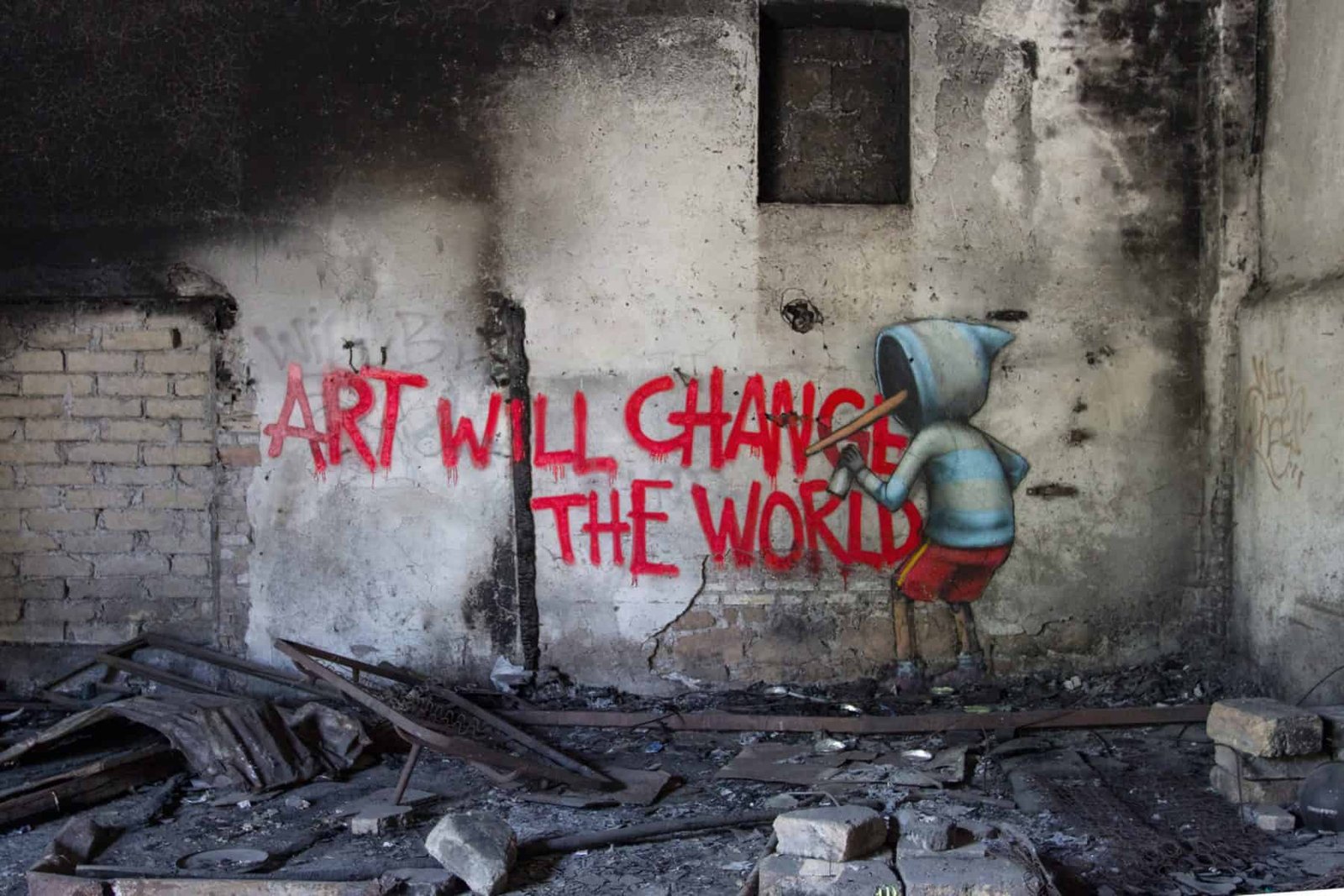
The most radical project has a name that is already a statement: Ex Mira Lanza Museum, M.A.G.R., Museo Abusivo Gestito dai Rom. We are inside the shell of a soap factory, on the right bank of the Tiber, in a piece of the city that Romans generically call Marconi and that urbanistically belongs to Portuense. The access listed by the promoters is on Via Antonio Avogadro, and the instructions published on the project's website are disarmingly frank: you enter through the first gap in the fence behind the dumpsters, entry is free, the museum is open 24 hours a day, and contacts go through the number of Tito, the resident who has been the museum's director and first guide. The promoters themselves write that the visit requires an act of civil disobedience and recommend hiking boots. It is not a literary affectation.
The factory before the art: industrial history of the Ex Mira Lanza
The Rome plant enters Mira Lanza's orbit in 1918, when the company takes over the Colla e Concimi chemical factory on the Tiber, at the height of Lungotevere dei Papareschi. The position, with the river serving as a transport route, proves strategic: the plant is progressively expanded until it occupies about 9 hectares along the bank. The Second World War leaves it only slightly damaged, unlike other plants of the group that were destroyed or closed. Then comes the postwar period, industrial rationalization and the end: the Portuense plant is closed in 1955 and production is concentrated elsewhere. From that moment begins the long abandonment that hands urban art a shell of concrete, brick and rust more than half a century old. The promoters of the project date the factory to 1899, most likely referring to the original plant that predates the acquisition.
Seth, Julien Malland, and Range ta chambre
In May 2016 Stefano S. Antonelli proposes to the French artist Seth, born Julien Malland, that he work on the project, self-funded and carried out in collaboration with Teatro India. The formula is that of an artist residency inside the theater, and the work comes to life in the shell of the factory next door. The title is Range ta chambre, which in French means tidy up your room: said to an occupied building full of rubble, it is first-rate dark irony. The intervention covers about 2,500 square meters across wall paintings, installations, secret rooms and interventions carried out without any authorization over the course of two months. Seth is known on the Paris scene for his figures of children suspended between innocence and disenchantment, almost always seen from behind, almost always in the act of crossing a wall or vanishing into a color: in the context of a dead factory that has been lived in again, those silhouettes work like few other things I've seen in Rome.
The museum run by those who live in it
Several Roma families have settled inside the former factory, and among them that of Tito, who became the manager of the place and the first guide to the works. Here the project stops being an exhibition and becomes a social experiment: the visitor doesn't buy a ticket, he meets a resident. There are no restrooms, no bookshop, no air conditioning: the art lives alongside the people who live in the disused structure. The only official publication is a hardcover color volume of about 150 pages, published by Wasted Talents, sold on site at the listed price of €30.
To go or not to go to the Ex Mira Lanza: our opinion
An occupation is not a museum, and its state changes over time for reasons that no curator controls: evictions, fires, securing works, new fences, simple deterioration. Anyone who wants to see Seth's works at Mira Lanza must first find out about the current conditions of the site, and must accept the idea that it may not be accessible, or may no longer be so in the form described in 2016. Don't bring children there, don't go there alone at dusk, don't treat someone's home as a backdrop for portraits. If the prospect makes you uncomfortable, the sensible choice is to spend the day at Tor Marancia, which is public, lit and unambiguous.
What to see around the Ex Mira Lanza
The area is worth the detour anyway. Next door stands Teatro India, one of the most interesting spaces of Rome's public theater, also carved out of an industrial area: its summer program is described on the page for India Città Aperta. A little farther upstream, on the opposite bank, opens the industrial front of Ostiense with Centrale Montemartini, the power plant where ancient statues live alongside diesel engines and boilers: the historical precedent for every Roman industrial reuse, and one of the most successful visits in the city.
999CONTEMPORARY in Ostiense, the neighborhood where it all began
The name of Ostiense recurs in every account of the origins of 999CONTEMPORARY: it is the area where in 2010 the organization begins to fund the production of mural works, and it is the area where the gallery has its headquarters. Since then the neighborhood has become the densest showcase of Roman urban art, with more than 30 major interventions on authorized walls, made over different years and by different parties.
The works you meet between Ostiense and Porto Fluviale
On Via del Porto Fluviale you find Hunting Pollution by Iena Cruz, the artist name of Federico Massa: a cormorant painted on a wall seven stories tall, made with photocatalytic paints that capture pollutants, presented as the largest eco-mural in Europe. Also on Via del Porto Fluviale, above the Ostiense fish shop, stands Swimmer by Agostino Iacurci, one of the few Roman interventions in which the subject and the building's use dialogue without forcing. On the facade of the Alexis social center is painted a wall by Blu with 27 colored faces, one of the most discussed episodes of the Bolognese artist's Roman period. On Via Galvani, toward Testaccio, Jumping Wolf by Roa stretches vertically, the Belgian who made black and white animals his trademark.
It is worth clarifying a point that many accounts confuse: these works belong to different seasons, commissions and curatorships, and not all can be traced back to 999CONTEMPORARY. Attributing everything to a single party is the quickest way to misunderstand 20 years of history. Street art is by nature impermanent: walls are repainted, buildings renovated, works covered. Before organizing an afternoon around a single mural it's best to check that it still exists, because the list changes faster than any guidebook.
What's 10 minutes away on foot
Ostiense rewards those who walk. On the Porta San Paolo side you meet the Pyramid of Cestius, the tomb of Gaius Cestius built into the Aurelian Walls. The Museo della Via Ostiense occupies the very towers of Porta San Paolo and tells the story of the ancient road that went down to the port. Toward the south the road leads to the Basilica of Saint Paul Outside the Walls. To the east, beyond the railway, Garbatella with its 1920s lots remains the perfect counterpart to contemporary urban art: two different ways, a century apart, of trying to make a neighborhood. Toward Testaccio the Museo Diffuso del Rione Testaccio and the Nuovo Mercato Testaccio complete the day with the food part.

999CONTEMPORARY | Big City Life
The most ambitious project signed by 999CONTEMPORARY is the Museo Condominiale di Tor Marancia, known by the name of the program that generated it: Big City Life. It was born in 2014 from a Memorandum of Understanding among Ater, the territorial agency for public housing of the City of Rome, 999CONTEMPORARY and Municipio VIII, and provides for 22 mural works on the facades of some buildings in Tor Marancia. Ater makes available the facades of 11 buildings it owns in lot 1, and on those surfaces artists from 10 different countries work. The result is presented as the first condominium museum in the world: not a museum with homes inside, but homes that are the museum.
Who paid for Big City Life
The funding deserves a line, because it tells the balance of the operation: 999CONTEMPORARY covered 56 percent, Fondazione Roma Museo 26, Roma Capitale 18 through winning the public call Roma Creativa. Put differently, the independent private party put in more than half the money of a public art operation on public buildings. Anyone discussing urban regeneration would do well to keep this proportion in mind before talking about an institutional operation.
The numbers of the Tor Marancia construction site
The 22 works were made in 2015 over about 70 days, with international artists from 10 countries. The painted surfaces extend over walls of about 14 meters, for an average of around 155 square meters per work. These are numbers that tell of a real construction site, with scaffolding, permits, safety and the daily problem of working under the windows of families who, from morning to evening, found scaffolding in front of their home.
The works you recognize right away at Tor Marancia
Three pieces are worth the trip on their own. Il Peso della Storia by Jaz, an Argentine, is one of the most cited images of the complex: mass, bodies, heaviness, the opposite of the decorative lightness you would expect from a mural. Bambino Redentore by Seth, the same artist as the Ex Mira Lanza, brings his childlike figure back to Tor Marancia, with the charge of an explicit iconographic reference. Santa Maria di Shanghai by Mr. Klevra is a work that moves you: an icon in the Byzantine tradition painted with the codes of street art, dedicated to the historic nickname of the neighborhood. Among the other artists who took part in the project are Diamond, Moneyless and Philippe Baudelocque. The complete list of the artists and their respective works is maintained by the project itself.
Tor Marancia before the murals: the Shanghai borgata
Without the history of the neighborhood, Santa Maria di Shanghai remains a bizarre title. In the 1930s, residents of central Rome displaced by the Fascist demolitions were settled here, in a governatorial borgata made of shacks and terrible sanitary conditions. The nickname Shanghai comes from the frequent floods that made the area a swamp. Starting in 1947 the first modern public housing begins, and the pace speeds up after the Ina Casa law of 1949, which shapes Italy's postwar public housing. The buildings that carry the murals today belong to that season: it's useful to know, because those facades are not anonymous, they are the result of a precise housing policy.
How to visit the Museo Condominiale di Tor Marancia
You visit on foot, for free, at any time of day, walking among the buildings along Viale di Tor Marancia and the internal streets of the lot. Allow an hour and a half to do it without rushing, less if you only aim for the best-known works. Two rules of common sense: people live here, so you stay in the common areas and don't enter the building lobbies. And the best light for photographing the facades changes from one side of the lot to the other, so it's best to arrive in mid-morning or late afternoon and avoid noon, which flattens everything. The resident manager listed by the project as the reference for visits is Cristina Giuliani.
Do the works last? Conservation according to 999CONTEMPORARY
A mural exposed to sun, rain and smog ages. Some of the works from 2015 show the signs of time today, and the maintenance of a work painted on a public building is a legal problem before a technical one: who pays, who authorizes, who decides if a restoration betrays the original. It is the contradiction built into all urban art, and 999CONTEMPORARY knows it better than anyone else, having chosen to work on surfaces that belong to someone else. Anyone arriving at Tor Marancia should expect that some works are less bright than the photograph they saw online.
A curiosity about 999CONTEMPORARY
The name. Three identical digits, no reference to a founder, no place name, no word. In an environment where galleries are named after the gallery owner's surname and museums after the donor's, choosing a numeric acronym is taking a stand: the institution presents itself as a device, not as a person. And it is consistent with the rest of the work, because in all the public projects of 999CONTEMPORARY the name of the organization appears less than those of the artists and much less than that of the place.
There is a second curiosity, more substantial, concerning the structure of the Tor Marancia project. Big City Life was selected among the projects of the Italian Pavilion at the 15th International Architecture Exhibition of the Venice Biennale, the one whose theme was Taking Care, designing for the common good. A mural painting project on public housing buildings selected in an architecture exhibition: it is proof that the operation was read by critics not as decoration, but as an act of design on inhabited space. Few murals in the world get a consecration like that, and almost none in Italy.
Third curiosity, the one that always amuses groups: the most photographed museum among those signed by 999CONTEMPORARY has neither an entrance nor a closing time, and its custodians are the residents. When someone asks where the ticket office is, the correct answer is that the ticket office doesn't exist and never will, because the project's economic model was solved upstream, with funding, and not downstream, with visitors.
Something nobody tells you about 999CONTEMPORARY
That the two most famous projects are the opposite of each other, and that the difference is legal before it is aesthetic. Big City Life comes from a Memorandum of Understanding, from a public call that was won, from a public agency that grants its own facades and from three parties that put in money in declared percentages. The Ex Mira Lanza Museum was born without any authorization, inside a disused, occupied building, and its own promoters write that visiting it involves an act of civil disobedience. The same curator, the same artist in two cases out of two, two opposite statuses. No guide explains it, and without this key the visitor arrives at Mira Lanza expecting Tor Marancia, and finds himself in another world.
The second thing nobody tells you is about timing. 70 days for 22 works means a little over three days per mural, an industrial pace that in contemporary mural painting is at the limit of the feasible. Anyone who knows the trade knows that a 150-square-meter facade requires setting up the scaffolding, preparing the surface, the base coat, the definition and the final protection, all dependent on the weather. That construction site was an exercise in logistics as much as in art, and the merit of 999CONTEMPORARY was above all organizational.
Third point, the most uncomfortable. Urban art brings attention, and attention brings real estate pressure. In the neighborhoods where these projects take root, after a few years come the guided tours, then the bars, then the short-term rentals. In Tor Marancia the phenomenon has stayed contained, because it is public housing and the stock cannot be freely sold: an involuntary protection that has been missing elsewhere. Anyone studying urban regeneration should start from here, and not from the colors.
Frequently asked questions about 999CONTEMPORARY
What is 999CONTEMPORARY, really
999CONTEMPORARY is a nonprofit cultural institution, private and independent, born in Rome in 2010, dedicated to the study and practice of the contemporary arts, often in collaboration with public institutions. It is not a commercial gallery that sells works: the pivot of the work is the relationship between art and ordinary life in Rome's suburbs.
Where is the headquarters of 999CONTEMPORARY
The Rome headquarters of 999CONTEMPORARY is listed at Via Ostiense 110/D. Since it is not a museum space, its public opening hours don't follow those of a traditional museum and should be checked before the visit.
What is the Big City Life project in Tor Marancia
Big City Life is the most ambitious project signed by 999CONTEMPORARY, also known as the Museo Condominiale di Tor Marancia. It was born in 2014 from a Memorandum of Understanding among Ater, the territorial agency for public housing of the City of Rome, 999CONTEMPORARY and Municipio VIII, and provides for 22 mural works on the facades of some buildings in the neighborhood.
What is the Ex Mira Lanza Museum promoted by 999CONTEMPORARY
The Ex Mira Lanza Museum, or M.A.G.R., is the most radical project of 999CONTEMPORARY, set up inside a disused former soap factory on the right bank of the Tiber, in the area that Romans call Marconi and that urbanistically belongs to Portuense. Unlike Big City Life, it was born without authorization, inside an occupied building.
Who runs 999CONTEMPORARY
999CONTEMPORARY is directed by Stefano S. Antonelli and Francesca Mezzano, who since 2010 have led the institution dedicated to the study and practice of contemporary art, with particular attention to urban arts and Rome's public space.
Which Roman neighborhoods are linked to 999CONTEMPORARY
999CONTEMPORARY was born and has its headquarters in Ostiense, where since 2010 it has funded the production of mural works, up to more than 30 major interventions on authorized walls. The second key neighborhood is Tor Marancia, home of the Big City Life condominium museum, while the Ex Mira Lanza Museum is in the Marconi-Portuense area.
The advice I give you for visiting 999CONTEMPORARY
My advice is to reverse the order in which almost everyone approaches this subject. Don't start from the gallery on Via Ostiense hoping to understand the murals: start from the murals and arrive at the gallery with questions. Dedicate a whole morning to Tor Marancia, walk the entire lot, look at the facades from below and then step back 50 meters to see them whole, and above all look at what happens around them: the hanging laundry, the scooters, the chairs outside the doorways. The condominium museum works precisely because it is not isolated from the condominium.
In the afternoon move to Ostiense and walk Via del Porto Fluviale and the side streets as far as Via Galvani. In four or five kilometers in total you will see the whole arc: the authorized, clearly visible interventions on the big industrial fronts, the older, faded ones, the ones that disappeared under a renovation. Finish at Centrale Montemartini, which is indoors, costs little and handles end-of-day tiredness very well.
Two practical warnings. First: you don't need any reservation for anything listed, except the museum, and this is the great advantage of public art. Second: if you want a critical reading of the works, go with a licensed guide who knows the subject, because the difference between seeing 22 murals and understanding them is all there. The TourLeaderPro network organizes tailor-made accompaniment on these themes too, and the request can be sent from the contacts page.
Another well-known fact, yet rarely cited
That the Tor Marancia project has an educational component that almost nobody mentions. Among the activities planned by the institution is the launch of courses to train new guides dedicated to the Ex Mira Lanza and to Tor Marancia, that is, the choice to turn the residents into professional narrators of their own neighborhood. At the Ex Mira Lanza the model has already been applied in a spontaneous form, with Tito being the first escort to Seth's works. At Tor Marancia the resident reference listed by the project is Cristina Giuliani. It is a choice that overturns the classic relationship between tourist and suburb: the visitor doesn't observe a neighborhood, he is welcomed by whoever lives there.
The second rarely cited fact concerns the nonprofit nature of the organization. 999CONTEMPORARY is a private, independent cultural institution without profit goals, and this explains its room to maneuver. A public body could not have self-funded an intervention inside an occupied building without authorization. A commercial party would not have put 56 percent of the costs into an operation that produces no sellable works, because the facades of Tor Marancia belong to Ater and nobody will ever be able to buy them. The legal form, in this trade, decides the perimeter of the imagination.
Third fact: the publishing output. The Studies Center on Contemporary Urban Arts publishes studies and research, and on the Ex Mira Lanza there is a hardcover color volume of about 150 pages published by Wasted Talents. For an art movement that lives on photographs on social media, having a printed bibliography is a form of self-defense: when the wall is no longer there, the book will remain.
The right photo to take at 999CONTEMPORARY
The wrong photo is the one everybody takes: the mural cropped up close, isolated from its context, with no sky and no ground, in effect the reproduction of a painting. Done that way, a work in Tor Marancia looks identical to a work in Miami or Lisbon, and the meaning of the project evaporates.
The right photo is built in three moves. First: step back. Back up until you include the whole building, with the roof and the sidewalk, even better with a piece of the unpainted building next door, which gives the measure of the gap. Second: wait for life. A scooter passing, laundry hanging on a balcony, a child crossing, two women talking under the work: these are the elements that turn the photograph of a mural into the photograph of a condominium museum. Third: choose the side light of morning or late afternoon, which models the plaster and brings back the grain of the wall. The Roman summer noon, with the sun directly overhead, is the surest way to bring home washed-out colors.
For Santa Maria di Shanghai look for a frontal position, far enough away, because the composition is built like an icon and lives on symmetry. For Il Peso della Storia a shot from below works instead, which accentuates the mass. At the Ex Mira Lanza, if and when the site is accessible, the opposite and most important rule applies: the people who live there are not a photographic subject. You photograph the works, not other people's homes, and never without consent. It is a matter of respect, and in this case also of common sense.
Some important events that happened here in history
The first event is industrial and goes back to 1918, when Mira Lanza takes over the Colla e Concimi chemical factory on the Tiber and starts in Rome a plant that will come to occupy about 9 hectares along the bank, using the river as a transport route. It is the birth certificate of the shell that a century later will host the unauthorized museum.
The second event is urbanistic and belongs to the 1930s: the Fascist demolitions of the historic center expel thousands of Romans and move them to governatorial borgate, among them that of Tor Marancia, made of shacks and nicknamed Shanghai for the recurring floods. From the misery of that settlement comes, as a reaction, the season of public housing.
The third event is 1947, with the first modern public housing in Tor Marancia, and 1949, with the Ina Casa law that structures the great national plan of public housing. The buildings that host the murals today are children of that policy.
The fourth event is 1955, the year of the closing of Mira Lanza's Portuense plant: begins the abandonment that will produce, decades later, one of the most striking post-industrial landscapes in the city.
The fifth event is 2010, with the birth of 999CONTEMPORARY and with the first funding of mural works in the Ostiense area: the start of the season in which Rome becomes a European capital of urban art.
The sixth is 2014, with the signing of the Memorandum of Understanding among Ater, 999CONTEMPORARY and Municipio VIII, followed in 2015 by the making of the 22 works of Big City Life in about 70 days. The seventh is the project's selection among those of the Italian Pavilion at the 15th International Architecture Exhibition of the Venice Biennale, on the theme Taking Care. The eighth is May 2016, when Stefano S. Antonelli proposes the Mira Lanza project to Seth, carried out in residency with Teatro India and completed in two months of work on about 2,500 square meters.
Who has passed through 999CONTEMPORARY
The name that recurs twice is Seth, that is, the Frenchman Julien Malland, protagonist of both Bambino Redentore in Tor Marancia and Range ta chambre at the Ex Mira Lanza. He is the artist who more than any other has tied his Roman image to 999CONTEMPORARY, and his research on childlike figures suspended between innocence and disenchantment finds in Rome's suburbs an almost perfect context.
Jaz, from Argentina, author of Il Peso della Storia and one of the biggest names on the South American scene, came through Tor Marancia. So did Mr. Klevra, a Roman, who with Santa Maria di Shanghai brought Byzantine iconography onto a working-class facade, one of the most successful cultural short circuits in the city. Diamond and Moneyless also worked on the project, the latter with an abstract and geometric line of research, along with Frenchman Philippe Baudelocque, known for the large animals drawn in chalk. The project brings together artists from 10 countries, an international presence that places the 2015 project among the densest international operations ever carried out in Italy.
Behind the scenes are the two names who hold the whole story together: Stefano S. Antonelli, curator and originator of the public projects, and Francesca Mezzano, who co-directs with him. And then there are the protagonists no art catalog would call artists and who are the substance of these places: Tito, a resident of the former factory and first director and guide of M.A.G.R., and Cristina Giuliani, a resident and the contact person for visits to Tor Marancia. If the declared ambition of 999CONTEMPORARY is to investigate the relationship between art and ordinary life, these two names are the field test of the theory.
It's worth remembering, for completeness, that in Ostiense other artists have left works that belong to other commissions and other curatorships: Iena Cruz with Hunting Pollution, Agostino Iacurci with the Swimmer, Blu on the Alexis social center, Roa on Via Galvani. They share the same landscape, but the organizing signature is a different one.
A Full Day with 999CONTEMPORARY: Itinerary
Morning in Tor Marancia, from 09:30 to 11:30: a full loop of the lot, the main works, two stops to photograph in the right light. Transfer to Ostiense and lunch in the Testaccio area, where Nuovo Mercato Testaccio settles the question in half an hour and for little money. Early afternoon between Via Galvani, Via del Porto Fluviale and the side streets of Ostiense, with an eye on the big industrial fronts. Mid-afternoon at Centrale Montemartini, which closes the circle between industrial archaeology and art. If you have energy and appetite left for contemporary art, continue to MACRO or, on a second day, to MAXXI. Anyone who wants an academic reading of the phenomenon will find material at MLAC at Sapienza.
999CONTEMPORARY with Kids
Tor Marancia is an excellent destination for families: you walk outdoors, the painted subjects are large, recognizable and often fun, and the hunt for the 22 works works like a game. Bring water and a hat in summer, because there's little shade. Ex Mira Lanza, by contrast, is not a place for children: uneven floors, debris, no services, no supervision. On this I make no concessions.
Accessibility of the 999CONTEMPORARY Sites
The Tor Marancia lot is flat and can be walked on sidewalks, so it's reasonably accessible in a wheelchair, with the caveat that Rome's sidewalks hold surprises and that some of the best views are reached by crossing condominium courtyards. Ostiense and Testaccio are flat, easy areas. Ex Mira Lanza is not accessible in any way to anyone with mobility difficulties. For the gallery on Via Ostiense, access conditions should be asked directly of the institution.
When to Go and When to Avoid
Spring and early autumn are the best periods: long light, manageable temperatures, full colors. July and August at noon, on a lot with no trees, are a mistake you pay for. On Sunday morning the neighborhood is quieter and easier to photograph. On Saturday afternoon there's more life and the images come out more interesting. Rain, curiously, is not entirely an enemy: wet plaster saturates the colors.
Quick Questions about 999CONTEMPORARY
What is 999CONTEMPORARY?
A private, independent, nonprofit cultural institution, founded in 2010 and directed by Stefano S. Antonelli and Francesca Mezzano, dedicated to the study and practice of contemporary art with particular attention to urban arts and public space.
Where is the 999CONTEMPORARY headquarters?
The Rome headquarters is listed at Via Ostiense 110/D. Since it is not a museum space, opening and appointments have to be arranged: it's best to check the institution's official website.
Is there an admission fee to see the 999CONTEMPORARY projects?
No. Both the Museo Condominiale di Tor Marancia and the Ex Mira Lanza Museum are free, because they are in public space or in a disused building. There is no ticket office.
How long does a visit to Tor Marancia take?
An hour and a half for the full loop at an easy pace, 45 minutes if you only aim for the best-known works.
How many works are in Big City Life?
22 mural works, created in 2015 by artists from 10 different countries, on the facades of 11 Ater buildings in lot 1 of Tor Marancia.
Who funded Big City Life?
999CONTEMPORARY for 56 percent, Fondazione Roma Museo for 26 percent and Roma Capitale for 18 percent, the latter through the public call Roma Creativa.
Why is it called a condominium museum?
Because the works are painted on the facades of residential buildings where people live: the museum coincides with the condominiums, and the custodians in fact are the residents.
Do I need to book to visit the Tor Marancia murals?
No, you can visit freely on foot at any time. Booking is needed only if you rely on a guide.
Can you take photos?
Of the works, yes, freely. Of the people who live in the buildings, no, unless with their explicit consent.
How do you get to Tor Marancia?
Take metro line B to Garbatella or San Paolo and then a surface bus toward Ardeatina, or take a taxi. Since lines change, check the number on the public transport app the same day.
What is Ex Mira Lanza Museum?
An art intervention made in 2016 by the French artist Seth inside the former Mira Lanza soap factory, on Via Antonio Avogadro, and renamed M.A.G.R., Museo Abusivo Gestito dai Rom, because the building is occupied by families who are also its guides.
Can you visit Ex Mira Lanza?
The promoters present it as open and free, warning that access involves an act of civil disobedience and recommending hiking boots. Since it is an occupation, conditions change over time and should be checked before you leave.
How big is Seth's work at Mira Lanza?
About 2,500 square meters of murals, installations and set-up rooms, created over two months.
What does Range ta chambre mean?
In French it means tidy up your room. The title plays, with bitter irony, on the contrast between domestic order and the disorder of an abandoned factory.
Is Ex Mira Lanza in Ostiense?
It is on the right bank of the Tiber, between Marconi and Portuense, next to Teatro India, facing the industrial front of Ostiense. Many associate it with Ostiense because of visual proximity.
Did 999CONTEMPORARY also make the murals on Via del Porto Fluviale?
No. In Ostiense there are works from different commissions and curatorships side by side: attributing them all to a single party is a common mistake.
Are all the Tor Marancia murals still visible?
The works are on residential facades and have been there since 2015, but outdoor mural painting ages. Anyone looking for a specific work should do an updated check before planning the trip.
Is Tor Marancia suitable for children?
Very: flat route, large and recognizable subjects, no cost. You only need to watch the traffic and, in summer, the lack of shade.
Is there a bookshop or cafe inside the 999CONTEMPORARY museums?
No. Neither of the two public projects has services. Bars and restaurants are in the surrounding neighborhood.
Is there a publication on the 999CONTEMPORARY projects?
On Ex Mira Lanza there is a color hardcover volume of about 150 pages, published by Wasted Talents, listed as on sale on site for €30. The Centro Studi also publishes research on urban arts.
What is 999CONTEMPORARY's relationship with the City of Rome?
The institution has acted as a municipal consultant for urban regeneration through public art, and the major projects arose from protocols with public bodies such as Ater and Municipio VIII.
Is a guided tour of the 999CONTEMPORARY projects worth it?
If you want to understand and not just see, yes. The difference between looking at 22 murals and reading them within the history of the neighborhood is substantial, and it's made by whoever accompanies you.
What is there to see nearby?
Centrale Montemartini, the Pyramid of Cestius, Museo della Via Ostiense, the Basilica of St. Paul Outside the Walls, Garbatella and the Testaccio district: all within a few kilometers.
Of all the Roman cultural operations of the last 15 years, 999CONTEMPORARY's is the only one that has changed the city's mental geography: it has convinced thousands of visitors to take public transport south instead of retracing the same kilometer of the historic center for the third time. Go with the respect owed to an inhabited neighborhood, and go back in a few years: you'll find that some works have aged, some have been covered over and some will look more beautiful than you remembered. That is exactly what distinguishes a condominium museum from an art gallery, and it's why the trip is worth it.
Article written by the editorial team of TourLeaderPro, contact them for Private/Corporate/V.I.P. Tours and Experiences.
Planning a trip to Rome? The English-language guides to visiting the city are on ItalyPlanner.com.
To plan the rest of your stay, the best things to do in Rome guide and ItalyPlanner's 3-day itinerary are also useful, while anyone looking for professional accompaniment can read who TourLeaderPro is.
Contact Information
Nearby
 Rione Ponte: What to See100 m
- Santi Celso e Giuliano100 m
- San Salvatore in Lauro100 m
- Spazio Fontanella200 m
- Casa delle Letterature200 m
- Ponte Sant’Angelo200 m
Upcoming events nearby
- Pierluigi Antonucci at Galleria Richter Fine Art, October 6 to November 20, 2026100 m
- Lizzi Bougatsos. Spatial Concert at Ermes Ermes, September 30 to November 14, 2026200 m
- Fool’s Privilege by Eva Beresin at Spazio Amanita, September 17 to November 13, 2026200 m
- Babele. Keisuke Matsuoka at Galleria d’Arte Faber, from October 10, 2026 to January 16, 2027300 m