Japanese Cultural Institute in Rome
In short. Anyone reaching the top of Viale delle Belle Arti expects marble.
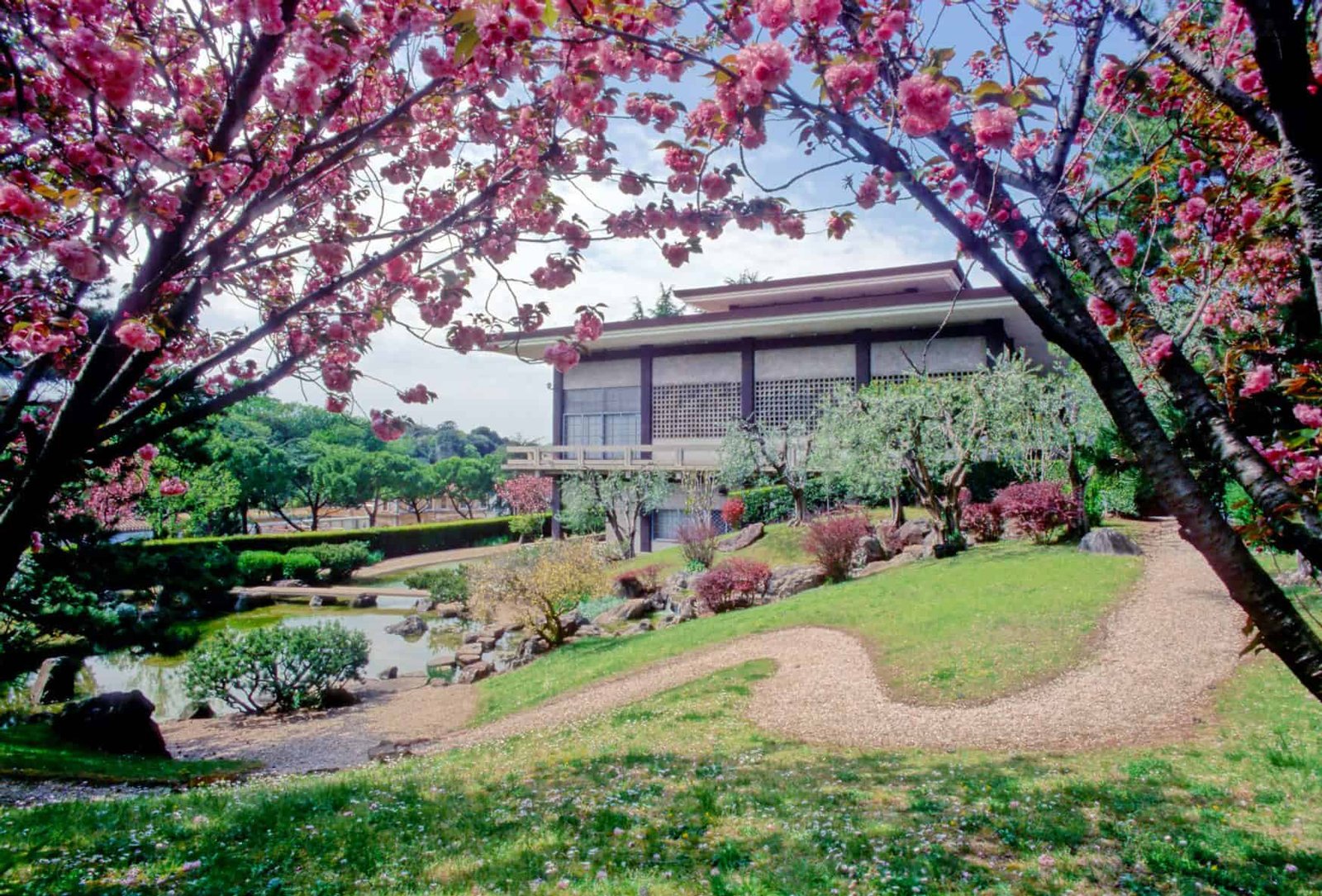
Anyone reaching the top of Viale delle Belle Arti expects marble. Galleria Nazionale d'Arte Moderna, the foreign academies, the facade of the Faculty of Architecture: Valle Giulia is the neighborhood where Rome decided, between the 1800s and 1900s, to stage its own idea of official culture. Then you turn onto Via Antonio Gramsci, walk 200 meters, and before your eyes appears something that has nothing to do with that discussion: a low, squared reinforced concrete volume, with large regular openings and a walkway separating it from the street, suspended above a garden that you cannot see from the road but can sense from the treetops. It is the Japanese Cultural Institute in Rome, and for more than 60 years it has probably been the most foreign, and most successful, piece of architecture in the whole neighborhood.
I say it right away, because it is the thing you need to know before all the others: the Institute is not a museum. You do not pay a ticket, you do not enter when you like, there is no permanent collection to walk through with an audio guide. It is a working cultural body, with a real library used by real scholars, an auditorium that hosts series, an exhibition hall and language courses that run all year. The garden, which is the reason most people look for this address, can be visited in certain periods of the year on free guided tours by reservation, and that is enough to explain why in certain weeks the spots run out within a few hours and for the rest of the year the gate stays closed to those who pass by chance.

Where the Japanese Cultural Institute in Rome Is and How You Really Get There
The address is Via Antonio Gramsci 74, in the Valle Giulia quadrant that belongs administratively to the Pinciano rione but that in Romans' minds is a cultured appendage of Villa Borghese. It is on the eastern side of the valley, opposite the Sapienza Faculty of Architecture and a few dozen meters from the Galleria d'Arte Moderna and the National Etruscan Museum of Villa Giulia. Anyone with the geography of the park in mind can orient themselves this way: the Institute sits on the northern edge of the large green enclosure, in the strip of foreign academies and institutes that slopes down toward the Tiber and the Flaminio neighborhood.
The difficulty for those who do not know the area is that Valle Giulia has no metro stop of its own. The most useful station is Flaminio, on line A, which opens onto Piazza del Popolo: from there you walk up Viale delle Belle Arti, and the walk takes between 20 and 25 minutes with a constant but never tiring slope. Those who prefer to shorten it can take tram 2 from Piazzale Flaminio and get off at Belle Arti, which is the right stop: from that point the Institute is reached in five or six minutes on foot going up the street. Tram 19, which comes from the eastern neighborhoods, also stops in the area and serves those coming from San Lorenzo, Verano or Prati via Viale Regina Margherita.
Then there is the route I recommend to those with time and legs: enter Villa Borghese from the Pincio and cross the whole park heading north, passing the little lake of Villa Borghese, the Bioparco and the strip of tree-lined avenues, until you come out of one of the gates that open onto Viale delle Belle Arti. It is a 40-minute walk that is never boring and that has the advantage of making you understand, with your legs and not with the map, that the Institute is not an isolated building in a residential neighborhood but the final piece of a system of green space and museums that begins at the top of the Trinità dei Monti staircase.
By car things get complicated. Via Antonio Gramsci is a narrow street, partly one-way, and the parking spaces are almost all taken by people working in the academies, at the university and in the institutes. On days when the Faculty of Architecture has classes the situation gets noticeably worse. Anyone who really must come with their own vehicle should aim for Villa Borghese car park under Viale del Galoppatoio and then do the rest on foot, or leave the car in the Flaminio area and go up by tram. The taxi of course arrives at the door, but on the way back you rarely find one passing by chance: you call, and you allow a few minutes of waiting.
What the Japanese Cultural Institute in Rome Really Is: A Body, Not a Museum
Inaugurated in 1962, the Japanese Cultural Institute in Rome (ローマ日本文化会館, Rōma Nihon bunka kaikan, in English Japanese Cultural Institute) was born with a stated and simple purpose: to spread Japanese culture in Italy. Put like that it sounds like a press release formula, but behind it there is a precise political choice by postwar Japan, which within a few years decided to build a network of cultural outposts in Western capitals to rebuild its international image through language, the book, cinema, theater and the garden, and not through the economy alone.
Today the Roman Institute is one of the 25 foreign offices of the Japan Foundation spread across 24 countries of the world, and one of only three to bear the title of "Japanese Cultural Institute", together with those of Cologne and Paris. It is a distinction rarely read in guides and that instead matters: the other offices are offices of the foundation, these three are true institutes, with a representative building, library, spaces for the public and a programming autonomy that elsewhere does not exist.
There is more, and it is the point that gives this address its place in history. The Japanese Cultural Institute in Rome was the first body of its kind founded by the Society for the Promotion of International Cultural Relations (国際文化振興会, Kokusai bunka shinkōkai), an internal organ of the Ministry of Foreign Affairs of Japan. The first, not one of the first: Rome was the testing ground of a model that would later be replicated elsewhere. After 10 years of activity the Society was replaced, in 1972, by the Japan Foundation (国際交流基金, Kokusai kōryū kikin), an independently administered body, which inherited the management of the Roman Institute and of all the other offices founded in the meantime in other cities of the world.
This 1972 passage is not a bureaucratic detail. It means that the building on Via Gramsci was born under a ministerial, almost diplomatic logic, and continues its life under a foundation logic, more like that of an independent cultural institution. The result, still visible now, is a body that has the architecture of representation and the functioning of a study center: the big hall for ceremonies and concerts, but also the library counter where a student of Japanese asks to borrow a dictionary.
Among the several directors who have followed one another at the head of the Roman office, the geographer Kei'ichi Takeuchi and the Italianists Tomotada Iwakura, a linguist, and Kazufumi Takada, a theater scholar, are remembered. It is worth pausing a moment on these names, because they tell of a choice: the Institute was almost never entrusted to career officials, but to scholars who had a personal and professional relationship with Italy. A geographer who had worked on the Italian landscape, a linguist who knew our language from the inside, a theater scholar able to read the relationship between Noh and European stage forms. From this approach comes the physiognomy of the programming, which in more than 60 years has almost always preferred dialogue to showcase.
The Institute's activity is organized on two distinct tracks, and knowing them helps to understand what really happens behind those windows. The first track consists of organizing and carrying out its own programming, which translates into cultural events for a better knowledge of Japanese culture: exhibitions, lectures, concerts, film screenings, theater performances, meetings with authors, presentations of translations. The second track, less visible but just as substantial, consists of coordinating and assisting the programs of the Japan Foundation on Italian territory and of collecting information and data: scholarships, exchanges between universities, research support, mapping of who in Italy works on Japan.
The Building by Isoya Yoshida: Heian Style and Reinforced Concrete
The building that houses the Institute has three floors above ground and contains an auditorium, an exhibition hall and a library that holds about 35,000 volumes. Put in these terms it is the description of any medium-sized cultural center. What makes this building a case study is the way it was designed.
The author is the architect Isoya Yoshida, one of the major names of 1900s Japanese architecture, a figure known at home for his work on the continuity between the timber building tradition and modern materials. In Rome Yoshida did something that on paper seems a gamble: he took the language and materials of traditional Japanese architecture, reinterpreting the Heian style in a modern key, that is, the formal repertoire that consolidated in Japan between the ninth and 12th centuries, and fused it with the brutalist style in reinforced concrete that in the 1960s dominated the international scene.
The result is a building that at first sight seems simply severe and that, looked at with a minimum of attention, reveals a precise grammar. The rhythm of the openings picks up the rhythm of the posts and beams of a traditional timber structure, but it is made in exposed concrete. The horizontal projections are the translation into concrete of the deep eaves of Japanese architecture, those that serve to protect the walls from driving rain and to create that band of half-light that in Japan is considered an integral part of the lived space. The terrace parapets, the railings, the way the volume rests on the ground instead of sinking into it: everything refers to a repertoire that is transposed here into a material that this repertoire had never known.
Inside, the logic continues. The reception rooms open toward the garden with large glass surfaces, following a principle that in Japan is almost an obligation: the building does not look at the street, it looks at the green. Anyone coming in for a lecture or an exhibition thus finds themselves in a situation unusual for Rome, with the artificial landscape of the garden working as a permanent picture behind the speaker. The auditorium, sized for a small audience, has the right scale for screenings, traditional music concerts and lectures, and has no ambition to compete with the city's great halls such as the Auditorium Parco della Musica, which is a couple of kilometers away and belongs to a completely different order of magnitude.
The exhibition hall, on the floor that overlooks the garden, hosts temporary exhibitions of variable length, often dedicated to photography, graphics, crafts, calligraphy, design and contemporary Japanese art. There are no permanent collections on display and no stable museum route: anyone who comes hoping to find a museum of Japanese art is looking for the wrong address and should aim instead for the Giuseppe Tucci National Museum of Oriental Art, merged into Museo delle Civiltà, which does have a permanent collection and a considerable one.

A Curiosity About the Japanese Cultural Institute in Rome
The curiosity concerns the title. In the world there are 25 foreign offices of the Japan Foundation, spread across 24 countries, and only three of them can call themselves "Japanese Cultural Institute": Rome, Cologne and Paris. Three European cities, none Asian, none American. Anyone who would expect to find New York, London or Beijing among the top-ranking offices is surprised, and the surprise has a historical explanation.
When in the 1950s and 1960s Japan decided to equip itself with cultural outposts abroad, the mental map of its officials was not that of the global economy but that of the humanistic tradition. Rome, Paris and Cologne represented, on that map, three poles of European cultural prestige with which Japan had for decades maintained relations of study: archaeology and art history in Rome, philosophy and German studies in the Rhineland, literature and theory in Paris. The offices that arose there received the building, the garden, the library and the full title. The others arose as offices.
There is then a second curiosity, smaller but one that amuses those with an ear for languages. The Japanese name of the Institute, ローマ日本文化会館, is transliterated Rōma Nihon bunka kaikan and translates literally as "pavilion of Japanese culture of Rome". The term kaikan indicates a public building meant for meetings and collective activities, and has nothing of the European idea of "institute", which refers to an administrative structure. The difference between the two words tells of two different ways of imagining the same thing: for us a body with a director and an organization chart, for them a big hall where people gather. Anyone who has visited the building understands that the Japanese word is the more precise of the two.
The Garden by Ken Nakajima: The First Japanese Garden in Europe
The Institute is set in a large garden with fluid forms, in deliberate contrast with the severe ones of the building, made according to the Japanese tradition and equipped with a pond, waterfall and little bridge. It was designed and built by Ken Nakajima at the same time as the construction of the building, and is considered the first Japanese garden ever built in Europe by Japanese workers.
This last clarification should be read carefully, because it is the part that is usually badly simplified. Japanese-style gardens already existed in Europe for decades: the fashion of Japonisme had filled the 1800s parks with red little bridges, stone lanterns and maples, and there is no European capital that does not have a corner like that in some botanical garden. But those were gardens designed by European landscapers interpreting an exotic repertoire. Here it is different: Japanese design, Japanese workers, imported materials and techniques, building rules respected. It is the difference between a quotation and an original, and in Rome the original arrived.
The garden belongs to the family of stroll gardens, those that in Japan are called kaiyū-shiki teien and that are visited by walking a path that goes around a body of water. The rule of these layouts is that the path must never show everything at once: at each turn one portion of the landscape hides and another opens, so that the visitor accumulates a sequence of pictures instead of a single glance. It is an idea of the garden exactly opposite to the Italian one, where the perspective axis serves to let you see the whole at once and to measure its symmetry. At Valle Giulia the two systems are a few hundred meters from each other, and anyone who in the same day walks the avenues of Villa Borghese and then the path of the Japanese garden takes, without noticing, a crash course in the history of landscape.
The elements you meet along the way are the canonical ones, arranged however according to a design that takes into account the climate and light of Rome. The water mirror occupies the center of the composition and has an irregular shape, calculated so that from no viewpoint can you take in its whole perimeter. The waterfall comes from a natural drop in level of the Valle Giulia terrain, exploited instead of being corrected, following the Japanese principle that the garden must go along with the conformation of the ground. The little bridge crosses the water mirror at the point where the view is widest, and is conceived as a resting station, not as a simple passage: whoever gets there stops, because the design obliges them to.
Then there is the stone, which in a Japanese garden counts as much as the plants and sometimes more. The rocks are not ornament: their position, inclination, the relationship between an upright stone and a lying one, the part that stays buried compared with the part that emerges, answer to rules codified by centuries of treatises. A Japanese gardener reads a group of stones as we read a sentence, and most European visitors cross it without noticing that it is a text. If there is a reason why the guided visit is preferable to the free visit, it is precisely this: someone who explains the syntax of the stones turns a pleasant walk into a reading.
The plant heritage mixes Japanese species and species adapted to the Mediterranean climate. Maples, ornamental cherries, pines shaped with traditional pruning techniques, bamboo, azaleas, irises near the water, mosses where the shade allows. Pruning, in a garden of this kind, is a continuous and decisive job: a Japanese pine is not a plant that grows, it is a plant that is built year after year, branch by branch, and a year of skipped maintenance shows for a decade. Anyone who visits the garden on Via Gramsci and finds it in order is looking at the result of 60 years of uninterrupted work, not a spontaneous effect.
Seasonality, in a layout like this, is the load-bearing structure and not an accessory. The Japanese garden is designed to change appearance radically four times a year, and each season has its protagonists: the cherry blossoms in spring, the deep green and the cooling water in summer, the red of the maples in fall, the bare structure of stones and branches in winter. A well-designed Italian garden stays beautiful all year because its geometry does not change. A well-designed Japanese garden is four different gardens. Anyone who sees it only once knows a quarter of it.
Something Nobody Tells You About the Japanese Cultural Institute in Rome
The thing almost never said is that the garden is not visible from the street and is not meant to be. Anyone passing on Via Antonio Gramsci sees a fence, a gate, a concrete building and treetops sticking out beyond the wall. Nothing else. Many people come all the way there convinced they can at least take a look from outside, and go back with the feeling of having got the wrong address. They have not got the wrong address: the garden is designed to be looked at from inside the building and from the path, and the very idea of a view from the street would be contrary to its logic. In Japan an institution's garden is not shown to passersby, it is shown to those who enter.
The second thing not said concerns the access regime, and it is the reason many visits come to nothing. Access to the garden is exclusively through free guided visits by reservation, and these visits take place only in certain periods of the year. There are no continuous opening hours, no ticket to buy at the entrance, no possibility of getting in because you happened to be passing. When the openings are announced, the available spots run out quickly, because Roman demand for this garden is far greater than the capacity of a guided route for small groups. Anyone who wants to get in has to organize in advance and follow the official channels of the Institute: any other information on dates and arrangements, read elsewhere, should be checked at the source because it changes from year to year.
Third thing, which concerns the relationship between the Institute and the city. Many Romans who live a stone's throw from Via Gramsci do not know there is a Japanese garden at that spot, and even fewer know that the Institute organizes lectures, screenings and concerts open to the public, often with free entry, in a hall that does not have capacity problems like the big theaters. The cultural programming is the easiest door into this building, and paradoxically it is less frequented than the garden visits, which are the hardest door. Anyone who wants to see the inside of Isoya Yoshida's building has a better chance by signing up for a lecture than by putting their name on the list for the garden.
Fourth and last. The Institute's library is a library open to interested users and not a storeroom reserved for staff. The fact that it holds about 35,000 volumes does not make it an inaccessible archive: it is a working tool conceived to be used by students, researchers, translators and enthusiasts. The access arrangements and hours are set by the Institute and should be checked directly, but the idea that it is a closed place is simply wrong.
My Advice for Visiting the Japanese Cultural Institute in Rome
The main advice is only one and is worth more than all the others put together: do not come here by chance. This address punishes improvisation like few others in Rome. The garden requires a reservation, the exhibitions have their own calendars, the lectures are held on set dates, the library has service hours. Anyone who arrives without having checked first what is scheduled that day finds a gate and a plaque, and disappointment is guaranteed.
The second piece of advice concerns the choice of season, if the goal is the garden. The two strongest visual windows are the spring blossoms and the autumn foliage, and on this there is no argument. But there is one consideration to make: spring is extremely crowded and the competition for spots is fierce, while autumn, though just as spectacular, moves smaller numbers. If you have the possibility to choose, the ratio between beauty and ease of access favors autumn. Besides, the low light of October and November on a garden with water at its center does things that the vertical light of April does not.
Third piece of advice: the garden visit is short, and this throws off those who have organized the day around it. A guided route in a garden of this size ends in under an hour, because the garden is not big and because the number of people queuing to get in requires a rotation. It is therefore best to build a Valle Giulia day around it, and not the other way round. An example of a program that works: morning at the National Etruscan Museum of Villa Giulia, which requires at least two hours and which offers one of the most beautiful cloisters of the city, a light lunch in the area, a visit to the Japanese garden in the early afternoon, and a close at the Galleria d'Arte Moderna or with a walk inside Villa Borghese up to the Pincio for sunset.
Fourth piece of advice, on behavior. In the garden you do not leave the path, you do not touch the stones, you do not enter the water and you do not pick anything, not even a fallen leaf. It seems obvious and yet it needs saying, because in a Japanese garden even the moss is part of the design and one step off the path leaves a mark that takes months to disappear. The staff are courteous and do not raise their voices, one more reason not to force them to step in. A recommendation on voice volume also applies: the garden is small, the groups cross paths, and a loud conversation ruins the experience for about 10 people at the same time.
Sixth and last. Anyone with a serious interest in Japan who cannot get a spot for the garden should not consider the trip a failure. The Institute has a cultural program that over the year touches film, theater, music, literature, applied arts and language, and many of these initiatives are free or at a token cost. Going in for a screening still means crossing the atrium of Yoshida's building, seeing the garden through the glass walls and finding yourself among the community of people who in Rome really deal with Japan. It is worth the trip more than a selfie in front of the little bridge.
The Library, the Language Courses and the Collections
Beyond the garden, which is the most photographed part, the daily substance of the Institute lies in the services it offers. It is worth listing them in order, because they are the reason this building is a workplace and not only an architectural object.
- Japanese language courses structured over four years of gradual learning of the spoken and written language, supported by a language lab and audiovisual aids. Four years is not a slogan: the teaching plan is designed to take someone who starts from zero to a real level of competence in speaking, reading and writing, with the progression through the syllabaries and then the Chinese characters marking the whole course.
- A library that holds more than 32,000 volumes and more than 100 journals, grown over time to a total holding of about 35,000 titles. It is a specialist collection on the language, literature, history, art, religion, society and current affairs of Japan, with a substantial part in Japanese and one in Western languages.
- A collection of about 2,500 microfilms and microfiches containing doctoral dissertations from American universities. It is the most unusual holding in the whole library and deserves an explanation, which comes in a few lines.
- A collection of traditional and modern Japanese music, covering the classical repertoire as well as contemporary production, and making up a listening archive that is hard to find anywhere else in Italy.
- Documentaries on Japanese traditions, audiovisual material produced for outreach and teaching, also used in support of the courses and cultural activities.
The microfilm collection of American doctoral dissertations is the item that always surprises anyone reading the list for the first time. What are 2,500 American dissertations doing in a Japanese library in Rome? The answer takes us back to the cultural climate in which the Institute was born. In the 1960s and 1970s, Western academic research on Japan had its center of gravity in the United States, where the big Asian studies departments produced most of the area dissertations. For a European scholar that material was practically out of reach: the dissertations were not published, they circulated on microfilm through reproduction services, and they required a trip or an expense that almost no one could afford. Equipping the Rome branch with that collection meant making available to the Italian and European scientific community a body of research that was otherwise inaccessible. Today, now that a great deal of that material can be consulted in digital form, the collection has lost its emergency function and has acquired a different value, as a document of how research was done before the internet.

Another well-known fact, yet rarely cited
The well-known fact is that the garden on Via Gramsci is the first Japanese garden built in Europe by Japanese craftsmen. You read it everywhere, the guides repeat it, it appears in every list of Roman firsts. What is cited far less is the consequence of that first, which is the interesting part.
Building an authentic Japanese garden outside Japan means facing a technical problem that is not about design but about maintenance. The design can be exported: all it takes is a designer and some craftsmen, and Ken Nakajima brought both. Maintenance cannot. A Japanese garden requires specialized skills that in Europe, in 1962, practically no one had: pruning pines with traditional techniques, managing moss, the seasonal cleaning of the body of water, maintaining the wooden structures, repositioning the stones after the ground settles. A garden like this is not a work you hand over and forget. It is a practice that has to be passed on.
It follows that the continued existence of this garden for more than 60 years implies a chain of transmission of skills that has been kept up across generations of gardeners. It is an intangible heritage that no one photographs and that is worth, in cultural terms, as much as the material heritage made of stones and plants. When we say the Institute's garden is the first in Europe, we say only half of it: the more important half is that it is also one of the oldest still run according to the original rules, which in Europe is a rare condition.
Second little-cited fact: the relationship between the garden and the terrain of Valle Giulia. The valley has a natural shape with a drop in elevation and a vein of water, and that is why Pope Julius III's villa with its nymphaeum was built here in the 16th century, and later the structures that now house the museums. Nakajima did not build an artificial landscape on flat ground. He found a valley with water and a change in level, which are exactly the conditions a Japanese garden designer considers ideal, and he set his layout on top of it. The waterfall works because the terrain allows it. It is a case of a fortunate meeting between an Asian design tradition and a Roman topography, and it explains why the result does not have the fake look of many exotic European gardens.
The right photo to take at the Japanese Institute of Culture in Rome
A necessary premise: the rules on photography are set by the Institute, they change depending on the occasion, and they should be asked about on site before you take out your equipment. During guided visits to the garden, personal photography is normally allowed, but tripods, professional equipment and shooting for commercial purposes are a different chapter and require authorization. Asking costs 10 seconds and avoids unpleasant scenes.
That said, the right photo is not the one everybody takes. The one everybody takes is the little bridge shot head-on with the pond underneath, which is a correct, legible image and absolutely identical to 10,000 others. If the goal is to take home an image that means something, the way is a different one, and it goes through the very principle on which the garden is built.
The right photo is the one that brings concrete and water together. That is, a frame taken from the path, at a point where the squared volume of Yoshida's building enters the field behind the vegetation and is reflected, even only partially, in the water. That single image tells the whole cultural operation of this place: the contrast between the fluid forms of the garden and the severe ones of the building, which is not an accident but the heart of the project. A photo of the garden alone could have been taken in Japan. A photo of the building alone could have been taken in any European city of the 1960s. The photo that contains both can only have been taken here.
On the technical side, a few concrete tips. The best light is the side light of late afternoon, which separates the concrete volumes and brings out the color of the leaves without blowing out the reflections on the water. Summer noon is the worst moment of all: harsh contrast, short vertical shadows, a water surface that becomes a dazzling mirror. A moderately long focal length, around 80 or 100 millimeters equivalent, works better than a wide angle, because it compresses the planes and gives back that overlapping of screens which is the way a Japanese garden wants to be seen. A wide angle, by contrast, widens the space and reveals the whole layout at once, destroying exactly the effect the designer had built.
Some important events that happened here in history
The history of this address can be told through turning points, and they are few but heavy.
The 1950s: the decision. The Society for the Promotion of International Cultural Relations, an internal body of the Japanese Ministry of Foreign Affairs, decides to set up a cultural base abroad and chooses Rome as its first experiment. It is a choice that, seen today, says a lot: postwar Japan picks as its first cultural interlocutor in the West not an economic power but a capital with a humanist tradition.
1962: the inauguration. Isoya Yoshida's building and Ken Nakajima's garden are completed and the Institute opens. At the same time the first Japanese garden built in Europe by Japanese craftsmen comes into being. Rome acquires, with almost no one noticing at the time, a piece of first-rate international contemporary architecture.
1968: the context around it. Valle Giulia becomes a name that in Italy means something else. The Battle of Valle Giulia of March 1, 1968, in front of the Faculty of Architecture, took place a few dozen meters from here and marks the symbolic beginning of the season of Italian student protest. The Institute is not a protagonist of it, but from that year its address carries a memory that does not belong to it and that shapes the way the area is perceived.
1972: the move to the Japan Foundation. After 10 years of activity the Society is replaced by the Japan Foundation, a body with independent administration, which inherits the management of the Rome branch and of all the others created in the meantime. The change of body marks the passage from a diplomatic logic to the logic of a cultural foundation, with greater autonomy in programming.
The following decades: building the library. There is no date and no ribbon cutting, but it is probably the most important event in the Institute's history. From the mid-1960s on, the collection grows until it passes 32,000 volumes and nears 35,000, and the journals, the microfilms of the American dissertations, the music collections and the documentaries are added. Rome becomes a place where you can study Japan without going there.
The present: the garden as a contested asset. In recent decades, with the growth of Italian interest in Japanese culture, the garden openings have turned into events with demand far greater than supply. It is a success that poses a real management problem, because a garden of that size cannot withstand museum-level crowds and because every widening of access is paid for in wear on the path, the lawn and the moss.
Who has passed through the Japanese Institute of Culture in Rome
Here it is better to be precise and not make a list of grand names that cannot be documented. The people we can speak about with certainty are those who made or directed this place.
Isoya Yoshida, the architect of the building, is the first. A central figure of 20th-century Japanese architecture, he worked throughout his career on the problem of how to make Japanese building tradition survive inside modernity, and in Rome he left one of his most visible works in Europe. Anyone who studies architecture and arrives in Valle Giulia to see the faculty finds, on the other side of the street, a lesson worth as much as those in the classroom.
Ken Nakajima, the garden designer, is the second. He built the layout at the same time as the building, bringing to Europe a way of making gardens that until then Europeans had only imitated. His name is tied to Rome for this first, and the garden on Via Gramsci remains the main record of his passage on the continent.
Kei'ichi Takeuchi, a geographer, is among the directors who are remembered. Japanese human geography of the second half of the 20th century had in him a reference figure, and his presence in Rome shows the kind of profile the Institute sought at its top: scholars, not administrators.
Tomotada Iwakura, a linguist and Italianist, and Kazufumi Takada, a theater scholar and also an Italianist, complete the group of directors that the Institute's memory keeps. Both worked on Italian and Italian culture from the inside, which means that mediation between the two cultures was for them not an office task but their own trade.
Next to these names are the thousands of nameless people who really passed through this building: the students of the language courses, who over 60 years number in the thousands and who have produced a good part of the Italian translators, interpreters and Japanologists now working. The researchers who wore out the microfilms of the American dissertations at a time when there was no alternative. The gardeners who kept Nakajima's layout alive through decades of pruning, and who are probably the people who have spent the greatest number of hours here of anyone.
How to visit the garden and when to go
The starting point is the one already stated, and it is worth repeating because it is the cause of most wasted trips: the garden can be visited at certain times of the year with a guided route by reservation, and the visits are free. There is no free entrance, there is no ticket office, there are no permanent opening hours. Dates, opening windows, procedures and reservation times are set by the Institute and communicated through its official channels. Anyone who reports precise dates elsewhere, including any printed guide, is reporting information that is valid for the year in which it was written and may no longer be valid. Checking at the source before leaving is not a piece of prudent advice but a condition of success.
On choosing the moment, there are three variables. The first is the season, and the garden is at its best in the two windows of spring blossom and autumn color, with autumn being more accessible because it is less contested. The second is the time of day: early afternoon in the cold months and late afternoon in the warm months offer the side light that brings out both the water and the concrete, while full midday flattens everything. The third is the weather, and here there is a surprising observation: an overcast day or one with light rain is an excellent condition for a Japanese garden, because the moss comes back to life, the stones change color and the surface of the water stops dazzling. Anyone who gives up the visit because it is cloudy is giving up for the wrong reason.
What is around the Japanese Institute of Culture in Rome
The cultural concentration around this address is among the highest in Rome, and this turns an obstacle into an advantage: if the garden cannot be visited, the day is saved anyway without moving half a kilometer.
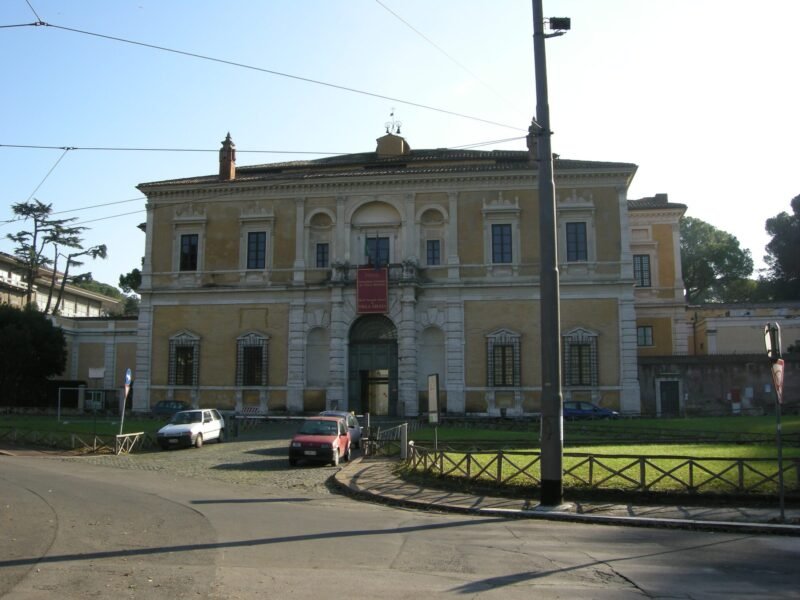
100 meters away is the National Etruscan Museum of Villa Giulia, housed in the 16th-century villa of Pope Julius III, with the nymphaeum, the courtyards and the most important Etruscan collection in the world. A little farther on is the Galleria d'Arte Moderna di Roma and, on Viale delle Belle Arti side, Galleria Nazionale with its 19th- and 20th-century collections. Going down toward Flaminio you reach MAXXI, the national museum of 21st-century arts, and the Auditorium Parco della Musica, which in summer becomes one of the engines of the Roman concert season.
On the opposite side opens Villa Borghese, and inside the park the choice is wide: the Bioparco di Roma (Rome Zoo), the Galleria Borghese with its Caravaggios and its Berninis, the Secret Gardens, the Museo Carlo Bilotti in the Orangery, the Casina di Raffaello for children, the Gigi Proietti Globe Theatre for the summer Shakespeare seasons, the Casa del Cinema and, at the top, the terrace of the Pincio with the view over Piazza del Popolo. Anyone with a passion for gardens who wants to build a themed day can pair the visit with the Rome Rose Garden on the Aventine, the Botanical Garden in Trastevere and the Orange Garden. Those willing to leave Rome will find in the Garden of Ninfa, in the province of Latina, the other great garden of Lazio with regulated access and by reservation.
Quick questions about the Japanese Institute of Culture in Rome
Can you enter the Japanese garden freely?
No. The garden is visited at certain times of the year with free guided routes by reservation. Dates and procedures are set by the Institute and should be checked on the official channels before setting out.
Can you see the garden from the street?
No, and it is not an omission: the design intends the garden to be looked at from inside the building and from the path, not from the sidewalk.
Who designed the building and the garden?
The building is by the architect Isoya Yoshida, who blends the traditional Japanese language of Heian descent with reinforced concrete brutalism. The garden is by Ken Nakajima, built together with the building.
Why is it considered the first Japanese garden in Europe?
Because it is the first built in Europe by Japanese craftsmen. Japanese-style gardens designed by Europeans already existed, but they are something else.
Is the Institute a museum?
No. It is a cultural body with a library, an auditorium, an exhibition hall and language courses. Anyone looking for a permanent collection of Japanese art should go to the Giuseppe Tucci National Museum of Oriental Art, now merged into Museo delle Civiltà.
How do you get there by public transport?
Metro A to Flaminio and then a 20-minute walk along Viale delle Belle Arti, or tram 2 to the Belle Arti stop, or tram 19 for those coming from the neighborhoods to the east. By car the area is hard to park in.
Is the library open to the public?
Yes, it is conceived as a working tool for students, researchers, translators and enthusiasts. Hours and access procedures are set by the Institute.
What is the best time of year to see the garden?
Spring for the blossom and autumn for the color of the maples. Autumn is just as beautiful and less contested.
In our judgment the Japanese Institute of Culture in Rome is the place that best disproves the idea that Rome can only offer antiquities. Here you find a building from 1962 designed by a Japanese master, a garden with no precedent in Europe, a library that trained an entire discipline in our country and an entrance that deliberately stays narrow. Anyone who accepts the rules of the game, books in time and comes with the right attitude takes home half an hour that is worth a whole day. Anyone who passes by chance finds a gate, and has nothing to complain about: the garden has been like this for 60 years and has no intention of changing.
Frequently asked questions about the Japanese Institute of Culture in Rome
Can you enter the Japanese garden of the Japanese Institute of Culture in Rome freely?
No, the garden of the Japanese Institute of Culture in Rome can be visited only at certain times of the year with free guided routes by reservation. Dates and procedures are set by the Institute and should be checked on the official channels before setting out, because there is no free entrance.
Can you see the garden of the Japanese Institute of Culture in Rome from the street?
No, and it is not an oversight: the design intends the garden of the Japanese Institute of Culture in Rome to be seen only from inside the building. Anyone passing along Via Antonio Gramsci sees a fence, a gate and the concrete building, with the treetops sticking out above the wall, nothing else.
Where is the Japanese Institute of Culture in Rome?
The Japanese Institute of Culture in Rome is at Via Antonio Gramsci 74, in the Valle Giulia area, across from the Faculty of Architecture of Sapienza and a few dozen meters from Galleria d'Arte Moderna and the National Etruscan Museum of Villa Giulia.
Who designed the garden of the Japanese Institute of Culture in Rome?
The garden of the Japanese Institute of Culture in Rome was designed by Ken Nakajima, built at the same time as the building, and is considered the first Japanese garden ever built in Europe by Japanese craftsmen, with a pond, a waterfall and a little bridge.
Since when has the Japanese Institute of Culture in Rome existed?
The Japanese Institute of Culture in Rome was inaugurated in 1962, with the stated aim of spreading Japanese culture in Italy. The building that houses it is the work of the architect Isoya Yoshida and contains an auditorium, an exhibition hall and a library with about 35,000 volumes.
Can you take Japanese language courses at the Japanese Institute of Culture in Rome?
Yes, the Japanese Institute of Culture in Rome runs Japanese language courses structured over four years of gradual learning of the spoken and written language, supported by a language lab, as well as exhibitions and conferences with their own calendars.
What is near the Japanese Institute of Culture in Rome?
100 meters from the Japanese Institute of Culture in Rome is the National Etruscan Museum of Villa Giulia, housed in the 16th-century villa of Pope Julius III, with the nymphaeum, the courtyards and the most important Etruscan collection in the world.
Article written by the editorial team of TourLeaderPro, contact them for Private/Corporate/V.I.P. Tours and Experiences. For a guided day among Valle Giulia, Villa Borghese and the museums of the northern quadrant, with a licensed tour guide, start from the TourLeaderPro contact page. Tour operators who build themed itineraries on architecture and gardens will find the consulting service in the section dedicated to tour operators.
Planning a trip to Rome? The English-language guides for visiting the city are on ItalyPlanner.com, where you will find itineraries, practical tips and in-depth pieces on the neighborhoods and museums of the capital.
Contact Information
Nearby
 National Etruscan Museum of Villa Giulia100 m
- British School at Rome200 m
- Romanian Academy in Rome200 m
- Danish Academy in Rome200 m
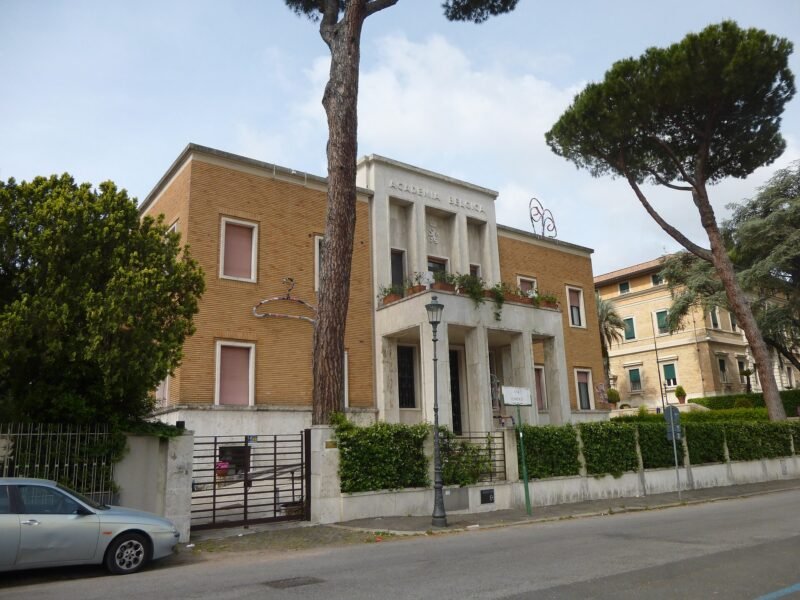
- Academia Belgica300 m
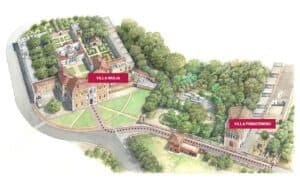
- Villa Poniatowski300 m
Upcoming events nearby
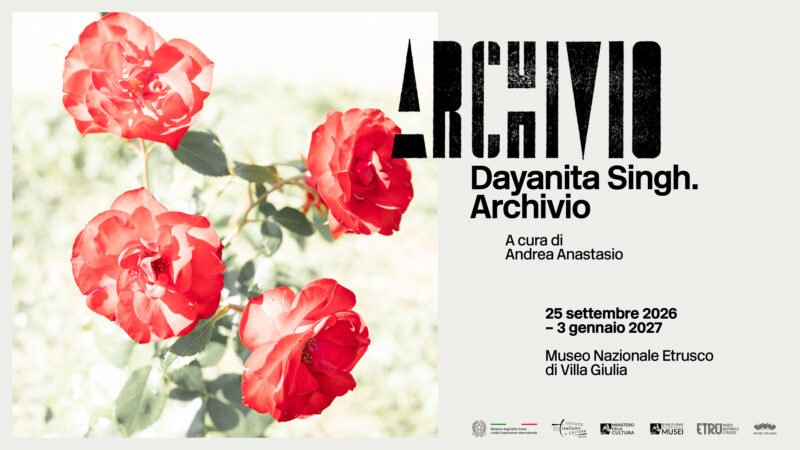
- Dayanita Singh at Villa Giulia, Archivio, September 25 to January 3, 2027100 m
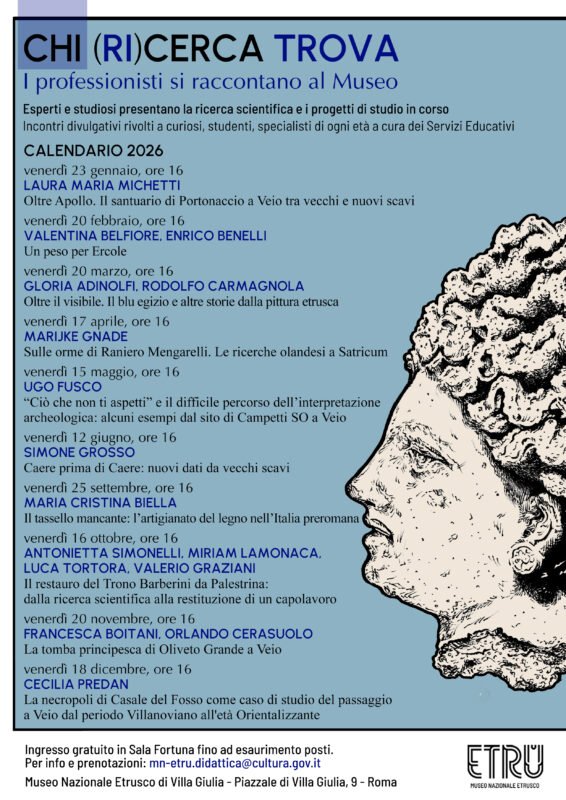
- Chi (Ri)cerca Trova 2026 at the National Etruscan Museum of Villa Giulia, January 23 to December 18, 2026100 m
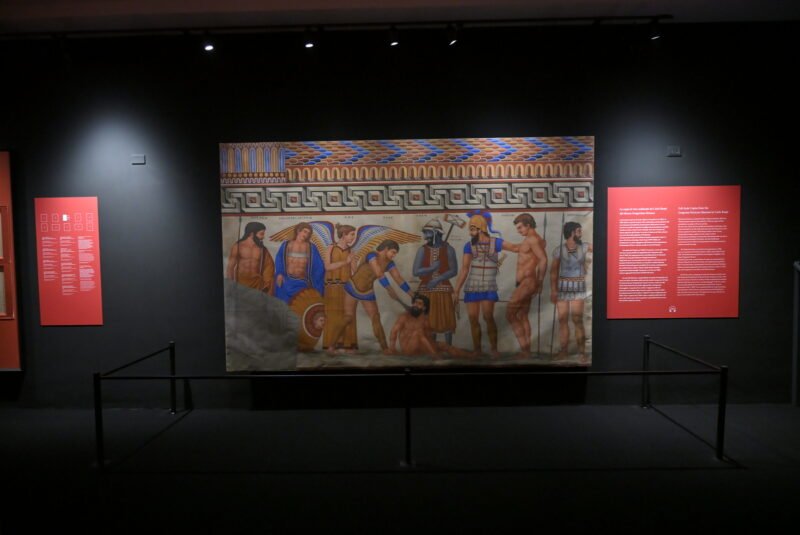
- Il Ritorno degli Eroi at the Etruscan Museum of Villa Giulia, through December 31, 2026100 m
- L’indovino di Mouna Rebeiz at Museo Nazionale Etrusco di Villa Giulia, from September 16 to November 29, 2026100 m