Mercato Trionfale
In short. Mercato Trionfale is at Via Andrea Doria 41, in the Trionfale neighborhood, within the territory of Municipio I of Roma Capitale.
Mercato Trionfale is at Via Andrea Doria 41, in the Trionfale neighborhood, within the territory of Municipio I of Roma Capitale. Entry is free, you pay nothing and book nothing. Turismo Roma, the city's tourism portal, lists opening Monday to Saturday from 7:00 to 14:00, with extended hours until 19:00 on Tuesday and Friday. On Sunday it's closed.
It's the largest covered market in the city, with more than 270 stalls across fruit, vegetables, fish, meat, cheese, spices, bread and small neighborhood services. It isn't a market built for visitors. It's the pantry of Prati, of Trionfale and of half the north side, and you can see it in the rhythm: at 7:00 the deliveries are unloaded, at 9:00 the real buying starts, at noon they begin to pack up.
The practical information given here comes from the check of September 28, 2026 on the Turismo Roma page and on the other institutional and press sources cited further on. The hours of the municipal markets change with municipal resolutions, with calls for new stalls and with the seasons: before planning your morning around the market, especially if you're counting on the afternoon opening, check the day before.
Where it is and what the market looks like
The market takes up a whole block between Via Andrea Doria and Via Tunisi, in the stretch of the Trionfale neighborhood between Viale Giulio Cesare and the climb toward Monte Mario. The Vatican walls and the entrance of the Vatican Museums are a few blocks away, to the south, and that's what puts it on the itineraries of people visiting the Vatican. For the neighborhood, instead, it's simply Via Doria market.
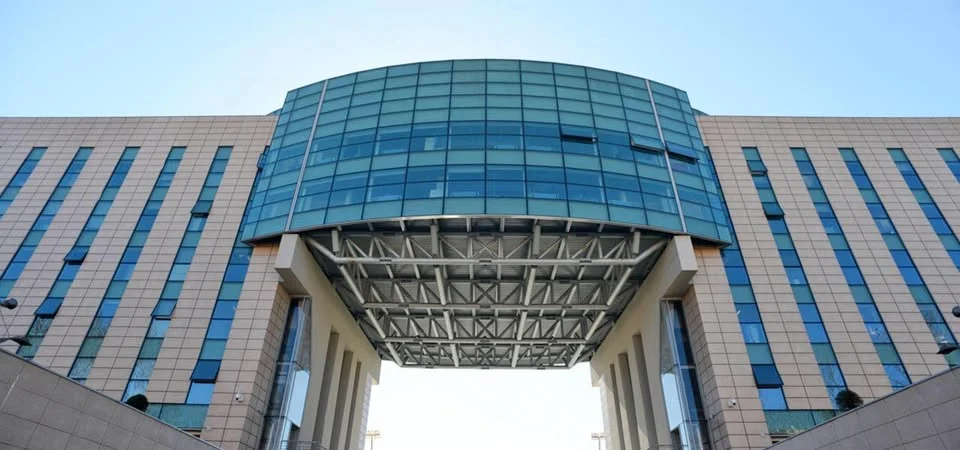
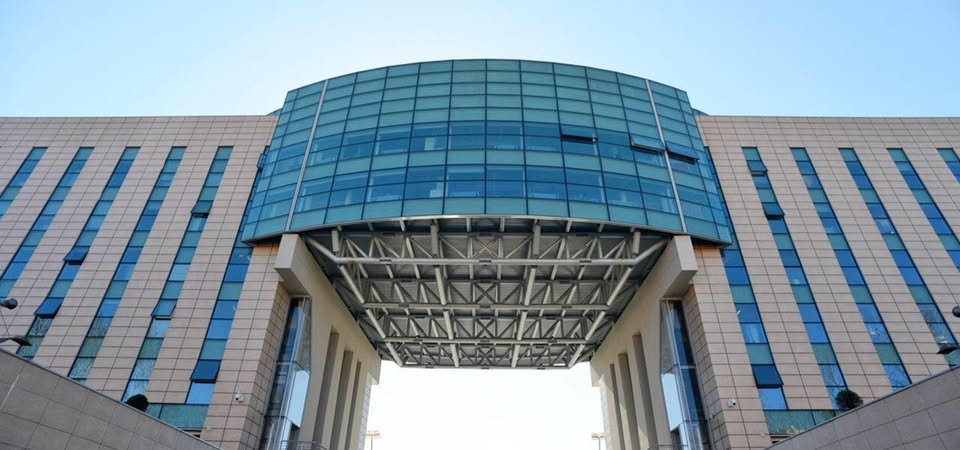
The current building is a glass and concrete structure opened in 2009, with the stalls at street level and an integrated multistory parking garage. The project is signed by the studio Ab Architecture of Armando and Angelo Balducci, who date it to 2004 and describe it as a redevelopment of the market area with a new multifunctional structure. The client named is the company Nuovo Mercato A. Doria.
Inside, the layout is parallel aisles. The stalls are grouped by category and marked by a color code that Turismo Roma describes like this: light green for direct producers, green for fruit and vegetables, blue for fish, red for meat. The central aisle hosts the oldest licenses, the ones that local reports now place with the third generation of families passing the stall down.
Besides the food stalls there are the services that a Roman neighborhood market never lacks: the shoemaker, the barber, repairs, a few housewares stalls. Above the market, in spaces that stayed empty for years, a study room of the Biblioteche di Roma network has operated since 2024. Municipio I has also put out to tender some stalls for food service, that is, food to eat on the spot, which I discuss further on.
The first impression is that of a big bright shed, not of a historic cast-iron market. Anyone arriving expecting the 19th-century vaults of the markets of Barcelona or Florence is thrown off. Here the beauty is in the density of the stalls and in the noise, and the architecture does what it has to: it keeps vendors and customers dry, organizes the flows, lets the cars arrive. Judge it by what it sells, not by the beams.
A curiosity about Mercato Trionfale
The market wasn't born where it stands today. According to the reconstruction published by Turismo Roma and echoed by several press sources, at the end of the 19th century the stalls stood in the open on Viale Giulio Cesare, in an area still surrounded by countryside, as an exchange point for people entering the city from the north. The neighborhood as we know it didn't exist: there were vineyards, vegetable gardens, a few farmhouses and the kilns of the nearby valley.
In the 1930s, with the building expansion of the neighborhood, the market is moved to Via Andrea Doria. Here it stays for about 70 years in the form that many Romans still remember: a long row of open-air stalls along the street, with the tarps, the crates stacked on the sidewalk and traffic passing through the middle. The move in 2009 to the covered structure closed that chapter.
The curious detail is that the name says little about the real history. Mercato Trionfale doesn't mean the market of Via Trionfale, which is a different street, a little farther west. The name is that of the neighborhood, which in turn takes it from the ancient Via Triumphalis. Anyone looking for the market on Via Trionfale with a navigator ends up in the wrong place, and people often get lost right there.
There's a second detail that the neighborhood's Romans like to tell. For years people kept saying I'm going to Via Doria, not I'm going to the Trionfale, and for many older residents the new structure long remained the new market. In Rome's neighborhoods the names of places change a generation late, and this is one of the cases where you can still hear it.
Something nobody tells you about Mercato Trionfale
The market is public, the building isn't, at least in the common sense of the term. The structure was built through project financing: a private company built the complex and runs it under a 30-year concession, collecting the fees from the vendors and managing the parking. Municipio I remains in charge of the market functions, assigns the stalls through public calls and sets the rules. Two parties, two logics.
This dual management explains many things the visitor notices without understanding them. Local reports of recent years describe a recurring dispute among vendors, concessionaire and administration over cleaning, maintenance, pigeons, broken doors, parking reserved for customers and fees. A survey collected by the neighborhood market associations also reports an appeal to the TAR over contractual relations. These aren't tourist details, but they explain the state of the aisles.
The second point concerns parking. Above and below the market there is a large paid garage, open day and night according to the parking operators, with entrance from Via Tunisi. On the number of spaces the sources disagree: the booking circuits speak of about 740 spaces, a Roman news report gives 320, with a small share reserved for market customers.
The practical consequence is simple. The garage is busy with people going to the Vatican Museums, and on high-season mornings those who come to shop find less room than they'd expect. Vendors have complained about it for years. If you come by car specifically for the market, factor in the garage's hourly rate and ask at the cashier if there's an agreement with the stalls in force that day.
Third point, the most useful: the historic licenses are in the central aisle, and they are the ones that set the price and the tone of the whole market. Anyone who wants to understand how to shop at the Trionfale starts there, watches where the neighborhood people with their carts stop and where only visitors with backpacks stop, and learns more from that difference than from any guide.
Hours, days and how to get in
Entry is free and without booking, as in all the neighborhood markets of Roma Capitale. The hours published by Turismo Roma, on the page updated in July 2025, are Monday to Saturday from 7:00 to 14:00, with extended opening until 19:00 on Tuesday and Friday. On Sunday the market is closed. There is no ticket office and there are no official paid visits organized by the operator.
On the afternoon openings the sources don't entirely agree. A portal dedicated to Roman markets lists Friday until late evening, a survey by the associations speaks of long hours from Tuesday to Friday, and the municipal commerce office presented the new food service stalls precisely as a tool to keep the market open in the afternoon too. The official figure to start from remains that of Turismo Roma.
The street number also changes depending on the source. Turismo Roma gives Via Andrea Doria 41, other listings report Via Andrea Doria 3. There is more than one pedestrian entrance: the parking operators list some on Via Tunisi, on Via Andrea Doria and on Via Santamaura. For a meeting with a group, pick a specific entrance and say so clearly, because the block is big and it's easy to get lost.
On afternoons with long hours, don't expect the market to be full. Many food stalls work in the morning, when fresh goods arrive and the neighborhood customers come by, and the afternoon is often patchy. If you want to see the Trionfale at its best, the right window is between 8:00 and 11:00 on a weekday. Saturday morning is the busiest time.
For midweek holidays, Christmas, Easter and the month of August the operator gives no public calendar. In Roman neighborhood markets, closures of individual stalls for vacation are frequent in August and vary from vendor to vendor. Anyone arriving at Ferragosto finds the market open but halved, and there's no official way to know beforehand other than stopping by or asking the stalls the week before.
My advice for visiting Mercato Trionfale
Come before the Vatican Museums, not after. Most visitors have a booking for mid-morning and walk past the market without knowing it's there, or look for it on the way out, around 14:00, when the stalls are already washing the floors. Put the market between 8:00 and 9:30, then walk toward the Museums. It's the most convenient order.
Go in with an idea of what to spend, even a small one. You understand a market by buying, not by looking. 100 grams of cheese, two peaches, a bag of dried legumes, something to take home vacuum-packed if the stall offers it. Someone wandering with a phone in hand and buying nothing is tolerated, but stays outside the conversation, and at the Trionfale the conversation with the people selling is half the experience.
Always ask the price before they weigh the goods. Not because anyone wants to cheat you, but because at the stall the price per kilo and the price of what you have in hand are two different things, and a kilo of cherries at the end of June makes a total the visitor doesn't expect. Weigh with your eyes, order in 100-gram units, and have them tell you the total before you open your wallet.
Don't assume every stall takes cards. Many do, others prefer cash for small amounts, and the nearest ATM isn't inside the market. Keep a few coins and small bills in your pocket: a big bill at 8:00 in the morning, when the stall has just opened the register, puts the seller in a bind and wastes your time.
Last tip, about manners. The market is a workplace, with carts, crates and forklifts moving in narrow aisles. Don't stop as a group in the middle of the way, make room for people pushing, and if there are 10 of you split into two or three groups. The Trionfale vendors are used to visitors, but they're also used to seeing them block the Saturday customers.
How to read the aisles and the stalls
The color code is the simplest key. The light green stalls, according to Turismo Roma, belong to direct producers, that is, people who sell what they grow or raise. They are the most interesting stalls for anyone who wants to understand the seasonality of Lazio: little goods, local varieties, fruit that follows the calendar of the Roman countryside and not that of large-scale retail. Their number varies with the calls from Municipio.
The green aisles of fruit and vegetables are the quantitative heart of the market. Here you see the difference between the reseller's stall, which buys at the wholesale markets and offers the same things all year, and the one that follows the season. Roman artichokes between February and April, puntarelle in winter, zucchini flowers in spring and summer, broccoletti in the cold months: if you find them out of season, they come from far away.
The blue fish section works mostly early in the morning and empties before the others. The red meat section is where the neighborhood customers are most loyal and where specific cuts are ordered days in advance. For the visitor these are the least convenient aisles, because without a kitchen at hand you buy little, but they're the ones where you hear the most market Romanesco.
Between one aisle and the next there are spices, dried legumes, cheeses, cured meats, bread, nuts, the ethnic stalls that tell the makeup of the contemporary city. These last deserve attention: next to pecorino and porchetta you find flours, spices and products of communities that have lived in Rome for decades, and the market is one of the few places where the two cuisines look at each other from a meter apart.
Another well-known fact, yet rarely mentioned
The names of the streets around the market aren't random. Via Andrea Doria takes its name from the Genoese admiral, and the street was named in 1901. Around it you find Via Tunisi, Via Candia, Via Santamaura, Via Cipro: these are names of naval battles, of Venetian possessions and of chapters in the history of the maritime republics. The neighborhood was christened like an atlas of the Mediterranean, and the market sits in the middle.
The second fact concerns the people who built the neighborhood. In the first decades of the 20th century the Trionfale filled with low-cost housing for working-class families, in large part tied to the brick kilns of nearby Valle Aurelia, the valley of the kilns that supplied bricks to expanding Rome. The market was born for them, not for the bourgeois buildings of Prati, and its popular character comes from there.
Third fact, often forgotten: on Via Andrea Doria there are also signed buildings. The Doria cinema from the 1920s is attributed to Innocenzo Sabbatini, the architect of the public housing of Garbatella, and a building for state employees from 1927 bears the signature of Luigi Ciarrocchi and Mario De Renzi. Walking toward the market you pass a piece of the building history of early 20th-century Rome that almost nobody looks at.
To frame this stretch of the city, it's best to read it together with the neighboring districts. The Trionfale borders Prati and Borgo, built with completely different logics, and climbs toward Monte Mario, which is still a nature reserve today. Three urban landscapes in one kilometer: the papal district, the Umbertine district of the ministries and the working-class district of the kilns.
Via Andrea Doria and the neighborhood around the market
Via Andrea Doria is one of the main axes of the Trionfale neighborhood. According to the local history reconstruction it runs from Largo Trionfale to Piazzale degli Eroi, ideally continues Viale delle Milizie to the west and connects to Monte Mario through Viale delle Medaglie d’Oro. The market is in the central stretch, and the street around it has the character of a neighborhood shopping street, with shops, pharmacies, cafes and bus stops.
A few steps from the market is the basilica of San Giuseppe al Trionfale, the religious center of the neighborhood, which celebrates its patron on March 19. It's one of the most heartfelt neighborhood festivals of the north side, and in those days the market and the streets around it fill with families. Anyone who happens by in mid-March finds the Trionfale in its most authentic version, the parish and popular one.
Along the street a plaque remembers the neighborhood's fallen in World War I, and it's the kind of detail that says a lot about the social makeup of the Trionfale in the early decades of the 20th century: working-class families, craftsmen, small clerks, boys who left for the front from freshly built houses. Stop and read it before entering the market. Two minutes are enough to understand who lived on these streets.
The contrast with the neighboring districts is sharp. To the south, beyond the walls, is the papal district, with its history of pilgrims and curia. To the east is Prati, the district of the ministries and the Palace of Justice, built after Unification for the capital's new bourgeoisie. The Trionfale is yet another city, grown for people who worked with their hands, and the market is the place where this difference shows best.
The right photo to take at Mercato Trionfale
The photo worth the visit is on the stairs. In 2015 the street artist Diavù painted two murals dedicated to Anna Magnani, and the double portrait of the actress accompanies those who go up and down between the levels of the structure. It's the only point of the market where the glass and concrete architecture becomes a story, and Nannarella's face in that setting of daily shopping works better than any postcard.
To frame it well, stand at the base of the ramp and shoot vertically, leaving the steps in the foreground to guide the eye toward the portrait. With a phone avoid the extreme wide angle, which distorts the face on sloped surfaces. If you want more painted walls in the city, you'll find an itinerary in Street art in Rome, with painted walls neighborhood by neighborhood.
The second photo is the central aisle at 8:00 in the morning, with the colored signs of the stalls receding and the goods just arranged. Stand where you're not in the way and wait for the moment a cart or a customer with a bag passes: the photo of the empty market is flat, the one with movement tells the place. The light from above, at that hour, is soft and even.
The rule that is not up for discussion concerns people. Before photographing a stall up close, and above all the people who work there, ask permission. The answer is almost always yes, often with a joke, but whoever points the lens without asking at the face of a woman weighing zucchini risks hearing a reply in thick Romanesco. Buying something before you shoot opens every door.
Avoid the frontal photo of the building from the street. The facade is long, uniform and says nothing about the market, and with parked cars and scooters in front the result is a glass wall without a story. If you want an image of the exterior, look for the angle where you see the entrance with people going in and out with bags, and leave the architecture in the background.
How to get to the market
The metro is the simplest solution. There are two useful stops, both on Line A: Cipro, opened in 1999 between Via Cipro and Via Angelo Emo, with elevators and access for people with disabilities, and Ottaviano, the stop for the Vatican Museums and Saint Peter's. From Cipro the parking operators estimate about 10 minutes on foot to the market, from Ottaviano it's a bit longer.
If you're coming from Termini, take Line A toward Battistini and get off at Cipro with no changes. The surface bus lines serving Via Andrea Doria and Viale Giulio Cesare change with works and network reorganizations: check the route on the ATAC website the same day, because detours in the Vatican area are frequent, especially in the weeks of major celebrations.
From the Vatican Museums you get there on foot in a few minutes going north. Anyone leaving the museum route with half an hour still to go before 14:00 has time to see the market still open, but not to experience it. From Saint Peter's Basilica and Piazza San Pietro the walk is longer, along the Vatican walls, and you should allow for it.
By car the garage entrance is on Via Tunisi. It's open day and night and you pay, with rates published by the parking operators and subject to change. The surrounding neighborhood has scarce street parking regulated by blue lines. Anyone coming from outside Rome does better to leave the car at a Line A park-and-ride, farther from the center, and take the metro to Cipro.
Some important events that happened here in history
End of the 19th century: the market is born in the open on Viale Giulio Cesare, in a still agricultural area outside the built-up city, as an exchange point for people entering Rome from the north. This is the reconstruction that Turismo Roma and the press sources report in agreement. Among the public sources available, there is no precise founding date and no founding municipal act cited unambiguously.
1901: the new street of the Trionfale neighborhood is named after Andrea Doria, according to the toponymic reconstruction published by local history scholars. In the following two decades the neighborhood fills with low-cost housing for working-class families. In the 1920s the Doria cinema by Innocenzo Sabbatini arrives, in 1927 the building for state employees by Ciarrocchi and De Renzi. The Trionfale takes the shape it still has today.
1930s: with urban expansion the market is moved to Via Andrea Doria, where it stays in the open, with stalls along the street, for about 70 years. It's the market that a whole generation of Romans remembers with the tarps and the traffic in the middle. The sources disagree on the details of the arrangement in the following decades, and the intermediate dates are not officially published.
1999: the Cipro station of Metro A opens, which changes the accessibility of the whole area and brings the flow of Vatican Museums visitors into the neighborhood. The project for the new market structure is dated 2004 by the studio that signed it, and according to the local history reconstruction the works for the new market span the period between 2003 and 2009, with a long construction site much discussed by residents.
March 11, 2009: according to the portal dedicated to Roman markets, the New Mercato Trionfale is inaugurated in the covered structure. The stalls leave the street and enter the building. In 2015 Diavù paints the two portraits of Anna Magnani on the stairs. In the spring of 2024 the study room of Municipio I opens on the upper floor with the Biblioteche di Roma network, in spaces left unused for over 15 years.
The most recent years are those of transformation. Municipio I has put out to tender vacant stalls and food service stalls, and the press has told of the arrival of ready-food stalls with a model openly inspired by the big Spanish markets. The dates of the individual calls and rankings are published on the Roma Capitale website in the Municipio I calls section, which is best consulted directly.
Who has passed through Mercato Trionfale
Andrea Doria, who never passed through the market and only lends his name to the street. A Genoese admiral born in 1466 and died in 1560, a seaman in the service of France and then of the empire of Charles V, he is the figure from which all the maritime place-naming of the neighborhood starts. Every time a customer says I'm going to Via Doria, he pronounces without knowing it the name of a 16th-century condottiero.
The kiln workers of Valle Aurelia and their families, who in the early decades of the 20th century filled the low-cost housing of the Trionfale and made up the clientele of the open-air market. They left no names in the guides, but they left the character of the place: a popular market, of quantity, where you buy for large families and haggle over the price. That tone can still be heard in the morning aisles.
Innocenzo Sabbatini, Luigi Ciarrocchi and Mario De Renzi, the architects who designed buildings on Via Andrea Doria in the 1920s. Sabbatini is the same one of Garbatella and of the major Roman public housing projects, De Renzi one of the protagonists of Rationalist architecture. The market sits in the middle of a piece of city built with care, even if people walk past it with their shopping bags.
Armando and Angelo Balducci, of the Ab Architecture studio, who designed the 2009 structure for the concessionaire company. And Diavù, the Roman street artist who in 2015 brought the face of Anna Magnani to the stairs. The actress is not tied to the market by documented sources: she came in here as a symbol of popular Roman identity, and it's a choice the neighborhood's people adopted right away.
Finally the families of the stalls, those of the historic licenses in the central aisle who have reached the third generation, and the families who arrived later, including the households that opened a business here after the L'Aquila earthquake of 2009, as the Roman press has told. They made the Trionfale more than any project did. The rule of the page is not to name them one by one: go and meet them.
With a group, with kids, with little time
With an organized group the Trionfale works if two rules are respected. The first is timing: arrive before 9:00, when the aisles are still passable, and leave by 10:30, before the peak of the neighborhood customers. The second is size: beyond 15 participants it's best to split the group and give a precise meeting point outside one of the entrances, not inside.
There are no official visits of the market organized by the Municipio or by the concessionaire. Those who guide groups build their own route, and the best way is to agree beforehand with two or three stalls on a small paid tasting, without demanding long explanations during working hours. Vendors are open to these requests, but they appreciate someone who shows up the day before instead of arriving with 40 people without notice.
With kids the market is a lesson in seasons and geography that no museum can give. Let them choose one fruit for each color, count the types of tomato together, look for the spice stall and have them guess the smells. Hold a tight grip on their hands in the fish and meat aisles, where the floors are wet and the carts move fast. An hour is plenty.
With little time, 20 minutes are enough for a useful loop. Enter from Via Andrea Doria, walk the central aisle to the end, come back along a green aisle of fruit and vegetables and before leaving look for the stairs with the portraits of Anna Magnani. You've seen the historic licenses, the seasonal goods and the photo of the place. Everything else is for those with a whole morning.
The market that is changing: food service, culture, study room
Municipio I has chosen a precise direction. With the calls for food service stalls it has opened the market to food to be eaten on the spot, and the press has described the project as inspired by the Boqueria of Barcelona and the Mercado de San Miguel of Madrid. The goal declared by the administration is to bring people in the afternoon and evening too, with initiatives that mix gastronomy, art, theater and music.
The study room on the upper floor is part of the same design. According to the account of the inauguration it has about 50 study seats, a reading space, power outlets, free wireless internet, a common area with sofas and a small stage for meetings. It's run as an extension of the Giordano Bruno library. The hours are those published by the Biblioteche di Roma network, to be checked on their catalog before going.
Our position on this point goes against the grain, and it needs to be said clearly. The Boqueria model is wrong for the Trionfale. In Barcelona, according to many reports of recent years, that market has become a corridor for visitors where residents have stopped shopping, and prices have aligned with the foot traffic. The value of the Trionfale is the opposite: it's one of the few markets in Rome where the main customer is still the neighborhood.
I'm not saying food service is a mistake in itself. A few stalls of cooked food made with the goods from the stalls, open in the afternoon, can save empty stalls and provide jobs. I'm saying the limit has to be held tight, and that the day ready-food stalls outnumber the fruit and vegetable ones the market will have lost the reason it's worth coming. The Nuovo Mercato Testaccio is already on that ridge.
When it's closed and what not to expect
The market is closed on Sunday and every afternoon except those with the extended hours indicated by Turismo Roma. It isn't a tourist market with stalls open until evening and it has no covered table area comparable to the food halls of Northern Europe. Anyone arriving at 15:00 on a Wednesday finds the shutters down and the floors wet, and leaves convinced the market is closed for good.
Don't expect museum-style services. There's no tourist information point, there are no panels in foreign languages, there are no official guided visits by the operator. A survey by the neighborhood market associations reports free restrooms in the structure, but no official page of the concessionaire with this information is published. Bring water and ask the stalls, who know everything about the place.
Don't expect supermarket prices or farmers' market prices. The Trionfale has different tiers: there are the volume stalls for families, the high-quality ones for loyal customers, the direct producers with little goods and prices consistent with the season. An honest comparison is only made on the same product on the same day. The figures circulating online are old or refer to other markets.
On accessibility, the Turismo Roma page refers to the Roma Accessibile section of the portal, without a detailed statement of the internal route. The structure is recent, but the aisles between the stalls are narrow and crowded with carts at peak hours. Anyone in a wheelchair or with a stroller does better in the early weekday hours or on afternoons with long opening.
One last warning about the weather. The structure is covered, but don't expect the temperature of a shopping mall: on July and August mornings some aisles are hot and humid. In winter, near the entrances, the air from the street comes in. Dress in layers and bring a cloth bag, which you always need at a market.
Trionfale, Testaccio or Esquilino: which market to choose
People ask me this often, and the answer depends on what you're looking for. The Testaccio market is the one international guides write about most, with an important part dedicated to ready-made food, and it fits well into a day in Testaccio. The Esquilino is the market of the world's cuisines, and you only understand it within the story of the Esquiline Hill neighborhood.
The Trionfale is the biggest and the most everyday of the three. Here the ratio between real shopping and visitors is still clearly in favor of shopping, and that is its main merit. If you have only one morning and want to see how Romans shop, come here. If you want to sit down and eat in a setting designed for travelers, Testaccio will give you more satisfaction. They're two different experiences, not a ranking.
For anyone interested in the history of food, a useful complement is Garum, Library and Museum of Cuisine, which puts what you see on the stalls in perspective. And anyone who wants the view over Rome from above after the market can go down toward the river and climb back up to the Janiculum, passing by Sant’Onofrio: half a day on foot with a packed lunch bought at the stalls.
Eating nearby
The market sits between two opposite food worlds. To the south are the streets leading to the Vatican Museums and Saint Peter's, full of places built for people coming out of a three-hour visit hungry and short on time. To the north and east is the neighborhood, with the cafes and trattorias where office workers, doctors from the area's hospitals and families eat. The difference in quality is measured in 200 meters.
The first sign of a trap, around the Vatican, is the photo menu. A place that has to show you the photo of the carbonara, laminated on the sign and translated into six languages, is talking to a customer who will never come back. It isn't a fault, it's a business model: the passing visitor doesn't build a reputation, and the kitchen adapts. Romans know it and walk on without even reading.
The second sign is the barker, the person at the door who stops you on the sidewalk with the menu in hand. A place that has to stop customers in the street has no regulars, and regulars are the only guarantee that exists. The same goes for the woman rolling out the pasta sheet in the window, under the eyes of passersby: it's a show, and serious pasta is made in the kitchen in the morning.
The third sign concerns places open without a break from morning to late at night, with the kitchen always on. A real crew has a break between lunch and dinner. The fourth is the price that adapts to the customer: items with no price on the menu, the fish of the day at an undeclared weight, different price lists between the outside tables and the inside room. Ask the price before ordering, always.
The simplest advice is to use the market itself. Bread, cheese, cured meats, seasonal fruit, something from the ready-food stalls when they're open, and a packed lunch in a neighborhood garden is worth more than many tourist menus around the Museums. For the rest, the rule: look at who is seated and in what language they order. If they're all from the neighborhood, you've found it.
For a reasoned guide to traps and serious addresses there's Where to eat in Rome, and for the historic places of coffee and shops The historic cafes and shops of Rome. The addresses we really go to, in Rome and the surrounding area, we keep in our list of the places where we eat, which isn't sponsored and changes when the places change.
What to combine in a day
The natural pairing is with the Vatican. Market at 8:00, then the Vatican Museums with the Sistine Chapel in late morning, and in the afternoon the Basilica. Anyone who booked well in advance can add the Vatican Necropolis or the Vatican Gardens. For a general picture of the State there's the page on Vatican City.
Inside the walls, behind the Basilica, is Santo Stefano degli Abissini, one of the oldest churches inside the walls, which requires a careful reading of the access rules. Going down toward the river, the natural route passes through Borgo, the Passetto, Santo Spirito in Sassia and arrives at Castel Sant'Angelo and Ponte Sant’Angelo.
Those who prefer green space head north. The Monte Mario Reserve starts a short distance from the neighborhood, with the Monte Mario Observatory and Villa Mazzanti. Farther out are the Insugherata Reserve and the Parco del Pineto, and on the Tiber the Foro Italico. A packed lunch bought at the market makes sense in those parks.
Anyone who instead wants to tour Rome's markets can start from The markets of Rome and build a comparison: the San Cosimato Market in Trastevere, the Nuovo Mercato Esquilino with its international stalls, the Campo de’ Fiori market that by now works a lot with visitors, and on Sunday morning Porta Portese for secondhand goods.
To stay in the neighborhood, a walk toward Prati leads to the Palace of Justice and to the Lungotevere. Anyone building a short stay will find how to fit the market into Rome in one day or Three days in Rome. For the after-market coffee, the historic counters of the center are Sant’Eustachio and Tazza d’Oro, near the Pantheon.
Frequently asked questions
Is Mercato Trionfale open on Sunday?
No. According to the Turismo Roma page, the tourism portal of Roma Capitale, the market is open Monday to Saturday from 7:00 to 14:00, with extended opening until 19:00 on Tuesday and Friday, and stays closed on Sunday. For midweek holidays and for the month of August the operator doesn't publish a calendar, so it's best to ask at the stalls.
Do you pay to enter the market?
No, entry is free and without booking, as in all the neighborhood markets of Roma Capitale. The market falls under Municipio I, while the structure is run by a concessionaire company that built the building through project financing. There are no tickets and no official paid visits organized by the operator or the Municipio.
What is the exact address of Mercato Trionfale?
Turismo Roma gives Via Andrea Doria 41, in the Trionfale neighborhood, postal code 00192. Other sources report Via Andrea Doria 3. There are several pedestrian entrances, on Via Andrea Doria, on Via Tunisi and on Via Santamaura, while the entrance to the paid parking is on Via Tunisi. For a meeting it's best to set a specific entrance.
How many stalls are there?
Turismo Roma speaks of more than 270 stalls. Local reports and industry listings range between 273 and 275 stalls overall, with some vacant ones periodically put out to tender again by Municipio I. It's the largest covered market in Rome and the sources also list it among the largest in Italy by number of stalls.
How far is it from the Vatican Museums?
A few blocks. The market is north of the Vatican walls and you reach it on foot from the Museums entrance in a few minutes. The nearest Metro A stop is Cipro, with elevators, about 10 minutes on foot according to the parking operators in the area. Ottaviano, also on Line A, is a convenient option too for those arriving from Saint Peter's.
Is there parking?
Yes, a large paid garage integrated into the structure, with entrance from Via Tunisi, open day and night according to the parking operators. On the number of spaces the sources disagree: the booking circuits give about 740 spaces, a local report gives 320. The rates are those published by the operator and can change.
Can you eat inside the market?
Municipio I has put out to tender some stalls for food service, that is, for food to be eaten on the spot, and the press has told of the arrival of ready-food stalls. The hours of these stalls aren't officially published and may differ from those of the food stalls. Anyone who wants a simple lunch can put one together by buying bread, cheese and fruit at the stalls.
Who painted the Anna Magnani murals?
According to Turismo Roma the two murals dedicated to Anna Magnani are the work of the street artist Diavù and date from 2015. They are along the stairs of the structure and are the most photographed spot in the market. The actress is not tied to the market by documented sources: the portrait is a tribute to the popular Roman identity of the neighborhood.
Who wrote this page
This page comes from the editorial team of Tour Leader Pro, the Rome-based outfit that designs itineraries, visits and cultural events between Rome and Lazio. Hours, addresses and stall data given here come from the institutional and press sources cited in the text as of the date given at the top. For a municipal market in the midst of transformation, recheck them before you leave. Tell us what you find changed.
Building a morning between the market and the Vatican means fitting together the closing time of the stalls, the booked entry slot at the Museums, the bus detours in the weeks of celebrations and the hunger of a group that has walked for three hours, for yourself or for 40 people. Anyone facing this kind of puzzle will find on Tour Leader Pro working materials designed for those who guide and for those who organize on their own.
For the wider picture, meaning regional trains and seasonal timetables, rentals, airports, transfers between provinces and destinations in Lazio outside central Rome, from the Castelli to the volcanic lakes of the north and on to the Tyrrhenian coast and the villages of the interior, a useful resource for building a multi-day itinerary is Italy Planner.