Mercato di San Cosimato
In short. The Mercato di San Cosimato is in piazza di San Cosimato, in Trastevere, with the fixed stalls lined up along via Agostino Bertani, and it's a neighborhood market on public land that depends on Municipio I of Roma Capitale.
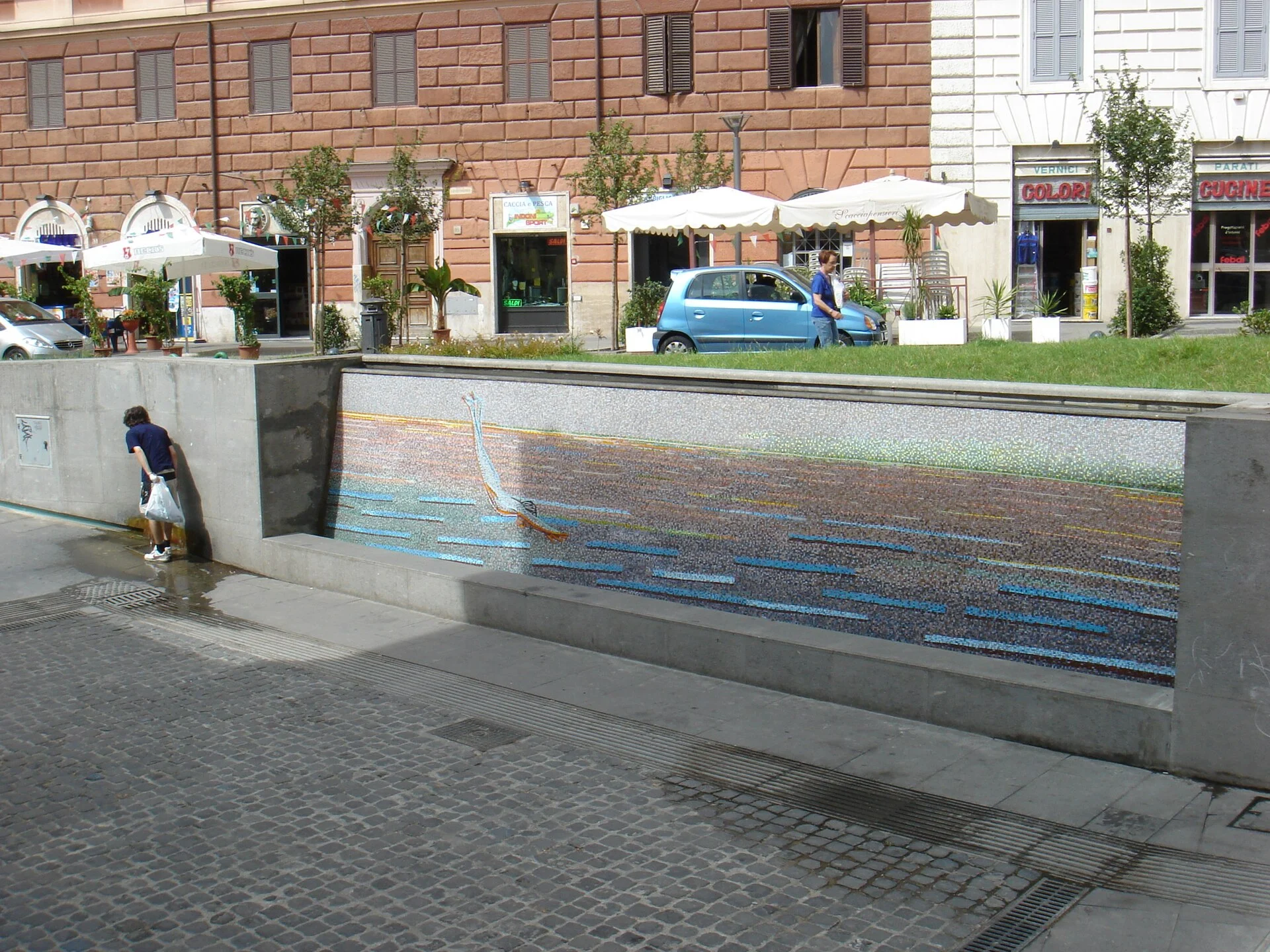
The Mercato di San Cosimato is in piazza di San Cosimato, in Trastevere, with the fixed stalls lined up along via Agostino Bertani, and it's a neighborhood market on public land that depends on Municipio I of Roma Capitale. It opens Monday to Saturday, mornings only, and the market's page gives the hours as 6:00 to 13:30. Admission is free, nothing is paid and nothing is booked. On Sunday it's closed.
The draw isn't a monument. It's the grocery shopping of a district that, despite everything that has happened to it in the last 30 years, keeps buying fruit, vegetables, meat and fish in a piazza. Around it is the former monastery of San Cosimato, today a public health facility with two medieval and 15th-century cloisters, and in summer the same piazza hosts the free open-air Cinema in Piazza.
The practical information reported here comes from the check of September 28, 2026 on the market's page, on the tourist portal of Roma Capitale, on the ASL Roma 1 website and on the dated city press cited further on. The market is inside a path of tenders and works announced by the Municipio in the spring of 2026: hours, number of stalls and layout may change with the construction site, so check before bringing a group.
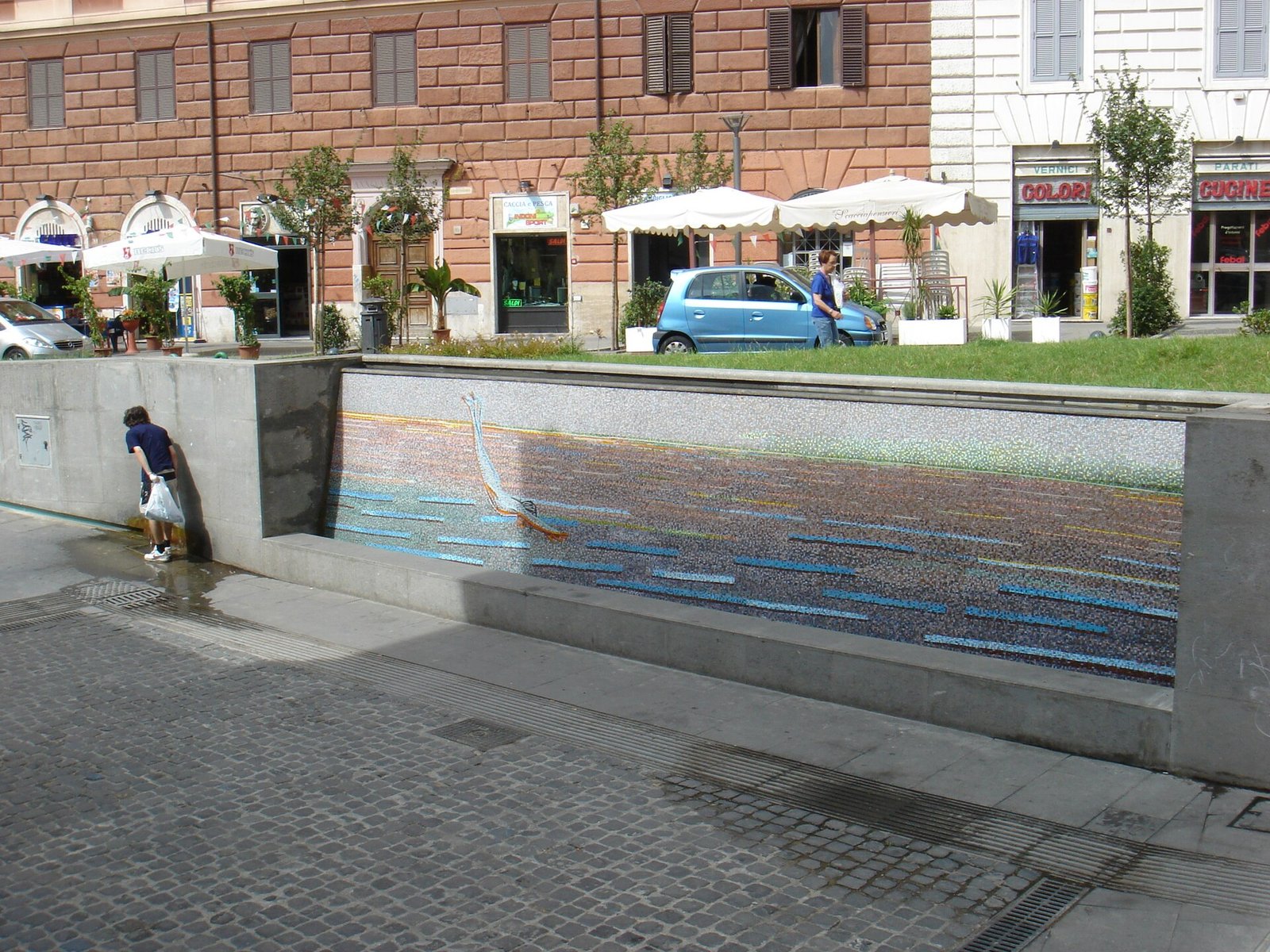
Where it is and what you find on the stalls
The piazza has a triangular shape, with sides that the project sheet for its redesign measures at about 91, 81 and 63 meters. The San Cosimato complex faces onto it with the entrance on via Roma Libera, the fixed stalls line up along via Agostino Bertani and in the center remains a children's play area in the shade of a centuries-old plane tree. It's a neighborhood piazza, not a postcard piazza, and you understand it right away.
On the stalls you find what you find in a well-run Roman neighborhood market: fruit and vegetables, cheeses and cured meats, meat and poultry, fish, a few direct producers, pet supplies. The Municipality's tourist portal insists on seasonality and cites the vegetables that mark the months in Rome, that is puntarelle, broccoli, artichokes and fava beans, as well as offal, which here is still bought without having to order it days ahead.
The same portal points out a used-book stall and a pet food outlet, plus plants and flowers. These are details that tell you about the market's real public: people who live in Trastevere, who have a dog, who buy a book for next to nothing while waiting their turn at the butcher. There's no tourist section, no souvenir stalls, no ready-made baskets to take back to the hotel.
Don't expect a covered market with numbered boxes and uniform signs. San Cosimato is a row of fixed stalls under a light roof, plus the mobile stalls that occupy the piazza during market hours and then disappear. After 2 in the afternoon the space goes back to being a piazza. Anyone arriving in the afternoon finds the benches, the children, the shutters down and no trace of what was there in the morning.
To place it within the city system it's worth reading our guide to the markets of Rome, which lines up neighborhood, historic and secondhand markets. San Cosimato belongs to the first family, that of street neighborhood markets, like the Campo de' Fiori market, but with a very different public, and has nothing to do with the large structures with their own premises.
Hours, days and how you get in
The tourist portal of Roma Capitale lists the market as open every morning except Sunday, without specifying the hour. The market's page published on the Roman markets website, to which the same municipal portal points, specifies Monday to Saturday from 6:00 to 13:30. These are the hours of the piazza, not of every stall: some operators set up later and pack up earlier, especially on rainy days and in summer.
There's no ticket and no sales channel, because it's a market on public land. Anyone offering you a paid guided visit of the market is selling you a guide's time, which is legitimate, not access to the place, which is free for everyone. The administrative operator is Municipio I, with the Commerce office handling concessions, tenders and works, while the market's page gives the address mercatidiroma@gmail.com as the contact.
For official questions on concessions, works and relocations the reference remains Municipio I of Roma Capitale, which publishes tenders and notices on the Municipality's institutional portal. For general tourist information there's the municipal contact center 060608, active every day from 9:00 to 19:00 according to the 060608 portal. A phone number dedicated solely to the Mercato di San Cosimato is not published.
The busiest days are Saturday and Friday, when the district shops for the weekend. On weekdays, between 8 and half past 9, you find the stalls full and few people. After half past 11 the goods start to run low and some stalls close. On national holidays that fall on a weekday don't count on it being open: the information isn't published as a calendar and varies from one year to the next.
The market season by season
A neighborhood market is read with the calendar in hand, and at San Cosimato the season shows on the stalls before it shows in the weather. In autumn come the Roman broccoli, chicory, table grapes and persimmons. Winter is the time of puntarelle, which many stalls sell already cut and put in water, and of the first artichokes. Those who come in December also find the citrus from the South, which in Rome is the fruit of the holidays.
Spring is the season when the market pays off most for people from out of town. Roman artichokes, fresh fava beans to eat raw with pecorino, peas, agretti, the first strawberries. It's the season of vignarola, the dish of spring vegetables that Rome cooks for a few weeks, and at the market you find all the ingredients together. If you have a kitchen available, it's the moment when shopping becomes a piece of the trip.
Summer brings tomatoes, zucchini with their flowers, eggplants, peppers, peaches, apricots, watermelons and late-season figs. The heat changes the rhythm too: the stalls set up early and by noon the asphalt of the piazza is scorching. Come by 10, bring water and look for the shade of the plane tree. In August it's common for several operators to close for vacation and for the market to shrink considerably, but the information isn't published officially.
A curiosity about the Mercato di San Cosimato
In 2006 the market returned to the piazza after an exile of about two years. The market's page recalls that during the renovation works, concluded in February 2006, the stalls were moved to piazza Mastai, on the other side of viale di Trastevere. For a district used to shopping always in the same place it was an enormous move, and many elderly people in the neighborhood still remember it as a small collective relocation.
The project that redesigned the piazza came out of a national architecture competition announced in 2002. It was won by Lorenzo Pignatti Morano and Federica Ottone, with their associated studio, and the record in the contemporary architecture archive ArchiDiAP places the construction between 2002 and 2006. The basic idea was simple: fewer cars, more space for pedestrians, a market arranged in one strip instead of scattered everywhere.
The solution adopted separates two types of stall. The fixed ones are concentrated in a row along via Bertani, under a single roof. The mobile ones occupy the piazza only during market hours and then leave it free. One of the studios involved describes the result as a more uniform structure of higher architectural quality, with fewer fixed stalls and more redesigned mobile stalls. Traffic, according to the project, remains limited to loading and unloading.
There's also a ramp, often overlooked, that connects the cloister entrance to street level. It's a detail that shows the intention of the project: to hold together the market, the piazza and the monumental complex, which before were three things separated by parked cars. 20 years later, the row of stalls is the part that has suffered most and is precisely the one the works announced in 2026 focus on.
Who runs the market and how many stalls it has
The market is a neighborhood market on public land and the stall concessions are assigned by Municipio I of Roma Capitale through public tenders. In May 2026 the Municipio's Commerce councilor, Jacopo Scatà, announced to the press a path to reopen the stalls left empty, and on September 24, 2026 the news agencies reported a new tender for 86 spots in eight neighborhood markets of the first Municipio, San Cosimato included.
The other markets involved in the September tender, according to Adnkronos, are Montebello, Celio in via dei Santi Quattro, Fontanella Borghese, Terme di Diocleziano, Testaccio with its own premises, Monti in via Baccina and Campo Marzio in piazza di Monte d'Oro. The number of spots assigned to San Cosimato within that total is not reported by the agency. The full text of the tender is on the institutional portal of Roma Capitale.
On the total number of stalls the sources don't agree. An article in Abitare a Roma of May 27, 2026 speaks of a reduction to 15 stalls of about four meters by five. A report by Radio Colonna the day before speaks instead of eight covered stalls and 10 fruit stalls put out to tender. The two figures may describe different things, fixed row and mobile stalls, but an official table is not published.
The product categories indicated by the press for the new spots are butcher, groceries, fish and flowers. It's a clear signal: the Municipio wants to rebuild the basic offering of a neighborhood market, not turn it into a food-service area. Anyone who has frequented the piazza for years knows that the problem in recent times was the closed stalls, not a lack of customers, and the tender was born to fill those gaps.
One thing nobody tells you about the Mercato di San Cosimato
The market wasn't born with the 2006 renovation, nor in the postwar period. The market's page cites a municipal resolution of 1913 that already mentions it as a covered structure. It means that more than a century ago, when Trastevere was a working-class district of artisans, carters and river-port workers, people shopped here under a shed. The place has a continuity of use that few piazzas in the center can prove with a document.
The second thing nobody says concerns the real numbers. Anyone arriving with the image of the big Trastevere market is thrown: the fixed row is short, the stalls open on any given weekday can be counted in a few minutes and some spots have stood empty in recent years, as the Municipio itself admitted in announcing the tenders. It's a small market. Whoever describes it as huge has never come on a Tuesday.
And here's a contrary view, no beating around the bush. San Cosimato is sold by foreign guides as the most authentic market in Rome, and this label does it more harm than good. Authentic, for those who live here, means buying zucchini at 8 and going to work. Turning it into a stop to tick off, with 20 people standing in front of one stall photographing puntarelle, is the quickest way to use up exactly what they came looking for.
If you want to see a Roman neighborhood market to understand how the city eats, San Cosimato is fine, as long as you behave like customers and not spectators. If instead you want a market experience with lots of choice and a long walk, the Mercato Trionfale or the Nuovo Mercato Testaccio give more. Saying so takes nothing away from San Cosimato. It helps you not ask of it what it can't give.
The works announced in 2026: what changes and what is certain
On May 26 and 27, 2026 two Roman outlets reported the same announcement from Municipio I: an intervention of about €500,000 on the market and the piazza. Radio Colonna lists the redoing of the roof and the systems, a gate to prevent nighttime bivouacking, interior workshops with the possibility of food service and common areas with tables and seating. Abitare a Roma adds paving, grates for rainwater, public restrooms and roofing for the fixed row.
On the gate the topic is delicate and should be told as it appears. According to Radio Colonna residents had reported people sheltering under the roof in the evening hours, and the Municipio responded with a nighttime closure of the row. It's an administrative choice that has supporters and critics in the district. Here it matters for a practical reason: it will change the look of the piazza in the evening and the way the row is seen after closing.
What is certain as of September 28, 2026. The announced amount, the spending items reported by the press, the September tender for the spots. What is not published in the sources consulted: a start date for the construction site, a timeline, a possible temporary relocation of the stalls like the one of 2004-2006. Radio Colonna also reports a meeting with residents planned in the months after the announcement to gather proposals on the project.
The intervention at San Cosimato is part of a broader Municipio plan on its markets. The same source cites the market on via Cola di Rienzo, renovated and reopening, and the one on via Vittoria, with works planned. For those organizing visits, the consequence is concrete: in the coming months part of the piazza could be fenced off. Before bringing a group, call 060608 or check the Municipio's notices.
My advice for visiting the Mercato di San Cosimato
Come early in the morning on a weekday, between 8 and half past 9, and buy something. Not out of politeness, but because it's the only way to see the market really working. A kilo of seasonal fruit, a piece of cheese to eat afterward on the Janiculum, two artichokes to take home if you have a kitchen. Whoever buys is treated as a customer, whoever only photographs is tolerated.
Don't touch the goods. It's the rule that foreign visitors ignore most often and that in Roman markets matters more than any other. You point, you ask, you let the stallholder choose. Say when you'll eat it: today, tomorrow, in three days. An operator who knows the trade will give you the right fruit for that day, and it's the best service a neighborhood market can offer to someone from out of town.
Bring some coins and some small bills. Not every stall necessarily accepts cards, and even where there's a reader, for €1.50 of parsley nobody is happy to use it. Bring a canvas bag too: bags are available, but your own saves you from walking around Trastevere with six plastic bags hanging from your fingers.
If you have 10 more minutes, go see the cloister. The complex entrance is on via Roma Libera, a few meters from the stalls, but the ASL Roma 1 page dedicated to the complex doesn't publish specific visiting hours. If you go in, do it during the facility's opening hours and behave like guests in a place of care: low voice, no large groups, no sitting on the edges of the flower beds. All the details are in our entry on the Cloisters of San Cosimato.
Last piece of advice, for those traveling with small children. The play area under the plane tree, in the middle of the piazza, is one of the few in Trastevere, and at 10 in the morning on a weekday it's used by the district's families. One parent shops, the other stays with the children. It's a scene that says more about the life of the neighborhood than many explanations, and it lets you do the market without hurry.
For those who lead groups there's one rule. The briefing is done in the piazza, away from the stalls, under the plane tree or next to the entrance of the complex. Then you leave the group free for 20 minutes, in pairs or small groups, with a precise meeting point. 40 people lined up in front of the same stall block the way for regular customers and ruin the morning for everyone, operators included.
Another well-known fact, yet rarely cited
The piazza is the missing churchyard of a thousand-year-old monastery. According to ASL Roma 1, which is now responsible for the complex, a Roman nobleman named Benedetto Campagna founded around the middle of the 10th century a monastery dedicated to the saints Cosmas and Damian. The name San Cosimato is the popular corruption of that dedication, passed through centuries of Trastevere pronunciation until it became the name of the church, the complex and the piazza.
The same source dates to 1069 the completion of the works and the consecration of the church by Pope Alexander II. The ArchiDiAP archive gives the full dedication to the saints Cosmas, Damian, Benedict and Emerentiana. Wikipedia recalls the 12th-century porch built with reused material and the Romanesque bell tower. Whoever stops only at the market never looks up at the porch, which is the oldest thing visible from the piazza.
There's also a fact that's often repeated but almost never explained. Several sources link the monastery area to the Naumachia of Augustus, the great artificial basin dug in Trastevere for shows of naval battles. Here the levels have to be kept distinct: that the naumachia was in Trastevere is said by ancient sources, that it lay right under San Cosimato is a topographical hypothesis, and the exact location remains debated among scholars.
What matters to someone shopping is continuity. A monastery, then a hospice, then a hospital, and in front always a piazza that serves the neighborhood. The market took the place of the open spaces that surrounded the complex and gave the piazza the function it still has. Anyone who wants to see the rest of the district's monumental history will find the picture in our guide Trastevere: what to see.
The San Cosimato complex and the cloisters
The complex that closes the piazza is today home to the Nuovo Regina Margherita, a facility of ASL Roma 1, with the entrance at via Roma Libera 76. Inside are preserved two cloisters from different eras, which the ASL dates to the 13th and 15th centuries. The first has an original two-story structure and Wikipedia dates it to 1240, while ArchiDiAP gives 1246 as the probable date. The sources don't agree on the exact year.
The second cloister, later, has pillars and a covered well in the center and belongs to the phase of reconstruction ordered by Sixtus IV on the occasion of the jubilee of 1475, attested on the lintel of the 15th-century portal. In the presbytery of the church a 15th-century fresco by Antonio del Massaro remains. The church of San Cosimato is one thing, the cloisters another, and the market piazza reaches in front of both.
The transformation into a place of care is recent. According to the ASL the nuns left the monastery on August 12, 1891, when the abbess received the official order to leave. The complex housed the elderly and became the Ospizio Umberto I, then in the 1960s construction began on an orthopedic and surgical hospital inaugurated in March 1970. Wikipedia instead gives 1960 as the year of the switch to a hospital. Here too the dates diverge.
For the market visitor the practical advice is simple: the cloister is free, but it's inside a working health facility. You go in discreetly, look and leave. For group visits the reference published by the ASL is the medical directorate of the facility, by phone at 06 6010 4593 or at the address direzionesanitaria.onrm@aslroma1.it. Don't show up with 40 people without having given notice.
The right photo to take at the Mercato di San Cosimato
The right photo isn't the close-up of the puntarelle. Everybody takes that one, and without asking. Instead stand on the side of the piazza opposite the row of stalls, around 9 in the morning, and shoot the line of stalls with the front of the San Cosimato complex behind it. Market and monastery in the same frame tell the story of the piazza in one go, and the morning light comes in raking across the crates.
The second image is the plane tree. A centuries-old tree in the middle of a market piazza is a rarity in the historic center of Rome, and in autumn, when the leaves fall onto the mobile stalls, it gives an image that nobody puts in the guides. Shoot it from below, from the play area, with the stalls blurred in the background. If children are playing, change the framing or ask the parents: this holds for any photo in a public place.
On people at work there's only one rule: ask. An operator weighing the goods, an elderly customer counting coins, are beautiful subjects and are also people who didn't choose to end up on someone's profile. If you buy first and ask afterward, the answer is almost always yes. If you ask without buying, sometimes the answer is no, and that's fair.
Avoid the frontal photo of the row of stalls when the market is closed. The empty roof, the shutters down and the signs of wear give back the image of an abandoned place, which isn't the real one. If you arrive in the afternoon, photograph instead the porch of the church and the reused columns with composite capitals, which in the evening light take on a warm tone and give the photo the depth of the centuries.
How to get to piazza di San Cosimato
The ASL page dedicated to the San Cosimato complex lists as connections the ATAC lines 60, 780, 75, 3, 8 and H. The market's page suggests in particular line H from Termini and tram 8 from largo di Torre Argentina, which runs along viale di Trastevere. From the stops on viale di Trastevere you reach the piazza on foot in a few minutes, through the side streets of the district.
On foot from the historic center the most pleasant route goes over Ponte Sisto, crosses piazza Trilussa and then cuts through the alleys toward the south. Alternatively you come down from the Ghetto, cross the Tiber Island and enter Trastevere from the San Benedetto in Piscinula side. These are walks of 20 or 30 minutes that are worth as much as the market itself.
Don't come by car. Trastevere has a limited traffic zone with electronic gates and street parking, during market hours, is almost impossible. The market's page gives as a parking area the former ATAC depot on viale di Trastevere, but check availability first: it's information that depends on the works under way in the area and that the market's operator doesn't update regularly.
For those coming from Monteverde or the Janiculum the walk is downhill and passes next to Villa Sciarra, which is the best way to reach the market in the right spirit. Routes and stops of the lines change with city construction sites and detours: the day before, check the website of Rome's transport company, especially for the tram, which on viale di Trastevere is often replaced by buses.
Some important events that happened here in history
Middle of the 10th century: the monastery of the saints Cosmas and Damian is born, on the initiative of a Roman nobleman whom the ASL calls Benedetto Campagna. In 1069 Pope Alexander II consecrates the church. In the 12th century the porch is built with reused columns and capitals, the one still seen today from the piazza. It's the phase in which the complex becomes one of the great Benedictine monasteries on the right bank of the Tiber.
In 1229, according to the ASL, Pope Gregory IX assigns the monastery to the Camaldolese monks. A few years later the nuns sent by Saint Clare arrive, called the Poor Clares or Recluses of San Damiano. The ASL gives 1234, Wikipedia 1233. From then until 1891 the complex remains a cloistered women's monastery, and the piazza in front is the public space that the monastery faces without opening onto it.
In 1475, in view of the jubilee, Sixtus IV has the church and the monastery restored and partly rebuilt, as they were in poor condition. The 15th-century portal bears on its lintel the record of the intervention. He is the same pontiff of Ponte Sisto, and the two building sites belong to the same season of works ahead of the holy year, a season that also changed the connections between the two banks of the river.
On August 12, 1891 the abbess receives the order to leave the monastery, and according to Wikipedia the nuns are transferred to San Gregorio al Celio. The complex passes to welfare use, becomes a hospice and then a hospital. In 1913 a municipal resolution already mentions the market of the piazza as a covered structure, and it is the first certain date of its history reported in the sources consulted.
In March 1970 the Nuovo Regina Margherita hospital is inaugurated. In 2002 the Municipality announces the competition for the piazza, the market moves for about two years to piazza Mastai and returns in February 2006 to the new layout. In May 2026 Municipio I announces about €500,000 of works and new tenders for the stalls, and on September 24, 2026 the tender comes out for 86 spots in eight markets of the first Municipio.
Who has passed through the Mercato di San Cosimato
Alexander II, pope from 1061 to 1073, is the first documented name tied to this place, with the consecration of the church in 1069 reported by the ASL. He saw no market, of course, but he gave institutional form to the complex that still defines the piazza today. It's a name that means nothing to visitors and yet opens the story of the place.
The Poor Clare nuns, for more than six and a half centuries. They are the true protagonists of the story of the piazza: a cloistered community that occupied the complex from the 13th century to the 19th and that made San Cosimato one of the most important women's monasteries in Trastevere. Their forced departure in 1891 closes an era and opens the way to the transformation of the complex into a welfare facility.
Sixtus IV della Rovere, the pope of the jubilee of 1475, who put church and monastery back on their feet and left his name on the lintel. Whoever crosses the river to come to the market over Ponte Sisto walks on another of his works, and the coincidence helps you understand how much his building program marked precisely this piece of the city, between the left bank and the center of Trastevere.
Lorenzo Pignatti Morano and Federica Ottone, the architects who won the 2002 competition and designed the current piazza, with the row of fixed stalls, the mobile stalls, the ramp toward the cloister and the play area under the plane tree. Their name doesn't appear on any plaque in the piazza, as almost always happens with public-space projects, but everyone who shops here uses their design every morning.
And then the young people of the Fondazione Piccolo America, who in summer bring the Cinema in Piazza screen to the piazza and have made San Cosimato one of the venues of a series that, according to Artribune, exceeded 120,000 viewers in the previous edition. According to Artribune the 2026 edition, the 12th, started on May 28 right from here, with a great Italian director as guest of the opening night. The evening public is different from the morning one, but the piazza is the same.
The piazza in summer: Cinema in Piazza
In the warm months, when the market has packed up, the piazza di San Cosimato hosts the arena of Cinema in Piazza, the series created and promoted by the Fondazione Piccolo America. The tourist portal of Roma Capitale lists it as an open-air summer arena in piazza San Cosimato in Trastevere, with the website ilcinemainpiazza.it and the contact info@piccoloamerica.it. Out of season the same listing shows the arena as temporarily closed.
According to Artribune the 2026 edition offered 95 free screenings across all the venues of the series, opening on May 28 at San Cosimato. For the dates of the next season the reference is the series' website, which publishes them in spring. The screenings are in the evening, so they don't overlap with the market, but during the weeks of the series the piazza changes layout and part of the space is taken up by the screen structure.
The same group runs the Cinema Troisi, not far away, and nearby there's also the Nuovo Cinema Sacher, with its summer arena. Those who want a complete picture of outdoor screenings in the city will find our guide to the summer arenas of Rome, and for cinema on the river there's the Isola del Cinema.
A practical tip if you want to do market and cinema on the same day. Come in the morning for the shopping, come back in the evening for the film and bring something bought at the stalls to eat on the arena chairs, if the evening's rules allow it. It's the most Trastevere way to live this piazza, and it costs as much as a kilo of peaches and a bottle of water. The rules on food and drink are published by the series' operator.
When it's closed and what not to expect
The market is closed on Sunday and every afternoon. Anyone arriving after 2 finds the piazza empty, and anyone arriving on Sunday morning finds the same, with a few families at the playground. If your only free day in Rome is Sunday, change the plan: go to Porta Portese, the secondhand market held on Sunday morning a short distance away.
Don't expect ready food to eat standing up. As of September 28, 2026 San Cosimato is a market of products to take home, not a market for tasting. The workshops with food service and the spaces with tables and seating are among the novelties announced for the works, but don't appear to have been built yet. If you're looking for a market where you can have lunch among the stalls, today in Rome the answer is elsewhere.
Don't expect tourist services. There are no information panels, no signs in English, no information point. The public restrooms of the piazza are among the items of the announced works, which says enough about their current state. Anyone arriving with small children or elderly people should organize beforehand, perhaps combining the visit with a stop at one of the nearby museums.
On accessibility the piazza is flat and the 2006 redesign removed a large part of the barriers, with a ramp toward the cloister entrance. The mobile stalls, at peak hours, leave narrow corridors. Anyone getting around in a wheelchair finds the best conditions in the early morning hours of weekdays. An official accessibility statement for the market is not published.
On days of heavy rain the market changes face. The covered row stays active, while many mobile stalls don't set up or close early, and the piazza empties. For a visitor it's the worst day, for those who live here it's the one when you shop without a line. If the forecast announces storms for the morning, move the market to another day and give those hours to a museum.
Eating in the area
Trastevere is the district of Rome where you eat worst relative to what you spend. Not because good places are lacking, which exist, but because the density of visitors has produced a quantity of places built for people who pass once and never come back. The San Cosimato market is the simplest antidote: buy there and eat on a bench.
The first sign to recognize is the menu with photographs of the dishes. A place that has to show you the picture of a cacio e pepe is talking to someone who doesn't know what it is. Laminated menus in six languages, with portions photographed under yellow light, are the sign of a kitchen designed for passing trade, which won't come back and can't complain.
The second sign is the person at the door who stops you and invites you in. In Trastevere the barker is a profession, and where there's a barker there are no regular customers. The same goes for the lady rolling out pasta dough in the window or on the sidewalk: it's a show designed to stop people walking, not a sign of quality. Fresh pasta is made in the kitchen, early in the morning.
The third sign is the hours. A place open without a break from noon to midnight, with the kitchen always on, has no crew that rests and preps. Real kitchens close between lunch and dinner. If at half past 4 in the afternoon they serve you a freshly made carbonara, ask yourself when the base was prepared.
The fourth sign concerns prices. Items with no price, the fish of the day by undeclared weight, menus that differ between inside and outside, tables in the piazza with a price list that changes according to the customer. These are practices you meet in Trastevere mostly at the points of greatest foot traffic, in front of churches and in the most photographed piazzas. Always ask the price before ordering, even if it seems rude.
Why don't Romans go there? Not out of snobbery. Simply, those who live here know where to eat, and the places built for visitors have no interest in winning them over. The criterion is to look at who's sitting: if at 3 on a Tuesday there are office workers, laborers and local families, you've found it. If there are only backpacks and the waiter switches to English at first glance, that's information.
So you don't have to go by trial and error, I keep up to date our list of the places where we eat, in Rome and the surrounding area. It isn't sponsored and it changes when the places change. For lunch after the market, though, the advice remains the one we started with: bread, cheese, seasonal fruit bought at the stalls, and a bench in the piazza or under the trees of the Janiculum.
What to pair it with in a day
The natural combination is market in the morning and monumental Trastevere right after. The Basilica of Santa Maria in Trastevere with its mosaics and the Piazza in front are a few minutes away. Continuing toward the river you meet the Basilica of San Crisogono and the small church of Sant’Agata, little visited and interesting.
Toward the south the tour leads to the Basilica of Santa Cecilia, to the church of San Francesco a Ripa with Bernini's Blessed Ludovica Albertoni and to Santa Maria dell’Orto, the church of the trade guilds. Those who want the most intimate Trastevere Middle Ages look for San Benedetto in Piscinula. The Museo di Roma in Trastevere tells the story of the working-class district.
Those with strong legs can climb to the Janiculum via San Pietro in Montorio and the Tempietto del Bramante, then reach the Fontana dell’Acqua Paola. On via Garibaldi is the Museo della Repubblica Romana, and further on opens Villa Doria Pamphilj for a picnic with what you bought.
On the Lungara side the afternoon fills up with the Botanical Garden, the Villa Farnesina with the rooms of Raphael and the Gallery of Palazzo Corsini. These are three visits done on foot one after the other that pair well with a market morning, because they open later and don't require long advance booking.
Those who prefer to cross the river will find beyond Ponte Sisto San Salvatore in Onda and a little further on Santa Maria in Monticelli, two small, little-visited churches. For a tour dedicated to markets you can continue toward Testaccio, or finish with a historic coffee at Caffè Sant’Eustachio, which we cover in the guide to the historic cafés and shops of Rome.
Frequently asked questions
What are the hours of the Mercato di San Cosimato?
The tourist portal of Roma Capitale lists the market as open every morning except Sunday, and the market's page specifies Monday to Saturday from 6:00 to 13:30. These are the hours of the piazza, not of each single stall. In the afternoon and on Sunday the market is closed. With the works announced in 2026 the layout could change, so it's best to check before going.
Do you pay to enter the market?
No, access is free and open. San Cosimato is a neighborhood market on public land that depends on Municipio I of Roma Capitale: there is no ticket and no booking is needed. The paid guided visits that are sometimes offered sell a guide's time, not entry to the market. For the nearby complex, home to a health facility, no ticket is paid either.
Who runs the market?
The stall concessions are assigned by Municipio I of Roma Capitale through public tenders. In May 2026 the Municipio's Commerce office announced a path to reopen the empty stalls, and on September 24, 2026 a tender came out for 86 spots in eight neighborhood markets of the first Municipio, San Cosimato included. The text is on the Roma Capitale portal.
How many stalls are there?
The total number of stalls is not published in an official source of the Municipality. The Roman press of late May 2026 reports different figures: 15 stalls of about four meters by five according to Abitare a Roma, eight covered stalls and 10 fruit stalls put out to tender according to Radio Colonna. It's a small market in any case, which you can go all the way around in about 20 minutes.
Are there works under way?
In May 2026 Municipio I announced an intervention of about €500,000 on the roof, systems, paving, drains, public restrooms and roofing, with a gate for nighttime closure and new spaces with tables. As of September 28, 2026 a start date for the construction site and a timeline are not published in the sources consulted. Before organizing a group it's best to ask the contact center 060608.
Can you visit the cloisters of San Cosimato?
The complex that faces the piazza, with the entrance at via Roma Libera 76, is today a facility of ASL Roma 1 and preserves two cloisters from the 13th and 15th centuries. The ASL doesn't publish specific visiting hours, so you go in discreetly during the facility's hours and for groups it points to the medical directorate, by phone at 06 6010 4593.
How do you get there by public transport?
The ASL gives for the San Cosimato complex the ATAC lines 60, 780, 75, 3, 8 and H. The market's page suggests line H from Termini and tram 8 from largo di Torre Argentina, which runs along viale di Trastevere. From the stops you reach the piazza on foot in a few minutes. By car it's not recommended, because of the limited traffic zone and the scarcity of parking.
What is Cinema in Piazza at San Cosimato?
It's the free summer arena of the series created and promoted by the Fondazione Piccolo America, which in summer sets up the screen in the market piazza. According to Artribune the 2026 edition, the 12th, started on May 28 right from San Cosimato, with 95 free screenings across all the venues. The dates of later seasons are on the website ilcinemainpiazza.it.
Who wrote this page
The page comes from the editorial team of Tour Leader Pro, the Rome-based outfit that designs itineraries, visits and cultural events across Rome and Lazio. Hours, management, tenders and works reported here come from the institutional and journalistic sources cited in the text, as of the date given at the top: since this is a market with an announced construction site, check again before leaving and tell us what you find changed.
Putting together a morning in Trastevere means fitting together a market that closes at 2, churches that open at different hours, a cloister inside a health facility and transport that thins out on holidays, for yourself or for a group of 40 people. Anyone facing this kind of puzzle will find on Tour Leader Pro working materials designed for those who guide and for those who organize on their own.
For the wider picture, meaning regional trains and seasonal schedules, rentals, airports, transfers between one province and another and destinations in Lazio outside the center of Rome, from the Castelli to the volcanic lakes of the north, down to the Tyrrhenian coast and the villages of the hinterland, a useful resource for putting together a multi-day itinerary is Italy Planner.