Basilica of San Crisogono
In short. The Basilica of San Crisogono is at Piazza Sidney Sonnino 44, at the start of Viale di Trastevere, at the point where the neighborhood stops being a labyrinth of alleys and becomes a wide street traveled by trams.
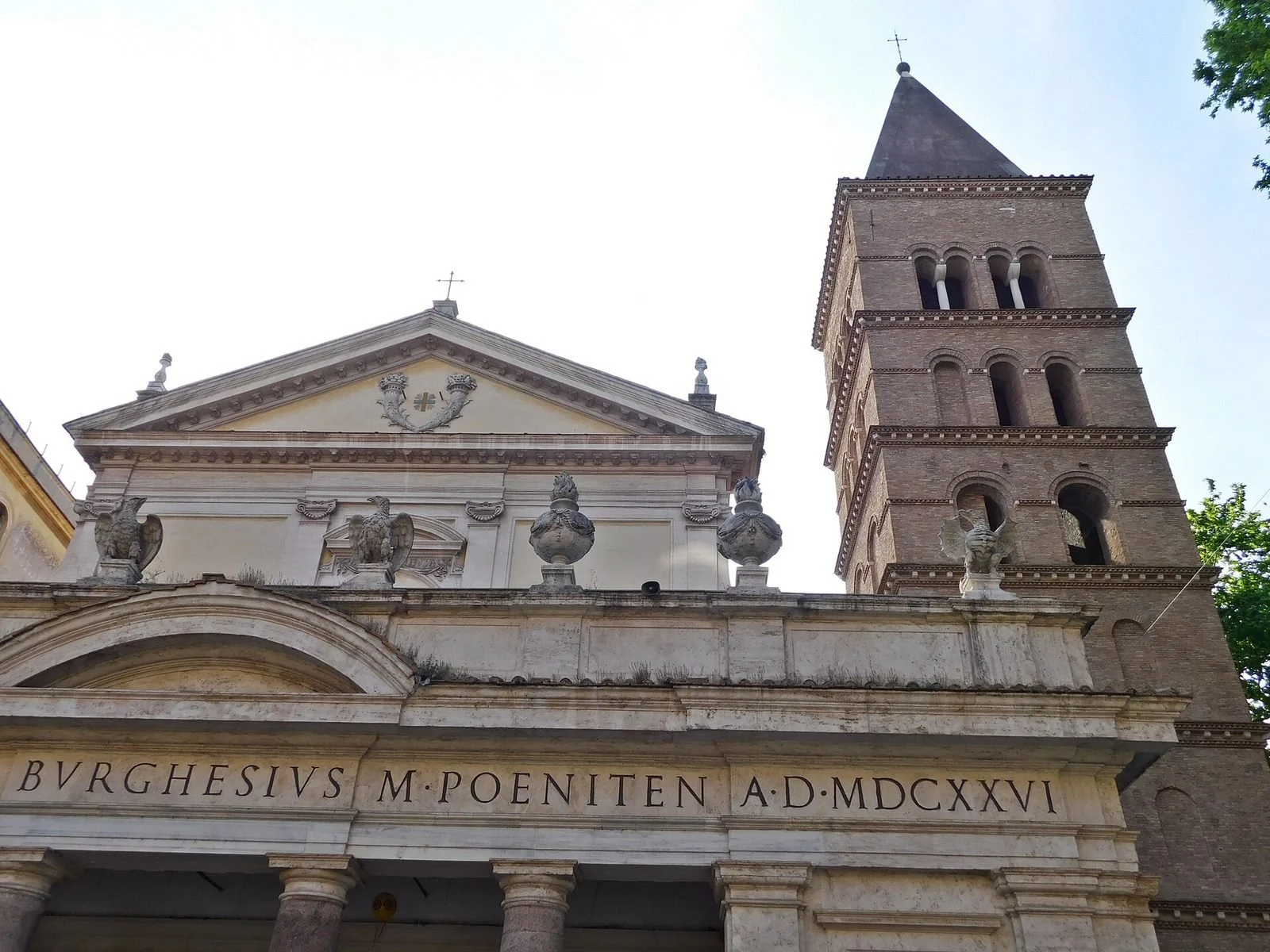
The Basilica of San Crisogono is at Piazza Sidney Sonnino 44, at the start of Viale di Trastevere, at the point where the neighborhood stops being a labyrinth of alleys and becomes a wide street traveled by trams. It's one of the oldest tituli of Rome: the titulus Chrysogoni already appears in the list of churches convened at the Roman synod of 499, under Pope Symmachus. The church you see today, with its 22 granite columns and its Cosmatesque floor, is the result of two overlapping building campaigns: the medieval reconstruction promoted by Cardinal Giovanni da Crema around 1123, and the 17th-century remodeling by Giovanni Battista Soria, paid for by Cardinal Scipione Borghese and dated 1626 on the facade inscription. But the real reason to stop lies six meters lower, under the floor: an early Christian basilica discovered in the excavations of 1907, with early medieval frescoes, sarcophagi, a baptismal basin and an entire apse still legible. It's one of the largest and most understandable underground spaces in Rome, and it can be visited in a few minutes if you arrive at the right time. The lines that follow explain what is above, what is below, what is verified and what remains debated, and above all how to arrange access to the underground, which is the part where people most often go wrong.
Where the Basilica of San Crisogono is and how to get there
The address of the Basilica of San Crisogono is Piazza Sidney Sonnino 44, in the Trastevere district, on the right side of Viale di Trastevere for those arriving from the river. The facade faces the avenue, not the historic piazza of the neighborhood: it's a 19th-century choice, because the avenue was opened after 1880, cutting the medieval fabric in two, and the church found itself facing a traffic artery that didn't exist in Soria's time. Anyone looking for the classic intimate churchyard is thrown off. Trams pass in front here, and the noise comes into the church every time someone opens the door.
By tram, which is the right way
The stop is called Sonnino and is served by tram 8, which links Piazza Venezia and Largo di Torre Argentina to Viale di Trastevere and continues toward Casaletto. Tram 8 drops you literally in front of the portico. On the same axis runs tram 3 too, which comes from the Colosseum and Porta Maggiore via the pyramid and Testaccio, and which makes the basilica reachable from the whole southern band of the city without changes. Bus H, which links Termini to Trastevere along Viale Trastevere, stops at the same point. Anyone arriving by train from the coast or from Fiumicino can get off at Roma Trastevere and take two tram stops toward the center.
By metro, which is the wrong way
There is no metro stop in Trastevere. It's a fact that surprises many visitors, and it needs saying right away: anyone who builds the itinerary around the metro loses time. The closest station on line B is Circo Massimo, from which you still have to walk to Ponte Garibaldi or take a tram. The most sensible route on foot starts from Largo di Torre Argentina, goes down toward the river, crosses Ponte Garibaldi and arrives at Piazza Sonnino in barely 12 minutes at a normal pace. On how Roman transport works in general, tickets and connections, we have collected practical information on the page getting around Rome.
On foot from Tiber Island
Anyone coming from Tiber Island takes six or seven minutes: you leave the island by Ponte Cestio, take Piazza in Piscinula and keep left until you come out on Viale di Trastevere at the level of the basilica. It's the route we recommend to those who have already visited San Bartolomeo all’Isola and want to chain two very different churches into the same midday. From the island's parapet you can also see the Ponte Rotto, the isolated arch in the middle of the river that remains of the Ponte Emilio.
Parking and the limited traffic zone
Piazza Sonnino is inside the limited traffic zone of Trastevere, with hours that change between weekdays and weekend nights, and the on-street spaces are almost all reserved for residents. Anyone arriving by car should leave it outside the neighborhood and use the tram.
What you see on entering the Basilica of San Crisogono
The interior of the Basilica of San Crisogono is divided into three aisles by 22 reused ancient granite columns, with Ionic capitals and smooth shafts, recovered from Roman buildings and reassembled in the medieval church. The figure of 22 columns is the one reported by current descriptions of the basilica. The count refers to the two colonnades of the nave and does not include the two porphyry columns of the triumphal arch, which are a chapter apart.
The two porphyry columns
At the entrance to the presbytery, holding up the triumphal arch, are two red porphyry columns of dimensions out of scale with everything else. More than one source calls them the largest intact porphyry columns surviving in Rome. The wording should be taken for what it is, a catalog record hard to verify with a tape measure, but the visual impression holds up: they are massive, of a dark mottled red, and porphyry came from a single quarry, the Mons Porphyrites in the eastern Egyptian desert, exploited in the imperial age and then abandoned. In the Middle Ages nobody knew any longer where that quarry was. Every Roman porphyry column is reused ancient material, because none has been produced since.
The Cosmatesque floor
The floor is Cosmatesque, that is, built with the technique of the Roman marble workers active between the 12th and 13th centuries, who cut disks and tesserae from ancient columns and slabs to compose geometric carpets. Descriptions agree in placing it among the best Roman examples still legible. It is, however, a tampered floor: during the 17th-century building campaign some parts were redone and among the porphyry disks the heraldic emblems of the Borghese appeared, the eagle and the dragon. Walking toward the altar you recognize them without difficulty. It's one of the few occasions in Rome when you can see with the naked eye the overlap of two commissions 500 years apart, inscribed in the same floor.
The baldachin and the ceiling
Above the high altar is a baldachin held up by four alabaster columns, the work of the same Giovanni Battista Soria and consistent with the rest of his intervention. The gilded wooden ceiling holds at the center a canvas with the Glory of Saint Chrysogonus. An honest clarification is needed here: what you see is a copy. Guercino's original was carried off during the French occupation of Rome in 1808 and is today in London, in a palace that some sources call Lancaster House and others Stafford House, which are two names of the same building at different moments of its history. Anyone who enters thinking they will see a Guercino is looking at a copy, and no sign in the church explains it clearly.
The early Christian basilica under the Basilica of San Crisogono
Under the floor of the Basilica of San Crisogono is preserved an early Christian basilica with a single nave, discovered in the excavations begun in 1907 and located about six meters below the current street level. It is the space that justifies the trip. In Rome there are several churches with a visitable lower level, but most offer corridors, fragments of wall and narrow rooms. Here you walk inside a whole place of worship, with its apse, its narthex, the presbytery enclosure and the frescoed walls still standing.
How it was found
The archaeological work started in 1907 under the ministry responsible at the time for fine arts, and first brought to light the structures of the presbytery: the schola cantorum, the enclosure, the confessio and a semi-annular crypt, that is, the curved corridor that ran around the venerated tomb and let pilgrims pass without crossing each other. Complete clearing of the hall was never possible, because the foundations of the upper church go down into the lower one and take up part of the space. Walking below you see these foreign pillars planted in the middle of an older building: the 12th-century church, built slightly shifted to the north, rests literally on the earlier one.
What you see below
The lower hall has a single nave, without side aisles, therefore narrower than the present church, and with the narthex in front it reaches a length slightly less than that of the basilica above without the portico. At the far end is the apse, flanked by two rooms of different sizes. On the right a square room with a marble floor, interpreted as a secretarium, that is, the service room where the liturgical furnishings were kept: inside it is placed a marble sarcophagus of the Roman age, of the 2nd century, decorated with marine motifs. On the left a larger room, with a low circular structure about two and a half meters in diameter and steps going down toward the center, read as a baptismal basin for immersion, later modified with a transverse wall when the practice shifted to sprinkling.
The Roman laundry under the baptistery
Around the basin there are other connected tanks and drainage channels, which led scholars to hypothesize that before the Christian function that sector housed a fullonica, that is, a facility for treating textiles. It's an interpretive hypothesis, not a certain fact, and should be taken as such: the plumbing of an ancient laundry and that of an early Christian baptistery resemble each other enough to make the distinction hard when inscriptions are missing. The interesting thing remains the reuse: running water, tanks, drains already in place, and a Christian community that settles where the facility was already there.
The frescoes
The paintings are the main reason to go down. The oldest core dates to the 8th century and is tied to the pontificate of Gregory III, between 731 and 741: faux-marble decorations in the apse and figures of saints linked to the dedication of the church. A second layer, between the 10th and 11th centuries, occupies the narthex and the north wall, and tells stories in images: a scene of Saint Benedict healing a leper, one of Saint Pantaleon restoring sight to a blind man, and an episode of Saint Sylvester dealing with a dragon, a tale that belongs to medieval hagiographic legend and should be read as such, not as chronicle. The frescoes are eaten away by damp, with wide gaps, and the artificial light doesn't help. But the figures can be read, and having them a few centimeters in front of you, without glass and without barriers, changes your relationship with the material.
The honest comparison with Rome's other undergrounds
Anyone who has already visited the Basilica of San Clemente will find here a structure in some ways similar, three levels on top of each other in one case, two in the other, but with notable differences: San Clemente has a complete museum setup, an obligatory route, a regular ticket and published hours. San Crisogono is run by the parish, access depends on the sacristan being present and the experience is much rougher. For comparison with other undergrounds you can also look at the Case Romane del Celio, the Crypta Balbi, the Domus Romane di Palazzo Valentini, the Stadium of Domitian under Piazza Navona and the underground basilica of Porta Maggiore. The overall picture of the city's Christian underground, between cemeteries and galleries, is on the page about the catacombs of Rome.
The history: from the titulus of 499 to Soria's building campaign
The titulus Chrysogoni is attested for the first time in the list of Roman churches represented at the synod of 499 convened by Pope Symmachus, and this is the date that fixes the existence of the community with certainty. Everything before that is reconstruction.
How old it really is
The traditional reading has the titulus born in the 4th century inside a private 3rd-century domus transformed into a Christian meeting place. Some scholars are more cautious and note that the archaeological evidence doesn't securely document a Christian use of the hall before the end of the 6th century, and that the large rectangular room might have begun as a meeting hall or schoolroom with another purpose. The two hypotheses coexist in the literature and we report both, because picking a single date would be convenient and dishonest. What can be said without margins is that in 499 the church existed and had a title of its own.
Who Chrysogonus was
The titular saint is traditionally identified with a martyr killed under Diocletian, between 304 and 305, and linked in hagiographic accounts to the figure of Saint Anastasia. Studies on the origins of the Roman tituli, however, put forward another possibility, that the name derives from the owner of the property where the community met, a Roman Chrysogonus entirely distinct from the martyr, and that the overlap between the two came later. It's the same mechanism observed in other city tituli, for example at Santa Pudenziana and Santa Prassede. Here too, caution is required.
The 12th-century building campaign
A misunderstanding that often circulates, even in popular material, needs correcting here. The medieval church isn't from the 13th century: it was built around 1123, therefore in the middle of the 12th century, at the wish of Cardinal Giovanni da Crema, titular of San Crisogono in those years. The apse mosaic, datable to around 1290, belongs instead to the 13th century, and it is probably this date that generates the confusion. Giovanni da Crema's building campaign did not follow the earlier hall: the new basilica was laid out slightly shifted to the north, toward the main road axis of the neighborhood, using the ancient foundations in part and sacrificing them in part. From that moment the early Christian church vanished under the floor and stayed there for almost 800 years.
The bell tower
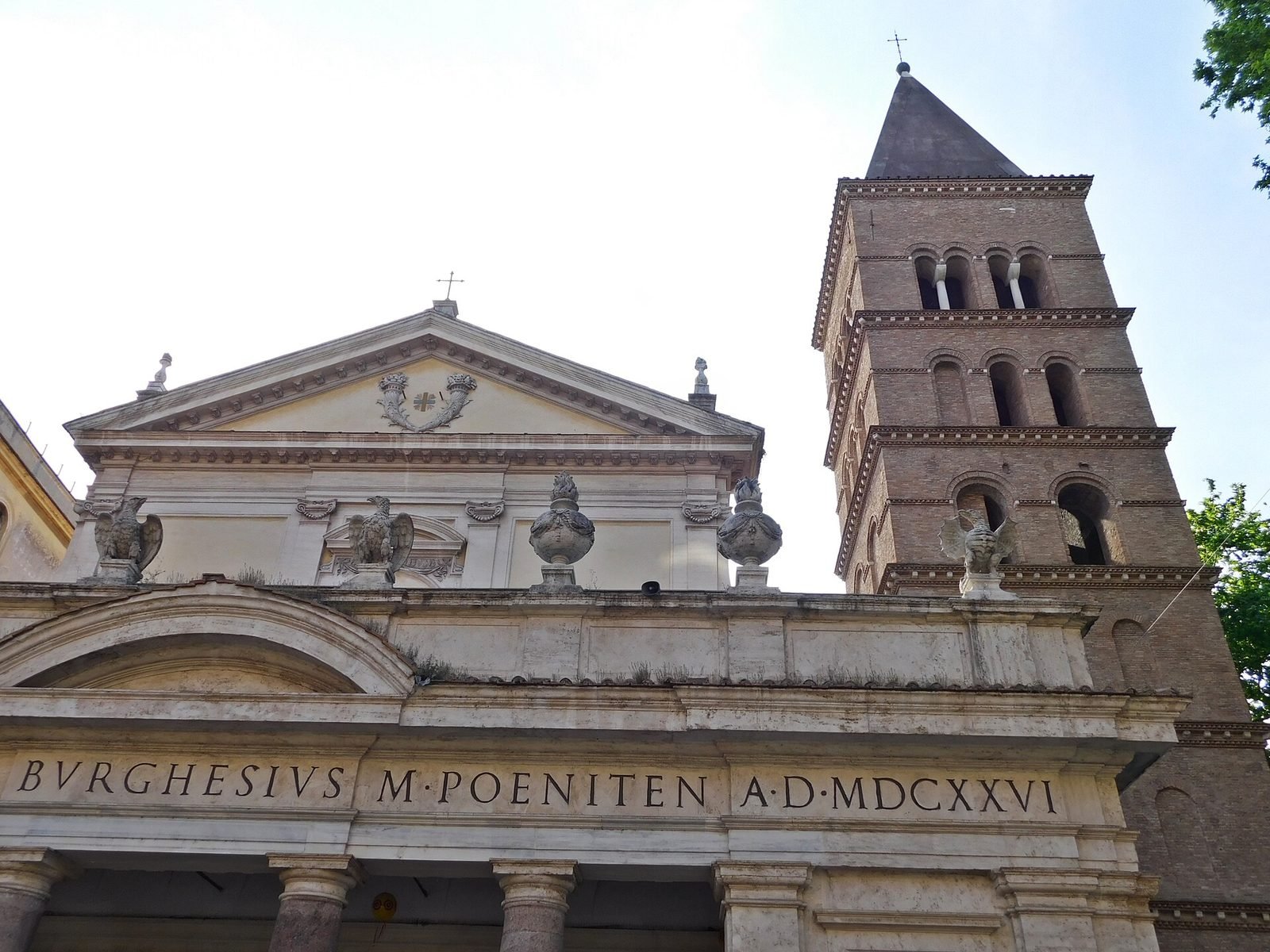
The Romanesque bell tower dates from the same building campaign, and is datable to the years immediately after 1123. It has several tiers, in brick, marked by corbel cornices and sawtooth cornices, with single and double-arched windows and a pyramidal spire at the top. The measurements in circulation speak of a base of about eight meters per side and a height of around 45 meters: these are figures reported by the local literature and we couldn't check them against an official survey, so we give them as indicative. After the 17th-century works the bell tower had stability problems and some openings were walled up to strengthen it. Looking at it from the avenue you notice that the upper part looks different from the base.
The Baroque remodeling
In the third decade of the 17th century the basilica was renovated by Giovanni Battista Soria on behalf of Cardinal Scipione Caffarelli Borghese, who was titular of San Crisogono from 1605. The date 1626 appears in the inscription on the facade facing Viale di Trastevere, together with the name of the patron. Soria worked on the portico, the facade, the ceiling and the furnishings, leaving standing the medieval basilican layout and its columns. It's a way of working typical of the early 17th century in Rome: you don't demolish, you clad. Anyone who knows the facade of Santa Maria della Vittoria or that of San Gregorio al Celio recognizes the same sober hand, very far from the emphasis that would arrive a few decades later.
The Trinitarians
The basilica is served by the Order of the Most Holy Trinity, the Trinitarians, whose presence here is indicated from the mid-19th century, with the year 1847 reported by current sources. In 1873, with the suppression laws of the new Italian state, the convent complex passed to the state property office while remaining entrusted to the order for the services. The red and blue cross of the order recurs in the furnishings and decorations, and anyone noticing it for the first time usually mistakes it for a simple ornamental motif. The order was founded at the end of the 12th century for the ransom of prisoners, which explains why in this church the theme of liberation comes back with such frequency in the images.
The apse mosaic and the Cavallini question
In the apse basin of the Basilica of San Crisogono is a mosaic with the Madonna and Child enthroned between Saints James and Chrysogonus, datable to around 1290 and attributed to the circle of Pietro Cavallini. On the attribution it's worth being precise, because it is one of the points where guides simplify.
What is established and what is not
The reference to Cavallini's workshop is widely accepted: figurative language, treatment of the drapery and chronology coincide with the group of the artist's Roman works, starting from the mosaics of Santa Maria in Trastevere and the frescoed cycle of Santa Cecilia in Trastevere. The attribution to the master in person, however, remains debated: part of the critics recognize Cavallini's direct hand in it, part consider it the work of collaborators active on his building site. Anyone writing a serious entry says this and stops there. In the church there is no panel clarifying the difference between the two positions.
A curiosity about the Basilica of San Crisogono
The statue of the Madonna del Carmine that is today at the center of the Festa de Noantri, Trastevere's popular festival in mid-July, was kept until the early 18th century here, in the Basilica of San Crisogono, and only afterward passed to the nearby church of Sant’Agata in Trastevere, where it still is.
Why it matters
It means that the festival of the neighborhood's identity, the one in which the people of Trastevere define themselves precisely as de noantri, that is, "of the rest of us," to set themselves apart from the rest of the city, was born around a simulacrum that stood in this basilica. The transfer to Sant’Agata, 200 meters away, shifted the devotional center of gravity of the neighborhood without almost anyone remembering it today. In the festival program the basilica continues to appear as a stop on the procession route, but the arrangements and dates change from year to year and need checking on the official calendar of the moment: we don't give a program here that would be out of date in 12 months.
The legend of the statue
A story of popular tradition circulates about the origin of the image, to be labeled as such: it is told that in 1535 some fishermen found at the mouth of the Tiber a statue of the Virgin in cedar wood, carried by the current, and handed it over to the Carmelites. There is no documentation that allows the episode to be verified. It's a founding story, like many coastal and river shrines have, and its value is anthropological, not chronicle-based. It should be told by saying that it is a tradition, not an established fact.
Something nobody tells you about the Basilica of San Crisogono
The underground of the Basilica of San Crisogono doesn't open by itself: you reach it from the sacristy, by a modern staircase that leads directly into the apse area of the ancient building, and opening depends on the presence of whoever holds the keys. This is the information missing from almost all the pages describing the basilica, and it makes the difference between a successful visit and a wasted trip.
How it works in practice
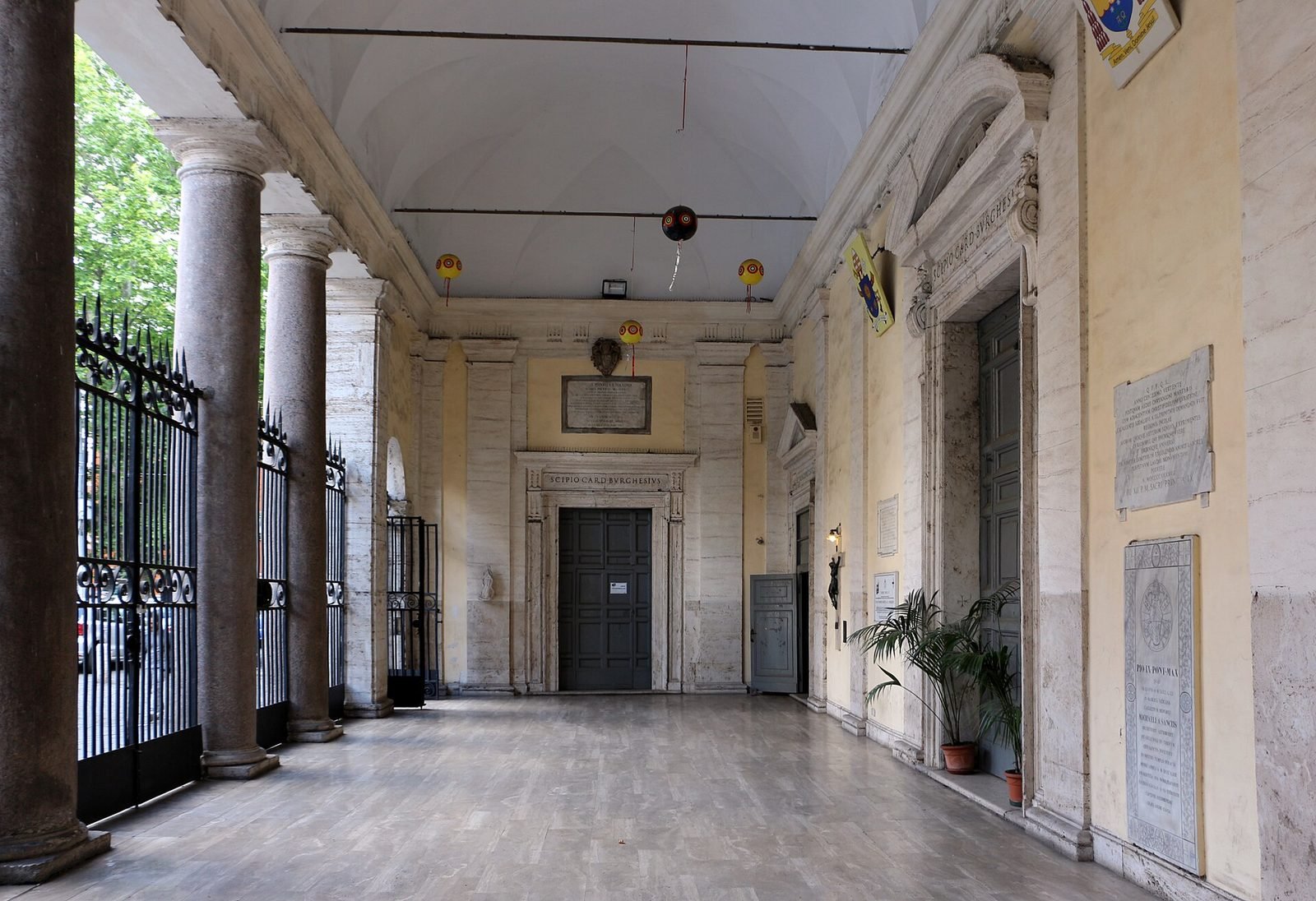
You enter the church from the portico on Viale di Trastevere, cross the right aisle and ask in the sacristy. If someone is there, the door is opened and you go down. If not, you don't go down, and no sign warns you from outside. The church schedule published by the parish provides for opening Monday to Saturday from 7:00 to 12:30 and from 15:30 to 19:00, and on Sundays and holidays from 9:00 to 13:00 and from 16:00 to 19:30. These are the hours of the church, not those of the underground, which is a different and narrower matter. The visit to the lower rooms is generally suspended before evening closing, and during services it isn't opened.
The access contribution
Access to the underground is paid. We prefer not to publish a figure for the amount: the parish doesn't display an official fare online and the sums given by non-institutional sources are modest but unconfirmed. It's best to arrive with small-denomination cash, because electronic payment isn't available, and to ask directly in the sacristy. Let's say it plainly: this is the kind of visit that is lost by arriving at the wrong time, and the only way not to get it wrong is to phone the parish first, at 06 5818225, or write to the contacts published on the parish website. A five-minute phone call saves an hour of pointless travel.
The risk of finding everything closed
There are days when the underground stays closed without notice: extraordinary services, funerals, maintenance, absence of staff. It's the normal state of a parish church that opens an archaeological area to the public without having the structure of a museum. Anyone planning a tight itinerary should consider the underground a bonus, not a fixed point, and have an alternative ready within five minutes' walk, for example San Francesco a Ripa or the Museo di Roma in Trastevere.
My advice for visiting the Basilica of San Crisogono
The practical advice for the Basilica of San Crisogono is one and it's worth more than the others: phone the parish the day before and show up in late morning on a weekday, around 10:30 or 11:00, when the church has been open for hours, the early-morning services are over and the staff are almost always on site.
Why the time slot matters
In early morning the church is open but given over to services, and asking to go down below while a Mass is going on is out of place. In early afternoon the church closes for the break. In late afternoon it reopens, but with the evening services and the possibility that the underground has already been closed for the day. The window between 10:00 and 12:00 on weekdays is the one in which we found the best conditions, and it's also the one in which Piazza Sonnino is least congested.
What to bring
A small flashlight, even the one on your phone, helps down below, where the lighting is functional and not museum-style. Shoes with a good grip, because the lower levels can be damp. A light jacket even in summer: below, the temperature drops noticeably compared to the street, and it's one of the few places in the center where in July you stay cool without air conditioning. The dress code is that of every Roman church: shoulders and knees covered, and in summer this becomes the most frequent reason for being refused entry.
The verdict
We give a clear opinion, because a page without an opinion is of no use. The upper church, taken alone, doesn't justify a detour: it's beautiful, orderly, with a first-quality floor, but anyone with few hours in Rome will find more memorable things 500 meters away. The underground, by contrast, is worth the detour and the wait too, and it's one of the three or four most legible early Christian spaces accessible in the city. Anyone who can't get down has visited half the monument. That's why we insist on the phone call: the ratio between effort and result changes completely depending on if that door opens or not.
Hours, access and accessibility: the operational picture
Entry to the upper church of the Basilica of San Crisogono is open and free during the opening hours published by the parish, while the descent to the early Christian basilica is paid, with access from the sacristy and limited availability. We summarize here the verifiable facts and point out the ones that are not.
The facts we report
Address: Piazza Sidney Sonnino 44, 00153 Rome. Parish phone: 06 5818225. Church hours according to the parish website: Monday to Saturday from 7:00 to 12:30 and from 15:30 to 19:00. Sundays and holidays from 9:00 to 13:00 and from 16:00 to 19:30. These hours may vary for services, liturgical periods and season, and checking them before the visit is up to whoever goes: we collected them from the parish's official channel and repeat them with this warning.
Accessibility
The upper church is accessible to wheelchair users through the portico, with small differences in level. The lower level is not, because the only connection is a staircase. There are no elevators or stair lifts. For those with mobility difficulties, the part that can be visited is still significant, but you need to know it beforehand. There are no public restrooms in the church: the closest are in the venues on the piazza, with the purchase requirement that applies everywhere in the neighborhood.
Another well-known fact, yet rarely cited
The Basilica of San Crisogono is one of the oldest and most prestigious cardinal titles in Rome, and among its titular cardinals are three men who later became popes: Stephen IX in 1057, Camillo Borghese, the future Paul V, between 1602 and 1605, and Gioacchino Pecci, the future Leo XIII, who held the title from 1853 to 1878.
The Borghese chain
The detail that almost always escapes notice is the family succession. Camillo Borghese was titular cardinal of San Crisogono until his election to the papacy in 1605. In the same year the title passed to his nephew, Scipione Caffarelli Borghese, who held it until 1633 and who in 1626 paid for the remodeling of the church. The Baroque restoration was therefore not a generic act of patronage: it was a family gesture on the church that the family had had in its care for two decades, and the coat of arms with the eagle and the dragon set into the Cosmatesque floor served exactly to say so.
Stephen Langton and the Magna Carta
Among the medieval titulars appears Stephen Langton, cardinal of San Crisogono from 1205 and archbishop of Canterbury, that is, the man who in 1215 played a decisive role in the mediation between King John of England and the rebel barons, from which the Magna Carta was born. The link is formal, because the cardinal title didn't imply residence, and Langton spent few periods in Rome. The fact remains that the name of this Trastevere church is attached, in the official lists, to one of the most cited constitutional events in European history. In the 16th century the title was instead held by Pietro Bembo, the Venetian man of letters to whom the Prose della volgar lingua owes the codification of literary Italian.
What it means today
The title still exists and is currently assigned to a Korean cardinal, archbishop emeritus of Seoul, appointed in 2014. Visitors who enter the church find nothing that explains it: cardinal titles are an administrative structure of the diocese of Rome, invisible to the visitor, which however ties every titular church to a history of appointments 1,500 years long. It's the same mechanism that holds for Santi Quattro Coronati and for dozens of other Roman churches.
The right photo to take at the Basilica of San Crisogono
The photograph that works best at the Basilica of San Crisogono isn't the facade, which the avenue forces you to frame crooked, but the central nave on axis, shot from the back of the church with the Cosmatesque floor in the foreground and the two rows of granite columns converging toward the baldachin.
How to set it up
You stand in the center, just after the door, and lower the shooting point: phone at chest height, not eye height. The floor takes up the first third of the frame and the porphyry disks lead the eye toward the altar. The columns do the rest. In vertical the photo works better than in horizontal, because it also takes in the gilded wooden ceiling. Watch out for the light coming in from the door behind you: if the door is open, the backlight burns out the edges.
The photo down below
In the underground the useful photograph is a different one: a close-up detail of a frescoed figure in the narthex, with the gap in the plaster left inside the frame. It's a choice that tells the real condition of those paintings, instead of hiding it. No flash, which on frescoes is banned almost everywhere and harmful anyway: rest the phone against a wall to steady it and accept a bit of grain. Before shooting, ask in the sacristy.
Some important events that happened here in history
In the history of the Basilica of San Crisogono there are at least five documented moments that changed the look or the role of the building, from the synod of 499 to the pastoral visit of 1990.
499: the titulus enters the records
The titulus Chrysogoni appears in the list of Roman churches represented at the synod convened by Pope Symmachus. It is the first certain attestation and remains the chronological fixed point of the whole story: from then on the community is documented without significant interruptions.
8th century: the building campaign of Gregory III
Under the pontificate of Gregory III, between 731 and 741, the lower basilica was the subject of works that include the decoration of the apse and the insertion of the presbytery structures. The oldest frescoes preserved under the present church date to this phase. It's a moment when Rome, in practice detached from Byzantine control, invests in its own urban basilicas: the same season that is recognized at Santa Maria in Cosmedin.
1123: the new basilica
The reconstruction promoted by Cardinal Giovanni da Crema removes the ancient building from view, shifting the axis to the north and raising the walking level by six meters. The layout seen today is born, with the Romanesque bell tower and the sequence of reused columns.
1626: the Borghese intervention
Giovanni Battista Soria completes for Cardinal Scipione Borghese the remodeling of the portico and the facade, redoes the ceiling, inserts the baldachin and modifies parts of the floor. The date is incised on the facade. From that moment the basilica takes on the look it has today toward Viale di Trastevere, even though the avenue would arrive only two and a half centuries later.
1907: the rediscovery of the underground
The excavations bring back to light the early Christian basilica that had remained buried since the 12th century. It is the event that changed the meaning of a visit to this church: before 1907 San Crisogono was one among many Trastevere basilicas, after 1907 it became an archaeological site in every respect.
1990: the pastoral visit
On March 4, 1990, John Paul II visited the parish of San Crisogono in Trastevere. The text of the address is published in the Holy See's official archives. It's a date that leaves no material trace in the building, but that marks the weight of the parish in the fabric of the neighborhood.
Who has passed through the Basilica of San Crisogono
Through the Basilica of San Crisogono have passed, in very different roles, Cardinal Giovanni da Crema who rebuilt it in the 12th century, the architect Giovanni Battista Soria and Cardinal Scipione Borghese who remodeled it in the 17th century, and the painter Pietro Cavallini or his workshop, authors of the apse mosaic.
The craftsmen
Giovanni da Crema was a papal legate in England and a leading curia figure in the years of Callixtus II: the basilica is his most visible work and still carries the layout he decided. Soria, a Roman, worked almost always for Borghese and Ludovisi patrons and in Rome signed measured facades and porticoes of great balance. Here his intervention is recognized in the columned portico and in the facade toward the avenue. Guercino, Giovanni Francesco Barbieri, painted for this church the ceiling canvas, which since 1808 is no longer here.
The titulars
The list of titular cardinals includes Stephen IX, Stephen Langton, Pietro Bembo, Camillo Borghese, Scipione Borghese and Gioacchino Pecci. Three of them rose to the papal throne. None of these names has left a visible trace in the church, with the exception of the Borghese, who with the family coat of arms marked floor, facade and furnishings systematically.
The people of Trastevere
Then there are those who passed through here without leaving their name anywhere: the generations of the neighborhood who baptized their children in this church and followed the procession of the Madonna del Carmine as long as the statue was kept here. It explains why in Trastevere this basilica is perceived as the neighborhood's church and not as a monument. An overall reading of the neighborhood is on the page Trastevere: what to see.
The basilica today: its social function
The Basilica of San Crisogono is an active parish, entrusted to the Trinitarians, which alongside its liturgical activity has for years run a listening center and a reception and food distribution service for the homeless people of the neighborhood, with weekly appointments. Anyone entering at certain hours therefore finds a group of people waiting in the portico or in the adjoining rooms: it's an ordinary use of the building, not an anomaly, and the minimum courtesy is not to photograph and not to get in the way.
What to see around the Basilica of San Crisogono
Within a 10-minute walk of the Basilica of San Crisogono there are four first-rate churches, two museums, an ancient bridge and the access to the Janiculum: it's the density that makes Trastevere the neighborhood with the best ratio of steps taken to things seen in all of Rome.
The heart of the neighborhood
Five minutes to the north and you reach Santa Maria in Trastevere, with the apse mosaics and the piazza in front. On the other side of Viale di Trastevere, toward the river, is Santa Cecilia in Trastevere, which in turn has a visitable lower level and Cavallini's Last Judgment in the nuns' choir, visible in a limited time slot. Anyone who wants to understand Cavallini should line up these three churches on the same day. A few dozen meters away is Sant’Agata, with the statue of the Madonna de Noantri, and at the end of Via di San Francesco a Ripa the church of San Francesco a Ripa, with Bernini's Blessed Ludovica Albertoni.
Museums, villas and the Janiculum
The Museo di Roma in Trastevere is in Piazza Sant’Egidio and hosts good photography exhibitions. Going up toward the west you meet Villa Farnesina with the frescoes of Raphael and his workshop, the Galleria Corsini across from it and the Botanical Garden behind them. From there you climb to the Janiculum, where you find the Acqua Paola Fountain, the church of San Pietro in Montorio and the Tempietto del Bramante. The climb on foot takes 20 minutes and in the heat it's no joke.
The river and the other bank
Toward the Tiber, in a few minutes you reach Ponte Garibaldi, Ponte Sisto and Tiber Island. Across the river are the Ghetto, the Theater of Marcellus and San Nicola in Carcere, another church with an open underground. Toward the south the neighborhood fades into Porta Portese, whose Sunday market takes over Sunday morning and makes local traffic impassable. On the other bank upstream you climb to the Aventine, with Santa Sabina and Santa Prisca with the Mithraeum. In summer the lungotevere below the island hosts the open-air events we cover in the pages on Isola del Cinema and on Estate Romana. For anyone looking for a base to sleep in the area, the overall picture is on the page where to stay in Rome.
Where to eat near the Basilica of San Crisogono
Piazza Sonnino and the streets around the Basilica of San Crisogono are among the areas of Rome most exposed to passing tourism, and the density of places that work only on occasional customers is high. We never name names: a list of signs goes stale in a few months. Instead we give the criteria for choosing, which stay valid.
The five signs of a trap
The first is the woman rolling fresh pasta in the window or right on the street: it's an advertising lure, not a clue about the kitchen. The second is the menu with photos of the dishes, which is meant for people who don't read Italian and says everything about the customer they expect. The third is the tout at the door who invites you to sit down: a place with its own clientele doesn't need to stop people in the street. The fourth is hours running nonstop from morning to late at night, with no kitchen break, which means dishes kept warm or reheated. The fifth is the places set in front of monuments and main stops, where you happen to find unpriced items on the menu and different price lists for inside and outside, with the bill adjusting to the tourist in front of them.
The chains in the center
In the center of Rome a model of place with a repeated sign has spread, with the same menu in several parts of the city and the line organized with ticket numbers. We don't name them and we don't recommend them. The fact that matters is another one: Romans don't go there, and in a neighborhood that still has a resident population this is visible at a glance by looking at who is sitting at the tables.
The test that always works
Look at who is sitting and what language they order in. If at half past noon on a weekday the tables hold people speaking Italian with a Roman accent, the place holds up. If they're all tourists with backpacks, it doesn't. It applies everywhere, and in Trastevere it applies twice over. We add a piece of advice about geography: moving away from the avenue and the main piazzas by five or six minutes on foot, toward the inner streets to the south, noticeably changes the ratio between quality and price. The full reasoning is on the page where to eat in Rome, while for cafes and pastry shops with a history behind them we have collected the information in historic cafes and shops of Rome. If you prefer to start from a selection already made, you can check Daniele Dezi's personal list on Google Maps: it is a curated, unsponsored collection, and should be taken for what it is, the judgment of a person who works in Rome.
Frequently asked questions about the Basilica of San Crisogono
How much does it cost to enter the Basilica of San Crisogono?
Entry to the Basilica of San Crisogono, at Piazza Sidney Sonnino 44 in Trastevere, is open and free during the church's opening hours. The visit to the underground early Christian basilica is instead paid, with access from the sacristy. We don't publish the amount because the parish doesn't release it in official form: it's best to ask on the spot and bring small-denomination cash, since card payment doesn't appear to be available.
What are the hours of the Basilica of San Crisogono?
According to the parish website, the Basilica of San Crisogono is open Monday to Saturday from 7:00 to 12:30 and from 15:30 to 19:00, and on Sundays and holidays from 9:00 to 13:00 and from 16:00 to 19:30. These are the hours of the church, not those of the underground, which opens in a narrower slot and depends on staff being present. It's best to phone first on 06 5818225.
How do you visit the underground basilica of San Crisogono?
The early Christian basilica under San Crisogono is reached from the sacristy of the church, by a modern staircase that goes down directly into the apse area of the ancient building, about six meters below street level. There is no ticket office: you ask in the sacristy and wait for someone to open. During services the descent isn't allowed and on some days it stays closed without notice.
How do I get to the Basilica of San Crisogono by public transport?
The Basilica of San Crisogono is reached by tram 8, which stops at Piazza Sonnino in front of the church linking it to Piazza Venezia and Largo di Torre Argentina, or by tram 3 from the Colosseum, the pyramid and Testaccio, and by bus H from Termini. There is no metro stop in Trastevere: if you come from line B you get off at Circo Massimo and continue on foot or by tram.
How long does it take to visit the Basilica of San Crisogono?
Visiting the Basilica of San Crisogono takes about 20 minutes for the upper church and another 20 or 30 for the underground level, so an hour in all if you manage to go down. Anyone who wants to read the early medieval frescoes of the narthex at leisure can allow a few more. A Trastevere route that also takes in Santa Maria in Trastevere and Santa Cecilia takes about two and a half hours.
Is the Basilica of San Crisogono accessible to people with reduced mobility?
The upper church of the Basilica of San Crisogono is accessible to wheelchair users, with small differences in level at the portico on Viale di Trastevere. The underground level is not: the only connection is a rather steep modern staircase and there are no elevators or stair lifts. Anyone planning the visit with people who can't do stairs needs to know this beforehand, because the underground is the most interesting part of the complex.
Can you take photographs in the Basilica of San Crisogono?
In the Basilica of San Crisogono photography for personal use is generally allowed in the upper church, without flash and without a tripod, avoiding shooting during services. For the frescoes on the underground level the conditions may be more restrictive, given the fragility of the early medieval paintings: it's best to ask in the sacristy before shooting. Any commercial or editorial use of the images requires a specific permit.
Is the apse mosaic of San Crisogono really by Pietro Cavallini?
The apse mosaic of the Basilica of San Crisogono, with the Madonna and Child between Saints James and Chrysogonus, is dated to around 1290 and attributed to the circle of Pietro Cavallini, but the attribution to the master in person remains debated among scholars, some of whom assign it to the collaborators of his workshop. The reference to Cavallini's circle is accepted. The direct hand is not.
What is the difference between the undergrounds of San Crisogono and San Clemente?
The underground of the Basilica of San Crisogono preserves an early Christian basilica with a single nave discovered in 1907, run by the parish and visitable by asking in the sacristy, while San Clemente has three superimposed levels with a museum setup, an obligatory route and published hours. San Crisogono offers early medieval frescoes at very close range and less educational mediation. San Clemente offers more historical layers and a more predictable organization.
Who wrote this page
This page is edited by the team at Tour Leader Pro, the Rome-based project office that designs and coordinates visits, itineraries and cultural events in Rome and Lazio. The hours, fares and access conditions given here were checked against the official sources named in the text as of the publication date: it's best to recheck them before you go, because they change often. If you find outdated information, let us know.
If you are building a Trastevere itinerary that ties together the neighborhood's basilicas, the underground levels open on request and the real travel times between one church and the next, and you need to coordinate access, permits and accompaniment, you'll find design tools and operational support at Tour Leader Pro.
For a wider picture on transport, on distances between destinations in Lazio and on organizing a trip that doesn't end in the center of Rome, a good resource is Italy Planner.