Church of San Francesco a Ripa
In short. The Church of San Francesco a Ripa is at Piazza di San Francesco d'Assisi 88, 00153 Rome, in Trastevere, and it's the place where Gian Lorenzo Bernini left the Ecstasy of Blessed Ludovica Albertoni.
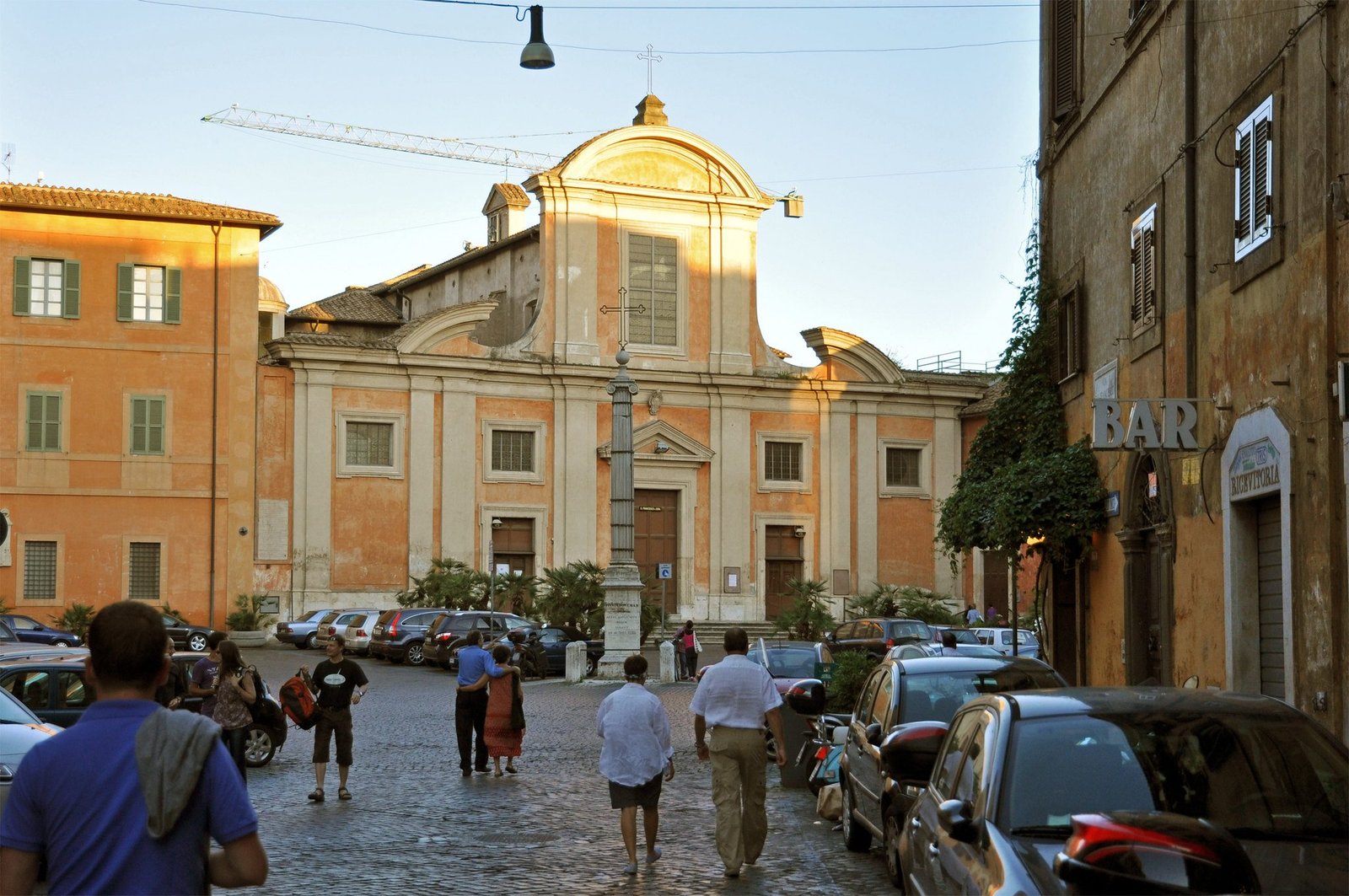
The Church of San Francesco a Ripa is at Piazza di San Francesco d'Assisi 88, 00153 Rome, in Trastevere, and it's the place where Gian Lorenzo Bernini left the Ecstasy of Blessed Ludovica Albertoni. Free admission: on the official website of the parish and sanctuary, as of August 2026, there is no ticket, no full fare, no reduced fare and no reservation requirement for the individual visitor. The phone numbers are +39 06 581 9020 and +39 06 580 3509, with the switchboard listed Tuesday to Friday from 16:00 to 18:00 and Saturday from 9:30 to 12:00. The email is sanfrancescoaripagrande@gmail.com. On opening hours the official website contradicts itself: the home page gives weekdays 7:30-12:00 and 16:00-19:30, Sundays and holidays the same hours, while the history page and the courses page give 7:30-12:30 and 16:30-19:30. Those are two different versions on the same domain. Go by the narrower window, that is, get in before noon in the morning and after 16:30 in the afternoon, and if you're making a trip specifically for it, call first.
On Masses the website is instead unambiguous, and it gives the summer schedule: Sundays and holidays at 9:00 and at 18:30. Weekdays in July at 7:30 and at 18:30. Weekdays in August only at 18:30. This reduced schedule applies to the period the parish lists as July and August, so in August there is no weekday morning Mass. If you go at 8:00 on a Tuesday in August hoping for an early Mass, you'll find the church open but no service.
How to get to the Church of San Francesco a Ripa
The address, with the street number, is Piazza di San Francesco d'Assisi 88, 00153 Rome. It's the southern end of Trastevere, on the side of Porta Portese and the Tiber, not on the side of Santa Maria in Trastevere. For surface lines it's best to check the route the same day on the transport company's app or website, starting from the exact address, because a wrong number will drop you on the opposite side of the district. That also goes for the tram that runs up Viale di Trastevere.
What can be said with certainty is the geography on foot, because it's geometry and not a timetable. The church sits on the Tiber side, in a wide, not very monumental piazza, with the flank of the convent closing off an entire block. From here it's a few minutes' walk toward Porta Portese, toward the Basilica of Santa Cecilia in Trastevere and, going uphill, toward the Basilica of Santa Maria in Trastevere. If you arrive from the other bank of the river, pass through Tiber Island and then come down along the lungotevere. It's the best walk, because it makes you understand that this church was born on a port and not on a postcard piazza.
How much it costs to enter the Church of San Francesco a Ripa
Zero. It's a parish church and a sanctuary, not a museum, and on the official website there is no price list at all. There's no ticket office, no turnstile, no paid audio guide listed by the parish. This is the news that makes the practical difference: inside is the last great sculpture by Gian Lorenzo Bernini and you don't pay a euro to see it, whereas to see other works of his in Rome you do pull out a ticket, for example at the Galleria Borghese. In our view it's the best ratio between what you see and what you spend in the whole city. That said, if you go in and stay half an hour in front of a masterpiece kept open by a community of friars, an offering in the box is good manners, not devotion.
What this place was before the church: the hospice of San Biagio
The story told by the parish's official website starts well before the Franciscans. Between 936 and 949 Count Benedetto of Campania founds a Benedictine monastery dedicated to the saints Cosmas and Damian, the one the Romans call San Cosimato. The monks build near the Tiber a hospice-hospital named for San Biagio, to assist pilgrims and poor sick people. It wasn't an art church, it was a medieval emergency room with rooms to sleep in. Keep this origin in mind, because it explains everything that came afterward, including what the friars still do today in this block.
The Tiber here wasn't a view, it was a job. The name Ripa Grande indicates the river landing, and the church's website titles its photo gallery Ripa dei Sette Soli, which is the historical place name of the area. The history of the port and the precise origin of that name are not documented in full: what you need to know is that the hospice of San Biagio stood where the boats and the people arrived, and that a hospitality facility at that point made logistical sense even before spiritual sense.
Saint Francis in Rome, 1209 and the cell above the sacristy
According to the parish's reconstruction, in 1209 Francis of Assisi arrives in Rome for a papal visit and finds welcome in that very hospice. The page dedicated to the saint specifies that here the saint lived and prayed during his Roman visits to Pope Innocent III. Two people smooth his way: Jacopa de' Settesoli, the Roman noblewoman who finds him shelter, and Count Pandolfo dell'Anguillara, who introduces Francis to the abbot. The cell where he slept is still there, above the sacristy, and today it is the Sanctuary.
The disproportion between the room and the church that grew up around it is the real substance of this place. Below you have polychrome marbles, stucco angels, chapels of families that had cardinals at home. Above you have a tiny room with a black stone inside a grate. It isn't a poetic contrast. It's the floor plan of the building.
1229, the handover to the Franciscans and the lost frescoes of Cavallini
In 1229, by decree of Pope Gregory IX, the church passes to the Franciscans. Count Pandolfo finances the enlargement. The church is rebuilt in basilica form, adapting it to the apostolic needs of the friars. And here is the most painful detail: the parish website writes that Cavallini's frescoes depicted the life and miracles of Saint Francis, and that those frescoes disappeared during the Baroque works of the 1600s. What remains in Rome is the Cavallini of Santa Cecilia in Trastevere, a few steps from here, and the mosaics of Santa Maria in Trastevere remain. The one at San Francesco a Ripa is gone. When you walk in, know that you're walking inside a building that erased a painted cycle to make itself beautiful in another language.
In the 1400s, around 1400, a large cloister is built on the right of the church, later reduced in the 1600s. In the 1500s the chapels of the left aisle come into being: the Chapel of the Crucifix, which the parish dates before 1490, and that of the Immaculate Conception, around 1560. In 1579 church and convent pass definitively to the Reformed Franciscans.
The 1608 choir and the cell that was about to vanish
In 1608 Monsignor Lelio Biscia finances the enlargement of the choir. The design is by the architect Onorio Longhi. The choir still exists, with walnut stalls made by Franciscan cabinetmaker craftsmen of the 1600s, and a plaque recalling Cardinal Biscia as the benefactor. Above all this is an organ with two keyboards and 26 real stops, by the firm Vincenzo Mascioni of Cuvio, in the province of Varese, installed in 1956: if you hear playing during a festive Mass, that's the instrument.
The delicate point is another. That enlargement risked eating the cell of Saint Francis, and on how it was saved the official website tells two different stories on two different pages. On the history page you read that Monsignor Biscia enlarged the choir without destroying the cell thanks to the intervention of Cardinal Mattei. On the page dedicated to Saint Francis you read instead that the Sanctuary risked demolition in the 1600s, that the friars opposed it and that, according to tradition, it was Saint Francis himself who appeared in a dream to Cardinal Alessandro Montalto Peretti to save the place. Two versions, same site, with a different degree of certainty. The first is an item of administrative record, the second the page itself introduces with the formula according to tradition, so it is a devotional tradition and should be read as such. The same page adds that the renovation concluded in 1698.
The 1675 of Mattia de Rossi: the church you see is this one
The church you enter today dates to 1675, when Cardinal Lazzaro Pallavicini finances the complete rebuilding. The architect is Mattia de Rossi, and this name is worth a pause: the page on the cloister frescoes defines him as the favorite pupil of Gian Lorenzo Bernini, and says he directed the whole of the building works between 1682 and 1701, until his death in 1695. Put the two facts together and you understand the coincidence that makes this place unique in Rome: on the same building site, in the same years, the master and his favorite pupil work. Bernini sculpts the Blessed Ludovica, de Rossi raises the walls that contain her.
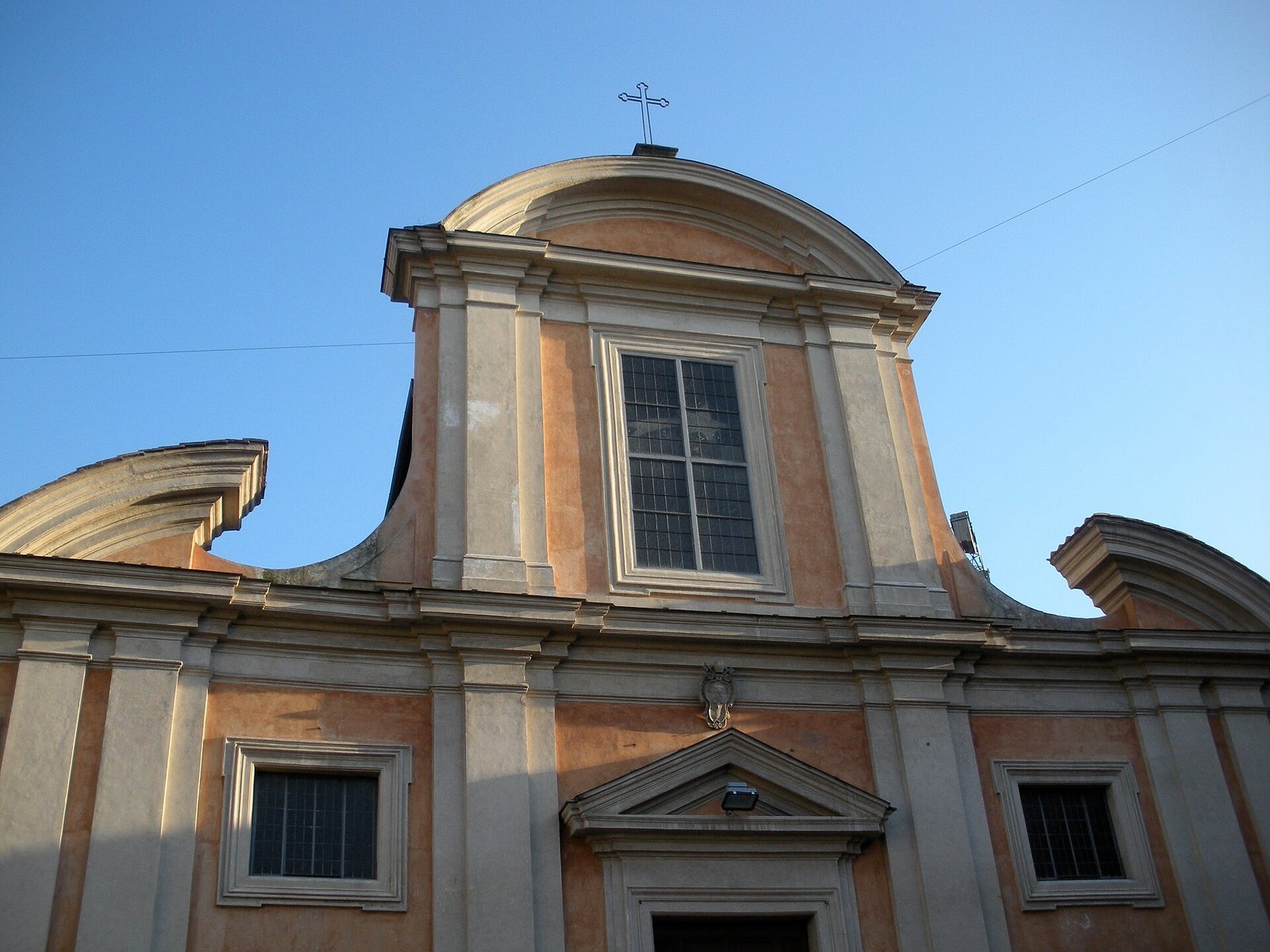
The Baroque facade, with Doric pilasters and two orders, dates to 1682. The new consecration comes in 1701 by the hand of Cardinal Sperelli of Assisi. The bell gable is from 1734 and replaces the medieval one. It's worth looking at it from outside before going in, because it's the part of the church that survives longest in memory: a wall that thins out at the top and holds the bells, without a tower. It's a poor solution, Franciscan in origin and in result, and in a piazza this wide it works better than a monumental bell tower.
The high altar, rebuilt twice in 10 years
The high altar of the Church of San Francesco a Ripa was destroyed and rebuilt twice within a few years, and this is one of those things you won't find written in airport guidebooks. In 1738 a stucco altar is consecrated. In 1746 the Franciscan architect Fra Secondo da Roma rebuilds it in marble, in Baroque style with polychrome marbles, and adds a statue of Saint Francis. In 1751 come, again by Fra Secondo, the two plaster statues of Faith and Charity.
At the center, though, is an older and more beautiful piece: the wooden statue of Saint Francis in ecstasy supported by angels, the work of the Franciscan sculptor Fra Diego da Careri, which the parish dates before 1660. Look at it carefully, because it's wood and not marble, and it's by a friar and not by a court master. If you then go around behind the high altar you find a gilded Eucharistic monogram, the Franciscan coat of arms in black marble and a niche with a small bronze crucifix of 1746. Nobody goes there. It's one of the quietest corners of the church.
Napoleon, the Garibaldians and the Piedmontese: kicked out three times
This community was evicted three times in 64 years, and the chronology the parish gives is precise. On May 17, 1809 Napoleon declares the Papal State fallen and the religious are persecuted. In 1849 the Garibaldians drive out the religious and occupy the convent. In 1870, with the Piedmontese occupation, begins the procedure that leads to the notice to leave of November 12, 1873: Pope Pius IX grants the father superior some rooms in Via della Luce for six religious. Six. In a community that had filled a block.
It's a story that dismantles the idea that a Roman church is an immovable object that has always been there. This one was emptied, occupied, shrunk and put back on its feet. The fact that today you find the door open at 7:30 in the morning is the result of a return, not of continuity.
From 1866 to 1931: floors, restorations and the birth of the parish
In 1866 the marble floors are redone. In 1882 the Chapel of the Pietà is restored by the architect Paolo Belloni, preserving the old frescoes. In 1906 San Francesco a Ripa becomes a parish. In 1931 comes the new marble balustrade of the high altar, the iron gates are removed from the chapels, the cell of Saint Francis is restored, the organ is renovated and the nativity scene is moved from the Chapel of the Immaculate Conception to that of the Annunciation. These are inventory details. But if you're wondering why the chapels here can be seen well and not through a grate, the answer is that 1931.
Why it became a parish only in 1906, and who decided
The church had been there since the 1200s, but it becomes a parish only under Pope Pius X. The page the parish dedicates to him reports the document: the bull Romanas aequabilius distribuire et componere paroecias, dated January 6, 1906. With that measure two parishes were abolished, Santissimo Salvatore della Corte and San Bartolomeo all'Isola Tiberina, and three new ones were established: San Francesco a Ripa, Santa Teresa a Porta Salaria and San Giuseppe on Via Nomentana. It was part of the reorganization and redistribution of Roman parishes begun by Pius X at the start of his pontificate.
The detail that stays in the mind is the suppression of San Bartolomeo on Tiber Island as a parish: two points that look at each other from bank to bank, one loses parish status and the other gains it, with a stroke of the pen on January 6, 1906. The religious topography of Rome is not a fossil, it's administration.
What the Church of San Francesco a Ripa is like inside
Three aisles in a Latin cross, three chapels per side. The aisles are divided by pilasters that hold up the cornice and the groin vault. The space, the parish writes, keeps the Franciscan austerity while being enriched with funerary monuments and artworks, and the definition is honest: there's no gold by the square meter here like in certain churches of the center, there's a large bright box with a few very strong things inside.
Just inside, at the entrance, is the monument to the senators Tommaso Raggi and Ortensia Spinola, from the 1600s, attributed to Gerolamo Lucenti. On the second pilaster on the left the monument to the venerable Innocenzo da Chiusa, by Giovan Battista Mola. On the second on the right the monument to the preacher Bartolomeo Cambi da Salutio, with his portrait, erected by Pope Benedict XIV. Three monuments that 99 percent of visitors walk past without seeing, because everyone heads straight for the chapel at the far left. Slow down at the entrance.
The Paluzzi Albertoni Chapel and the Ecstasy of Blessed Ludovica
Here it is. The chapel is called Paluzzi Albertoni and is dedicated to Saint Anne, so much so that the parish also calls it the Chapel of Saint Anne. It was designed by the architect Giacomo da Mola in 1625, so 50 years before Bernini put his statue in it. This is a fact that changes the reading: the sculpture wasn't born together with the space, it was inserted into an already existing space and overturned it.
The altarpiece is by Giovan Battista Gaulli, il Baciccia, from 1675, and depicts Saint Anne, the Virgin and the Child Jesus. Below the altarpiece is the reclining Carrara marble statue, the Ecstasy of Blessed Ludovica Albertoni by Gian Lorenzo Bernini, which the parish dates to 1675 and defines as the sculptor's last work. The page the site dedicates expressly to the statue adds that it was the Altieri family who commissioned him to make an altar, and describes the blessed lying on a bed embroidered in marble, lit by vertical windows hidden at the sides. On the balustrade of the chapel, around 1702, appears the coat of arms of the House of Altieri. In the floor is the slab of Blessed Ludovica.
On the dating a warning is needed. The official website of the parish says 1675, both on the chapel page and on the church history page. It isn't confirmed by a second independent source. So 1675 is the date of the official website, not a date confirmed by two sources. If you read a different range elsewhere, for example 1671-1674, know that this range is not confirmed by the sources cited here.
How to really look at Bernini's statue
A practical tip worth more than 10 pages of aesthetics. The light you see falling on the marble is not ambient light: it comes from vertical windows hidden at the sides, as the parish itself says. It means the effect changes radically with the hour of the day and with the weather. If you go in on an overcast morning, you see a marble lady stretched out. If you go in when the side light is working, you see the fabric move. The difference isn't in the statue, it's in the hour you went.
Second tip: kneel or bend down. The statue is reclining and the height of the altar is designed for a gaze from below. Standing, as an adult, you mostly see the bed embroidered in marble. Lowering yourself 40 centimeters, the face comes right at you. It's the same trick Bernini uses elsewhere, but here, without a crowd and without barriers, you can afford to try it calmly.
Third: the marble is Carrara and it's white, the chapel is small, and a phone flash ruins it. We'll come back to that in the chapter on photos.
Who Ludovica Albertoni really was
She wasn't a nun. This is the point that escapes almost everyone who walks in. The page the parish dedicates to her tells an entirely lay life: she is born in Rome in 1473 to a noble family, is promised in marriage against her will to the Trastevere nobleman Giacomo della Cetera, a husband described as violent and unstable, and lives that relationship with sacrifice and devotion. She has three daughters. At her husband's death she wins an inheritance dispute with her brother Domenico, renounces everything and embraces the Rule of the Third Order of Saint Francis, spending the rest of her life caring for the poor. She dies on January 31, 1533.
The rest is the chronology of the cult. She is buried in the Chapel of Saint Anne, in this church, in 1533. Her feast falls on January 31, since 1625, the year she is recognized as co-patron of Rome. In 1675, following the beatification, her remains are translated into the monumental altar made by Gian Lorenzo Bernini, where they still rest. The parish website doesn't specify which pope beatified her: if you need that name, ask in the sacristy or look for a source that documents it.
In our view Bernini's statue works even without knowing anything about her, because it's marble that seems to breathe. But when you know that you're looking at a 16th-century Roman widow who fought in court with her brother over the inheritance and then gave everything away, that face thrown backward changes meaning. It isn't a generic ecstasy. It's the end of a very concrete life, under an altarpiece by Baciccia painted more than a century after her death.
The cell of Saint Francis and the Sanctuary above the sacristy
The cell is reached from the sacristy, by small stairs that look out over the old convent. The space you see today, the parish explains, results from the union of the saint's cell with that of his traveling companion: so it isn't the original room in isolation, it's two rooms that became one. The Sanctuary is built on the spot where the saint, according to the page, lived and prayed during his Roman visits to Pope Innocent III.
At the center of the Sanctuary's altar is the portrait of Saint Francis on panel by Margaritone d'Arezzo, which the website dates 1262-1305. If you're interested in medieval painting, this panel alone is worth the climb: we're facing an early type of Franciscan portrait, painted at a time when the saint's iconography was being fixed. The fact that it sits at the top of a small staircase, inside a tiny room, above the sacristy of a Baroque church, and not inside a climate-controlled display case, is very Roman and very un-museum.
The three relics and the black stone
The church keeps three relics, listed by the parish: a piece of the bloodstained bandage, a piece of the hair shirt and the black rock on which the saint rested his head to sleep. On the latter the page is explicit: because of breathing problems, in his last years his only pillow was always a large black rock, still kept behind a grate inside the Sanctuary.
It is, in our view, the most impressive object in the whole church, even for those who aren't devout. Because it's a stone. It isn't gold, it isn't silver, it isn't worked marble: it's a dark rock behind a grate, in a room two meters above the sacristy of a neighborhood parish. If you come here for Bernini and leave without having gone up to see that stone, you've seen half the place.
The chapel of Giorgio de Chirico
This is the surprise that throws everyone. In 1992 the remains of Giorgio de Chirico are translated to the Church of San Francesco a Ripa: before that he was buried in the Verano cemetery. To house the tomb, a small chapel is carved out of an adjoining property of the Ministry of the Interior, which today is reached through two small doors at the back of the Chapel of the Immaculate Conception.
The widow, Isabella Pakszwer, known as Isabella Far, had written on November 28, 1984 a letter to Father Elia Germano Ceratogli expressing the wish that her husband's remains be kept here. Father Felice Rossetti also appears in the affair. The widow donated three canvases: the Self-Portrait, the Portrait of his wife Isa, known as The Veiled Lady, and The Fall or Ascent to Calvary, 185 by 160 centimeters, which the parish identifies as the master's most important sacred work.
For those arriving in a hurry: inside a 13th-century Franciscan church rebuilt in the 1600s, at the back of a chapel of the Immaculate Conception, behind two small doors, is the tomb of the painter of metaphysical art with three of his paintings. There's no lit sign pointing it out. It's the least predictable thing in all of Trastevere, and that says a lot about a district that also has Villa Farnesina and the Botanical Garden.
The Rospigliosi Pallavicini Chapel, the piece of Baroque theater
Right aisle, year 1710. The Rospigliosi Pallavicini family has it built as a burial place and calls Nicolò Michetti as architect. The altarpiece, with Saint Peter of Alcantara and Saint Paschal Baylon in Eucharistic adoration, is by Giuseppe Bartolomeo Chiari, who also signs the medallions of the vault. The family's sepulchral monuments are from 1713 and are the work of the Mazzuoli brothers of Siena.
In detail. On the left wall the monument of Lazzaro and Stefano Pallavicini, with architecture by Michetti and the statues of Fortitude and Justice by Giuseppe Mazzuoli. On the right wall the monument of Maria Camilla and Giovambattista Rospigliosi, with the statues of Charity and Prudence, again by Mazzuoli. Above the sepulchers are the bronze skeletons of Death by Michele Garofolino. The vault is a pavilion vault with gilded stuccos, the Pallavicini Rospigliosi coats of arms and four allegorical ovals. In the lantern is the Dove of the Holy Spirit.
In our view this chapel is more impressive than its fame lets on. The bronze skeletons above the sepulchers are exactly the kind of Baroque memento mori that people in Rome go looking for elsewhere by paying for a ticket, and here they sit in a side aisle, free, with nobody in front.
The Chapel of the Annunciation and Francesco Salviati's panel
Left aisle. The altar panel is by Cecchino Salviati, that is, Francesco Salviati, and the parish dates it 1535: it depicts the Annunciation to Mary. It's high-level Florentine painting inside a Roman Franciscan church, and it should be looked at knowing it is from the full 1500s, so older than everything around it.
The walls are covered with frescoes by Giovan Battista Ricci da Novara, called il Navarro, early 1600s, with scenes from the life of the Madonna, the Major Prophets, the four Evangelists and the Sibyls. In the vault is a glory of God the Father. On the right wall: the Visitation, the Cumaean Sibyl, the plaque of Bernardina Rustica de Castellanis, the prophets Jeremiah and Solomon. On the left wall: the Nativity of the Virgin, the Libyan and Hellespontine Sibyls, a commemorative plaque of papal indulgence dated 1622, the prophets David and Isaiah. On the back wall the Lamian and Phrygian Sibyls. Four pinnacles carry the Evangelists.
If you have 10 minutes and a bit of patience, count the Sibyls. They are six different names in a single chapel, and it's an iconographic program worthy of a far more famous church than this one.
The Immaculate Conception by Maarten de Vos
In the chapel of the Immaculate Conception, the one you pass through to go to de Chirico, there's a painting by the Flemish Maarten de Vos, dated by the parish to 1560. The page tells that de Vos moved to Italy to deepen his studies, that he completed them with Tintoretto and that, before returning to Antwerp, he made this work in this church. The website defines it as one of his most beautiful works.
Note the sequence: you enter a 16th-century chapel with a Fleming trained under Tintoretto, and leave from the back of the same chapel to go see the tomb of a painter who died in the 20th century. Four and a half centuries in 12 square meters. This is the reason the Church of San Francesco a Ripa can't be visited in 10 minutes.
The Chapel of San Carlo da Sezze and the Pietà that Napoleon carried off
The chapel, also called the Chapel of the Pietà, is dedicated to San Carlo da Sezze, described by the parish as a humble and simple friar minor, apostle of Trastevere, writer of ascetic, mystical and spiritual works, stigmatized by the Eucharist for having received a wound to the heart from a ray that came from the Eucharist while he was attending Holy Mass. His remains rest under the altar in a bronze urn, later than 1670. The frescoes in the large lunettes depict the miracles for the beatification and are from 1882.
On the altar there used to be the Pietà by Annibale Carracci, a painting donated by Lucrezia Mattei di Paganica. Plundered by Napoleon in 1797 and taken to the Louvre. Today in its place is a copy of the Saint Michael the Archangel by Guido Reni. In the sacristy, above the entrance door, there is a late 1600s canvas that reproduces that Pietà by Carracci, with a debated attribution: the parish writes that the original was previously in the chapel of San Carlo da Sezze.
So in this church you have a chapel that lost its painting in 1797 and an old copy of the same painting hanging in the next room. It isn't a scholar's detail. It's the most direct way to understand what 1797 meant for Rome's heritage. At Santa Maria sopra Minerva too, and in half the city, parallel stories are told, but here the original and the copy sit 20 meters from each other.
The Chapel of San Giovanni da Capestrano
Right aisle, designed by the architect Carlo Fontana. The altarpiece, the wall canvases and the frescoes of the vault are by the Bolognese Domenico Muratori, which the parish website dates as after 1749. That's the dating of the official source, not cross-checked with others: if you have a different chronology in mind for that painter, verify it in a specialist catalog.
The subjects are both military and preaching, which for a Franciscan chapel is already news. At the altar Saint John of Capistrano at the battle of Belgrade. On the right wall the saint at the siege of Vienna. On the left wall the preaching in Perugia with the destruction of the instruments of vice. In the vault the Glory of the saint. In the lunettes the Birth and the Death.
The Chapel of San Giuseppe
Year 1686, architect Giovanni Corbelli. The altarpiece with the Holy Family and God the Father is by Stefano Legnani, known as il Legnanino. The frescoes of the walls, vaults and pendentives are by Giuseppe Passeri: right wall the Flight into Egypt, left wall the Dream of Saint Joseph, vault a choir of angels.
Beneath the altar rests the body of Saint Leontius the martyr. There is then the slab of Simplicie Verecondie, that is, Fra Simplicio da Sant'Elia, lay brother of the Reformed Roman Province, who died on February 23, 1656, and on the left a wooden statue of Most Holy Mary refuge of sinners inside a glass case. The statue in the case is one of those objects of popular devotion that are found everywhere in Rome and that almost nobody looks at. Do look, because it's the living part of the church, the one that receives real flowers.
The sacristy, Algardi's crucifix and the hostel
The sacristy isn't a service room, here it's a small museum. At the end of the hall is a bronze crucifix with a wooden base and cross by Alessandro Algardi, and the parish underlines the artist's remarkable plastic sensitivity. On the left, past an iron gate, is the Oratory of the Secular Franciscan Order, a room fitted out in 1973, where you find the painting of Saint Elizabeth caring for a sick man, from 1837, attributed to Octave Hauser.
From the sacristy you also reach the Hostel of San Francesco, where the tomb slabs of the Anguillara family are kept and a wooden crucifix of the late 1400s before which, the parish says, Blessed Ludovica Albertoni used to pray. That Anguillara family is the same as Count Pandolfo who in the 1200s introduced Francis to the abbot: the circle closes inside a corridor that nobody photographs.
A practical warning: sacristy, cell and hostel are not spaces open at will like the nave. If you want to go up to the cell of Saint Francis, ask in the sacristy, politely, and allow that it depends on who's there and what time it is. On the parish website there is no visiting schedule for the Sanctuary distinct from that of the church.
The choir, the cloister and the frescoes of Emanuele da Como
The cloister is the part of the complex that almost no tourist sees. The frescoes are by Emanuele da Como, a professed lay Franciscan painter, and the cycle was completed in 1686. The space extends for 20 meters and is lit by openings onto the open area of the medieval cloister. The main painting described by the parish is the large Approval of the Regula Bullata, with Pope Honorius III and Saint Francis. Around it are saints and blesseds absorbed in the contemplation of God, and popes and cardinals of the Franciscan Order.
In the choir, besides the stalls and the 1956 Mascioni organ, there is a large canvas of Father Salvatore Lilli of Cappadocia, martyred in 1895, painted in 1981 by Alberto de Rossi in preparation for the 1982 beatification. Which beatification that is, the text of the page is ambiguous and also mentions Pope John XXIII. On the wall to the right behind the high altar there is a Madonna enthroned with the blessing Child on her knees, by an unknown author, from the 19th century. There is also an 18th-century wall hanging with the Apparition of Jesus and the Madonna to Saint Francis at the Porziuncola. On public access to the choir and the cloister the site says nothing explicit: ask, don't take it for granted.
The saints and blesseds of the house: 10 names on the wall
The parish keeps its own list of saints and blesseds tied to this church, and there are 10: the venerable Innocenzo da Chiusa, Monsignor Cristoforo Arduino Terzi, the servant of God Father Giuseppe Spoletini, the venerable Bartolomeo da Salutio, the servant of God Father Bernardino da Portogruaro, Saint Charles of Sezze, Blessed Ludovica Albertoni, the venerable Father Ginepro Cocchi, Pope Saint Pius X and Pope Saint John Paul II. The last two aren't friars of the house. They're the two popes who left a documented mark on this parish, one with a bull and one with a visit.
On Father Ginepro Cocchi of Artena, the history page carries a line worth a chapter: he was formed in this community and died a martyr in China in 1939. A church that has a 20th-century martyr on its own family list isn't an art container, it's a community with a memory of people. This, in a city where many churches are by now ticket ATMs, remains a substantial difference.
What the friars do now, and no guide writes about
On the parish events calendar, in August 2026, the longest-running entry isn't a feast. It's the Food Aid Distribution, listed as active from November 21, 2025 until December 31, 2027. It's not a one-afternoon event, it's a continuing multi-year service published as such. The page doesn't specify the exact days and hours of the distribution, the access criteria or the ways to donate: for those you have to call the parish numbers during office hours.
The community describes itself like this: following in the footsteps of the saint, brother of the poor, the sick and the lepers, the fraternity of Friars Minor of Ripa lives praying and caring for people in hardship. This, keep it in mind, is why the hospice of San Biagio from the 10th century and today's soup kitchen stand on the same block. It's not rhetoric. It's the same function, 1,000 years apart.
Then there are the courses, which only matter to you if you live in the area but which tell the rhythm of the house. Baptism is celebrated Saturday and Sunday at 11.00, 16.00 or 17.00, in the first chapel on the left where the baptismal font is. For parishioners there are three preparatory meetings, two at the parish and one at home, while for those from outside the parish the pastor's consent and a certificate of attendance at a preparatory course are needed. First communion is a two-year path for children ages 7 to 9 using the ludocatechesis method, Sundays from 10.00 to 11.00 from October to May. Confirmation is two years for kids ages 11 to 14, same Sunday hours. There are also marriage catechesis for engaged couples and catechesis for adults.
The Festa del Perdono, or why August here isn't an empty month
On the parish calendar, in August 2026, there is the Festa del Perdono, with the period listed from July 7 at 8.00 to August 3 at 22.00. The event page gives the hours of the celebrations already listed above: Sundays and holidays at 9.00 and 18.30, July weekdays at 7.30 and 18.30, August weekdays only at 18.30. What exactly the program of the feast includes, what the conditions for the indulgence are and which are the extraordinary celebrations, the page doesn't say. If you're coming for that, phone.
A note: the first weekend of August in Trastevere is when the neighborhood empties of residents and fills with people passing through. A Franciscan church in festival, with the evening Mass at 18.30 and no tourists in line, is one of the quietest places in the city in those days.
A curiosity about the Church of San Francesco a Ripa
The real curiosity isn't Bernini. It's that the master and his favorite pupil worked on the same building site, in different roles. The parish site, on the page about the cloister frescoes, calls Mattia de Rossi the favorite pupil of Gian Lorenzo Bernini and says he directed the building works from 1682 until his own death in 1695. The complete rebuilding of the church had been started in 1675 with funding from Cardinal Lazzaro Pallavicini, again to a design by de Rossi. And 1675 is the date the site assigns to Bernini's statue in the Paluzzi Albertoni Chapel.
So: while the pupil redesigned the shell, the master closed his sculptor's career inside a side chapel of that same building. It's hard to find another spot in Rome where this relationship is so physical. The Bernini itinerary everyone follows touches places enormously more crowded than this: the Galleria Borghese, Piazza Navona with the Fountain of the Four Rivers, Saint Peter's. Here, instead, you're in a friars' church, under a roof redone by the pupil, in front of what the parish identifies as the master's last work.
Second curiosity, a smaller one: the balustrade of the chapel carries the coat of arms of the House of Altieri and the parish dates it around 1702. It means the commissioning family kept working on it almost 30 years after the statue. Roman chapels are never really finished.
Something nobody tells you about the Church of San Francesco a Ripa
That inside here is the tomb of Giorgio de Chirico, and that it arrived in 1992 moved from the Verano. General guidebooks almost always skip it, and whoever comes in for Bernini leaves without knowing that a few meters away, behind two small doors at the back of the Chapel of the Immaculate Conception, is the painter of metaphysical art with three of his paintings donated by the widow: the Self-Portrait, the Portrait of his wife Isa known as The Veiled Lady, and The Fall or Ascent to Calvary, 185 by 160 centimeters, which the parish identifies as his most important sacred work.
The administrative detail is even stranger than the event: the small chapel that houses the tomb, the website writes, was carved out of an adjoining property of the Ministry of the Interior. That is, to make room for a 20th-century painter in a 13th-century church it was necessary to eat into a piece of state property. The wish had been expressed by Isabella Pakszwer, known as Isabella Far, in a letter of November 28, 1984 to Father Elia Germano Ceratogli.
The second thing nobody tells you is less spectacular and more useful: this isn't a museum church, it's a parish with catechesis on Sunday mornings and a food aid distribution published on the calendar until December 31, 2027. If you turn up here at 10:30 on a Sunday in November you find children in the corridors. It's a plus, but if you're looking for absolute silence you need to know it beforehand.
My advice for visiting the Church of San Francesco a Ripa
Just one, and it changes everything: don't walk in at the last minute before closing. The published hours are contradictory between the pages of the official website, and the safe window is narrower than the one you read on the home page. Arrive at 10:00 in the morning or at 17:00 in the afternoon and you give yourself a full hour. If you get there at 11:50 hoping to squeeze in the cell of Saint Francis, you risk finding the sacristy already closed and not going up.
Second tip, one of method: do the tour in reverse compared to everyone else. Everybody walks in and heads straight for the Paluzzi Albertoni Chapel. You start from the entrance, look at the three funerary monuments on the pilasters and at the entrance, do the right aisle with Rospigliosi Pallavicini, San Giovanni da Capestrano and San Giuseppe, then pass to the left aisle with Salviati's Annunciation, Maarten de Vos's Immaculate Conception and the de Chirico chapel, and only at the end go to Bernini. You arrive at the statue with your eyes already inside the 1600s, and you see it for what it is instead of as a little figurine.
Third, ask in the sacristy for the cell. Politely, without hurry, and accepting a no. There's no visiting schedule for the Sanctuary published separately from that of the church, so it depends on who's there. If they say yes, go up: the black stone behind the grate is the thing you'll remember in 10 years.
Fourth, bring two euros in coins. There's no ticket, and in this church the offering box is the only way you have of saying thank you to someone.
Another well-known fact, yet rarely cited
That the church was born from a hospital, not from a devotion. Between 936 and 949 Count Benedetto of Campania founds the Benedictine monastery of the saints Cosmas and Damian, the one that will later become San Cosimato, and the monks build near the Tiber a hospice-hospital named for San Biagio for pilgrims and poor sick people. Francis of Assisi, in 1209, arrives there as a guest of that facility, not as the founder of a church.
Everyone who has read a serious entry knows it, yet almost nobody says it at the beginning of the story, and it's instead the right beginning. From there follows the logic of everything: the position on the river, which was the position of the landing and therefore of the traffic of people, the fact that the community still takes care of food distribution today, and even the character of the interior architecture, which the website defines as Franciscan austerity despite the funerary monuments and the works.
Then there's the least-cited fact of all, which is a loss and not something to be proud of: there used to be frescoes by Cavallini here with the life and miracles of Saint Francis, and they disappeared during the Baroque works. Something of Cavallini survived elsewhere in Rome, for example around Santa Cecilia in Trastevere, but not here. When people talk about the Roman 17th century they always tell what it built. It's worth remembering every now and then what it erased.
The Right Photo to Take at the Church of San Francesco a Ripa
There's only one right photo and it's not the one everybody takes. Everybody photographs Bernini's statue head-on, standing, with the flash. You get a flat white block, with the folds squashed, and it stays on your phone forever without you ever looking at it again.
Do this. Flash off, always: the chapel is lit by vertical windows hidden at the sides, as the parish itself says, and that side light is exactly why the marble looks like fabric. The flash wipes it out in a tenth of a second. Then crouch down, get to the level of the altar top, and frame it three-quarters from the side the light comes from, keeping in the embroidered bed carved in the marble and the drapery. The face thrown back you leave high in the frame, not in the center. If you can rest the phone on a steady surface, do it: without flash the exposure times get longer and handheld it comes out blurred.
The second photo to take is the exterior, and it will seem odd to you. The bell gable of 1734, the one that replaced the medieval bell tower, seen from the square with the 1682 facade at an angle. It's a photograph nobody takes, because the square is wide and plain and doesn't look photogenic. That's exactly why it tells the place much better than a marble detail: a big church, poor in its opening, with the bells on a wall.
Third, if they let you go up: the grille of the Sanctuary with the black stone behind it. No flash there either, and no people in the frame. General rule and non-negotiable: if someone is praying, the camera goes down. It applies here as at Santa Maria in Cosmedin and everywhere in Rome.
Some Important Events That Happened Here in History
The chronology, all from the official source.
Between 936 and 949 the Benedictine monastery of Saints Cosmas and Damian and, by the Tiber, the hospice-hospital of San Biagio come into being. In 1209 Francis of Assisi arrives in Rome for a papal visit and is welcomed in that hospice, with the help of Jacopa de' Settesoli and Count Pandolfo dell'Anguillara. In 1229 Pope Gregory IX assigns the church to the Franciscans and Count Pandolfo finances its enlargement: the church is rebuilt in basilica form and receives the Cavallini frescoes, now lost.
Around 1400 the great cloister to the right of the church is built. Before 1490 the Chapel of the Crucifix comes into being, around 1560 that of the Immaculate. In 1533 Ludovica Albertoni dies and is buried in the Chapel of Saint Anne. In 1579 church and convent pass definitively to the Reformed Franciscans. In 1608 Monsignor Biscia finances the enlargement of the choir to a design by Onorio Longhi, and the cell of Saint Francis is saved. In 1625 Giacomo da Mola designs the Paluzzi Albertoni Chapel, and in the same year Ludovica Albertoni is recognized as co-patron of Rome.
In 1675 Cardinal Lazzaro Pallavicini finances the complete rebuilding entrusted to Mattia de Rossi. The official site also assigns to 1675 Bernini's statue, Baciccia's altarpiece and the translation of the blessed's remains. In 1682 the facade is built. In 1686 come the cloister frescoes of Emanuele da Como and the Chapel of Saint Joseph by Giovanni Corbelli. In 1698 the renovation involving the Sanctuary is completed. In 1701 Cardinal Sperelli of Assisi consecrates the church. In 1710 the Rospigliosi Pallavicini Chapel by Nicolò Michetti comes into being, with the sepulchral monuments of the Mazzuoli brothers in 1713. In 1734 the bell gable arrives. In 1738 a stucco high altar is consecrated, in 1746 Brother Secondo da Roma redoes it in marble, in 1751 he adds the statues of Faith and Charity.
In 1797 Napoleon carries off Annibale Carracci's Pietà from the chapel of Saint Charles of Sezze, and it ends up in the Louvre. On May 17, 1809 the Papal State is declared lapsed and the religious are persecuted. In 1849 Garibaldi's men drive out the friars and occupy the convent. In 1866 the marble floors are redone. In 1870 the Piedmontese occupation arrives and on November 12, 1873 the order to leave, with Pope Pius IX granting six rooms in Via della Luce. In 1882 Paolo Belloni restores the Chapel of the Pietà. On January 6, 1906 Pope Pius X establishes the parish with the bull Romanas aequabilius distribuire et componere paroecias. In 1931 new balustrade, removal of the gates, restoration of the cell. In 1939 Father Ginepro Cocchi, formed in this community, dies a martyr in China. In 1956 the Mascioni organ arrives. In 1973 the Oratory of the Secular Franciscan Order is set up. On December 1, 1991 Pope John Paul II visits the church. In 1992 the remains of Giorgio de Chirico are transferred there.
Who Passed Through the Church of San Francesco a Ripa
Francis of Assisi, first of all and before there was a church: in 1209, as a guest of the hospice of San Biagio, during his Roman visits to Pope Innocent III. The room where he slept is still there, above the sacristy.
Jacopa de' Settesoli, the Roman noblewoman who found him shelter here, and Count Pandolfo dell'Anguillara, who introduced him to the abbot and who then financed the enlargement after 1229. The tomb slabs of the Anguillara family are kept in the Hostel of San Francesco, reached from the sacristy.
Ludovica Albertoni, who didn't pass through: she stayed. Roman widow, Franciscan tertiary, died January 31, 1533, buried here and translated in 1675 into Bernini's altar.
Gian Lorenzo Bernini, who according to the official website closes his career as a sculptor here in 1675, and Mattia de Rossi, his favorite pupil, who directs the building site until his death in 1695. With them, in no particular order, Giovan Battista Gaulli called Baciccia, Francesco Salviati, Maarten de Vos, Giovan Battista Ricci da Novara, Alessandro Algardi, Carlo Fontana, Nicolò Michetti, Giuseppe Bartolomeo Chiari, the Mazzuoli brothers of Siena and in particular Giuseppe Mazzuoli, Michele Garofolino, Domenico Muratori, Stefano Legnani called il Legnanino, Giuseppe Passeri, Gerolamo Lucenti, Giovan Battista Mola, Onorio Longhi, Giacomo da Mola, Giovanni Corbelli, Fra Diego da Careri, Fra Secondo da Roma and Emanuele da Como. If it seems like a long list to you, it's because it is: this church has more signatures than many museums with a ticket.
San Carlo da Sezze, apostle of Trastevere, who rests under the altar of his chapel in a bronze urn later than 1670. Father Ginepro Cocchi of Artena, trained here, martyr in China in 1939. Pope Benedict XIV, who had the monument to the preacher Bartolomeo Cambi da Salutio erected. Pope Pius IX, who in 1873 saved six religious with six rooms in Via della Luce.
Pope Pius X, who established the parish on January 6, 1906 with the bull Romanas aequabilius distribuire et componere paroecias, abolishing the parishes of Santissimo Salvatore della Corte and San Bartolomeo all'Isola Tiberina and establishing, besides this one, Santa Teresa a Porta Salaria and San Giuseppe on Via Nomentana.
Pope John Paul II, on December 1, 1991. The parish preserves the memory of that visit: in the homily he greeted Cardinal Vicar Camillo Ruini, auxiliary bishop Filippo Giannini, the pastor Father Antonio Raimondo Sbardella and the friars, spoke of the Franciscan presence in this neighborhood as the meaning of a new evangelization, addressed in particular the clerks, the employees and the immigrant families of different cultural origins who were growing in the district, and thanked the lay collaborators, the religious families and the communities of sisters active in the parish.
And finally Giorgio de Chirico, who passed through here dead, in 1992, after a first burial in the Verano cemetery, by the wish of his widow. Among all the names on this list, he's the one that is always missing in accounts of this church. You fix that.
With children at the Church of San Francesco a Ripa
It works, as long as you don't treat it as a lesson. The church is large, bright, with no interior steps between one chapel and another in the nave, and there's no line or ticket office: you walk in, look around, leave whenever you like. For little ones the hook isn't Bernini, it's the stories. The bronze skeleton above the sepulchers in the Rospigliosi Pallavicini Chapel always works. The statue of Saint Francis in ecstasy supported by angels on the high altar, in wood, made by a friar, they understand at once. The black stone used as a pillow, if they let you go up, is the kind of detail an eight-year-old remembers better than any chapel.
Survival rules: half an hour and no more, no flash and a low voice because it's a working parish with people who really pray, and if the Sunday morning catechesis is on, from 10:00 to 11:00 from October to May, expect kids and movement. Stroller: inside the nave it pushes well, on the sacristy stairs it doesn't.
If you have to build a child-friendly morning in Trastevere, this church sits nicely halfway between the Botanical Garden and the Museo di Roma in Trastevere: 20 minutes here, then open space or rooms with objects to look at.
Accessibility: what is known and what isn't
The picture is partial, because the parish's official website doesn't publish an accessibility sheet. What can be said honestly is this: the interior is three aisles in a Latin cross on a single level, with pilasters and side chapels, so circulation inside the church is generally flat. The cell of Saint Francis, that is, the Sanctuary, is reached from the sacristy by small stairs, and this makes it in effect unreachable for anyone who can't do stairs.
There is no official data on ramps at the entrance, level changes from the piazza, accessible restrooms, hearing loops or tactile paths. If you need certainty, the only serious route is to phone the parish numbers during the hours listed, that is, Tuesday to Friday from 16:00 to 18:00 and Saturday from 9:30 to 12:00, and ask before you leave.
When to go and when to avoid the Church of San Francesco a Ripa
The best moment, in our view, is early morning on a weekday, around 8:00 or 9:00, when the church is open but the weekday Mass is already over or isn't held. The side light in Bernini's chapel works well at those hours and there's nobody there. The second good moment is late afternoon, from 17:00 to 18:00, before the 18:30 Mass.
To avoid: Mass times, if your aim is to look at the works. Sundays and holidays at 9:00 and 18:30, July weekdays at 7:30 and 18:30, August weekdays at 18:30. It isn't forbidden to enter, but walking around the chapels with a camera while the community celebrates is disrespectful, and in a small parish it's noticed right away. Also avoid the middle midday band: according to the more cautious version of the hours the church closes at 12:00 and reopens at 16:30, so you risk four and a half hours of closed door.
Season: Trastevere in summer is hot and full, but this part of the district, toward Porta Portese, stays much quieter than the block of streets around Santa Maria in Trastevere. In winter the church is cold, like all the big ones, so dress for it.
What's around, 10 minutes on foot
This is the part where the Church of San Francesco a Ripa shows it's a base and not a detour. Staying inside the district, and walking, you have: the Basilica of Santa Cecilia in Trastevere, which is the other great church of lower Trastevere, the Basilica of Santa Maria in Trastevere, going up toward the main piazza, the Church of Sant'Agata in Trastevere, much less frequented, the Museo di Roma in Trastevere, which is the right thing if it rains.
Toward the river and beyond: Porta Portese, which on Sunday morning is the market and the rest of the week is a 17th-century gate nobody looks at, Tiber Island, going up the lungotevere, and past the bridge, on the other bank, Santa Maria in Cosmedin with the Mouth of Truth and the climb toward the Basilica of Santa Sabina on the Aventine.
Uphill, if you have legs and half a day: Villa Farnesina and the Botanical Garden, and then the climb to San Pietro in Montorio and the Janiculum for the view. It doesn't all fit in a single day, but the point is that everything starts from here.
How to fit the Church of San Francesco a Ripa into a Roman day
Here are three plans, all designed around the hours published by the parish and the cautious window of 7:30-12:00 and 16:30-19:30.
Plan one, half a day in lower Trastevere. At 9:00 you open with the Church of San Francesco a Ripa, a full hour including the request for the cell. At 10:15 you go to Santa Cecilia in Trastevere. Around noon you go back up to Santa Maria in Trastevere and stop to eat in that area. In the afternoon, if you still feel like it, Villa Farnesina.
Plan two, an honest Bernini day. Morning at the Galleria Borghese with a reservation, which is really needed there, then in the afternoon you come down to Trastevere and at 17:00 you go in here, free and with no line, to see what the official website calls the sculptor's last work. It's the best way to understand how far it is between the Bernini everybody photographs and this one.
Plan three, a Roman Sunday. Porta Portese early in the morning, market until about 11:00, then a short walk to here. Remember, though, that on Sunday the Mass is at 9:00 and 18:30, so arrive after 10:00 if you want to look around in peace. Lunch in the area, afternoon on Tiber Island or on the Aventine.
What's the difference between this and the other churches of Trastevere
The question is frequent, and the answer is clear-cut. Santa Maria in Trastevere is the church of the mosaics and the piazza: you go for the apse and for the social ritual of the piazza in front. Santa Cecilia in Trastevere is a destination in itself, with its own route. This one has neither a postcard piazza nor a mosaic cycle: it has a single side room with a piece of sculpture inside worth the trip, plus a series of things nobody expects to find.
Put brutally: the first two are destinations, this is a discovery. Whoever walks in by chance comes out much more struck than whoever walks into Santa Maria in Trastevere already knowing what they'll see. And since there's no ticket, no line and no reservation, the cost of a mistake is zero. It's the reason it's the right church for someone coming to Rome for the third or fourth time who has already seen everything there is to see.
One last difference, less touristy and more concrete: here the community is alive and does things. The food aid distribution published on the parish calendar until December 31, 2027 isn't a detail of color, it's the reason the building is open. And it changes the way you are in it.
Quick questions about the Church of San Francesco a Ripa
How much does it cost to enter the Church of San Francesco a Ripa?
Nothing. On the official website of the parish and sanctuary, as of August 2026, no admission ticket appears, neither full nor reduced, and there's no ticket office. It's a parish church open for worship, not a museum. If you stay a long time in front of Bernini's statue, an offering in the box is the bare minimum of good manners.
What are the opening hours of the Church of San Francesco a Ripa?
Here there's a contradiction instead of a clean schedule. The home page of the official website gives 7:30-12:00 and 16:00-19:30, also on Sundays and holidays. The history and courses pages of the same site give instead 7:30-12:30 and 16:30-19:30. They are two different versions published on the same domain. If you want to be safe use the common window: 7:30-12:00 in the morning, 16:30-19:30 in the afternoon. For a visit you can't afford to get wrong, call.
Do you need to book to visit the Church of San Francesco a Ripa?
No, for the individual visitor no reservation requirement appears on the official website. There are no booking platforms, forms or indications of limited entry. For organized groups, instead, good Roman practice is to call first: a working parish is not a museum with time slots, and arriving as 20 people without warning during a service is rude.
Where exactly is the Church of San Francesco a Ripa?
Piazza di San Francesco d'Assisi 88, 00153 Rome. It's in Trastevere, in the lower part of the district, toward the Tiber and Porta Portese, not in the area of the piazza of Santa Maria in Trastevere. The address with the street number is the one published by the parish's official website.
What is the parish's phone number?
The official website publishes two numbers: +39 06 581 9020 and +39 06 580 3509. The phone hours given are Tuesday to Friday from 16:00 to 18:00 and Saturday from 9:30 to 12:00. The email is sanfrancescoaripagrande@gmail.com. Outside those windows someone may answer or not.
How do you get to the Church of San Francesco a Ripa by public transport?
The line numbers should be checked on the route portal of the public transport company or on the Rome mobility website before you leave. Take the exact address, Piazza di San Francesco d'Assisi 88, and look it up the same day on the app or the official website of public transport: routes change, especially in summer and on weekends. On foot, anyway, you get there with no trouble from any point in Trastevere and from Tiber Island along the river.
How long does a visit to the Church of San Francesco a Ripa last?
20 minutes if you go in only for Bernini's statue. An hour if you do the chapels one by one, which is the recommended choice, because here the value is in the accumulation: Salviati, de Vos, Baciccia, Algardi, Legnanino, Passeri, Muratori, Chiari, plus the funerary monuments at the entrance. An hour and a half if you manage to go up to the cell of Saint Francis and stop to look at the choir.
What work by Bernini is in the Church of San Francesco a Ripa?
The Ecstasy of Blessed Ludovica Albertoni, a reclining Carrara marble statue, in the Paluzzi Albertoni Chapel, also called the Chapel of Saint Anne. The official website of the parish attributes it to Gian Lorenzo Bernini and defines it as the sculptor's last work. The blessed is shown stretched out on a bed embroidered in marble, lit by vertical windows hidden at the sides.
In what year did Bernini make the Ecstasy of Blessed Ludovica Albertoni?
The parish's official website gives 1675, both on the chapel page and on the church history page, and places at the same date the translation of the blessed's remains into the altar. It has to be said, though, that this date is not confirmed by a second independent source. So 1675 is the date of the official source, not a date confirmed twice.
Who was Blessed Ludovica Albertoni?
A Roman noblewoman born in 1473 and died on January 31, 1533. She wasn't a cloistered nun: she was given in marriage against her will to the Trastevere nobleman Giacomo della Cetera, described by the parish as violent and unstable, and had three daughters. Widowed and having concluded an inheritance dispute with her brother Domenico, she renounced everything and took the Rule of the Third Order of Saint Francis, devoting the rest of her life to the poor. Since 1625 she has been recognized as co-patron of Rome and her feast falls on January 31.
Where is the Paluzzi Albertoni Chapel inside the church?
It's the chapel dedicated to Saint Anne, designed by the architect Giacomo da Mola in 1625. If you enter by the main door, feel free to ask whoever you find in the church. It's the one with the reclining statue under the altarpiece, with the balustrade bearing the coat of arms of the House of Altieri, datable around 1702, and the blessed's slab in the floor.
Who painted the altarpiece above Bernini's statue?
Giovan Battista Gaulli, called Baciccia, in 1675. The subject is Saint Anne with the Virgin and the Child Jesus. It's worth raising your eyes: almost everyone looks only at the marble and ignores the canvas above it, which is from the same year.
Is it true that Giorgio de Chirico is buried in the Church of San Francesco a Ripa?
Yes. The parish's official website writes that in 1992 the painter's remains were translated here from the Verano cemetery, and that to house the tomb a small chapel was carved out of an adjoining property of the Ministry of the Interior, which today is reached through two small doors at the back of the Chapel of the Immaculate Conception. The widow Isabella Pakszwer, known as Isabella Far, had expressed that wish in a letter of November 28, 1984 and donated three canvases: the Self-Portrait, the Portrait of his wife Isa known as The Veiled Lady and The Fall or Ascent to Calvary, 185 by 160 centimeters.
Can you visit the cell of Saint Francis?
The cell, which today is the Sanctuary, is reached from the sacristy by small stairs that look out over the old convent. On the official website there is no visiting schedule for the Sanctuary distinct from that of the church, so the honest answer is: ask in the sacristy when you're there, politely, and accept a no as well. The space you see today results from the union of the saint's cell with that of his traveling companion.
What relics are in the Church of San Francesco a Ripa?
The parish lists three: a piece of the bloodstained bandage, a piece of the hair shirt and the black rock on which the saint rested his head to sleep. The latter, the same source explains, was his only pillow in his last years because of breathing problems, and it is kept behind a grate inside the Sanctuary.
Can you take photos inside the Church of San Francesco a Ripa?
On the official website there is no published photography policy. The practical rule that applies in all working Roman churches: no flash, no tripod, no photos during services, no framing of people who are praying. In the Paluzzi Albertoni Chapel the flash is in any case counterproductive, because it erases the side light that is the reason the statue works.
Is the Church of San Francesco a Ripa wheelchair accessible?
There's no certain answer: the official website doesn't publish an accessibility sheet. The interior is three aisles on a single level, so circulation in the church is generally flat. The cell of Saint Francis, on the other hand, is reached only by small stairs and so is not accessible to anyone who can't do stairs. On entrance level changes, ramps and accessible restrooms there is no data: phone the parish during the hours listed and ask.
What time are the Masses at the Church of San Francesco a Ripa?
In the summer period published by the parish, that is, July and August: Sundays and holidays at 9:00 and 18:30. July weekdays at 7:30 and 18:30. August weekdays only at 18:30. Outside this period the hours may change, and no winter calendar appears on the website: check before you go.
Are there guided tours of the Church of San Francesco a Ripa?
On the official website no guided-tour service organized by the parish is published, nor a price list, nor a calendar. This doesn't mean there aren't any organized by third parties. It means there's no trace of one in an official source.
Is the church open on Ferragosto?
August 15 is a holy day of obligation and on the parish calendar the July-August period provides for Sunday and holiday Masses at 9:00 and 18:30, so in all likelihood the church is open. But an explicit notice about Ferragosto is not published, and a probability is not a certainty: if you go that day, call first or allow for the unexpected.
Can you visit the cloister with the frescoes of Emanuele da Como?
The cycle, completed in 1686, extends for 20 meters and looks onto the open area of the medieval cloister. On the official website there are no explicit indications about the cloister being open to the public, so the answer is the same as for the cell: you ask on the spot and don't take it for granted. The cloister is part of the convent, and a convent is not a public space.
Why is it called the Church of San Francesco a Ripa?
The full name the parish uses is San Francesco a Ripa Grande, and Ripa Grande is the historical name of the landing on the Tiber in this part of Trastevere. The church's website titles its photo gallery Ripa dei Sette Soli, which is another historical place name of the area. The precise origin of that name, though, is not documented in full: the connection with the river port is what the official source leaves to be understood.
Who built the church you see today?
The complete rebuilding starts in 1675, financed by Cardinal Lazzaro Pallavicini, to a design by the architect Mattia de Rossi, whom the official website defines as the favorite pupil of Gian Lorenzo Bernini and who directed the building works between 1682 and 1701 until his death in 1695. The two-order facade with Doric pilasters is from 1682, the new consecration is from 1701 by the hand of Cardinal Sperelli of Assisi, the bell gable is from 1734.
Why did the church become a parish only in 1906?
Because it's part of the reorganization of Roman parishes desired by Pope Pius X. The bull is titled Romanas aequabilius distribuire et componere paroecias and is dated January 6, 1906. It abolished two parishes, Santissimo Salvatore della Corte and San Bartolomeo all'Isola Tiberina, and established three new ones, namely San Francesco a Ripa, Santa Teresa a Porta Salaria and San Giuseppe on Via Nomentana.
Is entry free on the first Sunday of the month?
The question comes from the habit of state museums, but here it makes no sense: at the Church of San Francesco a Ripa you get in free every day it's open, first Sunday of the month included. There's no ticket to discount.
Is there a coat check, luggage storage or a restroom?
On the official website there is no coat check or luggage storage service, and no indications of restrooms open to visitors. Treat it for what it is: a parish church, not an equipped museum facility. If you have suitcases with you, this is not the place to park them.
Is there a line to get into the Church of San Francesco a Ripa?
No. There's no ticket office, no limited entry, no line. It's one of the very few places in Rome where you can be alone in front of a piece of sculpture of this level. The only possible crowding is that of the services and of the Sunday catechesis from 10:00 to 11:00 from October to May.
Is it suitable for children?
Yes, for half an hour. The hooks are the bronze skeletons of the Rospigliosi Pallavicini Chapel, the wooden statue of Saint Francis in ecstasy supported by angels on the high altar and, if they let you go up, the black stone used as a pillow. No flash, low voice, and watch the catechesis hours if you're looking for silence.
What's the difference between the Church of San Francesco a Ripa and the other churches of Trastevere?
The other great churches of the district are destinations: you go knowing already what you'll see. This one is a discovery: you go in for a statue and come out having found the tomb of a 20th-century painter, a medieval panel at the top of a small staircase, a chapel with bronze skeletons and a cycle of Sibyls. Add that it's free, that there's no line and that it's 10 minutes on foot from half of Trastevere, and you understand why it's the right church for someone who has already been to Rome three times.
The Church of San Francesco a Ripa is the right place to make someone who's convinced they've already seen Rome think again. The best moment is late afternoon, around 17:00, when the side light of the Paluzzi Albertoni Chapel starts working on the Carrara marble and there's almost nobody in the church. 10 minutes in front of the statue without saying anything, then to the back of the Chapel of the Immaculate Conception, in front of the two small doors: knowing who is behind them is worth more than any paid museum in this city. If you go, don't rush, ask in the sacristy to go up to the cell, and put something in the box. The friars who keep this church open distribute food aid in the same block where a thousand years ago there was a hospital for the poor. It isn't a detail of color. It's the reason the door is still open.
Contact Information
Piazza di San Francesco d'Assisi,
Roma Roma Città, Roma Città