Arisa at Teatro Brancaccio in Rome, Live Tour 2026
In short. Arisa returns to Rome with her Live Tour: the date is Monday, December 7, 2026 at Teatro Brancaccio, at Via Merulana 244, with the start scheduled for 21:00.
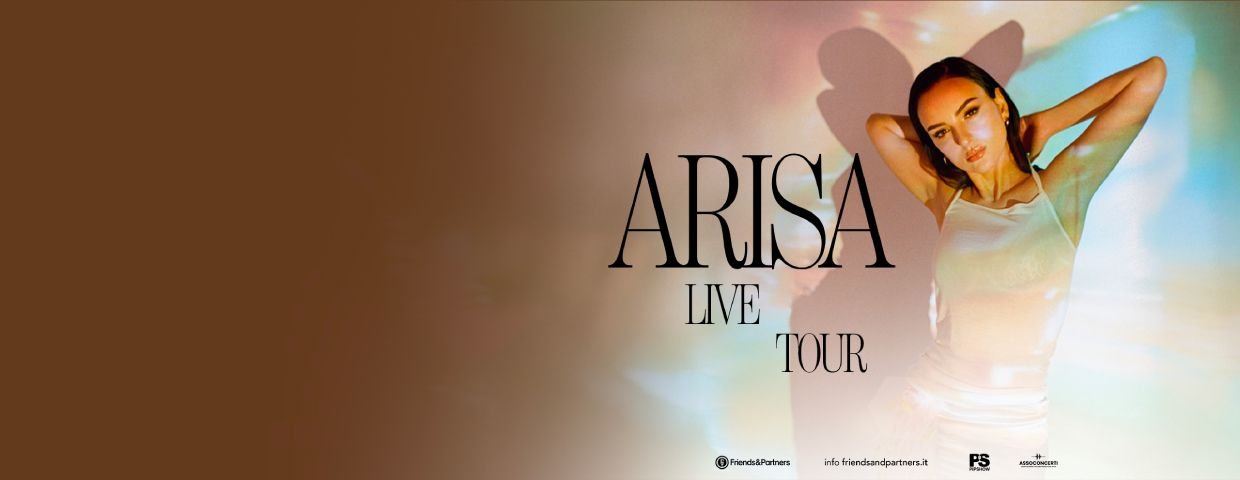
Arisa returns to Rome with her Live Tour: the date is Monday, December 7, 2026 at Teatro Brancaccio, at Via Merulana 244, with the start scheduled for 21:00. The theater's program announces the evening as a world premiere of the tour, set in a packed December week: in the days just before, the hall hosts a Christmas ballet, the day after a family show, and in between opens this interlude of voice and piano. The hall is a few minutes from Termini station on foot or by bus, the most convenient metro stop is Vittorio Emanuele on line A, and if you're coming from line B you get off at Cavour and walk up along the side of Santa Maria Maggiore. Tickets for evenings at Teatro Brancaccio are bought at the theater box office or through the official channels the theater itself indicates: for a concert in a single hall, with a capacity of just over 1,600 seats between stalls and gallery, it's best to move well in advance, because a single date in a city as big as Rome sells out fast.
The artistic premise of this evening comes from a full year. In February 2026 Arisa was back in competition at the Sanremo Festival with Magica favola, finishing fourth, and on the covers night she performed Quello che le donne non dicono accompanied by the Chorus of Teatro Regio di Parma, coming third in that partial ranking. On April 17, 2026 Foto mosse came out, her eighth album of new songs five years after the previous one and the first record on which she signs all the songs as lyricist, composer or both. It was preceded by Il tuo profumo on March 20, while on May 8 Rugiada came out, the first single from the digital reissue. In between, she hosted the May Day Concert in Piazza San Giovanni together with BigMama and Pierpaolo Spollon, and in June she was made a Knight of the Republic. A theater concert, in December, after a year like this, isn't just any promotional stop: it's the moment when a singer decides what to keep of her repertoire and what to tell in front of 1,500 people sitting in the dark.
Teatro Brancaccio isn't just any hall, and it wasn't even born as an independent theater. It occupies the lower corner of an enormous block, that of Palazzo Brancaccio, the last noble palazzo built in Rome, and it opened in January 1916 under the name Teatro Morgana. Since then Petrolini, Totò, Anna Magnani, Aldo Fabrizi, Giuseppe Di Stefano have passed through, and then Louis Armstrong, Jimi Hendrix, Fabrizio De André, Adriano Celentano. After difficult years it was Gigi Proietti, together with Gabriele Lavia, who reopened it in 1978. This is the hall where Arisa will sing on December 7: a rectangular box with a single gallery, generous acoustics, and a distance between the stage and the front row that in the stalls is measured in meters, not barriers.
Where Teatro Brancaccio is and how to really get there
The exact address and how to recognize the entrance
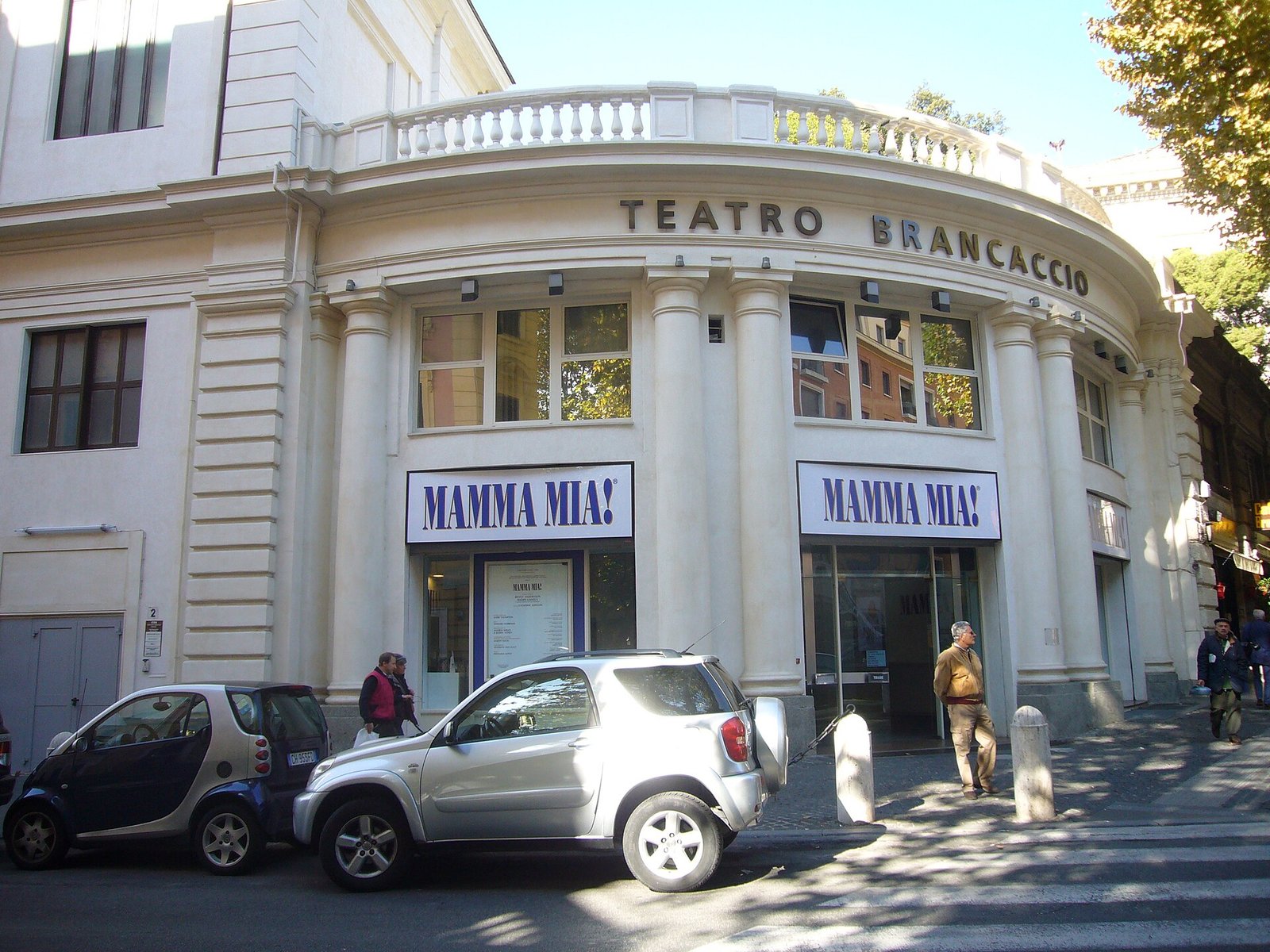
The address is Via Merulana 244, postal code 00185. Put like that it sounds like a bureaucratic detail, but here it matters, because Via Merulana is just over a kilometer long and connects two papal basilicas: it starts from Piazza di Santa Maria Maggiore and ends in Piazza di San Giovanni in Laterano. Number 244 is on the lower part of the street, the part closest to the Lateran, at Largo Brancaccio, where the street widens and the monumental side of the palazzo turns the corner toward the Colle Oppio. If you look for the theater by looking up, you may not see it: the theater building is set into the lower corner of the block and the facade doesn't shout, it's just a row of doors and a sign. The reliable visual reference is the big palazzo behind it, with its light-colored facing and balconies, and the bus stop that carries the very name Merulana/Brancaccio.
By metro
The two useful stops are Vittorio Emanuele on line A and Cavour on line B, with Termini as the interchange between the two. From Vittorio Emanuele you come out on Piazza Vittorio Emanuele II, cut across toward Via Carlo Alberto or skirt the garden, reach Santa Maria Maggiore and from there take Via Merulana downhill: it's barely 10 minutes, all on sidewalk, with a gentle slope in your favor. From Cavour the walk is slightly longer but nicer, because you go up Via Cavour, pass under the apse side of Santa Maria Maggiore and take Via Merulana from the same point. For an evening concert that ends around 23:00 it's worth remembering that Rome's metro closes early, with the last train on weekdays scheduled around 23:30: if the encore runs long, it's better to have a plan B in your pocket.
By bus and tram
The surface lines that directly serve the Merulana/Brancaccio stop are the 16, 75, 714 and 717, plus the C3 in its temporary configurations. One stop farther, at Merulana/Mecenate, the same lines pass. If instead you get off at the intersection with Via Labicana, at the Labicana/Merulana stop, the range widens a lot: 3, 53, 75, 85, 87, 186, 571, 810 and, in the temporary versions, C3 and the night line N10. It's information that matters above all on the way back, because the N10 is one of the few lines that keeps this area connected with the rest of the city at night when the metro has already closed its turnstiles. Practical advice: take a photo of the stop sign with the lines now, so at midnight you don't have to look for it in the dark.
On foot from Termini, and why it's worth it
From Termini station to Teatro Brancaccio it's about 20 minutes on foot. It sounds like a lot, but it's actually the best way to get there, because the route crosses the Esquilino at its best, in the late afternoon: you leave Piazza dei Cinquecento, take Via Giolitti or Via Cavour, arrive under the apse of Santa Maria Maggiore, turn the corner and you're already on Via Merulana. From there the street runs straight down to the theater. In winter, at half past six in the evening, the basilica is lit up and the street still has its shops open: it's a walk that prepares you for the concert better than any taxi.
By car, or what not to do
Teatro Brancaccio is inside the historic center's limited traffic zone and in one of the areas with the least street parking in all of Rome. If you're coming from outside the city, it's quicker to leave the car at a park-and-ride lot along Metro line A or line B and do the last stretch underground. The system of permits and hours for the limited traffic zones changes over time and should be checked on the Roma Capitale website before leaving, but the general rule doesn't change: in this area, on a show night, a car is a problem, not a solution.
What Teatro Brancaccio's hall is like and where to sit
Stalls, one gallery, no excuses
Teatro Brancaccio is a rectangular hall with a single gallery and a capacity of about 1,600 seats, with an orchestra pit under the stage. It doesn't have the three tiers of boxes of 19th-century Italian-style theaters, nor even the horseshoe plan: it's an early 20th-century hall, conceived when popular theater and the politeama were changing skin, and this makes it much more like a big old movie palace than an opera house. For a concert it's a stroke of luck. The sound arrives compact, the stage is wide enough to hold a full band without forcing the musicians to squeeze in, and the gallery doesn't cut off half the audience as happens in halls with side boxes, where those who pay little see a third of the stage.
Central stalls, side stalls, gallery
The advice is to spend on the central rows of the stalls, from the 6th to the 15th. The very front rows, at Teatro Brancaccio as elsewhere, put you below stage level and force you to look up for the whole concert: great for eye contact, tiring for the neck, and acoustically worse, because you end up in front of the speakers and not in their focal point. The side rows of the stalls are fine, with the one precaution of avoiding the seats under the edge of the gallery, where the low ceiling dulls the highs. The first row of the gallery is, in our view, the best seat of all for a vocal concert: you see the whole stage, you have the stage at the right distance and the sound reaches you after crossing the whole hall, so it's rounder. It costs less than the central stalls and is worth more.
Accessibility, cloakroom, opening times
The entrance on Via Merulana is step-free for the first stretch, and the theater has reserved seats for people with mobility difficulties: the right practice is to say so when you buy and not when you arrive, because the usable seats are few and located at specific points in the stalls. The cloakroom, when it's open, is the salvation of December concerts: in a hall full of 1,600 people, with their coats, the temperature rises quickly and you end up spending two hours with a down jacket on your knees. The doors usually open an hour before the start. If you arrive at the last minute for a show starting at 21:00, expect the line at the entrance, the security checks and the physical time it takes to reach your seat in a hall that fills up all at once.
The Brancaccino, the small hall almost nobody knows
On the second floor of the same building there's a second hall of about 100 seats, the Brancaccino, with programming completely independent from that of the main hall. In the years when Gigi Proietti and then Maurizio Costanzo were in charge, it was called the new Teatro Morgana, a direct reference to the original name of the main theater. It has nothing to do with the December 7 concert, but it's worth knowing: if someone in the family doesn't have a ticket for Arisa, it may be that in those same hours, 20 meters higher up, something worth the evening is on stage.
What concert to expect: Arisa live in the theater
A voice the theater lays bare
There are singers who gain in arenas and lose in theaters, and singers for whom the exact opposite is true. Arisa clearly belongs to the second group. Her instrument is a big, wide voice, capable of register shifts that get lost in a reverberant space and that in a dry hall you hear in full. Teatro Brancaccio, with its intimate stalls and low gallery, is the kind of space where a badly taken breath is heard, and therefore also where a well taken breath becomes part of the story. If you've followed her career since 2009, you know that the difference between record and stage has always been slight for her: the recorded voice and the live one resemble each other much more than is normal in Italian pop.
The possible repertoire, without making up setlists
Nobody can know in advance what will make it onto the December 7 setlist, and be wary of anyone telling you in September. What can honestly be said is what material she has in hand. There's Sincerità, the song with which she won the Newcomers section of the Sanremo Festival in 2009. There's La notte, second at Sanremo in 2012 and over the years the song the audience waits for. There's Controvento, with which she won the festival in the Champions section in 2014. There's Guardando il cielo from 2016 and Mi sento bene from 2019, two songs at opposite poles that show how elastic her interpretive writing is. There are Potevi fare di più from 2021 and Ortica, which she wrote entirely by herself. And then there's all of Foto mosse, released on April 17, 2026, with Magica favola, Il tuo profumo and Rugiada.
Why the title of the latest album says something about this concert
An album titled Foto mosse, on which for the first time she signs every single song as author, isn't a collection of songs chosen by others for her. It's the moment when a performer becomes a full-time author, and this changes the way a concert is built. Concerts built around songs written by others tend to be anthologies: great, great, great, applause. Concerts built around an autobiographical record have a different curve, with an emotional center and a descent. Going to Teatro Brancaccio on December 7, expect the second, not the first. And if Quello che le donne non dicono makes it onto the setlist, the cover she brought to Sanremo in 2026 with the Chorus of Teatro Regio di Parma, know that in the theater, without the chorus, that song becomes a different one.
Who Rosalba Pippa is
Her stage name is a family acrostic, and this is one of those details that always gets told by halves. The first A comes from her father Antonio, the R from her, Rosalba, the I and the S from her younger sisters Isabella and Sabrina, the final A from her mother Assunta. She was born in Genoa, at the Gaslini hospital, on August 20, 1982, and grew up in Pantano, a hamlet of Pignola, in the province of Potenza, where the family comes from. Before 2009 she worked as a waitress, a piano bar singer, a babysitter, a hairdresser, a cleaner and a beautician: the last job until a week before her debut at Sanremo. She started singing in public at four, at a village contest, with Gianni Morandi's Fatti mandare dalla mamma. In 2007 she received a scholarship as a performer at Mogol's Centro Europeo Toscolano. None of this is biographical color: it's the reason why, when she tells something on stage between songs, it doesn't sound like a script.
A curious fact about Arisa at Teatro Brancaccio in Rome, Live Tour 2026
The curious fact concerns the name of the hall, and it brings in a fairy. When the theater opened, on January 16, 1916, it wasn't called Brancaccio: it was called Teatro Morgana. The name Brancaccio, which today seems the only possible one, came later, when the hall took the name Politeama Brancaccio in memory of the original ownership of the land, which belonged to the Brancaccio family, that of the palazzo around it. So the theater where Arisa will sing on December 7, 2026 has changed its name over its history, and its birth name was that of a sorceress from the chivalric tradition.
There's a second curious fact inside the first, and it concerns names that come back. When Gigi Proietti and then Maurizio Costanzo ran the venue, they decided to call the small hall on the second floor, the 100-seat one, the new Teatro Morgana. That is: the original name of the big theater, which had fallen out of use almost a century earlier, was recovered and stuck onto the little room upstairs. Today that hall is called the Brancaccino and the name Morgana has disappeared from the signs again, but it has remained in the programs of two generations of Roman theatergoers.
And there's a third thing, useful for anyone going in on the evening of the concert. From 1937 Teatro Brancaccio was not only a theater but also a movie theater. It means that for decades those stalls saw screenings even before shows, and that whole generations of Romans from the neighborhood associated those seats with the darkness of the movie theater and not with the curtain. When the lights go down for a concert, in a hall with that past, the gesture has a particular density: it's the same darkness, used for something different.
The name of a singer and the name of a theater
It's worth putting the two stories side by side, because they resemble each other. Arisa is a pseudonym built from the initials of five people. Brancaccio is a family name that replaced the invented name of a sorceress. On one side a singer who took her family and turned it into a new word, on the other a theater that took a new word and replaced it with a family name. The evening of December 7, 2026 brings the two trajectories together, on a street that has itself changed name: until 1871 Via Merulana was called Via Coroncina.
Something nobody tells you about Arisa at Teatro Brancaccio in Rome, Live Tour 2026
Here's the thing that never appears in the presentations: Teatro Brancaccio isn't the private property of an entertainment company, it belongs to the City of Rome. The hall was restored and reopened in 1978 precisely as a city-owned property, and since then its artistic direction has changed hands several times, from Gigi Proietti from 2001 to 2007 to Maurizio Costanzo from 2007 to 2010, then to Stage Entertainment between 2010 and 2012, and since 2012 to Alessandro Longobardi, who already ran Sala Umberto. This explains a lot about the program Teatro Brancaccio offers: the coexistence, in the same season and sometimes in the same week, of musicals, drama, ballet, pop concerts and children's shows isn't confusion, it's the consequence of a theater that has to answer to a whole city and not to a niche audience.
The second thing nobody says: for years Teatro Brancaccio served as a branch of Teatro Costanzi for ballet. That is, the hall that on December 7 will host a pop concert is the same one that, in other seasons, hosted the dance productions of Rome Opera House. After the renovation, the depth and height of the stage allow very different productions, from opera to drama. For concertgoers the consequence is concrete: the stage isn't an enlarged club platform, it's a real theater stage, with wings, a grid and the possibility of lighting from above. The productions that come here can afford a set, and often do.
The third thing concerns the calendar of those days and not the history. From December 4 to 6, 2026 the hall hosts a Christmas ballet, and on December 8 a family show. It means that the concert on the 7th is squeezed between two different productions, with setup and teardown compressed into hours. For the audience it means one thing, but an important one: punctuality at the start, on an evening like this, isn't a formality. And it also means that the house staff, that Monday, are working on a quick changeover: being patient at the entrance is an act of realism, not of courtesy.
The detail that changes how you see the price
1,600 seats are very few. It sounds like a strange sentence, but it's the heart of the matter. An artist with Arisa's recording history, in other cities and in other configurations, fills spaces of 5,000 people and up. Here the number is a fifth. What you buy with a ticket for December 7 isn't just a concert: it's a density of audience per square meter that doesn't exist in an arena, and a distance from the stage that on most dates of a tour you can't get at any price.
My advice for visiting Arisa at Teatro Brancaccio in Rome, Live Tour 2026
The advice is just one and it concerns timing: get to the area at 19:00, not at 20:45. Not because of the line, even though the line matters, but because the piece of Rome where this theater stands is one of the few that at seven in the evening in December is at its best, and by nine is already something else. From Via Merulana 244 to Piazza di Santa Maria Maggiore it's 12 minutes uphill. From Via Merulana 244 to Piazza di San Giovanni in Laterano it's 10 minutes downhill. Within walking distance you have two papal basilicas, and in between a neighborhood whose light changes in the evening. Wasting that time inside a parking garage is a mistake you can't make up for.
The second piece of advice is about your coat, and it isn't trivial. December in Rome means leaving home at 10 degrees and finding yourself, in a hall full of 1,600 people with the heating on, at 25. If you keep your down jacket on, you spend the concert moving it, sitting on it, sweating. Dress in layers and use the cloakroom: the difference between a good concert and an endured one, in winter, almost always comes down to that.
The third piece of advice concerns getting back. The metro closes early, and a concert that starts at 21:00 with an encore can end after 23:00. If you have a train from Termini or a hotel on the opposite side of the city, decide beforehand how you'll get back, not afterward. Night lines exist and pass along Via Labicana, but they should be looked up with a clear head, not with a dead phone in the rain. It's the kind of thing nobody thinks about while buying the ticket in September and everyone regrets at midnight on Monday.
Where to eat before, without missing the start
The area around the theater has two very different and very close food souls. Uphill, toward Santa Maria Maggiore and Piazza Vittorio, you enter the Esquilino of world cuisines, where within 300 meters Chinese, Bangladeshi, Indian, Korean and Eritrean signs live side by side. Downhill, toward the Lateran and the Colle Oppio, the Roman neighborhood trattoria prevails. The criterion for choosing, on a concert night, isn't the type of cuisine but speed: whatever you eat, sit down by 19:15 and ask for the check right after your course. The worst thing that can happen is arriving at the theater at 21:10 with the waiter still not having come by.
An alternative I often recommend to people coming from out of town: have an aperitivo before and dinner after. The concert ends between 22:45 and 23:15, and this area still has kitchens open at that hour, which isn't a given in other parts of the center. You leave the theater with the songs in your head and sit down at the table to talk about them, which is the right way to end an evening like this.
Another well-known fact, yet rarely mentioned
The well-known fact is that Teatro Brancaccio dates from 1916. What's rarely mentioned is where those walls come from, and the story is much more American than the name suggests. The big block of Palazzo Brancaccio, whose lower corner the theater occupies, was paid for by a New York lady: Mary Elizabeth Bradhurst Field, a member of New York high society, whose daughter, also named Elizabeth, married Prince Salvatore Brancaccio, bringing a dowry of a million dollars of the time. In 1879 Mary Elizabeth bought from the City of Rome the church, convent, vegetable garden and garden of Santa Maria della Purificazione ai Monti, properties taken over by the city after the suppression of church property. On that land, at the end of the Colle Oppio and above the ruins of the Baths of Trajan, the last noble palazzo built in Rome was born.
The architects' names tell how long the undertaking lasted. Gaetano Koch worked on the design between 1879 and 1883. Then the residence proved too small for two families, and Luca Carimini was called in, who between 1886 and 1890 continued construction along Via Merulana toward San Giovanni in Laterano, joining the new part to the existing one. Finally Rodolfo Buti and Giuseppe Sacconi stepped in to complete the work between 1893 and 1922. The theater went up in 1916, on the lower corner of the block, on Brancaccio-owned land, in a building site that was still part of that family story.
The initial design of the theater is attributed to Luca Carimini, the construction to an engineer named Sacconi. The rest is certain: 1916, opening in January, the name Teatro Morgana, Brancaccio land.
The tower from which Nero supposedly watched Rome burn
The park that surrounded the palazzo, which grew over the ruins of the Baths of Trajan, also contained a tower called the Tower of Maecenas, the one from which Suetonius claimed Nero watched the great fire of Rome in 64 AD. That park was largely expropriated between 1935 and 1936 to make an archaeological park, and that's why today, coming out of the theater and looking up toward the Colle Oppio, you see public green space where there was a private garden. A few hundred meters away are the Auditorium of Maecenas, the Museo delle Terme di Traiano and the Domus Aurea. If you go to the December 7 concert, without realizing it you cross the piece of Rome where imperial archaeology, late 19th-century building speculation and an American dowry met in the same block.
A vanished museum and a new space
Inside the same palazzo, an entire floor of about 1,700 square meters, the noble mezzanine, housed the Giuseppe Tucci National Museum of Oriental Art from June 16, 1958 to October 31, 2017, which was then moved to EUR into the Museo delle Civiltà. That space has come back to life today as an exhibition venue under the name Spazio Field, an obvious reference to the surname of the New York lady. Many Romans still remember going into that palazzo as kids to see Chinese bronzes and Persian miniatures, and have never connected it with the theater where they saw a musical. It's the same address.
The right photo to take at Arisa at Teatro Brancaccio in Rome, Live Tour 2026
The right photo isn't the one of the stage. I'll say it right away, because at every concert there are 200 phones raised all taking the same grainy, backlit shot, and none of those shots survives the following week. The right photo, here, is taken outside and taken before: from the other side of Via Merulana, moving about 20 steps toward Largo Brancaccio, you frame the corner of the block with the theater's sign lit at the bottom and the bulk of the palazzo rising above it. That frame holds the whole story: a 1916 theater set into the side of the last noble palazzo in Rome. With December light, at half past six in the evening, the sky is still blue and the sign is already on: it's the half hour when an urban night photo works.
The second photo, the one I recommend to visitors, is taken walking up Via Merulana for 12 minutes. From halfway along, looking back toward Santa Maria Maggiore, the basilica closes the street's perspective perfectly, because the street was laid out precisely for this: Pope Gregory XIII opened Via Gregoriana and Pope Sixtus V extended it to provide a fitting backdrop for papal processions and parades between Santa Maria Maggiore, San Giovanni in Laterano, the Scala Santa and Santa Croce in Gerusalemme. That is: that frame was designed in the 16th century for you to take. Make the most of it.
Inside the hall, if you really want a shot, take it before the lights go down and point at the hall, not the stage: the full stalls seen from the gallery, with the curtain still closed and the heads, is a photograph that tells the story of the evening much better than a black silhouette with a beam of light above it. And then, simply, it doesn't bother anyone. During the concert, a phone in your hand is the main reason the person behind you can't see anything: in halls with a single gallery and slightly sloping stalls, a lit screen in row eight ruins the view for five people.
The photo nobody takes that's actually worth it
When you come out of the theater, turn downhill, toward San Giovanni. At night Via Merulana sloping down, with the perspective closing on the distant facade of the Lateran, the cars stopped at the light and the shop windows dark, is one of the most cinematic streets in Rome. It's no coincidence that in 1946 Carlo Emilio Gadda set Quer pasticciaccio brutto de via Merulana here, one of the most important Italian novels of the 20th century, and the title alone has done more for this street than any tourism campaign.
Some important events that happened here in history
On January 16, 1916 the theater opened as Teatro Morgana. It's the first event, and already a significant date: Italy had been at war for less than a year and in Rome a performance hall opened in the side of an aristocratic palazzo that had just been finished.
From 1937 the space also began to be used as a movie theater, under the now settled name of Politeama Brancaccio. It's the step that tied it to the neighborhood: for the locals, for decades, Teatro Brancaccio was the place where you went to see a film, not only where you went to the theater.
In 1968 Jimi Hendrix played on Teatro Brancaccio's stage. It's the fact that, when you tell it in Rome, always raises an eyebrow: in the same hall where Christmas musicals and ballets are staged today, less than 60 years ago the most influential electric guitar of the century came through. In the same list of names the theater claims are Louis Armstrong, Fabrizio De André and Adriano Celentano.
After years of decline, the theater, owned by the City of Rome, was restored and reopened in 1978 by Gabriele Lavia and Gigi Proietti. It's the event that explains why Teatro Brancaccio still exists: without that reopening the hall would have followed the fate of dozens of Roman cinema-theaters that closed in the 1970s and 1980s and never reopened.
From 2001 to 2007 Gigi Proietti was its artistic director, and in those years the theater became one of the defining places of the Roman stage. In 2007 Maurizio Costanzo took over, from 2010 to 2012 the management passed to Stage Entertainment, and since 2012 the artistic direction has been entrusted to Alessandro Longobardi.
After the renovation, for some years Teatro Brancaccio served as a branch of Teatro Costanzi, devoted mainly to ballet. It's a less spectacular event than the others but decisive for the hall: it was in that phase that the stage acquired the technical features that today allow it to host very different productions.
And outside the theater, on the same street
The important events in this piece of the city don't stop at the theater entrance. In 1876, while digging along Via Merulana, a statue of Eros came to light, an Antonine copy of a 4th-century BC original, now in the Capitoline Museums in the hall of the Horti of Maecenas. Until 1871 the street was called Via Coroncina. And in 2025, a few hundred meters from the theater, inside Santa Maria Maggiore, Pope Francis was buried, in the left side aisle between the Pauline Chapel and the Sforza Chapel: from that moment the basilica at the top of the street became one of the most visited pilgrimage destinations in the city.
Who has passed through Arisa at Teatro Brancaccio in Rome, Live Tour 2026
The list of names who have trodden this stage is a lesson in the history of Italian entertainment. Ettore Petrolini and Totò have passed through, the two poles of 20th-century Roman and Neapolitan comedy. Aldo Fabrizi and Anna Magnani have passed through, the two faces of neorealist cinema when they were still doing avanspettacolo. Giuseppe Di Stefano has passed through, one of the most loved tenors of the century. And Louis Armstrong, Jimi Hendrix in 1968, Fabrizio De André and Adriano Celentano have passed through.
Then there are those who didn't just pass through: those who lived there. Gigi Proietti reopened it in 1978 together with Gabriele Lavia and was its artistic director for six seasons, from 2001 to 2007. Maurizio Costanzo ran it from 2007 to 2010. They're two names that in Rome weigh as much as a plaque on the facade, and they explain why Teatro Brancaccio, in the city's imagination, has never been seen as a place people just pass through.
In the current season, around Arisa's date, the theater hosts a series of concerts worth knowing: Mr. Rain on October 11, 2026, Michele Bravi on November 20, 2026 and Mario Biondi on December 14, 2026, as well as the dates of Roberto Vecchioni. Over two months, on the same stage, come a melodic rapper, a singer-songwriter of subtle writing, a singer with two Sanremo podiums behind her, a soul performer and a singer-songwriter who teaches literature: it's exactly the kind of programming that only a hall of this size, and with this history, can afford.
Who's on stage with her
I don't want to make anything up about the exact lineup that will accompany Arisa on December 7, because the lineups of theater tours are announced late and they change. What can be said is that Foto mosse is a record that asks for real instruments and not backing tracks, and that the theater format, in Arisa's career, has always been the ground of the bare voice: at Sanremo in 2024 she appeared as a guest to sing La notte in a solo piano and voice performance, and that's the direction a 1,600-seat hall suggests.
The neighborhood around the theater: Via Merulana, the Esquilino, the two basilicas
A street that is a papal axis
Via Merulana isn't just any street in the center, and it isn't even an ancient street in the sense that the Appia or the Flaminia are. It's a straight axis of just over a kilometer created for reasons of representation: Pope Gregory XIII laid out Via Gregoriana in the 16th century and Pope Sixtus V extended it, with the declared aim of providing a fitting backdrop for papal processions and parades between Santa Maria Maggiore, San Giovanni in Laterano, the Scala Santa and Santa Croce in Gerusalemme. Everything you see there today, the palazzi, the doorways, the shops, grew up around that idea of a procession. The theater where Arisa sings on December 7, 2026 stands on a straight line designed for popes to walk.
The street's name probably comes from the gens of Merulus, a family who lived around here, and in ancient times the area was that of the prata Meruli, the meadows that reached as far as where the San Giovanni hospital stands today. The street is already mentioned in the Ordo Benedicti, and at that time it ran from the Nymphaeum of Alexander, the so-called Trophies of Marius that you can see today in the gardens of Piazza Vittorio Emanuele II, to the Neronian arches of the Aqua Claudia, on the Caelian. The place name appears in the names of three ancient churches that have since disappeared. Walking along, you see almost none of this, but it's the reason this straight street exists in a city that has very few straight streets.
Until the 17th and 18th centuries, suburban patrician villas stood along the sides of the street. The last one to be built, in 1830, was Villa Wolkonsky, the only one that remained almost intact while all the others were demolished by the urbanization of the late 19th century, which gave the area its current face, made of compact six-story blocks. Palazzo Brancaccio and its theater are true children of that season: the aristocracy building its last palazzo while the first apartment buildings went up around it.
The Esquilino, the neighborhood everyone crosses and few look at
Teatro Brancaccio stands on the border between two rioni, because Via Merulana runs right along the line that separates the Monti district, the first rione, from the Esquilino, the 15th. Administratively, the theater's block falls on the Monti side, but in the city's perception, and even in photo captions, Teatro Brancaccio is an Esquilino theater.
The Esquilino has always been a borderland: first at the edge of the Servian Walls, then included within the Aurelian Walls but still peripheral to the real city, so much so that one of the proposed etymologies for the name derives it from esquiliae, the outskirts. Until Augustus, the area beyond the agger of the republican walls was even the city's garbage dump. Today it's Rome's most international neighborhood, the one where the Nuovo Mercato Esquilino sells spices you can't find in Rome's neighborhood markets, where signs in Chinese characters and in Bengali sit alongside historic grocery stores, and where in the gardens of Piazza Vittorio stands the Porta Alchemica, the only magic door that survives in Rome.
If you come from out of town and know only the postcard center, walking from Termini to Teatro Brancaccio is a small, useful shock. You cross a Rome that doesn't look like Piazza Navona and doesn't want to. If the evening allows, it's worth adding half an hour and stretching as far as Palazzo Merulana, the exhibition space on the same street that houses the Cerasi collection, with works by the Scuola Romana: it's halfway between the theater and the basilica, and this way the evening takes on a complete meaning.
Santa Maria Maggiore, at the top of the street
At the top of Via Merulana stands one of the most important churches in Christendom. Santa Maria Maggiore is the only basilica in Rome to have kept its original early Christian structure, albeit enriched by later additions: it was built under Pope Sixtus III, who led the Church between 432 and 440, and dedicated to the cult of the Virgin Mary, whose divine motherhood had just been recognized by the Council of Ephesus in 431. The Romanesque bell tower dates from 1375 and 1376, then raised and completed under Cardinal Guillaume d'Estouteville, archpriest of the basilica between 1445 and 1483, to whom we also owe the great cross vault built for structural reasons.
Inside the basilica, on a step, an inscription in the floor marks Gian Lorenzo Bernini's simple burial in the family tomb: one of the artists who invented the Baroque face of Rome rests under a slab that visitors walk over without noticing. In the left side aisle, between the Pauline Chapel and the Sforza Chapel, near the altar dedicated to Saint Francis of Assisi, is the tomb of Pope Francis since 2025, who had asked to be buried here. The basilica enjoys the privilege of extraterritoriality in favor of the Holy See, and the King of Spain is by right its honorary proto-canon.
The practical point, for concertgoers: the basilica is a 12-minute walk from the theater, uphill, and it's one of the few Roman monuments that at night, lit up, holds its own against itself by day. If you arrive at 19:00, as recommended, the square in front of the facade is the place to wait.
San Giovanni in Laterano, at the opposite end
Heading downhill instead, after 10 minutes the street ends in Piazza di San Giovanni in Laterano. The Basilica of San Giovanni in Laterano is the cathedral of Rome, that is, the church of the city's bishop, and it comes before St. Peter's in the formal hierarchy. The square is the one of the May Day concerts, and here the coincidence deserves a line: in May 2026 Arisa hosted that very concert, together with BigMama and Pierpaolo Spollon. Seven months later she sings a thousand meters away, inside a 1,600-seat hall, in front of a seated audience. It's a jump in scale that says a lot about what a theater tour is.
December in Rome, and why a theater date falls at the right time
The city in early December
Rome in the first week of December is in a particular state. The Christmas lights are already on but the real Christmas crowds start later, hotels cost less than they will around Christmas, museums are manageable, and the mood is that of a city that works and doesn't put on a show for tourists. The days are short: darkness arrives before five, which means that at six in the evening, when it's best to arrive around here, the sky is already night and the facades are lit. For an evening combining a walk and a concert, it's the best window of the year.
December 7, 2026 falls on a Monday, and this is an advantage few people consider. On Monday evening the center of Rome is less crowded, restaurants take reservations without difficulty, public transportation runs at full weekday frequency and not the reduced weekend one, and the area around the theater can be walked without the Saturday crush. The only downside is that some neighborhood trattorias close on Mondays: call ahead, don't just show up.
What to see the same afternoon
If you come to Rome specifically for the concert, the afternoon of December 7 has a compact, top-level itinerary ahead of it, all on foot. You start from Santa Maria Maggiore, walk down Via Merulana looking at the shop windows and the Antonianum building, stop at Palazzo Merulana, reach Largo Brancaccio, climb up the Colle Oppio to see the Colosseum from above and, with a reservation, go down into the Domus Aurea. It's three and a half hours, with the theater at the exact center of the route. A slower and equally beautiful alternative: head down toward San Giovanni, go into the basilica, see the Cosmatesque cloister, and walk back up Via Merulana at your leisure to the theater.
If instead you live in Rome and come only for the concert, the advice is different: walk Via Merulana from one end to the other, once, in the evening, without stopping to buy anything. A kilometer and 130 meters, 12 minutes, two papal basilicas at either end. There's no other street in Rome that does this, and most Romans have never walked it all the way.
Other theaters in the same area
The area between the Esquilino, Monti and the station has a concentration of performance halls that is unmatched in the city. Besides Teatro Brancaccio there are Teatro Ambra Jovinelli, a few minutes away toward Piazza Vittorio, Teatro Sistina toward Via Veneto, and Teatro Sala Umberto in the center, run by the same Alessandro Longobardi who leads Teatro Brancaccio, where Francesco De Gregori plays in the same season. If Arisa's concert leaves you wanting to hear music again inside a theater and not inside an arena, Rome's winter calendar has plenty to satisfy you.
Frequently asked questions about Arisa at Teatro Brancaccio
When is Arisa's concert at Teatro Brancaccio?
Monday, December 7, 2026, with the start scheduled for 21:00. The theater's program places the evening between a Christmas ballet scheduled from December 4 to 6 and a family show on December 8.
What's the address of Teatro Brancaccio?
Via Merulana 244, 00185 Rome, on the lower corner of the Palazzo Brancaccio block, toward Largo Brancaccio and the Colle Oppio.
How many seats does the hall have?
The capacity is about 1,600 seats, spread between the stalls and a single gallery, in a rectangular hall with an orchestra pit.
What's the nearest metro stop?
Vittorio Emanuele on line A is the most convenient. On line B you get off at Cavour, or at Termini if you arrive by train. In both cases you walk the last stretch in 10 or 15 minutes.
Which buses stop in front of the theater?
The 16, 75, 714 and 717 stop at Merulana/Brancaccio, plus the C3 in its temporary configurations. At the intersection with Via Labicana, at the Labicana/Merulana stop, the 3, 53, 85, 87, 186, 571 and 810 also stop, with the night line N10 in its temporary versions.
Can you get there by car?
Technically yes, practically it's best avoided. The area is within the historic center's limited traffic perimeter and street parking is very scarce. It's better to leave the car at a park-and-ride lot along the metro and do the last stretch by public transportation.
What time do the doors open?
Usually an hour before the show starts. For an evening starting at 21:00 that means around 20:00, but check the exact time on your ticket, because on dates with compressed setups it can vary.
Where's the best place to sit for a concert?
The central rows of the stalls between the 6th and the 15th, or the first row of the gallery, which remains the best seat of all for hearing a voice in this hall. Avoid the stalls seats under the edge of the gallery, where the sound loses brilliance.
How long is the concert?
A theater concert of this kind usually lasts between two hours and two and a quarter hours, encores included. With a 21:00 start that means getting out between 22:45 and 23:15, something to keep in mind when planning the trip back.
Is the metro still open when you come out?
It depends on how long the finale runs. On weekdays the last metro trains in Rome are scheduled around 23:30, so there's a margin but it's tight. If you come out late you'll still find the surface lines along Via Labicana, including the night line.
Is the theater accessible for people with mobility difficulties?
The hall has reserved seats, which must however be requested when buying the ticket and not on arrival, because they're few and in specific positions in the stalls.
Can you take photos during the concert?
The rules change from production to production and are announced in the hall. In general, in a theater with slightly sloping stalls, a lit screen ruins the view for those sitting behind: common sense suggests taking any shots before the start and then putting the phone away.
What songs will Arisa sing?
The setlist isn't announced in advance, and anyone announcing it months ahead is imagining it. The available repertoire includes the Sanremo songs that built her career, from Sincerità in 2009 to La notte in 2012, from Controvento in 2014 to Magica favola in 2026, and the whole album Foto mosse, released on April 17, 2026.
What is the Brancaccino?
It's the theater's second hall, on the second floor, with about 100 seats and independent programming. In the years when Gigi Proietti and Maurizio Costanzo were in charge, it was called the new Teatro Morgana, in memory of the original name of the main hall.
Is Teatro Brancaccio private or public?
The building is owned by the City of Rome. Its artistic direction has been entrusted to different parties over time: since 2012 it has been Alessandro Longobardi, after Gigi Proietti from 2001 to 2007, Maurizio Costanzo from 2007 to 2010 and Stage Entertainment from 2010 to 2012.
What can you visit near the theater before the concert?
Santa Maria Maggiore 12 minutes uphill, San Giovanni in Laterano 10 minutes downhill, Palazzo Merulana on the same street, the Colle Oppio with the Auditorium of Maecenas and the Museo delle Terme di Traiano, and the Domus Aurea with a required reservation.
Is it better to have dinner before or after?
After, if you can. The area has kitchens open past 23:00, which isn't a given in central Rome, and leaving a concert to sit down at the table and talk about it is the right way to end the evening. If you eat before, sit down by 19:15.
Is it a suitable concert if you're bringing teenagers?
Yes, with the only caveat of the time: a Monday evening ending around 23:00 weighs on the next day. In terms of content, Arisa's repertoire appeals across ages, and the seated theater format makes the evening manageable even for those who can't handle three hours on their feet.
What's the weather like in Rome on December 7?
The seasonal average is mild compared with the rest of Italy, with lows often above zero and highs around 12 or 13 degrees, but in the evening the humidity makes it feel colder. Dress in layers, because inside the hall it will be warm.
Why it's worth being there
Let me put the pieces together. A singer who in 2026 released the first album written entirely by her, after 17 years of a career spent performing songs written by others. A 1916 hall set into the last noble palazzo built in Rome, paid for with an American dowry and built over the Baths of Trajan. A street designed in the 16th century for popes to walk between two basilicas. A Monday evening in December, with darkness at five and the Christmas lights on. 1,600 people sitting down.
These aren't the ingredients of just any event, and I don't say it for rhetoric: they're the material conditions that make one evening different from another. A concert in an 8,000-seat arena is a social fact, and it's perfectly fine that it is. A concert in a 1,600-seat theater is an acoustic and human fact: you hear the breath before the note, you see the hands on the piano, you understand when a song costs effort to the one singing it. If you've heard Arisa in this configuration, at her past theater dates, you know that this is where her way of being on stage works best.
One last suggestion, and then I'll leave you. When you come out, don't immediately pull out your phone to call a taxi. Walk 50 meters down Via Merulana, downhill, toward San Giovanni. At 11 on a Monday night the street is empty, the perspective closes on the lit cathedral of Rome at the end, and the sound that remains is that of your footsteps. It's the same street Gadda made famous with a pasticciaccio, the same one Sixtus V straightened for processions, the same one Mary Elizabeth Field chose to build the city's last noble palazzo on. The concert ends there, not when the house lights come up.
Article written by the editorial team of TourLeaderPro, contact them for Private/Corporate/V.I.P. Tours and Experiences.
Planning a trip to Rome? The English guides for visiting the city are on ItalyPlanner.com.