Cinema Farnese
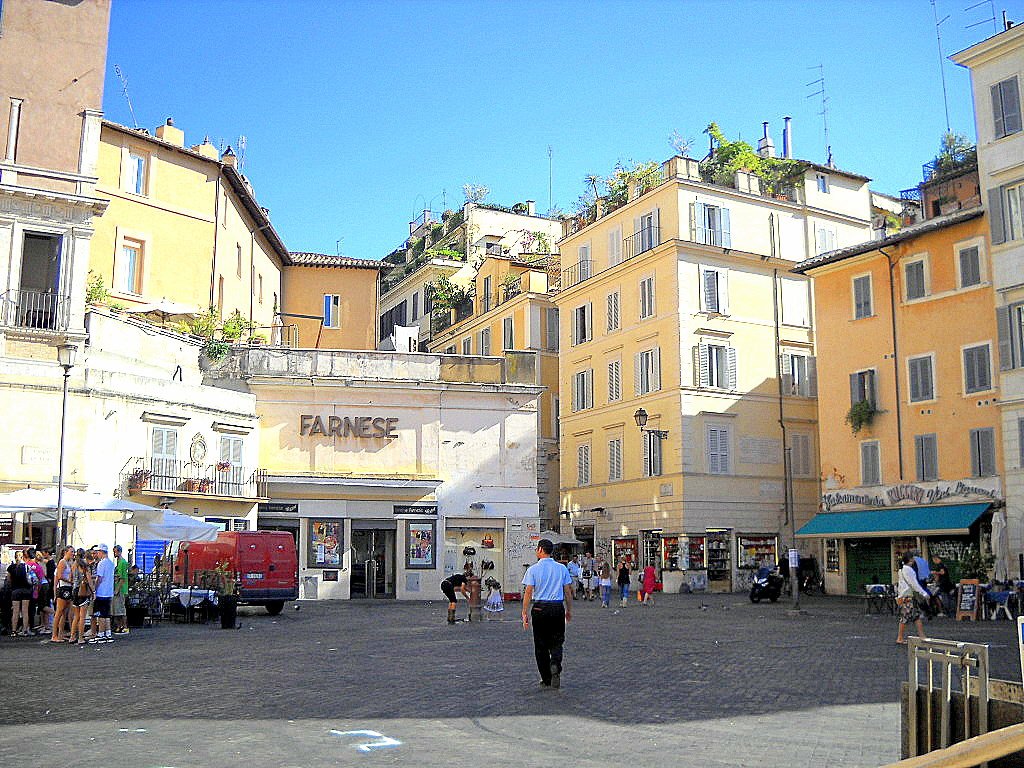
Cinema Farnese is at Piazza Campo de' Fiori 56, in the Parione district, and it is open: it's an arthouse cinema that shows auteur films from the afternoon to the evening, with some shows in the original language with subtitles. In recent listings it appears as Cinema Farnese Arthouse, and the European network Europa Cinemas lists Nicolina S.r.l. as the operating company. A full-price ticket costs €7 for the first afternoon show and €8.50 for the evening ones, at the box office or online.
The name has changed skin several times. In 1970 a flyer presented it as "Farnese petit d'essai," from 2008 it became Farnese Persol, and in recent years the Sapienza, the cultural press and the ticketing platform call it Farnese Arthouse. The substance has stayed the same: a neighborhood cinema facing the market square, with a program that bets on European cinema and on titles that came through the festivals more than on the season's big box office hits.
Data checked on September 29, 2026 on the Europa Cinemas network page, on the agreement page published by the Sapienza, on the Turismo Roma portal and on the main film listing platforms. Box office hours and the closing calendar are not published in these sources. The official channel to ask is the cinema's phone, 06 6864395, or the address info@cinemafarnese.it listed by Turismo Roma. The program changes every week and can vary without notice.
At a Glance: Address, Hours, Ticket
- Address: Piazza Campo de' Fiori 56, 00186 Rome, Parione district.
- Operator: Nicolina S.r.l., according to the Europa Cinemas network page. Name in use today: Cinema Farnese Arthouse.
- How to get in: with a ticket, bought at the box office, on the cinema's website or on the 2Tickets platform.
- Price: €7 for the first afternoon show, €8.50 for evening shows (program of September 29, 2026). Reductions for the Sapienza.
- Hours: shows from the afternoon, around 16:00, up to the last one at 21:15. Box office hours not published, phone 06 6864395.
- Getting there: on foot from Piazza Navona, Largo Argentina or Ponte Sisto. Limited traffic zone, surface lines on the Atac website.
- Accessibility: Turismo Roma lists the hall as accessible to people with disabilities. Ask for details at info@cinemafarnese.it.
Where It Is and What You Actually See
The cinema faces Campo de' Fiori, the neighborhood market square, with the statue of Giordano Bruno in the middle. The entrance is at number 56, on the perimeter of the square, among rental buildings, shop windows and bars. If you arrive from Piazza Farnese you reach it in a few minutes, and the same goes if you come down from Piazza Navona crossing Corso Vittorio Emanuele II.
The facade has nothing monumental about it. The Cinema Treasures site, which catalogs historic cinemas around the world, speaks of an Art Deco style with no particular architectural distinction, set discreetly into the front of the square. If you expect a big 1930s cinema, with stairways and stucco decoration, you'll be disappointed. The Farnese is a neighborhood cinema, and from outside you recognize it above all by the sign and by the posters of the films showing.
On the screens the sources disagree. One listing platform lists three screens, another reports a single hall in operation, numbered as hall 2, with 47 seats. The official website devotes a section to the cinema's halls, in the plural. A review published by the Roman local press in 2015 described large halls and fairly spaced-out seats, but also a structure that showed the passing of time. Before organizing an evening with many people it's best to phone and ask for the real capacity.
What you come to see, in the end, is the program. The cinema belongs to the Europa Cinemas network, supported by the European Union's MEDIA program, which brings together cinemas devoted in large part to European films. On September 29, 2026 the two films on the program were a Spanish production and a co-production between Germany, France and Hungary, with the 21:15 show in the original language with subtitles. That is the character of the place: films that in multiplexes, when they get there, stay on the program a few days.
The square by day and by night are two different places. In the morning Campo de' Fiori is taken up by the market, with fruit, vegetable and fish stalls lined up around the statue, and the cinema at that hour is closed. Once the stalls are taken down, the square fills with a different crowd, made of residents, students and visitors. The Farnese lives in this second phase of the day, when the square changes function.
The historical context can be read in the buildings around it too. According to historical accounts of the square, the area was originally an open space between the Theater of Pompey and the Tiber, subject to the river's floods. In the 13th century the Orsini settled on the southern side and rebuilt their palace there. Few spectators, going into the cinema, think that under the houses of the area the structures of a Roman theater are preserved, the first masonry one in the city.
A Curiosity About Cinema Farnese
Before auteur films, according to accounts in the local press, the Farnese was a stage. In the 1930s Aldo Fabrizi, Renato Rascel, Macario and Wanda Osiris are said to have appeared on its boards, that is, the most popular names of the revue and variety shows of that era. It was a formula common to many Roman halls: the film and, between one screening and the next, the live number. The fact is not confirmed by archive documents open to the public, and should be read as the hall's tradition.
More solid is the 1970 label. A flyer of the time, reproduced on the Cinema Treasures site, presents the hall as "Farnese petit d'essai" and states that it belongs to AIACE, the Italian association of friends of arthouse cinema. The French was not an affectation. The d'essai formula comes precisely from France, from the cinemas that programmed experimental films and difficult works for an audience willing to experiment. In Rome the Farnese was among the halls that adopted that formula and the name that identified it.
Halls like the Farnese had, in the years of the flyer, a precise role in the city's cultural life: they gave a second life to titles that in the big first-run cinemas had stayed on the program only a few days, and they built an audience used to discussing films. This role, in different forms, is the same one the hall tries to play today with its series and the original-language shows.
One Thing Nobody Tells You About Cinema Farnese
The cinema has nothing to do with Palazzo Farnese, except proximity. The Renaissance palace, home of the French embassy, is on the next square, Piazza Farnese, and not on Campo de' Fiori. The hall's name comes from the neighborhood and from the family that marked it for centuries, not from a link of ownership or location. If you look for the cinema inside the palace you go around in circles, and if you look for the palace by watching for the cinema's sign you've got the wrong square by a few dozen steps.
The second misunderstanding concerns the name Persol. From 2008, after the reopening, the hall added to its name that of the eyewear brand, and many guides and reviews still call it Farnese Persol. There is also an old social page with that name. Today, though, the name used in listings is Cinema Farnese Arthouse, and the reference site is cinemafarnese.it. If you look for the program under the old name you risk ending up on pages frozen for years, with outdated hours and prices.
Then there's a detail about contact channels. The Turismo Roma portal lists for the cinema an email address, info@cinemafarnese.it, and three social profiles with the name cinemafarnese, on Facebook, Instagram and Twitter. These are the channels to follow for updates on series, previews and schedule changes. The pages with the old Persol name, instead, are best left alone: they often carry outdated information and can mislead whoever is organizing the evening.
One last detail concerns the address. Almost all sources write Piazza Campo de' Fiori 56, while the agreement page published by the Sapienza reports Via Campo de' Fiori 56. It's the same entrance, but if you set your phone's navigator with the wrong wording you can get an imprecise result. The simplest solution is to search directly for Campo de' Fiori, arrive in front of the statue of Giordano Bruno and from there find number 56 on the perimeter of the square.
From Revue Stage to Arthouse Cinema: How Has the Farnese Changed?
The sources date the opening to 1930. Cinema Treasures writes it and the hall's presentation published on the cultural platform Meer repeats it, speaking of a small neighborhood cinema open since 1930 and that over the decades went from being an arthouse cinema to first-run and second-run. It's the path of many halls in the historic center: born for a neighborhood audience, changed with the habits of the city, survived by finding a precise niche.
A document of May 18, 1940, collected by Cinema Treasures, shows the Farnese in full operation during the war. On the program were two Italian films, "Il ponte dei sospiri" and "Manon Lescaut," and a short film by the Istituto Luce. This was the typical structure of an evening at the cinema in those years: a main film, often a second title, and the Luce documentary or newsreel that preceded the screening, with its load of regime propaganda.
30 years later the tone changes completely. On September 4, 1970 the Farnese was screening "Dillinger è morto" by Marco Ferreri, a film that still divides audiences today. In the same year the hall defined itself as petit d'essai and joined AIACE. According to the local press, in the 1970s the cinema became a reference point for the students of the protest movement and for Roman intellectuals, who at Campo de' Fiori found films that couldn't be found elsewhere.
Then the crisis. Cinema Treasures records a closure in 2005, with a clash between those who wanted to transform the space and those who asked to keep its function as a hall. In June 2008 the cinema reopened with new ownership and with the name Farnese Persol. In recent years the name Arthouse has appeared in event listings and in the agreement with the Sapienza for 2025. The hall, unlike others in the center, has not changed use.
The continuity of name and function is not a given. In the historic center of Rome many cinemas have closed in recent decades, because of the weight of rents, competition from multiplexes and the transformation of ground floors into shops and bars. The Farnese went through the same crisis, with the closure of 2005, and managed to return to operation. Its recent history shows that an arthouse cinema in a tourist square can hold up, as long as it has a loyal audience.
To understand the Farnese of its beginnings you have to remember what an evening of entertainment was like in Rome in the 1930s. Sound cinema was a recent novelty, and many halls alternated the screening with live numbers, with comedians, singers and dancers who held the audience between one film and the next. This was avanspettacolo, a popular and inexpensive formula. Neighborhood halls like the one in Campo de' Fiori lived off this local audience, before television changed the evening habits of Italians.
My Advice for Visiting Cinema Farnese
My advice is to arrive for the evening show, after the market stalls have left the square, and to buy the ticket online if the film has just come out. With a hall that one of the platforms lists at 47 seats, the first evenings of a screening can fill up fast. Before leaving, check the wording next to the time: the abbreviations V.O. or original version mark the subtitled show, and for the other times, when in doubt, it's best to ask at the box office.
The contrary position, in our view, concerns the original language itself. English-language sites devoted to original-language films in Rome include the Farnese in their lists, and if you look for an undubbed American film every evening you'll be disappointed. The original version at the Farnese is reserved for one or two shows, and among recent examples there are films in Spanish, French and Mandarin, with Italian subtitles. For those who don't read Italian, those subtitles are useless. The Farnese should be chosen for the film, not for the language.
One last practical warning concerns going into the hall. Auteur films often run long, and one of the titles on the program at the end of September 2026 ran over two hours and 20 minutes. It's best to calculate the exit time before booking a dinner or setting the return to the hotel, especially with the 18:30 show. If you arrive late you find the hall dark and the film started, and in a small hall disturbing the audience is unavoidable.
If you come with children or teenagers, check the film's rating. Recommended age guidance appears on the platforms next to each title, and the choice of an arthouse cinema should be made carefully when minors are in the hall: many auteur films have slow rhythms, adult themes and demanding running times. For families the cinema works better on dedicated occasions, such as the animated film screenings that sometimes make it onto the program, than in the evening program.
Once inside, in a hall of limited size the choice of seat matters. If you follow a film in the original version with subtitles, you do well not to sit in the front rows, where reading the text at the bottom forces you to keep moving your eyes. The central rows are the best compromise between screen and subtitles. Arriving about 10 minutes before the start lets you choose calmly, turn off your phone and avoid crossing the hall in the dark.
How Much Does It Cost and How Do You Buy a Ticket?
For the day of September 29, 2026 the listing platforms report two prices: €7 for the first afternoon show and €8.50 for the 18:30 and 21:15 shows, including the original-language one. In 2025 the Sapienza agreement listed as full price €7 for the weekday afternoon show and €8 for the weekend evening show. The complete price list with all the bands is not published in the sources consulted, and has to be requested from the cinema.
The ticket is bought at the cinema's box office, in Piazza Campo de' Fiori 56, or online, from the official Cinema Farnese website or from the 2Tickets platform, where the hall appears as Farnese ArtHouse Cinema. On the same platform there are also a three-entry package at €15 and an annual card at €50: read the conditions before buying. None of the sources consulted lists other sales circuits.
| Band (2025 agreement) | Full price | Sapienza reduced |
|---|---|---|
| Afternoon, Monday to Friday | €7 | €5 |
| Evening, Saturday and Sunday | €8 | €6 |
The Sapienza reduction is valid for students and staff of the university and extends to a second person who enters together with the cardholder. At the box office you have to show the badge, the valid university card or the receipts for the enrollment fees. For information on the agreement the university lists the Sapienza CREA office. The hall's other reductions, offers and promotions are not published in detail, and the number to call is 06 6864395.
A tip on buying online. The presale fees applied by the platform are not listed in the sources consulted, and should be checked at the time of payment. For a weekday afternoon show, outside the first evenings of a film, the box office is almost always the simplest solution. For previews with guests, event evenings and the most anticipated films, instead, the online ticket avoids arriving in the square and finding the hall full, with the risk of having to change plans at the last minute.
Another Well-Known Fact, Yet Rarely Cited
That the Farnese is an arthouse cinema everyone knows. Less cited is the fact that the hall is part of Europa Cinemas, the network of cinemas supported by the European Union's MEDIA program. The network declares about 1,290 member halls in 39 countries, and its mission is to give space to European films in cinemas. The Farnese page on the network's site lists the address, the phone and the name of the operating company, Nicolina S.r.l.
Membership in the network explains the character of the program better than any slogan. When the program offers a Spanish film in the original version, a Central European co-production or an auteur documentary, it is no accident: it's a choice of line that the network supports. For the spectator it means finding at the Farnese titles that elsewhere come out in few copies, and often at inconvenient times. For the square it means still having a hall lit up in the evening, in a historic center that has lost many.
For those arriving from another European country the network also has a practical advantage. Member cinemas share a recognizable programming line, and if you're used to going to a Europa Cinemas hall in your own city, you find at the Farnese a familiar kind of offer. The hall's page on the network's site is also a stable source to check the operating company's name and contacts, useful to consult alongside the cinema's website.
The Right Photo at Cinema Farnese
The photo that tells the place is taken from the center of Campo de' Fiori, with your back to the statue of Giordano Bruno or keeping it to the side of the frame, toward the entrance of number 56. The right moment is at dusk, when the square's lights come on and the audience for the evening show arrives in front of the cinema. The artificial light warms the plaster and makes the posters readable. At noon, with the market in full swing, the entrance gets lost among umbrellas and stalls.
Inside the hall, during the screening, you don't take photos or film: it's a rule of good manners and of respect for the film's rights. A curiosity for those who love cinema shot in Rome: according to Cinema Treasures the Farnese appears in "To Rome with Love" by Woody Allen, released in 2012. Looking for the right shot from the square, comparing it with the scene in the film, is a good exercise for those who photograph the city's cinema locations.
If you photograph the square, remember that Campo de' Fiori is a workplace, as well as a place of passage. The market vendors and the residents are not a postcard subject, and filming them up close without asking permission is rude. The best shots are the wide ones, which hold together the statue, the buildings and the cinema entrance. For the vertical photo it's best to stand on the opposite side of the square, so that the cinema's facade fits entirely in the frame.
How Do You Get There From Central Rome?
The Farnese can be reached on foot from most of the historic center. From Largo Argentina you walk a short stretch of Corso Vittorio Emanuele II and go down toward the square. From Piazza Navona you cross the same Corso at Palazzo della Cancelleria. From Trastevere you cross the Ponte Sisto and head up toward Piazza Farnese. In each case the walk takes a few minutes and no transport.
Largo di Torre Argentina is the nearest public transport hub, with several bus and tram lines. Lines and stops change with construction sites, so it's best to check them on the Atac website before leaving. By car the area is a limited traffic zone and parking nearby is hard, as the local press already recalled. In the evening, leaving the last show, a taxi is easier to get on Corso Vittorio Emanuele II than inside the square.
From farther away the route gets longer but stays simple. From Saint Peter's and the Vatican you can walk down along the Tiber and then enter Via Giulia, a flat walk through the Ponte district and the Regola district. From Termini and the Forums area it's best to use public transport as far as Largo Argentina and walk the last stretch. When the last show lets out it is late in the evening, and night runs should be checked in advance on the transport company's website.
Some Important Events That Happened Here
The square the cinema opens onto has a history older than the hall. In the Middle Ages the area was a meadow, and that is where the name Campo de' Fiori comes from. In 1456, under Pope Callixtus III, Cardinal Ludovico Trevisan had the space paved as part of the improvement works in the Parione district. Since then the square has been a place of market, of passage for pilgrims and merchants, of inns and public executions, and its present look is the result of centuries of remodeling.
On February 17, 1600 the philosopher Giordano Bruno was burned alive for heresy in this very square. In 1889 the sculptor Ettore Ferrari made the statue that commemorates him, placed on the spot of the pyre, with the inscription "A Bruno il secolo da lui divinato qui dove il rogo arse." The daily market of fruit, vegetables and fish, instead, arrived here in 1869, moved from Piazza Navona. The cinema, opened in 1930, slotted into this square already loaded with meaning.
For the hall the key dates are few and documented. In 1930 the opening, in 1940 the wartime program with the Luce short films, in 1970 the joining of AIACE and the petit d'essai formula. In 2005 the closure and the clash over the fate of the space, in June 2008 the reopening under the name Persol. In 2025 the agreement with the Sapienza, which opens the hall to the students of Rome's largest university at a reduced price. Each of these steps changed the audience, not the place.
The square has also had a civic role. The statue of Bruno was wanted and made in the years after the Unification of Italy, when Rome had only recently become capital of the Kingdom, and its placement right at Campo de' Fiori had strong symbolic value in the relationship between the new State and the papacy. Even today the monument is a meeting and commemoration point. Whoever leaves the cinema in the evening finds it in front of them, lit up, in the middle of the square.
Who Passed Through Cinema Farnese
On the stage of the 1930s, according to the tradition reported by the local press, Aldo Fabrizi, Renato Rascel, Macario and Wanda Osiris passed through. In the audience, in the 1970s, the same sources recall Alberto Moravia and Pier Paolo Pasolini among the regular spectators. These are plausible presences, because both lived and worked in Rome and were tied to the world of cinema, but they are not confirmed by a documentary source. They should therefore be read as neighborhood memory and not as archive data.
More recent and documented is the passage of an international crew: Cinema Treasures points to the Farnese in "To Rome with Love," the Woody Allen film shot in Rome and released in 2012. Today the audience is made of residents of the center, of university students drawn by the Sapienza agreement, of cinephiles who follow the series and of foreigners looking for the original version. It's a mixed audience, which often meets again in the square before and after the show.
The hall also hosts previews, presentations with authors and small festivals, according to listings published by the Roman cultural press in recent years. These are the occasions when the Farnese fills up most and when the audience stays to talk in the square after the screening. Titles and dates of these evenings change every season and should be checked on the cinema's website and social profiles, where they are announced from time to time along with the regular program.
For those who love cinema set in Rome, the Farnese's appearance in a Woody Allen film adds to a long series of places in the city that have become sets. Campo de' Fiori and the streets around it have been used many times by Italian and foreign cinema, precisely because of their immediate recognizability. Seeing a film in a hall that has itself been on screen is a small cinephile's satisfaction, worth allowing yourself at least once during a stay in Rome.
Facts, Tradition and Legend: What Is Documented?
The documented facts are the address, the opening in 1930 reported by two independent sources, the program of May 18, 1940, the 1970 flyer with the joining of AIACE, the closure of 2005 and the reopening of June 2008. Also documented are the operating company listed by Europa Cinemas, the membership in the network and the agreement with the Sapienza for 2025. On these data you can build a history of the hall without fear of being contradicted.
Belonging to tradition, instead, is the variety season of the 1930s, with the big names of Roman revue on stage. Tradition also includes the image of the Farnese as a salon of the protest movement in the 1970s, with Moravia and Pasolini in the audience. These are stories repeated by the local press and by guides, plausible in context, but without a primary document that can be consulted. Whoever wanted to look into them should search the newspapers of the time and the hall's archives.
The one real legend is false: the idea that the cinema belongs to Palazzo Farnese or is carved out inside the palace. The name comes from the neighborhood, the hall is on a different square, and the palace has its own history as a noble residence and then a diplomatic seat that doesn't cross paths with the cinema. The misunderstanding arises mostly among foreign visitors, who see the word Farnese on the sign and link it to the area's most famous monument.
The value of such a clear distinction is practical. Whoever tells a friend about the Farnese, or cites it in an itinerary, can say with confidence that it is one of the oldest halls in Rome, according to Turismo Roma, and that it has been active since at least 1930. On the famous names in the audience and on the stage it's more correct to use the conditional, or to say that it is a tradition gathered by the press. It's a prudence that takes nothing away from the hall's history.
Where Does the Farnese Stand Among Rome's Auteur Cinemas?
Rome still has a small constellation of halls that live off auteur cinema, and the Farnese is the only one on the perimeter of Campo de' Fiori. In the Trastevere area there are the Cinema Troisi and the Nuovo Cinema Sacher, in Pigneto the Cinema Aquila and in Prati the Cinema Azzurro Scipioni. Each has a different profile, and the comparison helps you understand what to look for at the Farnese.
For free series and meetings with authors and critics, in Villa Borghese there is the Casa del Cinema, while for cinema as an industry the reference remains Cinecittà. The Farnese sits halfway: a commercial hall, with tickets and daily programming, which however chooses festival titles and European films. If you love theater you'll find nearby the Teatro Argentina and, a little farther, the historic Teatro Valle, for a different evening of entertainment.
The difference among these halls shows in the program. Some bet on previews and meetings with directors, others on series and restored classics, others still on the original version. The Farnese, by position and size, works mainly on auteur first-run films and European cinema, with an eye on the university audience. If you want to build a week of cinema in Rome you can alternate these halls according to the film, instead of becoming attached to a single address.
For those arriving in Rome for a few days, the Farnese is the auteur hall easiest to fit into a visiting program, because it sits on the route that many take between Piazza Navona, the Ghetto and Trastevere. The other halls mentioned, apart from those in Trastevere, require a dedicated trip to neighborhoods far from the visiting routes. It's a practical advantage not to underestimate: an evening at the cinema in the center doesn't oblige you to change area, take a taxi or give up dinner nearby.
When Is It Closed and What Not to Expect?
The weekly closing day and any summer breaks are not published in the sources consulted. The program comes out week by week and the platforms that report it warn that times can change without notice. The rule, then, is to check the program the same day on the cinema's website and, for holiday dates or for August, to phone 06 6864395 before setting out. The same goes for evenings with guests and presentations, which can shift the usual times.
Don't expect the comfort of a recent multiplex, or parking or large waiting areas. Don't expect English subtitles either: in the programs consulted the original version has Italian subtitles. A historic arthouse hall has limits of space and equipment, and a review in the local press already noted this in 2015. In exchange you get a film chosen with care, in a square in the center, without leaving your visiting route.
Another thing not to expect is a wide program. In the program of late September 2026 the Farnese offered two titles a day, one of them with a single showtime. If you arrive in the square without checking the program you risk finding a film you've already seen or a show that has just started. The narrow choice, though, is also the point of the hall: fewer titles, chosen with care, in place of the 10 screens of a multiplex with the same films everywhere.
In holiday periods, from Christmas to Epiphany, at Easter and above all in August, the rule of checking ahead becomes even more important. Many businesses in the center cut their hours or close for a few weeks, and the sources consulted don't say how the Farnese behaves on these dates. A phone call or a message to the cinema's social profiles settles the doubt in a few minutes and saves you crossing the city to find the box office closed and the square full of people looking for a table.
What Is Campo de' Fiori Like Before and After the Film?
In the evening Campo de' Fiori is one of the liveliest squares in the center, especially on weekends and in the warm months. Outdoor tables, kids sitting on the steps of the statue, tourists crossing the square toward Trastevere or toward Piazza Navona. For those leaving the cinema this means finding themselves in the middle of the noise, after two hours of silence. If you want a quiet walk after the film, you do better to move toward Via Giulia or toward the Lungotevere.
The square doesn't have a reputation for danger, but like any crowded place in the center it calls for the usual care: bag closed, phone in your pocket, eyes open at the points of greatest crowding. Residents have lived with the night noise for years, and any rules on the sale and consumption of alcohol outdoors in the historic center should be checked on the official channels of Roma Capitale, because they change over time. For the spectator a little respect for those who live above the bars is enough.
In our view the evening is also the moment when the square is at its best for those who look at it unhurried. The buildings are lit, the statue of Bruno stands out against the dark background, and the market crowd has given way to an audience that stops to talk. Arriving half an hour before the show and taking a turn around the square, perhaps going into the side streets toward Via dei Giubbonari or Via dei Cappellari, is the best way to prepare for the viewing.
Eating in the Area
In our view Campo de' Fiori is one of the squares where you eat worst for the price, and the reason is simple: the flow of visitors is continuous and nobody needs to build customer loyalty. The signals are always the same. The barker who stops passersby, menus with photographs of the dishes in four languages, kitchens open continuously with no break, items with no price or marked "price by word of mouth," different menus inside and outside.
Be wary also of fresh pasta made in the window or outdoors, in front of passersby: it's a show designed to attract people walking by, not a guarantee of home cooking. The same goes for places that display signs with the word typical or traditional in several languages, or that change the price depending on the customer sitting at the table. In the Campo de' Fiori area there are also serious addresses, but they are rarely the ones with the biggest terrace on the square.
Romans, before or after the cinema, tend to avoid the tables facing the square, and not out of snobbery. They know that the cost of the cover charge and the view ends up in the bill, and that quality follows other logics. It's better to move a few streets away toward Via Giulia or toward the Ghetto, look at the places frequented by people who work in the area and read the price before sitting down. To choose calmly there is the list of addresses on Google Maps.
What to Combine in a Day
The cinema lends itself to closing a day in the historic center. In the morning you can start from the Campo de' Fiori market, continue toward Palazzo Farnese and the Galleria Spada, with Borromini's perspective. From there you go down into Via Giulia, with the Fontana del Mascherone and the church of Santa Maria dell'Orazione e Morte, as far as the Oratorio del Gonfalone.
Still along Via Giulia you meet Santo Spirito dei Napoletani, the Hungarian Academy at Palazzo Falconieri and, at the end of the street, the Basilica of San Giovanni dei Fiorentini. If you prefer to stay in the Regola district you can add San Paolo alla Regola. On the other side of the Tiber, past Ponte Sisto, are Villa Farnesina and the streets described in our guide to what to see in Trastevere.
The afternoon can shift to the north. Piazza Navona offers the Fountain of the Four Rivers, Sant'Agnese in Agone and, below the level of the square, the Stadium of Domitian. Not far are the Museo di Roma at Palazzo Braschi, the Chiostro del Bramante, the Oratorio dei Filippini and Pasquino, the best known of the talking statues. The Pantheon is a short distance away.
For those who choose the evening show, the last stop before the cinema can be the Jewish Ghetto, with the Portico d'Ottavia, the Fountain of the Turtles in Piazza Mattei and the Theater of Marcellus. On the way back toward Campo de' Fiori you can see the Crypta Balbi and the church of San Lorenzo in Damaso, incorporated into the Cancelleria. To find your way among the neighborhoods you need our overview of the 22 rioni of Rome.
If you have more time you can turn the evening at the cinema into a weekend devoted to the historic center. On Saturday morning the market, in the afternoon the museums and churches of Via Giulia, in the evening the show in the original version. On Sunday you can cross the Tiber and give the day to Trastevere, with the advantage that Campo de' Fiori stays a few minutes' walk away for a second film. The Farnese changes its program every week, and two evenings are rarely alike.
Frequently Asked Questions
Is Cinema Farnese open in 2026?
Yes. As of September 29, 2026 the hall is in operation, with a daily program reported by the main cinema platforms and with online ticket sales open. Shows run from the afternoon to the evening, with the last at 21:15. The program comes out weekly and can change without notice, so it's always best to check the cinema's website or phone 06 6864395 before going, especially on holidays.
Are Farnese Persol and Farnese Arthouse the same cinema?
Yes, it's the same hall at Piazza Campo de' Fiori 56. The name Persol was added at the 2008 reopening and has stayed in many guides, reviews and social pages. In recent listings, in the agreement with the Sapienza for 2025 and on the ticketing platform, the hall instead appears as Cinema Farnese Arthouse. The reference site for hours and prices is cinemafarnese.it, not the pages with the old name.
What kind of films does Cinema Farnese show?
Mostly first-run auteur cinema, European films and titles that came through the festivals, in line with its membership in the Europa Cinemas network. At the end of September 2026 the program had a Spanish production and a co-production between Germany, France and Hungary. Alongside the regular program the hall hosts previews, presentations and series. The big commercial films of the season rarely arrive, and for those it's better to pick a multiplex.
Does Cinema Farnese show films in the original language?
Yes, but not all films and not all shows. In the program of late September 2026 the 21:15 evening show was in the original version with Italian subtitles. The languages depend on the film: the programs consulted show Spanish, French and Mandarin more often than English. If you're looking for an undubbed American film you need to check the week's program and the V.O. wording next to the time, without taking for granted that you'll find one every evening.
How much does a ticket to Cinema Farnese cost?
For September 29, 2026 the listing platforms show €7 for the first afternoon show and €8.50 for the 18:30 and 21:15 ones. In 2025 the Sapienza agreement listed as full prices €7 for the weekday afternoon show and €8 for the weekend evening show. On the online ticketing platform there are also a three-entry package at €15 and a card at €50.
Are there discounts for university students?
For Sapienza students and staff, yes. The 2025 agreement provides €5 instead of €7 for the afternoon show from Monday to Friday and €6 instead of €8 for the evening show on Saturday and Sunday, with the same reduction for a second person. At the box office you have to show the badge, the valid university card or the receipts for the fees. For other universities and other reductions it's best to ask the cinema.
What are the box office hours?
The box office opening hours are not published in the sources consulted. As a rule the box office of a hall like this opens before the first show, but the precise information should be asked of the cinema at 06 6864395 or by writing to info@cinemafarnese.it. To avoid lines and surprises, especially in the first evenings of an anticipated film, the simplest solution is to buy the ticket online from the official website.
Is the cinema wheelchair accessible?
The Turismo Roma portal lists Cinema Farnese as a facility accessible to people with disabilities. No details are published on entrance, reserved seats, restrooms or any internal level changes. If you have specific needs you do well to write first to info@cinemafarnese.it or phone 06 6864395, naming the show you've chosen. The paving of the square, with its sampietrini cobblestones, should also be factored in for the last stretch.
Can you get to Cinema Farnese by car?
Not recommended. Campo de' Fiori is inside the limited traffic zone of the historic center and parking nearby is very difficult. The most convenient choice is to arrive on foot from Piazza Navona, from Largo Argentina or from Trastevere over Ponte Sisto, or by public transport to Largo di Torre Argentina. Updated lines and construction detours can be checked on the Atac website before leaving.
Who Wrote This and On What Sources
The text comes from the editorial team of Tour Leader Pro, the Roman company that designs itineraries, visits and cultural events across Rome and Lazio. Fares, hours and booking methods reported here come from the official sources cited in the text as of the date given at the start: the Europa Cinemas page, the Sapienza agreement, Turismo Roma and the listing platforms. Tell us what you find changed.
Organizing an evening at the cinema for a large group takes a few extra precautions: the hall's capacity must be checked in advance, tickets must be bought together and the exit time must be coordinated with dinner and the return. For those who organize group trips to Rome, a useful resource for the logistical and professional side is Tour Leader Pro, which collects tools and contacts for the sector.
An evening at the Farnese fits well into a long stay in the historic center, among museums, churches, theaters and walks along the Tiber. If you want to widen your view to the rest of Lazio, with the Castelli Romani, Tivoli or the coast, you need a plan that holds together transport, hours and visit times, and a useful resource for putting together a multi-day itinerary is Italy Planner.