Cinema Azzurro Scipioni
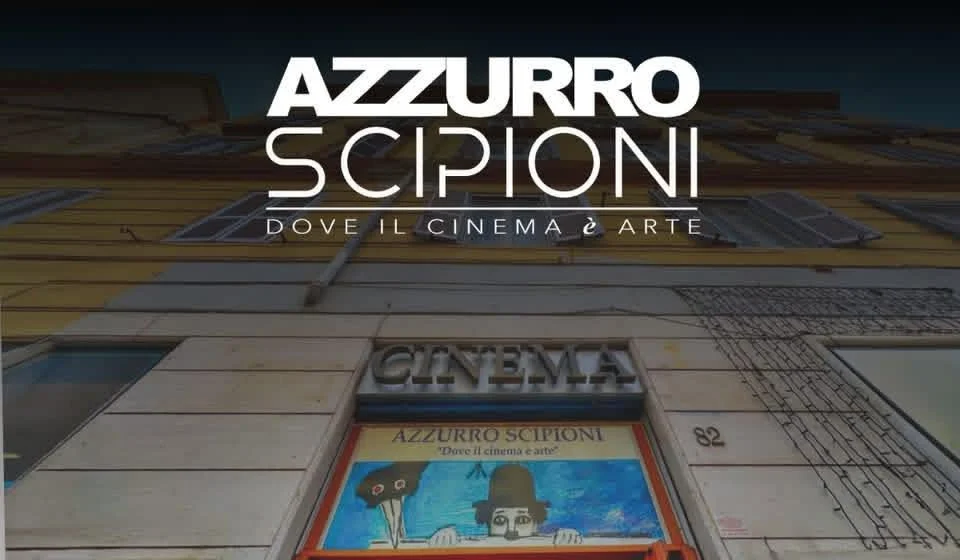
The Cinema Azzurro Scipioni is at Via degli Scipioni 82, 00192 Rome, in the Prati neighborhood, and it's open: it resumed screenings on May 28, 2024 after three years of closure. It's run by L'Immagine ETS, the association founded by Silvano Agosti in 1984, now chaired by the producer Corrado Azzollini. You get in with a ticket for the individual film or event, sold online on Webtic. The price is not published on the cinema's website: you ask at 06 8953 5724.
It isn't a multiplex and it isn't a monument. It's an arthouse cinema born on December 20, 1983 inside the former parish hall of the Scipioni, which the director and film editor Silvano Agosti kept going for almost 40 years by screening the classics of film history, auteur cinema and independent cinema. After the pandemic crisis the theater restarted thanks to an agreement with BNL BNP Paribas, which financed the renovation.
Data checked on September 29, 2026 on the cinema's official website, in the History, About Us and Program pages, on the tourism portal of Roma Capitale and on the press release with which BNL announced the reopening. The operator doesn't publish a fixed weekly schedule or a price list: each screening has its own page and its own time. Before heading out, check the day's program, because the titles change often and many evenings are one-off events.
In brief: address, hours, ticket
- Address: Via degli Scipioni 82, 00192 Rome, Prati neighborhood.
- Operator: L'Immagine ETS, president Corrado Azzollini, honorary president Silvano Agosti. Phone 06 8953 5724, email info@azzurroscipioni.it.
- How to get in: with the ticket for the individual film or evening. No visits to the theater outside screenings.
- Price: not published by the operator. You see it at the time of purchase on Webtic or you ask by phone.
- Hours: variable, film by film, on the Program page of the official website. There are no fixed opening hours.
- Getting there: Metro A, Lepanto stop, then a few minutes on foot. The operator doesn't publish directions by public transit.
- Accessibility: the operator doesn't detail it. It's best to write to info@azzurroscipioni.it before buying.
Where it is and what you really see
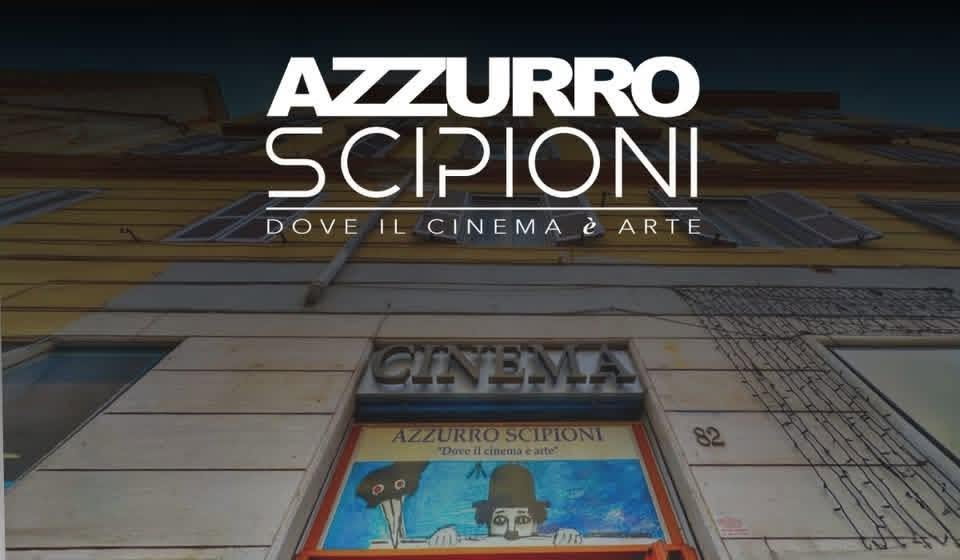
Via degli Scipioni is a residential street in Prati, the grid-plan neighborhood born after Unification between the Tiber and the Vatican walls. It runs between Viale Giulio Cesare and Via Cola di Rienzo, the shopping street. From outside the cinema is almost unnoticeable: a street entrance between building doorways, a sign, the posters for the evenings. Anyone looking for a monumental facade is disappointed, and that is exactly the point.
The theater is small, far from the model of the suburban multiplex. Before the closure, as il manifesto recalled in an article from August 2020, there were two screening rooms, named after Lumière and Chaplin, the two extremes of the history of silent cinema. The current operator doesn't publish the number of rooms and seats after the renovation, and the BNL release speaks only of a conservative restoration of the premises and the renewal of the theater.
So what do you see? Films. The reason to come here is the screen, not the architecture. The tourism portal of Roma Capitale sums up the house line: since 1983 the theater has been devoted to auteur cinema, to masterpieces of film history, to quality and independent cinema. In practice you find restorations of classics, first films, documentaries that struggle to find distribution, evenings with directors and performers present in the theater.
Around it is bourgeois Prati, far from the noise of the historic center. To the south you reach the Tiber and the Palace of Justice, to the west the Vatican walls and the entrance of the Vatican Museums. It's a convenient position for those staying in the area and looking for a different evening after a day spent between Saint Peter's and the museums.
One thing to know right away: the Azzurro Scipioni isn't a cinema where you walk in at random at eight in the evening hoping to find the film of the moment. The program is built like a film club schedule, with titles sometimes repeated for a few days and sometimes shown on a single evening. The advice is to look at the Program page first, pick the title and only then organize the evening.
A curiosity about the Cinema Azzurro Scipioni
The name comes from a film. According to the history published by the cinema, in 1982 Silvano Agosti had produced Il pianeta azzurro by Franco Piavoli, an auteur documentary shot far from the commercial circuits. The film competed for the Golden Lion at Venice in 1982 and won the Silver Ribbon in 1983. When Agosti reopened the former parish hall, the theater was painted blue in its honor.
The film's page on the cinema's website describes it as the story of the cycle of the seasons in a countryside landscape, from spring to autumn, read as a metaphor for human life. Piavoli handled the screenplay, cinematography and editing, while the production was by Zefirofilm and Edizioni l'Immagine. On Sunday, June 21, 2026 the theater showed it again at 21, in an evening with Silvano Agosti present in the theater.
The official history adds a detail that explains the spirit of the house well. To get Piavoli's film seen, Agosti organized a distribution that he himself called guerrilla, taking it to schools, factories, prisons and squares. The theater on Via degli Scipioni was born as a fixed point of that work: a stable screen for a cinema that otherwise lived on flying screenings and on an audience gathered street by street.
The same page cites a judgment by Andrei Tarkovsky on Piavoli's film, without the Russian director ever being recorded as a guest of the theater. The point deserves precision: Tarkovsky appears in the history of the Azzurro Scipioni as a reader of the film that gave it its name, not as a regular. It's best to keep the two things apart, because in less careful accounts the levels easily get confused.
And Scipioni? It comes from the street, and before that from the theater. The official history speaks of the former parish hall of the Scipioni, that is, a neighborhood cinema that already carried the name of the street before Agosti reopened it. The founder added the adjective and left the rest. The result is a name that holds together a film shot in the countryside and the republican street naming of Prati.
One thing nobody tells you about the Cinema Azzurro Scipioni
The theater isn't owned by those who run it. The cinema's website reconstructs the passage with dates: on March 29, 2021 Agosti signs a letter of intent with BNL BNP Paribas, on March 10, 2022 the loan for use contract arrives, on October 10, 2022 the works begin. The 2024 reopening is therefore the result of an agreement with a bank, with a defined duration.
On the duration the sources don't agree. The history published by the cinema speaks of a letter of intent for a five-year period, while BNL's press release of May 28, 2024 speaks of a six-year partnership with the group. The two figures may refer to different moments of the understanding, but neither source clarifies it. Anyone who gets attached to the theater would do well to follow its official news in the years to come.
Besides, the theater wasn't owned by the founder even before. Rolling Stone Italia, telling of the 2020 crisis, wrote that Agosti paid a rent of 1,600 euros a month and that he had paid it even during the months of closure imposed by the pandemic. This is the fact that explains the theater's fragility: small takings, fixed expenses, no stable contribution. The loan from the bank changed exactly this balance.
The second point few people remember concerns the furnishings. According to the official history, in 2021 the Cineteca Lucana took into custody the furniture, fittings and films of the old management. The theater you see today, renewed after the works, therefore doesn't match the one the audience of the 1990s and 2000s remembers. Anyone coming back after many years with the memory of the old Azzurro will find a different setting.
How was Silvano Agosti's theater born?
Silvano Agosti is a director, screenwriter, editor and writer. The press release with which BNL announced the reopening presents him exactly that way, and recalls that the cinema was born from his idea to give space to independent projects that couldn't find screens. On December 20, 1983 Agosti reopened the former parish hall on Via degli Scipioni with the name it still bears today and with the motto where cinema is art.
A few months later, on March 23, 1984, the cultural association L'Immagine was born, now L'Immagine ETS, which the website presents as a non-profit body entirely unconnected to political, religious or racial matters. It is still the one running the theater. For about 40 years, the cinema writes, Agosti guaranteed the theater's independence from the industry through self-financing, collaborators, volunteers, book sales, seminars and television rights.
The official history also tells of an episode that says a lot about the founder's stubbornness. In the mid-2000s, to keep the theater open, Agosti sold his childhood home, the one that appears in his 1991 film Uova di garofano. It wasn't a symbolic gesture but a budget choice, told by the cinema itself as part of its own history. It's one of those choices that explain why the theater has remained so tied to a single person.
The program of those years is known in Rome for the classics screened on a continuous cycle and for the weekend meetings, in which Agosti talked about the films with the audience. Il manifesto in the summer of 2020 called the theater a little Louvre of cinema, for the choice of screening almost only masterpieces. The 2024 BNL release confirms that the new management wanted to keep precisely Agosti's presence on weekends.
According to Rolling Stone Italia, which told of the crisis at the end of 2020, the Chaplin room had 100 seats and the Lumière 50. The cinema was then open two days a week, and the screened repertoire counted about 360 films considered masterpieces of world film history. Small numbers, which give the measure of the almost domestic size of the theater and of its economic fragility.
AgenziaCult, in December 2020, described the division of labor between the two rooms: in the Lumière the classics of film history, in the Chaplin the films awarded at the Venice, Cannes and Berlin festivals and the Oscar winners. It was a catalog program, with titles coming back in rotation, far from the logic of weekly releases that governs almost all of the city's commercial theaters.
The same account has a detail of local color. Rolling Stone wrote that Agosti welcomed spectators by offering candies and stressed that in that theater art was sold, not simple films. It was the sign of a personal, almost domestic management style, built over decades of evenings. These are details that help understand why the closure hit one part of the city so hard.
How much of that setup survived the renovation is not confirmed by an official source. The current operator doesn't publish the number, names and capacity of the rooms, and the custody of the furnishings passed to the Cineteca Lucana in 2021 suggests a renewed layout. To know in which room a screening takes place, the information should be looked for in the film's page or asked directly of the cinema.
My advice for visiting the Cinema Azzurro Scipioni
Choose an evening with guests. The Azzurro Scipioni's program alternates normal screenings and evenings in which directors, actors or authors stay in the theater to talk with the audience after the film. These are the occasions this theater exists for, and the difference from any ordinary viewing is enormous. On the Program page of the website the evenings with guests are indicated in the film's page, usually with the evening time.
The second piece of advice is to buy the ticket online as soon as the evening is announced, if the guest is well known. The theater is small and events with big names fill up fast. Webtic, the platform indicated by the operator, shows seat availability. For ordinary screenings, instead, the risk of finding the theater full is low, and arriving at the last moment is less of a gamble.
Arrive a few minutes early and in no hurry to leave. Evenings with a debate can last much longer than the film, and anyone with a train or a dinner booked risks missing the best part. If you're traveling with children, check the title carefully: the program is designed for an adult and passionate audience, and some films are shown in the original version with subtitles, as the page of the individual screening indicates.
How much does it cost and how do you buy a ticket?
The operator doesn't publish a price list on the official website. The ticket cost is seen at the time of purchase on the online ticketing platform Webtic, linked from each film's page, and can change between an ordinary screening and a special event. To ask the price of an evening, any discounts or membership cards, the official channels are the phone 06 8953 5724 and the address info@azzurroscipioni.it.
There is only one channel to use: the cinema's Webtic online ticket office, given as the official ticket office on the Azzurro Scipioni website. Be wary of pages that resell seats for evenings with famous guests at marked-up prices. The theater doesn't appear to be on sale on TicketOne or Vivaticket, and there are no tourist packages that include it: you buy the ticket for the film, as at any neighborhood cinema.
Different figures circulate on the price on review sites, often referring to the old management before the 2021 closure. They shouldn't be taken as valid. The current management has changed, the theater has been renovated and the conditions may be different. The only reliable figure is the one that appears on Webtic at the moment you buy, or the one the cinema gives you by phone or email.
For schools, associations and tour groups the operator doesn't publish dedicated fees or group booking arrangements. The contacts page gives, besides the general email, the address direzione@azzurroscipioni.it, which is the most suitable channel for requests for private screenings, matinees or special conditions. It's best to write well in advance, giving the date, number of people and desired title, and wait for written confirmation before organizing the evening.
Who runs the theater today and what is screened?
The About Us page of the website gives L'Immagine ETS as the operator, the association born in 1984 and turned into a third-sector body. The president is Corrado Azzollini, also given as president of Confartigianato Cinema, the vice president Davide Fontana oversees the running of the operation, Silvano Agosti is honorary president. The same page gives Massimo Righetti as artistic director since 2025 and Mario Perchiazzi as operations director.
The most visible change for the spectator concerns organization. Today each film has a page on the website, with times, guests and a link to the online ticket office, and the theater also communicates through its official profiles on Instagram and Facebook. The old management lived much more on word of mouth and on the founder's physical presence. For those coming from outside Rome, the new setup makes it easier to plan an evening.
The least visible change is economic. The theater no longer rests only on the strength of one person and the volunteers, but on a loan for use and on a renovation paid for by a bank, backed by a board with producers and industry professionals. It's a formula that made it possible to reopen, and that ties the theater's future to the duration of the agreements and to the ability to fill the evenings.
What remains is the editorial line. BNL's 2024 release insisted on continuity: the arthouse films chosen by Agosti, his weekend meetings, first films, collaborations with experimental groups. Judging by the pages published on the website in 2026, with restored classics, documentaries and evenings with authors, the basic approach has remained recognizable to those who knew the theater before the closure.
The pages of the Program section show well the range of evenings. There are screenings followed by a meeting with the director and performers, films shown over several days with different times, live links with other theaters for national presentations, poetry evenings promoted by associations. Each page gives plot, times, any guests and the link for purchase, and remains the reference to consult before heading out.
In 2026 the theater hosted the presentation of the restoration of I pugni in tasca, Marco Bellocchio's 1965 debut film, with the director and Silvano Agosti present in the theater. The film's page on the cinema's website recalls the 2026 restoration by Kavac Film and the distribution by Cat People. The link is direct: the cinema's page recalls Agosti's work editing the film, 60 years before this new release.
Alongside restored classics, the program makes room for documentaries, Italian and foreign independent films, evenings with authors, poetry series and meetings that go beyond cinema in the strict sense. The website also has a page devoted to Piavoli's Il pianeta azzurro, which returns periodically to the schedule as the house's signature film. To know what's on for a precise date, the Program page is the only source to consult.
A firm position, in our judgment: the account of the Azzurro Scipioni as a theater that screens only masterpieces is overrated. It was true as Agosti's line, but today the schedule mixes undisputed classics, first films, current-affairs documentaries and association events. Not everything is a masterpiece, and it doesn't have to be. Anyone who comes expecting only Fellini and Tarkovsky risks feeling thrown off, anyone who comes curious finds a living theater.
Another well-known fact, yet rarely cited
Silvano Agosti was the editor of I pugni in tasca, one of the most important debut films of 1960s Italian cinema. Enthusiasts know it, but it's rarely connected to the theater on Via degli Scipioni. Yet the thread is evident: the founder of the cinema comes from work at the editing table, and the theater was born as a continuation of that craft, a place where the film is shown in full and talked about afterward.
Bellocchio's return to the theater in 2026, with the restored film, closes a circle 60 years long. Not all spectators who know the Azzurro Scipioni as a cinema of classics know that its founder worked on one of those classics. It's worth remembering when you go in: the theater wasn't opened by just any exhibitor, but by a person who made cinema with his hands.
There is a second known and little-cited fact. On October 22, 2022, according to the official history, at the Festa del Cinema di Roma the docufilm C'era una volta il Cinema Azzurro Scipioni was presented, by Lorenzo Negri, the man to whom Agosti had entrusted institutional relations since February 2021. The theater, still closed for works, had itself become the subject of a film before reopening.
The right photo to take at the Cinema Azzurro Scipioni
The photo that tells this place is the one of the sign and the evening's posters, taken from the opposite sidewalk of Via degli Scipioni before the doors open. With a normal lens you hold together the entrance, the people waiting and a piece of the building's facade. As evening falls the light of the sign does the rest, and you don't need elaborate framing.
Inside the theater, before the start, shoot without flash and without disturbing those already seated. During the screening, obviously, no lit phones. On evenings with guests the audience often wants to photograph the director during the debate: it's best to do it discreetly and, if possible, at the end, when the conversation loosens up and people approach the stage or the exit.
The street deserves a second shot. Via degli Scipioni has the typical long perspective of Prati, with late 19th-century and early 20th-century buildings and tall doorways. Photographed at sunset, with the cinema's entrance lit in the background, it conveys well the idea of a neighborhood theater. It's also the most respectful way to portray the place without invading the privacy of those inside.
How do you get there from the center of Rome?
The operator doesn't publish directions by public transit. The simplest solution is Metro A: the Lepanto stop is a few minutes on foot from Via degli Scipioni, and Ottaviano isn't far either. From Termini, line A takes you to the area without changes. For the precise route and the surface lines, it's best to consult the Rome transit company's planner before leaving.
From the historic center you can also walk. From Piazza del Popolo you cross the Tiber and enter Prati on a quiet walk. From Castel Sant'Angelo you head north along the neighborhood's streets. In the evening the route is busy and lit, and the walk is part of the evening.
Those coming from the Vatican have the shortest way. From the area of the Vatican Museums and from Piazza del Risorgimento you cross Prati eastward, leaving the walls behind, and in a short time you reach Via degli Scipioni. It's the reason the theater works well as the close of a day devoted to Saint Peter's and the museums, with no need for transit.
By car, parking in Prati is difficult, especially on weekday evenings, and the cinema doesn't list an affiliated parking lot. In the surrounding streets parking follows the rules and hours shown by the signs. If you're coming from outside Rome you're better off leaving the car near a Metro A station and continuing by the line, also to avoid the evening traffic on the Lungotevere.
Some important events that happened here in history
On December 20, 1983 Silvano Agosti reopens the former parish hall of the Scipioni as Cinema Azzurro Scipioni. On March 23, 1984 the association L'Immagine is born, which runs it. For almost 40 years the theater stays open on the sole strength of the founder and the volunteers, without fixed contributions from the industry. In March 2020, with the lockdown, the theater closes for over 7 months, as the cinema's website recalls.
In May 2020 Agosti launches a fundraiser that, according to the official history, raises 16,000 euros in exchange for books and DVDs. In December 2020 he announces the sale of the theater's seats, a piece of news that makes the rounds of the press. Around the theater move Laura Delli Colli for the Fondazione Cinema per Roma, the then deputy mayor Luca Bergamo, mayor Virginia Raggi and councilwoman Lorenza Fruci.
The figures of the 2020 fundraiser don't match among the sources. The official history speaks of 16,000 euros raised by offering books and DVDs, AgenziaCult of over 17,000 euros from 371 supporters on a crowdfunding platform. In December, according to the same agency, Agosti offered the theater's seats at 5 euros each, while a petition addressed to the city started and the deputy mayor declared he wanted to avoid the closure.
On February 1, 2021 Agosti entrusts Lorenzo Negri with a role managing institutional relations. On March 27, 2021 Luigi Abete, president of BNL BNP Paribas, proposes a collaboration to save the theater, and two days later the letter of intent is signed. The loan for use of March 10, 2022, the start of works on October 10, 2022 and the presentation of the docufilm at the Festa del Cinema di Roma follow.
On October 27, 2023 Negri becomes president of the association with five new members and on December 19, 2023 takes possession of the premises. In January 2024 a new board elects Corrado Azzollini, a producer, as president, while Agosti becomes honorary president. On May 28, 2024 the theater is inaugurated again, with the renovation financed by BNL and the BNP Paribas group, as the bank's release reports.
Who has passed through the Cinema Azzurro Scipioni
BNL's press release for the reopening recalls that over the years the theater has hosted Michelangelo Antonioni, Federico Fellini, Mario Monicelli, Ettore Scola, Bernardo Bertolucci, Marco Bellocchio, the cinematographer Vittorio Storaro and the composers Nicola Piovani and Ennio Morricone. It's a list the bank gives without dates and without details on individual evenings, and as such it should be taken: the theater as a meeting point of Italian auteur cinema.
The best-documented visit of recent years is that of Marco Bellocchio, in the theater in 2026 with Silvano Agosti to present the restoration of I pugni in tasca. It's reported by the film's page on the cinema's website and by several Roman cultural news outlets. It's also the only recent occasion on which the founder and an author whose film he edited found themselves together in front of the theater's audience.
Then there is the audience, which is the real constant presence. Neighborhood residents, enthusiasts, students, passing visitors: evenings with guests draw very different people. In the official history the volunteers also appear who worked in the theater for decades, nameless but essential. Without them, the cinema writes, the theater would not have survived the management of one man.
In recent history two names less known to the general public count. Lorenzo Negri, to whom Agosti entrusted institutional relations in 2021, followed the rescue, made the docufilm about the theater and in October 2023 became president of the association. Corrado Azzollini, a producer, took over the presidency in January 2024 and brought the theater to the reopening. Both appear in the official history as key figures of the change of management.
Facts, tradition and legend: what is documented?
Documented: the opening date of December 20, 1983, the founding of the association on March 23, 1984, the 2020 closure, the agreements with BNL of 2021 and 2022, the reopening of May 28, 2024. All these steps can be read on the cinema's website and, for the reopening, in the bank's release. Also documented is the link with Il pianeta azzurro, declared by the official history as the origin of the name.
Tradition: the account of the cinema as a living room in which the founder commented on the films with the audience, the screenings of classics on a continuous cycle, the two rooms Lumière and Chaplin. These are things the press has told for years, and that regulars remember. On the current state of the rooms, however, the operator doesn't give number, names or seats, and the layout may not have stayed the same.
Legend, or nearly: the idea that every great 20th-century director passed through here, or that the theater was frequented by foreign masters like Tarkovsky. Open sources don't say so. Tarkovsky appears only as the author of a judgment on Piavoli's film. The Italian names listed in BNL's release are reliable as general presences, but without precise evening dates they can't be turned into anecdotes.
A question also remains open on the old seats. In December 2020 Agosti put them up for sale at 5 euros each, according to AgenziaCult, as a gesture of closing. How many were actually sold, and if any ended up in the custody entrusted to the Cineteca Lucana in 2021, open sources don't say. Anyone who says they have one in their living room may be telling the truth, but no public document confirms it.
Where does the Azzurro Scipioni stand among Rome's arthouse theaters?
Rome has a network of historic and arthouse theaters that has shrunk over time and been partly renewed. On the site you'll also find the pages for the Nuovo Cinema Sacher in Trastevere, the Cinema Troisi, the Cinema Farnese at Campo de' Fiori and the Cinema Aquila in Pigneto. Each has a different history of closures and reopenings.
The Azzurro Scipioni stands out for a simple reason: it is the only one of these theaters tied for 40 years to a single author, who founded it, programmed it and told its story. The others have changed operators or formulas several times. Here the continuity of the person served as a brand, and the new management chose to keep it with Agosti's honorary presidency and his weekend evenings.
For those who follow cinema in Rome, the tour is completed by the Casa del Cinema in Villa Borghese, which offers film series and retrospectives, and by the Cinecittà studios, where you visit sets and exhibition routes. The page Rome in the movies collects the locations really worth seeing. Put together, they give an idea of the city as a place of production and viewing.
For the passing visitor the practical question is another: is it worth an evening of a short trip? In our judgment yes, on one condition. You have to pick the right title, that is, a classic you know or an evening with the author present. Any old film, seen without knowing why, loses the sense of the place. Chosen well, instead, it gives back a Rome that no monument tells.
When is it closed and what to know before the evening?
The first check should be done the same day on the Program page of the website. Titles change often, evenings with guests can be moved and a film announced for several days can have different times from one evening to the next. If you're coming from far away, perhaps after a day in the center, you do well to verify the time before leaving and keep the cinema's number handy.
The second check concerns language. The program includes Italian films, foreign films and documentaries, and for non-Italian titles the version shown is given on the screening's page. If you don't speak Italian you should check carefully if there are subtitles and in what language. The debates with guests are also normally held in Italian, and the operator doesn't mention translation services.
For accessibility needs the operator doesn't publish information on entrances, reserved seats or services. The advice is to write to info@azzurroscipioni.it a few days beforehand, explaining your needs and asking for confirmation on access to the chosen room. The same goes for those who want to come in a larger group: an email to the cinema with the date and number of spectators avoids surprises on the busiest evenings.
Finally, timing. A screening with a meeting can run well beyond two hours, and leaving after 11 at night is not rare. The closing times of Metro A and the night lines should be checked in advance on the Rome transit company's website. If you have to get back outside the city, you should check the last available run first.
The cinema has no fixed opening hours and doesn't publish a weekly closing calendar. You go in only when a screening is scheduled, and the theater can stay closed on days without titles. The operator doesn't list summer closures, but many Roman theaters slow down in the hottest months. For August and holidays, the Program page is the only indication to follow.
Don't expect the multiplex bar, the popcorn, the reclining seats and the underground parking. Don't expect visits to the building either: it's a cinema, not a museum, and outside screening hours the door is closed. If you want to see the theater, you have to buy a ticket for a film. It's a simple rule, which those who come looking for the theater as a tourist stop often don't consider.
Finally, don't expect a family program or blockbusters on release. Anyone looking for the latest superhero film has to go elsewhere. Here you find titles that often don't play in the big circuits, restored versions, films in the original language with subtitles. That is why the theater exists, and why it's worth getting there with the right expectations, without confusing it with an ordinary cinema.
Eating in the area
Prati is a neighborhood where Romans really eat, but the area between Via Ottaviano and the Vatican walls is also full of places designed for the passing tourist. Recognizing them isn't hard: photo menus displayed outside, the barker on the sidewalk inviting you in three languages, items without prices and a different menu inside and outside. These are the signs residents avoid, without any snobbery.
Other signs to watch for: places open continuously from morning to night with no real kitchen break, the lady rolling fresh pasta in the window as a show for passersby, prices that adapt to the customer in front of the monuments. The residential streets of Prati farther from the Vatican, toward the Tiber and toward Via Cola di Rienzo, usually offer better choices at more honest prices.
Before or after the film, it's best to eat light and unhurried, since evenings with a debate can end late. Many kitchens close early on weekdays, and if you come out after 11 you find fewer options. To avoid leaving it to chance, a starting point is the list of addresses on Google Maps, to be cross-checked with the actual hours of the evening.
What to combine in a day
The most natural combination is a Vatican day closed by a film. Morning at the Vatican Museums and the Sistine Chapel, afternoon in Saint Peter's Square and the basilica, evening at the Azzurro Scipioni. If you've booked the Scavi of Saint Peter or the Vatican Gardens, you can fit them into the same day.
A second combination starts from the Tiber. Castel Sant'Angelo and Ponte Sant'Angelo in the afternoon, a walk toward the Palazzaccio, then the film. If you prefer the opposite side of the river you can climb up to the Pincio and come down to Piazza del Popolo before crossing the bridge toward Prati for the evening screening.
For those who follow the thread of theater and performance, Rome offers many traditional venues. Among our pages are the Teatro Vittoria in Testaccio, the Teatro Nazionale, the Teatro Argentina and the Teatro Valle. If you're in the city for several evenings you can alternate a play and an auteur film, building a small personal festival.
The name of the street finally offers an unusual hook. Via degli Scipioni recalls the republican family of the Scipios, like many streets in Prati named after figures of ancient Rome. Their tomb is on the Appian Way, and you can visit it: the page on the Tomb of the Scipios and the one on the Parco degli Scipioni explain how. It's an idea for an archeological morning before an evening at the cinema.
If you prefer to close the day in the greenery before the film, you can stop by Villa Borghese, with the Galleria Borghese by reservation and, at Valle Giulia, the Etruscan Museum of Villa Giulia. From the park you go down toward the Tiber and cross the river to enter Prati. The combination calls for good legs, but it avoids transit and keeps the day on a single axis.
If you have more time and like the 20th century, you can pair the cinema with a visit to the MAXXI in the Flaminio neighborhood, to the Hendrik Christian Andersen Museum or to the Alberto Sordi House Museum, tied to one of the best-loved faces of Roman cinema. A little farther on, the Auditorium Parco della Musica is the main venue of the Festa del Cinema di Roma, the event where the docufilm about the theater was presented.
Frequently asked questions
Is the Cinema Azzurro Scipioni open in 2026?
Yes. The theater reopened on May 28, 2024 after three years of closure, with the renovation financed by BNL BNP Paribas, and in 2026 it regularly publishes its program on the official website. The operator is L'Immagine ETS, the association founded by Silvano Agosti. There are no fixed hours: you get in only when a film is scheduled, with the ticket for the individual screening bought on Webtic.
How much is a ticket at the Azzurro Scipioni?
The operator doesn't publish a price list on the website. The cost appears at the time of purchase on the Webtic online ticket office linked from the film's page, and can vary between an ordinary screening and an event with guests. To ask about prices, discounts or any membership cards, the official channels are the phone 06 8953 5724 and the email info@azzurroscipioni.it. The figures on old review sites are not reliable.
Who founded the Cinema Azzurro Scipioni?
Silvano Agosti, director, screenwriter, editor and writer, who on December 20, 1983 reopened the former parish hall on Via degli Scipioni. In 1984 he founded the association L'Immagine, which still runs the theater. Since January 2024 Agosti has been honorary president, while the presidency passed to the producer Corrado Azzollini. The new management has kept his weekend meetings with the audience.
Why is it called Azzurro?
The name comes from Il pianeta azzurro, the Franco Piavoli film produced by Agosti in 1982, in competition at Venice and winner of the Silver Ribbon in 1983. According to the history published by the cinema, when Agosti reopened the parish hall he painted it blue in honor of that film. Scipioni instead comes from the street, dedicated to the family of republican Rome.
Why was the cinema closed?
The crisis began with the lockdown of March 2020, which kept the theater closed for over 7 months. Despite a fundraiser, in December 2020 Agosti announced the sale of the seats. From there began the collaboration with BNL BNP Paribas, with a letter of intent in 2021, a loan for use in 2022 and the renovation works. The reopening came on May 28, 2024.
How do you get to the Azzurro Scipioni by public transit?
The operator doesn't publish directions by public transit. Metro A, Lepanto stop, is a few minutes on foot from Via degli Scipioni, and Ottaviano isn't far either. From Termini, line A gets you there without changes. For surface lines and updated routes it's best to use the Rome transit company's planner, because the neighborhood has many lines and detours are frequent.
Can you visit the theater without seeing a film?
No. The Azzurro Scipioni is a working cinema, not a museum, and the operator doesn't publish visits to the theater outside screenings. To get in you need the ticket for a film or an evening. The best way to get to know the theater is to choose an event with guests, arrive a few minutes early and stay for the debate, which is often the most interesting part of the evening.
How many screens does the Azzurro Scipioni have?
The current operator doesn't publish the number of rooms or the capacity. Before the 2020 closure there were two rooms: the Chaplin, with 100 seats according to Rolling Stone Italia, and the Lumière, with 50. After the renovation financed by BNL it is not confirmed by an official source that the layout stayed the same. To know where a screening takes place it's best to consult the film's page.
Is Silvano Agosti still present at the theater?
Yes, according to the cinema's website. Agosti is honorary president of the association that runs the theater and takes part in several evenings: in 2026 he was in the theater with Marco Bellocchio for the restoration of I pugni in tasca and on June 21, 2026 for the screening of Il pianeta azzurro. BNL's 2024 release listed among the new management's commitments his meetings with the audience on weekends.
Who wrote it and on what sources
The text comes from the editorial team of Tour Leader Pro, the Roman outfit that designs itineraries, visits and cultural events across Rome and Lazio. The fees, hours and booking arrangements given here come from the official sources cited in the text, as of the date given at the top: for the Azzurro Scipioni the authority is the cinema's website, the individual film's page and the Webtic ticket office. Tell us what you find changed.
Organizing an evening at the Azzurro Scipioni, for yourself or for a group, means reckoning with a small theater, variable hours and prices given only at the time of purchase. For a group it's best to write to the cinema well in advance, asking about availability and conditions for the chosen evening. A useful resource for those who organize group trips is Tour Leader Pro.
An arthouse evening in Prati fits well into a broader trip among the Vatican, the Tiber and the 20th-century neighborhoods, with stops like Vatican City and the Romanian Academy at Valle Giulia. For those with more days who want to keep the city and its surroundings together, a useful resource for putting together a multi-day itinerary is Italy Planner.