Tomb of the Scipios
In short. The Tomb of the Scipios opens along the first stretch of Via Appia Antica, inside the Aurelian Walls and a few hundred meters from Porta San Sebastiano, in a garden on Via di Porta San Sebastiano that almost nobody notices when driving past.
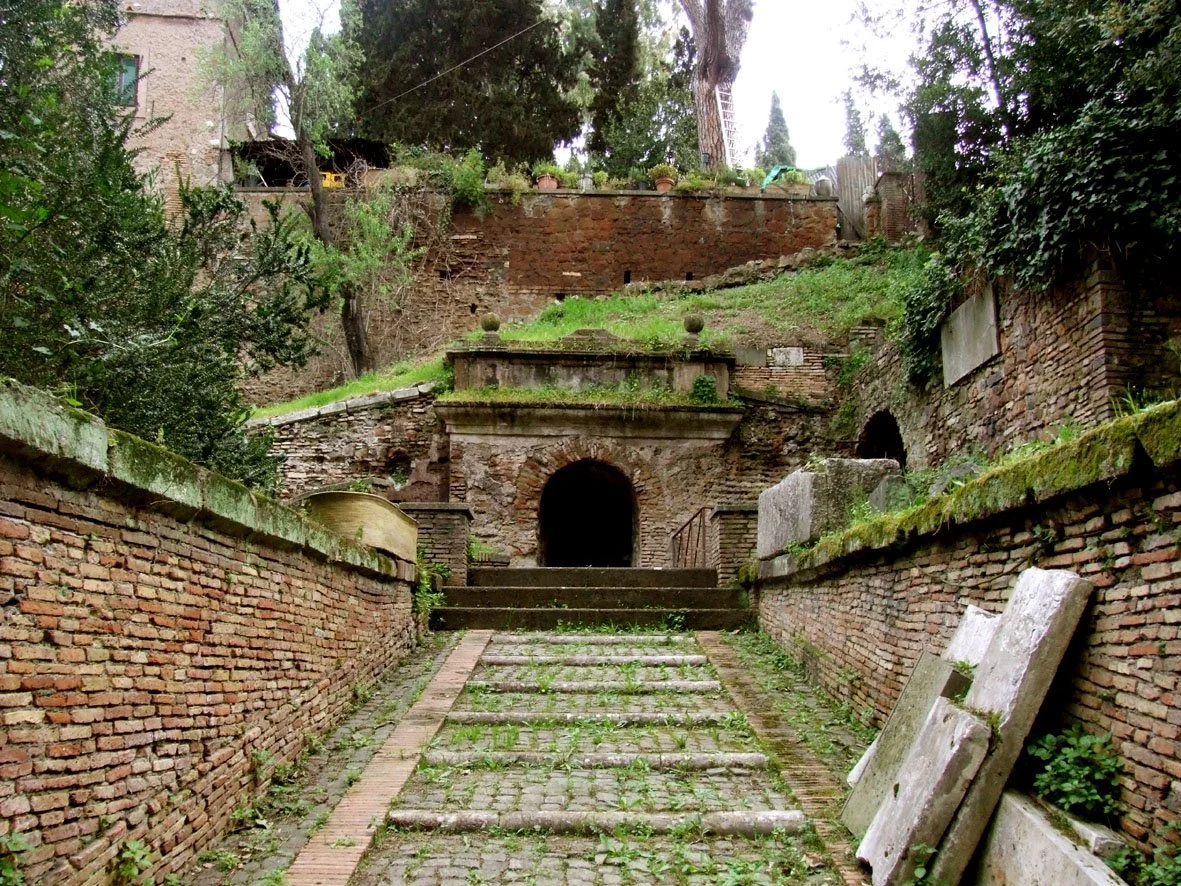
The Tomb of the Scipios opens along the first stretch of Via Appia Antica, inside the Aurelian Walls and a few hundred meters from Porta San Sebastiano, in a garden on Via di Porta San Sebastiano that almost nobody notices when driving past. It is the family tomb of the Cornelii Scipiones, the house that gave Rome the conquerors of Hannibal and of Carthage, and it was founded at the beginning of the third century BC: a hypogeum dug into a bank of tufa, with galleries that cross in a grid pattern and niches cut into the rock to hold the sarcophagi. The sarcophagus of Lucius Cornelius Scipio Barbatus, consul in 298 BC, was found here, with the inscription in Saturnian verse that is one of the oldest Latin literary texts we have. The original sarcophagus is no longer in this place: it is in the Vatican Museums, and inside the hypogeum there is a cast of it, placed where the authentic piece was found. The lines that follow tell what you really see going down there, what the inscriptions say, how the monument was rediscovered and largely emptied between the 1600s and the 1700s, and above all how you get in today, because this is not a place you visit by showing up at the ticket office as at the Colosseum.
How to Visit the Tomb of the Scipios: Booking and Limited Openings
The Tomb of the Scipios is not a monument with free, continuous entry: the visit is by reservation, with groups limited to a small number of people per tour, and with a limited opening calendar that the Sovrintendenza Capitolina ai Beni Culturali sets period by period. This is the most important piece of information, because showing up at Via di Porta San Sebastiano without having booked almost always means finding the gate closed.
Where to buy tickets. The Tomb of the Scipios is a monument of the Sovrintendenza Capitolina: official page on sovraintendenzaroma.it and reservations at 060608. You enter in limited groups, with a cash ticket on site and cancellation up to 72 hours before. No booking platform sells it. Verified on September 28, 2026.
Mandatory Reservation and Limited Numbers
The monument is run by the Sovrintendenza Capitolina, which regulates access through the tourist and cultural information system of the City of Rome, reachable at 060608. The official indications published by the Sovrintendenza describe access reserved for groups of limited size, roughly no more than a dozen people at a time, and for individual visitors who book on a dedicated calendar. The cap is not a marketing choice: the hypogeum is a cramped space, with narrow galleries, low ceilings and uneven flooring, and beyond a certain number of people at the same time the visit becomes physically impractical as well as unsafe.
Ticket and Free Entry
The information published by the Sovrintendenza Capitolina indicates a full ticket of four euros and a reduced ticket of three euros, with free entry for Rome residents with ID and for holders of the MIC Card, the annual card that the City reserves for those who live or study in the metropolitan city. A guided tour, if you want one, is not included in the ticket and has to be arranged separately. Fares and free-entry conditions, however, change with city council resolutions: before leaving, it is always worth asking for confirmation when you book, because this is the piece of information most subject to updates of all those reported here.
The Protective Helmet
There is one detail that catches people off guard: to go down into the hypogeum you are asked to wear a protective helmet, provided on site. It is not a bureaucratic formality. The galleries dug into the tufa have uneven heights, and in several places outcrops of rock reach the head height of an adult, so the protection is really needed. If you have trouble moving in tight spaces, suffer from marked claustrophobia or find it hard to bend over repeatedly, you should take this into account before booking.
Special Openings and Special Days
Besides the ordinary calendar, the tomb regularly takes part in the extraordinary opening programs promoted by the Sovrintendenza: the free visits of Archeologia in Comune, dedicated to the less visited municipal archaeological sites, and the days of Appia Day, the event that every year opens to the public monuments and archaeological areas along the regina viarum. On those occasions entry can be free and the tours are organized at fixed times, always by reservation and always with small groups. They are the best chances for anyone who wants to get in without having to fit into the ordinary calendar, but spots run out fast.
What We Could Not Confirm
The updated opening calendar, meaning the exact days and hours valid at the time you are reading, is not a stable piece of data and is not given here precisely so as not to mislead: it changes with the seasons, with staff availability and with the extraordinary opening programs. The only reliable procedure is to call 060608 or check the Sovrintendenza Capitolina website before setting out. Anyone planning the day around this visit should do it a few weeks ahead, not the day before.
Where the Tomb of the Scipios Is and How to Get There
The archaeological area of the Tomb of the Scipios is at Via di Porta San Sebastiano 9, in Municipio I, inside the perimeter of the Aurelian Walls and along the first urban stretch of Via Appia Antica. The road that now leads to Porta San Sebastiano in fact follows the original route of the Appian Way in its segment closest to the center, the one the Romans took when leaving the city toward the south.
The Context: A Road of Tombs Inside the Walls
To understand why a monumental tomb stands here, inside the city wall, you have to remember an elementary chronological fact: when the Scipios built their hypogeum, at the beginning of the third century BC, the Aurelian Walls did not exist. They would be built more than 500 years later, in the third century AD, and their route enclosed a stretch of suburb that until then had been countryside and burial ground. Roman law forbade burials inside the pomerium, the sacred boundary of the city, and so the tombs of the great families lined up along the consular roads just outside the built-up area. The Tomb of the Scipios is inside the walls today through a pure effect of the calendar: it is the city that grew around it, not the tomb that broke the ban.
By Public Transport
The most useful metro stop is Circo Massimo, on line B, from which you continue on foot along Viale delle Terme di Caracalla and then along Via di Porta San Sebastiano, a walk of about 20 minutes slightly uphill. Alternatively, the Piramide stop on line B leaves you at a similar distance, but with a less pleasant route. Several city bus lines also run along Viale delle Terme di Caracalla, linking the historic center with the Porta San Sebastiano area and the start of the Appia: asking for confirmation of the line running at the time of your visit makes sense, because surface transport routes in the area are changed fairly often because of construction work.
On Foot, as Part of a Longer Walk
The nicest way to get there is on foot, making the tomb part of a walk that starts from the Circus Maximus, runs past the Baths of Caracalla and continues along Via di Porta San Sebastiano to the gate and to the Museum of the Walls housed inside it. It is a stretch of the city that still keeps, between the boundary walls of private villas, cypresses and pines, something of the atmosphere of the 1800s Roman countryside, and that turns out to be surprisingly quiet compared with the density of the historic center.
Careful Not to Confuse It with the Parco degli Scipioni
A necessary clarification, because the mix-up is very common: the Parco degli Scipioni is the public garden a short distance away, between Via di Porta Latina and Via Latina area, with lawns, trees and a playground, and it is a neighborhood place open to everyone. The Tomb of the Scipios is instead the underground archaeological monument on Via di Porta San Sebastiano, which you visit only by reservation and with a ticket. They share the name and are close, but they are two completely different things: if you are looking for a place to let the kids run in the shade, go to the park, and if you want to go down into the tomb of the Cornelii, book the tomb.
What the Tomb of the Scipios Is: The Tomb of a Dynasty
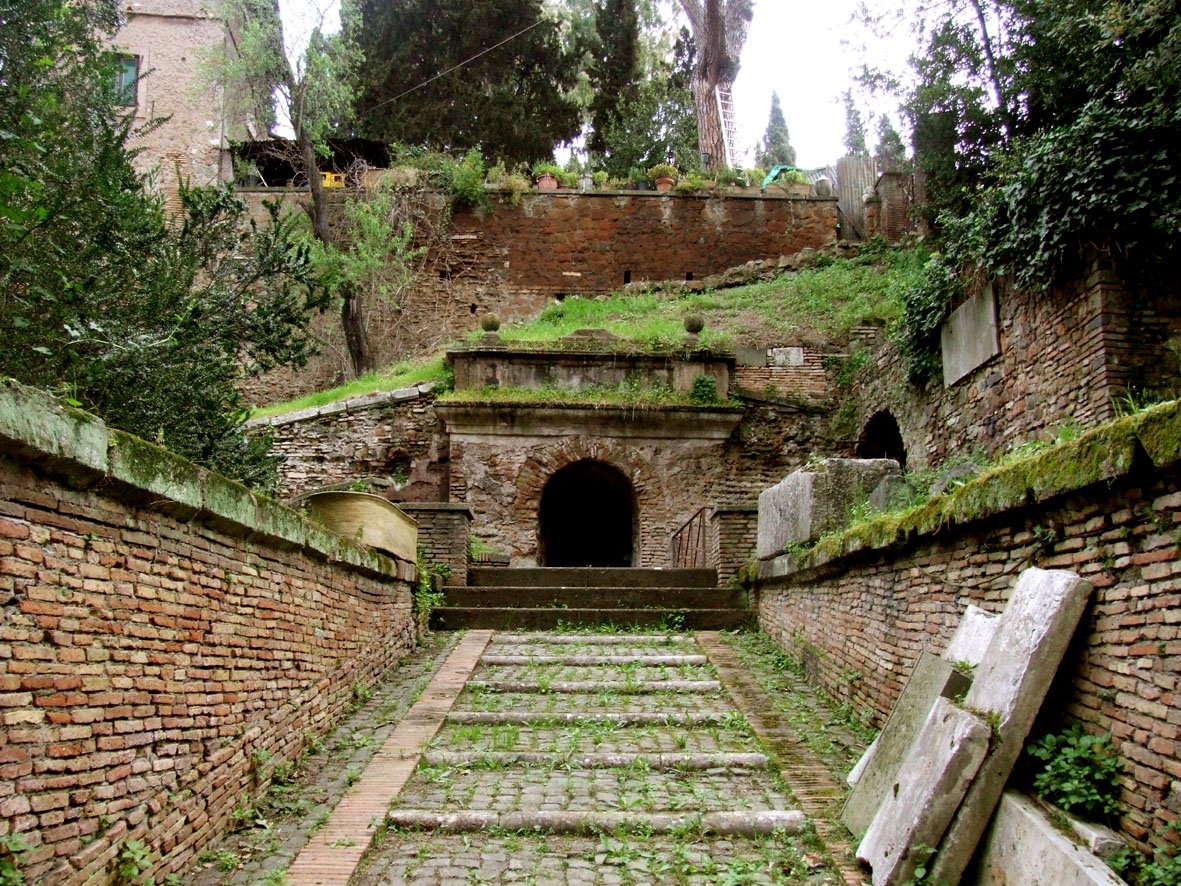
The Tomb of the Scipios is the collective tomb of a branch of the gens Cornelia, one of the most powerful patrician families of republican Rome, and it was founded at the beginning of the third century BC by Lucius Cornelius Scipio Barbatus, consul in 298 BC and a protagonist of the Samnite wars. It is not the monument of a single figure, like the Mausoleum of Cecilia Metella farther along the Appian Way, but a dynastic tomb designed to hold successive generations of the same house.
Who the Scipios Were
Between the end of the fourth century and the middle of the second century BC, the Scipios were one of the few families able to hold the highest offices of the republic continuously. This house produced Publius Cornelius Scipio known as Africanus, the general who defeated Hannibal at Zama in 202 BC, ending the Second Punic War. It also produced his brother Lucius Cornelius Scipio, called Asiaticus for his campaign against Antiochus III, and, by adoption, Publius Cornelius Scipio Aemilianus, who destroyed Carthage in 146 BC at the end of the Third Punic War. A family tomb built to hold and show off this sequence of successes was not a private matter: it was a political instrument.
How Many Burials, and for How Long
Archaeological studies estimate that, by the middle of the second century BC, the hypogeum had reached about 30 burial places, between sarcophagi placed in the niches and loculi cut into the walls. The main use of the monument by the family branch is concentrated between the third and the middle of the second century BC, but visits to the tomb do not stop abruptly: traces of use and later interventions continue into the early imperial age, with evidence dating to the Claudian-Neronian period, that is, the middle of the first century AD. A tomb, in short, that stayed in use for something like three centuries.
Burial, Not Cremation: A Choice Against the Current
There is one particular that historians of Roman religion always stress: the Scipios practiced inhumation, that is, laying the intact body in a sarcophagus, at a time when cremation was the prevailing rite in Rome. The ancient source that tells this is Cicero, and the report is consistent with what archaeology shows: tufa sarcophagi made to hold bodies, not urns for ashes. The family tradition was respected for a long time, and it is a case of ritual conservatism that sets this gens apart from the funeral habits of most Romans of the time.
The Structure Dug into the Tufa: The Grid Galleries
The hypogeum of the Tomb of the Scipios is dug into a bank of tufa with a roughly square plan, and its most recognizable feature is the grid layout: four massive pillars left standing in the rock during the excavation support the vault, and around them run four galleries along the sides plus two central galleries that cross at right angles. The result, seen in plan, is a regular grid.
Digging by Subtraction
The building method deserves to be understood, because it is the exact opposite of how we are used to thinking about a building. Here nothing was built by adding material: it was dug by removing it. The builders attacked the bank of tufa, a soft volcanic rock that is easy to work with iron tools but cohesive enough to hold up by itself, and they removed the stone, leaving standing, as pillars, four blocks of virgin rock never touched. Those pillars were not put there: they are what was left. It is the same building logic with which the Christian catacombs of Rome were dug, with the difference that here the interior volume is much larger and the chronology precedes Christianity by centuries.
The Brick Gallery Added Later
The complex does not end with the dug hypogeum. At the back there is a second body, a gallery built of brick masonry with an independent entrance, added at a later time when the space cut into the tufa was no longer enough. The difference in building technique between the two bodies, the dug tufa and the built brick, is one of the easiest elements to read even for a non-specialist visitor, and it tells well how a family tomb was an organism that grew by additions over the generations, not a project finished once and for all.
The Monumental Facade Toward the Road
The front of the hypogeum, facing northeast toward the road, was treated as a true architectural facade: a high podium of tufa blocks with three arched openings, one of which led to the main chamber, one to a secondary room and one was blind, purely decorative. Above, a tripartite order with half-columns and three niches meant to hold statues. Of the facade only partial remains survive today, but enough to understand its layout and to imagine the effect it must have had on anyone traveling the Appian Way.
The Frescoes of the Facade
On the podium of the facade, traces of painting have been recognized in several superimposed layers: two layers dating to the middle of the second century BC, with scenes of a historical character, and a later layer, of the imperial age, with a decoration of stylized red waves. The historical scenes of the second century are hard to read because of their state of preservation, but their mere existence is significant: the facade did not just display inscriptions, it told the deeds of the family in pictures to those passing by. It is one of the oldest testimonies of Roman historical-celebratory painting to have come down to us, though reduced to fragments.
The Sarcophagus of Lucius Cornelius Scipio Barbatus: The Original Is in the Vatican
The most famous piece to come out of this tomb is the sarcophagus of Lucius Cornelius Scipio Barbatus, a peperino monolith about two meters and 40 centimeters long, datable to around 280 BC. It has to be said right away and without beating around the bush: inside the hypogeum, today, the original is not there. The authentic sarcophagus is kept in the Vatican Museums, in the Museo Pio-Clementino, and what you see on site is a cast placed in the original position.
What You See in the Cast
The cast faithfully reproduces the shape and decoration of the original piece, and it lets you understand in situ something that gets lost in a museum: the relationship between the sarcophagus and the space it was designed for. Seeing it in the niche, in the half-light, facing the entrance from which the light came in, gives back the funerary staging the family wanted. Anyone who then wants to see the original has to allow for a second visit, to the Vatican Museums, where the piece is displayed together with other materials from the same tomb.
A Sarcophagus Shaped Like an Altar
The formal feature most discussed by scholars is that the sarcophagus of Barbatus does not look like a chest: it is conceived as an altar. The body has a Doric-type frieze with triglyphs alternating with metopes decorated with rosettes, while the lid is modeled like a cushion with volutes of Ionic derivation at the ends. The result is an object that deliberately mixes Doric and Ionic elements and, according to some readings, Corinthian suggestions: a choice that specialists read as a sign of the Scipionic circle's openness to Hellenistic Greek culture, decades before that openness became a widespread fashion among the Roman aristocracy.
The Funerary Inscriptions in Saturnians: Among the Oldest Latin Literary Texts
The inscriptions of the Tomb of the Scipios, known to scholars as the elogia Scipionum, are among the oldest Latin literary texts we know, and some of them are composed in Saturnian verse, the archaic meter of Latin poetry before the adoption of Greek metrical models. These are documents studied in university courses on the Latin language and on the history of the language, and the fact that they come from this hypogeum is the main reason for its fame among specialists.
What the Saturnian Verse Is
The Saturnian is the oldest documented Latin poetic meter, used before Ennius and the poets of his generation brought the hexameter and the other schemes of Greek metrics to Rome. Its structure is still debated among philologists: some interpret it as a quantitative meter, that is, based on the alternation of long and short syllables like Greek verse, others as an accentual meter, founded on word stress. There is no definitive agreement, and this uncertainty is itself news: it means we are facing a phase of the Latin language earlier than its literary standardization.
The Elogium of Barbatus
The inscription carved on the sarcophagus of the founder, with the name in the archaic form Cornelius Lucius Scipio Barbatus, presents him as the son of Gnaeus, a strong and wise man, and lists his offices: consul, censor, aedile. Then it moves on to his military deeds: the capture of Taurasia and Cisauna in Samnium, the subjugation of Lucania, the hostages led away. Whoever reads archaic Latin notices right away forms that school Italian does not recognize, because they belong to a phase of the language earlier than the orthographic normalizations of classical Latin. It is literally Latin from five centuries before Virgil.
A Résumé, Not a Portrait
The most instructive thing about these texts is what they do not contain. No mention of affections, of private life, of the grief of the survivors, of the character of the deceased except in the stereotyped formula of the strong and wise man. The republican Roman elogium is an account of public offices and military victories: it says what a man did for the res publica, not who he was. Comparing these texts with the funerary epigraphs of the imperial age, much more personal and affectionate, is one of the best ways to measure how much the Roman mentality changed over three or four centuries.
An Inscription Older Than the Text, or a Text Older Than the Inscription
On the sarcophagus of Barbatus there is a philological problem worth mentioning for honesty's sake: the paleographic analysis of the letters has led several scholars to believe that the visible inscription was carved a few decades after the man's death, at a time when the family was reorganizing its monumental memory. If this reading is correct, the text we read is not a document contemporary with Barbatus, but a later reconstruction made by his descendants. It is a debated technical question, not an established fact, but it changes how the content is read: not the voice of someone who fought the Samnite wars, but that of those who wanted to remember them in a certain way.
A Curiosity About the Tomb of the Scipios
In the family tomb of the Scipios, according to ancient tradition, a man was also buried who had no blood tie with that family: the poet Quintus Ennius, the father of Latin epic poetry, author of the Annales, the work that told the history of Rome from its origins in hexameters and that Virgil would take as a model and at the same time as a target to surpass.
The report comes from Cicero, who, speaking of the tomb, recalls the presence of a marble statue of the poet placed together with those of the members of the family. Ennius was linked to the Scipios by a relationship of friendship and intellectual protection, what in Rome was called literary clientela: he had celebrated the deeds of Africanus in verse, and the family had welcomed him into its circle. That he was granted a place in the family tomb, if the report is accurate, is a fact almost without parallels: it means that the relationship between the general and his poet was considered by contemporaries to be something comparable to a family bond.
The three niches of the facade, according to the testimony handed down by the ancient sources, housed precisely the statues of Scipio Africanus, Scipio Asiaticus and Ennius. A poet put on the same level, in the monumental showcase of the house, as the two generals who had beaten Hannibal and Antiochus. No statue has survived, and the report has to be taken for what it is, an ancient literary testimony and not an archaeological fact that can be verified on the spot, but it remains one of the most surprising things you can tell about this monument: the family that had defeated Carthage considered its own image incomplete without the poet who had put it into verse.
Something Nobody Tells You About the Tomb of the Scipios
Scipio Africanus, the figure everyone expects to find here, was never buried in the Tomb of the Scipios. The victor of Zama died at Liternum, in Campania, where he had withdrawn in the last years of his life, and there he wanted to be buried. The ancient sources say the choice was deliberate and polemical: embittered by the political trials that had struck him and his brother, Scipio supposedly left Rome never to return, not even in death.
A Tomb Without Its Most Famous Man
It is a detail that overturns the expectation of anyone going down into the hypogeum thinking they are about to stand before the tomb of the conqueror of Hannibal. The tomb holds the founder Barbatus and many other members of the house, but not Africanus, and ancient tradition also reports a phrase attributed to him or to his circle, a reproach addressed to the ungrateful city that would not have his bones. Like all famous phrases handed down by ancient historians, it has to be treated with caution, as literary tradition and not as a notarial record, but the basic fact, the burial at Liternum and not in Rome, is agreed on by the sources.
My Advice for Visiting the Tomb of the Scipios
The most useful advice is not to treat the Tomb of the Scipios as an isolated destination: the visit to the hypogeum is short, roughly half an hour, and anyone who crosses half the city to spend 30 minutes there comes away with the feeling of having made a disproportionate trip. It should be fitted into a day built around the first stretch of the Appian Way and the Porta San Sebastiano area.
Book Ahead and Ask Everything by Phone
Since the tours have a fixed cap and the openings are limited, the call to 060608 is the decisive step. It is worth using it to ask in one go everything you need: day and time of the available tour, actual cost of the ticket and free-entry conditions, whether the visit is accompanied or self-guided, whether the route also includes the nearby columbarium, and whether there are limits for small children. This is information that changes over time and that the staff of the information service can confirm precisely for the date you choose.
Clothing and Shoes
Underground the temperature stays low and constant all year, even in August when it is very hot outside: a light sweatshirt in your backpack, even in midsummer, saves you the discomfort of half an hour in the cold after a walk in the sun. Shoes should be closed and with a sole that grips, because the walking surface is uneven and in some places damp. The helmet is provided on site, but if you have long hair tied up or bulky hats you will find it easier to simplify your life.
Building the Day Around the Visit
The route I recommend to those who bring groups to this area starts at the Baths of Caracalla in the morning, continues on foot along Via di Porta San Sebastiano to the tomb for the booked tour, and ends at Porta San Sebastiano with the climb to the walkway of the Museo delle Mura, which lets you walk a stretch of the Aurelian Walls from the inside. If you still have time and legs, you can continue beyond the gate along the Appian Way toward the Domine Quo Vadis church and the Catacombs of San Callisto. It is a full day, all on an axis of a little over three kilometers.
Another Well-Known Fact, Yet Rarely Mentioned
The Tomb of the Scipios is not an isolated monument but the heart of a wider archaeological area, which also includes an underground columbarium of the imperial age and the remains of a Roman house built over the tomb. These are elements that almost no guide mentions, yet they tell the part of the story that follows the Scipio family and that explains why the site stayed buried for centuries.
The Columbarium of 400 Niches
A few steps from the hypogeum is an underground columbarium of the imperial age, with a number of niches that archaeological descriptions put at around 470. The columbarium is a type of collective burial completely different from the aristocratic tomb: small niches cut into the walls in regular rows, each meant to hold one or two cinerary urns, often of freedmen and slaves belonging to the same household or enrolled in a funerary association. The name comes precisely from the resemblance to dovecotes. Comparing, on the same site, the hypogeum of a consular family of the third century BC and the columbarium of hundreds of ordinary people of the imperial age is a lesson in Roman social history that few other places in Rome offer with this immediacy.
A House Built over the Tomb
Over the tomb, in the late period, a Roman house datable to the third century AD was built. It is a fact that says a lot about the transformation of the area: when the Aurelian Walls enclosed this sector of the suburb, the strip along the road lost its funerary function and was gradually reused for housing. The tomb of the Scipios, by then without descendants to look after it, ended up beneath the floor level of a residential building. Whoever lived up there probably had no idea what was under their floor: it is the same mechanism that allowed, centuries later, the chance preservation of the monument.
The Right Photo to Take at the Tomb of the Scipios
The right photo at the Tomb of the Scipios is not the one of the sarcophagus cast, which everyone takes as soon as they walk in and which in a photograph looks like a dark, barely legible block of stone: it is the deep shot of one of the galleries dug into the tufa, taken on axis, with the pillars left in the rock lining up and the perspective vanishing into the dark.
Why the Gallery Works and the Sarcophagus Does Not
The reason is technical before it is aesthetic. The sarcophagus is a compact object, lit by a few point sources, and photographed without equipment it gives an indistinct mass in which the inscription, which is the reason that piece is famous, is illegible. The gallery instead has exactly what an environment photo needs: converging lines, a regular rhythm of solids and voids given by the niches, and a natural gradation from lit to dark that gives depth. Anyone who still wants to document the inscription will do better to photograph it at the Vatican Museums, where the original is displayed with museum lighting designed for reading.
Settings and Practical Problems
The light inside is scarce and using the flash, besides often being unwelcome, completely flattens the relief of the dug tufa and produces flat, whitish images. Better to raise the ISO, rest the camera or phone on a stable surface to compensate for the long exposure time, and accept a bit of grain. A tripod, in tight spaces and with tours limited to a few minutes, is hard to use and at many municipal archaeological sites requires a separate permit. The rules on shooting should in any case be asked about when booking or at the entrance, because they vary from site to site and change over time.
The Rediscovery of 1780 and the Dispersal of the Materials
The Tomb of the Scipios was rediscovered twice, more than a century and a half apart: the first time at the beginning of the 1600s, in an almost clandestine way and with disastrous results, and the second time in May 1780, when the Sassi brothers, owners of the vineyard, came across it while doing work in their own cellar. It is the second discovery that made the monument known to scholars across Europe, and it is also the one that emptied it.
The First Find of the 1600s
The sources place a first entry into the tomb around the years 1614-1616, in a vineyard of the area, and on this date the sources do not agree perfectly: some indicate 1614, others 1616, and the discrepancy should be reported rather than hidden behind a single date. On that occasion some sarcophagi were identified, and the inscription of Lucius Cornelius Scipio, son of Barbatus and consul in 259 BC, was detached from its support and sold. Then the place was closed up again and forgotten. It is an episode that sums up perfectly the relationship between the Rome of the 1600s and its antiquities: the epigraphic piece had a market, the archaeological context interested nobody.
1780: The Sassi Brothers and the Cellar
In May 1780 the Sassi brothers, who owned the vineyard above the tomb and had no idea what was underneath, accidentally opened a gap into the hypogeum while reworking their cellar. This time the discovery had immediate resonance: the owners opened the site to the leading scholars and antiquarians of the day, and the find became one of the most discussed archaeological events of late 1700s Rome, at a time when European antiquarianism was turning into modern archaeology.
The Move to the Vatican Museums
Pope Pius VI acquired the materials for the Vatican collections, and ever since the sarcophagi and inscriptions of the tomb have been in the Vatican Museums. This is why the hypogeum is substantially empty today and why the sarcophagus of Barbatus is represented on site by a cast. From the point of view of 1700s protection it was an understandable choice: leaving pieces of that value in a private vineyard would have meant losing them. From the point of view of modern archaeological reading, which considers context as important a piece of data as the object, it is a loss that can never be recovered.
The Gold Ring and the Bones
Among the objects recovered in 1780 was a gold signet ring, slipped off a finger bone in the sarcophagus of Barbatus. The later fortunes of this ring are one of the most curious chapters in the history of European collecting: the piece left Rome and is now kept in a British aristocratic collection, at Alnwick Castle, seat of the dukes of Northumberland. As for the bone remains, the sources report that Pius VI gave them to the Venetian senator Angelo Quirini, who had them moved to his own villa. Most of the other human remains found in the tomb were dispersed or reburied elsewhere without any precise record being kept. These are episodes that any soprintendenza today would consider inconceivable, and that at the time were routine.
The 1800s Excavations and the 1926 Restoration
In the 1800s the monument underwent further excavation work carried out with methods we would now call destructive, which worsened the structural damage. The systematic reorganization came only in 1926, with a full restoration run by the technical offices of the City of Rome, which removed the consolidation masonry improvised in the 1600s and 1700s and secured the portions at risk of collapse with metal elements. It was on that occasion that the site took on roughly the layout we see today, with the garden laid out on the surface and the hypogeum made walkable.
The Reopening to the Public
After long periods of closure, the tomb has been regularly visitable again since December 2012, when opening was ensured also thanks to volunteers of the Touring Club Italiano as part of the programs to promote the least accessible places. Since then the management of access has gone through different formulas, all sharing the cap on numbers and reservations, and that is why giving a fixed time valid forever would be wrong.
Some Important Events That Happened Here in History
The history of this place can be summed up in a succession of precise moments, each of which has left a material mark still readable in the hypogeum or in the surrounding area. Putting them in order helps you understand what you are looking at.
Beginning of the Third Century BC: The Founding
Lucius Cornelius Scipio Barbatus, consul in 298 BC, has the tomb for his own branch of the family dug into the tufa bank along the Appian Way. This is the middle of the Samnite wars, the moment when Rome is passing from the role of regional power of Latium to that of master of central and southern Italy. Building a monumental aristocratic tomb on a consular road is part of this assertion.
Middle of the Second Century BC: The Enlargement and the Facade
When the interior space begins to run short, the family acts on two fronts: it adds the brick gallery at the back and monumentalizes the front toward the road with the podium, the arches, the half-columns and the niches for statues. The frescoes with historical scenes are also made. It is the moment of the monument's greatest splendor, and it coincides with the political peak of the house, between the victory over Antiochus and the destruction of Carthage.
Imperial Age: The Last Use
Between the first century BC and the middle of the first century AD the tomb continues to be used, with interventions documented up to the Claudian-Neronian period, that is, up to the years of Claudius and Nero. In the same period, in the area immediately around it, the columbarium and other collective funerary structures develop: the strip along the Appian Way is by now a dense landscape of tombs of every social level.
Third Century AD: The Walls and the House
The construction of the Aurelian Walls, begun under the emperor Aurelian in the 270s of the third century, encloses this stretch of suburb inside the city. The area loses its funerary function and a Roman house is built over the tomb. The monument of the Scipios disappears below the level of the inhabited area.
Middle Ages: Oblivion and the Lime Kiln
In the medieval centuries the memory of the tomb is lost completely. A lime kiln set up in the area irreversibly damages a portion of the structure. The zone, depopulated and rural like most of Rome inside the walls in those centuries, goes back to being vineyard and vegetable garden.
1614-1616 and 1780: The Two Rediscoveries
The first entry in the 1600s leads to the removal and sale of an inscription, then the site is closed up again. The discovery of 1780 by the Sassi brothers is instead definitive: the tomb enters European archaeological literature and its materials enter the Vatican Museums.
1926 and 2012: The Restoration and the Reopening
The full restoration of 1926 secures the structure and gives it its present layout. In December 2012 the tomb becomes regularly visitable again, with capped-opening formulas that continue to this day, alongside the extraordinary openings of Appia Day and the free visit programs of the Sovrintendenza Capitolina.
Who Has Passed Through the Tomb of the Scipios
For a monument that stayed buried and forgotten for more than a thousand years, the Tomb of the Scipios has a surprisingly long list of illustrious visitors, divided between the ancient figures who were laid to rest there or who wrote about it and the modern scholars who rushed to it after 1780.
Lucius Cornelius Scipio Barbatus
The founder, consul in 298 BC, censor and aedile, a protagonist of the Third Samnite War. He is the only figure of whom the tomb preserves, through the sarcophagus and its inscription, a complete verbal portrait. The deeds the elogium attributes to him, the capture of Taurasia and Cisauna in Samnium and the subjugation of Lucania, have been long discussed by historians, who compare them with Livy's account without always finding a precise match.
Lucius Cornelius Scipio, Consul in 259 BC
Son of Barbatus, consul in 259 BC during the First Punic War, conqueror of Corsica and of Aleria. His inscription is the one removed and sold after the find of the 1600s, and his elogium is one of the key texts for the study of the Saturnian, because it allows a direct comparison with his father's.
Quintus Ennius
The poet from Rudiae, author of the Annales and of the first Latin tragedies of literary standing, linked to the Scipios by a relationship of friendship and protection. Ancient tradition, collected by Cicero, has him buried here and honored with a marble statue among those of the family. He is the only outsider to the gens whose presence in the tomb the sources report.
Cicero, Witness from a Distance
Marcus Tullius Cicero is the main ancient source on this monument: he speaks of the tomb of the Scipios, of the statue of Ennius and of the family habit of inhumation. He does not describe it as an archaeologist but cites it as a place known to all his readers, which is in itself a piece of information: in the Rome of the first century BC the tomb of the Scipios was a landmark of the city's memory, not a monument for specialists.
The Relationship with Via Appia and with Porta San Sebastiano
The Tomb of the Scipios stands on the initial stretch of Via Appia, the consular road opened in 312 BC by the censor Appius Claudius Caecus toward Capua and then extended to Brindisi, and its position along that axis is not by chance: it is the very reason for its existence.
Why Tombs Stood on the Roads
The law of the 12 Tables forbade burying and cremating the dead inside the city, and this ban, joined to the aristocratic families' desire to be seen, produced the most characteristic urban phenomenon of the Roman suburb: consular roads lined for kilometers with funerary monuments, from the monumental tombs of the great houses to the modest enclosures of freedmen. The Appian Way is the most spectacular case, and you can still read it that way in the stretch beyond the walls, inside the Appian Way Regional Park. The Tomb of the Scipios is the chronological forefather of this sequence: when it was dug, many of the most famous tombs of the Appian Way had yet to be built.
Porta San Sebastiano, the Gate of the Appian Way
The gate through which the Appian Way left the walls, anciently Porta Appia and today Porta San Sebastiano, is the largest and best preserved of the gates of the Aurelian Walls, and it houses inside it the Museum of the Walls, from which you reach a walkable stretch of the patrol walkway. Tomb and gate are on the same road, a few minutes' walk apart, and visiting them on the same day lets you understand the relationship between the republican tomb and the late antique wall that grew up around it.
What to See Around the Tomb of the Scipios
The quadrant between the Circus Maximus, the Baths of Caracalla and Porta San Sebastiano concentrates a number of monuments that visitors passing through Rome rarely plan for, and that make this area one of the best suited to a day of walking without crowds.
The Baths of Caracalla
A little farther north, the Baths of Caracalla are one of the best preserved imperial bath complexes of the Roman world, with walls that reach impressive heights and mosaic floors still readable. In summer the area hosts the opera and symphonic season of the Teatro dell'Opera di Roma, and the Jazz & Image series brings concerts to the area: a combination of archaeology and performance that is one of the most recognizable features of the Roman summer.
The Parco degli Scipioni, for a Break
The Parco degli Scipioni, a neighborhood public garden between Via di Porta Latina and the surrounding area, is the right place for a break in the shade before or after the visit to the hypogeum. Once again, despite the shared name, it is a free-access municipal green area and has nothing to do with the archaeological area of the tomb, which is on another street and requires a reservation.
The Appian Way Regional Park Beyond the Gate
Past Porta San Sebastiano begins the Appian Way Regional Park, with the Domine Quo Vadis church, the catacombs of San Callisto and of San Sebastiano, the Villa of Maxentius and the Mausoleum of Cecilia Metella. Anyone who wants to understand what a Roman road of tombs really was has to travel that stretch on foot or by bike, preferably on Sunday, when car traffic is restricted.
Frequently Asked Questions About the Tomb of the Scipios
How do you visit the Tomb of the Scipios?
The Tomb of the Scipios is visited exclusively by reservation, with groups limited to a small number of people per tour and with a limited opening calendar. Booking is done through the information service of the City of Rome at 060608, active every day. Since opening days and hours change over time, it is always best to ask for confirmation when you book or to check the Sovrintendenza Capitolina website before leaving.
How much does a ticket for the Tomb of the Scipios cost?
The information published by the Sovrintendenza Capitolina indicates for the Tomb of the Scipios a full ticket of four euros and a reduced ticket of three euros, with free entry for Rome residents with ID and for holders of the MIC Card. A guided tour is not included. During some extraordinary openings, such as the days of Appia Day, entry can be free. Fares change with city council resolutions, so they should be checked when you book.
Where is the sarcophagus of Scipio Barbatus?
The original sarcophagus of Lucius Cornelius Scipio Barbatus is not in the Tomb of the Scipios but in the Vatican Museums, in the Museo Pio-Clementino, where it was moved after the discovery of 1780 at the wish of Pope Pius VI. Inside the hypogeum, in the original position of the find, there is a cast that reproduces its shape, decoration and inscription. Anyone who wants to see the original therefore has to plan a separate visit to the Vatican Museums.
How long does it take to visit the Tomb of the Scipios?
Visiting the Tomb of the Scipios takes roughly half an hour, and the tours organized by the Sovrintendenza last about the same. It is a short time because the hypogeum is small and the route inside ends with the galleries dug into the tufa. For this reason it is best to fit the visit into a wider day that includes the Baths of Caracalla, Porta San Sebastiano with the Museo delle Mura and the first stretch of the Appian Way.
Is the Tomb of the Scipios suitable for children?
The Tomb of the Scipios has conditions that should be weighed before bringing small children: narrow galleries, little light, uneven flooring and a mandatory protective helmet. For school-age children with a minimum of interest in Roman history it can be a memorable experience, especially if accompanied by an explanation. For the youngest the environment can be tiring. Any age limits should be asked about when booking.
Can you take photographs at the Tomb of the Scipios?
At the Tomb of the Scipios amateur photography is generally allowed, but the lighting conditions inside are difficult and the flash, besides often being discouraged, completely flattens the relief of the dug tufa. A tripod is in practice unusable in the narrow spaces and at municipal archaeological sites normally requires a separate permit. The precise rules on shooting should in any case be asked about when booking or at the entrance.
Is the Tomb of the Scipios accessible to people with disabilities?
For the Tomb of the Scipios the Sovrintendenza Capitolina reports the existence of an easier access route alongside the ordinary one, while the columbarium that is part of the same archaeological area does not appear to be accessible. Given the underground nature of the monument and the irregularity of the walking surface, anyone with specific mobility needs should explain them when booking by phone, so as to receive updated indications on the route that is actually practicable.
What is the difference between the Tomb of the Scipios and the Parco degli Scipioni?
The Tomb of the Scipios is the underground archaeological monument on Via di Porta San Sebastiano, visitable only by reservation and with a ticket, while the Parco degli Scipioni is a neighborhood public garden not far away, with free access, lawns and areas for children. They share the name and the area, but they are two completely different places: confusing them is the most frequent mistake of those looking for information on this corner of Rome.
Who is buried in the Tomb of the Scipios?
In the Tomb of the Scipios were laid the members of the family branch of the Cornelii Scipiones starting from the founder Lucius Cornelius Scipio Barbatus, consul in 298 BC, for about 30 documented burials in all. Scipio Africanus, the conqueror of Hannibal, is not buried here but at Liternum in Campania. Ancient tradition does report instead the presence of the poet Quintus Ennius, the only outsider to the family.
A Last Thought for Those Planning the Visit
The Tomb of the Scipios is one of those places that reward preparation more than luck: anyone who arrives knowing what to look for, who knows the meaning of those inscriptions and knows that the sarcophagus in front of them is a cast, comes out of half an hour of visit with something worth much more than a photograph. Anyone who happens upon it by chance, without a reservation and without context, risks finding a closed gate or, worse, finding it open and not understanding why that hole in the tufa matters.
Anyone building a wider itinerary among the first stretch of the Appian Way, the Baths of Caracalla and the gates of the Aurelian Walls can find useful planning tools on Tour Leader Pro, while for a more general picture of transport, distances and destinations in Lazio Italy Planner is a good resource.