Alberto Sordi House Museum
In short. The Alberto Sordi House Museum is the villa where the actor lived until his death in 2003, above Piazzale Numa Pompilio, between the Baths of Caracalla and the start of the Appian Way.
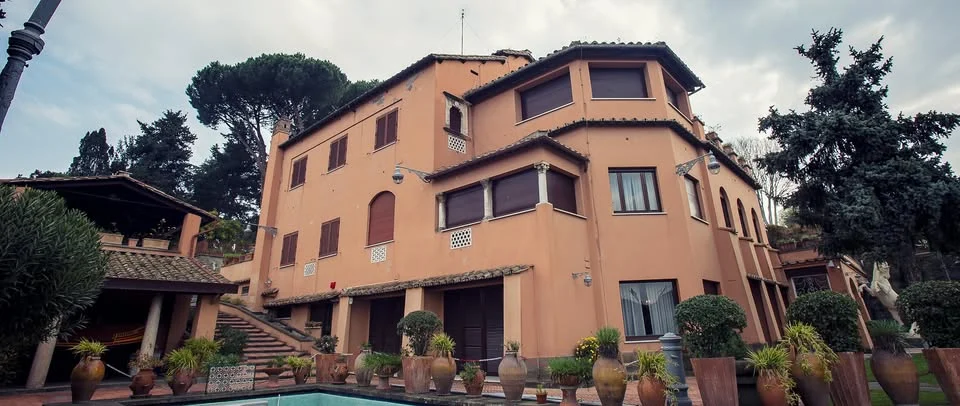
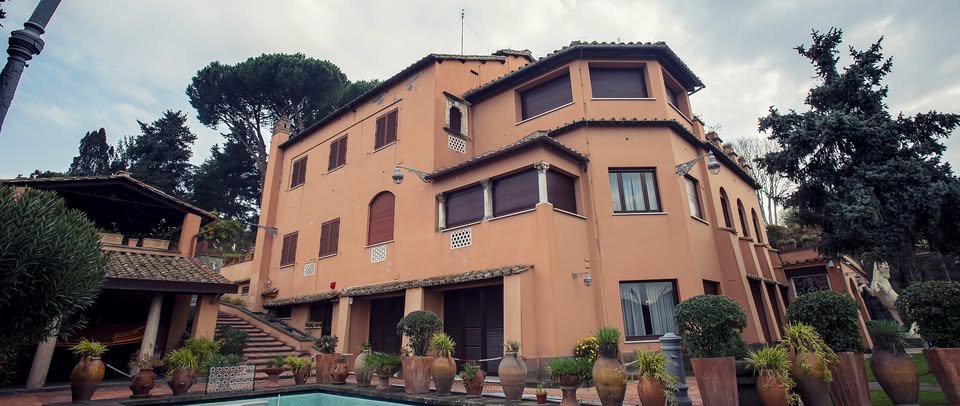
The Alberto Sordi House Museum is the villa where the actor lived until his death in 2003, above Piazzale Numa Pompilio, between the Baths of Caracalla and the start of the Appian Way. Today it has no opening hours. It is run by the Fondazione Museo Alberto Sordi, based at Via Druso 45, which opens it only for the events it organizes. For information and reservations the Foundation gives the email segreteria@fondazionemuseoalbertosordi.org and the phone number 06 7000884. An online ticket office is not published.
The reason is administrative. On its own website the Foundation writes that the procedures for the definitive opening to the public are at an advanced stage and under review by the different municipal offices. In the meantime the house lives on appointments: the latest outdoor film series in the garden, from June 15 to 27, 2026, was free with mandatory reservation by email, and sold out. Anyone who shows up at the gate on an ordinary day, hoping to get in as at a civic museum, finds it closed.
The practical information was checked on September 29, 2026 on the website of the Fondazione Museo Alberto Sordi, on the tourism portal of Roma Capitale and on the other sources cited in the text. Beware of a name coincidence that confuses many people: the Galleria Alberto Sordi in Piazza Colonna is an early 20th-century shopping arcade named after the actor, it has nothing to do with the villa in Caracalla and it lies on the other side of the historic center.
In brief: address, hours, ticket
- Address: villa overlooking Piazzale Numa Pompilio, Foundation headquarters at Via Druso 45, 00184 Rome. For the 2026 series the entrance given was on Via Claudio Marcello.
- Operator: Fondazione Museo Alberto Sordi, phone 06 7000884, segreteria@fondazionemuseoalbertosordi.org.
- How to get in: only during events organized by the Foundation, with reservation by email.
- Price: the operator doesn't publish fees for visits. The June 2026 series was free.
- Hours: no regular hours. The dates are posted on the events page of the Foundation's website.
- Getting there: Metro B, Circo Massimo stop, then on foot along Viale delle Terme di Caracalla.
- Accessibility: the information is not published, ask the office before booking.
Where it is and what you really see
The villa sits on a rise at the edge of the Passeggiata Archeologica, the big green strip that runs from the Circus Maximus down toward Porta San Sebastiano. Below, Piazzale Numa Pompilio serves as a junction between Viale delle Terme di Caracalla, Via Druso and Via di Porta San Sebastiano. The Foundation itself places the house on the Passeggiata Archeologica. From outside you see the perimeter wall, the greenery and the outline of the villa up above, and little else, because the property is closed.
The Foundation gives Via Druso 45 as its headquarters and, for the 2026 series, an access from Via Claudio Marcello: two side streets, quieter than the piazzale, where people live and work. First-time visitors tend to look for the entrance on the traffic side, where there is mostly the perimeter wall instead. Respect the quiet of the surrounding streets, especially in the evening, when people leaving the events coincides with the hour of rest of those who live there.
Inside, when you get in, you see a house that has remained in large part as it was. The reports on the centenary exhibition in 2020 described private rooms left almost intact, stage costumes, scripts, photographs, letters, awards, drawings and personal objects. In accounts of the villa, a study where the actor read scripts, a theater room, a screening room and a barber room keep coming up, the most intimate space, where he got his makeup done. What is visible at any single event depends on what the Foundation decides to open.
The garden is the part that has hosted the most public in recent years. The summer film series takes place there, with the outdoor screen and the villa's indoor theater as shelter in case of bad weather. In the garden the Foundation also keeps two cars that belonged to the actor, a Fiat Tipo and a Fiat 124, as the visits page indicates. They're not collector's cars but everyday vehicles, kept as part of the house and not as show pieces.
Then there is what you can't see but weighs the most: the archive. The Foundation declares more than 20,000 documents, recognized by the Archival and Bibliographic Superintendency of Lazio as being of particularly important historical interest, and more than 5,500 films, described as the first core of the future museum. The villa and the objects it contains are under ministerial protection as cultural assets. So the house is already protected like a museum even if it doesn't yet function as one.
A curiosity about the Alberto Sordi House Museum
The villa most tied to the face of the average Roman in Italian cinema was born in the middle of the Ventennio for a man of the regime. According to the press it was designed by the engineer Clemente Busiri Vici for Alessandro Chiavolini, Mussolini's private secretary. On the date the sources don't agree: some say 1928, some 1932, some more generally the 1920s. A widespread tradition instead attributes it to Dino Grandi, but it is precisely a tradition, not an archival fact.
The other curiosity concerns the purchase. More than one journalistic account has it that the villa was contested, and that Vittorio De Sica wanted it as much as Sordi. Here too the figures vary. Part of the press writes that the actor bought it in 1954 for 10 million lire in cash, another speaks of 1958 and 80 million. The Foundation and the city's tourism portal give 1958 to 2003 as the years of residence. That is the basis for reasoning.
To complete the picture, the two streets that surround the property bear names from the imperial family. Via Druso and Via Claudio Marcello recall two young men of Augustus's circle, following the custom of the street naming in this part of the city, where the streets evoke antiquity. The piazzale below is dedicated to the second king of Rome. An irony for a house that, within its four walls, kept the scripts of an actor who always told mostly the small, everyday side of power.
One thing nobody tells you about the Alberto Sordi House Museum
The house you can visit today is not yet the museum to come. In June 2022 the Capitoline Assembly approved a resolution that allows the villa to be expanded by about 168 square meters, with two glass and steel structures in the courtyards and the garden and the closing of the portico with glass walls. The stated aim is to create new exhibition rooms for the actor's personal effects and for multimedia installations. An end date for the works is not published.
This explains why those who went in 2020 and those who go in today describe two different experiences. During the centenary exhibition the route left the house and continued in two large tent structures set up where the swimming pool once was, plus a second venue in the center. In the later events the Foundation has worked on smaller numbers: series, temporary exhibitions, talks. The permanent museum, with hours and a ticket office, is still a project.
In our judgment the delicate point of the project will be precisely the balance between house and museum. New glass and steel rooms serve to display what today stays in storage, but they risk shifting attention from the lived-in rooms to the installations. The most respectful solution, in our judgment, is to keep the residence, left as it was, separate from the exhibition spaces. The Capitoline resolution goes in this direction, with new volumes in the courtyards and the garden instead of inside the house.
What few people say, and what in our judgment matters most, is that the value of the place lies less in rooms to admire and more in the fact that they have remained those of a private citizen. The Foundation insists on exactly this point: alongside the film heritage, it wants to highlight the actor's private life and charitable work. Anyone who comes looking for the film set is disappointed. Anyone who comes looking for the house of a 20th-century Roman, with his tastes and habits, finds a lot.
Who built the villa and how did Sordi come to own it?
Clemente Busiri Vici came from a dynasty of architects and urban planners. According to the reports the villa looks down from above on the Baths of Caracalla, and is visible from Piazzale Numa Pompilio. The sources don't agree on the year, and the dates range between 1928 and 1932. The first owner named by several outlets is Alessandro Chiavolini, private secretary of the head of government. The rumor that ties the villa to Dino Grandi is widespread but undocumented.
The actor arrived in the 1950s, when his career was by then launched. The accounts tell of love at first sight: he had seen the house, had wanted it for a long time and managed to buy it before De Sica. The figure and the year change from source to source, as said. The certain fact, because both the Foundation and Turismo Roma write it, is that this was his Roman residence until his death, which occurred on February 24, 2003.
Over the years the actor adapted the house to his life. Journalistic reconstructions speak of a small screening room and a barber room added by him, and of a reorganization of the interior spaces that turned several rooms into one large salon. Of these changes there is no published technical survey among the sources consulted. They should be read as descriptions by people who went in, not as an official architectural record.
After 2003 the villa passed to his sister Aurelia, sole heir. At her death, on October 12, 2014, the Fondazione Museo Alberto Sordi was created to manage the inheritance, as the Foundation itself recounts. Since then there have been two distinct bodies: the Fondazione Museo, which deals with the house and the archive, and the Fondazione Alberto Sordi per i Giovani. The June 2026 series carried the signature of both, with the patronage of Roma Capitale.
My advice for visiting the Alberto Sordi House Museum
The advice is simple: sign up for the Foundation's updates and keep an eye on its events page starting in the spring. The appointments in the garden fill up fast. For the 2026 series the reservation went through an email to comunicazione@fondazionemuseoalbertosordi.org and was valid only after confirmation by email. The evenings are all sold out. Writing the same day is almost never enough.
When you write to the office, put the information that's needed right in the first email: first and last name of the person booking, number of people, date or event you want to attend, a phone number. If there are people with mobility difficulties in the group, say so from the start, because the accessibility information is not published and access to the garden and the rooms has to be arranged. A complete request gets an answer sooner than a generic request for information.
Second point, often overlooked: arrive having already read the evening's program. In the series there is only one film each evening, and the titles span different decades. Anyone who chooses at random risks finding themselves in front of a minor comedy instead of the title they hoped for. The Foundation publishes the full schedule on its website before the series begins, with the curator and the directors involved, among them Steno, Antonio Pietrangeli and Dino Risi.
Third point, the evening. The house sits above a busy intersection, and the piazzale in the evening doesn't invite you to linger. It's best to arrive before sunset, take a short stroll between the Baths of Caracalla and the piazzale, and show up at the entrance well ahead of the screening time, which in 2026 was set at 21. For the return, find out beforehand about the night transit schedules.
One last piece of advice concerns expectations. Anyone who knows only the public figure goes in looking for the punchline and the famous costume. Anyone who arrives after rewatching two or three films shot in different years, instead, better recognizes the thread that ties the house to the actor's work: the study where scripts were read, the screening room, the makeup barber room. An evening of preparation in front of a film changes the visit more than any guidebook.
How much does it cost and how do you get in?
There is no price list. The Foundation doesn't publish visit prices and doesn't sell tickets online. The official formula is only one: the villa can be visited on the occasion of events organized by the Foundation, and for information and reservations you write to segreteria@fondazionemuseoalbertosordi.org. Some events are free, like the June 2026 film series. For others, in the past, the press has reported different formulas, but no current fee is published by the operator.
The official channel to buy or book is therefore that of the Fondazione Museo Alberto Sordi, with the office and the events page. On the big experience platforms no product dedicated to the villa in Caracalla appears. The listings that show up when searching for the actor's name concern the arcade in Piazza Colonna, which is something else. Be wary of anyone selling entry to the house without giving the date of the opening agreed with the Foundation.
There are also cultural associations and guides that, on the occasion of special openings, organize visits with their own reservation. It's a legitimate channel, but the price is set by the organizer, not the Foundation, and includes the visit service. Before paying, it's a good idea to ask in writing if the entry is confirmed by the Foundation for that date and what you see: only the garden, only some rooms, or the complete interior route.
For the film evenings the rules published in 2026 were clear: free admission, mandatory reservation by email, confirmation by email. The number of seats is not given. In case of rain the screenings move to the villa's theater. If you have a confirmed reservation and can no longer go, you do well to cancel it with an email, because the evenings are sold out and the spot can go to someone else.
The calendar has to be followed with patience. The Foundation publishes its appointments on its events page, where in 2026 there appeared, among others, a charity initiative in February, the June series and an appointment on October 4 tied to Piano City Roma. Not all events involve opening the rooms, and for each one the terms of participation have to be read on the individual page. If you want to visit the house, and not just the garden, you must ask for it explicitly when booking.
Another well-known fact, yet rarely cited
That Sordi was a collector of mementos of his own career, many people know. Less cited is the weight of his archive at the institutional level. The Archival and Bibliographic Superintendency of Lazio declared it of particularly important historical interest, and part of the documents has already been restored. It's not a collectors' detail: it means that those papers cannot be dispersed or sold off piece by piece, and that their preservation is under State supervision.
The Foundation also explains a broader ambition. The archive is meant to become a documentation center on 20th-century Italian cinema and to host bequests from other artists. If the project goes ahead, the villa will be less a shrine devoted to a single actor and more a place of study. It's the least photogenic part of the story, and for that reason almost no one tells it, but it's the one that justifies the public commitment to the house.
There is also an aspect that concerns the memory of cinema in general. Films kept in a private house, even a protected one, pose conservation problems different from those of a public film archive, and the announcement of a documentation center should be read in this light too. Those who study Italian cinema of the late 20th century can write to the Foundation to ask about consultation arrangements, which at the moment are not published on the website.
A second known and little-remembered fact concerns the protection order. According to the press, the ministerial protection on the villa dates to 2015, the year after his sister's death. The Foundation speaks of a protection order on the villa and on the artistic objects it contains. For the visitor this translates into precise rules: furnishings and objects are not touched, the spaces are not freely modified, and even the new volumes required a passage through the Capitoline Assembly, with an intervention that departs from the zoning plan.
The third well-known and little-cited fact is the charitable dimension. Among its purposes the Foundation declares the promotion of the actor's philanthropic feelings, alongside the heritage of the films. For this reason alongside the Fondazione Museo there is the Fondazione Alberto Sordi per i Giovani, and for this reason the house's calendar also includes solidarity initiatives, like the one dedicated to Benin in February 2026. The villa, in the operator's intentions, must not be only a place of cinematic memory.
The right photo to take at the Alberto Sordi House Museum
From the street the house is hard to see, and forcing the framing past the gate makes no sense. It's private property. The most honest photo is taken from the piazzale, including the perimeter wall, the greenery and the villa up above, with the traffic of Piazzale Numa Pompilio in the foreground. It tells one true thing well: a private house inside one of the most monumental areas of Rome, with the baths right below.
If you go in for a series, the right photo is the one of the garden at dusk, with the screen lit and the audience seated, taken before the film begins. During the screening flashes and phone screens are a disturbance. The rules on photographs inside the villa are not published: ask at the entrance before shooting in a room, because furnishings and objects are protected and the operators may have specific instructions.
A photo worth looking for is the one of the two cars kept in the garden, the Fiat Tipo and the Fiat 124. They're not spectacular, and that's exactly why they work: they tell of an actor who drove ordinary cars. If instead you're looking for an overall image of the neighborhood, the best point is the climb toward the Aventine Hill, from where you can read the outline of the Circus Maximus at the foot of the Palatine Hill.
If you want to build a small photo story, you can follow a simple thread: the ruins of the baths in the morning, Via di Porta San Sebastiano with its perimeter walls, and finally the villa from the piazzale at sunset. Three images, three eras of the same street. It's a way to tell that part of Rome where the ancient and the 20th century live side by side a few meters apart, without needing to go in where you can't.
How do you get there from the center of Rome?
The simplest reference is the Circo Massimo station on Metro B. From there you take Viale delle Terme di Caracalla on foot, which runs along the archeological area and leads to Piazzale Numa Pompilio. The walk is pleasant by day and more anonymous in the evening, because of the traffic. For bus lines it's best to work out the route on the ATAC website, because the surface lines in this area change often for construction sites and events.
If you're coming from the Colosseum you can walk along Via di San Gregorio to Piazza di Porta Capena and continue on Viale delle Terme di Caracalla. It's a long route but without demanding climbs, among the gardens of the Passeggiata Archeologica. If instead you're coming from the Appia, after a day among the catacombs, you come back in through the gate in the Walls and follow Via di Porta San Sebastiano to the piazzale: in this case the villa is the last stop, not the first.
If you arrive by car, you should know that Piazzale Numa Pompilio is a busy intersection and that the area offers no parking dedicated to the villa. The Foundation doesn't indicate spaces reserved for visitors. On summer evenings, when shows are held at the Baths of Caracalla, parking becomes difficult. The bicycle is a sensible option by day, with caution, because the streets around the piazzale are high-speed roads.
Pay attention to the entrance. For the June 2026 series the Foundation indicated Via Claudio Marcello, while the legal seat and the contacts are at Via Druso 45, and many guides speak generically of Piazzale Numa Pompilio. The three indications concern the same block. Before you set out, check in the confirmation email which gate is open for the event you've signed up for, so you don't walk around the perimeter wall.
For the return after an evening screening it's best to decide beforehand. Metro B closes in the evening at times that change on weekends and during periods of works, and the updated schedule should be checked on the transit company's website. Alternatively there are taxis, to be called ahead on show nights at Caracalla, and the night buses. The streets around the piazzale are big through roads, better suited to the car than to a walk after midnight.
Some important events that happened here in history
The first event is the construction, between the end of the 1920s and the beginning of the 1930s, on a rise that looks at the baths, for a man close to the head of government. The second is the actor's arrival, in the 1950s, who made it his home for about half a century. There he prepared his roles, read scripts in the study, watched films in the private room. There he lived until his death, on February 24, 2003.
2020 was supposed to be the year of the grand opening. The centenary exhibition, promoted by the Foundation with Roma Capitale and with the Lazio Region, was planned from March 7 to June 29, in the villa and at the Teatro dei Dioscuri al Quirinale, at Via Piacenza 1. The pandemic lockdown stopped it. The exhibition was inaugurated on September 16, 2020 and remained open until January 31, 2021, curated by Alessandro Nicosia, Vincenzo Mollica and Gloria Satta.
The centenary exhibition was not limited to objects. According to the press of the time it included unpublished documents, clothes, photographs, videos and a film from Istituto Luce Cinecittà, with a deeper look at the 1970s television program "Storia di un italiano". The recognition of the ministry for cultural heritage and the patronage of SIAE made it an institutional event. For the public it was the first chance to enter the villa, until then seen only from outside.
Three years later the villa hosted a new exhibition, "Alberto Sordi e il suo tempo", from September 22 to November 26, 2023, open according to the press Tuesday to Sunday from 16 to 20 with free admission. In that period the Foundation announced the goal of opening the house permanently by 2024. That goal was not reached: in September 2026 the Foundation still speaks of authorization procedures in progress at the municipal offices.
In between there is the Capitoline resolution of June 2022 on the expansions, and there are the cinema summers in the garden, which have become the house's most recognizable appointment. The 2026 edition, titled "Il grande cinema di Alberto. Amori, passioni, disillusioni", presented 12 films from June 15 to 27, with a break on Monday the 22nd, curated by Luca Verdone. The Foundation's calendar also lists, for October 4, 2026, an appointment tied to Piano City Roma.
Who has passed through the Alberto Sordi House Museum
The name to start from, besides the master of the house, is that of his sister Aurelia, who after 2003 looked after the villa and the inheritance for 11 years. The Foundation comes from her. Then there is the designer, Clemente Busiri Vici, and the first owner given by the sources, Alessandro Chiavolini. Vittorio De Sica appears in the accounts as the would-be buyer who missed out. Dino Grandi, as has been said, belongs to tradition and not to the documents.
For the 2020 exhibition the three curators passed through here, Alessandro Nicosia, Vincenzo Mollica and Gloria Satta, together with the public who for the first time saw the private rooms. Among the objects displayed then, the accounts cited the costume of the Marchese del Grillo, the white coat of Dr. Tersilli, the traffic officer's uniform, a Harley Davidson motorcycle and works by Giorgio De Chirico that belonged to the actor.
In the years of the series the garden has welcomed curators and spectators. The 2026 edition carries the signature of Luca Verdone, and the screen has shown films directed, among others, by Steno, Antonio Pietrangeli, Dino Risi and Sordi himself. Those who frequented the house when the actor was alive, friends and colleagues, often appear in journalistic accounts, but without a published documentary source the names remain anecdote and are not reported here.
Institutions have also passed through the house. Roma Capitale and the Lazio Region promoted the centenary exhibition with the Foundation, the Archival and Bibliographic Superintendency of Lazio examined and declared the archive, the ministry placed the protection order on the villa and the objects. In the Campidoglio the expansion proposal was presented, according to the press, by councilwoman Antonella Melito, then vice president of the urban planning commission, before the vote of the Capitoline Assembly in June 2022.
Facts, tradition and legend: what is documented?
Documented: the villa was the actor's home until 2003, it is run by the Fondazione Museo Alberto Sordi, it is protected along with its objects, it hosts an archive recognized as being of particularly important historical interest, it was the subject of a Capitoline expansion resolution in 2022, it hosted the centenary exhibition from September 2020 to January 2021. All this comes from institutional sources or dated press.
Tradition: the purchase contested with De Sica, the love at first sight for the house, the idea that the actor wanted to make it a place open to the public. This last one is reported by the Foundation as the artist's wish. Year and price of purchase vary among the sources, and should be read as journalistic narrative. Even the use of individual rooms, from the barber room to the theater, comes from accounts by people who went in and not from a published inventory.
Legend: Dino Grandi's ownership, which the most recent sources deny by naming Chiavolini. Then the stories of parties, illustrious guests and household habits that have been going around for decades and that are not documented. There is nothing wrong with telling them at dinner. It is a mistake, however, to present them as facts. The house already has enough true history not to need additions.
A practical criterion for finding your way among the versions: when a piece of news about the villa appears only in recent articles on travel sites, with no original date or source, it's best to treat it as tradition. When it appears on the pages of the Foundation, the city or a dated press agency, it can be considered a fact. The three versions on the year and the price of purchase are the best example: none of the published versions cites a notarial deed.
What is around the villa, along the Passeggiata Archeologica?
The house is in one of the richest stretches of the city. A few minutes on foot away are the baths, with their underground route, and on the other side of the piazzale begins Via di Porta San Sebastiano, which leads to the gate in the Walls and to the Museum of the Walls. Along that street you meet the Parco degli Scipioni and the Tomb of the Scipios.
On the piazzale itself faces San Sisto Vecchio, a church tied to the beginnings of the Dominicans in Rome. A little farther, on the same street toward the Walls, is San Cesareo de Appia, and in the park the columbarium of Pomponius Hylas, closed since August 1, 2024 for PNRR works according to the Sovrintendenza Capitolina. Past the gate you enter the territory of the Appian Way Park.
On the Circus Maximus side you climb the Aventine Hill with Santa Balbina and San Saba, or you cross toward the Celian Hill. It's a quadrant where a 20th-century house seems out of place, and yet it tells how the modern city has fit in among the ancient monuments and the early Christian churches, occupying the heights left free between the public greenery and the Walls.
When is it closed and what not to expect?
It is closed almost always. This is the fact to keep in mind. Outside of events the villa can't be visited, and the operator doesn't publish an annual calendar of openings. The busiest periods in recent years have been June, for the film series, and autumn, with the exhibitions of 2020 and 2023. But it's not a written rule and you can't plan a trip counting on it.
Don't expect a museum with captions, audio guides, a bookshop and a cafeteria. None are published. Don't expect either to see all the rooms on every occasion: during screenings you stay in the garden, and the interior route depends on the event. Don't expect, finally, the house of a Hollywood star. The villa is large, but the interest is in the details of a private life, more than in splendor.
The dates of events too should be taken with caution until confirmed. The summer series take place outdoors, and in case of bad weather they move to the villa's theater, with fewer seats. Cultural initiatives can change program for organizational reasons. The rule is not to plan a trip to Rome around a single evening at the villa, but to fit it into a program that holds up even if that evening falls through.
Our opinion, against the grain of many travel articles: the pilgrimage to the gate is overrated. You see a wall, a few trees and little else, and often those who go end up disappointed. Better to spend that time on a cinema site that you can really visit, or wait for one of the Foundation's openings and go in with a reservation. One evening in the garden is worth more than 10 photographs taken from the sidewalk.
If you arrive and find it closed, the day is not lost. Within a short walk there are the baths, the park along Via di Porta San Sebastiano, two ancient churches and the museum in the Walls, all with hours published by their respective operators. The villa, in this quadrant, is an extra for those who manage to book an event, not the main reason to come down to Caracalla. Planning this way avoids the most common disappointment.
Casa Sordi and Galleria Alberto Sordi: why shouldn't they be confused?
The confusion is frequent on booking platforms too. The Galleria Alberto Sordi is the shopping arcade in Piazza Colonna, built in the early 20th century and named after the actor after his death. You walk through it freely during shop hours. The villa in Caracalla is something else: a protected private house, run by a foundation, open only on the occasion of events. When searching online for tickets under the actor's name, the results almost always concern the arcade.
There is a link between the two places, and it's only in the name. The arcade in Piazza Colonna received the dedication as a civic tribute, while the villa is the place where the actor lived. If you want to see both on the same day you have to allow for the trip between Via del Corso and Caracalla, by transit or on foot across the Forums. It can be done, but only if the villa is open for an event.
Reviews on travel portals also often mix up the two places, and some still speak of the 2020 visits as if they were ongoing. Before organizing your day, do a simple check: if a page offers an entry to the house without a precise date and without citing the Foundation, it probably concerns the arcade or an initiative that has long since ended. The only authoritative source for the villa remains the website of the Fondazione Museo Alberto Sordi.
The same goes for the old pages on the centenary exhibition, still well ranked in search engines. They report hours, venues and arrangements for an event that closed on January 31, 2021, including the second venue at the Teatro dei Dioscuri. Anyone who reads them without looking at the date risks showing up at the wrong address or looking for a ticket that no longer exists. Our advice is to always check the year of publication before trusting any practical information about the house.
Eating in the area
The area between Caracalla, the Circus Maximus and the start of the Appia is more residential than it seems, and the Romans who live there don't eat at the places set up in front of the monuments. The signs to read are always the same: the barker on the sidewalk, menus with photographs of the dishes, items without prices, the menu posted outside different from the one handed to you at the table, places open continuously with no kitchen break, fresh pasta rolled out in the window as a show.
It's not snobbery. They're the signs of a kitchen designed for people passing through once, with prices that adapt to the customer and quality that doesn't need to win anyone's loyalty. If you move a few streets away toward the residential neighborhoods you find neighborhood trattorias and bakeries with Roman hours. A reliable starting point is the list of addresses on Google Maps kept by the editorial team, to be consulted before heading out.
On series evenings the problem arises differently. Screenings start at 21, and having dinner beforehand in the neighborhood means sitting down early, around 19, when the neighborhood kitchens have just opened. Alternatively you eat afterward, but at the end of the film many kitchens are closed. The simplest choice is a late lunch and a light dinner, bringing water with you for the evening in the garden, unless the Foundation indicates otherwise.
What to combine in a day
If you go in for an evening in the garden, the afternoon organizes itself. The Baths of Caracalla are the most natural choice, followed by a walk along Via di Porta San Sebastiano to the gate and the museum in the Walls. If you have more time you can push on to the Appian Way, with the Catacombs of San Callisto, the Catacombs of San Sebastiano and the church of Domine Quo Vadis.
To stay on the theme of cinema, the city offers places that can be visited regularly. Cinecittà has routes open to the public in the studios, the Casa del Cinema in Villa Borghese offers film series and talks, and our guide to Rome in the movies collects the locations you can really see. For an evening in a theater, on the site you'll also find the Cinema Troisi and the Nuovo Cinema Sacher.
If you like artists' houses, Rome has a small circuit, almost always with more regular opening hours than the villa in Caracalla. The Alberto Moravia House Museum on the Lungotevere, the Pirandello Studio, the Mario Praz Museum above the Napoleonic Museum and the Hendrik Christian Andersen Museum show just as many ways of living in the city. Each has its own access rules, to be checked beforehand.
If the day is free and the weather is good, the Aventine Hill is the simplest continuation. From the Circus Maximus you climb toward Santa Sabina and the Priory of Malta, you go down toward the Mouth of Truth or you continue toward the Pyramid of Cestius and Testaccio. Along Via di Porta Latina, which branches off Via di Porta San Sebastiano, you reach San Giovanni a Porta Latina, one of the quietest churches in the area.
A practical combination, if the event is in the evening: morning at the Circus Maximus or at the mithraeum located right next to it, lunch in the neighborhood, afternoon on the Celian Hill between Santo Stefano Rotondo and the Roman houses, then down toward Caracalla. If you're traveling on a tight budget you'll find more ideas on the page about free Rome and in the list of museums in Rome.
Frequently asked questions
Is the Alberto Sordi House Museum open to the public?
Not with regular hours. The Fondazione Museo Alberto Sordi, which runs the villa, writes that the house can be visited on the occasion of the events it organizes, and that the procedures for the definitive opening are under review by the municipal offices. To find out if an opening is scheduled you need to check the Foundation's events page or write to the office, at the address segreteria@fondazionemuseoalbertosordi.org.
How much does it cost to enter Alberto Sordi's villa?
The operator doesn't publish a visit price. Some events are free, like the film series in the garden in June 2026, which however required mandatory reservation by email. For visits organized by associations or guides during special openings, the price is set by the organizer. Before paying, get confirmation that the entry is agreed with the Foundation for that precise date.
Where exactly is the house?
The villa is above Piazzale Numa Pompilio, between the Baths of Caracalla and the start of Via di Porta San Sebastiano. The Foundation's headquarters is at Via Druso 45, 00184 Rome. For the June 2026 series the entrance given was on Via Claudio Marcello. The three indications concern the same property: check in the confirmation email which gate is open for the event you're attending.
How do you book a visit or an evening?
For information and reservations the Foundation gives the email segreteria@fondazionemuseoalbertosordi.org and the phone number 06 7000884. For the 2026 film series, however, the reservation went through comunicazione@fondazionemuseoalbertosordi.org and became valid only after a confirmation reply. There is no online sales platform. It's best to write as soon as the program comes out, because the 2026 evenings all sold out.
What do you see inside the villa?
It depends on the event. During the 2020 exhibition the private rooms were visible, stage costumes, scripts, photographs, letters, awards and personal objects. The reports mention a study, a theater room, a screening room and a barber room. In the garden two cars belonging to the actor are kept, a Fiat Tipo and a Fiat 124. During the film series, usually, you stay in the garden.
Is it the same thing as the Galleria Alberto Sordi?
No. The Galleria Alberto Sordi is the shopping arcade in Piazza Colonna, right in the center, named after the actor after his death and open to walk through during shop hours. The house museum is the private villa where the actor lived until 2003, in the Caracalla area, run by a foundation and open only on the occasion of events. Online searches for tickets almost always bring up the arcade.
Can you take photographs inside?
The rules on photographs inside are not published by the operator. The villa and the objects it contains are under a protection order, so it's reasonable to expect specific instructions for individual rooms. Ask the staff at the entrance before shooting, and avoid flash and lit screens during screenings. From outside you photograph from the street, without entering the property and without forcing the gate.
How do you get there by public transit?
The simplest solution is Metro B to the Circo Massimo stop, then a walk along Viale delle Terme di Caracalla to Piazzale Numa Pompilio. The bus lines in the area change often for works and events, so it's best to work out the route on the transit company's website the same day. After evening screenings check the Metro's closing time and the night bus service.
When will the permanent museum open?
A date is not published. In 2023 the Foundation gave the goal of a definitive opening by 2024, which was not achieved. In June 2022 the Capitoline Assembly approved the expansion with new glass and steel exhibition rooms. In September 2026 the Foundation writes that the authorizations are at an advanced stage with the municipal offices. Until then, the event-based openings apply.
Who wrote it and on what sources
The text comes from the editorial team of Tour Leader Pro, the Roman outfit that designs itineraries, visits and cultural events across Rome and Lazio. The fees, hours and booking arrangements given here come from the official sources cited in the text, as of the date given at the top: for the villa in Caracalla the authority is the Fondazione Museo Alberto Sordi, which decides openings and events. Tell us what you find changed.
Organizing an entry to the villa, for yourself or for a group, means working on other people's calendar: the date is decided by the Foundation, the places are few, the reservation goes through email and has to be confirmed. For a group it's best to write to the office well in advance and have an alternative plan ready in the area. A useful resource for those who organize group trips is Tour Leader Pro.
Sordi's house fits well into a broader trip devoted to cinema and to 20th-century Rome, which can take in the Cinecittà studios, the house museums of writers and collectors, the film locations and, outside the city, the places in Lazio used as sets. For those with more days who want to keep the city and its surroundings together, a useful resource for putting together a multi-day itinerary is Italy Planner.